Posts by admin
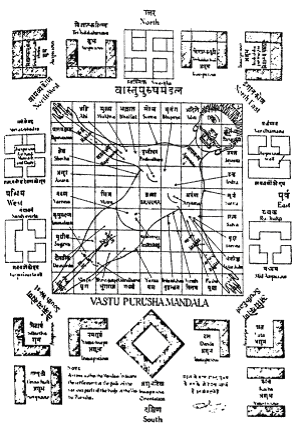
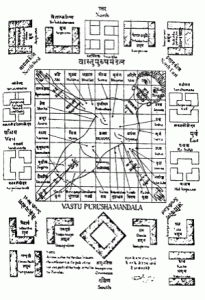
VASTU-Purusha & Architektur-Lehre
Tantra-Literatur & Vastu-Shastra
> Architektur innerhalb der Kulturen <
* Internationales Astronomiejahr 2009, Sternenfest *
…oder die Idee des Raumes als Spiegel des menschlichen Körpers mit all seinen Strukturen und Proportionen als Teil und Inhalt räumlicher Strukturen.
Gerade in Zeiten wo Orte, das Innen, Aussen, Vergangene Kulturen und Wissenschaften im Hier und Jetzt reges Interesse hervorrufen, ist es vielleicht spannend sich der Architektur und den vielerlei Aspekten bewusst zu werden.
Das es bei Vastu nicht nur darum geht, sich das Wohnzimmer mal nicht nach Feng Shui zu gestalten sondern mal auf „indisch“, und dabei den Blumentopf auf das richtige Fensterbrett zu stellen ist vielleicht einmal eine nähere Betrachtung wert.
Gerade in der Yoga Praxis wird einem innerlich und allgemein oft an Energien bewusst. Über den Fluss dieser (im Ayurveda näher definierten) Energien wird ebenso oft gesprochen.
Radio Interview: Swami Prajnanananda Giri

Kriya Yoga: Ein Weg zum inneren Frieden
> Radio Interview with Swami Prajnanananda Giri < This is a transcription of an interview with Swami Prajnanananda Giri for the „Phenomen News“ radio program in Detroit, USA, in December 1996:
-
Breathing Meditation
-
Did Jesus do Kriya?
-
What is the difference between a „master“, a „guru“ and a „swami“ ?
Siddha Siddhanta Paddhati
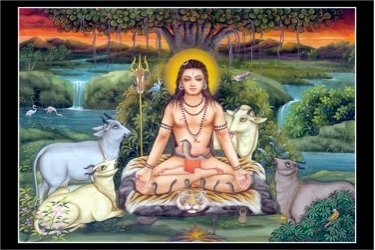

>>> Siddha Siddhanta Paddhati <<<
(grundlegendes Werk der Nathas, in dem viele Themen, die den Kundalini-Yoga betreffen, behandelt werden.)
There is nothing greater than guru, nothing greater than guru, nothing greater than guru, nothing greater than guru.Shiva is the instructor. Shiva is the instructor. Shiva is the instructor. Shiva is the instructor.“ – >> Siddha Siddhanta Paddhati, V, 63. <<
> Kundalini Books: Siddha-Siddhantapaddhati of Goraksanatha < For a student of Yoga, Hathayoga provides the practical ground. The traditional of Hathayoga is a valuable gift given by the natha tradition to the world. The culy is deeply rooted in their own philosophical doctrine. goraksanatha was one of the most prominent of the natha siddhas who authored siddha-siddhanta-paddhati. The text chiefly deals with the philosophical doctrines of the natha tradition in a very systematic manner…“
This Sanskrit text, attributed to Siddha Gorakhnath, is divided into six chapters called Upadeshas. The Sanskrit edition used for this abstract is the Siddha Siddhanta Paddhati & Other Works of the Nath Yogis, Mallik, 1953. It is also very much worth consulting the English introduction, by Gopinath Kaviraj, to the Siddha Siddhanta Sangraha of Balabhadra, > Government Sanskrit College, Benares 1925. < This introduction is out of copyright and we have also placed it on this site, here.
The sections in this work are 1) origin of Pinda, 2) discussion of Pinda, 3) knowledge relating to Pinda, 4) foundation of Pinda. 5) unity of Pinda with the Supreme Reality (Parampada), and 6) the nature of the Avadhoot.
Mandapa an astro-archaeological discovery

> M A N D A P A, Vision & Quest <
by Raja Deekhshithar
„…..So many questions arise from this iconography and from these symbols. This mandapa is a remarkable astronomical monument. I feel and could say it is an astro-archaeological discovery of high significance. It obviously commemorates …several solar and lunar eclipses so the next question was which astronomical events were depicted here?…..“
Die >> indische Architektur << umfasst die Architektur des indischen Subkontinents mit den Staaten Indien, Pakistan, Bangladesch, Nepal und Sri Lanka vom Beginn der Indus-Kultur im 3. Jahrtausend v. Chr. bis heute. Sie spiegelt sowohl die ethnische und religiöse Vielfalt des indischen Subkontinents als auch dessen historische Entwicklung wider.
Ursprünglich war ein >> Mandapa << eine Art Vorhalle, die vor der Stirnseite eines Sikara (auch Shikhara oder Rekha, Turmbau in südindischen Tempeln) angebracht war. Er diente hier als Eingang, der zur inneren Heiligtumskammer führte.
Als >> Mondop << (von Sanskrit Mandapa – “Pavillon”) bezeichnet man ein würfelförmiges Gebäude in einem Wat, der buddhistischen Tempelanlage in Thailand.
Brief History of Dzogchen
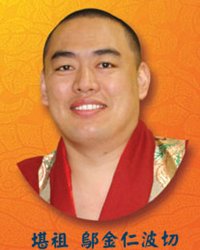
Khentrul Ogyen Rinpoche:
Brief History of Dzogchen
Dzogchen (rdzogs-chen), the great completeness, is a Mahayana system of practice leading to enlightenment and involves a view of reality, way of meditating, and way of behaving (lta-sgom-spyod gsum). It is found earliest in the Nyingma and Bon (pre-Buddhist) traditions.
Bon, according to its own description, was founded in Tazig (sTag-gzig), an Iranian cultural area of Central Asia, by Shenrab Miwo (gShen-rab mi-bo) and was brought to Zhang-zhung (Western Tibet) in the eleventh century BCE There is no way to validate this scientifically. Buddha lived in the sixth century BCE in India.
The Introduction of Pre-Nyingma Buddhism and Zhang-zhung Rites to Central Tibet
Zhang-zhung was conquered by Yarlung (Central Tibet) in 645 CE. The Yarlung Emperor Songtsen-gampo (Srong-btsan sgam-po) had wives not only from the Chinese and Nepali royal families (both of whom brought a few Buddhist texts and statues), but also from the royal family of Zhang-zhung. The court adopted Zhang-zhung (Bon) burial rituals and animal sacrifice, although Bon says that animal sacrifice was native to Tibet, not a Bon custom. The Emperor built thirteen Buddhist temples around Tibet and Bhutan, but did not found any monasteries.
This pre-Nyingma phase of Buddhism in Central Tibet did not have dzogchen teachings. In fact, it is difficult to ascertain what level of Buddhist teachings and practice were introduced. It was undoubtedly very limited, as would have been the case with the Zhang-zhung rites.
YAMA AND NIYAMA
YAMA & NIYAMA in Yoga, Tantra & Hinduism
by Sri Nath & Dinu Roman
> Yama und Niyama in der Praxis der Yoga-Lehrenden & -Lernenden <
( Yoga Institut Nürnberg )
The truth that reflects the Ultimate reality does not represent the exclusive possession of one person, group, or spiritual system. God revealed this Supreme Truth to certain human beings, whom transmitted them to humanity orally or in the form of writings, according to the needs, temperament, level of consciousness and the degree of development of mankind in a certain moment.
The divine messengers (named saints, sages, prophets, or initiates), regardless of the geographic space or religion, have enounced certain rules (guiding principles, or commandments), which allow human beings to feel and manifest the Universal Harmony, when respected.
Thus, in the West there are the Ten Commandments, while in the East there are the Ten Rules of the ethical and moral plan (Yama and Niyama in the Hindu tradition). Such guiding rules are characteristic to any spiritual path.
It is not a coincidence that in each case, there are ten such commandments, and nor that the inducement of these commandments is essentially identical, expressed only with a language specific to each civilization and tradition. This identity is based on the fact that behind these laws there is something unique and everlasting – God.
In the Hindu tradition, we may distinguish two categories within these „Ten Commandments“: the first five commandments make up the Moral Plan (in Hindu terminology Yama) and the other five – the Ethical Plan (Niyama).
These divine rules favor a specific state of resonance with the sublime energies in the Macrocosm, and make the human being act in accordance with the universal laws.
In any spiritual tradition, there is an important note regarding the significance of reaching a state of harmony in one’s individual life, before moving on to more „advanced“ techniques. Thus, before moving on, the novice is recommended to observe the rules. In truth, when observed, these rules may spontaneously lead to states of ecstasy.
However, these rules are respected also by other people besides those engaged in a spiritual quest. To a certain degree, each human being observes at least partially some of these rules. But the one who is consciously and actively trying to find his/her spiritual path should try to transform them into inner convictions, into life-guidelines. Such an attempt requires total commitment, aspiration, perseverance and courage.
Consequently, the first and most important stage is represented by harmony in one’s individual life, because this harmony is the foundation of the spiritual life. Regardless of the body’s harmony and vitality, regardless of the number of the techniques known and applied, the seeker will not meet any spiritual progress until his/her behavior refines.
The Moral Code (in Hindu – YAMA) implies five rules of behavior in order to reach a state of profound equilibrium with the other beings.
These five rules refer to the control of certain negative tendencies, frequently met in human beings. These rules are mentioned in the secret oriental/eastern treaties as follows: non-violence, truth, non-theft, sexual purity, non-possession.
The Personal Code (in the Hindu tradition – NIYAMA) is based on the idea that external rules are sufficient for a truly deep transformation/change, and that the personality has to be restructured through a personal code involving other five rules. They refer to the perfect structure of our inner attitudes, emotions, and feelings. Consequently, they are rules of individual discipline and allow to the person who observes them to reach a state of equilibrium with one’s own person and purpose in life.
The secret treaties mention them as follows: austerity, individual study, contentment, physical and mental purity, complete devotion towards God.
It is important to understand that as long as we have not attained spiritual self-realization yet, we will not be able to observe perfectly these rules. However, it is also important to try constantly to observe them day by day.
Making from these guidelines a true day to day practice, a living „barometer“ of our presence and awareness in our actions, words and thoughts certainly improves our perspective on ourselves, as well as on what man can be – that is a perfect divine being!
Y A M A P A R T 1
by Dinu Roman (Yoga Teacher of NATHA)
AHIMSA
The word AHIMSA is composed of „A“ which means „no“, and „HIMSA“ which means „violence, opposition“.
AHIMSA is that inner quality which stops you to do any harm to any living being through speech, thinking or action.
AHIMSA imply the kindness not to torture and kill other living beings, the profound respect and admiration for Life in any form: plants, insects, animals, humans.
AHIMSA is much more than a request of not being violent. It has the positive meaning of intense and detached love for every living creature. Violence is born out of fear, weakness, ignorance or restlessness.
For controlling violence is thus necessary to overcome these symptoms through a new, superior attitude toward life and through reintegrating all your being into the Eternal aspects of the Supreme Reality.
Every living creature has the same right to live in peace as you have and all beings should respect that right. There are different levels of violence and non-violence.
With a very bad motivation one can show a kind attitude, the goal of which is to try to lead us in the wrong direction. That attitude is the worst kind of violence.
For a bad action done by others, people ask for severe justice but for a bad action done by themselves they beg for mercy and forgiveness.
But the TANTRICS know that the superior man is the man of mea culpa (my fault)(realizing in total honesty the effects of your own mistakes); the inferior man is the man of tua culpa (your fault) (seeing other’s mistakes only).
AHIMSA does not mean to tolerate or passively accept violence or evil. It means to resist violence and evil, but with detachment and loving the person through which that evil manifests.
This is the genuine attitude of Martial Arts, for instance. Repentance is more valuable that severe punishment. Opposition to evil and love for the person who commits it can and must coexist.
Resistance to evil without love leads to violence. Loving a person who commits evil, without resisting that evil is madness. The battle is always won by he who fights with love.
AHIMSA imply also lack of unnecessary criticism. It requests to respect other’s views and convictions, to listen to and approach with an open mind ideas which are not identical with your own, to respect other’s right to think differently and to believe on different values that your own.
Besides AHIMSA, one should practice ABHAYA (lack of fear) and AKRODHA (lack of anger). When one relates permanently to the immortal aspect of his being, there can be no more fear or anger, only wisdom and beatitude.
Y A M A P A R T 2
2. SATYA
SATYA, or truthfulness, is the most important rule in TANTRA. Mahatma Gandhi said: „Truth is God and God is Truth.“ The Truth was and still is highly respected and worshipped in YOGA Tradition.
All human activities are based upon the spoken word and the person who dishonors the spoken word by being dishonest can be considered a thief: he steals the Reality.
SATYA means that you should not say something that you know is false. It means also that you should not lead others into error by making them believe that you know something when you only presume. SATYA implies also not to make hurried judgements about something you know superficially only.
SATYA is a very large concept. It requires to be fair play, to behave rightly with everybody and to respect the truth in thinking, in action and in speech. The true TANTRIC consecrates his entire life to the Truth in its broadest sense.
This implies to think in the highest patterns and to relate to everything that is superior, universally valid and in accordance with the Cosmic Harmony.
Gurdjieff, the great Caucasian Initiate, said that lying is thinking or speaking about things one does not know. It does not mean intentional lying only.
If you collect all the theories that people put forward on any given subject, without knowing anything about it or knowing it superficially only, you will see where lying begins.
Man does not know himself, he does not know anything, yet he has theories about everything. Most of these theories are lying. The most serious lying is when we know perfectly well that we do not and cannot know the truth about things and yet never act accordingly.
We always act and think as if we knew the truth. This is lying. For instance, we know nothing about ourselves, and we really know that we know nothing, yet we never recognize or admit the fact; we never confess it even to ourselves, we act and think and speak as though we knew who we are. This is the origin, the beginning of lying.
Therefore it is necessary to learn to tell the truth. This may seem strange. Most people think that it is enough to want to tell the truth for being able to tell the truth. But it is relatively rare that people say a deliberate lie.
In most of the cases, they think they say the truth. In spite of that, they lie all the time, both themselves and the people around them. Saying the truth is the most difficult thing in the world; it is necessary to study and practice a lot, for a long time, for becoming able, one day, to say the truth.
The desire to tell the truth, alone, is not enough. For telling the truth, you must be able to know what is true and what is false – most of all, inside yourselves.
Saying the truth is extremely difficult: before telling the truth, you must know it through personal experimentation, you must discover the truth about yourself.
We can lie not through speech only but through actions and attitudes also. To behave as if we did something we did not or to pretend we have achieved something that is still far away from us, is lying.
Being dishonest with ourselves and/or emulating (superficially imitating what we admire in others) is not in accordance with SATYA.
Another aspect of SATYA was perfectly expressed by Jesus: „Do not give dogs what is sacred; do not throw your pearls to pigs. If you do, they may trample them under their feet, and then turn and tear you to pieces.“ (Matthew 7:6)
In other words, the Truth (mainly as the Sacred Spiritual Teaching) must not be given without discrimination to someone who does not appreciate it and recognize its value.
Sometimes the fantasy distorts the truth, with or without conscious intention. As a result, we live in a world of dreams where we see the world as we would like it to be and not as it is. From the YOGA point of view, this is a violation of SATYA due to a great superficiality in thinking.
The sacred texts of the YOGA tradition say that the truth will be used to everybody’s benefit and not to destroy or harm the living beings. Even if you tell the truth but by doing so you harm a living being, you commit a big mistake and you do not follow correctly SATYA, violating in the same time AHIMSA.
The Great Sage VYASA said: „The wise man must first decide what is good for the living beings and only after that he can speak, refraining from lying.“ As we saw above, in order to tell and especially to impart the truth, it is imperiously necessary to realize that truth in ourselves in the first place.
This is done through practical experimentation of that truth. This is why the deepest and the highest meaning of SATYA is the complete inner transformation leading to the discovery of the Eternal Inner Essence, the Immortal Spirit (ATMA).
In accordance with our level of consciousness, the truth becomes more complex. That which you believed was true during childhood, reveals to be false or unimportant when you reach the mature age.
Nevertheless, that „truth“ of childhood was necessary and useful because through it you have discovered the real truth of the mature age. This apply to the spiritual practice also. At the beginning, only small truths can be given and received.
After the inner transformation, these small truths become unimportant aspects of a general truth that you grasp now in its fullness. Lao Tze, the famous chinese Sage, said that everything that can be said about the Supreme Truth becomes a lie when you reach it.
Y A M A P A R T 3
3. ASTEYA
ASTEYA means „not stealing“. This implies not to take something that is not yours, to use something only the way it is supposed to be used or the way it is permitted to be used.
ASTEYA requires therefore lack of greed. Wishing obsessively to have something that somebody else has, even if it is necessary or valuable for us, leads to lack of balance and unhappiness.
The Sage VYASA said: „ASTEYA is realized when the yogi, free from any desire, refuses to take possession of things that belong to others.“
Therefore, if somebody wants obsessively something that belon gs to another person and takes it, he is a thief. If he does not take it, then it is not a thief but he doesn’t follow ASTEYA either.
ASTEYA is when you do not take and do not desire something valuable that belongs to another person. ASTEYA implies also to refrain from any kind of injustice, to let everybody have exactly what he / she deserves.
4. BRAHMACHARYA
BRAHMACHARYA means continence, refrain, retention. In the TANTRIC vision, BRAHMACHARYA is realized through the sublimation and transmutation of the sexual energy, using it for psycho-mental and spiritual purposes.
The secret here is to realize a perfect control over the sexual energy but not through giving up sex but through a plenary erotic activity in which the couple separates orgasm from ejaculation and suspends ejaculation no matter how long, intense of often the lovemaking.
The purpose of suspending ejaculation is double: to retain seminal fluid (conserve energy and thus achieve higher states of sexual pleasure and fulfillment) and to transmute its energy (achieve expanded levels of consciousness).
The most recent conclusions of modern sexology agree with traditional TANTRIC teachings. Sexual therapists are now starting to encourage couples to focus more on the process of lovemaking rather than the end result (ejaculation).
The secret treatise VIJNANA BHAIRAVA TANTRA says: „Stay with the (erotic) fire of the beginning and avoid the poison of the end.“
The satisfaction found in this way is incomparably greater than having an ejaculatory orgasm. The most revolutionary conclusion of the sexual researches is that man doesn’t need to ejaculate at all when making love to a woman.
The fundamental error couples make, due to ignorance and bad habit, is to believe that ejaculation and orgasm are one and the same thing, that orgasm can be achieved through ejaculation only and therefore ejaculation is the peak pleasure for the couple.
Some women believe that if they are not capable of bringing their man to a powerful ejaculation they are not sensual enough. There is nothing more false.
Stated with extreme simplicity, orgasm is an intense beatific state of consciousness and canceling of ego, with profound harmonizing, relaxing and regenerative effects.
Male and female ejaculations are only complex physiologic processes of explosively energetic discharge with dim manifestation of a brief, incipient orgasm, experienced in a selfish unilateral way. During ejaculation the vital energy is quickly wasted for no purpose (except, of course, when conception is wanted).
In this completely new and spiritual approach, sexuality becomes a modality of self-knowledge and spiritual growth. The extraordinary intensity of emotions felt in this way transfigures both man and woman, revealing unknown dimensions of their psyche.
Sexual union between two lovers which love deeply each other becomes a modality of concentrating and directing the consciousness‘ activity toward the Supreme Being.
Due to the enormous intensity of this union, the consciousness of both lovers develop and fuse, at the beginning between themselves and later with the Cosmic Consciousness.
The indescribable beatitude then felt embraces all things and beings. All that still subsists is a never-ending thirst for Unity, only a Lover and a Loved-one.
5. APARIGRAHA
APARIGRAHA means „not to pile up“. The meaning of this is not to accumulate that which you don’t really need, because this creates undesirable links, hindering the harmonious development of the human being.
APARIGRAHA does not mean to be satisfied with little, but to totally enjoy what you have, even if your possessions are very modest.
The key here is to have full control over your possessions and not to allow them to control you through the greed or possessiveness that they may create.
With the same happiness we enjoy physical, mental or spiritual possessions, we should be able to give them avay. Possess your things and inner qualities as if you would not have them.
However, the material possessions are not an impediment if you are perfectly detached, and this does not mean indifferent but fully aware of the place of those possessions in your life.
N I Y A M A P A R T 1
1. SAUCHA
SAUCHA means cleanliness, purification. It implies cleanliness of the body (both inside and outside) and mental purification (eliminating negative thoughts and mental agitation).
SAUCHA comprise six traditional techniques of purification called SHAT KRIYAS. (Siehe Hatha Yoga, Patanjali)
An important factor of keeping the body and mind clean is the diet. Know that meat brings a lot of toxic substances into your system. Clean and fresh food must be the rule for a health conscious individual.
The way we eat can make a difference too. Chew very well, focus your mind upon the sacred act of eating, make it holy through your awareness about it.
2. SANTOSHA
SANTOSHA means „contentment“. It is imperiously necessary to accept with joy whatever life offers here and now, without uselessly spending energy living in the past or fantasizing about the future.
This activities are most of the time useless and sterile. SANTOSHA is not fatalism but focusing in the present and living it fully. It means opening toward the continuous experimentation and clear perception of what is now: the uniqueness of every moment.
SANTOSHA is loving the world the way it is. The fact of being here and now reveals the greatest possible ecstasy. Nothing of what exists in this world must be changed: what must be really changed is your inner attitude toward everything that surrounds you.
3. TAPAS
The word TAPAS is formed from the root „TAP“ which means „to burn“, „to radiate“, „to be consumed by fire“. Fire is the symbol for the ardent desire or for the invincible will to achieve something.
However, this desire or will must be exerted in a totally detached and patient manner, renouncing the fruits (the results) of your actions (consecrating your effort to the Supreme Cosmic Consciousness).
Therefore TAPAS implies an ardent effort directed toward a defined purpose. TAPAS is realized through discipline and austerity, i.e. through a conscious and sustained effort to resist all temptations and to overcome all obstacles that stand between you and your goal.
TAPAS is of three kinds:
• TAPAS of the body (KAYIKA), for example continence (BRAHMACHARYA), non-violence (AHIMSA), fasting (once a week), etc.
• TAPAS of the speech: using words that are true and do not prejudice any living being. A very special form of TAPAS of the speech is MAUNA – the silence.
• MAUNA implies not to talk at all for a certain period of time (one day or a few hours). A superior level in MAUNA is mental silence, i.e. keeping the mind totally quiet. MAUNA has extremely beneficent effects, conserving energy and sharpening the insight.
• TAPAS of the mind (MANASIKA): a perfect peace of mind, effortless self-control, lack of negative thoughts, removing pessimism.
TAPAS is very much related to will power. In YOGA practice, TAPAS implies perseverance and daily practice.
Some people start to practice YOGA and are enthusiastic at the beginning but when some obstacles appear they quit immediately. The avoiding of discomfort is not a positive attitude, but a sign of weakness.
N I Y A M A P A R T 2
4. SVAADHYAYA
„SVA“ means „self“ and „ADHYAYA“ means „study through contemplation“. Therefore, SVAADHYAYA means „the study of the self through contemplation“.
This means both the study of the inner human Self and the study of the Objective Science of the Whole (YOGA) which leads to the discovery of the Self.
This science includes all the authentic spiritual knowledge of our planet. As a bee collects the nectar of many flowers, the yogi should enrich himself with all the genuine truths of all spiritual paths.
A continuous reading of, and sincere reflection upon the traditional texts of Wisdom, prepares the way for experimenting through personal practice the higher levels of knowledge and awareness.
Contrary to the general opinion, these texts are not philosophical points of view only, but practical instructions of experimenting new states of mind.
Language is used as an explanatory inducement toward the liberating experience. At the beginning, some of these texts may seem to make no sense, especially to a westerner.
But they convey extremely profound wisdom and contain condensed information which is supposed to be meditated (SAMYAMA) upon.
yoga is a process thats cleans our internal body and develops a strong immune system . continuous practice of yoga helps in the creation of positive vibes in a person who performs yoga in a right manner – ( Yoga Shastra )
Alan Jacobs, Poetry for the Spirit

>> ALAN JACOBS & Poems <<
>> When Jesus Lived in India: The Quest for the Aquarian Gospel, <<
the Mystery of the Missing Years
Alan Jacobs is a retired businessman and art dealer. He has made a lifelong study of mysticism, particularly focusing on the teachings of G.I. Gurdjieff, J. Krishnamurti and Douglas Harding. Mr. Jacobs is the chairman of the Ramana Maharshi foundation in the U.K.
He has edited several books, including Poetry for the Spirit; Ramana, Shankara and the Forty Verses; The Wisdom of Balsekar; The Wisdom of Marcus Aurelius; and a modern free verse translation of the Bhagavad Gita and the Principal Upanishads.
Alan Jacobs has produced a collection of sacred poetry, „Myrobalan of the Magi,”
Acharya Trigunateet Jaimini Jaimini

classical music according traditional system of gurukul parampara,
social services & music theraphy
> Making Indian classical music for fashion shows <
Dr. Acharya Trigunateet Jaimini is fortunate to have earned this rare accolade and shares “ Born in classic family of musicians“. Child Jaimini was trained up by his devoted musician mother who accompanied him on Tabla at an early age .This led him to giving successful stage performances of Sitar at the age of three.
He has since then making his own compositions on the spot in various“Raagas“ and „Taals“. His first T.V. programme -classical performance on Sitar relayed from Delhi Doordarshan (National ) Program at an early age of ten years. In the similar age his Sitar performance in Shri Swami Haridas Sangit Samaroh Vrindaban (the National Music Concert was appreciated by senior Top Artists. In the National Concert of Hindustani and Karnatak music organised by Shri Raghvendra Swami Mission Bangalore it was remarkable at the age of eleven years that he played „Dhrupad“ on Dattatreya Veena which is exhibited in Sangit Natak Academy Museum New Delhi India and now listed as rare instrument in the Limca Book of Records.
Partho Sarothy – Sarod
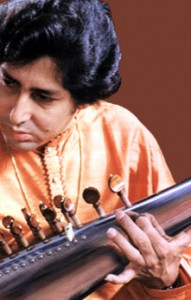
Partho Sarothy – Sarod
Natya Mandir Indisches Klassisches Konzert
( Verein für Indische Klassische Musik )
Alankara is a society for promotion of Indian classical music through performing and teaching. Founded by sitar player Alokesh Chandra, Alankara organizes concerts and offers classes on Indian classical music.
Indian music history goes back approximately 4000 years. This ancient art is a universal language, which can be understood by sincere and receptive listeners of any nation. Through this language musicians try to share the immortal Light of the Soul.
Bharatanatyam, Repertoire & Gesundheit
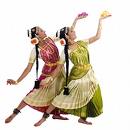
> Bharatanatyam: the origins <
oder die Körperlichkeit im klassischen indischen Tanz
Der klassische indische Tanz besteht seit über 3000 Jahren und ist auch als Quelle Yogas zu betrachten. Er stellt Anforderungen an die motorischen Leistungen, an die Tiefsensibilität, an die Koordination der Gliedermaßen, an die Konzentration und die Ausdauer sowie an das Gleichgewichtsorgan.
Das regelmässige Üben belebt und harmonisiert, ähnlich dem Yoga, die vitalen Stellen des Körpers, die Marmas. Wie die Marmas im Ayurveda/Yoga.
Zusätzlich berührt werden die Gefühle wie Liebe, Freude Hoffnung, Trauer und Zorn. Der Tanz berührt den ganzen Menschen und regt alle Nervenbahnen und Gehirnareale an. Durch neue neuronale Netze kommt es zu einer nachweisbaren Steigerung der Gehirnmasse und des Lernvermögens, alle anderer Gehirnfunktionen und des gesamten Lebensgefühls. Es sind sogar Erfahrungsberichte über Negierung von Legasthenie erwiesen.
Bharatanatyam, Laya-Yoga & Meditation
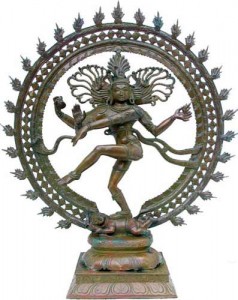
> Körperlichkeit & indische Philosophie in (laya) Yoga & Bharatanatyam <
by Angela-Petra Saber-Zaimian
„yato hastas tato drstir, yato drstis tato manah, yato manas tato bhavo,yato bhavas tato rasah“ – Abhinayadarpana, Vers 37, Nandikesvara . Wo die Hände sind/sich hinbewegen dort ist der Blick, wo der Blick ist, ist der Geist,wo der Geist ist, ist das Gefühl, wo das Gefühl ist, ist (entsteht) Rasa.
> Abhinavabharati < an interpretation of Bharata’s Natyasastra
> Abhinavabharati < Pearls from 4th Chapt. Abhinavabh�ratī
Abhinavabharati is a commentary on ancient Indian author Bharata Muni’s work of dramatic theory, the Natyasastra. It is the only old commentary available on this work.
The Abhinavabharati was written by Abhinavagupta (ca.950-1020), the great > Kashmiri Saivite < spiritual leader and a yogi.
In this monumental work, Abhinavagupta explains the rasasutra of Bharata in consonance with the theory of abhivyakti (expression) propounded in Anandavardhana’s (820-890) work Dhvanyaloka („aesthetic suggestion“), as well as the tenets of the Pratyabhijna philosophy of Kashmir.
According to Abhinavagupta, the aesthetic experience is the manifestation of the innate dispositions of the self, such as love and sorrow, by the self. It is characterised by the contemplation of the bliss of the self by the connoisseur. It is akin to the spiritual experience as one transcends the limitations of one’s limited self because of the process of universalisation taking place during the aesthetic contemplation of characters depicted in the work of art.
Abhinavagupta maintains that this rasa (literally, taste or essence). Rasa, the final outcome is the summum bonum of all literature.
Bibliography
Natyasastra of Bharatamuni : Text, Commentary of Abhinava Bharati by Abhinavaguptacarya and English Translation/edited by Pushpendra Kumar. Translated by M.M. Ghosh. Delhi, New Bharatiya Book Corporation, 2006, 3 Vols., 1614 p
Meditation, Health, Strength & Energy

FUNCTIONAL SPIRITUALITY
>> An introduction to the value of spirituality for management <<
by Raja Deekshithar
NISCINTANA MEDITATION
Meditation is not only for monks or sanyasins. It is also especially designed for people who live a normal human life, and who struggle with its realities. It will give strength and energy, and can be used to gain answers and solutions for the problems that face us during our life.
We can attain the peace of our most inner Self by preventing the chaos of the mind. What we gain from meditation is clarity of mind, focus, steadiness, peace and harmony. Our thoughts sway here and there. The demands of today create pressures and disharmony. The result is hectic en restless mind. We identify with this restless mind. But our essence, our Self, is quiet and peaceful. The solution is to stay in our centre. The stress and tension will vanish. The practice of yoga will take our mind to the calmness at centre of the Self. Like the bird soaring through the sky. Aiming towards the right landing in the centre of its attention. The practice directs our awareness towards the centre of our being. Doubt, inertia and sickness are the obstacles to our search for peace and harmony. Despair and stress lead to pain and irregular breathing.
The reward of yoga is the dissolution of pain and doubt. It gives clarity of mind. Internal steadiness; Self awareness and focus; Happiness; And a strong and healthy body.

Welcome to The Nature Conservancy — the leading conservation organization working around the world to protect ecologically important lands and waters for nature and people.
We’re proud of what we’ve accomplished since our founding in 1951:
We’ve protected more than 119 million acres of land and 5,000 miles of rivers worldwide — and we operate more than 100 marine conservation projects globally.
Ayurveda & Shivas Geheimnis
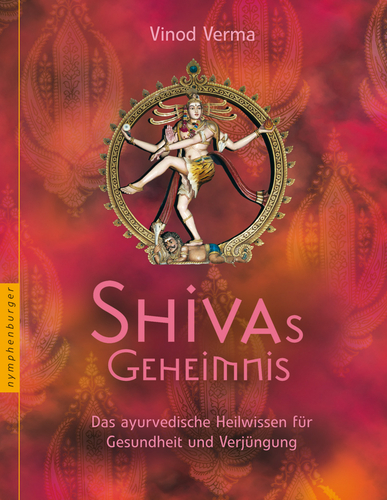
> SAVE GANGA & SHIVAS GEHEIMNIS <
by Dr. Vinod Verma
>> THE NEW WAY HEALTH ORGANIZATION .NOW. <<
(For promoting holistic living with Yoga and Ayurveda)
Dr. Vinod Verma is founder and Director of the New Way Health Organization in India and has an Ayurvedic Center in Garhwal. She has written five other books on yoga and ayurveda which have been published in various languages including German, French, Dutch and Hindi.
Dr. Verma lectures and holds seminars all over the world. She has also done many radio and TV programmers in Europe.
Shiva ist der Gott der Zeit. Das alte indische Heilwissen ist eng verbunden mit seinen Energien. Das Geheimnis von Gesundheit und einem langen Leben besteht darin, in Harmonie mit dem kosmischen Rhythmus zu leben, mit dem eigenen Lebensalter, der Tageszeit, der Jahreszeit.
Vinod Verma entschlüsselt diese Prinzipien aus alten vedischen Texten und leitet aus Shivas sagenumwobenen Geschichten konkrete Tipps und Rezepte ab, um den Körper zu entgiften, zu verjüngen und wieder in ein harmonisches Gleichgewicht zu bringen. Endlich im Handel! Buch kaufen > HIER .
A Hindu view of evolution
:: CULTURE, SPIRITUALITY & LIFESTYLE ::
>> „A Hindu view of evolution“ <<
by David Frawley
Evolution and Science
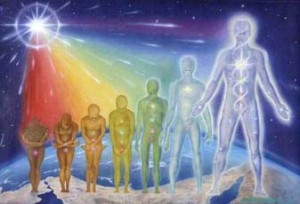
Modern science recognizes an evolution of form in the world of nature as the dominant movement of life. It notes how the bodies of different creatures adapt over time, becoming more complex and sophisticated through succeeding generations, with new species arising that demonstrate important advances in structure and function over what went before them.
From the beginning of life on Earth with a chemical soup that resulted in single cell organisms to the current state of the planet dominated by intelligent life, science has portrayed an onward march of evolution, albeit with a few detours along the side. Science has outlined a physical or bodily evolution from bacteria and viruses, to plants, animals and human beings.