SPIRITUAL JOURNEYS, NEWS
The Ninth Mandaean Camp Niagara Falls
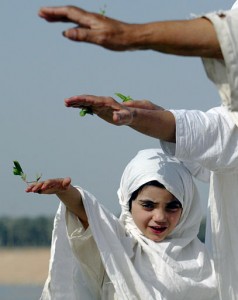
Mandaeism or Mandaeanism (Mandaic: Mandaiuta, Arabic: مندائية MandÄ�’iyya, Persian: مندائیان) is a monotheistic religion with a strongly dualistic worldview. “The Mandaeans are pacifists, followers of Adam, Noah and John the Baptist.“ The Mandaeans (also sometimes referred to as Sabians in Arabic), revere Adam, Abel, Seth, Enosh, Noah, Shem, Aram and especially John the Baptist. Mandaeism has historically been practised primarily around the lower Euphrates and Tigris and the rivers that surround the Shatt-al-Arab waterway, part of southern Iraq and Khuzestan Province in Iran. There are thought to be between 60,000 and 70,000 Mandaeans worldwide, and until the 2003 Iraq war, almost all of them lived in Iraq Many Mandaean Iraqis have since fled their country (as have many other Iraqis) because of the turmoil of the war and terrorism. By 2007, the population of Mandaeans in Iraq had fallen to approximately 5,000. Most Mandaean Iraqis have sought refuge in Iran with the fellow Mandians there. There has been a much smaller influx into Syria and Jordan, with smaller populations in Sweden, Australia, the United States, and other Western countries.
The prewar Iraqi Mandaean community was centered around Baghdad. Mandaean emigration from Iraq began during Saddam Hussein’s rule, but accelerated greatly after the American invasion and subsequent occupation. Since the invasion Mandaeans, like other Iraqis, have been subjected to violence by terrorist groups (not necessarily of Iraqi origin), including murders, kidnappings, rapes, evictions, and forced conversions. Mandaeans and many other Iraqis, have been also targeted for kidnapping since many worked as goldsmiths. Mandaeism is pacifistic and forbids its adherents from carrying weapons. Most Iraqi Mandaeans have fled the country in the face of this violence, and the Mandaean community in Iraq faces extinction. Out of the over 60,000 Mandaeans in Iraq in the early 1990s, only about 5,000 to 7,000 remain there; as of early 2007, over 80% of Iraqi Mandaeans were refugees in Syria and Jordan as a result of the Iraq War. There are small Mandaean diaspora populations in Sweden (c. 5,000), Australia (c. 3,500 as of 2006), the USA (c. 1,500), the UK (c. 1,000), and Canada. Sweden became a popular destination because a Mandaean community existed there before the war and the Swedish government has a liberal asylum policy toward Iraqis. Read More: > HERE <
The Sabian Mandaeans In Iraq – The Mandaeans are the descendants of the great civilizations of Iraq. They have lived in Iraq for thousands of years, and shared in its glories and miseries. They have added to the colors of the culture in Iraq: their white peaceful color, their sincerity and love of knowledge. Their uniqueness gives an example of how fertile this land is not only in its soil but also in spirituality and human thoughtfulness. They participated in building of the great civilization of that area and took their fair share in its miseries. The last of which was the brutal dictatorship, which spared nobody in its evil. The demise of that regime has widely opened the doors for a possibility of a democratic society where civil liberties and basic human rights are respected unfortunately it also opened the doors for chaos.
The Mandaeans Call for Democracy and Civil Rights in New Iraq – The Mandaeans are ancient people lived in Mesopotamia (modern Iraq) for thousands of years. They participated in the building of the great civilization of that area and they took their fair share in its miseries. The last of which was the brutal dictatorship, which spared nobody in its evil. The demise of this regime has widely opened the doors for a possibility of a democratic society where civil liberties and basic human rights are respected.
The Mandaeans, today, ask for the establishment of a democratic system in Iraq. A just and fare system that respects their freedom and religious beliefs and recognize them as a monotheistic religion with equal rights and duties as all other citizens of Iraq.
We call upon the United Nations, The Coalition Governments, and the Iraqi political parties and powers to help in building the new democratic Iraq with a new constitution that guaranties the basic human rights and puts the mechanism for prevention of another dictatorship emerging in Iraq. This will be the only guarantee for a better future for a unified Iraq where all ethnicities and religions live in harmony and peace.
As we congratulate our fellow Mandaeans with the demise of the dictatorship, we also congratulate all Iraqi people and the people of the world for the end of one of the most brutal and dangerous regimes in the modern era. We call for peace and freedom for all. – The Mandaean Associations Union.
The Ninth Mandaean Camp Niagara Falls, August 13-15 , Compark Resort – More than 125 Mandaeans convened from all over the world for the ninth annual Mandaean Camp. Attending a cozy retreat in Niagara Falls, Canada, Mandaeans from the US, Canada, Europe, and Australia enjoyed three days of mild weather celebrating their heritage with family and friends.
Among the most important highlights of the camp was the large number of youth who attended. The ease and conviviality with which they congregated and befriended brought joy to every parent’s heart and reinforced for all of us the main reason we assemble every year.

Mandaean Appeal- Save the Iraqi Mandaeans – To the free-thinkers of the world; to men of religion and thought; to the scientists, artists, writers, journalists, and proponents of peace; to those interested in human civilization, religions of ancient history and anthropology, and the history of Ur, Missan, Babylon, and Nineveh; to the scientists of natural history; to scholars of ancient languages and archaeology; to all those who are pained by the bloodshed in modern-day Mesopotamia, the cradle of civilizations.
In Mandaean legends, as well as in those of India and Persia, one finds perpetual reference to wandering darawish, religious wanderers who, like Hirmiz Shah in the Mandaean story, like Gautama the Buddha in India, or, in medieval times, Guru Nanak, set out in search of intellectual and spiritual peace. www.farvardyn.com/mandaean.php
Speculation in the West is mostly conducted from a chair: the adventurer into the realms of thought goes no farther than the laboratory or the study. In the East, seekers after truth were peripatetic: their intellectual vagabondage was physical as well. It is certain that where the merchant penetrated, religious wanderers followed; travelling philosophers, ranging from China to India, Baluchistan, and Persia, and from Persia and Iraq to the Mediterranean, using the passes of Kurdistan and the waterways of Iraq. The oriental loves metaphysical argument and seeks it: the higher his type, the more addicted he is to this form of mental exercise, and the readier to listen to the opinions of a guest. The result, a leaven of unorthodoxy amongst the intellectual, eventually spread to the masses, first, possibly, as secret heresies, and then as new forms of religion. www.farvardyn.com
Sirs and Madams: The Sabian Mandaeans are a people of ancient Iraqi roots, who practice the traditions and rituals of the oldest era in the history of Iraq. They follow the teachings of the great prophet of peace, John the Baptist. They carry this prophet’s banner of peace, and believe in water as a symbol of purity and vitality. They maintained their baptism ritual generation after generation.
Today, the Mandaeans are facing persecution and death due to the tragic situation in Iraq, resulting in a decrease in the number of members to a few thousand and making the Mandaeans an endangered race. Every day hundreds migrate to neighboring countries (Syria, Jordan, Yemen, etc.) to join other families in exile. These immigrants live in inhumane conditions, mostly on charity. Their children are forced to leave school. They fled to the unknown for fear of murder, robbery, looting and rape.
The Mandaeans are calling on you in the name of humanity, history, religion, and culture to stand and support them in this moment of crisis. Since they are not linked to any strong political institution, or a world religious authority on which they can rely, they are seeking your help. Please sign this letter to be presented to the concerned international institutions, most importantly the United Nations, requesting that they take it upon themselves to protect the Mandaeans, the remnants of the people of Ur, Babylon and Missan, a race threatened in their homeland. Alternatively, these institutions should help organize the Mandaeans’ immigration to a country of safe refuge, where they can keep their original identity, human dignity, and their religious and cultural heritage.
The Mandaean people are depending on your generosity and are certain that you will take this necessary step to protect and aid them in their moment of need. please go to this link to sign the petition .
-
www.gfbv.de/Gesellschaft für bedrohte Völker
Climate Refugees – Alternative Energy NOW
www.ejfoundation.org/No Place like Home
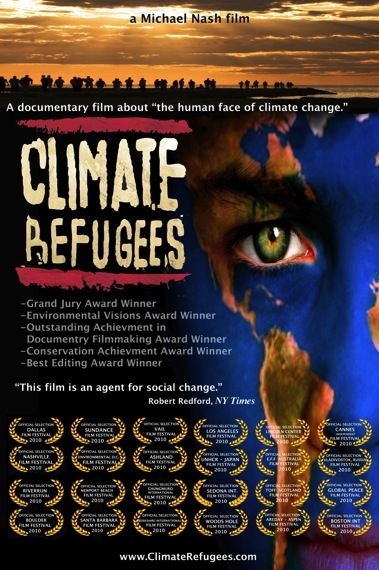
The Global Governance Project defines climate refugees as people who have to leave their habitats, immediately or in the near future, because of sudden or gradual alterations in their natural environment related to at least one of three impacts of climate change: sea-level rise, extreme weather events, and drought and water scarcity.
Although now widely used in the media, the term „climate refugee“ is very controversial. The main concern is that the use of the term „refugee“ for climate or environment-related displaced people lumps them together with the political refugees protected under the Geneva convention which defines a refugee as „a person who owing to a well-founded fear of being persecuted for reasons of race, religion, nationality, membership of a particular social group, or political opinion, is outside the country of their nationality, and is unable to or, owing to such fear, is unwilling to avail him/herself of the protection of that country.“ This, for the purpose of protecting refugees, to many states legally binding definition doesn’t mention environmental reasons at all. Concerns have been voiced that referring to environmental migrants as refugees might weaken the protection of political refugees. And while political refugees cannot turn to their own government for support, environmental migrants often can. The UNHCR was quoted with „Lumping both groups together under the same heading would further cloud the issues and could undermine efforts to help and protect either group and to address the root causes of either type of displacement.“ Read More: > HERE <
A climate refugee is someone displaced by climate change induced environmental disasters. Such disasters are the result of incremental and rapid ecological change and disruption that include increased droughts, desertification, sea level rise, and the more frequent occurrence of extreme weather events such as hurricanes, cyclones, flooding and tornados. The term climate refugee is seen by some as an inappropriate term, and they would rather see it replaced with environmental migrant. Many people have raised objections to the use of the term ‚refugee‘ in a climate context as it becomes mixed up with the legally defined term in the Refugee Convention of 1951. This Convention classifies refugees as those who are fleeing from violence and political intimidation.
So the debate over environmental refugees has been often criticised on the ground that there is no accepted definition of environmental refugees. An excellent article by Architesh Panda written in May 2010 (click on the link to download the pdf file), explores this idea.
The inhabitants of the Carteret Islands are climate refugees caused by sea level rise, and other inhabitants of low lying islands and Island states are also at risk. Tuvalu is especially susceptible to changes in sea level and storm surges and is likely to be another casualty.
The Intergovernmental Panel on Climate Change (IPCC), the international science body that regularly produces assessment reports on climate change, suggested 200 million environmental refugees would exist by 2050. In this projection, the impacts of climate change, including coastal flooding, shoreline erosion and agricultural degradation were seen as major factors contributing to bulk of environmental refugees.
Freshwater – Seawater intrusion into freshwater aquifers in deltaic and non-deltaic areas is an increasing problem with rising sea level, and has been documented in diverse environments such as the arid Israeli coast, the humid Thailand coast, the Chinese Yangtze Delta, the Vietnamese Mekong Delta, and low-lying atolls. In the Yangtze delta, one consequence of saltwater incursion will be that during dry seasons shortages of freshwater for agriculture are likely to be more pronounced and agricultural yields seriously reduced particularly around Shanghai.
Storm Surges – The most destructive element associated with an intense cyclone is storm surge. Storm surge heights depend on the intensity of the cyclone, i.e., very high-pressure gradient and consequent very strong winds and the topography of seabed near the point where a cyclone crosses the coast. Sea level also rises due to astronomical high tide. Elevation of the total sea level increases when peak surge occurs at the time of high tide. Past history indicates that loss of life is significant when surge magnitude is 3 metres or more and catastrophic when 5 metres and above.
Storm-surge flooding in Bangladesh has caused very high mortality in the coastal population (e.g., at least 225,000 in November 1970 and 138,000 in April 1991), with the highest mortality among the old and weak. Shorelines are inherently dynamic, responding to short and long-term variability and trends in sea level, wave energy, sediment supply, and other forcing. Land that is subject to flooding which is at least 15% of the Bangladesh land area is disproportionately occupied by people living a marginal existence with few options or resources for adaptation. The IPCC have found very few studies that indicate benefits of climate change and sea-level rise in coastal and marine systems. Read More > http://www.global-greenhouse-warming.com/climate-refugee.html
This trailer is from the documentary Climate Refugees. A film that illuminates for the first time the human face of climate change and the national security issues of our changing climate./Sun Come Up is a lyrical documentary following the relocation of some of the world’s first climate change refugees, the Carteret Islanders.
On November 25, 2003, the Papua New Guinean government authorized the government-funded total evacuation of the islands, 10 families at a time; the evacuation was expected to be completed by 2007, but access to funding caused numerous delays.In October 2007 it was announced that the Papua New Guinea government would provide two million kina (USD $736,000) to begin the relocation, to be organized by Tulele Peisa of Buka, Bougainville. Five men from the island moved to Bougainville in early 2009 to build houses and plant crops. It is planned to bring another 1700 people over the next five years. CNN has reported that the Carteret islanders will be the first island community in the world to undergo an organized relocation, in response to rising sea levels. The people of the Carteret are being called the world’s first environmental refugees. Read More: > Here <
Sun Come Up; www.suncomeup.com an Intimate Look at the World’s First Climate Refugees. The Carteret islanders are moving. Virtually all of them. They are being forced to relocate their entire society, and give up much of what makes them unique as a people. Not because of war, famine or disease, but because of climate change.
The Carteret islanders did not choose to be poster children in the worldwide debate over global warming, yet they are among the first climate refugees in a trend that could affect as many as 250 million by mid-century, according to the UN. This is perhaps surprising for a culture that doesn’t really have a cash economy, roads or an airstrip. They rarely use electricity, live in huts with sand floors and survive primarily on seafood they harvest themselves and vegetables they grow in gardens. Their home is a small line of atolls in the Pacific, off the northeast coast of Papua New Guinea.
Yet the plight of the 3,000 or so Carterets is slowly gaining international attention, thanks in part to documentary filmmakers Jennifer Redfearn and Tim Metzger, who are in the process of making a feature film about these people called Sun Come Up. A shorter version of the film-in-progress, entitled The Next Wave, recently won the Jury Prize at the Media That Matters film festival in New York City. From the looks of the short film, and the feature trailer, the story seems to be beautifully, and powerfully, told. The story of the Carterets is at once heartbreaking and heartwarming, and perhaps prescient of things to come.
2010 Vienna – World Peace Choral Festival
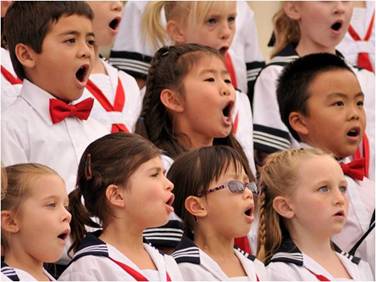
A choir, chorale, or chorus is a musical ensemble of singers. Choral music, in turn, is the music written specifically for such an ensemble to perform. A body of singers who perform together is called a choir or chorus. The former term is very often applied to groups affiliated with a church (whether or not they actually occupy the choir) and the second to groups that perform in theatres or concert halls, but this distinction is far from rigid. The term „Choir“ has the secondary definition of a subset of an ensemble; thus one speaks of the „woodwind choir“ of an orchestra, or different „choirs“ of voices and/or instruments in a polychoral composition. In typical 18th to 21st century oratorios and masses, chorus or choir is usually understood to imply more than one singer per part, in contrast to the quartet of soloists also featured in these works.
In Worship Services – Eastern Orthodox churches, some American Protestant groups, and some synagogues do not use instruments. In churches of the Western Rite the accompanying instrument is usually the organ, although in colonial America, the Moravian Church used groups of strings and winds. Many churches which use a contemporary worship format use a small amplified band to accompany the singing, and Roman Catholic Churches may use, at their discretion, additional orchestral accompaniment. Liturgical Function – In addition to leading of singing in which the congregation participates, such as hymns and service music, some church choirs still sing full liturgies, including propers (introit, gradual, communion antiphons appropriate for the different times of the liturgical year). Chief among these are the Anglican and Roman Catholic churches; far more common however is the performance of anthems or motets at designated times in the service. Read More: > HERE <
Music helps create better understanding between different cultures and countries. The „2010 Vienna – World Peace Choral Festival“ will be held in Vienna in August 2010 to provide a platform for youth and children’s choirs to perform and to enhance the understanding and friendship between young people.
The opening ceremony will take place in the Festival hall of University of Vienna on the 3rd Aug.2010. The closing ceremony will be hold in the famous music hall – the Concert Hall of Vienna, on the 6th of August 2010.
A series of events and activities will take place from the 3rd to the 6th of August 2010, e.g. concerts and celebration in the UN Headquarters in Vienna, in the Parliament Hall of City Vienna, in local concert halls and churches in and around Vienna.
The festival’s artistic activities will take place under the leadership of Mr. Gerald Wirth who is also the artistic director of the Vienna Boys Choir. Different workshops will be organized to help to reveal the talent of the children and young singers.
During the festival the children’s „World Peace Choir“ will be assorted from all choir singers by the festival’s artistic committee. The „World Peace Choir“ will tour different countries in the coming years (e.g. it is planned to tour China in spring 2011). Coming together to sing, Singing for a better future!
World Vision 2010 International Children’s Choir Festival / Vienna Boys Choir – Tallahassee FL USA. 2010 Vienna – World Peace Choral Festival, Coming together to sing, Singing for a better future. August 3-6, 2010, Vienna, Austria. TICKETS: http://konzerthaus.at
Program 5th of August, Concert at UN Headquarter& Vienna City Hall The day will start at UN Headquarter with a photo shooting. The participants of the World Peace Choral Festival will have the chance to take photos at this place of international understanding. After this the “young singing diplomats” will have their first big concert of the day at the UN Plaza. All the Choirs will perform their songs.
Following this, the participants will have a short foot walk to Vienna Danube Island, where they will have a picnic. Following a hearty picnic the choirs will tour to Vienna City Hall. After the reception at Vienna City Hall the second big concert of the day will begin. The choirs will get the chance to perform on stage of the Vienna City Hall summer stage.
This year, the activities of the World Peace Choral Festival will go further and are reaching out for new dimensions. The 2010 Vienna- World Peace Choral Festival invites all chorus ensembles across the world, especially children and youth chorus ensembles, to participate.
Competition is not the ultimate purpose of this festival- prior aim is to increase understanding between cultures, promote chorus art, and foster friendship between the people when spending time singing and celebrations together.
Lets get together friends, let’s sing for a better world!
The Best Friend -Worldpeacefestival 2010
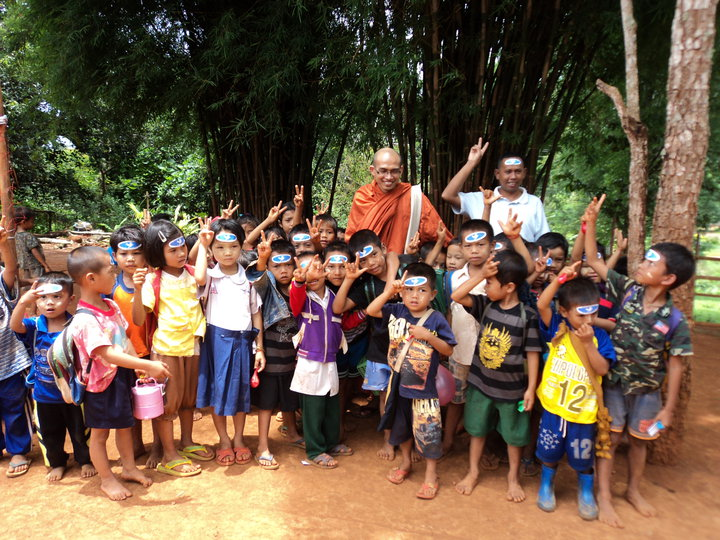
Buddhism in Myanmar (also known as Burma) is predominantly of the Theravada tradition, practised by 89% of the country’s populationIt is the most religious Buddhist country in terms of proportion of monks in the population and proportion of income spent on religion. Adherents are most likely found among the dominant ethnic Bamar (or Burmans), Shan, Rakhine (Arakanese), Mon, Karen, and Chinese who are well integrated into Burmese society. Monks, collectively known as the Sangha, are venerated members of Burmese society. Amongst certain ethnic Bamar communities, Theravada Buddhism is practiced in conjunction with nat worship, although this practice is dying out. Read More: > HERE <
Burma, officially the Union of Myanmar, is the largest country by geographical area in Indochina (mainland Southeast Asia). The country is bordered by People’s Republic of China on the north-east, Laos on the east, Thailand on the south-east, Bangladesh on the west, India on the north-west and the Bay of Bengal to the south-west with the Andaman Sea defining its southern periphery. One-third of Burma’s total perimeter, 1,930 kilometers (1,199 mi), forms an uninterrupted coastline. The country’s culture, heavily influenced by neighbors, is based on Theravada Buddhism intertwined with local elements. Burma’s diverse population has played a major role in defining its politics, history and demographics in modern times, and the country continues to struggle to mend its ethnic tensions. The military has dominated government since General Ne Win led a coup in 1962 that toppled the civilian government of U Nu. Burma remains under the tight control of the military-led State Peace and Development Council. Read More: > HERE <
The Best Friend was founded in 1999 as The Best Friend Group of Literature, by two concerned monks with the purpose of encouraging people to become more educated, aware and active in the struggle for peace and freedom in Burma. The main belief is that education can open up people’s ears and eyes and is THE way to eradicate poverty.
At one point, The Best Friend operated fifteen libraries inside Burma. The libraries provided both monks and laypersons access to uncensored information and literature. Apart from that, they were meeting places where people could discuss freely. The Best Friend also teaches languages, such as English, French, Japanese and Burmese.
The Burmese military regime has been closely monitoring and controlling the activities of politically active people, especially since the 2007 Saffron Revolution. Many of the members and volunteers of The Best Friend were forced to leave Burma to avoid persecution. Several people, also monks, were arrested and are currently imprisoned. Simply for the crime of providing information and discussing about politics and freedom.
6. – 9. August 2010
Friedensfestival 2010 Berlin
The Best Friend will take part in the Peace Festival 2010 in Berlin.
Where: Alexanderplatz, Berlin Germany
Today, only three of the fifteen libraries are still in operation. King Zero and Ashin Sopaka, the founders of The Best Friend, moved to the Thai border town Mae Sot and opened the first Best Friend Library in Thailand in 2008.
Apart from Thailand, The Best Friend has spread to many other countries in the world. It is now legally run by Kölner Buddhismus Center e.V. in Germany and is active raising awareness about the situation in Burma and giving information to people who wish to support the organization. From its new base in Thailand, The Best Friend is developing projects supporting the many Burmese refugees in the area. In 2010, the Mobile Health Care Program was launched and the Relocation Project – to help illegal refugee families , move away from the Mae Sot rubbish dump – was set up. The Best Friend also offers many classes, such as English language classes, computer and sewing courses, Dhamma teachings and children’s classes. All teachers work voluntarily and all classes are free of charge.
Paramahansa´s Worldconvocation 2010

http://bookstore.yogananda-srf.org/
“It isn’t academic education alone that makes people happy. It is „how-to-live“ education — how to develop a harmonious, moral life, stronger will power, and spiritual understanding — that will bring happiness.” — Paramahansa Yogananda
Paramahansa Yogananda (Bengali: পরম Pôromohôngsho Joganondo, Sanskrit: परमहंस योगानंद Paramahaṃsa YogÄ�naṃda; January 5, 1893–March 7, 1952), born Mukunda Lal Ghosh (Bengali: মুকMukundo Lal Ghosh), was an Indian yogi and guru who introduced many westerners to the teachings of meditation and Kriya Yoga through his book, Autobiography of a Yogi. Yogananda was born in Gorakhpur, Uttar Pradesh, India to a devout Bengali kshatriya family. According to his younger brother, Sananda, from his earliest years young Mukunda’s awareness and experience of the spiritual was far beyond the ordinary. In his youth he sought out many of India’s Hindu sages and saints, hoping to find an illuminated teacher to guide him in his spiritual quest. Read more: > HERE <
Thousands of SRF members and friends from around the world participated in our annual World Convocation. SRF monks and nuns joined them to lead group meditations, kirtans, classes on the SRF techniques of meditation, and inspirational talks on the teachings of Paramahansa Yogananda.
Paramahansa Yogananda in New York / On February 2, 2002, Roy Eugene Davis, founder and spiritual director of the Center for Spiritual Awareness, visited Paramahansa Hariharananda, a brother disciple of Paramahansa Yogananda, at his ashram in south Florida. Mr. Davis was asked to speak to the ashram residents about some of his experiences as a disciple of Paramahansa Yogananda.
Programs for Youth – Paramahansa Yogananda felt deeply for the welfare of children and took a lifelong interest in their all-around education. Carrying on in this tradition, Self-Realization Fellowship continues to offer programs that teach young people how to live a balanced life of meditation and right activity.
SRF Sunday Schools, teen programs, and summer youth programs provide children with a solid spiritual and ethical foundation on which to build throughout life. Emphasis is given to the practice of the science of meditation taught by Paramahansa Yogananda for personal experience of God. Children are shown how to develop moral character and the noble qualities exemplified in the Bible and the Bhagavad Gita, such as faith in God, respect, kindness, consideration for others, courage, and evenmindedness.
These qualities then act as spiritual building blocks for the right development of a child’s character and help to establish positive habits such as self-discipline, service to others, truthfulness, and the use of common sense — as countless participants over the decades have attested. Read more: > HERE <
Nako Research and Preservation Project

http://athene.geo.univie.ac.at/project/nako
Kinnaur is one of twelve administrative districts of Himachal Pradesh, India. The district is itself divided into three administrative areas – Pooh, Kalpa, and Nichar – and has five Tehsils or counties. The administrative headquarter for Kinnaur district is at Reckong Peo. Due to the network of motorable roads all the essential facilities are available. According to ancient Hindu texts Kinners are halfway between humans and gods. From here Sangla valley, and district headquarters Recong Peo, Kalpa, Kinnaur Kailash, considered to be the abode of Lord Shiva, can be viewed. Read More: > HERE <
While the 10th and 13th centuries, the Western Himalayan region developed a refined and complex artistic culture under Western Tibetan Buddhist patronage. Some of this tradition’s most striking examples are found in the seven temples of Nako village, Upper Kinnaur, in the province of Himachal Pradesh, India. These temples are not only witness to the long history of this region, but also lie at the heart of the communitity’s religious life, in which even today a Tibetan form of Buddhism flourishes.
These temples are now endangered due to the structural fragility of their architecture, and by the infiltration of rain and melt water. For these reasons amongst others, a major preservation program was necessary, which primarily involved large scale stabilization work, as well as cleaning and conservation of the unique wall- and ceiling paintings. Due to the large scope of the project, for the time being this work has been accomplished exclusively for the Lhakhang Gongma (Upper Temple), while work has now also begun on the Lotsawa Lhakhang (Translator’s Temple).
Some of the major objectives of the NRPP have been (a) providing technical expertise and modern technology to the Nako community, (b) examining and analysing indigenous building techniques and traditional artistic handicrafts, which have contributed to the continued existence of these exquisite monuments, and (c) merging these activities with the ongoing preservation work, while taking into account local economic and technological resources. Therefore, the NRPP is to be considered a model for the future conservation and preservation of this region’s rich cultural heritage. The villagers of Nako have greatly supported and contributed to the efforts and aims of the NRPP, and the ongoing process of consultation between the NRPP, the Buddhist Association and the Nako Village Council remains central to the preservation work.
In order to establish the proper methods and priorities of the preservation process, information needs to be gathered and brought together from technical, social, economical, as well as from historical sources and, in the case of Nako, this information is neither readily available nor easily accessible. Therefore, the research conducted by the NRPP team in Vienna over the last 15 years includes scholars of art history, Tibetan language, religious history, Buddhist philosophy and cultural anthropology, in addition to architects and painting experts. Each of these disciplines provides a distinct methodology for understanding the fragmentary evidence, and their findings serve as the outset for an in-depth study and research of this region’s cultural heritage and it’s preservation.
-
UNESCO WORLD HERITAGE http://whc.unesco.org
KTD – North American Kagyu Monlam 2010
Karma Triyana Dharmachakra is a Tibetan Buddhist monastery in Woodstock, NY, USA, which serves as the North American seat of His Holiness the 17th Gyalwa Karmapa, head of the Karma Kagyu lineage. It was founded in 1976 by the 16th Gyalwa Karmapa. The present abbot is Khenpo Karthar Rinpoche. Read More: > HERE <
The monastery was built through the blessings and inspiration of His Holiness the 16th Gwalya Karmapa, the Head of the Kagyu lineage of Tibetan Buddhism. His Holiness‘ vision came in response to the sincere supplication of students in the West who yearned for an authentic Tibetan Buddhist monastery for the study and practice of the Buddha’s teachings.
This summer, hundreds of monks and lay people will gather at Karma Triyana Dharmachakra (KTD) on Overlook Mountain above the artist village of Woodstock, N.Y., to participate in the North American Kagyu Monlam, a five day festival of prayers for world peace. This historic event, an extension of the annual Kagyu Monlam Chenmo in Bodhgaya, India, will be the first of an annual tradition to be held at sacred places across the U.S. and Canada.
Tuesday, July 13 – 17, 2010 at 8:30am
Karma Triyana Dharmachakra (KTD)
335 Meads Mountain Road, Woodstock, NY
“Kagyu Monlam is an avenue whereby we can spread, at times of great need, the genuine spirit of love and compassion to all the people of the world, like a great ripple, first in Bodhgaya, then in Bihar, and so on. As we continuously offer these prayers for world peace, it is our intention and our wish that peace and happiness extend to all.” — His Holiness the 17th Gyalwang Karmapa.
Your prayers and aspirations will help spread the spirit of compassion and love, supporting the mission of His Holiness and other great masters. Highlights of the event include daily teachings by the Very Ven. Thrangu Rinpoche and an Akshobhya Empowerment. The complete daily schedule of events, personally composed by His Holiness the Karmapa, can be viewed at https://www.kagyu.org/monlam/schedule.php
Karma Triyana Dharmachakra, July 13-17 2010
The many recreational opportunities of the Catskill Mountains make this an ideal location to bring the family. Whether you come for one day or for the entire program, your participation will support His Holiness’s efforts to promote world peace and harmony.
-
Co-sponsored by:
Kagyu Thubten Choling: http://www.kagyu.com/
Kagyu Thegsum Choling: http://www.ktcnj.org/
Chinese language website: http://www.2010usmonlam.com/ -
LIVE STREAMING:
If you have any questions, please feel free to email monlamregistration@kagyu.org or contact the KTD front office at 845-679-5906 x3. For more information, please visit www.kagyu.org/monlam. We look forward to seeing you at the first North American Kagyu Monlam.
„Unity in Diversity“ Child Art Competition
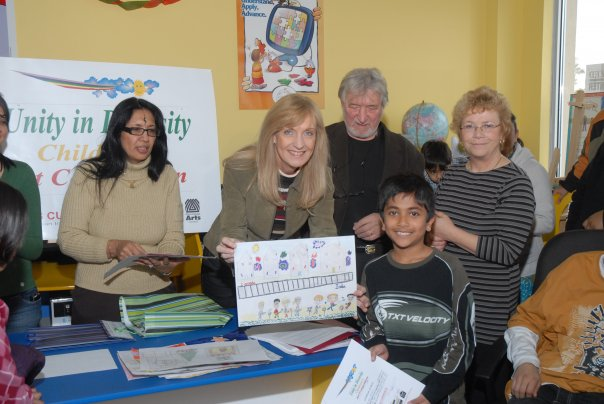
HEARTLAND LEARNA CENTER – UNITY IN DIVERSITY
http://meena-chopra.fineartamerica.com
http://learnaheartland.blogspot.com/
http://meenasartworld.blogspot.com
Let us Celebrate Unity in Diversity with children and spark their creative power. This is the Motto of Unity in Diversity Arts Competition.
UNITY IN DIVERSITY – The events has been created to celebrate the essence of life and that is ‘UNITY IN DIVERSITY Children’s Art Competition‘. Competition. Hopefully we will have this event every year.
All of us have a rainbow of attributes within ourselves and this colourful rainbow unites us in our personalities to create that one shining flame of everlasting sunshine, one spirit that we all seek. That is how we want to see a blossoming Canada under the one sunshine of Unity in Diversity, always celebrating the light and the rainbow at the same time and with the same spirit.
This event has come up with the support of many. Mississauga Arts Council. Art Unit of City of Mississauga has been behind us and encouraged us at every step. Learna Education Inc. as our main sponsor helped us in organising this event. We received a lot of support and congratulatory messages from many including community leaders, our sponsors and volunteers. I extend my thanks to everybody.
About Meena Chopra – A multi faceted person, painter and poet, Meena Chopra now settled in Mississauga, Canada, for 5 years after migrating from New Delhi India, hails from Nainital, a hill resort in India. She has had several art exhibitions in many countries, which includes India, Canada, England. An avid reader of prose and poetry, she writes both in English and her native language Hindi. Her first collection of poems, „Ignited Lines“ was published in 1996 was released in London, England the same year. At the moment she is working on two collections of poems one in Hindi and one is translations from English to Hindi. These are to be released by the end of this year(2009). Her poems have been published in many national and inter-national journals. They have also been translated into German by Carla Kraus, a well known Austrian author.
She represented Canada in New Delhi India in 7th Inter-national Hindi Celebration Meet in December 2008 organized by Akshram in association with ICCR (Indian Council for Cultural Relations). She has also represented India in the SAARC (South Asian Association for Regional Cooperation) Artists Meet, New Delhi in December 2002. She received Honourable Mention at Poetry Writing Contest 2003 held by the Mississauga Library System Canada when she landed in Canada.
Her paintings are with many Corporates, Government Bodies, Embassies, Hotels and Private Collections in India, Canada, Australia, England, Switzerland, Dubai and many other countries
She qualified as a textile and fashion designer and worked in this industry for for six years, then got into advertising.
She has had an intense career in advertising for twenty years and was heading an advertising agency in New Delhi, India. Now she runs an Entertainment & Life Style news weekly called „STARBUZZ“ along with her husband in GTA, Canada and also runs an after school learning centre in Mississauga.
Meena is also passionately involved in community arts and has directed many art events and curated many art exhibitions. Most of these have been done under the aegis of ‚CROSS CURRENTS – Indo Canadian International Arts‘ which has a mission of embracing diverse cultures and origins and bringing them on a common platform through arts there by ‘taking arts beyond boundaries’. The organization has had several successful art events in past. This includes an art exhibition „Confluence“, which was taken to India, “ „Children’s Art Competition, Unity In Diversity“ and „Beyond Boundaries International Arts Festival“.
She is also a qualified art educator (Learning Through the Arts) from The Royal Conservatory School (The RCM) Ontario, which means to implement an arts-infused approaches in developing the potential of every child and adult.
- Meet Meena Chopra – Artist & Poet, friends, fans at fb <
- Meet UNITY DIVERSITY Children’s Art Competition <
- Meet LEARNA HEARTLAND (Mississauga), friends, fans at fb <
- Meet Narender Metha – CHILD ART, friends, fans at fb <
Meena Chopra, President
CROSS CURRENTS Indo Canadian International Arts
(Also Director Learna Education Centre, Heartland, Mississauga)
Email: crosscurrents.ca@gmail.com
XVIII Int. AIDS Conference 2010

Acquired immune deficiency syndrome or acquired immunodeficiency syndrome (AIDS) is a disease of the human immune system caused by the human immunodeficiency virus (HIV). This condition progressively reduces the effectiveness of the immune system and leaves individuals susceptible to opportunistic infections and tumors. HIV is transmitted through direct contact of a mucous membrane or the bloodstream with a bodily fluid containing HIV, such as blood, semen, vaginal fluid, preseminal fluid, and breast milk.This transmission can involve anal, vaginal or oral sex, blood transfusion, contaminated hypodermic needles, exchange between mother and baby during pregnancy, childbirth, breastfeeding or other exposure to one of the above bodily fluids. AIDS is now a pandemic.In 2007, it was estimated that 33.2 million people lived with the disease worldwide, and that AIDS killed an estimated 2.1 million people, including 330,000 children. Over three-quarters of these deaths occurred in sub-Saharan Africa. Genetic research indicates that HIV originated in west-central Africa during the late nineteenth or early twentieth century. AIDS was first recognized by the U.S. Centers for Disease Control and Prevention in 1981 and its cause, HIV, identified in the early 1980s. Although treatments for AIDS and HIV can slow the course of the disease, there is currently no vaccine or cure. Antiretroviral treatment reduces both the mortality and the morbidity of HIV infection, but these drugs are expensive and routine access to antiretroviral medication is not available in all countries.Due to the difficulty in treating HIV infection, preventing infection is a key aim in controlling the AIDS pandemic, with health organizations promoting safe sex and needle-exchange programmes in attempts to slow the spread of the virus. Read More: > HERE <
XVIII International AIDS Conference (AIDS 2010), 18-23 July 2010, Vienna, Austria. The IAC is the premier gathering for those in the field of HIV, as well as policy makers, PLHIV and others committed to ending the pandemic.
Conference Overview – The International AIDS Conference is the premier gathering for those working in the field of HIV, as well as policy makers, persons living with HIV and other individuals committed to ending the pandemic. It is a chance to assess where we are, evaluate recent scientific developments and lessons learnt, and collectively chart a course forward.
Given the 2010 deadline for universal access set by world leaders, AIDS 2010 will coincide with a major push for expanded access to HIV prevention, treatment, care and support. With a global economic crisis threatening to undermine public investments, the conference will help keep HIV on the front burner, and is a chance to demonstrate the importance of continued HIV investments to broader health and development goals. AIDS 2010 is also an opportunity to highlight the critical connection between human rights and HIV; a dialogue begun in earnest in Mexico City in 2008.The selection of the AIDS 2010 host city is a reflection of the central role Vienna has played in bridging Eastern and Western Europe, and will allow for an examination of the epidemic’s impact in Eastern Europe.
The AIDS 2010 programme will present new scientific knowledge and offer many opportunities for structured dialogue on the major issues facing the global response to HIV. A variety of session types – from abstract-driven presentations to symposia, bridging sessions and plenaries – will meet the needs of various participants. Other related activities, including the Global Village, satellite meetings, exhibitions and affiliated events, will contribute to an exceptional opportunity for professional development and networking. Following the success of the pilot programme at AIDS 2008, the XVIII International AIDS Conference will provide or facilitate hubs (centres) where selected sessions of the conference will be screened, to increase the access to the conference programme.
Welcome to www.aids2010community.org, a Guide to Community Involvement to AIDS 2010. This Guide was created by the International Council of AIDS Service Organizations (ICASO) to help you better understand and participate in the international AIDS conference in Vienna, Austria, next year, from July 18-23.
As Executive Director of ICASO, and having been to many conferences, I know that international conferences can be overwhelming, as much as they can be educational and inspiring, allowing you to network with others doing similar work. I recognize that thinking about how and why you might get involved in AIDS2010, it is often difficult to put all the pieces together. This guide will help you navigate the next international AIDS conference and provide you with what you need to know to make decisions on what resources you or your organization should commit and the best way to get the most out of it.
The Life Ball in Vienna, www.lifeball.org , is the biggest charity event in Europe supporting people with HIV or AIDS. The event is organized by the non-profit organization AIDS LIFE, which was founded in 1992 by Gery Keszler and Torgom Petrosian.
AIDS LIFE supports non-profit aid organizations for people who are HIV-positive or have AIDS. The team entrusted with the allocation of funds thoroughly examines each petition to make sure that it is a worthy cause. Moreover, it is an explicit goal of AIDS LIFE to inform the public about the risks of HIV/AIDS and to raise awareness for this disease. Read More: > HERE <
Cultural Bridge between East & West
Serbian Church North & South America
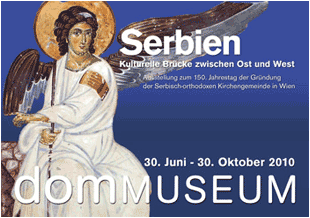
Motive on the poster: The White Angel, a dominant detail from the fresco Angel on the tomb, from the scene The Resurrection of Christ, painted in the church of the Mileševa monastery, built and painted in 1234-1236. Mileševa monastery is the endowment of King Vladislav, it is located in the South of Serbia, near Prijepolje.
The Serbian Orthodox Church (Serbian: Српска православна црква / Srpska pravoslavna crkva; СПЦ / SPC) or the Church of Serbia is one of the autocephalous Orthodox Christian churches, ranking sixth in order of seniority after Constantinople, Alexandria, Antioch, Jerusalem, and Russia. It is the second oldest Slavic Orthodox Church in the world (after the Bulgarian Orthodox Church), as well as the westernmost Eastern church in Europe. It exercises jurisdiction over Orthodox Christians in Serbia and surrounding Slavic and other lands, as well as exarchates and patriarchal representation churches around the world. The Patriarch of Serbia serves as first among equals in his church; The current patriarch is His Holiness Irinej. The Serbian Orthodox Church is an autocephalous, or ecclesiastically independent, member of the Orthodox communion, located primarily in Serbia (including Kosovo), Bosnia and Herzegovina, Montenegro and Republic of Macedonia[4], as well as Croatia. Since many Serbs have emigrated to foreign countries, there are now Serbian Orthodox communities worldwide. Read More: > HERE <
The Dommuseum, in cooperation with Matica Srpska, the oldest cultural and scientific institution of Serbia, and the collaboration of the ecumenical foundation Pro Oriente under the patronage of the President of the Republic of Serbia Boris Tadić, and the President of the Republic of Austria Heinz Fischer, on the occasion of the 150th anniversary of the establishment of the St. Sava Serbian Orthodox Municipality in Vienna, presents Serbia’s rich cultural heritage of the past twelve centuries.
It is generally considered that the nature and direction of the development of Serbian culture was determined long ago by the medieval educator and founder of the autocephalous Serbian Orthodox Church, Rastko Nemanjić, St. Sava (1175–1235), who saw Serbia, in his speeches and writings, as a bridge connecting the eastern and western parts of the world. During a period that lasted for many centuries and under the influence of Byzantium, Turkey, Russia and countries of Central and Western Europe, a specific culture originated representing the bond between the East and the West. This culture, however, does not represent a mere combination of the different foreign traditions, but a new culture of great spiritual value as recognized specially through Serbian Orthodoxy (Svetosavlje), the Serbian architectural style, an unique Serbian Cyrillic alphabet, rich literature, a distinctive philosophy of life within which elements of eastern collectivism and western individualism interlace, a rich history of endowments, significant contribution to science and fine arts.
The exhibits are of great historical and artistic value and together with multimedia presentations reflect the permeation of the East and the West in Serbian tradition and culture.
From the permanent exhibitions and collections of the National Museum in Belgrade, the Matica Srpska Gallery in Novi Sad, the Matica Srpska Library in Novi Sad, the Gallery of the Serbian Academy of Sciences and Arts in Belgrade, the Serbian Orthodox Church Museum in Belgrade, the Belgrade City Museum and the Serbian Historical Museum, have singled out items presenting fresco art and icons from the most significant medieval Serbian monasteries built under the influence of Byzantine culture, art of the baroque era, as turning points in the approach towards and acceptance of the Western European cultural model, and finally, the rebuilding of social institutions, following the emancipation from the centuries-long Turkish domination. The exhibition presents renowned personalities from Serbian history that have given a significant contribution to humanity in the fields of culture and science.
The following portraits are presented in the exhibition: Mihailo Pupin, world renowned scientist and professor at Columbia University in New York; Nikola Tesla, one of the most deserving inventors in the field of electrical engineering in the nineteenth and twentieth centuries; Milutin Milanković, founder of theory of cyclical climatic changes; Ivo Andrić, Noble Laureate for literature in 1961.
In five rooms of the Dommuseum are presented five eras:
- Serbian medieval art from the 10th to the 15th century
- Serbian Art from the 16th to the 17th century
- Serbian art in the 18th century
- Serbian art in the 19th century
- Serbian cultural heritage at the crossroads between the 20th and the 21st centuries
- Meet The Orthodox Church, friends, fans at fb <
- H.H. Ecumenical Patriarch Bartholomew I at fb <
- Council for a Parliament of the World’s Religions (CPWR)at fb <
KOA National Camps East & West Coast
Jammu and Kashmir (Dogri: जम्मू और कश्मीर; Urdu: جموں اور کشمیر) is the northernmost state of India. It is situated mostly in the Himalayan mountains. Jammu and Kashmir shares a border with the states of Himachal Pradesh and Punjab to the south and internationally with the People’s Republic of China to the north and east and the Pakistani administered territories of Azad Kashmir and Gilgit-Baltistan, to the west and northwest respectively. Formerly a part of the erstwhile princely state of Kashmir and Jammu, this territory is disputed among China, India and Pakistan. Jammu and Kashmir is referred to in Pakistan as Indian-occupied Kashmir. Jammu and Kashmir consists of three regions: Jammu, the Kashmir valley and Ladakh. Srinagar is the summer capital, and Jammu is the winter capital. While the Kashmir valley, often known as Paradise on Earth, is famous for its beautiful mountainous landscape, Jammu’s numerous shrines attract tens of thousands of Hindu and Muslim pilgrims every year. Ladakh, also known as „Little Tibet“, is renowned for its remote mountain beauty and Buddhist culture. Read More: > HERE <
Kashmiri Pandit (Hindi: कश्मीरी पण्डित) refers to a person who belongs to a sect of Hindu Pandits who originate from the Kashmir region in the Indian subcontinent. Many honest and credible experts are of the opinion that the original home of the Aryan race is the Kashmir Valley and its vicinity. Also the fact that all Hindus of Kashmir are Brahmin Pandits retaining their rich traditions by large since several millennia point to the tradition that in ancient times all Aryan Indian Hindus were of a single Brahmin caste but later split into occupation based several castes.Read More: > HERE <
The KOA organization has its origins in the early meetings of History several Kashmiri Pandit families in the Washington D.C. and Maryland areas. These families soon came to realize the importance of building a community structure which could include other families too in a bond for mutual preservation and growth. As more families and members joined the founding group, the organization evolved to become a national outfit with regional chapters, documented bye-laws, systems and procedures as well as a non-profit status to better seek donations and pursue community actions.
This is the beginning of the process to document and detail the history and origins of KOA. At the present time, this document is a simple chronological representation from materials available in various KOA publications. The eventual document will trace the past 30 years and list important milestones that have brought the organization to the present point. > HERE <
KOA Annual National Camps – KOA organizes two national camps every year, one each in east-coast area and west-coast area. Camps like these serve the members an avenue to mingle, catch up and reminisce with friends, the most cardinal objective is to create a vibrant opportunity and a very conducive environment for our youth (our future pillars) to make new friends and hopefully progress to potential relationships that are everlasting. What better way to preserve our culture, keep our community involved and most significantly contribute towards the survival of our progeny within our cultural milieu? This in any account is huge benefit to the members. Arranging and organizing the camps like these are only possible if the organization has strength and infrastructure and KOA gets its strength from its members. Click on the following links for more details > HERE <
- Articles on Kashmir <
- Eintreten in das göttliche Bewusstsein <
- Meet Kashmiri Overseas Association, friends, fans at fb <
- Meet Roots in Kashmir, friends, fans at fb <
- Meet Coast To Coast AM w/ George Noory, friends, fans at fb <
- Meet The International Ecotourism Society (TIES) at fb <
Sri Ganga River of Life Festival 2010
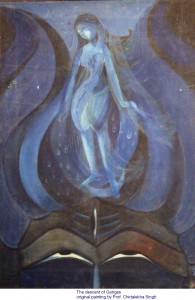
http://sivanandaonline.org/gangadussehra
Gangapujan Dashahara or Dussehra *
* The Descent of the River Ganges, Srimad Bhagavatam 5th Canto 17the Chapter Summary by HDG Srila A.C. Bhaktivedanta Swami Prabhupad.
Ganga Dussehra is the annual celebration of the most sacred of Hindu rivers, Ganga, or the Ganges. The celebration lasts for ten days from the new moon at the beginning of Jyaistha (amanta reckoning). The last day, 10 Jyaistha, is the holiest of them all (this normally occurs in June in the Gregorian calendar, or occasionally at the end of May). Devotees are expected to bathe in the Ganga. If they cannot reach the banks of the river, many devotees will use water drawn from the Ganga that is kept at home to bathe. Alternatively, the devotee will bathe in ordinary water whilst invoking Ganga by prayer. This bathing is considered to impart purity from sin.
Ganga Dussehra: Swami Sivananda’s „Hindu Fasts and Festivals“ and Swami Krishnananda’s „Spiritual Import of Religious Festivals“ have detailed descriptions of the festivals listed here. Click here for ordering details. This Spiritual Calendar is for worships held at the Divine Life Society, Rishikesh, India. Some of the dates may not necessarily hold true for other parts of the world. http://www.dlshq.org/calendar.htm
Sri Ganga Dussehara (Jayesht Shukl Dashmi) 21st June 2010 – This day is auspicious because on this day the sacred Ganges descended in the earth. It can be called birthday of Ganga. A dip in the Ganges or in any other river invoking Goddess Ganges, is beneficial and is said to be purified from ten sorts of sins. Worship of the river deity is done by incense, light, sandal wood, flowers, milk, etc.. Flour balls are fed to aquatic animals.
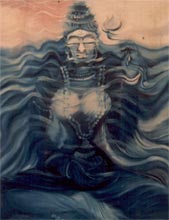
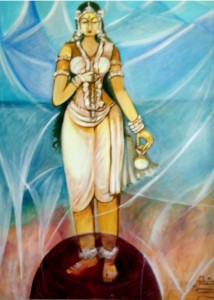
There was a ruler named Sagar. He performed Ashua Medha Yageya. God Indra stole away the ashva (Horse). Sagar’s grandson Anshuman took over the responsibility of the search of the horse. After searching all over, he reached Netherlands with 60,000 followers, where he saw god personified as Kapil saint, was under meditation and the horse was grazing nearby.
The followers of Anshuman shouted, “thief-thief”. Thereupon Kapil rishi opened his eyes and by the blazing lighting of which all were reduced to ashes. For the final cremation ritual of those dead, Bhagirath undertook severe austerities. B’rhma when pleased and asked him to demand a boon. Bhagiratha requested for the descent of Ganges on land. B’rhma agreed but expressed his apprehension if the earth could shoulder the weight and flow of the Ganges, in that case of Bhagirath should invoke God Siva. When Siva agreed to hold the fall of Ganges, B’rhma let it loose from the heavens (swarga lok). The Ganges was then interlocked in the tufts of Siva and Bhagirath’s purpose, of washing the ashes of this ancestors in the water of the Ganges, remained still. There upon Bhagirath invoked Siva, who when please, released the Ganges as river Ganges on the land. The release of the sacred water of the Ganges and its flow through different cities of India is very fortunate, pious, and auspicious for the Hindus of India.
Ganges was not merely a river. She (Goddess Ganga) was devoted to the service of lord K’rsna in the heavens (Swarge-Baikunth). She was thus very near the lord, which made Radha jealous. later cursed her to go down to earth and flow as a river. Ganga, in retaliation, also cursed Radha that you will be close to K’rsna, yet you will always imagine him far away, tolerate separatism and never be peaceful. Thus since then Gange flows as a Ganges river, under the ancient curse of Radha and under the modern curse of city pollution. In the modern times of Kaliyuga, Ganges is of utmost and importance, as according to Narade Purana, all pilgrimages were of influence in Sateya yuga then Pushkar in Treta and Kurukshtra in Dwapar Yuga.
Article by Prof. Chitralekha Singh
Dean: Institute of Visual, Performing Arts & Research, Mangalayatan University, Beswan, Aligarh. Arts Visit at: www.artistchitralekha.com, e-mail: chitralekha@artlover.com, mob . 91 9319103482
Sustainable Travel – Tashi Lhunpo Monastery

http://www.freetibet.org/events/tashi-lhunpo-monks-acton
Tashilhunpo Monastery (Tibetan: བཀྲ་ཤིས་ལྷུན་པོ་), founded in 1447 by Gendun Drup, the First Dalai Lama, is a historic and culturally important monastery next to Shigatse, the second-largest city in Tibet. It was sacked when the Gurkhas invaded Tibet and captured Shigatse in 1791 before a combined Tibetan and Chinese army drove them back as far as the outskirts of Kathmandu, when they were forced to agree to keep the peace in future, pay tribute every five years, and return what they had looted from Tashilhunpo. The monastery is the traditional seat of successive Panchen Lamas, the second highest ranking tulku lineage in the Gelukpa tradition. The „Tashi“ or Panchen Lama had temporal power over three small districts, though not over the town of Shigatse itself, which was administered by a dzongpön (prefect) appointed from Lhasa.
Located on a hill in the center of the city, the full name in Tibetan of the monastery means: „all fortune and happiness gathered here“ or „heap of glory“. Read More: > HERE <
Tashi Lhunpo Monastery is seat to the Panchen Lama, the second most important spiritual leader of Tibet. In 1447 the Monastery was founded by His Holiness the 1st Dalai Lama, Gyalwa Gendun Drup, in Shigatse, Tibet’s second largest city. It is one of the four great monasteries of Central Tibet and was supervised and looked after by the Dalai Lamas and Panchen Lamas of the Gelugpa, or Yellow Hat tradition. It has the glory of producing thousands of renowned scholars in the field of Mahayana Buddhist Philosophy and Tantra.
During the lifetime of the 4th Panchen Lama, Lobsang Choekyi Gyaltsen, there were more than 3,000 monks in the Monastery and by 1959 there were 5,000, with another 2,000 monks affiliated to the monastery living outside Tibet. The Communist Chinese invasion of Tibet in 1959 and the Cultural Revolution from 1966-80 both wreaked destruction on Tibet’s monastic institutions, which lost many precious scriptures, statues and images. Many monks were killed or imprisoned and only 250 were able to follow the Dalai Lama into exile.
www.tibettours.com , In 1972, by the order of the 14th Dalai Lama, the Tashilhunpo Monastery was re-established in Karnataka, the southern state of India. From early1980’s, entry to the general public has been allowed, although one cannot visit all the parts of the monastery, but still Tashilhunpo Monastery has become an important tourist destination in Tibet.
Tibet Reiseführer – Das Tashilhunpo-Kloster, der Sitz der Panchen Lamas aller Generationen. Das Tashilhunpo-Kloster gehört zu den unter staatlichen Denkmalschutz stehenden bedeutenden Kulturstätten Chinas. Es liegt am südlichen Fuß des Berges Nyimarie im Westen der Stadt Xigaze. Es ist das größte Kloster der gelug-Sekte in Westtibet und der Hauptort der religiösen und politischen Angelegenheiten der Panchen Lamas aller Generationen. Das Tashilhunpo-Kloster und die oben genannten drei Klöster Lhasas sind die vier berühmtesten Klöster Tibets.
Tashilhunpo bedeutet auf tibetisch „Glückliches Sumera“. Das Kloster wurde am Berghang gebaut und umfasst Hauptsutrahallen, die Qamba-Buddha-halle, die Gyina Lhakang-Halle, Gedenkhallen mit Stupas für die Panchen Lamas fünf bis neun, die Gedenkhalle Shesong Namgyi mit dem Stupa für den zehnten Panchen Lama, die Terrasse zum Ausrollen großer Buddhabilder sowie Arbeitszimmer früherer Panchen Lamas. Es gibt außerdem noch vier Zhacangs (buddhistische Kollegien), 64 Dörfer mit Wohnhäusern, in denen die Mönche, nach Herkunftsorten zusammengefasst, untergebracht waren, und 56 Gebetshallen. Read More: > www.china-guide.de <
THE STYRIAN ACADEMY EVENTS 2010
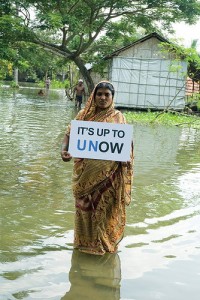
Monasteries Enviromental Himalayaprotection
www.alternative-energy-news.info
Sustainable energy is the provision of energy such that it meets the needs of the present without compromising the ability of future generations to meet their needs. A broader interpretation may allow inclusion of fossil fuels as transitional sources while technology develops, as long as new sources are developed for future generations to use. A narrower interpretation includes only energy sources which are not expected to be depleted in a time frame relevant to the human race, which can potentially also include nuclear power if it is utilized differently from the current manner. Sustainable energy sources are most often regarded as including all renewable sources, such as plant matter, solar power, wind power, wave power, geothermal power and tidal power. It usually also includes technologies that improve energy efficiency. Conventional fission power is sometimes referred to as sustainable, but this is controversial politically due to concerns about peak uranium, radioactive waste disposal and the risks of disaster due to accident, terrorism, or natural disaster. Read More: > HERE <
The 2010 United Nations Climate Change Conference will be held in Cancún, Mexico, from 29 November to 10 December 2010.The conference is officially referred to as the 16th session of the Conference of the Parties (COP 16) to the United Nations Framework Convention on Climate Change (UNFCCC) and the 6th session of the Conference of the Parties serving as the meeting of the Parties (CMP 6) to the Kyoto Protocol. Read More: > HERE <
The STYRIAN ACADEMY is a unique international European life-long learning platform organised by Graz University of Technology in cooperation with Strategic Partners. The STYRIAN ACADEMY addresses business, science and politics as well as excellent students and an interested public.
The unique feature of the STYRIAN ACADEMY is that it combines internationally recognised research across disciplines with entrepreneurial experience to provide participants with the skills and knowledge to develop innovative solutions.
The STYRIAN ACADEMY offers 2010 the following events:
Kick-Off-Event 15 June 2010
Download Programme Kick-Off-Event (PDF)
International Summer School 5-16 July 2010
Download Programme International Summer School (PDF)
International Business Seminar I, 6/7 July 2010
Download Programme International Business Seminar I (PDF)
International Business Seminar II, 7/8 July 2010
Download Programme International Business Seminar II (PDF)
Garden Talks, 7 July 2010
Download Programme Garden Talk (PDF)
In 2010 and 2011 the STYRIAN ACADEMY is dedicated to the European key topic of future Sustainable Energy Systems. The STYRIAN ACADEMY taps into the know how of top-class scientists and entrepreneurs from the European Sustainable Energy Innovation Alliance (eseia) (www.eseia.eu).
The 2010/2011 STYRIAN ACADEMY provides participants with the necessary knowledge and entrepreneurial skills to turn dwindling fossil resources and the challenge of climate change into a chance. The high level training covers the whole innovation field from sustainable energy resources to efficient infrastructure to rational provision of energy services.
- SAVE MOTHER EARTH <
- European Water Partnership (EWP)Aquawareness Day <
- ONE Drop Foundation, Cirque de Soleil <
- http://en.wikipedia.org/wiki/Alternative_Energy
- http://en.wikipedia.org/wiki/Renewable_energy
- Meet Umweltberatung Wien, friends, fans at fb <
- Meet International Year of Biodiversity 2010, friends, studies at fb <
- Meet THE WONDER OF CANCUN: LET’S FIX IT IN MEXICO! at fb <
- 100 Million Voices for a Real Climate Deal in Mexico 2010 <
SURYA JYOTHI YOGA VEDANTA CENTER
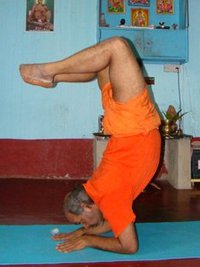
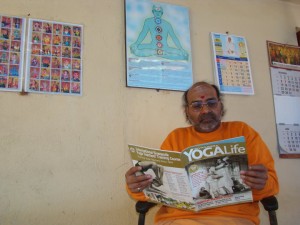
One of the senior disciples of Swami Vishnudevananda and who spent 18 years with gurus mission International Sivananda Yoga Vedanta centre as a Director in different branches. Swamiji is the author of poetry Kaliyuga Vahini in Kannada language. His poetry is coming in all major languages shortly. Swamiji is teaching yoga and Meditation and conducting Satsanga and giving spiritual guidelines to sadhakas all over the world. Swamiji is traveling across the globe in spreading Gurus message.
Sri Swami Krishnananda Saraswati Maharaj (April 25, 1922 – November 23, 2001) was a Hindu saint. He was a foremost disciple of Swami Sivananda and served as the General Secretary of the Divine Life Society in Rishikesh, India from 1958 until 2001.He was one of the most important theologians and philosophers of the 20th century. Author of more than 200 texts, Krishnananda wrote and lectured prolifically on yoga, religion, and metaphysics. His lectures, though delivered extempore (without rehearsal), were known for their structure, style and sophistication, and have been widely published in text form. The works for which Krishnananda is best known are The Realization of the Absolute, The Philosophy of Life, and The Philosophy of Religion. Read More > HERE <
Yoga is a divine knowledge taught by Rishi’s to gain Physical, Mental, Spiritual well being and to attain our Divine quality through following the eight limbs of Raja Yoga called Astanga Yoga. Yoga means union of human sole with the supreme – sole or Almighty god means join Divine & human spirit. This is a Process which liberates the human soul from the bondage of Maya (attachment to worldly things and makes the sole free from rebirth) Only Maya is a strong bondage.
The ultimate Aims of Yoga practice is to get Self –Realization to merge our tiny spark of soul in the ocean of God consiousness.To remove our ignorance due to Maya, to know our own ego, to get freedom from bondages of birth and deaths, to remain in permanent eternal peace, bliss and joy and to realize the complete ultimate knowledge of everything in the universe we should practice this techniques with devotion, faith and proper understandings . Without devotion we never reach any where in this practice.
Love yoga? Want to get started? Become a teacher?
SURYA JYOTHI YOGA CENTRE offers an amazing range of yoga retreats and trainings for people at all levels of experience.
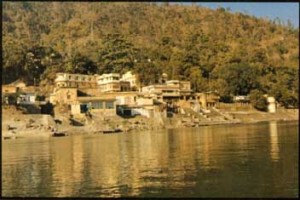
Sivananda Ashram (Headquarters of The Divine Life Society) Rishikesh, Himalayas, India.
The Divine Life Society was founded by the great Saint and Sage of modern times, Swami Sivananda, in the year 1936. It was founded for resuscitating the higher values of life beyond the limitations of perceptional and cognitional evaluations of life. The Founder’s main intention was to awaken humanity towards the ways and means of imbibing in one’s life the characteristics of Ultimate Reality, veritably God-realisation.
Towards this end a vigorous disciplinary process has to be undergone by imbibing in one’s personal life the other associated values, such as the social, ethical, and austere principles, all which have to be set in tune harmoniously with everything that is considered as part of one’s life at any stage of one’s existence in this world. This is briefly the great vision of the Founder, Swami Sivananda.
All material on this website is copyright. This website is independent of the Divine Life Society.
- SWAMI SIVANANDA – YOGA IN DAILY LIFE <
- Ayurveda – H.H. Swami Sivananda Maharaj <
- H.H. SWAMI SIVANANDA – SELFLESS SERVICE <
- Meet Surya Jyothi Yoga Vedanta Center, studies, friends at fb <
- Meet Swami Sivananda – Divine Life Society, studies, friends at fb <
- AN APPEAL FOR YOGA GURUKULAM CONSTRUCTION PROJECT at fb <
