
Posts by admin
THE ARTS OF HARISH JOHARI
> HARISH´s AYURVEDA BOOKS & ARTS <
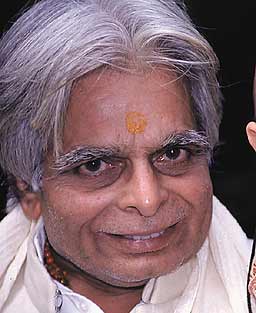
Harish Johari (1934-1999) was a distinguished North Indian author, Tantric scholar, poet,musician, composer, artist, and gemologist who held degrees in philosophy and literature and made it his life’s work to introduce the culture of his homeland to the West.
Breath, Mind, and Consciousness
YOGA, by the puplisher
Modern scientists are just now beginning to understand what yogis have known for centuries–that the life force animating our physical bodies is regulated by breath, and that the breath energy is controlled by the mind. The esoteric and practical science of Swar Yoga >–presented in this book for the first time in English–< teaches conscious observation and control of breathing patterns to maximize energy and vitality.
Tantric Scholar and author of Tools for Tantra, Chakras, and The Healing Power of Gemstones, HARISH JOHARI brings an in-depth knowledge of ancient Hindu sciences to this discussion of breath and the yoga of balanced living.
His is the first guidebook for Westerners to offer a comprehensive treatment of the subject, providing information from Sanskrit texts otherwise unavailable in the English Language. He explains the sensory network of the nose and its effect on the subtle channels of energy throughout the body, showing the direct link between the practice of conscious breathing and the electrochemical balance of the brain and nervous system. He also shows how the breath, alternating between left and right nostrils, is influenced by solar and lunar forces and how one can attune to these natural rhythms and universal laws for greater health and well-being.
SWARA YOGA, the ancient art of breathing
Johari’s mastery of > Swara Yoga < techniques is apparent in the broad scope of Breath, Mind and Consciousness: included are a discussion of the phases of the five elements in the breathing cycle, exercises for physical and psychic healing, the means for determining which nostril is active, and instructions for conceiving a son or a daughter.
While continuing his lifetime study and practice of tantra, HARISH JOHARI is a painter, sculptor, gemologist, and composer of Indian music.
The word SWARA in Sanskrit, means sound or musical note; it also means the continuous flow of air through one nostril. And we all know that YOGA means union. So Swara Yoga is the science which is about the realization of cosmic consciousness, through the awareness or observation, then control or manipulation of the flow of breath in the nostrils.
Swara yoga is an ancient tantric science which involves the systematic study of the breath flow through the nostrils (or swara) in relation to the prevailing phases of the moon, time of day and direction . Although we think of ‚pranayama‘ when we think of techniques associated with the breath, in Swara yoga, it is the association of the breath in relation to the activities or phases or positions of the sun, moon, planets, seasons, time of day, with the physical and mental conditions of the individual and then taking the appropriate action according to these subtle relations. For example, knowing the moon phases and checking the flow of your nostrils before you get out of bed in the morning and letting the corresponding foot be the first to touch the floor and make the first step, is a simple practice that ensures success in everything that happens for that day. The first foot to touch the ground will get the prevailing ’successful‘ flow of energy from the cosmos.
> Meet SWARA Group at facebook <
> Meet over 200 Frida Kahlo Groups and Frida Kahlo Fans (184.298) <
YOGA TANTRA IN BUDDHIST SYSTEMS
> Buddhaguhya< > Tantric Buddhism <
> INTRODUCTION TO THE BUDDHIST TANTRIC SYSTEMS <
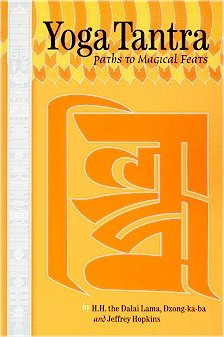
–from Yoga Tantra: Paths to Magical Feats by H.H. the Dalai Lama, Dzong-ka-ba and Jeffrey Hopkins, translated and edited by Jeffrey Hopkins, published by Snow Lion Publications
Buddhaguhya’s Introduction to the Meaning of the Tantra and its commentary by the master Padmavajra describe how to achieve many different types of feats in considerable detail. These include achieving clairvoyance, love, compassion, the altruistic intention to become enlightened, and so forth. In Yoga Tantra there is also the achievement of an actual body that is a special type of form having the marks of a Buddha’s body; this seems to be like the mental body achieved through the path of the Perfection Vehicle. The process is to generate yourself as the deity and then imagine that all of space is filled with similar small Buddha bodies, which are brightened with the exhalation of breath and drawn into your heart with the inhalation of breath, like butter melting into sand.
By contemplating this again and again, capacity is gradually achieved, whereby eventually your body turns into a Bodhisattva Knowledge-Mantra Bearer who has a similitude of the form of a Buddha.
Paths to Magical Feats
by H.H. the Dalai Lama,
Dzong-ka-ba and Jeffrey Hopkins,
translated and edited by Jeffrey Hopkins
Contact Us:
Snow Lion Publications
N. America: (800) 950-0313
Worldwide: (607) 273-8519
By Mail: PO Box 6483,
Ithaca, NY 14851 USA
By Email: tibet@snowlionpub.com
On the Web: www.snowlionpub.com
Doctor of Traditional Tibetan Medicine
>> Kagyu Samye Dzong London <<
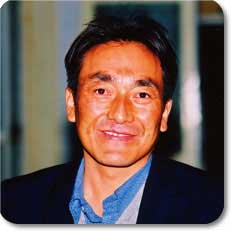
Doctor of Traditional Tibetan Medicine Working with the Tara Institute of Tibetan Medicine (Please note: Dr. Soktsang has recently changed his name from his former title of Dr. Dhonden.)
Dr. Soktsang is highly experienced in the field of Traditional Tibetan Medicine, having studied and practised over the past twenty years.
He commenced his studies in Tibet for a period of five years under the guidance of an uncle, who was also a doctor. This enabled him to enter the Central Medical Institute for Traditional Tibetan Medicine in Lhasa, where he studied for a further five years until he graduated with the MEN-RAMPA, (Tib.) or Masters Degree of Tibetan Medicine. After graduating, he went to work at the Lhasa Mentse Khang Hospital, the premier centre of excellence of Traditional Tibetan Medicine.
Research- Mathematic, Physic, Sociality
There’s nothing wrong with my verbal skills. It only seems that way because my math skills are so high. -Dilbert
Personal Information:
My name is Anand Jayaraman. I got my PhD in Physics from University of Pittsburgh. I have held research positions at Duke University and Penn State University. I was associated with the Pritchard Fluid Mechanics lab when I was at Penn State; while at Duke I held positions at both the Mathematics and the Physics departments. I currently live in the beautiful city of Seattle, Washington.
I am from India. I come from Trichy district in Tamilnadu. I did my B.tech in Engineering Physics at Bombay, India at the Indian Institute of Technology.
Research Interests: Finance, Physics and Mathematics. In particular the application of mathematics in solving variety of problems. The „unreasonable effectiveness of mathematics in solving physical problems“ amazes me ( I am, of course stealing Eugene wigner’s quote ). My thesis research involved using the techniques of nonlinear dynamics in analyzing the Vlasov equation. My research interests include non-newotnian fluid dynamics, pattern formation thin-film dynamics and spatiotemporal chaos. Currently, my research efforts have been directed towards financial applications; specifically the presence of non-random behavior in commodities and stock prices has really intrigued me. Does presence of non-random behavior automatically imply existence of stratergies that „beat the market“? Is there a ‚chaotic‘ component to the price movements?
Other Interests:
-
AID
-
Anbagam
-
Movies. Just about any kind.
ABOUT SOUND AND FORM

> YOGA UND MEDITATION IM ZENTRUM <
> SWAMI JANAKANANDA´s PROGRAMM<
Klang und Form:
In der Yogatradition gibt es bestimmte Mantra (Klänge zur Meditation) und Yantra (Formen um darauf zu meditieren), die zusammen gehören. Man sagt, daß die Form von Sri Yantra zum Mantra OM gehört, und umgekehrt.
Lassen sich diese Zusammenhänge zwischen Klang und Form beweisen? Ist das etwas, das man nur im Geiste erlebt oder läßt es sich messen?
Der Schweizer > Dr. Hans Jenny < verbrachte sein Leben mit der Untersuchung von den Zusammenhängen zwischen Klang und Form > (siehe Vibrationen schaffen Formen) . <
Er war einer der führenden Forscher der Welt auf diesem Gebiet und der Begründer der Kymatikwissenschaft. An seinem Forschungsinstitut für Wellenphänomene in der Schweiz konstruierte er um das Jahr 1970 ein sogenanntes Tonoskop, einen Apparat, mit dem sich Klang in Form umsetzen läßt. Dr. Jenny hat verschiedene Bücher über Kymatik geschrieben und fotografiert/gefilmt, wie Klänge verschiedene Materiale beeinflußen.
Nach unseren Quellen, ließ man eine Person, die > „ OM „< korrekt aussprechen konnte, das Mantra in das Mikrofon des Tonoskops singen. Zunächst bildeten sich Kreise auf der Platte, dann entstanden verschiedene Dreiecke mitten im Kreis, und als „M“ ausklang waren die Konturen von Sri Yantra zu sehen.
> CYMATICS, Nada Brahma, the World is Sound <
> CYMATICA Architectural Thesis Investigation <
About Sound and Form:
In the Yoga Tradition there are certain mantras (sound syllables) and yantras (forms to meditate on) which belong together. The form which belongs to the mantra Om is said to be Sri Yantra, and vice versa.
Is this relationship between form and sound a purely subjective experience – one that certain people claim to have seen within? Or can it be measured?
Dr. Hans Jenny spent his life investigating the connection between > sounds and forms < . He was one of the world’s foremost researchers in the field and the founder of the science of Cymatics. In his Wave Phenomena Research Institute in Switzerland, around 1970, he constructed what is called a tonoscope – an apparatus which converts sounds into forms. He wrote several books on Cymatics and documented through films and photos the influence of sounds on various materials.
According to our sources, a person who could pronounce the mantra „Om“ correctly, was asked to sing it into the tonoscope’s microphone. At first a circle was generated on the membrane of the tonoscope, then various triangles formed themselves inside the circle, and when the „m“ faded out, > Sri Yantra < was completed. Another mantra created concentric circles.
BINDU Textbeiträge von Yoga und Meditation im Zentrum,
Skandinavische Yoga und Meditationsschule
in Hannover und im Harbergen Yoga Retreat
www.yogaimzentrum.de
YANTRAS – VEDIC SACRED GEOMETRY
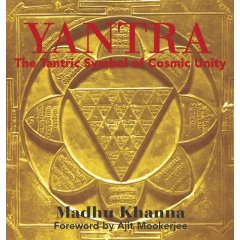
> YANTRA – the Tantric Symbol of Cosmic Unity <
> YANTRA & YOGA < > WATER FOR LIFE <
> International Water for Life Foundation <
Educating and raising the awareness of the power of water.
„Yantras are beautiful art, the original Vedic sacred geometry. These cosmic diagrams generate nourishing, life-supporting energies. Yantras embody the energy of particular sacred archetypal energies, such as deities and planets or grahas of > Vedic astrology (Jyotish) < . Yantras are especially useful in buildings that were not Vastu-designed. They protect from negative, disruptive energies in the environment. The directions, elements, and planets exert powerful vibratory effects on our bodies, minds, and emotions. Yantras help us have the support of nature rather than resistance from nature. There are mantras, or sacred sound vibrations, associated with most yantras. There are both two- and three-dimensional yantras. I have been studying them for years and offer yantras and a 25-page yantra guidebook on my website.“
Sherri Silverman, „Ph.D., author, > Vastu < : Transcendental Home Design in Harmony with Nature“
This book details all kinds of historical Yantras as revealed in various Vedas (historic Hindu scriptures). Yantras are cosmic machines which directs energies to the human body/mind to attain various psychic states. The author dwells deeply in to the philosophy behind it, which in essence is Hinduism. Understanding the Hindu concept of the world, the cosmos and the human being is the key to unlocking the power of Yantra. A reader who is not exposed to Eastern religious philosophies will find it difficult to comprehend the description of concepts behind the Yantra.
This book has many illustrations of historic Yantras and details of the significance of its geometric drawings. I liked this book for the depth of analysis and the description of underlying concepts. Please note that this is NOT an instruction work book on Yantras which details about how to make a Yantra.
One disappointing fact is that the author uses little space to describe Occult Yantras which are commonly used by ordinary people for protection, healing and power. The Sri Yantra, which enables a person to attain higher states is described in detail. Overall this book gave me indepth knowledge about the working of a Yantra – the energized cosmic machine.
SPIRITUELLE FESTIVALS IN WIEN
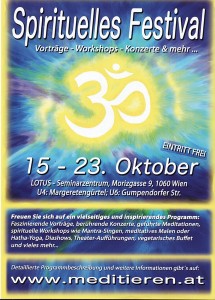
Herzlich willkommen im Lotus Seminarzentrum !
Meditation ist eine Jahrtausende alte Technik, um in ein höheres Bewusstsein einzutauchen. Sie verhilft uns zu einem entspannteren, erfolgreicheren und glücklicheren Leben. Letztes Ziel der Meditation ist die Selbstentfaltung und Selbsterfahrung.
Wir veranstalten: Meditationsvoträge, Meditationskurse, Meditationskonzerte und spirituelle Festivals.
Unsere Veranstaltungen sind alle unverbindlich und gemäß alter spiritueller Tradition mit freiem Eintritt !
Über Uns
Das „Lotus-Seminarzentrum“ ist in der Morizgasse 9/17, 1060 Wien, Österreich, gelegen und veranstaltet regelmäßig Seminare über Yoga, Meditation und Meditationsmusik, fallweise Hatha-Yoga-Kurse, mit stets „freiem Eintritt“. Darüber hinaus werden regelmäßig sportliche Veranstaltungen organisiert. Das Lotus-Seminarzentrum ist eine kleine Oase des Friedens inmitten der Großstadt. Ein Ort lebendiger Spiritualität.
Die Referenten bzw. Musiker, die im Lotus-Seminarzentrum referieren bzw. auftreten, verfügen über langjährige Erfahrung und eigene Praxis in Yoga und Meditation. Sie wollen keine Lehrer sein, sondern lediglich Wege aufzeigen, die zur Entfaltung des eigenen Potentials führen. Alles, was ihrer Überzeugung nach zählt, ist die eigene, die praktische Erfahrung; die Theorie spielt im Yoga bzw. bei der Meditation letztlich kaum eine Rolle.
Wir glauben, dass jeder Mensch die Fähigkeit besitzt, zu meditieren und aus der Meditation Nutzen zu ziehen, wenn er nur dazu inspiriert ist und das erforderliche Maß an Geduld mitbringt. Weiters sind wir davon überzeugt, dass man in ähnlicher Weise über all die großen spirituellen Wege letztlich das gleiche Ziel erreicht, wie alle Flüsse schließlich ins Meer münden. Unserer Ansicht nach ist es daher nicht so sehr von Bedeutung, welchen Weg man folgt, als wie man seinen Weg geht.
UNESCO – ANCIENT INDIAN TRADITION
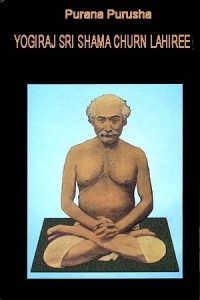
>> UNESCO PUBLISHING, PURANAS & YOGA <<
Ancient Indian Tradition and Mythology
>> The Yoga Tradition: PURANAS & YOGA <<
Its History, Literature, Philosophy and Practice ( >> von Georg Feuerstein << )
Wie bereits schon in einem vorigen Beitrag über die > Puranas < abgehandelt, – enthalten die Puranas also Berichte über und Verweise auf eine ganze Reihe von yogischen Schulen.( siehe auch zB in der Siva Purana: Mantra Yoga, Maha Yoga, Bhava Yoga, Sparsha Yoga, Abhava Yoga, ) .
Manche dieser Schulen folgen mehr oder weniger strikt Patanjalis Konzept des achtgliedrigen Pfades, wenn sie auch die acht Glieder gelegentlich anders interpretieren als jene grosse Yoga-Autorität.
Was sie aber ganz eindeutig von Patanjalis Tradtion unterscheidet, ist ihre Betonung eines einzigen höchsten Prinzips – des Selbst oder Gottes.
Zwar gibt es bis heute nur wenige Forschungsarbeiten zum puranischen Yoga, doch stehen alle größeren Puranas in einigermaßen verlässlichen englischen Übersetzung zur Verfügung; weitere Texte dieser literarischen Gattung werden im Rahmen der „Indischen Übersetzungs-Reihen“, gesponsert von der indischen Regierung und UNESCO, fortlaufend ins Englische übertragen. Nach Abschluss des Unternehmens wird die „Ancient Indian Tradition & Mythology Series “ , übersetzt von einer Gruppe von Gelehrten und veröffentlicht bei > Motilal Banarsidass (MLBD) <, Dehli, einhundert Bände umfassen.
Der in diesen Schriften aufbewahrte Schatz von Mythen und Legenden vermag den Yoga-Studenten für lange Zeit zu inspirieren…..
> Meet Feuerstein´s Traditional Yoga Studies Group at facebook <
P U R A N A S
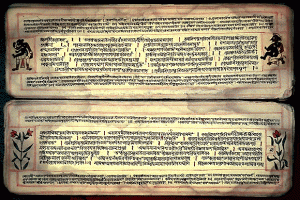
> Hinduism: A Holistic Way of Life <
The Hindu Vedas & Puranas elucidate on not only theology and mytho
Yoga is a way of life, an art of righteous living or an integrated system for the benefit of the body, mind and inner spirit. This art originated, was perfected and practiced in India thousands of years ago.
The references to yoga are available in > ‚Upanishads‘ < and > ‚Puranas‘ < composed by Indian Aryans in the later Vedic and post- Vedic period.
The main credit for systematizing yoga goes to Patanjali who wrote ‚Yoga Sutra‘, two thousand Years ago.
He described the principles of the full eight fold yogic discipline. He composed the treatise in brief code words known as ‚Sutras‘.
Yoga is a way of life, an art of righteous living or an integrated system for the benefit of the body, mind and inner spirit. This art originated, was perfected and practiced in India thousands of years ago. The references to yoga are available in ‚Upanishads‘ and ‚Puranas‘ composed by Indian Aryans in the later Vedic and post- Vedic period.
The main credit for systematizing yoga goes to Patanjali who wrote ‚Yoga Sutra‘, two thousand Years ago. He described the principles of the full eight fold yogic discipline. He composed the treatise in brief code words known as ‚Sutras‘. > ‚Yoga Sutra‘ < is the most important basic text on Yoga. It is through this basic treatise that the essential message of yoga spread throughout the world.
Aim of Yoga is the attainment of the physical, mental and spiritual health. Patanjali has recommended eight stages of Yoga discipline. They are:
-
Yamas- Yamas (abstentions or restrains)
-
Niyamas- Niyamas (observances)-austerities, purity, contentment, study, surrender of the ego
-
Asanas- Physical postures or exercises
-
Pranayama- Control of vital energy (Breathing control)
-
Partyahara- Withdrawal of the senses
-
Dharana- Concentration of the mind (Contemplation)
-
Dhyana- Meditation
-
Samadhi- Attainment of The super conscious state
Quelle Astrojyothi: > The Puranas < are the richest collection of mythology in the world. Most of them attained their final form around 500 A.D. but they were passed on as an oral tradition since the time of Krishna (c. 1500 B.C.).
There are eighteen major Puranas and a few minor ones. Each is a long book consisting of various stories of the Gods and Goddesses, hymns, an outline of ancient history, cosmology, rules of life, rituals, instructions on spiritual knowledge. Hence the Puranas are like encyclopedias of religion and culture and contain material of different levels and degrees of difficulty.
The most important Puranas are the VISHNU PURANA, SHIVA PURANA and MARKENDEYA PURANA (to the Goddess). The BHAGAVATA PURANA is important to the worshippers of Krishna. Other Puranas are the Vayu, Agni, Skanda, Kalki, Linga.
„The Vedas and Puranas are one and the same in purpose. They ascertain the Absolute Truth, which is greater than everything else. The Absolute Truth is ultimately realized as the Absolute Personality of Godhead with absolute controlling power. As such, the Absolute Personality of Godhead must be completely full of opulence, strength, fame, beauty, knowledge and renunciation.“
The Puranas are perhaps the most important or commonly used scriptural texts of the Hindus. They were guide books for the whole of life and society.
- Dein Ayurveda Net: ….. > “ Patanjali „ <
- Dein Ayurveda Net: ….. > “ Ashtanga “ <
- Dein Ayurveda Net: ….. > “ Purana “ <
- Dein Ayurveda Net: ….. > “ Agama“ <
- > Meet Patanjali Groups at facebook <
- > Meet Upanishad Groups and Study at facebook <
BHAGAVAD GITA
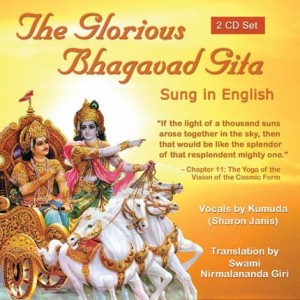
> BHAGAVAD GITA im Yogi Shop <
The Bhagavad Gita is technically part of Book 6 of the Mahabharata, although it is known to be a later accretion to the saga, which stands on its own merits. It is a dialog between the God Krishna and the hero Arjuna, taking place in a timeless moment on the battlefield before the climactic struggle between good and evil. The Gita (which can be found in hotel bedstands throughout India) is a classic summary of the core beliefs of Hinduism. It has had a significant influence far beyond Hinduism. Robert Oppenheimer apocryphically recited the verse (from Chapter 11) ‚I [have become] Death, Destroyer of Worlds“, just before the first test of the atom bomb, which ironically has a much different meaning in context. Quelle: Sacred Text: > here <
Introduction to the Gita
The BHAGAVAD-GITA is contained in Book 6 of the great Hindu epic, MAHABHARATA, probably the longest poem in all of literature. The GITA was written between the fifth century BC and the second century CE and is attributed to Vyasa. According to Aurobindo, who studied Vyasa’s writings, nothing disproves his authorship.
The > MAHABHARATA < tells the story of a civil war in ancient India between the sons of Kuru (Kauruvas) and the sons of Pandu (Pandavas) over a kingdom the Pandavas believe was stolen from them by the cheating of the Kauruvas. Every attempt by the Pandava brothers to regain their kingdom without war has failed.
The BHAGAVAD-GITA is primarily a dialog between Arjuna, the third Pandava brother, and his charioteer, Krishna. Remaining neutral, Krishna allowed one side to use his vassals in battle, while the other side could have him as a charioteer although he would not fight himself. The old blind King Dhritarashtra declined a great sage’s offer to give him sight for the battle, because he did not want to see the bloodshed. Instead the great sage gave Sanjaya the ability to perceive at a distance everything that was going on, and he describes the events for the King.
In the GITA Krishna, who is the uncle and friend of the Pandavas, gives Arjuna teachings on yoga, which means union and implies union with God. Krishna is considered by Hindus to be an incarnation of the god Vishnu, the preserver.
In the first chapter of the GITA, some of the heroes of the two armies are mentioned by King Duryodhana, the oldest Kaurava brother, first the Pandavas: the son of Drupada, Bhima, Arjuna, Yuyudhana, Virata, Drupada, Dhrishtaketu, Chekitana, the King of Kashi, Purujit, Kuntibhoja, Shaibya, Yudhamanyu, Uttamauja, the son of Subhadra, and the sons of Draupadi; then the Kauravas: Bhishma, Karna, Kripa, Ashvatthaman, Vikarna, Saumadatti, and Drona. When they blow their conch-horns, Arjuna’s brothers are named: Bhima, Yudhishthira, Nakula, and Sahadeva.
Throughout the text various epithets or nicknames are used for Krishna and Arjuna. Krishna is called: Madhava (descendant of Madhu), Hrishikesha (bristling-haired), Keshava (handsome-haired), Govinda (chief of herdsmen), slayer of Madhu (a demon), Janardana (agitator of humans), Varshneya (clansman of the Vrishnis), Vasudeva (son of Vasudeva), Hari, and slayer of Keshin (a demon). Arjuna is called: son of Pandu, Gudakesha (thick-haired), Partha (son of Pritha, Kunti’s original name), Kaunteya (son of Kunti), Bharata (ancient name of India, used for other characters as well), Bharata bull, wealth winner, foe scorcher, great-armed one, blameless one, tiger spirit, and Kuru’s joy or best of Kurus (Kuru being a common ancestor of both the Pandavas and the Kauravas). Gandiva is the name of Arjuna’s bow.
> Meet Bhagavad Gita Groups at facebook <
> Meet Mahabharata Groups at facebook <
PURE BHAKTI TV , BHAKTI YOGA
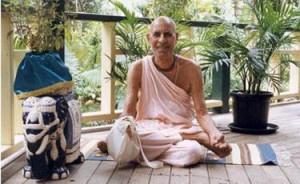
> A. C. Bhaktivedanta Swami Prabhupada <
Bhakti (DevanÄ�garÄ«: भक्ति, Sanskrit: devotion, or portion) in practice signifies an active involvement by the devotee in divine worship. The term is often translated as „devotion“, though increasingly „participation“ is being used as a more accurate rendering, since it conveys a fully engaged relationship with God. One who practices bhakti is called a bhakta, while bhakti as a spiritual path is referred to as bhakti marga, or the bhakti way. Bhakti is an important component of many branches of Hinduism, defined differently by various tradtions and schools.
Bhakti emphasises devotion and practice above ritual. Bhakti is typically represented in terms of human relationships, most often as beloved-lover, friend-friend, parent-child, and master-servant. It may refer to devotion to a spiritual teacher (Guru) as guru-bhakti, to a personal form of God,or to divinity without form (nirguna). Different traditions of bhakti in Hinduism are sometimes distinguished, including: Shaivas, who worship Shiva and the gods and goddesses associated with him; Vaishnavas, who worship forms of Vishnu, his avataras, and others associated with; Shaktas, who worship a variety of goddesses. Belonging to a particular tradition is not exclusive—devotion to one deity does not preclude worship of another.
The Bhagavad Gita is the first text to explicitly use the word „bhakti“ to designate a religious path,which the Bhagavata Purana develops more elaborately. The so-called Bhakti Movement saw a rapid growth of bhakti beginning in Southern India with the Vaisnava Alvars (6th-9th century CE) and Saiva Nayanars (5th-10th century CE), who spread bhakti poetry and devotion throughout India by the 12th-18th century CE. Bhakti influence in India spread to other religions, coloring many aspects of Hindu culture to this day, from religious to secular, and becoming an integral part of Indian society.
Bhakti Yoga
The Bhagavad Gita introduces bhakti yoga in combination with karma yoga and jnana yoga, while the Bhagavata Purana expands on bhakti yoga, offering nine specific activities for the bhakti yogi.Bhakti in the Bhagavad Gita offered an alternative to two dominant practices of religion at the time: the isolation of the sannyasin and the practice of religious ritual.Bhakti Yoga is described by > Swami Vivekananda < as „the path of systematized devotion for the attainment of union with the Absolute“. In the twelfth chapter of the Gita Krishna describes bhakti yoga as a path to the highest spiritual attainments. In the ninth chapter, he says,
Fill thy mind with Me, be My devotee, sacrifice unto Me, bow down to Me; thus having made thy heart steadfast in Me, taking Me as the Supreme Goal, thou shalt come to Me. (B-Gita 9.34)
Shandilya and Narada produced two important Bhakti texts, the Shandilya Bhakti Sutra and Narada Bhakti Sutra. They define devotion, emphasize its importance and superiority, and classify its forms.
> Meet Centro Studi Bhaktivedanta at facebook <
> Meet Srila Prabubhada at facebook <
> Meet ISKCON Friends at facebook <
> Meet Swami Vivekananda Groups at facebook <
NATURAL GARDENING
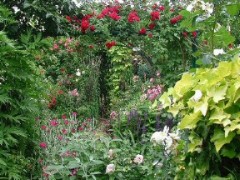
> MEDITATION AT JAPANESE GARDEN <
> Österreich´s Klostergärten & Gärten um Wien <
Natural gardens are especially valuable biotopes: colourful and manifold, they offer recreation, healthy crops and experiences next the front door.
They are oases for plant, animal and man. There they all develop a sense of well-being because of natural gardening: hedgehog and dragonfly, rare plants and colourful perennials. This is promoted by the action “Nature in garden – keeping healthy what keeps us healthy”.
No peat, no easily soluble mineral manure, no pesticides
These are three main criteria to be met by all natural gardens. Among 30 other arrangement and cultivation criteria at least 10 have to be fulfilled, too (e.g. diversity of species in natural grass turfs, orchards, use of rainwater, wild shrubbery etc.).
“Nature in garden” became one of the most successful environmental actions in Lower Austria during the last few years.
Awards to natural gardens
The enamel badge is not only a decoration at the garden door, but also shows the gratuity to garden owners for their natural gardening. This medal is bestowed on persons who keep to certain criteria of the action “Nature in garden”.
“Nature in garden” is an action of District president Sobotka, “die umweltberatung” Lower Austria (LA), the office of Lower Austrian administration – environment and area promotion department and of the LA agrarian authority.
Japanische Gärten sind ein Ausdruck der japanischen Philosophie und Geschichte. Solche Gärten findet man teilweise auf Privatgrundstücken, in Stadtparks, bei buddhistischen Tempeln oder Shintō-Schreinen sowie an historischen Sehenswürdigkeiten wie alten Schlössern. Ihnen wird nachgesagt, eine geheimnisvolle Ruhe und Schönheit zugleich auszustrahlen.
Eine Sonderform, der viele der berühmtesten japanischen Gärten angehören, ist der Zengarten im Kare-san-sui-Stil, bei dem auf Wasser und größere Pflanzen ganz verzichtet wird. Beliebt geworden sind diese Steingärten auch als Miniaturen in Form einer etwa 30 cm breiten Kiste für den Schreibtisch. Beim Tsukiyama-Stil (künstliche Hügel) werden dagegen Berge von Steinen und kleinen Hügeln dargestellt, und ein Teich repräsentiert das Meer. Es handelt sich also praktisch um eine Miniaturlandschaft. Japanese Garden Journal > here <
Musō Soseki, auch Musō Kokushi genannt (1275-1351)Musō Soseki (jap. 夢窓 疎石; * 1275 in Ise; † 30. September 1351), auch Musō Kokushi genannt, war ein japanischer Zen-Meister, Politikberater, Gartengestalter, Verfasser von Zen-Gedichten und Zen-Sprüchen, sowie Kalligraph. Er gilt als Begründer der japanischen Teezeremonie.
Musō Soseki (sein Mönchsname, der Geburtsname ist nicht bekannt) war einer der einflussreichsten Zenmeister und einer der bedeutendsten japanischen Gartengestalter der Frühzeit. Sein Leben und Werk markiert die Übergangsphase zwischen der Kamakura-Zeit und der Muromachi-Zeit (= Ashikaga-Zeit).
Ausbildung
Geboren ist er im Jahr 1275 in Ise, sein Vater zog aber schon 1278 mit ihm nach Kōshū (Schreibweise auch: Kai; in der heutigen Präfektur Yamanashi), damals einem Pilgerort der Adligen. Bereits im Alter von 6 Jahren (nach anderen Angaben 8 Jahren) begann er sich mit dem Buddhismus zunächst der Shingon-Richtung zu beschäftigen, befasste sich z.B. mit den Schriften ihres Gründers Kūkai (774-835). Im Alter von 19 Jahren (nach anderen Angaben im Jahr 1297) konvertierte er zur Tendai-Richtung (Elemente beider Richtungen integrierte er später in seine Schule). 1294 trat er nach Bestehen einer Aufnahmeprüfung ins Kloster Kennin-ji (jap.: ji = Tempel) in Kyoto ein, wo er bei Muin Zenshi (nach anderen Quellen: Yishan Yining [Schreibweise auch: I-shan I-ning, Issan Ichinei] (1247-1317), ein damals berühmter aus China emigrierter Zen-Priester und -lehrer, dessen Vorbild der Chan-Meister Huai Su (Tang-Zeit, 737 bis nach 798) und Meister der Sung-Zeit waren) , später auch bei Koho Kennichi (1241–1316) seine Ausbildung in der Rinzai-Richtung (= Zen-Buddhismus) erhielt. In Sosekis kalligraphischem Werk ist sowohl der Einfluss des Chinesen Kūkai als auch des Japaners Ichinei zu spüren, es unterscheidet sich hierin von Kalligraphien anderer zeitgenössischer Zen-Meister. Die Rinzai-Schule war eng mit dem Kaiserhaus und der Militärregierung verbunden.
> Meet Everything about Gardening Group at facebook <
> Meet ZEN Group at facebook <
> Meet Zen Zentrum Oberpfalz at facebook <
HERBAL SOURCES OF TIBETAN MEDICINE
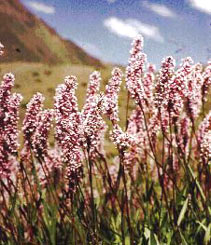
> HERBAL SOURCES OF TIBETAN MEDICINE <
Protecting the Himalayan varieties used in Tibetan medicines, exploring growing them as crops, and evaluating the healing properties of plants that grow elsewhere.
Tibetan medicine is celebrated as a source of sustainable and affordable healing preparations that are effective without lasting negative side effects. Our goal is to give people all over the world access to this unique insight into human well being.
Along with the need to provide training for a new generation of physicians and herbal pharmacists, and to translate the Tibetan medical so that students can begin their training without first having to learn to read Classical Tibetan, the main obstacle to wider use of Tibetan medicine is the limited supply of many herbs used in compounding the medications, some of which are already endangered by excessive non-professional harvesting.
His Holiness The Dalai Lama has warned that the health of the billions of people in the world cannot be sustained by medicines made with rare and endangered Himalayan plants. Even now, when Tibetan medicine has hardly begun to be practiced in Western countries, the herbs needed for making many of the medicines are in short supply. For example, the Men-Tse-Khang pharmacy in Dharamsala, India — the most respected source of Tibetan medicines — turns away all requests for medications except those accompanied by a prescription written by one of their own doctors. They will not accommodate even orders from their own graduates, those who have emigrated from India to other countries, explaining that to do so would deplete the supply of medicines needed in their branch clinics in India and Nepal.
Three different approaches to this scarcity of medicines are being explored. The most obvious and the most urgent is to preserve whenever possible the plants and animals currently used in Tibetan medicines, by protecting the ecologies that support those organisms, planting some species to increase the supply, and developing resources like seed banks to insure these species against extinction.
A second strategy is to extend the area where the herbs grow by planting in the wild and by finding ways of cultivating some species, as a way of preserving those that cannot be preserved in the wild, and as a way of increasing supplies.
The third is to evaluate the medicinal qualities of plants in other areas. Tibetan doctors have always used many imported materials in making their medicines, and believe that using substitute materials with similar therapeutic action is entirely appropriate when the ingredients of choice are unavailable. Tibetan physicians can identify plants indigenous to other areas that are suitable for use as substitutes for ingredients in traditional formulas and in developing new preparations.
Herbal medicine systems from other cultures will be useful in identifying promising species. Especially promising are two other systems which have ancient connections with Tibetan medicine and are still practiced: Indian Ayurvedic medicine and Chinese herbal medicine. Many of the herbs used in these systems are already used in Tibetan medicine.
The research needed for effort seems endless. The newsletter of the Chakpori Tibetan Medical Institute in Darjeeling, India, comments on some of the main issues: „To know which plants are vulnerable, endangered, or close to extinction, detailed studies have to be made. Also, the cause of rarity should be investigated (e.g., environmental causes, over exploitation by non-expert gathering, etc.). An important decision has to be made to replant not only the economically valuable plants but also the plants that are environmentally valuable and supportive of the total environment.
„Replanting sites should have the same characteristics as the original habitat. In traditional Tibetan medical texts, the side of the mountain, altitude, climatic condition, soil composition, etc. are mentioned [as important influences on the properties and potency of the herbs] …. research findings are essential guidelines for replanting the herbs in their natural environment. The size of the replanting area is also crucial because of genetic diversity and the problems of insular ecology. Monocultures, like the usual big plantations, should be avoided: mass plantations of certain species will not have the desired quality or power.“
Here on this page we offer links to Web sites relevant to preserving the plant species used in making Tibetan medicines, and increasing the supply of those herbs or finding substitutes, along with books and audio tapes on Tibetan herbs and related topics. Another page, Medical Research, Tibetan Style, gives resources relevant to other aspects of the immense task of preserving Tibetan medicine and making it available to the world.
> Meet Tibetan Incense Group at facebook <
> Meet Herbs for All Group at facebook <
> Meet the “ HERBS “ Group at facebook <
KARUNA DANA – SCHOOL FOR TIBET
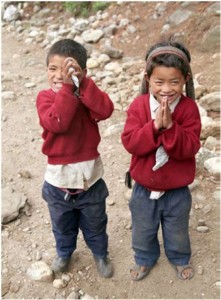
KARUNA DANA is an organisation for cooperation and development
aimed at protecting people’s cultural identity and improving their living
conditions through the promotion of development
KARUNA DANA was created for the purpose of bringing resources to those poor people who fight for a future so they can live with human dignity and without loosing their cultural heritage.
We are registered with Spanish National non Governmental Agencies Register holding 169.122 number as well as with the Spanish National non Governmental Agencies Register for international Cooperation.
At KARUNA DANA we believe that the only possible future for people who look toward progress without fear must be based on their own cultural heritage. That is why transmitting that heritage is of vital importance.
Currently our main project in being implemented in the area of KHAM: a school where 325 Tibetan children can attend classes.
Illiteracy rates are very high in this region due to the poverty of farming families who scarcely find resources for their own survival.
Our goal is to help children from KHAM gain access to basic education, and to do it in their language: Tibetan.
At KARUNA DANA we have established two activity branches for this project:
- Sustaining the total ordinary expenses of the school. Lack of monetary resources is seriously threatening the continuity of the school.
- Building new infrastructures with the objective of converting the school into a boarding school able to host 800 children. If we reach this figure, we will be providing schooling to the majority of children in the region.
The building of new facilities where pupils, teachers and workers can live is of vital importance to the schooling of these children. Living in an agricultural area, most of the children have to spend two-three hours per day commuting. In winter, ice and snow make it very difficult for them.
The project includes the building of at least two sites for bedrooms, canteens and classrooms for children and another for teachers and staff.
> Meet Karuna Dana at facebook <
Tibetan Medicine, Spirituality, Compassion
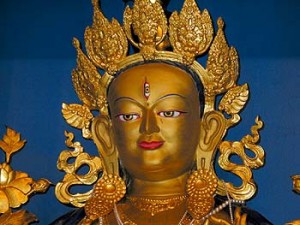
> CONGRESS – 10th anniversary of the New Yuthok Institute <
October 31 2009 (9h – 18h)
„Spirituality & compassion as cure of the body and mind“
Das > New Yuthok Institut < feiert dieses Jahr sein 10-jähriges Jubiläum. Aus diesem Anlass wird am 31. Oktober 09 ein Kongress in Mailand organisiert. Über ihre Erfahrungen mit Tibetischer Medizin im Westen berichten:
- Tibetische Medizin und Homöopathie, Dr. Victorine Cumero
- Beziehung zwischen Buddhismus und Tibetischer Medizin, Prof. Pasang Yonten Arya Tendi Sherpa
- Tibetische und Westliche Medizin, Dr. Med Walburg Maric’ Oehler
- Produkte der Tibetischen Medizin, Dr. Herbert Schwabl
- Tibetische Medizin und Onkologie, Dr. Alfredo Celano
- Mitgefühl und Tibetische Medizin als psychologische Therapie, Prof. Gioacchino Pagliaro
- Tibetische Medizin und alltägliche Probleme aus der Praxis, Dr. Simonetta Nicolai
- Präsentation ausgewählter Fälle, Dr. Tenzin Thupten
The New Yuthok Institute is an Association founded by Prof. Yonten Arya (T. Sherpa) with several medical doctors and psychologists to preserve and spread the age-old teachings of Tibetan Medicine.
This particular medical system is distinguished from all other Eastern Medicines because of its strong spiritual and psychological matrix linked to the connection initially created with Bon shamanism and, later and especially, because of its strong link to Tibetan Buddhism.
It is a well-known fact that Buddhism is at the center of Tibetan Medicine which began with the teachings of Buddha Shakyamuni, himself, and it is just this close and essential relationship with Buddhism which sets the Tibetan system apart from all others.
Tibetan Medicine, in addition to its high ethical values, gives us a detailed description of the mind, the mental states and how they function. Today, much of this large body of information has been scientifically validated by neuroscience. The Tibetan view takes not only the individual and biological aspects of the mind into account but also its energetic and spiritual dimension. It is this dimension which dictates how we view all things and how they take shape in our minds.
It is especially, though not only, for this reason that Tibetan Medicine has awakened great interest among the community of psychologists, psychiatrists and mental health workers.
Tibetan Medicine is also unique because it doesn’t isolate itself from medical-scientific views and, in fact, embraces and complements them to offer an extraordinary contribution not only because of the therapeutic results it achieves but also because of its ability to integrate with scientific medicine and with other complementary medicines.
Tibetan Medicine, today, provides the West with an extraordinary opportunity because TM can act as a bridge to unite the various scientific, medical and psychological disciplines and can provide a path to achieve the ‘humanization’ of medical care.
With this Congress, the New Yuthok Institute celebrates its tenth anniversary by presenting aspects of the important training it has provided to many psychologists, medical doctors, nurses, physiotherapists, naturopaths and health workers in general and the results it has achieved in the context of clinical applications.
> Geschichte der Tibetischen Medizin <
und die Modernen Aspekte der Tibetischen Medizin
Die Tibetische Medizin hat ihre Hauptwurzeln im Lande selbst und in der uralten Erfahrung und Geschicklichkeit des tibetischen Volkes, das seit jeher in enger Verbindung zur Natur gelebt hat und zu seinem Überleben in großer Höhe stets auf eigene Ressourcen angewiesen war. Im Laufe der letzten zweitausend Jahre hat aber auch die medizinische Weisheit anderer Länder und Zivilisationen Eingang in das einheimische System gefunden – entweder wurden neue Einsichten direkt und beabsichtigt übernommen oder durch natürliche gegenseitige Befruchtung der Kulturen über Jahrhunderte hinweg allmählich assimiliert. Nachfolgend einige wichtige Stationen
Seit Jahrtausenden entwickelt sich in Tibet eine medizinische Überlieferung, die als Bön-Tradition bekannt ist.
> TIBETAN TANTRIC YOGA AND LUEJONG <
Two day seminar
rLung, mind and physical Yoga (luejong)
Concepts and practice, level II
Prof. Pasang Y. Arya
November 07-08 2009
The Tibetan tantric yoga is a practice that has been done by Indian and Tibetan yogis for centuries, and is not like yoga usually practiced in the West. It is a practice of rLung (psychic wind) and exercise of the mind purely based on spiritual development, which was laid down by the tantric tradition of master Pundit Naropa and later masters. The exercice removes the negative energies from the channels and chakras by physical positions and movements which harmonize wind and mind and release inner stress and tension. Dedicated and genuine pratitioners may tame the wind, develop spiritual experience, and become able to control the mind and emotion. The life-long exercice with proper motivation and correct view can lead to the pure state of awakened Buddhahood. Generally the yoga technique basically helps stimulate the channels and chakras, and purifies the body/mind and promote the health.
Our main site will help you find the Palyul center closest to you and will introduce you to our teachers, their teachings, and teaching schedules.
Our mission is to uphold and preserve the teachings of the Buddha through study, practice and activity. Our goal is to make the teachings, particularly in the Palyul Nyingma tradition of Tibetan Buddhism, available to all.
> Yoga <
Our centers offer a complete course of study, prayer, and meditation practice for those who wish to follow the path to freedom. Our retreat centers offer places to focus on practice. Click for a guide to Palyul center locations around the world or select a center website from the menu at left.
> Meet Tibetan Medicine at facebook <
> Meet IASBS Communication Board Buddhist Studies at facebook <
> Meet Palyul Dhonyag Shedrub Ling at facebook <
