
Posts by admin
SARGFABRIK – Girls, Girls, Girls

> Attachment: Girls, Girls, Girls <
(Badenachmittag für die Mädchen)
Mädchen aus der Sargfabrik, Mädchen aus Penzing, Wien und aus aller Welt, Mädchen aus den WG’s “Refugio“ & “Caravan“ den Wohngemeinschaften für jugendliche Flüchtlinge.
Ab Oktober 2009 startet das neue Badejahr 2009/2010! Aus diesem Anlass möchten wir euch dieses Jahr zum „Saison-Opening“ zu einem Badefest am Freitag, 2.10.2009 herzlich einladen.
Ab 18 Uhr ist Einlass für die Public Friday-Gäste – Badeclubmitglieder können natürlich auch schon früher kommen (Bitte ganz normal in die Listen eintragen).
Ab ca. 18.45 Uhr begrüssen wir alle Badeclubmitglieder mit einem Glas Sekt. Um ca. 19.15 Uhr gibt es Life Musik im Badehaus mit zwei hochkarätigen Life-Acts – lasst euch überraschen!
Nach diesem Festakt geht es weiter mit Baden, Saunieren, Relaxen bei Kerzenlicht und leiser Musik oder plaudern an der Sekt- und Saftbar im Clubraum.
Ab 20 Uhr findet parallel zum Fest die Einschulung für neue Badegesellinnen und Badegesellen statt.
Um 24 Uhr ist dann „Badeschluss“ für die Public Friday-Gäste, doch Badeclubmitglieder bleiben so lange sie wollen …
Neu: ab Oktober gibt es einen neuen Mädchen-Event im Badehaus: „Girls, Girls, Girls – der Badenachmittag für Mädchen“
Endlich können die Mädchen ab 10 Jahre einmal im Monat ohne Eltern und mit Freundinnen ins Badehaus! Bitte informiert alle Mädchen, Flyer mit Terminen und weitere Details gibt es im Attachment.
Vielen herzlichen Dank allen SpenderInnen, die es ermöglicht haben, dass der Eintritt beim Badenachmittag für Flüchlingsmädchen- und Frauen wieder gratis sein kann!!!
Den Badehaus Terminplan für Oktober 2009 senden wir ebenfalls im Attachment. Wir freuen uns auf deinen Besuch beim Badefest und wünschen ein entspanntes Badejahr 2009/2010
Das Badehaus-Team
Haus Braunspergengasse und Wohngemeinschaften Refugio, Caritas der Erzdiözese Wien für AsylwerberInnen und anerkannte Konventionsflüchtlinge.
HEADOFFICE: http://www.caritas-wien.at/
RAYA YOGA – The Royal Yoga

> RAYA YOGA, the Royal Yoga <
> Raya Yoga, der köngliche Yoga <
Der Ausdruck Raja Yoga stammt aus der Hatha Yoga Pradipika. Dort heißt es: „Wir üben Hatha Yoga, um Raja Yoga zu erlangen.“ Denn es ist sehr schwer, nur durch geistig-psychologische Techniken Kontrolle über den Geist zu bekommen. Asanas und Pranayama können uns dabei helfen. So haben eigentlich die Hatha Yoga-Schriften den Ausdruck Raja Yoga für die Sutras von Patanjali populär gemacht. Raja heißt wörtlich „Herrscher“; durch Raja Yoga werden wir zum Herrscher über unseren Geist und unser Leben.
Das Raja-Yoga besteht in der direkten Vereinigung von Manas (also wörtlich übersetzt der Seele) mit Atma. Mit anderen Wort in der Vereinigung des Einzelbewusstseins mit dem Allbewusstsein.
Es ist begreiflich, dass durch das Aufgeben der Individualität der somnambule Zustand (Samadhi) eintritt, aber ist auch klar, dass dieser Weg der schwierigste ist. Nachdem aber das Samadhi seine Unterabteilungen hat, von denen die hauptsächlichsten Samprajnata, d.h. bewusstes und Asamprajnata Samadhi d.h. unter Aufhörung des Bewusstseins sind, so ist es, nach unserer Ansicht klar, das Raja-Yoga sozusagen die Suggestion zu dem selbstinduzierten somnambulen Zustand liefert, welcher dann, da das suggerierte Objekt.
TRADITIONAL YOGA STUDIES (T.Y.S.)
> Y.R.E.F. -Yoga Research and Education Foundation <
> THE YOGA TRADITION < > YOGA IM BUDDHISMUS <
PDF: >> „108 Things You Can Do To Help the Environment„<< – Please take the time to read the amazing document and send it to those you feel could benefit from it.
Green Dharma by Georg and Brenda Feuerstein >>FREE PDF DOWNLOAD <<: It brings us joy to make Green Dharma a free download for two simple reasons:
First, the environmental crisis is extremely severe, and green action is of the utmost urgency. We are hoping that our book might stimulate its readers into appropriate attitudinal change and responsible action. Publishing this book through regular channels would take too long to reach the public, as well as destroy a large number of trees and add to pollution.
Second, we feel it is more appropriate to not charge for a book that shares the Buddha Dharma.
If you wish to donate to TYS, please click on the button below. Your gift will be used to further our work on the environmental and social crisis. Alternatively, you may send a cheque to TYS, P.O. Box 661, Eastend, SK S0N 0T0, Canada.
WORDS OF SRI ANANDAMAYI MA

Benares, August 12 th , 1948.
QUESTION: What are the benefits to be derived from hatha yoga, and what are its drawbacks?
SRI MA: What does ‘hatha’ mean? To do something by force.
‘Being’ is one thing, and ‘doing’ quite another.
When there is ‘being’, there will be the spontaneous manifestation of what is due to be manifested, owing to the prana functioning in a particular centre of the body.
On the other hand, if one practises hatha yoga merely as a physical exercise, the mind will not be transformed in the very least. By physical exercise bodily fitness is developed. One hears quite often of cases where the giving up of the practice of yogic postures and the like, has resulted in physical disorders. Just as the body grows weak from lack of adequate nourishment, so the mind has need of suitable food. When the mind receives proper sustenance, man moves towards God, whereas by catering to the body, he only increases his worldliness.
Mere gymnastics is nutrition for the body.
> Meet Ananda Ma Filmprojekt at facebook <
Homepage of Bhagavan Sri Ramana Maharshi
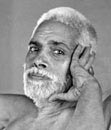
>> Bhagavan Sri Ramana Maharshi <<
December 1879 – April 1950
On very rare occasions throughout the history of mankind, Spiritual giants have appeared to exemplify the Highest Truth, guiding followers by their conduct in every moment of their lives; Bhagavan Sri Ramana Maharshi was such a giant. Unique in our time, He perfectly embodied the ultimate truth of Self-realisation, or complete absorption in the Supreme Itself.
Those who set out upon this quest are fulfilling the true purpose of life itself. This is not an easy path to follow, but be assured that every step taken in pursuit of Self-realisation, accumulates merit that is carried from birth to birth, until that final step is accomplished. This is the testimony of the Sages and doubt should never be allowed to divert you from your course.
Welcome to arunachala-ramana.org, a non-profit website created for the benefit of those who are seriously interested in Advaita and the paths to Self-realisation. This is the more comprehensive sister site to www.ramana-maharshi.org. Please do not forget to bookmark it.
This website is dedicated to Arunachala and the great saints and sages who were attracted by it thoughout the ages, including that of Bhagavan Sri Ramana Maharshi. Visitors to this site are invited to add their own news and comment via the Interactive section of the site.
Vortrag, Palmblattbibliothek, Beratung
Hallo liebe Freunde!
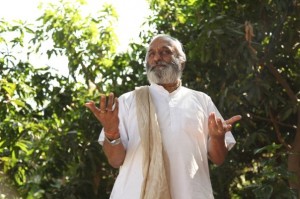
Ich lade euch herzlich für einen neuerlichen Besuch von Sri Sarvabhavana ein.
Er wird von 01.10.09 – 07.10.09 bei uns in Wien sein.
Diesesmal, gibt es auch wieder einen Info-Vortrag über die Palmblattbibliothek und diesem folgt ein Vortrag.
Thema: Schicksalsschläge – Wie gehe ich damit um?
Beginn: 18:00
Ende: 21:00
Raum 4
Seminarzentrum Liechtensteinstraße
Liechtensteinstraße 39 – 41
1090 Wien
Zusätzlich zu der Veranstaltung steht euch Sri Sarvabhavana, zu folgenden Zeiten, für eine persönliche Beratung zur Verfügung.
Lotos-Lounge, Facebook, MySpace, & Co.
Edi Goetschel
Das Netzwerk für Selbsterfahrung und Selbstverwirklichung
Bei der aktuellen Umfrage, ob es die Lotos-Lounge neben sozialen Netzwerken wie Facebook oder MySpace noch brauche, sind derzeit 91 Prozent derjenigen, die ihre Stimme abgegeben haben, der Meinung, dass es die Community brauche, und 9 Prozent, dass sie überflüssig geworden sei.
Obwohl das Ergebnis klar zu sein scheint, ist es schwierig zu interpretieren. Auch wenn nämlich die Mehrheit der Meinung ist, es brauche die Lotos-Lounge, findet bereits jedes zehnte Mitglied, dass sie überflüssig sei. Vor allem aber: An der Umfrage beteiligt haben sich nur Mitglieder, die der Lotos-Lounge einen Besuch abgestattet haben.
Bis jetzt haben sich 34 Personen an der Umfrage beteiligt. Bei insgesamt rund 890 Mitgliedern entspricht dies einer Stimmbeteiligung von gerade einmal etwas weniger als 4 Prozent. Wobei die 30 bis 40 Mitglieder in etwa auch dem derzeitigen Stand der Spendenkampagne entsprechen. Ziel dieser ist es, im laufenden Jahr Spenden in der Höhe von EUR 400 für den Betrieb der Lotos-Lounge zusammenzubringen, was EUR 0,50 pro Mitglied entspricht. Bis jetzt ist genau die Hälfte zusammengekommen.
Eine Diskussion im Forum darüber warum es die Lotos-Lounge noch brauche – oder eben nicht mehr -, ist bis jetzt leider noch nicht richtig in Gang gekommen. Dabei würde mich Eure Meinung sehr interessieren!
Um Missverständnissen zuvorzukommen: Die Umfrage und die Diskussion im Forum entspringen reiner Neugier, das heisst, ich spiele nicht mit dem Gedanken, die Lotos-Lounge einzustellen!
Mit besten Grüssen
Edi, Administration Lotos-Lounge
> Meet www.lotos-lounge.ch <
A.I.V.S. Newsletter September/Oktober 09

Namaste,
The latest issue of the American Institute of Vedic Studies Newsletter is now available for you to read and share. Please click on the following link below in order to access it.
http://vedanet.com/newsletters/newsletter-sept.-oct.-2009.pdf
If the link does not work, merely cut and paste the address into your web browser.
You may notice that the newsletter is no longer mailed directly to readers. This new system is designed to address our rapidly growing list of international readers and to expedite delivery. We appreciate your interest and support of the work of Dr. Frawley (Pandit Vamadeva Shastri) and the American Institute of Vedic Studies and welcome your participation in our activities.
Sincerely,
The American Institute of Vedic Studies.
PAYUL LING – Trad. Bhuddist Yoga Centers
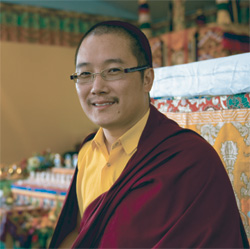
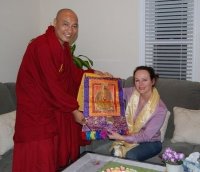
His Holiness Karma Kuchen Rinpoche
>> Guru Yoga, Meditation Teaching <<
Importance of the Oral Transmission
A Teaching given by H.H. Penor Rinpoche in Berkeley, California July 19, 1996
Regardless of the particular level of teaching or practice that we are discussing in the Buddhist tradition, whether it be Hinayana, Mahayana or Vajrayana, the process of spiritual development is one of the student relying upon a teacher. We may call that teacher a lama, a guru, or whatever, but the essential point is that there is an oral transmission that takes place in which a teacher teaches the student: the student listens to the teachings, absorbs their meaning and puts them into practice.
There is a reason for this emphasis on an oral transmission. From the time of the Buddha up to the present day, the buddha dharma has always been transmitted and meant to be transmitted orally, ensuring that there is a living tradition that is still embued with the blessing and power of the original teachings. It also guards against the possibility of so-called teachers simply coming up with their own ideas. Instead, the teacher passes on a proven tradition of teachings.
This makes the buddha dharma different from other kinds of learning where it may be possible for people to innovate. In such realms of learning it may be appropriate to come up with new systems of thought or to introduce new ideas. But when we are talking about the buddha dharma, every teaching must connect with the original teachings of the Buddha in order for a teaching to be valid. The teachings cannot be something that someone is simply coming up with on their own. The teachings are something that the teacher passes on.
Similarly, in other types of human knowledge it may be permissible to present information in a manner as entertaining and pleasing as possible. But although it is important for dharma teachings to be presented in a manner which is pleasant to hear, it is most important that the transmitted teachings have the power to bless and influence those who hear them in a positive way – not only in this lifetime, but in future lifetimes as well. So even though the teaching of the dharma should be elegant and well-presented, what is most important is the blessing of the essential message.
Palyul Centers are located around the globe, providing the facilities for learning and practicing the teachings of the Buddha.
Yogi Lahiri Mahasaya, Authentic Kriya Yoga

Despite all tall claims by others, no one is perhaps as authorised as Shibendu Lahiri (born 1939), the great grand son of famous house holder Yogi Lahiri Mahasaya (1828-1895), to spread the authentic teachings and techniques of Kriya Yoga in the world today.
Yet he says in utter humility that wise wields no authority and those in authority are not wise! Organisations assert authority, but authenticity may be lacking. Mobilisation may create a mafia, but the most sacred may remain untouched. Cultism has no place in matters deeply spiritual.
Lahiri Mahasaya (Full Name: Shyama Charan Lahiri) became known to the truth seekers all over the world through:
> Paramahamsa Yogananda’s famous book
„*Autobiography of a Yogi“* ,
which has been translated in many languages.
MARTIN BUBER: ICH UND DU

>> Ich und Du von Martin Buber (Autor) <<
>> I And Thou (Hardcover) by Martin Buber <<
Amazon.com Review:
I and Thou, Martin Buber’s classic philosophical work, is among the 20th century’s foundational documents of religious ethics. „The close association of the relation to God with the relation to one’s fellow-men … is my most essential concern,“ Buber explains in the Afterword. Before discussing that relationship, in the book’s final chapter, Buber explains at length the range and ramifications of the ways people treat one another, and the ways they bear themselves in the natural world. „One should beware altogether of understanding the conversation with God … as something that occurs merely apart from or above the everyday,“ Buber explains. „God’s address to man penetrates the events in all our lives and all the events in the world around us, everything biographical and everything historical, and turns it into instruction, into demands for you and me.“
Throughout I and Thou, Buber argues for an ethic that does not use other people (or books, or trees, or God), and does not consider them objects of one’s own personal experience.
Instead, Buber writes, we must learn to consider everything around us as „You“ speaking to „me,“ and requiring a response. Buber’s dense arguments can be rough going at times, but Walter Kaufmann’s definitive 1970 translation contains hundreds of helpful footnotes providing Buber’s own explanations of the book’s most difficult passages.
–Michael Joseph Gross —
**************************************************
-
Nonduality in Yoga/Tantra /Spirituality: > TAT VAM ASI – I AM THOUGH <
VIENNA PHILHARMONIC CONCERT TOUR

Concert Tour with Zubin Mehta and Franz Welser-Möst
Residency in the Middle Kingdom.Beijing is the destination of the tour Claudio Abbado and the LUCERNE FESTIVAL ORCHESTRA will undertake in September 2009.
The > Vienna Philharmonic < embarks on a 25 day concert tour including 15 concerts in Europe and Asia in September 2009.
After making appearances at the Lucerne Festival and the BBC-Proms, the orchestra flies to Japan for the 14th Vienna Philharmonic Week in Japan, from September 15th to 25th. Concerts in Shanghai and Seoul make up the last stops on the tour. Zubin Mehta, who already traveled once around the globe with the Philharmonic this spring, will conduct 13 of the 15 concerts. The designated Musical Director of the Vienna State Opera, Franz Welser-Möst, will conduct one concert each in Lucerne and London.
GREENPEACE – KLIMA FAIR BESSERN

> St. Stephan´s Cathedral Vienna (“ the Steffel „) <
> Klimaschutztransparent am Stephansdom <
> KATH.NET – Katholische Nachrichten <
Greenpeace und die Kirche sind sich sich einig: Klimaschutz ist ein Gebot der Stunde. Daher ist am Montag, den 21. September 2009, ein 150 m2 großes Transparent am Wiener Stephansdom befestigt worden. Der Apell ist an den morgen in New York startenden Klimagipfel der UNO gerichtet und soll gerechtes Klimaschutzabkommen bewirken.
Aktivisten und Aktivistinnen von Greenpeace haben heute in den Morgenstunden ein 150 Quadratmeter großes Transparent neben dem Haupttor des Wiener Stephansdomes befestigt. Die Aussage lautet angelehnt an die 10 Gebote (Anm: ähnlich Yama und Niyama im Yoga… ) kurz und bündig: „Du sollst nicht zerstören deines Nächsten Klima“.
Gemeinsam mit der Kampagne „Klima fair bessern!“ der österreichischen kirchlichen Hilfswerke (Koordinierungsstelle der Österreichischen Bischofskonferenz) richtet Greenpeace damit einen flammenden Appell an den morgen in New York startenden Klimagipfel der UNO für ein gerechtes Klimaschutzabkommen. „Die Klimaverhandlungen sind ins Stocken geraten, weil Industriestaaten wie Österreich der Verantwortung für den Klimawandel bis heute nicht nachkommen“, erklärt Alexander Egit, Geschäftsführer von Greenpeace. „Die UNO-Vollversammlung muss jetzt genutzt werden, um die gegenseitige Blockade vor der alles entscheidenden Klimakonferenz Anfang Dezember in Kopenhagen zu durchbrechen“, so Alexander Egit weiter.
„Der Stephansdom erinnert uns heute mit dieser ungewöhnlichen Aktion an eine der dringlichsten Fragen unserer Zeit. Unser Lebens- und Wirtschaftsstil geht auf Kosten Anderer. Beim Aufbau unseres Wohlstandes haben wir maßgeblich zur Zerstörung des Klimas beigetragen, und die Folgen des Klimawandels bekommen vor allem Menschen in Entwicklungsländern zu spüren – in Form von Dürren und Wetterextremen“, begründet Dompfarrer Toni Faber seine Unterstützung der Aktion am Stephansdom.
Weiterlesen:
- Chronologie Klimakonferenz Kopenhagen
- Greenpeace Kampagne zum Klimawandel
- Mitmachen: 1.000.000 Taten für den Klimaschutz
- Linktipp: Kampagne „Klima fair bessern!“ der österreichischen kirchlichen Hilfswerke gemeinsam mit Caritas Internationalis .
HINDU, YOGA, VEDA

A Hindu , as per modern definition, is an adherent of the philosophies and scriptures of Hinduism, the religious, philosophical and cultural system that originated in the Indian subcontinent.
There are approximately 1 billion Hindus, making Hinduism the third largest religion in the world, of whom approximately 890 million live in India. Other countries with large Hindu populations include Nepal, South Africa, Sri Lanka, Mauritius, Fiji, Guyana, and Indonesia. Hinduism is believed to be the oldest living religious tradition in the world. Ancient or Epic India was known as Hindustan, meaning the „land of Hindus“. Hindustan continues to remain as a popular alternative name for the Republic of India.
Origins of the word Hindu
The origin of the word Hindu is still disagreed upon by historians and linguists. It is generally accepted as having originally been a Persian word for someone who lives around or beyond the Indus River, which is called Sindhu in Sanskrit, and meant any inhabitant of the Indian subcontinent, before the Partition of India. The Indus now flows the length of Pakistan and is locally referred to as „Deriya’e Sindh“. One of Pakistan’s provinces is also named Sindh.
In Persian and Arabic, the term „Hind“ denotes the Indian subcontinent, and the term Hindu (Indu or Intu in China) is still used in some languages to denote a person from the region. A variant of the word was taken into old Greek, and lost the initial aspiration (‚h‘) in modern Greek. This led to the Greek name of ‚India‘.
Alternative explanation is that the word ‚indu‘ originates from Rigveda with reference to a mythological plant juice offered for oblations, while the ‚h‘ represents auspiciousness or delight, thus implying that one who propitiates by drinking soma is a hindu.
Until about 19th century, the term Hindu implied a culture and ethnicity and not religion alone. So Hindus have adopted this term because „Hind“ (India) is their fatherland. The term some Hindus have used for their religious beliefs is Sanatan Dharma („Eternal Code“ – see also Dharma). When the British colonial government started taking a periodic census and established a unified legal system, the need arose to define what constitutes Hinduism as a religion, in order to compare it with the likes of Christianity or Islam.
Since then, various definitions have been proposed by scholars like Bal Gangadhar Tilak, who tried to define it as a religion based on the Vedas, just as the Bible and the Qur’an are the basis of Christianity and Islam, respectively. Although, even an atheist can be a Hindu.

THE BOOK OF TIBETAN MEDICINE
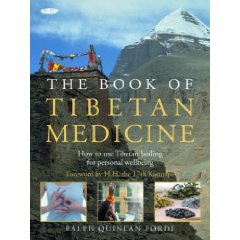
> The Book of Tibetan Medicine: <
How to Use Tibetan Healing for Personal Wellbeing by Ralph Forde (Author)
His Holiness The 17th Karmapa: >> KARMAPA NEWS <<
Tibetan Medicine is an ancient medical system that has been successfully practiced for over 1,000 years. A holistic approach combining dietary and behavioral changes, herbal cures, massage and meditation, this unique approach to healing utilizes the ancient wisdom of Tibetan masters. As well as the science of Tantric Buddhism. The Book of Tibetan Medicine is now available in 11 languages worldwide. Forward written by His Holiness The 17th Karmapa.
VIDEO: (http://buddhistcharity.ning.com/video/the-book-of-tibetan-medicine)
The Book of Tibetan Medicine: How to Use Tibetan Healing for Personal Wellbeing by Ralph Forde (Author), Product Description:
Welcome this first and most comprehensive guide to Tibet’s ancient integrative healing system-one of the world’s oldest forms. The Book of Tibetan Medicine provides a thorough overview of the origins and practices of this holistic approach and explains how it can contribute to maintaining overall health and happiness. You will learn how to balance body, mind, and spirit through diet, behavior, yoga, herbalism, acupuncture, Buddhist relaxation techniques, and medicines derived from natural sources. By taking an especially in-depth look at contemporary ailments-including stress and allergies-this highly accessible and lushly illustrated manual brings Tibet’s age-old and traditional discipline into the here and now, with invaluable advice on how to use it to improve your well-being.
About the Author
Ralph Quinlan Forde is a holistic medical consultant and health writer and a qualified herbalist and aromatherapist. He writes for Ultimate Health magazine, What Medicine, The Independent on Sunday and New Scientist.
