
Posts by admin
THE THREE VEHICLES

Khentrul Ogyen Rinpoche: THE THREE VEHICLES
> BUDDHIST CHARITY by Ogyen Ling Buddhist Network <
> Essence of the Heart Sutra: The Dalai Lama’s Heart of Wisdom Teachings < by The Dalai Lama (Author), Thupten Jinpa Ph.D. (Translator) <
„The difference between the wise Buddhist and the sectarian Buddhist is like that between the vastness of space and the narrowness of a vase.“ -Kongtrul Rinpoche
INTRODUCTION
„Somebody once asked how one could fit together various traditions that represented the Buddha’s teaching. One can think of Buddha’s Dharma as a wonderful seed planted in the earth, out of which has blossomed a tree with deep roots, great branches, leaves, flowers, and fruits. Sometimes a person might point to the roots and say that it is just here that we can find the real Dharma, while someone else might say, „Oh no it is in the flowers,“ and still another will say that it is to be found in the fruit. But, of course, these different parts cannot really be separated; the roots sustain the tree in their way, and the fruit depends on the roots and leaves and branches as well.“ -Lama Govinda
In order to clarify the variations between the many different schools and traditions of Buddhism, the schools are often divided into the three Yanas (Skt.), meaning ‚Vehicles‘ or ‚Paths‘. These three are; the Hinayana, Mahayana and Tantrayana.
Within the various vehicles, much variation can still exist, which is further explained in the pages that deal with the traditions, like Zen and Tibetan Buddhism.
A major reason for this development of different schools within Buddhism may be that the Buddha taught for decades. Given the vast amount of teachings it is not easy to unanimously decide what the exact interpretation of all teachings should be, or even how to summarise hem logically.
Depending on who the Buddha would be teaching to, the explanation would be quite different and sometimes seemingly contradictory. This can be understood as skilful means; a satisfying explanation to a learned philosopher is probably too complex for an uneducated person. On top of this, the Buddha clearly stated that he did not just intend to teach a doctrine, but intended to show the path that people can follow for their own development. This intention ultimately leads to the point where every individual has to decide which practices to follow and how to interpret the teachings, rather than adhering to a fixed doctrine.
PAGE CONTENTS :
Introduction
The Three Councils
Theravada and Hinayana
Mahayana
Tantrayana
Do these traditions contradict?
NADA YOGA AND PHILOSOPHY
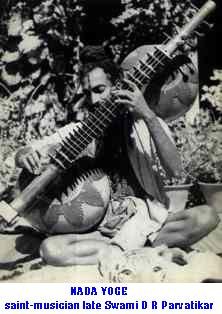
NADA YOGA AND PHILOSOPHY
Indian music has its essence in a deep sense of spirituality along with roots in Yoga and Indian philosophy. The theme of the compositions is mostly devotional in nature, and many of them also convey abstruse philosophical concepts in a form that is easy to grasp. Music itself, when practised with commitment, is also a form of Yoga. Music has a tremendous effect on the mental state of human beings as it results in peace, concentration, relaxation, spiritual elevation etc, which are the principles of Yoga and meditation. The practice of Yoga techniques, such as breath control and mental concentration, are also closely allied to the study of instrument vocal music.
According to Hindu philosophy, the word for pure sound is Nada Brahma. Nada has also been described by some as the energy of Brahma and it is believed that the propitiation of Nada leads to the attainment of Moksha (salvation), which is the ultimate goal of human life. Matanga has described Nada in his Brihaddesi thus:
„There is no song or music without Nada, there are no musical notes without Nada, there is no dance without Nada and the world is filled with the essence of Nada“.
The word Nada refers to the physical, the mystic and the religious or the cosmic sound. The sound that is produced by musical instruments is an object of sensory perception, as it is grasped by the sense of hearing. This is called Ahata Nada. In this context, the human voice is also a musical instrument. As described by Dr Acharya Trigunateet Jaimini in the composition, Sobhillu Saptaswara, the entire body, including the abdomen (Nabhi), heart (Hrt), neck (Kantha), mouth (Rasana) and nasal passages (Nasa), aids in the production of the sound.
Indic Studies Foundation (I.S.F.)
>> Indic Studies Foundation, California <<
a non profit Organisation, and
Akhila Bhartiya Itihas Sankalan Yojnaa
Consensus of ICIH-2009, January 9-11, 2009 at IIC, New Delhi (Conference on Indian History, Geopolitics, and Civilisation)
The conference was convened to have a cross-pollination of ideas on various facets of Indic studies like history, culture and geopolitics and related topics. The overriding purpose is to diagnose the flawed representation of Indian history and to map the correct mechanism for presenting true history on rational basis founded on authentic facts. It also discussed ways and means to delineate the appropriate and correct path for translating the ideas to workers at ground level.
Distinction between Dharma and Religion
( Sanchin Gupta )
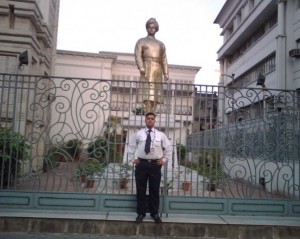
Swami Vivekananda (Bengali: স্বামী বিবেকানন্দ, Shami BibekÄ�nondo; Hindi: स्वामी विवेकानन्द, SvÄ�mi VivekÄ�nanda) (January 12, 1863–July 4, 1902), born Narendranath Dutta is the chief disciple of the 19th century mystic Ramakrishna and the founder of Ramakrishna Mission. He is considered a key figure in the introduction of Vedanta and Yoga in Europe and America and is also credited with raising interfaith awareness, bringing Hinduism to the status of a world religion during the end of the 19th Century. Vivekananda is considered to be a major force in the revival of Hinduism in modern India. He is best known for his inspiring speech beginning with „sisters and brothers of America“, through which he introduced Hinduism at the Parliament of the World’s Religions at Chicago in 1893.
He conducted several public and private lectures, disseminating Vedanta, Yoga and Hinduism in America, England and few other countries in Europe. He also established Vedanta societies in America and England.
-
Distinction between Dharma and Religion – DAVID FRAWLEY
-
Distinction between Dharma and Religion – Vishal Agarwal (17 June 2009)
1. Religions are Proselytizing, Dharma is Self-Transformation :
Why does Religion breed fanaticism whereas Dharma does not? This is explained very succinctly by David Frawley[1]:
“Perhaps nothing more so than religion that stimulates the passions of humanity toward either higher or lower actions. This is because religion introduces absolutes into human life. Religion sets up a standard of judgment that goes beyond life and death and all the limited values of our transient existence. Such a standard can deepen our sensitivity or can breed fanaticism and bigotry, depending upon whether we use these absolutes to provide a higher standard for our own behavior or to become harsher in our criticism of those who think differently than we do. True religion directs us to the Absolute, which requires that we cleanse our minds of our limited opinions and judgments. False or imperfect religion tries to make absolute these very prejudices, opinions and limitations.
To understand religion, we must look at religion as a whole, not as a belief system but as a way of life, a system of ethical, mental and spiritual culture – what is called in the Eastern world, dharma or the guiding law of our being. Otherwise we will be unable to extract the essence of religion from its mass of conflicting beliefs. This requires that we look at our own lives as a whole, and that we examine religion as a living phenomenon, as part of our greater human potential, our inner dharma, from whatever different land or culture it may arise.
We must learn to look at religion as a way of connecting with Reality through our own consciousness, which is the view of the science of Yoga. This is the view of religion that India has given us, the land wherein human beings have spent the most time in pursuit of the sacred, not to convert others, but to realize the Truth.”
FOREST SANGHA – Dhamma Teaching
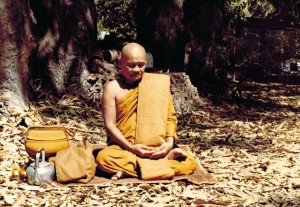
The Dhamma Encyclopedia is the largest Theravada Buddhist encyclopedia
This Forest SANGHA site functions as a portal page for the monastic communities of disciples of Venerable Ajahn Chah, particularly in the West.
Currently the management of this site is undertaken at > Aruna Ratanagiri Buddhist Monastery in Northumberland <, UK. We have been operating this forestSangha website since Vassa 2001.
The Sangha is always concerned that Dhamma teachings are both readily and responsibly made available. In the case of this presentation should you have any difficulties or if you wish to offer feedback please do contact us.
It is important to us that no charge be made for these Dhamma teachings. If there is any further way that we can serve the Sangha we hope you will let us know.
Teachings by Ajahn Chah-
- Bodhinyana
- A Taste of Freedom
- Living Dhamma
SHINE LIKE A STAR !

Benefiz-Tanzfestival zugunsten vom Verein Ute Bock
Tänzerinnen unterschiedlicher Richtungen haben sich zusammen gefunden, um ihre verschiedenen Temperamente und Stile zu einem bunten Tanzmosaik zu vereinen.
Nimm teil an dieser Tanzreise und lerne die vielfältigen Interpretationen Indiens, des Orients sowie westliche Tanztraditionen kennen.
Beginn: Samstag, 24. Oktober 2009 um 19:00
Ende: Sonntag, 25. Oktober 2009 um 22:00
Ort: Jugend- und Stadtteilzentrum Come2gether
Preis: 18€
Anmeldung: patrizia@tanzmosaik.at oder 0699/ 109 50 364
In unserem Tanzprojekt findet sich viel Liebe zu Tanz und Musik sowie Freude an der gemeinsamen Umsetzung und dem kreativen Prozeß. Das Ganze gibt es am 24/25.10.2009 zu sehen – wir freuen uns auf Dein/Euer Kommen!!
Der Reinerlös wird dem Flüchtlingsprojekt von Frau Ute Bock www.fraubock.at zur Verfügung gestellt.
warum menschen flüchten
einer der zusammenhänge liegt zwischen der zerstörung in den entwicklungsländern und unserem konsumverhalten. die meisten großkonzerne wollen profit ohne soziale verantwortung. menschen, völker und deren gesellschaftliche entwicklungen sind ihnen dabei vollkommen gleichgültig. dafür wurden und werden kriege geführt und diktaturen gestützt. die bodenschätze die dort auf destruktive weise “gefördert” werden, gibt es bei uns als billige konsumgüter.das bedeutet für einen großteil der menschheit – terror durch diktatur, krieg, armut und ausweglosigkeit.
AN INTRODUCTION TO VEDIC HEALING
AN INTRODUCTION TO VEDIC HEALING
by Raja Deekshithar
www.rajadeekshithar.com
The Vedas are not only meant for the performance of rituals, and are not only the property of Hindus. They offer great wisdom and knowledge to all of humanity. These can be employed towards the promotion of health and prosperity, and for longevity and sound and peaceful mind for all.
Here we have to ask ourselves, what IS healing? That is, what is ill health, what is good health, and what is the process from the first to the second. I can say, from my spiritual vision, and my masters‘ teaching, that ill health, whether physical or mental, is essentially the occurrence of a gap, or an imbalance, in one’s being. And healing, the process or act of filling this gap or imbalance with the appropriate energy or substance, bringing wholeness. In accordance of the nature of this gap. It is actually part of the nature of our physical embodiment that an imbalance occurs as soon as we are born on this earth.
Thus healing is something nature can do for us, or we can do ourselves. But from the earliest stages of the evolution of humanity some individuals, through vision, training and commitment, have dedicated their lives to help their fellow human beings along the path to healing, which is literally, wholeness. It is the aim of the healer to identify the nature of the gap, as well as to decide on the appropriate energy or substance to fill it with.
THE HOLY BODHI TREE
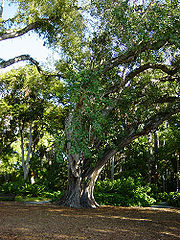
>> BODHI TREE – Pappelfeige <<
(Heiliger Feigenbaum; Bodhi-Baum; Ficus religiosa)
> Hildegard v. Bingen-PHYSIKA ,De Arboribus.About Trees, Chap. 3 <
>> THE BODHI TREE & GAUTAMA <<
The Bodhi Tree, also known as Bo (from the Sinhalese Bo), was a large and very old Sacred Fig tree (Ficus religiosa) located in Bodh Gaya (about 100 km (62 mi) from Patna in the Indian state of Bihar), under which Siddhartha Gautama, the spiritual teacher and founder of Buddhism later known as Gautama Buddha, achieved enlightenment, or Bodhi. In religious iconography, the Bodhi tree is recognizable by its heart-shaped leaves, which are usually prominently displayed. It takes 100 – 3,000 years for a bodhi tree to fully grow.[citation needed]
The term „Bodhi tree“ is also widely applied to currently existing trees, particularly the Sacred Fig growing at the Mahabodhi Temple, which is allegedly a direct descendant of the original specimen. This tree is a frequent destination for pilgrims, being the most important of the four main Buddhist pilgrimage sites. Other holy Bodhi trees which have a great significance in the history of Buddhism are the Anandabodhi tree in Sravasti and the Bodhi tree in Anuradhapura, Sri Lanka. Both are believed to have been propagated from the original Bodhi tree.
In den Berichten des Buddha über seine Erleuchtung ist mit keinem Wort davon die Rede, daß ihm die Erkenntnis unter einem Baum gekommen sei. Einige Buddhismus-Forscher halten daher den Baum als Ort der Bodhi für ungeschichtlich und mutmaßen, daß vorbuddhistische Baumkulte in den Buddhismus Eingang gefunden hätten. Aber ist es nicht völlig natürlich, daß ein hausloser Wandermendikant, wo immer er sich niederläßt, dies unter einem Baum tut, der ihn nachts vor dem Tau und tags vor der subtropischen Sonne beschirmt? Daß Siddhattha seine zur Erleuchtung rührenden Betrachtungen am Fuß eines Baumes anstellte, muß man als selbstverständlich ansehen, und daß er diesen Baum, der zufällig ein Assattha war, an seinen herzförmigen Blättern mit der langen, seitlich abgebogenen Spitze als Assattha oder Pippala erkannte und dies, zum Buddha geworden, vor seinen Mönchen beiläufig erwähnte, hat so hohe Wahrscheinlichkeit, daß man es getrost als historisch ansehen darf.
Neem Tree, Ayurveda, Medicine & Worship
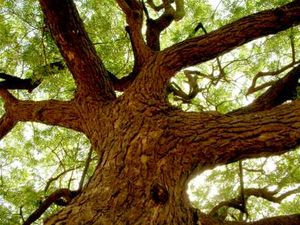
Holy Neem Tree – Azadirachta indica
> NEEM – Ayurveda, Medicine & Hindu Worship <
Neem (Azadirachta indica, syn. Melia azadirachta L., Antelaea azadirachta (L.) Adelb.) is a tree in the mahogany family Meliaceae. It is one of two species in the genus Azadirachta, and is native to India, Myanmar, Bangladesh, Sri Lanka, Malaysia and Pakistan, growing in tropical and semi-tropical regions. Other vernacular names include Neem (Bengali), Arya Veppu (Malayalam), Azad Dirakht (Persian), Nimba (Sanskrit and Marathi), DogonYaro (in some Nigerian languages), Margosa, Neeb (Arabic), Nimtree, Vepu, Vempu, Vepa (Telugu), Bevu (Kannada), Kohomba (Sinhala), Vempu (Tamil), Tamar (Burmese) and Indian Lilac (English). In East Africa it is also known as Mwarobaini (Swahili), which means the tree of the 40, as it is said to treat 40 different diseases.
Der Neem-Baum war bis vor wenigen Jahren in Indien, Burma, Thailand und weiteren angrenzenden Staaten beheimatet. Etwa in den sechziger Jahren unseres Jahrhunderts wurde er auch in Afrika und einigen tropischen Inseln kultiviert.
Der einzige Grund, warum der Baum nicht den Weg nach Europa gefunden hat ist der, dass er zwar große Hitze und hohe Luftfeuchtigkeit problemlos verträgt, jedoch äußerst kälteempfindlich ist.
Seit tausenden Jahren werden die einzelnen Teile des Baumes in Indien und anderen Regionen als Pflege- und Heilmittel eingesetzt.
Im Ayurveda, der uralten indischen Medizinschule sind die Produkte des Neem-Baumes ein integrierter Bestandteil.
Über Auftrag der WHO – Weltgesundheitsorganisation, arbeiten zwei voneinander unabhängige Institutionen in Amerika an der Erforschung der vielgestaltigen Einsatzmöglichkeiten von Neem-Produkten.
Das eine Institut ist die Neem Association und das zweite die Neem Foundation.
In Europa befasst sich seit den siebziger Jahren Prof. Schmutterer von der Universität Gießen mit der Neem-Forschung.
Die Ergebnisse aller drei Labors sind in den wesentlichen Punkten die gleichen:
-
Neem-Produkte wirken sowohl bei innerlicher, als auch bei äußerlicher Anwendung.
-
Neem-Produkte werden aus Blättern, Rinde und Samenkernen hergestellt.
Blätter und Rinde werden getrocknet, zerstoßen und zu Tees und Extrakten verarbeitet. Aus den Samenkernen wird nach dem schälen und mahlen das hochwirksame Neem-Öl gepresst. Der dabei anfallende Pressrückstand wird als Neem-Cake (Presskuchen) ebenfalls weiterverwendet.
Weitere Institute, die sich mit der Neemforschung befassen:
-
State University New JerseyProf. Maramorosch
-
UCLA – Universität Los Angeles Forschungsbericht
-
Hochschule Weihenstephan BRD Instititut für Botanik und Pflanzenschutz
-
Prof.DI Thomas Lohrer
-
Max Planck Institut
-
Umweltingenieursbüro OETZEL BRD Umweltanalysebericht
Der Neem-Baum, der aus Indien stammt und dessen botanischer Name Azadiracta Indica lautet, hat eine lange Tradition auf dem Subkontinent.
Der Begriff Azadiracta ist eine Ableitung und Neukombination aus den Sanskritwörtern Azad und Draksha, was soviel wie „Baum der Freiheit“ bedeutet.
Der Neem-Baum stand und steht im Ruf, Menschen, Tiere, Ernte und die Erde vor Krankheiten und anderen Übeln zu schützen.
Seit Jahrhunderten benutzen indische Bäuerinnen und Bauern die Blätter und Samen des Neem-Baumes als natürliches Pflanzenschutzmittel.
Die Pflanze produziert ein Öl, das andere Nutzpflanzen vor dem Befall durch Pilze und Insekten schützt.
Es war die Natur, die den Wirkstoff durch molekulare Evolution entwickelt hat, und es waren indische Bauern, die sich dieses „Naturgeschenk“ zu Nutze gemacht haben.
Den Hindus gilt der Baum als heilig.
Der Neem-Baum braucht wenig Wasser, gedeiht auf fast jedem Boden, spendet Schatten und Kühle, weswegen er bevorzugt vor Wohngebäuden, Tempeln und auf Viehweiden gepflanzt wird und sorgt für reine, gesunde Luft.
Kranke schlafen auf seinen gesundheitsfördernden Blättern, Gesunde reiben sich die Haut mit seinen heilende Blättern ein, in Reissäcken schützen die Blätter die kostbare Nahrung und das Saatgut vor Reisschädlingen und auch bei der Zahnpflege ist der Neem-Baum unentbehrlich.
Kleine Ästchen werden gekaut, um die Zähne weiß und sauber zu halten und vor Krankheiten zu schützen.
Wer es westlicher liebt, kann auch Neem-Zahncreme erwerben.
Mit einem Wort: Seit Jahrhunderten werden der Neem-Baum, sein Holz, seine Früchte, seine Samen und sein Öl zum Wohle aller frei und uneingeschränkt verwendet und so soll es auch bleiben.
Die Autorin ist Mitarbeiterin beim Umweltinstitut München und im Beirat des Gen-ethischen Netzwerkes.
Quelle: www.dosha.at
VEDIC ASTRONOMICAL LORE

by Sachin Gupta
The Hindu calendar used in ancient times has undergone many changes in the process of regionalization, and today there are several regional Indian calendars, as well as an Indian national calendar.Most of these calendars are inherited from a system first enunciated in Vedanga Jyotisha of Lagadha, a late BCE adjunct to the Vedas, standardized in the Surya Siddhanta (3rd century CE) and subsequently reformed by astronomers such as Aryabhata (499 CE), Varahamihira (6th c. CE), and Bhaskara (12th c. CE). There are differences and regional variations abound in these computations, but the following is a general overview of Hindu lunisolar calendar
Vedic texts contain interesting astronomical lore. The Vedic calendar was based upon astronomical sightings of the equinoxes and solstices which change periodically owing to the precession of the earth on its axis. Such texts as Vedanga Jyotish(*38) speak of a time when the vernal equinox was in the middle of the constellation (Nakshatra) Aslesha (a point about 23 degrees 20 minutes Cancer). This would have occurred around 1400 BC. Many Brahmanas, and the Yajur and Atharva Vedas speak of the vernal equinox in the Krittikas (Pleiades; early Taurus) and the summer solstice (ayana) in Magha (early Leo).(*39) This yields a date of around 2500 BC. Yet earlier astronomical eras than these are mentioned but these two have numerous references to substantiate them. They prove that the Vedic culture existed at the time of the Harappan culture and already had a sophisticated system of astronomy.
Such references were merely ignored or pronounced unintelligible by Western scholars because they yielded too early a date for the Vedas than what was presumed, not because such references did not exist. One point raised by Western scholars was that there was nothing archeological to substantiate such positions and the dates reveal. Now we see there is indeed that archeological evidence through the Harappan or Sarasvati civilization.
Had such astronomical references been found in ancient Greek texts, we might add, they would have been hailed as great scientific achievements, among the greatest of ancient humanity. It is only because they occurred in Hindu texts that they have not been given proper credit. On the contrary we are told that the Hindus were unscientific, which has often been an excuse to ignore the scientific achievements mentioned in the Vedas.
Recently Subhash Kak has also discovered an astronomical code in the structure of the Rig Veda that shows a knowledge of the periods of the planets, as well as reflecting a location for the hymns around 22 degrees north, or the point where the Sarasvati used to enter the ocean.(*40)
WHAT IS BHAKTI-YOGA ?
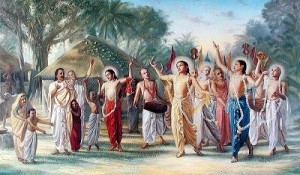
WHAT IS BHAKTI YOGA ?
by Dr. Acharya Trigunateet Jaimini
The term Bhakti comes from the root ‚Bhaj‘, which means ‚to be attached to God‘. Bhajan, worship, Bhakti, Anurag, Prem, Priti are synonymous terms. Bhakti is love for love’s sake. The devotee wants God and God alone. There is no selfish expectation here. There is no fear also. Therefore it is called ‚Parama Prem Rupa‘. The devotee feels, believes, conceives and imagines that his Ishtam (tutelary deity) is an Ocean of Love or Prem. Bhakti is the slender thread of Prem or love that binds the heart of a devotee with the lotus feet of the Lord. Bhakti is intense devotion and supreme attachment to God. Bhakti is supreme love for God. It is the spontaneous out-pouring of Prem towards the Beloved. It is pure, unselfish, divine love or Suddha Prem. There is not a bit of bargaining or expectation of anything here. This higher feeling is indescribable in words. It has to be sincerely experienced by the devotee. Bhakti is a sacred, higher emotion with sublime sentiments that unites the devotees with the Lord. Mark how love develops. First arises faith. Then follows attraction and after that adoration. Adoration leads to suppression of mundane desires. The result is single-mindedness and satisfaction. Then grow attachment and supreme love towards God. In this type of highest Bhakti all attraction and attachment which one has for objects of enjoyment are transferred to the only dearest object, viz., God. This leads the devotee to an eternal union with his Beloved and culminates in oneness.
RigDzin Dharma Foundation Buddhist Dharma

Venerable Traga Rinpoche
Spiritual Director
OM MANI PADME HUNG
Rig Dzin Dharma Foundation is a Tibetan Buddhist Dharma Center located in the heart of Albuquerque, NM. Founded in 2005 by the Venerable Traga Rinpoche, a beloved lama in the Drikung Kagyu lineage of Tibetan Buddhism, the Center offers a relaxed and informal place for meditation and learning about Buddhism. Everyone is welcome to visit – whether you are a new practitioner, curious to learn a little about Buddhist teachings or meditation, or a more experienced student of the Dharma. Classes and practices, or to learn more about us. Always feel free to call us or come by for a visit.
Click these link for more information: http://www.rigdzin.com/index.htm
MIRABAI- Poet, Saint & Bhakti-Tradition
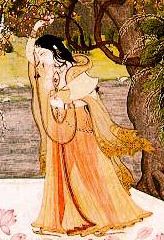
Die Verse der indischen Dichterin und Mystikerin
> Mirabai < (Devanagari मीराबाई, MÄ«rÄ�bÄ�Ä«; * um 1498; † 1546) war eine indische Mystikerin und Dichterin. Sie ist nicht nur wegen ihrer eigenwilligen Persönlichkeit eine höchst faszinierende Frauengestalt der Religionsgeschichte. Ihre ganz persönlich gehaltenen ekstatischen Liebes-, Preis- und Klagelieder sind durch die Jahrhunderte lebendig geblieben und werden noch heute auf dem indischen Subkontinent von Hindus, Sikhs, Muslimen und Christen gleichermaßen rezitiert, gesungen und von den indischen Radiostationen ausgestrahlt. Es gibt zahlreiche Buchausgaben sowie CDs mit Vertonungen der Lieder und Mirabais Leben ist Gegenstand eines Spielfilms. Ihre Verse gehören zum Schatz der Weltliteratur und stehen neben denen der Dichter-Mystiker Hafis, Rumi, > Kabir (satguru, 99 Names of Allah < und > Hildegard von Bingen <.
Perhaps the most remembered and quoted woman in India history is a sixteenth century poet, singer and saint called Mirabai, or Meera. Versions of her songs are sung today all over India, and she appears as a subject in films, books, dances, plays and paintings. Even Mohandas Gandhi promoted her, seeing Mira as a symbol of a woman who has the right to chose her own path, forsake a life of luxury, and in nonviolent resistance find liberation.
Patanjali International Yoga Foundation®
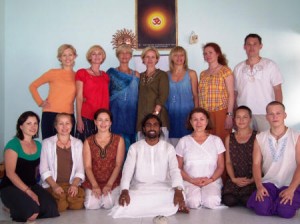
> Patanjali International Yoga Foundation <
„The Basic Principle of our foundation-Truth to the Original Source. We follow the Ancient Yoga Style taken from Sanskrit books“
Mantra of sage Patanjali:
- yogena chittasya padena vacham malam sarirasya cha vaidyakena | yopakaroti tam pravaram muninam patanjalim pranajaliranato’smi ||
- Let us bow the noblest of sages Patanjali, who gave Yoga for serenity of the mind, Sanskrit grammar for purity of speech and Ayurvedic medicine for the perfection of health.
The system of Patanjali Yoga is loyal to the original source taken from the Ancient Sanskrit books.
Yoga Style includes: physical asana, pranayama, bandha, mudra, kriya, chakra and various meditation techniques, as described in the ancient scriptures of the sage Patanjali…
The training program includes Yoga Teachers Training Course (YTTC) 200/500hrs, Yoga-Ayurveda Therapy Course (YATC) 200hrs, intensive one month course, seminars, workshops and retreats. Participation and meeting the course requirements entitles the student with certificate recognized and registered with state government of India.
{„YTTC and YATC“ both courses are suitable for all level of serious yoga students. These courses are not only for teacher or who wants to be a yoga teacher but also suitable for those students who wants to experience of yoga practice, yoga retreats, yoga benefits, health through yoga, correct learning and deep information about yoga.}
Real Buddhism Sri Lanka: e-learning
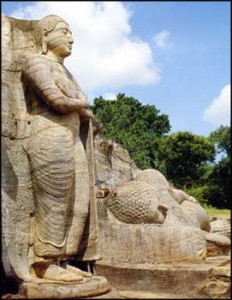
>> BUDDHA NET SRI LANKA – STUDIES <<
>> THERAVADA BUDDHISM SCHOOL VIENNA. <<
Sri Lanka is the oldest continually Buddhist country, Theravada Buddhism being the major religion in the island since its official introduction in the 2nd century BC by Venerable Mahinda, the son of the Emperor Ashoka of India during the reign of King.
Real Buddhism Sri Lanka: BUDDHISM IN SRI LANKA
Sri Lanka is the oldest continually Buddhist country, > Theravada Buddhism < being the major religion in the island since its official introduction in the 2nd century BC by Venerable Mahinda, the son of the Emperor Ashoka of India during the reign of King Devanampiya- Tissa. Later, the nun Sanghamitta, the daughter of Asoka, was said to have brought the southern branch of the original Bodhi tree, where it was planted at Anuradhapura. From that day up to the present, the Buddhists in Sri Lanka have paid and are paying the utmost reverence to this branch of the Bodhi Tree under the shade of which the Master achieved Enlightenment.
Monks from Sri Lanka have had an important role in spreading both Theravada and Mahayana throughout South-east Asia. It was in Sri Lanka, in the 1st century AD during the reign of King Vatta Gamini that the Buddhist monks assembled in Aloka-Vihara and wrote down the Tripitaka, the three basket of the Teachings, known as the Pali scriptures for the first time. It was Sri Lankan nuns who introduced the Sangha of nuns into China in 433AD. In the 16th century the Portuguese conquered Sri Lanka and savagely persecuted Buddhism as did the Dutch who followed them.
