SPIRITUAL JOURNEYS, NEWS
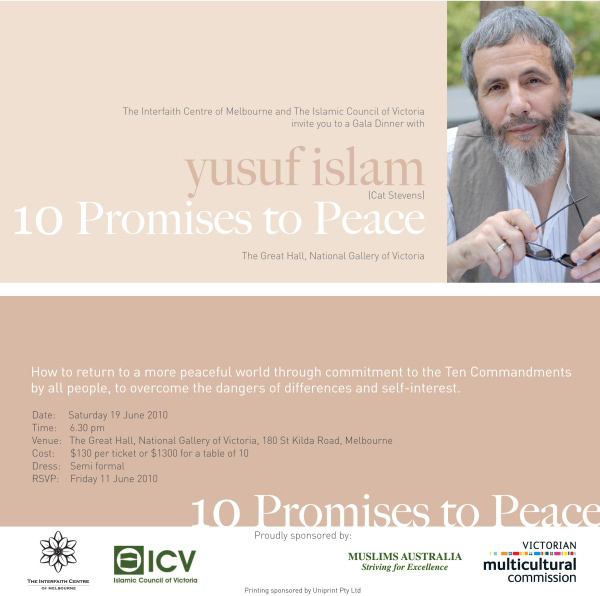
Interfaith Center: Gala Dinner with Yusuf Islam
There have been several meetings referred to as a Parliament of the World’s Religions, most notably the World’s Parliament of Religions of 1893, the first attempt to create a global dialogue of faiths. The event was celebrated by another conference on its centenary in 1993. This led to a new series of conferences under the official title „Parliament of the World’s Religions“. Read More: > HERE <
Yusuf Islam (born Steven Demetre Georgiou; 21 July 1948 in London, England),commonly known by his former stage name Cat Stevens, is a British musician. He is a singer-songwriter, multi-instrumentalist, educator, philanthropist, and prominent convert to Islam. Read More: > HERE <
The Interfaith Centre of Melbourne emphasizes the development of events and programs that involve and attract youth who are searching for deeper meaning in their lives, and who show deep concern for the future of humanity and the planet.
Building Harmony – The State of Victoria is one of Australia’s most multi-cultural States. It comprises people from more than 208 countries. Victorians speak over 150 languages and follow more than 100 faiths. Whilst there are no large-scale community relation’s conflicts, the report tabled in the Commonwealth Parliament in November 2000, „Conviction with Compassion: A Report into Freedom of Religion and Belief“, suggests that elements of racism and religious intolerance remain endemic in our society. Our broader community is not always aware of the level of distress and harm experienced by members of minority groups.
Combating prejudice and assisting people to overcome disadvantage are two of the Victorian Government’s key priorities. Our mission and educational/cultural programs seek to complement the Victorian Government’s promotion of racial and religious tolerance, and issues of social justice.
YTDR – Yogi Tsoru Dechen Foundation Miami
Miami (pronounced /maɪˈæmi/ or /maɪˈæmə/) is a major city located on the Atlantic coast in southeastern Florida. Miami is the county seat of Miami-Dade County, the most populous county in Florida. It is the principal city and the center of the South Florida metropolitan area, which had a 2008 population of 5,414,712; ranking 7th largest in the U.S.In 2008, the population of the Miami urbanized area had increased to 5,232,342, becoming the fourth-largest urbanized area in the United States, behind New York City, Los Angeles, and Chicago. Miami is a well-known global city due to its importance in finance, commerce, culture, media, fashion, education, film, print media, entertainment, the arts and international trade.Known as The Gateway to the Americas, Miami is an international center for entertainment, education, media, music, fashion, film, culture, print media, and the performing arts. Read More: > HERE <
Tibet (Tibetan: བོད་; Wylie: bod, pronounced [pʰø̀ʔ]; Chinese: 西藏; pinyin: XÄ« Zàng) is a plateau region in Asia and a disputed territory, north of the Himalayas. It is home to the indigenous Tibetan people, and to some other ethnic groups such as Monpas and Lhobas, and is inhabited by considerable numbers of Han and Hui people. Tibet is the highest region on earth, with an average elevation of 4,900 metres (16,000 ft). It is sometimes referred to as the roof of the world. Read More: > HERE <
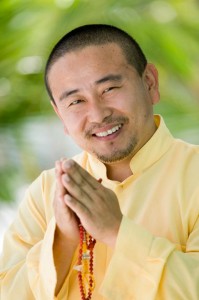
The Venerable Tulku Tsori Rinpoche is the founder and spiritual leader of the Yogi Tsoru Dechen Rinpoche Foundation based in Miami, Florida. He is recognized as a Lama – a term reserved for senior members of the Tibetan Order.
Lama Tulku Tsori Rinpoche (aka Tulku Karma) was born in a Tibetan refugee settlement in India in 1974. During his childhood, he was recognized as the incarnation of Yogi Tsoru Dechen Rinpoche of Chamdho, Tibet. At the age of seven, he was received at Namdroling Monastery in Bylakuppe, India where he completed his education.
Dalai Lama teaching at TCV Dharamsala India
Rinpoche has devoted his life to champion humanitarian efforts. He travels throughout the world teaching the Buddha Dharma (Path of Awakening), and speaking on the greater good of empowering humanity and revitalizing society. Presently, Rinpoche is overseeing various charitable programs including construction of the Children’s Monastery in Mainpat, India while continuing to help establish new Dharma centers throughout the world.
IRCICA – Int. Symposium of muslim Calligraphy
http://ilmalinsaan/islamic-calligraphy
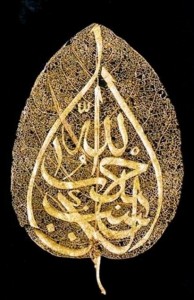
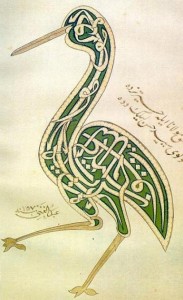
Calligraphy, by definition, the art of „beautiful writing” is one of the oldest artistic and literary forms known to mankind. Ancient scribes writing on papyrus, clay tablets, and vellum strove to make their writing very special. Monks in monasteries and medieval professional scribes brought their writing to a high form of artistic expression as they inscribed scriptures, sacred writings, and other works of literature and poetry. Scribes and calligraphers have that same passion today as they endeavor to make the written word an artistic treasure to be admired and treasured. Calligraphy (from Greek κάλλος kallos „beauty“ + γραφή graphẽ „writing“) is a type of visual art. It is often called the art of fancy lettering. A contemporary definition of calligraphic practice is „the art of giving form to signs in an expressive, harmonious and skillful manner“. The story of writing is one of aesthetic evolution framed within the technical skills, transmission speed(s) and materials limitations of a person, time and place . Read More about Calligraphy in East & West: > HERE < .
IRCICA is an international institution active in the fields of research, publishing, documentation and information. Its mandate covers multifarious themes in the fields of the history of Muslim nations, history of arts and sciences in Islam, and other subject areas in Islamic culture and civilisation. By means of these activities, IRCICA aims at studying and better introducing the Islamic culture and civilisation throughout the world and acting as a catalyst for research and cooperation in these areas to promote mutual understanding between Muslims and with other nations and cultures of the world.
IRCICA started its activities in 1980 as the first subsidiary organ of the Organisation of the Islamic Conference (OIC) concerned with culture. The headquarters of IRCICA are located in the three buildings named Seyir Pavilion, Cit Qasr and Yaveran Building in the historical Yildiz Palace in Besiktas, Istanbul. These buildings were allocated to the Centre by the Government of the Republic of Turkey.
Prof. Dr. Ekmeleddin Ä°hsanoÄŸlu, Secretary General of the Organisation of the Islamic Conference, was the Director General of IRCICA from 1980 to December 2004. Prof. Ä°hsanoÄŸlu was elected Secretary General of OIC by the 31st Islamic Conference of Foreign Ministers (Istanbul, 14-16 June 2004). Dr. Halit Eren, who was the Deputy Director General, was appointed Director General of IRCICA as of 1st January 2005. INTERNATIONAL SYMPOSIUM OF FEMALE CALLIGRAPHERS June 4th -6th, 2010: > HERE <
Muslim Heritage: Professor Al-Hassani on the History Channel. More Muslim Heritage Videos: > HERE <
Centre’s Programs – The scope of IRCICA’s work plans expanded steadily over the years, as completed activities were replaced by new projects and ongoing ones grew to cover new themes of interest. The majority of research projects are implemented on a long term basis, in several successive and/or simultaneous stages related to various aspects of a given theme or involving various types of activities, such as data collection and treatment, contacts and cooperation with the Member States, institutions and organisations concerned, convening of scholarly meetings, editing, publishing, etc. From its earliest years onwards, the Centre disseminated the results of its activities in the OIC Member States as well as in academic, cultural and artistic circles world-wide by its publications, paper presentations at conferences, exhibitions of documents and illustrations, communication and cooperation with universities and cultural institutions throughout the world, and by offering library and archive services to researchers and students. This section outlines the activities carried out by IRCICA within the framework of its programs and projects, from its establishment in 1980 until the beginning of 2000.
- AVICENNA, UNANI MEDICINE & MATERIA MEDICA <
- ISLAMIC PLANT MEDICINE AND HISTORY <
- Meet HATTAT TAHSÄ°N KURT, friends, fans at fb <
- Meet CALLIGRAPHY, studies, friends, fans at fb <
- Meet Council for a Parliament of the World’s Religions (CPWR) at fb <
LeadEarth – Environmental & Int. Development
Jews, Christs & Muslims ~ Intercultural Dialog
Isralestinian Ghandis – Meditation for Peace
Israel (Hebrew: יÖ´שÖ°ׂרÖ¸אÖµל, YisrÄ�’el; Arabic: إِسْرَائِيلُ, IsrÄ�’Ä«l), officially the State of Israel (Hebrew: About this sound מÖ°דÖ´ינÖ·ת יÖ´שÖ°ׂרÖ¸אÖµל (help·info), MedÄ«nat YisrÄ�’el; Arabic: دَوْلَةُ إِسْرَائِيلَ, Dawlat IsrÄ�’Ä«l), is a country in Western Asia located on the eastern shore of the Mediterranean Sea. It borders Lebanon in the north, Syria in the northeast, Jordan and the West Bank in the east, the Gaza Strip and Egypt on the southwest, and contains geographically diverse features within its relatively small area. Israel is the world’s only predominantly Jewish state, with a population of 7.5 million people, of whom 5.7 million are Jewish. Arab citizens of Israel form the country’s second-largest ethnic group, which includes Muslims, Christians, Druze, and Samaritans.
The modern State of Israel has its historical and religious roots in the Biblical Land of Israel, also known as Zion, a concept central to Judaism since ancient times. Political Zionism took shape in the late-19th century and the Balfour Declaration of 1917 formalized British policy preferring the establishment of a Jewish state. Following World War I, the League of Nations granted Great Britain the Mandate for Palestine and the responsibility for establishing „the Jewish national home“ within it. Read More: > HERE <
Tamil Nadu (Tamil: தமிழ்நாடு „Country of the Tamils“, pronounced [t̪ɐmɨɻ n̪aːɽɯ]( listen)) is one of the 28 states of India. Its capital and largest city is Chennai (formerly known as Madras). Tamil Nadu lies in the southernmost part of the Indian Peninsula and is bordered by the States of Puducherry (Pondicherry), Kerala, Karnataka and Andhra Pradesh. It is bound by the Eastern Ghats in the north, the Nilgiri, the Anamalai Hills, and Palakkad on the west, by the Bay of Bengal in the east, the Gulf of Mannar, the Palk Strait in the south east, and by the Indian Ocean in the south. Read More: > HERE <
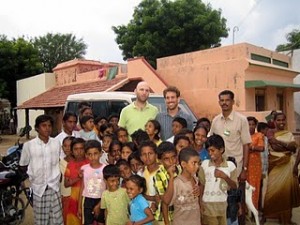
Leadearth is an 8 months leadership program of Environmental and Social projects in Israel and India. LeadEarth is an eight-month leadership program for young professionals who wish to gain experience in the fields of social action, community empowerment and environmental and international development.
The LeadEarth program was designed to foster social entrepreneurs in the fields of environmental sustainability and informal education and enable them to acquire the skills, knowledge and hands-on experience to initiate, develop and lead projects in their own communities and in developing countries.
LeadEarth offers professional training, personal growth, self empowerment and a unique opportunity to initiate, develop and lead community projects.
The LeadEarth program includes a five-month training program in Israel followed by three months of field work in India and a closing seminar to prepare participants for further professional work and studies.
During the first five months of the program, participants live on Kibbutz Ein Zivan, where you will study and volunteer. Here you will receive professional training in the fields of sustainable ecological development and project management.
In the second part of the program, volunteers will travel to the Tamil Nadu state of India where you will live in an international volunteer community and work with grassroots NGOs, including the Center for Culture and Development (CCD) and Sadhana Forest. These organizations, together with an Adam LeAdam professional team leader, guide the volunteers in the initiation, development and operation of community projects, while focusing on promoting environmental awareness through informal education.
As LeadEarth graduates, you will receive ongoing support to enable you to sustain social and environmental involvement and activities in India or in your home community.
As a participant of the program you will: Prepare for further studies and professional job opportunities in the fields of environmental studies, ecological sustainability, international development and project management. Gain knowledge of Israel and India through living and working with local communities. Work and train with the next generation of international, young, Jewish, social entrepreneurs. Receive professional training in sustainable living including: clean energy, building planning, composting, chemical-free products and organic farming. Undergo survivor training in order to learn to deal with uncertainty in outdoor conditions. Receive accreditation from leading NGOs in Israel and India.
- Meet Lead Earth friends, fans at fb <
- Meet Isralestinian Gandhis , friends, fans at fb <
- Meet United Israel Peace, friends, fans at fb <
- Meet M.K. Gandhi Institute for Nonviolence, studies, friends at fb <
- Council for a Parliament of the World’s Religions (CPWR)<
Kundalini Yoga Workshop & Swami Dhirendra
www.hinduism.co.za/Brahmacharya
http://www.sanandayoga.com/workshop
http://archives.digitaltoday.in
Brahmacharya – Sri Swami Sivananda
Brahmacharya (pronounced [brʌmatʃərɪə], Devanagari: ब्रह्मचर्य) whose literal meaning is under the tutelage of Brahman refers to a period of spiritual education in the traditional scheme of life in Hinduism that takes place during the teenage years. This period of time in which the student becomes inculcated in the mystical doctrine contained within the Upanishads is characterised above all else by the practice of strict celibacy. As such, in non-Hindu traditions (see nastika) Brahmacharya denotes a mode of life devoted to spiritual endeavour in which sexual continence is the guiding factor. A Brahmachari therefore is a male (and brahmacharini a female) who observes sexual abstinence unless intentionally procreating. These characteristics correspond to Western notions of the religious life as practised in monastic settings. Read More: > HERE <
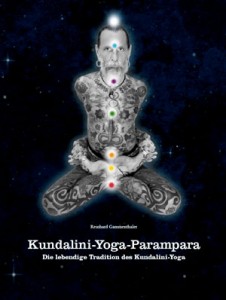
Just like his life and his death the origin of Swami Dhirendra Brahmachari is shrouded in mystery. Some sources say that he was born in a respected Brahmana family of Chandpura, a small village in Bihar in Northern India. Others say that he came from a village in Kashmir. There are no records of the day of his birth, and during his lifetime the public was speculating about his real age. He never talked much about his past, but when he remebered his early childhood he used to say that he was a wild and naughty boy with a great sense for adventure, which often put him in difficult and dangerous situations. When he was twelve years old he started to read the Bhagavad Gita and he was deeply impressed when Krishna says to Arjuna: “The Yogin is verily superior to the Tapasvins (those observing austerities), Jnanins (the knowledge-ables) and Karmakandins (those who perform the ceremonial rites). Therefore you should try to become a Yogin!” So he decided to become a Yogi. From this moment he pursued this arduous path with great devotion and deep interest, and he left his family to search for a true Guru. During these years of wandering he met many masters and holy men, but in spite of his ardent efforts it seemed impossible to find the one personal Guru. Many so-called masters turned out to be charlatans or they were demanding a certain hairstyle or dress from him, changes which the stubborn young man wouldn`t accept.
After years of restless search he ended up in great poverty, and he seemed to be stranded. He said about this dark period of desperation: “I had completely lost the idea of a Guru, my mind was absolutely empty. But only when life becomes dark and black like a slate, you can start to write something new. Only where there is absolute emptiness you can fill in something new. Only when his own ideas are wiped out, man is ready to perceive and accept the Absolute. It is a balance between complete devotion and the openness for the Divine or even for what you can call its opposite.” While this struggle between light and darkness was in full swing, he finally met his Guru Maharshi Kartikeya, whose Ashram stood at Gopal-Khera, about twelve miles from Lucknow. There his Guru initiated him into the untold secrets of Yoga. He practiced Pranayama in an underground cave and reached a state of perfect mental equilibrum, which made him enter the realms of higher Yoga. Now he was a Swami, a Siddha and Yoga-Master, and he was directed by Maharshiji to propagate the Yogic Kriyas.
It was in the Bengal capital Calcutta that his first work “Yogic Sukshma Vyayama” was published in Hindi in 1956. Thereafter he came to Delhi and people of all walks of life and from all over the world were attracted to him to learn the yogic practices that he demonstrated.
He taught the first Prime Minister of India, Jawaharlal Nehru, and was the yogic mentor to his daughter Indira Gandhi and her family. 1970 he published his second book “Yogasana Vijnana”, doubtless the best work ever about the correct practice of Yoga-Postures. Because of his extraordinary powers and his charismatic personality he became the counsellor and trustee of the then Prime Minister Indira Gandhi and therefore a political issue. He was running big Ashrams in Delhi, Jammu, Katra and Mantalai (J & K), and thousands of people from all over the world were eager to learn from him.
In the year 1981 he was asked by some journalists if he would leave his body as old as his own Guru Maharshi Kartikeya, who entered Maha-Samadhi 1953 in the age of 336 years, while he was meditating with his favourite Chelas. He answered: “I would gladly do that, if I shouldn`t die in a plane-crash.”
H2Oil: Oil & Tar Sands The Documentary

www.indigenouspeoplesissues.com
Oil sands, also known as tar sands, or extra heavy oil, are a type of bitumen deposit. The sands are naturally occurring mixtures of sand or clay, water and an extremely dense and viscous form of petroleum called bitumen. They are found in large amounts in many countries throughout the world, but are found in extremely large quantities in Canada and Venezuela. Oil sands reserves have only recently been considered to be part of the world’s oil reserves, as higher oil prices and new technology enable them to be profitably extracted and upgraded to usable products. Oil sands are often referred to as unconventional oil or crude bitumen, in order to distinguish the bitumen extracted from oil sands from the free-flowing hydrocarbon mixtures known as crude oil traditionally produced from oil wells. Read More: > HERE <
What Are Tar Sands? – Tar sands (also referred to as oil sands) are a combination of clay, sand, water, and bitumen, a heavy black viscous oil. Tar sands can be mined and processed to extract the oil-rich bitumen, which is then refined into oil. The bitumen in tar sands cannot be pumped from the ground in its natural state; instead tar sand deposits are mined, usually using strip mining or open pit techniques, or the oil is extracted by underground heating with additional upgrading. See the Photos page for additional photos of tar sand and tar sand mining. FULL ARTICLE: > TAR SANDS BASICS < (Basic information on tar sands technology, resources, and issues of concern.)
Greenhouse gas emissions from tar sands production are three times those of conventional oil and gas production [currently tar sands production emits 27 megatonnes per annum and is expected to rise to 108-126 megatonnes by 2015]. Thus, the tar sands are now poised to become Canada’s largest single emitter of greenhouse gas, compounding this country’s contribution to global warming. Additionally, tar sands production is expected to multiply as much as four to five times by the year 2015 to meet growing demands in the U.S. As a consequence, conservative estimates show that greenhouse gas emissions from the tar sands could well leap from 27 to 126 million tonnes by 2015.
Read more — http://www.tarsandswatch.org/global-warming
- The Real Avatar: Story of a Sacred Mountain <
- WE ARE ONE – A Celebration of Tribal People <
- Meet H2Oil: The Documentary, friends, fans at fb <
- Meet Survival International, friends, fans at fb <
- Indigenous Peoples Issues and Resources, friends, fans at fb <
- Meet Tom BK Goldtooth, friends, fans at fb <
- 100 Million Voices for a Real Climate Deal in Mexico 2010 <
KALARIPPAYAT TRAD. (kalari) MARTIAL ART
KALARIPPAYAR – KALARI TRADITION
* The elder generations still believe that the Kalari Guru is the sage Parasurama himself, who after creating the land of Kerala, taught Kalarippayatt to 21 disciples in order to protect and maintain peace. Lord SIVA is considered to be the father of Kalarippayatt. Parasurama has propagated in Northern style and Sage Agasthya in Southern style.
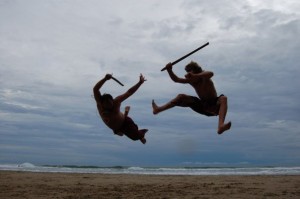
Kalarippayat is one of the oldest living traditions of Martial training, Physical culture and self defence method in the World. The Kalarippayat is derived from two words in Malayalam, Kalari and Payatt. Kalari means the place, where any particular art form is taught. Payatt literally means practice or exercise. In the present context it means in the traditional style of combat. It is the Martial Art form of Kerala, the Southern most state of INDIA.
Kshatriya (Hindi: क्षत्रिय, kṣatriya from Sanskrit: क्षत्र, kṣatra) or Kashtriya meaning warrior is one of the four varnas (social orders) in Hinduism. शर्म ब्राहमणस्य वर्म क्षत्रियस्य गुप्तेती वैश्यस्य Prasar grhaysutras). It traditionally constituted the military and ruling elite of the Vedic-Hindu social system outlined by the Vedas and the Laws of Manu. Read More: > HERE <
ENS Kalari Centre was established in 1954 at Nettoor, Ernakulam Dist., Kerala, South India by E.N. SREEPATHY EMBRNTHIRI GURUKKAL. This Kalari gives training in both Northern and the Southern systems of Kalarippayat. This may perhaps be only Kalari of this type in Kerala blending both systems. Here, training is given in a Kalari constructed accordingto the time honored principles of the Kalari traditions and according to accepted methods of worshipping the Kalari Gods and Guru, and performing the necessary rituals.
This institute, affiliated to the Kerala Kalarippayat Association [Govt. of Kerala], is the only one of its kind to authorize by Enakulam District Tourism Promotion Council. ENS Kalari collects and systematically arranges [for the benefit of students both Indian & Foreign] printed book, videocassettes etc. More and more foreigners visit ENS Kalari for studying and for seeing Kalarippayat. Lately South Africa for demonstrating and teaching Kalarippayat sponsored two of the scholars of ENS Kalari. Every day there is a demonstration from 7 pm to 8pm. The special visit to Kalariis allowed between 3pm to 7pm every Sunday evening. Those who are interested in watching Kalarippayat can make use of this opportunity.
This Kalari started new certificate courses ranging from ONE WEEK to ONE YEAR and Various SPECIAL COURSES also.
Ayurvedic Treatments: We have every facility to conduct various traditional ayurvedic treatments.The main treatment is UZHICHIL [massage]. Massage has been in vogue all over the world since time immemorial. Massage is being used of curing diseases in Kerala. But this science and art has not developed enough in this present age. Even today there are experts who massage the nerves and veins of patients for curing diseases and people do regard them highly. In olden time warriors used to get initiates into the Martial Arts after massage, which used to continue through out life. In kerala even now, before practicing Kalarippayat it is customary to massage the whole body and make it ready. Massage helps to attain a compact physique and to easily and to easily bend or turn any part of the body. Once you become a warrior, massage is necessary to shed physical fatigue. Exercises and massage are essential to build a healthy body.
In Kalari, massage is done by the GURUKKAL. UZHICHIL is a system of full-body massage to improve muscle tone, flexibility, stimulate the circulation of blood and to give long life. Kalari massage can also provide benefitsin relation to headaches, depression, sexual functioning, and back pain. It is intended to cure Kalari – related orthopaedic injuries and spasmodic diseases. For the students of Kalarippayat who with to take up the position of GURU, they should become well versed in the ART of treatment. Massage has one more important benefit, which concerns the flow of lymph in the body. Lymph is a vital fluid, which purifies the blood, thereby enhancing the health and beauty of the body. As massage givens an equal effect, it helps those who cannot do or are not able to do exercises.
kalari oil massage – Ancient time warriors used to get initiates into the Martial Arts after massage, which used to continue through out life. In Kerala even now, it is customary to massage the whole body and make it ready to practice Kalarippayat. Massage helps to attain a compact physique easily and to bend or turn any part of the body. Once you become a warrior, massage is necessary to shed physical fatigue. Exercises and massage are essential to build a healthy body.
This is the unforgettable experience to the visitors. Two type of massage is using in kalari Massage – using Hand and Massage – using foot. All over the Kerala is sinking with Ayurvedic massage.
But this is the unforgettable experience for visitor, he/she can choose the massage they like- foot massage or hand massage. After the massage the kalari disciples are practicing kalari. Same way after the Kalari massage the person will become fully energetic. So we can understand how much energy and stamina will attain after the kalari massage. Commonly ‘Mahanarayan Thilam’ [Herbal oil] is using for massage and Steam Bath and Herbal Bath are also available. The duration of the Massage is 45mts to 1hour.
ENS Kalari conducting Uzhichil [massage] treatment courses varying from 5-7days, 14days, and 21days. It is available through prior booking. Full-body massage help to improve muscle tone, flexibility, stimulates the circulation of blood and give long life. Kalari massage is using to treat headaches, depression, sexual functioning, back pain etc.
- Meet Vedic Center, KALARI, friends, studies at facebook <
- Meet Kalari Payat, friends, studies at facebook <
- Meet Aashan Sajangurukkal, friends at facebook <
- Meet VEDIC , Friends, and Study Groups at facebook <
- Meet Upanishad, friends, groups, studies at facebook <
- Meet all Ayurveda Groups, Friends, Studies at facebook <
- The Drukpa Lineage , friends, fans at fb < www.drukpa.org
- Meet Lord Dhanvantri at facebook <
Songs Of Awakening / Roads Of Blessings
http://www.myspace.com/lamagyurme
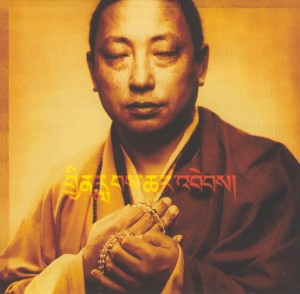
Lama Gyurme (born in 1948), or Lama Gyourmé, is a Buddhist Bhutanese monk and musician. He has lived in France since 1974, and he is the director of the Kagyu-Dzong center in Paris and, since 1982, the Vajradhara-Ling center in Normandy. Read More: > HERE <
Born in Bhutan in 1948, he was entrusted by his family at the age of four to the monastery of Djang Tchub Tcheu Ling in Bhutan where his interest in sacred music appeared quickly. At the age of nine, he became a permanent resident of the monastery where he received Buddhist teachings, completed by an initiation to traditional arts, including music.
At the age of 20, he followed his first spiritual retreat of three years, three months and three days, necessary to the formation of Lama, at the monastery of Sonada in India of which the director is Kalu Rinpoche. During this retreat, he was given the title of „Oumze“ — master of music — by Kalu Rinpoche. After a stay at the monastery of Rumtek in Sikkim, he fulfilled his religious education in Bhutan before obtaining his diploma of teacher of the Kagyupa tradition that was given to him by the 16th Karmapa.
Lama Gyurme – For the Light
In 1995 and in 1998, Gyurme went on a pilgrimage to Tibet and visited the 17th Karmapa Orgyen Trinley Dorje in the Monastery of Tsurphu. He presented him his project of construction of the Temple for Peace.
Gyurme also participated in the music of the 1999 film Himalaya‘.
Light of Compassion: Evening for a Noble Cause
www.littlelama.org Little Lama at fb
http://architecturefortibet.org
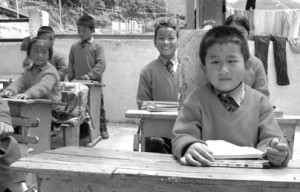
Light of Compassion: A Spectacular Evening for a Noble Cause – Come join our Circle of Friends at the Rubin Museum of Art, a treasure of architecture in Manhattan’s Chelsea neighborhood, to celebrate the accomplishments of the Manjushree Orphanage and Free School in Tawang, India — and to help fund a planned Academic Center. An optimal learning environment will foster academic success and enable these disadvantaged children to flourish.
WHEN: Tuesday, May 25, 6pm to 9pm
WHERE: Rubin Museum of Art (150 West 17th Street, between 6th and 7th Avenues)
New York, NY
Time: Tuesday, May 25, 2010, 6:00pm – 8:00pm
WHAT: A Gala Reception with open bar. Vikas Khanna’s famously tasty hors d’oeuvres. A Silent Auction (starting at 6pm sharp) with unique offerings from the travel, culinary and fashion industries. A special musical performance by Tibetan singer Yungchen Lhamo. > Listen to Yungchen´s Music <
Exclusive guided tours of the Rubin Museum galleries. And a presentation of the impressive building project designed for the children of Manjushree Orphanage. An all around incredible experience in the service of a noble cause.
To date, Robert Thurman, noted Buddhist scholar; Lobsang Nyandak, representative to His Holiness the Dalai Lama; and Dr. Tatsumura Hillyer of Tibet House are scheduled to speak.
CHANT – MUSIC FOR PARADISE
http://sthk.dabis.cc/ (Online Library)
For USA see:
For Europe, Asia, Australia & South America see:
Heiligenkreuz Abbey (Stift Heiligenkreuz, Closter Heiligen Creyz or Santa Crux) is a Cistercian monastery in the village of Heiligenkreuz in the southern part of the Vienna woods, eight miles north-west of Baden in Lower Austria. It has existed without interruption since its foundation in 1133 and is thus the second oldest continuously occupied Cistercian monastery in the world. The monastery was founded in 1133 by Margrave Leopold III of Austria, also known as Saint Leopold, at the request of his son Otto, abbot of the Cistercian monastery of Morimond in Burgundy and afterwards Bishop of Freising. Its first twelve monks together with their abbot, Gottschalk, came from Morimond at the request of Leopold III. The date of consecration was 11 September 1133. They started by clearing the wood and tilling the land. They introduced the Christian faith into the region. They called their abbey Heiligenkreuz (Holy Cross) as a sign of their devotion to redemption by the Cross. On 31 May 1188 Leopold V of Austria presented the abbey with a relic of the True Cross, which is still to be seen and since 1983 is exhibited in the chapel of the Holy Cross. This relic was a present from Baldwin IV of Jerusalem, King of Jerusalem to duke Leopold V in 1182. Read More: > HERE <
Gregorian chant is the central tradition of Western plainchant, a form of monophonic liturgical music within Western Christianity that accompanied the celebration of Mass and other ritual services. It is named after Pope Gregory I, Bishop of Rome from 590 to 604, who is traditionally credited for having ordered the simplification and cataloging of music assigned to specific celebrations in the church calendar. The resulting body of music is the first to be notated in a system ancestral to modern musical notation. In general, the chants were learned by the viva voce method, that is, by following the given example orally, which took many years of experience in the Schola Cantorum. Read More: > HERE <
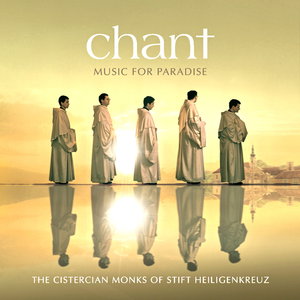
CHANT – MUSIC FOR PARADISE – You can find a lot of information about us and the making of the album „Chant – Music for Paradise“ —> here. There is even more information about the album –> here (but this is in German).
If you are looking for pictures of our prayer and work on the album, just click —> here.
You will find even more pictures of our beautiful abbey and also of our monastic life in the service of God —> here. Just open each picture and click on the symbol in the right edge above to download. The download is free.
The sensational YouTube video by Brother Martin.You just have to see it! God bless you.
If you are a journalist and wish to interview some monk from Stift Heiligenkreuz about the album please do not call the monastery direct, but:
For international media (outside Austria): Ed SCOTT (Director Of International Promotions – UM Group International) Tel +44 207 471-5646, Fax +44 207 471-5683 mobile +44 7785 950 792, E-Mail: Ed.Scott(at)umusic.com
For Austrian media: Anna TSCHIRKO (Promotion Manager – Universal Music Austria), A-1010 Wien, Schwarzenbergplatz 2, Tel +43 1 81121-211, Fax: +43-1-81121-232;, Mobile: 0664-8294558 , E-Mail: anna.tschirko(at)umusic.com
Sephardim – The History of a Jewish Community
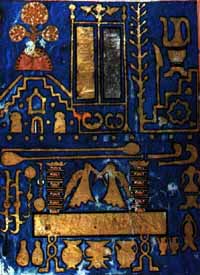
Neveh Shalom – Dwelling Place of Peace – was one of the first synagogues built in Spanish Town, Jamaica during the 17th century. The Neveh Shalom Institute is chartered to promote projects to preserve the history, culture, and artifacts of the Jewish existence in, and contribution to Jamaica, from the 17th century. > „Holy Congregation Dwelling Place of Peace“ <
The Jüdisches Museum Wien, or the Jewish Museum Vienna, is a museum of Jewish history, life and religion in Austria. The present museum was founded in 1988 in the Palais Eskeles in the Dorotheergasse, Vienna, and has distinguished itself by a very active programme of exhibitions. Read More: > HERE <
Sephardi Jews (Hebrew: סÖ°פÖ¸רÖ·דÖ´Ö¼י, Modern Sefaraddi Tiberian Səp̄Ä�raddî, plural: Hebrew: סÖ°פÖ¸רÖ·דÖ´Ö¼ים, Modern Sefaraddim Tiberian Səp̄Ä�raddîm; Spanish Sefardíes; Portuguese Sefarditas, Greek Σεφάρδοι Sefardoi, Bulgarian сефаради sefaradi, Turkish Sefarad, Judaeo-Spanish Sefardies, Arabic: سفارديون) are Jews who define themselves in terms of the Jewish customs and traditions which originated in the Iberian Peninsula before the expulsion of Jews from that area in the late fifteenth century (after Islam left it), and usually defined in contrast to Ashkenazi and Mizrahi Jews. The Sephardim have distinguished themselves as physicians and statesmen, and have won the favor of rulers and princes, in both the Christian and the Islamic world. That the Sephardim were selected for prominent positions in every country in which they settled was only in part due to the fact that Spanish had become a world-language through the expansion of Spain into the world spanning Spanish Empire—the cosmopolitan cultural background after long associations with Islamic scholars of the Sephardic families also made them extremely well educated for the times, even well into the European Enlightenment. Read More: > HERE <
The year 1492 was a fateful one for Spain. It was the year in which the Reconquista finally ended eight hundred years of Arab Muslim rule, the Jews were expelled from the country, and Christopher Columbus set off on a journey that was to lead to the discovery of the New World.
The exhibition „The Turks in Vienna“ looks at the impact of one of these significant historical events that marked the end of the Middle Ages in Europe, namely the expulsion from Spain of the Jews, who found refuge in North Africa, some Italian cities and, above all, in the Ottoman Empire. They fled initially to Portugal before leaving the Iberian Peninsula for Holland and northern Germany. Following the Ottoman conquests, Jews of Spanish descent-called „Sephardim“-were able to form culturally and economically significant communities in the Balkans. There were contacts between the Jews in Vienna and the Sephardim, or Turkish Jews, even during the era of the ghetto in Unterer Werd, but it was not until the peace treaties between the Habsburgs and the Ottoman Empire in the first half of the eighteenth century that Turkish Jews were able to move freely in the Habsburg Empire.
After the establishment of the Turkish Jewish community in Vienna, an imperial patent gave it permission to hold religious services. The community had its prayer house from the outset in the 2nd district. In 1887, the impressive Moorish-style Sephardic-Turkish temple was inaugurated in Zirkusgasse, with portraits of the Habsburg and Ottoman regents in the foyer as indication of the community’s loyalty to both rulers and countries. In November 1938, this jewel of Jewish sacral architecture was destroyed along with practically all other synagogues and Jewish prayer houses in Vienna, and most of the community was subsequently deported and exterminated.
The Sephardic Jews in Vienna were in many ways communicators between East and West, Orient and Occident, Asia and Europe, a role that was performed in the first place as merchants and dealers importing wool and cotton, silk and tobacco, sugar and spices to the West. Their function as active exponents of the Austrian post office in Constantinople and the Levant, Austrian Lloyd, and the Orient Express is also highlighted in the exhibition „The Turks in Vienna.“
The Sephardic Turks played this communicating role at the cultural level as well. They set up the first printing works in Constantinople and the Sephardic press in Vienna. There rabbinical tradition also received significant stimulus from the Sephardic Jews. The treasures of medieval Spanish-Turkish poetry were passed on and translated, and the Sephardim were also responsible for developing Jewish mysticism. Moreover, they were the first to make Arab philosophy and medicine available to the Western world. Sephardic scholars became famous as scientists and rabbis, as translators, philosophers, and Hebrew studies specialists. Sephardic publishers distributed their writings throughout the Ladino-speaking world and produced writers of the caliber of Elias Canetti, to mention but one example. Info: www.jmw.at
All of these facets of the Sephardic Diaspora and its contribution to the cultural history of the Eastern and Western world can be seen in the exhibition „The Turks in Vienna“ from May 12 to October 31, 2010, at the Jewish Museum Vienna.
The > Türkischer Tempel < (English: Turkish Temple) was a synagogue in Vienna. It was built specifically for a community of Sephardi Jews, who originally came from Turkey. The synagogue was built in a Turkish, almost Islamic style, with a dome. The building was destroyed during the Reichskristallnacht in 1938.
Sephardic music has its roots in the musical traditions of the Jewish communities in medieval Spain. Since then, it has picked up influences from Morocco, Argentina, Turkey, Greece, and the other places that Spanish Jews settled after their expulsion from Spain in 1492. There are three types of Sephardic songs — topical and entertainment songs, romance songs and spiritual or ceremonial songs. Lyrics can be in several languages, including Hebrew for religious songs, and Ladino.
- Sephardic Music: www.desiretoshare.com/music/
- http://en.wikipedia.org/wiki/Sephardic_music
- Sephardic Literature: The Real Hidden Legacy <
- Reb Zalman Legacy Project & Migdal Ohr <
- Meet Sephardic Anuism, friends and studies at fb <
- Meet Ladino/Sephardic Songs and Culture, friends, fans at fb <
- Meet Sephardic Music Festival, friends, fans at fb <
- Meet Council for a Parliament of the World’s Religions (CPWR) at fb <
Jews, Christs & Muslims ~ Intercultural Dialog
www.onb.ac.at/Veranstaltungen
www.nli.ie / James Joyce
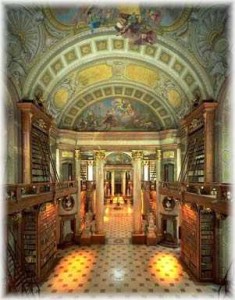
The Austrian National Library (German: Österreichische Nationalbibliothek, abbreviated „ÖNB“ and formerly Hofbibliothek ), is , with 7.4 million items in its collections, the largest library in Austria. The collections consist of: papyri (one or the greatest papyri collections, manuscripts, ancient and rare books, maps, globes, music, portraits, graphics, photographs, autographs and posters as well as works in and on Esperanto and other artificial languages are stored in the various collections and are available for scientific research. Read More: > HERE <
Pedanius Dioscorides (Greek: Πεδάνιος Διοσκορίδης; ca. 40-90 AD), a native of Anazarbus, Cilicia, Asia Minor, was, according to a recent manual of toxicology, „… an ancient Greek physician, pharmacologist and botanist who practised in ancient Rome at the time of Nero. He was a surgeon with the army of the emperor, so he had the opportunity to travel extensively seeking medicinal substances from all over the Roman and Greek world.“ Read More: > HERE <
The Vienna Dioscurides or Vienna Dioscorides is an early 6th-century illuminated manuscript of De MATERIA MEDICA by Dioscorides in Greek. It is an important and rare example of a late antique scientific text. The 491 vellum folios measure 37 by 30 cm and contain more than 400 pictures of animals and plants, most done in a naturalistic style.Read More: > HERE <
Das Thema der Begegnung verschiedener Kulturen hat seit den ersten Kontakten bis heute nichts an Aktualität verloren. Die immer wieder aufbrechenden Konflikte zwischen den unterschiedlichen Ethnien, Religionen und Weltanschauungen lassen leicht vergessen, welch große Bedeutung der interkulturelle Dialog für die Entwicklung der Zivilisationen hatte. Er wird getragen von Kräften, die das Streben nach sachlicher Erkenntnis und den Respekt vor den Errungenschaften der jeweils Anderen verbinden. Religiös motivierte Fragestellungen gaben vielfach den Anstoß für die wissenschaftliche Auseinandersetzung.
Die Ausstellung im Prunksaal behandelt Bereiche, die besonders von diesem Austausch profitiert haben und stellt die seit der Antike viel diskutierten Themen Medizin, Astronomie und Astrologie in den Vordergrund. Mittelalterliche Handschriften und Drucke führen durch die beeindruckende Welt der Wissensgeschichte.
Juden, Christen und Muslime. Interkultureller Dialog in alten Schriften
7. Mai – 7. November 2010
Österreichische Nationalbibliothek
Josefsplatz 1, 1015 Wien, Austria
Die großen Schriftkulturen – Zur Einführung in den komplexen Themenbereich werden die großen Schriftkulturen, die griechische, arabische, hebräische und lateinische vorgestellt.
Orte der Begegnung – Zentren des Dialoges – Die für alle Seiten fruchtbaren Begegnungen fanden primär an den Schnitt- und Berührungspunkten innerhalb des mediterranen Raumes statt, etwa in Spanien und Süditalien. Dabei fungierten weltliche Einrichtungen wie die Kalifen- und Fürstenhöfe, Schulen und Universitäten ebenso als Schmelztiegel der Kulturen wie die kirchlichen Institutionen.
Zimelien der Medizin, Astronomie und Astrologie – Die Ausstellung bietet aber auch die Möglichkeit lange nicht der Öffentlichkeit präsentierte Kostbarkeiten zu bestaunen. Darunter befinden sich einzigartige Werke des > UNESCO-Weltdokumentenerbes < , wie einige Glanzlichter aus der Renaissance-Bibliothek des Matthias Corvinus (König von 1458–1490) und für kurze Zeit auch der Wiener Dioskurides, als eine der ältesten und kostbarsten Handschriften der Sammlungen dieses Hauses.
- www.greekmedicine.net , Greek Medicine: www.nlm.nih.gov
- Zentrum Theologie Interkulturell & Studium der Religionen <
- UNANI Medicine < , SIDDHA MEDICINE < , Roots European Medicine <
- Meet Islamic Medicine „The Cure for Every Disease“, studies, friends at fb <
- Meet International Society of Hildegard von Bingen Studies at fb <
- Meet Lord Dhanvantari, Originator of Ayurvedah at fb <
- Meet International Year of Biodiversity 2010, friends, fans at fb <
- Meet DECLARE 2010 THE YEAR OF PEACE, friends, fans at fb <
- Meet Council for a Parliament of the World’s Religions (CPWR), friends at fb <
Sustainable Communities through Education
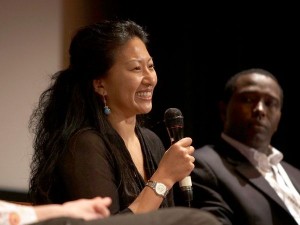
Kham (Tibetan: ཁམས; Wylie transliteration: Khams; Simplified Chinese: 康巴; Pinyin: KÄ�ngbÄ�), is a region presently divided between the Chinese provinces of the Tibetan Autonomous Region, and Sichuan where Khampas, a subgroup within the Tibetan ethnicity, live. It is also one of the three traditional provinces claimed by the Tibetan government-in-exile. Read More: > HERE <
Education and capacity-building form the core of the Machik mission. Learn how a ground-breaking school is helping revitalize a community in a rural Tibetan township.
Located deep in the heartland of Kham, Chungba was, until a few short years ago, a typical rural Tibetan community. With no electricity, running water, telephone, internal roads and virtually no literacy, this mountain community was unequipped to manage the rapid changes arriving at its door. Today, an investment in a primary school has stimulated a broad-based effort to revitalize the community while setting a new standard for rural Tibetan education across the prefecture.
We are deeply saddened by the recent earthquakes in Tibet. In the first four days after the earthquake we raised and sent $38,000 for relief aid. We hope you will let your family, friends and colleagues know that the Tibetan people of Jyekundo need our continued help.
Thank you and we look forward to staying in touch.
The Chungba School Story – Since it first opened its doors in 2002, the Ruth Walter Chungba Primary School has challenged regional stereotypes about the potential of rural Tibetan children. In its first year of operation, the students of Chungba achieved the highest results on county-wide standardized exams, despite being the first generation in Chungba ever to have access to formal education. Surprised by the results, county officials ran a second round of standardized exams for the Chungba school. And the tests results were even higher.
Today, with a residential community of 340 students and staff, the Chungba Primary School has become a model for rural education throughout the eighteen counties of the Ganzi Tibetan Autonomous Prefecture – a region of nearly a million Tibetans. New resources and creative programming have played a role in the success of the CPS projects that include an annual Chungba Summer Learning Program, a traditional Tibetan dance program, a library, an organic greenhouse and other green technologies to promote conservation and environmental consciousness. Watch an introductory video clip of the CPS. The Chungba Summer Learning Program in particular has offered the Chungba kids an array of resources to expand their knowledge of their world and to learn about new forms of knowledge production. These include learning about both traditional knowledge, such as Tibetan storytelling, as well as the use of new digital media.
These images of the Chungba Primary School from 2004-5 were edited by Tsering Perlo , documentarian and founder of Rabsal, an association of young Tibetans dedicated to the revitalization of Tibetan culture. // Pilgrimage Through Kham: A Medical Mission in Tibet
Born in a Tibetan refugee camp in India, raised in Canada, holding a Ph.D. from the University of London’s School of Oriental and African Studies (SOAS), Losang Rabgey has found her life’s work in remote Tibetan villages of farmers, seminomads, and nomads.
An anthropologist specializing in contemporary Tibetan culture and gender relations, Rabgey explains, „I believe that whatever kind of theoretical, research-based work you do, it must be grounded in local knowledge. It’s critical to have a hands-on understanding of what life looks like and feels like to the people you work with.“
- http://johnullman.multiply.com
- www.awamfoundation.org
- Khenchen Lama, AWAM Foundation, Khampas <
- Meet Lobsang Rabgey, friends, studies, fans at fb <
- Meet Survival International, friends, fans at fb <
- Meet Indigenous Peoples Issues and Resources, friends, fans at fb <
- Meet UN International Year of Biodiversity 2010, friends, fans at fb <
- Meet National Geographic, friends, fans at fb <
- Meet 100 Million Voices for a Real Climate Deal in Mexico 2010 at fb <
CELEBRATION OF TAGORE´s 150th BIRTHDAY
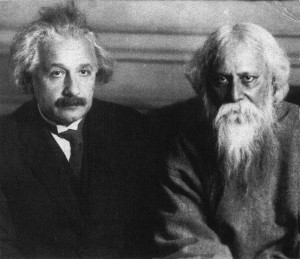
TAGORE, Crisis in Civilization , There are Real Alternatives. A.E. Inst.
Rabindranath Tagore’s Birthday
Rabindranath Tagore (7 May 1861 – 7 August 1941), sobriquet Gurudev, was a Bengali polymath. As a poet, novelist, musician, and playwright, he reshaped Bengali literature and music in the late 19th and early 20th centuries. As author of Gitanjali and its „profoundly sensitive, fresh and beautiful verse“, in 1913 being the first non-European to win the Nobel Prize in Literature, Tagore was perhaps the most important literary figure of Bengali literature. He was a mesmerising representative of the Indian culture whose influence and popularity internationally perhaps could only be compared to that of Gandhi, whom Tagore named ‚Mahatma‘ out of his deep admiration for him. A Pirali Brahmin from Kolkata, Tagore was already writing poems at age eight.At age sixteen, he published his first substantial poetry under the pseudonym Bhanushingho („Sun Lion“) and wrote his first short stories and dramas in 1877. Tagore denounced the British Raj and supported independence. His efforts endure in his vast canon and in the institution he founded, Visva-Bharati University. Read More: > HERE <
Albert Eintstein Institute, About Our Name – Albert Einstein was deeply concerned about war, oppression, dictatorship, genocide, and nuclear weapons. He was willing to explore new approaches to confronting these problems of political violence, although he was not always happy with the choices available to him. At various times he was a war resister, a supporter of the war against the Nazi system, and an advocate of world government. In his later life, he became enormously impressed with the potential of nonviolent struggle. In 1950, he remarked on a United Nations radio broadcast that, „On the whole, I believe that Gandhi held the most enlightened views of all the political men in our time….“
Today, the Albert Einstein Institution continues work on that aspect of Einstein’s thought, examining the potential of nonviolent struggle to resolve the continuing problems of political violence.
Applications of Nonviolent Action (AHIMSA) – Nonviolent struggle can be used in a variety of circumstances for a variety of objectives. These include:
Dismantling dictatorships, Blocking coups d’état, Defending against foreign invasions and occupations, Providing alternatives to violence in extreme ethnic conflicts, Challenging unjust social and economic systems, Developing, preserving and extending democratic practices, human rights, civil liberties , and freedom of religion, Resisting genocide
More information can be found about each of these applications in the > publications section < of our web. site.
K. J. Yesudas (Carnatic Music) www.hrw.org
Yama, niyama, asana, pranayama, pratyahra, dharana, dhyana and samadhi are the eight limbs of yoga . Ahimsa, satya, asteya, bramacharya and aparigraha are the five yamas – The yoga sutras of Patanjali, 2.30-31
In the classical yoga system described by Patanjali more than two thousand years ago, the first stage (or limb, as they are generally called) of yoga is Yama (ethical disciplines) and of these, Ahimsa is the first. (The ethical Do´s and Don´ts or commandments for a propper way of life.)
In short, according to Patanjali, ahimasa, non-violence or, as Desikashar defines it, “Consideration for all living creatures, especially those who are innocent, in difficulty or worse off than we are” should be the very beginning of any yoga practice.
Sadhana : the realisation of life by Rabindranath Tagore Rabindranath Tagore (1861-1941) was a Bengali poet, philosopher, artist, playwright, composer and novelist. India’s first Nobel laureate, Tagore won the 1913 Nobel Prize for Literature. He composed the text of both India’s and Bangladesh’s respective national anthems. Tagore travelled widely and was friends with many notable 20th century figures such as William Butler Yeats, H.G. Wells, Ezra Pound, and Albert Einstein. While he supported Indian Independence, he often had tactical disagreements with Gandhi (at one point talking him out of a fast to the death). His body of literature is deeply sympathetic for the poor and upholds universal humanistic values. His poetry drew from traditional Vaisnava folk lyrics and was often deeply mystical.
Sadhana is a collection of essays, most of which he gave before the Harvard University, describing Indian beliefs, philosophy and culture from different viewpoints, often making comparison with Western thought and culture. (Summary by Peter Yearsley/Wikipedia)
CONTENTS: I. THE RELATION OF THE INDIVIDUAL TO THE UNIVERSE, II. SOUL CONSCIOUSNESS,III. THE PROBLEM OF EVIL, IV. THE PROBLEM OF SELF, V. REALISATION IN LOVE, VI. REALISATION IN ACTION, VII. THE REALISATION OF BEAUTY, VIII. THE REALISATION OF THE INFINITE
FULL TEXT AT PROJEKT Gutenberg < TAGORE AT SACRED TEXT´s < ( Gitanjali [1913], Saddhana, The Realisation of Life [1916] The Crescent Moon [1913], Fruit-Gathering [1916], Stray Birds [1916], The Home and the World [1915], Thought Relics [1921] Songs of Kabîr[1915])
Project Gutenberg, abbreviated as PG, is a volunteer effort to digitize and archive cultural works, to „encourage the creation and distribution of eBooks.“ Founded in 1971 by Michael S. Hart, it is the oldest digital library. www.gutenbergnews.org & www.gutenberg.org
- Tagore, Gandhi and India today <
- VISVA-BHARATI , RABINDRANATH TAGORE – YOGAH ,SCIENCE, POETRY <
- Vedanta, Quantum Physics & Erwin Schrödinger <
- AHIMSA IN YOGA, MUSIC AND SPIRITUALITY <
- The Universal Declaration of Human Rights < , United Nations: Human Rights <
- Meet Human Rights Watch, friends at fb <
- Meet Project Gutenberg, Online Library , studies, friends at fb <
- M.K. Gandhi Institute for Nonviolence, studies, friends at fb <
- Meet The Nobel Women’s Initiative, studies, friends at fb <
- Meet Council for a Parliament of the World’s Religions (CPWR), friends, fans at fb <
ÖBf – 800 PROJEKTE DER ARTENVIELFALT
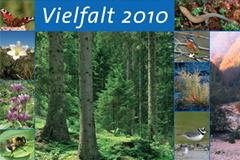
www.nachhaltigkeit.at ( sustainability)
INT. YEAR 2010 for Biodiversity
www.globalbiodiversityprotection.org
Biodiversity is the variation of life forms within a given ecosystem, biome, or for the entire Earth. Biodiversity is often used as a measure of the health of biological systems. The biodiversity found on Earth today consists of many millions of distinct biological species, which is the product of nearly 3.5 billion years of evolution. 2010 is the International Year of Biodiversity. READ MORE: > HERE <
Bundesforste starten mit über 800 Schutzprojekten ins Internationale Jahr der Artenvielfalt 2010 03.12.2009 – Schutzprojekte für den Erhalt von Arten und Lebensräumen – Zum Jahresauftakt ÖBf-Naturkalender „Schöne Vielfalt“ als Sammlerobjekt gewinnen
Die Österreichischen Bundesforste (ÖBf) starten mit über 800 Natur- und Umweltschutzprojekten in das Internationale Jahr der Biodiversität 2010. „Jedes gesunde Ökosystem, jeder gesunde Wald braucht Artenvielfalt“, erklärt Georg Erlacher, Vorstandssprecher der Österreichischen Bundesforste. „Daher ist es unser Ziel, mit naturnaher Waldwirtschaft, der Erhaltung von Schutzgebieten und zahlreichen Einzelmaßnahmen Vielfalt zu sichern und den Verlust von Arten und Lebensräumen zu stoppen.“ Die Bandbreite der Maßnahmen reicht von besonderer Rücksichtnahme auf sensible Brutgebiete über die Ausweisung von Schutz- und Schongebieten bis hin zu großflächigen Moorrenaturierungen. Als erster Forstbetrieb Europas beteiligten sich die Bundesforste am internationalen Biodiversitäts-programm „Countdown 2010“ und haben darauf aufbauend ein eigenes 5jähriges Schutzprogramm zusätzlich zu den bestehenden Maßnahmen entwickelt.
Artenreiches Österreich
Schätzungen der weltweiten Artenzahl pendeln um die Zehn-Millionen-Marke. Wissenschaftlich erfasst sind davon bis dato rund 1,7 Millionen. Österreich bringt es auf fast 70.000 Arten, allen voran die rund 36.000 Insekten. Viele von ihnen sind in ihrem Weiterbestand bedroht: alle Amphibien, fast alle Reptilien, 69% der Fischarten, mehr als die Hälfte aller Vögel und Säugetiere sowie 40% der Pflanzenarten. „Die Zahl unserer Naturschutzaktivitäten“, erklärt Erlacher, „hat sich in den letzten Jahren vervierfacht.“ Neben Artenschutzprojekten für Alpenbock, Wildkatze oder Habichtskauz zählen dazu auch Renaturierungen von geschädigten Ökosystemen und Lebensräumen wie etwa Moorgebieten. Allein im Salzkammergut startet 2010 ein dreijähriges Renaturierungs-projekt, bei dem rund 60 Moore untersucht, analysiert und nach Möglichkeit wiederhergestellt werden.
Nationalparks als „Hotspots“ der Artenvielfalt
Von den rund 850.000 Hektar Gesamtfläche, die die Österreichischen Bundesforste betreuen, stehen mehr als 50% unter Naturschutz. 52.000 Hektar sind in Nationalparks als „Hotspots“ der Artenvielfalt eingebracht, in den Nationalparks Kalkalpen und Donau-Auen sind die Bundesforste in das operative Management eingebunden. Weiters betreuen die ÖBf wesentliche Flächen im Biosphärenpark Wienerwald, in Natura-2000-Gebieten, Naturparks sowie in geschützten Landschaftsgebieten. „Für eine Vielfalt an Arten braucht es ein breites Spektrum an intakten Lebensräumen“, erläutert der Vorstandssprecher. „Im Sinne der Nachhaltigkeit besteht unsere Herausforderung darin, eine Balance zwischen wirtschaftlichem Erfolg, gesellschaftlichen Interessen und naturschutzfachlichen Anforderungen zu finden“, so Erlacher abschließend.
Rückfragehinweis
Österreichische Bundesforste AG
Pia Buchner, Unternehmenskommunikation
Tel. 02231-6000-2123
E-Mail: pia.buchner bundesforste.at
