
Posts by admin
Jews, Christs & Muslims ~ Intercultural Dialog
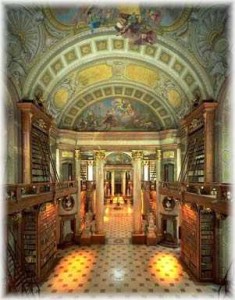
www.onb.ac.at/Veranstaltungen
www.nli.ie / James Joyce
The Austrian National Library (German: Österreichische Nationalbibliothek, abbreviated „ÖNB“ and formerly Hofbibliothek ), is , with 7.4 million items in its collections, the largest library in Austria. The collections consist of: papyri (one or the greatest papyri collections, manuscripts, ancient and rare books, maps, globes, music, portraits, graphics, photographs, autographs and posters as well as works in and on Esperanto and other artificial languages are stored in the various collections and are available for scientific research. Read More: > HERE <
Pedanius Dioscorides (Greek: Πεδάνιος Διοσκορίδης; ca. 40-90 AD), a native of Anazarbus, Cilicia, Asia Minor, was, according to a recent manual of toxicology, „… an ancient Greek physician, pharmacologist and botanist who practised in ancient Rome at the time of Nero. He was a surgeon with the army of the emperor, so he had the opportunity to travel extensively seeking medicinal substances from all over the Roman and Greek world.“ Read More: > HERE <
The Vienna Dioscurides or Vienna Dioscorides is an early 6th-century illuminated manuscript of De MATERIA MEDICA by Dioscorides in Greek. It is an important and rare example of a late antique scientific text. The 491 vellum folios measure 37 by 30 cm and contain more than 400 pictures of animals and plants, most done in a naturalistic style.Read More: > HERE <
Das Thema der Begegnung verschiedener Kulturen hat seit den ersten Kontakten bis heute nichts an Aktualität verloren. Die immer wieder aufbrechenden Konflikte zwischen den unterschiedlichen Ethnien, Religionen und Weltanschauungen lassen leicht vergessen, welch große Bedeutung der interkulturelle Dialog für die Entwicklung der Zivilisationen hatte. Er wird getragen von Kräften, die das Streben nach sachlicher Erkenntnis und den Respekt vor den Errungenschaften der jeweils Anderen verbinden. Religiös motivierte Fragestellungen gaben vielfach den Anstoß für die wissenschaftliche Auseinandersetzung.
Die Ausstellung im Prunksaal behandelt Bereiche, die besonders von diesem Austausch profitiert haben und stellt die seit der Antike viel diskutierten Themen Medizin, Astronomie und Astrologie in den Vordergrund. Mittelalterliche Handschriften und Drucke führen durch die beeindruckende Welt der Wissensgeschichte.
Juden, Christen und Muslime. Interkultureller Dialog in alten Schriften
7. Mai – 7. November 2010
Österreichische Nationalbibliothek
Josefsplatz 1, 1015 Wien, Austria
Die großen Schriftkulturen – Zur Einführung in den komplexen Themenbereich werden die großen Schriftkulturen, die griechische, arabische, hebräische und lateinische vorgestellt.
Orte der Begegnung – Zentren des Dialoges – Die für alle Seiten fruchtbaren Begegnungen fanden primär an den Schnitt- und Berührungspunkten innerhalb des mediterranen Raumes statt, etwa in Spanien und Süditalien. Dabei fungierten weltliche Einrichtungen wie die Kalifen- und Fürstenhöfe, Schulen und Universitäten ebenso als Schmelztiegel der Kulturen wie die kirchlichen Institutionen.
Zimelien der Medizin, Astronomie und Astrologie – Die Ausstellung bietet aber auch die Möglichkeit lange nicht der Öffentlichkeit präsentierte Kostbarkeiten zu bestaunen. Darunter befinden sich einzigartige Werke des > UNESCO-Weltdokumentenerbes < , wie einige Glanzlichter aus der Renaissance-Bibliothek des Matthias Corvinus (König von 1458–1490) und für kurze Zeit auch der Wiener Dioskurides, als eine der ältesten und kostbarsten Handschriften der Sammlungen dieses Hauses.
- www.greekmedicine.net , Greek Medicine: www.nlm.nih.gov
- Zentrum Theologie Interkulturell & Studium der Religionen <
- UNANI Medicine < , SIDDHA MEDICINE < , Roots European Medicine <
- Meet Islamic Medicine „The Cure for Every Disease“, studies, friends at fb <
- Meet International Society of Hildegard von Bingen Studies at fb <
- Meet Lord Dhanvantari, Originator of Ayurvedah at fb <
- Meet International Year of Biodiversity 2010, friends, fans at fb <
- Meet DECLARE 2010 THE YEAR OF PEACE, friends, fans at fb <
- Meet Council for a Parliament of the World’s Religions (CPWR), friends at fb <
KALA AZAR – Save One Life with One Dollar
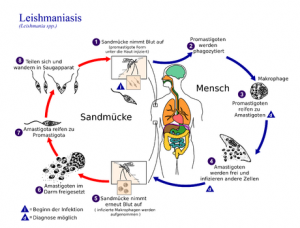
Doctors without Borders/kala azar
Nonprofits Work to Treat Rare Diseases too, – in Third World
KNOWLEDGE, ATTITUDE, AND PRACTICES ~ BHU
“ India is not a country of the Hindus only. It is a country of the Muslims, the Christians and the Parsees too. The country can gain strength and develop itself only when the people of the different communities in India live in mutual goodwill and harmony .It is my earnest hope and prayer that this centre of life and light which is coming into existence, will produce students who will not only be intellectually equal to the best of their fellow students in other parts of the world, but will also live a noble life, love their country and be loyal to the Supreme ruler. ~ Pandit Madan Mohan Malaviya“ ( > Information Maha Mana Pandit Folder < ) .
Leishmaniasis is a disease caused by protozoan parasites that belong to the genus Leishmania and is transmitted by the bite of certain species of sand fly (subfamily Phlebotominae). Although the majority of the literature mentions only one genus transmitting Leishmania to humans (Lutzomyia) in the Americas, a 2003 study by Galati suggested a new classification for the New World sand flies, elevating several subgenera to the genus level. Elsewhere in the world, the genus Phlebotomus is considered the vector of leishmaniasis. Read More: > HERE <
Visceral leishmaniasis (VL), also known as kala-azar, black fever, and Dumdum fever, is the most severe form of leishmaniasis. Leishmaniasis is a disease caused by protozoan parasites of the Leishmania genus. It is the second-largest parasitic killer in the world (after malaria), responsible for an estimated 500,000 cases each year worldwide. Read More: > HERE <
Largely unknown in the developed world, leishmaniasis is a tropical, parasitic disease caused by one of over 20 varieties of Leishmania and transmitted by bites from certain types of sandflies. The most severe form, visceral leishmaniasis, is also known as kala azar, Hindi for black fever. Over 90 per cent of cases occur in Bangladesh, Brazil, India, Nepal and Sudan. Without treatment, this form of leishmaniasis is fatal in almost 100 per cent of cases.
Kala azar attacks the immune system, causing fever, weight loss, anaemia and an enlarged spleen. There are considerable problems with existing diagnostic tests, which are either invasive or potentially dangerous and require lab facilities and specialists not readily available in resource-poor settings. Treatment requires painful, daily injections of drugs for 30 days.
The drug most widely used to treat kala azar, sodium stibogluconate (SSG) was developed in the 1930s, is relatively expensive and causes a toxic reaction in some patients.
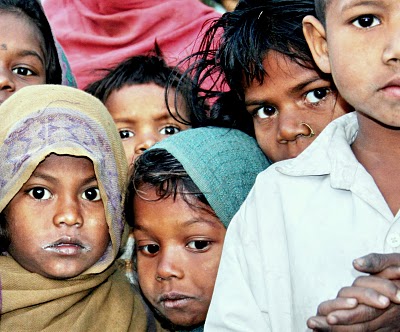
> Blanket Distribution, Food Relief Camp <, www.foodrelief.org
KALA AZAR & AIDS MULTIPLY….. Co-infection of leishmaniasis and HIV is emerging as a growing threat, as both diseases attack and weaken the immune system. Infection with one of these diseases makes a person less resistant to the other and treatment becomes less effective. MSF through its Access to Essential Medicines campaign is urging for more research into suitable diagnostic techniques and affordable drugs to treat this neglected disease. Leishmaniasis (kala azar): > International Activity Report, 2007 <
Bericht zu meiner Perureise, Freundeskreises Peru Amazonico e.V. war dessen Gründungsmitglied Eugen Bruder (ehemaliger DED-Entwicklungshelfer in Peru) im Februar in Peru und besuchte die Projekte. Näheres auch im Internet unter www.peru-amazonico.de
Glucantime/Leishmaniose – Seit etwa 10 Jahren liefern wir das Medikament Glucantime gegen die tropische Krankheit Leishmaniose nach Peru. Damals waren wir von einer befreundeten Peruanerin aus Huanuco (östliches Andengebiet, Richtung Urwald) gebeten worden, dieses Medikament zu besorgen, da es in Peru knapp und teuer sei. Leishmaniose, in Afrika und Asien in seiner viszeralen (= innerkörperlichen) Form als „Kala Azar“ (= schwarzer Tod) bekannt, tritt in Mittel- und Südamerika als Erkrankung der Haut und Schleimhäute auf (kutane und mukokutane Form). Gefährlich ist vor allem die mukokutane Form, da dort die Schleimhäute von Nase, Mund und Rachen befallen werden und grässliche Verstümmelungen zur Folge haben können, weshalb die krankheit auch weiße Lepra ( „the white leprosis“ ) genannt wird.
Kala Azar: „A Disease of the Poorest of the Poor“
Drugs against Kala Azar costs in developed countries only 1 dollar, in third lands 10 dollars ( people their earn this in one month or year or none) , so found the Peru Rainforest Friends a efficient and cheap legal Drug Air Port Delievery Help to keep the friends in Peru healthy: – Wir haben eine sehr günstige und effektive Form des Medikamententransports nach Peru gefunden: Reisende, die nach ein paar Kilo „Luft“ im Gepäck haben, nehmen es freundlicherweise mit nach Peru. Ich hatte über 20 kg Glucantime dabei. Die 1.900 Ampullen gingen ohne Probleme durch den Zoll (ich hatte „grün“ an der Ampel). In Cusco wartete man dringend auf das Glucantime.
Ich hatte 1.400 Ampullen mitgenommen (die restlichen 500 Ampullen gingen nach Huanuco). Gerade als ich das Glucantime im Hospital Antonio Lorena übergeben hatte, kam ein 24-jähriger Mann mit einer offenen Wunde an jedem Arm. Bei ihm war gerade Leishmaniose diagnostiziert worden. Er kam aus dem Distrikt Acomayo und war ein paar Monate als Holzfäller (Wood Logger) im Urwaldgebiet Puerto Maldonado, wo er durch einen Mückenstich infiziert worden war. Zu Hause hat er einen kleinen Bauernhof, aber da das Geld nicht reicht, macht er diesen Holzfällerjob. Während früher die meisten Leishmaniosekranken sich als Goldwäscher infiziert hatten, sind es jetzt zunehmend Holzfäller (Wood Logger) . Die meisten können sich das Medikament nicht leisten. Eine Ampulle kostet in der Apotheke etwa 10 Dollar (während wir es hier für 1 Dollar kaufen – hier sieht man die menschenverachtende Preispolitik der Pharmamultis). Quelle: www.peru-amazonico.de
- www.thlib.org , www.visva-bharati.ac.in , www.aeinstein.org
- The International Centre of BHU <
- www.rainforestinfo.org.au
- DR. RUTH PFAU, MALC, DAHW <
- THE TIBETAN AND HIMALAYAN LIBRARY <
- ESTC 2010 Lead. Sustain. Engage. ECOTOURISM CONFERENCE 2010 <
- Bangladesh Top Prize 3rd Annual Photoshare Contest <
- Meet Doctors without Borders http://www.msf.org, studies, friends at fb <
- Meet The International Ecotourism Society (TIES), friends, fans at fb <
- Meet National Geographic, friends, fans at fb <
- Meet Global Concern, http://www.glcoin.org, studies, friends at fb <
- Meet Peace, Justice and Environment Project, http://www.pjep.org <
- Meet Coast to Coast, http://www.coasttocoastam.com/ friends fans & at fb <
- Meet Human Rights Watch, friends, fans at fb <
- Meet M.K. Gandhi Institute for Nonviolence, studies, friends at fb <
- Meet International Society of Hildegard von Bingen Studies at fb <
- Meet 100 Million Voices for a Real Climate Deal in Mexico 2010 at fb <
Sustainable Communities through Education

Kham (Tibetan: ཁམས; Wylie transliteration: Khams; Simplified Chinese: 康巴; Pinyin: KÄ�ngbÄ�), is a region presently divided between the Chinese provinces of the Tibetan Autonomous Region, and Sichuan where Khampas, a subgroup within the Tibetan ethnicity, live. It is also one of the three traditional provinces claimed by the Tibetan government-in-exile. Read More: > HERE <
Education and capacity-building form the core of the Machik mission. Learn how a ground-breaking school is helping revitalize a community in a rural Tibetan township.
Located deep in the heartland of Kham, Chungba was, until a few short years ago, a typical rural Tibetan community. With no electricity, running water, telephone, internal roads and virtually no literacy, this mountain community was unequipped to manage the rapid changes arriving at its door. Today, an investment in a primary school has stimulated a broad-based effort to revitalize the community while setting a new standard for rural Tibetan education across the prefecture.
We are deeply saddened by the recent earthquakes in Tibet. In the first four days after the earthquake we raised and sent $38,000 for relief aid. We hope you will let your family, friends and colleagues know that the Tibetan people of Jyekundo need our continued help.
Thank you and we look forward to staying in touch.
The Chungba School Story – Since it first opened its doors in 2002, the Ruth Walter Chungba Primary School has challenged regional stereotypes about the potential of rural Tibetan children. In its first year of operation, the students of Chungba achieved the highest results on county-wide standardized exams, despite being the first generation in Chungba ever to have access to formal education. Surprised by the results, county officials ran a second round of standardized exams for the Chungba school. And the tests results were even higher.
Today, with a residential community of 340 students and staff, the Chungba Primary School has become a model for rural education throughout the eighteen counties of the Ganzi Tibetan Autonomous Prefecture – a region of nearly a million Tibetans. New resources and creative programming have played a role in the success of the CPS projects that include an annual Chungba Summer Learning Program, a traditional Tibetan dance program, a library, an organic greenhouse and other green technologies to promote conservation and environmental consciousness. Watch an introductory video clip of the CPS. The Chungba Summer Learning Program in particular has offered the Chungba kids an array of resources to expand their knowledge of their world and to learn about new forms of knowledge production. These include learning about both traditional knowledge, such as Tibetan storytelling, as well as the use of new digital media.
These images of the Chungba Primary School from 2004-5 were edited by Tsering Perlo , documentarian and founder of Rabsal, an association of young Tibetans dedicated to the revitalization of Tibetan culture. // Pilgrimage Through Kham: A Medical Mission in Tibet
Born in a Tibetan refugee camp in India, raised in Canada, holding a Ph.D. from the University of London’s School of Oriental and African Studies (SOAS), Losang Rabgey has found her life’s work in remote Tibetan villages of farmers, seminomads, and nomads.
An anthropologist specializing in contemporary Tibetan culture and gender relations, Rabgey explains, „I believe that whatever kind of theoretical, research-based work you do, it must be grounded in local knowledge. It’s critical to have a hands-on understanding of what life looks like and feels like to the people you work with.“
- http://johnullman.multiply.com
- www.awamfoundation.org
- Khenchen Lama, AWAM Foundation, Khampas <
- Meet Lobsang Rabgey, friends, studies, fans at fb <
- Meet Survival International, friends, fans at fb <
- Meet Indigenous Peoples Issues and Resources, friends, fans at fb <
- Meet UN International Year of Biodiversity 2010, friends, fans at fb <
- Meet National Geographic, friends, fans at fb <
- Meet 100 Million Voices for a Real Climate Deal in Mexico 2010 at fb <
CELEBRATION OF TAGORE´s 150th BIRTHDAY
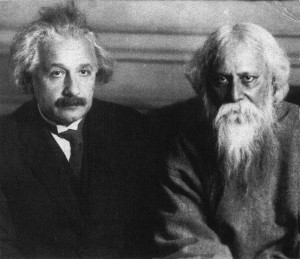
TAGORE, Crisis in Civilization , There are Real Alternatives. A.E. Inst.
Rabindranath Tagore’s Birthday
Rabindranath Tagore (7 May 1861 – 7 August 1941), sobriquet Gurudev, was a Bengali polymath. As a poet, novelist, musician, and playwright, he reshaped Bengali literature and music in the late 19th and early 20th centuries. As author of Gitanjali and its „profoundly sensitive, fresh and beautiful verse“, in 1913 being the first non-European to win the Nobel Prize in Literature, Tagore was perhaps the most important literary figure of Bengali literature. He was a mesmerising representative of the Indian culture whose influence and popularity internationally perhaps could only be compared to that of Gandhi, whom Tagore named ‚Mahatma‘ out of his deep admiration for him. A Pirali Brahmin from Kolkata, Tagore was already writing poems at age eight.At age sixteen, he published his first substantial poetry under the pseudonym Bhanushingho („Sun Lion“) and wrote his first short stories and dramas in 1877. Tagore denounced the British Raj and supported independence. His efforts endure in his vast canon and in the institution he founded, Visva-Bharati University. Read More: > HERE <
Albert Eintstein Institute, About Our Name – Albert Einstein was deeply concerned about war, oppression, dictatorship, genocide, and nuclear weapons. He was willing to explore new approaches to confronting these problems of political violence, although he was not always happy with the choices available to him. At various times he was a war resister, a supporter of the war against the Nazi system, and an advocate of world government. In his later life, he became enormously impressed with the potential of nonviolent struggle. In 1950, he remarked on a United Nations radio broadcast that, „On the whole, I believe that Gandhi held the most enlightened views of all the political men in our time….“
Today, the Albert Einstein Institution continues work on that aspect of Einstein’s thought, examining the potential of nonviolent struggle to resolve the continuing problems of political violence.
Applications of Nonviolent Action (AHIMSA) – Nonviolent struggle can be used in a variety of circumstances for a variety of objectives. These include:
Dismantling dictatorships, Blocking coups d’état, Defending against foreign invasions and occupations, Providing alternatives to violence in extreme ethnic conflicts, Challenging unjust social and economic systems, Developing, preserving and extending democratic practices, human rights, civil liberties , and freedom of religion, Resisting genocide
More information can be found about each of these applications in the > publications section < of our web. site.
K. J. Yesudas (Carnatic Music) www.hrw.org
Yama, niyama, asana, pranayama, pratyahra, dharana, dhyana and samadhi are the eight limbs of yoga . Ahimsa, satya, asteya, bramacharya and aparigraha are the five yamas – The yoga sutras of Patanjali, 2.30-31
In the classical yoga system described by Patanjali more than two thousand years ago, the first stage (or limb, as they are generally called) of yoga is Yama (ethical disciplines) and of these, Ahimsa is the first. (The ethical Do´s and Don´ts or commandments for a propper way of life.)
In short, according to Patanjali, ahimasa, non-violence or, as Desikashar defines it, “Consideration for all living creatures, especially those who are innocent, in difficulty or worse off than we are” should be the very beginning of any yoga practice.
Sadhana : the realisation of life by Rabindranath Tagore Rabindranath Tagore (1861-1941) was a Bengali poet, philosopher, artist, playwright, composer and novelist. India’s first Nobel laureate, Tagore won the 1913 Nobel Prize for Literature. He composed the text of both India’s and Bangladesh’s respective national anthems. Tagore travelled widely and was friends with many notable 20th century figures such as William Butler Yeats, H.G. Wells, Ezra Pound, and Albert Einstein. While he supported Indian Independence, he often had tactical disagreements with Gandhi (at one point talking him out of a fast to the death). His body of literature is deeply sympathetic for the poor and upholds universal humanistic values. His poetry drew from traditional Vaisnava folk lyrics and was often deeply mystical.
Sadhana is a collection of essays, most of which he gave before the Harvard University, describing Indian beliefs, philosophy and culture from different viewpoints, often making comparison with Western thought and culture. (Summary by Peter Yearsley/Wikipedia)
CONTENTS: I. THE RELATION OF THE INDIVIDUAL TO THE UNIVERSE, II. SOUL CONSCIOUSNESS,III. THE PROBLEM OF EVIL, IV. THE PROBLEM OF SELF, V. REALISATION IN LOVE, VI. REALISATION IN ACTION, VII. THE REALISATION OF BEAUTY, VIII. THE REALISATION OF THE INFINITE
FULL TEXT AT PROJEKT Gutenberg < TAGORE AT SACRED TEXT´s < ( Gitanjali [1913], Saddhana, The Realisation of Life [1916] The Crescent Moon [1913], Fruit-Gathering [1916], Stray Birds [1916], The Home and the World [1915], Thought Relics [1921] Songs of Kabîr[1915])
Project Gutenberg, abbreviated as PG, is a volunteer effort to digitize and archive cultural works, to „encourage the creation and distribution of eBooks.“ Founded in 1971 by Michael S. Hart, it is the oldest digital library. www.gutenbergnews.org & www.gutenberg.org
- Tagore, Gandhi and India today <
- VISVA-BHARATI , RABINDRANATH TAGORE – YOGAH ,SCIENCE, POETRY <
- Vedanta, Quantum Physics & Erwin Schrödinger <
- AHIMSA IN YOGA, MUSIC AND SPIRITUALITY <
- The Universal Declaration of Human Rights < , United Nations: Human Rights <
- Meet Human Rights Watch, friends at fb <
- Meet Project Gutenberg, Online Library , studies, friends at fb <
- M.K. Gandhi Institute for Nonviolence, studies, friends at fb <
- Meet The Nobel Women’s Initiative, studies, friends at fb <
- Meet Council for a Parliament of the World’s Religions (CPWR), friends, fans at fb <
Mother´s Day- Flowers for Human Rights
Green Shopping Guide Österreich: http://bewusstkaufen.at
NATIONAL GEOGRAPHIC – GREEN GUIDE
Lotus Flower – Symbol of Purity and Great Beauty!
The modern Mother’s Day is celebrated on various days in many parts of the world, most commonly in May, though also in March, as a day to honor mothers and motherhood. In the United States it was nationally recognized as a holiday in 1914 after a campaign by Anna Jarvis. In some countries, it follows the old traditions of Mothering Sunday. Read More: > HERE <
Mother’s Day (U.S.) is an annual holiday that recognizes mothers, motherhood and maternal bonds in general, as well the positive contributions that they make to society. In the United States, it is celebrated on the second Sunday in May. Read More: > HERE <
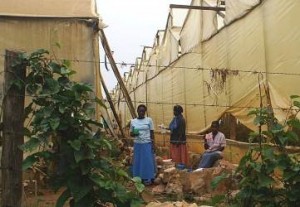
Flowers around the globe – Are you aware that the cut flower you buy in the supermarket or at your florist might have travelled thousands of kilometres to please you at home or in the office? Indeed, an increasing share of flowers which are sold in Europe is grown in countries close to the equator.
Do you wonder why? Around the equator conditions for growing flowers are more favourable than in Europe. Those countries don’t have cold winters, they constantly have 12 hours daylight and they have fertile soil. Labour is cheap and, labour and environmental laws are not as strict as in Europe, or at least, they are not enforced.
Are you concerned about the latter? We, too, are. That’s why we have started a campaign to raise awareness on labour rights, workers‘ health, and environmental protection in the flower industry. Join us and be part of the change.
The campaign „Fair Flowers for Human Rights“ – Non-governmental organisations from Austria, Belgium, Germany, and Czech Republic have jointly started a campaign to raise awareness on human rights violations and environmental pollution by the global flower industry. The campaign is supported by the Zimbabwean Non-Governmental Organisation Kunzwana and the Uganda Workers‘ Education Association.
The campaign targets consumers, flower traders and local authorities and it aims at changing their consumption and purchasing patterns towards ensuring that flowers are produced in socially and environmentally sound conditions.
As means to reach our targets we will produce information material, organise exhibitions and speakers‘ tours of flower workers, produce a movie, conduct workshops and lobby politicians. We will be present at various public events. You can read more on the specific actions in each country if you click on the logos of the campaign partners below. http://www.flowers-for-human-dignity.org/09/index.php/the-campaign.html
Fair trade roses for Mother´s Day & Human Rights
Da die heimische Schnittblumenproduktion die Nachfrage am österreichischen Markt nicht befriedigen kann, werden fast zwei Drittel der in Österreich verkauften Blumen aus Ländern des Südens importiert. Jährlich sind das zum Beispiel gut 80 Millionen Rosen. Auf den Blumenfarmen in Kenia, Uganda, Simbabwe, Ecuador und Kolumbien arbeiten zum Großteil Frauen, vielfach unter katastrophalen Arbeitsbedingungen.
Besonders vor dem Muttertag und den Valentinstag leisten sie Überstunden bis spät in die Nacht, oft werden diese nicht oder nicht vollständig bezahlt. Die Frauen berichten von gesundheitlichen Schäden aufgrund der Arbeit mit hoch giftigen Pestiziden und mangelndem Arbeitsschutz, auf manchen Farmen auch von sexueller Belästigung.
„Für die Frauen bedeutet die Arbeit auf den Blumenfarmen ein wichtiges Einkommen. Besonders in Lateinamerika arbeiten viele allein erziehende Mütter auf den Farmen. Sie benötigen dringend einen angemessenen Lohn, um sich und ihre Kinder adäquat ernähren zu können.“, berichtet Sophie Veßel, Koordinatorin der Kampagne „ Fair Flowers – mit Blumen für Menschenrechte “ bei der Menschenrechtsorganisation FIAN Österreich.
FIAN setzt sich seit vielen Jahren für die Rechte der ArbeiterInnen auf Schnittblumenfarmen weltweit ein. In Betrieben, die mit dem Gütesiegel Flower Label Program (FLP) zertifiziert wurden, werden Arbeits- und Menschenrechte eingehalten. Die Arbeitszeiten sind in langfristigen Verträgen geregelt, Überstunden werden angemessen bezahlt. Entsprechende Kleidung schützt die ArbeiterInnen vor den Chemikalien. Hoch giftige Pestizide dürfen überhaupt nicht eingesetzt werden. Für Frauen ist insbesondere wichtig, dass ihnen bezahlter Mutterschutzurlaub gewährt wird, sie während der Schwangerschaft geschont werden und sexuelle Belästigung nicht geduldet wird.
Daher empfehlen FIAN und die Volkshilfe Österreich, beim Blumenkauf zu Blumen der Gütesiegel Flower Label Program (FLP) und FAIRTRADE zu greifen. „Blumen, die unter fairen Arbeitsbedingungen produziert wurden, sind ein besonders sinnvolles Geschenk. Denn sie unterstützen den Kampf gegen Ausbeutung von ArbeiterInnen.“, meint Josef Weidenholzer, Präsident der Volkshilfe Österreich. „Mit dem Kauf solcher Blumen können Sie doppelte Freude schenken. Der eigenen Mutter und der Blumenarbeiterin.“ Dass die Blumen nicht mit hoch giftigen Pestizid en belastet sind, trägt sicher zusätzlich zur Freude der Beschenkten bei!
FLP-Blumen verschiedener Sorten finden Sie im ausgewählten österreichischen Fachhandel, FAIRTRADE-Rosen in Supermärkten und im Fachhandel.
- AFRICAN TRADITIONAL MEDICINE <
- Weitere Informationen:
- www.fian.at (FLP-HändlerInnenliste)
- www.volkshilfe.at
- www.flowers-for-human-dignity.org
- www.fairflowers.at (FLP-HändlerInnenliste)
- The New 2008 Constitution of Ecuador <
- Meet Human Rights Campain, friends at fb <
- Meet FAIR TRADE certificied, friends at fb <
- Meet Human Rights Watch, friends at fb <
- Meet National Geographic, Green Guide, friends, fans at fb <
ÖBf – 800 PROJEKTE DER ARTENVIELFALT
www.nachhaltigkeit.at ( sustainability)
INT. YEAR 2010 for Biodiversity
www.globalbiodiversityprotection.org
Biodiversity is the variation of life forms within a given ecosystem, biome, or for the entire Earth. Biodiversity is often used as a measure of the health of biological systems. The biodiversity found on Earth today consists of many millions of distinct biological species, which is the product of nearly 3.5 billion years of evolution. 2010 is the International Year of Biodiversity. READ MORE: > HERE <
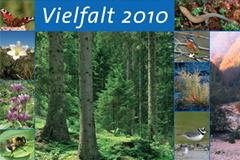
Bundesforste starten mit über 800 Schutzprojekten ins Internationale Jahr der Artenvielfalt 2010 03.12.2009 – Schutzprojekte für den Erhalt von Arten und Lebensräumen – Zum Jahresauftakt ÖBf-Naturkalender „Schöne Vielfalt“ als Sammlerobjekt gewinnen
Die Österreichischen Bundesforste (ÖBf) starten mit über 800 Natur- und Umweltschutzprojekten in das Internationale Jahr der Biodiversität 2010. „Jedes gesunde Ökosystem, jeder gesunde Wald braucht Artenvielfalt“, erklärt Georg Erlacher, Vorstandssprecher der Österreichischen Bundesforste. „Daher ist es unser Ziel, mit naturnaher Waldwirtschaft, der Erhaltung von Schutzgebieten und zahlreichen Einzelmaßnahmen Vielfalt zu sichern und den Verlust von Arten und Lebensräumen zu stoppen.“ Die Bandbreite der Maßnahmen reicht von besonderer Rücksichtnahme auf sensible Brutgebiete über die Ausweisung von Schutz- und Schongebieten bis hin zu großflächigen Moorrenaturierungen. Als erster Forstbetrieb Europas beteiligten sich die Bundesforste am internationalen Biodiversitäts-programm „Countdown 2010“ und haben darauf aufbauend ein eigenes 5jähriges Schutzprogramm zusätzlich zu den bestehenden Maßnahmen entwickelt.
Artenreiches Österreich
Schätzungen der weltweiten Artenzahl pendeln um die Zehn-Millionen-Marke. Wissenschaftlich erfasst sind davon bis dato rund 1,7 Millionen. Österreich bringt es auf fast 70.000 Arten, allen voran die rund 36.000 Insekten. Viele von ihnen sind in ihrem Weiterbestand bedroht: alle Amphibien, fast alle Reptilien, 69% der Fischarten, mehr als die Hälfte aller Vögel und Säugetiere sowie 40% der Pflanzenarten. „Die Zahl unserer Naturschutzaktivitäten“, erklärt Erlacher, „hat sich in den letzten Jahren vervierfacht.“ Neben Artenschutzprojekten für Alpenbock, Wildkatze oder Habichtskauz zählen dazu auch Renaturierungen von geschädigten Ökosystemen und Lebensräumen wie etwa Moorgebieten. Allein im Salzkammergut startet 2010 ein dreijähriges Renaturierungs-projekt, bei dem rund 60 Moore untersucht, analysiert und nach Möglichkeit wiederhergestellt werden.
Nationalparks als „Hotspots“ der Artenvielfalt
Von den rund 850.000 Hektar Gesamtfläche, die die Österreichischen Bundesforste betreuen, stehen mehr als 50% unter Naturschutz. 52.000 Hektar sind in Nationalparks als „Hotspots“ der Artenvielfalt eingebracht, in den Nationalparks Kalkalpen und Donau-Auen sind die Bundesforste in das operative Management eingebunden. Weiters betreuen die ÖBf wesentliche Flächen im Biosphärenpark Wienerwald, in Natura-2000-Gebieten, Naturparks sowie in geschützten Landschaftsgebieten. „Für eine Vielfalt an Arten braucht es ein breites Spektrum an intakten Lebensräumen“, erläutert der Vorstandssprecher. „Im Sinne der Nachhaltigkeit besteht unsere Herausforderung darin, eine Balance zwischen wirtschaftlichem Erfolg, gesellschaftlichen Interessen und naturschutzfachlichen Anforderungen zu finden“, so Erlacher abschließend.
Rückfragehinweis
Österreichische Bundesforste AG
Pia Buchner, Unternehmenskommunikation
Tel. 02231-6000-2123
E-Mail: pia.buchner bundesforste.at
ESTC 2010 Lead. Sustain. Engage.
umweltberatung.at / Klima & Mobilität
natural gardening umweltberatung international
‚Ecotourism‘ (also known as ecological tourism) is responsible travel to fragile, pristine, and usually protected areas that strives to be low impact and (often) small scale. It purports to educate the traveller; provide funds for conservation; directly benefit the economic development and political empowerment of local communities; and foster respect for different cultures and for human rights. Eco tourism is held as important by those who participate in it so that future generations may experience aspects of the environment relatively untouched by human intervention. Most serious studies of ecotourism including several university programs now use this as the working definition. Read More: > HERE <
ESTC 2010: Ecotourism and Sustainable Tourism Conference – Organized by The International Ecotourism Society (TIES), the Ecotourism and Sustainable Tourism Conference (ESTC) is North America’s largest and only conference focusing on sustainability in the tourism industry. A leading international multi-stakeholder meeting place, the ESTC brings together innovative minds from across the industry to discuss practical ideas and solutions that inspire positive changes. Advancing policies and practices benefiting businesses and communities, the ESTC helps reinforce the roles of tourism in building a more sustainable future.
ESTC 2010:
September 8th-10th, 2010 in Portland, Oregon, USA.
Lead. Sustain. Engage.
Co-hosted by Travel Portland and Travel Oregon, the ESTC 2010 (September 8-10, 2010) will be held in Portland, Oregon, a leading U.S. city that has been consistently rated “the most sustainable city” in the country. Bringing together 500+ business leaders, industry professionals and community stakeholders, the ESTC 2010 will feature dynamic sessions, public forums and social functions that offer eye-opening insights into the latest on sustainable business strategies and unparalleled networking and knowledge-sharing experiences.
ESTC Goals:
- 1) To be THE meeting place for tourism professionals that fosters networking opportunities.
- 2) To promote best practices in sustainability strategies and inspire innovative change.
- 3) To help build partnerships and networks that advance policy benefiting businesses and communities.
- 4) To equip businesses with tools to effectively cope with social, environmental and economic challenges.
- 5) To promote strategies and solutions that reinforce the roles of tourism in building a sustainable future.
Sripad Vaiyasaki Das & the Kirtan Explosion Band
www.bhaktivedantahospital.com www.barsanaeyecamp.com
http://en.wikipedia.org/wiki/Bhakti_Yoga
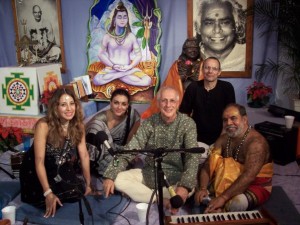
Internationally recognized for his musical abilities to perform the ancient kirtan songs, Vaiyasaki Das approaches kirtan and devotional music from the ancient Vedic tradition of India. Vaiyasaki, who is an initiated disciple of Bhaktivedanta Swami, spent many years in India and Bangladesh learning the ragas inherent to the various kirtan styles from the best kirtan musicians and singers. Since the ’70s he has performed in 61 countries, recorded 12 CDs, and written a book how the kirtan/yoga culture was transplanted to the West. He has been a practitioner of bhakti yoga for 34 years and performs his music with a mission to uplift the consciousness of the planet. His considerable knowledge of the vast repertoire of Indian bhajans has provided the foundation for a new generation of artists, in the flourishing genre of music for yoga and mantra meditation.
ABOUT THE ARTIST: Internationally recognized for his musical abilities to perform the ancient art form of Kirtan & Bhajan, Vaiyasaki Das provides a rare opportunity to experience a taste of authentic devotional music from the Vedic tradition. Though born in London, England, Vaiyasaki Das came of age in Winnipeg, Canada. After many years in the music business – and a personal search for the divine — he is now one of the premier singers on the kirtan circuit. Starting out as a rock and blues guitarist with a penchant for singing, his taste for Indian culture came at an early age.
Sripad Vaiyasaki Das
Freitag 23. April 17.00–19.00
Sonntag 25. April 17.00–18.00
Verein für Hindu-Gaudiya-Vaisnavas
Wienerbergstraße 29a/Top3, 1120 Wien, Österreich
By 1970, he found himself back in London and enamored by Krishna devotion. Soon, in 1973, he was committed to the path of devotion, or bhakti-yoga, and, just two years later, he received formal initiation from > His Divine Grace A. C. Bhaktivedanta Swami <. On his Guru’s request he journeyed to India in 1975, both for personal purification and to proclaim the renaissance of Sri Chaitanya Mahaprabhu’s bhakti movement. He traveled the entire subcontinent, and Southeast Asia, serving the mission of bhakti-yoga.
By 1978, he arrived in Bangladesh, where he imbibed the culture through his pores, becoming fluent in Bengali and learning the ways of the local people. On a boat trip down the Meghna River, he chanced upon a local kirtan band on their way to a festival. Deciding to follow these happy minstrels and their soulful kirtan music, he would also attend that same festival, changing his life forever. It was there that he discovered the ancient Bengali art of raga-kirtan, which touched his soul in the deepest possible way. Never before had he heard such angelic singing, and he resolved to use his own considerable vocal talents to spread this technique around the world.
He returned to London with his own style of kirtan, a blend of ancient Bengali and modern contemporary music. His first album was released in 1982 followed by numerous CDs, which are now considered seminal in the yoga/kirtan/world music universe. Today Vaiyasaki Das is a much sought-after performer, conducting workshops and leading yoga festivals and retreats worldwide. Sharing his heart through music and chanting is the basis of his life.
He has been a practitioner of bhakti yoga for 34 years and performs his music with a mission to uplift the consciousness of the planet. His considerable knowledge of the vast repertoire of Indian bhajans and kirtans has provided the foundation for a new generation of artists, in the flourishing genre of music for yoga and mantra meditation.
His CDs include: The Way of Love, Charana Kamal, Kirtan Rasa, Hari-Nam-Ananda, Transcendence, Vrindavan Chandra, Chaitanya Chandra, Ratha-Yatra USA, The Turning Point, Best of Vaiyasaki, Kirtan Explosion – High energy kirtans, & Sri Krishna Divya Nam.
- www.bhagavad-gita.org
- www.srimadbhagavatam.org (Bhagavata Purana)
- ISKCON – BHAKTIVEDANTA, BHAKTI YOGA <
- Bhaktivedanta, Share your Care, Eye Camp <
- VEDA, TREE´s AND THE HOLY SCRIPTURES <
- What is Bhakti Yoga ? <
- Die Vedische Kochkunst <
- Die Veden, Puranas, UNESCO Publishing, FREE downloads <
- UNESCO – The Tradition of Vedic Chanting <
- ISKCON Desire Tree, free downloads <
- Meet Srila Prabhupada – A. C. Bhaktivedanta Swami, studies, friends fans at fb <
- Meet Vaiyasaki Das & the Kirtan Explosion Band, friends fans at fb <
- Meet Hindus in Austria, friends, fans at fb <
AYURVEDA mit Shri Sarvabhavana Mai 2010
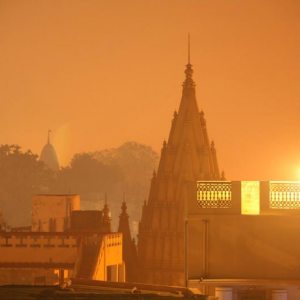
http://vimeo.com/prabhu/videos
International Center for Ayurvedic Studies
„India is not a country of the Hindus only. It is a country of the Muslims, the Christians and the Parsees too. The country can gain strength and develop itself only when the people of the different communities in India live in mutual goodwill and harmony. It is my earnest hope and prayer that this centre of life and light which is coming into existence, will produce students who will not only be intellectually equal to the best of their fellow students in other parts of the world, but will also live a noble life, love their country and be loyal to the Supreme ruler“ ~ Mahamana Pandit Madan Mohan Malviya ( Banares University BHU)
Ä€yurveda (DevanÄ�garÄ«: आयुर्वेद, the „science of life“, usually rendered simply ayurveda in English) or ayurvedic medicine is a system of traditional medicine native to the Indian subcontinent and practiced in other parts of the world as a form of alternative medicine.In Sanskrit, the word ayurveda consists of the words Ä�yus, meaning „life“, and veda, meaning „related to knowledge“ or „science“. Evolving throughout its history, ayurveda remains an influential system of medicine in South Asia.The earliest literature of ayurveda appeared during the Vedic period in India.The Sushruta Samhita and the Charaka Samhita were influential works on traditional medicine during this era.Ayurvedic practitioners, called „Ayurvedacharyas“, have also identified a number of medicinal preparations and surgical procedures for curing various ailments and diseases. Read More: > HERE <
Hallo liebe Freunde! – Auch im 2010er Jahr, wird uns Sri Sarvabhavana wieder einige Male besuchen. Das erste Mal im Mai. Er wird sich in der Zeit vom 6. bis zum 11. Mai in Wien aufhalten.
Sein diesmaliger Besuch steht ganz im Zeichen der Ernährung. Heutzutage, werden sich viele Menschen, über den Einfluss der Ernährung auf unser körperliches Empfinden, immer mehr bewusst. Die Nachfrage der Leute nach alternativen Ernährungsweisen steigt. Jedoch, wissen viele noch nicht, dass das was wir zu uns nehmen, auch unsere Emotionen wie unser Denken beeinflusst.
Du bist was du isst, heißt es so schön im Volksmund. Keiner möchte sich mehr mit künstlichen Zutaten und raffinierten Lebensmitteln vollstopfen. Zurück zur Vollwertigkeit ist das Motto.
Die LEBENSmittel sollen Kraft haben, sprich LEBENSenergie. Diese stärkt Geist wie Körper und hilft uns in einer von Informationen überfluteten und zu schnell lebiger Zeit zu bestehen. Zusätzlich zu der Auswahl von vollwertigen und naturbelassenen Nahrungsmitteln, trägt die richtige Zubereitung des Essens zu einer optimalen Aufnahme der Lebensmittel in unseren Organismus bei. Im Ayurveda heißt es, wichtig ist nicht was du isst, sondern was du verdaust. Die richtige Menge und Mischung von Gewürzen, erleichtert dem Körper die Assimilation des Verdauungsbreis. Als ich das erste Mal so ein toll gewürztes und zubereteites Gericht aß, war ich erstaunt, nicht nur vom wunderbaren Geschmack, sonder auch wie gut ich mich danach fühlte und wie schnell ich alles verdauen konnte. Es war sensationell.
Aus diesen Gründen wird Sri Sarvabhavanas Vortrag von der richtigen Ernährung handeln. In seinen persönlichen Beratungen, könnt ihr wie immer auch nach einer auf euren Körpertypen zugeschnittene Ernährung fragen.
AYURVEDA KOCHKURS BEI ASTRID: Viele von euch, kennen ja Astrid schon. Großzügig wie sie ist, hat sie uns immer ihre Räumlichkeiten für die Beratungen zur Verfügung gestellt. Dieses Mal aber tut sie nicht nur das, sondern wird auch selbst aktiv und bietet euch die Möglichkeit, in die kulinarische Welt des Ayurvedas einzutauchen. Sie veranstaltet gemeinsam mit Sri Sarvabhavana einen „coolinourishen“ Kochkurs und wird euch die Geheimnisse der Gewürze und der fantastisch, farbigen und vielseitigen Zubereitung der Speisen näherbringen. Zusätzlich wird es auch eine Palmblattbibliotheks-Reise-Info Veranstaltung geben.
Das wars von mir. Ich wünsche viel Glück und Erfolg und wie immer gibt’s unten alle Einzelheiten zu den Vorträgen und der Beratung.
Mit sonnigen Grüßen und Namaste,
euer, Herbert
- TERMINE: Vortrag von Sri Sarvabhavana Thema: Wie kann ich mich spirituell und körperlich optimal ernähren, um in Zufriedenheit, eine gesunde Lebensbalance zu genießen. Datum: Montag, 10.05.2010, 19:00 – 21:00 Uhr,
- Info Veranstaltung Palmblattbibliotheks-Reise: Im Anschluss an den Vortrag. Sprich: Montag, 10.05.2010 21:00 – 22:00 Uhr, Ort: Raum 3 , Liechtensteinstrasse 39 – 41, 1090 Wien
- Kontakt: HERBERT, 0699/17073418 und unter spiritualgrowth@gmx.at
- BASIC ARTICLES ON AYURVEDA <
- Meet Vedic Guide Shri Sarvabhavana, studies, friends, fans at fb <
- Meet Ayurveda4UAll, studies, friends at fb <
- Meet Pentavox Herbals & Ayurveda (Biggest Ayurveda Group on fb)<
- Meet Lord Dhanvatri, friends, fans at fb <
- C O O L I N O U R I S H: „Love what you do and do what you love“ :
Prayer Relief Rally for Yushu Earthquake
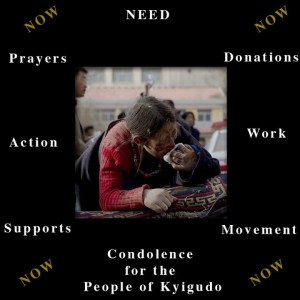
Donate to Yushu Qinghai China Earthquake Victims
The 2010 Yushu earthquake struck on April 14, 2010, and registered a magnitude of 6.9 (USGS, EMSC) or 7.1(CEA, CENC). It originated in Yushu, Qinghai, China, at 7:49 am local time.According to the Xinhua News Agency, 2,064 people have been confirmed dead, 175 missing, and 12,135 injured of which 1,434 are severely injured.The epicenter was located in Rima village (日玛村/日麻村), Upper Laxiu township (上拉秀乡) of Yushu County,in remote and rugged terrain, near the border of Tibet Autonomous Region. Read More: > HERE <
The death toll in earthquake that hit Tibet’s Yushu County (Kyegudo in traditional Tibetan province of Kham) in Yushu prefecture, Qinghai province, has gone up to 617, according to the official Chinese media.
However, unconfirmed sources including Tibetan exiles belonging to the quake hit area who claimed to have spoken to people there say the death toll is much higher. One Tibetan who said he spoke to someone in his village puts the death toll around 3000.
The latest statistics show that 313 people were missing and 9,110 injured, 970 severely, said a spokesman with the rescue headquarters in the Tibetan Autonomous Prefecture of Yushu in southern Qinghai.
Start Time: Thursday, April 15, 2010 at 12:00pm
End Time: Tuesday, April 27, 2010 at 12:00pm
Location: Anywhere
Many people are still buried in the debris as more than 85 percent of houses in Gyegu, mostly made of mudbrick and wood, had collapsed.
The death toll „may rise further as lots of houses collapsed,“ according to Wu Yong, commander of the Yushu Military Area Command of the Chinese People’s Liberation Army.
The exile Tibetan government’s department of religion held a special prayer at the Tsuglakhang temple today for the victims of the earthquake and their families. Local Tibetans including monks and nuns from various monasteries around here attended the prayer.
The quake measured 7.1 on Richter scale, according to China Earthquake Networks Center but the United States Geological Survey puts the magnitude at 6.9.
The epicenter of the quake lies in Yushu County (Kyegudo in the traditional Tibetan province of Kham) in the Yushu prefecture. The quake struck at 7:49 a.m. with a depth of about 33 km and is calculated to be 33.1 north and 96.7 east, according to the China Earthquake Networks Center.
LET US ALL PRAY AND OFFER INCENSE AND CANDLES.
- www.survivalinternational.org
- http://indigenouspeoplesissues.com
- Please Help Victims of Yushu Earthquake! at fb <
- Prayers & Supports to the people of Yushu at fb <
- Support the Monks in Tibet, Students for a free Tibet, friends at fb <
- Om mani pedme hung, ཨཱོཾ་མཎི་པད་མེ་ཧུཾ་ – Om mani pedme hung – For all our sisters and brothers suffering in the Yushu earthquake disaster let us pray 1000 times and support the aid groups – please share your prayers and mantras! <
Bringing East & West together in Compassion
www.eastmeetswestmusic.com www.abtei-st-hildegard.de
Thomas Merton (31 January 1915 – 10 December 1968) was a 20th century American Catholic writer. A Trappist monk of the Abbey of Gethsemani, Kentucky, he was a poet, social activist and student of comparative religion. In 1949, he was ordained to priesthood and given the name Father Louis.Read More: > HERE <
Mary Ward (23 January 1585 – 30 January 1645) was an English Catholic nun who founded the Institute of the Blessed Virgin Mary, also known as the Loreto Sisters (not to be confused with the Sisters of Loretto). She was declared „Venerable“ by Pope Benedict XVI on 19th of December, 2009; this is the first of three steps on the path to being declared a saint. Read More: > HERE <
Sister Nivedita (1867-1911), born Margaret Elizabeth Noble, was an Anglo-Irish social worker, author, teacher and disciple of Swami Vivekananda. She met Vivekananda in 1895 in London and travelled to India (Kolkata) in 1898. Swami Vivekananda gave her the name Nivedita (meaning „Dedicated to God“) when he initiated her into the vow of Brahmacharya on March 25 1898.Read More: > HERE <
Benedict of Nursia (Italian: San Benedetto da Norcia) (480 – 547) is a Christian saint, honored by the Roman Catholic Church as the patron saint of Europe and students.
Benedict founded twelve communities for monks at Subiaco, about 40 miles to the east of Rome, before moving to Monte Cassino in the mountains of southern Italy. There is no evidence that he intended to found a religious order. The Order of St Benedict is of modern origin and, moreover, not an „order“ as commonly understood but merely a confederation of autonomous congregations. Read More: > HERE <
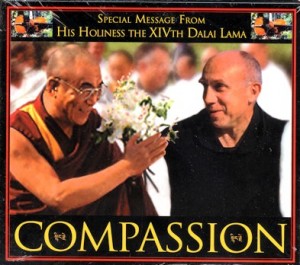
A Meditative Experience of Compassion -Inspired by the friendship between His Holiness the Dalai Lama and the late Thomas Merton.
This film contains footage chronicling the 40-year unfolding of COMPASSION beginning with the meeting between The Dalai Lama and Merton in 1968, the historic first-visit by helicopter by The Dalai Lama to the Abbey of Gethsemani in 1994, the subsequent Gethsemani Encounter in 1996, and the climactic recording and filming inside Mammoth Cave, the Abbey of Gethsemani, and the Furnace Mountain Zen Temple in 1999. Additional materials include the Interreligious Vigil for World Peace led by His Holiness the Dalai Lama and the meeting between The Dalai Lama and Muhammad Ali in 2003. All of the video is combined with the majestic music of Compassion.
www.tnp.org (Tibetan Nuns in Exile), www.choying.com (>Ani Choying teaching Om mani padme hum mantra<)
About the Music: Humanity is at a tipping-point. Either the world as a whole will consciously move toward the positive and towards peace, or devolve unconsciously toward the negative and destructive. COMPASSION was undertaken 12 years ago with the expressed intention of creating a new, more powerfully vibrating music derived and inspired from the ancient chant traditions of East and West, forged in the womb of the largest cave in the world, and specifically designed to bring forth feelings of compassion and peace so as to bring people together in harmony and love.
- http://www.compassionrising.com
- THE CATHOLIC TRAPPIST´s MASSACHUSSETS <
- THE TIBETAN NUN PROJECT <
- www.mary-ward-net.com
- Loreto Sisters Mary Ward UK <
- http://eastmeetswestmusic.com/
- Meet East meets West Music, Fans, Fans, Fans …friends,…studies at fb <
- Meet 100 Million Voices for a Real Climate Deal in Mexico 2010 <
Save Yamuna & Clean Himalaya Glacier Water
7-month ‚Clean Yamuna‘ campaign launched
www.umweltberatung.at „Wasser“
The Yamuna (Sanskrit: यमुना, sometimes called Jamuna or Jumna) is the largest tributary river of the Ganges (Ganga) in northern India. Originating from the Yamunotri Glacier at a height 6,387 mtrs., on the south western slopes of Banderpooch peaks, in the Lower Himalayas, it travels a total length of 1,376 kilometers (855 mi) and has a drainage system of 366,223 km2, 40.2% of the entire Ganga Basin, before merging with the Ganges at Triveni Sangam, Allahabad, the site for the Kumbha Mela every twelve years. Read More > HERE <
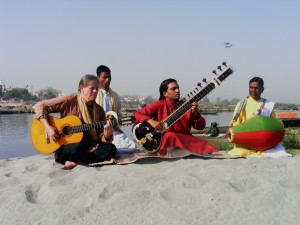
The banks of the polluted Yamuna river came alive to the soul-stirring strains of a unique musical protest that bemoaned nature’s bountiful beauty turning into a sewage drain and hoped for better sense that would one day revive its „divine glory“.
The musical initiative of Acharya Jaimini Thursday evening drew cheers and support from activists, who have been alarmed by the construction frenzy, high level of industrial effluents and toxic waste finding way into the river.
„The ghats are vanishing, the lush green forests have disappeared, the birds don’t chirp any more, the holy ‚kunds‘ are in a shambles. All over the Braj Mandal you only see concrete structures, the eye-sores of modern civilisation,“ said Acharya Gopi Ballabh Shastri who runs a water hut for the pilgrims in Vrindavan.
The musical protest to halt further deterioration of the „Heritage River“ was organised by sitar maestro Jaimini. His four-part composition of Indian contemporary classical music was rendered effortlessly but forcefully by a group at the river bank.
Speaking to IANS, Jaimini said: „In the first composition the river enters the plains: realization of ancient Yamuna, then after the bridge construction there is a sudden jolt and shock and the holy river shrinks in shock and awe. In this composition, Italian piano player Ranso also performs. Italian guitarist D. Turi is the co-musician. These compositions express devotion to Yamuna.“
The Indian classical notes bring out the divine glory and the faith of the pilgrims in Yamuna. The strains are harmoniously blended with Western musical notes to highlight the destruction and pollution in the river, the concrete structures all over, Jaimini said.
A CD of the composition, raag Raseshwari, was released by Vrindavan’s Radha Fine Art Studio.
vrindavan
Dr. Acharya Trigunateet jaimini
- WHAT IS BHAKTI-YOGA ?
- Celebrate the World Day for Water 2010 <
- KUMBHA MELA 2010, GANGA, HOLY RIVERS <
- Monasteries Environmental Himalayaprotection <
- Tantra in der Landwirtschaft/Tantra in Agriculture <
- Save Mother Earth, Save Ganga <
- Meet Save Yamuna to save Vrindavan, friends, fans at fb <
- Meet Save the Ganga (Ganges) River, studies, friends at fb <
IRRI Rice Research Institute & Conference
TRAD. FOOD, AYURVEDA, BIODIVERSITY
The Rice Price Crisis Prevention
The International Rice Research Institute (IRRI) is an autonomous, non-profit, agricultural research and training organization with offices in more than ten nations. The Institute’s main goal is to find sustainable ways to improve the well being of present and future generations of poor rice farmers and consumers while at the same time protecting the natural environment. Most of IRRI’s research is done in cooperation with the national agricultural research and development institutions, farming communities, and other organizations of the world’s rice producing nations. Read More: > HERE <
Rice is the seed of a monocot plant Oryza sativa. As a cereal grain, it is the most important staple food for a large part of the world’s human population, especially in East, South, Southeast Asia, the Middle East, Latin America, and the West Indies. It is the grain with the second highest worldwide production, after maize („corn“).Read More: > HERE <
The years 2007–2008 saw dramatic increases in world food prices, creating a global crisis and causing political and economical instability and social unrest in both poor and developed nations. Systemic causes for the worldwide increases in food prices continue to be the subject of debate. Initial causes of the late 2006 price spikes included droughts in grain-producing nations and rising oil prices. Read More: > HERE <
IRRI´s MISSION – To reduce poverty and hunger, improve the health of rice farmers and consumers, and ensure environmental sustainability through collaborative research, partnerships, and the strengthening of national agricultural research and extension systems.
The Cereal Knowledge Bank (CKB) is the world’s leading repository of extension and training materials related to cereal and cereal production. The CKB was launched in January 2008 and is managed by the International Rice Research Institute (IRRI) and International Maize and Wheat Improvement Center (CIMMYT) as a service to people working to improve the well-being of poor cereal farmers and consumers.
> FREE BOOK: Asian rice bowls: the returning crisis? – Prabhu L. Pingali <
5th International Rice blast Conference, caused by Magnaporthe oryzae, remains one of the most destructive rice diseases worldwide. In the three years since the 4th International Rice Blast Conference (IRBC) was held in Changsha, Hunan, China, rapid progress has been made in a wide range of research topics on the biology, genomics, host-pathogen interactions, resistance, and disease management. On behalf of the 5th IRBC organizing committee, we cordially invite you to attend this exciting meeting. > CONFERENCE DETAILS <
Invitation to the 3rd International Rice Congress – It is our privilege and pleasure to welcome you to the 3rd International Rice Congress (IRC) to be held 8 – 12 November 2010 at the Vietnam National Convention Center, Hanoi, Vietnam. The event is hosted by the Ministry of Agriculture and Rural Development (MARD), Vietnam, and jointly organized by the International Rice Research Institute (IRRI) and AsiaCongress Events Management Co. Ltd (ACE). www.ricecongress.com
HILDEGARD OF BINGEN & FAMOUS SPELT CURE – Hildegard medicine is based on the wisdom of the saintly Hildegard (1098-1179), abbess of Bingen. The great mystic, composer and healer is considered to be the first important naturopath and herbalist of the Middle ages. Her teachings, based on the harmony between body and soul, are reflected in today’s holistic approaches to prevention and healing. Hildegard medicine taps the available healing forces of nature to treat illness by restoring disrupted balance. Hildegard emphasized nutrition, primarily with use of spelt, a type of grain; detoxification, by fasting or bloodletting; and the use of remedies from plant, animal and mineral sources. Her writings offer recipes for 12000 such remedies, which apply to the most diverse symptoms and diseases.
Spelt – According to Hildegard of Bingen, spelt is the „most nutritious grain“, providing „right flesh and right blood“. She recommends breads and soups containing spelt to purify the blood, strengthen the nerves and heal intestinal disorders. You can find spelt at most health food stores. The Treatment – First comes an examination of the person as a whole, not just symptoms but lifestyle and temperament. The nutritional therapy consists of suggesting foods that are specifically adapted to the individual patient. Then purifying procedures, such as bloodletting, are recommended. Finally, stimulating herbal remedies are prescribed. The goal of Hildegard medicine – Hildegard medicine is a means of regulating the systems of the body in relation to one another. The goal is to reverse the disruption of the natural balance in the body, which is the cause of the illness. This effect is achieved through appropriate nutrition, detoxification and nature based remedies. The viewpoint of mainstream medicine – Some aspects of Hildegard medicine cannot be explained scientifically. However, holistic approaches to illness have been successful for a wide range of patients, who respond well to treatments that include more than chemical targeting of symptoms.
- Das International Rice Research Institute (IRRI) www.payer.de <
- TSAMPA, HIMALAYAN CHILDREN, CEREALS <
- Meet Tibetan Tsampa, friends, fans at fb <
- Meet Int.Society of Hildegard von Bingen Studies, friends at fb <
- Meet International Year of Biodiversity 2010, friends, fans at fb <
- http://en.wikipedia.org/wiki/2007%E2%80%932008_world_food_price_crisis
Ghandi Institute:Dialogue led by local teens
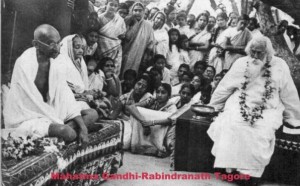
I.A.S.E. UNIVERSITY – Ghandi Vidya Mandir
Frederick Douglass Institute for African and African-American Studies
Mohandas Karamchand Gandhi (Hindi: मोहनदास करमचंद गाँधी, Gujarati: મોહનદાસ કરમચંદ ગાંધી, pronounced [moːɦən̪d̪aːs kərəmʨən̪d̪ ɡaːn̪d̪ʱiː] ; 2 October 1869 – 30 January 1948) was the pre-eminent political and spiritual leader of India during the Indian independence movement. He was the pioneer of satyagraha—resistance to tyranny through mass civil disobedience, a philosophy firmly founded upon ahimsa or total nonviolence—which led India to independence and inspired movements for civil rights and freedom across the world. Gandhi is commonly known around the world as Mahatma Gandhi ([məɦaːt̪maː]; Sanskrit: महात्मा mahÄ�tmÄ� or „Great Soul“, an honorific first applied to him by Rabindranath Tagore), and in India also as Bapu (Gujarati: બાપુ, bÄ�pu or „Father“). He is officially honoured in India as the Father of the Nation; his birthday, 2 October, is commemorated there as Gandhi Jayanti, a national holiday, and worldwide as the International Day of Non-Violence. (ahimsa) Read More: > HERE <
Welcome to the M.K. Gandhi Institute of Nonviolence, founded by Arun Gandhi, grandson of Mohandas Karamchand Gandhi. The Institue has been housed at the University of Rochester since June 2007.
The M.K. Gandhi Institute for Nonviolence is located at the University of Rochester in Rochester, NY. We are dedicated to carrying out the principles of Mohandas K. Gandhi. Learn more about Gandhi!
Working in partnership with University of Rochester students and other organizations, we help local children learn about alternatives to conflict, teach nonviolence through service projects, plant food and flower gardens on and off the University of Rochester campus, tend sections of the nearby Genesee River, participate in urban agriculture to reduce hunger and create jobs, and support a grassroots movement to make Rochester a national leader in restorative justice.
We strive to identify, support and create projects and social systems that value all lives equally and where means and ends are understood to be inextricably linked.
Teen and adult facilitators are from Teen Empowerment: an organization which inspires young people, and the adults who work with them, to think deeply about the most difficult social problems in their communities, and gives them the tools they need to work with others in creating significant positive change. (Sponsored by Community Service Network, Rochester Community Center for Leadership, Office of Minority Student Affairs, and Fredrick Douglas Institute.)
Date: Friday, April 16, 2010
Time: 3:00pm – 5:00pm
Location: 108 Goergen (UR River Campus)
Natha Yogis, Gorakshanath & Kashmir Shaivism
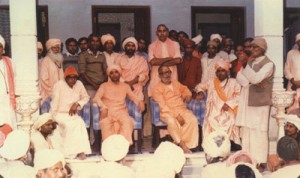
Mela 1985: babaji ( sitting on extreme right), Shri Avaidya nath ji, Shri Chand nath ji
Kundalini Books: Siddha-Siddhantapaddhati of Goraksanatha
Gorakshanath the Originar of Hatha-Yoga
The Sanskrit word nÄ�thá or नाथ, is the proper name of a siddha sampradaya (initiatory tradition) and the word itself literally means „lord, protector, refuge“. The related Sanskrit term Adi Natha means first or original Lord, and is therefore a synonym for Shiva, Mahadeva, or Maheshvara, and beyond these supramental concepts, the Supreme Absolute Reality as the basis supporting all aspects and manifestations of consciousness. The Nath tradition is a heterodox siddha tradition containing many sub-sects. It was founded by Matsyendranath and further developed by Gorakshanath. These two individuals are also revered in Tibetan Buddhism as Mahasiddhas (great adepts) and are credited with great powers and perfected spiritual attainment. Read More: > Here <
Dr. Joachim Reinelt: Zur Zeit des indischen Mittelalters wanderten in weiten Teilen Indiens und Tibets tantrische Mystiker umher, die Nathas, Nathayogis oder Nathasiddhas genannt wurden. Sie praktizierten und lehrten Hatha- und Kundaliniyoga und hatten großen Einfluss auf das religiöse Leben der Menschen.
In meiner Doktorarbeit habe ich die Lehren und Praktiken dieser Yogis untersucht. Als Textgrundlage dient hierbei ein Werk aus dem ca. 13. Jahrhundert, das Vivekadarpana, wörtlich ‚Spiegel der unterscheidenden Betrachtung‘. In diesem recht umfangreichen Werk (21 Kapitel) wurden die Lehren aus unterschiedlichen philosophischen Schulen, Konzepte und Praktiken diverser tantrischer und yogischer Traditionen, sowie viele mythologische Vorstellungen zusammengetragen. www.proyoga.de
Gorakshanatha Saivism: Gorakhnath or Gorakshanatha Saivism is also known as Siddha Siddhanta and Nath tradition. It was founded by Gorakshanatha (Gorakhnath) who lived about 10th century AD. He is believed to be 3rd, 4th or 5th in a line of 12 prominent teachers of this tradition, which has followers in both Buddhism and Hinduism.
He was said to be a disciple of Matsyendranatha who was from in Nepal. Followers of this sect believe that knowledge of this tradition was received by Matsyendranath directly from Siva himself. Gorakshanatha is credited with such works as Siddha Siddhanta Paddhathi and Viveka Martanda. He composed them in Hindi. He also created 12 monastic orders across Northern India in an effort to preserve the Adinatha tradition. Other important works of this tradition are Hathayoga Pradipika, Gheranda Samhita, Siva Samhita and Jnanamrita. Full Article: www.saivism.net
History of the Nathas – The history of ancient Indian sadhu texts reveals a succession of several main groups. There were the Sadhs, Yatis, Siddhas, Nathas, Pashupatis, Sant-Mats, Dasnamis and Nagas. Apart from these, many small sadhu sects have existed and played their part in the great stream of Indian life. In early history, it would appear that some sects were interwoven with others, and some merged or developed into other sects. Some thus became extinct, and others are still with us.
Full Article : http://www.mahendranath.org/yogavidya/yogavidya.html
Address inquiries to:
INTERNATIONAL NATH ORDER
3005 S. Lamar Blvd. D109-387
Austin, TX 78704 (USA)
Yogendranath Yogi Event: „CHATUHSASTHI YOGINI MANTRA -64 KALI YOGINIS“: “Sixty and four are the instruments of enjoyments that tempt the individual soul (jiva). Sixty and four are the divisions (kalas) within jiva; Sixty and four are the chambers of jiva’s chakras; Sixty and four; where Shiva-Shakti are.” In very ancient days, eight great Female Goddesses Shaktis emerged from the cosmic soul of the Principle Dieties and formed Kali Durga, the Universal Shakti Power, These were the grand Mothers (Ashta Matrikas) of all subsequent Yoginis. According to Kaula Tantra, the seight manifested each in turn into eight Divine Shaktis, thus resulting in the 64 Tantric Yoginis.
- Start Time:Sunday, April 10, 2011 at 2:30am
- End Time: Friday, April 10, 2015 at 5:30am
- This is an open event. Anyone can join and invite others to join.
Eight Great Mothers (Ashta Matrikas), Halebid, Karnataka – An examination of the ancient Tantric tradition reveals a particular sanctity assigned to the number eight. The eight mother faculties (tattvas) of the manifested universe, the eight directions with four cardinal and four intermediate points (digbandahs), the eight miraculous yogic powers (siddhis), eight „limbs“ of Yoga (astanga) eight forms of the Divine Mother (matrikas) and eight primary mystic symbols (mudras) are just a few examples. The square of eight, or sixty-four, occupies an even more profound position in the field of Tantra which, from the point of view of the practitioner, first and foremost identifies the sixty-four Tantric Yoginis.
The Matrikas are found in inscriptions uncovered from the Indus Valley Civilization of 5000 years ago.
“O Great Ones, if I am known, what need is there for pilgrimage, austerities and even sadhana itself? If I am revealed, of what use is puja, tantra, kriya, yoga and the revealed texts?
My mystery is grand and broad and expansive beyond the consciousness of humanity, yet I am ever accessible as the cosmic lover beyond the thinking mind and it is I who is the source of the Peace, Light, Love, and Power that are all the hallmarks of my essence. I am the polarities and the forces of creation, the Divine feminine in union with her Lord. Manifesting in both celestial and terrestrial planes, pretending to be limited as a human incarnation, I become intoxicated with all aspects of life, in order to know Shiva as my intimate lover, with whom I always seek oneness.
I take on human incarnation in order that all of his less conscious manifestations might discover their divinity though relationship with me. In doing so I provide an avenue for humanity to taste the nectar of immortality through my Kaula Tantra. Even given this, my true nature still remains secret. I live hidden in the bodies of human lovers, promoting the elevation of consciousness for those who seek it through me.”
2nd Yogendranath Yogi Event „MAHA YOGI GURU GORKHNAHT“: Gorakshya Peeth Siddhachal Mrigasthali, favourite of siddha yogi -guru gorkhnath . Gorakshya Balam, Guru-sishya Palam, Sesha Himalam, Sasikhanda bhalam Kalasya Kalam, Jeeta Janma Jalam, Bandey Jatalam, Jagadabjanalam
- Start Time: Friday, April 8, 2011 at 8:00am
- End Time:Wednesday, April 8, 2015 at 11:00am
- This is an open event, everone can join
Gorakh Nath is also Known as Gorakshya Nath. He is the Yoga power of Lord Shiva, who himself is the whole universe. There are many meanings for the name. First let’s separate the name into smaller parts Go + Rakshya = Gorakshya
The meaning of Go are Cow, Earth (or universe) or the Indriya (Through which person interacts with the outer world also moha or attachment). The meaning of Rakshya is to protect.
The combined meaning becomes as such The one who protects us from the un-escapable net of moha by protecting the indriyas. When all the individual are protected from misutilizing their bodies, which develops the mind so much that we become able to know all the things in the universe, then the universe is protected as a whole.
He is the teacher of Yoga. Yoga means the re-unification of the soul and the super soul (himself). We cannot write about him due to our inefficiency. One of the slokas is listed below which tells something about him.
Tum Sata-Chita-Aananda Sada Shive, Aagama Nigama Parey Yoga Pracharana Karana Yuga Yuga, Gorakh Rupa Dharey You are the super being, Sada Shiva. Farther than the knowledge of Aagama and Nigama. You come here in the form of Gorakh Nath for preaching Yoga (Knowledge for reunification), time to time. The full Bhajan is given in the Bhajan segment of the site.
You can view the big poster of Navanath at Mrigasthali Gorakshya Temple Likewise, there are 84 siddhas. Temples in Nepal and the World – Oom Guru Gorakshya, Mama Rakshya Rakshya Gorakhnath Temple is everywhere in Nepal and India. Gorakshay Nath is very important in the lives of the people so the temple is found in every footsteps. In any urban and rural part of the subcontinent contains Gorakshya temple.
Mrigasthali is another important place for all the Hindus (www.omadesh.org) .It is Known to be the most favourite place for the Lord Shiva to play. This place is listed in uncountable places in the texts of hinduism.
Shiva Gorakshya Meditated at this place for very long time. According to the story, Shiva Gorakshya Meditated here seated on the snakes representing the rain and there was no rainfall for 12 years. He was not happy with the people who was not interested in improving their life with yoga.
The people who were tensed due to no rain thought to bring his Guru Dada Matsyendra Nath and he will wake up and the rain will fall. When they brought Guru Matsyendra Nath from Kamrup Kamakshya then he wake up from meditation and they got the rain fall.
Goraksha Puja // Pandit’s Genocide being completed by indifference of both Center and State Governments.
Yoga – Sanatan Dharma ( > Hinduism <) has always believed that the world began from the god in the form of zero (sunya rup paramatma). But how did that zero became all these? The science cannot explain that thing, yet it has proved that the world is continuously expanding. If it is expanding continuously, then it should have been started from a point or zero. The science also believe this, with Big Bang Theory. But how did something came out of nowhere? The science can never explain this. This is explained by Yoga.
Einstein believed that there is always another antiparticle to some particle. When antiparticle and particle mix together, then there will be nothing. One will consume the other and the whole thing is zero. This thought came out of the sacred texts of Hinduism.
Something out of nothing can come with the power of yoga. The literal meaning of yoga is to mix something together or addition. With the power of yoga, Shiva created the whole universe out of nothing. let us see this in the following table:
0 = 5 – 5
= (5) + (-5)
= ( 3 + 2 ) + (8 – 3)
= (9 – 6 + 4 – 2) + ( 5 + 3 – 5 + 2 )
= ………… and so on (This is addition or Yoga)
Now the world has become a complex one. When the maha-pralaya occurs, the addition occurs and the world again becomes zero, and the new world is started with new mathematics.
Yoga is not the exercise. It is the power of creation. The Rishis of older times developed the science by which anyone can increase the power of yoga within oneself. All the things in Hinduism, world and the universe is within this.
We have to travel through 8.4 million species of plants and animals to become human. We will be promoted or degreded to the next higher level according to our karma. Karma is the form of yoga (Karma-yoga) which increases the yoga power. Shree Shiva Gorakshya is known to be the first sat-guru of yoga. He is Shiva, who came to earth for reason of preaching the knowledge of yoga. He tought 8.4 million postures, by which yoga could be practiced. Among them 84 postures are the most important for Human.
We are trying to publish the 84 yoga postures which could be useful for anyone.
The Gorakhbodh
Questions (Diverse Fragen):
- CREATOR : Yogendranath Nath Yogi <
- EMAIL — yogendranathyogi@gmail.com
- Yogendranath Yogi – ( Ancient Original Natha Yoga) , friends, studies<
- Meet NATH YOGI SAMPRADAYA _ALL WORD <
- Meet YOGA OF NATHA SAMPRADAYA – MAHAYOGACHARYA GORAKHNATH <
- Meet SHRI 108 THANESHWAR NATH MAHAYOGI JAGRTH DHUNA <
- Meet Shri Thaneshwar Nath Namo, Gorakshnath <
Kashmir Shaivism: Kashmiri Arya „Pandits“ are the remainder of a indigenous religious ethnic group (kashmir shaivism philosophy) that originally inhabited the land proclaimed to be paradise by one of many neighbouring Kings . In the ancient times, the indigenous himalaya mountain Nag/“water spring“ tribe and Arya tribes settled and embraced eachothers rituals and values. The Middle ages, the various conquerors named the peoples of this valley as „Pandits“ because they choose the path of peace, enlightenment and knowledge. The Kashmiri Pandits, a „Community in Exile“ , not a caste in exile, retained their cultural identity from the persecution and forced conversion by the invaders of the land since 1300s. There are about 700,000 Kashmiri Pandits/Hindu living worldwide. About less than 5,000 still remain in the Valley of Kashmir. http://en.wikipedia.org/wiki/Kashmir , http://en.wikipedia.org/wiki/Azad_Kashmir
- www.shehjar.com Forgotten Temples of Kashmir <
- KASHMIRI OVERSEAS ASSOCIATION, USA <
- HUMAN UPLIFTMENT THROUGH KASHMIR SHAIVISM <
- Kathak Academy , Shehjar, Kashmir Poetry <
- Yoga Alliance Austria: BYO „Eintreten in das göttliche Bewusstsein“ <
- Yoga Vidya Journal Herbst 2004 < …Der Autor ist Gorak Natha. In einem Antiquariat in London konnten indische …. Lore Tomalla leitet bei Yoga Vidya folgende Seminare …
- Meet Kashmir Pandits, friends, fans, studies at fb <
- Meet Roots in Kashmir, friends, fans at fb <
- Meet Roots in Kashmir Youth worldwide (because Refugees), friends at fb <
- Meet KVKS Kashmiri Visthapit Kalyaan Samiti Health and Education at fb <
- Meet Kashmir Shaivism (Ancient Original Kashmir Yoga), friends and studies at fb <
