
Posts by admin
JATROPHA BIOFUELS – THE TRUE COSTS
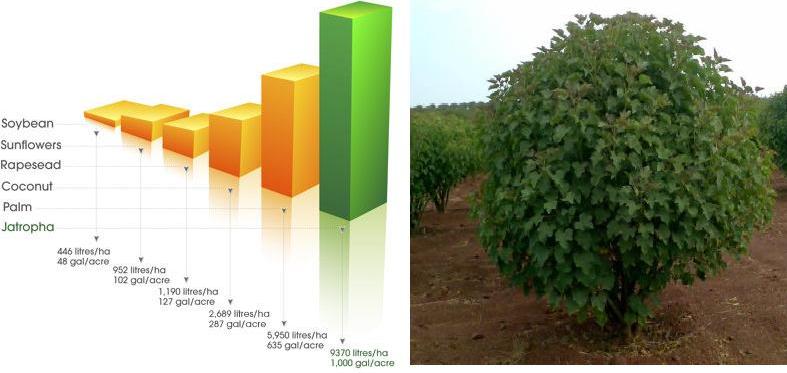
Biofuels: Biodevastation, Hunger & False Carbon Credits
JATROPHA Agrartreibstoff der Armen ?
Jatropha biofuels: the true cost to Tanzania
Jatropha is a genus of approximately 175 succulent plants, shrubs and trees (some are deciduous, like Jatropha curcas L.), from the family Euphorbiaceae. The name is derived from (Greek iatros = physician and trophe = nutrition), hence the common name physic nut. Jatropha is native to Central America and has become naturalized in many tropical and subtropical areas, including India, Africa, and North America. Originating in the Caribbean, Jatropha was spread as a valuable hedge plant to Africa and Asia by Portuguese traders.
GOLDMANN SACHS recently cited Jatropha curcas as one of the best candidates for future biodiesel production.However, despite its abundance and use as an oil and reclamation plant, none of the Jatropha species have been properly domesticated and, as a result, its productivity is variable, and the long-term impact of its large-scale use on soil quality and the environment is unknown. Read More: > HERE <
A Carbon credit is a generic term meaning that a value has been assigned to a reduction or offset of greenhouse gas emissions. Carbon credits and markets are key components of national and international attempts to mitigate the growth in concentrations of greenhouse gases (GHGs). One carbon credit is equal to one ton of carbon dioxide, or in some markets, carbon dioxide equivalent gases.Read More: > HERE <
GRAIN is a small international non-profit organisation that works to support small farmers and social movements in their struggles for community-controlled and biodiversity-based food systems. Our support takes the form of independent research and analysis, networking at local, regional and international levels, and fostering new forms of cooperation and alliance-building. Most of our work is oriented towards, and carried out in, Africa, Asia and Latin America.
GRAIN’s work goes back to the early 1980s, when a number of activists around the world started drawing attention to the dramatic loss of genetic diversity on our farms — the very cornerstone of the world’s food supply. We began doing research, advocacy and lobbying work under the auspices of a coalition of mostly European development organisations. That work soon expanded into a larger programme and network that needed its own footing. In 1990, Genetic Resources Action International, or GRAIN for short, was legally established as an independent non-profit foundation with its headquarters in Barcelona, Spain.
Welcome to our website – Jatropha Farming Opportunity, Jatropha Planting Opportunity for Nursery Growers , Carbon Credits & Government, Subsidization , Farmers Cash Flow Analysis
We know that energy is a matter of national security as the volatile Middle East affects the world supply with most developing countries struggling with heavy oil import costs. The price of Crude Fossil oil is touching 100 US $ per barrel and expected to touch 150 mark within two years. As such for many countries, the question of trying to achieve greater energy independence one day through the development of biofuels has become one of ‘when’ rather than ‘if,’ and, now on a near daily basis, a biofuels programme is being launched somewhere in the developing world.
Exporters of – Jatropha, Neem, Cotton, Caster, Karanj Seeds, Oils, Cake, Bio-Diesel Products, All Seeds, Natural Herbals, Himalayan Herbs, Herbal Extract, Spices, Ayurvedic, All Agriculture Products, Coir Fibre Mate, Marble & Granite etc.
We are engaged in sourcing of natural herbals & seeds like JATROPHA, NEEM CASTER, COTTON SEEDS, OILS & CHEAKS and all kind of Himalayan Herbs, herbal Extract, Spice, Ayurvedic, Unani for our buyers.
Consequently, we have a very good grip in the most prominent markets and sourcing better quality product for our buyers in a reasonable price. We have number of buyers from every corner of national and international markets, they are willing to get material from India as well as other countries also. We have provided good quality, good service and fast communications in every time to our buyers. Kindly send us your valuable offer.
Thanks N Regards:
For ATHULYA EXPORTS
(K.N. AJIKUMAR)
PROPRIETOR
- SAVE MOTHER EARTH <
- TRAD. MEDICINE AND PRIMARY HEALTH CARE – RAINFOREST MEDICINE <
- PALMOIL – Biofuel, Climate Change, Food, etc. <
- Indian companies also enter biofuel business in Ghana, Project for Himachal, etc.<
- Goldmann Sachs Wellness Exchange <
- http://en.wikipedia.org/wiki/Goldman_Sachs <
- Meet GLOBAL CONCERN, friends, fans & studies at fb <
- Meet Human Rights Watch, friends, fans at fb <
- Meet Transparency International, friends, fans at fb <
- Meet COP16 UN Climate Change Conference Mexico 2010 <
- Meet 100 Million Voices for a Real Climate Deal in Mexico 2010 <
PLAYING FOR CHANGE MUSIC & FOUNDATION

http://playingforchange.ning.com/
The Inspiration – Playing for Change is a multimedia movement created to inspire, connect, and bring peace to the world through music. The idea for this project arose from a common belief that music has the power to break down boundaries and overcome distances between people. No matter whether people come from different geographic, political, economic, spiritual or ideological backgrounds, music has the universal power to transcend and unite us as one human race. And with this truth firmly fixed in our minds, we set out to share it with the world.
The Production – We built a mobile recording studio, equipped with all the same equipment used in the best studios, and traveled to wherever the music took us. As technology changed, our power demands were downsized from golf cart batteries to car batteries, and finally to laptops. Similarly, the quality with which we were able to film and document the project was gradually upgraded from a variety of formats– each the best we could attain at the time—finally to full HD.
One thing that never changed throughout the process was our commitment to create an environment for the musicians in which they could create freely and that placed no barriers between them and those who would eventually experience their music. By leading with that energy and intent everywhere we traveled, we were freely given access to musicians and locations that are usually inaccessible. In this respect, the inspiration that originally set us on this path became a co-creator of the project along with us!
The Effect – Over the course of this project, we decided it was not enough for our crew just to record and share this music with the world; we wanted to create a way to give back to the musicians and their communities that had shared so much with us. And so in 2007 we created the Playing for Change Foundation, a separate 501(c)3 nonprofit corporation whose mission is to do just that. In early 2008, we established Timeless Media, a for-profit entity that funds and extends the work of Playing for Change. Later that year, Timeless Media entered into a joint venture with the Concord Music Group through the support of label co-owner and entertainment legend Norman Lear and Concord Music Group executive vice president of A&R John Burk. Our goal is to bring PFC’s music, videos and message to the widest possible audience.
Now, musicians from all over the world are brought together to perform benefit concerts that build music and art schools in communities that are in need of inspiration and hope. In addition to benefit concerts, the Playing for Change band also performs shows around the world. When audiences see and hear musicians who have traveled thousands of miles from their homes, united in purpose and chorus on one stage, everyone is touched by music’s unifying power.
And now, everyone can participate in this transformative experience by joining the Playing for Change Movement. People are hosting screenings, musicians are holding benefit concerts of every size, fans are spreading the message of Playing for Change through our media, and this is only the beginning. Together, we will connect the world through music!
> Playing for Change Utube Channel <
Playing for Change Foundation: Several years ago, a small group of filmmakers set out with a dream to make a documentary film about street musicians from around the world. That dream has grown not only into a reality, but into a global sensation called Playing For Change, and has touched the lives of millions of people.
While traveling to around the world to film and record these musicians, the crew became intimately involved with the music and people of each community they visited.
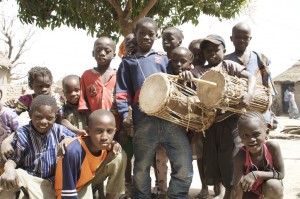
Many of these people lived very modestly in communities with limited resources; nevertheless, they were full of generosity, warmth, and above all they were connected to each other by a common thread: music.
In an effort to ensure that anyone with the desire to receive a music education would have the opportunity to do so, the Playing For Change Foundation was born.
The Playing For Change Foundation (PFCF) is dedicated to the fundamental idea that peace and change are possible through the universal language of music. www.playingforchange.org
Codex Alimentarius – Food Book & Food Code

Codex Alimentarius on Honey in trad. Ayurveda
www.anhcampaign.org – codex alimentarius
The Codex Alimentarius (Latin for „food code“ or „food book“) is a collection of internationally recognized standards, codes of practice, guidelines and other recommendations relating to foods, food production and food safety. Its name derives from the Codex Alimentarius Austriacus. Its texts are developed and maintained by the Codex Alimentarius Commission, a body that was established in 1963 by the Food and Agriculture Organization of the United Nations (FAO) and the World Health Organization (WHO). The Commission’s main aims are stated as being to protect the health of consumers and ensure fair practices in the international food trade. The Codex Alimentarius is recognized by the World Trade Organization as an international reference point for the resolution of disputes concerning food safety and consumer protection. Read More: > Here <
The Codex Alimentarius (Latin for „food code“ or „food book“) is a collection of internationally recognized standards, codes of practice, guidelines and other recommendations relating to foods, food production and food safety. Its name derives from the Codex Alimentarius Austriacus. Its texts are developed and maintained by the Codex Alimentarius Commission, a body that was established in 1963 by the Food and Agriculture Organization of the United Nations (FAO) and the World Health Organization (WHO). The Commission’s main aims are stated as being to protect the health of consumers and ensure fair practices in the international food trade. The Codex Alimentarius is recognized by the World Trade Organization as an international reference point for the resolution of disputes concerning food safety and consumer protection.
> Codex Alimentarius utube Channel <
Vortrag Dr. Rima E. Laibow und Major General Albert N. Stubblebine von der Natural Solutions Stiftungbei der Konferenz der Anti-Zensur- Koalition am Samstag den 21. Februar 2009 in Chur in der Schweiz.
The Codex Alimentarius officially covers all foods, whether processed, semi-processed or raw, but far more attention has been given to foods that are marketed directly to consumers. In addition to standards for specific foods, the Codex Alimentarius contains general standards covering matters such as food labeling, food hygiene, food additives and pesticide residues, and procedures for assessing the safety of foods derived from modern biotechnology. It also contains guidelines for the management of official (i.e., governmental) import and export inspection and certification systems for foods.
The Codex Alimentarius is published in Arabic, Chinese, English, French and Spanish. Not all texts are available in all languages.
- ALSO SEE: http://www.guardian.co.uk
- Traditional Food, Ayurveda, Biodiversity <
- Meet Campaign Codex Alimentarius, friends, fans at fb <
- Meet Codex Alimentarius, friends, studies at fb <
- Meet Wellness Uncovered Forum, studies, friends at fb <
- Meet NaturalNews.com, studies, friends at fb <
NaturalNews.com is an independent news resource that covers the natural health and wellness topics that empower individuals to make positive changes in their personal health. NaturalNews offers uncensored news that allows for healthier choice.
PALMOIL – Biofuel, Climate Change, Food, etc.
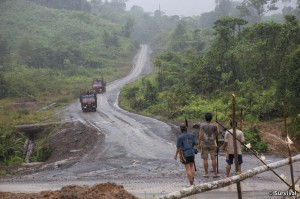
> Penan armed with blowpipes block road as logging trucks owned by the Shin Yang company approach. <
> Rainforest Information Center <
> SURVIVAL INTERNATIONAL -PALM OIL <
> THE ECOLOGIST – PALM OIL, SUSTAINABLE PALMOIL ? <
> 9th Session UN Permanent Forum on Indigenous Issues <
> Indigenous Peoples Issues/Resources – Palm Oil <
Palm oil is an edible plant oil derived from the pulp of the fruit of the oil palm Elaeis guineensis. It should not be confused with palm kernel oil, which is derived from the kernel (seed) of Elaeis guineensis, or with coconut oil, which is derived from the kernel of the coconut palm (Cocos nucifera). Palm oil is naturally reddish because it contains a high amount of beta-carotene (though boiling palm oil destroys the beta-carotene, rendering the oil colourless. Read More: > HERE <
Deforestation occurs for many reasons: trees or derived charcoal are used as, or sold, for fuel or as a commodity, while cleared land is used as pasture for livestock, plantations of commodities, and settlements. The removal of trees without sufficient reforestation has resulted in damage to habitat, biodiversity loss and aridity. It has adverse impacts on biosequestration of atmospheric carbon dioxide. Deforested regions typically incur significant adverse soil erosion and frequently degrade into wasteland.
Disregard or ignorance of intrinsic value, lack of ascribed value, lax forest management and deficient environmental law are some of the factors that allow deforestation to occur on a large scale. In many countries, deforestation is an ongoing issue that is causing extinction, changes to climatic conditions, desertification, and displacement of indigenous people.Read More: > HERE <
Biofuels threaten lands of 60 million tribal people – Demand for biofuels is destroying tribal peoples’ land and lives, according to indigenous representatives at the United Nations Permanent Forum on Indigenous Issues (UNPFII), meeting currently in New York.
A report presented to the UNPFII refers to ‘increasing human rights violations, displacements and conflicts due to expropriation of ancestral lands and forests for biofuel plantations.’ One of the report’s authors, UNPFII chairperson Victoria Tauli-Corpuz, has said that if biofuels expansion continues as planned, 60 million indigenous people worldwide are threatened with losing their land and livelihoods.
Palm oil is one of the most destructive crops used for biofuels. Millions of indigenous people in Malaysia have already been affected by palm oil plantations, and millions more in Indonesia, where over 6 million hectares of oil palm have been planted, mostly on indigenous territory. In Colombia, thousands of families, many of them indigenous, have been violently evicted from their land because of palm oil plantations and other crops.
Malaysia, Indonesia and Colombia all plan to expand their palm oil plantations. Indonesia has announced plans for plantations in Borneo, projected to displace up to 5 million indigenous people, and 5 million hectares, much of it indigenous land, has been set aside for palm oil in Papua. Colombia is planning 6.3 million hectares of plantations, which could affect more than 100 indigenous communities.
‘If the government take our land, what will we have left?’ an indigenous Papuan leader said in an interview with Survival. ‘If there is a plantation, our land will be destroyed.’
Other crops for biofuels include sugar cane, soy, corn, manioc and jatropha, a plant native to Central America. The > Guarani < in Brazil have lost much of their land to sugar cane cultivation, while the government in India is targeting 13.5 million hectares of what it calls ‘wasteland’, much of which is actually indigenous land.
Survival’s director, Stephen Corry, said today, ‘The biofuels boom doesn’t just have consequences for the environment, global food prices or orang-utans – it’s having a devastating effect on tribal people too. The companies feverishly promoting this industry have been perfectly willing to push aside tribal people in their hunger for land.’
The Amazon Rainforest is the world’s greatest natural resource – the most powerful and bio-actively diverse natural phenomenon on the planet. Yet still it is being destroyed just like other rainforests around the world. The problem and the solution to rainforest destruction are both economic. Rainforests are being destroyed worldwide for the profits they yield – mostly harvesting unsustainable resources like timber, for cattle and agriculture, and for subsistence cropping by rainforest inhabitants. However, if land owners, governments and those living in the rainforest today were given a viable economic reason NOT to destroy the rainforest, it could and would be saved. Thankfully, this viable economic alternative does exist. Many organizations have demonstrated that if the medicinal plants, fruits, nuts, oils and other resources like rubber, chocolate and chicle, were harvested sustainably – rainforest land has much more economic value than if timber were harvested or if it were burned down for cattle or farming operations. Sustainable harvesting of these types of resources provides this value today as well more long term income and profits year after year for generations to come.
The Amazon Rainforest has long been a symbol of mystery and power, a sacred link between humans and nature. It is also the richest biological incubator on the planet. It supports millions of plant, animal and insect species – a virtual library of chemical invention. In these archives, drugs like quinine, muscle relaxants, steroids and cancer drugs are found. More importantly, are the new drugs still awaiting discovery – drugs for AIDS, cancer, diabetes, arthritis and Alzheimer’s.
Many secrets and untold treasures await discovery with the medicinal plants used by shamans, healers and the indigenous people of the Rainforest Tribes. So alluring are the mysteries of indigenous medical knowledge that over 100 pharmaceutical companies and even the US government are currently funding projects studying the indigenous plant knowledge and the specific plants used by native shamans and healers.
Long regarded as hocus-pocus by science, indigenous people’s empirical plant knowledge is now thought by many to be the Amazon’s new gold. This untold wealth of the indigenous plants are the true wealth of the rainforest – not the trees. Rich in beneficial nutrients, phytochemicals and active constituents, the rainforest Indians and Indigenous People have used them for centuries for their survival, health and well-being. Yet extracting these secrets from the jungles is no easy task and sadly, this state of affairs may not last long enough into the future for man to unlock all their secrets. Tragically, rainforests once covered 14% of the earth’s land surface; now they cover a mere 6%.
In less than 50 years, more than half of the world’s tropical rainforests have fallen victim to fire and the chain saw and the rate of destruction is still accelerating. Unbelievably, over 200,000 acres of rainforest are burned every day in the world. That is over 150 acres lost every minute of every day. Experts estimate that at the current rate of destruction, the last remaining rainforests could be consumed in less than 40 years. Experts also estimate that we are losing 130 species of plants, animals and insects every single day as they become extinct from the loss of rainforest land and habitats. How many possible cures to devastating diseases have we already lost? > FULL ARTICLE , PLANT DATA BASE, RAINFOREST SUPPORT <
Biodiversity, Heinrich Böll Stiftung – In conclusion, it appears increasingly clear that there are some forms of new energy investment, (both fossil-fuel and so-called “renewable”) that are particularly damaging to the local environment and communities and to our climate. For these reasons, they should be considered too high risk to pursue – especially in developing countries with very weak political and environmental governance. Eni’s plans to develop tar sands and oil palm in Congo fall into this category.
- Download full version of Study > „Energy Futures ? < Eni´s investment in> tar sands (extra heavy oil) < and palm oil in the Congo Basin“ (PDF, 4 MByte, 41 Pages).
- INTERVIEW – Keine Entwarnung: Bedrohung für Gletscher im Himalaya ist real > HERE < & ( IPCC) The Intergovernmental Panel on Climate Change Report.
- BÖLL – GOING GREEN – THE FUTURE HAS BEGUN NOW<
Heinrich Theodor Böll (December 21, 1917 – July 16, 1985) was one of Germany’s foremost post-World War II writers. Böll was awarded the Georg Büchner Prize in 1967 and the Nobel Prize for Literature in 1972. Read More: > HERE <


The demand for palm oil is forecast to double by 2020. To achieve that production increase, 1,160 new square miles will have to be planted every year for 20 years. Indonesia has 26,300 square miles more forest land officially allocated for new oil palm plantations; Malaysia has almost 3,000 square miles more. The expected thousands of square miles of new plantings on the islands of Sumatra and Borneo could kill off the remaining orangutans, rhinos, and tigers.
- Important: Please look at the following links to learn more about Palm Oil and the effect on the Orangutans: An article on the effects of Palm Oil: http://www.guardian.co.uk/environment/2007/apr/04/energy.indonesia
- All interesting Links: : > SAVE THE ORANG UTAN / facebook <
- Some Facts from … > DONT PALM US OFF < :
- Palm oil is found about 40 percent of the food products on our shelves and its rampant cultivation is destroying the Orangutan’s habitat at an alarming rate.
- The United Nations has warned that Orangutans could be extinct within a generation if we don’t act quickly.
- Once palm oil is labelled, consumers can actually drive a market for proper certified sustainable palm oil because they can demand it of manufacturers.
- Watch the Don’t Palm Us Off campaign video and send this page link to your friends!
- Palm Oil in Chocolate, Greenpeace Canada <
- SAVE MOTHER EARTH, SAVE GANGA <
- PALM OIL BLOG AND VIDEOS <
- Economic Benefits ? <
- Saving Rainforest with medical plants <
- Heinrich Böll Stiftung – Tar Sands and Palm Oil in Congo <
- Meet Dont Palm us off , friends fans, at fb <
- Meet Indigenous Peoples Issues and Resources, friends, fans at fb <
- Meet Survival International friends, fans at fb <
- Meet Global Concern, studies, friends, fans at fb <
- Meet The Ecologist, studies, friends, fans at fb <
- Meet Nobel´s Women Initiative, friends, fans at fb <
- Meet ALL PALM OIL GROUPS, Friends, (APOC) Palm Oil Comm.<
SWAMI SIVANANDA – YOGA IN DAILY LIFE
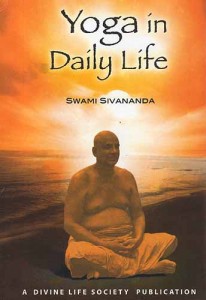
> BOOK: „YOGA IN DAILY LIFE“ <
> SWAMI SIVANANDA FREE BOOKS <
Swami Sivananda Saraswati (September 8, 1887—July 14, 1963) was a Hindu spiritual teacher and a well known proponent of Sivananda Yoga and Vedanta. Sivananda was born Kuppuswami in Pattamadai, in the Tirunelveli district of Tamil Nadu. He studied medicine and served in Malaya as a physician for several years before taking up monasticism. He lived most of the later part of his life near Muni Ki Reti, Rishikesh. He is the founder of The Divine Life Society (1936), Yoga-Vedanta Forest Academy (1948) and author of over 200 books on yoga, vedanta and a variety of other subjects. He established Sivananda Ashram, the location of the headquarters of The Divine Life Society (DLS), on the bank of the Ganges at Shivanandanagar, at a distance of 3 kilometres from Rishikesh. Sivananda Yoga, the yoga form propagated by him, are now spread in many parts of the world through Sivananda Yoga Vedanta Centres, but these centres are not affiliated with Swami Sivananda’s original ashrams which are run by the Divine Life Society. Read more: > HERE <
About the Author: Born on the 8th September, 1887, in the illustrious family of Saga Appayya Diskhita and several other renowned saints and savants, Sri Swami Sivananda had a natural flair for a life devoted to the study and practice of Vedanta.
Added to this was an inborn eagerness to serve all and an innate feeling of unity with all mankind. His passion for service drew him to the medical career; and soon he gravitated to where he thought that his service was most needed. Malaya claimed him. He had earlier been editing a Health Journal and wrote extensively on health problems. He discovered that people needed right knowledge most of all; dissemination of that knowledge he espoused as his own mission. It was divine dispensation and the blessing of God upon mankind that the doctor of body and mind renounced his career and took to a life of renunciation to qualify himself for ministering to the soul of man. He settled down at Rishikesh in 1924, practiced intense austerities and shone as a great Yogi, Saint, Sage and Jivanmukta. I
In 1932 he started the Sivanandashram. In 1936 was born The Divine Life Society. In 1948 the Yoga-Vedanta Forest Academy was organized. Dissemination of spiritual knowledge and training of people in Yoga and Vedanta were their aim and object. In 1950 he undertook a lightning tour of India and Ceylon.
In 1953 he convened a ‚World Parliament Religions‘. He is the author of over 300 volumes and has disciples all over the world, belonging to all nationalities, religions and creeds. To read his works is to drink at the fountain of Wisdom Supreme. On 14th July, 1963 he entered Mahasamadhi.
Publishers‘ Note: That this book has already run into eight editions is in itself the best tribute that can be paid to this, one of the first books written by Sri Swamiji Maharaj. About the book and its author, we cannot do better than to quote from the Publisher’s Note to the first edition of this book, in which Sri Em. Airi Writes:
“ His Holiness Sri Swami Sivananda Saraswati needs scarcely and introduction to the vast multitudes of reading public that pants for spiritual unfoldment and Self-Realisation“
The revered Yogi belongs to the ages and ranks amongst the blessed souls who have had the good fortune to taste the Nectar of Cosmic Consciousness. In clear, simple and impressive style the Swami addresses the young and yet inexperienced spiritual aspirants and lays down before them the fundamentals of spirituality and the various means essentially requisite for Divine Wisdom.“
„This book is a message from the great Yogi of the Himalayas to the helpless and bewildered seeker of Truth. This inspiring and soul-stirring little volume will, we venture to say, undoubtedly contribute its mite to the moral and spiritual perfection of the human race in general and the aspirants in particular. As we wish to present this volume in a popular and a presentable style, it is printed on good paper and got up excellently well. If this book appeals to the broad-minded and expanded hearts amongst the religious reformers and also aspirants, the Publishers‘ labours will have been sufficiently recompensed.“
We reiterate Sri Airi’s pious with as we offer this priceless treasure to the blessed aspirant-world.—THE DIVINE LIFE SOCIETY
SERVE, LOVE, GIVE, PURIFY
MEDITATE, REALISE
So Says Sri Swami Sivananda
Saraswati Maharaj
- Swami Sivananda – Selfless Service <
- Articles on Swami Sivananda, Ayurveda <
- Meet Swami Sivananda, studies, friends, fans at fb <
- Meet Council for a Parliament of the World’s Religions (CPWR) at fb <
KARMAPA IN EUROPE – YOGA OF MILAREPA

> www.chronicleproject.com – Talks on Milarepa <
> The Kagyu Tradtion – Milarepa <
The Karmapa (officially His Holiness the Gyalwa Karmapa) is the head of the Karma Kagyu, the largest sub-school of the Kagyupa (Tibetan Bka‘ brgyud), itself one of the four major schools of Tibetan Buddhism. The historical seat of the Karmapas is Tsurphu Monastery in the Tolung valley of Tibet. His Holiness‘ principal seat in exile is the Dharma Chakra Centre at Rumtek Monastery in Sikkim, India. His regional monastic seats are Karma Triyana Dharmachakra in New York, Dhagpo Kagyu Ling in France and Tashi Choling in Bhutan. Read More: > HERE <
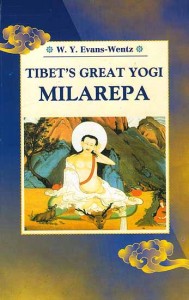
Jetsun Milarepa (Tibetan: རྗེ་བཙུན་མི་ལ་རས་པ; Wylie: Rje-btsun Mi-la-ras-pa), (c. 1052—c. 1135 CE) is generally considered one of Tibet’s most famous yogis and poets, a student of Marpa Lotsawa, and a major figure in the history of the Kagyu (Bka‘-brgyud) school of Tibetan Buddhism. Read More: > HERE <
KAGYU & (Trad.) YOGA: Like all schools of Tibetan Buddhism the Kagyu consider their practices and teachings to be inclusive of the full range of Buddha’s teachings (or three yÄ�na) since they follow the fundamental teachings and vows of individual liberation & monastic discipline (Pratimoksha) which accord with the Mulasarvastivada tradition of the ŚrÄ�vakayÄ�na (sometimes called NikÄ�ya Buddhism or „HÄ«nayÄ�na“ ); the Bodhisattva teachings, vows of universal liberation and philosophy of the MahÄ�yÄ�na; and the profound means and samaya pledges of the Secret Mantra VajrayÄ�na. Read More: > HERE <
The central teaching of Kagyu is the doctrine of Mahamudra, „the Great Seal“, as elucidated by Gampopa in his various works. This doctrine focuses on four principal stages of meditative practice (the Four Yogas of Mahamudra).
Important practices in all Kagyu schools are the tantric practices of Chakrasamvara and Vajrayogini, and particularly the Six Yogas of Naropa.
> BOOK : WWW.EXOTICINDIART.COM <
The Karmapas – Karmapa means „the one who carries out buddha-activity“ or „the embodiment of all the activities of the buddhas.“ In the Tibetan tradition, great enlightened teachers are said to be able to consciously arrange to be reborn as a teacher who can carry on the teachings of a predecessor in a prior life. Pursuant to this tradition, the Karmapas have incarnated in this form of manifestation body (Skt. nirmanakaya), for seventeen lifetimes, as of the present, and all have played the most important role in preserving and propagating the Buddhist teachings of Tibet.
Prior to the birth of the first Karmapa, the arrival of a Buddhist master who would be known as the Karmapa had been prophesied by the historic Buddha Shakyamuni and the great tantric master of India, Guru Padmasambhava. Throughout the centuries, Karmapas have been the central figure in the continuation of the vajrayana lineage in general and Kagyu lineage in particular, and have played a very important role in the preservation of the study and practice lineages of Buddhism. (For more on the Karmapas prior to the Seventeenth, see the section at this website on the Seventeen Karmapas.
VISIT OF HIS HOLINESS THE XVII.KARMAPA OGYEN TRINLEY DORJE TO EUROPE
Dear Dharma Friends, – I am sad to announce that the proposed visit of His Holiness the 17th Gyalwang Karmapa Ogyen Trinley Dorji was not approved by the Government of India. The visit was scheduled to take place from 27th May to 2nd July in nine countries of Europe. The Kagyu Office, the Administration of Gyalwang Karmapa was informed of the decision by the Tibetan Government in Exile on 3rd April 2010.
The process has begun to find out why this visit was not possible and what positive conditions are needed to make the visit possible in near future. I know a huge number of followers and friends in Europe were eagerly waiting for the visit of Gyalwang Karmapa and I know that all of you are sad and disappointed. I would like to take this opportunity to thank all the organizers, volunteers and donors for working so hard to prepare for the visit in last many months. Your cooperation and support were beyond any expectations. I hope and pray together with you that the visit will happen in very near future and that all of us would be able to receive his teachings in Europe.
Ringu Tulku,
Coordinator,
Karmapa’s Visit to Europe
- Researches in Indian and Buddhist Philosphy <
- Tibetan schools of Yoga:
- Anuyoga
- Mahayoga
- Six Yogas of Naropa
- Trul khor (Yantra Yoga)
- Ibn ‚Arabi Society Symposium, Ringu Tulku, Oxford College, 05/2010 <
- A Statement from the 17th Gyalwang Karmapa, Ogyen Trinley Dorje <
FREE Visa to India for MBA & Degree Programs, Jobs, friends at fb <
AHIMSA IN YOGA, MUSIC AND SPIRITUALITY
> Presentacion para la reunion de lanzamiento del proyecto <
> Free Streaming, Music Downloads, etc… <
> Tabla classique à La Réunion <
Ahimsa (Sanskrit: Devanagari; अहिंसा; IAST ahiṃsÄ�, PÄ�li: avihiṃsÄ�) is a term meaning to do no harm (literally: the avoidance of violence – himsa). It is an important tenet of the religions that originated in ancient India (Hinduism, Buddhism and especially Jainism).
Ahimsa is a rule of conduct that bars the killing or injuring of living beings. It is closely connected with the notion that all kinds of violence entail negative karmic consequences. The extent to which the principle of non-violence can or should be applied to different life forms is controversial between various authorities, movements and currents within the three religions and has been a matter of debate for thousands of years. Though the origins of the concept of ahinsa are unknown, the earliest references to ahinsa are found in the texts of historical Vedic religion, dated to 8th century BCE. Here, ahinsa initially relates to „non-injury“ without a moral connotation, but later to non-violence to animals and then, to all beings. Though meat-eating and slaughter of animals are criticized by some Hindu texts, other texts present counter-arguments in support of ritual sacrifice. In the 19th and 20th centuries, prominent figures of Indian spirituality such as Swami Vivekananda, Ramana Maharishi, Swami Sivananda and A. C. Bhaktivedanta Swami Prabhupada emphasized the importance of ahinsa. Mahatma Gandhi applied ahinsa to politics, by his non-violent satyagrahas. Read More: > HERE <
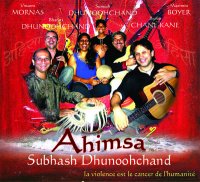
One of French’s most innovative sound artists, Subhash Dhunoohchand’s consistently challenging albums and live performances have been central to the continued rise of Indian-influenced fusion music. A pivotal figure in Reunion Island, France he has pursued his own audio explorations with his new project TABLATRONIC.
Here, the dates of our next concerts in Reunion Island:
- 7 Avril 2010, Le Mag TéléRéunion, AHIMSA et YATRA
- 9 Avril 2010, salle guy alphonsine YATRA musique live et danse indienne (kathak, bharatanatyam, odissie)
- 10 Avril 2010, Show Case Hyper U Bel Air St Louis, 15H à 18H, Tablatronic et Ahimsa
- 14 Avril 2010, probablement dans l’Est…
- 16 Avril 2010, probablement dans le Sud…
- 17 Avril 2010, probablement dans le Nord-Est…
- Keep in Touch !
Born in Mauritius of Indian parents he is the 4th generation in the island call the paradise of the Indian Ocean. Subhash Dhunoohchand was inspired by his father, late Balram Dhunoohchand to learn the precision beats of the tabla, which he began playing when he was 17. Later he went to India for further classical training as a student of Pandit Sudhir Kumar Saxena. He ha s been working with such diverse musicians as Pt Hariprasad Chaurasia, Pt Budhaditya Mukherjee, Rupak Kulkarni, Rakesh Chaurasia, Sazed Ul Alam, Trilok Gurtu and many well known jazz musicians like Ola Melander, Anatholi Bulkin, Xavier Rudd and Lars Gullikson.
Subhash Dhunoohchand is the disciple of Pt S.K. Saxena and has played with great musician like, Pt .Chaurasia, Pt B. Mukherjee, Trilok Gurtu, Susheela Raman, Xavier Rudd etc….// Fusion of Indian, African & Reunion Music. La rencontre de la musique indienne, africaine & réunionnaise.
In the mid-90s Subhash founded Cosmic Sound, an indo jazz fusion music group. In 1993 he release his first CD, Raga Marwa of Indian Classical Music in Sweden with Sazed Ul Alam and at the same time performing with the jazz fusion music group. His groundbreaking debut release Obsession, was recorded in France, and featured contributions from Anupriya Deotale, late Soudama Jankee, Anatholi Bulkin, Celine Bonacina and Rupak Kulkarni. An astonishing marriage of traditional Indian sounds and jazz, it deservedly received strong reviews.
For this European tour Subhash is travelling with his son Sumesh on tabla, Bharati on vocal, Bruno Chane Kane on electric guitar from France and Nandkumar on bass tabla. We are also performing with some indian music musicians from London. A dedicated fusionist with both an uncanny ear for melody and an innate talent for complex rhythms, Subhash Dhunoohchand always seems to be one step ahead of his electronic.
Yama, niyama, asana, pranayama, pratyahra, dharana, dhyana and samadhi are the eight limbs of yoga . Ahimsa, satya, asteya, bramacharya and aparigraha are the five yamas – The yoga sutras of Patanjali, 2.30-31
In the classical yoga system described by Patanjali more than two thousand years ago, the first stage (or limb, as they are generally called) of yoga is Yama (ethical disciplines) and of these, Ahimsa is the first.
In short, according to Patanjali, ahimasa, non-violence or, as Desikashar defines it, „Consideration for all living creatures, especially those who are innocent, in difficulty or worse off than we are“ should be the very beginning of any yoga practice.
- www.gandhiinstitute.org
- www.bansuriflute.com
- VEDIC BOOKS: THE ART OF TABLA RYTHM <
- TRADITIONAL MUSIC INSTRUMENTS, Sound & Yoga <
- YAMA AND NIYAMA <
- Meet Hariprasad Chaurasia, studies, friends, fans at fb <
- Meet Prasad Bhandarkar´s, studies, friends, fans at fb <
- Meet Sheela Bringi, studies, friends, fans at fb <
- Meet Subhash fans club at facebook <
- Meet AHIMSA Nonviolence , friends , fans at fb <
- Meet Ghandi Institute of Nonviolence, friends, fans at fb <
SYMPOSIUM: „The Spiritual and the Material“

„The Spiritual and the Material“
> ISLAM & YOGA A STUDY BETWEEN TRADITIONS <
Ibn ‚ArabÄ« (Arabic: ابن عربي) (July 28, 1165 – November 10, 1240) was an Andalusian Arab Sufi mystic and philosopher. His full name was Abū ‚AbdullÄ�h Muḥammad ibn ‚AlÄ« ibn Muḥammad ibn al-`ArabÄ« al-HÄ�ṭimÄ« al-ṬÄ�’Ä« (أبو عبد الله محمد بن علي بن محمد بن العربي الحاتمي الطائي).Ibn Arabi was born in Murcia, Spain on July 28, 1165 CE (560 in the Islamic calendar), and his family moved to Seville when he was seven years old. In 1200 CE, at the age of thirty-five, he left Iberia for good, intending to make the hajj to Mecca. Some 800 works are attributed to Ibn Arabi, although only some have been authenticated. Recent research suggests that over 100 of his works have survived in manuscript form, although most printed versions have not yet been critically edited and include many errors. Read More: > HERE <
Abū RayḥÄ�n Muḥammad ibn Aḥmad BÄ«rūnÄ« (Persian: ابوریحان محمد بن احمد بیرونی), often known as Alberuni, Al Beruni or variants, (born 5 September 973 in Kath, Khwarezm (now in Uzbekistan), died 13 December 1048 in Ghazni, today’s Afghanistan) was a Persian Muslim scholar and polymath of the 11th century. He was a scientist and physicist, an anthropologist and comparative sociologist, an astronomer and chemist, a critic of alchemy and astrology, an encyclopedist and historian, a geographer and traveler, a geodesist and geologist, a mathematician, a pharmacist and psychologist, an Islamic philosopher and theologian, and an scholar and teacher. Read More: > HERE <
“ Don’t look at your form, however ugly or beautiful. Look at love and at the aim of your quest. … O you whose lips are parched, keep looking for water. Those parched lips are proof that eventually you will reach the source.“ ~ Rumi
Each year the Society organizes Symposia in the U.K. and the U.S.A. on an aspect of Ibn ‚Arabi’s work.
These international gatherings bring together people from many different fields and traditions, and include scholars, students, and anyone interested in what Ibn ‚Arabi has to say. These events provide a unique opportunity for both speakers and delegates, specialists and non-specialists, to enrich their understanding of the Shaykh’s teachings and their relevance today. The Society also encourages public seminars and lectures and can provide speakers on request.
The Annual Symposium of the Society in the UK will be held at Worcester College, Oxford, on May 1-2, 2010. The title of the Symposium is „The Spiritual and the Material“.
The Muhyiddin Ibn ‚Arabi Society Archive Project – > Archive Report 2009 < : The MIAS archiving project has the aim of creating an online catalogue for the historic manuscripts of Muhyiddin Ibn ‚Arabi and his school.
The Society now has a unique collection of digital and microfilm copies of manuscripts of works by Ibn ‚Arabi, as well as copies of a number of manuscripts of works by his companions and early commentators.
The purpose of the archive is to ensure the safety of historic manuscripts of these works, and to help establish accurate texts for publication.
Since the Society’s archive project got under way there have been important developments in the Turkish library system, with moves to centralise the manuscript collections and the establishment of a digitisation unit.
Speakers and provisional titles of papers:
- Dr Samer Akkach, The Ontology of Love and the Agency of Desire in Ibn ‚ArabÄ«’s Teaching
- Jane Carroll, The Circle and the Square – Seeing the spiritual in the material world
- Jane Clark, „He governs the world through itself“ – Ibn ‚ArabÄ« on spiritual causation
- Venerable Ringu Tulku Rinpoche, Spiritual and Material: Appearance is the Unsurpassed Protection
- Prof. George Pattison, Kierkegaard’s teaching on Absolute Dependence
- Dr Faouzi Skali, „The path of spiritual chivalry (Futuwwa) according to Ibn Arabi: wending one’s way through action and contemplation“
CHRIST FELLOWSHIP MINISTRIES PAKISTAN

> CHRIST FELLOWSHIP PAKISTAN <
> Oxford Journal: Trad. Medicine in Pakistan <
> UNANI MEDICINE < > SIDDHA MEDICINE <
> UNANI Medicine with Reference to Pakistan and India <
Pakistan (Urdu: پاکِستان), officially the Islamic Republic of Pakistan, is a country in South Asia. It has a 1,046 kilometres (650 mi) coastline along the Arabian Sea and Gulf of Oman in the south and is bordered by Afghanistan and Iran in the west, India in the east and China in the far northeast. Tajikistan also lies very close to Pakistan but is separated by the narrow Wakhan Corridor. Thus, it occupies a crossroads position between South Asia, Central Asia and the Middle East.
The region forming modern Pakistan was at the heart of the ancient Indus Valley Civilisation and then later was the recipient of Vedic, Persian, Indo-Greek, Turco-Mongol, Islamic and Sikh cultures. The area has witnessed invasions and/or settlements by the Indo-Aryans, Persians, Greeks, Arabs, Turks, Afghans, Mongols and the British. Read More: > HERE <
Dear Friends in Christ, Greetings From Pakistan!
My name is Sabeeha Kiren. I am Finance Secretly and am working for Christian women, girls and widow in the Islamic Republic of Pakistan from the platform of Christ Fellowship Ministries, and am working for the Ministry as a sharing the Word of God with women, girls and widow how to pray and Praise Him, with them. We are Family of God.
Christ Fellowship Ministries is working for the Christian Street Children who do not have support from the family because of poverty and those who are forced to child labor, begging, drugs, gambling and other criminal activities because of not being tended with love and care. The Christian people do not get equal rights as the Muslims possess. God bless you and keep you.
Yours Sister in Christ, Miss Sabeeha Saddique
Christ Fellowship Ministries
JAIN TRADTION, MAHAVIR JAYANTI IN INDIA

> Sri Shri Mahavir Jain temple, Plan a Yatra <
> 2010 JAINA Convention : Live and HELP Live! <
In Jainism, Mahavir Janma Kalyanak is the most important religious holiday. It celebrates the birth of Mahavira, the last Tirthankara. On Mahavir Jayanthi, Jain temples are decorated with flags. In the morning the idol of Mahavira is given a ceremonial bath called the ‚abhishek‘. Lord Mahavira is an ideal in Jainism who taught the world the essence of life. He taught all of us the right way of living the life.The day of his birth is celebrated in a massive procession around the cities. Lord Mahavir was a great teacher who taught mankind the true path of happiness. His teachings on complete nonviolence and the importance of austerity showed the path to achieving salvation and spirituality. Read More: > HERE <
In Jainism, a Tirthankar (तीर्थंकर: „Fordmaker“; also Tirthankara or Jina) is a human being who achieves enlightenment (perfect knowledge) through asceticism and who then becomes a role-model teacher for those seeking spiritual guidance. A Tirthankar is a special sort of arhat, a person who has totally conquered base sensibilities such as anger, pride, deceit, or desire.
A Tirthankar is so called because he is the founder of a „Tirth“ (literally, ‚ford‘), a Jain community which acts as a „ford“ across the „river of human misery“.
Yaksha (Sanskrit यक्ष, yakṣa , ञक्ख yakkha in PÄ�li ) is the name of a broad class of nature-spirits, usually benevolent, who are caretakers of the natural treasures hidden in the earth and tree roots.They appear in Hindu, Jain and Buddhist mythology. The feminine form of the word is yakṣÄ« (यक्सि) or yakṣiṇÄ« (यक्सिनि)(PÄ�li: yakkhÄ« (यक्खि) or yakkhinÄ« (ञक्खिनि)
The Jina’s are worthy of worship because they are the ultimate victor oner the phenomenal fetters, conquired over the all desire of human being.
Jinas are twenty four in number whom we call > ‘Tirthankar’ < and each of them is served by > Yaksha < and >Yakshini < , includes 64 yakshinis (yogini), fifty two viras, sixteen vidya Devis, ten dikpalakas and nine planets. Jina is subordinated by all like Yaksha, Yakshini, Ashta Dikpalakas, Planets and the Jina is above all. Jina’s are countless but four of them are especially worshipped not only in India but all over the world – They are –
- Adinath (The first in the present time)
- Neminath (The twenty Second)
- Parsavanath (The twenty Third)
- Mahavira (The twenty fourth – the last)
- Jina’s are ‘gods above gods’, Everybody is divinities of Jina’s. Jina’s are known by its symbol by whom the shrine is made.
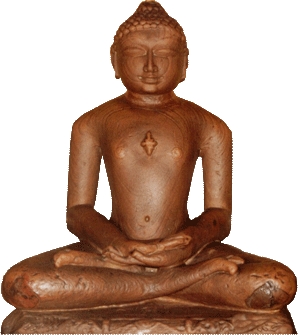
The image of Jina should be nude, youthful, handsome, transquil, decorated by the Sri-vatsa embelom on the chest, arms must reach the knee, tip of the middle finger of the hand touching the knee, two armed, two eyed, no ornament on any part of the body, nor any cloth anywhere in the body, Jina must neither be represented as an old man nor as a boy, always in prime of youth, peaceful, devoid of hair and nails even no hair on the armpit or any other part of the body, not even moustache line, the height of the Jina must be equal to 108 fingers (Anguls). The plum line must pass through precisely centre of the body of the image. The Jina will be either standing or seated no bend anywhere in the body. Seated pose will be lotus posture, legs are crossed, hands are brought together, the mood will be in the complete renunciation, engaged in penance or in Yoga posture. The expression Jina to conquest over the inner enemies like passion and hatred. Wherethese Teerthankara’s are duly installed in the temple, theyare called ‘Sthapana Jinas’.
Today the 28th April is Mahavir Jayanti which is celebrated with great pomp and show in all over India& abroad..
Mahavir Jayanti which is celebrated with great pomp on Parasnath hill in Bihar, a holy land for the jains. In Rajasthan (Jaipur) after special Puja, a procession is taken out.
Annual lakhi Mela is held at Mahavir Pilgrimage in Sehstravid (on the bank of river Gambhira) railway station, Mahavirji, 140 Km from Jaipur, on 13 Chetr shukl to 2 Baisakh Ditya, for five days. Million of pilgrims visit this place to pay their reverence to Digambar Jain Sri Mahavirji, the 24th Jain Tirthankar. On the last day of the fair, rath yatra (procession on a chariot) is taken out from huge, magnificent, profusely decorated with oil paintings and architectural beautiful temple. Meena trigal men and women, in colourful dresses, form the main part of the procession and proceed in front of the chariot, singing, dancing, jumping and enjoying. The fair is attended by people from all over the country irrespective of caste or creed.
Mahavir Jayanti, a day of gazette holiday, is observed all over India in all Jain temples by Jain devotees.
NALANDA about 55 miles south east of Patna, was a Buddhist center of learning from the 5th century CE to the 12th century.IT WAS BUILT BY KING HARSHWARDHAN IN HIS TIME….
The JAIN Tirthankara Mahavira attained Moksha at Pavapuri, which is located in Nalanda (also according to one sect of Jainism he was born in the nearby village called Kundalpur The Gautama Buddha is believed to have visited Nalanda and given sermons near „the Mango Grove of Pavarika“. SÄ�riputta, the right hand disciple of the Buddha, was born and died in Nalanda. Asoka is said to have built a temple there. According to Tibetan sources, Nagarjuna taught there.[citation needed] However, historical studies indicate that the university was established c. 450 CE.
NALANDA was one of the first residential universities, i.e. it had dorms. During its days it was a flourishing residential university with over 10,000 students and 1500 teachers. The university was marked by a lofty wall and one gate. The library was located in a nine storied building. The subjects taught at Nalanda University covered every field of learning. The Tang Dynasty Chinese pilgrim Xuanzang left detailed accounts of the university in the 7th century.
A vast amount of what is considered to be Tibetan Buddhism (Vajrayana) actually stems from the late (9th-12th century) Nalanda teachers and traditions. Other forms of Buddhism, like the Mahayana followed in Vietnam, China, Korea and Japan, found their genesis within the walls of the ancient university. Theravada, the other main school of Buddhism, followed in Sri Lanka, Myanmar, Thailand, Cambodia, and elsewhere, and later the mystic Theravada schools also developed here.
In 1193, the Nalanda University complex was sacked by Turkic Muslim invaders under Bakhtiyar Khalji; this event is seen as a milestone in the decline of Buddhism in India. It is said that Khalji asked if there was a copy of the Koran at Nalanda before he sacked it. When the Tibetan translator Chag Lotsawa visited them in 1235, he found them damaged and looted, but still functioning with a small number of monks. The destruction of the universities at Nalanda, as well as the destruction of many temples and monasteries throughout northern India which housed centers of learning, is considered by many historians to be responsible for the sudden demise of ancient Indian scientific thought in mathematics, astronomy, alchemy, and anatomy.
Fortified Sena monastaries along the main route of the invasion were destroyed, and being off the main route both Nalanda and Bodh Gaya survived. Many instituions off the main route such as the Jagaddala Monastery in northern Bengal were untouched and flourishing. More information here:-
- www.nalanda.nitc.ac.in/about/nalandaheritage.html
- http://en.wikipedia.org/wiki/Nalanda
- Archaeological geography of the Ganga Plain: the lower and the middle Ganga <
- Article: MAHAVIR JAYANTI IN INDIA
- by Prof. (Dr.) Chitralekha Singh
- Mangalayatan University
- www.artistchitralekha.com
AJAM TULKU RINPOCHE IN BERLIN
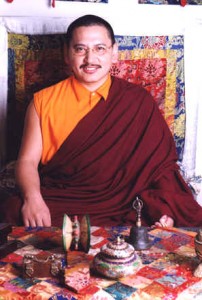
> PALYUL LING < > NAMDROLING <
Mahayana (Sanskrit: महायान, mahÄ�yÄ�na literally ‚Great Vehicle‘) is one of the two main existing branches of Buddhism and a term for classification of Buddhist philosophies and practice. It was founded in India. The name „MahÄ�yÄ�na“ is used in three main senses.
Although the MahÄ�yÄ�na movement traces its origin to Gautama Buddha, scholars believe that it originated in India in the 1st century CE,or the 1st century BCE.Scholars hold that MahÄ�yÄ�na only became a mainstream movement in India in the fifth century CE, since that is when MahÄ�yÄ�nist inscriptions started to appear in epigraphic records in India.Before the 11th century CE (while MahÄ�yÄ�na was still present in India), the MahÄ�yÄ�na sūtras were still in the process of being revised. Thus, several different versions may have survived of the same sūtra. These different versions are invaluable to scholars attempting to reconstruct the history of MahÄ�yÄ�na. Read More: >HERE <
BUDDHISMUS IN BERLIN in Kooperation mit dem TIBETHAUS BERLIN
AJAM TULKU RINPOCHE in Berlin – Zur Person: Tulku Ajam ist die Wiedergeburt des jüngeren Bruders von S. H. Drubwang Pema Norbu Rinpoche (Penor Rinpoche) und hat bis zu seinem 15. Lebensjahr in der Schweiz gelebt. Von Penor Rinpoche als eine Reinkarnation bestätigt, hat er seine intensiven Studien an der Klosteruniversität von Namdröl Ling in Südindien. Rinpoche lehrt in Deutsch!
2. April: Die Payul-Nyingma-Tradition (19-21h)
Von den vier Hauptrichtungen des Mahayana- Buddhismus in Tibet gehört die Nyingma-Tradition zu den ältesten Überlieferungen und lehrt die Anwendung des Dzogchen – i.e. „Die Große Vollkommenheit“, respektive die Lehre von der Verwirklichung der „Reinen Natur des Geistes“. Diese Überlieferung des Dzogchen reicht bis auf die Ursprünge des Buddhismus in Indien zurück und wurde zu Beginn des 9. Jahrhunderts n. Chr. insbesondere durch Guru Padmasambhava, nach Tibet gebracht.
Die Palyül-Tradition ist eine der Schulen der Nyingma-Tradition und zählt neben Kathok, Mindroling, Dzogchen, Shechen und Dorje Drak zu den sogenannten „Sechs großen Sitzen“ der Nyingma. Sie hat ihren Namen vom Palyül-Kloster im gleichnamigen Bezirk Palyül in Karze (tib.: dkar mdze), dem heutigen Sichuan, zurück. Der letzte Linienhalter der Payül Tradition war S. H. Drubwang Pema Norbu Rinpoche (Penor Rinpoche), Abt des Klosters Namdröl Ling in Südindien mit etwa 5000 Mönchen und Nonnen und der Lehrer von Ajam Tulku Rinpoche.
3.-4. April: Erklärung zu einem kurzen Namchö-Terma (Schatztext von Padmasambhava) über Meditiation (10-13h und 14h30-18h (Sonntag nur bis 16h30)
Tulku Ajam wird einen kurzen „Namchö- Schatztext“ (tib. terma) aus einer Sammlung von Unterweisungen von Padmasambhawa, der von den Tibetern liebevoll „Guru Rinpoche“ (wörtlich: Kostbarer Meister) genannt und als „Zweiter Buddha“ verehrt wird, kommentieren. Der Text enthält mündliche Anleitungen zur Meditation, die dieser im 9. Jahrhundert u. Z. während seines Aufenthalts in Tibet gegeben hat. Die essenziellen Unterweisungen wurden von seiner Schülerin Yesche Tsogyal in der verschlüsselten Geheimsprache der Dakinis dokumentiert und als kostbare Termas verborgen, damit sie zum späteren Zeitpunkt von den Tertöns, den (Wieder-) Entdeckern der Schatztexte, offenbart werden können. Guru Rinpoche hat die Namen der zahlreichen Tertöns und den Zeitpunkt ihres Auftretens prophezeit.
Dieser Text wurde vom großen Tertön Mingyur Dorje (1645-1667) entdeckt. Es heißt, dass die in Form von Schriften oder Visionen entdeckten Kernunterweisungen den Bedürfnissen der jeweiligen Zeit entsprechen und den Praktizierenden zukünftiger Generationen dienen.
Veranstaltungsort: Bodhicharya, Kinzigstrasse 25-29, 10247 Berlin
Kurssprache: Rinpoche wird in seiner Muttersprache, Deutsch lehren.
- Die Mittleren Stufen der Meditation <
- INTRO OF THE FIVE TRADITIONS <
- Techok Namdrol Ling Monastery, Four Noble Truths <
- Meet Buddhismus in Berlin, studies, friends at fb <
- Meet If your real interested in Buddhims or Buddhist at fb <
BUDDHISM: THERAVADA AND HINAYANA

Theravada (PÄ�li: थेरवाद theravÄ�da, Sanskrit: स्थविरवाद sthaviravÄ�da); literally, „the Teaching of the Elders“ or „the Ancient Teaching“, is the oldest surviving Buddhist school. It was founded in India. It is relatively conservative, and generally closest to early Buddhism, and for many centuries has been the predominant religion of Sri Lanka (about 70% of the population ) and most of continental Southeast Asia (CAMBODIA, LAOS, BURMA, THAILAND). Theravada is also practiced by minorities in parts of southwest CHINA (by the SHAN and TAI ethnic groups), Vietnam (by the KHMER Krom), Bangladesh (by the ethnic groups of Baruas, Chakma, and Magh), Malaysia and Indonesia, while recently gaining popularity in Singapore and the Western World. Today Theravada Buddhists number over 100 million worldwide, and in recent decades Theravada has begun to take root in the West and in the Buddhist revival in India. Read More: > HERE <
HÄ«nayÄ�na (हीनयान) is a Sanskrit and PÄ�li term literally meaning: „the low vehicle“, „the inferior vehicle“, or „the deficient vehicle“. The term appeared around the 1st or 2nd century CE. Its use in scholarly publications is controversial.There are differing views on the use and meaning of the term, both among scholars and within Buddhism. Read More: > HERE <
THERAVADA AND HINAYANA – As mentioned above, the Theravada tradition is based on the set of teachings decided by the Third Council to contain the teachings of the Buddha.
Shri Lanka has played a central role in preserving the Theravada scriptures and practices. After the Third Council, the Tripitaka collection of sutras were taken to Shri Lanka. Most of these were originally in the Pali language, but some were compiled in other languages. Through the centuries however, all teachings were translated into Pali (around 35 BCE). Initially, most ordained Sangha were known as parivrajahas (wanderers). They would assemble during the rainy season when travelling became problematic. Gradually, buildings were donated and the Sangha became more static. Just a century after the Buddha passed away, monasteries became the main mechanism for preservation of the teachings. Also extra monastic rules were introduced. Only during one short period in history Buddhism was banned in Shri Lanka, but it was later restored with teachings from Thailand which in turn had originated in Shri Lanka. The main countries where the Theravada tradition is currently alive and well in Shri Lanka, Thailand, Burma, Cambodia and Laos.
The teachings on the Four Noble Truths and meditation form the basis of Theravada practice. – The term Hinayana (smaller Vehicle) appeared only much later, around the first century CE, when teachings of a different nature appeared which were called Mahayana (greater Vehicle).
In India, non-Mahayana or Hinayana sects developed independent from the form of Buddhism existing in Sri Lanka. Today, there is no Hinayana tradition in existence anywhere, although Theravada could be called the tradition most like Hinayana. The ultimate goal of the Theravadin and other non-Mahayana practice is to attain the state of an Arhat, as Buddhahood is considered practically unachievable for nearly everyone within this aeon.
Although helping other sentient beings is accepted as an important Buddhist practice, the main motivation for following the spiritual path is to achieve liberation for oneself – Nirvana.
Due to the negative connotation of the term Hinayana, the World Fellowship of Buddhists decided that the term Hinayana should be dropped to refer to Buddhism existing today, and the term Theravada should be applied, also because the term Hinayana has a negative connotation.
MAHAYANA – The Mahayana appears to have developed between the 1st Century BC to the 1st Century CE. About the 2nd Century CE Mahayana became clearly defined. Master Nagarjuna developed the Mahayana philosophy of Sunyata (emptiness) and proved that everything is ‚Void‘ (not only the self) in a small text called Madhyamika-karika. After the 1st Century CE., the Mahayanists took a definite stand and only then the terms of Mahayana and Hinayana were introduced.
Around the first century CE, teachings of a different style appeared. The terms Mahayana and Hinayana appeared in the Saddharma Pundarika Sutra or the Sutra of the Lotus of the Good Law. Of great influence to the development of the Mahayana was Master Nagarjuna (2nd Century CE) who is known for his profound teachings on the philosophy of emptiness. About the 4th Century CE, the Masters Asanga and Vasubandhu wrote enormous amount of works on Mahayana. The Mahayana teachings were mainly written down in Sanskrit, and are now called the Mahayana Sutras.
A clear division arose between the schools following the traditional teachings and Mahayana. Although the main philosophical differences may be small, they have profound consequences for the practices involved.
The Mahayana philosophy is based on the older tradition and fully accepts these teachings, but not all traditional interpretations. One of the most important aspects is for example the traditional interpretation that Buddhahood can be achieved only by very few people. The Mahayana teaches instead that every sentient being (being with a mind) can become a Buddha, the only thing preventing our full enlightenment is the failure to improve one’s own actions and state of mind. The Mahayana tradition claims that all their sutras have been taught directly by Shakyamuni Buddha or have at least been inspired by the Buddha.
The main Mahayana motivation is to lead all sentient beings to enlightenment. Liberation from cyclic existence (Nirvana) and Buddhahood for oneself are regarded simply as fortunate by-products of one’s efforts to help all beings. In fact, the only possible motivation with which one can become a Buddha is the altruistic wish to lead all sentient beings away from suffering.
This motivation is reflected in taking an additional set of vows, known as Bodhisattva vows on top of taking Refuge. The main vow is to free all sentient beings from suffering. These vows are not taken for this life only, but for all future lives as well, until this goal is achieved. The main practices of a Mahayanist are summarised in the 6 perfections: the perfection of giving, ethics, patience, joyous effort, concentration and wisdom.
The Mahayana tradition mainly developed in North India, and spread further North into China and Tibet. In China, Buddhist philosophy and practice was often mixed with Taoist and Confucian aspects. Via China, Mahayana Buddhism also spread to other countries like Korea, Vietnam, Cambodia, Laos and Japan. Also, in China the Ch’an tradition evolved, which was introduced into Japan, and there developed into Zen. Also, the very popular Pure Land Buddhism developed, which focuses on being reborn in the Pure Land of Amitabha, mainly through recitation of Amitabha Buddha’s name. Pure Land Buddhism is known as Jodo in Japan.
In contrast to the current very clear division between Theravada and Mahayana schools, it must be noted that for many centuries, monasteries in India were filled with monks of both traditions. It was considered a very personal decision to choose for individual liberation or Buddhahood. The monastic and ordination rules are virtually the same, and the teachings overlap to a great extent. See for example this important text from the World Buddhist Sangha Council convened by Theravadins in Sri Lanka in 1966.
TANTRAYANA – Around the 6th. century AD, within the Mahayana tradition the tantras or tantric texts emerged. Based firmly on the Hinayana and Mahayana tradition, the actual philosophy differs only slightly from the Mahayana, but the practices can be quite different.
Prior to engaging in tantric practices, a proper understanding of the Hinayana and Mahayana philosophy is considered essential. Only then should one obtain initiation or permission from a qualified tantric master to do a specific tantric practice.
Tantric practices are psychologically very profound techniques to quickly achieve Buddhahood. This is considered important, not for oneself, but because as a Buddha one has the best achievable qualities to help others.The motivation is: ‚the faster I can achieve Buddhahood, the sooner I can be of maximum benefit to others‘.
Depending on the class of tantra, extra vows may need to be taken on top of the Refuge and Bodhisattva vows. Also, specific commitments may be required like doing a specific retreat, daily recitation of mantras or a daily meditation practice. (For more details see the page on Tantra.)
In the 8th. century, the Mahayana and Tantrayana (or Vajrayana) traditions of (North) Indian Buddhism were introduced into Tibet. In fact, only in Tibet, Bhutan and Mongolia a virtually complete set of tantric teachings was preserved. The Tibetan tradition can also be found in the Himalayan range of Ladakh (Northwest India), Sikkhim (Northeast India) and Nepal, and in Mongolia (which is virtually identical to the Tibetan tradition). In China and countries like Korea and Japan, remnants of Vajrayana can be found.
ANUYOGA – TIBETAN STUDIES CONFERENCE
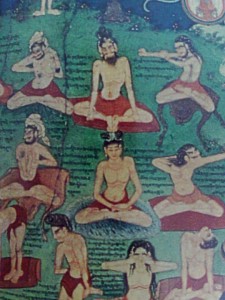
Tibetan Studies, Conference, 2010, Tsering, Shakya
Anuyoga (Skt. अनुयोग ‚further yoga‘) is the designation of the second of the three Inner Tantras according to the ninefold division of practice used by the Nyingma school of Tibetan Buddhism. As with the other yanas, Anuyoga represents both a scriptural division as well as a specific emphasis of both view and practice. Read More: > HERE <
Modern-day doxographical presentations of the Nyingma school are usually based on the system of the nine vehicles (theg pa dgu). Emphasis is placed on the highest three vehicles in this scheme, namely MahÄ�yoga, Anuyoga, and Atiyoga. Generally speaking, these three “inner” yogas correspond to three stages in tantric practice, namely the generation stage, during which the details of the visualizations are stabilized, the perfection stage, in which those visualizations are then employed towards familiarizing oneself with the state of enlightenment, and finally the Great Perfection, the spontaneous accomplishment of buddhahood. Being the second of the three inner yogas, Anuyoga is thus associated with the practices of the perfection stage.
The perfection stage practices are often divided into those without signs (mtshan med) and those with signs (mtshan bcas). The former refer to practices in which the enlightened view is accomplished instantaneously, without any effort, “like a fish leaping out of the water.” The latter – the practices with signs – are generally the perfection stage practices known collectively as “channels and winds” (rtsa lung). Here, the practitioner works with a system of channels within one’s body, through which are moving the “winds” – subtle energies closely related to one’s mind. (Quelle THLIB)
The Nyingma tradition is a complex of many lineages and teachings, including dzogchen. Let us examine some of its major facets.
The Nyingma (Old Translation Period) tradition divides Buddha’s teachings into nine vehicles (theg-pa dgu): three sutra and six tantra. This contrasts with the Sarma (New Translation Period) schools of Kagyu, Sakya, and Gelug, which divide the teachings into three sutra and four tantra vehicles.
- The three sutra vehicles are the shravaka, pratyekabuddha, bodhisattva vehicles. The first two are in the category of Hinayana, while the latter is Mahayana.
- The three outer tantras are kriya, charya, and yoga.
- The three inner tantras are mahayoga, anuyoga, and atiyoga or dzogchen.
- [See: The Terms Hinayana and Mahayana. See also: Basic Features of Tantra.]
The first six vehicles in Nyingma and Sarma are the same. The three Nyingma inner tantra vehicles are roughly equivalent to the Sarma category of anuttarayoga tantra. This is because both categories deal with a subtler level of mental activity (mind) than the lower vehicles do for actualizing the third and fourth noble truths – true stoppings of the first and second noble truths (suffering and its causes) and the true pathways of mind that bring about and have true stoppings. True causes are confusion about reality (unawareness, ignorance) and the fleeting levels of mental activity at which they operate. Because they are fleeting levels, they can be removed.
Maha, Anu, and Atiyoga in Comparison with Father, Mother, and Nondual Anuttarayoga Tantra – Mahayoga, anuyoga, and atiyoga all contain the same basic elements of practice on the tantra path to enlightenment. They differ in terms of emphasis. The same distinction is true concerning the three divisions of anuttarayoga tantra: father, mother, and nondual tantra. The two division schemes, however, are not equivalent.
The practice of anuttarayoga tantra entails the generation stage (bskyed-rim) and the complete stage (rdzogs-rim, completion stage). On the generation stage, we generate ourselves as Buddha-figures merely with the power of our imaginations (visualization). On the complete stage, everything is complete for actually generating the immediate causes for the body and mind of a Buddha – not just in our imaginations.
On the complete stage, we cause the energy-winds (rlung, Skt. prana) to enter, abide, and dissolve in the central channel. This enables us to access the subtlest level of mental activity (clear light, ‘ od-gsal) and use it for the nonconceptual cognition of voidness – the immediate cause for the omniscient mind of a Buddha. We use the subtlest level of energy-wind, which supports clear light mental activity, to arise in the form of an illusory body (sgyu-lus) as the immediate cause for the network of form bodies (Skt. rupakaya) of a Buddha.
Within this scheme of anuttarayoga tantra:
- father tantra emphasizes illusory body practice,
- mother tantra emphasizes clear light practice,
- nondual tantra emphasizes the unified pair (zung-’jug) of illusory body and clear light.
If we use the same scheme as in anuttarayoga to analyze the Nyingma presentation, and divide the complete stage into two phases – before attaining actual clear light nonconceptual cognition of voidness, and after, when we attain the immediate cause for a rupakaya – then:
- mahayoga emphasizes the generation stage,
- anuyoga emphasizes the first phase of the complete stage and working with the energy-winds, channels, and chakras,
- atiyoga (dzogchen) emphasizes the second phase of the complete stage, at which we actualize the immediate causes for the enlightening mind and form bodies of a Buddha.
- READ FULL ARTICLE > HERE <:
RAM NAWAMI IN ‘INDIA’, Prof. Chitralekha Singh

Rama (IAST: rÄ�ma, DevanÄ�garÄ«: राम; Lao: ພຣະຣາມ; Malay: Megat Seri Rama; Tagalog: Rajah Bantugan; Thai: พระราม) or Ramachandra रामचंद्र is the seventh avatar of Vishnu in Hinduism,and a legendary king of Ayodhya in ancient Indian mythology.
Rama is one of the many popular figures and deities in Hinduism, specifically Vaishnavism and Vaishnava religious scriptures in South and Southeast Asia.Most of the details of Rama’s life come from the Ramayana, one of the two great epics of India. Born as the eldest son of Kausalya and Dasharatha, king of Ayodhya, Rama is referred to within Hinduism as Maryada Purushottama, literally the Perfect Man or Lord of Self-Control or Lord of Virtue. Rama is the husband of Sita, whom Hindus consider to be an avatar of Lakshmi and the embodiment of perfect womanhood. Read More: > HERE <
Rama Navami (DevanÄ�garÄ«: राम नवमी) also known as Sri Rama Navami is a Hindu festival, celebrating the birth of Lord Rama to King Dasharatha and Queen Kausalya of Ayodhya. Rama is the 7th incarnation of the Dashavatara of Vishnu. The festival falls in the Shukla Paksha on the Navami, ninth day of the Chaitra month of Hindu calendar. Thus it is also known as Chaitra Masa Suklapaksha Navami, and marks the end of nine-day Chaitra-Navratri celebrations.
In the epic Ramayana, Dasharatha, the Emperor from Ayodhya, had three wives named Kausalya, Sumitra and Kaikeyi in the Treta Yuga, which follows the Satya Yuga and is succeeded by Dwapara Yuga. Their greatest worry was that they had no children, and so they had no heir to the throne in the Ikshvaku Kula or royal lineage of great, pious, wonderful Emperors. Rishi Vasistha suggests him to perform Puthra Kamesti Yagna, through which he can have a desired child.
Among the incarnations of the Supreme Being, that of Rama & Krishna are considered very significant for humanity as it was possible for human beings to relate to him in person. In the Ramavatar (Incarnation of Ram) hsis auspicious qualities were manifest and he set an example to mankind by his adherence to Dharma (Religion). Rama’s matchless prowess as a warrior and his valorus deeds have lent the name ‘Mahavira Vaibhav’. Kalyan Guna (Welfare to humanity) is the main evident of Lord Rama.
It was his Kalyan Guna that he condoned the faults in others even when they had caused harm to him. The most important instance was when Ravana stood helpless without arms in the battlefield it would have been very easy to finish him off if the feeling of revenge on the one who had abducted his wife and kept her under captivity had over ridden, his sence of Dharma in warfare. His propriety and his inborn trait of pardoning others faults came to the tore in this critical juncture. The other Quality which was singular in Rama was his easy accessibility to everyone because of his innate affability (Sausilya). He was not only the supreme being incarnate but also the prince-regent, heir to the emperor of the mighty kingdom of Ayodhya.
Rama endeared himself to one and all by his noble qualities during his exile in the forest, the manner in which Rama addressed Guha, touched by his service by declaring that he was indeed his brother. These are few examples of his holy and piousness.
In Ramayan 16 outstanding qualities of Lord Rama is referred as ‘Krishna’ he performed the very delecate task of proceedings as an envoy of the Pandava’s to explore whether peace could be ensured. In several ways he saved the Pandava’s.
Rama was a prince and as such he could not be assigned the job of an ambassador, however there was an occasion when he admired such a task by another and he felt sorry. He was denied a similar privilege and so in his next manifestation he himself volunteered to do this service. All Gods incarnation are identical in bringing out his concern for those who place their faith in him. Lord descended on the earth protect the pious and thereby revealed his easy accessibility the destruction of wicked men was also his concern but this could have been accomplished by his will.
‘Thyagraja’ the great writter has emphasised that Sri Rama is unique. He said that Rama is ‘Parabrahama’ he is his ‘Ishtadevta’ – He has written many songs in the praise of Lord Rama in ‘Harikambhojit Kirtana’ – He said “Rama is the one and only God. Oh Mind! why do you dissipate?” ‘He is Brahma, Siva, Indra, permanent and the antar yamin in all beings.’
„Hey Ram – Hey Ram“, is a great Devotional prayer sung in the praise of Hindus God Rama. A beautiful bhajan by Jagjit Singh. http://gita-blog.blogspot.com/
Rama is the character who is delighted and grateful even by one act of help by anyone and never entertains in his mind any hostility to one who has done him enormous harm.
Balmiki’s Ramayana is revered as the essence of the vedas itself and ‘Rama’ portrayed as the very passonification of dharma. The purpose of studying scriptured texts like ‘Ramayana’ is to the divine level. One can make his life sublime by a word of comfort to help another in distress. The script of Ramayana desist one from turning proud, when by divines grace one is placed is a high position or is intellectually superior. Ramayana is an epic of Moral values of human being, great source of in spiration to the whole of humanity. India as Ramayana’s birth place is well known and Ramayana has been part and parcel of the Indian way of life from time immemoriel.
Tulsidas has also witten’ Ram Charit Manas’ the history and the great story of ‘Rama’ as an epic which is very popular as it is described in a very simple manner to apporach to the heart of human being-.
Ramnawami is a great day when Rama was born in the Kingdom of Ayodhya King Dashratha & Kaushalya. Today her all incarnation a Shailputri, Brahmacharini, Chaudraghante, Kushmanda, Skandhamata, Katyayni, Kalratri, Mahagauri, Siddhidarti and on the last day on Nawami this year on 23rd March everybody celebrates the birthday of Sri Ram in all its gay mood wearing new clothes, meeting & greeting each other worshipping their Ishta Dev/Devi and congratulates each other.
Article by Prof. Chitralekha Singh
Dean: Institute of Visual, Performing Arts & Research, Mangalayatan University, Beswan, Aligarh.
Visit at: www.artistchitralekha.com
e-mail: chitralekha@artlover.com mob . 91 9319103482
- Ramayana or Ramkatha, NEWS on Festival of Ramkatha <
- Ramayana, Valmiki Ramayana, Adhyatma Ramayana, Tulasi Ramayana- Yogavasistha <
- VEDA, SMRITI, SRUTI on Dharma <
- MORARI BAPU – THE RAMAYANA EPIC POEM <
- Articles „DHARMA“ <
- http://en.wikipedia.org/wiki/Dharma –
- www.ramayoga.net
- Meet Morari Bapu, friends, studies, fans at fb <
- Meet Hinduism, studies, friends, fans at fb <
- According to the various Indian religions, such as Hinduism, Buddhism, Jainism, and Sikhism, beings that live in accordance with Dharma proceed more quickly toward dharma yukam, moksha or nirvana (personal liberation). The antonym of dharma is adharma meaning unnatural or immoral.
Isralestinian Ghandis – Meditation for Peace

www.mkgandhi.org , „My Life is my Message“
Oasis of Peace- (ne-vé shal-om / waah-at i-sal-aam: Hebrew and Arabic for Oasis of Peace [Isaiah 32:18]) A village, jointly established by Jewish and Palestinian Arab citizens of Israel, that is engaged in educational work for peace, equality and understanding between the two peoples.
Israel (Hebrew: יÖ´שÖ°ׂרÖ¸אÖµל, Yisra’el; Arabic: إِسْرَائِيلُ, IsrÄ�’Ä«l) officially the State of Israel (Hebrew: About this sound מÖ°דÖ´ינÖ·ת יÖ´שÖ°ׂרÖ¸אÖµל (help·info), Medinat Yisra’el; Arabic: دَوْلَةُ إِسْرَائِيلَ, Dawlat IsrÄ�’Ä«l), is a country in Western Asia located on the eastern shore of the Mediterranean Sea. It borders Lebanon in the north, Syria in the northeast, Jordan in the east, and Egypt on the southwest, and contains geographically diverse features within its relatively small area. Read More: >HERE <
The survival of the State of Israel is precarious – If we don’t change our position toward Palestinian People with more love and compassion, we are headed for our own destruction. This is the reason why we must act before it’s too late. In fact, aside from us, there are many organizations for peace, however, there is an urgent need to make a union amongst all of us, so we can become united and be stronger. This is why I created „The Isralestinian Gandhi’s“. Looking for all pacifists, Israelis and Palestinians, willing to act together and make a drastic change in our society. Not based on the government’s policy of war and bloodshed, but to live together in peace, harmony, love and non-violence. Forgetting about the past and start a new life. Abolishing borders and living in one country, one people. The two brothers children of the same father Abraham.
To make these changes, we must have a voice in the Israeli and Palestinian parliaments, and for this, we need to be part of these parliaments. „The Israeli Gandhi’s“ and „The Palestinian Gandhi’s“, under the umbrella of „The Isralestinian Gandhi’s“ will be the new political parties that will make the difference in the Israeli and Palestinian society. A „geniocratic party“, led by people with greater intelligence (higher IQ), who are able to make the difference and lead accordingly. And not by pathetic politicians who now lead our „mediocratic“ governments.

We are honored to invite you to our first „Meditation for Peace“ in Israel.
It will be held on April 16 at 11:00 AM in Neve Shalom/Wahat al-Salam (http://nswas.org/)
It is time the two brothers, isRaelis and Palestinians/ Jews and Muslims, Children of the same father Abraham will meditate together in peace, harmony and brotherhood. Rising their level of consciousness, hoping for a better life, in a better country. sharing love, peace and brotherhood.
You are most welcome to attend.
The success of this event will depend on your presence.
Fraternally yours
Leon Mellul
www.isralestinian-gandhis.org
