
Posts by admin
The Global Peace Initiative of Women
> Global Peace Initiative of Women <
Global Peace Initiative of Women (GPIW) is an international network of women and men spiritual and community leaders. The group was founded on the belief that women today have a unique contribution to make in finding alternatives to violence. GPIW also places a special emphasis on building interfaith understanding and developing leadership in young community leaders worldwide.
GPIW is located in New York and was founded in 2002 at the Palais des Nations in Geneva. Dena Merriam is the founder and convener. The co-chair is Joan Chittister, a dissident Roman Catholic nun. Read More: > HERE <
The Global Peace Initiative of Women (GPIW) was founded by a group of women religious and spiritual leaders to provide a global platform through which women and men, working in partnership, can foster the spiritual values of global unity, peacebuilding and the development of all the peoples of the world.
GPIW is an international network of women and men who come together to tap our collective spiritual wisdom to stimulate reconciliation and healing in areas of conflict and post-conflict, and to deepen understanding of oneness, compassion and the principles of ahimsa (non-harm) as central tenets of life. We believe that a shift in consciousness is needed, a change in heart and mind, if we are as a global community to meet the challenges of climate change, environmental degradation, poverty and hunger, violence and conflict.
Central to our work is the belief that the feminine qualities of wholeness, inclusion, and integration have a vital role to play in facilitating this shift and bringing greater balance to our world. Thus we make great effort to draw upon the resources of women spiritual leaders as we seek to empower these vital qualities.
Our work aims to foster respect for all peoples on Earth and for the Earth’s natural environment. We highlight humanity’s shared values, even as we profoundly appreciate the diversity of human culture and belief. We realize the importance of transmitting such values to the next generation. Thus, in our sacred work, we place special emphasis on tapping inter-spiritual wisdom and developing leadership in young adults around the world, listening to the perspectives of all as we seek together to create a more caring and compassionate world community.
Our Beginning – The Global Peace Initiative of Women has its beginnings in the process that led up to the first summit of religious leaders held at the United Nations in New York in 2000, the Millennium World Peace Summit of Religious and Spiritual Leaders. During the planning for that summit, it became clear that very few of the religious leaders invited to speak at the UN would be women. And indeed this was the case. During the Summit, the political and institutional issues surrounding religion came into play. In frustration, the women came together and called for a followup meeting to focus on what they had come to the UN to do – to explore how they could contribute to reconciliation and healing in areas of conflict and tension.
This meeting took place two years later at the Palais des Nations in Geneva with over 600 women from over 70 countries, and from this summit the Global Peace Initiative of Women was formed.
Welcome to the Newsletter from www.SriAnandamayiMa.org :
The festival of Maha Shivaratri (the great night of the worship of Lord Shiva) was celebrated in the Omkareshwar Ashram with great joy. Many devotees came from Indore and with our ashram visitors and school children, the celebration and worship went on into the night before the presence of Baba. Wonderful peace and blessing were experienced by all.
The ashram received an invitation to a conference sponsored by the Global Peace Initiative for Women (> see www.GPIW.org <) to promote a dialog between Sufis and Yogis.
Swami Mangalananda was sent as a delegate and speaker. There were prominent Sufis from Afghanistan, Pakistan, Iran and India present, and many Yogis and Swamis from India.
In the proceeding discussions, many common practices and beliefs were discovered between the two groups which promoted a deep feeling of unity and brotherhood. The final day many practical talks were held on what the two groups can practically do to help the uplift of world consciousness, and spread the unity discovered to their respective groups. It was a highly successful and unifying event and all present vowed to meet yearly to continue the dialog.
As always, we end with Ma’s comforting words: „Your sorrow, your pain, your agony is indeed my sorrow. This body understands everything.“
- DEIN AYURVEDA NET: Articles about Islam, Medicine, Sufi Arts and Culture:
- Yoga, Bhakti Movement, Sufism, Islamic Arts and Culture
- Islamic Plant Medicine and History
- Die Kashmir Shivaiten im Himalaya, Zentrum Interkulturell
- Omkareswhar, Schulprojekt, Bhajans, Kirtan Lieder der Freude und Liebe
- Omkareshwar, Shiva PURANAS, 12 Seats of the Lord
- Kashmir Overseas USA, Save A Smile Project, Hospital Research Center
- UNESCO, Shiva Puranas, Maha Puranas, World Digital Library
- BYO – Österr. Yoga Verband, Austrian Yoga Alliance: www.yoga.at – “ Eintreten in das Göttliche Bewusstsein“ – Die Spiritualität des kashmirischen Shivaismus.
- SHAMBALA SUN – GPIW at UN at Climate Change
- GPIW – Charter For Compassion
- Kashmir: Sufis, Saints and Shrines
- Hazrat Nasir Mohammed Fakir Soofi Alquadri
- Mowlana Jalaluddin Rumi
- SUFI POETRY – The appeal of Sufi poetry is universal, great Sufi Poets such as Rumi, Hafiz and Omar Khayyam are appreciated by both Sufi’s and non Sufi’s alike. This is because their poetry expresses the universal aspirations of spiritual seekers .
- Music of Kashmir
- Dhwani Kathak Dance, Music Academy
- Meet Kashmir Sufism Society , friends and Studies at fb <
- Meet Kashmir Shaivaism, friends and Studies at fb <
- Meet Swami Mangalananda, friends at fb <
- Meet GLOBAL ONESS PROJECT, friends at fb <
YOGA, TREE AND OUR UNIVERSE
The Originar of Hatha-Yoga
Tree is the highest evolved form in plant kingdom. Man is the highest evolved species in Animal kingdom. Mushrooms are the best fungi visible on this planet. There is commonality of forms among all these highest evolved forms among different type of life-forms -Tree-like structure.Man is a cerebro-spinal being sheathed within a fleshy body. Most evolved form of cell is neuron that mediates consciousness is Tree-like structure. Surprisingly, most powerful thing that mankind achieved viz. atom bomb , produce Tree-like clouds after exploding on the surface.
Tree-like structure in Nature!
One can find out where else do Tree-like structure in nature exist. Pliny, the Younger linked the eruption of Vesuvius eruption in 79 A.D. with Italian umbrella pine. It is now an established scientific fact that the most powerfur process within earth, volcanic plumes that move inside earth is umbrella-shaped with a column & umbrella spinning about vertical axis( Tree-like). The most terrible force on the surface of the earth are the Tornados which are again Tree-like shapes with a column & an umbrella. Tree-like shape is found in other very powerful phenomena like lightening flashes, electric sparks, river delta, snowflakes, coral .
Tree-like structure is characteristics of every visceral system. Biologists trace this form in the mosses, lichens, shrubs, root system, mammalian lung bronchioles, cells of nervous system, veins & arteries forming cardio-vascular system. Wheresoever there are branching system, that invariably culminate in a Tree-like structure.
Tree & Fractal Geometry
In last fortnight, a brilliant paper was published in ‚Advances in Soft Computing“, under the title“Algorithms for Tree-like Structure Generation“ by Anna Romanowska, a neuro-anatomist et al. The team characterised Tree-like structure as that form which bifurcates but do not form any cycles. The team picked up the concepts of fractal geometry & fused with algorithms to create a Recurrent Algorithm. Self-similarity and repetition of sequence( iteration) is generated by a bifurcating cascade. The team concluded that if living system are generated recurrently, complex organic structures like roots, bronchial system in lungs emerge.
Now that an algorithm for Tree-like structure has been generated, it will be feasible in a decade to manufacture on mass scale silicon bronchial/ cardio-vascular/ neural system .
Before the advent of Fractal geometry by Benoit Mandelbrot during 1970s, the question of Tree-like structure had perturbed many a great minds. Hisao Honda of University of Kyoto published a paper on “ Description of the Form of Trees by the parameters of the Tree-like body“ in the Journal of Theoretical Biology, May, 1971. Honda concluded that Tree architecture maximizes flow access. He found stastitical similarity in living & non-living world, among branching in living system & geological & geophysical system.
- Meet Swami SIVANANDA friends, yoga, studies, at facebook <
- Meet Bhagavad Gita friends, yoga, studies at facebook <
- Meet Patanajali friends, yoga, studies at facebook <
- Meet Buddhism, friends, studies, Medicine at facebook <
- Meet Paramahansa Yogananda friends, groups, studies at fb <
- Meet Raja Yoga, Friends, Group, studies at facebook <
- Meet IYENGAR (B.K.S.), Yoga, Friends, Studies, Groups at fb<
- Meet Swami Vivekananda, Yoga, Studies, Friends, Groups at fb<
- Meet Bhagavad Gita, Yoga, Studies, Friends, Groups at fb <
- Meet Ramana Maharshi Groups, Friends, Studies, Fans at fb<
- Meet Hinduism, Groups, Friends at facebook <
- Meet Kashmir Hinduism, Studies, Friends at facebook <
- Meet Shaktism and Devi the Godess at facebook <
- Meet Saundaryalahari: Wave of Bliss by Shankaracharya at fb <
- Meet Arsha Vidya Gurukulam, Studies, Friends, Fans, at fb <
- Meet Advaita Vedanta,Groups,Studies, Vivekananda at fb <
- Meet Yogi Yogendra Nath, Studies about Goraksha at fb <
- Meet Jaya Kula and the three ways of Practicing tantra at fb <
- Meet VASTU, Friends, and Study Groups at facebook <
- Meet Jyotish, Friends, and Study Groups at facebook <
- Meet Sacred Geometry at facebook <
- READ MORE HERE:
Morphic field & Morphic Resonance!
Tree-form is found in lower kingdom of Animal as well as Fungi. Jelly fishes or the polyp, these are invariably shaped like Trees. The colonies of proliferating marine organism replicate this form. It is interesting that jellyfishes which have no neurons & man with maximum neurons are essentially same in shape. Great Scottish biologist, Sir D’Arcy Thompson wrote in 1917 „On Growth and Form“, to analyse patterns & shapes in nature. His erudite tradition sd being carried by Rupert Sheldrake, a British biologist. He has done extensive work on the concept of morphic field & morphic resonance. By morphic resonance, he explains the influence of Like upon Like by which a connection among similar fields is established. He has shown in his work example of crystallization. It is very difficult to crystallize a new compound for the first time. Once it is done, a morphic field emerge. It is easier next time if someone does elsewhere in the world. There is a cumulative influence & it gets easier & easier to crystallize the compound. There is an accelerated rate of crystallization . Similarly, in learning among rats, this phenomena has been experimentally confirmed. It is difficult for a rat to pass through a maze for the first time. But, once a rat does this, another rat elsewhere does it much easily. And with each learning , there is spontaneous spread of new habits. For Sheldrake, evolutionary spread of new habit is not genetic but depends on a kind of collective memory due to morphic resonance.
This can be easily comprehended in case of human. It was very tough to manufacture clock or VCD or computer. More people are manufacturing, easier it is getting to manufacture. Watches, transistora & VCDs are now cottage industry. Who knows in future, robotics will emerge as similar kind of easily handled industry and there will be garages in every nook & corner of city to repair robots or even remodell robots by neighbourhood mechanic.
Sheldrake further proposes the concept of the „Memory of Nature“. Habits of nature depend on non-local similarity reinforcement. Through morphic resonance, the pattern of activity in self-organizing system are influenced by similar patterns in the past. He brings back the idea of Carl Jung‘ collective unconscious.
Examining Growth of Tree-Form!
I find the concept of morphic resonance appealing. That can explain this frequent recurrnce of similar pattern in nature. If we ponder over the shape of DNA & its future. The fluid around earth’s inner core creates a helical movement and generates magnetic field. The geodynamo of the earth is a self-replicating system that help explain the continuity of magnetism in earth’s core , otherwise it would have dissipated within 20,000 years. Now, the transformatory biological molecule,DNA, is helical as well as self-replicating. Within geo-physical processes, we know that Tree-like plumes are created. Now, this geophysical structure resonates throughout future evolution of biological world. For every plume within, there is a tornado on the surface. This first form of powerful process recurs at the level of the most developed categories at various levels, may it be fungi, or plants or animals or cells. And, that form recurs in even man-made powerful processes like atomic explosions.Upon visualizing this sequence, I can very well predict that the most successful biological robots or most efficient spaceship for planetary travels would have Tree-like architecture. Our Discovery spaceship is a poor materialization of that critical architecture.
Tree & bifurcation!
This Tree-like structure itself is generated by recurrent self-similarity which results due to behaviour of a dynamic system. Now, the chaos theorists have worked out very well that how in a dynamic system , a stage of crisis is set in and at the point , there are two possibilities for the system to transform. Sometimes, the system oscillates between two possibilities as found in certain chemical clocks extensively investigated by Nobal laureate Ilya Prigogine.Most of the times, the branches grow further and then bifurcate. This is iteration of self-similarity that later results into Tree-like structures.
If this kind of bifurcaing iteration is fundamental to our changing Reality which is dynamic, and there is morphic resonance, one can draw the contours of this phenomena of emergence of Tree-like structure at a higher level.
End of biological evolution!
The bifurcation, that determines DNA-replication to cell-division, has finally achieved its destiny in the biological world in the form of Human beings. We are the highest biological form and the biological evolution has now concluded. There is no further scope of biological evolution beyond us.Perfect biological bifurcating branching system has been achieved. Our lungs, our cardio-vascular system, neural system .. everything has emerged as mere consequence of cascading bifurcation. Surprisingly, we have greater number of most evolved cells viz. neurons (200 billions) which themselves replicate own form at macrolevel. The cerebro-spinal system is a magnified neuron. We are the only animal to walk on 2 legs. Penguins do perform but lack other binarities. We have two legs, two hands, two nostrils, two ears, two testicles, two mammary glands, two eyes, two kidneys, two hemispheres in brain, two atrium, two ventricles in heart, two excretory points, two lips, two jaws. Our thinking pattern is also binary. Our categories are in twos- good/bad, high/low,sacred/profasne, self/other… We donot yet understand that this duality in thought is rooted in hemispheric brain or in fractal geometry. There is no more bifurcation & branching possible in bodily architecture of human beings. This is the end-point of biological evolution. Now, mankind is on verge of developing biological robots & higher order machine consciousness therby imbuing consciousness to physical world bypassing the biological evolution. We are becoming the co-creator of the Universe as well as agent to accelerate self-consciousness of physical matter in the universe.
Trees are our cousin!
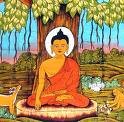
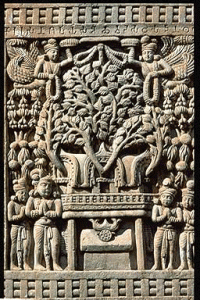
Now, the issue of Tree-like structure resonates into our collective psyche. Tree is the source of wisdom, healing, nourishment, power. Bible myth has Tree . Newton discovered moodern science sitting under an apple Tree. Buddha discovered non-theistic self-awareness sitting under a peepul Tree. In Tibetan tradition, powerful meditation requires visualizing Tree of lineage with various Gurus on different branches. These kind of visualization has transformative effect on our consciousness. In every culture, Tree occupies a significant position in rituals & mythology. We feel special feeling with Tree. Our romantic mood, our wisdom, contemplative mood, aesthetic mood.. orbit around physical & metaphoric Tree. Tree have power to transmit some kind of healing power to us. Tree are the source of healing body through fruits & herbal medicine . Tree heals our body, mind as well as soul, if any. The processes involved may be a kind of morphic reonance that vitalizes self-similar cardio-vascular, respiratory & neural system.Trees are our morphic cousins. We feel guilty & hurt when trees are cut or when those are under environmental threat.
Future?
One thing is certain. Future robots & spaceships which would be most efficient to survive would have Tree-like architecture. We would have very little to do with blooming of age of nanotechnology, biotechnology & Artificial intelligence. Successful creation of algorithm for Tree-like structure has made it more likely that artificial human organs can be manufactured at industrial level. When death will be conquered after successful download of Memories & large scale diffusion of bionics, We would have enough time to resonate with biological Trees in solitude & steer mankind towards a spiritual evolution as biological evolution from DNA-pathway has reached a dead end!
(Niraj,1.11.2009)
VEDA, TREE´s AND THE HOLY SCRIPTURES
> Sanskrit Web / Yayurveda, Taithreeya Aryanka <
> BIHAR SCHOOL OF YOGA, SRI SIVANANDA MATH <
The Aranyakas/Wald Texte der Veden, (Sanskrit आरण्यक Ä�raṇyaka) are part of the Hindu śruti, the four Vedas; these religious texts were composed in Late Vedic Sanskrit typical of the Brahmanas and early Upanishads; indeed, they frequently form part of either the Brahmanas or the Upanishads. „Aranyaka“ (Ä�raṇyaka) means „belonging to the wilderness“ (araṇya), that is, as Taitt.Ar.2 says, „from where one cannot see the roofs of the settlement“. They contain Brahmana-style discussion of especially dangerous rituals such as the Mahavrata and Pravargya, and therefore had to be learned in the wilderness. They have also served as receptacles of later additions to the Vedic corpus. However, they have nothing to do, as later tradition has it, with Sannyasins or Vanaprasthas and they are not of „mystical“ nature but very close to the Brahmanas proper. Read More: > HERE <
The Taittiriya Upanishad is one of the older, „primary“ Upanishads commented upon by SHANKARA. It is associated with the Taittiriya school of the Yajurveda. It figures as number 7 in the Muktika canon of 108 Upanishads. It belongs to the Taittiriya recension of the Yajurveda and is constituted by the seventh, eighth and ninth chapters of Taittiriya Aranyaka.
The tenth chapter of the same Aranyaka is the Mahanarayana Upanishad. The Taittiriya Upanishad describes the various degrees of HAPPINESS enjoyed by the different beings in creation. Read More: > HERE <
Real Identity of Asvattham tree. It is called “Arasa Maram”
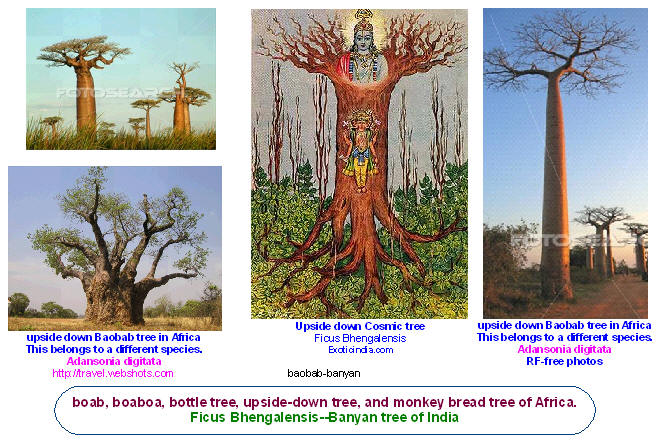
There is some confusion in books about the identity of Asvattham tree. It is called “Arasa Maram” (Ficus religiosa) in Tamil Nadu, Ravi-manu in Telugu, Aruli-mara in Canarese. One calls it a Palm tree; another calls it Pipal (Ficus religiosa-pagoda fig-tree); and yet another calls it Banyan Tree (Ficus Bhengalensis) with the adventitious aerial roots. Both (the latter two) are related to each other. It is a humongous tree with bright green leaves chatting with each other with a pat on the back as they rustle in the gush of wind. It is music to the ears. The breeze sets the leaves dancing in the wind and doing partial pirouette on their spindly petioles. When the wind quiets down, the song and dance stop suddenly.
One thing we know is that it is a cosmic tree. The berry of the Pipal is sweet, and Soma (intoxicant) is prepared from its juice according to some accounts. (There is another claim that says the soma juice comes from a mushroom.) Images of Pipal tree appear on the Harrapan seals. Asvattham is said to be a “body-tree.” “A” is no; “THA” is existence; “Shva” means “after tomorrow:” No existence after tomorrow. It tells us that life is precarious. The body tree itself is imperishable (HAM), because God pervades it.
The tree is rooted in heaven and since its aerial adventitious roots go down to anchor to the earth and Prakrti (matter), we are susceptible to the temptations of evil. The middle branches are the men and the sap that keeps flowing inside and sustaining the branches are the Gunas (modes). Cutting the branches and the aerial roots figuratively depicts transcending the gunas and a move to a higher plane― that of SannyÄ�si.
In Chinese lore, the body is compared to the Bodhi tree (Tree of Wisdom). Katha Upanishad 2.3.1: With the root above and branches below the fig tree stands: That is pure, That is Brahman, That is immortal. In It the world rests and no one goes beyond it. The upside down Tree of Life has roots in Brahman: The tree, the roots, the trunk, and the branches represent Manifest Brahman or the phenomenal world of Isvara, matter and beings.
Katha Upanishad describes Manifest Brahman as follows: He is self-born and first-born from the waters (Mula Prakrti, root cause or matter) by an act of meditation. He resides in the cave of the heart of beings and is immanent in all causes and effects. He who knows this knows the Absolute in Him. Verse 2.1.6
It goes on to describe the Mother Goddess. She is Aditi, the Boundless. She is born as Prana (Breath or life) from the Absolute genderless Brahman, the nameless, and the formless. She is the Devatamayi (Mother of gods) and the soul of all beings. She stands in the inner recess of the heart. Verse 2.1.7
The Buddha attained enlightenment under the Bo tree; Bo is short for bo-gaha, tree of wisdom; Bo tree is Pipal or Banyan tree; Bo is wisdom, Bodhi is enlightenment, Buddhi is knowledge and the Buddha is he who attained enlightenment. Bodhisattva is potential Buddha meaning that the aspirant has wisdom (enlightenment) and virtue (Bodhi + Sattva).
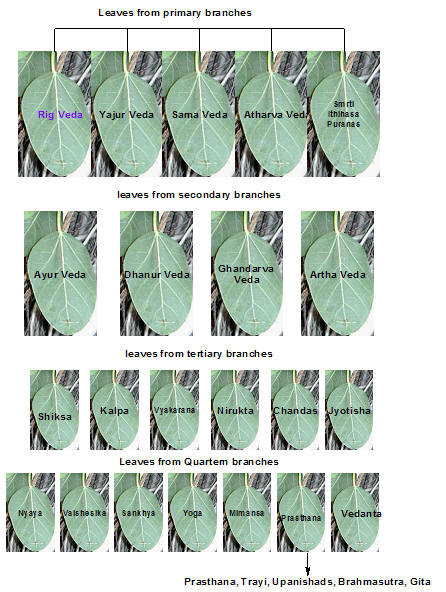
Krishna states that He is Asvattha tree among trees. Jesus Christ says that he is the true vine. It appears the trees have souls from what Lord Krishna and Jesus Christ say. Why are we cutting them indiscriminately and depleting our forests?
Sage Narada cursed the two sons of Kubera to become trees for knowingly playing naked in the shoal of a river with Ghandarva women. (You thought that having a shower mate is a modern phenomenon: not so from what you read here.) The young women in a turn of modesty put on their clothes while the Kubera’s sons ignored the sage, who cursed them to become trees for their feral nature, arrogance, insolence, and ignorance; Krishna released their souls and bodies after one hundred divine years by uprooting the trees.
Krishna drank water from River Sarasvati, sat, and meditated under Asvattha (Pipal) tree in a reclining position, before his departure to Goloka, Bhagavata Purana 3.4.3 and 8. River Sarasvati went dry before 1900 B.C. At present Sarasvati River features as a pentimento from satellite earth images.
Mantra Pushpam – Vedic Hymns
This mantra is from Taithreeya Aranyakam of Yajur Veda
Asva, meaning horse, is the root word for Asvattha, the tree; Asvamedha, horse sacrifice; Asvatthaman, he who cried like a horse at birth; Asvatthaman, the elephant; Asvini, the wife of Asvins, who took the form of a mare; and Asvinikumaras, the sons of Asvini-the sons of a mare. Asvattha tree gained such name because people used the tree’s shade as shelter for horses. Professor Bokonyi of Hungary an expert in the anatomy of horses tells that the true horses were present in Kutch area during the late Harappan period. The Aryans migrated from India in several waves to Iran to Caucasus riding on the horses as early as 4000 B.C. Rg Vedic civilization was before 5000 B.C. Indo-European languages have loan words like Aspa, Aihva, aszva, aspa, asa, iss, issi, issia, assa, sisu, equus. Where did they originate from? Yes, from Sanskrit. Let us look at another view. Domestication of horse: the credit goes to Akkadians; that is one view. The majority opinion is that the Indo-Aryan was the first domesticator of the horses. They wrote the first manuals for horse training.
Between 2000 B.C. and 1700 B.C. the Aryans (the late comers) in Babylon domesticated the horses which were then called the ass of the East. The horse was later introduced in Egypt before 1580 B.C. The Aryan victory march was attributed to tamed fast horses and chariots.
Sri Swami Satyananda Saraswati calls this tree The Mystical Tree. He says that this imperishable tree has roots above and branches below. The human body, according to him, resembles the upside-down tree in that the brain forms the root structure; the spinal column, the tree trunk; and the leaves, the thoughts, emotions and distractions. The occult truth and the secret knowledge of the Mystical Tree cannot be understood until the aspirant gets spiritual awakening.
Let me touch upon the significance of tree in Christianity. As you see Krishna’s image on the cosmic tree, it reminds us of Jesus Christ on Holy Rood, the tree of immortal life, and he is himself the fruit of the tree. Jesus on the cross, the Buddha under the tree, and Krishna on the cosmic tree–my interpolation, are the same figures. Page 107 The Power of Myth, by Joseph Campbell. Joseph Campbell, the universal man, sees oneness in Jesus Christ and the Buddha. Campbell is one among the rarest of breeds who knows the essence of (a generic) religion. He can see through the apparent differences among the religions and find the common Truth.
15.2: Its branches extend downwards and upwards nourished by Gunas, with sense objects as shoots or sprouts; and its roots extend downwards to the world of men, bound to karma.
The tree has many adventitious roots, coming down from the tree branches; the wider the tree grows the more adventitious roots there are. These adventitious roots, compared to ego, ignorance and vasanas supporting the heavy branches grow down, while the cosmic roots of the tree trunk grow towards heaven and anchor in Brahman. The lower branches are synonymous with human beings, animals, birds, reptiles, worms, insects, and insentient and immovable matter. The upper branches are comparable to Ghandarvas, yaksas, gods, and goddesses.
The sap of Gunas nourishes the branches, the product of Prakrti; the sap flowing through the upper branches contains Sattva (goodness and virtue), while that of the lower branches comparable to animals, contains Tamas (ignorance and delusion). The middle branches are the men with varying combinations of the Gunas and thrive by the sap of Sattva, Rajas, and Tamas in varying combinations. The adventitious roots of the middle and lower branches represent bondage of the human beings and animals. The lateral branches are the sense objects, namely sound, vision, smell, taste, and touch; the growing ends of lateral branches are the ears, eyes, nose, mouth, and skin; the leaves representing the Vedas reach for the sun and illumination from God.
The adventitious roots originate from branches, which draw nourishment from Gunas: they are extensions of these branches and therefore of the gunas, which are responsible for the way men behave. The adventitious roots or the gunas anchor to Prakrti and bind the jivatma to karma and therefore to Sams�ra. In this world of beings, man has the most opportunity to advance to a higher state, fall to lower state, or remain in the same state. The animals are born in the lower state because they have to resolve the pr�rabda (past) karma inherited from the past life; they do not accumulate new karma in the present life because their acts are commensurate with their animal traits; and they are incapable of making informed choice from Sattva, Rajas, or Tamas. But, man on the other hand can accumulate new karma because he can choose his (thought), word, and deed.
Krishna in his discourse in The Uddhava Gita, Dialogue 7.21-7.24 describes the Tree of Life. (based on translation by Swami Saraswati.)
The tree of Samsara bears flowers and fruits; good and bad deeds are its seeds; desires are its deep roots; Sattva, Rajas, and Tamas are its support; earth, water, fire, air, and ether are its five secondary branches through which five kinds of sap (smell, taste, sight, touch and hearing) flow. The five branches fork into ten branches: five motor organs, five sensory organs plus the mind. Two birds (The Supreme One and Ahamkara) live in their nests in the branches. The bark has three layers, the three humors of the body: wind, bile and phlegm. The tree bears two fruits: joy and sorrow. Some eat the fruit of sorrow; some on right path eat the fruit of joy. Krishna tells Uddhava to cut down the tree and free the Self, identifying himself with the Self.
15.3: Neither its form nor its end nor its beginning nor its support is seen. Having cut this firm-rooted Asvattham tree by the strong weapon of detachment…
15.4: Thereafter, seek out that goal, attaining which one does not return again. Surrender to the (first and) Primal Person from whom the ancient manifestation comes forth.
We have to cut the adventitious roots to prevent lowermost branches from getting the sap of Tamas (darkness and delusion); then we have to cut the adventitious roots, which supply the Rajas sap (motion and passion) to the middle branches; now we are left with the upper branches (and their adventitious roots), whose sap is Sattva (goodness, virtue, and calmness). To attain to Brahman, we have to transcend all three Gunas and therefore have to cut the tree, roots, and all. The tree represents the nonself or Prakrti, and we have to separate the Jiv�tman from Prakrti, so it merges with the Higher Self.
Let me explain what attaining to Brahman means. It points to a certain quality of life and behavior. It is simply not having the didactic knowledge of the Holy Scriptures; it is not simply the rituals alone. Dharma, duty; sama, equanimity; dama, self-control; vairÄ�gya, indifference to worldly objects; uparati, desisting from sensual enjoyment; sraddhÄ�, faithfulness; and atha, “much more or more over,” (auspiciousness, authority, flair and divine grace) are the preconditions for reaching Brahman. The fit person is the one who knows his Vedas, has the attributes (described above), and is devoted to the Lord only and detached from the world.
- Dharma
- Sama
- Dama
- Vair�gya
- Uparati
- Sraddh�
- Atha
- Duty
- Equanimity
- Self-control
- Desirelessness
- Abstinence
- Faithfulness
SraddhÄ� is implicit faith in Hindu Holy Scriptures. “Atha” has no English equivalent and means “much more” or “more over” meaning auspiciousness, authority, flair, and divine grace.
15.5: The wise ones, without false pride and delusion, having vanquished the evil of attachment, eternally devoted to the Supreme Self, divorced from passion (KÄ�mÄ�h), free from dualities of HAPPINESS and distress, and delusion, reach the eternal state. ( Suka and Dukha = þýÀõ (Inbam) and ÐýÀõ (Thunbham) = HAPPINESS and distress.)
- FULL ARTICLE with reference to horses, veda <
- Bhagavad Gita & the President’s remarks at the Nobel Peace Prize ceremony Oslo.
- ARTICLES, DEIN AYURVEDA NET:
- The Holy Bodhi Tree
- The mystical tree – In the Bhagavad Gita
- The Baobab Tree, Africa´s Medicine, Social Project
- Brihad Aryanka Upanishad and Stars
- Brihad Aryanka Upanishad and Trees
- Yoga, Ayurveda und Siddha Medizin
- Ashtanga Yoga and the Tanthram Tree
- Veda, Smriti and Sruti
- Gunas im Ayurveda und Yoga, Grundprinzipien
- Adi Shankara, Books, Arts, Studies
- YOGA LITERATUR ÜBERSICHT
Shivaratri, most significant of all Festivals
> Int. Interreligiöser Kalender <
> 12 Jyotir Lingas, Seats of Lord Siva <
> OMKARESHWAR ASHRAM, SCHOOL PROJECT <
> SRI RAMANA SEVA ASHRAM – Message No. 132.<
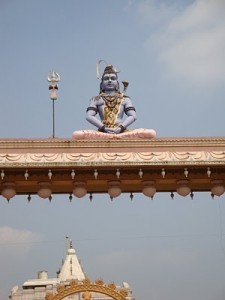
On 12th febrauary 2010, Maharshivaratri(lord Shiva’s Birthday) is celebrated all over the world. Maha Shivratri or Maha Sivaratri or Shivaratri or Sivaratri (Night of Shiva or „Great Night of Shiva“) is a festival celebrated every year on the 13th night/14th day in the Krishna Paksha (waning moon) of the month of Maagha (as per Shalivahana or Gujarati Vikrama) or Phalguna (as per Vikrama) in the Hindu Calendar (that is, the night before and day of the new moon). The festival is principally celebrated by offerings of Bael (Bilva) leaves to the Lord Shiva, all day fasting and an all night long vigil. Ganja is traditionally used as an offering for Lord Shiva and his followers. Read More: > HERE <
Shivaratri — The most significant of all festivals
Shivaratri is celebrated every year with a lot of religious fervour and devotion. Devotees keep fast, make offerings on Shivaling and stay awake all night (jagarari) to get the blessings of God Shiva. Unknown to most of the devotees the festival of Shivaratri holds the mystery to something most crucial namely, how God liberates the entire humanity from sorrow and suffering.
Till this mystery is solved by God himself, Shivaratri is celebrated merely as an annual ritual sans its original significance and purpose. To truly celebrate Shivaratri it is vital to know as to who Shiva is and what the word ‘Ratri’ which means night has to do with Shiva. The Supreme Soul is one and souls are many. The Supreme Soul is the Creator and Director of the eternal World Drama and souls are the actors in it. By becoming pure souls can become a great soul (mahatma), religious soul (dharamatma) and a divine or deity soul (devatmd) but they cannot become Supreme Soul i.e. paramatma. Souls are the progeny and not a part of the Supreme Soul. God Shiva is the creator of all deities even Brahma, Vishnu and Shankar.
Devotees worship them as devtaya namaha (salutations to the lords or deities). In comparison, Shiva is always worshipped as Shiva Paramatmay Namaha (Salutations to God Shiva) and Om Namaha Shivay (I salute Shiva). Lord Rama and Lord Krishna are shown as worshipping God Shiva at Rameshwar and Gopeshwar respectively.
The light form of God Shiva has been idolized as jyotirlingam (pillar of light) in 12 famous jyotirlingam Shiva temples in India viz. in Kedarnath, Somnath and Mahakaleswar etc. The light form of God is worshipped in most of the faiths in the world. Interestingly, Shivaratri does not mean Shiva’s night. The festival commemorates God’s descent on earth to end the unlimited Ratri (night) of ignorance and suffering and to usher in the golden dawn of peace, harmony and happiness.
“ Feste und Fastentage im Hinduismus „
von SWAMI SIVANANDA, 25. Kapitel – Shivaratri
siehe: > www.yoga-vidya.de <
>„1-Woche-vor-Shivaratri-Vortrag-mit-Sukadev“ <
Here Ratri connotes that critical juncture in eternal world drama cycle when unrighteousness reaches its extreme and all human efforts to redeem the situation fail. It’s a period of extreme sorrow and suffering when the vices (bad habbits) of ego, lust, anger and attachment rule human thoughts and actions.
In Hindu scriptures there is mention of the night of Brahma and also the night of the shaktis or goddesses (Navratris). The night of Brahma signifies the age of ignorance and unrighteousness in which God’s first and purest creation, Brahma and the Brahmins, are clouded by ignorance and vices. When God Shiva comes and opens their third eye of wisdom by bestowing divine intellect, they are able to forge a mental link with Him and draw His power. They thus become Shiva Shaktis who destroy ignorance and vices in the world with the help of Shiva. The Navratri (festival of nine nights) is a memorial of the end of the unlimited ratri in which devotees invoke the blessings of Shiva Shaktis and sing praise of their divine actions. It is at such a time when God intervenes to perform the divine acts of re-creating the new world order of purity, peace and prosperity and destroying the old worldorder of viciousness, violence and deprivation, as described in the Bhagavad Gita.
Just as night ends and day dawns when the sun rises, in the same way to end the night of ignorance God Shiva, the Sun of Knowledge (Gyan Surya) incarnates at the fag end of Kaliyuga, in Bharat.
This period of spiritual enlightenment is sailed Sangamyuga (Confluence Age) in which the most auspicious confluence of the Supreme Soul Shiva and human souls takes place. This is the most elevated period in human world when God incarnates in an ordinary man’s body and names him Prajapita Brahma through whom He reveals the most profound cnowledge about the Creator and His Creation. He reveals the supreme wisdom of Rajyoga which helps human beings absolve their sins and attain their original purity and perfection. That s why God Shiva is knowledgefull and patitpavan (purifier).
He is also the liberator and guide whose incarnation sets in process the destruction of the unrighteous iron-aged world – the present Kaliyuga – and consequently the liberation of ill souls from sin and suffering. God Shiva guides all souls to the land of liberation – the souls world where freed from their bondages they live in peace and silence. Thus He is also called Mahakaal (the great death or the eternal time) whose advent signals the return of everything in Creation to its original state.
This purification leads to the creation of a new pure world order Satyuga. It is the time on the world drama cycle (Srishti Chakra) which is remembered as Paradise, Heaven, Vaikunth, or Swarg where complete purity, peace and prosperity prevailed.
That is why the supreme Father of all souls is called the Creator and Shiva, which means the benefactor of all, who does good to every soul by incarnating in this world.
And the happiest news is that this golden key which opens the gates of the Golden age, Satyuga or Paradise is being given right now by Supreme Soul God Shiva himself to His spiritual children who have recognized His incognito incarnation in the human medium of Adi Dev Prajapita Brahma.
It is now that we have to awaken the soul (jagarari) and stay in the remembrance of God Shiva (up-vas means to stay close) take the oath of celibacy, sacrifice the bitterness of vices (bad habbits) on Shiva, and let the divine knowledge of Shiva flow drop by drop to all souls.
By adopting this true method of celebrating Shivaratri we should claim the greatest blessing mukthi , liberation in life, from God Shiva in this birth.
Gross Elements in Ayurveda, Yoga, Buddhism
> Principle of Tridoshain Ayurveda <
MahÄ�bhūta is Sanskrit and PÄ�li for „great element.“In Hinduism, the five „great“ or „gross“ elements are ether, air, fire, water and earth. In Buddhism, the „four great elements“ (Pali: cattÄ�ro mahÄ�bhūtÄ�ni) are earth, water, fire and air. Read more: > HERE <
The Principle of Vata, Pitta and Kapha
The Physiology of Âyurveda is the physiology of the all-important trio, Vâta, Pitha and Kapha or Tridosha as they are generally called. Anybody, even faintly acquainted with Ayurveda, must have frequently come across the terms Vâyu, Pitha and Kapha. But very few have any clear idea of what is really meant by the terms. Every grown-up Indian has some vague idea about Vayu, Pitta and Kapha, and the terms are also used in common parlance. But in the majority of instances, the popular conception is quite different from the medical one. We have ample reference in Ayurvedic literature to the properties and different functions of Vatu, Pitta and Kapha, both in their normal and abnormal conditions. But we have no direct evidence by which we can come to a definite conclusion regarding the ultimate nature of these three substances. All that we can do is to make some inference based on reason, by a comparison of the original texts of Charaka, Sushruta and others and supplemented by such evidence as we can get from non-medical sources.
Yet Vâtha, Pitha and Kapha are the three entities on which stands the whole foundation of Ayurveda; we have to deal with them from the beginning to the end. Without their proper knowledge, successful treatment of diseases according to the Ayurvedic System is quite impossible. Before proceeding further, it is necessary that we should know something of the conception of the ancient Hindus regarding the physical world. Charaka and Sushrutha have mainly followed the Nyâya-Vaisheshikha and Sâmkhya-Yoga systems of Philosophy and occasionally the Vedanta view of the five Bhuta.
The nature and Physical Properties of the Tridosha.
The fundamental principle underlying the Ayurvedic System of Medicine is that of the Tridosha. In a nutshell, this Principle may be stated as follows:
There are three Dosha, Vâyu, Pitta and Kapha, which when in equilibrium keep the body sound, but which when vitiated, either singly or in combination, bring about diseases. The method of treatment would therefore be to bring the vitiated Dosha back to normal state, so that the three Dosha are again in equilibrium. We have seen that Âyurveda developed from the four Vedas; it is also regarded as a supplement of the Atharva Veda. But nowhere in the four Vedas can we find any specific mention of these substances.
It is in the Rig Veda only (1.3.6) that we find what may be regarded as the root idea of Vâyu, Pitta and Kapha :
“Tri-no asvinÄ� divyÄ�ni bhesajÄ� trih pÄ�rthivÄ�ni trirudattamadvyaha;
Om�nam samyor-manma k�yasunave tridh�tu sarma vahatam subhaspatī.
Here “tridhÄ�du sarma vahatam” has been explained thus by the commentator SÄ�yana: That is to say that when the three Dhâtu – Vâyu, Pitta and Kapha – remain normal and undisturbed, the body is at ease and there is no disease.
With the advancement of the knowledge, when the science of medicine was systematically studied, Âyurveda as a separate and special subject evolved out of the Vedas. The Principle of Vâyu Pttha and Kapha, was then fully developed and so we find copious reference to these terms in the Mahâ Bhârata and Upanishads.
Draya explained:
Dravya is defined as „that which contains in it action and quality and is a co-existent cause“. (C. S. I. 1.50 ; V. S. I. 1. 15). Substances exist and have qualities. We have two kinds of qualities, those which reside in a plurality of objects and those which are confined to individuals. The former are the general qualities (sâmânya), while the latter are distinguished as permanent (guna) and transitory (karma). Inherence is a special kind of relation. Relations are of two kinds. external like, conjunction (samyoga), or internal like inherence (samavâya). The first is regarded as a quality and the second is made a separate category.
The Vaisheshika believes that a substance is something over, and above the qualities. It is anxious to assert the existence of something which has qualities without being itself a quality, for we predicate qualities of substances and not qualities of qualities. Nor can it be said that we predicate one quality of a group of qualities. But since a substance cannot be conceived apart from qualities, it is defined as possessing qualities.
Qualities and action exist by combination with substance. Without substance, there were no qualities or action. Similarly, genus and species are correlative and are not absolute, except in the case of the highest genus which is Existence (bhâva) and the lowest species which is vishesha or individual characteristics appertaining to and inhering in the external substances. Genus and species, therefore, exist by combination with substances. Without substances, there were no genus and species. Similarly Samavâya or combination is “the intimate connection in the inseparably connected things“, e.g. parts and wholes of substances and their qualities, of action and the seat of action of genus and species and substances in which they reside, and of external substances and their ultimate differences. Without substance, then, there were no combination. Substance or dravya, therefore, is the fundamental reality.
Dravyas are nine in number, viz. the five Bhutas,
- 1. Prthivi (Earth)
- 2. Apah (Water)
- 3. Tejas (Fire)
- 4. Vâyu (Air)
- 5. Âkâsha (Ether
and
- 6. âtman (Soul)
- 7. Manas (Mind)
- 8. Dish or dik (Space) and
- 9. Kâla (Time).
These nine substances are intended to comprise all corporeal (murta) and incorporeal (a-murta) things. Ether, time and space are all-pervading, have the largest dimensions and are the common receptacles of all corporeal things. Soul and mind, Ether, time and space, Air and the ultimate atoms are not ordinarily perceptible, (V. S. VIII. 1.2).
[It must be clearly understood here that whenever we use the terms Earth, Water, Fire, Air and Ether, we use them only to denote the five bhutas and not in the sense of ordinary earth, water, air, fire or ether]
Charaka says that dravyas are of two varieties, – animate and inanimate. Those endowed with the senses are called animate; those devoid of senses are inanimate, (Sendriyam cetanam dravyam, nirindriyam acetanam, C. S. I. 1. 47.)
The Nature Of Citta According To The Yogasutras Of Patanjali
The five Mahâbhutas
The five Mahâbhuta originate from the five Tanmâtra. Of these, the Prthivi helps the other four by being their support. Ap helps the other four by moistening. Tejas helps the others by ripening. Marut helps by drying and Akâsha helps the other four by giving space. Prthivi is possessed of five qualities, – sound, touch, colour, taste and smell. Ap is possessed of four qualities,- sound, touch, colour and taste. Tejas is possessed of three qualities, sound; touch and colour. Vâyu is possessed of two qualities, – sound and touch. Akâsha has only one quality, sound.
We thus get :
Âkâsha/ Aether – (Sound-essence)
Vâyu/ Air – (Sound + touch)
Tejas/ Fire – (Sound + touch + colour)
Ap/ Water – (Sound + touch + colour + taste)
Prthivi/ Earth – (Sound + touch + colour + taste + smell).
Though Earth contains a number of qualities; we yet say that it has smell, on account of the predominance of this quality. If water and other substances besides earth possess smell, it is because particles of Earth are mixed up with them. We cannot think of Earth without smell, though we can so think of air and water. The special quality of Water is taste. Fire has for its special quality luminosity. Air is invisible, though limited in extent and made up of parts. The discrete nature of Air is inferred from the movements in the air, which would not be possible were Air an absolute continuum devoid of parts (V. S. II.1.14). Its existence is inferred from its special quality of touch and it is said to be a substance, since it possesses quality and action.
According to the Vaisheshika, the ultimate constituents of the concrete things of earth, air, fire and water are called paramânu or atoms.
Charaka has pointed out the primary qualities or special physical characters, of the five Bhuta in a different way. He says, „The characteristic of Earth is roughness, that of Water liquidity, of Air expansion, of Fire heat and that of Ether non-resistance. All these qualities are perceived through the sense of touch,“ -„Sparshendriya gocharam“, (C. S, IV. 1,27 ).
Bhutas are not elements
The Bhuta has been translated as ‚element‘. This is misleading. Bhutas are not elements and paramânus are not atoms or molecules in the modern sense of the terms. Modern writers laugh at the idea of calling the earth, water, fire, air and ether elements, ignoring the fact that a Bhuta is just an element, in the chemical sense of a substance that cannot be further analysed. „On referring to any Vaisheshika manual, it will be clear that what is ordinarily known as ‚earth‘, is not regarded by the Vaisheshika to be an ‚element‘ – in the technical sense; if it were so regarded, then alone could the Vaisheshika view be stigmatised as primitive and unscientific. The touch of ‚Earth‘ in its pure state is said to be ’neither hot nor cold’ so also the touch of ‚Air‘ and when asked why the ordinary earth and ordinary air are found to be very far from ’neither hot nor cold‘, the Vaisheshika explains that this is due to earth and air being mixed up with particles of Fire or Water, which make them hot or cold. From this, it is clear that what is regarded as ‚element‘ is not the earth etc., as we know and see them, but as they exist in their pristine and pure state, unmixed with any other substances“. Just as an atom of a chemical element has no free and independent existence, so also the five Bhutas in their pure state are never found in nature. What we find are compounds of the five Bhutas, mixed together in different proportions; that is to say, all gross matter is penta-bhautika.
Psychological explanation of the five Bhutas
The question may be asked, why were only five Bhutas postulated? Now, God has endowed us with only five senses, neither more nor less. The external world can only be apprehended by us through these five senses or Indriya. There is no other source which can give any information about matter which constitutes the physical world. For one particular lndriya, there is only one particular sense-object. The srotarerdriya or the sense of hearing can appreciate only the quality of sound. Sound, touch, colour, taste and smell are the five sense-objects corresponding to the five senses. These are gunas, and as such cannot exist independently by themselves, but must have some receptacle. In this way, we get five receptacles,- the five Bhutas.
What, for example, is the ‚atom‘ of Earth, but an ultimate material substratum of odour. On the other hand, let us take the case of the coloured gas Chlorine. It can be felt, smelt, tasted and seen. We are cognizant of its existence by at least four different sensory impressions; therefore it is not an element in the Vaisheshika sense of the term; it must be composed of at least four different Bhuta. The Hindu classification of matter into five Bhuta is, therefore, not at all absurd, as is supposed by many scientists who have an altogether different viewpoint.
According to Dr. Ganganath Jha, what the Vaisheshika means by saying that there are five Bhuta, is that there are five states of matter, viz., solid (Earth), liquid (Water), gaseous (Air), luminous (Fire) and etheric (Akâsha). It is better, however, to regard them as the Ashrayas or repositories of the five qualities,. viz. of smell, etc.
The confusion has been introduced by denoting the Bkutas by terms which are also used with reference to external objects of matter, such as earth, etc. But, as Hoffding says, „because language was developed under the influence of attention directed to the external world, we find that expressions for mental phenomena were originally taken from the material world. The inner „World behind is denoted by symbols borrowed from the „outer world of space“.
Contemplation of the elements (dhatu, mahabhuta) as a meditation method taught by the Buddha.
Hindu Medicine and the Vedas:
There is no doubt that the germ of Hindu medicine was laid in the Vedas. Because in all the four Vedas, – Rig, Yajur, Sâma and Athravana, – we find ample reference to medicine, drugs, methods of treatment and descriptions of the different parts and organs of the human body.
For example, reference is made to Dhanvantari in R.V IX. 112. In R.V. 1.117. 13 and V.74.5, we find that Chyavana was rejuvenated by the Ashvini Kumâras. ln 1. 23. 19, the medicinal properties of water are described. Reference is made to phthisis in R. V. X. 163 and to the organs of the body in R. V. III. 36.8, III. 50. 6, VI. 53. 8, VIII. 1. 26, X. 1. 84, X. 163 and X. 186. Similarly in the Sâma Veda II. 10. 70. 184 and in the White Yajur Veda XII.74. 75 and the 16 hymns that follow, we have reference to the medicinal properties of drugs.
But it is the Atharvana Veda which deals more fully with medicine. Here we have reference not only to mineral and vegetable drugs but also the causes of diseases (A. V. I. 23, 24, 36 ). „This work in its tenth book contains“, as Dr. Hroernle notes, „a hymn (the second) on the creation of man, in which the several parts of the skeleton are carefully and orderly enumerated in, striking agreement more specially with the system of Atreya as contained in Charaka’s Compendium“.
It is for this reason that the Ayurveda is generally included in the Atharvana Veda. This is also distinctly indicated by both Charaka and Sushruta. Sushruta (1. 1) calls it the Upânga of Atharvana Veda; and in Charaka Samhiaf (1. 30), we find that Atreya’s advice to his pupils was to have faith in the Atharvana Veda, because the latter deals with the treatment of diseases in the form of religious rites, sacrifices, oblations, expiation, fasts, the chanting of hymns, etc.
If we take the time of the Vedas to be 2000 B. C., we see that as early as this, the practice of medicine was in a very crude form. Nowhere in the four Vedas, can we find any mention of the term ‚Ayurveda‘. So we may take it that when later on the medical side of the Vedas was more fully and systematically developed, it formed a separate subject by itself and came to be known as Ayurveda.
- Dein Ayurveda Net:
- Samkhya Philosophie im Yoga
- Tattvas im Ayurveda und Yoga
- Die Veden, ein Überblick, Overview
- Arthavaveda
- Yoga in Buddhism
- Krishnamachar B.K.S. Iyengar, Bellur School, Patanjali Temple
- www.patanjaliyogafoundation.com
- yogena chittasya padena vacham malam sarirasya cha vaidyakena | yopakaroti tam pravaram muninam patanjalim pranajaliranato’smi || Let us bow the noblest of sages Patanjali, who gave Yoga for serenity of the mind, Sanskrit grammar for purity of speech and Ayurvedic medicine for the perfection of health.
- Meet all Ayurveda Groups, Friends, Studies at facebook <
- Meet Lord Dhanvantri at facebook <
Himalayan Mystic Trails and Puli School

> ESTC Ecotourism 2010 Conference <
Yunnan (simplified Chinese: 云南; traditional Chinese: 雲南; pinyin: Yúnnán, IPA: [y̌nnǎn] ( listen); literally „South of the Clouds“) is a province of the People’s Republic of China, located in the far southwest of the country spanning approximately 394,000 square kilometers (152,000 square miles). The capital of the province is Kunming. The province borders Myanmar (Burma), Laos, and Vietnam.Yunnan became part of the Han Dynasty (206 BC-220 AD) during 2nd century BC. It became the seat of a Tibeto-Burman speaking kingdom known as Nanzhao in the 8th century. Nanzhao was multi-ethnic, but the elite most likely spoke a language close to Yi and modern Burmese.nd modern Burmese
Yunnan is rich in natural resources and has the largest diversity of plant life in China. Of the approximately 30,000 species of higher plants in China, Yunnan has over 17,000.. Read More: > HERE <
Introduction – Puli Tibetan school is located in Dechin County in Northwest Yunnan Province of China. This area is primarily inhabited by Kham Tibetan people. A villager named Aniu built this school through sheer determination to save his own culture from the fate of extinction. (Read the story here.)
Besides a small fraction of support from the government, the school has entirely relied on outside donation and the teachers’ wit to operate on a shoe-string budget. During its seven years of existence, Puli School has not only managed to feed and shelter dozens of children who otherwise have no financial means to get any education, but also played a pivotal role in passing down the wisdom and art from an ancient tradition to the next generation.
In Dechin County and its neighboring area, this is one of the few schools that teach Tibetan language, Tibetan herbal medicine, and other culture-related subjects in their curriculum. Children there also learn traditional arts including wood carving, pottery, painting, and traditional dancing forms.
As a non-profit organization, We strive to serve as a bridge between the east and the west. We promote understanding of the diverse cultures in western China and ethnic Tibet. We provide people experience to gain insights about their life and cultivate a holistic view of our relationship with the planet earth.
We offer > travel programs < that integrate education, cultural exchange, community service and fun! We also provide free consultation to help organize your own trip. Contact us for details. We offer > community service < opportunities for people who have the desire to serve, either through our travel program or through participation of local events in Seattle.
How to donate – To support Puli Tibetan School, you can donate through > „Tibetan Children’s Education Fund“ < operated by our non-profit partner Crooked Trails. Your donation will be eligible for tax deduction. You may also ask for matching funds from your employer.
TRAVEL PROGRAM:
Mystic Trails and its partner Crooked Trails represent Puli School to exhib and sell art works made by students and teachers. The proceeds of the sale will go back to support the school.
Artist Priscilla Moore is working with Mystic Trails to produce greeting cards using Puli students‘ painting. We wish to help Puli to establish a long-term product line that can provide continuous funding for the school. On our Mount Kawa Karpo trekking tour, we will visit the school and take part in some school activities.
Past projects: > 2006 Hamilton-Puli Gift Exchange Program <
INSIDE THE HIDDEN KINGDOM OF SHANGRI LA – Trekking the Mt. Kawa Karpo Inner Pilgrimage Circle and Culture Exchange with Tibetans of Northwest Yunnan.
Etymology of Shangri-La – The phrase „Shangri-La“ most probably comes from the Tibetan ཞང་,“Shang – a district of Tsang, north of Tashilhunpo“ + རི, pronounced „ri“, „Mountain“ = „Shang Mountain“ + ལ, Mountain Pass, which suggests that the area is accessed to, or is named by, „Shang Mountain Pass“. Several places in the Buddhist Himalaya between northern India and Tibet have claimed to be the location for Hilton’s fictional Shangri-La, largely to attract tourism.
In China, Tao Qian of the Jin Dynasty described a Shangri-La in his work Story of the Peach Blossom Valley (Chinese: 桃花源記, pinyin: TáohuÄ� Yuán Jì). In modern China, the Zhongdian county was renamed to 香格里拉 (XiÄ�nggélǐlÄ�, Shangri-La in Chinese) in 2001, to attract tourists. The legendary Kun Lun Mountains in Tibet offer other possible Shangri-La valleys. Read More > HERE <
Highlight – This journey takes you to the eastern edge of the Tibetan Plateau, one of the earth’s most remote and pristine places inhabited by humans. By bus you will travel through rugged terrain on a road that is an engineering marvel. Where the road ends, you will trek either on foot or horseback to explore a world that remains hidden to the less-determined traveler.The trip culminates in the Mount Kawa Karpo pilgrimage circle near a Tibetan village called Yubeng. You are not only rewarded with the enchanting beauty of the natural landscape, but also with a colorful tapestry of multi-ethnic culture and art.
As you move through this magical land, encountering people who live by maintaining a deep bond with their natural surroundings, you will have the opportunity to discover life in its simplest, yet most luminous form.
THE CENTRAL FIELD OF CHINA – From Forbidden City to the Terra Cotta Warriors
Highlight This 10-day trip will take you to the two of the most ancient cities in the heartland of the central China, Beijing and Xi’an. For thousands of years, these two cities have witnessed the rise and fall of numerous Emperors. Among them is the Qin Shi Huang who initiated the building of the Great Wall hoping to forever guard his kingdom from outside invasion. He also left us with the Terra Cotta Army forever guarding his mausoleum. Today the emperors and their dreams vanished away, leaving behind a legacy that awaits your exploration. This trip will not only sample the major historic sites, but also take you into ordinary people’s homes where you will learn how to make a traditional Chinese cuisine from our host family while getting a taste of the sweet and bitter reality of their lives.
Chinese cuisine is a term for styles of food originating in the regions of China, many of which have become widespread and popular in other parts of the world — from Asia to the Americas, Australia, Western Europe and Southern Africa.
Where there are historical immigrant Chinese populations, the style of food has evolved – for example, American Chinese cuisine and Indian Chinese cuisine are prominent examples of Chinese cuisine that has been adapted to suit local palates. In recent years, connoisseurs of Chinese cuisine have also sprouted in Eastern Europe and South Asia.
Chinese Cuisine – Contemporary health trends
- According to the United Nations Food and Agriculture Organization estimates for 2001–2003, 12% of the population of the People’s Republic of China was undernourished.The number of undernourished people in the country has fallen from 386.6 million in 1969–1971 to 150.0 million in 2001–2003.
- Undernourishment is a problem mainly in the central and western part of the country, while „unbalanced nutrition“ has made chronic diseases more prevalent. As of 2008, 22.8 percent of the population were overweight and 18.8 percent had high blood pressure. The number of diabetes cases in China is the highest in the world. In 1959, the incidence of high blood pressure was only 5.9 percent.
- A typical Chinese peasant before Mao Zedong would have eaten meat rarely and most meals would have consisted of rice accompanied with green vegetables, with protein coming from foods like peanuts and soy products. Fats and sugar were luxuries not eaten on a regular basis by most of the population. With increasing wealth, Chinese diets have become richer over time, consuming more meats, fats, and sugar.
- Health advocates put some of the blame on the increased popularity of US foods, especially fast food, and other culinary products and habits. Many US fast food chains have appeared in China, and are highly successful economically. These include McDonald’s, Pizza Hut, and Kentucky Fried Chicken (KFC).
- An extensive epidemiological study called the China Project is being conducted to observe the relationship of disease patterns to diet, particularly the move from the traditional Chinese diet to one which incorporates more rich US-style foods.
- Controversially, Professor T. Colin Campbell, an „outspoken vegan“, has implicated the increased consumption of animal protein in particular as having a strong correlation with cancer, diabetes, heart disease, and other diseases that, while common in Western countries, were once considered rare in China. He suggests that even a small increase in the consumption of animal protein can dramatically raise the risk of the aforementioned diseases.
- READ FULL ARTICLE > H E R E <
- FREE KRISHNA FOOD CHANNEL, Tips, Recipes, > HERE <
- FREE DHARMA FOOD FOR THOUGHT, Tips, Articles > HERE <
- Meet Indian Diabetics, friends, studies medicine at fb <
- Meet Ayurveda4Uall, Note, Hypertension according to ayurveda at fb <
- Meet Natural News, health and wellness topics, friends at fb <
WU XING, 5 Elements in TCM, Wu Xing Gong
http://chinese-medicine-works.com/
> TCM – TAI CHI VEREIN SHAMBALA WIEN <
The Wu Xing (Chinese: 五行; pinyin: wǔxíng), or the Five Movements, Five Phases or Five Steps/Stages, are chiefly an ancient mnemonic device, in many traditional Chinese fields.
It is sometimes translated as Five Elements, but the Wu Xing are chiefly an ancient mnemonic device, hence the preferred translation of „movements“, „phases“ or „steps“ over „elements“. By the same token, Mu is thought of as „Tree“ rather than „Wood“.
The five elements are:
-
* Wood (Chinese: 木, pinyin: mù)
-
* Fire (Chinese: 火, pinyin: huǒ)
-
* Earth (Chinese: 土, pinyin: tǔ)
-
* Metal (Chinese: 金, pinyin: jÄ«n)
-
* Water (Chinese: 水, pinyin: shuǐ)
The system of five phases was used for describing interactions and relationships between phenomena. It was employed as a device in many fields of early Chinese thought, including seemingly disparate fields such as geomancy or Feng shui, astrology, traditional Chinese medicine, music, military strategy, martial arts. Read More: > HERE <
FOUNDATION CONCEPTS OF CHINESE MEDICINE:
Every medicine is a language, a vocabulary of concepts that expresses fundamental beliefs about the nature of reality. It is through this grid that we perceive and explain ourselves. Medical thinking defines human experience, from physiological process to human behavior and competence. It is medicine that determines how we are born and how we die, whether we are fit or disabled, intelligent or ignorant, healthy or ill.
Medicine is the cultural institution that defines when we are alive, valuable, and human. Ontology and pathology are always closely linked: how people get sick is inextricably tied to who they are. The ideas of Chinese medicine differ fundamentally from those of Western medicine, so identifying and solving problems within its context requires familiarity with its concepts, categories, and logic.
Western medicine emerges from the Cartesian model that pictures the world as a machine. Reality is located in what is tangible and material, that which can be measured, quantified, and reduced to smaller and smaller constituent parts. Descartes unequivocally separated mind from body because the existence of consciousness could not be verified by the instruments of science.
Where as modern medicine relies upon the Cartesian–Newtonian reductionist paradigm, Chinese medicine is embedded within the Daoist– Confucianist philosophy of holism. In the Eastern world view, a human being is a living microcosm, a fusion of cosmic and terrestrial forces, the offspring of Heaven and Earth. A person is recognized as a being with a self– aware mind embodied in physical form. The unseen and seen, psyche and soma, are mutually valid and cogenerative: the body provides a home for the mind, and the spirit, nestled securely within the body, animates physical life.
Chinese medical logic postulates that by observing patterns in the external world, the dynamics of human nature are known––as above, so below.
The world is a single, unbroken wholeness–– Dao––that exists without and within. This logic relies upon correspondence thinking: things that correspond to the same thing correspond to each other. Human physiology and identity in Chinese medicine proceed from the assumption that each person is a universe in miniature, so the same forces that shape the macrocosm swirl within each of us, organizing our interior.
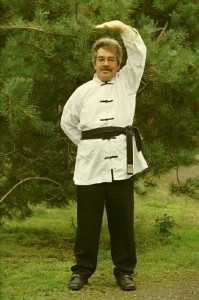
Qigong (or ch’i kung) is an internal Chinese meditative practice which often uses slow graceful movements and controlled breathing techniques to promote the circulation of qi within the human body, and enhance a practitioner’s overall health. There are also many forms of qigong that are done with little or no movement at all, in standing, sitting and supine positions; likewise, not all forms of qigong use breath control techniques. Although not a martial art, qigong is often confused with the Chinese martial art of tai chi. This misunderstanding can be attributed to the fact that most Chinese martial arts practitioners will usually also practice some form of qigong and to the uninitiated, these arts may seem to be alike. There are more than 10,000 styles of qigong and 200 million people practicing these methods.
There are three main reasons why people do qigong: 1) To gain strength, improve health or reverse a disease 2) To gain skill working with qi, so as to become a healer 3) To become more connected with the „Tao, God, True Source, Great Spirit“, for a more meaningful connection with nature and the universe. Read More: > Here <
Willkommen auf den Webseiten des tao-chi:
- www.tao-chi.info
- mehr als 300 Seiten Bilder und Texte über unsere Schule für:
- Kung-Fu
- Tai-Chi Ch’uan
- Qi-Gong
- Meditation.
Tierstile sind Bewegungsformen (Formeln), die bereits in prähistorischen Zeiten von Menschen ausgeübt wurden, mit dem Ziel, sich durch Imitation Zugang zu natürlichen Kraftpotentialen zu verschaffen.
Der legendäre Arzt, > Hua-To ( Chinese Physician ) <, (190-265 u.Z.), gilt als Erfinder der “Kunst der fünf Tiere” (Wu Ching Shu), mit der die….“ 5 Elementaren Energien und Kräfte des Inneren gestärkt werden …” sollen und Langlebigkeit erreicht wird. Seine Kunst leitete er aus älteren Traditionen ab, die bis in das 2. Jahrtausend vorchristlicher Zeit zurückreichen.
Pai-Yu Feng war einer der ersten Meister der Shaolin-Schule, der Tierstile im Kung-Fu des Shaolin-Tempels entwickelte und einführte, weshalb sein Name in der Shaolin-Tradition in Ehren gehalten wird.
” Tierstile im Kung-Fu und Qi-Gong “ des Ch’an Shaolim Si Tao“
REFERENCE BOOK: > THE ROOT OF CHINESE QI GONG < : Secrets of Health, Longevity, & Enlightenment: Secrets for Health, Longevity and Enlightenment (Taschenbuch)
“ Qigong befaßt sich mit dem Studium unseres „Energiefeldes“ und hat einen direkten Bezug zu unserer physischen, emotionalen, mentalen und geistigen Gesundheit. Sowohl in den östlichen als auch in den westlichen Geistesschulen sucht man nach Mitteln, um die körperliche Energie positiv zu beeinflussen, entweder indirekt über geistige und emotional wirksame Techniken oder durch direkte Steuerung des Bewusstseins.
In den östlichen Lehrsystemen ist man sich jedoch mehr als im Westen darüber bewusst, welchen Einfluß die Energie (Chi) auf Körper und Geist hat. So arbeitet die TCM (Traditionelle chinesische Medizin) mit Akupunktur und Kräuterheilkunde, mit Moxa und Qigong, um das Chi im inneren zu bewegen und so die Organe zu kräftigen. Im Qigong beginnst Du, ähnlich wie im Yoga mit der körperlichen Übung, bewegst die Energie in Deinen Energiebahnen (Meridiane), bringst Ordnung in Deine Gedanken und erreichst schließlich geistige Klarheit, das Ziel der Meditation.“
Qigong ist demnach der Sammelbegriff für verschiedene Übungsformen, welche ihre Anwendung finden in der Kampfkunst und der Meditation, in der Heilkunst und der Gesundheitspflege. Die Übungen dienen der Stärkung von Körper, Geist und Lebenskraft.
In unserer Tao-Chi Schule für Qi-Gong & Tai-Chi Ch’uan lernen Sie das Qigong-Yangsheng aus dem Lehrsystem von Prof. Jiao Guorui „Das Spiel der 5 Tiere“ (Wu-Chin-Hsi, Wu Xing Gong),Freihandübungen der Shaolin, sowie Handgriffe (Tui-Na, An-Mo) und traditionelle Übungsreihen aus der daoistischen Schule im Rahmen des Tai-Chi Ch’uan-Unterrichtes.
Galangal, TCM, Western Plants in Medicine

> GALGANT , HILDEGARD´s MEDICINE <
> LI SHI ZEN PRIVATUNIVERSITÄT <
> Zingiber off. – Naturheilkunde EU(+Yoga) <
> TCM mit westlichen Pflanzen <
> Kleiner Galgant, Chinesisch 山奈 <
The Galangal plant (Galanga, Blue Ginger) is a rhizome with culinary and medicinal uses. (Lao: ຂ່າ „Kha“; Thai: ข่า „Kha“; Malay: lengkuas (Alpinia galangal); Traditional Mandarin: 南薑 or 高良薑; Simplified Mandarin: 南姜 or 高良姜; Cantonese: lam keong, 藍薑; Vietnamese: Riềng).
It is used in various oriental cuisines (for example in Thai cuisine Tom Yum soups and Dtom Kha Gai, Vietnamese Huenian cuisine (Tre) and throughout Indonesian cuisine, for example, in Soto). Though it is related to and resembles ginger, there is little similarity in taste. Alpinia galanga is also known as Chewing John, Little John Chew and galanga root. It is used in African-American folk medicine. Read More: > Here <
Lesser galangal or Alpinia officinarum (synonym Languas officinarum) is a plant in the ginger family and native to China, growing mainly on the southeast coast. It is also grown in India which is the second largest exporter of the rhizome. The rhizome was widely used in ancient and medieval Europe.
The rhizome is smaller than greater galangal. The skin and the flesh are reddish brown whereas greater galangal has light yellow or white flesh. It was preferred to greater galangal because of its stronger, sweeter taste with notes of cinnamon. Its use in Europe has dramatically declined, however, and is now only used in Eastern Europe. It is used in Russia for flavoring vinegar and the liqueur Nastoika. It is still used as a spice and medicine in Lithuania and Estonia. In Central Asia, Tartars prepare a kind of tea that contains it. The spice used in South Eastern Asia which often goes by the name of „Lesser Galangal“ is actually Kaempferia galanga.
The word lesser galangal properly refers to Alpinia officinarum. In common usage, however, it is also applied to Kaempferia galanga, also called Kencur, Sand ginger, Aromatic Ginger or Resurrection Lily. Kaempferia Galanga, which is grown for medicine and as a spice, is an almost stemless plant that develops its few short-lived leaves and the flower at ground level, whereas the stem of A. officinarum is two to four feet high.
- Meet St. Hildegard friends, studies at facebook <
- Meet Int. Society of Hildegard von Bingen Studies is on fb <
- Meet Islamic Medicine and Studies at fb <
- Meet Ayurveda Friends, Groups, Studies at facebook <
- Meet Traditional Chinese Medicine, studies, friends at fb <
- Meet Tradtional Chinese Medicine I , studies, friends at fb <
- Meet NaturalNews.com , Medicine, Studies, friends, at fb <
NaturalNews.com is an independent news resource that covers the natural health and wellness topics that empower individuals to make positive changes in their personal health. NaturalNews offers uncensored news that allows for healthier choice.
TCM – TRADITIONAL CHINESE MEDICINE
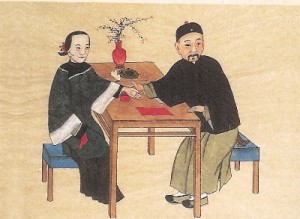
(Traditional Chinese Pulsediagnosis)
> ÖAGTCM: Österr. Ausbildung für TCM <
Traditional Chinese Medicine, also known as TCM, includes a range of traditional medicine practices originating in China. Although well accepted in the mainstream of medical care throughout East Asia, it is considered an alternative medical system in much of the Western world. TCM practices include such treatments as Chinese herbal medicine, acupuncture, dietary therapy, and both Tui na and Shiatsu massage. Qigong and Taijiquan are also closely associated with TCM.
Much of the philosophy of traditional Chinese medicine derives from the same philosophy that informs Taoist and Buddhist thought, and reflects the classical Chinese belief that the life and activity of individual human beings have an intimate relationship with the environment on all levels. Read More: > HERE <
TRADITIONAL CHINESE MEDICINE – Introduction – Traditional Chinese medicine (Simplified: ä¸医学; Traditional: ä¸醫學; Pinyin: zhōngyÄ« xué) is the name commonly given to a range of traditional medical practices used in China that have developed over the course of several thousand years of history. It is one of the most important forms of Oriental medicine, a term which may also include other related traditional Asian medical systems such as Japanese, Korean, Tibetan, and Mongolian medicine. Chinese medicine principally employs a method of analysis and synthesis, inquiring on a macro-level into the internal systems of the human body and their mutual relationships with the internal and external environment in an attempt to gain an understanding of the fundamental laws which govern the functioning of the human organism, and to apply this understanding to the treatment and prevention of disease, and health maintenance. TCM is rooted in a unique, comprehensive and systematic theoretical structure which includes the Theory of Yin-yang , the Five Elements, the human body Meridian system, and other systems. Treatment is conducted with reference to this philosophical framework.
Uses – In the West, TCM is often considered alternative medicine; however, in mainland China and Taiwan, TCM is widely considered to be an integral part of the health care system. The term TCM is sometimes used specifically within the field of Chinese medicine to refer to the standardized set of theories and practices introduced in the mid-20th century under the government of Mao, as distinguished from related traditional theories and practices preserved by people in Taiwan, Hong Kong and by the overseas Chinese. The more general sense is meant in this section.
TCM developed as a form of noninvasive therapeutic intervention (also described as folk medicine or traditional medicine) rooted in ancient belief systems, including traditional religious concepts. Chinese medical practitioners before the 19th century relied on observation, trial and error, which incorporated certain mystical concepts. Like their Western counterparts, doctors of TCM had a limited understanding of infection, which predated the discovery of bacteria, viruses (germ theory of disease) and an understanding of cellular structures and organic chemistry. Instead they relied mainly on observation and description on the nature of infections for creating remedies. Based on theories formulated through three millennia of observation and practical experience, a system of procedure was formed as to guide a TCM practitioner in courses of treatment and diagnosis.
Unlike other forms of traditional medicine which have largely become extinct, traditional Chinese medicine continues as a distinct branch of modern medical practice, and within China, it is an important part of the public health care system. There are thousands of years of empirical knowledge about TCM conceptualized and recorded in terms appropriate to that system, and in recent decades there has been an effort to integrate the discoveries made by traditional Chinese medicine with the discoveries made by workers in the Western medical traditions. One important component of this work is to use the instrumentation and the methodological tools available via Western medicine to investigate observations made and hypotheses raised by the Chinese tradition.
That this effort has occurred is surprising to many for a number of reasons. In most of the world, indigenous medical practices have been supplanted by practices brought from the West, while in Chinese societies, this has not occurred and shows no sign of occurring. Furthermore, many have found it peculiar that Chinese medicine remains a distinct branch of medicine separate from Western medicine, while the same has not happened with other intellectual fields. There is, for example, no longer a distinct branch of Chinese physics or Chinese biology.
TCM is used by some to treat the side effects of chemotherapy, treating the cravings and withdrawal symptoms of drug addicts and treating a variety of chronic conditions that conventional medicine is claimed to be sometimes ineffective in treating. TCM has also been used to treat antibiotic-resistant infection.
A report issued by the Victorian state government in Australia describes TCM education in China: – Graduates from TCM university courses are able to diagnose in western medical terms, prescribe western pharmaceuticals, and undertake minor surgical procedures. In effect, they practice TCM as a specialty within the broader organization of Chinese health care.
TCM education in Australia, however, does not qualify a TCM practitioner to prescribe scheduled pharmaceuticals, nor to undertake surgical procedures or diagnose in western medical terms.
Theory – There are many schools of thought on which TCM is based. Because of this, the foundation principles of Chinese medicine are not necessarily uniform. Received TCM can be shown to be most influenced by Taoism, Buddhism, and Neo-Confucianism.
For over 3000 years (1200 BCE- present), Chinese academics of various schools have focused on the observable natural laws of the universe and their implications for the practical characterization of humanity’s place in the universe. In the I Ching and other Chinese literary and philosophical classics, they have described some general principles and their applications to health and healing:
- There are observable principles of constant phenomenal change by which the Universe is maintained.
- Man is part of the universe and cannot be separated from the universal process of change.
- As a result of these apparently inescapable primordial principles, the Universe (and every process therein) tends to eventually balance itself.
- Optimum health should result from living as harmoniously as possible with the spontaneous process of change tending towards balance. If there is no change (stagnation), or too much change (catastrophism), balance is increasingly lost and illnesses can occur.
- Everything is ultimately interconnected.
- Always use a systemic approach when addressing imbalances.
TCM is therefore largely based on the philosophical concept that the human body is a small universe with a set of complete and sophisticated interconnected systems. Those systems usually work in balance to maintain the healthy function of the human body. The balance is described as necessarily including qi, blood, jing, bodily fluids, the wu xing, emotions, and spirit (shen). TCM has a unique model of the body, notably concerned with the meridian system. TCM isn’t monolithic, however, and there are from minor to significant regional and philosophical differences between practitioners and schools which in turn can lead to differences in practice and theory.
Macro Views to Diseases – TCM has a macro view to most diseases: well-balanced human bodies can usually handle most everyday bacteria and virus, which are ubiquitous and fastly changing; diseases happens only if there are some unbalanced parts in a human body. Due to this macro philosophy, TCM usually does not care what exact bacteria or virus are causing the symptoms, but tries the best to find which parts of the body are unbalanced as well as to find a strategy to bring back the balance. At the meantime, TCM believes only symptoms matter because irregular symptoms from the human bodies are the only faithful sources to deduce the unbalanced parts in a dynamic, complex system like a human body.
Consequently, the treatments in TCM do not directly target to kill bacteria or virus but to bring back the balance of human bodis. It is very surprising but understandable that a TCM doctor may give very different herb prescriptions to patients affected by a same type of bacteria, because the different symptoms from the patients indicate different unbalanced parts in their bodies.
TCM’s macro view to diseases has some advantages and limitations compared to modern western medicine, which directly targets the external factors of diseases like bacteria and virus.
* The biggest advantage of TCM is that the internal reasons of diseases are addressed and the details of bacteria and virus can be largely ignored. The real potentials of the well-evolved human bodies are used to fight the bacteria and virus instead of simple antibiotics.
A correct TCM treatment will not only address current disease but also establish a strong balance to fight any other diseases. This is especially useful when the abused antibiotics fasten the mutation of bacteria and virus nowadays and it is increasingly difficult for doctors to develop right drugs to kill some specific variants. More over, the downside of western drugs is that they kill not only the bad bacteria and virus but they also severely intervene in the proper functioning of human bodies, which in turn worsen the unbalanced human internal system and make patients more susceptible to other types of bacteria and virus. This is the biggest dilemma in modern western medicine as exemplify by chemotherapy and radiotherapy treatments to cancers.
* A TCM doctor handles many types of diseases from hearts, livers, lungs, etc because the macro view of human body. A patient can be helped by just one visit to a TCM doctor in a comprehensive way. On the other hand, modern western medicine adopts a micro view. The diagnoses and treatments to diseases are highly specialized in terms of different causes. Patients have to judge first which specialist is going to help their problems.
* Judging the effectiveness of treatments in TCM is also based on a macro point of view. Genuine TCM does not rely on micro level lab test results like blood pressure, liver function, a report, bacteria numbers etc. Instead, macro level human feelings and behaviors are used: such as the sleep quality, feeling of enough energy to handle daily work, appetite to food, normal excreting, warmness of hands and feet etc. Modern western medicine relies on the lab tests to see the effectiveness of a treatment using drugs: like how many bacteria are left in the body. TCM doctors often criticize that western doctors pays too much attentions to individual metrics in lab reports and less concerns are given to the overall feelings of patients.
* The cost associated with TCM diagnoses and treatments are usually much less than modern western ways, which requires high-tech equipments and lab facilities to locate the external details. It is relatively fair for both the rich and the poor when seeing a TCM doctor and using Chinese herbs.
* The major problem in TCM is that a right disease diagnosis highly depends on the experiences of a TCM doctor. Even with a right diagnosis, a proper strategy using combined herb prescriptions must be used to bring back the dynamic balance in human bodies. As a result, it takes years or even decades to train a good TCM doctor who can deduce the unbalanced parts from complex symptoms from patients and find a right solution for it considering the interconnection between different parts in human bodies. There is a Chinese saying describing the wisdom and experiences needed for a TCM doctor: A good TCM doctor is also qualified to be a good prime minister in a country. In contrast, modern western diagnoses and treatments are more reliable than TCM in the sense that clear procedures are defined and the accurate information of bacteria and virus can be obtained.
* Finally, TCM may fail if a patient’s internal balance has been ruined too much and immediate, direct solution must be used to fight the diseases. TCM just does not know what bacteria and virus are the culprits.
It is natural for people to think a combined way to fight diseases from both internal and external point of views. Many doctors are researching into this promising areas.
Diagnostics – Following the macro philosophy, TCM diagnostics are based on overall observation of human syptoms rather than micro level labs. There are four types of TCM diagnostic methods: observe (望 wàng), hear and smell (聞 wén), ask about background (問 wèn) and read the pulse (切 qiè). Then a diagnosis is made using a system to classify the symptoms. As mentioned earlier, diagnostic based on symptoms, not bacteria or virus, is the essence in TCM because the internal reasons in human bodies matter.
Systems of diagnosis include:
- * Yin or Yang
- * Five Elements
- * Eight Principles
- * Zang Fu theory
- * Meridian (Chinese medicine)
- * Six Levels
- * Four Stages
- * Three Jiao
TCM diagnosis in China is becoming integrated with western diagnostic thought and is moving towards total integration of the two systems. Modern practitioners in China often use the two systems in combination to understand what is happening with the patient.
Because traditional Chinese medicine predates the more invasive medical testing used in conventional Western medicine, TCM requires skill in a range of diagnostic systems not commonly used outside of TCM. Much of this diagnostic skill involves developing the abilities to observe subtle appearances; to observe that which is right in front of us, but escapes the observation of most people. SEE Also: Traditional Chinese Medicine :: Diagnostic Theory
Diagnostic Techniques
- Palpation of the patient’s radial artery pulse in six positions
- Observation of the appearance of the patient’s tongue
- Observation of the patient’s face
- Palpation of the patient’s body (especially the abdomen) for tenderness
- Observation of the sound of the patient’s voice
- Observation of the surface of the ear
- Observation of the vein on the index finger on small children
- Comparisons of the relative warmth or coolness of different parts of the body
- Anything else that can be observed without instruments and without harming the patient
- SEE Also: Traditional Chinese Medicine :: Diagnostic Theory
Treatment Techniques
- Historically, eight branches comprised Chinese medicine treatment:
- Tui na(推拿) Chinese Massage Therapy
- Acupuncture and Moxibustion(針灸)
- Chinese herbal medicine(ä¸药)
- Chinese food therapy食 疗
- Qigong(氣功) and related breathing and meditation exercise
- T’ai Chi Ch’uan (太極拳) and other Chinese martial arts.
- Feng shui风水
- Chinese astrology
Today, all methods except Feng shui and Chinese astrology are routinely used as part of TCM treatments.
Within each treatment branch, specific treatment methods exist. Cupping and Gua sha(刮痧) come under the heading of Tui Na. Auriculotherapy(耳燭療法) comes under the heading of Acupuncture and Moxibustion. Die-da or Tieh Ta (跌打): practitioners who specialize in healing trauma injury such as bone fractures, sprains, bruises etc. Some of these specialists may also use or recommend other disciplines of Chinese medical therapies (or Western medicine in modern times) if serious injury is involved. Such practice of bone-setting is not common in the West.
Modern TCM treatments consist of herbal medicine or acupuncture as the primary method, with other methods such as massage, qi gong, food therapy playing a secondary role. Illness in TCM is seen as a lack of harmony, and the goal of all TCM treatment is to assist the body to regain balance and achieve homeostasis.
The modern practice of traditional Chinese medicine is increasingly incorporating techniques and theories of Western medicine in its praxis.
SEE Also:
- * Health :: Acupuncture
- * Traditional Chinese Medicine :: Moxibustion
- * Traditional Chinese Medicine :: Qigong
- * Traditional Chinese Medicine :: Herbology
- * Traditional Chinese Medicine :: Food Therapy
Traditional Chinese Medicine and Science, The Question of Efficacy – Most scientific research about TCM has focused on acupuncture. Two views have emerged characterized by evidence based medicine on the one hand which has not found convincing evidence for acupuncture and the United States National Institutes of Health on the other, which believed evidence could be uncovered. The 1997 NIH Consensus Statement on Acupuncture summarizes research on the efficacy of acupuncture as follows:
„…promising results have emerged, for example, efficacy of acupuncture in adult post-operative and chemotherapy nausea and vomiting and in postoperative dental pain. There are other situations such as addiction, stroke rehabilitation, headache, menstrual cramps, tennis elbow, fibromyalgia, myofascial pain, osteoarthritis, low back pain, carpal tunnel syndrome, and asthma for which acupuncture may be useful as an adjunct treatment or an acceptable alternative or be included in a comprehensive management program. Further research is likely to uncover additional areas where acupuncture interventions will be useful.“
Much less work in the West has been done on Chinese herbal medicines, which comprise much of TCM. It is clear, however, that some of these medicines have powerful biochemical effects. An example is the herb ephedra which was introduced into the West as a stimulant, and later banned (although this ban was ordered lifted in 2005 by a federal court judge) in the United States after deaths were attributed to its use. A less controversial example is artemisinin, derived from a herb long-used used in TCM, and now used worldwide to treat multi-drug resistant strains of falciparum malaria. In the West, many Chinese medicines have been marketed as herbal supplements and there has been considerable controversy over the regulatory status of these substances.
TCM practitioners usually have no philosophical objections to scientific studies on the effectiveness of treatments. A barrier to the adoption of Chinese herbal medicines into Western practice is finance. It requires a large amount of expertise and money to conduct, for example, a double-blind drug trial, making it a large venture to test even one of the thousands of compounds used by TCM. Because these compounds cannot be patented and owned exclusively, there is a disincentive to sponsor such expensive tests. Some important western medical drugs such as Ephedrine have come from Chinese herbs.
There are also a priori doubts about the efficacy of many TCM treatments that appear to have their basis in magical thinking, e.g. plants with heart-shaped leaves will help the heart, ground bones of tiger give a person energy because tigers are energetic animals and so on.
Purported Mechanism of Action – The basic mechanism of TCM is akin to treating the body as a black box, recording and classifying changes and observations of the patient using a traditional philosophy. In contrast to many alternative and complementary medicines such as homeopathy, practically all techniques of TCM have explanations for why they may be more effective than a placebo, which Western medicine can find plausible. Most doctors of Western medicine would not find implausible claims that qigong preserves health by encouraging relaxation and movement, that acupuncture relieves pain by stimulating the production of neurotransmitters, or that Chinese herbal medicines may contain powerful biochemical agents. However, the largest barriers to describing the mechanisms of TCM in scientific terms are the difference of language and lack of research. TCM concepts such as qi yin and yang are used to describe specific biological processes but are difficult to translate into scientific terms. Some research is now beginning to emerge explaining possible scientific mechanisms behind these TCM concepts.
Safety of Chinese Medicines – Acupressure and acupuncture are largely accepted to be safe from results gained through medical studies. Several cases of pneumothorax, nerve damage and infection have been reported as resulting from acupuncture treatments. These adverse events are extremely rare and were found to be due to practitioner negligence. Dizziness and bruising will sometimes result from acupuncture treatment.
Chinese herbal medicines, in certain cases, involve risk of poisoning or allergic reactions. Cases of acute and chronic poisoning due to treatment through ingested Chinese medicines are relatively common in China, Hong Kong, and Taiwan, with numerous deaths occurring each year. Many of these deaths do occur however, when patients self prescribe herbs or take unprocessed versions of toxic herbs. For example, the Chinese herb má huáng — known commonly in the west by its Latin name Ephedra — was banned in 2004 by the FDA, although, the FDA’s final ruling exempted traditional Asian preparations of Ephedra from the ban. The Ephedra ban was meant to combat the use of this herb in western weight loss products, a usage that directly conflicts with traditional Asian uses of the herb. There were no cases of Ephedra based fatalities with patients using traditional Asian preparations of the herb for its traditionally intended uses. This ban was ordered lifted in April 2005 by a Utah federal court judge.
Furthermore, potentially toxic and carcinogenic compounds such as arsenic and cinnabar are sometimes prescribed as part of a medicinal mixture or used on the basis of „using poison to cure poison“. Unprocessed herbals are sometimes adulterated with chemicals that may alter the intended effect of a herbal preparation or prescription. Much of these are being prevented with more empirical studies of Chinese herbals and tighter regulation regarding the growing, processing, and prescription of various herbals.
Traditional Chinese Medicine and Western Medicine – Within China, there has been a great deal of cooperation between TCM practitioners and Western medicine, especially in the field of ethnomedicine. Chinese herbal medicine includes many compounds which are unused by Western medicine, and there is great interest in those compounds as well as the theories which TCM practitioners use to determine which compound to prescribe. For their part, advanced TCM practitioners in China are interested in statistical and experimental techniques which can better distinguish medicines that work from those that do not. One result of this collaboration has been the creation of peer reviewed scientific journals and medical databases on traditional Chinese medicine.
The relationship between TCM and Western medicine in the West is more contentious. While more and more medical schools are including classes on alternative medicine in their curricula, older Western doctors and scientists are far more likely than their Chinese counterparts to skeptically view TCM as archaic pseudoscience and superstition. This skepticism can come from a number of sources. For one, TCM in the West tends to be advocated either by Chinese immigrants or by those that have lost faith in conventional medicine. Many people in the West have a stereotype of the East as mystical and unscientific, which attracts those in the West who have lost hope in science and repels those who believe in scientific explanations. There have also been experiences in the West with unscrupulous or well-meaning but improperly-trained „TCM practitioners“ who have done people more harm than good in many instances.
As an example of the different roles of TCM in China and the West, a person with a broken bone in the West (i.e. a routine, „straightforward“ condition) would almost never see a Chinese medicine practitioner or visit a martial arts school to get the bone set, whereas this is routine in China. As another example, most TCM hospitals in China have electron microscopes and many TCM practitioners know how to use one.
This is not to say that TCM techniques are considered worthless in the West. In fact, Western pharmaceutical companies have recognized the value of traditional medicines and are employing teams of scientists in many parts of the world to gather knowledge from traditional healers and medical practitioners. After all, the active ingredients of most modern medicines were discovered in plants or animals. The particular contribution of Western medicine is that it strictly applies the scientific method to promising traditional treatments, separating those that work from those that do not. As another example, most Western hospitals and increasing numbers of other clinics now offer T’ai Chi Ch’uan or qigong classes as part of their inpatient and community health programs.
Most Chinese in China do not see traditional Chinese medicine and Western medicine as being in conflict. In cases of emergency and crisis situations, there is generally no reluctance in using conventional Western medicine. At the same time, belief in Chinese medicine remains strong in the area of maintaining health. To put it simply, you see a Western doctor if you have acute appendicitis, but you do exercises or take Chinese herbs to keep your body healthy enough to prevent appendicitis, or to recover more quickly from the surgery. Very few practitioners of Western medicine in China reject traditional Chinese medicine, and most doctors in China will use some elements of Chinese medicine in their own practice.
A degree of integration between Chinese and Western medicine also exists in China. For instance, at the Shanghai cancer hospital, a patient may be seen by a multidisciplinary team and be treated concurrently with radiation surgery, Western drugs and a traditional herbal formula.
It is worth noting that the practice of Western medicine in China is somewhat different from that in the West. In contrast to the West, there are relatively few allied health professionals to perform routine medical procedures or to undertake procedures such as massage or physical therapy.
In addition, Chinese practitioners of Western medicine have been less impacted by trends in the West that encourage patient empowerment, to see the patient as an individual rather than a collection of parts, and to do nothing when medically appropriate. Chinese practitioners of Western medicine have been widely criticized for overprescribing drugs such as corticosteroids or antibiotics for common viral infections. It is likely that these medicines, which are generally known to be useless against viral infections, would provide less relief to the patient than traditional Chinese herbal remedies.
Traditional Chinese Medicine and Animals – As animal products are used in Chinese formulas, vegans and vegetarians should inform their practitioner, if their beliefs forbid the ingestion of animals. Often alternative substances can be used.
The use of endangered species is controversial within TCM. In particular, the belief that tiger penis and rhinoceros horn are aphrodisiacs has been blamed for depleting these species in the wild. Medicinal use is also having a major impact on the populations of sea horses.
The animal rights movement notes that a few traditional Chinese medicinal solutions use bear bile. To extract maximum amounts of the bile, the bears are often fitted with a sort of permanent catheter. The treatment itself and especially the extraction of the bile is very painful, causes damage to the intestines of the bear, and often even kills the bears. However, due to international attention on the issues surrounding its harvesting, bile is now rarely used by practitioners outside of China.
- Sources
- * Chang, Stephen T. The Great Tao; Tao Longevity; ISBN 0942196015 Stephen T. Chang
- * Kaptchuck, Ted J., The Web That Has No Weaver; Congdon & Weed; ISBN 0809229331Z
- * Maciocia, Giovanni, The Foundations of Chinese Medicine: A Comprehensive Text for Acupuncturists and Herbalists; Churchill Livingstone; ISBN 0443-039801
- * Ni, Mao-Shing, The Yellow Emperor’s Classic of Medicine : A New Translation of the Neijing Suwen with Commentary; Shambhala, 1995; ISBN 1570620806
- * Holland, Alex Voices of Qi: An Introductory Guide to Traditional Chinese Medicine; North Atlantic Books, 2000; ISBN 1556433263
- * Unschuld, Paul U., Medicine in China: A History of Ideas; University of California Press, 1985; ISBN 0520050231
- * Qu, Jiecheng, When Chinese Medicine Meets Western Medicine – History and Ideas (in Chinese); Joint Publishing (H.K.), 2004; ISBN 9620423364
- * Chan, T.Y. (2002). Incidence of herb-induced aconitine poisoning in Hong Kong: impact of publicity measures to promote awareness among the herbalists and the public. Drug Saf. 25:823–828.
- * Benowitz, Neal L. (2000) Review of adverse reaction reports involving ephedrine-containing herbal products. Submitted to U.S. Food and Drug Administration. Jan. 17.
- * Porkert, Manfred The Theoretical Foundations of Chinese Medicine MIT Press, 1974 ISBN 0262160587
- * Hongyi, L., Hua, T., Jiming, H., Lianxin, C., Nai, L., Weiya, X., Wentao, M. (2003) Perivascular Space: Possible anatomical substrate for the meridian. Journal of Complimentary and Alternative Medicine. 9:6 (2003) pp851-859
Links
- State Administration of Traditional Chinese Medicine for the People’s Republic of China, (English)
- Journal of Chinese Medicine
- Classics of Traditional Chinese Medicine, by the National Library of Medicine (NLM)
- Merging Chinese Traditional Medicine into the American Health System
- The Chinese Medicine Sampler- Historical Roots of Traditional Chinese Medicine
- An essay on translation of Chinese concepts into English
- Traditional Chinese Medicine news, information, education, research and discussion – A regularly updated TCM website based in Australia
- ChineseMedicine.com.hk 香港ä¸醫網
- National Certification Commission for Acupuncture and Oriental Medicine (USA)
- University Minnesota – What is TCM ?
- AHC – Center for Spirituality and Healing
- QI GONG im Kloster St. Clemens, July 2010
- Guang’anmen HOSPITAL, CHINA ACADEMY of Chinese Medical Sciences
- Meet QI-GONG Groups and Friends at facebook <
TCM, TRAD. AYURVEDA AND PULSDIAGNOSES
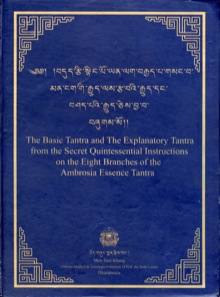
Introduction to Buddhist Ayurveda or Tibetan Medicine – Vata Dosha (Space and Air), Pitta Dosha (Fire and Water), Kapha Dosha (Water and Earth) — Lectures from the „Four Tibetan Medical Tantras“ („rGyud – bzhi“ in Tibetan, pronounced „Ju Shee“ — „Si-Bu-Yi-Dian in Mandarin — in Sanskrit it is called the „Amrta-hrdaya-astanga-guhyopadesa-tantra“ or Amrita Hridaya Astanga Guhyopadesha Tantra)
- >* VIDEO INTRO TO BUDDHIST AYURVEDA OR TIBETAN MEDICINE * <
- >* VIDEO Ayurveda Arthritis Chinese Medicine, Rheumatism …* <
Nalanda College of Buddhist Ayurveda of Nalanda University, part of the 501(c)3 Non-Profit Religious Organization Medicine Buddha Wholistic Ministry – Anonymous American Buddhist Monk of Geluk Nalanda Tradition of Tibet and India, Ayur-Vedic Herbal Medicine Practitioner (http://www.Ayurveda-Berkeley.com – 510-292-6696 in Berkeley, California)AYR220 Ayurvedic Consultation 001 Constitutional Medicine Tibetan Medicine Ayurveda Intake-Form (October 26, 2008)
Dr. Florian Ploberger, Wien , Lehrtätigkeit und Publikationen in den Themenbereichen TCM und Tibetische Medizin seit 2000 im Bacopa Bildungszentrum. Leiter des Wissenschaftlichen Beirates des Bacopa-Bildungszentrum in Oberösterreich sowie Präsident der Österreichischen Ausbildungsgesellschaft für Traditionelle Chinesische Medizin (ÖAGTCM).
BUCHTIPP: > Wurzel-Tantra & Tantra der Erklärungen des rGyud-bZhi , die vier Tantras der Medizin < (The Basic Tantra and The Explanatory Tantra from the Secret Quintessential Instructions on the Eight Branches of the Ambrosia Essence Tantra.) Dieser Text dient seit dem 12. Jahrhundert als Grundlagentext in der Ausbildung der tibetischen Mediziner und wird noch heutzutage auswendig gelernt.
2007 wurde er an den Men-Tsee-Khang (Schule für tibetische Medizin und Astrologie unter der Schirmherrschaft des XIV. Dalai Lama in Dharamsala, Nordindien) eingeladen, um dort Vorträge zu halten.
Zurzeit hält er wöchentlich an der Universität Wien eine Vorlesung über diverse Themen der Tibetischen Medizin und verbringt jedes Jahr mehrere Monate in Dharamsala.
Zu seiner grossen Freude und Ehre wurde er im Sommer 2009 offiziell von Dr. Dawa, dem Direktor des Men-Tsee-Khang, mit der Übersetzung der ersten beiden Teile des bedeutendsten Werkes der tibetischen Medizin: ( rGyud-bZhi*. Deutscher Titel: Vier Tantra der Medizin) beauftragt.
> Pulsdiagnose, die sanfte Botschaft des Körpers <
In diesem Buch werden tiefe Einblicke in die Kunst der Pulsdiagnostik gewährt. Die Autoren beschreiben die Pulsdiagnostik aus Sicht zweier verschiedener traditioneller, östlicher Medizinsysteme: der ayurvedischen und chinesischen Medizin.
Für eine korrekte Diagnostik ist die Pulstastung von entscheidender Bedeutung. In diesem praxisorientierten Buch werden alle wichtigen Aspekte des Pulses unter dem Blickwinkel der verschiedenen Krankheitsmuster dargestellt. Es vermittelt die Technik der Pulstastung sowie die klinische Bedeutung der klassischen Pulsqualitäten.
Die Vorteile für Sie:
- Pulsdiagnostik in 2 verschiedenen Medizinsystemen
- Starker Bezug zur Praxis
- Graphische Darstellung aller Pulsqualitäten
-
Dieses Buch dient sowohl Einsteigern als auch erfahrenen Therapeuten als wichtige Informationsquelle.
Die Autoren dieses interkulturellen Werkes sind:
- Frau Dr. Vinod Verma arbeitet und lehrt als Ayurvedischen Ärztin in Europa und Indien.
- Dr. Florian Ploberger ist Arzt für Allgemeinmedizin und Traditionelle Chinesische Medizin in Österreich.
Grosses Chinesisches Neujahrskonzert 2010
Chinesisches Neujahrskonzert 2010 in Wien
Chinese New Year or Spring Festival is the most important of the traditional Chinese holidays. It is sometimes called the „Lunar New Year“ by English speakers. The festival traditionally begins on the first day of the first month (Chinese: 正月; pinyin: zhÄ“ng yuè) in the Chinese calendar and ends on the 15th; this day is called Lantern Festival. Chinese New Year’s Eve is known as chú xÄ«. It literally means „Year-pass Eve“. Read more: > HERE <
Das große Chinesische Neujahrskonzert: Mit prächtigen Kostümen, traditioneller chinesischer Musik, original chinesischen Instrumenten und 80 MusikerInnen aus dem Reich der Mitte ins Jahr des Tigers starten!
Chinese New Year is the longest and most important festivity in the Lunar Calendar. The origin of Chinese New Year is itself centuries old and gains significance because of several myths and traditions. Ancient Chinese New Year is a reflection on how the people behaved and what they believed in the most.
Ein exotischer Augen- und Ohrenschmaus – In traditionellen Kostümen und auf original chinesischen Instrumenten präsentieren die Künstler der besten Orchester Chinas klassische chinesische Musik. Das Publikum wird anlässlich des chinesischen Neujahresfestes, mit einem berauschenden Neujahrskonzert, ins Reich der Mitte entführt.
Chinesisches Neujahrskonzert 1998 begann, mit dem viel umjubelten Konzert eines chinesischen Orchesters im Musikverein Wien, die Erfolgsgeschichte „Chinesisches Neujahrskonzert“, bei dem nahezu 100 Musiker und Musikerinnen mitwirken. Heute ist das große chinesische Neujahrskonzert fester Programm-Bestandteil von einigen der bedeutendsten Konzertsäle der Welt und gleichzeitig die wohl größte und erfolgreichste Orchester-Produktion ihrer Art.
Auf dem Programm stehen chinesische Volkslieder und zeitgenössische chinesische Musik. Neben großer Orchestermusik werden die besonderen Klangstrukturen einzelner Instrument-Typen bis hin zu großen Perkussionseinlagen eindrucksvoll dargestellt. Die vielen verschiedenen Nationalitäten und die mehrere Jahrtausende alte Tradition der chinesischen Musik sind Ursprung eines großen Reichtums an musikalischer Überlieferung – anmutige Melodien und eine bunte Vielfalt an Stilen finden in der ganzen Welt immer mehr Gefallen.
Chinesisches Neujahrskonzert, Freitag, 12. Februar 2010
20 Uhr, Wiener Stadthalle, Halle F
> Meet Chinese New Year Celebration, Year of the Tiger at fb <
> Meet Traditional Chinese Medicine, studies, friends at fb <
> Meet Tradtional Chinese Medicine I , studies, friends at fb <
THE HEART PRACTICE OF TONGLEN
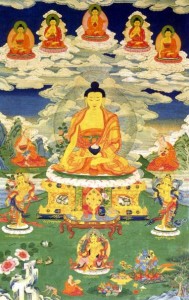
> The Practice of Tonglen by Pema Chodron <
Tonglen is Tibetan for giving and taking. In this practice we visualise taking onto ourselves the suffering of others and in return we send out love and happiness. It referst o all of the 6 perfections of giving, etchics, patience, joyous effort, concentration and wisdom. There are seven points to training in the mind (lojong) compiled by Chehawa. His Holiness the Dalai Lama practises it daily and has said of the technique „whether this meditation really helps others or not, it gives me peace of mind. Then I can be more effective, and the benefit is immense“.
All-Embracing Compassion: The Heart-Practice of Tonglen
As human beings, we have a very interesting habit of resisting what is unpleasant and seeking what is pleasurable. We resist, avoid, and deny suffering and we continually grasp at pleasure. If we observe our behavior, it is easy to see that we habitually resist and avoid people, situations, and feelings we consider to be painful, unpleasant, or uncomfortable, and we are naturally attracted to people, situations, and feelings we consider pleasant, comfortable, and gratifying. According to Buddhist teachings, this behavior is a symptom of fundamental ignorance and is influenced by the defilements of greed (attachment), hatred (aversion), and delusion (misperception of reality). To break the spell of this dualistic perception, to dissolve the barriers in our hearts that keep us feeling separate from others, and to cultivate a deep compassion for all living beings, including ourselves, we need to meet and embrace reality in a radically new way. To accomplish this, we can use the precious heart-practice of Tonglen.
Tonglen is a Tibetan word which means sending and taking. This practice originated in India and came to Tibet in the eleventh century. With the practice of Tonglen, we work directly with our habitual tendency to avoid suffering and attach ourselves to pleasure. Using this powerful and highly effective practice, we learn to embrace our life experiences with more openness, compassion, inclusiveness, and understanding, rather than denial, aversion, and resistance. When we encounter fear, pain, hurt, anger, jealousy, loneliness, or suffering, be it our own or others, we breathe in with the desire to completely embrace this experience; to feel it, accept it, and own it, free of any resistance.
In this way of practice, in this way of being, we transform our tendency to close down and shut out life’s unpleasant experiences. In accordance with Buddha’s First Noble Truth, we acknowledge, touch, and embrace our personal and collective suffering. We do not run away. We do not turn the other way. Touching and understanding suffering is the first step toward true transformation. Rather than avoiding suffering, we develop a more tolerant and compassionate relationship with it. We learn to meet and embrace reality—naked, open, and fearless.
Although the idea of developing a relationship with suffering may sound somewhat morbid, we must remember the teachings of the Second and Third Noble Truths as well: when we touch and embrace suffering, we can finally understand what causes it. When we understand the cause of suffering, we can eliminate it and be liberated. There is an end to suffering, however, we must learn how to meet it in a new way. Tonglen practice can help us accomplish this shift of awareness, this training of the mind. Read Full Article: > HERE <
How to practice Tonglen meditation for healing in this free alternative medicine video.
Tonglen is Tibetan for ‚giving and taking‘ (or, sending and taking), and it refers to a meditation practice found in Tibetan Buddhism.
This practice is summarized in seven points, which are attributed to the great Indian Buddhist teacher > Atisha Dipankara Shrijnana < , born in 982 CE. They were first written down by Kadampa master Langri Tangpa (1054–1123). The practice became more widely known when Geshe Chekawa Yeshe Dorje (1101–1175) summarized the points in his Seven Points of Training the Mind. This list of mind training (lojong) proverbs or ’slogans‘ compiled by Chekawa is often referred to as the Atisha Slogans. Read More: > Here <
H.H. The Dalai Lama, who is said to practise Tonglen every day, has said of the technique: „Whether this meditation really helps others or not, it gives me peace of mind. Then I can be more effective, and the benefit is immense“. His Holiness offers a translation of the Eight Verses in his book The Path To Tranquility: Daily Meditations.
In the practice, one visualizes taking onto oneself the suffering of others, and giving one’s own happiness and success to others. As such it is a training in altruism in its most extreme form.
The function of the practice is to:
- reduce selfish attachment
- increase a sense of renunciation
- create positive karma by giving and helping
- develop loving-kindness and bodhicitta
- it refers to all of the Six Perfections of giving, ethics, patience, joyous effort, concentration and wisdom, which are the practices of a Bodhisattva.
- Meet Tonglen Practice, Friends and Studies at fb <
- Meet Pema Chodron, Friends and Studies at fb <
- Meet Tibet Friends, Arts, Studies at facebook <
- Meet Dalai Lama Groups and Friends at facebook <
- Meet Buddhism, Studies, Friends at facebook <
Global Warming, Year of Biodiversity 2010
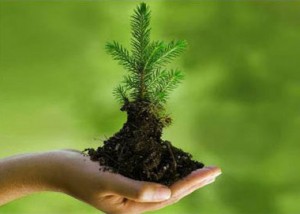
> ÖBf – 800 PROJEKTE DER ARTENVIELFALT <
Global warming is the increase in the average temperature of Earth’s near-surface air and oceans since the mid-20th century and its projected continuation. Global surface temperature increased 0.74 ± 0.18 °C (1.33 ± 0.32 °F) between the start and the end of the 20th century.[2][A] The Intergovernmental Panel on Climate Change (IPCC) concludes that most of the observed temperature increase since the middle of the 20th century was caused by increasing concentrations of greenhouse gases resulting from human activity such as fossil fuel burning and deforestation. Read More: > HERE <
Separating Global Warming from Global Pollution
By David Frawley (Vamadeva Shastri)
The pollution of our natural environment, the decline of the quality of our air, water and soils, the destruction of numerous ecosystems and consequent loss of species is an obvious fact that can be easily documented. We usually don’t have to go much further than our own immediate environment or nearby countryside to see the tell tale signs of this, whether it is the decline of our forests, the garbage in our parks and streets, or the dirty air and noise of our cities. One might have to travel further in the United States than in India to do this, but it doesn’t take much effort if one wants to make it.
We can also look to our childhood memories or talk to our parents about how much nicer our natural environment used to be in terms of the plants, animals and atmosphere in what are now rapidly becoming the good old days, at least for Mother Earth. There may be some areas left that are pristine and much that is now being protected, but most of the forests have been cut and even the normal weather vagaries can cause considerable damage to the altered or depleted landscape, climate changes notwithstanding.
Yet the ecological realm today is dominated by another debate, which is that of global warming. The question is whether this environmental degradation through global pollution may cause global warming or possibly global cooling or neither. However, we should note that global warming is a separate issue and much more difficult to prove or disprove than global pollution.
Global warming has become, it appears by the amount of press and political gatherings, like that at Copenhagen recently, the main issue and the primary global environmental problem, causing passion and vehemence on both sides. The more obvious problem of global pollution and the more immediacy needed to deal with its effects can unfortunately be obscured by this debate. Even if global warming may not be occurring or may not be so rapid, global pollution is staring us in the face and damaging our own lives with an impact on to future generations.
More in ‚David Frawley‘: FOLKS, Full Article
- Linguistics and Civilization
- Vedic Origins of the Europeans: The Children of Danu
- Yoga: From Patanjali Back to Hiranyagarbha
- The Sacred Activism
Co-operation on Health and Biodiversity
Welcome to the website of the COHAB Initiative (Co-Operation On Health And Biodiversity), an international programme of work on human well-being and sustainable development.
The COHAB Initiative works to establish an international, inter-disciplinary framework for dialogue and partnership, supporting activities for community health, international development and biodiversity conservation. The Initiative, through a global network of COHAB Partners, works towards the implementation of the United Nations Convention on Biological Diversity and the Millennium Development Goals. It provides a global forum for all stakeholders to share experiences, discuss needs and opportunities, build capacities and develop new partnerships.
Healthy Planet, Healthy People
Biodiversity, through the provision of ecosystem goods and services, provides the basis for all life on earth. It supports all of our economic and social development, and is vital to our health and well-being. Species of animals and plants have always been important as sources of food, fuels, medicines, clothing and building materials, while ecosystems provide and maintain supplies of clean water, healthy soil and clean air. However, this is frequently taken for granted in an increasingly developed and globalised world.
Truly sustainable development must incorporate all areas of human activity and our interactions with the environment, and therefore requires that social, economic, public health and environmental needs be resolved holistically. In order to fully achieve sustainable progress – whether at local, national, regional or international levels – policy makers, scientists, stakeholders and the wider public must work together.
Die Österreichischen Bundesforste (ÖBf) starten mit über 800 Natur- und Umweltschutzprojekten in das Internationale Jahr der Biodiversität 2010. „Jedes gesunde Ökosystem, jeder gesunde Wald braucht Artenvielfalt“, erklärt Georg Erlacher, Vorstandssprecher der Österreichischen Bundesforste. „Daher ist es unser Ziel, mit naturnaher Waldwirtschaft, der Erhaltung von Schutzgebieten und zahlreichen Einzelmaßnahmen Vielfalt zu sichern und den Verlust von Arten und Lebensräumen zu stoppen.“ Die Bandbreite der Maßnahmen reicht von besonderer Rücksichtnahme auf sensible Brutgebiete über die Ausweisung von Schutz- und Schongebieten bis hin zu großflächigen Moorrenaturierungen. Als erster Forstbetrieb Europas beteiligten sich die Bundesforste am internationalen Biodiversitäts-programm „Countdown 2010“ und haben darauf aufbauend ein eigenes 5jähriges Schutzprogramm zusätzlich zu den bestehenden Maßnahmen entwickelt.
> Meet COHAB Intitative, friends, studies at fb <
> Meet Biodiversity Friends, Groups and Studies at facebook <
> Meet Naturfreunde Groups, Friends, Fans at facebook <
MIND AND LIFE – COMPASSION IN ECONOMICS
Der Dalai Lama in Zürich 2010:
Universelle Verantwortung und Wirtschaft – Die weltweite Finanzkrise und deren verheerende Folgen für Millionen Menschen unterstreichen die Bedeutung der ethischen Dimensionen von Wirtschaftssystemen. Die globale Finanzkrise, die 2008 begann, ist ein Zeichen dafür, dass konkurrenzierende Wirtschaftssysteme für Korruption und menschliche Gier anfällig sind.
Der Dalai Lama wird in seinem öffentlichen Vortrag die Frage eruieren, inwieweit die persönliche und universelle Verantwortung sowohl in der Wirtschaft wie im eigenen Leben von Bedeutung sind, und ob wir produktive Wirtschafts- und Gesellschaftssysteme entwickeln können, die gleichzeitig Mitgefühl und Altruismus belohnen und aktuelle Probleme im Bereich der Armut und der Umwelt lösen.
Der Vortrag wird auf Englisch gehalten, mit deutscher Übersetzung.
Öffentlicher Vortrag, Sonntag, 11. April 2010; 13:30 – 15:30
Hallenstadion, Zürich
> Meet Buddhism, friends, studies, Medicine at facebook <
> Meet Dalai Lama, friends, studies at facebook <
> Paramahansa´s Guidence for these times of economic crises <
> Meet Paramahansa Yogananda friends, groups, studies at fb <
> Meet Mind and Life, friends, studies at facebook <
GRAMEEN DANONE FOOD & SHAKTI DOI
* Shoktidoi means energy in Bengali. One cup of yogurt provides 30 per cent of the recommended daily intake of nutrition. Mothers are keen to buy the yogurt for their children.- Bogra, Bangladesh. June 20, 2007.
Grameen Foundation, founded as Grameen Foundation USA, is a global 501(c)(3) non-profit organization based in Washington DC that works to replicate the Grameen Bank microfinance model around the world through a global network of partner microfinance institutions. Its CEO is Alex Counts. It is separate from organizations called Grameen Foundation in different countries, such as Grameen Foundation Australia. The Foundation was founded in 1997 as a vehicle to replicate the model of Grameen Bank beyond the borders of Bangladesh and increase the access of poor people to microfinance by millions worldwide. Muhammad Yunus, the founder and managing director of Grameen Bank, sits on the Board of Directors. Current chair of the board is Paul Maritz, CEO of VMWare and formerly a senior executive at Microsoft. Read More > HERE <.
Muhammad Yunus (Bangla: মুহাম্মদ ইউনুস, pronounced Muhammôd Iunus) (born 28 June 1940) is a Bangladeshi banker and economist. He previously was a professor of economics where he developed the concept of microcredit. These loans are given to entrepreneurs too poor to qualify for traditional bank loans. Yunus is also the founder of Grameen Bank. In 2006, Yunus and the bank were jointly awarded the Nobel Peace Prize, „for their efforts to create economic and social development from below.“
Yunus himself has received several other national and international honors. He is the author of Banker to the Poor and a founding board member of Grameen America and Grameen Foundation. In early 2007 Yunus showed interest in launching a political party in Bangladesh named Nagorik Shakti (Citizen Power), but later discarded the plan. He is one of the founding members of Global Elders. Yunus also serves on the board of directors of the United Nations Foundation, a public charity created in 1998 with entrepreneur and philanthropist Ted Turner’s historic $1 billion gift to support United Nations causes. The UN Foundation builds and implements public-private partnerships to address the world’s most pressing problems, and broadens support for the UN. Read More: > HERE <
The Bangladesh Enterprise Institute (BEI), an independent non-profit research centre, in association with The Foundation for Development Cooperation (FDC) based in Australia and Libra Advisory Group based in UK has initiated the Bangladesh Social Enterprise Project (BSEP), supported by the British Government’s Department for International Development (DFID).
This project aims to utilize key strengths of the private sector to address some of the poverty related issues of our country.
The project purpose is ‘to identify and build innovative partnerships within the private sector to undertake projects and programmes which are commercially viable and directly benefit the poor in alleviating poverty and at the same time, meet the development objectives of Bangladesh.’
Grameen Danone Foods, popularly known as „Grameen Danone“ is a social business initiative, launched in 2006. Grameen Danone Foods Ltd is a joint venture between four Grameen companies; Grameen Byabosa Bikash, Grameen Kalyan, Grameen Shakti and Grameen Telecom — and Groupe Danone, a Francebased global leader for nutritional food products.
The main objective of Grameen Danone is to bring daily health nutrition to the nutritionally deprived population of the country, especially children and as a result alleviate poverty through the implementation of a unique proximity based business model.
Grameen Danone Foods Ltd. produces a special yogurt called Shakti Doi from pure full cream milk that contains protein, vitamins, iron, calcium, zinc and other micronutrients needed to fulfill the nutritional requirements of children of Bangladesh, thus contributing to improving their health.
While ‘Shakti Doi’ (which means ‚power yogurt‘) is primarily intended for children, it is also appropriate for adults. The price of each 80 gram cup of yogurt is kept at an affordable.
Phulki endeavors to spark the development of the socioeconomic conditions of disadvantaged people particularly by promoting the rights of women and children.
“Phulki” meaning “spark” in Bengali is a non-profit organization that brings a flicker of light to the lives of disadvantaged communities. We spread the light of hope into the lives of working women who, due to their circumstances, are forced to leave their children at home, often in hazardous conditions, to earn a living. From its beginnings in 1991, Phulki recognized the link between children’s rights and women’s empowerment and the need to ensure a secure future for children while their mothers are working to earn a living. These goals are the pillars for all of Phulki’s activities. It strives for the rights of women and children to be universally recognized and achieved. Through devoting all its resources and energy into working with disadvantaged women and children, Phulki is helping them to see that they both deserve and can achieve a secure, healthy and happy life.
Initially, Phulki focused on the plight of female workers who have migrated to Dhaka city from rural areas, in search of a livelihood. The city does not have the requisite infrastructure and support systems to sustain this large influx of migrant workers. In Bangladesh export oriented garment industry has grown rapidly over the last 20 years to become the primary source of foreign exchange for the country. Over 1.5 million workers are employed in garment factories, out of which, approximately 80% are women. Phulki’s early activities ensured the well-being of the migrant workers and their children who suffered due to poverty and lack of care.
- Meet Grameen Health Care, Friends, Food, Studies at facebook <
- Meet Phulki and Friends at facebook <
- Meet Yunus Center, friends, fans at fb <
