
Posts by admin
HIMALAYA SMILES – An Appeal
…and How You Can Help !
They give us their smiles – will you help give them light?
AN APPEAL FOR THE SMILING PEOPLE OF JHUNI
Jhuni lies at the edge of Nanda Devi Biosphere Reserve, a UN-recognised biodiversity hotspot of international importance. While the villagers have traditionally used the forests and pastures of this high Himalayan range in sustainable ways, the past two decadeshave seen their increasing involvement with the cash economy of the plains.
The benefits– schooling and medical care – cost them money, and cash is hard to come by. The first result of this, twenty years ago, was the virtual extinction of the protected musk deer (its musk pod used by the European perfume industry) by poaching.
In the last ten years, local people have pursued an intensive hunt for Cordyseps sinensis (a strange caterpillar/fungus co-species) that occurs below ground in the high pastures and is valued by the Chinese for its supposedly aphrodisiac properties. The villagers’ presence in this fragile ecological zone, disturbing the thin soils and burning whatever bushes can be found to cook and keep warm with, has had serious environmental consequences. Needless to say over-harvesting has resulted in ever-diminishing returns, until today most Jhuni villagers say that it is no longer worth the effort. This leaves them with a final option to raise cash locally: growing cannabis. While this native plant has traditionally been used by them as a minor part of their diet and medicine, it is of course illegal, and brings them into contact with some of the least desirable elements of the plains economy. Every field planted with cannabis is a field less for food growing, and this inevitably increases the villages demand for edible wild speciesfrom the Reserve.
WHAT JHUNI NEEDS
• solar electric light. The children’s schoolwork will benefit most from it, but everybody enjoys being able to see each other in the evening, don’t they?
• smoke free stoves. Many health issues will be solved overnight from their introduction, plus who wants to cough the whole night?
• alternative livelihoods. The legal ways to earn cash from harvesting wild animals and plants are now exhausted. No one in Jhuni actually likes the illegal ways – they’ll give them up at the drop of a hat if given the chance!
• two SOLAR PANELS (or solar trees…) to run 2 laptop computers (the latter already donated), one at the school, the other in a room within the village. Although these computers will mainly be used for off-line learning through CD-ROM and videos, there are one or two places near the village where a weak mobile phone connection sometimes allows a slow connection to the internet. These computers will literally be an opening into a wider world.
Who are we? Avani is a fifteen-year old non-governmental organisation (NGO) specializing in bringing solar power to and developing textile production in remote villages of Uttarakhand. AVANI FOR A BETTER WORLD
PHOTOVOLTAIK – Sonne in die Steckdose
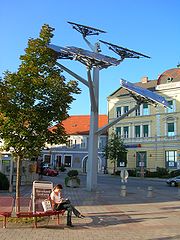
(solar tree, gleisdorf, austria )
Photovoltaik – von der Sonne in die Steckdose
Die Sonne ist die Energiequelle der Zukunft: Photovoltaikanlagen erzeugen sauberen Strom ohne Lärm und Geruch. Für alle Interessierten gibt es am 24. November eine Tagung in St. Pölten.
Jeden Tag liefert die Sonne mehr als das 10.000-fache des Weltenergieverbrauchs. Auch für Privathaushalte wird die Nutzung der Sonnenenergie aufgrund guter Förderungen und sinkender Marktpreise zunehmend interessant.
Wie viel Strom liefert eine PV-Anlage?
Die Leistung einer Zelle wird immer in Kilowatt-Peak oder abgekürzt kWp angegeben. In Österreich ist bei guter Ausrichtung mit einem Jahresertrag von ungefähr 1000 Kilowattstunden Strom pro kWp zu rechnen. Zum Vergleich: Eine dreiköpfige Familie verbraucht im Schnitt 4800 Kilowattstunden Strom pro Jahr, bei effizienter Nutzung sogar nur 3000 Kilowattstunden. Durch eine Photovoltaikanlage mit 3 bis 4 kWp Leistung kann also rein rechnerisch der Jahresbedarf der Familie gedeckt werden.
Das Stromnetz als Speicher
Das Angebot an Sonnenstrom deckt sich nie zur Gänze mit dem Verbrauch: Im Winter sinkt der Ertrag aufgrund der geringeren Sonnenstunden, im Sommer steigt er. Im Sommer wird die Energie, die nicht vom angeschlossenen Haushalt verbraucht wird, ins Stromnetz eingespeist. In der kalten Jahreszeit bezieht der Haushalt die fehlende Energie aus dem Netz. Ganz ohne Stromleitung auszukommen ist zwar möglich, wäre aber aufgrund der benötigten Batterien teuer.
Förderungen für Photovoltaikanlagen
Es gibt zwei Arten von Fördermodellen: Die Tarifförderung und die Investitionsförderung. Im ersten Fall muss man den erzeugten Strom zur Gänze ins Stromnetz einspeisen und bekommt dafür einen erhöhten Betrag ausbezahlt. Im zweiten Fall gibt es einen fixen, nicht rückzahlbaren Investitionszuschuss bei Errichtung der Anlage.
Tagung „Photovoltaik – Strom von der Sonne“
Für alle, die eine Anlage planen oder sich mit dem Thema näher auseinandersetzen wollen, gibt es am 24. November 2009 eine Tagung in St. Pölten. Neben Vorträgen zu verschiedensten Themengebieten werden sämtliche relevante Förderstellen vertreten sein, die Möglichkeiten des Stromverkaufs werden aufgezeigt und FirmenvertreterInnen präsentieren unterschiedliche Anlagenkonzepte. Die Teilnahme ist kostenlos!
Termin und Ort: Dienstag, 24. November 2009, 12-18 Uhr, St. Pölten, Landhaus
Download Programm: > Tagung Photovoltaik < [PDF 348 KB]
Nähere Informationen und Anmeldung unter der Hotline der Energieberatung NÖ: 02742/ 22 144.
Wir beraten Sie gerne!
Energieberatung NÖ Tel.: 02742/ 22 144, office@energieberatung-noe.at
Wien Tel.: 01/ 803 32 32, service@umweltberatung.at
> Meet Photovotaic Groups at facebook <
> Meet Photovoltaik Groups and Friends at facebook <
> Meet many Stop Global Warming Groups at facebook <
> Meet VASTU Groups, Friends, Studies at facebook <
ASTROLOGYTHROUGHBHRIGU EYE

> ASTROLOGYTHROUGHBHRIGU EYE <
> BRIGHU SAMHITA EBOOK DOWNLOAD <
The Bhrigu Samhita is an astrological (Jyotish) classic attributed to Maharishi Bhrigu during the Vedic period, Treta yuga, although the available evidence suggests that it was compiled over a period of time by the various sishyas (students in the lineage) of Maharishi Bhrigu.
Bhrigu-Samhita: An ancient manuscript with medical matters of interest
The debate on the inclusion of astrology, as a science subject, has been quite acrimonious and at times sanctimonious too. This is evident in several issues of Current Science, other technical and lay publications and in the media.
A good spin-off is the distinct polarization in the academia and the vocal expression of the partisan views. Indeed, such a debate should have been first invited by the UGC, before the decision. Controversy and an evidence-based debate amongst the ‘experts’ is the soul of science and technology. And the eventual consensus and the majority decision are then based on information, data and the level of contended knowledge.
Unfortunately, we still continue to be Lord Macaulay’s educational products. We have not yet revolutionized our memory-loaded learning into conceptbased education. Hence, barring a few exceptions, most of us have no roots in the Indian scientific traditions, languages and age-old knowledge base. We have been raised on a myth that science is universal and not culturally conditioned. Some of us who have attempted to study transcultural aspects of science know better.
During my study for Medicine, I wrote a thesis on ‘The medical aspects of Bhrigu-Samhita’ in 1963. It was a comparative study in the history of medicine. I invited the wrath of my examiners and the thesis was rejected because it was on ‘Ayurveda’!
But what interested me more in Bhrigu-Samhita were the remarkable medical descriptions in Sanskrit, on the circulation of blood, cancer, embolism, etc. I have cited some of these excerpts from the manuscript below:
- ‘The windpipe must be healthy for the movement of pure and impure air to and fro from the lungs. The lungs, in turn, supply the heart with the purified blood. Then the heart circulates the blood to the entire body rather rapidly.’ It is quite a statement in an old Sanskrit manuscript (Bhrigu R II/6: 8–9) (circa 3000 B.C. – Bhrigu Rishi).
- ‘If at times, due to whatever reasons, impure blood, a blood clot, or a piece of fat were to move into the heart, during circulation, this can jeopardize the heart.’ (Bhrigu R II/7: 5–6)
- ‘The germ can also move into the bones or the seat of the heart. The disease is called by the name – Kshaya Roga – The germs are so virulent that via breath a rapid spread can occur from one person to another.’ (Bhrigu R III/20: 5–7)
- ‘At times even the heart will be replaced. Such devices exist in India . . . Indian scientists of a high calibre will one day replace even liver or spleen, in future.’ (Bhrigu R II/10: 1–4)
- ‘Occasionally, diabetics would benefit especially from treatment that is carried out after proper urine examination. There can be help in other diseases too by a careful urine examination.’ (Bhrigu R IV/31: 6–8)
There is an urgent need to salvage many of our ancient manuscripts of medicine, astrology, philosophy, etc. We must conduct 14C-dating to determine the period of the palm-leaf and other manuscripts. But the time has come to look seriously at our heritage in sciences and humanities, without any ancestral vain-glory or an outright rejection because, something does not fit into the western reductionist world-view.
> Meet Shailesh Shaily at facebook <
> Dein Ayurveda Net ….. ” Ayurveda ” <
> Meet Pentavox Herbals, Ayurveda (Biggest Ayurveda Group on fb) <
> Meet many Ayurveda Groups and Friends at facebook <
> Meet Dhanvanthari Groups and Friends at facebook <
> Meet NaturalNews.com at facebook <
NaturalNews.com is an independent news resource that covers the natural health and wellness topics that empower individuals to make positive changes in their personal health. NaturalNews offers uncensored news that allows for healthier choice.
EINFÜHRUNGSABEND AYURVEDA

> DEUTSCHE AYURVEDA AKADEMIE <
Kostenloser Einführungsabend zu den Ausbildungsseminaren in der Kaiserkrone
Die Deutsche Ayurveda Akademie und die Apotheke zur Kaiserkrone laden Sie herzlich ein zum kostenlosen Infoabend zur Ayurveda- Ausbildung. Sie erfahren alles Wissenswerte zu den 5 aufbauenden Seminarbausteinen, die mit einem zertifizierten Diplom ausgezeichnet werden.
Leitung: Dr. med. Wolfgang Schachinger
Termin: Freitag, 6. 11. 2009
von 18.30 – 20.30 Uhr
Kursort: Seminarraum Kaiserkrone
1070 Wien, Mariahilferstr. 108
Preis: kostenlos
Vortrag: Inhaltliche Fragen zur Ayurveda-Ausbildung
Für Fragen: Dr. Wolfgang Schachinger +43 (0) 7752-86622
Eva Bradshaw +49 (0) 9431-7589408
Weitere Info zur gesamten Ausbildung: PDF Programm und Info über Weiterbildung der DAA mit Apotheke zur Kaiserkrone
> Meet Swami Maharshi Groups, Friends, Studies at Facebook <
> Dein Ayurveda Net ….. ” Ayurveda ” <
> Meet Pentavox Herbals, Ayurveda (Biggest Ayurveda Group on fb) <
> Meet many Ayurveda Groups and Friends at facebook <
> Meet Dhanvanthari Groups and Friends at facebook <
> Meet NaturalNews.com at facebook <
NaturalNews.com is an independent news resource that covers the natural health and wellness topics that empower individuals to make positive changes in their personal health. NaturalNews offers uncensored news that allows for healthier choice.
VAPUS – 100 % BIOLOGISCHE YOGAWEAR

> VAPUS BIOLOGISCHE YOGABEKLEIDUNG <
>SWAMI SHUDDANANDA FOUNDATION <
Das Wort „VAPUS“ kommt aus der alten Indo / germanischen Sprache Sanskrit und bedeutet soviel wie „schöner Körper – schöne Form“.
Wir sind ein junges Textillabel, gemacht von Yogis für Menschen die umdenken.
Die Bekleidung ist unserer Haut am nächsten und deshalb sollte auch am meisten Wert darauf gelegt werden woher diese kommt.
Alle unsere Produkte werden mit Sorgfalt, Liebe und unter Fairtrade aus 100% biologischen Materialien hergestellt und von der „Control Union“ unter GOTS (Global Organic Textile Standard) zertifiziert. Viele Modemarken versuchen heute dem Trend der Zeit zu entsprechen und bieten nun Produkte aus Öko-Stoffen an, wobei der Stoff aber immer noch in herkömmlicher Weise weiter verarbeitet wird und dadurch keine biologische Zertifizierung gegeben ist.
Unsere Stofffärbungen sind umweltfreundlich, AZO-Farbstoff und Schwermetall frei. Unsere Drucke sind auf Wasserbasis, für die Stickereien und das Nähgarn verwenden wir nur 100% biologisches Garn. Unsere Knöpfe waren früher Kokosnüsse und die Verpackung ist aus Papier.
Wir sind darauf bedacht unsere Produzenten und deren Mitarbeiter fair und menschenwürdig zu behandeln. Durch die enge Zusammenarbeit und des persönlichen Kotaktes zu unseren Herstellern, können wir uns von der Einhaltung den menschenwürdigen und fairen Arbeitsbedingungen stets überzeugen.
Beim Kauf eines unserer Produkte unterstützen Sie ein Kinder-Hilfsprojekt in Indien !
Nga Gyur Shed Dup Childrens’ Home (NSCH)
> ABOUT NSCF, Teachings, Activitys <
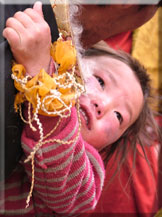
Nga Gyur Shed Dup Childrens’ Home (NSCH) is a non-profit social welfare home dedicated to provide care for orphans, abandoned and underprivileged children and those that living under the poverty line. With limited resources, it has been able to provide a decent home to abandoned and orphaned children, offering them family life, medical care, education and hope for the future.
Currently, there are 64 children receiving care and monastic education in NSCH. For the moment, we provide 16 bedrooms coupled with 2 double-decker beds to accommodate 4 children each room; a classroom, a scholar’s room and a kitchen.
Please contribute as much as your compassion to allow this noble cause in order for mankind to help each other and those in needs to live a normal life. The children urge for your help!
NSCH provides a unique opportunity for underprivileged and orphaned children to be sheltered and educated at an attached school, to be loved and cared for in a family-like environment.
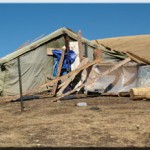
The objectives of NSCH are:
- To provide food and housing in a secure and nurturing home environment.
- To provide quality education that emphasizes on ethical and spiritual development and academic achievement.
- To prevent them from engaging in anti-social activities and promote ethical values, human potential and sense of responsibility towards society and environment.
- To educate the children and community about health concerns and offer adequate medical care.
Tibet is a land of dreams, of temples and Himalayan expeditions, of ancient cities and picturesque villages and the birthplace of many enlightened Buddhist Masters (Mahasiddhas). This ancientness nation has inherited and retained a wholesome culture and unique customs.
This land of cultural diversity and rich tradition is also one of the poorest regions in the world and for much of its population, daily life is difficult. More than half of the people live below the poverty line. The harsh cold climate in this mystic land adds to the suffering of the Tibetan communities.
NSCF is a charitable organisation that receives no governmental funding and relies solely based on the charitable contributions of donors from all over the world to assist us in our effort to shelter and educate those children and elderly in need.
REIKI – SYSTEM OF NATURAL HEALING
Reiki is a simple, gentle and very powerful way of healing. Reiki is also a spiritual path which can lead us into the inscrutable and ineffable mystery of the Universe. Many of us come to Reiki seeking healing, and never learn much about Reiki’s spiritual depth. Yet, these two aspects of Reiki – the healing and the spiritual – are intertwined. Just like heaven and earth meeting each other in the beautiful dance of time meeting eternity; so too in Reiki, our absolute, eternal essence expresses in the relative, constantly changing, physical aspect of our lives.
Within this dance of heaven and earth, time and eternity, physical and eternal, we are faced with an ongoing progression of choices about how we engage with our lives. Our karma, interest, commitment, capacity, (and some luck, or grace), will determine how we choose. And the way we choose will shape the story of Reiki we’ll eventually tell.
People come to Reiki for different reasons: some for a method to heal the physical body, for use with themselves or others. Others wish to grow in peace and tranquillity. Many seek knowledge of the unseen mystery behind the physical world. And maybe all of us seek a way to deal with the suffering and meaninglessness of everyday life, and the “dark nights” of our soul. Reiki is invaluable for all this.
As a healing method Reiki offers a simple, hands-on technology that anyone can learn to use. If that’s all you’re seeking, it should serve you well. But there is more.
As a spiritual path Reiki offers a collection of skillful methods to help us come to know our real nature – not merely as a nice intellectual idea – but a profoundly intimate, ever-deepening experience of mystery, totally and perfectly beyond anything our ordinary minds might manufacture or our concepts may grasp. In fact, all we can do speaking about this reality is to point to mystery, like fingers pointing to the moon. Ultimately, it is something we’ll know as our real nature and as the nature of all things.
While this goal may seem ambitious, there is no need to be intimidated. Through Reiki, you will gradually be introduced to knowledge. And as you become able to see more you’ll recognize yourself as completely whole and absolutely perfect, since the very beginning.
Reiki challenges the unreasonably low opinion we usually hold about our own potential. It challenges us
- To be as healthy, complete, and conscious as possible, in order to fully occupy our place and role in this life.
- To become so powerful, that we may be able to make our biggest contributions to this world from the privacy of our hearts, without anyone ever knowing about it.
- To be a fountain of peace in the midst of turmoil.
- To be a source of healing amid dis-ease.
- To be a centre of tranquillity in the chaos of everyday life.
- To be a place of love and beauty in the midst of fear and ugliness.
- To be caretakers of this world, and of all creation.
Reiki is one of the gifts we have to help us along this path. It comes in humble guise, and is exceedingly gentle. Yet there is power hidden here. Through Reiki we come to recognize our dignity, our magnificence and we’re challenged to uncover our hidden splendour. We recognize our responsibility to each other and to all of life. We recognize Universal assistance as our birthright, and the miracle of unfolding as our path.
During the training you will attempt to present Reiki in its basic precious magnificence. At the core of this is the transmission of the heart-essence of this teaching: the atmosphere of compassion and wisdom which is the essence of all enlightened beings, and the skilful reminders that this is the real nature of each and every one of us. Still, the responsibility for liberation through this knowledge always remains our own, with infinite support if we’re willing to ask for it.
Reiki is not a book, nor a workshop. Reiki is alive inside you: a living current of love, wisdom, power as fresh and new as it was when Dr Usui first “discovered” it; eternally new as the in and out-breath of the Universe. May it bring you great joy and bless all the world!
A History of Modern Reiki
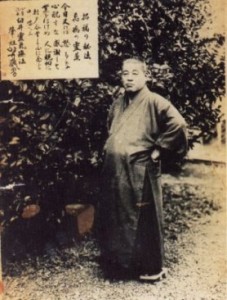
After almost a century of very gradual growth, Reiki exploded onto the world scene during the last 5 years or so. Despite its great popularity, the history and origins of Reiki were shrouded in myth and mystery until the fairly recent emergence of several records describing its development. At last it is becoming possible to piece together a more coherent story of the origins and spirit of Reiki, as expressed by its founder, Mikao Usui.
The brilliance of Dr Usui was that he connected, distilled and codified various complex teachings to produce an essentially „universal“ system of healing and spirituality, largely devoid of cultural trappings, thus enabling the „Sacred Science“ to be used by anyone for the benefit of everyone.
> Meet REIKI Groups at facebook <
> Meet traditional REIKI and Dr. Usui Mikao Groups at facebook <
INTRO OF THE FIVE TIBETAN TRADITIONS
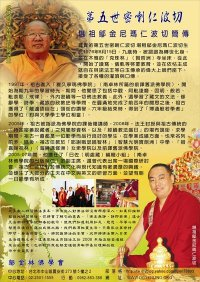
> BUDDHISM < and > BÖN <
Introductory History of the Five Tibetan Traditions
> TIBETAN LINEAGES OF MASTERS <
Introduction of Buddhism by Emperor Songtsen-gampo:
The history of the five Tibetan traditions of Buddhism and Bon. The four Buddhist traditions are Nyingma, Kagyu, Sakya, and Gelug, while the pre-Buddhist Tibetan tradition of Bon makes the fifth. Often we hear the syllable „pa“ at the end of these names. It means a follower of that tradition; for instance, Gelug pa means someone who follows the Gelug tradition.
To survey the history, we need to go back to the seventh century of the Common Era. At the beginning of that century, a king from Central Tibet named Songtsen-gampo conquered the Western Tibetan kingdom of Zhang-zhung and created the first unified Tibetan Empire. The custom in those days to unify an empire was for the king to marry princesses from nearby kingdoms – neighboring kings were less likely to attack the palaces where their daughters lived. Emperor Songtsen-gampo married princesses from China, Nepal, and Zhang-zhung. These princesses brought with them the religions of their native countries. The Chinese and Nepali princesses brought Buddhist texts and the Zhang-zhung princess brought her Bon beliefs. Bon was the Zhang-zhung native religion.
If we look from a Western historical viewpoint, Buddhism did not have much of an impact in this earliest period. The main development was that this first emperor built thirteen Buddhism temples in his domain. The map of Tibet was seen as a female demon lying on the earth. Choosing thirteen spots on the body of the demoness, like acupuncture points, the emperor commissioned temples built on each of them to subdue and control the energy of the demoness of Tibet. That is how Buddhism came to the Land of Snows.
To unify his empire further, Songtsen-gampo wished to have an alphabet for writing the Tibetan language. Thus, he sent his minister, Togmey-sambhota, to obtain the alphabet from Khotan – not from India, as is often explained in the traditional Tibetan histories. Khotan was a Buddhist kingdom north of Western Tibet in Central Asia. The route to Khotan that the minister took passed through Kashmir. When he arrived there, he discovered that the master he was going to meet in Khotan happened to be in Kashmir at the time. This is how the story evolved that the Tibetan writing system came from Kashmir. Orthographic analysis reveals that the Tibetan alphabet actually follows features distinctive only to the Khotanese script. Afterwards, there was much more contact with Buddhism in China and Khotan then there was with Indian Buddhism. The Bon religion, however, remained stronger in Tibet than Buddhism during this earliest period. It provided the ceremonies used in state rituals.
The Old Transmission Period (Nyingma)
In the mid-eighth century, another great emperor, Tri Songdetsen, ascended to the throne. He received a prophecy about future Buddhist teachings in Tibet and, in accord with this prophecy, he invited a great Buddhist teacher from India, Shantarakshita. Soon after the arrival of the Indian Abbot, a smallpox epidemic broke out. The court ministers, who were against all foreign influences in Tibet, blamed the smallpox on Shantarakshita and expelled him from Tibet. Before leaving, Shantarakshita advised the Emperor to invite Guru Rinpoche, Padmasambhava, to come and subdue the adverse conditions and problems. Tri Songdetsen followed this advice, and Padmasambhava came and rid Tibet of the interferences. The Emperor then invited Shantarakshita to return. There were already several Buddhist temples in the land, but now they built the first monastery in Tibet, at Samyay, just south of Lhasa. The Indian Abbot ordained the first monks.
Guru Rinpoche taught a little, but actually did not teach very much in Tibet. He mostly buried texts, thinking that the Tibetans at that time were not yet receptive. These texts were of the highest tantra teachings called dzogchen, the great completeness.
After this, many Chinese, Indian, and Zhang-zhung scholars worked together harmoniously at Samyay monastery, mostly compiling and translating texts from their own traditions. Soon, Buddhism was made the state religion. The Chinese had the largest influence at this time. Every second year, the Chinese emperor sent two monks to Samyay. The form of Buddhism the Chinese monks followed was Chan, the Chinese predecessor of Japanese Zen.
Shantarakshita predicted some conflict with the Chinese. Please keep in mind that the religious history did not happen in a vacuum; it happened in connection with the political history and there were a lot of wars between China and Tibet at this time. Shantarakshita said that they should invite his disciple, Kamalashila, to settle whatever problems might arise.
Meanwhile, Emperor Tri Songdetsen sent more Tibetans to India to bring back teachings and invite more Indians to his land. More texts were buried. Because there were so many wars with China and Central Asia and because the ministers were against any foreign influence in Tibet, it makes sense that there was a persecution of the Bonpos in Samyay and at the court. After all, the Bonpo faction was primarily from Zhang-zhung.
There was also a Dharma debate between Kamalashila, representing the Indians, and the Chinese representative. The Chinese lost. Of course, there was no way that a Chan master could defeat, in logical debate, a master in logic from India. It was no contest: Chan practitioners have no training in logic. For many reasons, one could postulate that the debate was a political move taken to provide an excuse for expelling the Chinese and for adopting Indian Buddhism as the main form of Buddhism in Tibet. Of all the kingdoms and empires neighboring Tibet, the Indians posed the least military threat.
I like to present history not from the standard devotional Tibetan point of view but a little bit more from a Western, scientific viewpoint, since I do have that training. I think it indicates a little more clearly what happened. It makes more sense.
Many more translations took place after this. In the early ninth century, under imperial sponsorship, the scholars compiled a Sanskrit-Tibetan dictionary and standardized the translation terms and style. It is quite interesting that the scholars did not include any tantra terms in the dictionary; tantra was already quite controversial.
In the mid-ninth century, the infamous persecution of Buddhism by the Emperor Langdarma took place. Rather than making Langdarma into the devil, as devotional histories tend to do, it may be more objective to see this persecution as a reaction to the abbots and monks at Samyay who were trying to assert too much influence on the government. Too much of the taxes raised by the state went for supporting the monasteries, and the economic burden had become untenable.
Actually, what Langdarma did was shut down the monasteries; it was not that he destroyed Buddhism. He did not destroy the Buddhist libraries, because Atisha found them when he came to Tibet a century later. Buddhism continued outside the monasteries. What had started before and continued during this so-called „old transmission period“ (old translation period) later became known as „the old tradition,“ the Nyingma tradition.
> Meet Ogyen Ling Buddhist Association at facebook <
> Meet Tulku Ogyen Rinpoche (Khentrul) Group at facebook <
> Meet Tulku Ogyen Rinpoche (Khentrul) personal site at facebook <
> ABOUT KHENTRUL:
VEDA, SMRITI, SRUTI
> YOGA & LIVE SANSKRIT CLASSES <
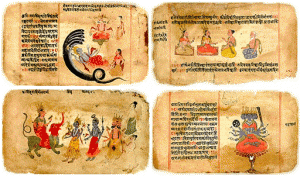
Śruti (Sanskrit: śrúti, „hearing, listening“) is a term that describes the sacred texts comprising the central canon of Hinduism and is one of the three main sources of dharma and therefore is also influential within Hindu Law. These sacred works span the entire history of Hinduism, beginning with some of the earliest known Hindu texts and ending in the early modern period with the later Upanishads.. Śruti is often cited as akin to the Vedas; however, it also contains various supplementary commentaries on them. This literature differs from other sources of Hindu Law, particularly smṛti or “remembered text”, because of the purely divine origin of śruti. This belief of divinity is particularly prominent within the Mimamsa tradition. The initial literature is traditionally believed to be a direct revelation of the “cosmic sound of truth” heard by ancient Rishis who then translated what was heard into something understandable by humans.
Smṛti (Sanskrit: स्मृति), literally „that which is remembered,“ refers to a specific body of Hindu religious scripture. Smṛti also denotes non-Shruti texts and is generally seen as secondary in authority to Shruti. The literature which comprises the Smriti was composed after the Vedas around 500 BCE. Smriti also denotes tradition in the sense that it portrays the traditions of the rules on dharma, especially those of lawful virtuous persons. This is understood by looking at traditional texts, such as the Ramayana, in which the traditions of the main characters portray a strict adherence to or observance of dharma.
DALAI LAMA CENTER, TIBET. MED. & ASTR.

> TIBETAN MEDICINE & ASTROLOGY <
Mission Statement
The Dalai Lama Center for Peace and Education educates the heart and fosters compassion through: creative learning, facilitating and applying research, and connecting people and ideas.
Values
The Center encourages values such as compassion, forgiveness, tolerance, contentment and self-discipline through engagement with the community. These are the values that contribute to peace and harmony locally, nationally and globally. We believe that most people embrace and recognize the importance of these values, but often don’t know how to access the information and guidance they seek to bring them into their lives. We will help them do that.
The Center seeks, in all of its activities, to reflect values of compassion, mutual understanding, inner well-being, mindfulness, creativity, peacefulness, warm heartedness, aspiration and interconnectedness.
THE VEDAS AND ANCIENT EGYPT
> THE INVOCATION OF THE GODDESS <
THE VEDAS AND ANCIENT EGYPT
By David Frawley
First published in the Hindu, one of India’s main national newspapers.
The Vedas as the Pyramids of the Mind
The Vedas represent a monumental spiritual literature, by far the largest that remains from the ancient world. We could therefore call the Vedas, `the pyramids of the ancient mind‘. The > Vedas < are the oldest record of the great dharmic traditions of the East, with not only the Hindu but also Buddhist, Jain, Sikh and Zoroastrian traditions part of the same greater stream of spiritual striving. Apart from the Biblical tradition, this dharmic or Indic tradition is one of the two dominant streams of world spirituality that has endured throughout the centuries and remains vital to the present day, as the global popularity of Yoga, Vedanta and Buddhism clearly reveals.
If we look at the Vedic tradition, we see that it was based upon an ancient priestly order that was extensive and sophisticated, comparable to the priestly orders of ancient Egypt or Babylonia. This priestly order was concerned not merely with rituals but also with spirituality, yoga, philosophy, medicine, astronomy and architecture that form the basis of the various Upavedas and Vedangas.
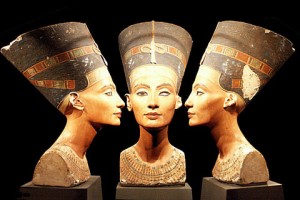
This spiritual culture of ancient India can easily be compared with that of ancient Egypt, which was similarly guided by extensive priestly orders, their sophisticated rituals and an emphasis of mysticism and magic. As ancient Egypt was arguably the spiritual center of the West in the ancient world, so India can be said to be the spiritual center of the ancient East.
> Meet Egypt Groups and Friends at facbook <
SWAMI BALENDU, KG, PRIMARY SCHOOL
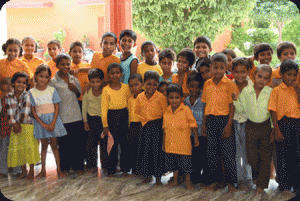
Swami Balendu e.V. Kindergarten & Primary School
The Swami Balendu e.V. Kindergarten and the Swami Balendu e.V. Primary School are right next to Swami Balendu’s Ashram Shree Bindu Sewa Sansthan in Vrindavan, North India. The building of school and Kindergarten was fully renovated in 2008. Now the children learn in bright and big rooms in a cheerful atmosphere.
The educational institutions of the Swami Balendu e.V. have been founded to support the education of poor children. The Kindergarten and the Primary school are frequented by children whose families live below the poverty line. Due to their very small income they cannot afford to send their children to school. Many of the parents go to work in the morning and with the salary of the same day they buy food for dinner. They do not have any savings to pay school fees and mostly do not have time or the knowledge to teach their children themselves.
In the Swami Balendu e.V. Kindergarten and the Primary School there are no school fees. The institutions are run by donations which make it possible that the children receive school uniforms, books, pens and daily a warm lunch. Parents can drop them in the morning before going to work and pick them up again in the afternoon, when returning back home.
In the Swami Balendu e.V. Kindergarten the children get to know the basics of reading and writing in a playful way. They get used to being in a group and sitting for a while like they will have to when they go to school. With the help of symbols and pictures they learn colours, forms, the names of animals and more. The youngest children are three years old.
At the age of six they can go to the first class of primary school. There they have Hindi classes as well as English lessons. In the higher classes they learn more about the history and the geography of India. Arts also find a place in the schedule and many children like these classes best: they paint, sing and even learn classical Indian dance. On special events like the independence day of India they can show what they have learned which is each time a wonderful performance.
As mentioned above, the Kindergarten and the primary school are run by donations. All children are supported by Shree Bindu Sewa Sansthan and many of them also have sponsors from all over the world. You, too, can sponsor a child and ensure his or her education for only 140 Euro per year.
You can also support our project by sponsoring the food for one or several days.
> Meet Future for Kids at facebook <
MADONNA RAISING MALAWI
> MISCONCEPTIONS ABOUT KABBALAH <
Kabbalah (Hebrew: קÖ·בÖ¸Ö¼לÖ¸ה, lit. „receiving“) is a discipline and school of thought concerned with the mystical aspect of Judaism. It is a set of esoteric teachings that is meant to explain the relationship between an infinite, eternal and essentially unknowable Creator with the finite and mortal universe of His creation. In solving this paradox, Kabbalah seeks to define the nature of the universe and the human being, the nature and purpose of existence, and various other ontological questions. It also presents methods to aid understanding of these concepts and to thereby attain spiritual realization. Kabbalah originally developed entirely within the realm of Jewish thought and constantly uses classical Jewish sources to explain and demonstrate its esoteric teachings. These teachings are thus held by kabbalists to define the inner meaning of both the Tanakh (Hebrew Bible) and traditional rabbinic literature, as well as to explain the significance of Jewish religious observances.
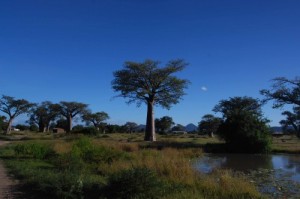
Raising Malawi is a charity non-profit organisation, co-founded by Madonna and Michael Berg in 2006 in conjunction with the Kabbalah Centre Charitable Foundation. It is dedicated to helping with the extreme poverty and hardship endured by Malawi’s one million orphans.
Mission statement
Since 2006, Raising Malawi has been dedicated to bringing an end to the extreme poverty and hardship endured by Malawi’s one million orphans. Co-founded by Madonna and Michael Berg, Raising Malawi uses a community-based approach to provide immediate direct physical assistance, create long-term sustainability, support education and psycho-social programs, and build public awareness through multimedia and worldwide volunteer efforts.
As a part of its activities, > Raising Malawi < works to distribute financial support that will help community-based organizations provide vulnerable children with nutritious food, proper clothing, secure shelter, formal education, targeted medical care, and emotional support. We do not create or manage our own programs in Malawi; rather we support dedicated people on the ground and in the villages, the ones closest to the realities that exist. We believe in empowering the smartest and most caring of those people, the ones who understand the challenges and the solutions.
By choosing to work at a community-based level, rather than trying to impose Western beliefs and methodologies on a different culture, real and lasting change is occurring in the lives of hundreds of thousands of impoverished children in Malawi.
>Meet Raising Malawi at facebook <
VEDIC PATH – MYTHS OF MEDITATION !

> Myths of Meditation! New light on Dhyana. <
By Yogi Baba Prem Tom Beal, Veda visharada, CYI, C.ay, C.va,
Upanishad
From Hindupedia, the Hindu Encyclopedia www.hindupedia.com
By P.R.Ramachander
The term > „Upanishad“ < literally means the inner or mystic teaching. It is derived from upa (near), ni (down) and s(h)ad (to sit), i.e., sitting down near, which refers to groups of pupils sitting near their teacher to learn from him the secret doctrine. In the serenity of forest hermitages, the Upanishad thinkers pondered on the problems of deepest concerns and communicated their knowledge to the capable pupils that sat near them.
Samkara derives the word Upanishad as a substitute from the root sad, ‚to loosen,‘ ‚to reach‘ or ‚to destroy‘ with Upa and ni as prefixes and kvip as termination. If this determination is accepted, Upanishad means brahma-knowledge by which ignorance is loosened or destroyed. The Upanishads are found in the concluding sections of the Vedas and are classified as Vedanta, or the end of the Vedas.
There are five Vedas and each of these five books has several Saaakas (Branches). Each Saaka has a Karma Khanda dealing with the actions to be performed and is made up of Mantras and Brahmanaas. The latter deals with Upasana or meditation and has Aranyakas * inside them for the benefit of those who have resorted to the quiet habitat of the forest to pursue their spiritual quest.
(*Literature in the ancient period was not fuelled by the urge to preserve history but was a complication of experiences and rules of worship. Most of the literature of this period was religious. (a) The Indigenous literature includes the Vedas, the Brahmanas, the Aryankas, the Upanishads, the Epics Ramayana and Mahabharatha, the Brahmashastras, the Puranas. The Buddhist and Jain literature gives knowledge of the traditions prevalent in those periods. The literature of this period are in Sanskrit Pali Prakrit. It gives us a knowledge about music, dance, painting architecture and administration of various kings.)
The Upanishads are found mostly in the Aranyaka section of the Vedas. The five Vedas have 1180 Saaakas and thus there should be 1180 Upanishads. Of these, what exists today is a collection of 108 Upanishads. The list of these 108 Upanishads is given in the Mukthikopanishad.
Out of the 108 Upanishads, only 10 have been commented upon by several Acharyas like > Adi Shankaracharya < . These are Ishavasya, Kena, Katha, Aithreya, Brihadaranyaka, Prashna, Mandukya, Taittireeya, Chandogya and Mundaka. These have also been popularized by many savants like Swami Vivekananda, Swami Chinmayananda etc. They all deal with highest category of philosophy and metaphysics. Because of this, there is a general impression that all Upanishads are texts of Hindu Philosophy. This is not true. There are Upanishads which even tell you how to wear the sacred ash, how to worship a particular God and so on. But the majority of them deal with methods of Yoga and Renunciation (Sanyasa).
Dhyana Bindhu Upanishad
Om ! May He protect us both together; may He nourish us both together;
May we work conjointly with great energy,
May our study be vigorous and effective;
May we not mutually dispute (or may we not hate any).
Om ! Let there be Peace in me !
Let there be Peace in my environment !
Let there be Peace in the forces that act on me !
THE SACRED SYLLABLE „OM“ ACCORDING TO THE UPANISHADS (including dhyana bindu upanishad) , by TYS, Tradtional Yoga Studies, Georg Feuerstein, : > here < .
Aum (also Om, written in Devanagari as ॐ, in Chinese and Japanese as 唵, in Tibetan as ༀ, in Sanskrit known as praṇava प्रणव lit. „to sound out loudly“ or oṃkÄ�ra ओंकार lit. „oṃ syllable“) is a mystical or sacred syllable in the Indian religions, including Hinduism, Sikhism, Jainism and Buddhism, and in Bön.
Aum is commonly pronounced as a long or over-long nasalized close-mid back rounded vowel,) though there are other enunciations pronounced in received traditions. It is placed at the beginning of most Hindu texts as a sacred exclamation to be uttered at the beginning and end of a reading of the Vedas or previously to any prayer or mantra. The Mandukya Upanishad is entirely devoted to the explanation of the syllable. The syllable is taken to consist of three phonemes, a, u and m, variously symbolizing the Three Vedas or the Hindu Trimurti or three stages in life ( birth, life and death ). Though ostensibly in some traditions it is polysyllabic and vocalized as a triphthong, the Omkara is held to move through and contain all vowels possible in human speech.
The name Omkara, (Sanskrit: the syllable om) is taken as a name of God in the Hindu revivalist Arya Samaj. Similarly, the concept of om, called onkar in Punjabi, is found in Sikh theology as a symbol of God. It invariably emphasizes God’s singularity, expressed as Ek Onkar („One Omkara“ or „The Aum is One“), stating that the multiplicity of existence symbolized in the aum syllable is really founded in a singular God.
Read the full text: > HERE <
> Meet Adi Shankara Group at facebook <
LAMA JIGME´s FREE TIPS ON MEDITATION

FREE tips and teachings on Meditation and the Spiritual Path.
How could you help Feed a Buddhist Monk for just One dollar?
Please click > HERE < to learn how
Lama Jigme a refreshing encounter Episode Lama Jigme Gyatso is an ordained monk in an age when many are content to hide behind tradition, hearsay, dogma and circular reasoning it can be refreshing to encounter someone like him. Taking his teachers instructions to heart, he practices and transmits the Buddhas teachings in an essentialized and pragmatic manner that is as profoundly effective as it is deeply practical.
Who is Lama Jigme ?
Ordained as Lama Jigme Gyatso: Rime Manipa Tantrika, which translates as “Ocean of Courage Teacher; ” he is a Jewish-american born, Tibetan-buddhist: Monk, Teacher, Healer and Tantrika.
Lama Jigme was taught to be devoted to the Buddha of Compassion {Manipa} in a NON-sectarian manner {Rime} that practices Sutra’s union of compassion and insight as well as the union of Tantra’s paths of devotion, imagination and sensuality {Tantrika}.
In an age when many are content to hide behind tradition, hearsay, dogma and circular reasoning this controversial and unconventional teacher insists that a true Lama’s resume, credentials and letters of recommendation are the vastness of his Compassion, the profundity of his Insight and the power of his Effectiveness.
Lama Jigme Gyatso has had the very good fortune to receive teachings from every major Buddhist lineage of the Theravada, Mahayana and Tantric traditions.
Taking his Lama’s instructions to heart, he practices and transmits the Buddha’s teachings in an essentialized manner that is as profoundly effective as it is deeply practical.Interessen:Lama Jigme is playful and dynamicas well as loving and insightful.
Just as the alchemists of legend turned lead into gold, instructions received from this precious teacher can transform sorrow, anger, and fear into peace, love, joy and bliss.
