Posts by admin
Grounding Techniques – one way to reduce stress & anxiety
> LIVING BY DESIGN, ANANGA´s BLOG <
> FREE: Beautiful Calm eBook <
Ananga Sivyer is a health writer with a passion for helping people feel positive and in control of their lives. She’s a contributing health editor for Lifescape Magazine and the author of the self-help workbook The Art & Science of Emotional Freedom.
She is currently enjoying writing for this blog while studying Ayurvedic Medicine.
Ananga is also a musician, she plays the flute and records projects for relaxation and meditation. She has worked with New World Music’s leading artists Pia and John Richardson and composed the music for Silvia Hartmann’s HypnoDreams and HypnoSolutions. She released Beautiful Calm a collection of guided meditations in August 2007 and is presently working on new relaxation projects, find out more in the new Inner Calm Audio Store.
Read Self Help Tree’s interview with Ananga about her meditations > here<
Relaxation & Meditation Downloads:
Guided Meditation downloads
Meditation classes to go – master your breath, calm your mind and lift your mood…
meditation download view selection:
Music for Relaxation
Music for relaxation and contemplation featuring traditional ethnic meditation instruments.
Yoga Meditation Music
Set the mood for your yoga or meditation practice with this soothing background music featuring the sounds of nature, flute and sitar to calm your mind and soothe your spirit
Alpha Brain Audio
Alpha brain relaxation music for whole brain creative thinking & problem solving..
Grounding Techniques
Quick and easy grounding techniques for reducing stress and anxiety…
Forest Temple Music for Yoga & Meditation:
Among the trees of an ancient forest you find a temple, small and safe, a bare wood floor and a cushion await you within it’s stone carved walls. The birds sing, as they have always done here, and the rain drips softly on the leaves outside the door.
Featured Meditation & Relaxation Titles:
Spread the Calm as an Inner Calm Audio Affiliate
Qualifications:
- Ananga is a Licensed Practitioner & Trainer with The Association For Meridian Energy Therapies the UK’s leading organisation for teaching EFT & Meridian Therapies
- Certified Practitioner of NLP: Neuro-Linguistic Programming
- Certified Practitioner of Humanistic Neuro-Linguistic Psychology
- Certified Practitioner of TimeLine Therapy
- Stage 1 Hypnotherapist Practitione
- Student of Ayurveda
> Meet living by design at facebook <
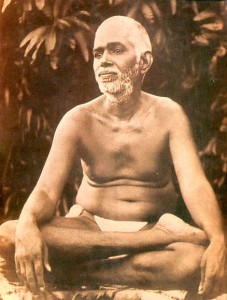
BIOGRAPHY OF RAMAN MAHARSHI.
www.sriaurobindosociety.org.in
The Self alone exists; and the Self alone is real. Verily the Self alone is the world, the I-I and God. All that exists is but the manifestation of the Supreme Being. – Ramana Maharshi
Ramana Maharshi was born on 26th Dec in the year1879 in Tiruchhulli near to Madurai in South India. For the first 16 years of his life he was a normal child, with a keen interest in his studies and sports. However at a certain point he became struck with an unusual, yet overwhelming fear of death. Lying in his own room he became acutely aware of the inevitability of death and the mortality of his own body. However this paralysing fear proved to be only transient. With another penetrating insight he became aware that “I am not the Body” The real “I” was beyond matter. He was not a body but spirit. It was just that up until that point he had ignored this “I” or inner self.
With this glimpse of a higher, immortal consciousness the Maharshi lost all interest in his worldly life, he was plunged into a period of intense meditation on the nature of “Who am I” Absorbed in contemplations of a higher consciousness Ramana no longer felt any reason to stay in his home town. Instead he was magnetically drawn to the holy mountain of Arunachala, whose name alone, held a mantric appeal to Ramana Maharshi . Arunachala was to become the home for Ramana Maharshi for the rest of his life and the mountain was to be inexorably linked to his own sadhana and self.
For several years Ramana maintained a virtual silence because he was so absorbed in his interior meditations. Despite leading the most simple of lives and barely communicating, a group of devoted seekers began to be drawn to the mystical aura of this young sage. Thus gradually an ashram was built around him on the foothills of Arunachala and Ramana Maharshi would start to teach those who came, although he never claimed to be anybody’s Guru. After 2 years his mother came to visit Ramana, tearfully pleading with him to return home. Despite this Ramana was unmoved maintaining a calm meditative expression. Finally he answered that sometimes a higher power controls the fate of men and whatever she said could not change his destiny. (After her other children died several years later, his mother would return and eventually became a devoted disciple of her own son and remained in Arunachala for the last 6 years of her life)
Ramana Maharshi had no formal training in Yoga, he was entirely self taught, receiving only guidance from his own inner pilot, but so unique and powerful were his teachings that learned men well versed in scripture became disciples of Ramana Maharshi. Ramana Maharshi taught a simple path of self inquiry along the lines of “Who I am” He guidance sadhaks to train their awareness to the source of their thoughts – to their own inner self. Because of this Ramana Maharshi was often viewed as a Jnani (Man of knowledge) however he also had a strong devotional aspect, that is evident in some of his poems
“Thou madst me mad to cure me finally
Of madness for this world of fantasy.
“As a spider thou wouldst watch me, Lord,
To trap me in thy web of Grace
Till now, when I’m enmeshed, thou com’st
And feed’st on me, O Blessedness!”
(Translated from the original Sanskrit, entitled Five Hymns)
Ramana Maharshi was compassion and forgiveness incarnate. There is a story told that once burglars came to the ashram. They were so incensed there was nothing worth stealing that they started to hit Ramana. However the great Sage displayed no sense of anger, he even offered the burglars some food before they left. (A year later they were caught for similar crimes and sent to jail) Ramana only felt pity for their state of ignorance.
Ramana Maharshi also had a wonderful relationship with animals. Many wild animals such as Tigers and snakes roamed the mountain side but the Maharishi never showed any signs of fear and often befriended animals who came in contact with him. A disciple recorded that on one instance a black cobra entered a hut where the Maharshi was staying, the snake stopped and stared into the eyes of Ramana, after a while the snake retreated. A realized soul maintains a close oneness with all of God’s creation and this compassion can sensed by the animals themselves. The ability to befriend animals is some what reminiscent of St Francis of Assissi who had a similar touch with animals.
Sri Aurobindo said that Ramana Maharshi’s tapasya (spiritual practice) was a shining light of India. Many seekers benefited from his spiritual aura of peace, enabling sadhaks to attain a higher state of consciousess.
Dilip Kumar Roy, a disciple of > Sri Aurobindo < , spent 5 days at Arunachala and had the opportunity to meditate and meet with the Maharishi.
“I saw indeed a man who, outwardly, was anything but distinguished, still less handsome or captivating, and yet.. how shall I put it… he was so compelling, so disarming… And then what peace I felt!
Sri Ramana Maharshi taught a simple path of self enquiry along the ideas of “Who am I?” He could be dismissive of complex metaphysical questions and teasing of those who wanted to solve the problems of the world.
“My friend, when you are in abysmal ignorance about such a fundamental reality as your own self, why waste your time over such monumental metaphysical questions?”
Paul Brunton once asked the sage
“Will the Maharshi express an opinion about the future of the world?”
“Why do you trouble yourself about the future? You do not even know about the present! Take care of the present and the future will then take care of itself.”
Unpeturbed Paul Brunton continued, Ramana Maharshi replied to this my saying,
“ There is One Who governs the world, and it is His look out to look after the world. He Who has given life to the world knows how to sustain it also. It’s He Who bears the burden of the world, not you.”
For the last 2 years of his life the Maharshi suffered from cancer and experienced great physical pain, but even towards the end he maintained the same tranquil poise and self same radiant smile. When he was suffering from cancer in the arm a disciple ran away crying because he could not bear to see his master in pain. Ramana only smiled and spoke to a disciple nearby
“Duraswami is crying because he thinks I am suffering agonies! My body is suffering but I am not suffering. When will he realise that I am not this body?”
Ramana Maharshi attained Mahaparinirvana on 14th April in the year 1950 at the age of 74. An ashram is maintained at Arunachala, his teachings have spread all over the world. He is now widely regarded as being of one India’s foremost Saints of the last century.
> Meet Sri Raman Maharshi Groups at facebook <
> Meet Sri Aurobindo Yoga, School, Ashram, College, at facebook <
TABLA – Sree Debasish Dass (Pintoo)
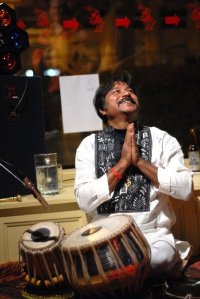
The tabla (Hindi: तबला, Bangla: তবলা, Urdu: تبلہ tablÄ� from Arabic: طبل، طبلة tabl, tabla) is a popular Indian percussion instrument used in the classical, popular and religious music of the Indian subcontinent and in Hindustani classical music. The instrument consists of a pair of hand drums of contrasting sizes and timbres. The term tabla is derived from an Arabic word, tabl, which simply means „drum.“Playing technique involves extensive use of the fingers and palms in various configurations to create a wide variety of different sounds, reflected in the mnemonic syllables (bol). The heel of the hand is used to apply pressure or in a sliding motion on the larger drum so that the pitch is changed during the sound’s decay.
Sree Debasish Dass (Pintoo) Born in a very tradtional musical familly on May day, Sree Debasish Dass has carved a special niche for himself in the world of Tabla, the king of Indian percussion instruments. He was initiated into Tabla at the tender age of five by his beloved father Late Dilip Kumar Pandit a highly acclaimed Tabla player of Farukkabad Gharana.
True to his date of birth, which symbolises sincere labour, Debasish (popularly known as Pintoo) put in years of relentless effort and unfailing dedication to master the art of playing Tabla. He completed his graduation from the world famous Visva-Bharati University founded by the great Rabindra Nath Tagore.
Thereafter he plunged fully into the subtle complexities Tabla and completed his Diploma in music, Bachelor and Master degree in Tabla. And there after; Late Pandit Dilip Kumar Das too our family to Satiniketan where he joind in the world famous University there as a professor.
When ever I come to Europe I feel there is a great need for the elderly people who needs care…….. So I have dream to start a place where my spiritual family members will come during the winter and stay with me….. Where there will be somepeople who will take care of them and there will be Yoga and music every day……… there will be a place where they will walk and walk with self esteem too. I do not know how but I feel I must do this….. because I have got much from them…..
DIE VEDEN & AYURVEDA, EIN ÜBERBLICK
> CHARAKA SCHOOL OF AYURVEDA <
> AYURVEDA & CHARAKA SAMHITA <
>> Books from „Kenneth G. Zysk“ <<
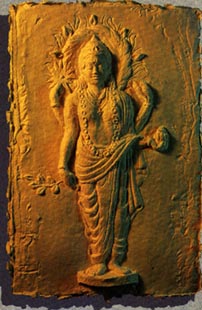
Ayurveda (DevanÄ�garÄ«: आयुर्वेद, the ’science of life‘) is a system of traditional medicine native to India and practiced in other parts of the world as a form of alternative medicine. In Sanskrit, the word Ayurveda consists of the words Ä�yus, meaning ‚life‘, and veda, meaning ‚related to knowledge‘ or ’science‘. Evolving throughout its history, Ayurveda remains an influential system of medicine in South Asia. The earliest literature of Ayurveda appeared during the Vedic period in India. The Sushruta Samhita and the Charaka Samhita were influential works on traditional medicine during this era. Ayurvedic practitioners also identified a number of medicinal preparations and surgical procedures for curing various ailments and diseases. Ayurveda traces its origins to the Vedas—the Atharvaveda in particular—and is connected to Hindu religion.The Sushruta Samhita of Sushruta appeared during the 1st millennium BC.
Ayurveda, Rishis, die 4 VEDEN (Rgveda, Samaveda, Yajurveda, Arthavaveda) und deren Entstehung:
Der Begriff Ä€yurveda ist ein Wort aus dem Sanskrit, der altindischen Hochsprache, und heißt einfach übersetzt „Wissenschaft vom Leben“ oder „Wissen von der Lebensspanne“. Durch diese Bezeichnung versteht sich, dass im Ä€yurveda nicht nur Krankheiten behandelt werden. Als „Wissenschaft vom Leben“ hat Ä€yurveda ein zweifaches Ziel.
> Dein Ayurveda Net ….. “ Ayurveda “ <
> Meet Pentavox Herbals, Ayurveda (Biggest Ayurveda Group on fb) <
> Meet many Ayurveda Groups and Friends at facebook <
> Meet Dhanvanthari Groups and Friends at facebook <
> Meet NaturalNews.com at facebook <
NaturalNews.com is an independent news resource that covers the natural health and wellness topics that empower individuals to make positive changes in their personal health. NaturalNews offers uncensored news that allows for healthier choice.
Introduction into Trad. Tibetan Medicine

> Grundlagen der Tibetischen Medizin <
First Seminar Cycle “ Introduction into Traditional Tibetan Medicine “ successfull:
Around half of the participants of the seminar „Introduction into Traditional Tibetan Medicine“ were eager enough to take the exam at the end of the first seminar cycle. After having written their homework, the participants came from different parts of Austria (Vienna, Upper and Lower Austria, Styria, Carinthia) and Germany in order to accomplish the challenging 3-hour exam on March 21.
„The exam motivates me to deepen the knowledge. The Tibetan Medicine is rather complex and I would like to make use of it later on at my own small clinic. Therefore the studies are very important“, said doctor Z. from Vienna.
These introductory seminars delivered a „first sight“ into the diversity and depth of the Traditional Tibetan Medicine. Many of the participants want to continue and plan to attend the diploma course next year where they can extend their gained knowledge and get a deeper insight into the fields of „Tibetan Massage“ and/or „Gentle Therapies in the TTM“. In addition, special seminars for doctors are offered in the field of „Diagnostic Methods in the TTM“ where authentic Tibetan doctors will teach the art of pulse and urine diagnosis.
„I am happy that there is a big interest in the traditional Tibetan art of healing. This will help spread the TTM authentically in the West“, says Ven. Geshe Tenzin Dhargye, director of the Tibet Center. „A lot of our participants are doctors. Therefore we want to cooperate more closely with Austrian doctors in the future and thus want to cultivate the dialogue among experts“, explains Geshe T. Dhargye.
Tibetan medicine is a centuries-old traditional medical system that employs a complex approach to diagnosis, incorporating techniques such as pulse analysis and urinalysis, and utilizes behavior and dietary modification, medicines composed of natural materials (e.g., herbs and minerals) and physical therapies (e.g. Tibetan acupuncture, moxabustion, etc.) to treat illness.
The > Tibetan medical system < is based upon a synthesis of the Indian (Ayurveda), Persian (Unani), Greek, indigenous Tibetan, and Chinese medical systems, and it continues to be practiced in Tibet, India, Nepal, Bhutan, Ladakh, Siberia, China and Mongolia, as well as more recently in parts of Europe and North America. It embraces the traditional Buddhist belief that all illness ultimately results from the „three poisons“ of the mind: ignorance, attachment and aversion.
RADHA ANJALI – BHARATANATYAM
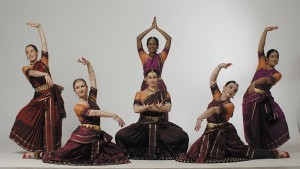
Verein für indische Kunst & Kultur in Wien
“yato hastas tato drstir, yato drstis tato manah, yato manas tato bhavo,yato bhavas tato rasah“ – Abhinayadarpana, Vers 37, Nandikesvara . Wo die Hände sind/sich hinbewegen dort ist der Blick, wo der Blick ist, ist der Geist,wo der Geist ist, ist das Gefühl, wo das Gefühl ist, ist (entsteht) Rasa.
Bharatanatyam (Tamil: பரதநாட்டியம்) is a classical Indian dance form originating in Tamil Nadu[1][2][3][4][5], now in India. This dance form denotes various 19th and 20th century reconstructions of Cathir, the art of temple dancers. Cathir in turn, is derived from ancient dance forms. Bharatanatyam is usually accompanied by the classical music. It has its inspirations from the sculptures of the ancient temple of Chidambaram. Bharatanatyam, as the name depicts is the combination of:
BHA- Bhava (Expression), RA- Raga (Music) and TA- Tala (Rhythm) Bharatanatyam is a traditional dance-form known for its grace, purity, tenderness, and sculpturesque poses. Today, it is one of the most popular and widely performed dance styles and is practiced by male and female dancers all over India.
Usefull Links & Information:
-
Bharatanatyam, Laya-Yoga & Meditation by Dr. phil. Angela-Petra Saber-Zaimian (Radha Anjali) : > Körperlichkeit & indische Philosophie in (laya) Yoga & Bharatanatyam <
-
Alexandra Romanova was trained in ballet at the National School of Ballet in Warsaw, studied indology at Warsaw University and was awarded scholarship to learn Bharata Natyam dance in India. She spent years being trained by Yamini Krishnamurti, in New Delhi. www.alexromanova.com
> Dein Ayurveda Net….. > Bharatanatyam <
> Meet Bharatanatyam Group at facebook <
LATE MANGESHKAR – BOLLYWOOD
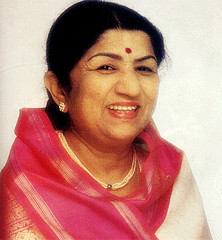
Lata Mangeshkar (Marathi: लता मंगेशकर; born September 28, 1929) is a singer from India. She is one of the best-known playback singers in the Hindi film industry. Mangeshkar’s career started in 1942 and has spanned over six and a half decades. She sang in over a thousand Bollywood movies and has sung songs in over twenty regional Indian languages, but primarily in Hindi. She is the elder sister of the equally accomplished singer Asha Bhosle and lesser-known singers, brother Hridayanath Mangeshkar and sisters Usha Mangeshkar and Meena Mangeshkar. Lata is the second vocalist ever to have received the Bharat Ratna, India’s highest civilian honour.
Mangeshkar was featured in the Guiness Book of World Records from 1974 to 1991 for having made the most recordings in the world. The claim was that she had recorded no less than 25,000 solo, duet, and chorus-backed songs in 20 Indian languages between 1948 to 1974 (30,000 songs between 1948 and 1987, according to the 1987 edition). Over the years, while several sources have supported this claim, others have raised concerns over its veracity, claiming that this number was highly exaggerated and that Mangeshkar’s sister, Asha Bhosle, had more song recordings than she had.
Bollywood (Hindi: बॉलीवुड) is the informal term popularly used for the Hindi-language film industry based in Mumbai, India. The term is often incorrectly used to refer to the whole of Indian cinema; it is only a part of the Indian film industry. >> Bollywood << is the largest film producer in India and one of the largest centers of film production in the world.
The name is a portmanteau of Bombay (the former name for Mumbai) and Hollywood, the center of the American film industry.

Bollywood is more properly referred to as Hindi cinema, though frequent use of poetic Urdu words is fairly common. There has been a growing presence of Indian English in dialogue and songs as well. It is not uncommon to see films that feature dialogue with English words and phrases, or even whole sentences.
> Meet Late Mangeshkar Fans at facebook <
IYENGAR – BELLUR SCHOOL TRUST (BKSSNT)

> The Tree of Yoga by B.K.S. Ivengar <
> Bellur Krishnamachar Sundararaja Iyengar <
Bellur Krishnamachar Sundararaja Iyengar (Kannada: ಬೆಳ್ಳೂರ್ ಕೃಷ್ಣಮಾಚಾರ್ ಸುಂದರರಾಜ ಐಯಂಗಾರ್, Tamil: பெல்லூர் கிருஷ்ணமாச்சார் சௌந்தரராஜா ஐயங்கார்), (generally known as Yogacharya B. K. S. Iyengar) (Born December 14, 1918 in Bellur, Kolar District, Karnataka, India) is the founder of Iyengar Yoga. He is considered one of the foremost yoga teachers in the world and has been practicing and teaching yoga for more than 75 years. He has written many books on yogic practice and philosophy, and is best known for his books Light on Yoga, Light on Pranayama, and Light on the Yoga Sutras of Patanjali. He has also written several definitive yoga texts. Iyengar yoga centers are located throughout the world, and it is believed that millions of students practice Iyengar Yoga. He was awarded the Padma Shri in 1991, and the Padma Bhushan in 2002. In 2004, Iyengar was named one of the 100 most influential people in the world by Time Magazine.
The Bellur Krishnamachar and Seshamma Smaraka Niddhi Trust (BKSSNT) or the Bellur Trust is a charitable Trust formed by Guruji, his family and students, with the objective of undertaking educational, social, cultural and health related projects for the upliftment of the people of Bellur, a poor and backward village in southern India where Guruji, BKS Iyengar was born and lived as a young boy.
Guruji’s vision for Bellur is to establish the village as a model through the provision of educational, medical, social and cultural facilities and opportunities to raise and enhance the general quality of life and improve future prospects for the young in the community.
It is hoped from this firm foundation that lasting social and economic reform can be achieved. Guruji’s father had been a school teacher and taught at a school in a nearby village as there was no school in Bellur until Guruji in 1967 built a primary school with the help from money raised by English students.
In the past several years a further level has been added to the existing primary school providing a large space for yoga classes A 50,000 gallon water tank has been erected to provide fresh clean drinking water to the village A fully staffed, equipped High School (Smt. Ramamani Sundararaja Iyengar High School) has been built with the villagers sending their children to enroll at 8th grade School fees for the students have been waived and a system of free education established for those who come from under privileged homes.
-
School uniforms have been provided free to all students as well as books and stationery
-
A kitchen has been established to provide a free mid day meal
-
The necessary infrastructure of boundary fences, power supply and road access has been established
-
A Day Hospital providing for the health of the villagers has been built, equipped and staffed
-
A Guest House to provide accommodation for visitors to Bellur.
-
Restoration and building of the world’s first Sage Patanjali temple (pdf).
The future plans are as ambitious as those already completed and will need ongoing support from the Iyengar community and a very large amount of funding to see their completion and maintenance. The benefits to the village of Bellur have been enormous and the future plans will benefit the whole locality around Bellur.
Guruji has asked his students world wide to launch fund raising initiatives to help raise the significant amounts of money to further the already successful projects which the Trust has embarked upon. You can donate individually or you can organize a group project. For further information about the Trust and its work and to download the donation form go to www.bksiyengar.com .
Download: The World’s First Sage Patanjali temple > (pdf) <.
Buddhistisch Medizinisches Zentrum

Tulku Lama Lobsang
Buddhistisch Medizinisches Zentrum
Nangten Menlang ist eine Organisation, die sich der Bewahrung und Lehre der Wissenschaft der Tibetischen Medizin und des Buddhistischen Wissens widmet. Tulku Lama Lobsang, die achte Wiedergeburt des Nyentse Lama, hoch angesehener Buddhistischer Meister, Doktor und Astrologe, verkörpert die lebende Übertragung der weltlichen Weisheit. Er lehrt Methoden, um physische Gesundheit, mentales Glücklichsein und Entwicklung des Geistes zu erreichen.
Dem Mittleren Weg folgend, lässt er in jedem die ihm angeborene Weisheit wieder aufleben, die immer existiert hat. Vorträge, Workshops, Retreats, Konsultationen und Behandlungen werden in vielen Ländern weltweit angeboten und von lokalen Zentren organisiert.
HAFLA – EIN ORIENTALISCHES FEST
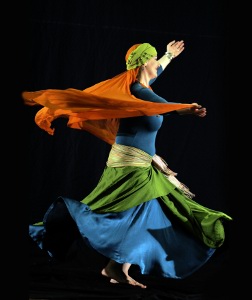
HAFLA – EIN ORIENTALISCHES FEST
mit Musik, Tanz und kurdischer Küche
Live-Musik und Tanz gehören im Orient ebenso zu jedem gelungenen Fest wie orientalische Köstlichkeiten und ausgelassene Stimmung. Auf dem Programm der Hafla, inzwischen fixer Bestandteil von Salam.Orient, steht ein ethnischer Mix aus Tanz und Musik. Brigitte Ferchichi befasst sich seit 20 Jahren mit orientalischem Tanz, der im arabischen Raum Raqs Sharqi genannt wird.
Restaurant Dionysos
Sa, 31.10. 20.00h
Herzstück sind die Tänze Ägyptens, die sie unvergleichlich weich und fließend interpretiert. Amoura Latif, Tänzerin und Lehrerin für orientalischen Tanz im > Studio Chiftetelli < , interpretiert die Musik mit jeder ihrer gekonnten Bewegungen. Die Live-Band rund um Abdou Mansour (Percussion, Gesang) führt durch die Performance.
JNANA YOGA
> COMPLETE WORK SRI RAMAKRISHNA, VIVEKANANDA <
> The Complete Works of Swami Vivekananda/Jnana-Yoga <
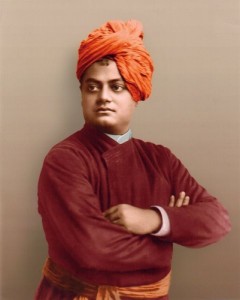
Swami Vivekananda (Bengali: স্বামী বিবেকানন্দ, Shami BibekÄ�nondo; Hindi: स्वामी विवेकानन्द, SvÄ�mi VivekÄ�nanda) (January 12, 1863–July 4, 1902), born Narendranath Dutta is the chief disciple of the 19th century mystic Sri Ramakrishna Paramahamsa and the founder of Ramakrishna Mission. He is considered a key figure in the introduction of Vedanta and Yoga in Europe and America and is also credited with raising interfaith awareness, bringing Hinduism to the status of a world religion during the end of the 19th century. Vivekananda is considered to be a major force in the revival of Hinduism in modern India. He is best known for his inspiring speech beginning with „sisters and brothers of America“, through which he introduced Hinduism at the Parliament of the World’s Religions at Chicago in 1893.
Swami Vivekananda was born in an aristocratic Kayastha family of Calcutta in 1863. His parents influenced the Swami’s thinking – the father by his rational mind and the mother by her religious temperament. From his childhood, he showed inclination towards spirituality and God realization. While searching for a man who could directly demonstrate the reality of God, he came to Ramakrishna and became his disciple. As a guru, Ramakrishna taught him Advaita Vedanta and that all religions are true, and service to man was the most effective worship of God. After the death of his Guru, Vivekananda became a wandering monk, touring the Indian subcontinent and getting a first-hand account of India’s condition. He later sailed to Chicago and represented India as a delegate in the 1893 Parliament of World Religions. An eloquent speaker, Vivekananda was invited to several forums in United States and spoke at universities and clubs. He conducted several public and private lectures, disseminating Vedanta, Yoga and Hinduism in America, England and a few other countries in Europe. He also established Vedanta societies in America and England. He later sailed back to India and in 1897 he founded the Ramakrishna Math and Ramakrishna Mission, a philanthropic and spiritual organization. Swami Vivekananda is regarded as one of India’s foremost nation-builders. His teachings influenced the thinking of other national leaders and philosophers, like Mahatma Gandhi, Jawaharlal Nehru, Subhas Chandra Bose, Aurobindo Ghosh, Sarvepalli Radhakrishnan, and Rabindranath Tagore.
THE PATH OF KNOWLEDGE –
Jnana Yoga according to Bhagavad Gita:
The aim of this article is to introduce the concepts of Jnana Yoga or the path of knowledge/wisdom in the light of the Bhagavad Gita…I will introduce only a few verses from the Gita to emphasize the approach to Jnana marga…at the same time, we will see practical methods for Jnana Yoga….The Gita is eminently a practice manual too.!
Introduction
The Hindu approach to spiritual evolution leading to liberation or moksha or Self-realization is one of the four major paths or yogas:
-
the path of knowledge or Jnana yoga,
-
the path of mind control or Raja Yoga ,
-
the path of devotion of Bhakti yoga and
-
the path of action/work or Karma yoga.
This is the common mode of classification, mostly derived from Swami Vivekanada’s lectures. Other yogas are minor variations of these four .
Of these, Bhakti Yoga and Karma Yoga have been given less importance in former times. The path of Knowledge, with focus on Hindu philosophy, has been in the forefront since the Vedic times…Some advaitins [non-dualists] would maintain that Karma yoga and Bhakti Yoga are preparatory steps or stepping stones [to purify the mind, chitta shuddi] and final liberation is possible only due to acquisition of Jnana or by Jnana Yoga as the final entry gate….[This was the stand taken by Shri Adi Sankara in Vivekachudamani too.]
The Jnana yoga is intellectually satisfying with abstract reasoning and can be devoid of rituals and formal worship of idols and symbols ;it is non-sectarian and asserts that the indwelling Soul or Atman and Self is the same in all.All these appeal to those who have a dislike for formal worship with rituals.[Yet devotion to Guru is essential in the Hindu context.]
Be that as it may, there are many saints and sages who would maintain that Bhakti yoga alone or Karma plus Bhakti is enough for final emancipation! I do not wish to dwell on this here because I have discussed this in greater detail in one of my books. [Refer: the Essence of the Bhagavad Gita…Pustak Mahal, New Delhi]
The significance of Jnana Marga
Among the four paths or yogas, Jnana marga is considered as the ‘direct’ path . If you consider the spiritual effort as that of climbing a mountain and reaching the summit, Jnana is like rock climbing without detours and winding roads.
Bhakti yoga can be likened to a sloping ,winding road leading to the summit and Raja yoga is like taking steep steps over rough stones. Thus Raja yoga is more difficult than Bhakti and Jnana is the most difficult of all.
Jnana yoga is admittedly difficult and certainly is meant for ‘dhiras’ –accomplished intellectuals with tremendous power of concentration for deep meditations on the abstract Self or Atman or Brahman. It is like rock climbing , with lot of training from expert mountain climbers and those with good physique…not for weaklings!…snd thode with ascetic bent of mind..
Therefore over the ages, there have been very few real jnanis .We are thrilled by the lives of great Jnanis or sages like Bhagawan Ramana or Sadashiva Brahmendra, Thayumanavar or Nisargadatta….again how many disciples they had who reached those heights?..may be a few again.
Bhagawan Ramana Maharshi stated that Jnana and the path of Self-enquiry or atma-vichara are really easy to encourage novices; , but among those who tread this path, many have fallen on the wayside many times. When you climb a rock face, a single mistake will result in crash to the bottom.!
I am not counting here excellent philosophers who may expound on the philosophy or nonduality [Advaita] and give lectures/satsanghs, but only those who have had deep experience of the Self; or reached Samadhi states.
It is safe to say that the path of Knowledge or Jnana is pretty difficult for this materialistic age, when ascetic methods are not even understood or appreciated, in the highly commercial atmosphere we live in.
What Jnana Yoga entails?
Swami Vivekananda had beautifully explained this path in his lectures, compiled into the book— ‘Jnana Yoga’ , published by Advaita Ashrama/RK mission/Vedanta societies.. I do not wish to elaborate on these, but point out a few things.
Jnana path entails two things: Viveka or discrimination and Vairagya or dispassion.
Viveka means distinguishing between unreal things [the phenomenal world, world of change ] and the Real, that is permanent [Self/Atman/Brahman].To get Viveka one may require intellectual analysis, cogitation, reflection and discussion….Satsangha would help ,but would not be always sufficient.
Vairagya or dispassion is to difficult to achieve…this is nonattachment to things of this world…little by little at first—the practice of sacrifice and renunciation….monkhood with severing of ties, with family ,society ,abandoning one’s property and possessions…Bhagwan Buddha [Sakyamuni], St Francis and Bhagwan Ramana are rare examples….Many jnanis may attain this stage in slow degrees too…
It is alright to talk of being in the world ,not of the world’ in a rhetorical sense, but not easy to practice…many so called Jnanis that I have come across still maintain contact with their kith and kin and friends , maintain personal bank accounts, own property—thereby making a mockery of real renunciation or sannyas in Indian /Hindu framework.
There are instances of great Jnanis making the break suddenly in a moment of intense vairagya or renunciation;they serve as beacon-lights for others and exemplify this path.
Let me add that in the Hindu context, only those who exhibit intense Vairagya would be respected in the Hindu society and acknowledged as real Jnanis, not those who profess enlightened state or give wonderful lectures or self-styled gurus.
A Jnani ,by definition ,has attained a state of equanimity or samatva;he looks upon pain and pleasure, friends and foes, glory and ignominy ,heat and cold, in the same light, without any feeling whatsoever. In other words, he does not exhibit attachment [ragha] or aversion [dvesha] against any one or any particular thing.
The message of the Bhagavad Gita.
Now let us turn to a few verses from the Gita.
The verses are most beautifully told in chapters 2,3,4,& 5.
-
That calm man who is the same in pain and pleasure ,whom these cannot disturb, alone is able to attain to immortality—O Arjuna. [2-15]
-
The Unreal never is. The real never is not.Men possessed of the knowledge of the Truth fully know both of these. [2-16]
-
This verse is the distilled essence of non-duality or advaita.
-
That by which all this is pervaded—that know for certain to be indestructible. None has the power to destroy this Immutable.[Self/Atman] [2-17]
-
Being steadfast in Yoga, perform actions , abandoning attachment, remaining unconcerned as regards success and failure. This even-minded is known as Yoga..[2-48]
-
Endued with this evenness of mind, one frees oneself in this life, alike from vice and virtue; devote thyself, to this yoga….Yoga is the very dexterity of work. (skill in action) [2-50]
-
Attachment [ragha] and aversion [dvesha] of the senses for their respective objects [of the senses] are natural; let none come under the sway; they are his foes. [3-34]
-
As fire is enveloped by smoke, as a mirror by dust, as an embryo by the womb, so is It covered by that [desires]. [3-38]
-
That man who lives devoid of longing, abandoning all desires, without the sense of “I” and “Mine” , he attains to peace. [2-71]
-
Mahatma Gandhi attached great importance to chapter 2 and chapter 3 of the Gita and also the latter portion of Ch 2 –verses 58-72 on the man of steady wisdom.
-
Whose actions are all devoid of plan [sankalpa] and desire for results, and whose actions are burnt by the fire of knowledge, him, the sages call wise. [4-19]
-
Verily there exists nothing in this world as purifying like knowledge. In good time, having reached perfection in yoga, one realizes that [knowledge]oneself in one’s own heart.. [4-38]
-
The place which is reached by the Jnanis is also reached by the karma yogis .He who understands knowledge and performance of actions as the same alone sees.(understands).
-
To those whose ignorance is destroyed by the knowledge of the Self—that knowledge of theirs, like the Sun, reveals the Supreme. [5-16]
-
Those who have their intellect absorbed in That, whose self is That, whose steadfastness is That, whose consummation is That, their impurities [sins] cleansed by knowledge, they go whence to non-return. [Moksha] [5-17]
-
With the heart unattached to external objects, he realizes the joy that is in the Self. With the heart devoted to the meditation of Brahman, he attains unending happiness.[5-21]
A careful study of these verses will clarify many things relating to Jnana Yoga.
> Meet Swami Vivekananda, Vedanta Groups & Fans at facebook <
> Meet Ramakrishna Groups at facebook <
MORINGA THE MIRACLE TREE
> Moringa oleifera, commonly referred to simply as „Moringa“ <
> TREE´s OF LIVE – gift´s from the heart <
Moringa oleifera, commonly referred to simply as „Moringa“ (Hindi: सहजन sahjan; Tamil murungai‘, முருங்கை; Kannada Nuggekai ನುಗ್ಗೆ ಕಾಯಿ; మునగకాయ in Telugu; Marathi Shevaga; Malunggay in Tagalog),Muringakkaya in Malayalam language,the most widely cultivated species of the genus Moringa, which is the only genus in the family Moringaceae. It is an exceptionally nutritious vegetable tree with a variety of potential uses. The tree itself is rather slender, with drooping branches that grow to approximately 10 m in height. In cultivation, it is often cut back annually to 1 meter or less and allowed to regrow so that pods and leaves remain within arm’s reach.
About:
This blog ( http://blog.moringaoleifera.org) may introduce you all about the miracle tree “Moringa Oleifera“ the scientific name of malunggay.
We believe our whole life We unknowingly ourself to make this blog. But maybe we should not call it a surprise, rather an expected order of thing: there must have been so much love for trees, so much passion for nature within our heart, that life compelled us to express ourself in this blog. It is our hope that we will be able to match life`s expectations and bring you the unbelievable, beautiful story of one of our greatest trees, Moringa. A tree rich in the most precious nutrients that has wisely chosen to grow where it is most needed – in arid, droughtplugued areas of our wold. Moringa is a tree that brings hope to malnourished children while drying the tears of their mothers. Moringa bears a variety of suggested names around the world such as: Miracle Tree, Mother`s Bestfriend, and Never Die. It has been more than overwhelming to learn about many uses of Moringa, and, during this process, we came to love and talk about it as a close friend. Don`t be suprised to notice the affection here and there, while reading this blog about a great being.
After a comprehensive introduction, this blog is organized in pages explaining all nutrients and compounds found in Moringa. All pages of this blog show how Moringa can improve our general health. We wish is that anybody who reads this blog may understand the extraordinary value of Moringa for humanity. Moringa has hundreds of substances such as vitamins, enzymes, amino acids, fats, minerals, each with clear importance and numerous applications in healing and nutrition.
Read carefuly and believed all the information that have in this blog and you will come to understand why they call it a “Miracle Tree“.
San Damiano Foundation & Village to Village
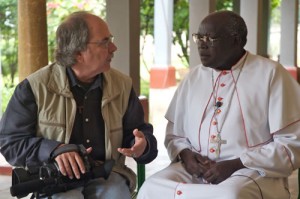
St. Francis of Assisi St. Claire of Assisi
St. Clare had a way of expressing the transforming power of contemplative prayer: “ Place your mind before the mirror of eternity! Place your soul in the brilliance of glory! And transform your entire being into the image of the Godhead Itself through contemplation”. – Pastor’s Message from St Clare of Assisi Catholic Parish
Mission Statement – The mission of The San Damiano Foundation is to communicate through films the spirituality of St. Francis and St. Clare of Assisi. The church of San Damiano in Assisi, Italy, is the birthplace of the Franciscan movement. In that small, dilapidated church, St. Francis heard the voice of Christ speak to him from a painted Byzantine cross telling him to rebuild the Church. It was a moment of transformation for the future saint. The San Damiano Foundation desires to help inspire similar transformation within individuals, within the Church and within our society.
The San Damiano Foundation recognizes the power of film to touch and inspire people, making it a perfect medium to communicate Franciscan spirituality and concern for the poor, social justice, peace and nonviolence.
The films produced by the Foundation will explore the active and contemplative dimensions of Franciscan spirituality. They will either illustrate St. Francis’ love of the poor by showcasing the work Franciscans and other Christians are doing with the poor around the world or enter the heart of contemplative prayer as embodied by St. Clare. Some films will be produced for broadcast on public and commercial television stations; some will be geared for distribution to churches and schools.
The San Damiano Foundation recognizes the power of film to touch and inspire people, making it a perfect medium to communicate Franciscan spirituality and concern for the poor, social justice, peace and nonviolence. The vision for our films is twofold: to raise funds for Christian charities aiding the world’s poor, and to awaken the hearts and minds to the plight of the poor,hopefully inspiring viewers to serve those in need through acts of compassion and mercy.
Africa’s Medicine: – The healing methods and medicine developed in Africa differs in many aspects from western medicine. Western medicine is technically and analytically based, while the traditional African medicine takes a holistic approach.
It is believed that good health, disease, success or misfortune are not chance occurrences but arise from the actions of individuals and ancestral spirits according to the balance or imbalance between the individual and the social environment.
Traditionally, every rural African community would have a traditional medical practitioner, to which they would go for advice on a number of issues, including health-problems. These traditional “doctors” have an invaluable botanical knowledge of plant species and their ecology and scarcity.
The community would rely upon this knowledge, as well as the spiritual and practical skills of the traditional healer, since they themselves were not allowed to gain this knowledge.
This is because throughout Africa the gathering of medicinal plants was traditionally restricted to traditional healers or their trainees through spiritual calling, ritual, religious controls and, in Southern Africa, the use of alternative (hlonipha) names not known to outsiders.
Traditional healers use plants in a variety of ways, depending on the illness to be cured. Parts of plants can be applied directly to wounds and cuts or, if necessary, prepared as powders that are used like snuff. Sometimes plants are even used in the form of smoke or fumes, or as infusions.
Village2Village Project Mission – To provide comprehensive, empowering, respectful and compassionate care for vulnerable children and their families, one life at a time.
Our Priority: Children who have at least one parent affected by HIV/AIDS or violence, and their families.
Our Location: Serere, Uganda; a county of rural villages in Soroti district, in the Teso region of northeastern Uganda. In time we may expand to serve those in need in a variety of locations both inside and outside of Uganda.
> Meet the Groups and friends of Africa in facebook <
> Meet San Damiano Foundation, friends at facebook <
> Meet Village2Village, friends at facebook <
Palmblattbibliotheks – Reise 2009/2010

> The Bhrigu (Palmleaf Library) Tour 2009 & 2010 <
Mystisch-kulturelle Reise zum ältesten Orakel der Welt in Indien
RABINDRANATH TAGORE & AMARTYA SEN.
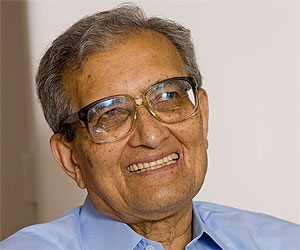
> AMARTYA SEN. & VISVA-BHARATI UNIVERSITY <
A central university and an institution of national importance
Rabindranath Tagore (Bengali: রবীন্দ্রনাথ ঠাকুর) (May 1861 – 7 August 1941), sobriquet Gurudev, was a Bengali polymath. As a poet, novelist, musician, and playwright, he reshaped Bengali literature and music in the late 19th and early 20th centuries. As author of Gitanjali and its „profoundly sensitive, fresh and beautiful verse“, he became Asia’s first Nobel laureate by winning the 1913 Nobel Prize in Literature.
A Pirali Brahmin from Calcutta, Tagore wrote poems at age eight. At age sixteen, he published his first substantial poetry under the pseudonym Bhanushingho („Sun Lion“) and wrote his first short stories and dramas in 1877. Tagore denounced the British Raj and supported the Indian Independence Movement. His efforts endure in his vast canon and in the institution he founded, Visva-Bharati University.