SPIRITUAL JOURNEYS, NEWS
Convention on Biological Diversity (COP 11) , India Oct. 8-19
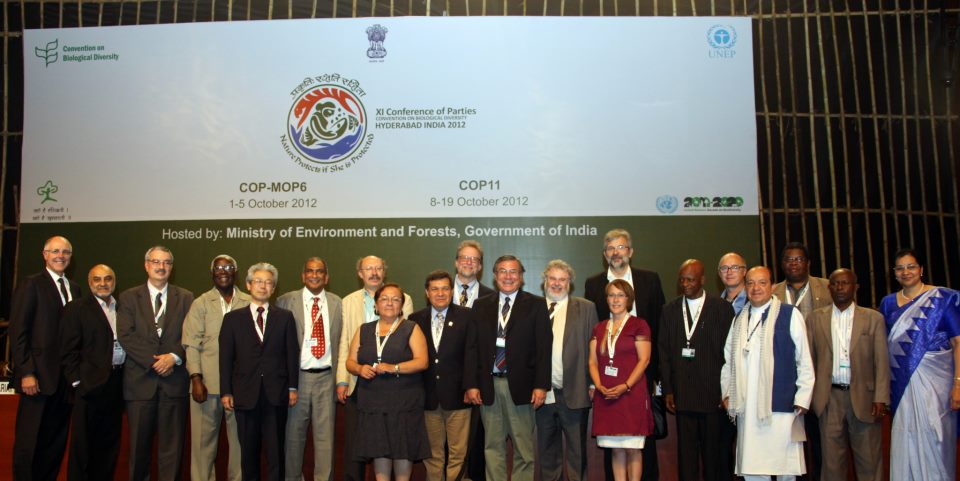
The Convention on Biological Diversity (CBD), known informally as the Biodiversity Convention, is an international legally binding treaty. The Convention has three main goals:
- conservation of biological diversity (or biodiversity);
- sustainable use of its components; and
- fair and equitable sharing of benefits arising from genetic resources
In other words, its objective is to develop national strategies for the conservation and sustainable use of biological diversity. It is often seen as the key document regarding sustainable development. http://en.wikipedia.org/wiki/Convention_on_Biological_Diversity
As 193 member states will descend on India Oct. 8-19 for high-level talks on Biodiversity (COP 11 CBD), Braulio Ferreira de Souza Dias, executive secretary of the Convention on Biological Diversity, talked to IPS' about what's at stake.
http://www.scidev.net/en/science-and-innovation-policy/science-at-rio-20
http://www.scidev.net/en/news/nagoya-biopiracy-agreement-is-unexpected-success
http://www.twnside.org.sg/title2/books/The.Road.to.an.Anti-Biopiracy.Agreement.htm
previous #articles #videos #biodiversity #sustainable development
http://www.facebook.com/ipsnews
http://www.facebook.com/ipsenvironment
Live Webcasts: Shantideva’s „A Guide to the Bodhisattva’s Way of Life

Shantideva (Sk: ŚÄ�ntideva; Zh: 寂天; Tib: ཞི་བ་ལྷ། (Shyiwa Lha, Wylie: zhi ba lha); Mn: Шантидэва гэгээн) was an 8th-century Indian Buddhist scholar at Nalanda University and an adherent of the Madhyamaka philosophy of Nagarjuna. http://en.wikipedia.org/wiki/Shantideva
There will be live webcasts of His Holiness the Dalai Lama teachings on Shantideva’s „A Guide to the Bodhisattva’s Way of Life (chodjug)“ at the request of a group of Southeast Asians at the Main Tibetan Temple in Dharamsala, India, on September 4-6, 2012. There will be live webcasts in English, Chinese, Tibetan and Russian languages. The live webcasts can be viewed at http://dalailama.com/liveweb
For times in your region: 9:30am IST on September 4th in Dharamsala, India, is the same as 5:00am BST on September 4th in London, England; and 9:00pm PDT on September 3rd in Los Angeles, California, USA
#previous #articles #videos #dalai lama #tibet
http://www.facebook.com/DalaiLama

UN Human Rights Office calls for an independent inquiry into the apparent killing by the security forces
UN Human Rights Office calls for an independent inquiry into the apparent killing by the security forces of at least 8 people during protests in Nyala, Darfur, Sudan. The office is also concerned about the persecution of bloggers, as well as violence against gay and lesbian activists in Liberia. http://bit.ly/QzBUtX
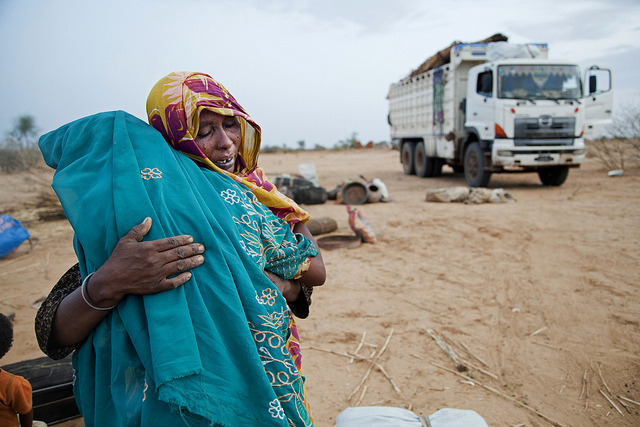
IDPs return to their village and are hugged by the villagers on Flickr by UNHCR (CC license-BY). Welcoming home returning IDPs in Sudan: Internally Displaced Persons (IDPs) returned to their original village, Sehjanna, after living seven years in an IDP camp in Aramba. They are welcomed by relatives and friends who stayed back. The voluntary repatriation program is organized by the Office of the United Nations High Commissioner for Refugees (UNHCR) and the Sudanese Humanitarian Aid Commission.
http://globalvoicesonline.org/africa-celebrating-humanity-through-photos-and-videos
http://globalvoicesonline.org/-/world/sub-saharan-africa/mali
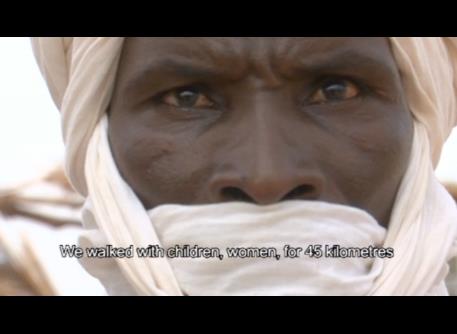
Niger-Mali refugee crisis: ‚We came with nothing … there is nothing to eat. Nothing‘ – video
http://www.hrw.org/africa/sudan
https://twitter.com/ovietnamfinance
http://www.hrw.org/asia/vietnam
http://www.facebook.com/IranLGBT
http://www.facebook.com/lgbtqnation
#previous #articles #videos #humanrights #sudan
Damascus Center for Human Right Studies (DCHRS) #Syria #Humanrights #Amnesty FSA killings probe findings ‘must go to UN inquiry’ http://bit.ly/MIKGQr http://www.facebook.com/DCHRS
IPS Inter Press Service News Agency — Check out this fantastic map and historical timeline of LGBT legal rights around the world, by our colleagues at IPS Cuba http://bit.ly/QKCl21
Statement by civil society organisations deeply concerned by violence against stateless Rohingya
UPDATE 2012-07-30
NGO warns of ‘second tragedy’ in western Burma | Democratic Voice of Burma: http://bit.ly/NR1Dtz
___________________
http://www.hrw.org/burma #economy #humanrights
http://physiciansforhumanrights.org/places/burma
http://www.burmacampaign.org.uk/news-and-reports
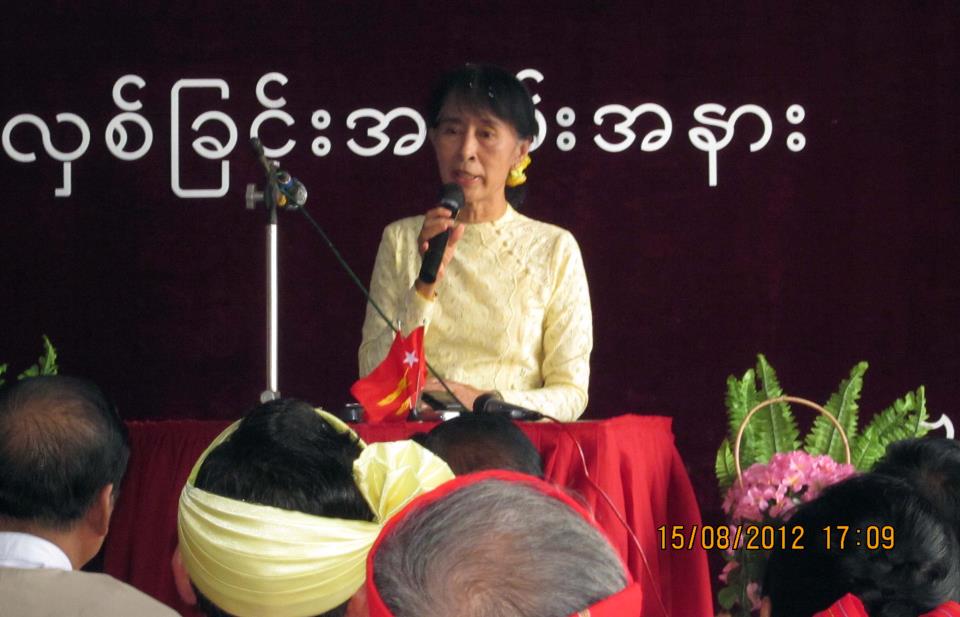
Radio Free Asia’s mission is to provide accurate and timely news and information to Asian countries whose governments prohibit access to a free press. Guided by the core principles of freedom of expression and opinion, RFA serves its listeners by providing information critical for informed decision-making. http://www.rfa.org/burmese
Radio Free Asia (RFA) is a private, nonprofit corporation that broadcasts news and information to listeners in Asian countries where full, accurate, and timely news reports are unavailable.
__________________________
United Nations Human Rights “The underlying tensions that stem from discrimination against ethnic and religious minorities pose a threat to Myanmar’s democratic transition and stability,” said UN expert on the human rights situation in Myanmar Tomás Ojea Quintana. More: http://bit.ly/LDoDep
__________________________
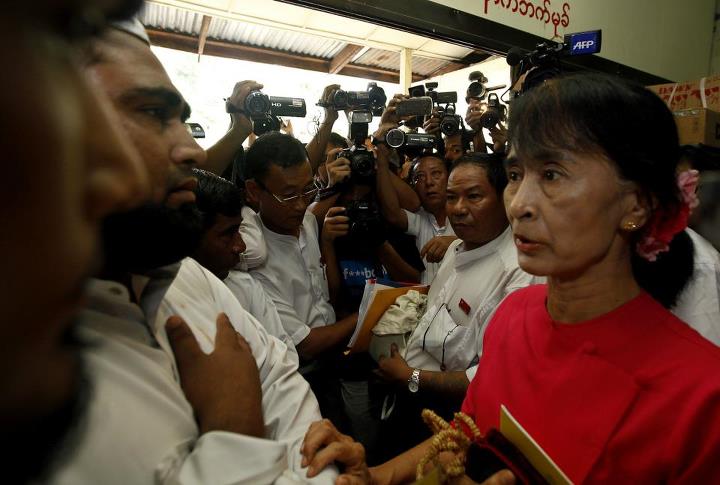
Myanmar democracy leader Aung San Suu Kyi comforts Muslim men who came and ask for help at the National League for Democracy (NLD) party headquarters, Yangon, Myanmar, 6 June 2012. Credit: EPA/NYEIN CHAN NAING
The Rohingya (Burmese: ရိုဟင်ဂျာ) are a Muslim people who live in the Arakan region. As of 2012, 800,000 Rohingya live in Myanmar. According to the UN, they are one of the most persecuted minorities in the world. http://en.wikipedia.org/wiki/Rohingya_people
Rohingya (Ruáingga) is a language spoken by the Rohingya people of Arakan (Rakhine/Rohang), Burma (Myanmar).[1][2] It is related to the Chittagonian language spoken in the neighboring southeastern Chittagong Division of Bangladesh. http://en.wikipedia.org/wiki/Rohingya_language
The Indo-Iranian language group constitutes the easternmost extant branch of the Indo-European family of languages. It consists of three language groups: the Indo-Aryan, Iranian and Nuristani. The Indo-Iranian languages occasionally go by the term „Aryan languages“.[1] The speakers of the Proto-Indo-Iranian language, the hypothetical Proto-Indo-Iranians, are usually associated with the late 3rd millennium BC Andronovo and Sintashta-Petrovka cultures of Central Asia. Their expansion is believed to have been connected with the invention of the chariot. http://en.wikipedia.org/wiki/Indo-Iranian_languages
Civil Society Organisations Deeply Concerned by On-going Violence against Stateless Rohingya in Myanmar and their Refoulement from Bangladesh
The stateless Rohingya of Myanmar have suffered from extreme persecution and discrimination for decades. They are now facing another crisis. On 3 June inter-communal violence erupted, and this has evolved into large-scale state sponsored violence against the Rohingya. Despite this, neighbouring Bangladesh is not allowing them to enter to seek refuge. The Rohingya population needs urgent measures to be taken for their protection.
In Myanmar, what began as inter-communal violence has evolved into large-scale state sponsored violence against the Rohingya. The violence began on 3 June 2012 and has mainly occurred in Sittwe and Maungdaw. On 10 June, a state of military emergency was declared, after which the military became more actively involved in committing acts of violence and other human rights abuses against the Rohingya including killings and mass scale arrests of Rohingya men and boys in North Rakhine State. Many Rohingya continue to be victims of violence and cannot leave their homes for fear of persecution, and are thus deprived of their livelihood and most basic needs. The urgent humanitarian needs of those displaced (IDPs) – including those not in IDP camps – are not being adequately met and there is concern that those displaced will not be allowed to return to their homes as soon as it is safe to do so, thus creating a situation of protracted displacement.
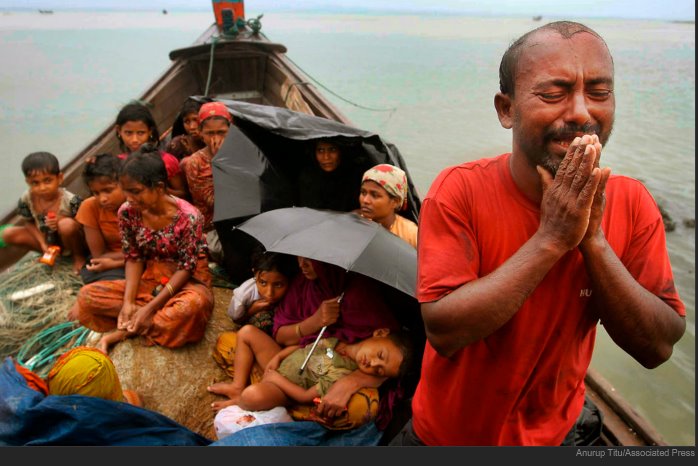
Heartbreaking photo of a Muslim refugee from Myanmar pleading with Bangladesh to let him in. Bangladesh has turned back 1,500 refugees fleeing violence between majority Rakhine Buddhists and minority Rohingya Muslims in western Myanmar. http://nyti.ms/LKzzFE
Bangladesh, in contravention of its international legal obligations, closed its border and pushed back many Rohingya fleeing the violence and persecution in Myanmar. The refoulement of these refugees by Bangladesh to Myanmar where they face a very immediate threat to life and freedom, and a danger of irreparable harm; and the manner of refoulement, by push backs into dangerous waters, including in unsafe vessels are matters of serious concern.
The legal obligations of both Myanmar and Bangladesh require them to protect all persons within their territories or subject to their jurisdictions, regardless of whether they are citizens, stateless persons or refugees. In their treatment of the Rohingya, both countries have violated the right to life, the right to be free from torture or cruel, inhuman or degrading treatment or punishment, the right to liberty and freedom from arbitrary detention, the right to food and shelter including the fundamental right to be free from hunger and the right to the highest attainable standard of health. Bangladesh has also acted in violation of the rights to seek and to enjoy asylum and not to be subjected to refoulement.
We therefore recommend that both states immediately uphold their human rights obligations in this situation.
In particular, we recommend that the Government of Myanmar and the Rakhine State authorities take immediate steps to:
1. Stop the violence.
2. Stop the arbitrary arrests of Rohingya and abuses by security forces against them.
3. Allow unhindered humanitarian access to assist all those in need as a result of the crisis, including internally-displaced people staying outside camps and those hosting them.
4. Allow the displaced to return to their homes once it is safe and they feel safe to return, and ensure that a situation of protracted displacement is avoided.
5. Allow an international inquiry into the abuses committed since June 2012 in Rakhine State.
We recommend the Government of Bangladesh take immediate steps to:
1. Open its borders to refugees and to stop refoulement of refugees.
Further, we call on the international community to:
1. Provide financial support for the humanitarian operation needed to assist people affected by the crisis in Rakhine State.
2. Support the government of Bangladesh in providing protection to Rohingya refugees.
3. Engage with the Governments of Myanmar and Bangladesh in relation to the above recommendations.
We also recommend that the reform process in Myanmar address existing policies of discrimination against the Rohingya; and that this current crisis be used as an opportunity to address the longstanding problems between the communities in Rakhine State, and to promote a constructive dialogue aiming at peace and reconciliation.
http://www.hrw.org/burma
http://physiciansforhumanrights.org/places/burma
http://www.facebook.com/burmacampaign
http://www.facebook.com/democratic voice of burma
http://www.facebook.com/pages/RFA-Burmese
http://www.facebook.com/burmavjmedia
http://www.facebook.com/pages/Burma-News-from-Mizzima
#previous #articles #videos #burma
#previous #articles #videos #refugee
Myanmar: “Sunday’s by-elections, key test of democratic reform process,” says UN expert
GENEVA (30 March 2012) – The United Nations Special Rapporteur on the human rights situation in Myanmar, Tomás Ojea Quintana, said that Myanmar’s by-elections on 1 April will be a key test of progress made by the Government in its process of reform. In the coming polls, 48 parliamentary seats will be contested. More: http://bit.ly/HoYm3k

Live Blogging on International Justice Day

www.ohchr.org/WelcomePage.aspx
http://www.10a.icc-cpi.info/index.php/en
The International Criminal Court (commonly referred to as the ICC or ICCt)[1] is a permanent tribunal to prosecute individuals for genocide, crimes against humanity, war crimes, and the crime of aggression (although it cannot, until at least 2017, exercise jurisdiction over the crime of aggression).
It came into being on 1 July 2002—the date its founding treaty, the Rome Statute of the International Criminal Court, entered into force—and it can only prosecute crimes committed on or after that date. The Court’s official seat is in The Hague, Netherlands, but its proceedings may take place anywhere. http://en.wikipedia.org/wiki/International_Criminal_Court
International Criminal Justice Day was adopted on 1 June 2010 by the States Parties to the International Criminal Court at the Review Conference to the Rome Statute. July 17th is International Criminal Justice Day. Celebrate, Reflect, Act.
In Kampala (Uganda), at the Review Conference of the Rome Statute held in 2010, States Parties to the International Criminal Court decided to start celebrating 17 July every year as the Day of International Criminal Justice. The date commemorates 17 July 1998, when the international community reached an historic milestone by adopting the Rome Statute, the legal basis for establishing the permanent International Criminal Court.
The adoption of the Rome Statute was a momentous step towards ending impunity for the perpetrators of the most serious crimes of international concern – genocide, war crimes, crimes against humanity and aggression – which threaten the peace, security and well-being of the world. http://en.wikipedia.org/wiki/World_Day_for_International_Justice
For several years civil society has commemorated this anniversary by leading International Justice Day celebrations.
Speech | May 2010 | Kampala, Uganda – Kofi Annan addresses the First Review Conference of the Assembly of States Parties to the Rome Statute of the International Criminal Court http://kofiannanfoundation.org/newsroom
On 6 July 2012, the International Criminal Court (ICC) and the Assembly of States Parties (ASP) held an event and symbolic flag-raising ceremony, calling other parties to join in celebrations of 17 July, International Criminal Justice Day.
The event began with speeches by Ambassador of Luxembourg, H.E. Mr Jean-Marc Hoscheit, representing the States parties to the Rome Statute, and the ICC President, Judge Sang-Hyun Song.

On 17 July, the world celebrates International Justice Day, commemorating the adoption of the Rome Statute http://www.iccnow.org/rome and celebrating the achievements of international criminal justice. On this occasion, the Coalition calls on all governments to firmly commit to prioritizing international justice and hold accountable those who are suspected of committing the gravest crimes against humanity.
“The tools for ending impunity exist for perhaps the first time in history; it is now a matter of galvanizing universal political will to make them fully operational,” said William R. Pace, convenor of the Coalition. Read the Coalition’s press release
Credit: AMICC
Live Blogging on International Justice Day
On 17 July, the Coalition for the International Criminal Court will host a live question & answer blogging session in commemoration of International Justice Day with Coalition Convener William Pace. The session will be held on the Coalition’s blog, In Situ: See Justice through the Eyes of Civil Society from 4:30 to 5:30 p.m. CET (10:30-11:30 a.m. EST).
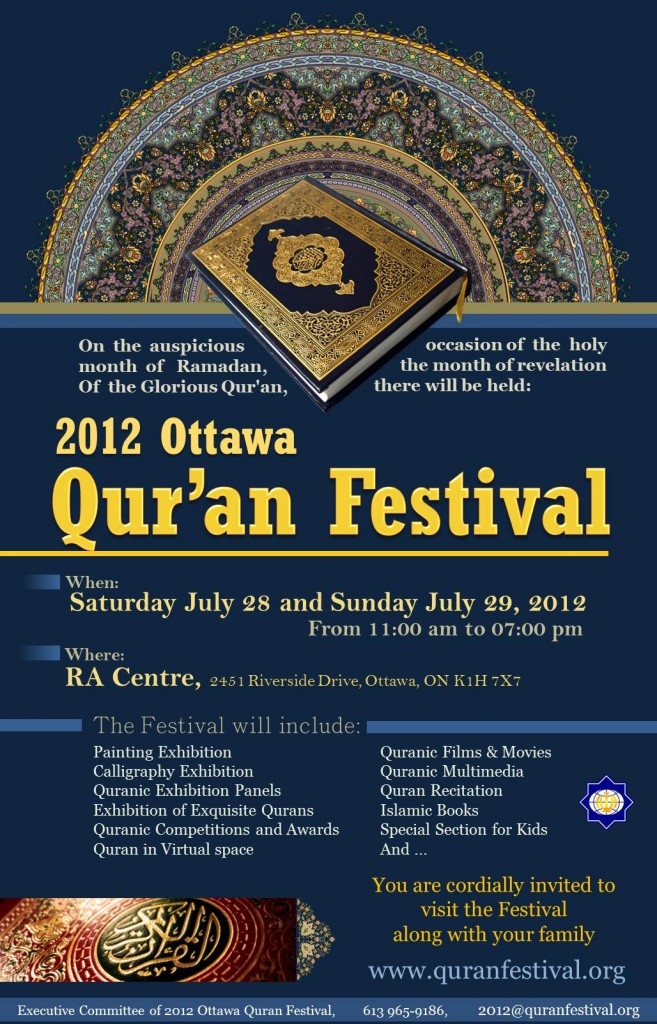
2012 Ottawa Quran Festival July 28 – 29 at RA Centre
The Quran (English pronunciation: /kɔrˈɑːn/[n 1] kor-ahn; Arabic: القرآن al-qurʾÄ�n, IPA: [qurˈʔaːn],[n 2] literally meaning „the recitation“), also transliterated Qur’an, Koran, Al-Coran, Coran, Kuran, and Al-Qur’an, is the central religious text of Islam, which Muslims consider the verbatim word of God (Arabic: الله, Allah).[1] It is regarded widely as the finest piece of literature in the Arabic language. http://en.wikipedia.org/wiki/Quran
The Quran is composed of verses (Ayah) that make up 114 chapters (suras) of unequal length which are classified either as Meccan (المكية) or Medinan (المدينية) depending upon the place and time of their claimed revelation. Muslims believe the Quran to be verbally revealed through angel JibrÄ«l (Gabriel) from God to Muhammad gradually over a period of approximately 23 years beginning in 610 CE, when Muhammad was 40, and concluding in 632 CE, the year of his death.
Hereby, the Executive Committee of the Quran Festival, would like to invite you to join other Islamic Centers for holding next Quran Festival in the month of Ramadan al-Mubarak 2012.
The Executive Committee of the Quran Festival had the honour to hold the first Quran Festival, at which several Islamic centers were present, in Ottawa in 2010. The main goal of this festival is to familiarize the youth and adolescents of the Muslim as well as non-Muslim communities in Canada with the aesthetics and visual elegance of the Quran and its noble concepts.
The Festival intends to set the grounds for introduction and development of Quranic culture and education, along with the valuable and productive programs of the Islamic centers in the holy month of Ramadan, the month of the revelation of the Quran and the month of fasting.
The first Quran Festival was held in the holy month of Ramadan in 2010, participated by a group of Islamic centers in Ottawa. In the month of Ramadan 2011, the second Quran exhibition was held in Ottawa. A similar exhibition was held in Toronto, at the Ontario Science Centre, for the first time, which was received with great enthusiasm from visitors.
Second Quran Festival, Ottawa, Aug 6 – 7 2011
Since the beginning of its mission, the Committee has set its aim to invite as many interested Islamic centers as possible to participate in its annual festival. Therefore, in the upcoming month of Ramadan , with the graciousness and providence of Allah, and with the committed attendance and participation of all Islamic centers, along with the annual exhibitions in Ottawa and Toronto, we are planning to establish the first Quran Festival in Montreal, Insha’Allah.
Alongside constructing a channel of education on the beauties of the Holy Quran and the relevant Islamic arts for Muslim and non-Muslim populations, we hope to attract the younger generations’ attention to their rich Islamic/Quranic heritage.
The Quran Festival includes a variety of exhibitions and programs, of which the most important ones are
- The exhibition of exquisite Qurans
- The exhibition of Quranic Interpretations (Tafsirs)
- The exhibition of Quranic Arts (i.e. copies of the antique and elegant prints of Quran pages, beautiful artworks, Islamic Calligraphy, etc.)
- Quran in the virtual space (i.e. Internet)
- Quran and Children
- Quranic Software
- Quranic Videos/Animations
- Quranic Knowledge and Contests
- Quranic Recitation
- Speech and Answering the visitors’ questions on Quranic topics
All the participating Islamic centers can have a specific display table to introduce and present information about the programs of their own centers as well as any Quranic artworks.
As the Quran Festival aims to have the maximum participation from Islamic centers, on behalf of this committee, we would like to invite your center to take part in the 2012 Annual Quran Festival.
We look forward to hearing back from you and hope to have you as one of the contributing centers to the 2012 Quran Festival. To help us organize and coordinate sections and duties well in advance, please complete the attached form and send it back to us as soon as possible.
Executive Committee of Quran Festival in Canada
http://iranculture.ca/dev
http://www.cultureofiran.com
http://www.facebook.com/Cultural Centre of the Islamic Republic of Iran Ottawa
http://www.facebook.com/LeCentreCulturelDIranAOttawa
Celestial Hierarchy in Christianity (Gabriel)
#previous #articles #videos #lunar calendar
Österreichisches Kulturforum Teheran – ÖKFT
#previous #articles #videos #iran
http://www.iranhumanrights.org
http://www.rferl.org/section/Iran
http://www.transparency-for-iran.org
http://portal.unesco.org/en/Convention Diversity of Cultural Expressions 2005
Background Note: http://www.un.org/rights/dpi1627e.htm
Oxford Journal: http://jiel.oxfordjournals.org/content/9/3/553.abstract

Mishras 2012 Europen Musical tour
Dear Friends,
We are in Varanasi now and wish all of you. We are happy to inform you that our tour for Europe this year will be in October/ November 2012. So we are starting now for booking the Concert dates of Europe and just like to inform you that if you want to book any concert of us then please contact us soon as now we are booking the dates.
We are coming three musician Pandit Shivnath Mishra, myself Deobrat Mishra on Sitar and Prashant Mishra on Tabla. So please contact us soon for any information you need.
Hope to hear from you soon.
Yours, Deobrat Mishra
Sitar Artist.
Contact us at: mishramusic@hotmail.com
Website: www.music-of-benares.com
Cell: 0091-9451586700
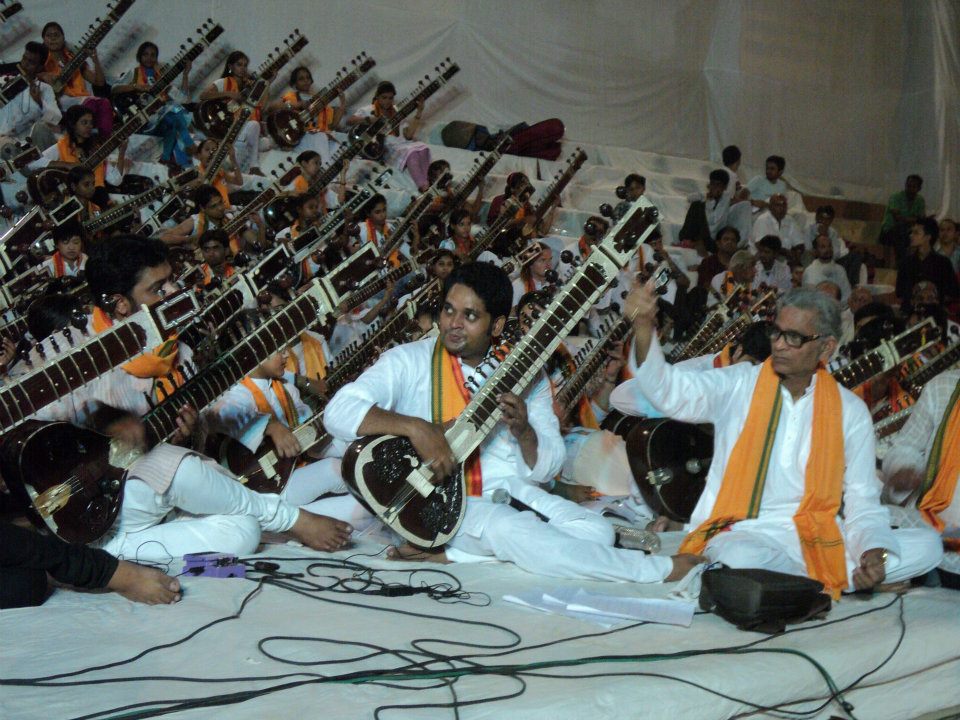
Note: we are also sending you a attachment of recent concert photos and Video Link on youtube we did with 108 Sitar players in Varanasi to save holy River Ganges. Please have a look. You can see more picture of it on my facebook account: Deobrat Mishra
My father Pandit. Shivnath Mishra made a history in Varanasi-India to conduct a orchestra of 108 sitar players. Total musician where 151 including Tabla players and Flute players.
Varanasi (Sanskrit: वाराणसी ) is a city situated on the banks of the River Ganges in the Indian state of Uttar Pradesh, 320 kilometres (199 mi) southeast of state capital Lucknow. It is regarded as a holy city by Buddhists and Jains, and is the holiest place in the world in Hinduism (and center of earth in Hindu Cosmology). It is one of the oldest continuously inhabited cities in the world and probably the oldest of India. The Kashi Naresh (Maharaja of Kashi) is the chief cultural patron of Varanasi and an essential part of all religious celebrations.The culture of Varanasi is closely associated with the River Ganges and the river’s religious importance. The city has been a cultural and religious centre in North India for several thousand years.
The Benares Gharana form of Indian classical music developed in Varanasi, and many prominent Indian philosophers, poets, writers, and musicians resided or reside in Varanasi, including Kabir, Ravidas Their Guru Swami Ramanand, Trailanga Swami, Munshi Premchand, Jaishankar Prasad, Acharya Shukla, Ravi Shankar, Girija Devi, Hariprasad Chaurasia, and Bismillah Khan. Tulsidas wrote Ramacharitamanas here, and Gautama Buddha gave his first sermon at Sarnath located near Varanasi (Kashi). Varanasi is home to four universities: Banaras Hindu University, Mahatma Gandhi Kashi Vidyapeeth, Central Institute of Higher Tibetan Studies and Sampurnanand Sanskrit University. Residents mainly speak Hindi and Kashika Bhojpuri, which is closely related to the Hindi language. People often refer to Varanasi as “the city of temples”, “the holy city of India”, “the religious capital of India”, “the city of lights”, and “the city of learning.”
Mishras Press release:
Very rare to see three generation master musician’s on same stage.
11th GENERATION FATHER AND SON SITAR MASTERS of Benares Gharana
From their home city of Benares, an ancient spiritual centre of traditional music and Indian culture, “The Mishras” are bringing classical North Indian Ragas and meditative music to the world audience, gifting the audience with a fabulous performance and a spiritual experience. Join this father and son duet of two of the worlds finest Sitar Artist and Prashant Mishra on Tabla grandson of Pandit Shivnath Mishra as they inspire one another to new levels of loving interplay.
PANDIT SHIVNATH MISHRA
Pandit Shivnath Mishra was born on the 12th of October 1943, in Varanasi (North India). Also known as “Legend of the Sitar”, he is the 10th generation of the prominent Benares Gharana lineage of top class singers including Pandit Bade Ramdas Mishra and Panditji Great Grand Father. Since childhood, his highly musical family could see signs of a masterful musician in him. When Panditji was five years old, he began studying vocal music with his father, Badri Prashad Mishra, and his uncle-guru, Pandit Mahadev Prashad Mishra. However, when he was eight his musical inclination led him to study the sitar. In a family of great classical Indian vocalists, he was the first one who mastered the sitar.
Due to the vocal influence from his family as well as the Benares Gharana tradition, he is one among few artists in Contemporary India who ‘sing inside’ while playing a musical instrument. His lively, powerful and unique style has praised him with innumerous titles by the most representative authorities and institutions of music in and outside India. In 1966, when he was only twenty-three, he received a gold medal in the All India Music Conference, in Calcutta.
1979 marks the beginning of his performances abroad. Sine then, he has been constantly on tour in many foreign countries, among them Germany, Italy, France, Luxembourg, Switzerland, Austria, Japan, Holland etc. In 1999, he gave his first concert in the USA and Canada. During his tours, he has performed with several international jazz artists such as John Handy, Paul Horn, David Freezen, Ben Conrad, Berred Kworrase, George Figgler Aimester among others. Moreover, he participated in many conferences and recitals including the Condolence Metal of Late Prime Minister Mrs. Indira Gandhi, in Germany. He also took part in programs broadcast by the BBC Television and the German Radio.
Being one of India’s premiere sitar artists of all times, Pandit Shivnath Mishra was the Head of the Music Department at the Sampurnanand Sanskrit University of Benares, in Varanasi, for 36 years. At this time, in 1994, he formed the “Music of Benares” which consists of a group of North Indian (Hindustani) classical musicians whose aim is to familiarize audiences all over the world with Hindustani music in general and the Benares Gharana in particular. What is characteristic of the Benares Gharana is exactly the singing of the Thumri, a light Indian classical music that is highly ornamental and thus very emotional and expressive. At a time when many different Gharanas mix with each other, the “Music of Benares” group keeps this ancient tradition alive.
Incorporation of this style with the “Jugalbandi” presentation, in which there are two solo artists sharing the stage, has created a unique synthesis of classical and folk that appeals to audiences everywhere. But this is not just Jugalbandi, this is a duet between a Guru and his Shishya (disciple) and, in this case, between father and son. Seeing this special interaction on stage is no doubt an unforgettable and mesmerizing experience.
Deobrat Mishra – biography
Deobrat Mishra is no doubt one of the most energetic and innovative sitar artists of India. Selectivity, melody and rhythmic complexity are typical features in his lively playing style.
Born in 1976, he represents the 11th generation of the Benares Gharana tradition. As a young child he studied tabla with his mother, Pramila Mishra, who is the granddaughter of the well-known tabla player Pandit Baiju Mishra. He started by studying vocal music with his father at the age of five and began his sitar lessons a year later. That same year, after only six months of studying the sitar, he gave his first public performance on stage. Five years later, he performed for the first time on the All India Radio.
Since 1994 he has been touring throughout Europe with his father. In the same year he was chosen to receive the award of the best young sitar player of India. In 2000 he received the “Jewels of Sound Award” in Mumbai. His many projects include music workshops, solo performances for radio and television as well as world music programs with Indian and European artists. Moreover, he is the one in charge of cultural events and music lessons provided by the Academy of Indian Classical Music, the school he founded along with his father, Pandit Shivnath Mishra, in 2006.
Recently, he received a Masters degree in sitar from the Prayag Sangit Samiti in Allahabad. Among many other projects, the Mishras performed and recorded their music with the Western Symphony Orchestra of Italy in 2005. Nowadays, they fully dedicate their art to similar projects including annual tours around the world.
Above all, the Mishras (father and son) serve as two of India’s leading cultural ambassadors of our times
Prashant Mishra is one of the best young Tabla player of benares music tradition. When he was five he started to learn tabla with the family member of Biru Mishra of Varanasi also studying Tabla presently with Mr.Chakkan lal Mishra(Student of Great Tabla player Anokhelal Mishra..
Soon after few years of hard practice with his grandfather Pandit Shivanath mishra and uncle Deobrat mishra he was able to perform with Mishras His skills beautifully compliment and support the Mishras in their concerts.
http://timesofindia.indiatimes.com/topic/Aviral-and-nirmal-flow-of-the-Ganga/news
In 2004 he won first prize in Tabla competition organized by Sangeet Natak Academy Uttar Pradesh India. He received many awards for his tabla playing at many different places. The Mishras tour will help to support the Academy Of Indian Classical Music School in Varanasi, India.
Additionally, the Mishras support their Academy of Music in Benares, India where they keep alive the tradition of their music amongst young musicians. Every January and February, the Academy is open to international students of all ages and skill levels. These study tours to India are a cultural experience combining ashram style living and intensive music instruction in one of the world’s oldest cities.
Visit: www.benaresmusicacademy.co
For more information, contact Deobrat Mishra: mishramusic@hotmail.com
Visit our website: www.music-of-benares.com
http://www.gangaaction.com/
http://
http://
#Previous #articles #videos #benares #gharana
#Previous #articles #save #ganga #water #humanrights
Note: Mishra or Misra (Hindi: „मिश्र“ „मिश्रा“) is a Hindu Brahmin surname found mostly in the northern and central parts of India. It is one of the most widespread Brahmin surnames in the fertile Gangetic plain region and in the Indian states of Delhi, Bihar, Uttar Pradesh, Uttarakhand, Madhya Pradesh, Rajasthan, Orissa, Assam and West Bengal. It is also found in countries such as Guyana and Trinidad and Tobago under the anglicized version of Misir, due to migration owing to agricultural/plantation employment. The surname is also found in Nepal, Fiji and Mauritius, as well as in other Indian diaspora communities.
In Hinduism, Brahmin refers to the class of educators and preachers. It is the highest class in the caste system. There are many references in the Ramayana and Mahabharata about the importance of a Brahmin. In the Vedic period, the Brahmins preferred isolation and solely dedicated their life to propagating knowledge and Dharma. However Misras have historically been martial Brahmins and in earlier years, many were drafted into the army.
UN Arms Trade Treaty – Campaign Against Arms Trade
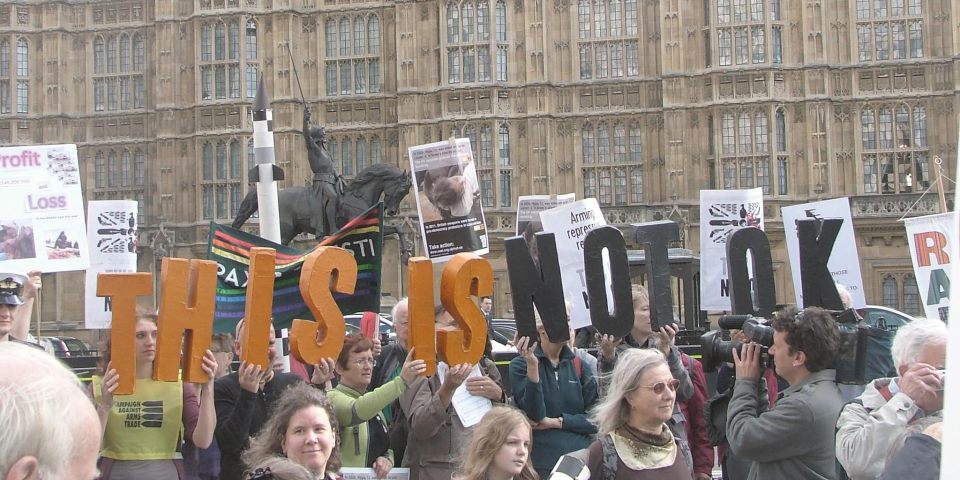
http://www.caat.org.uk http://blog.caat.org.uk
http://www.un.org/disarmament/convarms/ArmsTradeTreaty
The Arms Trade Treaty is the name of a potential multilateral treaty that would regulate the international trade in conventional weapons. The treaty will be negotiated at a global conference under the auspices of the United Nations from 2 – 27 July 2012 in New York. MORE
Campaign Against the Arms Trade
Campaign Against Arms Trade (CAAT) is a UK non-governmental organisation that campaigns against the international arms trade. It was set up in 1974 by a number of peace and other organisations who were concerned about the growth in the arms trade following the Middle East war of 1973. It is a broad coalition of groups and individuals in the UK working to end the international arms trade. CAAT claims that this trade has a negative effect on humans rights and security as well as on global, regional and local economic development. In seeking to end it CAAT’s priorities are to:
- end government subsidies and support for arms exports;
- end exports to oppressive regimes;
- end exports to countries involved in an armed conflict or region of tension;
- end exports to countries whose social welfare is threatened by military spending;
- support measures, both in the UK and internationally, which will regulate and reduce the arms trade and lead to its eventually end.
- http://www.sourcewatch.org/Campaign_Against_the_Arms_Trade
- http://en.wikipedia.org/wiki/Category:Weapons_trade
- „The work of Campaign Against Arms Trade is really great and uplifting. I wish we had something comparable in the U.S.“ – Noam Chomsky
Disarm The Gallery campaign launch action – Love art but not arms companies? Then join us at noon on Saturday 31st March for a mass art-action to launch our campaign to Disarm The Gallery and end the National Gallery’s links with the arms trade.
Whether you’re willing to don a costume and engage in street theatre, leaflet passers-by or engage children and tourists in some arty fun, your help will be welcome!
Background: The National Gallery regularly hosts evening events for arms dealers seeking to impress their clients with drinks and dinners in its lavish surroundings. Arms company Finmeccanica buys this privilege for only £30,000 a year.
In 2011 the world’s largest arms fair took place in London, bringing together authoritarian regimes and weapons manufacturers from around the world. The National Gallery hosted its evening reception. Unless we stop them, it looks like the gallery will again host arms dealers during this year’s Farnborough Airshow in July!
Please let us know you are coming so we can keep you up to date with the latest plans: outreach@caat.org.uk.
If you can’t make it, please support the campaign by writing to the director of the gallery: http://act.caat.org.uk/lobby/61
http://www.iisd.org/gsi/subsidy-watch-archive
The UN Special Rapporteur on food Olivier de Schutter in his report to the United Nations Human Rights Council warned that bad nutrition is creating more sick people. He called for more agricultural subsidies to increase production of healthy foods such as cereals. http://www.srfood.org
An agricultural subsidy is a governmental subsidy paid to farmers and agribusinesses to supplement their income, manage the supply of agricultural commodities, and influence the cost and supply of such commodities. Examples of such commodities include wheat, feed grains (grain used as fodder, such as maize or corn, sorghum, barley, and oats), cotton, milk, rice, peanuts, sugar, tobacco, and oilseeds such as soybeans. MORE
Global funding for agricultural research, public and private, is estimated to total around $40 billion. There is a stark contrast with the $1500 billion the world now spends on weapons.
Arms control
 |
This article is part of the Center for Media & Democracy’s focus on the fallout of nuclear „spin.“ |
During 2005, the United States „provided nearly half of the weapons sold to militaries in the developing world, as major arms sales to the most unstable regions—many already engaged in conflict—grew to the highest level in eight years,“ according to a Congressional Research Service (CRS) report. [1] The United States „supplied $8.1 billion worth of weapons to developing countries,“ which was „45.8 percent of the total and far more than second-ranked Russia with 15 percent and Britain with a little more than 13 percent.“
„Arms control specialists said the figures underscore how the largely unchecked arms trade to the developing world has become a major staple of the American weapons industry, even though introducing many of the weapons risks fueling conflicts rather than aiding long-term US interests.“ [2]
„The United States, for instance, also signed an estimated $6.2 billion worth of new deals last year to sell attack helicopters, missiles, and other armaments to developing nations such as the United Arab Emirates, Pakistan, India, Israel, Egypt, Kuwait, and Saudi Arabia. Developing nations are designated as all those except in North America, Western Europe, Russia, Australia, and New Zealand.
„In addition to weapons already delivered, new contracts for future weapons deliveries topped $44 billion last year—the highest overall since 1998, according to the report. Nearly 70 percent of them were designated for developing nations.“ [3]
http://twitter.com/ComingFamine
http://en.wikipedia.org/wiki/Fair_trade
http://www.sciencealert.com.au/features/Coming Famine
http://paper.li/ComingFamine/World Food Daily
http://en.wikipedia.org/wiki/Arms_trade
http://en.wikipedia.org/wiki/Arms_industry
http://en.wikipedia.org/wiki/Arms_trafficking
100jähriges Jubläum im Islamischem Zentrum 30. Juni 2012
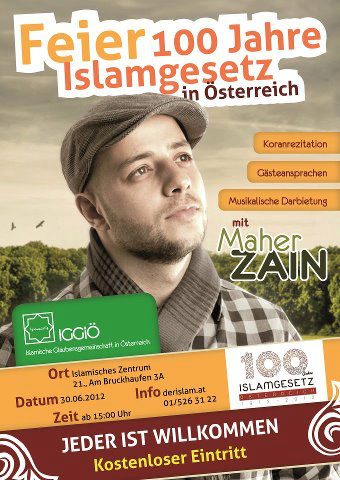
http://www.derislam.at
Volksfest anläßlich des Jubiläums im islamischen Zentrum
Wo: Islamisches Zentrum Wien, Wann: 30.Juni.2012
Islam is a monotheistic and Abrahamic religion articulated by the Qur’an, a text considered by its adherents to be the verbatim word of God (Arabic: الله AllÄ�h), and by the teachings and normative example (called the Sunnah and composed of Hadith) of Muhammad, considered by them to be the last prophet of God. An adherent of Islam is called a Muslim.
Muslims believe that God is one and incomparable and the purpose of existence is to love and serve God. Muslims also believe that Islam is the complete and universal version of a primordial faith that was revealed at many times and places before, including through Abraham, Moses and Jesus, whom they consider prophets.
Austria is unique among Western European countries insofar as it has granted Muslims the status of a recognized religious community. This dates back to the times following the Austro-Hungarian occupation of Bosnia and Herzegovina in 1878. Austria has regulated the religious freedoms (self-determination) of the Muslim community with the so called „Anerkennungsgesetz“ („Act of Recognition“). This law was reactivated in 1979 when the Community of Muslim believers in Austria (Islamische Glaubensgemeinschaft in Österreich) was founded. This organization is entitled to give lessons of religious education in state schools. It is also allowed to collect „church tax“ but so far it has not exercised this privilege and does not build, finance or administer mosques in Austria.
Parallel structures exist within the Islamic religious group. The religious life takes place in mosques belonging to organisations that represent one of the currents of Turkish, Bosnian and Arab Muslims. Among the Turkish organisations the „Federation of Turkish-Islamic Associations“ is controlled by the Directorate for Religious Affairs, whereas the other groups, such as the Süleymancıs and Milli Görüş, may be considered as branches of the pan-European organisation centered in Germany.
Mit einem Festakt im Wiener Rathaus am 29. Juni 2012 feiert die Islamische Glaubensgemeinschaft in Österreich (IGGiÖ) 100 Jahre offizielle staatliche Anerkennung des Islams. Am Tag zuvor steht das Islamgesetz im Zentrum einer rechtswissenschaftlichen Tagung an der Universität Wien. http://juridicum.univie.ac.at/index.php
Das Verhältnis zwischen dem christlich geprägten Europa und dem Islam war lange Zeit von einem religiös-politischen Gegensatz bestimmt, und die zweimalige Belagerung Wiens durch die Osmanen hat sich im kollektiven Gedächtnis niedergeschlagen. Das änderte sich für Österreich-Ungarn durch den Berliner Kongress von 1878, der den russisch-türkischen Krieg gegen die osmanische Herrschaft auf dem Balkan beendete. Im Zuge einer neuen Aufteilung der Gebiete wurde Bosnien-Herzegowina Österreich-Ungarn zunächst zur Verwaltung zugesprochen, etwas später, 1908, annektiert.
Der Weg zur Islamischen Glaubensgemeinschaft
Dieses „Islamgesetz“ ruhte nach dem Ende des Ersten Weltkriegs und der Monarchie, und die Muslime in Österreich konnten sich erst nach dem Ende des Zweiten Weltkriegs wieder in Vereinen organisieren. Aufgrund der zunehmenden Zahl von Muslimen, die in den 1960er Jahren zunächst vor allem als Gastarbeiter nach Österreich kamen, wurde auf der Basis des Gesetzes von 1912 die Einrichtung einer Glaubensgemeinschaft betrieben, zu der es damals noch nicht gekommen war. Dem 1971 gestellten Antrag auf gesetzliche Anerkennung folgten dann nach vielen Verhandlungen mit dem Kultusamt die Genehmigung mit 2. Mai 1979 und die Konstituierung der IGGiÖ.
http://en.wikipedia.org/wiki/Islam_in_Austria
http://medienportal.univie.ac.at/muslime-in-oesterreich-100-jahre-islamgesetz
NEWS 18. 06. 2012 http://religion.orf.at/projekt03/news/_iggioe.html
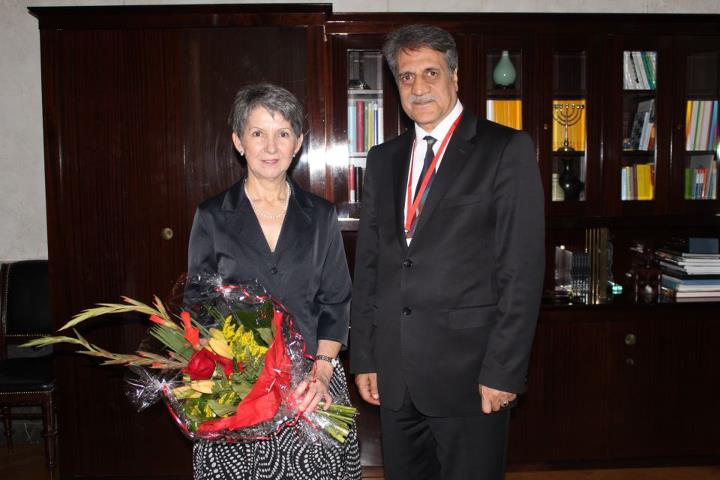
Empfang bei der Nationalratspräsidentin Frau Prammer 18.06.2012
http://www.meineabgeordneten.at/Abgeordnete/Barbara.Prammer
Freedom of religion is a principle that supports the freedom of an individual or community, in public or private, to manifest religion orbelief in teaching, practice, worship, and observance; the concept is generally recognized also to include the freedom to change religionor not to follow any religion.[1] The freedom to leave or discontinue membership in a religion or religious group —in religious terms called „apostasy“ —is also a fundamental part of religious freedom, covered by Article 18 of the Universal Declaration of Human Rights.
Freedom of religion is considered by many people and nations to be a fundamental human right. In a country with a state religion, freedom of religion is generally considered to mean that the government permits religious practices of other sects besides the state religion, and does not persecute believers in other faiths. http://en.wikipedia.org/wiki/Freedom_of_religion
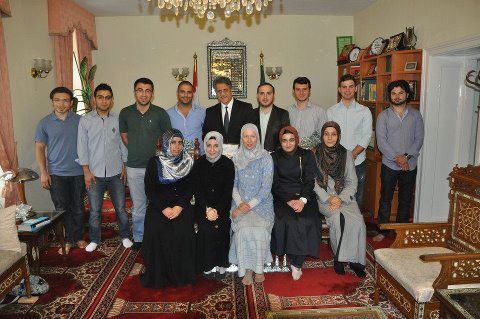
Kärnten: Interreligiöses Fest anlässlich „100 Jahre Islamgesetz“
Mit einem interreligiösen „Fest des Dialogs“ ist am Samstag in Kärnten das 100-jährige Bestehen des Islamgesetzes in Österreich gefeiert worden. Zum Fest im Klagenfurter Konzerthaus hatte die „Islamische Glaubensgemeinschaft in Österreich“ (IGGiÖ) geladen. Der Kärntner Bischof Alois Schwarz bekundete dabei Dankbarkeit für die „enge Zusammenarbeit“ und das „gute Miteinander“ im Land.
Schwarz erinnerte daran, dass Österreich mit dem Islamgesetz in der Europäischen Union eine Sonderstellung einnimmt. Er empfahl auch anderen Ländern eine solche Regelung. Laut einer Aussendung des Büros von Landeshauptmann Gerhard Dörfler erklärte IGGiÖ-Ehrenpräsident Anas Schakfeh, Österreich könne sich rühmen, mit dem Islamgesetz „Pionier“ zu sein. „Wir honorieren diese Anerkennung mit Loyalität zur Gesellschaft“, so Schakfeh. IGGiÖ-Präsident Fuat Sanac dankte für die Möglichkeit des gemeinsamen Feierns.
„Ich bin Kärntner und Muslim“
Als Kärntner ein Muslim zu sein, sei kein Widerspruch: „Ich fühle mich als Kärnter. Zu meiner Identität gehört auch, dass ich gebürtiger Bosnier bin“, sagte der Präsident der IGGiÖ Kärnten, Esad Memic, laut einem Bericht von „ORF On“. Er fühle sich auch „als Muslim, als Europäer, als Kosmopolit“. All diese Identitäten schlössen einander nicht aus. Ziel sei ein gutes Miteinander: Man sei nicht hier, um die vorherrschende Kultur zu verdrängen, sondern um diese noch „reicher und schöner“ zu machen.
Festredner: Offenheit, Optimismus und Liebe
Der evangelische Superintendent Manfred Sauer betonte beim Fest, Anerkennung und Gleichberechtigung sollten dazu führen, „offen aufeinander zuzugehen und voneinander zu lernen“. Dies gelinge in Kärnten auf eindrucksvolle Weise. Und der Großmufti von Slowenien, Nedzad Grabus, hob hervor, dass man diesbezüglich in Österreich „positiv in die Zukunft schauen“ könne. Landeshauptmann Dörfler betonte in seiner Festrede laut ORF: „Alle Religionen, alle Menschen, alle Ethnien haben dann Platz, wenn sie die Liebe, den Frieden, das Miteinander der Integration und das Verständnis in den Vordergrund stellen.“
Österreichische Muslime schon zu Kaisers Zeiten
In Österreich ist der Islam seit 1912 als Religionsgemeinschaft anerkannt. Das Gesetz sichert Muslimen Selbstbestimmung zu. Eingeführt wurde es, weil mit Bosnien auch rund 600.000 Muslime Teil von Österreich-Ungarn geworden waren. Unter anderem wurde den bosnischen Muslimen in der K.u.K.-Armee dadurch die Betreuung durch Imame ermöglicht.
(KAP)
Veranstaltungen
- Dachgeschoß des Juridicums
- Schottenbastei 10-16
- A-1010 Wien
- 28 Juni 2012
- Islamische Zentrum Wien
- 30 Juni 2012
- 04 Juli 2012
Europasaal, Edmundsburg
Mönchsberg 2, 5020 Salzburg
Human Rights Watch Film Festival June 14 – 28 NY

http://ff.hrw.org/new-york
Human rights are commonly understood as „inalienable fundamental rights to which a person is inherently entitled simply because she or he is a human being.“[1] Human rights are thus conceived as universal (applicable everywhere) and egalitarian (the same for everyone). These rights may exist as natural rights or as legal rights, in both national and international law.[2] http://en.wikipedia.org/wiki/Human_rights, http://www.un.org/en/documents/udhr/
One of the world’s leading independent organizations dedicated to defending and protecting human rights, Human Rights Watch works tenaciously to lay the legal and moral groundwork for deep rooted change and fights to bring greater justice and security to people around the world. The annual Human Rights Watch Film Festival bears witness to human rights violations and creates a forum for courageous individuals on both sides of the lens to empower audiences with the knowledge that personal commitment can make a difference. The festival brings to life human rights abuses through storytelling in a way that challenges each individual to empathize and demand justice for all people.
This year’s festival is organized around four themes: Health, Development, and the Environment (Bidder 70, Bitter Seeds, Escape Fire: The Fight to Rescue American Healthcare); Migrants’ Rights (Color of the Ocean, Special Flight); Personal Testimony and Witnessing (Ai Weiwei: Never Sorry, Brother Number One, Little Heaven, Reportero,Silenced Voices, Words of Witness); Reporting in Crises (Reportero,Silenced Voices, Words of Witness); and Women’s Rights (Habibi, The Invisible War, Salaam Dunk). Download the beautiful full-color festival brochure as a PDF for even more information about the lineup.
http://www.filmlinc.com/films/series/human-rights-watch-film-festival-2012
Please note: The festival launches on June 14 with a fundraising Benefit Night for Human Rights Watch, featuring Kim Nguyen’s War Witch, an emotionally powerful drama about a 14-year-old girl abducted by a rebel army in sub-Saharan Africa. Tickets and more information can be found on the Human Rights Watch website. The main program will begin on June 15 with the Opening Night presentation of Alison Klayman’s festival favorite Ai Weiwei: Never Sorry, an up-close look at renowned Chinese artist and activist Ai Weiwei and his ongoing battle with the Chinese government.
PRINTED PROGRAM DOWNLOADS:
2012 London Human Rights Watch Film Festival Program – 16 pgs, 5.4 Mb
2012 New York Human Rights Watch Film Festival Program – 16 pgs, 4.1 Mb
PRESS RELEASE DOWNLOADS:
2012 London Human Rights Watch Film Festival Press Release – 16 pgs, 256 kb
2012 New York Human Rights Watch Film Festival Press Release – 15 pgs, 206 kb
2012 Toronto Human Rights Watch Film Festival Press Release – 4 pgs, 380 kb
LOGO DOWNLOADS:
Color logo: High Resolution (JPEG, TIF, EPS) Low Resolution ( JPEG, TIF, EPS)
Black & White: High Resolution(JPEG, TIF, EPS) Low Resolution (JPEG, TIF, EPS)
Press Contacts
London
Sarah Harvey
sarah@sarahharvey.info
+44 (0) 20 7232 2812
New York
Susan Norget
susan@norget.com
+1 212 431 0090
Toronto
Samantha Ash
ashs@hrw.org
+1 416 322 8448
http://www.facebook.com/HumanRightsWatch
Previous #arcticles #videos #humanrights
nef – Festival of Transition events 20th June

http://www.neweconomics.org
Head over to the Festival website at www.festivaloftransition.net and get involved!
Sustainability is the capacity to endure. For humans, sustainability is the long-term maintenance of responsibility, which has environmental, economic, and social dimensions, and encompasses the concept of stewardship, the responsible management of resource use. In ecology, sustainability describes how biological systems remain diverse and productive over time, a necessary precondition for the well-being of humans and other organisms. Long-lived and healthy wetlands and forests are examples of sustainable biological systems.
http://en.wikipedia.org/wiki/Sustainability
nef (the new economics foundation) is an independent think-and-do tank that inspires and demonstrates real economic well-being.
We aim to improve quality of life by promoting innovative solutions that challenge mainstream thinking on economic, environment and social issues. We work in partnership and put people and the planet first.
nef was founded in 1986 by the leaders of The Other Economic Summit (TOES) which forced issues such as international debt onto the agenda of the G7 and G8 summits.
We are unique in combining rigorous analysis and policy debate with practical solutions on the ground, often run and designed with the help of local people. We also create new ways of measuring progress towards increased well-being and environmental sustainability.
nef works with all sections of society in the UK and internationally – civil society, government, individuals, businesses and academia – to create more understanding and strategies for change.
Read our Review of the Year 2010-2011 here.
On June 20, while the Rio conference takes place, instead of waiting for disappointment, several groups have organised a Festival of Transition, which anyone can enjoy and contribute to, wherever they are. It asks simply that people take a taste of breaking with business as usual by doing something different for 24 hours themselves, where they are, with friends, work colleagues or neighbours.“ – Andrew Simms, Rio+20: don’t wait for disappointment from the bureaucrats, http://gu.com/p/38396
The future is hard to predict but one way or another our economy and society will change dramatically as we adapt to the end of cheap fossil fuels, address the threat of runaway climate change and fix our broken financial system. A new, positive approach to this transition is emerging which sees it as an opportunity to change all of our lives for the better.
The Festival of Transition is a series of events, talks and walks up and down the country culminating in a nationwide day of action and re-imagining on Wednesday 20th June 2012, the first day of the UN Earth Summit in Rio. It’s an invitation to explore how overcoming big challenges can lead to better lives for us all.
Tickets still available for many of the walks and talks in the run up to the 20th.
Previous #articles #video #RIO +20
http://www.facebook.com/neweconomics
http://www.transitiontowntotnes.org/about/what-is-transition/what-economic-crisis

32th Annual Meeting of the International Association for Impact Assessment 27 May – 1 June 2012 | Porto, Portugal
IAIA12 Energy Future: The Role of Impact Assessment
Porto, Portugal 27 May – 1 June 2012

UPDATE : IAIA’s statement to Rio+20
http://www.iaia.org/publicdocuments/Rio20.pdf
An environmental impact assessment is an assessment of the possible positive or negative impact that a proposed project may have on the environment, together consisting of the environmental, social and economic aspects. http://en.wikipedia.org/wiki/Environmental_impact_assessment
The Equator Principles (EPs) are a voluntary set of standards for determining, assessing and managing social and environmental risk in project financing.
Project financing, a method of funding in which the lender looks primarily to the revenues generated by a single project both as the source of repayment and as security for the exposure, plays an important role in financing development throughout the world (See http://www.bis.org/publ/bcbs118.pdf). Project financiers may encounter social and environmental issues that are both complex and challenging, particularly with respect to projects in the emerging markets.
The Equator Principles in full can be found at:
http://www.equator-principles.com/resources/equator-principles.pdf.
Equator Principles Financial Institutions (EPFIs) commit to not providing loans to projects where the borrower will not or is unable to comply with their respective social and environmental policies and procedures that implement the EPs. http://en.wikipedia.org/wiki/Equator_principles
The 32nd annual conference of the International Association For Impact Assessement, Energy Future: The Role of Impact Assessment will take place in Porto, Portugal from 27 May – 1 June 2012.
A defining issue throughout human history has been how societies have pursued the supply and management of energy. Our view of the world and the world economy over the last 3-4 human generations has been shaped by assumptions of infinite energy supplied primarily by fossil fuels. Impact assessments have scrutinized thousands of energy projects, but few have considered the long-term future supply and sources of non-renewable and renewable energy as critical to decision-making. Now, however, the basic principle of limitless energy is under challenge.
Impact assessment has proven to be a powerful evolving tool able to incorporate environmental, social and health concerns, among others, in decision-making processes. More integrated approaches are being tested for biodiversity and climate change. Understanding the future of energy must also be one of the highest priorities for impact assessment professionals.
What is the role of impact assessment on future global, national and local energy decisions and choices? How can we tackle the environmental and social risks that will appear as a result of our quest for the development, production and management of new energy sources?
IAIA is a forum for advancing innovation, development, and communication of best practice in impact assessment. For more information about what we do, visit http://www.iaia.org .
http://www.facebook.com/iaia.impact.assessment
Can’t attend IAIA12? Follow the tweet stream at #iaia12.
Previous #articles #videos #humanrights #impact #assessment
World Fair Trade Day 2012 Declaration
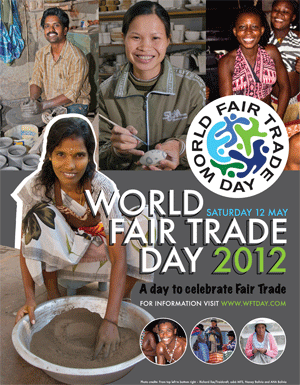
World Fair Trade Day 2012 Declaration
Happy World Fair Trade Day! #WorldFairTradeDay We congratulate the Fair Trade Movement for bringing Fair Trade to many homes, businesses, policy makers, and to all of us who believe in just, sustainable and Fair Trade.
Fair trade is an organized social movement and market-based approach that aims to help producers in developing countries to make better trading conditions and promote sustainability. The movement advocates the payment of a higher price to exporters as well as higher social and environmental standards. http://en.wikipedia.org/wiki/Fair_trade
Fair Trade will be celebrated on 12 May 2012, World Fair Trade Day, in diverse places and cultures across the globe. The World Fair Trade Day is an annual initiative of the World Fair Trade Organization (WFTO). Hundreds of events are organized in more than 70 countries in Africa, Asia, Europe, Latin America, North America and Pacific Rim. Leading the celebration are members of the WFTO that have pioneered Fair Trade for more than five decades, supported by country and regional networks.
World Fair Trade Day is a worldwide festival of events celebrating Fair Trade as a tangible contribution to the fight against poverty, climate change and the economic crisis that has the greatest impact on the world’s most vulnerable populations. A third of the world’s population lives on less than two dollars a day. The global crisis confirms the need for a fair and sustainable economy locally and globally. Trade must benefit the most vulnerable and deliver sustainable livelihoods by developing opportunities for small and disadvantaged producers. Millions of producers and traders, business and policy makers, supporting organizations and volunteers have contributed to the substantial growth of Fair Trade.
Fair Trade makes a difference. Fair Trade Organizations are pioneers and change makers.
http://www.wfto.com
http://www.wftomarket.com
http://www.wfto-europe.org
http://www.wfto-asia.com
http://www.ifat-la.org
http://www.cofta.org
http://www.facebook.com/WFTOFairTrade
Previous #articles #videos #fairtrade
SOLUTIONS Prosperity Without Growth by Tim Jackson

An international conference held in Montreal, Canada, from May 13-19, 2012
Degrowth (in French: décroissance,[1] in Spanish: decrecimiento, in Italian: decrescita) is a political, economic, and social movement based on environmentalist, anti-consumerist and anti-capitalist ideas. Degrowth thinkers and activists advocate for the downscaling of production and consumption—the contraction of economies—as overconsumption lies at the root of long term environmental issues and social inequalities. Key to the concept of degrowth is that reducing consumption does not require individual martyring and a decrease in well-being. http://en.wikipedia.org/wiki/Degrowth
Twenty years after the Earth Summit in Rio, the linkage of sustainable development to economic growth requires profound rethinking. It has not offered a convincing solution to one of the most dramatic crises in history: how to avert ecological collapse while enhancing social justice and improving life’s prospects. In advance of Rio plus 20, our Conference seeks to challenge and move beyond the sustainable development agenda. A degrowth perspective will help us visualize and build towards a truly prosperous world.
Drawing from previous degrowth conferences in Paris and Barcelona in 2008 and 2010 respectively, the Montreal conference will focus on the particular situations and dynamics of the Americas. What does degrowth mean for our Hemisphere with its rich geographical, cultural, social and economic diversity? How can degrowth models apply to different contexts from the Arctic to Tierra del Fuego? What does degrowth mean for the indigenous peoples of the Americas and their aspirations for their lands and peoples? How can degrowth concepts be made audible, understandable and aceptable to rich North Americans?
This gathering will bring together academics, activists, environmentalists and indigenous peoples to discuss our needs and hopes for diverse and more equitable societies in the Americas, on a post-growth healing earth.
In summary, degrowth is a call for a radical break from traditional growth-based models of society, no matter if these models are „left“ or „right“, to invent new ways of living together in a true democracy, respectful of the values of equality and freedom, based on sharing and cooperation, and with sufficiently moderate consumption so as to be sustainable.
http://www.facebook.com/Degrowth-in-the-Americas
http://www.facebook.com/DegrowthPedia
http://www.facebook.com/boellstiftung
http://www.facebook.com/postgrowth
http://www.campaigncc.org/greenjobs
http://www.facebook.com/PostCarbon
http://www.greengrowth.org/rethink.asp
http://www.facebook.com/slowfoodinternational
http://www.stwr.org/india-china-asia/putting-growth-in-its-place.html
http://www.ecobuddhism.org/prosperity_without_growth
http://www.facebook.com/WECANADA
http://www.scidev.net/science-and-innovation-policy/science-at-rio-20
The fourth annual Oslo Freedom Forum May 7th-9th, 2012
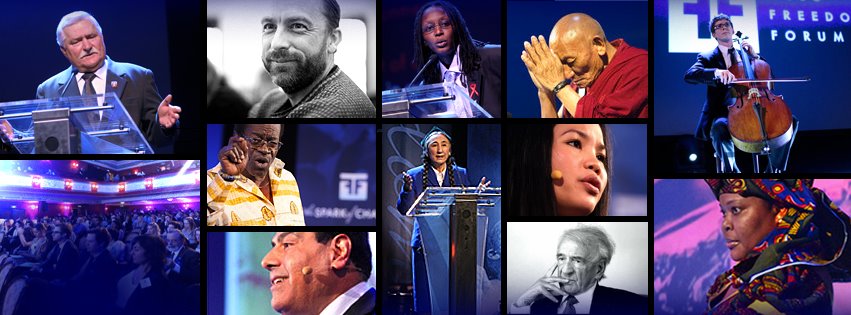
http://www.oslofreedomforum.com
Oslo Freedom Forum (OFF) is a conference about human rights first held in May 2009 in Oslo, Norway. It was described by „‚The Economist“ in a news report as the „Davos of Human Rights.“ It was founded by Thor Halvorssen, CEO of the New York-based Human Rights Foundation. According to Thor Halvorssen, „the Oslo Freedom Forum is an intimate gathering where leaders who are transforming the world present effective solutions and inspiring testimonies that impact human rights and freedom. Speakers share diverse perspectives and expertise, from those individuals with first-hand experiences in the fight for human rights to those offering insight based on academic research and political and non-profit leadership“. http://en.wikipedia.org/wiki/Oslo_Freedom_Forum
The fourth annual Oslo Freedom Forum, titled Out of Darkness, Into Light, will bring the most daunting humanitarian issues of our time out of the shadows of obscurity and to the forefront of global awareness. The event will feature visionaries from academia, advocacy, business, media, politics, social entrepreneurship, and technology who will shed light on some of the world’s least known and most repressive regimes and exchange ideas on how best to tackle humanitarian crises.
The conference will include luminaries from Wikipedia and Google; the best-selling authors of The Shadow War, Consent of the Networked, and You Can’t Read This Book; anti-slavery pioneers from Cambodia, Haiti, and Nepal; opposition leaders from Ethiopia, Russia, and Singapore; individuals using the arts to highlight human rights crises; and on-the-ground activists from regimes in Equatorial Guinea, Pakistan, Saudi Arabia, and Zimbabwe, to name only a few.
View the full 2012 program here.
The program will include a spotlight on the many forms of modern-day slavery; exposés on how Western public relations firms, IT, and arms companies support dictatorships, the drug war’s impact on human rights; a focus on the burgeoning democracy movement in Russia; perspectives on dealing with poverty through individual rights; an examination of global censorship; and a discussion on the current state of the Arab uprisings.
This year’s event will be streamed live and in its entirety online. Updates can be found on Facebook and on Twitter @OsloFreedomFrm using the hashtag #OFF12.
More information about 2012 Oslo Freedom Forum Speakers can be found on the speakers page.
To learn more about our special breakfast panel discussion, Silenced: Five Emblematic Cases of Political Detention, please click here.
Press Inquiries
Alex Gladstein
Alex@oslofreedomforum.com
Phone: +1 646 737 4371
Media contact:
http://www.youtube.com/oslofreedomforum
http://www.oslofreedomforum.com/speakers/vaclav_havel.html
http://www.hrw.org/world-report-2012/europes-own-humanrights-crisis

http://www.rferl.org/vaclav_havel
http://www.article19.org/letter from vaclav havel
http://www.freedomhouse.org/mission-protect-free-expression-azerbaijan
http://dalailamacenter.org/blog-post/vaclav-havel-dalai-lama-lost-friend


