SPIRITUAL JOURNEYS, NEWS
Isralestinian Ghandis – Meditation for Peace

www.mkgandhi.org , „My Life is my Message“
Oasis of Peace- (ne-vé shal-om / waah-at i-sal-aam: Hebrew and Arabic for Oasis of Peace [Isaiah 32:18]) A village, jointly established by Jewish and Palestinian Arab citizens of Israel, that is engaged in educational work for peace, equality and understanding between the two peoples.
Israel (Hebrew: יÖ´שÖ°ׂרÖ¸אÖµל, Yisra’el; Arabic: إِسْرَائِيلُ, IsrÄ�’Ä«l) officially the State of Israel (Hebrew: About this sound מÖ°דÖ´ינÖ·ת יÖ´שÖ°ׂרÖ¸אÖµל (help·info), Medinat Yisra’el; Arabic: دَوْلَةُ إِسْرَائِيلَ, Dawlat IsrÄ�’Ä«l), is a country in Western Asia located on the eastern shore of the Mediterranean Sea. It borders Lebanon in the north, Syria in the northeast, Jordan in the east, and Egypt on the southwest, and contains geographically diverse features within its relatively small area. Read More: >HERE <
The survival of the State of Israel is precarious – If we don’t change our position toward Palestinian People with more love and compassion, we are headed for our own destruction. This is the reason why we must act before it’s too late. In fact, aside from us, there are many organizations for peace, however, there is an urgent need to make a union amongst all of us, so we can become united and be stronger. This is why I created „The Isralestinian Gandhi’s“. Looking for all pacifists, Israelis and Palestinians, willing to act together and make a drastic change in our society. Not based on the government’s policy of war and bloodshed, but to live together in peace, harmony, love and non-violence. Forgetting about the past and start a new life. Abolishing borders and living in one country, one people. The two brothers children of the same father Abraham.
To make these changes, we must have a voice in the Israeli and Palestinian parliaments, and for this, we need to be part of these parliaments. „The Israeli Gandhi’s“ and „The Palestinian Gandhi’s“, under the umbrella of „The Isralestinian Gandhi’s“ will be the new political parties that will make the difference in the Israeli and Palestinian society. A „geniocratic party“, led by people with greater intelligence (higher IQ), who are able to make the difference and lead accordingly. And not by pathetic politicians who now lead our „mediocratic“ governments.

We are honored to invite you to our first „Meditation for Peace“ in Israel.
It will be held on April 16 at 11:00 AM in Neve Shalom/Wahat al-Salam (http://nswas.org/)
It is time the two brothers, isRaelis and Palestinians/ Jews and Muslims, Children of the same father Abraham will meditate together in peace, harmony and brotherhood. Rising their level of consciousness, hoping for a better life, in a better country. sharing love, peace and brotherhood.
You are most welcome to attend.
The success of this event will depend on your presence.
Fraternally yours
Leon Mellul
www.isralestinian-gandhis.org
„The Message from Water“ Emoto Peace Project
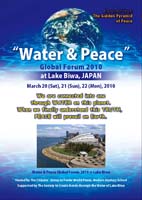
www.internationalwaterforlifefoundation.org
Masaru Emoto (江本勝, Emoto Masaru, born July 22, 1943) is a Japanese author and scientist known for his claim that if human speech or thoughts are directed at water droplets before they are frozen, images of the resulting water crystals will be beautiful or ugly depending upon whether the words or thoughts were positive or negative. Emoto claims this can be achieved through prayer, music or by attaching written words to a container of water. Read More: > HERE <
Lake Biwa (琵琶湖, Biwa-ko?), formerly known as Ōmi (淡海?) Lake, is the largest freshwater lake in Japan, located in Shiga Prefecture (west-central Honshū), northeast of the former capital city of Kyoto. Because of its proximity to the ancient capital, references to Lake Biwa appear frequently in Japanese literature, particularly in poetry and in historical accounts of battles. Read More: > HERE <
Masaru Emoto was born in Yokohama in July 1943. He is a graduate of the Yokohama Municipal University’s department of humanities and sciences with a focus on International Relations. In 1986 he established the IHM Corporation in Tokyo. In October of 1992 he received certification from the Open International University as a Doctor of Alternative Medicine. Subsequently he was introduced to the concept of micro cluster water in the US and Magnetic Resonance Analysis technology. The quest thus began to discover the mystery of water.
He undertook extensive research of water around the planet not so much as a scientific researcher but more from the perspective of an original thinker. At length he realized that it was in the frozen crystal form that water showed us its true nature through. He has gained worldwide acclaim through his groundbreaking research and discovery that water is deeply connected to our individual and collective consciousness
He is the author of the best-selling books Messages from Water, The Hidden Messages in Water, and The True Power of Water. He is a long-time advocate for peace in relation to water. He is currently the head of the I.H.M.General Research Institute and President Emeritus of the International Water for Life Foundation, a Not for Profit Organization.
The research of Dr. Masaru Emoto captures frozen water crystals in photographs that present a glimpse into the mysterious response of water to thoughts, words and pictures. As part of the United Nation’s International Decade for Action: Water for Life, Dr. Emoto wishes to share his discoveries about the responsive nature of water with children around the world. Beginning in 2006, „The Message of Water“ children’s book , will be provided to all the children in the world at no cost within the decade. This effort is called the “Emoto Peace Project.”
Dr. Emoto and many of his readers believe that water holds the potential to create peace on earth. Dr. Emoto and many of his readers believe by holding the intention of peace towards water ― by thinking, speaking and acting with the intention of peace toward water ― water can and will bring peace to our bodies and to the world.
The Emoto Peace Project presents „The Message from Water“ children’s book in hopes that this book will play a leading roll in bring peace to the world.
One man cannot change the world but one man can deliver the message to change the world. We believe it is „The Message from Water“. We thank you very much for your support to Emoto Peace Project.
What is Emoto Peace Project? – With the picture book for children “The Message from Water”, we would like to share a clue to realize world peace that we learned through the research on water in an enjoyable way. We are giving this book to the children around the world for free and hope that they find the importance of water and the true nature of us human beings. This effort is called “Emoto Peace Project”.
The target is children, because we suppose it is rather difficult to change the mind of adults whose opinion is already fixed, and the future is up to the open-minded children. What we adults can do now is to give them a chance to learn about the water or the true nature of us human being. We hope this book will be translated into many languages and be of help to realize the goal.
By the way, > NADA means sound/ NADA YOGAH < , river and flow, and BRAHMA means origin and essence in Sanskrit language. My name is EMOTO: E means river, and MOTO means origin in Japanese language. So, EMOTO is NADA BRAHMAN, which means “the origin of a river” and “the essence is sound/vibration”. The name “Emoto Peace Project” implies our hope that each child who has learned the importance of water and the true nature of us human beings will be a drop and soon turn into a big river for peace.
We would like you to help our project move forward.
Thank you very much.
Masaru Emoto
- NADA YOGA AND PHILOSPHY <
- Meet Masaru Emoto, studies, friends, fans at fb <
- Climate Change – Inuit, Indogenous People on frontline <
- Meet Survival International, friends at fb <
- Meet 100 Million Voices for a Real Climate Deal in Mexico 2010 at fb <
Celebrate the World Day for Water 2010

> HOME a film by Yann Arthus-Bertrand <
> UMWELTBERATUNG Wien – Trinkwasser sparen <
In 1993 the United Nations General Assembly declared March 22 as World Day for Water (also known as World Water Day). This day was first formally proposed in Agenda 21 of the 1992 United Nations Conference on Environment and Development (UNCED) in Rio de Janeiro, Brazil. Observance began in 1993 and has grown significantly ever since.Read More: > HERE <
World Water Day is an international day of observance and action to draw attention to the plight of the more than 1 billion people world wide that lack access to clean, safe drinking water. Celebrated since 1993, World Water Day was designated in 1992 when the United Nations (UN) General Assembly passed a resolution. With each passing year, the observance has grown larger and stronger.
In many ways though, World Water Day is still a relatively unknown event. Even with the support of the UN and efforts by leading non-governmental organizations (NGOs) and committed individuals, World Water Day is today at a similar stage as Earth Day was in the early 1970’s – important but relatively unknown.
Beginning in 2005 this began to change. Ethos Water and leading NGOs began an effort to bring even greater attention to the world water crisis on World Water Day. Then in 2006 with the strong backing of the Starbucks Coffee Company and other leading corporate and non-profit allies, we began a major effort to establish March 22 as a day where everyone, regardless of their involvement in water issues, pauses to reflect on the impact of the world water crisis and takes small but meaningful ACTION to make a difference.
In 2009, the theme for World Water Day is „Shared Water – Shared Opportunities“. This year on World Water Day, we will call attention to the waters that cross borders and link us together. Special focus will be placed on transboundary waters. Nurturing the opportunities for cooperation in transboundary water management can help build mutual respect, understanding and trust among countries and promote peace, security and sustainable economic growth. The United Nations Educational, Scientific and Cultural Organization (UNESCO) leads the activities of the World Water Day 2009 with the support of United Nations Economic Commission for Europe (UNECE) and the Food and Agriculture Organization of the United Nations (FAO).
You can help. Sign up to participate in a live event, and / or the Virtual Walk for Water – a strong, symbolic act to demonstrate your support for Action on the world water crisis. We hope you’ll help spread the word and take a moment to lend your voice to this important issue. Join us. Get involved today.
Save Ganga, Yamuna, Mother Earth <
YANTRA – VEDIC SACRED GEOMETRY <
Meet World Water Day, friends, fans at fb <
Meet Say NO to bottled Water, friends, studies at fb <
Meet Plastic Planet, Werner Boote, friends, studies at fb <
Celebrate World Water Day, March 22nd <
Global Kirtan for the Yamuna River <
Meet Save Yamuna to save Vrindavan at fb <
Meet Save Ganga Movement, friends, fans at fb <
G.K. GOSH – WATER OF INDIA: BOOK ONLINE: > HERE <
Meet Gopikanta Ghosh, friends, fans at facebook < I AM A GRADUATE IN CHEMICAL ENGINEERING. SERVED HINDUSTAN LEVER LTD., INDO – BURMA PETROLEUM CO. LTD., ETC., AND FINALLY KHADI & VILLAGE INDUSTRIES COMMISSION RETIRED AS JOINT CEO. AUTHORED MORE THAN 50 BOOKS OUT OF WHICH 48 ARE PUBLISHED.
KARNAMRITA DASI: Prayers by Women
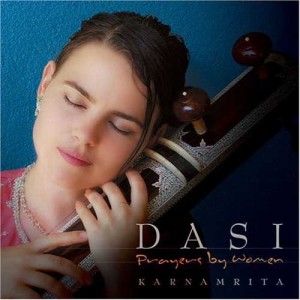
www.lastfm.de/music/Karnamrita
The > BhÄ�gavata PurÄ�ṇa < (DevanÄ�garÄ«: भागवतपुराण) (also known as ŚrÄ«mad BhÄ�gavatam, or BhÄ�gavata) is one of the „Maha“ Puranic texts of Hindu literature, with its primary focus on bhakti (devotion) to the incarnations of Vishnu, particularly Krishna. The Sanskrit text comprises twelve skandas (cantos or books) and 13,216 verses by one count. The BhÄ�gavata includes many stories well known in Hindu tradition, including the various avatars of Vishnu and the life of Krishna. It was the first Purana to be translated into a European language, with three French translations between 1840 and 1857.
Assigning a date for any Purana is problematical, since they are often developed by generations of storytellers. The Bh�gavata itself, along with Hindu tradition, gives ancient origins for the story, with authorship credited to Veda Vyasa. Read More: > HERE <
Karnamrita dasi is an immensely talented and moving singer who has delighted audiences around the world. She grew up in Ashram community in United States, and has sung bhajans and kirtans since childhood. She continued with musical training in Indian classical vocal in Vrindavan, India, and today she is the first female Western performer to be classically trained in India in this sacred art. Acclaimed as one of the most beautiful voices in the Vaishnava tradition, Karnamrita performs all over the world. In 2004 her album “DASI: Prayers by Women” was released.
This album is an offering to women everywhere, evoking a peaceful, yet powerful essence of femininity and devotion. Their voices, their wisdom, and poetry are felt in these songs: composed in both dance and meditative styles. Compiled as a dedication to women of spiritual voices, this is a compilation of women’s songs from India, sung in Hindi and Sanskrit. The songs reflect the styles of chants, Bhajans and Kirtan. The artist has composed the music and arrangements in dedication to her late mother, Kunti Devi.
„In 1998, as my mother was passing away, she requested me to take my singing seriously and record. Although I had studied Sanskrit and sung bhajans for 28 years, I was apprehensive without proper training.That same year, I took her ashes to India, and searched for a teacher to begin studying the classical Dhrupad style.
My two teachers, Pandit Vidur Malik and Tarun Krsna Das guided me through four years of wondrous meditation and training. As a child in school, my teacher Kutila taught us to chant the women’s prayers from the scriptures. Remembering this, I took the opportunity to search out more women in our Sampradaya ( spiritual lineage) and compose music to their words.
Here then, is my offering to these glorious women. Women who sing, pray and share their life with realizations. For all of us, there is a voice that we can relate to, whether it be Draupadi’s song of letting go or simply the Arati celebration to the river Yamuna. Please sing along and let these women touch your heart.“
„mumucur munayo devah sumanamsi mudanvitah mandam mandam jaladhara jagarjur anusagaram nisithe tama-udbhute jayamane janardane devakyam deva-rupinyam vishnuh sarva-guha-sayah avirasid yatha pracyam disindur iva pushkalah“
„The demigods and great saintly persons showered flowers in a joyous mood, and clouds gathered in the sky and very mildly thundered, making sounds like those of the ocean’s waves. Then the Supreme Personality of Godhead, Vishnu, who is situated in the core of everyone’s heart, appeared from the heart of Devaki in the dense darkness of night, like the full moon rising on the eastern horizon, because Devaki was of the same category as Sri Krishna.“ – Srimad Bhagavatam, Canto 10, Chapter 3 „The Birth of Lord Krishna“, Verses 7-8
Product Description – This album is an offering to women everywhere. Their voices, their wisdom, and peace is evoked in a powerful way. Done as a decication to women of spiritual voices, this is a compelation of women’s songs from India. Composed in Hindi and Sanskrit, the album follow the styles of chants, bhajans and kirtan. The songs evoke a peaceful, yet powerful essence of femininity and devotion. The artists has composed the music and arrangements in dedication to her late mother: Kunti Devi.
- SRIMAD BHAGAVATAM ARTICLES <
- Interview: Dhrupad in Musictherapy <
- Meet Karnamrita Dasi, friends, fans at fb <
- Meet Global Peace Initiative of Women, friends at fb <
- Meet Nobel Women´s Inititative, friends at fb <
Monasteries Environmental Himalayaprotection
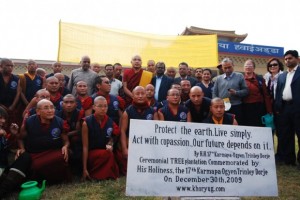
> MYSTIC TRAILS – Clean up Project <
KHORYUG is a network of Buddhist monasteries and centers in the Himalayas working together on environmental protection of the Himalayan region with the aim of practically applying the values of compassion and interdependence towards the Earth and all living beings that dwell here. As Buddhist practitioners, we believe that our actions must flow from our aspiration to benefit all sentient beings and safeguard our mother Earth and that this positive change in our societies must begin with ourselves first.
KHORYUG aims to develop a partnership with community based organizations and NGOs wherever there is a member monastery or center so that together with our communities, we can help and protect all life on Earth now and for the future. Subscribe to get updates on the progress of KHORYUG, and to learn more about how you can help.
KHORYUG IN ACTION! – On the afternoon of Christmas Day, over 150 members of Khoryug met at the front of the gates of Tergar Monastery to clean up the surrounding area, including the roads, ditches, wetlands and lake nearby. Participating in the clean up were monks and nuns of all the Khoryug monasteries as well as visitors from far away who are in Bodh Gaya for the 27th Kagyu Monlam.
The activity was used as an opportunity by Khoryug coordinators to explain the important of minimizing one’s own footprint due to the immense long term impact of non-organic waste such as plastics.
SOLAR PROJECT – This is to bring to your kind notice that Environment Conservation Committee, Rumtek Monastery is going to convey Tashi Delek to all the Dharma Centre and all the Monasteries on the auspicious occasions of Tibetan New Year (Losar) which is on coming 14th. Here, our Environment Committee has already started the home made solar water heating system project to save the energy and reduce the utilization of electricity power and other energies. It has been completed two solar water heating system out of five. Under guidance of one Dharma friend, helping from Sangha Jinpa Gyatso and Environment staff Mr Yeshi, helper Laxman. Our people are expertise in making the solar water heating system by themselves. Currently, our Sanghas are using the hot water for bathing and washing. And also it wills soon utilizing in our main kitchen for cooking, making tea and washing dishes or utensils.
Khenchen Lama, AWAM Foundation, Khampas
> Heart of Enlightment Institute <
www.upaya.org Zen Center Santa Fe, NM
http://khenchenlama.blogspot.com/
AWAM is a Sanskrit word for compassion coupled with wisdom. AWAM Foundation is a non-profit organization incorporated in the state of Arizona, established to provide support to an orphanage and elder center initiated by Khenchen Lama Rinpoche in eastern Tibet. The activities of the AWAM Foundation are guided by compassion and wisdom and aim to manifest and propagate these deepest values. The foundation aims to engage in fundraising projects that would provide basic needs, housing, medical care and education for the orphans and elders. Importantly, AWAM Foundation focuses on long-term projects directed towards future self-sufficiency of the orphanage and elder center. In our activities, we respect, encourage, and support the traditional Tibetan values. The foundation is governed by three volunteer board members following the guidance of Khenchen Lama Rinpoche. Please consider supporting the worthy activities of AWAM Foundation.
Kham (Tibetan: ཁམས; Wylie transliteration: Khams; Simplified Chinese: 康巴; Pinyin: KÄ�ngbÄ�), is a region presently divided between the Chinese provinces of the Tibetan Autonomous Region, and Sichuan where Khampas, a subgroup within the Tibetan ethnicity, live. Read More: > HERE <
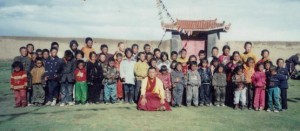
In 1999, Khenchen Lama Rinpoche established an orphanage and a shelter for older people near Jewo monastery in Tibetan province Kham. At that point there were 30 children and 10 older people who did not have any family or government support to provide for them. Moved by their suffering, Khenchen Rinpoche decided to launch a project that would provide the basic needs of food and shelter for the orphans and elders and help them cultivate wisdom and compassion that would guide them to a better future. Arrangements were made for the children to receive basic general education, training in Tibetan and Chinese languages, as well as meditation. In addition, elders interested in meditation received practice instructions from Rinpoche and were supported in their desire to engage in deep meditation practice. Over the last nine years the orphanage and shelter for older people grew in size. Currently, there are 150 children, seven to eighteen years old, and 30 older people between sixty and eighty years of age. While the progress of children and elders in their study and meditation practice is encouraging, there is increasing need to provide for them. In response to Khenchen Rinpoche’s request and under his spiritual guidance, Rinpoche’s students in Arizona established the AWAM Foundation.
HEALTH CLINIC: Because of the secluded location of the orphanage and the elder center, access to medical care is very difficult. The closest hospital that can provide appropriate care is one-day drive from the orphanage. There is a great need for a small hospital, since swift access to medical care is a necessity for small children in the orphanage as well as the elderly. The health clinic would also serve lay Tibetans who inhabit the surrounding areas in proximity of the orphanage. The clinic is planned to include both treatments in traditional Tibetan medicine and Western medicine.
www.upaya.org Pilgrimage Through Kham: A Medical Mission in Tibet
DHARMA TARA YAK FARM – In an effort to make the orphanage and elder center more sustainable, Rinpoche and his students developed a project aimed at providing long-term food contribution to the orphanage through an orphanage-owned yak farm. The Dharma Tara Yak Farm is managed free of charge by a local businessman in Tibet and is providing the orphans and elders with dairy products – the main part of diet in Tibet. Yaks purchased for the orphanage and elder center will never be killed for meat. Between 50-70 yaks are needed to provide for the 180 orphans and elders. Any excess dairy products will be in the future sold for purchase of other food articles for the orphanage. Khenchen Rinpoche is very hopeful about this project because it will provide for the orphans and elders as well as help sustain the traditional way of care for yaks. With recent changes in Tibet, increasing numbers of yaks are being raised for meat and slaughtered in a cruel way.
To launch the project, one of Khenchen Rinpoche’s students donated funds for the first 15 yaks in May 2008. Funds for additional 5 yaks were donated by Rinpoche’s Chinese students. Most recently, Rinpoche’s students from the Dharmakirti College in the USA made a donation for purchase of additional 5 yaks. The herd has currently 32 yaks because 7 baby yaks have been born since May 2008 and this number will grow every year (see picture below). We are very grateful to those who contributed to this project so far! Thanks to your support the start of the project has been a great success!
EDUCATION – When Khenchen Lama Rinpoche started the orphanage, one of the main priorities was to make sure that orphans receive the best education available in the area. To this aim, arrangements were made to cover the basic educational needs for the orphanage. Currently, there are four teachers: 2 monks from a near monastery and 2 local teachers. The curriculum focuses on reading and writing in Tibetan language, Tibetan history and culture, basic algebra, and Chinese language.
Samsara Films, Kumbh Mela, Prims of light

Samsara (Sanskrit: संसार) is the cycle of birth, death and rebirth (i.e. reincarnation) within Buddhism, Bön, Hinduism, Jainism, Sikhism, Vaishnavism and other Indian religions. Colloquially, „Samsara“ can also refer to a general state of overt or subtle sufferings that occur in day to day life.The concept of samsara (along with karma, reincarnation, and moksha) was likely first developed in India by non-Aryan people outside of the caste system. The spiritual ideas of these people greatly influenced later Indian religious thought. Buddhism and Jainism are continuations of this tradition, and the early Upanishadic movement was influenced by it. Reincarnation was adopted from this religious culture by Brahmin orthodoxy, and Brahmins first wrote down scriptures containing these ideas in the early Upanishads. The Sanskrit word „Samsara“ is the root for the Malay word „sengsara“, which means suffering. Read More: > HERE <
Every year, approximately two million people go to India on spiritual quests.
What are they searching for?
In the East, they are called Seekers. In the West, they are labelled „Spiritual Junkies“. Aged anywhere between 16 and 80, they roam in search of personal and spiritual understanding, often without the support of their loved ones or community.
‚Prisms of Light‘ explores this growing phenomenon by focusing on people who are travelling through India on spiritual quests. Interwoven between them are a plethora of spiritual traditions, colourful characters, and chance encounters.
In 2009, Director Yolanda Barker and crew funded a research trip to India, where they shot the promo above. Over the last few months, we have been raising funds to go into production. But we need to get back to India in April for a major spiritual gathering. Time is running out.
„Peace of Mind from a Buddhist Perspective. Samsara“
http://prismsoflightdocumentary.blogspot.com/
Samsara Films has formed a collaboration with Seattle based Typecast Films to make South Asian documentaries, shorts and narrative features available in the North American market. Typecast Films is an emerging film distribution company formed in 2005 by John Sinno, the CEO of Arab Film Distribution (AFD), in order to represent a wider range of cinematic works from around the world. Since its inception, Typecast Films has successfully launched a number of theatrical and DVD releases, including „Iraq In Fragments,“ which won three top prizes at Sundance and was nominated for the 2006 Best Documentary Academy Award.
Samsara Films’ extensive experience in South Asia makes us a key collaborator for projects in India. Our contacts and resources will deliver the highest quality value in production services.
- KUMBH MELA: Songs of the River (60 Min)
- Largest gathering of humanity on Earth!
- www.kumbhmelafilm.com
The Kumbh Mela is a great roving Hindu spiritual festival that has moved around India for more than four thousand years, erecting temporary cities along the Ganges River. The January 2001 Kumbh Mela was the largest gathering of humanity in recorded history. East joined West, ancient met future at the advent of the 21st Century. Millions of people came from all over the globe to pray for peace and rebirth for themselves and for the world. Appearing: HH Dalai Lama, Dr. Andrew Weil, Yogmata Keiko Aikawa, Pilot Baba, Kaali Baba.
REVIEWS – “It is a fascinating look at our humanity and at how our spirituality manifests in the world.” – Stephen Simon Producer, WHAT DREAMS MAY COME and Co-Founder of Spiritual Cinema Circle
“Songs of the River displaces a Westerner from everyday certitudes and opens him or her to the power of the Kumbha Mela experience and the consciousness people like [Yogmata] Keiko Aikawa seek. All in all, a compelling cinematic experience.“ —
Harold Crooks, whose documentary film credits include the award-winning The World Is Watching, The Champagne Safari and The Corporation.
- ABE OSHEROFF
- “One Foot in the Grave the other Still Dancing” (72 Min)
Most people knew Abe Osheroff as an activist — from the frontlines of the Spanish Civil War to the picket lines of the U.S. labor movement, from the struggles for civil rights in Mississippi to the work for human rights in Nicaragua. For most of his 92 years, Osheroff threw himself into the fray with rare energy and enthusiasm. In this riveting documentary, Osheroff reflects on the meaning of that activism and the ideas that animated his actions. A truly organic intellectual, he shares the wisdom built up over a lifetime of commitment to the „radical humanism“ that defined his politics and philosophy.
- VARANASI SACRED FIRE (50 min)
- www.kmp2001.com
A cinematic meditation on a remarkable city, where both life and death are encountered daily on the great Ganges River. This is a rare account of cremation rituals at Manikarnika Ghat, India’s holiest funeral ground.
St. Patrick Hospital – St. Bingen Festival
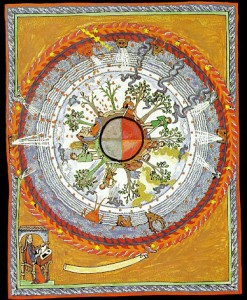
> HILDEGARD VON BINGEN FESTIVAL <
March 11-14, 2010
Missoula, Montana
> St. Patrick’s Hospital: Women’s Care Center <
* held in conjunction with 10th Annual Celebrating Women Series, Center for Attitudinal Healing and the Arts: Montana Cappella of Voices & Instruments, University of Montana: Women and Gender Studies & Music Departments. …..Teach only love, for that is what you are. ACIM
Blessed Hildegard of Bingen (German: Hildegard von Bingen; Latin: Hildegardis Bingensis; 1098 – 17 September 1179), also known as Saint Hildegard, and Sybil of the Rhine, was a Christian mystic, German Benedictine abbess, author, counselor, linguist, naturalist, scientist, philosopher, physician, herbalist, poet, channeller, visionary, composer, and polymath. Elected a magistra by her fellow nuns in 1136, she founded the monasteries of Rupertsberg in 1150 and Eibingen in 1165.
She was a composer with an extant biography from her own time. One of her works, the Ordo Virtutum, is an early example of liturgical drama.
She wrote theological, botanical and medicinal texts, as well as letters, liturgical songs, poems, and the first surviving morality play, while supervising brilliant miniature Illuminations. Read more: > HERE <
About the ISHBS – Founded in 1983 by Professor Bruce Hozeski of Ball State University, The Interntational Society of Hldegard von Bingen Studies is comprised of scholars and enthusiasts interested in the promotion of the 12th century magistra.
1st antiphone with psalm 109/110 from the vesper „o vis aeternitatis“ at Abbey St. Hildegard. Schola of the Benedictines Abbey St. Hildegard, Eibingen. Directed by Johannes Berchmanns Göschl and Sr. Christiane Rath OSB. Recorded 1997 http://www.abtei-st-hildegard.de/
The purpose of the society is to promote study, criticism, research, and exchange of ideas related to all aspects of Hildegard von Bingen’s work. Methods of achieving this purpose include but are not limited to, faculty exchanges, inter-institutional cooperation, annual meetings, participation in conferences, the publication of a newsletter, and the endorsement of other publications relating to Hildegard von Bingen studies. .
Qualelibet, is the bi-annual newsletter which features articles touching on all aspects of Hildegard’s life & reception – from in depth scholarly source studies to modern day reception history and concert reviews.
As the ISHBS is an inclusive organization intended to promote dialogue among scholars and enthusiasts, Qualelibet welcomes studies from all perspectives and methodolgies as we explore the life and works of Hildegard and related subjects.
I love Tibet Peacewalk, March 10th 2010

> TIBET ALTERNATIVE TRAVEL & SHOPPING GUIDE <
> ANI CHOYING TOUR´s & TRAVEL <
(Conference, Travel Green Guide)
Tibet (Tibetan: བོད་; Wylie: bod, Chinese: 西藏; pinyin: XÄ« Zàng) is a plateau region in Asia and a disputed territory, north of the Himalayas. It is home to the indigenous Tibetan people, and to some other ethnic groups such as Monpas and Lhobas, and is inhabited by considerable numbers of Han and Hui people. Tibet is the highest region on earth, with an average elevation of 4,900 metres (16,000 ft). It is sometimes referred to as the roof of the world.Read More: > HERE <
Who We Are – Students for a Free Tibet (SFT) has five full-time staff working at the International Headquarters in New York City and many nearly full-time volunteers. They live to make life difficult for the Chinese government, so that China understands that the occupation of Tibet must end. The job of the staff is to support the efforts of SFT members worldwide, by providing leadership on campaigns and organizational strategy, and by coordinating training opportunities, like Free Tibet! Action Camp.
The Executive Director is hired by the Board of Directors and the rest of the staff is hired by the Executive Director. SFT also has countless dedicated volunteers and interns, without whom our work would not be possible.
|
|
|
|
1.) TIBET 2009, 2.) The Dalai Lama speaks about the risks of Tibet cultural genocide
March 10th 2010 because We are Tibetan – This March 10th, please take action to help amplify the voices of Tibetans inside Tibet and China and send them messages of solidarity from around the world. Read more about the 1959 Uprising.
Ani Choying Travels: www.choying.com
- SAVE MOTHER NATURE <
- www.stopminingtibet.com
- www.tibet.org/Travel/ (Tibetan Government-in-Exile, TGiE)
- www.tibettravel.org Classical 8 Days Mt. Everest Base Camp Adventure
- www.travelchinaguide.com/cityguides/tibet/
- www.friendsoftibet.org
- http://peoplefortibet.blogspot.com/
- Meet SOLIDARITY TO THE TIBETAN PEOPLE, friends, fans at fb <
- Meet Friends of Tibet at facebook <
- Meet Mind and Life – Compassion in Economics, studies, friends at fb <
- Meet Int. Ecotourism Society, friends and fans at fb <
The Real Meaning of „ADVAITA“, Vedanta
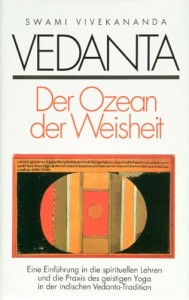
> INTERNATIONAL CONGRESS OF VEDANTA <
> Sri Ramana Maharshi Ashram, Message No.141 <
> Advaita Vedanta, Vivekananda, Ramakrishna <
Vedanta (Devanagari: वेदान्त, VedÄ�nta) was originally a word used in Hindu philosophy as a synonym for that part of the Veda texts known also as the Upanishads. The name is a sandhied form of Veda-anta = „Veda-end“ = „the appendix to the Vedas“. By the 8th century CE, the word also came to be used to describe a group of philosophical traditions concerned with the self-realisation by which one understands the ultimate nature of reality (Brahman). The word Vedanta teaches that the believer’s goal is to transcend the limitations of self-identity. Vedanta is not restricted or confined to one book and there is no sole source for Vedantic philosophy. Vedanta is based on two simple propositions: 1.) Human nature is divine. 2.) The aim of human life is to realize that human nature is divine. READ FULL ARTICLE > HERE <
Advaita Vedanta (IAST Advaita VedÄ�nta; Sanskrit अद्वैत वेदान्त; is a sub-school of the VedÄ�nta (literally, end or the goal of the Vedas, Sanskrit) school of Hindu philosophy. Other major sub-schools of VedÄ�nta are Dvaita and ViśishṭÄ�dvaita. Advaita (literally, non-duality) is a monistic system of thought. „Advaita“ refers to the identity of the Self (Atman) and the Whole (Brahman).
The key source texts for all schools of VedÄ�nta are the Prasthanatrayi—the canonical texts consisting of the Upanishads, the Bhagavad Gita and the Brahma Sutras. The first person to explicitly consolidate the principles of Advaita Vedanta was Adi Shankara while the first historical proponent was Gaudapada, the guru of Shankara’s guru Govinda Bhagavatpada. READ FULL ARTICLE >HERE <
The Advaita Vedanta Anusandhana Kendra (Advaita Vedanta Research Center) is dedicated to increasing knowledge of the tenets of Advaita Vedanta–a philosophy and religion based on the Vedas that teaches the non-duality of the individual soul and God–as expressed by its foremost exponent Shankaracharya (whose picture you see above) and the unbroken succession of teachers descended from him.
Die Philosophenschulen – Im Anschluss an die vedische Zeit entstanden in Indien verschiedene Philosophenschulen. Einige davon akzeptierten die Veden als Autorität, diese Schulen werden als orthodox bezeichnet. Andere Schulen lehnten die Veden ab. Dies sind der Buddhismus, die Jaina-Religion und die Charvakas (Materialisten). Von den orthodoxen Schulen sind in spiritueller Hinsicht interessant:
-
Samkhya – diese Schule versucht die Welt möglichst logisch zu erklären.
-
Yoga – baut auf den Theorien des Samkhya auf und liefert eine praktische Methode.
-
Tantra – baut auf den Theorien des Vedanta, bzw. Advaita auf und liefert eine praktische Methode.
-
Vedanta – Vedanta, wörtlich Veda-Ende, bezieht sich also auf die Upanishaden. Deren Botschaft fasste Badarâyana in seinen Vedanta-Sutras äußerst knapp zusammen.
International Vedanta Society – Vedanta is a spiritual science that shines light upon our very nature, illuminating the truth that we are all One with God, and that our souls are the divine manifestation of existence, knowledge, and bliss.
This truth is veiled beneath false beliefs that would limit us through fears, doubts and weaknesses. Vedanta uproots this ignorance thereby inviting us to embrace the truth of who we are (omnipresent, omniscient and omnipotent). This universal truth is available to any seeker regardless of religion, culture, or sex.
The core and founder of IVS is Bhagavan. His deep love and concern for others inspired him to pioneer many social welfare activities, even as a child. His passionate quest for truth led him to the holy feet of his master Swami Pavitrandaji Maharaj, and through his teachings, Bhagavan sank into the depths of Nirvikalpa Samadhi, (realization of the Supreme Self) in 1984, and Mahabhava (Supreme Godhood) in 1987. Since that time, Bhagavan has strived to help others attain and taste supreme joy and love.
The life and words of Bhagavan, through truth and love incarnate, offer a shelter for the tired and weary, who return home with peace, bliss, confidence, hope, and life.
The International Vedanta Society (IVS), was formed on November 19th, 1989 through the divine will manifesting in Bhagavan. Commencing its journey from Guwahati in the North Eastern part of India, the society has within a short span spread to various countries throughout the world, through its mediums of love and service. Realization of the Self or God is the key note of IVS. Its members and well-wishers strive continuously to radiate eternal love and bliss.
International Congress of Vedanta was established in 1986 by Professor S.S. Rama Rao Pappu in the Department of Philosophy, Miami University in order to bring together scholars specializing in Indian Philosophies and Religions from all over the world for the study and exchange of ideas and to promote research. In the past eighteen years, fifteen conferences were organized, ten of them at Miami University and five conferences were organized abroad – in Port-of-Spain, Trinidad, and in Rishikesh (Himalayas), Madras, Hyderabad and Visakhapatnam, India.
Centennial celebrations of great Indian philosophers were also held during the Vedanta Conferences – e.g. birth centennial of S. Radhakrishnan in 1988, 1200th anniversary of Sri Sankaracharya in 1990, centennial of Swami Vivekananda’s sojourn to America and his participation in the Parliament of World’s Religions in Chicago in 1992, birth centennial of J. Krishnamurti in 1995, and the 700th anniversary of sanjeewan Samadhi of Sri Jnaneswara in 1996.
Vedanta Congress welcomes for presentation in the conferences research papers in all areas of Indian philosophies and religions.
Though the first Vedanta Conference began with a narrowly focused group for the study of Vedantic texts and their interpretation, the scope of the Vedanta Congress was expanded during the years to include:
- (a) all major schools of Vedanta (Advaita, Visistadvaita, Dvaita, Suddhadvaita, etc.), Hindu, Buddhist and Jaina Darsanas, Epics, Puranas and Dharma Sastras
- (b) applied Indian philosophy, dealing with contemporary issues like abortion and euthanasia, war and peace, caste and race, karma and cloning
- (c) Indian philosophical implications of recent developments in mathematics, life sciences, cognitive science, etc.
-
Vedanta Articles Dein Ayurveda Net > HERE <
-
COMPLETE WORK OF RAMAKRISHNA AND VIVEKANANDA (free) downloads: www.ramakrishnavivekananda.info
-
Swami Vivekananda´s > SPEECH AT CHICAGO < at the PARLIAMENT OF WORLDRELIGIONS at Chicago in 1893.
- Read Fundamental Concepts of Vedanta here:
The Real Avatar: Story of a Sacred Mountain
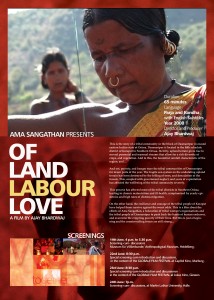
> ESTC Ecotourism 2010 Conference <
> Indogenous Peoples Ressources <
> TRIBAL ENERGY ECONOMIC CONFERENCE <
The Kondha are indigenous tribal groups of India. Unlike other tribal groups of India, the Dongria Kondh are accomplished horticulturists, farming on the mountain ranges of Niyamgiri. Their highest concentration is found in the blocks of Rayagada, Kashipur, Kalyansinghpur, Bissamcuttack and Muniguda.
One sub-group of kondhas is the Dongria Kondhas. They inhabit the plateaus of Niyamgiri hill ranges which cover parts of Rayagada and Koraput and Kalahandi districts. Their major concentration is found in the blocks of Kalyansinghpur, Bissamcuttack and Muniguda. They are called Dongria or dweller of donger („hill“ in Oriya) and love to settle in higher altitudes due to their economic demands. The Niyamgiri Hills where the Dongria Kondh dwell are covered by superb natural forests and home to many rare species like the Golden Gecko and the Giant Squirrel. The Dongria Kondh call themselves Jharnia meaning those who live by the Jharana (streams). Hundreds of perennial streams flow from Niyamgiri hill, and there are hundreds of Dongria villages by the streams. The Dongria are the protectors of these streams, hills and jungles and are revered by people in the nearby plains. Read More > HERE <
Die Globalisierung dringt heute gewalttätig und rücksichtslos bis in die letzten Gebiete vor, die noch nicht direkt von Staat, Wirtschaft und Kapital kontrolliert werden. Diese Gebiete sind meist Regionen, in denen verschiedene indigene Gemeinschaften leben, beispielsweise in Indien, Brasilien, Botswana, Ecuador oder in Venezuela. Für einige dieser Adivasi-Gemeinschaften (indigene Gemeinschaften) hat sich der gewaltsame Einzug „der Zivilisation“ in ihr Leben erst vor kurzem vollzogen. Die traditionelle Lebensweise vieler Adivasis wurde auf unterschiedliche Weise untergraben, zum Teil bereits von den Kräften des Marktes, Kapitals und des Staates zerstört.
Eine dieser zahlreichen bedrohten Adivasiregionen der Welt ist Kashipur im Bundesstaat Orissa in Indien. In dieser Region leben die drei Adivasi-Gemeinschaften Kondha, Jhodia-Paraja und Pengo. Aufgrund der Industrialisierung wurden hier bereits in einem Radius von 100km große Waldgebiete zerstört, um die nahegelegenen Städte und die Industrie mit Nutzholz zu beliefern. Dies ging einher mit dem Bau von Bahngleisen und Straßen und bedeutete das Eindringen „zivilisierter“ Außenseiter in die Region, die Ansiedlung staatlicher Institutionen, einschließlich der Polizei, Bürokratie, der Händler und Geldverleiher. Mehr lesen. > HIER <
The Dongria and other local Kondh people are resisting „Vedanta“ and are determined to save Niyamgiri from becoming an industrial wasteland. Other Kondh groups are already suffering due to a bauxite refinery, built and operated by „Vedanta“, at the base of the Niyamgiri Hills. Villagers who have been removed from their homes for the refinery have suffered threats and intimidation. They have lost both their land and their means of supporting themselves.
They are also suffering from health problems due to pollution from the refinery, which they blame for skin problems, livestock diseases and crop damage.
> Tribal survival: the Dongria Kondh < > MINING IN ORISSA utubechannel <
The Niyamgiri Hills are home to the more than 8,000 Dongria Kondh, whose lifestyle and religion have helped nurture the area’s dense forests and unusually rich wildlife.
The Dongria farm the hill slopes, grow crops in among the forest, and gather wild fruit, flowers and leaves for sale.
They call themselves Jharnia, meaning ‘protector of streams’, because they protect their sacred mountain and the life-giving rivers that rise within its thick forests.
The „Vedanta’s“ open pit mine would destroy the forests, disrupt the rivers and spell the end for the Dongria Kondh as a distinct people.
At the centre of the struggle is the Dongria’s sacred mountain, the ‘mountain of law’. The Dongrias worship the top of the mountain as the seat of their god and protect the forests there.
The „Vedanta“ Resources wants to mine the bauxite from the top of the same mountain. The Dongria Kondh would lose their livelihood, their identity and the sanctity of their most religious site.
About First Peoples – In January 2009, the Andrew W. Mellon Foundation awarded four university presses a collaborative grant that established an innovative partnership. The grant supports the publication of 40 books over four years and will create the means for the presses to collaborate in their mission of furthering scholarly communication in the field of Indigenous studies. Our publishing initiative seeks the best and most robust scholarship by junior authors whose publications will contribute to the development of the field.
Vision – In January 2009, the Andrew W. Mellon Foundation awarded four university presses a collaborative grant that established an innovative partnership. The grant supports the publication of 40 books over four years and will create the means for the presses to collaborate in their mission of furthering scholarly communication in the field of Indigenous studies. Our publishing initiative seeks the best and most robust scholarship by junior authors whose publications will contribute to the development of the field. Learn More
Press Expertise – The partner presses on this initiative bring together expertise in regional, national, and global Indigenous issues, creating a publishing program that reaches beyond traditional geographically bound or even discipline-bound borders. Learn More
Author Benefits – The collaborating presses seek works by authors that reflect the expanding field of Indigenous studies. Authors who are selected to participate in our program will receive many benefits, thanks to funding from the grant.
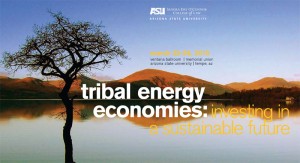
www.firstpeoplesnewdirections.org
Tribal Energy Economies: Investing in a Sustainable Future – CLE CONFERENCE – Domestic energy production is undergoing a major evolution as we explore and expand traditional and new energy sources. Tribes are well-positioned to lead our nation into this next generation of development.
This conference will bring together elected and community leaders from Indian country, financing and energy industry experts, attorneys, and those in academia to chart a course that will allow tribes to increase their leverage now and create sustainable energy economies for the future. We will look at strategic plans to promote investment and to prepare the tribes for a transition towards truly sustainable economies.
We will address the traditional energies: coal, natural gas, oil, and segue to alternative and renewable energies and beyond. This conference will be a true exchange of ideas by experts in traditional, renewable, and alternative energies, as well as engineers, economists, attorneys, and financial and legislative specialists. It will look at the challenges of developing long-term economies in these energies, including the economic and cultural issues associated with large-scale build-outs on tribal lands.
The mission of the conference is to inspire the attendees not only to envision the future for the tribe’s energy economies but to also identify a clear path to success and bring together people who can contribute to achieve that success.
- University of Arizona Press
- University of Minnesota Press
- University of North Carolina Press
- Oregon State University Press
- The Andrew W. Mellon Foundation
The Buddha, A Film by David Grubin
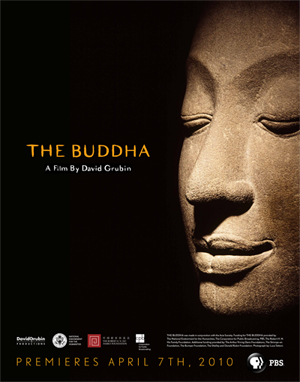
> The Buddha, A Film by David Grubin <
David Grubin is an American documentary filmmaker, who has produced and directed numerous films, many of which are best-known from airing on PBS. Interview with David Grubin: > HERE <
The Buddha, A Film by David Grubin – The Buddha, a two-hour documentary for PBS by award-winning filmmaker David Grubin and narrated by Richard Gere, tells the story of the Buddha’s life, a journey especially relevant to our own bewildering times of violent change and spiritual confusion.
The program was produced in conjunction with the exhibition Pilgrimage and Buddhist Art, organized by Asia Society Museum, New York, opening in March 2010. The companion website for The Buddha, launching in early 2010, will feature the work of some of the world’s greatest artists and sculptors, who across two millennia, have depicted the Buddha’s life in art rich in beauty and complexity. Hear insights into the ancient narrative by contemporary Buddhists — including Pulitzer Prize winning poet W.S. Merwin and His Holiness the Dalai Lama.
Join the conversation and learn more about meditation, the history of Buddhism, and how to incorporate the Buddha’s teachings on compassion and mindfulness into daily life.
HOLI: The festival of colours in India

> Organic Colours, Cradle to Cradle Design <
> ECOBUILD UK, 4th March 2010 <
Holi, also called the Festival of Colours, is a popular Hindu spring festival observed in India, Nepal, Srilanka, and countries with large Hindu diaspora populations, such as Suriname, Guyana, South Africa, Trinidad, UK, USA, Mauritius, and Fiji. In West Bengal of India and Bangladesh it is known as Dolyatra (Doul Jatra) or Basanta-Utsav („spring festival“). The most celebrated Holi is that of the Braj region, in locations connected to the god Krishna: Mathura, Vrindavan, Nandagaon, and Barsana. These places have become tourist destinations during the festive season of Holi, which lasts here to up to sixteen days. Colours used at Holi, – a perfect alternative to synthetic colours… Read More: > HERE <
Holi or Hutasani festival identified with Dol-Yatra or Rocking of the image of K’rsna, is celebrated in Phalgun (March). It is said to be a commemoration of the killing of the demon Madhu by K’rsna. This festival is specially celebrated I Northern states, as a kind of Hindu Sutranalia or carnival and is a very popular festival. It commences about 10 days before the full moon of Phalgun (March), but is usually observed for the last three or four days, terminating with the full moon. Boys dance all over the streets ad the residents sprinkle their friends, relatives and even passersby, with red or yellow powder (gulal). The whole atmosphere is very jovial and no one objects to the color being thrown. Loud music, merriment, songs and midnight orgies are the rule. Elders, youngsters, children, women and girls, all join this festival. Groups go from house to house, offer gulal at the feet of the elders and smear red/yellow powder on the faces of the equals. Some rich elderly persons apply scent on all visitors. Towards the close of the festival, one day before the colour play, a bonfire is lighted and games representing the frolics of the young K’rsna, take place around embers. A light mood atmosphere prevails, along with practical jokes, caricature, and cartoons, as is not seen in any other festival.
Article: By- Prof. (Dr.) Chitralekha Singh
Dean (Visual & Performing Art)
Mangalayatan University, Aligarh-INDIA
Reb Zalman Legacy Project, Migdal Ohr

> What is authentic Judaism ? <
The Reb Zalman Legacy Project is a collaborative effort of the Yesod Foundation and Naropa University to preserve, develop and disseminate the teachings of Rabbi Zalman Schachter-Shalomi, better known as „Reb Zalman,“ an innovative leader in ecumenical dialogue and founder of the Jewish Renewal and Spiritual Eldering movements.
To this end, we hope to develop a unique on-line educational tool, giving users access to a virtual library of profound dimensions; a physical archival collection housed at Naropa University, providing a beautiful space for study, contemplation, and spiritual fellowship; a Contemplative Judaism M.A. program based on Reb Zalman’s teachings at Naropa University; ecumenical, spiritual direction, and eldering workshops; and new books, booklets, CDs, and DVDs, developed from the wealth of Reb Zalman’s material archive.
Important areas of intellectual and spiritual development to us are Deep Ecumenism (inter-religious dialogue), Paradigm Shift, Contemplative Practices, Ecology and Gaian Awareness, Spiritual Eldering, Psychology of Religion, Transpersonal Sociology, Jewish Mysticism, Hasidism, Jewish Renewal, Storytelling, and Sacred Music.
The Reb Zalman Legacy Project is a container that supports the evolving understanding of all of these ideas with the teachings of Reb Zalman as its core and foundation. We intend to preserve not only Reb Zalman’s body of work, but also his process of renewal, so that his teachings will not become calcified and exist with meaning primarily for our generation alone. Therefore, with an eye to the future, we are building open access-pathways to primary texts, inviting new commentary, and providing new possibilities for spiritual fellowship. „To Preserve, Develop, and Disseminate“
Reb Zalman Schachter-Shalomi: Healing the Planet, Rabbi Grossman for underprivilged children
Zalman Schachter-Shalomi, better known as „Reb Zalman,“ was born in Zholkiew, Poland, in 1924. Raised largely in Vienna, his family was forced to flee the Nazi oppression in 1938. After almost three years without roots, they finally landed in New York City in 1941, settling in Brooklyn, where young Zalman enrolled in the yeshiva of the Lubavitcher Hasidim. He was ordained by Lubavitch in 1947. He later received his Master of Arts degree in the Psychology of Religion in 1956 from Boston University and a Doctor of Hebrew Letters degree from Hebrew Union College in 1968.
He taught at the University of Manitoba, Canada, from 1956 to 1975 and was Professor of Jewish Mysticism and Psychology of Religion at Temple University until his early retirement in 1987, when he was named professor emeritus. In 1995, he accepted the World Wisdom Chair at Naropa University in Boulder, Colorado, officially retiring from that post in 2004.
Throughout his long career, Reb Zalman has been an unending resource for the world religious community. He is the father of the Jewish Renewal and Spiritual Eldering movements, an active teacher of Hasidism and Jewish Mysticism, and a participant in ecumenical dialogues throughout the world, including the widely influential dialogue with the Dalai Lama, documented in the book, The Jew in the Lotus.
One of the world’s foremost authorities on Hasidism, he is the author of the new book, A Heart Afire: Stories and Teachings of the Early Hasidic Masters (co-authored by Netanel Miles-Yepez), and on Jewish law, he has written, Integral Halachah: Transcending and Including (with Daniel Siegel). Reb Zalman currently lives in Boulder, Colorado, and continues to be active in mentoring his many students the world over.
For a complete biography and chronology of Reb Zalman’s life, please visit our „Life“ page. To see a complete list of Reb Zalman’s published works, see our „Works“ page.
Rabbi Yitzchak Dovid Grossman is a sixth generation Jerusalemite, born in 1946. A dramatic turning point in his life occurred in 1968 when he decided to move to the Lower Galilee town of Migdal Ha’Emek to provide the socio-humanitarian aid sorely needed there.
Migdal Ha’Emek had been established in 1953 as a development town designed to accommodate part of the great influx of Jewish immigrants from the North African countries. The town’s population grew in size much faster than the evolving socio-economic and educational infrastructure. The resulting shortage of jobs and lack of sufficient school facilities and teachers had a devastating effect on the inhabitants. Migdal Ha’Emek quickly became known as one of the prime centers of criminal activity in Israel.
Rabbi Grossman’s arrival on the scene was without fanfare. He had no welcoming committee and no mandate from the people or from the administration. Furthermore, he had no budget nor staff or even an office. He joined in the conversations of idle youth hanging out on the street corners and, after gaining their confidence, began organizing private classes for them. But he knew that to get to the core of the problem, he would have to tackle it at it’s roots.
Rabbi Grossman became a steady and frequent visitor at the town’s discotheques and pubs, engaging the young clientele in dialogues. Slowly but surely the tough exteriors began to peel away and there began to surface the gentle side of the members of the new generation searching for their true identity.
Migdal Ohr (Hebrew for „Tower of Light“) was established in 1972 for the express purpose of providing education and social guidance to the children from underprivileged and troubled homes ifrom across Israel. Overcrowded apartments, one-parent families, homes with drug problems, impoverished, crime-ridden families–these are the target populations from which Migdal Ohr draws its over 6,000 pupils at all levels of the educational spectrum. Its goal – to transform these students into proud and productive citizens of Israel.
Migdal Ohr, Israel’s largest youth village, provides a nurturing home and outstanding education to over 6,500 orphaned, impoverished, underprivileged and new immigrant children. At Migdal Ohr, the children’s individual needs are met with love, warmth and tremendous sensitivity.
The Young Leadership Committee is dedicated to upholding the values and promoting the mission of Migdal Ohr. By developing creative programming, the Committee attracts young Jewish professionals, educates them about our mission, and encourages increased involvement.
The Young Leadership Committee is open to everyone interested in generating awareness for Migdal Ohr and affecting change in the lives of others. Our dynamic members come from varied backgrounds, and offer a broad range of perspectives and experiences. Together we plan and attend fundraisers and social events, meet hundreds of young adults in the New York area, and, best of all, help save children in Israel.
MIGDAL OHR EDUCATIONAL CENTER – The following is a brief description of some of the educational and social facilities provided by Migdal Ohr:
-
(a) Day Care Centers which provide tender, loving care to infants aged three months to three years old. These facilities offer the mothers of large families the opportunity to work and help their husbands support their children.
-
(b) Kindergartens, where pre-school age children get a proper start on the educational path.
-
(c) Primary and Secondary school systems, for boys and for girls, with full dormitory facilities, laboratories, computer centers, libraries, and youth centers, where emphasis is placed on individual attention to the child’s needs.
-
(d) Teachers‘ Seminary for single and married men, to develop the rabbis, educators, school administrators and rabbinical court judges required by Israeli society.
-
(e) Prisoner rehabilitation programs in Israel’s prisons. The recidivism rate among the „graduates“ of Migdal Ohr’s rehabilitation activities stands at about 10%, a sharp contrast to the 90% in the general prison population.
-
(f) Occupational Training Center offering adult education courses responsive to the requirements of government and industry for off-campus residents of northern Israel. Courses fall into three categories:
-
(I) OCCUPATIONAL DIPLOMA COURSES
-
(II) EDUCATION EXTENSION COURSES
-
(III) COMMUNITY ACTIVITIES
Vedic Guide: “ Bibel, Bhagavad-Gita & Co „

The Bible refers to one of two closely related religious texts central to Judaism and Christianity—the Hebrew or Christian sacred scriptures respectively. The Hebrew Bible, composed between the 14th and 5th centuries BCE, is the main source for the history of ancient Israel. The five books of the Torah compromise the legal code and origins of the Israelite nation. The Prophets consist of prophetic and ethical teachings, as well as the historic account of Israel. The Writings such as Psalms and Job are poetic works. Israelite historians presented a picture of the ancient nation based on information that they viewed as historically accurate. Read More: > HERE <
Vortrag und Diskussion mit Shri Sarvabhavana Prabhuji – Vorträge in den Vortragsreihen „Café-Gespräche“ und „Themen-Abende“. Shri Sarvabhavana beleuchtet in seinen Vorträgen Themen aus dem weiten Feld der spirituell-vedischen Philosophie, der Mystik und der Psychologie. Er verbindet dabei uralte vedische Weisheit mit einem sehr bodenständigen Ansatz, der sich darum bemüht, diese spirituell-philosophischen Wahrheiten mit dem praktischen Leben zu verknüpfen.
-
„Bibel, Bhagavad-Gita & Co – Die Bedeutung offenbarter Schriften“
-
„Bhagavad -Gita Abend“ „Lesen in der Bhagavad-Gita“
Seine inspirierenden, tiefgründigen Präsentationen mit seinem ungewöhnlichen klaren Blick auf die komplexen Themen überraschen und regen zum eigenen Nachdenken und zur persönlichen Vertiefung an.
Was ist AUM ? Pranava, Urmantra, Silbe, Matrix….
