ISKCON DESIRE TREE (free) DOWNLOAD´s

> BHAGAVAD-GITA ONLINE (free) <
The International Society for Krishna Consciousness (ISKCON), also known as the Hare Krishna movement, is one of the Hindu Vaishnava religious organizations. It was founded in 1966 in New York City by A.C. Bhaktivedanta Swami Prabhupada. Its core beliefs are based on traditional Hindu scriptures such as the ŚrÄ«mad BhÄ�gavatam and the Bhagavad-gÄ«tÄ�, both of which, according to traditional Hindu view, date back more than 5,000 years. The distinctive appearance of the movement and its culture come from the Gaudiya Vaishnava tradition, which has had adherents in India since the late 1400s and Western converts since the early 1930s.
Non-sectarian in its ideals, ISKCON was formed to spread the practice of bhakti yoga (devotion to God), in which aspirant devotees (bhaktas) dedicate their thoughts and actions towards pleasing the Supreme Lord, Krishna (seen as non-different from God). ISKCON today is a worldwide confederation of more than 400 centres, including 60 farm communities, some aiming for self-sufficiency, 50 schools and 90 restaurants. In recent decades the movement’s most rapid expansions in terms of numbers of membership have been within Eastern Europe (especially since the collapse of the USSR) and India. In recent years the organisational and management structure of ISKCON is becoming less relevant to its members. Read more: > HERE <
You can eternally help people suffering endlessly in this material world by your generous donations to this website.
> Meet ISKCON Groups, Friends, Yoga, Studies at facebook <
> Meet Sri Prabhupada, Friends, Groups, Studies at facebook <
> Meet Bhagavad-Gita, Groups, Friends, Studies at facebook <
SRI PURAM – TANTRA RESEARCH CENTER
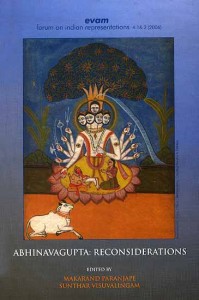
> ISHWAR ASHRAM TRUST BOOK´s <
>I.I.H.S. FREE BOOK DOWNLOADS <
(Abhinavagupta’s Commentary on the Bhagavad Gita)
Abhinavagupta (Kashmiri: अभिनवगुप्त) (approx. 950 – 1020 AD) was one of India’s greatest philosophers, mystics and aestheticians. He was also considered an important musician, poet, dramatist, exeget, theologian, and logician – a polymathic personality who exercised strong influences on Indian culture.
He was born in the Valley of Kashmir in a family of scholars and mystics and studied all the schools of philosophy and art of his time under the guidance of as many as fifteen (or more) teachers and gurus. In his long life he completed over 35 works, the largest and most famous of which is TantrÄ�loka, an encyclopedic treatise on all the philosophical and practical aspects of Trika and Kaula (known today as Kashmir Shaivism). Another one of his very important contributions was in the field of philosophy of aesthetics with his famous AbhinavabhÄ�ratÄ« commentary of NÄ�ṭyaśÄ�stra of Bharata Muni. Read more: > Here <
Tantra is that Asian body of beliefs and practices which, working from the principle that the universe we experience is nothing other than the concrete manifestation of the divine energy of the Godhead that creates and maintains that universe, seeks to ritually appropriate and channel that energy, within the human microcosm, in creative and emancipatory ways.
Shripuram Trust was established in the year 2006. We are located in a serene peaceful village, Madayikkonam near Irinjalakkuda in Thrissur District. Shri. L Girishkumar is the founder chairman of the trust. He is a well-known personality in spiritual as well as cultural circles. He is the disciple of Shri. Madhavji who was an acharya and a guiding light in the field of Tantra.
What is Tantra?
Tantra means technique-a technique for the fulfillment of desires. Man has no control over his desires. A desire is claimed as one’s own only after it comes to one’s mind. Desires are products of latent tendencies / vasanas. Through the fulfillment of the desires,‘vasanas’ are eliminated. Tantra provides the methodology whereby, through the fulfillment of one’s desires, liberation is attained. Liberation means understanding one’s own nature.From that understanding, one realizes that the world is nothing but the manifestation of the consciousness of which we are,but only a part. It is also a way of living which provides aesthetic enjoyment and knowledge. There is a shortage of proper understanding and practice of Tantra in today’s world. According to Abhinavagupta, a 10th century Tantra scholar who lived in Kashmir, Tantrasastra is the best among all sastras.(Dein Ayurveda Net:…. >„abhinavagupta“<)
The Objectives of the Trust
- The main intention of Shripuram Trust is to propagate the humanitarian aspect of Tantra in today’s world which is lacking in its understanding of this powerful Sastra.
- Our help is extended to those people who are genuinely interested in and are keen to understand and study Tantra in systematic manner.
- To preserve, we digitize manuscripts both palm-leaf and paper.
- For propagation, we study the manuscripts and try to revive the ancient rituals for the benefit of the mankind.
YOGA FOR PHYSICAL AND MENTAL FITNESS

> YOGA FOR PHYSICAL & MENTAL FITNESS <
> SRI RAMANA´s BIRTHDAY CELEBRATION <
Sri Ramana Maharshi (Tamil: ரமண மஹரிஷி) (December 30, 1879 – April 14, 1950), born Venkataraman Iyer, was an Indian sage. He was born to a Tamil-speaking Brahmin family in Tiruchuzhi, Tamil Nadu. After having attained liberation at the age of 16, he left home for Arunachala, a mountain considered sacred by Hindus, at Tiruvannamalai, and lived there for the rest of his life. Arunachala is located in Tamil Nadu, South India. Although born a Brahmin, after having attained moksha he declared himself an „Atiasrami“, a Sastraic state of unattachment to anything in life and beyond all caste restrictions.
Sri Ramana maintained that the purest form of his teachings was the powerful silence which radiated from his presence and quieted the minds of those attuned to it. He gave verbal teachings only for the benefit of those who could not understand his silence. His verbal teachings were said to flow from his direct experience of Consciousness (Atman) as the only existing reality. When asked for advice, he recommended self-enquiry as the fastest path to moksha. Though his primary teaching is associated with Non-dualism, Advaita Vedanta, and Jnana yoga, he recommended Bhakti to those he saw were fit for it, and gave his approval to a variety of paths and practices.
Bhagavan Sri Ramana Maharshi, ‚The Sage of Arunachala‘
30th Dec. 1879 to 14th April 1950
Throughout the history of mankind spiritual giants have appeared on very rare occasions to exemplify the Highest Truth. Guiding followers by their conduct in every moment of their lives; Bhagavan Sri Ramana Maharshi was such a giant. Unique in our time, He perfectly embodied the ultimate truth of Self-realisation, or complete absorption in the Supreme Itself.
Drawn from His home by the power of Arunachala at the age of sixteen, he remained at Its feet throughout the rest of His life and became known as the Sage of Arunachala.
He wrote very little, but is known to have translated and corrected a number of important works for the benefit of devotees. He preferred to communicate through the power of overwhelming Silence, a silence so deep and powerful that it stilled the minds of ardent seekers who were attracted to Him from all over the world.
Although preferring silence, He was always willing to answer the questions of sincere aspirants and never failed to guide them in the right direction.
His highest teaching of ‚Self-enquiry‘ (vichara) was understood in the infinite silence of his presence. Through this silence, countless numbers of devotees and visitors experienced the pure bliss of True Being. That same experience of perfect peace is still available to sincere souls who turn to him and practice his teachings with devotion.
This act of perfect grace can be experienced anywhere, but it is especially palpable at the foot of the holy Arunachala Hill, a hill that has attracted saints and sages for thousands of years. The Maharshi’s teaching of ‚Self-enquiry‘ (Pure Advaita) is simplicity itself, requiring no outward formalities, no outer change of life, only a simple change in ‚point of view‘ and a sustained effort on the part of the seeker. The goal is no heaven after death or a faraway ideal, but rather the removal of the ignorance that prevents us from knowing that we are eternally One with our Source, the Supreme Self, or God. It is an experience than can be had NOW! All that is required is a sincere effort, which earns us the necessary grace.
On his deathbed the Maharshi told his grieving devotees, „You say I am going away, but where can I go? I am always here. You give too much importance to the body.“ His promise of a ‚continued presence‘ is daily being experienced by numerous devotees around the world, and it is that experience of ‚continued presence‘ that has inspired many to devote themselves to the path of peace and love.
> Meet Sri Ramana Maharshi, friends, studies at fb <
DKA – CAROL SINGING CAMPAIGN

> CAROL SINGING CAMPAIGN <
> The three kings, Carol Singing <
A tradition in most of Central Europe involves writing the initials of the three kings‘ names above the main door of the home to confer blessings on the occupants for the New Year. For example, 20 + C + M + B + 08.
The initials may also represent „Christus mansionem benedicat“ (Christ bless this house). In Catholic parts of Germany and in Austria, this is done by so called Sternsinger (star singers), children, dressed up as the Magi, carrying the star. In exchange for writing the initials, they collect money for charity projects in the third world.
Project work of DKA – Development includes every aspect of human life. Development cooperation intends to overcome injustice and oppression. DKA supports projects in the following fields:
-
Education enables people to look at their own life situation, and take steps to bring about positive change.Social projects work with communities to find sustainable methods of meeting peoples‘ basic needs whilst also striving for long term peace and social improvement in the community.
-
Pastoral programmes contribute to the establishment and promotion of active churches and their commitment to human concerns.
-
Protection and promotion of human rights and of indigenous people as well as particular commitment to women issues are also important priorities of the project work.
The projects of DKA have to be planned and implemented together with the persons affected in order to achieve a long-term improvement. Moreover, the projects must target a broad spectrum of people, provide holistic support and focus on pastoral and social awareness.
For more information on project policies and project support criteria please consult the relevant websites.
Decisions on the support of projects are taken by an inter-diocesan allocation committee consisting of members of Jungschar from the nine Austrian dioceses.
Indian Institute of Scientific Heritage

Indian Institute of Scientific Heritage (IISH) was established on the Sravana Pournami day in August 1999 and registered as a charitable trust (328/99/iv) during the last quarter of 1999. Then onwards IISH has been undertaking the mission of learning and teaching the ultra ancient heritage of Bharath(India) using ultra modern scientific and technological tools.
The ultimate aim of this mission is to make every Indian proud of his heritage.
Our aim is to inform the world about the glorious scientific, rational and logical heritage of India and also inform the world to practice and adopt these message in their life to lead a happy life in the 21st century. IISH is undertaking this mission of taking the message to 100 million people before the 31st December 2010. Hundreds and thousands of mission oriented workers are taking part in this patriotic mission of spreading the message of our motherland. We learn and teach the past glory, present achievements and future aims of Indian in each and every field, taking the inspiration for the past glory of this nation.We inform the world that this heritage of India is the property of Hindus, Muslims and Christians of India and also belongs to all beloved children of this motherland. Thus IISH spreads the scientific, technological, spiritual, sociological, anthropological, managemental messages to the world, in such a way that these messages can be adopted for the modern world.
National Heritage Center (NHC) has been established at Mazhuvanchery, Near Kechery, Trissur – Guruvayoor Road, Trissur in a sprawling land area of 10 acres.
The NHC campus has a series of institutions managed by IISH, which are functioning from 2003 onwards. It has a Aryabhatta Heritage Library which is opened to one and all at any time for referring the heritage books. The library has a second section of the collection of modern scientific books. This library books are utilized by student and academic community all the seven days.
New books are added to this library available through purchase or as donation. Computer documentation of all the books has been completed and available for the reader.
NHC has a Heritage museum where ancient materials are displayed which has become a good attraction for the academic community and students. A printed display of the history of India as main points are given in the museum.
IISHTV Update:
- JeevithaMoolyangal – Dr. N.Gopalakrishnan (Malayalam)
- Purana Ithihasa Sandeshangal Nithya Jeevithathil – Dr. N.Gopalakrishnan (Malayalam)
- Mind Management in Indian Culture – Sri. L. Girish Kumar (English)
- Tantra Saastrathinte Saamakaleena Prasakthi – Sri. L. Girish Kumar (Malayalam)
- Kudubaangagalkku oru Dishabodha Sandesham – Sri. N.Somashekaran (Malayalam)
ADVERT: „DRIVE THE CHANGE“
BENEFIT´s OF MAKING PRAYER WHEEL
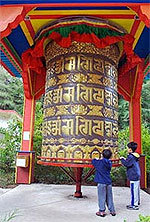
The Source of the Practice of the Mani Wheel
As the great master Nagarjuna was predicted by the Great Compassionate One: “In the naga’s country in the palace of the King of Nagas, the bodhisattva possesses one very powerful Dharma wheel. Just by seeing, hearing, touching, or remembering the Dharma wheel, you will quickly be liberated from the suffering of the lower realms. With this you will produce extensive works for sentient beings.”
The Limitless Light Buddha Amitabha said: “For the benefit of sentient beings of the degenerate age, I have explained the benefits of the mani wheel. The one who practices while turning equals the fortune of the thousand buddhas.”
The Founder Savior, the unequalled Shakya King, told the bodhisattva Dripa Namsil: “It is more beneficial to turn the Dharma wheel one time than [to be] a meditator of highest capacity who engages in one-year retreat on the essence meaning of mantra. It is more beneficial than [to be] a middle capacity meditator who does retreat for seven years or a lower capacity meditator who does a nine-year retreat.”
Manjushri said: “The four protectors and the ten direction guardians will protect you from all obstacles, from all directions and corners. The negative karma of the lower realms, the five uninterrupted actions, and the ten non-virtuous actions are purified. You will travel to all the pure lands of the buddhas, and in the Blissful Pure Land. You will be reborn on the lion’s throne in the lotus heart of the Blissful Pure Land. You will perform the actions of all the buddhas in all directions.”
Manjushri said: “This great Dharma wheel protects you from all the harm-givers, devas, spirit possessions, from the nagas down below, from Steno in the middle, and from the multitude of yakshas.”
From The Peerless Wish-Granting Jewel Tantra: “The person who turns this wheel which possesses OM MANI PADME HUM will be blessed by all the gurus, the deities will grant realizations, those gone to bliss will pay attention to him or her, and the Dharma protectors will eliminate all sobstacles.”
From The Will of the Action of the Compassionate Eye Loving One: “Each time you turn this OM MANI PADME HUM Dharma wheel equals the number (of the mantra) of the approximation retreat.”
The benefits of establishing the Dharma wheel in earth, water, fire, and wind: “When you put this great wheel OM MANI PADME HUM up in the wind, all those sentient beings who are touched by the wind and all those migrators abiding in the direction of the wind will be liberated from the sufferings of the lower realms. When you place the Dharma wheel in the fire, any sentient being who smells the smoke and all those migrators who see the light of the fire will be liberated from the sufferings of the lower realms. If you place the Dharma wheel in the ground, all those migrator beings who receive the dust and the sentient beings abiding in that ground will be liberated from the sufferings of the lower realms. If you place the Dharma wheel in water, all those sentient beings abiding and drinking the water will be liberated from the sufferings of the lower realms.”
Therefore, the fortunate capable beings turn the great Dharma wheel upright: the highest intelligent person will achieve enlightenment and work for sentient beings; the middle capable being will achieve fortunate rebirth and join the holy Dharma; and the lowest capable being will achieve good rebirth, separate from the ten non-virtuous actions.
If you place the Dharma wheel at home and turn it, the migrator beings abiding in that house will be liberated, and the home will become similar to the Potala (Pure Land of Chenrezig). At the time of death, if you place the Dharma wheel with OM MANI PADME HUM next to your head and make requests with intense devotional mind, without need of practicing powa (transference of consciousness) your consciousness will be transferred in one instant to the heart of the Compassionate One. Therefore, without qualms of a two-pointed mind in this profound supreme Dharma wheel, one should cherish it, build the Dharma wheel with perseverance, and turn it with an intense wish.
The Savior Loving One Maitreya said: “If you offer good divine robes to the profound Dharma wheel, you will receive good clothing for 500 lifetimes. Due to the merits of having offered the hook to the profound Dharma wheel, you will be able to go through all the paths of liberation. By the merits of offering the hanging weight, you will become the savior of all migrator beings. You will accumulate more merits than having recited 100,000 times 10,000,000 mantras. The titans and the harm-givers will prostrate to you. You will control human beings, wealth, and food. All your connections will become meaningful, and sentient beings touched by your shadow will be liberated from the lower realms.”
If you offer various needs – food and so forth – to this Dharma wheel with OM MANI PADME HUM, you will become the thousand wheel–turning Dharma king, enjoying whatever you wish. And at the end you will meet the Superior Compassionate Eye Looking One. For those fortunate beings who reveal this Dharma wheel possessing OM MANI PADME HUM to others, or explain or spread the teachings of this wheel, it is like spreading the teachings of the buddhas.
From The Tantra Possessing the Lotus Garland: “In short, all the accumulation of vices, defeats, downfalls, and so forth will be purified without effort. One is liberated just by seeing and hearing.”
From The Tantra of the Circle of Six Thousand: “Even for the person who turns this precious wheel, any sentient being who sees, hears, remembers, or touches him or her completes the merits, purifies defilements, and achieves enlightenment.”
From The Sutra of the Great Chu Lung: “By the merits generated by offering a golden pinnacle (to the Dharma wheel), one will receive perfect enjoyments for eons. Due to the merits of having offered services, one will possess a good heart and clear mind wisdom. The person who turns the Dharma wheel will become the son of the thousand buddhas, the guide of all migrators. Thus is explained by the Buddha. When death comes, place the Dharma wheel at your crown and you won’t need to practice powa. When you carry the Dharma wheel and meet other sentient beings, even those who have killed their father or mother will be liberated. Even the sentient beings who see the wheel on the bridge will be liberated.”
Dictated to Fabrizio Champa Palgye in Dharamsala March 1998, for Richard Gere who came for His Holiness the Dalai Lama’s Losar teachings.
> Meet Lama Yeshe Wisdom Archive at facebook <
FASTER CASH FLOW COURSES
http://flow4cash.blogspot.com/
Faster Cash Flow Courses are being organized by Ved Vigyan trust as follows. Aspirant can register for any one of them for their better cash flow.
1. 12th Course 01st Jan 2010 to 12th Jan 2010
2. 13th Course 18th Jan 2010 to 29th Jan 2010
3. 14th Course 06th Feb 2010 to 17th Feb 2010
4. 15th Course 04th Mar 2010 to 15th Mar 2010
Early Marriage
Bachelors by Laxmi Krupa (grace of Laxmi) can get Gruhlaxmi (lucky wife) soon.
Girls will become Gruhlaxmi (lucky wife) soon thru Laxmi Krupa (grace of Laxmi).
Happy Family
All Gruhlaxmi who feel devoid of Laxmi Krupa (lack of Cash Flow & Peace at Home) can join this training.
The males having family problems (Peace at Home) can also undergo this training.
Better Salary Job
For unemployed or jobs with good salary Laxmi Krupa (Grace of Cash God) is must.
More Profit in Business
Getting Loss in business (no Cash Flow) or less profits (less cash Flow) means lack of Laxmi Krupa (grace of Cash God).
Cash God Puja – (Laxmi Siddhi Training)
This will be full time residential training for 11 days initially
This is intensive Laxmi Sadhana (Deep Cash God Prayer) for 11 days for quick Laxmi Krupa (grace of Laxmi) ’11 days ‚Laxmi Siddhi Program‘ is being organized by ‚Ved Vigyan Trust‘ from 1st Jan 2010 at Hyderabad, India, under the guidance of Aatmyogi Pramodanand, whose CD’s on ‚Laxmi Kataksh‘ has been in large demand for the last two years. After training individuals will be able to increase Laxmi Krupa & solve the problem of finance & family tension. Those interested to further conduct such training in other areas or cities or countries can co-operate the Ved Vigyan Trust on part time or full time basis.
Those interested to further conduct such training in other areas or cities or countries can co-operate the Ved Vigyan Trust on part time or full time basis.
For more details contact Secretary at Mo +91 9290778701
Venue: Amrutha Arcade, Kacheguda, Hyderabad
Dates: 1st Jan 2010 to 12th Jan 2010
Training Fee: *Free
- Training Course is free, but 1100/- is being charged for 11days Boarding & Lodging charges @ Rs. 100/- per day which can be deposited in ICICI Bank a/c No. 630505029848 favouring Ved Vigyan Trust.
- Out-station candidates must reach Kacheguda, Near Kacheguda Station on all routes or get down at Secunderabad latest by 1st Jan 2010 morning 10 am and come with your back reservations for 12th Jan 2010.
- Training for foreigners will be for one month and they will be required to pay $ 400 towards Bording & Lodging charges.
- If interested please inform us in in advance. If you r unable to join you can send someone to do puja on ur behalf. We also have trained persons who can do puja on ur behalf.
Website: www.aatmyogi.com , Email: aatmyogi@gmail.com
> Meet Swami Ji , friends , studies at facebook <
> Meet World Recession Solutions (विश्व मंदी निवारण) at facebook <
Umrao Singh Memorial School (USMS)

www.ewasa.org , > e-waste <
> UMRAO SINGH MEMORIAL SCHOOL <
Our work started in the early 1980s with the planting of fruit trees in India. The emphasis was on creating awareness, training people to plant and take care of trees, and providing them with the resources needed to accomplish their tasks. Each recipient made a pledge to help at least two others in the same manner in which they had been helped.
The program grew rapidly in India and spread to Guatemala, Cambodia, Nepal, Costa Rica, Haiti, Indonesia, Brazil, Mexico, Ethiopia, Nicaragua, and El Salvador. As a result, tens of millions of fruit trees have been planted.
But far more important than the number of trees planted is the fact that tree planting inspires many people to do more to help themselves. They have started projects on bee-keeping, fuel-efficient stoves, improvement of their soils, water conservation, scientific improvement of plant breeding materials, self-help loans, improvement of medical facilities, improvement of educational facilities, and other socially responsible activities.
A large portion of funding and resources for activities in each country is generated locally. These resources are mostly provided in terms of land, labor, and in-kind contributions from various segments of the society. The international funds and resources provide key elements that are lacking locally.
We realize that our task is not to solve the problems of the world. Our challenge is to create a few demonstrable models that, if successful, may inspire others to solve their own problems. In this manner we are akin to a laboratory where an antidote to a disease may be developed. We are not a factory where the antidote is manufactured for sale.
Our focus is on developing and providing the tools of empowerment to local community leaders who can create hope among others. Empowerment in our case means:
Awareness + Networking of resources, which lead to → Action
GIFT´s FROM THE HEART: > HERE <
Our Initiatives:
- Books for Life International – spreading the joy of reading to children in developing countries worldwide.
- The Moringa Tree – encouraging the use of this miraculous tree and further research into its benefits.
- Education – empowering the poor to reach long-term goals through quality education.
- Fruit trees – helping provide a long-term and renewing source of food to the hungry of the world.
- Fuel-efficient cookstoves – saving lives with these cookstoves built with local materials by local residents.
- Trees for Life Journal – bringing beneficial plants and trees to the attention of the scientific community.
MORARI BAPU – THE RAMAYANA EPIC POEM
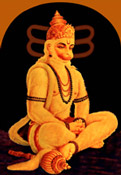
The Ramayana (DevanÄ�garÄ«: रामायण, RÄ�mÄ�yaṇa) is an ancient Sanskrit epic. It is attributed to the Hindu sage Valmiki and forms an important part of the Hindu canon (smṛti). The Ramayana is one of the two great epics of India, the other being the Mahabharata. It depicts the duties of relationships, portraying ideal characters like the ideal servant, the ideal brother, the ideal wife and the ideal king. The name Ramayana is a tatpurusha compound of RÄ�ma and ayana („going, advancing“), translating to „Rama’s Journey“. The Ramayana consists of 24,000 verses in seven books (kÄ�ṇḍas) and 500 cantos (sargas), and tells the story of Rama (an incarnation of the Hindu preserver-god Vishnu), whose wife Sita is abducted by the demon king of Lanka, Ravana.
Thematically, the epic explores the tenets of human existence and the concept of dharma. Read More: > HERE <
The various Indian religions, such as Hinduism, Buddhism, Jainism, and Sikhism, have all accorded a central focus to dharma and advocate its practice. Each of these religions emphasizes Dharma as the correct understanding of reality in its teachings. In these traditions, beings that live in accordance with Dharma proceed more quickly toward dharma yukam, moksha or nirvana (personal liberation). The antonym of dharma is adharma meaning unnatural or immoral.
In traditional Hindu society, dharma has historically denoted a variety of ideas, such as Vedic ritual, ethical conduct, caste rules, and civil and criminal law. Its most common meaning however regarded two principal ideals; namely, that social life should be structured through well-defined and well-regulated classes (varna), and that an individual’s life within a class should be organized into defined stages (ashrama, see dharmasastra).
Dharma also refers to the teachings and doctrines of the founders of Buddhism and Jainism, the Buddha and Mahavira. In Buddhist philosophy, dhamma/dharma is also the term for „phenomenon„ . Read More: > HERE <
Dharma, artha and kama areimportant in matters of worldly life. Dharma and moksa should be followed judiciously if they are to lead to Self−realisation.
Patanjli, at the end of the of life and the qualities of nature moksa. Yoga Sutras, concludes that the practice of yoga frees a yogi from the aims(gunas), so that he can reach the final destination−−kaivalya or moksha.
Health and Harmony:
To acquire knowledge−−whether mundane or spiritual−−bodily health, mental poise, clarity and maturity of intelligence are essential. Health begets happiness and inspires one to further one’s knowledge of the world and of the Self. Health means perfect harmony in our respiratory, circulatory, digestive, endocrine, nervous and genito−excretory systems, and peace of mind. Hatha yoga practices are designed to bring about such harmony.
HATHA YOGA, HATHA VIDYA from Yoga Swami Svatmarama: > HATHA YOGA PRADIPIKA < . Foreword by B K S Iyengar, Commentary by Hans Ulrich Rieker
> Meet Morari Bapu , Katha dates/Venue´s at facebook<
> Meet Ramayana, friends, studies at facebook <
LIFE POSITIVE EXPO 2010
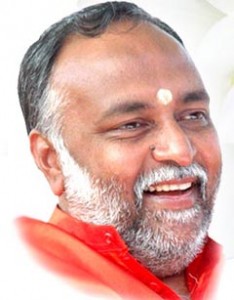
Swami Sukhabodhananda
Founder Chairman of Prasanna Trust
Life Positive is a body- mind-spirit magazine promoting a holistic understanding of the unity of life and self with an emphasis on personal growth. It was started in April 1996 by Aditya Ahluwalia, chairman of the organisation, and Parveen Chopra, founder-editor, under the aegis of Magus Media Pvt Ltd. Produced by a team of professional journalists, some of who are also active seekers, Life Positive covers the beat of spiritual wisdom, techniques, gurus, personal growth therapies, alternative medicine, holistic healers and organisations with insight, accuracy, thoroughness and discrimination.
Site Design & Development:
The site Portal services: email, search engines and discussion boards are provided by third-parties, Everyone.Net and Google.com .
For further details, write: webmaster@lifepositive.net
In June 2005, the group launched its second publication, Life Positive Hindi. Within its short span of existence, the magazine has earned a strong readership base. The group has published a number of books, including Parallel Journeys and Nine Days to Nirvana and organised prestigious music festivals. The magazine is edited today by Suma Varughese who has been with the magazine since its inception and is the former editor of Society magazine.
Life Positive is fortunate to have Mr D.R. Karthikeyan, former chief of the CBI, as President. It also has a panel of eminent names as advisors including . Mark Tully, Kiran Bedi, Devieka Bhojwani, M Madhvan Nambiar, K M S ‚Titoo‘ Ahluwalia, G Venkatesh Rao , and Parveen Chopra.
Birthdaycelebrations of Sri Ramana Maharshi
( Message No. 97 )
> RAMANA MAHARSHI HERBAL MEDICINE <
Sri Ramana Maharshi (Tamil: ரமண மஹரிஷி) (December 30, 1879 – April 14, 1950), born Venkataraman Iyer, was an Indian sage. He was born to a Tamil-speaking Brahmin family in Tiruchuzhi, Tamil Nadu. After having attained liberation at the age of 16, he left home for Arunachala, a mountain considered sacred by Hindus, at Tiruvannamalai, and lived there for the rest of his life. Arunachala is located in Tamil Nadu, South India. Although born a Brahmin, after having attained moksha he declared himself an „Atiasrami“, a Sastraic state of unattachment to anything in life and beyond all caste restrictions´.
Sri Ramana maintained that the purest form of his teachings was the powerful silence which radiated from his presence and quieted the minds of those attuned to it. He gave verbal teachings only for the benefit of those who could not understand his silence. His verbal teachings were said to flow from his direct experience of Consciousness (Atman) as the only existing reality. When asked for advice, he recommended self-enquiry as the fastest path to moksha. Though his primary teaching is associated with Non-dualism, Advaita Vedanta, and Jnana yoga, he recommended Bhakti to those he saw were fit for it, and gave his approval to a variety of paths and practices. Read More: > HERE <
Annamalaiyar Temple (Tamil: திருஅண்ணாமலையார் திருக்கோயில்) (Arunachaleswara in Sanskrit) is a noted Hindu temple dedicated to Lord Shiva, located at the bottom of the Annamalai hill in Thiruvannamalai town in Tamilnadu, India. It is the home of Annamalaiyar or Arunachaleswarar (Lord Shiva worshipped as a Shiva Lingam) and Unnamalaiyaal (Apitakuchambaal – Parvati), and is one of the largest temples in India.
The Glory of the Place
Thiruvannamalai – Annamalaiannal. The Saiva cult is a world phenomenon. Thiruvannamalai is the capital of Saivism. The South Indian deity Siva is the God of all countries. Annamalaiannal is the most sacred of the names of the manifestation of Lord Siva.
Pancha Bootha Sthalam
The earth is formed by five basic elements namely land, water, fire, air and ether. Our ancestors called them „Pancha Boothas“ and associated them with five sacred places for worshipping Lord Siva. The center of these five elements fire is identified with Thiruvannamalai.
Saints and Scholars
Thiruvannamalai has been the abode of Siddhars. Idaikkattu Siddhar, one of the eighteen Siddhars, belongs to this sacred soil.
Thiruvannamalai has the honour of providing an abode for saints such as Arunagirinathar, Vitpatchathevar, Gugai Namachivayar, Guru Namachivayar, Deivasigamani, Arunachala Desikar, Mahan Seshadri Swamigal, Bagawan Ramana Maharishi, Sri Yogi Ram Surathkumar and the like.
TOURIST INFORMATION:
> http://www.arunachaleswarar.com/
> Meet Sri Ramana Maharshi, friends, studies at fb <
> Meet Sri Ramana Seva Ashram, friends, at fb <
> Meet Advaita Vedanta, friends, studies at fb <
> Meet Shaivism , Yoga, friends , studies at fb <
> Meet Global Diversity, friends, Studies at fb <
> Meet Genetic Engeneering groups at fb <
Die Grosse Willi Resetarits Silvester Schau

Für einen ebenso entspannten wie kurzweiligen Rutsch ins neue Jahr garantiert auch heuer wieder Willi Resetarits mit seiner legendären Großen Silvester Schau. Der bei Radiohörern und -hörerinnen beliebte «Trost- & Ratgeber/Solace and Advice », ehemalige «Schmetterling» und pensionierte «Dr. Kurt Ostbahn» präsentiert ein Galaprogramm ganz nach seinen persönlichen Vorlieben und glänzt dabei als Sänger, Moderator und Entertainer.
Mit illustren Gästen – unter ihnen erstmals Fatima Spar – wird ein weites Feld zwischen Wienerlied und Mundartdichtung, Jazz und Evergreens, Pop und Weltmusik bereist, samt mitternächtlichem Walzen im ganzen Wiener Konzerthaus.
Donnerstag, 31. Dezember 2009, 22:30 Uhr
Interpreten:
Rounder Girls, Vokalensemble
StringFizz, Streichquartett
Stubnblues, Ensemble
Fatima Spar, Gesang
Schiffkowitz, Gesang Lukas Resetarits, Gesang
Ernst Molden, Gesang, Gitarre
Gerald Votava, Gesang, Inspizienz
Willi Resetarits, Gesang, Gespräch, Gute Laune
Kartenbestellung – konzerthaus.at
Stubnblues – www.williresetarits.at
StringFizz – www.stringfizz.at
Rounder Girls – www.roundergirls.at
Fatima Spar – www.freedomfries.at
Schiffkowitz – www.schiffkowitz.com
Lukas Resetarits – www.knowme.at
Ernst Molden – www.ernstmolden.at
Gerald Votava – kundendienst.orf.at
DIVERSE KALENDARIEN, EINE ÜBERSICHT

The Julian calendar, a reform of the Roman calendar, was introduced by Julius Caesar in 46 BC, and came into force in 45 BC (709 ab urbe condita). It was chosen after consultation with the astronomer Sosigenes of Alexandria and was probably designed to approximate the tropical year, known at least since Hipparchus. It has a regular year of 365 days divided into 12 months, and a leap day is added to February every four years. Hence the Julian year is on average 365.25 days long.
The Julian calendar remained in use into the 20th century in some countries as a national calendar, but it has generally been replaced by the modern Gregorian calendar. It is still used by the Berber people of North Africa, on Mount Athos, and by many national Orthodox churches. Orthodox Churches no longer using the Julian calendar typically use the Revised Julian calendar rather than the Gregorian calendar. Read More: > HERE <
The Gregorian calendar is the internationally accepted civil calendar. It was introduced by Pope Gregory XIII, after whom the calendar was named, by a decree signed on 24 February 1582, a papal bull known by its opening words Inter gravissimas. The reformed calendar was adopted later that year by a handful of countries, with other countries adopting it over the following centuries.
The Gregorian calendar reform contained two parts, a reform of the Julian calendar as used up to Pope Gregory’s time, together with a reform of the lunar cycle used by the Church along with the Julian calendar for calculating dates of Easter. The reform was a modification of a proposal made by the Calabrian doctor Aloysius Lilius (or Lilio).[4] Lilius‘ proposal included reducing the number of leap years in four centuries from 100 to 97, by making 3 out of 4 centurial years common instead of leap years: this part of the proposal had been suggested before, e.g. by Pietro Pitati. Lilio also produced an original and practical scheme for adjusting the epacts of the moon for completing the calculation of Easter dates, solving a longstanding difficulty that had faced proposers of calendar reform. Read More: > HERE <
The Hindu calendar used in ancient times has undergone many changes in the process of regionalization, and today there are several regional Indian calendars, as well as an Indian national calendar.
Most of these calendars are inherited from a system first enunciated in Vedanga Jyotisha of Lagadha, a late BCE adjunct to the Vedas, standardized in the Surya Siddhanta (3rd century CE) and subsequently reformed by astronomers such as Aryabhata (499 CE), Varahamihira (6th c. CE), and Bhaskara (12th c. CE). There are differences and regional variations abound in these computations, but the following is a general overview of Hindu lunisolar calendar.
Yoga: First one computes the angular distance along the ecliptic of each object, taking the ecliptic to start at Mesha or Aries (MeshÄ�di, as defined above): this is called the longitude of that object. The longitude of the sun and the longitude of the moon are added, and normalized to a value ranging between 0° to 360° (if greater than 360, one subtracts 360). This sum is divided into 27 parts. Each part will now equal 800′ (where ‚ is the symbol of the arcminute which means 1/60 of a degree). These parts are called the yogas. Read More: > HERE <
Solar Calender: > HERE <
Lunar Calender: > HERE <
Veda, Vedic Science´s , Panchangam: > HERE <
> Meet Understand and Learn Hindu Panchangam at facebook <
> Meet Free Vaisnava Calender at facebook <
> Meet VEDIC, mathematics, jyotish, astrology, astronomy at fb <
THE FOUR NOBLE TRUTH´s
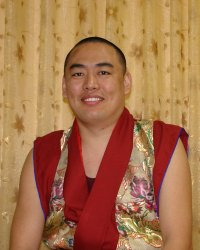
Tulku Ogyen Rinpoche (Khentrul Ogyen Rinpoche)
> OGYEN LING CHARITY NETWORK <
The Four Noble Truths (or The Four Truths of the Noble Ones) (Sanskrit: catvÄ�ri Ä�ryasatyÄ�ni; Wylie: ‚phags pa’i bden pa bzhi; Pali: cattÄ�ri ariyasaccÄ�ni) is one of the most fundamental Buddhist teachings. This Dharma Enlightenment makes ordinary person become the Buddha (Khun Weera Boontanorm, 2000). In broad terms, these truths relate to suffering (or dukkha), its nature, its origin, its cessation and the path leading to its cessation. They are among the truths Siddhartha Gautama is said to have realized during his experience of enlightenment. Read More > Here <
The four noble thruths. Who frist taught by Sakyamuni Share
One needs to understand that when the Buddha taught, he was not teaching as a great scholar who wanted to demonstrate a particular philosophical point of view or to teach for its own sake. His desire was to present the very essence of the deep and vast teachings of Buddhism, for that reason he gave teachings which suited the abilities of his disciples. All the teachings he gave, some long and some short, were a direct and appropriate response to the development of the disciples who came to listen to him. Of course, people have very different capacities and different levels of understanding. They also have very different wishes and desires to learn and understand the dharma. If the Buddha had taught only the very essence of his own understanding of those vast and far- reaching teachings, then apart from a small number of disciples who had great intelligence and diligence few people would have ever understood the Buddhist teachings. The Buddha taught whatever would enable a person develop so he or she could progress gradually towards the very deep and vast teachings. When we analyze all the Buddha’s teachings, we see that they fall into three main approaches or vehicles.
The Buddha’s teachings helped each student in a way appropriate for the level he or she was at. Because of that, one finds that on the relative level each student received some benefit from what Buddha taught. On the absolute level, one finds all of the Buddha’s teachings have the same goal. When one analyzes the Buddha’s teachings on the relative level, one finds that there are three levels. But, when one examines them from the absolute level, one sees there is only one level, or yana, because all beings are directed towards the same goal.
The Hinayana
Of the three yanas, the first is the hinayana. Hinayana literally means „lesser vehicle“ but this term should in no way be a reproach or be construed to any way diminish the importance of the teachings. In fact, the teachings of the hinayana are very important because they suit the capacities and development of a great number of students. If it weren’t for these teachings, which are particularly appropriate for those who have limited wisdom or diligence, many persons would never been able to travel the mahayana path. Without the hinayana teachings there would be no way for practitioners to progress in the dharma because they would have never entered the path. The path is similar to a staircase: the lower step is the lower step. This doesn’t mean it is not important or should be ignored because without this lower step one can never reach the top of the stairs. One can never gain access to the upper stories of a building without that lower step. It is very necessary. It should be very clear that this term „lesser“ vehicle is in no way a pejorative term. It just puts the path into a realistic context.
The fundamental teachings of the hinayana are the main subject matter of the first dharmachakra or turning of the wheel of dharma.
These teachings were given mainly in India in the town of Varanasi which is now called Benares. The main subject matter of these teachings is „The Four Noble Truths.“
The Four Noble Truths
If the Buddha had taught his disciples principally by demonstrating his miraculous abilities and various powers, it would not have been the best way to establish them on the path of liberation. The best way to bring them to that wisdom and liberation was to point out the very truth of things; to point out the way things really are. So this is what he did: He showed the truth through the four noble truths and the two truths (relative and absolute truth). By seeing the way things really are, the students learned how to eliminate their mistakes and their delusions. Eliminating ones mistakes and delusions automatically destroys the causes of ones suffering and hardships. This allows one to progressively reach the state of liberation and great wisdom. That is why the four noble truths and the two truths are the essence of the first teachings of the Buddha.
The First Noble Truth
The first noble truth is the full understanding of suffering. Of course, in an obvious way, people are aware of suffering and know when they have unpleasant sensations such as hunger, cold, or sickness and recognize these as things that one doesn’t like. But the first noble truth includes awareness of all the ramifications of suffering because it encompasses the very nature and essence of suffering. This includes knowledge of the subtle and the obvious aspects of suffering. The obvious aspect of suffering is immediate pain or difficulty in the moment. Subtle suffering is more difficult to understand because it begins with happiness. But by its very nature this happiness must change because it cannot go on forever. Because it must change into suffering, then subtle suffering is the nonpermanence of pleasure. For example, when Thrangu Rinpoche went to Bhutan with His Holiness Karmapa, he was invited to the palace of the king of Bhutan. When he arrived there, the palace was magnificent, the kings chambers were beautiful, there were many servants who showed complete respect and obedience.
But he and Karmapa found that even though there was so much external beauty, the king himself was suffering a great deal mentally and had many difficulties. The king himself said that he was quite relieved that His Holiness had come and emphasized how much the visit meant to him because of the various difficulties with which he had been troubled. This is the subtle aspect of suffering. One thinks that a particular situation will give one the most happiness one can ever imagine, but actually, within the situation, there is a tremendous amount of anguish. If one thinks of those who are really fortunate– those gods or human beings with a very rich and healthy life–it seems as though they have nothing but happiness. It is hard to understand that the very root, the very fiber of what is taking place is suffering because the situation is subject to change.
What is happiness? By its very nature it can often mean that there will be suffering later on. There is no worldly happiness that lasts for a very long time. Worldly happiness includes an element of change, of built-in suffering. For that reason the first noble truth of the awareness of suffering refers not just to immediate suffering, but also to the subtle elements of suffering. The Buddha taught the truth of suffering because everything that takes place on a worldly level is a form of suffering.
If one is suffering but is not aware of it, one will never have the motivation to eliminate this suffering and will continue to suffer. When one is aware of suffering, one is able to overcome it. With the more subtle forms of suffering, if one is happy and becomes aware that the happiness automatically includes the seed of suffering, then one will be much less inclined to become involved in the attachment to this happiness. One will then think, „Oh, this seems to be happiness, but it has built-in suffering.“ Then one will want to dissociate from it. The first truth is that one should be aware of suffering. Once one has a very clear picture of the nature of suffering, one can really begin to avoid such suffering. Of course, everyone wants to avoid suffering and to emerge from suffering, but to accomplish this one needs to be absolutely clear about its nature.
When one becomes aware that the nature of day-to-day existence is suffering, one doesn’t have to be miserable with the thought suffering will always be present. Suffering doesn’t go on forever because the Buddha entered the world, gave teachings, and demonstrated clearly what suffering is. He also taught the means by which suffering can be ended and described the state beyond suffering which is liberation. One does not have to endure suffering and can, in fact, be happy. Even though one can not immediately emerge from suffering by practicing the Buddha’s teachings, one can gradually eliminate suffering in this way, and move towards eventual liberation. This fact in itself can make one happy, even before one has actually completely emerged from suffering. Applying of the Buddha’s teachings, one can both be happy in the relative phase of ones progress and then at the end one will gain wisdom and liberation and be happy in the ultimate sense, as well.
The first noble truth makes it clear that there is suffering. Once one knows what suffering is, one must eliminate that suffering. It is not a question of eliminating the suffering itself, but of eliminating the causes of suffering. Once one removes the causes of suffering, then automatically the effect, which is suffering, is no longer present. This is why, in order to eliminate this suffering, one becomes aware of the second noble truth, the truth of universal origination.
The Second Noble Truth
The truth of universal origination is an English translation of the name Buddha himself gave to this noble truth. It means „that which is the cause or origin of absolutely everything.“ The truth of universal origination indicates that the root cause of suffering is karma and the kleshas. Karma is a Sanskrit word which means „activity“ and klesha in Sanskrit means „mental defilement“ or „mental poison.“
If one does not understand the Buddha’s teachings, one would most likely attribute all happiness and suffering to some external cause. One might think that happiness and suffering come from the environment, or from the gods, and that everything that happens originates in some source outside of ones control. If one believes this, then it is extremely hard, if not impossible, to eliminate suffering and its causes.
On the other hand, when one realizes that the experience of suffering is a product of what one has done, that is, a result of ones karma, eliminating suffering becomes possible. Once one is aware of how suffering takes place, then one can begin to remove the causes of suffering. First one must realize that what one experiences is not dependent on external forces, but on what one has done previously. This is the understanding of karma. Karma produces suffering and is driven by the defilements. The term „defilement“ refers mainly to ones negative motivation and negative thoughts, which produce negative actions.
The Third Noble Truth
The third noble truth is the cessation of suffering through which it is explained that the causes of karma and the defilements can be removed. We have control over suffering because karma and the defilements take place within us–we create them, we experience them. For that reason we don’t need to depend on anyone else to remove the cause of suffering. The truth of universal origination means that if we do unvirtuous actions, we are creating suffering. It also means if we abandon unvirtuous actions, we remove the possibility of experiencing suffering in the future. What we experience is entirely in our hands. Therefore the Buddha has said that we should give up the causes of karma and the defilements. Virtuous actions result in the external state of happiness and unvirtuous actions result in suffering. This idea is not particularly easy to grasp because one cannot see the whole process take place from beginning to end.
There are three kinds of actions: mental, verbal, and physical. These are subdivided into virtuous and unvirtuous physical actions, virtuous and unvirtuous verbal actions, and virtuous and unvirtuous mental actions. If one abandons these three types of unvirtuous actions, then ones actions become automatically virtuous.
There are three unvirtuous physical actions: the harming of life, sexual misconduct, and stealing. The results of these three unvirtuous actions can be observed immediately. For example, when there is a virtuous relationship between a man and woman who care about each other, protect each other, and have a great deal of love and affection for each other. They will be happy because they look after each other. Their wealth will usually increase and if they have children, their love and care will bring mutual love in the family. In the ordinary sense, happiness develops out of this deep commitment and bond they have promised to keep. Whereas, when there is an absence of commitment, there is also little care or love and sexual misconduct arises. This is not the ground out of which love arises, or upon which a nice home can be built in which children can develop happiness. One can readily see that from the lack of commitment to sexual fidelity, many kinds of difficulties will arise.
One can also see the immediate consequences of other unvirtuous physical actions. One can see that those who steal have difficulties and suffer; those who don’t steal experience happiness and have a good state of mind. Likewise, those who kill create many problems and unhappiness for themselves while those who support life are happy.
The same applies to ones speech, although it is not so obvious. But on closer examination, one can also see how happiness develops out of virtuous speech and unhappiness from unvirtuous kinds of speech. At first lying may seem to be useful because one might think that one can deceive others through lies and gain some advantage. But Sakya Pandita said that this is not true. If one lies to ones enemies or persons one doesn’t get along with, very well, because they are ones enemies they are not going to take notice of what one is saying anyway. It will be quite hard to deceive them. If they are ones friends, one might be able to deceive them at first by telling a lie. But after the first time, they wont trust you any more and may think that you have been a hypocrite. Lying doesn’t really work. Then if one looks at the opposite, a person who takes pains to speak the truth will develop a reputation of being a truthful person who can be relied on and out of this trust, many good things will emerge.
Once we have considered the example of the consequences of lying, we can think of similar consequences relating to other kinds of damaging speech: slander, and coarse, aggressive, and useless speech. Except for the immediate and the short-termed consequences virtuous speech produces happiness and unvirtuous speech produces suffering.
When we say useless speech, we mean speech that is really useless, not just conversational. So, if we have a good mind and want someone to relax and be happy, even though the words may not be of great meaning, then its useful speech based on the idea of benefit and goodness. When we say „useless speech,“ we mean chatter for no reason at all. Worse than that is „chatter rooted in the defilements“ when one is saying bad things about other people because of dislike or is jealous of them or one sets people against each other. One just gossips about the character of people. That is really useless speech. Besides being useless, this very often causes trouble because it sets people against each other and causes bad feelings.
The same applies with „harmful speech.“ If there is really a loving and beneficial reason for talking, for example, scolding a child when the child is doing something dangerous or scolding a child for not studying in school, that is not harmful speech because it is devoid of the defilements, being a skillful way of helping someone. If there is that really genuine, beneficial attitude and love behind what one says, it is not harmful speech. But if speech were related to the defilements such as aggression or jealousy, then it is harmful speech and is something to give up.
We can go on to examine the various states of mind and see that a virtuous mind produces happiness and unvirtuous states of mind create unhappiness. For instance, strong aggression will cause us to lose our friends. Because of our aggressiveness, our enemies will become even worse enemies and the situation will become inflamed. If we are aggressive and hurt others and they have friends, then eventually friends will also become enemies.
On the other hand, if we wish to benefit others, goodness will come out of it through the power of caring for our loved ones and then through wishing to help them develop goodness. Through this they will become close and helpful friends. Through the power of our love and care, our enemies and the people one doesn’t get along with will improve their behavior and maybe those enemies will eventually become friends. If we have companions and wish to benefit others, we can end up with very good friends and all the benefits which that brings. In this way we can see how cause and effect operate, how a virtuous mind brings about happiness and how a non-virtuous mind brings about suffering and problems.
There are two main aspects of karma: one related to experience and one related to conditioning. The experience of karma has already been discussed in relation. Through unvirtuous physical actions one will experience problems and unhappiness. Likewise, through unvirtuous speech, such as lying, one experiences unhappiness and sorrow. Through an unvirtuous state of mind, one experiences unhappiness. This was demonstrated by the example of an aggressive attitude. All of this is related to the understanding that any unvirtuous activity produces unpleasantness or unhappiness.
The second aspect of karma relates to conditioning. By acting unvirtuously with ones body, speech, or mind one habituates oneself to a certain style of behavior. Unvirtuous physical or verbal behaviors add to the habit of doing things. For example, each time we kill, we are conditioned to kill again. If we lie, that increases the habit of lying. An aggressive mind conditions our state of mind so we become more aggressive. In later lives, then, that conditioning will emerge so that we will be reborn with a great tendency to kill, to lie, to engage in sexual misconduct, and so on. These are two aspects to karma. One is the direct consequence of an act and the other is the conditioning that creates a tendency to engage in behavior of that kind. Through these two aspects karma produces all happiness and suffering in life.
Even though we may recognize that unvirtuous karma gives rise to suffering and virtuous karma gives rise to happiness, it is hard for us to give up unvirtuous actions and practice virtuous actions because the defilements exercise a powerful influence on us. We realize that suffering is caused by unvirtuous karma but we cannot give up the karma itself. We need to give up the defilements because they are the root of unvirtuous actions. To give up the defilements means to give up non-virtuous actions of body (such as killing, stealing, and sexual misconduct), the unvirtuous actions of speech (such as lying, slander and harmful and useless speech), and the unvirtuous aspects of mind (such as aggressive, covetous, or ignorant mind). Just wanting to give up the defilements does not remove them. However, the Buddha in his great kindness and wisdom has given us a very skillful way to eliminate the very root of all the defilements through the examination of the belief in the existence of ego or self.
We cannot just understand this belief in a self easily because it is very deep-rooted. First of all, we have to search for this self that we believe in and through this search we can discover that the self does not exist. Then we will be able to gradually to eliminate the belief in a self. When this is done, the defilements are also eliminated because with the elimination of a belief in self unvirtuous karma is also eliminated.
This belief in a self is a mistaken perception, its an illusion. For example, if one has a flower and were to interrogate one hundred people about it, they would all come to the same conclusion that it is indeed a flower. So one could be pretty sure that it is a flower. But, if one asked a person „Is this me?,“ he would say, „No, its you.“ A second person would say, „Its you.“ One would end up with one hundred persons who say this is „you“ and only oneself would consider it as „me.“ So statistically ones self is on very wobbly ground.
We also tend to think of „me“ as one thing, as a unity. When we examine what we think of as ourselves, we find it is made up of many different components: the various parts of the body, the different organs, and the different elements. There are so many of them, yet we have this feeling of a one thing which is „me.“ When we examine any of those components and try to find something that is the essence of self, the self cannot be found in any of these bits and pieces. By contemplating this and working through it very thoroughly, we begin to see how this „I“ is really an incorrect perception.
Once we have eliminated this wrong way of thinking, the idea of an „I“ becomes easy to get rid of. So, all of the desire rooted in thinking, „I must be made happy“ can be eliminated as well as all the aversion rooted in the idea of „this difficulty must be eliminated.“ Through the elimination of the idea of „I“ we can annihilate the defilements. Once the defilements are gone, then unvirtuous karma, which is rooted in the defilements, can go. Once the unvirtuous karma is gone, suffering will no longer take place. This is why Buddha says that the root of suffering needs to be abandoned.
The first two noble truths may be summed up with two statements: One should be aware of and know what suffering is. One should give up the universal origination of suffering.
To summarize, once one recognizes what suffering really is, then one begins by removing its causes. One stops doing unvirtuous actions which create suffering. To stop these unvirtuous activities, one digs out their root which is the defilements and the various unhealthy attitudes. To eradicate the defilements one needs to remove their heart, which is this belief in a self. If one does that, then one will eventually come to realize the wisdom of non-self. Through understanding the absence of a self, one no longer creates the defilements and bad actions and brings an end to that whole process. This is highly possible to reach; therefore there is the third noble truth of cessation.
The very essence and nature of cessation is peace. Sometimes people think of Buddhahood in terms of brilliant insights or something very fantastic. In fact, the peace one obtains from the cessation of everything unhealthy is the deepest happiness, bliss, and well-being. Its very nature is lasting in contrast to worldly happiness which is exciting for a time, but then changes. In contrast, this ultimate liberation and omniscience is a definitive release from the defilements which are the cause of suffering. Their cessation is the most deeply moving peace.
Within that peace all the powers of liberation and wisdom are developed. It is a very definitive release from both suffering and its result and four main qualities of this truth of cessation. First, it is the cessation of suffering. Second, it is peace. Third, it is the deepest liberation and wisdom. Fourth, it is a very definitive release. Cessation is a product of practicing the path shown to us by the Most Perfect One, the Lord Buddha. The actual nature of that path is the topic of the fourth noble truth, which is called the truth of the path because it describes the path that leads to liberation.
The Fourth Noble Truth
The truth of the path is called „the truth of the path“ because a path leads one to the ultimate goal.
One does this step by step, stage by stage, progressively completing ones journey. The main stages of Buddhism are called „the five paths“ because by progressively traversing them one eventually reaches ones destination which is cessation.
This path of the Buddha can be analyzed through its five main stages which are called the five paths (Skt. marga). The names of the five paths are the stage of accumulation, the stage of junction, the stage of insight, the stage of cultivation, and the final stage of nonstudy. Properly speaking, the first four of these are the path with the fifth one being the effect.
The first path is called the „path of accumulation“ because gathering or accumulating a great wealth of many things. This is the stage in which one tries to gather all the positive factors which enable one to progress. One tries to cultivate diligence, the good qualities, and the wisdom which penetrates more deeply into the meaning of things. One commits oneself to accumulate all the various positive aspects of practice. One gathers the positive elements into ones being while at the same time working on many different ways to remove all the unwanted elements from ones life. One also applies various techniques to eliminate the various blockages and obstacles which are holding one back. This is called the stage of accumulation because one engages in this manifold activity and gathers all of these new things into ones life.
In ordinary life we are caught up in the level of worldliness. Even though we don’t want to be, we are still operating on a level of conditioned existence (Skt. samsara) because we are still under the influence of the defilements. They have a very strong habitual grip on our existence. We need to get rid of these defilements in order to find our way out of samsara.
Of course, we want to find this happiness and peace and we know it is possible. But even with the strongest will in the world, we cannot do it overnight. It is like trying to dye a large cloth in that one needs to bring many different elements together to change the color.
So, first of all, in order to gain the good qualities, we need to work on creating all the different conditions which will make those qualities emerge. To develop the various insights of meditation and real wisdom, we need to develop great faith and confidence in the validity and usefulness of that wisdom. Once we are convinced of its value, we need to change our habits so that we have the diligence to do all the things necessary to make insight and wisdom emerge. Therefore, there are many factors and conditions we must generate within our life that will bring about our happiness.
To remove all the unwholesome factors binding us in samsara, we must uproot belief in a self, eliminate the various defilements which are hindering us, and bring together the many different conditions that make this transformation and purification possible. We talk about accumulation because we are assembling all the different conditions that make this transformation possible. We won’t be able to progress in a significant manner until we have gathered all these causes and conditions in a proper and completely perfect way within ourselves. For that reason the purpose of this stage of accumulation is to complete all the necessary conditions by gathering them into our existence.
Eventually, because of the complete gathering of favorable conditions, we will reach the third path which is the „path of insight.“ This is the stage during which insight into the way things actually are is developed which is beyond the veil of delusion. Linking the path of accumulation and the path of insight is the second path of junction. Here our inner realization, the very way we can perceive things, begins to link up with the truth of the actual nature of phenomena because we are gathering all the favorable circumstances that will eventually lead us to the actual insight itself.
When we attain insight into the way things really are and this insight develops beyond the level of delusion and mistaken views, we realize that there is no self. Once there is no longer a belief in self, there are no longer any root defilements of attachment, aggression, or mental darkness associated with the idea of self. Once there are no longer any defilements, one does nothing unvirtuous and has no more suffering.
Now, it is true that once we have that insight, all suffering is immediately removed, but in another way, that is not true. This is because the delusion of a self is a habit which has been built up for such a long time and is very, very hard to remove. For example, when we believe in the self and we hit our finger with a hammer, it hurts. Even when we have realized that an unchanging self is just a delusion fabricated by our minds, still when we hit our finger with a hammer it hurts. We still have the feeling, „I am suffering“ because there is an enduring built-up association of „I“ with the flesh of our body. Removal of that long established conditioning of self is carried out through a long process of accustomization to the truth of non-self. This is the fourth stage of the cultivation of insight.
The fourth stage is called the path of cultivation (gom ki lam in Tibetan). The word gom is usually translated as „meditation“ but actually means „to get used to something“ or „to accustom oneself.“
This is why it is translated here as „the path of cultivation,“ while other texts translate it as „the path of meditation.“ But this stage is the idea of getting used to the insight into the nature of things. Through becoming more and more familiar with the truth of things, we can remove the very fine traces of defilements and subconscious conditioning that still exist. Through gradual working on these the goal of Buddhahood will be attained.
Through the cultivation of insight we eventually reach the goal of the fifth path which is called „the path of no more study.“ Through cultivation we remove even the most subtle causes of suffering. Once this is completed we have reached the highest state and there are no more new paths to go along making this „the path of no more study“ or „the path of no more practice.“
There are two Tibetan words which are pronounced „gom“ but spelled differently. There is sgom which means „meditation“ and khom which means „to habituate.“
In the Buddhist view the ordinary reality that we see is actually a delusion. Only with great spiritual attainment can we then see through this delusion and see „things as they really are“ (Tib. nga lu).
*********************************
News: H. E. Khentrul Ogyen Rinpoche (Tulku Ogyen Nyima) was born in 1976. He was given his incarnate Lama’s name by H. E. Matul Rinpoche when He was 9 years old, after which He entered Minyak Monastery. Afterwards He went to Serta Larung five knowledge Buddist University.
He also joined Palyul Ngagyur Nyingma Institute in the academic year 1997. Over the course of nine years, He studied Madhyamika (Middle Way), Abhidharma (Buddhist Metaphysics), Pramana (Buddhist Logic), Prajnaparamita (Transcendental Wisdom), Vinaya (Monastic Discipline), Outer and Inner Tantra – thereby covering all aspects of the Buddhist teachings. He also learned Tibetan Grammar, Poetry, Tibetan History and Religious History.
After completing the first four year course, He received the traditional degree of Thadral Mrawai Wangchuk (Higher Secondary Degree in Buddhist Philosophy); finishing six years, He was awarded the traditional degree of Pharchin Rabjam (Bachelor of Buddhist Philosophy to a B.A.). In 2005, He was appointed as a Kyorpön (Junior Teacher) at the institute.
In 2006, He completed his ninth year course and so formally became a Lopon.
In 2008, His Holiness Penor Rinpoche awarded Him the traditional Lopon’s degree of Ngesang Lekshed Zodchang (Master of Buddhist Philosophy) Treasure Holder of Definitive Secret Mantra Teachings. As well the traditional Khenpo’s degree – Dogyud Tenpai Nangje Chenmo (Doctorate in Buddhist Philosophy) The Great Illuminator of Sutra and Tantra Teachings, the Professor’s degree. He was a hard working student with a good character; and during academic examinations, He was a rank holder amongst his classmates.
H E Khentrul Ogyen Rinpoche is teaching Sutra and Tantra here in Taiwan now.
He teaches the thirty Seven Practices of a Bodhisattva this evening in 9th january 2009
H. E. Khentrul Ogyen Rinpoche is teaching Vajrasatva’s Matrix of Illusory Display, the Root Tantra which is the Core of The Secret‘ Impowerment and describe. descussion with chinese 10th january 2009
H. E. Khentrul Ogyen Rinpoche, Khenpos, Lamas and all monks doing Puja Vajrakilaya at Palyul Dharma Center of Taiwan in 23 to 25 janu 2009.
H. E. Khentrul Ogyen Rinpoche teaching Dzokchen at the Palyul Dharma Center in Taiwan just now.
