
Posts by admin
Don’t miss the Birthday Tribute!
Dear Students & Friends,
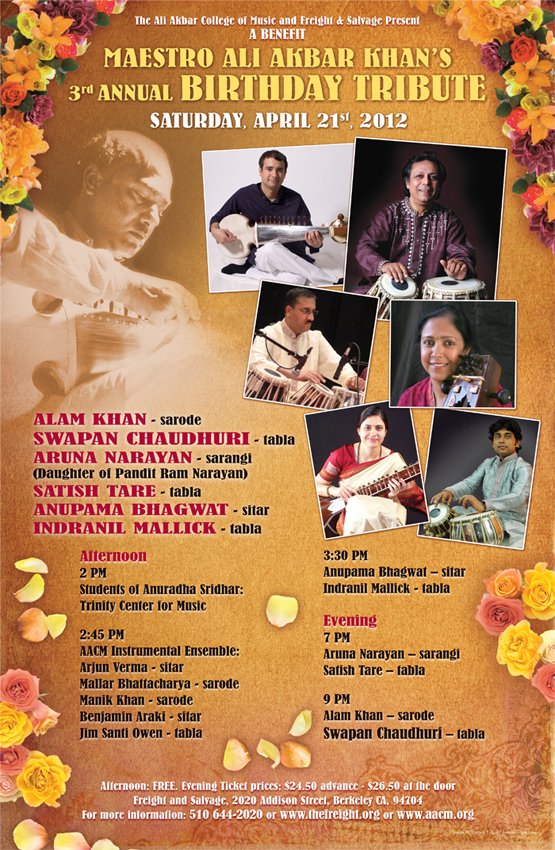
It’s a big weekend for us: Khansahib’s 3rd Annual Birthday Tribute is this Saturday at the Freight & Salvage in Berkeley! It’s going to be a fun, memorable day of performances–you definitely won’t want to miss it. The afternoon is completely free, so bring your friends and come and enjoy! You can purchase tickets to the evening performances online in advance at www.thefreight.org, (see the poster below for more information); there are plenty of seats available. We’re so excited to share this day with all of you, and look forward to seeing you there!
Also, our Spring Session of classes begins on Monday! You still have plenty of time to sign up, so please visit our website to learn all about what we have to offer, or call us at (415) 454-6372 with any questions you might have. Let’s celebrate spring with friendly faces and beautiful music!
http://campaign.r20.constantcontact.com

Hunger.Macht.Profite. 5 Filmtage zum Recht auf Nahrung

UN Human Rights @UNrightswire #RightsRio: Human rights in #Rioplus20 make #FutureWeWant truly sustainable! Check what others say @Storify: http://sfy.co/p5b United Nations Human Rights “Simply put, participatory, accountable, non-discriminatory and empowering development is more effective, more just and ultimately more sustainable.” - UN human rights chief Navi Pillay on negotiations towards an outcome of the Rio+20 conference. Tell us what you think #RightsRio
Only seven weeks to go before the Rio+20 conference decides our future. Yet the current draft outcome fails to take sufficient account of human rights. http://www.un.org/en/sustainablefuture/index.shtml
Hunger.Macht.Profite. 5 |
http://www.viacampesina.at/cms/index.php
http://www.hungermachtprofite.at
Filmtage zum Recht auf Nahrung
Nachdem die Filmtage Hunger.Macht.Profite. im Jahr 2011 zugunsten von „Nyeleni Europe – Europäisches Forum für Ernährungssouveränität“ pausiert haben, finden im April 2012 zum fünften Mal die Filmtage zum Recht auf Nahrung – Hunger.Macht.Profite.5 statt. Geplant ist, mit kommentierten Filmvorführungen in Oberösterreich, Wien und erstmals in Vorarlberg Station zu machen. Hunger.Macht.Profite.5 zeigt Dokumentarfilme zu den strukturellen Ursachen von Hunger in Zeiten der multiplen Krise. Globale Agrarproduktion, Welternährung, der Zugang zu produktiven Ressourcen und das Recht auf Nahrung werden in verschiedenen Kontexten aufgegriffen. Ein zentraler Bestandteil der Filmtage sind die Filmgespräche, in denen die KinobesucherInnen zu einer vertiefenden Diskussion der Filminhalte eingeladen werden.
Filmtage zum Recht auf Nahrung weil…
… weltweit mehr als 1.000.000.000 (1 Milliarde von 6,9) Menschen hungert. Eine milliardenfache Verletzung des in der Allgemeinen Erklärung der Menschenrechte verbrieften Rechts jedes Menschen sich zu ernähren.
Hunger ist ländlich…
80% der hungernden Menschen leben am Land, also wo Nahrungsmittel produziert werden. 50% sind KleinbäuerInnen, 20% Landlose, 10% FischerInnen, HirtInnen oder JägerInnen. Dabei ist der Druck auf die Ressource „Land“ so stark wie noch nie zuvor: Zwischen 2006-2009 sind zwischen 22 bis 50 Millionen Hektar Ackerland in Afrika, Asien und Lateinamerika an ausländische Investoren verpachtet oder verkauft worden.
Hunger ist weiblich…
Im globalen Süden werden 80% der Grundnahrungsmittel von Frauen produziert, aber nur 10% der Anbauflächen gehören Frauen. Zwei Drittel der von Hunger Betroffenen sind weiblich.
Hunger wird gemacht…
10% des Hungers wird durch Katastrophen ausgelöst, aber bei 90% des weltweiten Hungers handelt es sich um chronischen Hunger, verursacht durch ungerechte Handelsbeziehungen, Spekulation mit Grundnahrungsmitteln und falsche Agrarpolitik wie Exportdumping.
Hunger ist ein Geschäft…
Gab es Ende der 1970er Jahre weltweit ca. 7000 Saatgutfirmen, so kontrollieren heute zehn Konzerne (u.a. Monsanto, Syngenta, Dupont, Dow und BASF) 67% des Saatgutmarktes. Eben diese Konzerne beherrschen auch 80% des Pestizidmarktes. Damit liegt bald die gesamte Nahrungsmittelkette von der Viehzucht und Veterinärmedizin bis zur Produktion in ihrer Hand.
FIAN Österreich, AgrarAttac, ÖBV-Via Campesina Austria und normale.at initiieren diese Reihe mit dem Ziel, strukturelle Ursachen von Hunger sichtbar zu machen. Weltweit hungert mehr als eine Milliarde Menschen. Das bedeutet eine milliardenfache Verletzung des bereits in der Allgemeinen Erklärung der Menschenrechte verbrieften Rechts jedes Menschen sich zu ernähren.
Film-Trailer und Ausschnitte aus den Hunger.Macht.Profite.-Programmen seit 2006. Ein Dokumentarfilm von Nils Aguilar über den Wandel zur Agrarökologie und zu mehr lokaler Nahrungssicherheit. www.voicesoftransition.org Wie können wir unsere Felder und Städte auf die doppelte Herausforderung von Klimawandel und Erdölknappheit vorbereiten?
Lust, am Film teilzuhaben oder uns durch einen -Vorverkauf finanziell zu unterstützen? Jede kleinste Beitrag wäre uns eine grosse Hilfe, um die hohen Kosten einer Postproduktion auf hohem Niveau zu finanzieren…
Spielorte und Termine:
10. und 11. April 2012 Spielboden Dornbirn
12. April 2012 TAS Kino Feldkirch
13. und 15. April 2012 Lichtspiele Ebensee
16. und 17. April 2012 Moviemento Linz
18. April Local Bühne Kino Freistadt
23., 24., 25. April 2012 Rechbauerkino Graz
26. bis 29. April 2012 Topkino Wien
„Widerstand ist fruchtbar.“
Infos auch unter www.HungerMachtProfite.at
http://www.facebook.com/Hunger.Macht.Profite
http://www.ohchr.org/EN/Issues/Food/Pages/FoodIndex.aspx
Filmbeschreibungen:
werden in Kürze veröffentlicht
Diskussionen mit ExpertInnen jeweils im Anschluss an das Filmprogramm.
_______________________________________________________________________
Infos zu den VeranstalterInnen
- FIAN (FoodFirst Informations- und AktionsNetzwerk) ist die internationale Menschenrechtsorganisation für das Recht sich zu ernähren. FIAN hat Beraterstatus bei der UNO und wird weltweit für Fälle aktiv, in denen das Recht auf Nahrung verletzt wird.
- normale.at veranstaltet in Österreich seit 2003 gesellschafts- und wirtschaftspolitische Dokumentarfilmfestivals und trägt umfassende Erfahrung zur Planung und Durchführung bei.
- ÖBV – Via Campesina Austria ist eine Basisorganisation von Bauern und Bäuerinnen in Österreich. Die ÖBV bietet basisorientierte Bildungsarbeit und politisches Lobbying für eine gerechte Agrarpolitik im Sinne der Ernährungssouveränität.
- AgrarAttac ist eine Inhaltsgruppe von Attac Österreich und betreibt Bildungs- und Vernetzungsarbeit zu Themen der globalen Landwirtschaft. Die vielen ehrenamtlich engagierten Menschen dieser Gruppe wollen Alternativen zur bestehenden neoliberalen Globalisierung vorantreiben.

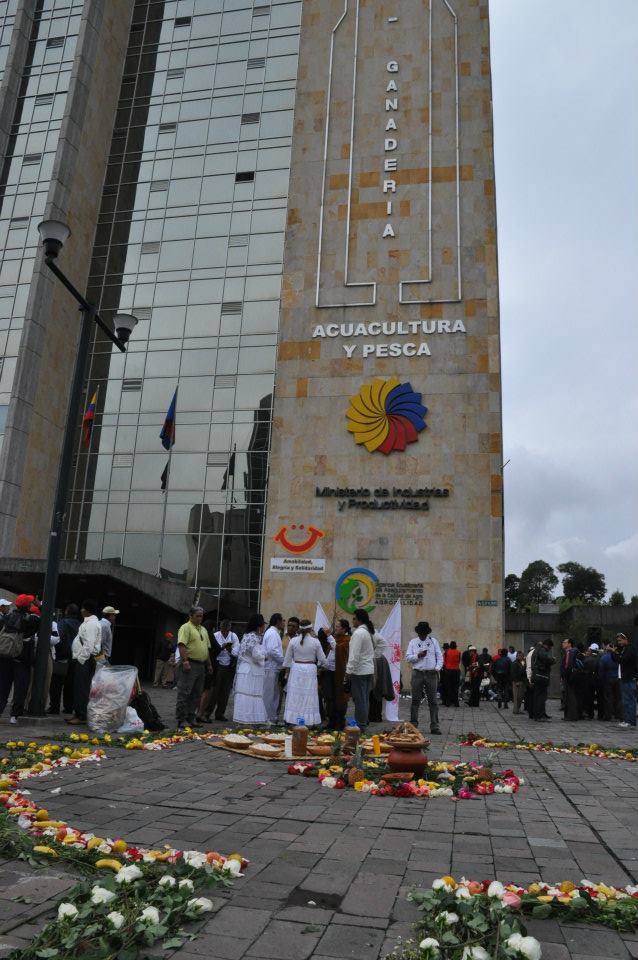
Stop Land Grabbing – Land to the tillers! – Global day of peasant struggle (EN, ES, FR)

Food security hostage to trade in WTO negotiations: UN right to food expert www.srfood.org
http://viacampesina.org
http://farmlandgrab.org http://www.grain.org
http://www.oaklandinstitute.org
List of Activities for 17th April, 2012 around the world: http://bit.ly/HGwIL8
(Jakarta, 2 March 2012) April 17 is the International Day of Peasant Struggle, commemorating the massacre of 19 peasants struggling for land and justice in Brazil in 1996. Every year on that day actions take place around the world in defence of peasants and small-scale farmers struggling for their rights.
In recent years, we have suffered from the implementation of new policies and of a new development model based on land expansion and land expropriation, commonly known as land grabbing. Land grabbing is a global phenomenon led by local, national and transnational elites and investors, with the participation of governments and local authorities, in order to control the world’s most precious resources.
Land grabbing has resulted in the concentration of the ownership of land and natural resources in the hands of large-scale investors, plantation owners, logging, hydro-power and mining companies, tourism and real estates developers, port and infrastructures authorities, and so forth. This has led to the eviction and displacement of the local populations – usually farmers -, the violation of human rights and women rights, increased poverty, social fracture and environmental pollution. Land grabbing goes beyond traditional North-South imperialist structures: the involved transnational corporations are based in the United States, Europe, Chile, Mexico, Brazil, Russia, India, China, South Africa, Thailand, Malaysia, Indonesia and South Korea, among others.
Financial institutions such as private banks, pension and other investment funds have become powerful actors in land grabbing, while wars continue to be waged to seize control of natural wealth. The World Bank and regional development banks are facilitating land and water grabs by promoting corporate-friendly policies and laws, providing capital and guarantees for corporate investors, and fostering an extractive, destructive economic development model. Meanwhile the World Bank and some other institutions have proposed seven principles of Responsible Agricultural Investment (RAI) that are supposed to prevent abuses but in fact legitimize farmland grabbing by corporate and state investors. La Via Campesina and key allies have protested against this initiative for the past two years.
Land grabbing is a global phenomenon based on the corporate domination of agriculture through control over land, water, seeds and other resources. It is justified by many governments and policy think tanks through claims that agribusiness will modernize backward agricultural practices and guarantee food security for all. However widespread those claims may be, they have been shown to be entirely false in the real world.
The key players behind land grabbing prioritize profit over people’s well-being: they produce agrofuels if this is more profitable than food production, and they export their food production if this is more lucrative than selling it at home. In this race to profit, the corporate sector is increasing its control over food production systems, monopolizing resources, and dominating decision making processes. Business lobbies have strong political influence that often overrides democratic institutions; in addition, they act with the complicity of local and national elites (traders, politicians and community leaders) who fail to protect their own people from predation.
Land grabbing has been dispossessing peasants, small-scale farmers and indigenous peoples, especially women and the youth, from their sources of livelihoods. It is also ruining the environment. Indigenous peoples and ethnic minorities are being expelled from their territories by armed forces, increasing their vulnerability and in some cases even leading to slavery. Market-based, false solutions to climate change such as the fashionable concept of „Green Economy“ are forever finding new ways to alienate local communities from their lands and natural resources.
Therefore La Via Campesina calls on all of its members and allies, fisher-folk movements, agricultural workers organizations, students and environmental groups, women organizations and social justice movements to organize actions around the world on April 17 in order to display massive popular resistance to land grabbing and highlight the struggle against corporate control over land and natural resources.
Let’s unite and fight:
- To stop land grabbing and reclaim grabbed land – the land should be in the hands of tillers.
- To implement genuine agrarian reform in order to bring about social justice in rural areas.
- To end the control over billions of people’s lives exercised by a few investors and transnational companies.
- To oppose the principles of “responsible agricultural investment” (RAI) proposed by the World Bank as it can never be “responsible” for investors and corporations to grab farmers‘ land.
- To strengthen the agriculture production model based on family farming and food sovereignty.
On April 17, groups and people are invited to organize a direct action, a film screening, a farmers market, a land occupation, a debate, a protest, an art exhibition, or any other event highlighting the same goal.
- Inform us about your plans by sending an email to viacampesina@viacampesina.org
- Subscribe to our special mailing list by sending a blank email to via.17april-subscribe@viacampesina.net
- Send us reports, pictures and videos of your action!
- We will publish the map of actions around the world on www.viacampesina.org
- Join our facebook event

Poster Action: 17 April: International Day of Peasant Struggle
Denounce land grabbing!
Wherever you are, fill in this poster with the name of your local land grabbers and send us a picture of what you are doing to protest with this poster.
E-mail: viacampesina@viacampesina.org
http://www.nyeleni.org/DOWNLOADS/newsletters/Nyeleni_Newsletter_Num_9_FR.pdf
http://media.oaklandinstitute.org/publications
http://media.oaklandinstitute.org/content/tackling-global-food-crisis-mission-unaccomplished
http://www.facebook.com/Cloc Via Campesina
http://www.facebook.com/oak.institute
http://www.facebook.com/soilassociation
http://www.facebook.com/organicconsumers
http://www.facebook.com/FoodandWaterWatch
https://twitter.com/#!/FarmPolicy
http://www.facebook.com/The Institute for Agriculture and Trade Policy
High level policy dialogue between the Alliance for a Green Revolution in Africa (AGRA)

http://allafrica.com
http://www.agra-alliance.org
http://kofiannanfoundation.org
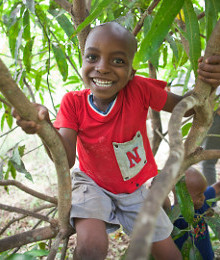
This photo story highlights key moments in a policy dialogue that involved small scale farmers and representatives of the Alliance for a Green Revolution in Africa (AGRA). Over one hundred people participated in this unprecedented event:
DOWNLOAD PDF http://pubs.iied.org/pdfs/G03349.pdf
IIED, APPG on Agroecology, CNOP, Kene conseils, Centre Djoliba, IRPAD
IIED code: G03349
Published: Apr 2012 – IIED
Areas: Ghana, Mali, Burkina Faso, Senegal, Benin
Topics: Agriculture & Food, Participation
Details: Project info
Language: English
This photo story highlights key moments in a policy dialogue on agricultural research for development that involved small scale farmers and representatives of the Alliance for a Green Revolution in Africa (AGRA). Over one hundred people participated in the policy dialogue. This unprecedented event was chaired by the UN Special Rapporteur on the Right to Food and took place on 1st to 3rd February 2012 in Accra (Ghana).
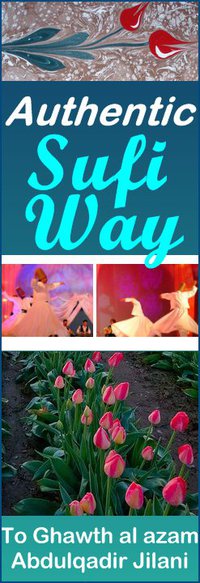
AUTHENTIC SUFI WAY – International Qadiriya Foundation *~ a sholar from the Quadiri Sufi Order *

http://www.qadiriyya.com
Sayyid Muhammad Efendi of Istanbul
————————————-
(photo: Sayyid Muhammad Efendi with his sufis)
A great sufi story from the time of prophet David! – By Sheikh Sayyid Muhammad Efendi
————————————-
The story of a lazy person and a butcher
A lazy person was praying without getting fed up and without giving up saying „O my Lord! I want sustenance from you without difficulty and suffering. As it is observable that, the creatures with feet search for food, but, you bring the food to the ones without feet.“ Allah almighty has accepted the prayer of this person due to his continuous persistence. One day while this person was praying, an ox has come to his garden. The man has thought „Allah almighty has accepted my prayer“ and cut the ox and run to bring the butcher to skin it. The real owner of the ox was the butcher, when he had seen the ox he had lost was cut by this person of poverty, he had got hold of his collar saying „why have you cut my ox“. Despite that poor person saying „Allah has accepted my prayer and sent this ox to me“, the butcher had pulled and brought the poor person to prophet David (Dawood) AS saying „if posessions were obtained thorugh prayers, all the beggers would have been people of posessions“.
The general public had gathered to listen to the the arguments between this poor person and the butcher. Prophet David AS after listening to the butcher and the poor person had asked: „O poor person! do you have an evidence that can be accepted by the religious commandments? Is this ox a donation to you, or have you inherited it? If you don’t have an evidence acceptable by the religious law, pay your debt to this man.“ The poor person had pleaded with Allah almighty upon the jurisdiction of prophet David AS, he had shed tears and prayed saying „O my Lord! give a light to the heart of David!“. Upon this, David AS had said to the butcher who is the claimant: „Give me respite for today so that I go into seclusion, pray and I give jurisdiction on your case tomorrow.“ and sent them home.
Prophet David has been into seclusion that night and he had learned the inner secret of the matter. The public had gathered together in the morning. The butcher comes there ans says haevy words to the poor person. When prophet David comes out he says to the butcher: „O butcher! abonden this claim of yours and donate the ox to this Muslim, and get away from here, as God almighty had covered your secret. Be thankful to Him for this reason.“ The butcher disagrees with the words of the prophet and said harsh words: „O David! your justice is spread over the West and the East. What kind of jurisdiction is this while you justice is filling the earth and the haevens, you have been cruel to me.“ The public also sides with the butcher and start criticizing the prophet. Allah almighty had been hurt by the ciriticizing words of the butcher to His prophet and He reveals the inner reality of the event to the public.
Thus, prophet David says his jurisdiction to the public as: „Go to this place, you will see a tree there. This man has killed his owner and buried under that tree. He had also left the knife he had used for killing next to him. This man was a slave of that person. He came together with a female slave of his owner and killed him. He then had claimed his posessions and goods. This poor person is the son of that man. Despite Allah almighty covering it, this ungrateful man has opened that cover veil himself, and show his sin himself. There will be retrubution for the butcher. His wife and children are the slaves of this poor person. And all the posessions and the goods of him belong to thid poor person, as the posessions of a slave belong to the owner.“

Abd al-Qadir al-Gilani (Persian: عبد القادر گیلانی,Urdu: عبد القادر آملی گیلانی AbdolqÄ�der GilÄ�ni) (also spelled Abdulqadir Gaylani, Abdelkader, Abdul Qadir, Abdul Khadir – Jilani, Jeelani, Gailani, Gillani, Gilani, Al Gilani, Keilany) (470–561 AH) (1077–1166 CE) was a Persian Islamic preacher who is highly esteemed by Sunni scholars. Among followers in Pakistan and India, he is also known as Ghaus-e-Azam. He was born on a Wednesday the 1st of ramadan in 470 AH, 1077 CE south of the Caspian Sea in what is now the Mazandaran Province of Iran.
http://www.poetseers.org/spiritual_and_devotional_poets/sufi
http://en.wikipedia.org/wiki/Jilani
http://www.urdupoetry.com/index.html
http://en.wikipedia.org/wiki/Urdu_poetry
http://www.facebook.com/Kadiriyye
http://www.facebook.com/Authentic-Sufi-Way
SUFISM – Mowlânâ Jalâl-od-Dîn Rûmî UNESCO World Heritage Shams-i Tabrizi & the freedom of religion or belief.
Mowlânâ Jalâl-od-Dîn Rûmî et l’ordre mevlevi des derviches tourneurs
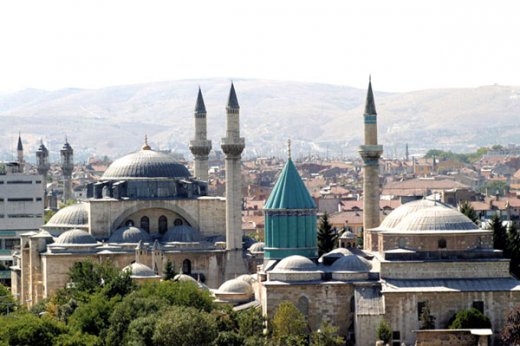
- Mausolée de Rûmî à Konya, vue d’ensemble
His epitaph reads: "Do not seek our tombs on this earth - our tombs are in the hearts of the enlightened."
http://mevlana.net/unesco_address.html
http://www.sacred-destinations.com/turkey/konya-mevlana-museum.htm
Rûmî est né à Balkh dans le grand Khorâssân iranien (l’antique Bactres de l’Empire achéménide, aujourd’hui en Afghanistan) en 1207 (604 de l’Hégire), mais il dut quitter sa ville natale avec sa famille à l’âge de 14 ans. Les raisons de ce départ, variant d’un hagiographe à l’autre, sont attribuées soit à la contestation des habitants de la ville à propos du titre de Sultan des savants donné à son père, le grand érudit Bahâ-ud-Dîn-Walad, théologien et prédicateur éminent, soit à un différend entre celui-ci et le philosophe attitré du roi, ou encore à la fuite devant le danger que représentait alors l’avancée des hordes mongoles parcourant la steppe, ou peut-être une accumulation de tous ces événements. De fait, la ville de Balkh fut détruite par Gengis Khan peu après que Rûmî l’eût quittée.
Après être passés par Neyshâbour (où Rûmî rencontre le grand poète mystique Attâr), La Mecque, Bagdad, ils s’installèrent à Konya, dans l’Empire ottoman, à l’invitation du sultan Key Ghobâd, comme de nombreux Persans fuyant les hordes mongoles. Son père meurt dans cette ville, alors que Rûmî n’a que 24 ans. Un an plus tard, il suit l’enseignement de Termazi, grand théoricien de Konya qui l’envoie étudier à Alep et à Damas afin d’y parfaire ses connaissances philosophiques et théologiques. C’est à Damas qu’il rencontrera pour la première fois le derviche Shams Tabrizi, qui transformera sa vie en faisant de lui un mystique extatique.
Le collège où Rûmî, docteur en théologie, enseigne jurisprudence et loi islamiques, est fréquenté par de nombreux disciples. A 36 ans, on commence à l’appeler Mowlânâ, notre maître. Son érudition attire à Konya les plus illustres savants du monde dit civilisé.
On rapporte que c’est au cours de sa retraite de quarante jours en compagnie de Shams Tabrizi à Konya qu’il se met à tournoyer à la manière des derviches tourneurs et apprend à jouer du luth. « Plusieurs voies mènent à Dieu, j’ai choisi celle de la musique et de la danse », écrira-t-il. C’est en tout cas après cet épisode décisif de sa vie qu’il fonda la tarîqa mawlawiya ou confrérie mevlevi.

- Cérémonie à la loge mevlevi de Bursa http://www.allaboutturkey.com/konya.htm
Photo : Eric Nosjean
L’ordre mevlevi des derviches tourneurs de Turquie
Comme Rûmî l’avait souhaité, Hessâmeddin Tchalabi, son disciple dès l’adolescence, devient son successeur spirituel lorsqu’il décède en 1273. C’est Hessâmeddin qui écrira et mettra en forme le Masnavi, la grande œuvre de Rûmî, tandis que celui-ci lui en récitait les poèmes. Guidant la communauté fondée par son maître, Hessâmeddin fit en sorte qu’elle continue à respecter les idées et les principes du défunt. Quand Hessâmeddin meurt à son tour en 1284, Soltân Walad, fils aîné de Rûmî, devient le sheykh des Mevlevi : il organise ses disciples en un ordre soufi véritable avant que son propre fils, Aref Tchalabi, ne lui succède en 1312. Une chaîne de successions directes rattache le maître actuel de la Mawlawîya à ses prédécesseurs.
Après la mort de Rûmî, l’ordre des mevlevis connaît une ascension notable sous la protection des sultans seldjoukides et ottomans, se déployant jusque dans le monde arabe et les Balkans. Il cultive la poésie persane (Rûmî s’exprimait et écrivait en persan), la musique, la calligraphie, et codifie ses cérémonies, dont la danse, dans ses tekke – ou monastères derviches – des principales villes de l’empire.
La progression spirituelle du soufi mevlevi s’inscrit dans le cadre d’une retraite de mille et un jours consistant en périodes de silence, d’isolement en cellule, d’étude et de corvées domestiques. Ce temps de formation s’accomplit en grande partie dans la cuisine du monastère, lieu hautement initiatique, où le novice est lentement mené à maturité spirituelle. Il s’initie à la musique et à la danse, à la lecture du Masnavi, au zikhr (invocation répétitive des noms divins) et à la méditation. Cette initiation est clôturée par une cérémonie d’investiture qui fait du novice un sheikh. On lui remet alors deux attributs symboliques, le manteau (le souf) et la coiffe rituels. Il peut ensuite choisir entre une vie de célibataire au monastère ou une vie de famille à l’extérieur, tout en restant lié à sa communauté, cas d’exception dans l’histoire du soufisme. … Read More http://www.teheran.ir/Mowlânâ Jalâl-od-Dîn Rûmî
Shams-i-TabrÄ«zÄ« or Shams al-Din Mohammad (born 1185, died ca.1248) was a Persian Muslim, who is credited as the spiritual instructor of Mewlana Jalal ad-Din Muhammad Balkhi, also known as Rumi and is referenced with great reverence in Rumi’s poetic collection, in particular Diwan-i Shams-i Tabrizi (The Works of Shams of Tabriz).
Tradition holds that Shams taught Rumi in seclusion in Konya for a period of forty days, before fleeing for Damascus. The tomb of Shams-i Tabrizi was recently nominated to be a UNESCO World Heritage Site.
Sufism or taṣawwuf (Arabic: تصوّف) is defined by its adherents as the inner, mystical dimension of Islam. A practitioner of this tradition is generally known as a ṣūfÄ« (صُوفِيّ). Another name for a Sufi is Dervish.
Classical Sufi scholars have defined Sufism as „a science whose objective is the reparation of the heart and turning it away from all else but God“. Alternatively, in the words of the Darqawi Sufi teacher Ahmad ibn Ajiba, „a science through which one can know how to travel into the presence of the Divine, purify one’s inner self from filth, and beautify it with a variety of praiseworthy traits“. http://en.wikipedia.org/wiki/Sufism
About http://iranculture.ca/dev/
The development of the role of cultural relations and the growth of attention devoted to its aspects is closely connected with modern development of civilization and with the development of international relations along with the continuous increase in their intensity.
Culture is inseparably connected with not only international cultural relations, but also to create the necessary conditions for the harmonic development of human society. In other word Culture is reflected in all human activities and in their results.
Cultural relations have great significance for international relations from the viewpoint of how well cross-cultural communication functions. According to expert analyses inefficacy of international negotiations is from up to 70% caused by mutual misunderstanding of members of different cultural systems. In the first place the recognition of one’s own culture and at the same time also obtaining knowledge about different cultures and their environment belong to the main pillars of proper communication.
Regarding to the above mentioned points, Iran Embassies in abroad try for expansion of cultural ties with the countries in all around the world and believe that based on key role of culture in International Relations, cooperation in this field could help promote bilateral and multilateral economic, political and social activities as well.
The Cultural Centre of Iran in Canada also believes that there is need for promoting Tehran-Ottawa cultural exchanges and do its best for achieving cultural goals of the two countries in different fields including cinema, arts, language teaching ,exchange of views and etc .
Iran’s great potential in the field of tourism is also essential in this regard. Iran is open to tourists from all over the world and over 1,500,000 tourists visit various cultural and historical sites in this country each year. Diverse climatic conditions as well as deep-rooted civilization have transformed Iran into a tourist hub. So it has the potential to create suitable grounds to further expansion of the tourism industry cooperation with Denmark. Activating such fields also could be the best opportunity for the exchange of views among intellectuals and scholars of the two countries.
The cultural Centre of Iran in Canada has the responsibility of coordinating Cultural activities in Canada; expansion of the cultural, scientific, educational religious, and artistic relations between two countries; introducing the Islamic and Iranian culture and civilization to the Canadian people; promoting and consolidating relations among Universities scientific and cultural institutions of the two countries.
Last but not least, as we constantly strive to improve out cultural operations, we would like to ask you to contact us and provide us with your questions or concerns on all aspects of our work.
http://www.iranhumanrights.org/
http://en.wikipedia.org/wiki/Shams_Tabrizi
http://en.wikipedia.org/wiki/Rumi
http://en.wikipedia.org/wiki/Diwan-e_Shams-e_Tabrizi
http://en.wikipedia.org/wiki/Dhikr
http://en.wikipedia.org/wiki/Qadiriyya
http://www.amnesty.org/en/economic-social-and-cultural-rights
UNPO Co-Hosts „Minority Rights In Iran“ Event At United Nations
http://www.ohchr.org/EN/Issues/FreedomReligion/Pages/FreedomReligionIndex.aspx
http://portal.unesco.org/800th Anniversary of the Birth of Mawlana Jalal-ud-Din Balkhi-Rumi
http://www.facebook.com/Hz. Mevlâna
http://www.facebook.com/MevlanaveSemsHz
http://www.facebook.com/LeCentreCulturelDIranAOttawa
http://www.facebook.com/Cultural-Centre-of-the-Islamic-Republic-of-Iran-Ottawa
#sufism Persecution
http://www.transparency-for-iran.org
http://www.hrw.org/middle-eastn-africa/iran
Iran: UN human rights body concerned over executions and minority rights
http://www.hrw.org/europecentral-asia/turkey
http://www.hrw.org/europecentral-asia/azerbaijan
Inspirations for Rio +20 Summit on #sustainable #development in #brazil: #private set of pictures #anatolia #turkey #tourism #***** hotel #spa tour autumn 2011:
http://www.flickr.com/photos/rumisuficelaleddinimevlana/
5ème EDITION DU FESTIVAL DE FES DE LA CULTURE SOUFIE Sous le thème « Figures féminines du Soufisme »
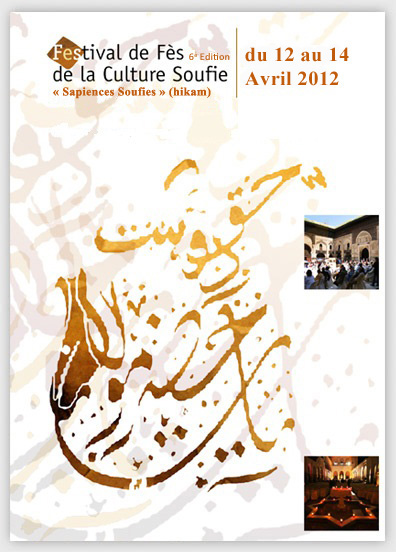
http://www.festivalculturesoufie.com
As we have more and more spontaneous demands in the national and international fields, to take part into the program of the festival, it becomes obvious that this event is bound to become a real platform of artists’ encounters who will let the world discover the cultural diversity of Sufism and the richness of the Islamic Culture. Indeed, Morocco which has always been a land instilled by Sufi spirit, will reinforce its role in the dialogue between different cultures and will be able to show to the rest of the world, a tolerant Islam, opened to other cultures and religions. Its role of mediation in its history, and even more recently, will help this country to become a real bridge between Orient and Occident.
Aims of the Festival
- To allow Morroccan people to discover or re-discover how the Sufi brotherhoods have mainly succeeded in preserving a message of universal spirituality that irrigated the whole of the Muslim culture and nourished its artistic, literary, and even social and economic forms of expression especially in Morocco.
- To allow people from other cultures to discover another face of Islam thanks to the message of opening and peace inherent to Sufism, far from the image generally spread by the media. To show how Sufism, as a school of spiritual and civic education, can be a mean of human development and a peace mediator.

- Through this event, to reinforce the position of Morocco as a link between Orient and Occident in the intercultural dialogue.
- To show the richness and the creativity of the spiritual, academic, artistic and social dimensions inspired by Sufism. To let people know contemporary artists and thinkers, national and international, and with them, to find new ways of social, cultural and artistic expressions that can strengthen the intercultural dialogue and help to the development of the society.
- To question the role of spirituality nowadays, the connection between spirituality and business, environmentalism and social actions. How the spirituality may, under the present frames of the social and entrepreneurial activity, become a particularly prolific contributor to the human development, in its social, cultural and spiritual contexts.
History of Sufism
Sufism is a mystic and ascetic movement which originated in the Golden Age of Islam, from about the 9th to 10th centuries.
The emergence of Sufism is a consequence of the wide geographical spread of Islam after the Rashidun conquests, and the resulting absorption of a wide range of mystic traditions from outside Arabia, especially Greater Persia. Sufism became a more formalized movement by the 12th century, and was a very successful movement throughout the Muslim world during the 13th to 16th centuries. There also were numerous Sufi orders active in the modern period, especially in non-Arab parts of the Muslim world.
1 Early history
2 13th to 16th centuries
2.1 Spread to India
2.2 Muslim Spain
3 Modern history
http://whc.unesco.org/en/statesparties/ma
http://www.hrw.org/middle-eastn-africa/morocco/western-sahara
http://www.ohchr.org/EN/Issues/FreedomReligion/Pages/FreedomReligionIndex.aspx

LIVE STREAM: RIGHTS OF MOTHER EARTH: RESTORING INDIGENOUS LIFE WAYS OF RESPONSIBILITY AND RESPECT

International Indigenous Conference
APRIL 4 – 6, 2012
at Haskell Indian Nations University, Lawrence Kansas
Click here to learn more and for Conference Details
Click here for registration options
Click here to read the rest of the invitation letter
Law of the Rights of Mother Earth (Spanish: Ley de Derechos de la Madre Tierra) is a Bolivian law (Law 071 of the Plurinational State), that was passed by Bolivia’s Plurinational Legislative Assembly in December 2010. This 10 article law is derived from the first part of a longer draft bill, drafted and released by the Pact of Unity by November 2011. The full bill remains on the country’s legislative agenda.
The law defines Mother Earth as „a collective subject of public interest,“ and declares both Mother Earth and life-systems (which combine human communities and ecosytems) as titleholders of inherent rights specified in the law. The short law proclaims the creation of the Defensoría de la Madre Tierra a counterpart to the human rights ombudsman office known as the Defensoría del Pueblo, but leaves its structuring and creation to future legislation. HERE
Indigenous Environmental Network
„A network of Indigenous Peoples empowering Indigenous Nations and communities towards sustainable livelihoods, demanding environmental justice and maintaining the Sacred Fire of our traditions.“
In April 2010, a historical moment occurred. More than 32,000 people, including Indigenous Peoples, social movements, small farmers and some world governmental leaders, converged in Cochabamba, Bolivia for the World People’s Conference on Climate Change and the Rights of Mother Earth. Two outcomes of this conference were the Cochabamba Peoples Accord and the Universal Declaration on the Rights of Mother Earth. The Accord and Declaration gave voice to peoples of the world experiencing the effects of climate chaos and its many accompanying issues, including depletion of freshwater and other natural resources and the problems of food security, poverty and environmental crises, along with the financial meltdown within the United States and globally.
LIVE STREAM: RIGHTS OF MOTHER EARTH: RESTORING INDIGENOUS LIFE WAYS OF RESPONSIBILITY AND RESPECT International Indigenous Conference APRIL 4 – 6, 2012 at Haskell Indian Nations University, Lawrence Kansas
IEN will be live streaming this conference here on our home page, or … If you would like to join in the conversation we will be moderating and responding to comments as the live stream is taking place on our new blog – Click here to view and participate. Note: Breakout sessions will not be streamed.
Live stream times and the topics/talks/panels that will be streamed are listed on the right side bar.
Rights of Mother Earth
In April 2010, a historical moment occurred. More than 32,000 people, including Indigenous Peoples, social movements, small farmers and some world governmental leaders, converged in Cochabamba, Bolivia for the World People’s Conference on Climate Change and the Rights of Mother Earth. Two outcomes of this conference were the Cochabamba Peoples Accord and the Universal Declaration on the Rights of Mother Earth. The Accord and Declaration gave voice to peoples of the world experiencing the effects of climate .
Download and Print Flyer – PDF During the Cochabamba world conference, President Evo Morales of Bolivia officially proposed that the United Nations adopt a declaration that recognizes that Nature or “Mother Earth” has certain inherent rights that we humans must respect and defend. The adoption by the United Nations and national and local governments of the Universal Declaration of the Rights of Mother Earth would expand the class of holders of legally rights and would initiate a global process of transformation.
Our prophecies and teachings tell us that life on Mother Earth is in danger and is coming to a time of great transformation. As Indigenous Peoples, we are accepting the responsibility designated by our prophecies to tell the world that we must live in peace with each other and the Earth to ensure harmony within Creation.
Our Indigenous lifeways are the original “green economies.” This is more than an abstract philosophy. Our Mother Earth is the source of life. Water is her lifeblood. The well-being of the natural environment predicts the physical, mental, emotional and spiritual longevity of our Peoples. Mother Earth’s health and that of our Indigenous Peoples are intrinsically intertwined. When our homelands are in a state of good health our Peoples are truly healthy. This inseparable relationship must be respected for the sake of our future generations and for the well-being of the Earth herself.
Alliances are being formed, globally of Indigenous and non-indigenous groups and individuals committed to creating a system of jurisprudence that sees and treats nature and Mother Earth as a fundamental, rights bearing entity. A paradigm, that is based on Indigenous thought and philosophy needs to be forwarded which grants equal rights to nature and which honors the interrelation in all life.
This is the greatest challenge facing humanity in the 21st Century. How do we re-orientate the dominant industrialized societies so that they pursue human well-being in a manner that contributes to the health of our Mother Earth instead of undermining it? In other words – how do we live in harmony with Nature?
A 3 day conference has been scheduled at HaskellIndian Nations University, in Lawrence, Kansas, April 4-6, 2012 with Indigenous Peoples together from the North and Global South to learn more and to have a discourse about this Rights of Mother Earth, Rights of Nature movement.
We invite humanity to come together to improve our collective human behavior so that we may develop a more sustainable world. We can preserve, protect, and fulfill our sacred duties to live with respect in this wonderful Creation. We have the power and responsibility for change.
Tom B.K. Goldtooth
Indigenous Environmental Network
Dr. Daniel Wildcat
Haskell Indian Nation University
And we’re back! http://t.co/82tyLZf5 – live stream Rights of Mother Earth – #rightsofmotherearth live on http://t.co/7dCTgmAR
See Also
http://www.facebook.com/Ecocide Website: http://www.eradicatingecocide.com/
Book „Eradicating Ecocide“ by Polly Higgins:
http://www.green-shopping.co.uk/books/eradicating-ecocide.html
http://www2.ohchr.org/english/issues/environment/environ/index.htm

Die Adivasi-Koordination – measures to fight impunity in cases of extrajudicial executions, and communal and traditional killings.
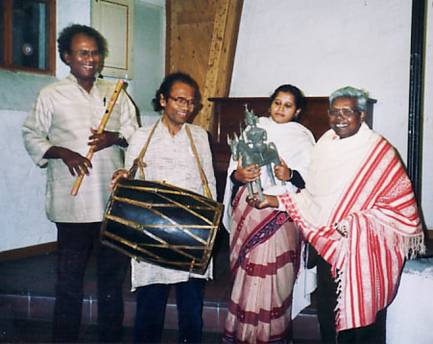
http://www.adivasi-koordination.de
Adivasi (Sanskrit: Nepali: Hindi: आदिवासी; Ä�divÄ�sÄ«) is an umbrella term for a heterogeneous set of ethnic and tribal groups claimed to be the aboriginal population of India.[1][2][3] They comprise a substantial indigenous minority of the population of India. The word is used in the same sense in Nepal as is another word janajati (Nepali: जनजाति; janajÄ�ti), although the political context differed historically under the Shah and Rana dynasties. MORE
Who are the Adivasi? – In India the members of the tribal communities are usually called “tribals” in English language and “girijan” (hill people) or “banvasi” (foresters) in Hindi language. The Constitution of the Republic of India applies in its English version the term “scheduled tribes” and in the Hindi version “anusuchit janjati”. All these expressions contain clearly paternalistic and partly even discriminatory connotations.
During the first decades of the 20th century educated and politically active tribals from eastern central India started to use the Hindi/Sanskrit term “Adivasi”. This word consists of “adi” (original) and “vasi” (inhabitant). Irrespective of the various names for individual tribes the self-designated term “Adivasi” has since become widely accepted. “Adivasi” signals awareness of a distinct identity, of a history and culture of one’s own. Moreover it points to a political programme to conserve and promote these cultures and to attain self-determination in a wider political context.
The self-designated name “Adivasi” corresponds with the modern concept of “indigenous peoples”. Since the 1950s representatives of indigenous peoples have been networking on a global level under the auspices of the United Nations. They contributed towards elaborating international legal standards in order to preserve their diverse traditional cultures and in order to work towards an overall self-determined future. Against this backdrop one may refer to the Adivasi movement as a movement for empowerment and assertion of Adivasi identity.
Imran Garda examines the 40-year war that has claimed thousands of lives but been largely ignored outside of India.
Adivasi – Past and Presence – The Adivasi are the descendants of those first inhabitants of India, who resisted the law and order system installed by the respective conquerors. Over quite a long period in history the Adivasi have been left untouched on principal. In many regions of the Indian subcontinent the Adivasi used to live as fishermen, as nomadic shepherds, as shifting agriculturalists and as hunters and gatherers. Between 2500 and 1500 BC cattle-breeding pastoralists from Western Central Asia – they called themselves “arya” i.e. the noble ones – conquered the then densely forested land. In order to confirm their dominance this “elite” created the caste system, which brandmarked the orginal population as “wild” and “uncivilized”. A certain part of the aboriginal people was subjugated and subsequently integrated into the system of dominance at the lowest rung as “outcastes” or “untouchables” (today they are known as “harijans”, “scheduled castes” or “dalits”). Thus racist discrimination started more than three thousand years ago. This was also the beginning of continuous eviction and withdrawal of the Adivasi.
Many communities fled in inaccessible hill areas, where they could preserve their traditional way of life partly to this day. The Adivasi have never been part of the economic system – except that they were exploited as cheap labour. Their economic activities in agriculture, animal husbandry and craft have always been exclusively for their subsistence – not for making profit. The Constitution of India provides quota for the scheduled tribes in education, public service and also in the parliaments. Moreover there are quite a few tribal development programmes. These promotion activities do not address the specific needs of the Adivasi. In addition they aid and abet the formation of an Adivasi elite, which is aloof from the situation of the majority. The government-sponsored industrialization increasingly destroys the last withdrawal areas of the aboriginal inhabitants. The delogging of vast forests, the construction of huge embankment dams, mining projects and test ranges for the army have already devastated large parts of Adivasi areas. They have uprooted millions of them and made them beggars in their own land.
|
||||||||


Intangible Heritage http://portal.unesco.org/culture/en/
UNESCO Intangible Cultural Heritage Lists http://en.wikipedia.org/wiki/Intangible_cultural_heritage
Center for Economic and Social Rights http://cesr.org/index.php
#video http://www.amnesty.org/en/economic-social-and-cultural-rights
http://www.facebook.com/SocialWatch
International Context
- Adivasi-Koordination explicitely refers to the international legal context and actively participates in the process of further developing the legal framework:
- International Labour Organisation: ILO first established binding norms in International Law for the protection of indigenous peoples’ rights with ILO Convention 107 (1957). In the year 1969 ILO Convention 169 followed.
- The World Bank released its Operations Directive (OD) 4.20 “Indigenous Peoples” in 1991. From 1st July 2005 onwards OD 4.20 is replaced by Operational Policy (OP) and Briefing Paper (BP) 4.10.
- The United Nations’ Working Group on Indigenous Peoples (UNWGIP), which forms part of the United Nations’ Human Rights Commission, formulated in 1993 a “Draft Declaration on the Rights of Indigenous Peoples”.
- The United Nations declared 1993 the “International Year of the Indigenous Peoples”, 1995–2004 the “Decade of Indigenous Peoples”, and 2005-2014 the “Second Decade of Indigenous Peoples”.
- In April 2000 the UN Human Rights Commission decided in its Resolution 2000/87 to establish a “Permanent Forum on Indigenous Issues”.
BREAKING >> Controversial plans to divert Indian rivers are approved: A controversial plan to connect more than 30 rivers in India to divert water to areas within the country which need it most has been approved by the Indian Supreme Court, sparking concern from neighbouring nations.
The scheme would link 30 rivers and involve the building of 80 dams, with a view to diverting water to areas that need it most for irrigation, power and human consumption. It could cost US$120 billion over the 16 years estimated for its completion http://www.scidev.net/en/agriculture-and-environment/water/news/plan-to-divert-indian-rivers-angers-neighbouring-nations.html
DON’T MISS THE LAST CONCERT OR KHANSAHIB’S ANNUAL BIRTHDAY TRIBUTE!!
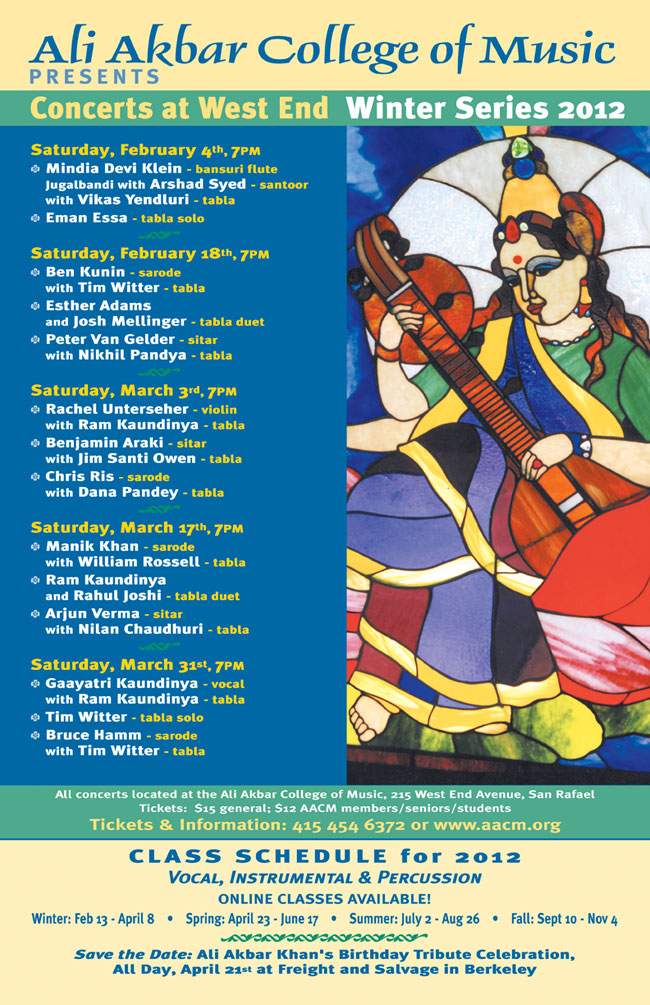
Dear Students and Friends,
We’ve reached the end of the Winter Series! The final concert will begin at 7 p.m. on Saturday, March 31st, and will feature a vocal performance by Gaayatri Kaundinya with Ram Kaundinya on tabla, followed by Tim Witter in a tabla solo, and will conclude with Bruce Hamm on sarode with Tim Witter accompanying on tabla.
We appreciate all the wonderful support we’ve recieved throughout the Series, and look forward to seeing you all at this final performance!
For more information, click here!
It is an incredibly special time of year for us, as we are preparing our annual tribute to celebrate Khansahib’s birthday. This event is such an honor to organize, and we are very excited to be able to hold it once again at the new Freight & Salvage location.
We are delighted to present this year’s lineup of talented artists to the public, and are hoping to surpass the wonderful turnout we had last year.
The day’s events will begin with a series of free performances. The first will be a group of young, extremely talented vocal students of Anuradha Sridhar, from her Trinity Center for Music.
Following this will be the AACM Instrumental Ensemble, who gave a memorable performance at last year’s Tribute. With Arjun Verma and Ben Araki on sitar, Mallar Bhattacharya and Manik Khan on sarode, and Jim Santi Owen on tabla, the Ensemble has a tremendous, lively sound.
The final performance for the afternoon portion of the day will be with the versatile and accomplished sitarist, Anupama Bhagwat, accompanied by Indranil Mallick on tabla.
In the evening, we will have the pleasure of showcasing Aruna Narayan, one of Indian classical music’s only performing female sarangi players, and daughter of the great Ram Narayan. Satish Tare will be accompanying her on tabla.
The evening will close with Khansahib’s son, Alam Khan, performing a solo on sarode with our Director of Percussion, and world renowned tabla master, Swapan Chaudhuri.
We are so grateful and happy to have all of these amazing artists come together in commemorating Khansahib’s life, and we look forward to having you join us in our celebration!
___________________________________________________________
Become a member of the AACM http://www.aacm.org today! Thank you to our current members for your continued support.
The Human Right to Water – World Water Day 2012
http://www.internationalrivers.org
http://www.unwater.org/worldwaterday
http://www.sankatmochanfoundationonline.org/save_ganga.html
News(23.03.2012): NEW DELHI: Environmentalist GD Agarwal, 80, who is on a fast-unto-death since January 15 to save the Ganga river, on Friday agreed to end his fast after the government agreed to his demands, his supporters said. „He will …See more
On the occasion of World Water Day 2012 the Sankat Mochan Foundation (SMF), an organisation working for the cause of Ganga for about three decades, is going to launch a new online campaign -STOP the Sewage: Clean Ganga NOW.
World Water Day has been observed on 22 March since 1993 when the United Nations General Assembly declared 22 March as World Day for Water.[1]
This day was first formally proposed in Agenda 21 of the 1992 United Nations Conference on Environment and Development (UNCED) in Rio de Janeiro, Brazil. Observance began in 1993 and has grown significantly ever since; for the general public to show support, it is encouraged for the public to not use their taps throughout the whole day, the day has become a popular Facebook trend.
The Ganges , is a trans-boundary river of India and Bangladesh. The 2,525 km (1,569 mi) river rises in the western Himalayas in the Indian state of Uttarakhand, and flows south and east through the Gangetic Plain of North India into Bangladesh, where it empties into the Bay of Bengal. By discharge it ranks among the world’s top 20 rivers.
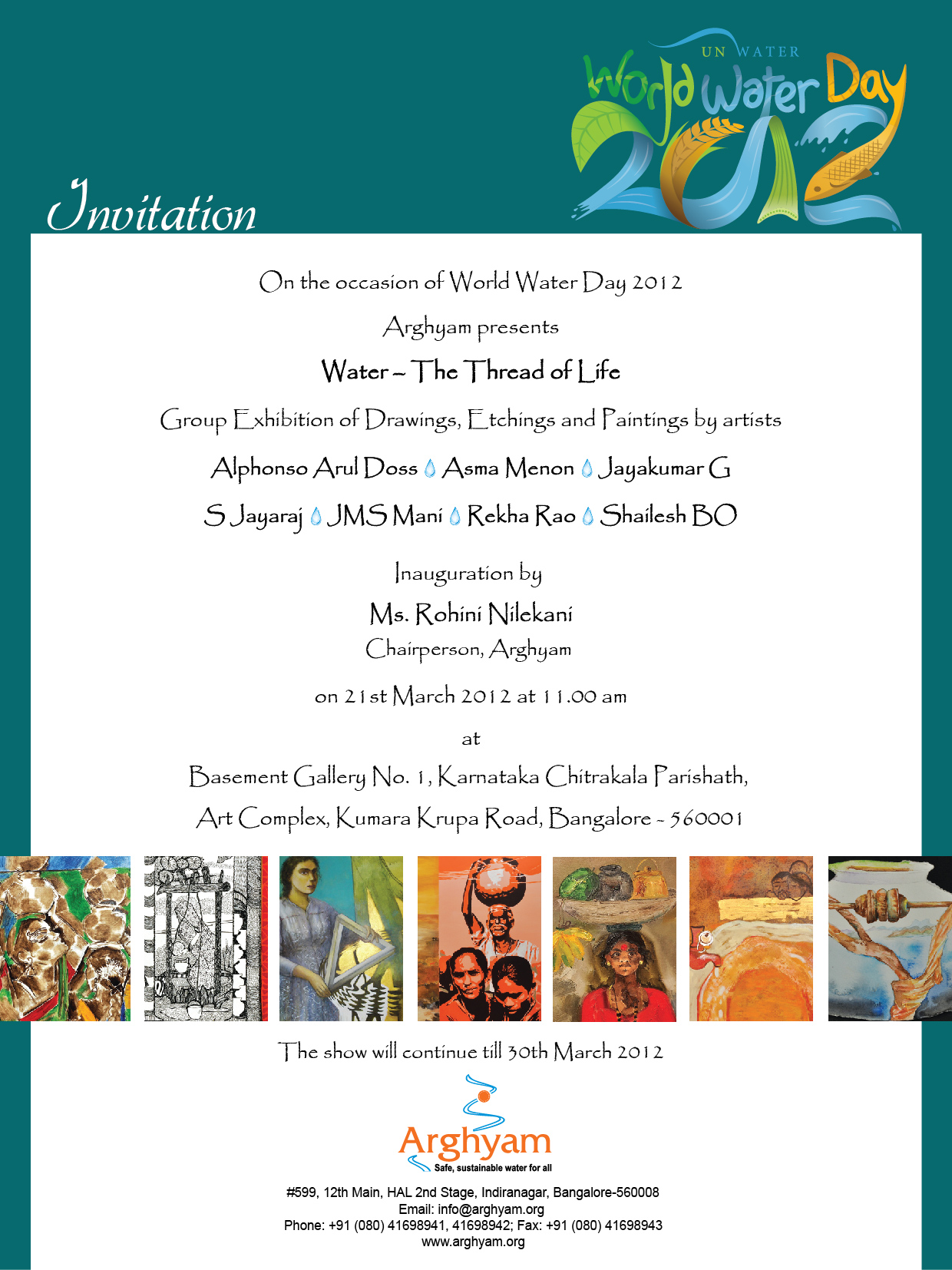
Water – The Thread of Life, a group exhibition of Contemporary Artists, Arghyam, March 21-30, 2012, Karnataka Chitrakala Parishath, Bangalore http://www.indiawaterportal.org/event/24761
Welcome to MC Mehta Environmental Foundation
Current Projects The Plight of the Ganga
M. C. Mehta, “In the Public Interest”
We believe that if, all of us unite and take proper care in protection and conservation of the limited natural resources, we can give our children a better tomorrow. It is possible only through community participation and awareness.
MCMEF has been actively involved in creating awareness among NGO’s,Lawyers,Scientists,Senior Officials, Academicians,Students & Youth through training and capacity building programmes, seminars,workshops,declamation contests and other grass roots level activities.
This ancient and magnificent river is now under serious threat due to the construction of hydroelectric dams along the upper reaches of the Ganga. This will devastate local ecology, wildlife and communities by tunneling in river-flow, effectively drying up the Ganga in these areas.
Further downstream, the Ganga is already suffering from the effects of extensive deforestation, and continues to be used as a dumping ground for untreated industrial and domestic waste. Religious tourism has also led to the proliferation of polythene waste in her waters.
As a result of climate change, the Gangotri glacier is rapidly receding. This will have profound implications on India’s water and food security.
# video Anna Hazare on G D Agrwal’s condition Anna ji speaking on G.D. Agrwal’s condition. He will also be going to meet G.D.Agrwal later today. || अन्ना जी, जी.डी. अग्रवाल के स्वास्थ्य के बारे में बात करते हुए| वो आज शाम को उनसे मिलने भी जायेंगे|
http://www.savegangamovement.org
http://www.indiawaterportal.org
http://www.indiaenvironmentportal.org.in
http://chimalaya.org/2012/03/20/anxious-wait-for-scientists-on-rio20-talks
http://www.scidev.net/en/science-and-innovation-policy/science-at-rio-20
http://chimalaya.org/2011/06/23/bringing-back-himalayan-watermills-to-life
Previous related #article #videos Hindol Deb – Swar Ganga Music Foundation
http://en.wikipedia.org/wiki/Right_to_water as a human right under international law.
http://www.ohchr.org/EN/Issues/Development/Pages/DevelopmentIndex.aspx
http://en.wikipedia.org/wiki/Environmental_law
http://en.wikipedia.org/wiki/Environmental_impact_assessment
chinadialogue http://www.chinadialogue.net
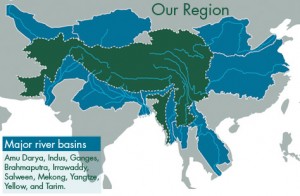
The current surge in land acquisitions http://farmlandgrab.org by foreign countries and private companies could lead to regional tensions over water rights, warns a new report by the Stockholm International Water Institute published last week. 主页 home > 每日星球 the daily planet Global land deals suck rivers dry Beth Walker
Another water battle looming Pakistan is gearing up for a new fight with India, reports Athar Parvaiz from Ladakh. At the centre of the latest row is a dam funded by international efforts to tackle global warming. http://www.chinadialogue.net/4825-Another-water-battle-looming
Fighting India’s mega-dams Popular protests against the construction of a vast network of dams in the Brahmaputra valley have gathered impressive momentum. Tanmoy Sharma reports from Assam. http://www.chinadialogue.net/ 4799-Fighting-India-s-mega-dams
River Interlinking India Most environmentalists around India heaved a sigh of relief on Friday when Pranab Mukherjee, the country’s Finance Minister, did not say a word about the plan to interlink India’s rivers, nor allocate any money for that purpose.
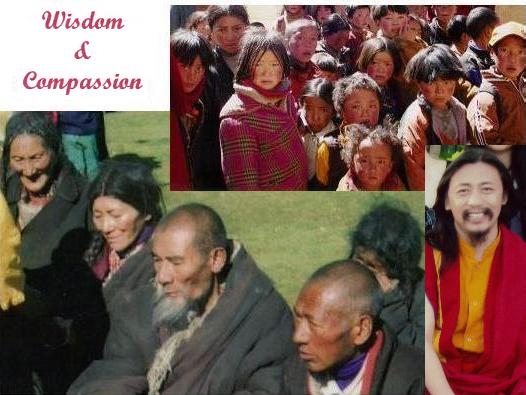
Freedom of Religion & Belief – China: Tibetan Monasteries Placed Under Direct Rule
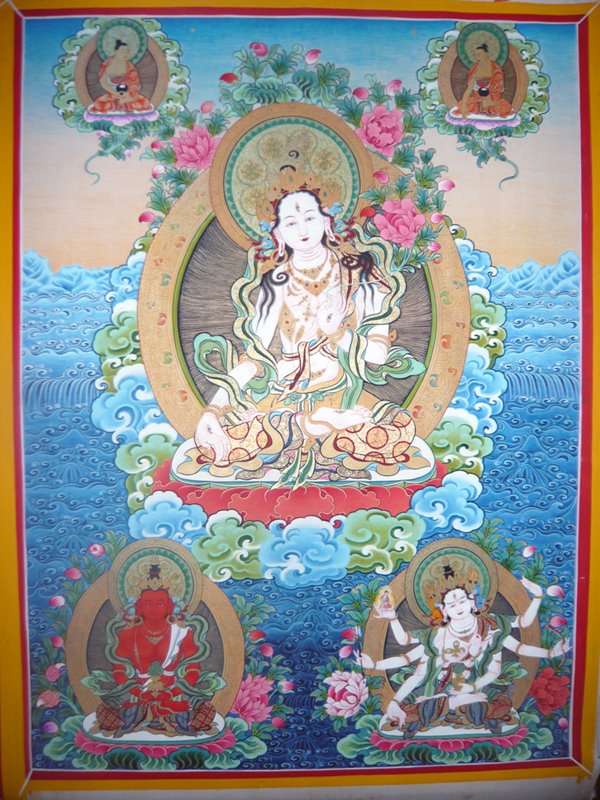
Tibetan Yoga Center – Yoga Retreats
Contact: tibetanyogainfo@gmail.com
www.bhutanzopa.com.bt/AdventureTravel
The practice of Yoga is intimately connected to the religious beliefs and practices of both Buddhism and Hinduism. However there are distinct variations in the usage of yoga terminology in the two religions. In Hinduism, the term „Yoga“ commonly refers to the eight limbs of yoga as defined in the Yoga Sutras of Patanjali, written some time after 100 BCE, and means „yoke“, with the idea that one’s individual atman, or soul, would yoke or bind with the monistic entity which underlies everything (brahman). In the Vajrayana Buddhism of Tibet, however, the term „Yoga“ is simply used to refer to any type of spiritual practice; from the various types of tantra (like Kriyayoga or Charyayoga) to ‚Deity yoga‘ and ‚guru yoga‘. In the early translation phase of the Sutrayana and Tantrayana from India, China and other regions to Tibet, along with the practice lineages of sadhana, codified in the Nyingmapa canon, the most subtle ‚conveyance‘ (Sanskrit: yana) is Adi Yoga (Sanskrit). A contemporary scholar with a focus on Tibetan Buddhism, Robert Thurman writes that Patanjali was influenced by the success of the Buddhist monastic system to formulate his own matrix for the version of thought he considered orthodox. Read More: HERE
Early Buddhism incorporated meditative absorption states. The most ancient sustained expression of yogic ideas is found in the early sermons of the Buddha. One key innovative teaching of the Buddha was that meditative absorption must be combined with liberating cognition. The difference between the Buddha’s teaching and the yoga presented in early Brahminic texts is striking. Meditative states alone are not an end, for according to the Buddha, even the highest meditative state is not liberating. Instead of attaining a complete cessation of thought, some sort of mental activity must take place: a liberating cognition, based on the practice of mindful awareness. The Buddha also departed from earlier yogic thought in discarding the early Brahminic notion of liberation at death. Liberation for the Brahminic yogin was thought to be the realization at death of a nondual meditative state anticipated in life. In fact, old Brahminic metaphors for the liberation at death of the yogic adept were given a new meaning by the Buddha; their point of reference became the sage who is liberated in life. Read More: HERE
Dream Yoga or Milam (T:rmi-lam or nyilam; S:svapnadarśana)— the Yoga of the Dream State are a suite of advanced tantric sadhana of the entwined Mantrayana lineages of Dzogchen (Nyingmapa, Ngagpa, Mahasiddha, Kagyu and Bönpo). Dream Yoga are tantric processes and techniques within the trance Bardos of Dream and Sleep (Tibetan: mi-lam bardo) and are advanced practices of Yoga Nidra. Aspects of Dream Yoga sadhana are subsumed within the practice suite of the Six Yogas of Naropa. Read More: > HERE <
Tibetan yoga center was established to provide a program of study and practice in the Tibetan Buddhist (Vajrayana) tradition that would integrate the essence of these teachings and present them in a suitable way for practitioners in the West. The program combines the core practices relying on visualizations, yoga of channels, winds and drops, and insight into the nature of the mind (rigpa) for efficient progress on the path. The core teachings of Tibetan Yoga Center are ‚The yogas of the six bardos‘ of the Nyingma lineage of Tibetan Buddhism, summarized in the curriculum as seven courses (see the program section). The founder and master teacher of the center, Khenchen Lama Rinpoche, was at numerous occasions encouraged by his teachers to focus on helping Western students, particularly through these practices. To help bring these teachings closer to the background of Western practitioners, the program of the Tibetan Yoga Center also integrates elements of Western neuroscientific research on changes in behavior, mind and brain as a result of meditation. Building on the tradition of enlightened householder yogis in Tibet, the program of the center was developed for yogis of the current era – serious practitioners leading busy lives with work and family commitments who want to bring their spiritual practice to swift fruition to fully benefit sentient beings.
Tibetan Yoga Center operates on principles of a social business, offering teachings mostly by suggested donation and for minimal possible fees to cover expenses. The aim of the Tibetan yoga of mind is to develop universal loving kindness and compassion coupled with the ultimate wisdom of the nature of phenomena, the ultimate truth. At the basic level of achievement, one wishes happiness for oneself as well as other people.
At the medium level of achievement one realizes that the source of ultimate happiness is the understanding of the true nature of phenomena. One realizes that the most profound way to benefit sentient beings is to achieve enlightenment and works very hard towards this goal. On this path, one completely purifies his/her mental afflictions – anger, attachment, ignorance, jealousy and pride. The highest level of achievement in the Tibetan yoga of mind is the experiential understanding of our own Buddha nature – the deepest level of the mind. When one continuously sustains this realization in his/her mind stream, s/he becomes the embodiment of the union of primordial wisdom and compassion, and benefits sentient beings in limitless ways. This achievement is the essence of the Tibetan yoga and the deepest meaning of the term ’naljor‘.
TYPES OF YOGA IN TIBETAN BUDDHISM – There are six yanas (modes of spiritual practice) in Vajrayana: 1. Kriyayana, 2. Upayana, 3. Yogayana, 4. Mahayoga, 5. Anuyoga, and 6. Atiyoga. In Nyingma lineage, the main focus of practice is on Mahayoga, Anuyoga and Atiyoga.
Teaching and Practice Downloads: This section contains general teachings given by teachers of the Tibetan Yoga Center at various occasions as well as specific teachings that are part of the curriculum of the center. These teachings are available for free, but proper reference to the teachings if used as part of other materials should be included.
Previous some related #articles #videos:
Mountain Minorities and Indigenous Peoples
Yoga of Himalayas – Nuns & Communities
The Ninth Mandaean Camp Niagara Falls
UNESCO – The Tradition of Vedic Chanting
UN – Nagoya biopiracy agreement ‚is unexpected success‘
Saving the Bedouin Heritage and Biodiversity
A Call for Renewable Energy in Brazil – Belo Monte
Indigenous Australien Medicine – Bush Medicine
Build Hope – Sivananda Sevashram
ARGAN TREE – Argan Oil Morocco
Jain Tradition – Mahavir Jayanti India
Monasteries Environmental Himalayaprotection
Monks lead march to save Himalayas
Interfaith Center: Gala Dinner with Yusuf Islam
Gilgit (UNESCO Gilgit Manuscripts) Baltistan – National Conference Sufism
Bahá’í – Religion für eine neue Zeit
Introduction – Swami Vivekananda – Jnana Yoga
The Hindu approach to spiritual evolution leading to liberation or moksha or Self-realization is one of the four major paths or yogas:
-
the path of knowledge or Jnana yoga,
-
the path of mind control or Raja Yoga ,
-
the path of devotion of Bhakti yoga and
-
the path of action/work or Karma yoga.
#video Swami Vivekananda 1893 Speech at Parliament of Religions Part 1 of 4
Swami Vivekananda was the chief disciple of the 19th century saint Ramakrishna Paramahansa and the founder of the Ramakrishna Math and the Ramakrishna Mission. He is considered a key figure in the introduction of Indian philosophies of Vedanta and Yoga to the „Western“ world, mainly in America and Europe and is also credited with raising interfaith awareness, bringing Hinduism to the status of a major world religion during the end of the 19th century CE. Vivekananda is considered to be a major force in the revival of Hinduism in modern India.
He is perhaps best known for his inspiring speech which began: „Sisters and Brothers of America,“ through which he introduced Hinduism at the Parliament of the World’s Religions in Chicago in 1893.
The Council for a Parliament of the World’s Religions works to cultivate harmony among the world’s religious and spiritual communities to achieve a just, peaceful and sustainable world.
The first Parliament of Religions was held at the 1893 Chicago Columbian Exposition, and was the first formal meeting of the religious East and West. In 1988 the Council for a Parliament of the World’s Religions (CPWR) was founded to organize a centennial celebration of the original Parliament. Since 1993, three Parliaments have been held in Chicago, Cape Town, Barcelona and in 2009 the most recent Parliament was held in Melbourne, Australia.
Dr. Joachim Reinelt: Zur Zeit des indischen Mittelalters wanderten in weiten Teilen Indiens und Tibets tantrische Mystiker umher, die Nathas, Nathayogis oder Nathasiddhas genannt wurden. Sie praktizierten und lehrten Hatha- und Kundaliniyoga und hatten großen Einfluss auf das religiöse Leben der Menschen.
Gorakshanatha Saivism: Gorakhnath or Gorakshanatha Saivism is also known as Siddha Siddhanta and Nath tradition. It was founded by Gorakshanatha (Gorakhnath) who lived about 10th century AD. He is believed to be 3rd, 4th or 5th in a line of 12 prominent teachers of this tradition, which has followers in both Buddhism and Hinduism.
He was said to be a disciple of Matsyendranatha who was from in Nepal. Followers of this sect believe that knowledge of this tradition was received by Matsyendranath directly from Siva himself. Gorakshanatha is credited with such works as Siddha Siddhanta Paddhathi and Viveka Martanda. He composed them in Hindi. He also created 12 monastic orders across Northern India in an effort to preserve the Adinatha tradition. Other important works of this tradition are Hathayoga Pradipika, Gheranda Samhita, Siva Samhita and Jnanamrita.
History of the Nathas – The history of ancient Indian sadhu texts reveals a succession of several main groups. There were the Sadhs, Yatis, Siddhas, Nathas, Pashupatis, Sant-Mats, Dasnamis and Nagas. Apart from these, many small sadhu sects have existed and played their part in the great stream of Indian life. In early history, it would appear that some sects were interwoven with others, and some merged or developed into other sects. Some thus became extinct, and others are still with us.
Full Article: http://www.saivism.net
http://www.facebook.com/parliamentofreligions
http://en.wikipedia.org/wiki/Swami_Vivekananda
Bhutan http://en.wikipedia.org/wiki/Gross_national_happiness
UN – The Challenge of Human Rights and Cultural Diversity
UNESCO – Intangible Cultural Heritage
UN – Nagoya biopiracy agreement ‚is unexpected success‘
http://www.twnside.org.sg/title2/books/The.Road.to.an.Anti-Biopiracy.Agreement.htm
Amnesty International – What are economic, social and cultural rights?
*************************************
China: Tibetan Monasteries Placed Under Direct Rule
(New York) – The Chinese government has ended a key policy of allowing Tibetan monasteries to be run by monks who comply with government regulations and have instead introduced a system that will place almost every monastery in Tibet under the direct rule of government officials who will be permanently stationed in each religious institution, Human Rights Watch said today.
The new system now requires an unelected „Management Committee“ – also referred to as zhusi danwei/gongzuozu („monastic government work-unit“)- to be established in every monastery, with up to 30 lay officials stationed in each monastery, depending on the size of the institution, according to a February 15, 2012 article in the government-run Global Times. The new „Management Committees“ will run the monasteries and will have authority over the previous „Democratic Management Committees,“ which will now be responsible for rituals and other matters.
The freedom to leave or discontinue membership in a religion or religious group —in religious terms called „apostasy“ —is also a fundamental part of religious freedom, covered by *Article 18 of the Universal Declaration of Human Rights.[2]
Freedom of religion is a principle that supports the freedom of an individual or community, in public or private, to manifest religion or belief in teaching, practice, worship, and observance; the concept is generally recognized also to include the freedom to change religion or not to follow any religion.[1]
#video Meeting with Special Rapporteur on Freedom of Religion or Belief, Heiner Bielefeldt As always saying something on the topic of freedom of religion or belief, to say it again, the most shocking experience when dealing with case of violations of freedom of religion is the extreme manifestation and degree of hatred “ http://www.youtube.com/watch?v=81qyyKzntJw
http://www.hreoc.gov.au/human_rights/religion/index.html
http://en.wikipedia.org/wiki/Freedom_of_religion
http://www.ohchr.org/EN/Issues/FreedomReligion/Pages/FreedomReligionIndex.aspx
February 29, 2012
Australian Broadcasting Corporation – Exiled PM wants ‚fact finding‘ mission in Tibet
March 3, 2012
UN Human Rights Chief asked when she would visit Tibet
Mar 6, 2012
UN calls on China to stop forced settlement of Tibetan Nomads
8 March 2012
“Unfinished progress” – UN expert examines food systems in emerging countries reports* on China, Mexico and South Africa to the Human Rights Council. In China, local-level authorities often have allowed land-grabbing at the expense of poor rural households. And between 50 and 80 per cent of the 2.25 million nomads on the Tibetan plateau may be relocated into settlements close to rural cities, overhauling the food and farming practices of this vulnerable community as part of a programme to abandon nomadic life and modernize agriculture. ( Latest Water UN Report – World Consumption of modern agriculture on fresh water by 70% )
chinadialogue Tibetan herders are struggling to adjust to sedentary life on the edge of the city of Golmud. Xia Liwei visited one family and listened to their story. http://www.chinadialogue.net/–Who-are-these-people-now
chinadialogue As China seeks to protect a delicate corner of Qinghai, 50,000 herders have been moved off the grasslands. Ill-prepared for urban life, they face a bleak future, write Guan Guixia and Suonan Wangjie. http://www.chinadialogue.net/–Hard-times-for-eco-migrants
TIBETAN NOMADS Tibetan herder with a yak Nomadic herders are known as drokpa. They make up about 25 percent of Tibetans in Tibet. In some Tibetan counties they make up 90 percent of the population. http://factsanddetails.com/china.tibetan nomads

UN – Access to water is a human right, not charity

http://plattformbelomonte.blogspot.com
International Day of Action for Rivers
We are already gearing up for March 14th 2012, which will mark the 15th annual International Day of Action for Rivers.
Last year saw the largest celebration of our world’s rivers by thousands of us who fight to keep them healthy and free flowing. Events took place in 36 countries – the broadest geographical participation in the last 14 years.
The theme of creativity shone through last year’s events. Around the world, from mountaintops to ocean shores, on many rivers and city streets in between, March 14th was filled with music, artwork, dancing and prayer. With such incredible momentum from last year, we wanted to start thinking about goals, ideas and possible themes for the 2012 International Day of Action for Rivers.
We would love to hear from you. Please post your ideas, possible themes, events that you are already planning, or anything you have to say! If you have any questions, please post them on Facebook or email dayofaction@internationalrivers.org.
http://www.facebook.com/DayofActionforRivers
P.S. To get you inspired take a look back at the last few years of the International Day of Action for Rivers, in pictures.
Greenwashing dams is high on the agenda
– Activists Take on Greenwashing at the 6th World Water Forum
One corporate „solution“ on the agenda at this year’s meeting is the Hydropower Sustainability Assessment Protocol (HSAP), a voluntary, non-binding scorecard that allows dam builders to greenwash the social and environmental performance of each other’s projects. HSAP is more about protecting the right to build large dams than protecting the rights of the millions of people who depend on rivers for their daily needs. HSAP does nothing to require developers to follow high social and environmental standards.
- Read Zach’s most recent blog from Marseille: „Civil Society Rejects Greenwashing of Dams at World Water Forum„
Stay tuned for more direct updates from Marseille and news about the many different events surrounding the 6th World Water Forum. https://twitter.com/worldwaterforum
Water is a human right
Press Statement UN Resolution 64/292 The Right to Water and Sanitation
UN united to make the right to water and sanitation legally binding
“I wholeheartedly welcome this resolution from the Human Rights Council, which signals a global agreement that access to water and sanitation are no longer matters of charity,” Ms. de Albuquerque said. “The right to water and sanitation is a human right, equal to all other human rights, which implies that it is justiciable and enforceable. Hence from today onwards we have an even greater responsibility to concentrate all our efforts in the implementation and full realisation of this essential right.”
The Right to Water is the Right to Life
When the United Nations’ Universal Declaration of Human Rights was drafted over 50 years ago, water was not included in the list of protected rights. The rationale was simple. Water, like air, was considered so fundamental to life that naming a right to it would have been redundant.
Times have changed.
Despite the everyday dependence we have on water, access to fresh water is far from equal or guaranteed. Of the world’s population of 6 billion, at least 1.5 billion people do not have access to clean drinking water and another 4 billion lack adequate sanitation services. In parts of the developing world, a child dies every 15 seconds due to easily preventable water-related diseases.
Global water corporations, international financial institutions, trade agreements, governments and even parts of the United Nations have been promoting privatization and commodification of water as a way to deal with this crisis.
But the evidence shows that privatization leads to rising water rates, unclean water – and of course, soaring corporate profits. Water should be safe, affordable, and accessible to everyone – not just those who can afford to pay.
Time for Action
Without action, inequality and human suffering will only worsen. The UN predicts that by 2025, the number of people deprived of water will climb to over 3 billion. Such disparity is an affront to the world’s shared humanity and threatens our future security. Water scarcity is a common source of conflict in this new century and promises to become more so. And for many developing nations, the lack of proper infrastructure to deliver clean water only perpetuates and worsens poverty.
The only way to solve this crisis is to ensure that water remains under public control. Governments must enshrine the human right to water and protect the eco-systems that people and nature rely upon.
Friends of the Right to Water
In recognition that water is the essence of life, a group known as “The Friends of the Right to Water” (FRW) has begun an international campaign seeking to affirm the universal right to water. Building upon General Comment No. 15 (GC 15) adopted in November 2002 by the UNCommittee on Economic, Social and Cultural Rights, the FRW is inviting organizations to join in the effort to secure the right to water.
General Comment 15 notes that the right to water has already been established in a wide range of international documents and underscores the fundamental importance that water plays in the realization of all other human rights.
As it stands, all 144 signatories to the UN Covenant on Economic, Social and Cultural rights are bound by the pronouncements of GC 15. The problem is that countries can ignore their responsibilities because there is no effective means of holding them to account. The campaign proposed by the Friends of the Right to Water is working to create a binding means to hold these states accountable.
Water belongs to the earth and all species andis an inalienable human right that must not be appropriated for profit.
— Maude Barlow,
National Chairperson of The Council of Canadians and co-founder of The Blue Planet project.
http://www.foodandwaterwatch.org/water
http://www.blueplanetproject.net/RightToWater/human_right.html
http://farmlandgrab.org Governments and corporations are buying up farmland in other countries to grow their own food – or simply to make money.
Increasing demand and climate change threaten global water supplies: At the moment, 70 per cent of freshwater is already being used for agricultural purposes. – UN report http://shar.espaEZB
‘Obesogenic’ food systems & Right to food in emerging countries
OLIVIER DE SCHUTTER
U.N. SPECIAL RAPPORTEUR
ON THE RIGHT TO FOOD
Newsletter 12 March 2012
Here is the latest news from the United Nations Special Rapporteur on the Right to Food, Olivier De Schutter. You will find more information on our website.
In the spotlight
‘Obesogenic’ food systems must be reformed
“The West is exporting diabetes and heart disease to developing countries, along with the processed foods that line the shelves of global supermarkets,” warned the Special Rapporteur, calling for an urgent response to the public health disaster of poor nutrition.
On March 6th the UN expert presented an official report, entitled ‘The right to an adequate diet: the agriculture-food-health nexus’ to the UN Human Rights Council.
Instead of medicalizing diets, we must tackle the systemic problems that generate poor nutrition in all its forms, he urged, calling for the taxation of unhealthy products, regulation of foods high in saturated fats, salt and sugar and the way they are marketed, reform of wrong-headed agricultural subsidies, and support for local food systems.
Read the press release or the report and recommendations.
“Unfinished progress”
– UN expert examines food systems in emerging countries
[8 March 2012] GENEVA – “The food systems of emerging countries are at a major crossroads. Millions of people have been lifted out of poverty, yet whole communities have been left behind,” warned Olivier De Schutter, the United Nations Special Rapporteur on the right to food, after presenting his reports* on China, Mexico and South Africa to the Human Rights Council.
“As many as 19 million Mexicans and 12 million South Africans remain food insecure, and China’s rural dwellers are up to six times poorer than urban populations,” the expert said, calling on emerging countries to act now to lay the foundations for fair and sustainable food systems by implementing the following actions:
Mr. De Schutter urged emerging economies to protect the rights of land users, especially minority and vulnerable groups, and to establish in law the right to food, so it can be rapidly translated it into national strategies and institutions. He also advised supporting smallholder agriculture in the face of mega-development projects, and stopping soil and water degradation through a massive shift to agroecological practices. Likewise, the UN expert suggested the adoption of a strategy to tackle rising obesity.
| Read more… |
“Emerging countries face the huge task of feeding fast-growing populations whose increasing wealth is exerting new pressures on scant resources. They must secure and strengthen their food production bases as a matter of urgency; and they will only do so by working with farmers and their organizations, rather than against them,” he urged.
END
(*)Check the reports: China, Mexico and South Africa.
Women’s Voices, Women’s Choices – 100 years of international Women’s Day

http://www.gwi-boell.de/democracy-womens-day-international-womens-voices-womens-choices
International Women’s Day (IWD), originally called International Working Women’s Day, is marked on March 8 every year.[1] In different regions the focus of the celebrations ranges from general celebration of respect, appreciation and love towards women to a celebration for women’s economic, political and social achievements. Started as a Socialist political event, the holiday blended in the culture of many countries, primarily Eastern Europe, Russia, and the former Soviet bloc. In many regions, the day lost its political flavour, and became simply an occasion for men to express their love for women in a way somewhat similar to a mixture of Mother’s Day and St Valentine’s Day. In other regions, however, the original political and human rights theme designated by the United Nations runs strong, and political and social awareness of the struggles of women worldwide are brought out and examined in a hopeful manner. http://en.wikipedia.org/wiki/International_Womens_Day
