Posts by admin

Lifestyle: Towards a future of life in harmony with nature.
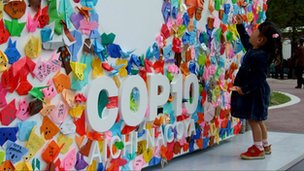
Biodiversity talks end with call for ‚urgent‘ action
www.bbc.co.uk/news/science-environment
For more information visit: www.cbd.int/2011-2020 , www.cbd.int/agro/food-nutrition
People’s Coalition on Food Sovereignty: www.foodsov.org/take-action
The Convention on Biological Diversity (CBD), known informally as the Biodiversity Convention, is an international legally binding treaty. The Convention has three main goals: 1. conservation of biological diversity (or biodiversity);2. sustainable use of its components; and 3. fair and equitable sharing of benefits arising from genetic resources. In other words, its objective is to develop national strategies for the conservation and sustainable use of biological diversity. It is often seen as the key document regarding sustainable development. MORE
The Millennium Development Goals (MDGs) are eight international development goals that all 192 United Nations member states and at least 23 international organizations have agreed to achieve by the year 2015. They include eradicating extreme poverty, reducing child mortality rates, fighting disease epidemics such as AIDS, and developing a global partnership for development. MORE
As the United Nations and the Ministry of Environment of Japan prepare to globally launch the Decade of Biodiversity in Kanazawa, Japan, governments, businesses and ordinary citizens are being asked to do their bit to save our planet’s delicate ecosystem over the next 10 years.
With the COP17 summit in Durban concluding with hopes of a binding agreement on carbon emissions, there is hope that the Decade of Biodiversity can build on this achievement.
Biodiversity is of vital importance to us all as it underpins a wide range of ecosystem services on which we depend. It provides for food security, human health, clean air and water, it contributes to local livelihoods and economic development and is essential in the fight against poverty.
Yet despite its huge importance, the planet’s biodiversity is being lost at an unprecedented rate.
Throughout the United Nations Decade on Biodiversity (2011-202) governments are encouraged to develop, implement and communicate the results of national strategies for implementation of the Strategic Plan for Biodiversity.
However, the initiative will not be without its challenges as governments and business strapped for cash in the current recession deal with a multitude of issues at the same time. So what can realistically be achieved over the next 10 years to prevent the loss of biodiversity? What can governments, business and you, the individual do to help the cause?
The involvement of a wide range of stakeholders, including children and youth, will be key to the success of the Decade. Already the United Nations has recognized the vital importance of our children’s education to the future of the planet. The Secretariat of the Convention on Biological Diversity hosts and coordinates The Green Wave, a project to raise awareness and educate young people – tomorrow’s leaders and citizens – on biodiversity and on actions to preserve life on Earth. Each year, The Green Wave contributes to worldwide celebrations of the International Day for Biological Diversity (IDB).
The Organisation for Industrial, Spiritual and Cultural Advancement (OISCA) has been participating in The Green Wave all over the world since 2009. This year 2011, the International Year of Forests and the starting year of United Nations Decade on Biodiversity, over 14,000 children and adults at 105 OISCA sites in 13 countries have taken part in the campaign.
webTV – Tokyo: In a live and interactive web TV programme from Tokyo, two of the key figures driving the response to the planet’s loss of biodiversity will be answering your questions about the United Nations Decade on Biodiversity. http://www.cbd.int/2011-2020/media/webtv_jp.shtml
Yasuaki Nagaishi, Secretary General of OISCA (Organisation for Industrial, Spiritual and Cultural Advancement) will join with Ahmed Djoghlaf, Executive Secretary of the Convention on Biological Diversity at 20:30 (local time) on Tuesday December 20th to answer your questions.
http://www.350.org/ http://www.facebook.com/350.org
http://en.wikipedia.org/Kyoto Protocol
Previous #articles, #videos:
Japan – Nagoya Biodiversity Agreement
CBD – UN Convention on Biological Diversity
Eradicating Ecocide – Rights for the Planet
http://www.facebook.com/UNBiodiversity
http://www.facebook.com/United Nations Millennium Campaign
http://www.facebook.com/iucn.org

Global Financial Integrity: Illicit Financial Outflows from Developing World
http://www.endtaxhavensecrecy.org http://robinhoodtax.org
http://www.gfintegrity.org/content/view/486/70/
http://www.g20transparency.com/who_suffers.php
A new report from GFI finds that the developing world still lost over $900 billion in illicit financial outflows in 2009 despite the onset of the global financial crisis. The report, which was just published today, estimates the developing world lost US$8.44 trillion over the decade ending in 2009.
Global Financial Integrity’s new report on illicit financial flows leaving the developing expands previous studies using the latest available data through 2009. The report finds that despite the worst financial crisis since the Great Depression, global illicit flows still approached US$1 trillion.
Read the report… http://iffdec2011.gfintegrity.org/
http://www.facebook.com/GlobalFinancialIntegrity
http://www.facebook.com/FinancialTaskForce
http://www.facebook.com/TransparencyInternational
http://www.tackletaxhavens.com
http://www.endtaxhavensecrecy.org/en/take-action/

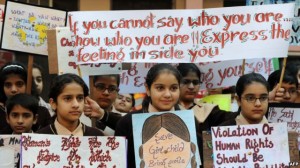
Human Rights Day 2011
http://www.celebratehumanrights.org/
The Week Ahead: December 5-11 – The Week Ahead is a handy listing of key events of the coming week affecting RFE/RL’s broadcast region. Now on Twitter! Daily updates at @The_Week_Ahead.
SATURDAY, December 10: UN: Human Rights Day
This year thousands of people decided the time had come to claim their rights. They took to the streets and demanded change. Many found their voices using the internet and instant messaging to inform, inspire and mobilize supporters to seek their basic human rights.
Social media helped activists organize peaceful protest movements in cities across the globe—in Tunis, in Cairo, in Madrid, in New York, and in cities and towns across the globe—at times in the face of violent repression.
It has been a year like no other for human rights. Human rights activism has never been more topical or more vital. And through the transforming power of social media, ordinary people have become human rights activists.
VIDEO 2011: An extraordinary year for human rights – 2011 has been an extraordinary year for human rights, UN Human Rights Chief, Navi Pillay says in her message to mark Human Rights Day.
Human Rights Day is marked annually on 10 December, it commemorates the adoption of the Universal Declaration of Human Rights by the UN General Assembly in 1948. Videos: The videos found here are available for use on Human Rights Day.
http://www.ohchr.org/EN/NewsEvents/Day2011/Pages/Videos.aspx
Human rights belong equally to each of us and bind us together as a global community with the same ideals and values. As a global community we all share a day in common: Human Rights Day on 10 December, when we remember the creation 63 years ago of the Universal Declaration of Human Rights.
On Human Rights Day 2011 we pay tribute to all human rights defenders and ask you to get involved in the global human rights movement.
The High Commissioner for Human Rights will host a global conversation on human rights through social media on Friday, 9 December at 9:30 A.M., New York time.
We want you to be part of it: join the conversation, send a question, watch it live. More details coming soon.
Join us on Facebook as we countdown to Human Rights Day with a „30 days and 30 rights“ discussion on the Universal Declaration of Human Rights or follow us on Twitter #CelebrateRights.
Help us celebrate human rights!
http://www.ohchr.org/EN/NewsEvents/Day2011/Pages/HRD2011.aspx
International human rights law refers to the body of international law designed to promote and protect human rights at the international, regional and domestic levels. As a form of international law, international human rights law is primarily made up of treaties, agreements between states intended to have binding legal effect between the parties that have agreed to them; and customary international law, rules of law derived from the consistent conduct of states acting out of the belief that the law required them to act that way. HERE
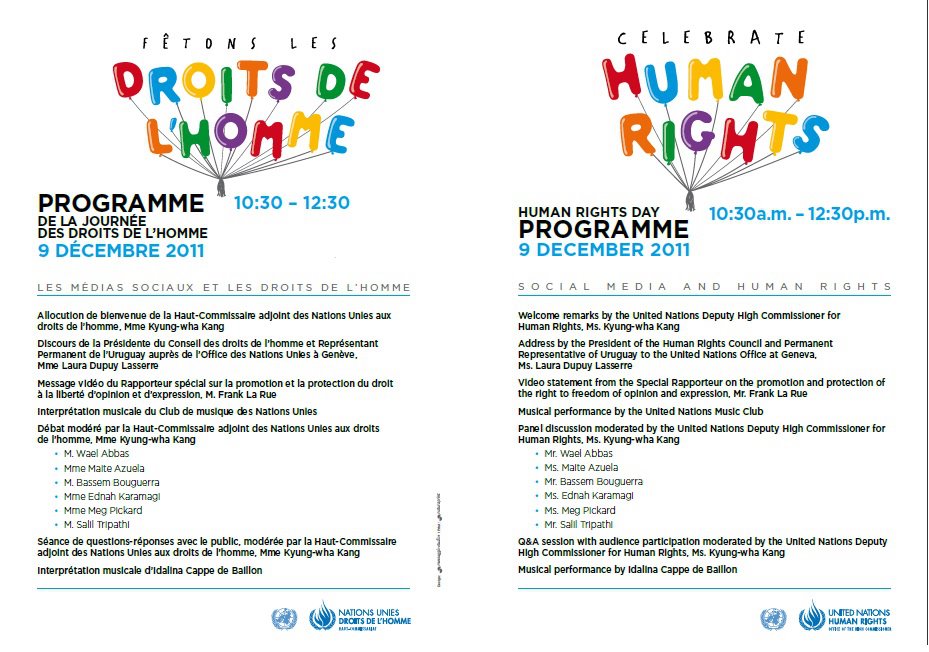
Watch LIVE tomorrow on UN Webcast @ 10:30am Geneva time. http://bit.ly/bjdKsc „Social Media and Human Rights“ Panel participants include acclaimed activists: Wael Abbas, Maite Azuela, Bassem Bouguerra, Ednah Karamagi, Meg Pickard and Salil Tripathi. Read on: http://bit.ly/vaWr6Y
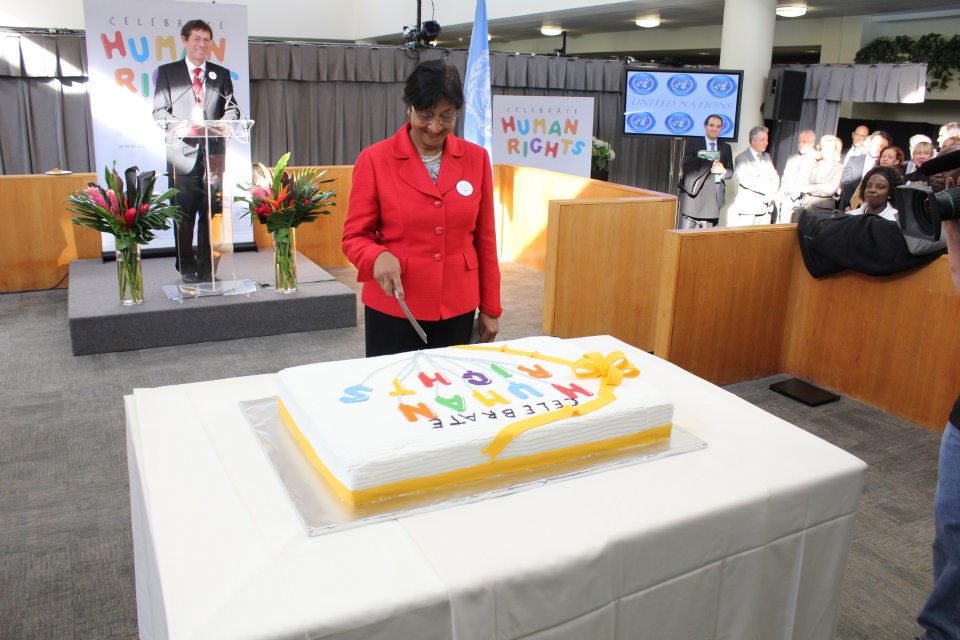
Celebrating the birthday of human rights!
http://www.unmultimedia.org/tv/webcast/2011/12/human-rights-go-viral.html
During the event in New York, UN High Commissioner for human rights answered questions from multiple social media platforms. Through Skype, UN Messenger of Peace and writer Paulo Coelho, asked about the role of culture and art in protecting and promoting human rights. “Art and music,” stressed Pillay “can reach out to a wider audience and carry very powerful human rights messages.”
Happy Human Rights Day! uploaded by UNOHCHR on Dec 10, 2011:
Endless Poverty is a Human Rights Failure, December 7, 2011, By Thomas Pogge – Dr. Pogge is Director of the Global Justice Program and Leitner Professor of Philosophy and International Affairs at Yale University. He serves on Global Financial Integrity’s Advisory Board.
This Human Right Day, let us be mindful of the ways in which our emerging supranational institutional architecture can be reformed to ensure that the poorer half of humanity, too, can achieve at least a proportionate share of global economic growth.
Socioeconomic rights, such as that “to a standard of living adequate for the health and well-being of oneself and one’s family, including food, clothing, housing, and medical care” (UDHR, Article 25), are currently, and by far, the most frequently unfulfilled human rights. Their widespread under fulfillment also plays a major role in explaining global deficits in civil and political human rights demanding democracy, due process, and the rule of law.
Extremely poor people — often physically and mentally stunted due to malnutrition in infancy, illiterate due to lack of schooling, and much preoccupied with their family’s survival — can cause little harm or benefit to the politicians and civil servants who rule them. Such officials therefore pay much less attention to the interests of the poor than to the interests of agents more capable of reciprocation, including foreign governments, companies, and tourists.
Read on Global Financial Integrity’s Blog:
http://www.financialtaskforce.org/endless-poverty-is-a-human-rights-failure
http://www.amnesty.org/en/economic-social-and-cultural-rights
http://degrowthpedia.org/index.php
http://www.facebook.com/FinancialTaskForce
http://www.facebook.com/United Nations Millennium Campaign
#video What is your wish? #CelebrateRights
http://twitter.com/unrightswire
http://www.youtube.com/user/UNOHCHR
http://www.facebook.com/unitednationshumanrights
http://www2.ohchr.org/english/issues/environment/environ/index.htm

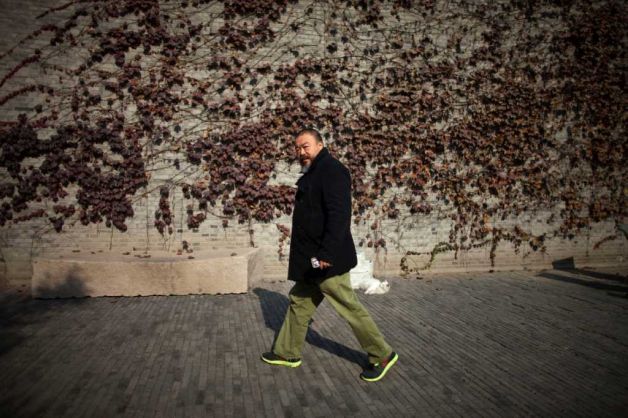
Ai Weiwei – An Artist’s Stand
Interview: http://artistsspeakout.com
www.aiweiwei.com/ wikipedia.org/Ai_Weiwei
www.financialtaskforce.org/about/overview
#video www.makeaidtransparent.org www.aidtransparency.net
The Task Force on Financial Integrity and Economic Development, a consortium of governments and research and advocacy organizations , focuses on achieving greater transparency in the global financial system for the benefit of developing countries.
The Task Force on Financial Integrity and Economic Development will address the inequalities in the global financial system that penalize billions of people, and will advocate for greatly improved transparency and accountability. The opacity and complexity of our financial system is at the heart of the current financial crisis, and significantly impedes development.
Task Force efforts are integral to those of The Leading Group on innovative financing, comprised of more than 50 countries, to mobilize stable and predictable resources to supplement traditional development assistance.
In November of this year, more than 30,000 people, most of them from China, donated about $1.4 million to one man. The donations flowed in all shapes and sizes—wrapped around fruit and thrown into his lawn, folded into paper airplanes, and one even wired in from the German government’s human rights commissioner. The man wasn’t a spiritual leader. He wasn’t ill and he wasn’t going to donate any of it to charity. In fact, he deposited nearly the entire sum into a government account—as a guarantee on his tax evasion charges. The man—not a leader or a humanitarian—is an artist.
His name is Ai Weiwei and the Chinese government claims his design firm, Beijing Fake Cultural Development Ltd, owes it nearly $2.4 million in back taxes and fines. Ai has responded he doesn’t even own the company.
It is likely Ai Weiwei’s true crime is not tax evasion, but dissent. Ai’s art, most of it exhibited abroad, is called “social sculpture” by most of those in the West, but labeled “political protest” at home. For much of his art he uses Twitter and a blog as a platform to reach and interact. His installations include a piece in Germany made of 9,000 children’s backpacks, in memory of the students who died in the poorly built schools in Sichuan that collapsed during the earthquake in 2008.
There is a deeper problem underneath, though. The truth is China doesn’t have the luxury to be wasting time on trumped up tax evasion cases when there are so many real cases to deal with.
Global Financial Integrity has been warning about illicit financial flows (IFFs) out of China for years. These outflows have ranged from an annual US$169 billion in 2000 to US$344 billion in 2008. With numbers like these China is, by far, the largest transmitter of illicit financial flows in the developing world. And despite its giant domestic economy, these numbers are still unbelievably large when put in scale. For a point of comparison, the PRC’s stock of total external debt in 2008 was $378 billion, just slightly greater than its total illicit outflows in that year alone. In the same year China’s net inflows of foreign direct investment were US$147 billion, less than half of its total illicit outflows (note: I’m comparing a net figure to a gross one, there).
Corruption also costs China’s economy a pretty penny. A report from China’s own central bank estimates that “up to 18,000 corrupt officials and employees of state-owned enterprises” have absconded with 800 billion yuan, or $123 billion, of state money since the 1990s. In a recent speech given to celebrate China’s Communist Party’s nineteenth anniversary, President Hu Jintao specifically addressed the importance of “rampant corruption” and the impetus to create a “clean government.” And Minxin Pei, a former scholar for the Carnegie Endowment for Peace, estimates that China’s government loses as much as 10% of government spending in kickbacks and corruption, calling it “one of the most serious threats to the nation’s future economic and political stability.”
Taxes are the most efficient and sustainable means of supporting vital public services like education, healthcare, a legal framework, police force, public transport networks, welfare and much, much more.
Transparency International – Check out our new animated video on the Corruption Perceptions Index!
http://www.transparency.org/ – Check out our stylish print report on the Corruption Perceptions Index 2011 with world map and innovative infographics! Corruption Perceptions Index 2011 > issuu.com
www.tackletaxhavens.com is a global campaign designed to raise public awareness of tax havens: what they are, the damage they do and how we can tackle them together.
Taxes are the most efficient and sustainable means of supporting vital public services like education, healthcare, a legal framework, police force, public transport networks, welfare and much, much more.
But the wealthy can escape their responsibilities to the societies on which they and their wealth depend – by hiding their money in tax havens.
China’s financial woes are not confined to the black market. In fact, we are now seeing a so-called “rich drain,” which means that high net worth Chinese individuals are not only sending their money overseas, they’re looking to emigrate, as well. According to a recently published study by China Merchants Bank, The 2011 Private Wealth Report , at least 60% of Chinese citizens with at least 10 million yuan (US$1.53 million) are either “considering emigration through investment overseas or are already finalizing the process.” In fact, there has already been a 73% increase in Chinese investment immigrants to the United States in the last five years.
This problem is big and it’s deep. And it isn’t going away. The Chinese government needs all the tools at its disposal to deal with this problem—and public trust is one of them. The Chinese people need to trust that the system is fair or they will go on cheating their taxes and sending their money abroad. And to gain that trust, the government must put in place a system that is indeed fair . It can start by going after the real tax evaders and leaving the dissidents alone.
By Ann Hollingshead, financialtaskforce.org/an-artists-stand/
Ann Hollingshead is a Task Force blog contributor, whose posts appear on Wednesdays and Fridays. Formerly a Junior Economist at Global Financial Integrity, Ann is now a Research Analyst for ECONorthwest, an economic consulting firm in the Pacific Northwest. Follow her on Twitter: @AnnHollingshead.
http://twitter.com/awwneversorry
http://www.facebook.com/awwneversorry
http://www.facebook.com/FinancialTaskForce
http://www.facebook.com/TransparencyInternational
http://www.facebook.com/artistsspeakout
Climate Change Is A Trade Issue, Too – Forbes
2011 Report on Revenue Transparency of Oil and Gas Companies
#video GLOBAL CORRUPTION TRANSPARENCY REPORT CLIMATE CHANGE
http://artistsspeakout.com/get-involved/dont-retreat-retweet
http://www.financialtaskforce.org/2011/10/31/the-legal-basis-to-reject-odious-debt
note: The resource curse (Paradox of Plenty) refers to the paradox that countries and regions with an abundance of natural resources, specifically point-source non-renewable resources like minerals and fuels, tend to have less economic growth and worse development outcomes than countries with fewer natural resources. /wiki/Resource_curse //
http://www.odiousdebts.org/odiousdebts/index.cfm In international law, odious debt is a legal theory that holds that the national debt ( Little currency for global money? source IMF WB) incurred by a regime for purposes that do not serve the best interests of the nation, should not be enforceable./wiki/Odious_debt ( sources: www.stwr.org/ STWR has consultant status with the UN economic and social council ECOSOC @STWR_ London, UK on twitter )

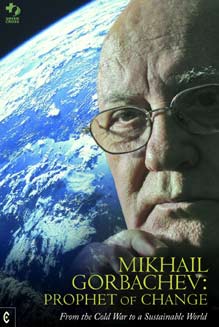
Mikhail Gorbachev: Prophet of Change
http://www.gcint.org http://www.gci.ch
http://www.climatechangetaskforce.org
To respond to combined challenges of security, poverty and environmental degradation to ensure a sustainable and secure future.
In recognition of President Gorbachev’s 80th birthday, the founding President of Green Cross and his lifelong commitment to sustainability, GCI has published a book honouring the former President of the Soviet Union, Mikhail Gorbachev: Prophet of Change.
The publication traces the evolution of Gorbachev’s vision, in particular the origins and outcomes of his environmental agenda, which belong to the important legacy of changes Gorbachev initiated in the Soviet Union and the world.
This anthology, features select speeches and writings by President Gorbachev, as well as tributes from political contemporaries and partners in the environmental and peace movements. The tributes from colleagues and friends – ranging from political heavyweights President George Bush Sr. and Margaret Thatcher to renowned champions of sustainability Maurice Strong and Achim Steiner – reflect the esteem in which Mikhail Gorbachev is held, and the special place he occupies in the history of our times.
Mikhail Gorbachev: Prophet of Change is published by Clairview Books and is avaliable now. For ordering information please visit Amazon or Clairview Books.
„Governments are still not doing enough to protect the environment, countries should adhere to environmental principles to avoid irreparable damage to the planet – it’s five minutes to midnight.“
– Mikhail Gorbachev, Founding President and Member of the Board, Green Cross International
The Future We Want Campaign has been embraced by the United Nations to help promote next June’s “Rio+20” United Nations Conference on Sustainable Development.
A co-founder of the Future We Want campaign is Bill Becker, climate policy expert and member of the Climate Change Task Force.
Green Cross is a supporter of the “Rio+20: The Future We Want” campaign, that will work through public participation to envision how societies in all parts of the world can build a future that promotes prosperity and improves the quality of people’s lives without further degrading the natural environment.
“We need to imagine a different future,” United Nations Secretary-General Ban Ki-moon said. “What would our world look like if everyone had access to the food they need, to an education, and to the energy that is required to develop? What would our communities look like if we created a vibrant, job-rich, green economy? This is the future we want.”
The campaign aims to encourage people everywhere to engage in a global conversation that will be collected and melded into visions of the future, to be exhibited at the Conference in June 2012. Rio+20 will bring together world leaders and thousands of participants representing all sectors of society, including academia, agriculture, business and industry, indigenous peoples, mayors and local authorities, non-governmental organizations, trade unions, women and youth.
Related materials:
UN Conference on Sustainable Development 2012
Future We Want on Facebook and Twitter
Contacts:
Paul Garwood
Director of Communications
Green Cross International
Email: paul.garwood@gci.ch
Mob: +41797760454
Off: +41227891662
Skype: paul.garwood
Website: www.gcint.org
Follow Green Cross International on Facebook, Twitter, Flickr and YouTube
http://www.barentsobserver.com/nature.html
http://www.facebook.com/greencrossint
http://www.facebook.com/road2rio20
http://www.facebook.com/The Climate Change Task Force
https://www.facebook.com/FutureWeWant
http://www.facebook.com/GreenpeaceRussia
http://www.facebook.com/TheVoiceofRussia
http://www.facebook.com/Institute of Modern Russia
http://www.facebook.com/russianow
http://www.facebook.com/Demotivacija.mk
http://www.rferl.org/section/Russia Radio Free Europe
http://www.eurasianet.org Russia by Regions
http://www.euronews.net/nocomment TV without any opinion
http://www.facebook.com/rethinkafghanistan
http://www.facebook.com/India Against Corruption
Green Cross International
Check new 1 minute Green Cross video interview from COP17 in Durban with Mubarick Masawudu, president of Green Cross Ghana, discussing the links between climate change and humanity. http://bit.ly/ru5Wnh
Science on the road to Rio+20 & Innovation Policy: Read our news and analysis about the role of science at next June’s sustainable development meeting. Science at Rio+20 – The Rio+20 UN Conference in June 2012 provides a chance to reflect on science’s contribution to sustainable development since the first Earth Summit 20 years ago, and on how it can contribute most effectively in the future. http://www.scidev.net/en/science and innovation policy/science at rio 20
The coming famine: risks and solutions for global food security – sciencealert – Global funding for agricultural research, public and private, is estimated to total around $40 billion. There is a stark contrast with the $1500 billion the world now spends on weapons. @ComingFamine, twitter Headline issues on the global food crisis and how to avoid it. If you eat or know someone who does, this concerns you… http://paper.li/ComingFamine
News and Issues for Sustainable Development:
Gazprom to boost gas to India from 2016-18 – source Reuters
Afghanistan: Will TAPI Pipeline Be Able to Beat Back the Taliban? – eurasia.net
Missile Defense Dispute: Russia Threatens to Block NATO Supply Route – Antiwar.com

NATIONAL CONFERENCE ON „SUFISM“
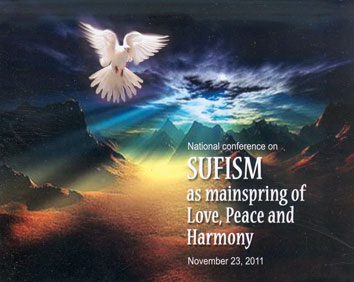
Conference on Sufism „as mainspring of Love, Peace and Harmony“
Opening Date: Wednesday, 23 November 2011
Closing Date: –
Additional Information : at 3.00 p.m at Lok Virsa Islamabad
The Gilgit Agency was a political unit of British India, which administered the northern half of the Princely state of Jammu and Kashmir. The Gilgit Agency was created in 1877 and was overseen by a political agent of the Governor-General of British India. The seat of the agent was Srinagar. In 1935, the Gilgit Agency leased the territory comprising the agency from the Maharaja of Jammu and Kashmir, Hari Singh, for a period of sixty years. This lease and the Gilgit Agency ceased to exist when Pakistan and India became independent countries in 1947. HERE
LOK VIRSA – AN INTRODUCTION :
Lok Virsa (The National Institute of Folk & Traditional Heritage) works towards creating an awareness of cultural legacy by collecting, documenting, disseminating and projecting folk & traditional heritage. Surveys and documentation of traditional culture is central to the objectives of the institute. The Lok Virsa delve into and surveys are conducting by mobile recording and filming units. Dedicated individuals undergo the rigorous field work, to bring back valuable results to the central archives and production facilities housed at the Lok Virsa complex at Garden Avenue Shakarparian Hills Islamabad.
Lok Virsa is an affiliate member of UNESCO, The World Craft Council, International Council of Music, The Asian Cultural Centre for UNESCO, The International Council of Museums and similar other world organizations for the dissemination of art products abroad.
http://www.rferl.org/section/Pakistan
http://www.facebook.com/Gilgit Baltistan
http://www.facebook.com/kashmirsufismsociety
http://www.facebook.com/pakistanyouthforumpage
http://hunzalandslide.blogspot.com/
http://www.facebook.com/Indian Youth Climate Network(IYCN)
http://de.wikipedia.org/Hunza Burusho people, Hunza-Mythos
http://en.wikipedia.org/Former State of Hunza (princely state)
http://www.facebook.com/International Organization of Folk Art (IOV)
https://www.facebook.com/unesco Educational, Scientific and Cultural Organization (UNESCO)
Zamana is a public interest space for learning, reflection, and action on Pakistan.
Explore: Whose Land? Whose Food?
In its first issue, Zamana delves into the thorny subject of land and food rights in Pakistan. The focus is prompted by recent news reports that amidst rising hunger and food crises, the Government of Pakistan plans to give away thousands of acres of farmland to Saudi Arabia and other foreign investors. Zamana invites more commentaries on this issue. Please send your perspective to info @ zamana.org. Further Infos: http://farmlandgrab.org/
Act: Our Land, Our Food, Pakistan is not for Sale
Sign the petition to raise your voice against land leasing to foreign clients.
UPDATE 23.11.2011 Final Declaration: Stop Land-Grabbing Now!
The Oakland Institute http://www.oaklandinstitute.org
More than a hundred civil society organizations have submitted a document entitled „Time to Act – Agriculture and Food Security and Rio+20“ as input to the UN Conference on Sustainable Development (the Rio+20 conference). The submission outlines the key actions that are needed to achieve viable food systems based on agroecological and other forms of sustainable production.
http://www.facebook.com/oak.institute
http://www.ourworldisnotforsale.org/members
http://www.facebook.com/road2rio20
A global youth mobilization towards the UN Conference on Sustainable Development (Rio+20).
http://www.timetoactrio20.org/ 20 years after the Rio Earth Summit, the planet is in a deeper environmental, energy and financial crisis.The United Nations Conference on Sustainable Development (UNCSD) in Rio de Janeiro in 2012 might be just another high-level conference stating the need to eradicate hunger and poverty, stop climate change, the loss of biodiversity, soil erosion and other serious environmental problems – and then, after the conference, life goes on as before. But it can be different. It has a historical opportunity to make important decisions and agree on actions that actually do eradicate hunger and poverty, and save the environment. It’s time to act!
Many civil society organizations have signed on to a document with proposals on issues linked to food and agriculture for the Rio2012-conference. Download the document (PDF) HERE. Download the document in Word format (doc) HERE.
If you have comments and suggestions for changes in this document, and if your organization wants to support the document, please send a mail to rio2012agcso@gmail.com
The document is available in English, Spanish, French and German
UPDATE 24.11.2011 @guardian – Africa’s great ‚water grab‘ Foreign investors aren’t just after land in Africa. Access to water is essential – which can bring them into direct competition with the needs of local communities.
This article is about a right to water as a human right under international law. For a discussion of water usage laws in common law, see Water right. http://en.wikipedia.org/wiki/Right_to_water
WORLD CONFERENCE ON HUMAN RIGHTS
Vienna, 14-25 June 1993
VIENNA DECLARATION AND PROGRAMME OF ACTION
Note by the secretariat
Attached is the text of the Vienna Declaration and Programme of Action, as adopted by the World Conference on Human Rights on 25 June 1993.
1. The World Conference on Human Rights reaffirms the solemn commitment of all States to fulfil their obligations to promote universal respect for, and observance and protection of, all human rights and fundamental freedoms for all in accordance with the Charter of the United Nations, other instruments relating to human rights, and international law. The universal nature of these rights and freedoms is beyond question.
… Emphasizing that the Universal Declaration of Human Rights, which constitutes a common standard of achievement for all peoples and all nations, is the source of inspiration and has been the basis for the United Nations in making advances in standard setting as contained in the existing international human rights instruments, in particular the International Covenant on Civil and Political Rights and the International Covenant on Economic, Social and Cultural Rights…
http://www.unhchr.ch/huridocda/huridoca.nsf/%28symbol%29/a.conf.157.23.en
http://www.amnesty.org/en/economic-social-and-cultural-rights #video

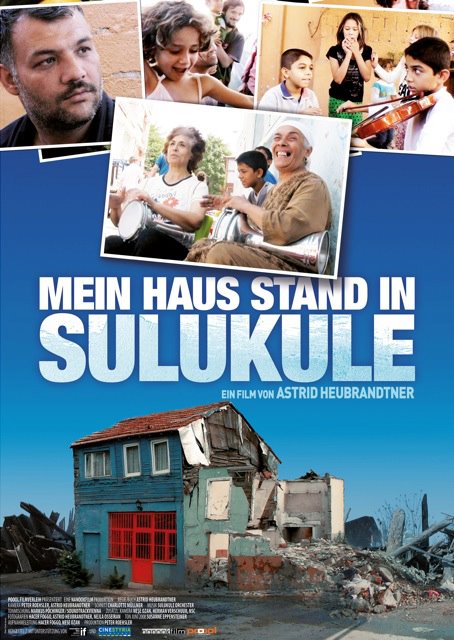
Viennale – My house stood in Sulukule
http://www.errc.org/ The European Roma Rights Centre (ERRC)
The Romani, who are known collectively in the Romani language as Romane or Rromane (depending on the dialect concerned) and also as Romany, Romanies, Romanis, Roma or Roms, are an ethnic group living mostly in Europe, who trace their origins to the Indian Subcontinent. Romani are also widely known in the English-speaking world by the exonym Gypsies.
Romani are widely dispersed, with their largest concentrated populations in Europe, especially the Roma of Central and Eastern Europe and Anatolia, followed by the Kale of Iberia and Southern France. HERE
The Romani people, also referred to as the Roma or Gypsies, are an ethnic group who live primarily in Europe. They are believed to have originated in the northern part of the Indian subcontinent. They began their migration to Europe and North Africa via the Iranian plateau about 1,000 years ago. HERE
Origin of Roma – At the end of the eighteenth century, linguistic comparisons of Romani with Indic Indo-European languages proved the Indian origin of the Roma. When the Roma left India, they did not write chronicles of their history nor did they have „bards“ …What language were the Malabar students speaking? The land of Malabar lies in what today is the southwest coastal Indian state of Kerala. There they speak Malayalam, a Dravidian language which has nothing in common with Indo-European languages (Hindi, Bengali, Punjabi, Marathi, Gujarati – Romani! – and others). http://romani.uni-graz.at/rombase.xml
Land acquisition for luxury apartment development forces a 600 year old gypsy quarter in Istanbul to be faced with eviction.
Mein Haus stand in Sulukule / My house stood in Sulukule ab 25. 11. in Graz, Rechbauerkino, ab 9.12. in Wien, Filmhauskino, ab 16. 12. in Linz Moviemento. Dokumentarfilm /Documentary Directed by Astrid Heubrandtner Produced by Peter Roehsler
Sulukule, a run-down district in Istanbul, is the oldest Roma settlement in the world. Until the 1990ies the Roma made a living through music and dance. Sulukule was the home of nearly 40 entertainment houses which were popular with Turks and tourists until the clubs were closed down in the 1990ies.
2005 an urban renewal project started: The municipality wanted to buy all the buildings and replace them with luxury villas, transforming the neighbourhood.
Because the local inhabitants can never afford to live in these new houses, they shall be evicted. The local government are offering residents credit to buy the new houses or apartments to rent in Tasoluk, at a distance of 40km / two and a half hours by car. In Tasoluk there are no jobs for the Roma and they are not welcome there. Under this circumstances the Roma population risk losing their social network. In addition their culture which has grown over centuries will disappear.
The film depicts Sulukule as an example for the numerous urban renewal and gentrification projects world-wide and their social consequences. The needs of the individual are disrespected. The needs of the local community are ignored.
The greedy search of the powerful capitalists for more and more profits predominates.
http://ec.europa.eu/justice/discrimination/roma/index_en.htm
http://www.sinti-roma.at/ http://www.verein-roma.at/
http://indiatribes.wordpress.com/
BBC On the road: Centuries of Roma history
http://www.rajasthan-tour-package.com/rajasthan
Past Article: Traditional Food, Medicine & Biodiversity
The Vavilov Institute in Russia is the oldest seed bank in the world with a collection of over 325,000 samples of seed. Video from The Vavilov Institute from The Seed Hunter on National Geographic Channel http://natgeotv.com
#video The Institute of Plant Industry http://www.vir.nw.ru/ was established in 1921. Nikolai Vavilov was the head of this institute from 1924 to 1936 and had, and still has, the world’s largest collection of plant seeds. During the early 1930s, he became the target of the Lysenkoist debate and was exiled. In 2010 the plant collection at the Pavlovsk Experimental Station was to be destroyed to make way for luxury housing.HERE
http://de-de.facebook.com/Viennale/International Filmfestival
http://www.facebook.com/Mein-Haus-stand-in-Sulukule-My-house-stood-in-Sulukule
http://www.hrw.org/en/europecentral-asia/turkey
http://en.wikipedia.org/wiki/Freedom of speech Turkey
http://www.facebook.com/UNBiodiversity Decade on Biodiversity
http://www.facebook.com/Educational, Scientific and Cultural Organization (UNESCO)

Fórum Social Sul da Ásia, 18 e 22 de novembro, Bangladesh

Shared coverage of the World Social Forum, Senegal, 2011
Fórum Social Sul da Ásia, 18 e 22 de novembro, Bangladesh
http://www.forumsocialmundial.org.br/
www.sourcewatch.org/World_Social_Forum
The World Social Forum: Another World Is Possible!

19 November – Photos of The Inauguration Of The South Asia Social Forum 2011
http://www.ciranda.net/fsm-dacar-2011/south-asia-social-forum
In line with the spirit of World Social Forum process from Brazil since 2001, there were several events in Bangladesh, India, Nepal and Pakistan organized by the activists opposing imperialist globalization. For instance, in India the Asian Social Forum in Hyderabad in January 2003, World Social Forum in Mumbai in January 2004 and Indian Social Forum in Delhi in November 2006, where activists from other countries have participated in numbers. The idea of holding first South Asia Social Forum in Nepal was discussed during Bali Climate Summit in 2007. Eventually, the WSF IC expansion meeting in Casablanca held in March, 2010 endorsed the proposal to organize South Asia Social Forum in Dhaka, Bangladesh. The January 2011, SASF preparatory meeting in Dhaka finally decided to organize the forum during November 18-22, 2011.
In line with the WSF, South Asian Social Forum is also characterized by plurality and diversity, is non-confessional, non-governmental and non-party. It proposes to facilitate decentralized coordination and networking among organizations engaged in concrete action towards building another South Asia, but it does not intend to be a body representing South Asian civil society.
The ultimate goal of the forum is to create a New South Asia free from poverty and hunger caused by exploitation, deprivation, discrimination and oppression, and establish a common humanity based on equality, freedom and justice. The present context of South Asia is characterized by the crises manifested in the form of militarism, communal and ethnic conflicts, exclusion and ecological disasters caused by corporate domination and neo-liberal atrocities. Thus the role of the SASF is perceived as to counter the unjust and hegemonic neo-liberal development policies by mobilizing the South Asian social movements into a common platform against hegemonic globalization, political and social conflicts and to create an open space to exchange ideas of each other and build strategies for action.
Here is our contact info:
South Asia Social Forum Bangladesh Secretariat
Address:
3/5 (Ground Floor), Block-G, Lalmatia Dhaka 1207 Bangladesh
E-mail: info@wsfsouthasiabd.org
Telephone: +880-2-9145673
Fax: +880-2-9145673
Mobile Phone Number: +880-1711806054

Int. Peasant Conference : Stop the land grab
Threat to Food Security http://allafrica.com/environment/
http://farmlandgrab.org/ http://www.business-humanrights.org/
UPDATE 19.11.2011 Center for Media and Democracy
http://www.facebook.com/CenterforMediaandDemocracy
https://www.facebook.com/FoodRightsNetwork
Join the Food Rights Network in adding what you know about the „Secret Farm Bill“ to the SourceWatch article. http://sourcewatch.org/Secret Farm Bill
Blogger, Attorney http://www.FarmPolicy.com
Contacts International Peasant Conference:
CNOP/VIA CAMPESINA Kalabancoura rue 200 porte 727 BP E 2169 Bamako/Mali
Chantal Jacovetti: chantal.jacovetti@wanadoo.fr Phone : 00223.76.81.87.93/64.86.89.26
Lamine Coulibaly: laminezie@gmail.com Phone: Tel: +223 76 17 09 79/ 66 83 63 14
Via Campesina (from Spanish la vía campesina, the campesino way, or the Peasants‘ Way) describes itself as „an international movement which coordinates peasant organizations of small and middle-scale producers, agricultural workers, rural women, and indigenous communities from Asia, Africa, America, and Europe“. It is a coalition of over 148 organizations, advocating family-farm-based sustainable agriculture and was the group that first coined the term „food sovereignty“. Food sovereignty refers to the right to produce food on one’s own territory. Via Campesina has carried out a Global Campaign for Agrarian Reform since 1999, in opposition to market-led agrarian reform. MORE
Food security hostage to trade in WTO negotiations: UN right to food expert
[16 November 2011] Geneva – „The world is in the midst of a food crisis which requires a rapid policy response. But the World Trade Organisation (WTO) agenda has failed to adapt, and developing countries are rightly concerned that their hands will be tied by trade rules.” http://www.srfood.org/index.php
Press invitation 17-19 November, Mali (Bamako, 28 October 2011) The farmers of the National Coordination of Farming Organizations (CNOP) in Mali and the international farmers’ movement Via Campesina hereby invite the press to cover the first international farmers’ conference whose objective is tostrengthen the fight against the land grabs which are rife in Africa and other parts of the world.
The conference will be held in Sélingué from 17 to 19 November 2011, and will bring together almost 200 farmers affected by land grabs as well as numerous other participants, including researchers, political figures, and NGOs resisting the unprecedented land-grab offensive by large businesses and hedge funds, among others, that compromises the ability of people to feed themselves.
Affected populations from all over the world will have the opportunity to make their voices heard, and strategies will be developed to end the seizure of farmland at the expense of the rural family farming that feeds 80% of the African population.
The conference will conclude on 20 November with a visit by a delegation to the Office du Niger’s land in Kolongo, a year after the first farmers’ meeting about this matter. There, journalists will be able to speak to farmers engaged in the resistance, local authorities, and experts on land issues.
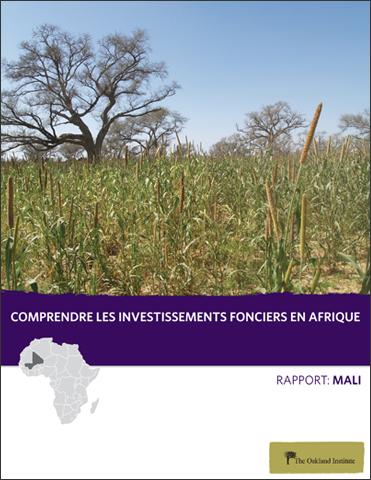
The Oakland Institute As farmer groups and civil society organizations from around the world gather at the International Conference on Land Grabs [DRAFT PROGRAMME http://viacampesina.org/en/index.php] from November 17-20 2011 in Nyeleni, Mali, The Oakland Institute and the National Farmers Organisation Coordination (CNOP) of Mali are releasing a new report on land grabs in the west African country.
Comprendre les Investissements Fonciers en Afrique: Rapport Mali [http://www.oaklandinstitute.org/comprendre-les-investissements-fonciers-en-afrique-rapport-mali] is an updated, French version of the Oakland Institute’s Understanding Land Investment in Africa: Mali report that was published earlier this year.
This comprehensive report analyses the current trend of agricultural land investments in Mali, revealing that by the end of 2010 at least 544,567 hectares of fertile land have been leased or were under negotiation for lease in Mali. Despite the limited availability of arable land in Mali and dramatic hunger figures, more than 40% of deals will devote land to agrofuel crops-which are unlikely to benefit those suffering from hunger in Mali. These land acquisitions involve violent and flagrant abuses of human rights and the report documents attacks on smallholder populations in the irrigated agricultural zones of the Office du Niger. Most of the large-scale land acquisitions are concentrated in state-owned lands within the large, riverine delta of the Office du Niger, where informal customary rights of the local people are not protected by law, and are not recognized by public officials.
Olivier De Schutter — UN Special Rapporteur on the Right to Food — recently released a report extolling the benefits of ecological agriculture. In this short radio interview, he explains how today’s scientific evidence demonstrates that agro-ecological farming methods outperform the use of chemical fertilizers in boosting food production where the hungry live — especially in unfavorable environments.
While the government of Mali justifies the massive leasing of lands with the need to „modernize“ Malian agriculture, plans for large-scale irrigated agriculture pose great risks to the survival of populations dependent on the water flows of the Niger River in Mali as well as in the rest of West Africa, where over 100 million people depend on the river for their livelihoods.
America, it’s your responsibility to decide who will emerge victorious from this battle of the bulge. Let’s meet the contestants — the American consumer, the independent farmer and the corporate fat cat. Watch Food & Water Watch’s The Biggest Farm Bill Loser and go to http://www.foodandwaterwatch.org to demand a Fair Farm Bill!
Download the report: In French: http://www.oaklandinstitute.org/comprendre-les-investissements-fonciers-en-afrique-rapport-mali In English: http://oaklandinstitute.org/understanding-land-investment-deals-africa-mali
Latest Articles – #farmlandgrab
World Social Forum Dakar – Sign the Dakar appeal against land grabbing!! #video
Gegenrede: Offener Brief von Jean Ziegler #video
Eradicating Ecocide – Rights for the Planet #video
Climate Change, Food Sovereignty & Security #video
Africa – Green Agriculture & Climate Change #video
Sustainability and Equity: A Better Future for All
Kate Holt/IRIN
The 2011 Human Development Report, Sustainability and Equity: a Better Future for All, says bold steps must be taken to reduce environmental risks and inequalities in Africa. http://allafrica.com/environment/
According to the 2011 Human Development Report, released by the United Nations Development Programme, Africa’s progress in human development over the next four decades could outpace any other region of the world, but environmental challenges could threaten the continent’s advancement, possibly reversing it.
UPDATE 19.11.2011 Final Declaration: Stop Land-Grabbing Now!
by The Oakland Institute – Nyeleni, November 19, 2011
We, women and men peasants, pastoralists, indigenous peoples and their allies, who gathered together in Nyeleni from 17-19 November 2011, are determined to defend food sovereignty, the commons and the rights of small scale food providers to natural resources. We supported the Kolongo Appeal from peasant organizations in Mali, who have taken the lead in organising local resistance to the take-over of peasants‘ lands in Africa. We came to Nyeleni in response to the Dakar Appeal, which calls for a global alliance against land-grabbing.
In the past three days, peasants, pastoralists and indigenous peoples have come together from across the world for the first time to share with each other their experiences and struggles against land-grabbing. In Mali, the Government has committed to give away 800 thousand hectares of land to business investors. These are lands of communities that have belonged to them for generations, even centuries, while the Malian State has only existed since the 1960-s. This situation is mirrored in many other countries where customary rights are not recognised. Taking away the lands of communities is a violation of both their customary and historical rights.
Secure access to and control over land and natural resources are inextricably linked to the enjoyment of the rights enshrined in the Universal Declaration of Human Rights and several regional and international human rights conventions, such as the rights to an adequate standard of living, housing, food, health, culture, property and participation. We note with grave concern that states are not meeting their obligations in this regard and putting the interests of business interests above the rights of peoples.
Land-grabbing is a global phenomenon led by local, national and transnational elites and investors, and governments with the aim of controlling the world’s most precious resources. The global financial, food and climate crises have triggered a rush among investors and wealthy governments to acquire and capture land and natural resources, since these are the only “safe havens” left that guarantee secure financial returns. Pension and other investment funds have become powerful actors in land-grabbing, while wars continue to be waged to seize control over natural wealth. The World Bank and regional development banks are facilitating land grabs by promoting corporate-friendly policies and laws, facilitating capital and guarantees for corporate investors, and fostering an extractive, destructive economic development model. The World Bank, IFAD, FAO and UNCTAD have proposed seven principles that legitimise farmland grabbing by corporate and state investors. Led by some of the world’s largest transnational corporations, the Alliance for a Green Revolution in Africa (AGRA) aims to transform smallhold agriculture into industrial agriculture and integrate smallhold farmers to global value chains, greatly increasing their vulnerability to land-loss.
Land-grabbing goes beyond traditional North-South imperialist structures; transnational corporations can be based in the United States, Europe, Chile, Mexico, Brazil, Russia, India, China, South Africa, Thailand, Malaysia and South Korea, among others. It is also a crisis in both rural and urban areas. Land is being grabbed in Asia, Africa, the Americas and Europe for industrial agriculture, mining, infrastructure projects, dams, tourism, conservation parks, industry, urban expansion and military purposes. Indigenous peoples and ethnic minorities are being expelled from their territories by armed forces, increasing their vulnerability and in some cases even leading to slavery. Market based, false solutions to climate change are creating more ways to alienate local communities from their lands and natural resources.
Despite the fact that women produce most of the world’s food, and are responsible for family and community well being, existing patriarchal structures continue to dispossess women from the lands that they cultivate and their rights to resources. Since most peasant women do not have secure, legally recognised land rights, they are particularly vulnerable to evictions.
The fight against land-grabbing is a fight against capitalism, neoliberalism and a destructive economic model. Through testimonies from our sisters and brothers in Burkina Faso, Columbia, Guatemala, Democratic Republic of Congo, France, Ghana, Guinea Bissau, Honduras, India, Indonesia, Mali, Mauritania, Mozambique, Nepal, Niger, Senegal, South Africa, Thailand and Uganda, we learned how land-grabbing threatens small scale, family based farming, nature, the environment and food sovereignty. Land grabbing displaces and dislocates communities, destroys local economies and the social-cultural fabric, and jeopardizes the identities of communities, be they farmers, pastoralists, fisherfolk, workers, dalits or indigenous peoples. Those who stand up for their rights are beaten, jailed and killed. There is no way to mitigate the impacts of this economic model and the power structures that promote it. Our lands are not for sale or lease.
But we are not defeated. Through organisation, mobilisation and community cohesiveness, we have been able to stop land-grabbing in many places. Furthermore, our societies are recognising that small-scale, family based agriculture and food production is the most socially, economically and environmentally sustainable model of using resources.
Recalling the Dakar Appeal, we reiterate our commitment to resist land-grabbing by all means possible, to support all those who fight land-grabs, and to put pressure on national governments and international institutions to fulfill their obligations to defend and uphold the rights of peoples. Specifically, we commit to:
- Organise rural and urban communities against land-grabs in every form.
- Strengthen the capacities of our communities and movements to reclaim and defend our rights, lands and resources.
- Win and secure the rights of women in our communities to land and natural resources.
- Create public awareness about how land grabbing is creating crises for all society.
- Build alliances across different sectors, constituencies, regions, and mobilise our societies to stop land-grabbing
- Strengthen our movements to achieve and promote food sovereignty and genuine agrarian reform
In order to meet the above commitments, we will develop the following actions:
- Report back to our communities the deliberations and commitments of this Conference.
- Institutionalise April 17 as the day of global mobilisation against land-grabbing; also identify additional appropriate dates that can be used for such mobilisations to defend land and the commons.
- Develop our political arguments to expose and discredit the economic model that spurs land-grabbing, and the various actors and initiatives that promote and legitimise it.
- Build our own databases about land-grabbing by documenting cases, and gathering the needed information and evidence about processes, actors, impacts, etc.
- Ensure that communities have the information they need about laws, rights, companies, contracts, etc., so that they can resist more effectively the business investors and governments who try to take their lands and natural resources.
- Set up early warning systems to alert communities to risks and threats.
- Establish a Peoples‘ Observatory on land-grabbing to facilitate and centralise data gathering, communications, planning actions, advocacy, research and analysis, etc.
- Strengthen our communities through political and technical training, and restore our pride in being food producers and providers.
- Secure land and resource rights for women by conscientising our communities and movements, targeted re-distribution of land for women, and other actions make laws and policies responsive to the particular needs of women.
- Build strong organisational networks and alliances at various levels–local, regional and international–building on the Dakar Appeal and with small-scale food producers/providers at the centre of these alliances.
- Build alliances with members of pension schemes in order to prevent pension fund managers from investing in projects that result in land grabbing.
- Make our leaders abide by the rules set by our communities and compel them to be accountable to us, and our communities and organisations.
- Develop our own systems of legal aid and liaise with legal and human rights experts.
- Condemn all forms of violence and criminalisation of our struggles and our mobilizations in defense of our rights.
- Work for the immediate release of all those jailed as a result of their struggles for their lands and territories, and urgently develop campaigns of solidarity with all those facing conflicts.
- Build strategic alliances with press and media, so that they report accurately our messages and realities; counter the prejudices spread by the mainstream media about the land struggles in Zimbabwe.
- Develop and use local media to organise members of our and other communities, and share with them information about land-grabbing.
- Take our messages and demands to parliaments, governments and international institutions.
- Identify and target local, national and international spaces for actions, mobilizations and building broad-based societal resistance to land-grabbing.
- Plan actions that target corporations, (including financial corporations), the World Bank and other multilateral development banks that benefit from, drive and promote land and natural resource grabs.
- Expand and strengthen our actions to achieve and promote food sovereignty and agrarian reform.
- Support peoples‘ enclosures of their resources through land occupations, occupations of the offices of corporate investors, protests and other actions to reclaim their commons.
- Demands that our governments fulfill their human rights obligations, immediately stop land and natural resource transfers to business investors, cancel contracts already made, and protect rural and urban communities from ongoing and future land-grabs.
We call all organizations committed to these principles and actions to join our Global Alliance against Land-Grabbing, which we solemnly launch today here in Nyeleni. Globalise the struggle! Globalise hope!
#anatolia #turkey #growth #jobs 14.11.2011

Urgent: sign-on letter on G20 infrastructure report (incl. dams)
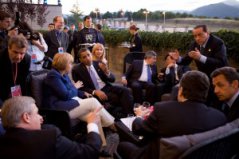
Exclusive club: the G20 heads of state
http://www.g20transparency.com
The Group of Twenty Finance Ministers and Central Bank Governors (G-20, G20, Group of Twenty http://en.wikipedia.org/wiki/G-20_major_economies ) is a group of finance ministers and central bank governors from 20 major economies: 19 countries plus the European Union, which is represented by the President of the European Council and by the European Central Bank.
Dear friends, I would like to request your urgent attention for an issue which is a bit outside our usual focus, but relates to global decision-making on large dams and other infrastructure projects.
The heads of state of the exclusive Group of 20 will meet end of next week in France. They will discuss a report from a high-level panel of experts on infrastructure. The panel consists mainly of representatives of private enterprises and banks, and will make recommendations on how to increase infrastructure investment. We have learned confidentially that the report is all about private investment and economic growth.
Environmental protection, poverty reduction and climate change are not addressed. The panel proposes a few projects that illustrate their new approach, and the list includes the giant Inga dam on the Congo River.
No NGOs were consulted, and there is no plan to make this important report public. Some NGOs have prepared an urgent sign-on letter to the infrastructure panel, asking that the report be made public and that NGOs be consulted before it is finalized.
Please see below. Can we ask you to read this and SEND YOUR ENDORSEMENT (name, institution, country) to Doug Norlen at Pacific Environment, DNorlen@pacificenvironment.org, by the end of FRIDAY, OCTOBER 28? (He is cc’ed to this message.)
Please don’t make the letter public for now. It will be great if those of you who live in G20 countries can however prepare to send a copy to your heads of state and finance ministers next week.
Many thanks,
Peter Bosshard
International Rivers
Letter follows:
*******************
Home › Follow the Money › Other Financial Institutions
How the Global 1% Shape the World’s Development Agenda
Fri, 10/28/2011 – 8:06am By: Peter Bosshard
http://www.internationalrivers.org/en/node/6936 or http://huff.to/usl8dl]
www.amnesty.org/en/economic-social-and-cultural-rights
http://en.wikipedia.org/wiki/Right to water as a human right under international law
Niyaz featuring Azam Ali | Iran, USA
Niyaz featuring Azam Ali | Iran, USA
Elektro-akustische Sufi- Sounds
Mit: Azam ALI: Stimme, Perkussion | Ramin Loga TORKIAN: Saz, Gitarre | Kiya TABASSIAN: Setar | Ziya TABASSIAN: Perkussion | Sheila HANNIGAN: Cello
Sargfabrik DO, 27. 10. 20.00h
SARGFABRIK, Goldschlagstr. 169, 1140 Wien
Anlässlich seines 10. Geburtstages wartet http://www.salam-orient.at „Salam.Orient. Musik, Tanz und Poesie“ mit einem Konzert und Veranstaltungsmarathon auf, der so umfangreich ist wie noch nie. Auf dem Programm stehen vom 13. Oktober bis 5. November 26 Einzelevents in Wien sowie Konzerte in den Bundesländern und im slowenischen Maribor.
Niyaz (نياز) is an Iranian musical trio. The group was created in 2005 by DJ, programmer/producer and remixer Carmen Rizzo, vocalist and hammered dulcimer player Azam Ali, formerly of the group Vas, and Ali’s husband, Loga Ramin Torkian, of the Iranian crossover group Axiom Of Choice. „Niyaz“ means „yearning“ in both Farsi and Urdu.
Niyaz’s music, described as „mystical music with a modern edge“, is primarily a blend of Sufi mysticism and trance electronica. Niyaz adapts Persian, Indian and Mediterranean folk sounds, poetry and songs including the poetry of Sufi mystic Rumi, with Western electronic instrumentation and programming.
http://en.wikipedia.org/wiki/Niyaz
http://www.mamak-khadem.com/audios/axiom of choice
http://mevlana.net Mevlana Celaleddin-i Rumi
http://www.poetseers.org/spiritual_and_devotional_poets/sufi
http://www.festivalculturesoufie.com
http://portal.unesco.org/culture/en/intangible heritage.html
Europe Tour Plan, Mishras- Sitar masters
www.music-of-benares.com www.deobratmishra.com
Pandit Shivnath Mishra
Deobrath Mishra-Prashant Mishra
Mi.2, Do.3 und Fr.4 November 2011
9.Wilhelm Exnergasse 15
Einlass 19h-Beginn 20h
Eintritt 25€, inkl. Chai und indischem Essen
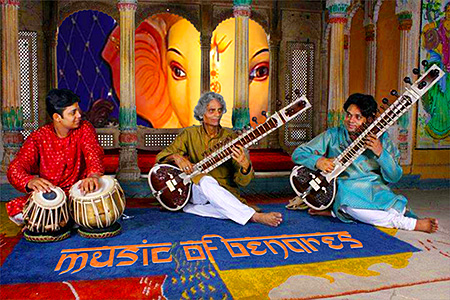
Seit 5 Jahren kommen „Music of Benares“ auf ihrer Europatour nach Wien, und spielen exclusiv in der Galerie Werkstatt NUU. Diese Abende berühren durch Musik auf höchstem Niveau in kleinem Rahmen, inmitten der Bilder des Malers David Müller-Abt. Es ist die seltene Gelegenheit 3 Meistermusiker aus drei Generationen aus einer Familie gemeinsam auf der Bühne zu erleben.
Love is a performable miracle – thats what the Mishras do !!!
Ihre Musik folgt überwiegend dem Ausdrucksreichtum der menschlichen Stimme. Deobrath Mishra wurde mehrmals als bester Sitarspieler Indiens ausgezeichnet.
Den Gaumen verwöhnt Moving pot mit indischen Köstlichkeiten, kulinarisch- vegetarisch! Wir laden sie herzlich ein die Mishra Familie ( Großvater, Sohn ,Enkel ) live im NUU zu erleben und bitten Sie unbedingt zu reservieren.
Reservierung unter: musicofbenares@gmx.at oder 0681 20908122
Deobrath Mishra bietet auch einen workshop an, Infos im Mailanhang ! Keep your spirit high ….music is love !
Galerie Werkstatt NUU www.nuu.at Denise Narick
Betreff: Mishras- Sitar masters Von: „Deobrat Mishra“
Dear Friends
We are now in Europe and will start our First concert on 21st October. It is too hard for us to even think that Mataji(My Mother) is passed away on 30th Sep. I was thinking first to cancel my tour but then I remember my mother wish was that she always wanted to see me play the music and so this inspiration I got from her and come back to do our musical tour of Europe 2011.
This tour is dedicated… to my mother Pramila Mishra and hope to see some of you. My father and Prashant is with us in this tour so this going to be special tour. Also if you want to book any concert please contact us soon.
Mishras Europe tour plan 2011 >>>
Belur Math- Swami Prameyanandaji Maharaj
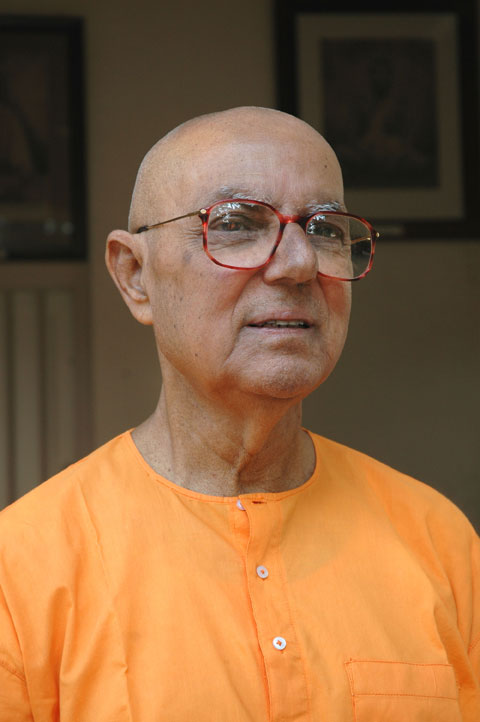
Swami Prameyanandaji Maharaj, one of the Vice-Presidents of Ramakrishna Math & Ramakrishna Mission, passed away today (20.10.11) at 8.25 am
Swami Prameyanandaji Maharaj, one of the Vice-Presidents of Ramakrishna Math & Ramakrishna Mission, passed away today (20.10.11) at about 8.25 am at the ICU of Ramakrishna Mission Seva Pratishthan hospital, Kolkata. He was 79. He had been admitted to the hospital on 9 October 2011, on account of respiratory failure. His body will be brought to Belur Math this afternoon and kept for darshan of devotees from 3.30 pm. The body will be cremated at Belur Math tomorrow (21.10.11) at about 12.30 pm.
For more update visit : www.belurmath.org
#video development – A Documentary on Relief Activities
http://belurmath.org/relief_news_archives/relief.htm
http://www.deinayurveda.net/Belur Math/Ramakrishna
Wien Besuch Shri Sarvabhavana 2011

Namaste liebe Freunde,
ein letztes Mal für dieses Jahr kommt Shri Sarvabhavana nach Wien um Beratungen zu geben. Er wird am Sonntag den 23.10 in Wien ankommen. Vielleicht gibt es die Möglichkeit auch am Sonntag Nachmittag Termine anzubieten, aber nur falls dies dringend notwendig ist. Ansonsten besteht das Angebot am Montag einen von sechs Terminen und am Dienstag einen von drei Terminen wahrzunehmen. Am Mittwoch(Nationalfeiertag Ö) wird es einen spirituellen Vortrag in Klagenfurt geben. Genaue Infos auf Anfrage.
Zusammenfassung der Beratungszeiten:
- 23.10.2011 Sonntag: nur in Ausnahmefällen: Nachmittags, bzw. Abends
- 24.10.2011 Montag: 10 – 11 Uhr, 12 – 13 Uhr – sowie: 17 – 18 Uhr, 18 – 19 Uhr
- 25.10.2011 Dienstag: 10 – 11, 12 – 13
Weiters gibt es eine neue Webseite von Shri Sarvabhavana, ein Blick darauf lohnt sich: www.vedic-guide.de. Anmeldung wie immer unter spiritualgrowth@gmx.at und der Tel.Nr.: 069917073418
Es sind noch Termine frei. Weiters gibt es auch noch freie Plätze für eine von unseren zwei Palmblattbibliotheksreisen nach Indien:
Mind and Life “Ecology, Ethics & Interdependence”
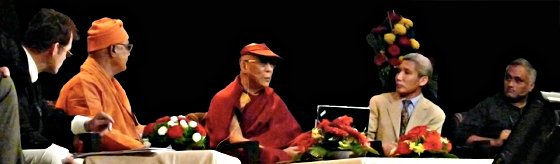
Mind and Life XXIII
Ecology, Ethics and Interdependence
with His Holiness The Dalai Lama
Dharamsala, India • October 17 – 21, 2011