
Posts by admin
March 10, 2011: Because I Am Tibetan
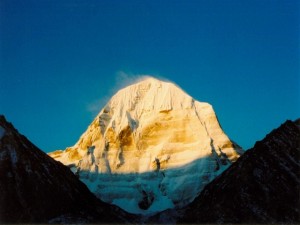
www.studentsforafreetibet.org/March 10
The environment in the People’s Republic of China has traditionally been neglected as the country concentrates on its rise as an economic power. Despite a recent interest in environmental reform, pollution has made cancer the leading cause of death in 30 cities and 78 counties, the Ministry of Health says. Only 1 percent of the country’s 560 million city inhabitants (2007) breathe air deemed safe by the European Union. Chinese industry scores very poorly in energy efficiency. READ MORE > HERE <
Human rights in the People’s Republic of China are a matter of dispute between the Chinese government and other countries and NGOs. Organizations such as the U.S. State Department, Amnesty International, and Human Rights Watch have accused the Chinese government of restricting the freedoms of speech, movement, and religion of its citizens. The Chinese government argues for a wider definition of human rights, to include economic and social as well as political rights, all in relation to national culture and the level of development of the country. In this regard, China says, human rights are being improved in China. Read More: > HERE <
Statement of His Holiness the Dalai Lama on the 52nd Anniversary of the Tibetan National Uprising Day 10 March 2011 – Today marks the 52nd anniversary of the Tibetan people’s peaceful uprising of 1959 against Communist China’s repression in the Tibetan capital Lhasa, and the third anniversary of the non-violent demonstrations that took place across Tibet in 2008. On this occasion, I would like to pay tribute to and pray for those brave men and women who sacrificed their lives for the just cause of Tibet. I express my solidarity with those who continue to suffer repression and pray for the well-being of all sentient beings.
For more than sixty years, Tibetans, despite being deprived of freedom and living in fear and insecurity, have been able to maintain their unique Tibetan identity and cultural values. More consequentially, successive new generations, who have no experience of free Tibet, have courageously taken responsibility in advancing the cause of Tibet. This is admirable, for they exemplify the strength of Tibetan resilience.
This Earth belongs to humanity and the People’s Republic of China (PRC) belongs to its 1.3 billion citizens, who have the right to know the truth about the state of affairs in their country and the world at large. If citizens are fully informed, they have the ability to distinguish right from wrong. Censorship and the restriction of information violate basic human decency. For instance, China’s leaders consider the communist ideology and its policies to be correct. If this were so, these policies should be made public with confidence and open to scrutiny. Read More: > HERE <
Video & Audio | The Office of His Holiness The Dalai Lama http://t.co/60LoupD Statement of His Holiness the Dalai Lama on the 52nd anniversary of the Tibetan national uprising day on March 10th, 2011
6th School Students Workshop on Tibetan Democracy in Exile and Situation of Tibet – The Tibetan Parliamentary and Policy Research Centre based in New Delhi, funded by the National Endowment for Democracy (NED) and International Campaign for Tibet (ICT) successfully concluded a 8 day long 6th An objective and practical program for school students titled: Introducing the Tibetan Democracy in Exile and Situation of Tibet at Staff Mess, Gangkyi in Dharamsala from December 24 – 31, 2009. The workshop was attended by 90 students and 14 teachers from 19 different schools and institution.
The main objective of this workshop was to introduce students about the Tibetan democracy in exile and situation of Tibet. To make the students understand thoroughly the structure and functions of Tibetan exile government based in Dharamsala. It also aimed at helping the Tibetan students to have a better knowledge about the achievements, failure and the future prospects of the three pillar of democracy in the exile Tibetan governance and making them more responsible Tibetans. To make the students understand about the current political situation and present human rights situation inside Tibet. To impart the importance of maintaining the religious and moral ethos to preserve the Tibetan identity. Read More: > HERE <
- www.ecobuddhism.org
- http://stopminingtibet.com/
- www.hrw.org/asia/china
- www.tibetnetwork.org/amnesty50th
- http://www.meltdownintibet.com/questions.htm
- Meet Students for a free tibet Canada, friends fans at fb <
- Meet Students for a free tibet, friends, fans at fb <
- Meet International Rivers, friends, fans at fb <
- Meet Human Rights Watch, friends, fans at fb <
- Meet The International Ecotourism Society (TIES), fans at fb <
- http://www.circleofblue.org/waternews/himalayas/
- http://www.chinadialogue.net/UserFiles/File/third_pole_full_report.pdf
As the Himalayan glaciers disappear, ten major Asian river systems–the Amu Darya, Indus, Ganges, Brahmaputra, Irrawaddy, Salween, Mekong, Yangtse, Yellow, and Tarim–are threatened. Twenty percent of the world’s population faces a future of catastrophe, according to a report released by University College, Chinadialogue, and King’s College of London in May 2010.
Bahá’í – Religion für eine neue Zeit
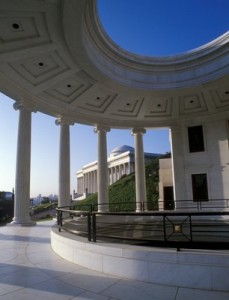
The Bahá’í Faith is a monotheistic religion founded by Bahá’u’lláh (see also Aposteles of Bahá’u’lláh) nineteenth-century Persia, emphasizing the spiritual unity of all humankind. There are an estimated five to six million Bahá’ís around the world in more than 200 countries and territories. In the Bahá’í Faith, religious history is seen to have unfolded through a series of divine messengers, each of whom established a religion that was suited to the needs of the time and the capacity of the people. These messengers have included Abraham, the Buddha, Jesus, Muhammad and others, and most recently the Báb ( ~ John the Baptist/Mandeism) and Bahá’u’lláh. In Bahá’í belief, each consecutive messenger prophesied of messengers to follow, and Bahá’u’lláh’s life and teachings fulfilled the end-time promises of previous scriptures. Humanity is understood to be in a process of collective evolution, and the need of the present time is for the gradual establishment of peace, justice and unity on a global scale. Read More: > HERE <
The persecution of Bahá’ís is the religious persecution of Bahá’ís in various countries, especially in Iran,where the Bahá’í Faith originated and the location of one of the largest Bahá’í populations in the world. The origins of persecution stem from a variety of Bahá’í teachings that challenge traditional Islamic belief, including the finality of Muhammad’s prophethood, and places Bahá’ís outside the Islamic faith. Thus Bahá’ís are seen as apostates from Islam, and, according to some, must choose between repentance and death.
Bahá’ís as well as the United Nations, Amnesty International, the European Union, the United States and peer-reviewed academic literature have stated that the members of the Bahá’í community in Iran have been subjected to unwarranted arrests, false imprisonment, beatings, torture, unjustified executions, confiscation and destruction of property owned by individuals and the Bahá’í community, denial of employment, denial of government benefits, denial of civil rights and liberties, and denial of access to higher education. Read More: > HERE <
Iran (i /ɪˈrɑːn/ or /ɪˈræn/; Persian: ایران;), officially the Islamic Republic of Iran is a country in Central Eurasia and Western Asia. It is a country of particular geostrategic significance owing to its location in the Middle East and central Eurasia. Iran is a regional power,and holds an important position in international energy security and world economy as a result of its large reserves of petroleum and natural gas. Iran is a founding member of the UN, NAM, OIC and OPEC. Read More: >HERE<
Belief and practice –Bahá’í teachings focus on unity – the oneness of God, the oneness of religion, and the oneness of the human race. A central belief is progressive revelation – that God progressively reveals His teachings for humanity through a series of divine educators that become the founders of the world’s great religions. Among these religions are the Bahá’í Faith, Buddhism, Christianity, Hinduism, Islam, Judaism, and Zoroastrianism.
The founder of the Bahá’í Faith was Bahá’u’lláh, who wrote the equivalent of a hundred volumes and laid down principles for a new pattern of human society. Some of these principles are: the independent investigation of truth by each person, the elimination of extremes of wealth and poverty, a spiritual solution to economic problems, the unity of all peoples and the elimination of prejudice, the equality of women and men, the harmony of science and religion, universal education, the establishment of a universal auxiliary language. All Information click here
International artists and religious leaders come together to call for human rights and religious freedom in Iran. Belief Behind Bars (Part 1 of 19)
TV-TIPP: Bahai – Religion für eine neue Zeit (ORF/3sat) – Israel ist das Heilige Land der drei großen Offenbarungsreligionen: des Judentum, des Christentum und des Islam. Doch Israel ist auch das Heilige Land einer vierten – noch nicht so bekannten – Weltreligion: der Baha’i.Wieso entscheiden sich Österreicher, wie die Familie Penz aus Hall in Tirol dazu, sich dieser neuen Religion anzuschließen? Der 45-jährige Andreas Penz bringt es auf den Punkt: „Weil ich zum ersten Mal von einer Einheit der Menschheit und der Einheit der Religionen gehört habe – das war für mich wie ein Blitzlicht.“
Für die Dokumentation „Baha’i – Religion für eine neue Zeit“ besuchte Regisseurin Pia Patricia Schweizer Familie Penz in Tirol und erkundete gemeinsam mit der 22-jährigen Tochter Marina die „Magie“ der heiligen Stätten der Baha’i in Israel. In Haifa befindet sich das geistige und administrative Zentrum dieser jüngsten Weltreligion. Sie glauben an den einen Gott, haben ihre eigenen Heiligen Schriften und einen Religionsstifter mit dem Namen Baha’u’llah. Weltweit bekennen sich etwa sechs Millionen Menschen zu diesem Glauben. Die 22-jährige Tochter der Familie Penz, Marina, ist Baha’i und hat sich entschieden, ein „Freiwilliges Soziales Jahr“ in Haifa zu machen.
Die „Hängenden“ oder die „Persischen Gärten“ der Baha’i sind eine perfekte Komposition aus Architektur und Natur. Die neunzehn Terrassen auf dem Berg Karmel wurden gemeinsam mit dem Mausoleum des Bab 2008 von der UNESCO zum Weltkulturerbe erklärt. Seit der Eröffnung der Terrassen im Jahr 2001 wurden sie von zwei Millionen Menschen besucht; an manchen Tagen kommen bis zu 3000 Besucher. Die 1953 erbaute goldene Kuppel des Mausoleums, die von den Baha’i „Königin des Karmel“ genannt wird, ist das Wahrzeichen der Stadt Haifa.
Größte religiöse Minderheit im Iran – Bis heute werden Baha’i im Land ihrer Entstehung, im Iran, verfolgt. Sie sind die größte religiöse Minderheit, genießen aber keinerlei Schutz wie Juden oder Christen. Die Vereinten Nationen und die Europäische Union äußerten sich wiederholt besorgt über die Unterdrückung der Baha’í. So wird der Iran in einer UNO-Resolution vom 21. Dezember 2010 erneut wegen schwerer Menschenrechtsverletzungen und der Diskriminierung von Bahá’í scharf verurteilt.
Marinas Eltern in Tirol sind vor neun Jahren Baha’i geworden. Sie lieben die Berge ihrer Heimat, sind Mitglieder des örtlichen Radlerclubs und spielen Theater. Das Einzige, was sie von ihrem überwiegend katholischen Umfeld unterscheidet, ist ihre Religion. „Es war für mich immer klar, dass es eine höhere Macht gibt, dass es einen Gott gibt, und als ich dann die Baha’i-Religion kennengelernt habe, haben sich für mich sehr viele Fragen beantwortet. Es hat mein Leben von der inneren Einstellung wesentlich geändert, alles ist viel größer geworden – und man hat auf einmal vom eigenen Leben über die Landesgrenzen hinaus geschaut.“, sagt Andreas Penz rückblickend. Eine Konsequenz des Baha’i-Glaubens ist ein entschiedenes soziales Engagement.
Haleh Arbab, Vertreterin der Internationalen Baha’i-Gemeinde in Haifa: „Bei unserer Religion geht es hauptsächlich um die geistige Wandlung des Einzelnen und auch um die gesellschaftliche Neugestaltung – es ist eine Religion, für die beides wichtig ist….Wir als Baha’i entwickeln uns zu geistigen Menschen, indem wir die Heiligen Schriften lesen, meditieren, an uns selbst arbeiten, aber auch, indem wir für die Gesellschaft tätig sind – und das vor allem durch den Dienst an Anderen.“ In über 900 großangelegten, nachhaltigen sozialen und wirtschaftlichen Entwicklungsprojekten in aller Welt, darunter auch 500 Schulen, soll das umgesetzt werden.
Es gibt nicht nur die „eine Wahrheit“ – Die Baha’i sind davon überzeugt, in ihrer Religion den Kern und die Sehnsucht aller Religionen vereint zu haben. Sie verstehen sich als Fortsetzung der bereits vorhandenen Religionen. Vielleicht auch als deren Erfüllung. Und sie glauben, dass die göttliche Offenbarung weitergehen wird. Die „eine Wahrheit“ gibt es für sie nicht. Die Aufgabe des Menschen ist es, weiter zu lernen und sich verantwortlich für die Zukunft der Menschheit einzusetzen. Und so arbeiten sie alle für Baha’u’llahs Versprechen: „Die Erde ist nur ein Land, und alle Menschen sind seine Bürger.“ > Sendedaten: Montag, 31. Jänner 2011 um 22.25 Uhr Wiederholungen (3sat)
„Rechte der Baha’i im Iran schützen“ Außenminister Dr.Spindelegger appelliert an den Iran
A Voice from Prison – Farsi Poem
- Meet MDGs We Can End Poverty, friends, fans at fb
- Meet FAIR TRADE, friends, fans at fb < & www.ethicalconsumer.org
- Meet World Ressource Institute, studies, friends, fans at fb
- Meet UN Educational, Scientific & Cultural Organization (UNESCO) at fb
- Meet Alternative Energy News, studies , friends fans at fb
- Meet The Oil Drum, studies, friends, fans at fb
- Meet Council for a Parliament of the World’s Religions (CPWR) at fb
- Peace, Paix, 和平, Salam, Shalom, Pace, Mir, Friede, Paz, Shanti, Heiwa …
CONFERENCE: The City of Kashgar
www.rferl.org Radio Free Europe
The Silk Road (or Silk Routes) is an extensive interconnected network of trade routes across the Asian continent connecting East, South, and Western Asia with the Mediterranean world, as well as North and Northeast Africa and Europe. In recent years, both the maritime and overland Silk Routes are again being used, often closely following the ancient routes.Read More: > HERE <
The Uyghur (Uyghur: ئۇيغۇر, ULY: Uyghur; simplified Chinese: 维吾尔; traditional Chinese: 維吾爾) are a Turkic ethnic group living in Eastern and Central Asia. Today, Uyghurs live primarily in the Xinjiang Uyghur Autonomous Region in the People’s Republic of China. An estimated 80% of Xinjiang’s Uyghurs live in the southwestern portion of the region, the Tarim Basin. The largest community of Uyghurs outside Xinjiang in China is in Taoyuan County, in south-central Hunan province.Outside of China, large diasporic communities of Uyghurs exist in the Central Asian countries of Kazakhstan, Kyrgyzstan, and UzbekistanSmaller communities are found in major cities in Afghanistan, Pakistan, and Turkey. Read More: > HERE <
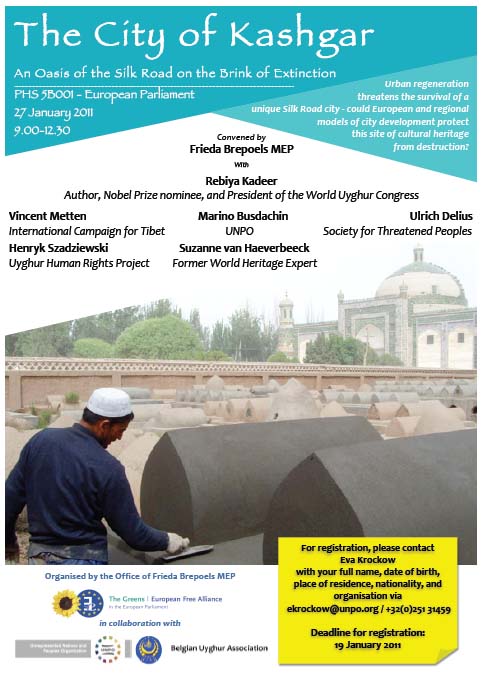
The City of Kashgar: An Oasis of the Silk Road on the Brink of Extinction – Two years into Beijing’s ‘Kashgar Dangerous House Reform’, and the Old City of Kashgar in East Turkestan, or China’s Xinjiang Uyghur Autonomous Region (XUAR), faces near total destruction.
There is a pressing need to assess the damage incurred, implications for the region’s Uyghur population, and to identify ways in which damage can be mitigated.
To address this urgent need, Ms Frieda Brepoels MEP will convene a conference, ‘Kashgar: An Oasis of the Silk Road on the Brink of Extinction’ at the European Parliament in Brussels from 9.00–12.30 on 27 January 2011 in collaboration with the Unrepresented Nations and Peoples Organization (UNPO) and the Belgian Uyghur Association. For more information on the event please refer to http://www.unpo.org/article/12104
After opening remarks by Rebiya Kadeer, Nobel Peace Prize nominee and President of the World Uyghur Congress, international experts including Henryk Szadziewski, Manager of the Uyghur Human Rights Project, Washington, and Ulrich Delius, German Society for Threatened Peoples, will provide a rare glimpse into one of the defining cultures of Central Asia and an internationally significant Silk Road city that has witnessed Tamerlane, Genghis Khan and Marco Polo but is excluded from applications for UNESCO World Heritage status due to political reasons.
In the keynote address for the Oslo Freedom Forum 2010, Uyghur leader Rebiya Kadeer reveals the plight of her people under the repressive Chinese government. Like the Tibetans, the Uyghurs are living in an open prison, forced to abandon their culture, subjected to torture, imprisonment, and execution for speaking out.
Drawing on the historical lessons taught by the international case studies of Lhasa and Bruges, Vincent Metten, EU Policy Director of the International Campaign for Tibet, and Suzanne van Haeverbeek, former Flemish world heritage expert, will discuss how international intervention may prevent Kashgar’s further destruction and avoid the total and irreversible loss of a unique site of cultural and architectural heritage.
www.wsk.at Vienna Boy´s Choir www.uyghurensemble.co.uk
BELUR MATH – REGENERATE RURAL INDIA
www.ramakrishna.org N.Y.
Advaita Vedanta (Advaita VedÄ�nta; Sanskrit अद्वैत वेदान्त ) is considered as the most influential sub-school of the VedÄ�nta (literally, end or the goal of the Vedas, Sanskrit) school of Hindu philosophy. Other sub-schools of VedÄ�nta are Dvaita and ViśishṭÄ�dvaita. Advaita (literally, non-duality) is a monistic system of thought. „Advaita“ refers to the identity of the Self (Atman) and the Whole (Brahman).
The key source texts for all schools of VedÄ�nta are the Prasthanatrayi—the canonical texts consisting of the Upanishads, the Bhagavad Gita and the Brahma Sutras. The first person to explicitly consolidate the principles of Advaita Vedanta was Adi Shankara, while the first historical proponent was Gaudapada, the guru of Shankara’s guru Govinda Bhagavatpada. Read More: > Here <
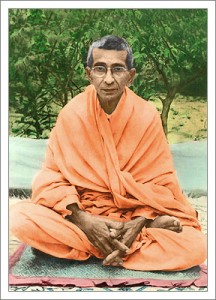
Belūr Maṭh is the headquarters of the Ramakrishna Math and Mission, founded by Swami Vivekananda, a chief disciple of Ramakrishna Paramahamsa. It is located on the west bank of Hooghly River, Belur, West Bengal, India and is one of the significant institutions in Calcutta. The temple is notable for its architecture that fuses Hindu, Christian and Islamic motifs as a symbol of unity of all religions. Read More: > HERE <
The essence of Vedanta is that there is but one Being and that every soul is that Being in full, not a part of that Being. All the sun is reflected in each dew-drop. Appearing in time, space and causality, this Being is man, as we know him, but behind all appearance is the one Reality. Unselfishness is the denial of the lower or apparent self. We have to free ourselves from this miserable dream that we are these bodies. We must know the truth, „I am He“. We are not drops to fall into the ocean and be lost; each one is the whole, infinite ocean, and will know it when released from the fetters of illusion. Infinity cannot be divided, the „One without a second“ can have no second, all is that One. The Vedanta says that the Soul is in its nature Existence absolute, Knowledge absolute, Bliss absolute.
The ideology of Ramakrishna Math and Mission consists of the eternal principles of Vedanta as lived and experienced by Sri Ramakrishna and expounded by Swami Vivekananda. This ideology has three characteristics: it is modern in the sense that the ancient principles of Vedanta have been expressed in the modern idiom; it is universal, that is, it is meant for the whole humanity; it is practical in the sense that its principles can be applied in day-to-day life to solve the problems of life. The basic principles of this ideology are given here: http://belurmath.org/Ideology.htm
http://belurmath.org/what_new.htm Releasing shortly… A Documentary on BELUR MATH The heart of Ramakrishna Movement . Bhakti Yoga does not say ‚give up‘; it only says ‚Love; love the Highest‘; and everything low naturally falls off from him, the object of whose love is this Highest. — Swami Vivekananda / 12th January is celebrated as National Youth Day but do we know the relevance of this day? What is one supposed to do on this day, how does one celebrate? Is it a holiday?
AN APPEAL – Situated in one of the most picturesque spots of the Himalayas at a height of about 7000 ft., Advaita Ashrama, Mayavati, was started by Swami Vivekananda in 1899. It is a branch of Ramakrishna Math, Belur. The special object of the Ashrama, as its name implies, is to study, practise, and preach Advaita or the eternal truth of the Oneness of all existence. This centre has been entrusted with the publication and propagation of Ramakrishna-Vivekananda and Vedanta literature. It is also publishing Prabuddha Bharata, the oldest English monthly magazine in India, since the last 115 years.
Apart from being a monastery, this Ashrama runs a hospital called the Mayavati Charitable Hospital. It came into being in response to the pressing needs of the neighbouring villages, where live some of the poorest people of the country. Patients come here from distant places across hills and dales, sometimes trudging a distance of nearly 50 km. Their helplessness in sickness would touch any heart if only it were known. We run a 25 bed indoor hospital and an outdoor patients department in this out-of-the way place since 1903. All treatment is done free of charges. Moreover, Surgical Camps, Dental Camps, Urological Camps, Eye Camps etc. are held throughout the year to provide special care to the poor villagers of Kumaon region. We bring qualified doctors from different cities to conduct such medical camps.
In order to accommodate these doctors we are building a Doctors‘ Quarters cum guest house. The new doctors’ quarters will have 8 rooms with attached baths for the doctors on the first floor and 6 rooms for guests and a meditation hall on the second floor. We request you to contribute liberally for this cause
The expected cost of construction, as submitted by the architects, will be Rs. 60 lakhs. Transportation cost is very high here because the materials have to be procured from 150 to 450 km away. The uplift of the backward and downtrodden has always been one of the key objectives of Ramakrishna Math & Ramakrishna Mission, of which this Ashrama is a branch. It is needless to mention here that if this institution has attained to its present stature, it is because of love, sympathy, and benevolence of charitably inclined people like you. The donation has to be made in favour of Advaita Ashrama and can be sent to the address given below.
May the Lord help us work in a true spirit of worship.
Activities of Ramakrishna Math and Ramakrishna Mission
From April 2006 to March 2007
- TYPES OF SERVICE
- Medical Service
- Educational Service
- Work in Rural and Tribal Areas
- Relief and Rehabilitation Work
- Women Welfare Programmes
- Youth Welfare Programmes
- Mass Contact
- Spiritual and Cultural Work
- Celebrations
- http://belurmath.org/activities.htm#Tribal
- Prabuddha Bharata Journal started by Vivekananda 1896
Africa – Green Agriculture & Climate Change
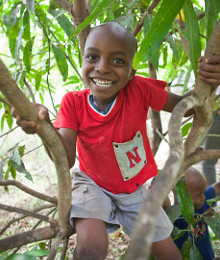
http://kofiannanfoundation.org
Sustainable agriculture is the practice of farming using principles of ecology, the study of relationships between organisms and their environment. It has been defined as „an integrated system of plant and animal production practices having a site-specific application that will, over the long term:Satisfy human food and fiber needs Make the most efficient use of non-renewable resources and on-farm resources and integrate, where appropriate, natural biological cycles and controls Sustain the economic viability of farm operations Enhance the quality of life for farmers and society as a whole. Read More: > Here <
Fair trade is an organized social movement and market-based approach that aims to help producers in developing countries make better trading conditions and promote sustainability. The movement advocates the payment of a higher price to producers as well as social and environmental standards. It focuses in particular on exports from developing countries to developed countries, most notably handicrafts, coffee, cocoa, sugar, tea, bananas, honey, cotton, wine, fresh fruit, chocolate, flowers and gold. Read More: > HERE <
AGRA ALLIANCE works to achieve a food secure and prosperous Africa through the promotion of rapid, sustainable agricultural growth based on smallholder farmers. Smallholders–the majority women–produce most of Africa’s food, and do so with minimal resources and little government support. AGRA aims to ensure that smallholders have what they need to succeed: good seeds and healthy soils; access to markets, information, financing, storage and transport; and policies that provide them with comprehensive support. Through developing Africa’s high-potential breadbasket areas, while also boosting farm productivity across more challenging environments, AGRA works to transform smallholder agriculture into a highly productive, efficient, sustainable and competitive system, and do so while protecting the environment.
AFRICA LOSES ROUGHLY $4 Billion in soil nutrients each year, costing farmers in lost productivity and eroding the continent’s ability to feed itself. But simple solutions can reverse the trend. AGRA’s programs in soil health are working to restore 6.3 million hectares of degraded farmland over 10 years. Whether it’s setting Africa’s first digital soil map to monitor the problem and inform decision making or promoting the use of lime to counteract western Kenya’s acidic soils or increasing the use of fertilizer microdosing by farmers in the Sahel, AGRA is focused on stemming the crisis and transforming Africa’s soils form a curse into blessing for smallholder farmers.
www.globalhealthfreedom.org www.foodfreedomejournal.org
Father Godfrey Nzamujo is the founder and director of the Songhai Centre, a pioneering farm, training and research centre in Porto Novo, Benin. Begun in 1985 on a single hectare of land, the Songhai project has expanded to six sites in Benin and one in Nigeria. With the motto ‚Commitment to Excellence‘, Songhai symbolises Nzamujo’s belief that Africa’s ecological characteristics are advantages rather than impediments. Father Nzamujo was awarded the Hunger Project’s Africa Prize for Leadership in 1993, and is the author of Songhaï: When Africa lifts up its head. Stirring revolution in African Rice: www.new-ag.info
Songhaï aspires to develop alternatives allowing Africans to stand on their feet through agricultural entrepreneurship, in an integrated development framework enhancing agriculture, industry and services. This development is centred, above all, on human development, the realization of local resources and the appropriation of foreign techniques and technologies.
VISION To establish an entrepreneurial platform of integrated development, an enabling environment to find social, economic, technical, organizational solutions that will take Africans out of poverty, pulling them towards autonomy and sustainable socioeconomic development.
VOCATION To draw Africa into a development mentality which consists in developing new strengths in spite of socioeconomic, cultural and environmental constraints.
Acacia Senegal – Sudan Miracle Commodity II
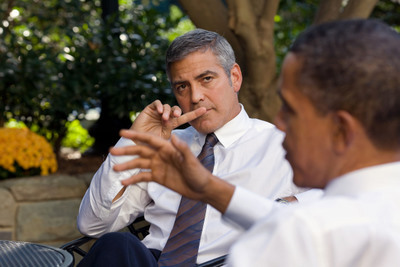
www.satsentinel.org/take_action
http://notonourwatchproject.org
http://sudanwatch.blogspot.com
Sudan (Listeni /suːˈdæn/), officially the Republic of Sudan, is a country in northeastern Africa. It is the largest country in Africa and the Arab world, and tenth largest in the world by area. The people of Sudan have a long history extending from antiquity which is intertwined with the history of Egypt, with which it was united politically over several periods. After gaining independence from Egypt and the United Kingdom in 1956, Sudan suffered 17 years of civil war followed by ethnic, religious and economic conflicts between the Northern Sudanese (with Arab and Nubian roots), and the Christian and animist Nilotes of Southern Sudan.This led to a second civil war in 1983, and due to continuing political and military struggles, Sudan was seized in a bloodless coup d’état by colonel Omar al-Bashir in 1989, who thereafter proclaimed himself President of Sudan.
Sudan then achieved great economic growth by implementing macroeconomic reforms and finally ended the civil war by adopting a new constitution in 2005 with rebel groups in the south, granting them limited autonomy to be followed by a referendum about independence in 2011. Rich in natural resources such as petroleum and crude oil, Sudan’s economy is currently amongst the fastest growing in the world. The People’s Republic of China and Japan are the main export partners of Sudan. Read More: > HERE <
Who we are – Our mission is to focus global attention and resources towards putting an end to mass atrocities around the world. Drawing upon the powerful voices of artists, activists, and cultural leaders, Not On Our Watch generates lifesaving humanitarian assistance and protection for the vulnerable, marginalized, and displaced. We encourage governing bodies to take meaningful, immediate action to protect those in harm’s way. Where governments remain complacent, Not On Our Watch is committed to stopping mass atrocities and giving voice to their victims. Founders: Don Cheadle, George Clooney, Matt Damon, Brad Pitt, David Pressman, Jerry Weintraub
A Message From George Clooney and John Prendergast – A new state is being born in Southern Sudan against a backdrop of decades of war between the South and North of Sudan. A peace deal in 2005 ended the latest round of open conflict, but the possibility of a return to war remains high as Southern Sudan prepares for independence.
One of the biggest risks in this dangerous moment is that an incident on the highly armed border could lead to wider conflict. The government in Khartoum has armed militias in contested bordering regions, the government air force has bombed border areas, and both sides have massed military units and equipment along the hottest border spots.
These areas have witnessed some of the most deadly conflict in the world since World War II. The former director of national intelligence says that Southern Sudan is the place in the world most likely to experience genocide.
We can’t allow another deadly war, and we surely cannot stand by in the face of a genocide threat.

Soon, the people of Southern Sudan will vote for independence, placing millions of civilians in the potential path of war. George Clooney and the Enough Project recently spent time in Sudan along the border between the north and south and saw what a return to war could look like. This video from the trip highlights the challenges Sudan faces as it works toward holding a peaceful referendum and avoiding a return to civil war. It’s not inevitable. We can stop this war before it starts. Visit www.SudanActionNow.org to find out more.
We were late to Rwanda. We were late to the Congo. We were late to Darfur. There is no time to wait. With your support, we will swiftly call the world to witness and respond. We aim to provide an ever more effective early-warning system: better, faster visual evidence and on-the-ground reporting of human rights concerns to facilitate better, faster responses.
This is why we have launched the Satellite Sentinel Project. There has never been a sustained effort to systematically monitor potential hot spots and threats to human security, in near real-time, with the aim of heading off humanitarian disaster and war crimes before they occur.
Previously, when mass atrocities occurred in Darfur, the Government of Sudan denied its involvement. Since photographers could not get access, it took years to amass evidence of genocide. But now we can witness in near real-time and put all parties on notice that if they commit war crimes, we will all be watching, and pressuring policymakers to take action.
We want to cast a spotlight – literally – on the hot spots along the border to record any actions that might escalate the chances of conflict. We hope that if many eyes are on the potential spoilers, we can all help detect, deter and interdict actions that could lead to a return to deadly violence. At the very least, if war crimes do occur, we’ll have plenty of evidence of the actions of the perpetrators to share with the International Criminal Court and the UN Security Council.
The world is watching because you are watching. This is our opportunity to prevent a war, to deter genocide. Make your voice heard. Click here to take action in support of peace in Sudan.
- www.looktothestars.org
- 10.01.11 VIDEO Kofi Annan speaks to the BBC in an interview about the Sudan referendum
- www.ourworldisnotforsale.org
- www.otherworldsarepossible.org
- Acacia Senegal – Sudan’s Miracle Commodity *
- Articles on Africa , Traditional Medicine
- Meet Sudan Action Now, friends, fans at fb <
- Meet Human Rights Watch, friends, fans at fb <
- Meet IFG Forum on Globalization, friends, fans at fb <
- Meet Global Witness, friends, fans at fb <
- Meet Alternative Energy News, studies, friends, fans at fb <
- Meet UN Millenium Goals, studies, friends, fans at fb <
- Meet World Fair Trade Organization, friends, fans at fb <
- Meet UNHCR Refugee Agency, friends at fb <
Yoga of Himalayas – Nuns & Communities
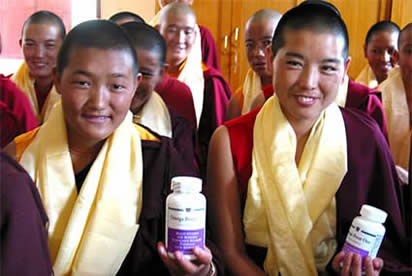
www.muktinath.org Chumig Gyatsa
Nepal (नेपाल) (/nɛˈpɔːl/ Nepali: नेपाल ), officially the Federal Democratic Republic of Nepal, is a landlocked country in South Asia. It is located in the Himalayas and bordered to the north by the People’s Republic of China, and to the south, east, and west by the Republic of India. With an area of 147,181 square kilometres (56,827 sq mi) and a population of approximately 30 million, Nepal is the world’s 93rd largest country by land mass and the 41st most populous country. Kathmandu is the nation’s capital and the country’s largest metropolis. Nepal has a rich geography. The mountainous north has eight of the world’s ten tallest mountains, including the highest point on Earth, Mount Everest, called Sagarmatha in Nepali. It contains more than 240 peaks over 20,000 ft (6,096 m) above sea level. The fertile and humid south is heavily urbanized. Read More: > HERE <
The Tibetan Nuns Project is a non-profit organization dedicated to educating and supporting nuns in India from all Tibetan Buddhist lineages. It supports nuns interesting in study and higher ordination. Tibetan nunneries have historically been well established in Tibet, certainly from the 12th century and with traditions reaching back as far as the eighth century. Before the Chinese invasion in 1949, there were at least 818 nunneries and nearly 28,000 nuns living in Tibet. Traditional education in the nunneries included reading, writing, and lessons in ancient scriptures and prayers taught by the senior nuns or lamas from monasteries. Read More: > HERE <
The vision behind the Pundarika lotus symbol is the immaculate wisdom and compassion of Dharma. It is Pundarika’s hope to manifest this vision by bringing the timeless wisdom of great Tibetan masters to the modern West.
Under the guidance of Tsoknyi Rinpoche, Pundarika Foundation was established in 1994 as a 501(c)(3) nonprofit religious organization and as a 501(c)(3) church in 2006 (FEIN No. 84-1295990). Pundarika is a volunteer organization that relies on the generosity of students’ time and commitment. It has the support of over 2,000 students throughout the world who attend retreats, practice Dharma under the inspiration of Rinpoche and contribute time, money and prayers to its success.
Missions and Goals: „You can awaken a sense of responsibility for all the other sentient beings who are exactly the way you used to be, tormented by negative emotions. You can begin helping them–first one, then two, then three and finally all sentient beings.“ Tsoknyi Rinpoche
Pundarika Foundation’s primary mission is to support the teaching activities and humanitarian work of Tsoknyi Rinpoche by: Keeping alive the wisdom of the Dharma, Sustaining practitioners who preserve the teachings of the Buddha as a vital tradition, Helping people experience inner peace, to better face the challenges of modern life with compassion and sanity, ~For Recent Accomplishments, please click here ~

Produced by Chariot Videos – www.chariotvideos.com . Blessings tells the story of 3000 nuns living in the remote nomadic region of Nangchen in Eastern Tibet who practice an ancient yogic tradition of Tibetan Buddhism. Despite near extinction during the destruction of the Cultural Revolution, these remarkable practitioners have emerged to rebuild their monasteries by hand.. stone by stone. Now, their wisdom tradition is once again vital and growing. In 2005, Tsoknyi Rinpoche III led a small group of western students to meet these amazing women. Narrated by Richard Gere www.gerefoundation.org/, with music by Ani Choying Drolma and Steve Tibbetts, Blessings is the story of this extraordinary journey.
Rinpoche’s first visit to Chumig Gyatsa led to the immediate construction of 10 small rooms. Since then, their nunnery has been repaired and enlarged, and the nuns were able to perform a full Buddhist ritual practice for the first time. Twenty young girls were ordained and joined the community. Today, the 51 nuns divide their time between Kathmandu and Muktinath. Also, a health clinic (Chumig Gyatsa Gargon Abbey and Clinic) was constructed that serves the nuns and the local community. This year, a new large shrine hall is being constructed.
Ancient practices leading to enlightenment – The nuns’ story is a classic example of dedication and tenacity. Organized in nunneries comprised of several “Ani houses” (dwellings where up to 15 nuns live together), they perform their spiritual practices in a group, teaching and helping each other all their lives. Many nuns do three-year, nine-year or even lifetime retreat. On retreat, each nun sits all day in meditation posture doing her yogic practices and meditation.
The nuns’ daily routine captures a timeless scene from the past. A typical day starts around 3:30 a.m., as the nuns wake and immediately start their first three-hour practice session. After a short break for breakfast, they resume their second session, ending at lunch. The third session occupies the afternoon, and after a light evening meal, they complete their fourth practice session. They then continue sitting throughout the night, practicing dream yoga.
Many of the nuns are accomplished masters of difficult yogic practices such as tummo (the yoga of inner heat). They perform yearly rituals for the public that include a long procession around the center in the dead of winter in sub-zero temperatures, with only a sheet wrapped around their bodies. During the night, hundreds of the most adept nuns wet their sheets repeatedly in buckets of melted snow and continue their procession, drying the sheets again and again with the inner heat generated by their yogic practice.
This very rare and awe-inspiring event, as well as the realization of the elder nuns, has gained them respect and renown throughout Tibet. In a culture where female practitioners have struggled to gain respect, these nuns have risen to a high level of status, with many monks and lamas seeking their teachings and instruction.

* Tsoknyi Nangchen Nun at Gebchak Gonpa *
The nuns also serve the community through spiritual support and counseling, giving love, compassion and emanating peace directly into people’s minds. This is a tangible example of the power of spiritual influence.
„Love and compassion are necessities, not luxuries. Without them humanity cannot survive.“ ~ H. H. the Dalai Lama
The values that nuns have—peace, love and compassion—affect an entire community and continue to branch out to the rest of the world. In summary, the nuns‘ lives exemplify the power of living Dharma and its realization to transform the hearts and minds of the surrounding communities.
- www.developmentwatch.net
- www.minesandcommunities.org http://stopminingtibet.com
- http://amuletforums.com/archive/offering-15-000-sangha-t2686.html
- Meet Tibetan Nuns Project, studies, friends, fans at fb <
- Meet International Ecotourism Society, fans at fb <
- Meet International Impact Assessment IAIA at fb <
- Meet Book of Tibetan Medicine at fb <
- Meet Human Rights Watch, friends, fans at fb <
- Meet UNESCO World Heritage, friends, fans at fb <
- Meet Millenium Goals friends, fans at fb < www.endpoverty2015.org
Save Biodiversity – Herbs & Food Regulation

www.gmcontaminationregister.org www.un.org/humanrightsday/2010
www.anh-europe.org/freedom-health-choice
www.saveourherbs.org.uk/Petition.html
The Traditional Herbal Medicinal Products Directive, 2004/24/EC, was established to provide a regulatory approval process for herbal medicines in the European Union (EU), and came into force on 30 April 2004 . Previously, there was no formal EU wide authorisation procedure, so each EU member stated regulated these types of products at the national level. Under this regulation, all herbal medicinal products are required to obtain an authorisation to market within the EU. Those products marketed before this legislation came into force can continue to market their product until 30 April 2011, under the transitional measures defined in the Traditional Herbal Medicinal Products Directive. Once this time limit has expired, all herbal medicinal products must have prior authorisation before they can be marketed in the EU. Read More: > HERE <
Ayurveda (Sanskrit: आयुर्वेद; Ä€yurveda, the „science of life“) or ayurvedic medicine is a system of traditional medicine native to India and practiced in other parts of the world as a form of alternative medicine.In Sanskrit, the word ayurveda consists of the words Ä�yus, meaning „longevity“, and veda, meaning „related to knowledge“ or „science“.Evolving throughout its history, ayurveda remains an influential system of medicine in South Asia.The earliest literature on Indian medical practice appeared during the Vedic period in India.The Suśruta SaṃhitÄ� and the Charaka SaṃhitÄ� were influential works on traditional medicine during this era.Over the following centuries, ayurvedic practitioners developed a number of medicinal preparations and surgical procedures for the treatment of various ailments and diseases. Read More: > HERE <
Health Choice – Have you heard the hype about future restrictions on natural health products? Find out how the ‚boil-the-frog-slowly‘ method masterminded by governments and transnational corporations is out to restrict YOUR FREEDOM OF CHOICE in the area of natural healthcare.
Read on…… find out here what’s really going on. This is about your future, and that of the next generation. Where in the world are restrictions most imminent?
> European Union (EU) – Canada – United States of America (USA) – New Zealand <
As a consequence of moves to harmonise global food laws, concerted attempts to control consumer access to natural heath products are being made by governments and trans-national corporations.
At a global level the regulatory framework is being developed through the Codex Alimentarius Commission (see our Codex campaign page).
The system of control essentially moves natural health products from a category of food to products requiring pre-market authorisation, where the authorisation systems being used or proposed are very onerous and so lock out large numbers of products (e.g. around 50% of pre-2004 products in Canada).
All this is being enacted under the often conflicting guises of ‘consumer protection’ and ‚free trade‘, nearly always creating a situation where big business gets what it wants while our freedom to choose natural health products is dramatically curtailed.
Inappropriate EU legislation could effectively steam-roller ancient and effective medicine cultures, such as Ayurveda, out of existence.
Certain combinations of herbal products, and those containing significant levels of vitamins and minerals, will be prohibited.
The EU’s Human Medicinal Products Directive (HMPD), issued ostensibly to protect consumers from medical disasters such as the thalidomide tragedy, now has a scope so broad that it can be used to classify certain foods, herbs and nutrients – even water – as drugs.
Many herbal products would be evaluated by inappropriate pharmaceutical criteria, rather than by practicing medical herbalists and others with specific expertise in the field of traditional medicines.
The cost of complying with these pharma-friendly criteria will be prohibitively expensive for many small to medium size enterprises and there could be serious consequences for small herb-producing farmers and communities in non-EU countries.
As you may know The Traditional Herbal Medicinal Products Directive 2004/24/EC (THMPD) of the European Union will have long-term and far-reaching implications for Ayurveda and other Traditional Systems of Medicine (TSMs), specially for the manufacturers and practitioners of these systems. / Senate Bill S510 Makes it illegal to Grow, Share, Trade or Sell Homegrown Food — Section 510(k) and the device approval process. Food Freedom warns about the consequences from this bill.
Jede(r) von uns benutzt im täglichen Leben Heilpflanzen in Form von Tees, chinesische, ayurvedische Mittel, Kräutermischungen etc. Dies soll alles verboten werden! Lest selbst: Ab April 2011 soll das Gesetz für Nahrungsergänzungsmittelund Heilkräuter (THMPD – Traditional Herbal Medical Product Directive) EU-weit durchgesetzt werden.
Das bedeutet:Die auf Teemischungen basierende Kräuterheilkunde wäre dannwahrscheinlich um die Hälfte der dort eingesetzten Kräuter beraubt, da es wenig „wissenschaftliche Forschung“ über gebräuchliche, einheimische Kräuter gibt und diese dann ohne aufwändige Forschung keine Zulassung alsArzneimittel bekämen.
Fast alle chinesischen und ayurvedischen Heilpflanzen und ein guter Teil der europäischen Heilpflanzen sollen mit dieser EU-Novelle verboten undaus dem Handel genommen werden.
Die Gründe liegen auf der Hand: Die Pharmaindustrie hätte dieNaturheilkunde „Schachmatt“ gesetzt und könnte diesen wachsenden Marktfür sich übernehmen.Jetzt sind wir alle gefragt und können noch Einfluss nehmen.In Deinem, Ihrem, Eurem und unserem Interesse.

www.sourcewatch.org/Global_Corporations
-
www.abtei-st-hildegard.de ( WHO owns Hildegard ? )
Korean Buddhism Jogye 2012 Conference

www.ohchr.org/HRDay2010.aspx www.hrw.org/north-korea
www.attacreport.com/concentration camps
www.buddhachannel.tv/Won Buddhism
Korean Buddhism is distinguished from other forms of Buddhism by its attempt to resolve what it sees as inconsistencies in Mahayana Buddhism. Early Korean monks believed that the traditions they received from foreign countries were internally inconsistent. To address this, they developed a new holistic approach to Buddhism. This approach is characteristic of virtually all major Korean thinkers, and has resulted in a distinct variation of Buddhism, which is called Tongbulgyo („interpenetrated Buddhism“) by Korean scholars. Korean Buddhist thinkers refined their predecessors‘ ideas into a distinct form. Korean Buddhism has also contributed much to East Asian Buddhism, especially to early Chinese, Japanese, and Tibetan schools of Buddhist thoughts. Read More: > HERE <
The Jogye Order, officially the Jogye Order of Korean Buddhism (대한불교조계종, 大韓ä½›敎 曹溪宗) is the representative order of traditional Korean Buddhism with roots that date back 1,200 years to Unified Silla National Master Doui, who brought Seon (known as Zen in the West) and the practice taught by the Sixth Patriarch, Huineng, from China about 820 C.E. In 826, the „Nine Mountains of Seon“ adopted the name „Jogye-jong“ and all were instrumental in the development of the nation during Unified Silla and thereafter. During Goryeo, National Masters Bojo Jinul and Taego Bou led major Seon movements. The Jogye Order was thus established as the representative Seon order until the persecution of the Joseon Dynasty. Read More: >HERE<
Korea (Korean: 한국 Hanguk [hanɡuːk] or 조선 Joseon [tɕosʌn] – South and North Korea, respectively (cf. etymology)) is a territory of East Asia that was formerly unified under one state, but now divided into two separate states and a region in northeastern Asia. Located on the Korean Peninsula, it is bordered by China to the northwest, Russia to the northeast, and is separated from Japan to the east by the Korea Strait and the Sea of Japan (East Sea).
Korea was united until 1948, when it was split into South Korea and North Korea. South Korea, officially the Republic of Korea, is a free market, democratic and developed country, with memberships in the United Nations, WTO, OECD and G-20 major economies.
North Korea, officially the Democratic People’s Republic of Korea, has a centrally planned industrial economy, with memberships in the United Nations, ISO, Non-Aligned Movement, ASEAN Regional Forum (ARF), and other international organizations. Read More: >HERE <
The 2012 World Fellowship of Buddhist Conference will be held in Korea hosted by the Jogye Order. The decision came during the 25th WFB Conference on November 13 in Colombo, Sri Lanka.
The 26th WFB Conference will be organized by the Jogye Order and the Jogye Order’s Central Council of the Laity. The plan is to have the conference coincide with the 2012 World Expo in Yeosu City and the very popular Lotus Lantern Festival.
Director of Social Affairs Ven. Hyegyeong said, “The reason for coinciding the conference with the expo and the Lotus Lantern Festival is that it would be a good way to show the world the beauty and richness of Korean Buddhist tradition and to promote Korean Buddhism. We will have a tentative six-day visit plan with half the time spent in Yeosu City and the conference, and the other days to see the Lotus Lantern Festival.”
Jogye Order plans to make strong efforts in seeing the conference to be successful. In this way, the success can be carried over to the 2013 World Religious Leaders Conference, also hosted by the Jogye Order.
The WFB first began in May of 1950 in Sri Lanka as Buddhist representatives from 27 countries met to transcend sectarian barriers. This year marks the 60 year anniversary. Now, 153 WFB branches in 40 countries exist to unify Buddhists from all traditions and uphold the Buddha’s teachings. The conference is held every two years. There are seven WFB branches in Korea including the Jogye Order and the Jogye Order Central Council of the Laity.
Korea hosted the 17th WFB Conference in 1990 in Seoul. Now the conference returns after 22 years. The opportunity to host the WFB conference will be a chance to showcase the excellence of Korean Buddhism and share with the world Korean Buddhist cultural treasures such as templestay, temple food, and the Lotus Lantern Festival.
The 25th WFB Conference, with the theme “Solving Social Issues with Dharma,” was held on November 13 in Colombo. Along with the conference, a Board of Directors Meeting, a symposium, and the 60-year Commemoration Ceremony were held until November 17. More than 500 representatives from North Korea, Japan, China, Thailand, Taiwan, South Korea, and other countries attended this year’s conference.
Documents the creation of a Buddhist painting by the Buddhist nun artist, Seol Min, who has dedicated her life to keeping the tradition of Buddhist painting alive. / The secret of Korean temple cooking popularity is in its eco-friendly and traditional recipes. Recently, a temple of Jogye Order of Korean Buddhism opens the restaurant for temple cooking. All the recipes are based on Jogye Order of Korean Buddhism, but its color and shape has been upgraded even for non-believers to enjoy its taste. Arirang Today will listen to the Buddhist nun, Dae-an, who has been putting an effort to achieve the internationalization of Korean cuisine in temple cooking.
The Democratic People’s Republic of Korea (DPRK) continues to face regular, significant food shortages. A joint Food and Agricultural Organization (FAO) and World Food Programme Crop and Food Security Assessment Mission took place between September 21 and October 2 this year to assess the main cereal harvest and estimate the food gap for the marketing year 2010/2011.
The mission estimates that DPRK faces a cereal import requirement for the 2010/11 marketing year (Nov/Oct) of 867,000 metric tons.
The mission recommended that 305,000 tons should be provided as international food assistance to about five million of the most vulnerable people, including young children, their mothers, the elderly, and poor people in regions with high malnutrition. Planned commercial imports by the government (325,000 tons) and recommended food assistance do not fill the entire uncovered food deficit, and leave a gap of 237,000 tons. The gap will need to be filled by the DPRK government and direct assistance from other countries.
While malnutrition rates among children have decreased the last decade, one in every three children remains chronically malnourished or ‘stunted’, meaning they are too short for their age, and a quarter of all pregnant and breast-feeding women are also malnourished. The mission noted that a small shock in the future could trigger a severe crisis which would be difficult to contain if these chronic deficits are not effectively managed. One in four pregnant or breastfeeding mothers is also malnourished.
17 November 2010 – > North Korea Faces Serious Cereal Deficit, Food Shortages and Undernourishment to Continue
At the household level, assessments during 2008 and 2009 indicated a marginal improvement in food security. However, current rations provided by the DPRK government can meet less than half of the daily calorific needs for the 68% of the population receiving public food rations.
Most people struggle to make up the deficit through alternative means as they do not have the necessary purchasing power.

Mountain Minorities and Indigenous Peoples

NGO Development Projects Active in Tibet
About ICIMOD – The International Centre for Integrated Mountain Development, ICIMOD, is a regional knowledge development and learning centre serving the eight regional member countries of the Hindu Kush-Himalayas – Afghanistan, Bangladesh, Bhutan, China, India, Myanmar, Nepal, and Pakistan – and based in Kathmandu, Nepal.
Globalisation and climate change have an increasing influence on the stability of fragile mountain ecosystems and the livelihoods of mountain people. ICIMOD aims to assist mountain people to understand these changes, adapt to them, and make the most of new opportunities, while addressing upstream-downstream issues. We support regional transboundary programmes through partnership with regional partner institutions, facilitate the exchange of experience, and serve as a regional knowledge hub. We strengthen networking among regional and global centres of excellence. Overall, we are working to develop an economically and environmentally sound mountain ecosystem to improve the living standards of mountain populations and to sustain vital ecosystem services for the billions of people living downstream – now, and for the future.
International Mountain Day, celebrated on December 11, gives us an opportunity to reflect on the relevance of mountains for the world. This year the International Mountain Day theme focuses on indigenous peoples and other minorities living in the mountains. The purpose is both to highlight the threats and challenges faced by these communities, and to acknowledge the invaluable knowledge they have and the contributions they can make towards overcoming global challenges of poverty and loss of diversity in a rapidly changing world.
A majority of the world’s indigenous women and men live in mountain regions, many on the margins of society and facing poverty and exclusion. The Hindu Kush-Himalayan region has some of the highest diversity of indigenous peoples and other minorities in the world. An ICIMOD report identified more than 600 living languages in the Himalayas, 400 spoken by less than 100,000 people. According to current forecasts, ninety per cent of all languages could disappear within 100 years. The loss of these languages not only erodes an essential component of a group’s identity, it is also a loss to heritage for all humankind.
The UN General Assembly adopted the UN Declaration on the Rights of Indigenous Peoples in September 2007, marking an important step in international efforts to preserve the identity of indigenous peoples. However, implementation has a different speed and different levels of commitment in different countries.
In agricultural terms, mountains are often considered ‘marginal lands’, unsuitable for modern commercial farming which focuses on cultivation of single crop varieties for large markets. Indigenous mountain people and other mountain communities continue to use traditional practices and techniques including sophisticated terracing systems, water transportation and irrigation schemes, and a combination of pasture, forestry and farming practices. Indigenous women and men serve as custodians of this traditional knowledge on how to farm under difficult mountain conditions, and how to conserve important reservoirs of agricultural biodiversity.
They sustainably farm a wide variety of crops that are adapted to a range of different elevations, slope conditions, and micro-climates, and this knowledge will be of great, if as yet little noticed, value in the world’s efforts to adapt to climate and other drivers of change. The autonomous adaptation practiced by mountain communities consists of community-based interventions that address underlying causes of vulnerability and reduce the risk of possible adverse impacts of climate change by building upon the existing rich indigenous knowledge base on adaptation to environmental change and helping to strengthen the resilience of the communities. Women especially play a critical role in gendered indigenous knowledge. Their roles and expertise have yet to be acknowledged, but has great potential for adapting to multiple drivers of change.
Indigenous mountain communities are connected to the land, the environment, and natural resources in ways that are often inextricably intertwined and therefore expressed in spiritual and socio-cultural terms. Respecting this worldview, and preserving the languages, music, artwork, folk tales, culture, meanings, and myths that express it, is critical for the survival of indigenous communities in mountain areas. This ‘intangible heritage’ also enriches the global community, providing inspiration and insights for realising a more sustainable relationship between humankind and the environment.
A scene from Tibetan Documentary „Leaving Fear Behind,“ shows a nomad school in Tibet (Amdo) working to preserve Tibetan Language and culture as it’s very existence is under threat from Chinese Government policies. Find out more: http://studentsforafreetibet.org Leaving Fear Behind: The Film the Chinese Government Doesn’t Want the World to See. // sumit sadhak practicing handstand in himalyas on the bank of ganga river one of the most important places for yogis.
The involvement of indigenous mountain communities is an important prerequisite for sustainable mountain development. Therefore, as governments work toward addressing mountain development priorities, it is critical that they live up to their commitments outlined in the UN Declaration on the Rights of Indigenous Peoples.
We hope that this year’s International Mountain Day will help to increase awareness of the central role of Minorities and Indigenous Peoples for mountain development, and to motivate all citizens, policy makers, and development actors to recognise the importance of their contribution to sustainable development. We trust that the Day will encourage organisations to invite indigenous and traditional mountain communities to participate actively in national and international efforts to understand and adapt to the multiple drivers of change, including climate change, in the mountains of the world.
With best wishes, Andreas Schild http://www.icimod.org
Culture and Development – Placing culture at the heart of development policy constitutes an essential investment in the world’s future and a pre-condition to successful globalization processes that take into account the principles of cultural diversity. It is UNESCO’s mission to remind all States of this major issue.
As demonstrated by the failure of certain projects underway since the 1970s, development is not synonymous with economic growth alone. It is a means to achieve a more satisfactory intellectual, emotional, moral and spiritual existence. As such, development is inseparable from culture. Strengthening the contribution of culture to sustainable development is a goal that was launched in connection with the World Decade for Cultural Development (1988-1998). Ever since, progress has been made thanks to a corpus of standard-setting instruments and demonstration tools such as cultural statistics, inventories, regional and national mapping of cultural resources.
In this regard, the major challenge is to convince political decision-makers and local, national and international social actors to integrating the principles of cultural diversity and the values of cultural pluralism into all public policies, mechanisms and practices, particularly through public/private partnerships.
This strategy will aim, on the one hand, at incorporating culture into all development policies, be they related to education, science, communication, health, environment or tourism and, on the other hand, at supporting the development of the cultural sector through creative industries. By contributing in this way to poverty alleviation, culture offers important benefits in terms of social cohesion. Read more: http://portal.unesco.org/culture/en
The Challenge of Human Rights and Cultural Diversity – United Nations Background Note by Diana Ayton-Shenker:
The end of the cold war has created a series of tentative attempts to define „a new world order“. So far, the only certainty is that the international community has entered a period of tremendous global transition that, at least for the time being, has created more social problems than solutions.
The end of super-power rivalry, and the growing North/South disparity in wealth and access to resources, coincide with an alarming increase in violence, poverty and unemployment, homelessness, displaced persons and the erosion of environmental stability. The world has also witnessed one of the most severe global economic recessions since the Great Depression of the 1930s.
At the same time, previously isolated peoples are being brought together voluntarily and involuntarily by the increasing integration of markets, the emergence of new regional political alliances, and remarkable advances in telecommunications, biotechnology and transportation that have prompted unprecedented demographic shifts.
The resulting confluence of peoples and cultures is an increasingly global, multicultural world brimming with tension, confusion and conflict in the process of its adjustment to pluralism. There is an understandable urge to return to old conventions, traditional cultures, fundamental values, and the familiar, seemingly secure, sense of one’s identity. Without a secure sense of identity amidst the turmoil of transition, people may resort to isolationism, ethnocentricism and intolerance.
This climate of change and acute vulnerability raises new challenges to our ongoing pursuit of universal human rights. How can human rights be reconciled with the clash of cultures that has come to characterize our time? Cultural background is one of the primary sources of identity. It is the source for a great deal of self-definition, expression, and sense of group belonging. As cultures interact and intermix, cultural identities change. This process can be enriching, but disorienting. The current insecurity of cultural identity reflects fundamental changes in how we define and express who we are today. Read More: * HERE*
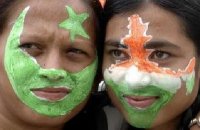
Human Rights Day 10 December 2010

Human rights are „rights and freedoms to which all humans are entitled“.Proponents of the concept usually assert that everyone is endowed with certain entitlements merely by reason of being human.Human rights are thus conceived in a universalist and egalitarian fashion. Such entitlements can exist as shared norms of actual human moralities, as justified moral norms or natural rights supported by strong reasons, or as legal rights either at a national level or within international law. Read More: > HERE <
The United Nations Human Rights Council (UNHRC) is an inter-governmental body within the United Nations System. The UNHRC is the successor to the United Nations Commission on Human Rights (UNCHR, herein CHR), and is a subsidiary body of the United Nations General Assembly. The council works closely with the Office of the High Commissioner for Human Rights (OHCHR) and engages the United Nations‘ Special Procedures. Read More > HERE <
The Human Rights Council is an inter-governmental body within the UN system made up of 47 States responsible for strengthening the promotion and protection of human rights around the globe. The Council was created by the UN General Assembly on 15 March 2006 with the main purpose of addressing situations of human rights violations and make recommendations on them.
One year after holding its first meeting, on 18 June 2007, the Council adopted its “Institution-building package” [Word file] providing elements to guide it in its future work. Among the elements is the new Universal Periodic Review mechanism which will assess the human rights situations in all 192 UN Member States. Other features include a new Advisory Committee which serves as the Council’s “think tank” providing it with expertise and advice on thematic human rights issues and the revised Complaints Procedure mechanism which allows individuals and organizations to bring complaints about human rights violations to the attention of the Council. The Human Rights Council also continues to work closely with the UN Special Procedures established by the former Commission on Human Rights and assumed by the Council.
The High Commissioner’s statement is available as a video which will be of special interest to broadcasters and for use at particular events / Video about ordinary human rights defenders from various parts of the world. Human Rights Day, marked annually, is this year dedicated to human rights defenders who battle against discrimination.
Human Rights Day is celebrated annually across the world on 10 December.The date was chosen to honor the United Nations General Assembly’s adoption and proclamation, on 10 December 1948, of the Universal Declaration of Human Rights (UDHR), the first global enunciation of human rights. The formal establishment of Human Rights Day occurred at the 317th Plenary Meeting of the General Assembly on 4 December 1950, when the General Assembly declared resolution 423(V), inviting all member states and any other interested organizations to celebrate the day as they saw fit. Read More: > HERE <
The theme for Human Rights Day 10 December 2010 is human rights defenders who act to end discrimination.
Human rights defenders acting against discrimination, often at great personal risk to both themselves and their families, are being recognized and acclaimed on this day.
Human rights defenders speak out against abuse and violations including discrimination, exclusion, oppression and violence. They advocate justice and seek to protect the victims of human rights violations. They demand accountability for perpetrators and transparency in government action. In so doing, they are often putting at risk their own safety, and that of their families.
Some human rights defenders are famous, but most are not. They are active in every part of the world, working alone and in groups, in local communities, in national politics and internationally.
Human Rights Day 2010 will highlight and promote the achievements of human rights defenders and it will again emphasize the primary role Governments must play in enabling and protecting their role. The Day is also intended to inspire a new generation of defenders to speak up and take action to end discrimination in all of its forms whenever and wherever it is manifested.
The story does not end after 10 December 2010. The focus on the work of human rights defenders will continue through all of 2011.
Visual Designs – We would like to invite you to develop your own initiatives and make use of the visual designs. Read our “Users’ guidelines” (PDF), complete the Form and Waiver of Liability (PDF) and send it to us at: human rightsday@ohchr.org.
International Year of Forests 2011
http://www.un.org/en/events/iyof2011/
http://www.illegal-logging.info
The year 2011 was declared the International Year of Forests by the United Nations to raise awareness and strengthen the sustainable forest management, conservation and sustainable development of all types of forests for the benefit of current and future generations. Forests are an integral part of global sustainable development. According to World Bank estimates, more than 1.6 billion people depend on forests for their livelihoods. The forest product industry is a source of economic growth and employment, with global forest products traded internationally in the order of $270 billion. The UN’s Food and Agriculture Organization (FAO) estimates that every year 130,000 km² of the world’s forests are lost due to deforestation. Conversion to agricultural land, unsustainable harvesting of timber, unsound land management practices, and creation of human settlements are the most common reasons for this loss of forested areas. Read More: >HERE<
Indigenous rights are those rights that exist in recognition of the specific condition of the indigenous peoples. This includes not only the most basic human rights of physical survival and integrity, but also the preservation of their land, language, religion and other elements of cultural heritage that are a part of their existence as a people. This can be used as an expression for advocacy of social organizations or form a part of the national law in establishing the relation between a government and the right of self-determination among the indigenous people living within its borders, or in international law as a protection against violation by actions of governments or groups of private interests. Read More: > HERE <
Welcome to the International Year of Forests, 2011 (Forests 2011) Web site, a global platform to celebrate people’s action to sustainably manage the world’s forests. The United Nations General Assembly declared 2011 as the International Year of Forests to raise awareness on sustainable management, conservation and sustainable development of all types of forests.
Here, you will find information regarding events being organised throughout the International Year as well as interactive web tools and resources to promote dialogue on forests. Tell us how you plan to celebrate “forests for people” during 2011, so that we may showcase your stories and initiatives through this website. www.un.org/en/events/iyof2011
United Nations, New York, 2 November 2010 – Member States of the United Nations have adopted a new 10-year global strategy designed to halt the loss of the world biological diversity, with countries agreeing to draft national implementation plans to safeguard genetic resources within two years. / This video shows how palm oil is threatening Southeast Asia’s tropical peatlands. Due to drainage of the swamps, the peat oxidates and releases huge amounts of CO2 into the atmosphere. For more information, see www.ckpp.org
United Nations Forum on Forests (UNFF) –In October 2000, the Economic and Social Council of the United Nations (ECOSOC), in its Resolution 2000/35 established the United Nations Forum on Forests (UNFF), a subsidiary body with the main objective to promote “… the management, conservation and sustainable development of all types of forests and to strengthen long-term political commitment to this end…”based on the Rio Declaration, the Forest Principles, Chapter 11 of Agenda 21 and the outcome of the IPF/IFF Processes and other key milestones of international forest policy. The Forum has universal membership, and is composed of all Member States of the United Nations and specialized agencies. www.un.org/esa/forests/index.html
The International Indigenous Forum on Biodiversity (IIFB) was formed During the III Conference of the Parties to the Convention on Biological Diversity (COP III) in Buenos Aires, Argentina, in November 1996. The IIFB is a collection of representatives from indigenous governments, indigenous non-governmental organizations and indigenous scholars and activists that rganize around the Convention on Biological Diversity (CBD) and other important international environmental meetings to help coordinate indigenous strategies at these meetings, provide advice to the government parties, and influence the interpretations of government obligations to recognize and respect indigenous rights to the knowledge and resources.
http://iifb.indigenousportal.com/2010/11/01/closing-statement cbd
The CBD is an important international environmental convention, because it contains numerous passages that recognize traditional resource and knowledge rights, the most important of which is Article 8(j).
CBD – UN Convention on Biological Diversity
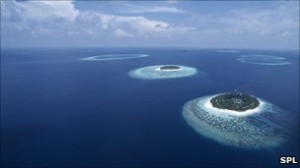
* Small island states are looking at ways to evacuate their entire populations, says UN chief
Biodiversity is the variation of life forms within a given ecosystem, biome, or for the entire Earth. Biodiversity is often used as a measure of the health of biological systems. The biodiversity found on Earth today consists of many millions of distinct biological species, which is the product of nearly 3.5 billion years of evolution. 2010 is the International Year of Biodiversity. READ MORE: > HERE <
The Convention on Biological Diversity (CBD), known informally as the Biodiversity Convention, is an international legally binding treaty. The Convention has three main goals: 1. conservation of biological diversity (or biodiversity);2. sustainable use of its components; and 3. fair and equitable sharing of benefits arising from genetic resources. In other words, its objective is to develop national strategies for the conservation and sustainable use of biological diversity. It is often seen as the key document regarding sustainable development. Read More: >HERE<
The Millennium Development Goals (MDGs) are eight international development goals that all 192 United Nations member states and at least 23 international organizations have agreed to achieve by the year 2015. They include eradicating extreme poverty, reducing child mortality rates, fighting disease epidemics such as AIDS, and developing a global partnership for development. Read More: > HERE <
Bio Diversity, preventing Deadline Life http://www.cbd.int/ – After suffering decades of obscurity, biodiversity, and the importance of saving it, is finally rising to the top of the international agenda. But will political declarations translate into the resources and action that are so urgently needed?
The United Nations General Assembly dedicated a high level summit to biodiversity which gave much-needed political impetus for a sustained global response to the crisis facing the natural world.
IUCN Director General Julia Marton-Lefèvre explains why the meeting of the Convention on Biological Diversity, in Nagoya on 18 October, is so important for the future of our planet. / Millenium Development Goals for 2015 -In the year 2000, 189 leaders from around the world met at the historic Millenium Summit in New York.According to the then Secretary-General of the UN, Kofi Annan, the UNs role for the next millenium will be crucial; making it a focal point for joint efforts in a world that presents worrisome statistics that endanger the perpetuation of generations to come.
The International Union for Conservation of Nature (IUCN) is an international organization dedicated to natural resource conservation. The stated goal of the organization is to help the world find pragmatic solutions to the most pressing environment and development challenges. Read More: > HERE <
IUCN, which helped develop the Convention and plays a key role in its implementation, will be present at the conference, trying to ensure that the latest biodiversity science underpins the decisions taken there and that governments commit to an ambitious, yet realistic plan to halt the loss of biodiversity.
Environmental migrants are people forced to migrate away from their homeland due to sudden or long-term changes to their local environment. When the migration is considered to be forced and not a matter of choice, the term environmental refugee is also used. Additionally, if the causes for the migration are believed to be due to global warming related environmental disasters, the term climate refugee is sometimes used. Read More: > HERE <
The Office of the United Nations High Commissioner for Refugees (UNHCR; www.unhcr.org), also known as The UN Refugee Agency is a United Nations agency mandated to protect and support refugees at the request of a government or the UN itself and assists in their voluntary repatriation, local integration or resettlement to a third country. Its headquarters are in Geneva, Switzerland. The UNHCR has won two Nobel Peace Prizes in 1954 and 1981. Read More: >HERE<
COP 16 Climate Change and Agrar Solutions
Kofi Atta Annan (born 8 April 1938) is a Ghanaian diplomat who served as the seventh Secretary-General of the United Nations from 1 January 1997 to 31 December 2006. Annan and the United Nations were the co-recipients of the 2001 Nobel Peace Prize for his founding the Global AIDS and Health Fund to support developing countries in their struggle to care for their people. Read More: > HERE <
The 2010 United Nations Climate Change Conference is being held in Cancún, Mexico, from 29 November to 10 December 2010.[1] The conference is officially referred to as the 16th session of the Conference of the Parties (COP 16) to the United Nations Framework Convention on Climate Change (UNFCCC) and the 6th session of the Conference of the Parties serving as the meeting of the Parties (CMP 6) to the Kyoto Protocol.In August 2010, Ban Ki-moon stated that he doubts member states will reach a new global agreement to address global warming, but after the Tianjin talks in October Christiana Figueres, executive secretary of the UN Framework Convention on Climate Change (UNFCCC), said, „This week has got us closer to a structured set of decisions that can be agreed in Cancun … This is the greatest societal and economic transformation that the world has ever seen.“ Read More: > HERE <
AGRA www.agra-alliance.org works to achieve a food secure and prosperous Africa through the promotion of rapid, sustainable agricultural growth based on smallholder farmers. Smallholders–the majority women–produce most of Africa’s food, and do so with minimal resources and little government support. AGRA aims to ensure that smallholders have what they need to succeed: good seeds and healthy soils; access to markets, information, financing, storage and transport; and policies that provide them with comprehensive support.
Through developing Africa’s high-potential breadbasket areas, while also boosting farm productivity across more challenging environments, AGRA works to transform smallholder agriculture into a highly productive, efficient, sustainable and competitive system, and do so while protecting the environment.
www.google.com/cop15 Learn about the impacts of our changing climate, and how groups are working to cope with them.
http://www.ienearth.org Established in 1990 within the United States, IEN was formed by grassroots Indigenous peoples and individuals to address environmental and economic justice issues (EJ). IEN’s activities include building the capacity of Indigenous communities and tribal governments to develop mechanisms to protect our sacred sites, land, water, air, natural resources, health of both our people and all living things, and to build economically sustainable communities.IEN accomplishes this by maintaining an… (read more)Mission:In 1991, near the sacred Bear Butte in South Dakota, near 500 Native people came together at the outdoor 2nd Annual IEN Protecting Mother Earth gathering. At this gathering, this Unifying Principle and the Environmental Code of Ethics were written.
Mission Statement – The Indigenous Peoples of the Americas have lived for over 500 years in confrontation with an immigrant society that holds an opposing world view. As a result we are now facing an environmental crisis which threatens the survival of all natural life. In 1991, near the sacred Bear Butte in South Dakota, near 500 Native people came together at the outdoor 2nd Annual IEN Protecting Mother Earth gathering. At this gathering, this Unifying Principle and the Environmental Code of Ethics were written.
Unifying Principles – The Indigenous Peoples of the Americas have lived for over 500 years in confrontation with an immigrant society that holds an opposing world view. As a result we are now facing an environmental crisis which threatens the survival of all natural life. We believe in unified action, sharing of information, and working together with mutual respect. We recognize we must assert our sovereignty and jurisdictional rights through the application of our traditional laws and recognizing our traditional forms of leadership of our indigenous nations. We stand on principles of empowering and supporting each other to take direct, informed action and affect our ability to protect our lands from contamination and exploitation. By attempting to fulfill our responsibility to defend our mother earth we are assuring the survival of our unborn generations.The members of IEN are unified in our recognition that the traditional teachings, lifestyles, spirituality, cultures and leadership of our people as well as the survival of our future generations, are entirely dependent upon our respectful relationship with the natural world and our responsibility to the sacred principles given to us by the creator.
„SNAP-SHOT“ of environmental and economic justice issues in indigenous lands (US-CANADA): 1. Toxic contaminants, agricultural pesticides and other industrial chemicals that disproportionately impact Indigenous peoples, especially subsistence and livestock cultures.2. Inadequate governmental environment and health standards and regulations.3. Clean up of contaminated lands from mining, military, and other industry activities.4. Toxic incinerators and landfills on and near Indigenous lands.5. Inadequate solid and hazardous waste and wastewater management capacity of Indigenous communities and tribes.6. Unsustainable mining and oil development on and near Indigenous lands.7. National energy policies at the expense of the rights of Indigenous peoples.8. Climate change and global warming.9. Coal mining and coal-fired power plants resulting in mercury contamination, water depletion, destruction of sacred sites and environmental degradation.10. Uranium mining developments and struggles to obtain victim compensation to Indigenous uranium miners, millers, processors and Downwinders of past nuclear testing experiments.11. Nuclear waste dumping in Indigenous lands.12. Deforestation.13. Water rights, water quantity and privatization of water.14. Economic globalization putting stress on Indigenous peoples and local ecosystems.15. Border justice, trade agreements and transboundary waste and contamination along the US/Mexico/Canada borders and other Indigenous lands worldwide.16. Failure of the US government to fulfill its mandated responsibility to provide funding to tribes and Alaska villages to develop and implement environmental protection infrastructures.17. Backlash from US state governments giving in to the lobbying pressures of industry and corporations against the right of tribes to implement their own water and air quality standards.18. Protection of sacred, historical and cultural significant areas.19. Biological diversity and endangered species.20. Genetically modified organisms impacting the environment, traditional plants and seeds and intellectual rights of Indigenous peoples – bio-colonialism.21. Economic blackmail and lack of sustainable economic and community development resources.22. Just transition of workers and communities impacted by industry on and near Indigenous lands.23. Urban sprawl and growth on and near Indigenous lands.24. Failure of colonial governments and their programs to adequately consult with or address environmental protection, natural resource conservation, environmental health, and sacred/historical site issues affecting traditional Indigenous lands and its Indigenous peoples.25. De-colonization and symptoms of internalized oppression/racism/tribalism.26. And many others ..
Compiled by the INDIGENOUS ENVIRONMENTAL NETWORK
http://en.wikipedia.org/wiki/Kyoto_Protocol
http://en.wikipedia.org/wiki/350.org , www.350.org
- Watch the UN Climate Talks in Cancun, Mexico – LIVE www.oneclimate.net
- http://timesofindia.indiatimes.com/home/environment/global-warming
- http://www.environmentallawresource.com , http://earthjournalism.net
- http://www.indigenousclimate.org , http://www.hecac.org
- http://www.earthpeoples.org/CLIMATECHANGE/Ind.PeoplesGuide .pdf
- Articles on CLIMATE CHANGE
- Meet Indigenous Environmental Network, friends, fans at fb
- Meet Eco Walk the Talk, friends, fans at fb
- Meet International Forum on Globalization, studies, friends, fans at fb
- Meet COP 16, Cancun, studies, friends, fans at fb
- Meet 100 Million Voices for a Real Climate Deal in Mexico 2010 at fb
- Peace, Paix, 和平, Salam, Shalom, Pace, Mir, Friede, Paz, Shanti, Heiwa…
Monks lead march to save Himalayas
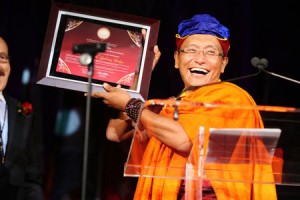
The Drukpa Kargyu school (Dzongkha: or simply Drukpa school, is a branch of the Kagyu school of Tibetan Buddhism. It is considered to be one of the Sarma or „new“ schools of Tibetan Buddhism. Within the Drukpa Lineage, there are further sub-schools, most notably the eastern Kham tradition and middle Drukpa school which prospered in Ladakh and surrounding areas. In Bhutan the Drukpa Lineage is the dominant school and state religion. Read More: > HERE <
www.live2love.org On 19th September 2010, His Holiness the Gyalwang Drukpa, founder of Live To Love, a new world-wide charity specializing in building the world’s most advanced eco-friendly schools and teaching young women leadership skills, received the United Nations‘ Millennium Development Goal (MDG) Award for those efforts.At a star-studded event headlined by American actress Christie Brinkley, Ghanian-American hip-hop artist, Blitz the Ambassador American saxophonist, Dave Koz and joined by heads of state and leading dignitaries gathered to honor governments and individuals making substantial contributions toward fulfilling the UN’s Millennium Development Goals, His Holiness the Gyalwang Drukpa was feted for Live To Love’s efforts to “create compassion into action.”The annual MDG Awards provide a platform to raise awareness about the critical work of the United Nations and honor and celebrate the exceptional work of select national governments and individuals contributing to the achievement of the MDGs around the world.
Guru Rinpoche highlighted many times in his teachings and biography that so long as the descendents of the famous and great Tibetan King Trisong Deutsan is there, his blessing will always be there. As we all know Trisong Deutsan is the direct emanation of Manjushri, the Bodhisattva of Great Wisdom. These days, our beloved king of Ladakh, Trinlay Namgyal, has not been well, and he is definitely a genuine descendent of Trisong Deutsan. This is the reason why I went to Ladakh for a day trip and stayed there only for an hour.
Out of respect and care, I went to Ladakh to visit the king who has been my good friend for a very long time. I had never been to Ladakh for such a short trip. Even if I wanted to stay, I had no choice, there is already the Sikkim Eco Pad Yatra program starting soon. I am very happy that I saw him, I hope he was happy to see him. He was very seriously sick inside, but he has no pain. I am writing not only because he is a dear friend of mine, but I believe in Guru Rinpoche’s words and I know for sure that the king definitely carries the blood of Trisong Deutsan and therefore the blessing of Guru Rinpoche.
A short video showing the walking pilgrimage journey from Lahaul to Ladakh (from 23rd May to 1st July 2009) undertaken by His Holiness the Gyalwang Drukpa, His Eminence Kyabje Khamtrul Rinpoche, several Rinpoches, monks and nuns and lay followers – about 750 humans and 320 mules. /Join His Holiness the Gyalwang Drukpa and 750 nuns, monks, & friends of the Drukpa Lineage as they trek 400 kilometers across the Himalayas in a grassroots movement to elevate environmental awareness, promote education for women, and celebrate the heritage of a culture in peril. www.walking.drukpa.com OPTION C (22nd-28th December 2010) & OPTION D (24th-28th December 2010) ARE NOW AVAILABLE.
Now, I am on the way preparing for the Sikkim Eco Pad Yatra and catching up with my busy schedule. Let’s see how it will go. It seems that it’s being arranged quite well, due to help from my friends and students, especially Drukpa Publications whom I asked to arrange this through my own office. Just as our last pad yatra in Ladakh last year, this time also I took the opportunity to ask Rigzin Namgyal to arrange this for us. I know that Rigzin Namgyal along with Lotus’s help is trying his best to make all of us very comfortable and successful. Maybe next time I should be fair enough not to demand him that badly in making these difficult arrangements, such as in locations unfamiliar for him, but this time I have to apologise that I did that.
For the forthcoming Sikkim Eco Pad Yatra, I have 2 very special guests who will be joining with us, that is Gyalwa Lorepa and Drukpa Yongdzin Rinpoche. I am sure that all of you will see all the updates at the Drukpa Facebook or from different channels. I will leave you here until I return from the Pad Yatra. Take care and let’s move on and get ready for the Pad Yatra and a new year.
- http://www.khoryug.com
- http://ladakh.drukpa.com/monasteries.htm
- http://economictimes.indiatimes.com/environment/
- Article on UN Millenium Goals
- Meet Drukpa Order, studies, friends, fans at fb
- Meet Mind & Life Institute, studies, friends, fans at fb
- Meet Ecotourism, studies, friends, fans at fb
- Meet Ecobuddhism, studies, friends, fans at fb
