
Posts by admin
Erwin Kräutler – Right Livelihood Award
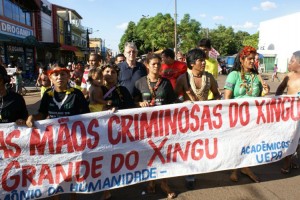
www.rightlivelihood.org/krautler.html
www.cimi.org.br (CIMI)
http://plattformbelomonte.blogspot.com
www.survivalinternational.org/news
The Right Livelihood Award, established in 1980 by Jakob von Uexkull, is an award that is presented annually, in early December, to honour those „working on practical and exemplary solutions to the most urgent challenges facing the world today“. An international jury, invited by the five regular Right Livelihood Award board members, decides the awards in such fields as environmental protection, human rights, sustainable development, health, education, and peace. Read More: > HERE <
Erwin Kräutler CPPS, auch Dom Erwin, (* 12. Juli 1939 in Koblach, Vorarlberg) ist römisch-katholischer Bischof und Prälat von Xingu, der flächenmäßig größten Diözese Brasiliens. 2010 wurde sein Einsatz für die Rechte der Indios und die Erhaltung des Amazonas-Urwalds mit dem alternativen Nobelpreis ausgezeichnet. Read More: > HERE <
Erwin Kräutler, a Catholic Bishop motivated by liberation theology, is one of Brazil’s most important defenders of and advocates for the rights of indigenous peoples. Already in the 1980s, he helped secure the inclusion of indigenous peoples‘ rights into the Brazilian constitution. He also plays an important role in opposing one of South America’s largest and most controversial energy projects: the Belo Monte dam.
Kräutler was born in Austria on July 12th, 1939, became a priest in 1965 and shortly after went to Brazil as a missionary. In 1978, he became a Brazilian citizen (though also keeping his Austrian citizenship). He worked among the people of the Xingu-Valley, who include indigenous peoples of different ethnic groups. In 1980, Kräutler was appointed Bishop of Xingu, the largest diocese in Brazil. From 1983-1991, and since 2006 he is the President of the Indigenous Missionary Council (CIMI) of the Catholic Church in Brazil.
Kräutler is motivated in his work by the teachings of liberation theology. He teaches that a Christian has to take the side of the powerless and to oppose their exploiters.
Working for indigenous peoples‘ rights – For five centuries, the population of Brazil’s indigenous peoples has constantly decreased – and the downward trend still continues. Today the causes are well-known and documented, including direct (yet rarely investigated) violence in connection with the appropriation of indigenous land; land grabs for energy, settlement, mining, industry, farming, cattle, and agribusiness projects; and military projects for national security that aim to open up areas.
During Kräutler’s presidency, CIMI has become one of the most important defenders of indigenous rights, with a focus on land rights, self-organisation and health care in Indian territories. In 1988, CIMI’s intensive lobbying helped secure the inclusion of indigenous people’s rights in the Brazilian Constitution. The Council has also raised awareness within the Church about indigenous people’s issues and rights.
Since 1992 and besides CIMI’s advocacy work, Kräutler has continued working tirelessly for the Xingu on the ground. The projects he has initiated include building houses for poor people, running schools, building a facility for mothers, pregnant women and children, founding a ‚refugio‘ for recuperation after hospital treatment, emergency aid, legal support, and work on farmers‘ rights and land demarcation.
Opposing the Belo Monte dam – For 30 years, Kräutler has been very active in the struggle against the plans for the huge Belo Monte dam on the Xingu River, nowadays heavily promoted by President Lula, which would be the third largest dam in the world. The dam would destroy 1000 square km of forest, flood a third of the capital city, Altamira, and create a lake of stagnant, mosquito-infested water of about 500 square km, which would make life in the rest of the city very difficult. 30,000 people would have to be relocated.
In 1989 the World Bank pulled out of a plan to build a series of huge hydroelectric dams on the Xingu River in the centre of Brazil. The dams were judged a potential social and environmental catastrophe, highlighted by the largest combined demonstration by the indigenous tribal people of the area ever staged. This is the same battle which is being supported by Avatar director James Cameron and actress Sigourney Weaver.
-
Even like Xingu River the largest water distribution of Amazonas, also Yamuna River for Ganges River, the consequences about non enviromental assessment creating negativ enviromental impacts, loss of biodiversity and cultural heritage. Scientists round the globe sounding Alarm about the freshwater qualities and Rivers.
Swami Haridas Music Festival in Vrindavan
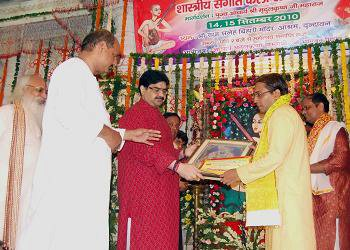
Braj Vrindavan Heritage Alliance
http://bvhalliance.blogspot.com
www.sudhir pandey.tabla masters.htm
Swami Haridas was a spiritual poet and classical musician. Credited with a large body of devotional compositions, especially in the Dhrupad style, he is also the founder of the Haridasi school of mysticism, still found today in North India. His work influenced both the classical music and the Bhakti movements of North India, especially those devoted to Krishna’s consort Radha. He is accounted a follower of the Nimbarka Sampradaya, the major Vaisnava tradition of exclusive devotion to Radha-Krishna. He was the disciple of Purandara Dasa and the teacher of Tansen. Read More: > HERE <
Vrindavan (Hindi: वृन्दावन)( pronunciation (help·info)) (alternately spelled Vrindaban, Brindavan, Brindavana, or Brundavan) also known as Vraj (as it lies in the Braj region) is a town in the Mathura district of Uttar Pradesh, India. It is the site of an ancient forest which is the region where Lord Krishna spent his childhood days. The town is about 15 km away from Mathura, the city of Lord Krishna’s birthplace, near the Agra-Delhi highway. The town hosts hundreds of temples dedicated to the worship of Radha and Krishna and is considered sacred by a number of religious traditions such as Gaudiya Vaishnavism, Vaishnavism, and Hinduism in general. It is nicknamed „City of Widows“ after the large population of abandoned widows who seek refuge here. Read More: > HERE <
Swami Haridas was a multi faceted personality. Primarily we know him as the saint who realized God through the route of nad brahma sadhna i.e. praying continuously in music. He not only composed a large number of poems (pad) but also started and perfected newer raags in classical music to sing the same. He realized God in the form of Shri Bankey Bihari, started the tradition of and initiated his disciples into rasopasna bhakti. He is also known as Adya Acharya of Raas Leela tradition. His birthday, which falls on Radha Ashtami day, is celebrated as a very special day in the temple, in Nidhivan and in Vrindavan.
Nidhivan as well as temple, both are decorated tastefully with flowers, flags and hangings. We have regular darshan at both places in the morning. In afternoon, around 4:30 PM, Raas Leela is staged in the courtyard of the temple. It is worthwhile to note, it is only once in the whole year on this day, that Raas Leela is performed in the temple.
Swami Haridas Sangit Samaroh Festival – Eminent Musician His Holiness Swami D. R. Parvatikar Veena Maharaj wanted to establish a yearly music Festival a international level at Vrindaban India in glorious memory of great musician Saint Shri Swami Haridas (Guru of Tansen ). Several music devotees and Artist appreciated this thinking of Veena Maharaj and Shri Swami Haridas Seva Samiti established by him in 1964 and every year Swami Haridas Sangit Samaroh started on Bihar Panchami, the appearance day of Shri Thakur Bankey Behariji.
After some period Shri Gopal Goswami taken up to organize the festival in Vrindaban, Delhi and Mumbai on the occasion of Radha-Astthami and managed many years. Gopal Goswami also organized the festival for few years. Prior to that Saint Shri Paad Baba of Vrindaban organized this music festival. This of Radha-Asthmi Atul Krshna Goswami organized it three days in Saneh Bihari Temple in Vrindaban.
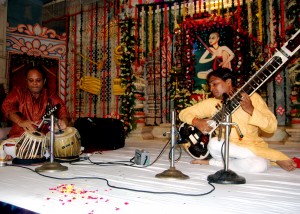
Swami Haridas Sangit Samaroh in the stage of famous Senior Artists of music field. Pt. Ravi Shankar, Ali Akbar, Bhim Sen Joshi, Bismillah Khan, Vilayat Khan, Gopikrishna, Sitara Devi, Kishori Amonkar, Ramchaturmalik and all of maximum famous artists have already been participated ith devotion to Swami Haridas ji. In view of the chain, this year also famous artists been invited.
Maestro Dr. Acharya Trigunateet Jaimini presented excellent performance on Sitar with beautiful accompany of Tabla player Sudhir Pandey from Delhi India who has quality experience of accompany with great masters Nikhil Banerji, Jasraj, Vilayat Khan & other Indian classical masters. Dr. Jaimini (Disciple of Swami D. R. Parvatikar) always get remarkable appreciations from the intellectual audience. His artistic talency holding over since two decades.
Dr. Jaimini & Sudhir Pandey also awarded Shastriya Kala Ratna Award in Swami Haridas Sangit Samaroh Festival. Coordinator Anup Sharma & Devendra Sharma told that He Specially invited Sudhir Pandey Tabla Player from Delhi to accompany with Dr. Jaimini for best presentation to the audience was thankful to Acharya Jaimini for his valuable participation in the programme.
Article by Ratnambara Sharma
writer Art & Culture
email – artcolour@rediffmail.com
mob. 91 9410226334
- Meet UNESCO World Heritage, friends, fans at fb <
- Meet Support UN Resolution on the Right to Water <
- Meet International Year of Biodiversity, friends, herbal fans at fb <
- Meet International Rivers, friends fans at fb <
- Meet IAIA – International Association for Impact Assessment at fb <
- Even like Yamuna the largest water distribution of Ganga, also Xingu River for Amazonas the consequences about non enviromental assessment creating negativ enviromental impacts, loss of biodiversity and cultural heritage. Scientists round the globe sounding Alarm about the freshwater qualities and Rivers.
Coming Famine – Training for Development
The Millennium Development Goals (MDGs) „are the most broadly supported, comprehensive and specific development goals the world has ever agreed upon. These eight time-bound goals provide concrete, numerical benchmarks for tackling extreme poverty in its many dimensions. They include goals and targets on income poverty, hunger, maternal and child mortality, disease, inadequate shelter, gender inequality, environmental degradation and the Global Partnership for Development. „Adopted by world leaders in the year 2000 and set to be achieved by 2015, the MDGs are both global and local, tailored by each country to suit specific development needs. They provide a framework for the entire international community to work together towards a common end – making sure that human development reaches everyone, everywhere. If these goals are achieved, world poverty will be cut by half, tens of millions of lives will be saved, and billions more people will have the opportunity to benefit from the global economy.“ Read More click HERE
COP16 will be the sixteenth Conference of the Parties (COP) under the United Nations Framework Convention on Climate Change (UNFCCC). The conference will be held in Mexico between November 29 and December 10, 2010. Read More: click HERE
A famine is a widespread scarcity of food that may apply to any faunal species. This phenomenon is usually accompanied by regional malnutrition, starvation, epidemic, and increased mortality. Long term measures include investment in modern agriculture in places that lack them, such as fertilizers and irrigation, which largely eradicated hunger in the developed world. However, World Bank strictures restrict government subsidies for farmers and the spread of fertilizer use is hampered by some environmental groups . Read More: click HERE
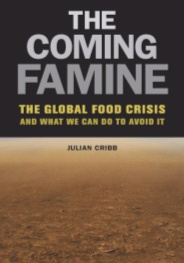
The coming famine: risks and solutions for global food security – Growing scarcities of water, land, oil and nutrients will combine with climate change to create a serious threat to global food security in coming decades. These could result in major regional famines, wars and refugee crises. Julian Cribb warns:
In The Coming Famine, Julian Cribb lays out a vivid picture of impending planetary crisis–a global food shortage that threatens to hit by mid-century–that would dwarf any in our previous experience. Cribb’s comprehensive assessment describes a dangerous confluence of shortages–of water, land, energy, technology, and knowledge–combined with the increased demand created by population and economic growth.
Writing in brisk, accessible prose, Cribb explains how the food system interacts with the environment and with armed conflict, poverty, and other societal factors. He shows how high food prices and regional shortages are already sending shockwaves into the international community. But, far from outlining a doomsday scenario, The Coming Famine offers a strong and positive call to action, exploring the greatest issue of our age and providing practical suggestions for addressing each of the major challenges it raises.
“The Coming Famine” will be published by the University of California Press and CSIRO Publishing in August 2010. It was supported by the Crawford Fund and Land & Water Australia.
www.EndPoverty2015.org www.standagainstpoverty.org
End poverty by 2015. This is the historic promise 189 world leaders made at the United Nations Millennium Summit in 2000 when they signed onto the Millennium Declaration and agreed to meet the Millennium Development Goals (MDGs). The MDGs are an eight-point road map with measurable targets and clear deadlines for improving the lives of the world’s poorest people. World leaders have agreed to achieve the MDGs by 2015.
The United Nations Millennium Campaign supports and inspires people from around the world to take action in support of the Millennium Development Goals.
Join the UN Millennium Campaign and be part of the generation that puts an end to poverty.
Abū Ibn SÄ«nÄ� – Medieval Medicine & Heritage
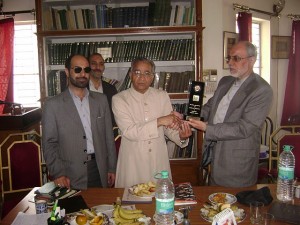
www.beruni.fan.uz www.muslimheritage.com
Ibn Sina Academy of Medieval Medicine and Sciences (IAMMS) (Urdu: ابن سینا اکا ڈ می آف میڈ یول میڈ یسین اینڈ سائنسیز) is one of the Indian NGOs, which is registered under the Indian Trusts Act, 1882. Mohammad Hamid Ansari, former vice-chancellor of Aligarh Muslim University, Aligarh, formally inaugurated it on April 21, 2001. Department of AYUSH, Ministry of Health and Family Welfare, Government of India gave accreditation to the academy in 2004 and promoted it as ‚centre of excellence‘ in 2008. Membership of the academy is open to anyone who has an interest in the academy’s activities particularly on history of medicine and history of science.The founder president is Hakim Syed Zillur Rahman. Read More: >HERE<
Unani Medicine or Yunani Medicine (pronounced /juːˈnɑːni/; YūnÄ�nÄ« in Arabic, Urdu, Bengali, Persian, Pashtu ) means „Greek“, also called „Unani-tibb“ is a form of traditional medicine widely practiced in India and Indian subcontinent. It refers to a tradition of Graeco-Arabic medicine, which is based on the teachings of Greek physician Hippocrates, and Roman physician Galen, and developed in to an elaborate medical System by Arab and Persian physicians, such as Rhazes, Avicenna (Ibn Sena), Al-Zahrawi , Ibn Nafis. Unani medicine is based around the concepts of the four humours: Phlegm (Balgham), Blood (Dam), Yellow bile (ṢafrÄ�‘) and Black bile (SaudÄ�‘). Read More: > HERE < The Unani Medicine is a traditional medicine and part of the trio Indian medicines – ayurveda, siddha and unani.
Ibnsina Academy of Medieval Medicine and Sciences – Abū AlÄ« al-Husayn ibn AbdullÄ�h ibn SÄ«nÄ� (Avicenna) is a well-known personality among the physicians of Unani medicine and scientists of physical sciences since medieval times. To commemorate and to institutionalize an academy named after him, Ibn Sina Academy of Medieval Medicine & Sciences, was founded on March 1, 2000. The Academy has been registered under Indian Trusts Act, 1882 on August 14, 2000. Mr. M. Hamid Ansari, Vice-chancellor of Aligarh Muslim University, Aligarh formally inaugurated it, on April 20, 2001. Department of AYUSH, Ministry of Health & Family Welfare, Govt. of India gave accreditation to the academy in 2004. The Academy is now a non-governmental, non-political and non-profit organization with multiple aims and objectives.
The Idea of the Formation of the Academy – There is a consensus amongst researchers of the history of medicine & sciences that early Arab, Muslim physicians and scientists had played a very important role in the development of natural and medical sciences during the renaissance of Islamic civilization, which spanned over eight centuries. This was achieved through translating earlier medical and scientific sources and developing then known sciences in the light of their clinical and scientific expertise.
Despite the above fact, it is well-known that the full potential of the Islamic medical and scientific particularly, heritage has not been investigated exhaustively to-date its basic role and importance in the development of modern medicine and its effect on the European Renaissance. Most of the manuscripts of Islamic medicine are lying unutilized on the shelves of private and some public libraries around the world and only few have been studied comprehensively. In the light of this, a number of physicians, scientists, scholars and historians are called for reviving this heritage on a national level. This is to be achieved through organization and teamwork.
And this is how the idea to found the Ibn Sina Academy of Medieval Medicine & Sciences (IAMMS) emerged. The first meeting of the Academy was held on March 5, 2000 in Aligarh (India) and was chaired by Professor (Hakim) Syed Zillur Rahman, president of IAMMS. A number of physicians and historians attended this meeting. The second meeting of the Academy was held on April 8, 2001 in Aligarh, when the By-Laws were discussed and approved.
It was also decided that Aligarh would be the permanent location of the Academy and it would operate as a normal registered trust as well. Membership of the society is open to everyone who has an interest in or would like to contribute by studying the History of Islamic Medicine and Sciences. The Academy looks forward to receiving support and help from all scholars and researchers in India and all over the world.
The Institute of Manuscripts of the Azerbaijan Academy of Sciences is a center for collecting, systematizing, storing and publishing medieval manuscripts. It currently includes about 40,000 documents including 11 000 manuscripts, in languages that include Azeri, Turkish, Uzbek, Persian and Arabic. These texts help us understand what Azerbaijanis from the Middle Ages thought about medicine, astronomy, mathematics, poetry, philosophy, law, history and geography.
The basis for the Institute was laid in 1924, when the first all-Azerbaijan Regional Congress was held in Baku. The Congress decided to organize a scientific library with a special department dedicated to ancient manuscripts and rare books. At first, this library was part of the Investigation Society of Azerbaijan; then it became attached to the Nizami Institute of Literature. In 1955 the Manuscript Department became the Independent Center of Scientific Research. Later, its name was changed to the Institute of Manuscripts.
Many of the ancient manuscripts found at the Institute came from the private collections of Azerbaijan’s most prominent 19th- and early 20th-century thinkers, including Abbasgulu agha Bakikhanov, Mirza Fatali Akhundov, Abdulgani Afandi Khalisagarizada, Husein Afandi Gaibov, Bahman Mirza Gajar and Mir Mohsun Navvab.
It continues to collect manuscripts, rare books and historical documents from all over Azerbaijan. The Institute is located in the former Alexandrian Russian Muslim Female Boarding School, which was built by Haji Zeynalabdin Taghiyev between 1898 and 1901. This was the first girl’s school in the Muslim East. The building was designed by Polish architect Joseph V. Goslavski (1865-1904), who also designed Baku’s City Hall and Taghiyev’s private residence, which now serves as the Taghiyev Museum housing the National History Museum collection.
In 1918, when Azerbaijan became independent, Taghiyev gave the building to the government of Azerbaijan to be used for ministers‘ offices. In 1920, after the Red Army invaded Azerbaijan, the Bolsheviks turned the building into the headquarters for the Worker, Peasant and Soldier Deputies. After that, it housed the Presidium of the Supreme Soviet of the Azerbaijan Republic (the governing body of Parliament). Since 1950, the building has housed what is now called the Institute of Manuscripts.
Medical Manuscripts – Among the carefully preserved books on natural sciences there are numerous sources on medicine and pharmacy in Oriental languages. The oldest of them dates back to the 9th century, the latest to the 20th. By the way, the Institute treasures one of the oldest hand-written copies of Canon of Medicine by great Ibn Sina (Avicenna) as well as other valuable works on medicine and pharmacy, including manuscripts of works by such medieval authors as Ali bin Abbas (10th century), Muwaffag al-Harawi (10th century), Isa ar-Ragi (10th century), Mahmud bin Ilyas (13th century), Yusif bin Ismail Khoyi (13-14th centuries), Zeyn al-Abidin Attar (15th century), Yusif bin Muhammad Harawi (15-16th centuries), Sultan Ali Khorasani (16th centurys), Sayyid Muhammad Mu’min (17th century), etc.
In order to find out the total number of manuscripts on medicine and pharmacy the funds and catalogs of the Institute have been examined by Prof. Farid Alakbarli. It has been revealed that the Institute’s collection includes 390 medieval manuscripts and 27 printed books on medicine and pharmacognosy written in the following languages: Persian – 222 manuscripts, Turkic (Old Azeri and Old Turkish) – 71 manuscripts, and Arabic – 70 manuscripts.
By the way, the Institute treasures one of the oldest hand-written copies of Canon of Medicine by great Ibn Sina (Avicenna) as well as other valuable works on medicine and pharmacy, including manuscripts of works by such medieval authors as Ali bin Abbas (10th century), Muwaffag al-Harawi (10th century), Isa ar-Ragi (…10th century), Mahmud bin Ilyas (13th century), Yusif bin Ismail Khoyi (13-14th centuries), Zeyn al-Abidin Attar (15th century), Yusif bin Muhammad Harawi (15-16th centuries), Sultan Ali Khorasani (16th centurys), Sayyid Muhammad Mu’min (17th century), etc.
A brief history of Islamic Medicine illustrating how advanced the Islamic World was compared to the West in the Middle Ages. / BBC – Islam and Science 3: The Power of Doubt 1/6 – العلم في الاسلام
The Abu Raihan Biruni Institute of Oriental Studies of the Academy of Science of the Republic of Uzbekistan was established in 1943 on the foundations of the Oriental Department of the Alishir Navai“i State Public Library. Until 1950 it was called the Institute for the Study of Oriental Manuscripts, and after 1950, considering the range of its scholarly directions, it was renamed the Oriental Studies Institute.
Materials in the collection include works written in Uzbek, Arabic, Persian, Tajik, Urdu, Pasto, Azeri, Ottoman Turkish, Tatar, Turkmen, Uighur and other languages. These materials encompass the fields of history, literature, philosophy, law, astronomy, physics, chemistry, medicine, pharmacology, language, geography, music, mathematics, mineralogy, agriculture, the figurative arts, and so on.
At the present time the manuscript collection contains 25,261 volumes. Many of them are miscellanies, where one codex contains diverse treatises. Thus there are far more treatises included in the collection than represented by the number of volumes alone. The Institute“s collection of lithographed and printed books amounts to about 39,300 volumes. They have important historical meaning for the study of history in Central Asia, its neighboring states “ Turkey, Iran, Afghanistan, Pakistan, India, China and Arab countries “ and also for the study of the political, economic, diplomatic and cultural links among them.
The collection has many manuscripts about the history of Islam, the Islamic sciences, and Sufism, written in Arabic, Persian, and old Uzbek and dating from the ninth to the nineteenth centuries. Among the manuscripts are early examples of the Qur“an, which date from the ninth century and employ the Kufic script. In addition, the collection holds rare copies of the Qur“an written at various times employing the Naskh script in artistic ways.
The Institute has a distinctive collection of archival documents that chronologically encompass a thousand-year period. The oldest document is from the tenth century, and the most recent is from the twentieth century. In particularly large quantity are documents compiled in the Bukharan, Khivan and Qoqand khanates. At the present time the Institute studies and publishes these documents.
- www.amu.ac.in Alligarh Muslim University
- Voices from the Ages – Baku’s Institute of Manuscripts <
- http://aligarhmovement.com/aligarians/hakim_zillur_rahman <
- Abu Raihan Biruni Institute of Oriental Studies <
- AVICENNA, UNANI MEDICINE & MATERIA MEDICA <
- ISLAMIC PLANT MEDICINE AND HISTORY <
- IRCICA – Muslim Calligraphy, Heritage <
- ACCESS TO MEDICINE´s PROJECT:
- http://en.wikipedia.org/wiki/Science_in_medieval_Islam
- www.essentialaction.org/access/ , http://standagainstpoverty.org/
- Meet AVICENNA, studies, friends, fans at fb <
- Meet KARKHANA ZINDA TILISMATH, Unani Medicine, friends, studies at fb <
- Meet Islamic Medicine “The Cure for Every Disease”, studies, friends at fb <
- Meet UNESCO World Heritage, friends, fans at fb <
- Meet the Oakland Institute, friends, fans, at fb <
- Meet International Year of Biodiversity, friends, herbal fans at fb <
- Meet United Nations Millennium Campaign, friends, fans at fb <
Conference “From libraries to the future”

BBC Youth Diary – Armenians and Azerbaijanis
http://azeri.org/Inst. of Manuscripts_
http://whc.unesco.org/statesparties/az
Azerbaijan (pronounced /ˌæzərbaɪˈdʒɑːn/ Azerbaijani: Azərbaycan), officially the Republic of Azerbaijan (Azerbaijani: Azərbaycan Respublikası), is one of the six independent Turkic states in the Caucasus region of Eurasia. Located at the crossroads of Eastern Europe and Western Asia,it is bounded by the Caspian Sea to the east, Russia to the north, Georgia to the northwest, Armenia to the west, and Iran to the south. The exclave of Nakhchivan is bounded by Armenia to the north and east, Iran to the south and west, while having a short borderline with Turkey to the northwest. Enclaves Karki, Yuxarı Əskipara, Barxudarlı and Sofulu is surrounded by Armenia and has been controlled it since the Nagorno-Karabakh War. The majority-Armenian populated Nagorno-Karabakh region in the southwest of Azerbaijan declared itself independent from Azerbaijan in 1991, but it is not diplomatically recognised by any nation and is still considered a de jure part of Azerbaijan occupied by Armenian forces. Read More: > HERE <
The Azerbaijanis are an ethnic group mainly living in northwestern Iran and the Republic of Azerbaijan. Commonly referred to as Azeris/Ä€zarÄ«s (آذری – Azərilər) or Azerbaijani Turks (Azerbaijani: Azərbaycan türkləri), they also live in a wider area from the Caucasus to the Iranian plateau. The Azeris are predominantly Shia Muslim and have a mixed heritage of Turkic, Caucasian and Iranic elements. Read More: > HERE <
Jafar Gafar oglu Jabbarly, often spelled Jabbarli (Azerbaijani: Cəfər Cabbarlı, 20 March 1899, Xızı – 31 December 1934, Baku) was an Azerbaijani playwright, poet, director and screenwriter. Read More: > HERE <
X International Conference by name „From libraries to the future“ will be held in Sochi city of Russian Federation from September 20 to 25.
Republican Youth Library named after Jafar Jabbarli click here and employees of Centralized Library System of Gusar region will represent our country in conference. Purpose of conference is to propagate literature about sport which praise healthy life. Library workers from different countries of the world will join to the measure. Exchange of mutual experience will be carried out there.
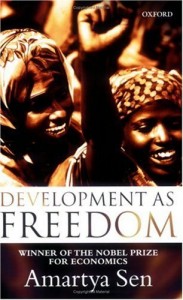
Rising from Ashes – Development as Freedom
3rd International Rice Congress (IRC 2010)
Amartya Kumar Sen, CH (Bengali: , Ômorto Kumar Shen; born 3 November 1933) is an eminent Indian economist and philosopher. He is currently the Thomas W. Lamont University Professor and Professor of Economics and Philosophy at Harvard University. He is also a senior fellow at the Harvard Society of Fellows and a Fellow of Trinity College, Cambridge, where he previously served as Master from the years 1998 to 2004.He is the first Asian and the first Indian academic to head an Oxbridge college. He has been called „the Conscience and the Mother Teresa of Economics“for his work on famine, human development theory, welfare economics, the underlying mechanisms of poverty, gender inequality, and political liberalism. However, he refutes the comparison to Mother Teresa by saying that he has never tried to follow a lifestyle of dedicated self-sacrifice. In 1998, Sen won the Nobel Memorial Prize in Economic Sciences for his contributions to work on welfare economics. Amartya Sen’s books have been translated into more than thirty languages. He is a trustee of Economists for Peace and Security. In the year 2006, Time magazine listed him under „60 years of Asian Heroes“and now in 2010 as among the 100 most influential persons in the world.
Sen was born in Santiniketan, West Bengal, the university town established by the poet Rabindranath Tagore, another Indian Nobel Prize winner. His ancestral home was in Wari, Dhaka in modern-day Bangladesh. Rabindranath Tagore is said to have given Amartya Sen his name („Amartya“ meaning „immortal“). Sen hails from a distinguished family: his maternal grandfather Kshitimohan Sen, a close associate of Rabindranath Tagore, was a renowned scholar of medieval Indian literature, an authority on the philosophy of Hinduism, and also the second Vice Chancellor of Visva-Bharati University. Read More HERE
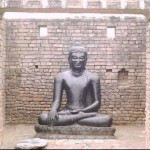
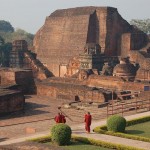
NÄ�landÄ� (Hindi/Sanskrit/Pali: नालंदा) is the name of an ancient center of higher learning in Bihar, India. The site of Nalanda is located in the Indian state of Bihar, about 55 miles south east of Patna, and was a Buddhist center of learning from 427 to 1197 CE. It has been called „one of the first great universities in recorded history.“ Read More: HERE
Sen starts out addressing the question of whether or not freedom is conducive to development. He feels that such a question is at best defectively formulated, for reasons given below. Sen ponders over how freedom is often dissociated from development, and considered a pleasant consequence thereof. However, Sen counters that freedom in itself should be the goal of development, and it is both constitutive and instrumental to development.
He makes the argument that freedom (political, economic or societal) is central to achieving development; while freedom may result from such development, it would be unwise to ignore the inverse relationship, and true development will only happen through the proliferation of such freedoms. Furthermore, if the definition of development is to move beyond GNP and include freedom, unfree societies aren’t really quite developed.
Sen also argues against the “Lee Hypothesis”, named after the first Prime Minister of Singapore, Lee Kuan Yew. The idea behind the “Lee Hypothesis” is that democracy and freedom are luxuries that only developed societies can afford, and to become developed, less-developed societies will need to push forth agendas that may be at odds with democracy and freedom. Furthermore, a more ardent view would be that “non-democratic systems are better in bringing about economic development” for such societies.
In the same vein, he also takes to task the interpretation that “Asian Values” are inherently unsuitable and unfit for democracy, where Asia is defined not by region but through culture. The argument goes that discipline and obedience are critical traits to the Asian cultural psyche and as such, democracy is at odds with such a principle. This particular notion has had the unfortunate reputation of being exploited by authoritarian governments across Asia.
Sen counters both the “Lee Hypothesis” and the “Asian Values” argument by offering the example of the biggest democracy in Asia — India. While India has made several economic mistakes through the years, the fact that it continues to be free democracy has helped its economy grow while preserving the freedoms of its citizens. Sen also counters that the “Asian Values” argument isn’t necessarily unique to Asia, and that even within Asia, there have been differing schools of thought, including those that question blind allegiance to the state. And of course, this book also touches upon Sen’s (now-famous) insight on famines and democracies.
He argues that famines are not necessarily caused by lack of declines in food production but rather due to instability in the political, economic, or societal structures that leaves sections of the population unable to fend for themselves.
Sen further proposes that countries that are “free” in the economic sense would have citizenry with a consistent income flow, and this income can be used to borrow or import basic necessities in times of need.
In Development as Freedom Amartya Sen explains how in a world of unprecedented increase in overall opulence millions of people living in the Third World are still unfree. Even if they are not technically slaves, they are denied elementary freedoms and remain imprisoned in one way or another byeconomic poverty, social deprivation, political tyranny or cultural authoritarianism. The main purpose of development is to spread freedom and its ‚thousand charms‘ to the unfree citizens. Freedom, Sen persuasively argues, is at once the ultimate goal of social and economic arrangements and the most efficient means of realizing general welfare.
Social institutions like markets, political parties, legislatures, the judiciary, and the media contribute to development by enhancingindividual freedom and are in turn sustained by social values. Values, institutions, development, and freedom are all closely interrelated, and Sen links them together in an elegant analytical framework. By asking ‚What is the relation between our collective economic wealth and our individualability to live as we would like?‘ and by incorporating individual freedom as a social commitment into his analysis Sen allows economics once again, as it did in the time of Adam Smith, to address the social basis of individual well-being and freedom. But at the end of the day, Sen concludes that true development cannot be measured through mere tangibles (e.g. GNP). Freedom remains the only true measure of development, and when there is freedom, development will follow.
„Poverty is perpetuated by our Institutions“ http://wn.com/amartya_sen_think_and_act http://www.theendofpoverty.com
Amartya Sen, Born in West Bengal, India, he has a patrician style: occasionally loquacious, often ironic, usually genial, always brilliant. Crucially, at the other, older Cambridge, Sen studied philosophy and economics. He has always concerned himself as much with moral as material problems. In his most famous book, Poverty and Famines — inspired by the Bengal famine of 1943, which he witnessed as a boy — he asked how people could starve when food was available. The answer was that the poor simply lacked the capability to buy it. On these and other issues, the argumentative Indian has persuaded.
His notion of measuring human development is now central to the work of the U.N. and the World Bank. As a result, Sen’s influence extends all the way down to what another great economist has called „the bottom billion.“ http://www.time.com/time/specials.html
Amartya Sen, the World Bank, and the Redress of Urban Poverty: A Brazilian Case Study – While there is some suggestion of a re-orientation in the World Bank’s income-cantered conceptualization of poverty to one based on Amartya Sen’s concept of ‚development as freedom‘, it is hard to uncover definitive evidence of such a re-orientation from a study of the Bank’s urban programmes in Brazil. This paper attempts an application of Sen’s capability approach to the problem of improving the urban quality of life, and contrasts it with the World Bank’s approach, with specific reference to a typical squatter upgrading project in Novos Alagados in Salvador da Bahia, Brazil. Click here
A GLOBAL EDUCATION PROGRAM – THE CASE OF NOVOS ALAGADOS, Salvador Bahia, Brazil – In development programs it is fundamental to set upmalliances finalised towards the common objective: a partnership between subjects to set synergies and large amounts of resources into motion. The role of AVSI was exactly the one of aggregating and involving local administrations, social forces, international institutions, according to their respective roles, to meet the needs confronting them, for the common good.
The program had the peculiarity to have a large wealth of resources converge on the territory, through the partnership network, thus opening up the area towards the world and the world towards the area.
India’s lost Buddhist university to rise from ashes – Indian academics have long dreamt of resurrecting Nalanda University, one of the world’s oldest seats of learning which has lain in ruins for 800 years since being razed by foreign invaders.
Now the chance of intellectual life returning to Nalanda has come one step closer after the parliament in New Delhi last month passed a bill approving plans to re-build the campus as a symbol of India’s global ambitions.
Historians believe that the university, in the eastern state of Bihar, once catered for 10,000 students and scholars from across Asia, studying subjects ranging from science and philosophy to literature and mathematics.
Founded in the third century, it gained an international reputation before being sacked by Turkic soldiers and its vast library burnt down in 1193 — when Oxford University was only just coming into existence.
Piles of red bricks and some marble carvings are all that remain at the site, 55 miles (90 kilometres) from Bihar’s state capital of Patna.
„Nalanda was one of the highest intellectual achievements in the history of the world and we are committed to revive it,“ said Amartya Sen, the renowned economist and Nobel laureate who is championing the project.
„The university had 2,000 faculty members offering a number of subjects in the Buddhist tradition, in a similar way that Oxford offered in the Christian tradition,“ he said at a promotional event in New Delhi.
The new Nalanda University has been allocated 500 acres (200 hectares) of land near its original location, but supporters who have lobbied for the cause for several years admit that major funds are needed if Nalanda is to rise from the ashes.
„Income from a number of villages, and funds from kings, supported the ancient Nalanda. Now we have to look for donations from governments, private individuals and religious groups,“ said Sen. Whatever the financial position, the need for more high-level educational institutes in India is clear. Click HERE
- DEVELOPMENT AS FREEDOM <
- Naropa & Nalanda University <
- Jain Tradition & Nalanda University <
- http://nobelprize.org/nobel_prizes/economics/sen-autobio.html
- http://nobelprize.org/nobel_prizes/peace/laureates/2006/yunus.html
- http://www.avsi.org/NovosAlagados.pdf
- Meet IRRI Rice Research Center, studies, friends, fans at fb <
- Meet Yunus Center, studies, friends, fans at fb <
- Meet Human Rights Watch, friends, fans at fb <
- Meet Transparency International, friends, fans at fb <
- Meet FAIR TRADE, friends, fans at fb < & www.ethicalconsumer.org
- Meet International Year of Biodiversity, friends, fans at fb <
- Meet Support UN Resolution on the Right to Water and Sanitation <
- Meet UN Millennium Development Goals, friends, fans at fb <
- Meet International Year of Biodiversity, friends, fans at fb <
- Meet COP16 to the UN Framework Convention on Climate Change at fb <
Sustainable Development, Water & Tourism
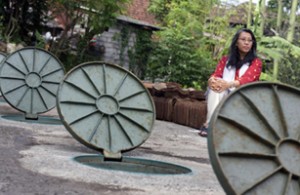
http://balifokus.asia/balifokus
“When public services fail to serve all populations equally, if people get more trust and empowerment, most of the problems can be solved closer to the source in a more sustainable way with less costs than the conventional and centralized approach.” — Yuyun Ismawati, Indonesia, Sustainable Development
Bali is an Indonesian island located in the westernmost end of the Lesser Sunda Islands, lying between Java to the west and Lombok to the east. It is one of the country’s 33 provinces with the provincial capital at Denpasar towards the south of the island. With a population recorded as 3,551,000 in 2009, the island is home to the vast majority of Indonesia’s small Hindu minority. About 93.2% of Bali’s population adheres to Balinese Hinduism, while most of the remainder follow Islam. It is also the largest tourist destination in the country and is renowned for its highly developed arts, including dance, sculpture, painting, leather, metalworking, and music. Read > HERE <
Tourism in Bali – The island of Bali, Indonesia, always has been an enchanting place for foreigners. Images of rice paddies, beautiful beaches and temples and a fascinating culture draw tourists from all around the world. It was only in the 1970s that tourism in Bali started to develop. The industry did bring many benefits to the island, such as increased employment, and its transformation from a marginal economic area of the country to the most important area in Indonesia after Jakarta. However, Bali s tourism development occurred quickly and without proper planning.
Therefore, tourism has caused some serious damage to the island’s environment. As one example, the sleepy village of Kuta became a tourist enclave, with its natural resources degraded and its infrastructure overwhelmed. This paper will discuss the origins of tourism in Bali and how it has affected the island’s environment. It also will discuss proposed alternatives to let tourism and the environment coexist in a more balanced fashion.
Description – Mass tourism in Bali began in 1969 with the construction of the new Ngurah Rai International Airport, allowing foreign flights directly into the island, rather than arrival via Jakarta. Three years later, in 1972, the Master Plan for the Development of Tourism in Bali was drawn by the government of Indonesia. The government wanted to make Bali the „showcase“ of Indonesia and to serve as the model of future tourism development for the rest of the country. The plan was financed by the United Nations Development Programme and carried out by the World Bank.
A Solution to Stop Garbage Destroying Tourism – Tourism took off on the island in the 1970s. The economic benefits are clear: the island went from being economically marginal to ranking second only to the country’s capital, Jakarta, in wealth creation. The island received more than 2.38 million tourists in 2009, up 14.5 percent compared with 2008, according to Ida Komang Wisnu, head of the provincial statistics office. But tourism produces on average five kilograms of waste a day per tourist – 10 times what the average Indonesian produces (Bali Fokus).
In the past, the traditional way of serving food in Indonesia was to wrap it in, or serve it on, a palm leaf: a biodegradable approach. But with the huge expansion in use of plastics and non-biodegradable packaging, the waste disposal problem is out of control.
In Indonesia, government garbage disposal services tend to collect between 30 and 40 percent of solid waste, most of this from high income communities. The majority poor population are left to fend for themselves when it comes to waste disposal.
A solution by Yuyun Ismawati, an environmental engineer and consultant, has since 1996 focused on helping poor communities find ways to safely dispose of waste.
Yuyun Ismawati is an Indonesian environment engineer. She has worked on design of city and rural water supply systems, and later on designing systems for safe waste management.
In 2000, she started her own NGO – Bali Fokus – and opened a waste management facility in the Bali village of Temesi. The recycling plant employs 40 people from the village, who sort garbage into recyclables, compost and residual waste. Income from the recycled waste and compost goes to helping local farmers.
Bali Fokus’ successful approach has now been replicated in six other sites on the nearby island of Java. And the government of Indonesia has promised to help create 15 more each year.
In 2009 Ismawati won the Goldman Award which honors grassroots environmental heroes from the six inhabited continental regions: Africa, Asia, Europe, Islands and Island Nations, North America, and South and Central America.
She is also working on using decentralized grassroots approaches to bringing sewage disposal and clean water to communities.
ALL IS NOT WELL – Environmentalists and some government officials say the problems could become worse unless significant investment is made and people started conserving water.
„If there’s no change in this fast-growing tourism development, it’s not impossible that Bali will suffer from a water crisis in the next 10 years,“ said Agung Wardana from Wahli, a leading Indonesian environment group.
„The current emphasis is the development of the tourism industry which results in changes in productive and open lands that reduce the ability to provide ground water. This is made worse by neglect of river system,“ he added.
Many Balinese rely on wells for water but in some areas, particularly in the tourist centre of Kuta, so much is being extracted that salt water is fouling supplies. Rubbish and sewage being dumped into rivers was also affecting water quality.
Bali has few reservoirs and many of its rivers are used to channel water to an intricate traditional network of channels to feed the island’s iconic emerald rice fields.
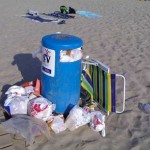
85% of Balis freshwater tapped or not clean, most freshwater urged by tourism
„Since the development of tourism industry is very fast, in the future we will have a big problem,“ said Ida Cakra Sudarsana, head of the mining and energy division in the Bali Department of Public Works.
He said Bali’s problems were not lack of ground or river water but one of development and he urged an expansion of reservoirs and tree-planting schemes in Bali’s volcanic mountains to curb deforestation and water-conservation schemes.
„We’re supposed not to face a water shortage until at least 2025,“ said Raka Dalem, a senior lecturer in environmental management and ecotourism at Bali’s Udayana University. „But in actual situation we do face a shortage situation because of bad management of water resources.
„During the wet season, lots of water flows to the sea and then in the dry season we face a bad problem. That’s the main issue, how we manage the water so that it can be used throughout the year,“ he said.
While tourist businesses and farmers diverting water from Bali’s lakes were partly to blame, there was also significant damage caused by the felling of forest trees near catchment areas for cash crop cultivation, experts said.
A lack of trees meant water and silt rushed into the lakes during downpours but there were less regular river flows during the dry season. It also meant that water was not being absorbed into the ground to fill underground basins that will provide for Bali’s water needs in the future. Water conservation is crucial.
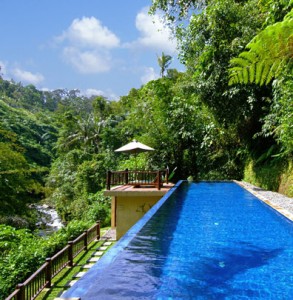
Already at Nusa Dua, an enclave of five-star hotels and a major conference centre, the government has banned deep-well water. All big hotels in Nusa Dua used recycled waste water for watering gardens. Many luxury villas also used water-recycling systems, said Nils Wetterlind of ecovilla developer Tropical Homes.
But most villas also have large swimming pools filled from well or town water. And very few villas used solar/natural gas electricity systems now widely available or used certified plantation timber, meaning they weren’t very green.
- Resources:
- Tourism in Bali – http://www1.american.edu/ted/balitour.htm
- www.nowpublic.com/solution
- A guide to establishing recycling projects based on experience in Mongolia. Website: http://tinyurl.com/yfkn2dp
- A video showing the problem of waste disposal in poor communities in Jakarta.
- Website: http://www.videosift.com/video/Garbage-ring-The-slums-of-Jakarta-Indonesia
- http://www.theaustralian.com.au/news/developers-drawn-to-tourist-magnet
- http://www.alertnet.org/thenews/newsdesk/SP117259.htm
- http://www.time.com/Heroes of the Environment 2009
- Meet Human Rights Watch, friends, fans at fb <
- The International Ecotourism Society (TIES), friends, fans at fb <
- Blue Planet Foundation, studies, friends, fans, at fb <
- Meet International Year of Biodiversity, friends, fans at fb <
- Meet Support UN Resolution on the Right to Water and Sanitation <
- Bali Institute for Global Renewal (BIGR),studies,friends, fans <
- Meet COP16 to the UN Framework Convention on Climate Change at fb <
Safe Passage to Cancun – UN Climate Deal
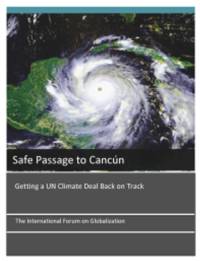
Globalization (or globalisation) describes a process by which regional economies, societies, and cultures have become integrated through a global network of communication, transportation, and trade. The term is sometimes used to refer specifically to economic globalization: the integration of national economies into the international economy through trade, foreign direct investment, capital flows, migration, and the spread of technology. However, globalization is usually recognized as being driven by a combination of economic, technological, sociocultural, political, and biological factors. The term can also refer to the transnational circulation of ideas, languages, or popular culture through acculturation. Read More: >HERE<
The United Nations Framework Convention on Climate Change (UNFCCC or FCCC) is an international environmental treaty produced at the United Nations Conference on Environment and Development (UNCED), informally known as the Earth Summit, held in Rio de Janeiro from 3 to 14 June 1992. The objective of the treaty is to stabilize greenhouse gas concentrations in the atmosphere at a level that would prevent dangerous anthropogenic interference with the climate system. The parties to the convention have met annually from 1995 in Conferences of the Parties (COP) to assess progress in dealing with climate change. In 1997, the Kyoto Protocol was concluded and established legally binding obligations for developed countries to reduce their greenhouse gas emissions. Read More: > HERE <
THE INTERNATIONAL FORUM ON GLOBALIZATION (IFG) is a North-South research and educational institution composed of leading activists, economists, scholars, and researchers providing analysis and critiques on the cultural, social, political, and environmental impacts of economic globalization. Formed in 1994, the IFG came together out of shared concern that the world’s corporate and political leadership was rapidly restructuring global politics and economics on a level that was as historically significant as any period since the Industrial Revolution.
Yet there was almost no discussion or even recognition of this new „free market,“ or „neoliberal“ model, or of the institutions and agreements enforcing this system—the World Trade Organization (WTO), the International Monetary Fund (IMF), the World Bank, the North American Free Trade Agreement (NAFTA) and other such bureaucracies. In response, the IFG began to stimulate new thinking, joint activity and public education about this rapidly rising economic paradigm.
Unique in its diversity, depth, and breadth, the IFG works through an active international board of key citizen movement leaders; a small, dedicated staff; and a network of hundreds of associates representing regions throughout the world on a broad spectrum of issues. Our work is closely linked to social justice and environmental movements, providing them with critical thinking and frameworks that inform campaigns and activities „on the ground.“
The IFG produces numerous publications; organizes high-profile, large public events; hosts many issue-specific seminars; coordinates press conferences and media interviews at international events; and participates in many other activities that focus on the myriad consequences of globalization. During the last few years, the IFG has launched a pioneering program that focuses on alternative visions and policies to globalization that are more just, equitable, democratic, accountable, and sustainable for people and the planet.
COP16 – SOURCE WATCH click here , IFG Utube TV click here
POSITION STATEMENT – The International Forum on Globalization (IFG) promotes equitable, democratic, and ecologically sustainable economies.We were formed in response to widespread concerns over economic globalization, a process dominated by international institutions and agreements unaccountable to democratic processes or national governments. Speaking the language of „free-trade“ and poverty alleviation, organizations like the WTO, the IMF, and the World Bank impose a development model which seems designed to benefit transnational corporations over workers; foreign investors over local businesses; and wealthy countries over developing nations.
When the IFG first presented its globalization critique a decade ago, the economic globalization model was widely accepted. Today, the institutions of globalization are undergoing a crisis of legitimacy. Corporate scandals such as Enron and Worldcom, the failures of IMF and World Bank policies and programs, the recent break down of WTO negotiations, and other events reveal that the benefits of globalization that were promised by its advocates have not come to fruition.
Even the policy consensus that governed development thinking during most of the past two decades, the so-called Washington Consensus, has broken up with notable „defectors“ such as former World Bank chief economist Joseph Stiglitz and the director of the Earth Institute at Columbia University Jeffrey Sachs. From conservative circles, the Meltzer Commission, along with Walter Wriston, Henry Kissinger, and William Simon also have issued strong critiques against Bretton Woods institutions.
But perhaps the greatest indictment against globalization is the unprecedented global citizen movement that has emerged during the last decade, demonstrating that the benefits of globalization have gone to the few at the exclusion of many. This extraordinary alliance brings together numerous diverse groups and perspectives — union members, farmers, landless peasants, people of faith, women’s organizations, youth organizations, environmentalists, AIDS and other health activists, politicians, civil servants, immigrants, peace and human rights organizations, intellectuals, consumer advocates, and many others.
While promoters of globalization proclaim that this model is the rising tide that will lift all boats, citizen movements find that it is instead lifting only yachts. In fact, the actual beneficiaries are obvious. In the United States, for example, during the period of the most rapid economic globalization — the 1990s — the top corporate executives of the largest global companies made salaries and gained options in the tens of millions of dollars (often in the hundreds of millions), while real wages of ordinary workers either remained stagnant or rose insignificantly.
The Institute for Policy Studies (IPS) reports that American CEOs were paid an average of 458 times more than production workers in 2000, up from 104 times in 1991. The degree of wealth concentration of the world’s 475 billionaires is now worth the combined income of the bottom half of humanity.
Meanwhile, the United Nations Development Program’s 1999 Human Development Report revealed that the gap between the wealthy and the poor both within and between countries is growing steadily larger. It notes inequities of the current global trading system as one of the key contributors to this trend. Even the U.S. Central Intelligence Agency (CIA) concurred. In its Global Trends 2015 report, issued in 2000, the CIA maintained that globalization will create „an even wider gap between regional winners and losers than exists today. [Globalization’s] evolution will be rocky, marked by chronic volatility and a widening economic divide…deepening economic stagnation, political instability, and cultural alienation. [It] will foster political, ethnic, ideological, and religious extremism, along with the violence that often accompanies it.“
All over the world, evidence points to the failure of globalization and the so-called „free trade“ policies of the last decade – loss of jobs and livelihoods, displacement of indigenous peoples, massive immigration, rapid environmental devastation and loss of biodiversity, increases in poverty and hunger, and many additional negative effects.
-
IFG PROGRAMS AND ACTIVITIES:
-
CLIMATE CHANGE: THE “COPENHAGEN TO CANCUN CONVENINGS” OF CIVIL SOCIETY NETWORKS TO PRESS INTERNATIONAL INSTITUTIONS TOWARD POSITIVE ACTIONS
-
FALSE SOLUTIONS: PUBLICATIONS SERIES
-
INDIGENOUS RIGHTS: ACTUALIZATION OF THE UN DECLARATION ON THE RIGHTS OF INDIGENOUS PEOPLES (UNDRIP)
-
TRADE & FINANCE: TRANSFORMING GLOBAL RULE-MAKING
-
POPULATION: DOES POPULATION MATTER? BRIDGING THE COMMUNICATIONS GAP BETWEEN KEY COMMUNITIES ON THE IMPORTANT ISSUE OF ADJUSTING TO GLOBAL CARRYING CAPACITY
-
POST CAPITALISM: STEPS TO NEW ECONOMIES OF SUSTAINABILITY, EQUITY, JUSTICE AND PEACE
IISH Heritage Center – Message to the World


The Vedas (Sanskrit वेद véda, „knowledge“) are a large body of texts originating in ancient India. Composed in Vedic Sanskrit, the texts constitute the oldest layer of Sanskrit literature and the oldest scriptures of Hinduism. Read More: > HERE <
The Vedanga ( vedÄ�ṅga, „member of the Veda“) are six auxiliary disciplines traditionally associated with the study and understanding of the Vedas. Shiksha (śikṣÄ�): phonetics and phonology (sandhi), Kalpa (kalpa): ritual, Vyakarana (vyÄ�karaṇa): grammar, Nirukta (nirukta): etymology, Chandas (chandas): meter, Jyotisha (jyotiṣa): astronomy for calendar issues, such as auspicious days for performing sacrifices. Traditionally, vyÄ�karaṇa and nirukta are common to all four Vedas, while each veda has its own śikṣÄ�, chandas, kalpa and jyotiṣa texts. The Vedangas are first mentioned in the Mundaka Upanishad (at 1.1.5) as subjects for students of the Vedas. Later, they developed into independent disciplines, each with its own corpus of Sutras. Read More: > HERE <
A UNESCO World Heritage Site is a place (such as a forest, mountain, lake, desert, monument, building, complex, or city) that is listed by UNESCO as of special cultural or physical significance. The list is maintained by the international World Heritage Programme administered by the UNESCO World Heritage Committee, composed of 21 state parties which are elected by their General Assembly for a four-year term. The program catalogues, names, and conserves sites of outstanding cultural or natural importance to the common heritage of humanity. Under certain conditions, listed sites can obtain funds from the World Heritage Fund. The programme was founded with the Convention Concerning the Protection of World Cultural and Natural Heritage,which was adopted by the General Conference of UNESCO on November 16, 1972. Since then, 186 state parties have ratified the convention. Read more : >HERE<
Message to World – Indian Heritage on science and technology has a history of not less than 5000 years starting from the subjects of mathematics, astronomy, geometry, health science, food science, yoga, Metallurgy (science of metals), space science /air crafts technology, plant science and so on. There are thousands of books catalogued by different organizations and institutions in India and abroad, which are presently available either in the printed form or as manuscripts in palm leaves.
This history record, starts from Vedic period. The mathematics and astronomy were dealt together in hundreds of text books written in Sanskrit and in regional languages.
Mahabhaskareeya, Laghubhaskareeya, Vateswara Siddhanta, Bruhat samhitha, Sidhanta siromony and many similar books still available in the printed form with English commentaries. They give the subject matter qualitatively and quantitatively at par with the modern developments.
The books on health science, Charaka Samhita, Susrutha samhitha, Ashtanga hrudaya and so on written many thousand years ago are the part of curriculum in more than 300 ayurveda colleges in India and more than one hundred institutions outside India.
Indian heritage on the metallurgical sciences (loha thanthra, rasa saastra and so on) also goes back from the period of Yajurveda. Many ancient textbooks describe the rasa sastra and artha saastra giving detailed descriptions on the ores, minerals and methodology of extraction and purification of metals and their compounds, which has been supported by the archeological evidences.
Indian technological heritage has vast area of knowledge from metallurgy, ceramics, glass, textiles, furnaces, leather, civil engineering and architecture, granite and marble, and so on. These are clearly demonstrated in ancient Indian books, cave temples, temples, forts, palaces, etc..
Indian Institute of Scientific Heritage (IISH) was established on the Sravana Pournami day in August 1999 and registered as a charitable trust (328/99/iv) during the last quarter of 1999. Then onwards IISH has been undertaking the mission of learning and teaching the ultra ancient heritage of Bharath(India) using ultra modern scientific and technological tools.
The ultimate aim of this mission is to make every Indian proud of his heritage.
Our aim is to inform the world about the glorious scientific, rational and logical heritage of India and also inform the world to practice and adopt these message in their life to lead a happy life in the 21st century. IISH is undertaking this mission of taking the message to 100 million people before the 31st December 2010. Hundreds and thousands of mission oriented workers are taking part in this patriotic mission of spreading the message of our motherland. We learn and teach the past glory, present achievements and future aims of Indian in each and every field, taking the inspiration for the past glory of this nation.
We inform the world that this heritage of India is the property of Hindus, Muslims and Christians of India and also belongs to all beloved children of this motherland.
Thus IISH spreads the scientific, technological, spiritual, sociological, anthropological, managemental messages to the world, in such a way that these messages can be adopted for the modern world.
2010 Commonwealth Games Multi Event


The Commonwealth Games is a multinational, multi-sport event which features competitions involving thousands of elite athletes from members of the Commonwealth of Nations. Organised every four years, they are the third-largest multi-sport event in the world, after the Summer Olympic Games and the Asian Games. As well as many Olympic sports, the Games also include some sports that are played mainly in Commonwealth countries, such as lawn bowls, rugby sevens and netball. The Games are overseen by the Commonwealth Games Federation (CGF), which also controls the sporting programme and selects the host cities. The host city is selected from across the Commonwealth, with eighteen cities in seven countries having hosted it. Click here
The 2010 Commonwealth Games are the nineteenth Commonwealth Games, and the ninth to be held under that name. The Games are scheduled to be held in Delhi, India between 3 October and 14 October 2010. The games will be the largest multi-sport event conducted to date in Delhi and India generally, which has previously hosted the Asian Games in 1951 and 1982. The opening ceremony is scheduled to take place at the Jawaharlal Nehru Stadium in Delhi. It will also be the first time the Commonwealth Games will be held in India and the second time the event has been held in Asia (after 1998 in Kuala Lumpur, Malaysia). FULL ARTICLE CLICK HERE
The organisation was beset by delays: in January 2010 , the Indian Olympic Association vice-chairman Raja Randhir Singh expressed concern that Delhi was not up to speed in forming and organising its games committee and, following a 2009 Indian Government report showing two thirds of venues were behind schedule, Commonwealth Games Federation president Mike Fennell stated that the slow progress of preparations represented a serious risk to the event. In spite of delays and the corruption casses on the organisors, commentators stated that they are confident that India will successfully host the games and do so on time.
Costs – Indira Gandhi International Airport, DelhiThe total budget estimated for hosting the Games is US$ 1.6 billion and this amount excludes non-sports-related infrastructure development in the city like airports, roads and other structures. This will likely make the 2010 Commonwealth Games the most expensive Commonwealth Games ever being larger than the previous games in Melbourne 2006 (approx. US$ 1.1 billion).
Green Games – Logo for the Delhi 2010 Commonwealth Games being recognised as the first ever „Green Commonwealth Games“ The organisers signed a Memorandum of Understanding (MoU) with the United Nations Environment Programme to show the intention to host a „sustainable games“ and to take the environment into consideration when constructing and renovating venues. Thyagaraj Stadium is intended to be a key example of environmentally-considered construction.
In opposition to this intention, a number of environmental controversies arose and the adverse ecological impact of various aspects of the games have been protested by city residents.
The official song of the 2010 Commonwealth Games „Jiyo Utho Badho Jeeto“ was composed and performed by the Indian musician A. R. Rahman. The song’s title is based on the slogan of the games, „Come out and play“. The song is penned by Mehboob in Hindi with a sprinkling of English words. It was released on 28 August 2010.
Other preparation – In preparation for an influx of English-speaking tourists for the Games, the Delhi government is implementing a program to teach English, and the necessary skills for serving tourists, to key workers – such as cab drivers, security workers, waiters, porters, and service staff. In the two years prior to the Games 2,000 drivers were taught English. The program aims to teach 1,000 people English per month in the hope of reaching all key workers by March 2010. In addition to Delhi, the Indian Government plans to expand the program to teach people in local tourist destinations in other parts of India.
Criticism and controversies – Delays – In September 2009, Commonwealth Games federation chief Mike Fennell reported that the games were at risk of falling behind schedule and that it was „reasonable to conclude that the current situation poses a serious risk to the Commonwealth Games in 2010“. A report by the Indian Government released several months prior found that construction work on 13 out of the 19 sports venues was behind schedule.The Chief of the Indian Olympic Association Randhir Singh has also called expressed his concerns regarding the current state of affairs. Singh has called for the revamp of the games‘ organizing committees commenting that India now has to „retrieve the games“. Other Indian officials have also expressed dismay at the ongoing delays but they have stated that they are confident that India will successfully host the games and do so on time. As the Times of India reports, all CWG projects were to be completed by May 2009 and the last year should have been kept for trial runs. The newspaper further reports that the first stadium was handed over for trial runs in July 2010 only. To put the delays in perspective, Beijing National Stadium was completed much ahead of schedule for the 2008 Summer Olympics, while the venues for 2012 Summer Olympics in London are scheduled to be delivered one year before the games and the construction of the venues is on track.
There are also allegations of wide spread corruption in various aspects of organising the games including procurement and awarding contracts for constructing the game venues.The Commonwealth Games Organizing Committee on 5th Aug 2010 suspended T S Darbari (joint director in the organising committee) and Sanjay Mahendroo (deputy director general in the organising committee) following the report of the three-member panel which was probing the financial irregularities related to the Queen’s Baton Relay. Also Organizing Committee treasurer Anil Khanna resigned from the post in the wake of allegations that his son’s firm had secured a contract for laying synthetic courts at a tennis stadium.
Labour Violations – Campaigners in India have accused the organisers of enormous and systematic violations of labour laws at construction sites. Human Rights Law Network reports that independent investigations have discovered more than 70 cases where workers have died in accidents at construction sites since work began. Although official numbers have not been released, it is estimated that over 415,000 contract daily wage workers are working on Games projects
Slum eviction and no-beggar-zones -A much-quoted report by the Housing and Land Rights Network (HLRN) – an arm of the Habitat International Coalition – has brought to light some worrying social and environmental consequences of the event. Based on a Right to Information (RTI) application filed for the study and statements by civil society groups, it has discovered that ‘no tolerance zones’ for ‘beggars’ are being used in Delhi, and that the city has arbitrarily arrested homeless citizens under the Bombay Prevention of Begging Act 1959. Furthermore, over 100,000 families have already been evicted in order to make space for CWG-related projects, and a further 30,000 to 40,000 were slated for eviction and ‘relocation’ at the time of the report’s publication.
Urban Change – Mitu Sengupta, an academic, points out that there is a “tradition of using ‘urban spectacles’ such as the Olympics and World’s Fairs to enhance a city’s global recognition, image and status, and to push through controversial policy reforms that might otherwise linger in the pending file for years (it is easier to undercut local opposition under the pressure of a fixed deadline and the international spotlight).” She writes that the reforms involved are, all too often “the invention of an affluent, globally connected minority that is relatively detached from local conditions and the local population.” The 2010 Commonwealth Games, she says, are being used to invigorate an elite-driven program of urban transformation” that centers on privatization, securitization, and the construction of “monuments to vanity.” She concludes that “the lure of national prestige, an immovable deadline and, as of late, the fear of national embarrassment” have helped undermine the urban social movements and independent activists that typically resist this agenda.
Calls for boycott – Amid allegations of blatant corruption, shoddy construction work at venues and security concerns for participating athletes, the 2010 Commonwealth games has faced numerous boycott calls from individuals in India, England and Australia. Boycott calls in India – Other celebrities who followed Aiyer’s comments in expressing a call for boycott include Indian spin legend Bishan Singh Bedi and bestselling Indian author Chetan Bhagat. Bedi said the „CWG organizers have taken the country for a ride“ and urged international athletes to boycott the „embarrassing“ Delhi games. Boycott calls outside India – Considering the potential impact of a terror threat and other security concerns, rumors kept flying about a boycott of the Delhi Commonwealth games by major participating nations including Scotland, England and New Zealand.
-
Meet Alternative Energy, studies, friends, fans at fb
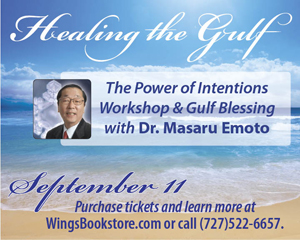
Healing The Gulf: The Power of Intentions
www.internationalwaterforlifefoundation.org
Masaru Emoto (江本勝, Emoto Masaru, born July 22, 1943) is a Japanese author and scientist known for his claim that if human speech or thoughts are directed at water droplets before they are frozen, images of the resulting water crystals will be beautiful or ugly depending upon whether the words or thoughts were positive or negative. Emoto claims this can be achieved through prayer, music or by attaching written words to a container of water. Read More: HERE
Deepwater Horizon was an ultra-deepwater dynamically positioned, semi-submersible offshore oil drilling rig. Built in 2001 in South Korea by Hyundai Heavy Industries,[2] the rig was commissioned by R&B Falcon, which later became part of Transocean, registered in Majuro, Marshall Islands, and leased to BP plc until 2013. In September 2009, the rig drilled the deepest oil well in history at a vertical depth of 35,050 ft (10,683 m) and measured depth of 35,055 ft (10,685 m) in the Tiber field at Keathley Canyon block 102, approximately 250 miles (400 km) southeast of Houston, in 4,132 feet (1,259 m) of water.On 20 April 2010, while drilling at the Macondo Prospect, an explosion on the rig caused by a blowout killed 11 crewmen and ignited a fireball visible from 35 miles (56 km) away.The resulting fire could not be extinguished and, on 22 April 2010 , Deepwater Horizon sank, leaving the well gushing at the sea floor and causing the largest offshore oil spill in United States history. Read More: HERE
An environmental impact assessment (EIA) is an assessment of the possible impact—positive or negative—that a proposed project may have on the environment, together consisting of the natural, social and economic aspects. The purpose of the assessment is to ensure that decision makers consider the ensuing environmental impacts when deciding whether to proceed with a project. The International Association for Impact Assessment (IAIA) defines an environmental impact assessment as „the process of identifying, predicting, evaluating and mitigating the biophysical, social, and other relevant effects of development proposals prior to major decisions being taken and commitments made.“ Read More: HERE
Healing the Gulf – What can we do? The groundbreaking work of Japanese researcher, Dr. Masaru Emoto is reshaping our awareness and giving birth to a new consciousness of Earth’s most precious resource: Water.
Water nourishes us on a daily basis on a deeper level than most of us realize. In the movie, What the Bleep, many of us were introduced to this idea through the photographs of the water crystals in the film. The ability to photograph water crystals was perfected by Dr. Emoto, who has committed himself to educating the world about the properties of water and the importance of his findings.
Dr. Emoto lectures around the world and has conducted live experiments both in Japan, Europe and the US to show how our thoughts, attitudes, and emotions deeply impact ourselves and the environment. He has facilitated several water blessings at locations around the world, and shares his experiences during his presentations that include ‘before’ and ‚after‘ pictures that illustrate the shift that occurs in the crystalline structure of water following a blessing. “Water has memory,” he explains, and we have the power as individuals to collectively come together to heal the consciousness surrounding the Gulf.
Live, In-Person Option
Hosted by Wings Bookstore and First
Unity of St Petersburg, Florida
Date: Saturday, September 11, 2010
Time: 1:00 – 4:30 PM EDT
Global Internet Option
If you are unable to make the workshop in person, we welcome you to join us LIVE via your home, office or church! To participate, you simply need an Internet connection and a computer!
Learn about Dr. Masaru Emoto’s latest research on the consciousness of water, see before and after pictures and join us for a special Gulf blessing at Pass-a-Grille Beach. Healing the Gulf will support National Wildlife Federation’s efforts to restore wildlife in the Gulf of Mexico. VIDEO,More*.
On September 11, 2010, Dr. Emoto will be appearing on Unity Campus to remind us that we have the opportunity to make a difference through sharing our alignment with love and gratitude. During the afternoon workshop, he will share his latest research findings with us to assist in elevating us to the level of belief required to make the greatest possible impact.
Joining Dr. Emoto for the workshop, will be Kumari Mullin, who will teach and demonstrate tools and methods that can be utilized by individuals to become open channels for the energy of love and gratitude. Her expertise as an animal intuitive and reiki master will provide for the inclusion of healing the sea life in the Gulf.
Following the afternoon workshop, everyone is invited to relocate to Pass-a-Grille Beach and join us for the blessing of the Gulf and Sea Life. If you are unable to attend in person, we invite you to join us remotely at the appointed time, as we know that the power of our intentions increase exponentially with every person involved.
PAX HERBAL Trad. Medicine & Prayer Center
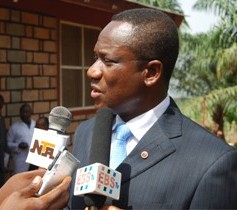
Traditional African medicine is a holistic discipline involving indigenous herbalism and African spirituality, typically involving diviners, midwives, and herbalists. Practitioners of traditional African medicine claim to be able to cure various and diverse conditions such as cancers, psychiatric disorders, high blood pressure, cholera, most venereal diseases, epilepsy, asthma, eczema, fever, anxiety, depression, benign prostatic hyperplasia, urinary tract infections, gout, and healing of wounds and burns.
Diagnosis is reached through spiritual means and a treatment is prescribed, usually consisting of an herbal remedy that has not only healing abilities, but symbolic and spiritual significance. Traditional African medicine, with its belief that illness is not derived from chance occurrences, but through spiritual or social imbalance, differs greatly from Western medicine, which is technically and analytically based. In the 21st century, modern pharmaceuticals and medical procedures remain inaccessible to large numbers of African people due to their relatively high cost and concentration of health centres in urban centres. In recent years, African medical practitioners have acknowledged that they have much to learn from traditional medical practice. Read More: > HERE <
PAX HERBAL CLINIC & RESEARCH LABORATORIES was established in 1996 as a Catholic centre for the promotion, development and proper utilization of African medicine. Some of its objectives are:
- To serve as a centre for genuine African holistic healing that blends the physical and the spiritual aspects of the human person together.
- To serve as a research centre for scientific identification, conservation, utilization and development of African medicinal plants.
- To become a model comprehensive health care centre where the western/’orthodox’ and traditional systems of healing are creatively blended together.
- To be a truly indigenous centre of healing that is based on genuine African-Christian Spirituality. To this effect, PAX HERBAL CENTRE has made unprecedented efforts in correcting the negative attitudes of African Christians towards African medicine, and promoted a sense of pride in African medicine.
- Dissemination of knowledge of the health benefits of African medicinal plants through publications, seminars and workshops.
- To build a standard laboratory for intensive research into herbal medicine for rapid development of African medicine.
The Business Of Paxherbals – PAX HERBAL CENTRE is into the business of life. We are into the business of promoting human dignity and human health. Salvation is holistic. It concerns all aspect of the human person: body, mind and soul. PAX HERBAL CENTRE is into the business of redeeming the whole person. Note the name is PAX HERBAL CENTRE, not just a clinic. It is a center of healing, of love, of service.
At PAX HERBAL CENTRE, our mission is to promote human health and human dignity, not just the eradication of pain which infact is an essential aspect of being human That is what we are up to. That is our business.
Ewumonks and Herbs – The monks of Ewu have over the years have been involved in intensive research on how to use what providence has given to further the course of man as best as they could knowing fully well that the way to self discovering and good living is through nature and encountering God in nature. Good or God living happen to be a concept that has suffered destructive interpretation that many now equate the attainment of good living as acquisition, possessions, material wealth, gluttony and so on.
Many see also, that it is okay to indulge in unwholesome habits and when this lead them to disastrous health consequence, the hospitals will be good to put things right again. Many times that turns out to be just a dream that never comes true.
With this in mind, Paxherbals, through the work of Ewumonks is not just about making available natural and wholesome ways to restore health to the sick; it is also about the business of helping those who are not sick to stay healthy. Paxherbals is about everything that keeps the spirit, body, mind and soul in harmony.
So, before drugs, there is good food, and together with balance diet, there should be healthy lifestyle. This is paramount and all these for the major part can be seen in Paxherbals’ effort to make the knowledge available through its publications.
It is for these and other reason that many are turning to Paxherbals for their need to be health both in mind and body.
The aim of Pax Herbal Magazine is to re-assimilate, re-understand and re-express ancient African philosophy [indigenous knowledge] in light of modern, scientific knowledge [exogenous knowledge]. African Medicine, that is, the science of life, is at the centre of African philosophy. Life, for the African, is indeed the ultimate value. By exploring the multi-faceted dynamism of healing in Africa, Pax Herbal Magazine is championing a medical revolution that is all-embracing, holistic, African and global.
The Science – After years of repudiating ancient wisdom, science is now validating the wisdom of the ancients. Discoveries in quantum physics, radiology and electromagnetic force have changed the way scientists look at the world. The human body is made up of electronic vibrations. Each atom, element, organ or organism has its own energy field or electronic unit of vibration necessary for the sustenance of life. Our bodily tissues are fed by oxygen, glucose and chemical nutrients as well as by higher vibrational energies which endow the physical form with the properties of life and creative expression. The idea of the body as dense matter has given way to a new vision of the human person as dynamic, energetic and spiritual. Modern medicine has now recognized this fact, and so have developed energy methods of treatment. Therapeutic radiation to treat cancer, electricity to halt pain, and electromagnetic fields to stimulate healing of fractures are new developments in medicine based on the fact that we are energy beings. The human person is unique and special. We are not aimless wanderers in this world but people with a purpose. Healing happens when we know what our purpose in life is. Healing is not just about pain relief or avoidance of suffering. Healing is a transformation of worldviews.
The Monastery of St. Benedict at Ewu is a foundation of an Irish Monastery named Glenstal Abbey. The Irish Monks came to a place called Eke in Enugu state and started a monastery there. That was in 1975. However, for a number of reasons which included infertile farmland, the monks finally moved to Ewu-Esan in the old Bendel state. That was on July 11, 1979 .
The community at that time was composed of five Irish monks and one Nigerian Monk who later became the first Nigerian Benedictine Monk and Priest. Today, in the year 2004, this small community of monks has grown to thirty-two monks, representing fourteen Nigerian tribes and one from Togo , a situation unique in any African Monastery. The monks of Ewu are trained in different fields of discipline such as engineering, farming, philosophy, theology, agriculture animal husbandry and many others.
Apart from the herbal clinic, the monastery of Ewu has a flourishing bakery that specializes in baking wheat bread, prepared under strict hygienic conditions and free of any chemical or addictives. They also run a candle factory, a crafts and gifts shop, poultry, a fish pond, a vegetable garden and a large farm.
Who are Monks? Monks are a group of people, either men or women, who have individually decided to live a life of contemplation, solitude and community in imitation of a particular saint. Just as we have Christian monks, so also there are Buddhist, Hindu and Chinese Monks. Christian monks are those men and women who dedicated their life to a life of continuous contemplation and imitation of Christ, who offered his life for the sake of humanity. Christian monks live together in community, carrying out their Christian obligations in peace and harmony.
-
www.captainhookawards.org – Bio Piracy Awards
Childwellness – Uttaranchal Cuisine

http://hindupad.com/gangotri-yatra-2010
Uttaranchal was a state of India. On 9 November 2000 Uttaranchal was carved out of Uttar Pradesh as a separate state. In January 2007, the name of the state was officially changed from Uttaranchal, its interim name, to Uttarakhand. Uttarakhand (Sanskrit: उत्तराखण्डम्, Hindi: उत्तराखण्ड UttarÄ�khanḍ) is a state located in the northern part of India. Known for its natural beauty, it was carved out of Himalayan and adjoining districts of Uttar Pradesh on 9 November 2000, becoming the 27th state of the Republic of India. It borders the Tibet Autonomous Region on the north, Nepal on the east and the Indian states of Uttar Pradesh to the south, Haryana to the west and Himachal Pradesh to the north west. The region is traditionally referred to as Uttarakhand in Hindu scriptures and old literature, a term which derives from Sanskrit uttara (उत्तर) meaning north, and khaṇḍ (खण्ड्) meaning country or part of a country. It has an area of 20,682 sq mi (53,566 km²). In January 2007, the name of the state was officially changed from Uttaranchal, its interim name, to Uttarakhand. The provisional capital of Uttarakhand is Dehradun which is also a rail-head and the largest city in the region. The small hamlet of Gairsen has been mooted as the future capital owing to its geographic centrality but controversies and lack of resources have led Dehradun to remain provisional capital. The High Court of the state is in Nainital.
Recent developments in the region include initiatives by the state government to capitalise on handloom and handicrafts, the burgeoning tourist trade as well as tax incentives to lure high-tech industry to the state. The state also has big-dam projects, controversial and often criticised in India, such as the very large Tehri dam on the Bhagirathi-Bhilangana rivers, conceived in 1953 and about to reach completion. Read more: > HERE <
Childwellness – orphans, neglected children and children of poor families. Therefore we provide them with food, healthcare and education. If necessary we also look for permanent and stable homes in their own environment, for and a loving family form the necessary basis for a child to grow up in a balanced way. To achieve this, objectives. You can find an overview of our selections further in this presentation folder click here.
Childwellness task is to raise funds in order to support these projects financially. For that,sponsoring activities are organised annually. By means of participation of grants and festivals, Childwellness aims to reach a larger public. Furthermore Childwellness tries to find companies, associations, schools and other agencies for possible sponsoring. If you are able to help us with this, please contact us. Childwellness is also looking for monthly sponsors who want to financially support our projects on a regular basis.
Vivekananda Residential Tribal School (Vidyalaya, Wayanad District, Kerala, India) – The school has approximately 250 children, and it specifically works with tribal children. Most of them are orphans: they’ve lost their father and/or mother and therefore live permanently at school. Tribals are a very vulnerable group of people in India because they don’t belong to any caste. They are also economically extremely vulnerable because they can no longer live in their natural surroundings: their forest has become a National Reserve.
The children receive an education, a uniform, and 3 meals a day. One child in this school costs 10 Euro/month (8.93 GBP or 14.92 USD; currency of November 14, 2009) with everything included. Presently, the most important need of this school is a dormitory with 150 beds for the boys. Childwellness hopes to sponsor this dormitory as much as possible.
Childwellness supports educational projects in India. We want orphans and children of poor families to have access to a comprehensive education because good school training is of huge importance for the future of every child. Childwellness wants to prevent parents or other family members from sending young children to work to earn money, which results in them missing important chances in life. As fact, India remains a country with a significant prevalence in child lab.
“ASIA FAIR” For the first time in its existence. Childwellness took part in the “Asia Fair”, a unique event with a large turnout ! We still look back on the success of the weekend, where a number of significant contacts for the future were made.
Uttaranchal Delicious Cuisines – „I am damn sure that a true lover of food will understand the value of this group.“ The traditional cuisine of the land is highly nutritious, simple to prepare and at the same time appealing to the palate. You can have delicious and mouth-watering Pahari recipes from Garhwal and Kumaon region of Uttaranchal. Hope you will enjoy the recipes…….
http://www.internationalrivers.org/-himalayas-dam-boom
Audio Slideshow: Mountains of Concrete – A dam-building boom in the Himalayas in times of global warming is like investing billions of dollars in high-risk, non-performing assets …
Gangotri (Hindi: गंगोत्री) is a town and a Nagar Panchayat (municipality) in Uttarkashi district in the state of Uttarakhand, India. It is a Hindu pilgrim town on the banks of the river Bhagirathi. It is on the Greater Himalayan Range, at a height of 3,042 m. Gangotri, the origin of the river Ganga and seat of the goddess Ganga, is one of the four sites in the Char Dham pilgrimage circuit. The river is called Bhagirathi at the source and acquires the name Ganga from Devprayag onwards where it meets the Alaknanda. The origin of the holy river is at Gaumukh, set in the Gangotri Glacier, and is a 19 km trek from Gangotri. Gangotri can be reached in one day’s travel from Rishikesh, Haridwar or Dehradun, or in two days from Yamunotri, the first site in the Char Dham circuit. More popular and important than its sister site to the east, Gangotri is also accessible directly by car and bus, meaning that it sees many more pilgrims than Yamunotri. Read More: > HERE <
This small town is centered around a temple of the goddess Ganga, which was built by the Nepalese General, Amar Singh Thapa in the early 18th century. The temple is closed on Diwali day every year and is reopened in May. During this time, the idol of the goddess is kept at Mukhba village, near Harsil.
Ritual duties are supervised by the Semwal family of pujaris. The aarti ceremony at the Gangotri is especially impressive, as is the temple, a stately affair that sits on the banks of the rushing Ganga. Adventurous pilgrims can make an overnight 18 km trek to Gaumukh, the actual current source of the river Ganga.

Bhagirathi River at Gangotri. For a large number of tourists, Gangotri town serves as the starting point of the Gangotri-Gaumukh-Tapovan and Gangotri-Kedartal trekking routes.
The Ganges (also Ganga DevanÄ�garÄ«: गंगा) is a major river in the Indian subcontinent flowing east through the eponymous plains of northern India into Bangladesh. The 2,510 km (1,557 mi) long river begins at the Gangotri Glacier in the Indian state of Uttarakhand in the central Himalayas and drains into the Bay of Bengal through its vast delta in the Sunderbans. It has enjoyed a position of reverence since millenia among India’s Hindus, by whom it is worshipped in its personified form as the goddess Ganga (see below). The Ganges and its tributaries drain a large and fertile basin with an area of about one million square kilometres that supports one of the world’s highest density human populations.
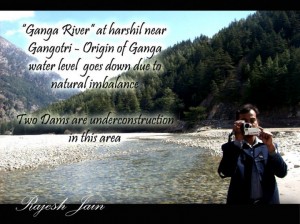
Shockingly, this dam boom is not being analyzed for the biggest threat to hydrological projects of our time: global warming. “The possible impacts of climate change are not being considered – neither for individual dams, nor cumulatively,” says Shripad Dharmadhikary, author of Mountains of Concrete: Dam Building in the Himalayas.
A dam-building boom in the Himalayas in times of global warming is like investing billions of dollars in high-risk, non-performing assets. In the Himalayas, „melting glacier water will replenish rivers in the short run, but as the resource diminishes, drought will dominate the river reaches in the long term,“ says Xin Yuanhong, a senior engineer with a Chinese team that is studying the glaciers of the Tibetan plateau.
The International Centre for Integrated Mountain Development, ICIMOD, in Nepal and the Intergovernmental Panel on Climate Change agree that global warming will also lead to more storms and floods, especially in tropical and mountainous regions. A report by ICIMOD on the impact of climate change on Himalayan glaciers states: “On the Indian subcontinent, temperatures are predicted to rise between 3.5 and 5.5°C by 2100. An even higher increase is predicted for the Tibetan Plateau. Climate change is not just about averages, it is also about extremes. The change in climate is likely to affect both minimum and maximum-recorded temperatures as well as triggering more extreme rainfall events and storms.” These heavy storms and floods will jeopardize the economic profitability of hydropower projects, as well as the safety of these mountains of concrete.The sudden bursting of glacial lakes is another major concern for the safety of planned dams, and ultimately the rivers and peoples of the Himalayas. Glacial lake outburst floods (GLOFs) are a recent phenomenon. As glaciers in high-altitude regions such as the Himalayas melt, they can form large lakes behind temporary dams of ice and rock. When these moraine dams collapse, millions of cubic meters of water are released, resulting in massive flash floods. The Dig Tsho GLOF in Nepal in 1985 was one of the most devastating glacial lake bursts in recent history. The bursting of this glacial lake near Mount Everest caused a huge flood wave that travelled down the valley, killing five people and destroying one hydropower station, many acres of cultivated land and 14 bridges.
Hydropower projects and Climate Change Himalaya « Climate Himalaya
http://chimalaya.org/category/hydropower-projects-and-climate-change-himalaya/Himalayas hydroelectric dam project stopped after scientist on hunger strike against the project almost diesEminent Indian professor calls off fast after government agrees to speed up inquiry into river flow in sacred Gangeshttp://www.guardian.co.uk/environment/2009/mar/13/himalaya-dams
Himalaya May Become Most Heavily Dammed Region of the World | Blue … Over one billion people rely on the waters of the Himalaya for survival, and massive dam building will negatively affect this important source of water. South Asia should look at other sources of renewable energy, as dams have been proven to be detrimental to ecosystems in America. Damming Asia will not solve the world water crisis while meeting the energy needs of this growing region.
http://bluelivingideas.com/topics/climate-change/himalaya-heavily-dammed-region-world/
Unaware of risks
The Himalaya is one of the fastest changing regions of the world due to global warming. The mountains’ mighty glaciers, the source of large and important rivers such as the Ganga, Indus und Brahmaputra, are melting. In February 2009, Chinese scientists warned that glaciers on the Tibetan plateau are melting at a “worrisome speed“, threatening South Asia’s water supply. In spite of this dramatic trend, the governments of India, Pakistan, Nepal and Bhutan are planning to transform the Himalayan rivers into the powerhouse of South Asia. They want to build hundreds of mega-dams to generate electricity from the waters of the Himalayas.
Devastating lake bursts
The sudden bursting of glacial lakes is another major concern for the safety of planned dams, and ultimately the rivers and peoples of the Himalayas. Glacial lake outburst floods (GLOFs) are a recent phenomenon. As glaciers melt, they can form large lakes behind temporary dams of ice and rock. When these moraine dams collapse, millions of cubic meters of water are released, resulting in massive flash floods. The Dig Tsho GLOF in Nepal in 1985 was one of the most devastating glacial lake bursts in recent history. The bursting of this glacial lake near Mount Everest caused a huge flood wave that travelled down the valley, killing five people and destroying one hydropower station, 14 bridges and many acres of cultivated land.
In January 2009, the government of Bhutan identified more than 2,600 glacial lakes in the country, of which 25 are considered to be at high risk of bursting, according to Bhutan’s Department of Geology and Mines. While Bhutan is aware of the risk of GLOFs and is improving its early warning system, the country, together with India, is still currently constructing one of the largest hydropower dams in the region, the 90-meter-high Tala project on the Wangchu River.
One billion people in South Asia and many millions in China depend on the Himalayan rivers – for agriculture as well as for drinking water supplies. While we can’t predict the future course of change to these lifelines from global warming, we can no longer presume that there will always be abundant snow and glaciers in the Himalayas, feeding Ganga, Indus und Bhramaputra with as much water as in the last 50 years.
While we can’t predict the future course of change to these lifelines from global warming, we can no longer presume that there will always be abundant snow and glaciers in the Himalayas. If the Himalayan governments go forward with their planned dam boom, they deny that global warming is actually transforming their region and our planet.
China’s Himalayan plan: Dam on Brahmaputra – He said the proposed project’s greatest risk for India and Bangladesh is seismic activity and not water diversion. The laws of physics will not allow water diversion from the great bend, he wrote on the blog.
The blog post also listed an alternative unofficial proposal at a 2,400 m drop in altitude at Daduqia.
“But it is near the border with India and would be highly exposed if there were another conflict,’’ he wrote.
http://www.hindustantimes.com/China-s-Himalayan-plan-Dam-on-Brahmaputra/Article1-548572.aspx
Pollution and Climate Change in Himalaya « Climate Himalaya Initiative –http://chimalaya.org/category/pollution
The Himalayan headwaters of the Ganges river in the Uttarakhand state of India. … There, a dam diverts some of its waters into the Ganges Canal, ….. In 2007, the Intergovernmental Panel on Climate Change (the „IPCC“), in its Fourth … http://en.wikipedia.org/wiki/Ganges
Mountains of Concrete: Dam Building in the Himalayas
http://www.scribd.com/doc/8808220/Mountains-of-Concrete-Dam-Building-in-the-Himalayas
Dams and the Worldbank – The World Bank is the greatest single source of funds for large dam construction, having provided more than US$50 billion (1992 dollars) for construction of more than 500 large dams in 92 countries. The World Bank has been „directly or indirectly associated“ with around 10% of large dams in developing countries (excluding China, where the Bank had funded only eight dams up to 1994). The importance of the World Bank in major dam schemes is illustrated by the fact that it has directly funded four out of the five highest dams in developing countries outside China, three out of the five largest reservoirs in these countries, and three of the five largest hydroplants. http://www.whirledbank.org/environment/dams.html
„Clean Energy for the Poorest Countries“ ~ World Bank Drawing on examples from Asia, Africa and the Americas, Survival’s report Serious Damage exposes the untold cost of obtaining ‘green’ electricity from large hydroelectric dams. A rapid increase in global dam-building is currently under way. The World Bank alone is pouring $11bn into 211 hydropower projects worldwide.
The World Bank’s current focus is on the achievement of the Millennium Development Goals (MDGs), lending primarily to „middle-income countries“ at interest rates which reflect a small mark-up over its own (AAA-rated) borrowings from capital markets; while the IDA provides low or no interest loans and grants to low income countries with little or no access to international credit markets. http://en.wikipedia.org/wiki/Millenium_goals
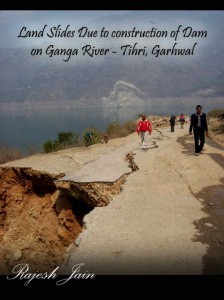
Gasland – Fracking & Health Concerns
www.blueplanetproject.net/RightToWater
www.unwater.org/flashindex.html
Hydraulic fracturing (called „frac jobs“or „frac’ing“ in the industry and recently, „fracking“ by the media) is a process that results in the creation of fractures in rocks, the goal of which is to increase the output of a well. The most important industrial use is in stimulating oil and gas wells, where hydraulic fracturing has been used for over 60 years in more than one million wells. On the other hand, high-volume horizontal slickwater fracturing is a recent phenomenon. The fracturing is done from a wellbore drilled into reservoir rock formations to enhance oil and natural gas recovery. Hydraulic fractures may be natural or man-made and are extended by internal fluid pressure which opens the fracture and causes it to grow into the rock. Man-made fluid-driven fractures are formed at depth in a borehole and extend into targeted rock formations. The fracture width is typically maintained after the injection by introducing a proppant into the injected fluid. Proppant is a material, such as grains of sand, ceramic, or other particulates, that prevent the fractures from closing when the injection is stopped. Natural hydraulic fractures include volcanic dikes, sills and fracturing by ice as in frost weathering. Considerable controversy surrounds the current implementation of hydraulic fracturing technology in the United States. Environmental safety and health concerns have emerged and are being debated at the state and national levels. Read More: > HERE <
„The largest domestic natural gas drilling boom in history has swept across the United States. The Halliburton-developed drilling technology of „fracking“ or hydraulic fracturing has unlocked a „Saudia Arabia of natural gas“ just beneath us. But is fracking safe?
When filmmaker Josh Fox is asked to lease his land for drilling, he embarks on a cross-country odyssey uncovering a trail of secrets, lies and contamination. A recently drilled nearby Pennsylvania town reports that residents are able to light their drinking water on fire. This is just one of the many absurd and astonishing revelations of a new country called GASLAND. Part verite travelogue, part expose, part mystery, part bluegrass banjo meltdown, part showdown.“
GASLAND will be broadcast on HBO through 2012. To host a public screening in your community please click here. The DVD will be on sale in December 2010.
UN: Water is a Human Right – The UN General Assembly passed a resolution today on the human right to water and sanitation. The official tabulation: 122 states voted yes, 41 states abstained—including the U.S.—and no state voted against. First things first: Hooray! This is a fantastic victory that finally establishes the critical recognition that all human beings have a right to water—a vital and natural resource upon which all of us depend.
The passing of this resolution, which was introduced by the Bolivian government, should affirm that we are finally—and collectively—advancing the conversation about the human right to water. This is especially rewarding for our water activists and our network of allies who have been working on this issue for the past 10 years.
While the United States’ abstention is disappointing, we still have reason to be enthusiastic. U.S. municipalities and states are increasingly recognizing water as a human right. As this trend gains momentum, so will our ability to pressure the federal government to affirm the right to water in global forums
This resolution is not legally binding, but we are grateful for the opportunity to take one big step in the right direction. To all the water activists everywhere who have worked tirelessly to promote water as a human right—and to all the nation states who voted in support of the resolution today—congratulations!
We eventually hope to make the human right to water an internationally recognized law. Until then, we must continue to educate and inform on behalf of our mission. www.foodandwaterwatch.org
BHOPAL – SOS Water Poisoning, Health Care & Wells: The story beggars belief. In the 1970s, international agencies headed by the United Nations Children’s Fund (UNICEF) began pumping millions of dollars of aid money into Bangladesh for tubewells to provide “clean” drinking water. According to the World Health Organization, the direct result has been the biggest outbreak of mass poisoning in history. Up to half the country’s tubewells, now estimated to number 10 million, are poisoned. Tens, perhaps hundreds of thousands will die.
Why? Because nobody tested for the natural poison, arsenic, widely found in underground water. And when a doctor did find traces of the metal, and when Bangladeshi villagers did start turning up at doctors’ surgeries with the tumours and telltale signs of arsenic poisoning, the results were swiftly buried so that nobody made the connection.
Like Hydroelectric Dam Projects or Oil & Gas Drilling, and the Desaster of Mexican Gulf Oil Spill showing that drilling without testing the underground seems to be dangerous and harmfull for enviroment & health.
Even now as the scale of the calamity emerges, nobody is admitting culpability. Not UNICEF, which initiated the tubewells programme and paid for the first 900,000 wells, nor the WORLD BANK, a fellow sponsor. Not the Bangladeshi government, or the foreign engineers and public health scientists who did not think to test the water for so long. Read more: > HERE <
Israeli-Palestinian „COMET-ME“ Project

https://interfaith2010.naz.edu/
Israel (Hebrew: יÖ´שÖ°ׂרÖ¸אÖµל, YisrÄ�’el; Arabic: إِسْرَائِيلُ, IsrÄ�’Ä«l), officially the State of Israel (Hebrew: מÖ°דÖ´ינÖ·ת יÖ´שÖ°ׂרÖ¸אÖµל (help·info), MedÄ«nat YisrÄ�’el; Arabic: دَوْلَةُ إِسْرَائِيلَ, Dawlat IsrÄ�’Ä«l), is a parliamentary republic in the Middle East located on the eastern shore of the Mediterranean Sea. It borders Lebanon in the north, Syria in the northeast, Jordan and the West Bank in the east, the Gaza Strip and Egypt on the southwest, and contains geographically diverse features within its relatively small area. Israel is the world’s only predominantly Jewish state, with a population estimated in May 2010 to be 7,602,400 people,of whom 6,051,000 are Jews. Arab citizens of Israel form the country’s second-largest ethnic group, which includes Muslims, Christians, Druze, and Samaritans. According to the May 2010 population estimate these people number 1,551,400, including nearly 300,000 non-Citizens living in East Jerusalem. Read more: >HERE <
Palestine (Greek: Παλαιστίνη, PalaistinÄ“; Latin: Palaestina; the Hebrew name Peleshet (פלשת Pəléshseth); also פלשׂתינה, Palestina; Arabic: فلسطينFilasṭÄ«n, FalasṭÄ«n, FilisṭÄ«n) is a conventional name used, among others, to describe a geographic region between the Mediterranean Sea and the Jordan River, and various adjoining lands. As a geographic term, Palestine can refer to „ancient Palestine,“ an area that today includes Israel and the Israeli-occupied Palestinian territories, as well as part of Jordan, and some of both Lebanon and Syria.In classical or contemporary terms, it is also the common name for the area west of the Jordan River. The boundaries of two new states were laid down within the territory of the British Mandate, Palestine and Transjordan.Other terms for the same area include Canaan, Zion, the Land of Israel, and the Holy Land. Read More: > HERE <
The Bedouin (from the Arabic badawÄ« (بدوي), pl. badū) are a part of the predominantly desert-dwelling Arab ethnic group, where Arab Ethnicity is divided into three lifestyles, of the Urban, rural and Nomad people. Bedouins traditionally had strong honor codes, and traditional systems of justice dispensation in Bedouin society typically revolved around such codes. The bisha’a, or ordeal by fire, is a well-known Bedouin practice of lie detection. See also: Honor codes of the Bedouin, Bedouin systems of justice. Bedouins are well known for practicing folk music, folk dance and folk poetry. See also: Bedouin music, Ardha, Ghinnawa. Read More: > HERE <
The British Shalom-Salaam Trust (BSST) is a Jewish grant-giving initiative created in response to the humanitarian crisis in the Middle East. BSST supports projects both within Israel’s 1967 borders (the ‘Green Line’) and the Occupied Territories. We work closely with Palestinians and Israeli Jews committed to a just resolution of the conflict in Israel/Palestine based on equality and mutual respect.
During the financial year 2009-10, BSST gave financial support to 27 very varied organisations, including to the St John’s Eye Hospital in Jerusalem for emergency detached retina surgery for patients injured in the assault on Gaza; Bustan Qaraaqa, a grassroots environmental movement in the Palestinian territories which addresses the problem of water shortage, food insecurity and waste management; Jama’ah Leadership Development and Community Empowerment group; the Jenin Cultural centre; Sadaka-Reut community in Action Programme; and the Villages Group school transportation for children of the South Hebron Area.
The projects and the activists especially the women in health and development work that we support represent a roll call of hope. They remind us that, even in these devastating times, there are still many in Israel and Palestine striving to find ways to build bridges, to live peacefully and productively in a shared humanity.
JNews promotes understanding and stimulates critical debate about Israel and Palestine among British Jews and the broader public as a contribution to promoting peace with justice for all in the region.
- JNews believes that disseminating a range of viewpoints broader than that offered by most Jewish and Israeli organizations will benefit Palestinians and Israelis.
- JNews supports the human rights of both Israelis and Palestinians and believes the two are intertwined.
- JNews believes in the application of the universal principles of social justice and human rights as the path to a just and comprehensive solution to the conflict.
Small but hopeful: Israeli-Palestinian projects in the southern Hebron hills. Israeli and Palestinian volunteers create concrete alternatives for education and energy
The separation barrier and the proximity of settlements to Palestinian villages cause serious disruptions to the daily lives of Palestinians. The situation is particularly acute for schoolchildren, who have to negotiate long circuitous routes to school as well as suffering settler violence. Many schoolchildren have stopped attending school because of these problems.
The Villages Group, a group of Jewish Israeli volunteers and Palestinian partners, decided to set up a school transportation system for children attending a new elementary school, Al-Massafer, belonging to the Palestinian community of Al-Fakhiet in the southern Hebron hills on the occupied West Bank.
The aim of the volunteers was to enable schoolchildren to reach school and return home safely, while also providing employment for a driver. In January, after a fundraising campaign, the community secured the funds to purchase an improvised school ‘bus’ – only to have it promptly confiscated by Israeli army units in the area, who abandoned it in a neighboring valley where it was found two days later. The community and volunteers didn’t give up: local activist Hamed Qawasmeh appealed worldwide for funds, and a ‘new’ vehicle was put to immediate use.The Villages Group runs several other projects in the southern Hebron hills and in the area of Nablus. Their motto is ‘performing deeds of peace.’
Energy alternatives – In March, another joint grassroots project was completed in the southern Hebron hills. The Comet-ME team, a group of Israeli and Palestinian activists including a physicist, an environmentalist and a software developer, creates energy solutions for communities in the area.
After connecting Palestinian families in the village of Sussiya to electricity by installing solar and wind systems, the founding team, encouraged by their success, moved on to neighboring communities.
These semi-nomadic communities suffer from constant harassment by hardline Jewish settlers in the area, who vandalize their property, disrupt their seasonal agricultural activities, and attempt to drive them from their homes – simple cave-dwellings in the southern Hebron hills.
The team joined forces with a Palestinian volunteer from Hebron and fifteen local Palestinian electronic engineering students (including two from Sussiya) to install wind turbines and solar cells in four cave-dwelling communities – upper Sfai, lower Sfai, Mrier al-Abid and Tuba, as well as among the Bedouin families of Umm al-Kheir, adjacent to the Jewish settlement Carmel.
www.comet-me.org / INTERVIEW: www.justvision.org
Installing Solar Cells in Tuba – They were helped by residents of all the Palestinian communities in the area.
“Small but hopeful: Israeli-Palestinian projects in the southern Hebron hills ”
”
A small grant-giving charity founded in 2004, BSST supports mainly community-based, informal projects that involve practical collaboration between communities in Israel and Palestine.
Other initiatives they support include Orthodox Media Watch, a project combating racism in Jewish-Orthodox media; Sindyanna, an Arab women’s fair-trade organization in the Galilee; an educational project on torture run by the Public Committee Against Torture in Israel (PCATI); and direct medical assistance to Gaza provided by Physicians for Human Rights-Israel (PHR-Israel) during and after the war of 2008-9.
The British Shalom-Salaam Trust – One of the supporters of projects in the southern Hebron hills is a British-Jewish charity called the British Shalom-Salaam Trust (BSST).
A small grant-giving charity founded in 2004, BSST supports mainly community-based, informal projects that involve practical collaboration between communities in Israel and Palestine.
Other initiatives they support include Orthodox Media Watch, a project combating racism in Jewish Orthodox media; Sindyanna, an Arab women’s fair-trade organization , in the Galilee www.sindyanna.com ; an educational project on torture run by the Public Committee Against Torture in Israel (PCATI); and direct medical assistance to Gaza provided by Physicians for Human Rights-Israel (PHR-Israel) during and after the war of 2008-9.
-
Photos by Ehud Krinis, CPT Hebron and Edoardo Soteras.
 Physicians for Human Rights-Israel (PHR-Israel) utube Channel <
