
Posts by admin
ORGANIC INDIA, TULSI THE HOLY BASIL
( Organic Health & Wellness Products )
> TULSI KÖNIGIN DER HEILKRÄUTER <
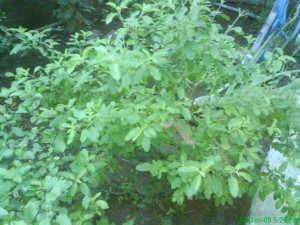
Ocimum tenuiflorum (also tulsi, tulasÄ«) is an aromatic plant in the family Lamiaceae. It is an erect, much branched subshrub 30-60 cm tall with hairy stems and simple opposite green leaves that are strongly scented. Leaves have petioles, and are ovate, up to 5 cm long, usually slightly toothed. Flowers are purplish in elongate racemes in close whorls. There are two main morphotypes cultivated in India—green-leaved (Sri or Lakshmi tulsi) and purple-leaved (Krishna tulsi). There is also a variety of Ocimum tenuiflorum which is used in Thai cuisine, and is referred to as Thai holy basil, or kha phrao (กะเพรา) not be confused with „Thai Basil“, which is a variety of Ocimum basilicum . Read more: > HERE <
Tulsi is native throughout the Old World tropics and widespread as a cultivated plant and an escaped weed.
ORGANIC INDIA means absolute commitment to quality . All our products are 100% organic, pure and natural, because you want the best for your family and so do we.
The guiding principles of our company are health and happiness for all beings and great respect for the Divine Mystery of Mother Nature who selflessly sustains humanity and naturally provides us all with a bounty of nourishing foods and healing herbs.
Free Articles and Tips on Healthy Living, Stress Relief, Sustainability and More – Subscribe to the ORGANIC INDIA Newsletter NOW!!
FUTURE OF FOOD: http://cookingupastory.com
-
NaturalNews.com is an independent news resource that covers the natural health and wellness topics that empower individuals to make positive changes in their personal health. NaturalNews offers uncensored news that allows for healthier choice.
-
Cooking Up a Story (CUpS) is an online television show and blog about people, food, and sustainable living. The Show offers a variety of original short-form programming.
Western Herbs from the TCM Perspective
Traditional Chinese Medicine, also known as TCM, includes a range of traditional medicine practices originating in China. Although well accepted in the mainstream of medical care throughout East Asia, it is considered an alternative medical system in much of the Western world.
TCM practices include such treatments as Chinese herbal medicine, acupuncture, dietary therapy, and both Tui na and Shiatsu massage. Qigong and Taijiquan are also closely associated with TCM.
TCM claims to be rooted in meticulous observation of nature, the cosmos, and the human body, and to be thousands of years old. Major theories include those of Yin-yang, the Five Phases, the human body Meridian/Channel system, Zang Fu organ theory, six confirmations, four layers, etc. Read More: > HERE <
Western Herbs from the Traditional Chinese Medicine Perspective
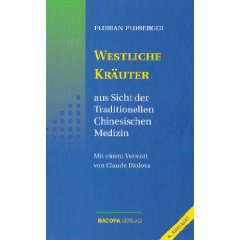
Autor: Ploberger Florian
This book will be published 2011. You can order it now. Traditional Chinese Medicine (TCM) and thus also Chinese phytotherapy is becoming more and more popular. Therefore, so-called Western herbs, which are available to us in the West, are described and therapeutically applied according to TCM criteria. This book describes about 150 herbs such as rosemary, basil, ladys mantle, fumatory, dandelion etc. Besides their English names, pharmaceutical, botanical and German names are also listed for each herb. In addition, a description of the parts of the plants used, their taste, temperature effect, the organs involved and doses is provided as well as detailed descriptions of the actions and individual fields of application of individual herbs.
It is a translation of the 6th revised edition of the book Westliche Kräuter aus Sicht der Traditionellen Chinesischen Medizin.
The book „Westliche Kräuter aus Sicht der Traditionellen Chinesischen Medizin“ (Western Herbs from the Traditional Chinese Medicine Perspective) has been widely published in Europe and its 6th revised edition has already appeared within a few years. It is now being translated into English due to strong demand.
The book: Traditional Chinese Medicine (TCM) and thus also the Chinese phytotherapy is becoming more and more popular. Therefore so-called Western herbs, which are available to us in the West, are described and therapeutically applied according to TCM criteria. This book describes about 150 herbs such as rosemary, basil, ladys mantle, fumatory, dandelion etc. Besides their English names, pharmaceutical, botanical and German names are also listed for each herb. In addition, a description of the parts of the plants used, their taste, temperature effect, the organs involved and doses is provided as well as detailed descriptions of the actions and individual fields of application of individual herbs.
This book serves as an important source of information both for beginners and for experienced therapists.
The author: Dr. med. univ. Florian Ploberger B. Ac., BA Vienna.
Main fields: Traditional Chinese Medicine (TCM) and Tibetan Medicine.
Education: Medical studies and internship in Vienna, study of acupuncture at the Austrian Society of Acupuncture and Auriculotherapy in 1996; three years of TCM studies with Claude Diolosa until 1998; Bachelor in Acupuncture from K.S. University in the USA 1999; four semesters of Sinology studies and numerous study visits to China (TCM University in Beijing, TCM University in Chengdu) and India (LTWA Library of Tibetan Works & Archives). Since 2004 studies of Tibetology at the Vienna University (Bachelor of Arts in the Languages and Cultures of South Asia and Tibet, 2009).
Teaching and publications in the fields of TCM and Tibetan Medicine since 1997.
Head of the Scientific Advisory Council of the Bacopa Centre of Learning in Upper Austria and President of the Austrian Educational Society for Traditional Chinese Medicine (ÖAGTCM) (after three years of further education physicians are awarded the diploma Chinese Diagnostics and Pharmacotherapy by the Austrian Chamber of Physicians).
Regular lectures on Western herbs from the TCM perspective upon invitation of the Austrian Chamber of Pharmacists.
In 2007 he was publishing editor of Die Grundlagen der Tibetischen Medizin (a translation of the book Fundamentals of Tibetan Medicine of Men-Tsee-Khang Publication).
It was a great honour and pleasure for him when in summer 2009 he was officially asked by Dr. Dawa, the Director of the > Men-Tsee-Khang < (Tibetan Medical and Astrology Institute of H.H. the XIVth Dalai Lama in Dharamsala, Northern India) to translate the first two parts of > rGyud-bZhi < , the most important work of Tibetan Medicine (The Basic Tantra and The Explanatory Tantra from the Secret Quintessential Instructions on the Eight Branches of the Ambrosia Essence Tantra).
Since the 12th century this text has been serving as the foundation stone in the training of Tibetan medical practitioners, and is still being learned and memorised today.
Currently, as university reader, he gives a weekly lecture on various subjects of Tibetan Medicine at Vienna University, and every year he spends several months in Dharamsala.
ISBN: 978-3-901618-94-9
The Codex Alimentarius – (Latin for „food code“ or „food book“) is a collection of internationally recognized standards, codes of practice, guidelines and other recommendations relating to foods, food production and food safety. Its name derives from the Codex Alimentarius Austriacus.
Its texts are developed and maintained by the Codex Alimentarius Commission, a body that was established in 1963 by the Food and Agriculture Organization of the United Nations (FAO) and the World Health Organization (WHO).
The Commission’s main aims are stated as being to protect the health of consumers and ensure fair practices in the international food trade. The Codex Alimentarius is recognized by the World Trade Organization as an international reference point for the resolution of disputes concerning food safety and consumer protection. Read More: > HERE <
Herbs in Trad. Chinese Medicine / ChemFoods, and the threat to our freedom of health
Meet NaturalNews.com at facebook <
NaturalNews.com is an independent news resource that covers the natural health and wellness topics that empower individuals to make positive changes in their personal health. NaturalNews offers uncensored news that allows for healthier choice.
I love Tibet Peacewalk, March 10th 2010

> TIBET ALTERNATIVE TRAVEL & SHOPPING GUIDE <
> ANI CHOYING TOUR´s & TRAVEL <
(Conference, Travel Green Guide)
Tibet (Tibetan: བོད་; Wylie: bod, Chinese: 西藏; pinyin: XÄ« Zàng) is a plateau region in Asia and a disputed territory, north of the Himalayas. It is home to the indigenous Tibetan people, and to some other ethnic groups such as Monpas and Lhobas, and is inhabited by considerable numbers of Han and Hui people. Tibet is the highest region on earth, with an average elevation of 4,900 metres (16,000 ft). It is sometimes referred to as the roof of the world.Read More: > HERE <
Who We Are – Students for a Free Tibet (SFT) has five full-time staff working at the International Headquarters in New York City and many nearly full-time volunteers. They live to make life difficult for the Chinese government, so that China understands that the occupation of Tibet must end. The job of the staff is to support the efforts of SFT members worldwide, by providing leadership on campaigns and organizational strategy, and by coordinating training opportunities, like Free Tibet! Action Camp.
The Executive Director is hired by the Board of Directors and the rest of the staff is hired by the Executive Director. SFT also has countless dedicated volunteers and interns, without whom our work would not be possible.
|
|
|
|
1.) TIBET 2009, 2.) The Dalai Lama speaks about the risks of Tibet cultural genocide
March 10th 2010 because We are Tibetan – This March 10th, please take action to help amplify the voices of Tibetans inside Tibet and China and send them messages of solidarity from around the world. Read more about the 1959 Uprising.
Ani Choying Travels: www.choying.com
- SAVE MOTHER NATURE <
- www.stopminingtibet.com
- www.tibet.org/Travel/ (Tibetan Government-in-Exile, TGiE)
- www.tibettravel.org Classical 8 Days Mt. Everest Base Camp Adventure
- www.travelchinaguide.com/cityguides/tibet/
- www.friendsoftibet.org
- http://peoplefortibet.blogspot.com/
- Meet SOLIDARITY TO THE TIBETAN PEOPLE, friends, fans at fb <
- Meet Friends of Tibet at facebook <
- Meet Mind and Life – Compassion in Economics, studies, friends at fb <
- Meet Int. Ecotourism Society, friends and fans at fb <
WE ARE ONE – A Celebration of Tribal People
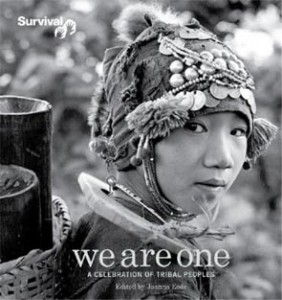
We are One: A Celebration of Tribal Peoples
in Association with Survival International
From the Yanomami of Brazil to the Penan of Malaysia and the Innu of Canada, We Are One presents powerful and moving statements from tribal people together with essays and photographs from contributors including Richard Gere, Zac Goldsmith, Colin Firth, Bruce Parry, Jane Goodall, Joanna Lumley and Damien Hirst.
In a unique display of solidarity that celebrates the 40th Anniversary of Survival International, We Are One’s collective voice celebrates the lives, homelands and values of tribal peoples and explores the relevance of their beliefs and wisdom to the present time. It also highlights the oppression tribespeople are experiencing today, promoting the message that tribal peoples are equal to us: just as modern, just as much part of the 21st century and with just as much right to live in peace.
http://indigenouspeoplesissues.com/
We are One includes previously unpublished contributions from Richard Gere, Zac Goldsmith, Colin Firth, Bruce Parry, Jane Goodall, Joanna Lumley, Damien Hirst, Satish Kumar, Tony Juniper, Jonathan Porritt, Vandana Shiva, Sydney Possuelo, Carlo Petrini, Wade Davis, Arundhati Roy, A.C. Grayling, Robin Hanbury-Tenison and many others.
The foreword is written by Davi Yanomami Kopenawa, and the introduction by Stephen Corry, Director of Survival International. Literary extracts include: Laurens van der Post, Peter Matthiessen, Colin Thubron Contributing photojournalists include: Sebastiao Salgado, Kate Eshelby, Mike Goldwater, Steve McCurry, Mirella Ricciardi, Brent Stirton and Carol Beckwith
Highlights include:
- Davi Kopenawa Yanomami, known as the ‘Dalai Lama of the Amazon Rainforest’ on consumerism, climate change and the health of the Amazon.
- Laurens van der Post on the euphoria of the Gana Bushman’s Fire Dance
- Bruce Parry on the grace and generosity of the Penan people of Sarawak, Malaysia
- Gana Bushman Roy Sesana on hunting and tracking in the Kalahari Desert
- Richard Gere on the persecution of the Buddhist Chakma peoples of Bangladesh, and why the world needs to fight tribal repression
- Jane Goodall on the mystery of Africa’s rainforests and the fate of the ‘Pgymy’ peoples
- Piers Vitebsky on the loyalty of Siberian herders to their reindeer
- Damien Hirst on the mystery of Aboriginal art
- Wade Davis on respect for cultural diversity and why the timeless wisdom of tribal peoples is deeply relevant to the world today
- Joanna Lumley on the destruction of the sacred mountain of the Dongria Kondh people in India
- Noam Chomsky on the ‘discovery’ of America
- Claude Levi-Strauss on the philosophy of Shamans
- Meet GOPIO of People of Indian Orgins, friends, at fb <
- Meet Survival Internation friends and fans at fb <
- Meet Indigenous Peoples Issues and Resources, friends at fb <
The Real Meaning of „ADVAITA“, Vedanta
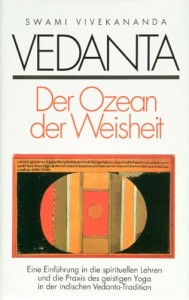
> INTERNATIONAL CONGRESS OF VEDANTA <
> Sri Ramana Maharshi Ashram, Message No.141 <
> Advaita Vedanta, Vivekananda, Ramakrishna <
Vedanta (Devanagari: वेदान्त, VedÄ�nta) was originally a word used in Hindu philosophy as a synonym for that part of the Veda texts known also as the Upanishads. The name is a sandhied form of Veda-anta = „Veda-end“ = „the appendix to the Vedas“. By the 8th century CE, the word also came to be used to describe a group of philosophical traditions concerned with the self-realisation by which one understands the ultimate nature of reality (Brahman). The word Vedanta teaches that the believer’s goal is to transcend the limitations of self-identity. Vedanta is not restricted or confined to one book and there is no sole source for Vedantic philosophy. Vedanta is based on two simple propositions: 1.) Human nature is divine. 2.) The aim of human life is to realize that human nature is divine. READ FULL ARTICLE > HERE <
Advaita Vedanta (IAST Advaita VedÄ�nta; Sanskrit अद्वैत वेदान्त; is a sub-school of the VedÄ�nta (literally, end or the goal of the Vedas, Sanskrit) school of Hindu philosophy. Other major sub-schools of VedÄ�nta are Dvaita and ViśishṭÄ�dvaita. Advaita (literally, non-duality) is a monistic system of thought. „Advaita“ refers to the identity of the Self (Atman) and the Whole (Brahman).
The key source texts for all schools of VedÄ�nta are the Prasthanatrayi—the canonical texts consisting of the Upanishads, the Bhagavad Gita and the Brahma Sutras. The first person to explicitly consolidate the principles of Advaita Vedanta was Adi Shankara while the first historical proponent was Gaudapada, the guru of Shankara’s guru Govinda Bhagavatpada. READ FULL ARTICLE >HERE <
The Advaita Vedanta Anusandhana Kendra (Advaita Vedanta Research Center) is dedicated to increasing knowledge of the tenets of Advaita Vedanta–a philosophy and religion based on the Vedas that teaches the non-duality of the individual soul and God–as expressed by its foremost exponent Shankaracharya (whose picture you see above) and the unbroken succession of teachers descended from him.
Die Philosophenschulen – Im Anschluss an die vedische Zeit entstanden in Indien verschiedene Philosophenschulen. Einige davon akzeptierten die Veden als Autorität, diese Schulen werden als orthodox bezeichnet. Andere Schulen lehnten die Veden ab. Dies sind der Buddhismus, die Jaina-Religion und die Charvakas (Materialisten). Von den orthodoxen Schulen sind in spiritueller Hinsicht interessant:
-
Samkhya – diese Schule versucht die Welt möglichst logisch zu erklären.
-
Yoga – baut auf den Theorien des Samkhya auf und liefert eine praktische Methode.
-
Tantra – baut auf den Theorien des Vedanta, bzw. Advaita auf und liefert eine praktische Methode.
-
Vedanta – Vedanta, wörtlich Veda-Ende, bezieht sich also auf die Upanishaden. Deren Botschaft fasste Badarâyana in seinen Vedanta-Sutras äußerst knapp zusammen.
International Vedanta Society – Vedanta is a spiritual science that shines light upon our very nature, illuminating the truth that we are all One with God, and that our souls are the divine manifestation of existence, knowledge, and bliss.
This truth is veiled beneath false beliefs that would limit us through fears, doubts and weaknesses. Vedanta uproots this ignorance thereby inviting us to embrace the truth of who we are (omnipresent, omniscient and omnipotent). This universal truth is available to any seeker regardless of religion, culture, or sex.
The core and founder of IVS is Bhagavan. His deep love and concern for others inspired him to pioneer many social welfare activities, even as a child. His passionate quest for truth led him to the holy feet of his master Swami Pavitrandaji Maharaj, and through his teachings, Bhagavan sank into the depths of Nirvikalpa Samadhi, (realization of the Supreme Self) in 1984, and Mahabhava (Supreme Godhood) in 1987. Since that time, Bhagavan has strived to help others attain and taste supreme joy and love.
The life and words of Bhagavan, through truth and love incarnate, offer a shelter for the tired and weary, who return home with peace, bliss, confidence, hope, and life.
The International Vedanta Society (IVS), was formed on November 19th, 1989 through the divine will manifesting in Bhagavan. Commencing its journey from Guwahati in the North Eastern part of India, the society has within a short span spread to various countries throughout the world, through its mediums of love and service. Realization of the Self or God is the key note of IVS. Its members and well-wishers strive continuously to radiate eternal love and bliss.
International Congress of Vedanta was established in 1986 by Professor S.S. Rama Rao Pappu in the Department of Philosophy, Miami University in order to bring together scholars specializing in Indian Philosophies and Religions from all over the world for the study and exchange of ideas and to promote research. In the past eighteen years, fifteen conferences were organized, ten of them at Miami University and five conferences were organized abroad – in Port-of-Spain, Trinidad, and in Rishikesh (Himalayas), Madras, Hyderabad and Visakhapatnam, India.
Centennial celebrations of great Indian philosophers were also held during the Vedanta Conferences – e.g. birth centennial of S. Radhakrishnan in 1988, 1200th anniversary of Sri Sankaracharya in 1990, centennial of Swami Vivekananda’s sojourn to America and his participation in the Parliament of World’s Religions in Chicago in 1992, birth centennial of J. Krishnamurti in 1995, and the 700th anniversary of sanjeewan Samadhi of Sri Jnaneswara in 1996.
Vedanta Congress welcomes for presentation in the conferences research papers in all areas of Indian philosophies and religions.
Though the first Vedanta Conference began with a narrowly focused group for the study of Vedantic texts and their interpretation, the scope of the Vedanta Congress was expanded during the years to include:
- (a) all major schools of Vedanta (Advaita, Visistadvaita, Dvaita, Suddhadvaita, etc.), Hindu, Buddhist and Jaina Darsanas, Epics, Puranas and Dharma Sastras
- (b) applied Indian philosophy, dealing with contemporary issues like abortion and euthanasia, war and peace, caste and race, karma and cloning
- (c) Indian philosophical implications of recent developments in mathematics, life sciences, cognitive science, etc.
-
Vedanta Articles Dein Ayurveda Net > HERE <
-
COMPLETE WORK OF RAMAKRISHNA AND VIVEKANANDA (free) downloads: www.ramakrishnavivekananda.info
-
Swami Vivekananda´s > SPEECH AT CHICAGO < at the PARLIAMENT OF WORLDRELIGIONS at Chicago in 1893.
- Read Fundamental Concepts of Vedanta here:
The Real Avatar: Story of a Sacred Mountain
> ESTC Ecotourism 2010 Conference <
> Indogenous Peoples Ressources <
> TRIBAL ENERGY ECONOMIC CONFERENCE <
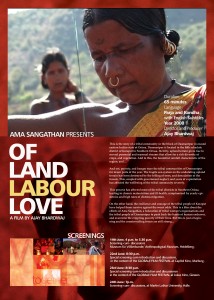
The Kondha are indigenous tribal groups of India. Unlike other tribal groups of India, the Dongria Kondh are accomplished horticulturists, farming on the mountain ranges of Niyamgiri. Their highest concentration is found in the blocks of Rayagada, Kashipur, Kalyansinghpur, Bissamcuttack and Muniguda.
One sub-group of kondhas is the Dongria Kondhas. They inhabit the plateaus of Niyamgiri hill ranges which cover parts of Rayagada and Koraput and Kalahandi districts. Their major concentration is found in the blocks of Kalyansinghpur, Bissamcuttack and Muniguda. They are called Dongria or dweller of donger („hill“ in Oriya) and love to settle in higher altitudes due to their economic demands. The Niyamgiri Hills where the Dongria Kondh dwell are covered by superb natural forests and home to many rare species like the Golden Gecko and the Giant Squirrel. The Dongria Kondh call themselves Jharnia meaning those who live by the Jharana (streams). Hundreds of perennial streams flow from Niyamgiri hill, and there are hundreds of Dongria villages by the streams. The Dongria are the protectors of these streams, hills and jungles and are revered by people in the nearby plains. Read More > HERE <
Die Globalisierung dringt heute gewalttätig und rücksichtslos bis in die letzten Gebiete vor, die noch nicht direkt von Staat, Wirtschaft und Kapital kontrolliert werden. Diese Gebiete sind meist Regionen, in denen verschiedene indigene Gemeinschaften leben, beispielsweise in Indien, Brasilien, Botswana, Ecuador oder in Venezuela. Für einige dieser Adivasi-Gemeinschaften (indigene Gemeinschaften) hat sich der gewaltsame Einzug „der Zivilisation“ in ihr Leben erst vor kurzem vollzogen. Die traditionelle Lebensweise vieler Adivasis wurde auf unterschiedliche Weise untergraben, zum Teil bereits von den Kräften des Marktes, Kapitals und des Staates zerstört.
Eine dieser zahlreichen bedrohten Adivasiregionen der Welt ist Kashipur im Bundesstaat Orissa in Indien. In dieser Region leben die drei Adivasi-Gemeinschaften Kondha, Jhodia-Paraja und Pengo. Aufgrund der Industrialisierung wurden hier bereits in einem Radius von 100km große Waldgebiete zerstört, um die nahegelegenen Städte und die Industrie mit Nutzholz zu beliefern. Dies ging einher mit dem Bau von Bahngleisen und Straßen und bedeutete das Eindringen „zivilisierter“ Außenseiter in die Region, die Ansiedlung staatlicher Institutionen, einschließlich der Polizei, Bürokratie, der Händler und Geldverleiher. Mehr lesen. > HIER <
The Dongria and other local Kondh people are resisting „Vedanta“ and are determined to save Niyamgiri from becoming an industrial wasteland. Other Kondh groups are already suffering due to a bauxite refinery, built and operated by „Vedanta“, at the base of the Niyamgiri Hills. Villagers who have been removed from their homes for the refinery have suffered threats and intimidation. They have lost both their land and their means of supporting themselves.
They are also suffering from health problems due to pollution from the refinery, which they blame for skin problems, livestock diseases and crop damage.
> Tribal survival: the Dongria Kondh < > MINING IN ORISSA utubechannel <
The Niyamgiri Hills are home to the more than 8,000 Dongria Kondh, whose lifestyle and religion have helped nurture the area’s dense forests and unusually rich wildlife.
The Dongria farm the hill slopes, grow crops in among the forest, and gather wild fruit, flowers and leaves for sale.
They call themselves Jharnia, meaning ‘protector of streams’, because they protect their sacred mountain and the life-giving rivers that rise within its thick forests.
The „Vedanta’s“ open pit mine would destroy the forests, disrupt the rivers and spell the end for the Dongria Kondh as a distinct people.
At the centre of the struggle is the Dongria’s sacred mountain, the ‘mountain of law’. The Dongrias worship the top of the mountain as the seat of their god and protect the forests there.
The „Vedanta“ Resources wants to mine the bauxite from the top of the same mountain. The Dongria Kondh would lose their livelihood, their identity and the sanctity of their most religious site.
About First Peoples – In January 2009, the Andrew W. Mellon Foundation awarded four university presses a collaborative grant that established an innovative partnership. The grant supports the publication of 40 books over four years and will create the means for the presses to collaborate in their mission of furthering scholarly communication in the field of Indigenous studies. Our publishing initiative seeks the best and most robust scholarship by junior authors whose publications will contribute to the development of the field.
Vision – In January 2009, the Andrew W. Mellon Foundation awarded four university presses a collaborative grant that established an innovative partnership. The grant supports the publication of 40 books over four years and will create the means for the presses to collaborate in their mission of furthering scholarly communication in the field of Indigenous studies. Our publishing initiative seeks the best and most robust scholarship by junior authors whose publications will contribute to the development of the field. Learn More
Press Expertise – The partner presses on this initiative bring together expertise in regional, national, and global Indigenous issues, creating a publishing program that reaches beyond traditional geographically bound or even discipline-bound borders. Learn More
Author Benefits – The collaborating presses seek works by authors that reflect the expanding field of Indigenous studies. Authors who are selected to participate in our program will receive many benefits, thanks to funding from the grant.
www.firstpeoplesnewdirections.org
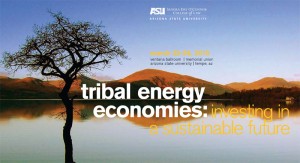
Tribal Energy Economies: Investing in a Sustainable Future – CLE CONFERENCE – Domestic energy production is undergoing a major evolution as we explore and expand traditional and new energy sources. Tribes are well-positioned to lead our nation into this next generation of development.
This conference will bring together elected and community leaders from Indian country, financing and energy industry experts, attorneys, and those in academia to chart a course that will allow tribes to increase their leverage now and create sustainable energy economies for the future. We will look at strategic plans to promote investment and to prepare the tribes for a transition towards truly sustainable economies.
We will address the traditional energies: coal, natural gas, oil, and segue to alternative and renewable energies and beyond. This conference will be a true exchange of ideas by experts in traditional, renewable, and alternative energies, as well as engineers, economists, attorneys, and financial and legislative specialists. It will look at the challenges of developing long-term economies in these energies, including the economic and cultural issues associated with large-scale build-outs on tribal lands.
The mission of the conference is to inspire the attendees not only to envision the future for the tribe’s energy economies but to also identify a clear path to success and bring together people who can contribute to achieve that success.
- University of Arizona Press
- University of Minnesota Press
- University of North Carolina Press
- Oregon State University Press
- The Andrew W. Mellon Foundation
The Buddha, A Film by David Grubin
> The Buddha, A Film by David Grubin <
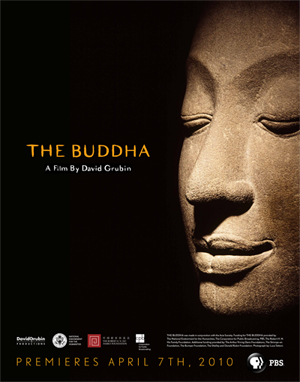
David Grubin is an American documentary filmmaker, who has produced and directed numerous films, many of which are best-known from airing on PBS. Interview with David Grubin: > HERE <
The Buddha, A Film by David Grubin – The Buddha, a two-hour documentary for PBS by award-winning filmmaker David Grubin and narrated by Richard Gere, tells the story of the Buddha’s life, a journey especially relevant to our own bewildering times of violent change and spiritual confusion.
The program was produced in conjunction with the exhibition Pilgrimage and Buddhist Art, organized by Asia Society Museum, New York, opening in March 2010. The companion website for The Buddha, launching in early 2010, will feature the work of some of the world’s greatest artists and sculptors, who across two millennia, have depicted the Buddha’s life in art rich in beauty and complexity. Hear insights into the ancient narrative by contemporary Buddhists — including Pulitzer Prize winning poet W.S. Merwin and His Holiness the Dalai Lama.
Join the conversation and learn more about meditation, the history of Buddhism, and how to incorporate the Buddha’s teachings on compassion and mindfulness into daily life.
The History of (Tibetan) Singing Bowls
> TIBETAN SINGING BOWL HISTORY <
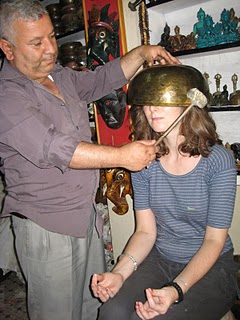
Singing bowls (also known as Himalayan bowls, rin, medicine bowls, Tibetan bowls or suzu gongs in Japan) are a type of bell, specifically classified as a standing bell. Rather than hanging inverted or attached to a handle, standing bells sit with the bottom surface resting. The sides and rim of singing bowls vibrate to produce sound. Singing bowls were traditionally used throughout Asia as part of Bön and Tantric Buddhist sadhana.
Today they are employed worldwide both within and without these spiritual traditions, for meditation, trance-induction, relaxation, healthcare, personal well-being and religious practice. Read More: > HERE <
Bei einer Klangmassage, auch Klangschalenmassage, werden Klangschalen auf den bekleideten Körper aufgesetzt und angeschlagen bzw. angerieben oder direkt über den Körper gehalten, ohne ihn zu berühren. Auf diese Weise überträgt sich der Schall des erzeugten Tons auf den Körper. Dies wird als Vibration im Körper wahrgenommen. Die Klangmassage soll im Wellness-Bereich entspannend und beruhigend wirken und wird zum Beispiel bei Stress empfohlen. Im Esoterik-Bereich werden Klangtherapien angeboten, bei denen die Klangschalen in Zusammenhang mit den Chakras gebracht werden.
Die Wirkung der Klangmassage wird zum einen damit erklärt, dass der menschliche Körper überwiegend aus Wasser besteht, das durch die Schallwellen in Bewegung versetzt wird. Dieser Effekt wirke letztlich wie eine innerliche Massage der Körperzellen. Körperliche und auch seelische Verspannungen und Blockaden sollen so gelöst werden.
Wissenschaftliche Belege für diese Theorie gibt es nicht.
Die andere Erklärung geht davon aus, dass bestimmte Töne, die durch Klangschalen erzeugt werden, den verschiedenen Chakren zugeordnet werden können und diese beeinflussen. Bei „Störungen“ der Chakren sollen diese dann mit Hilfe der Klangmassage harmonisiert und positiv beeinflusst werden.
Der Autor Peter Hess ( www.peter-hess-institut.de / Sound Massage According to Peter Hess ® ) vertritt die Theorie, dass die Töne der Klangschalen die Behandelten in einen tranceähnlichen Zustand versetzt; diese Wirkung ähnele Ritualen von Schamanen. In diesem Zustand seien Veränderungen auf körperlicher, seelischer und geistiger Ebene möglich.
Burma VJ Nominated for the 2010 Academy Award for Best Documentary Feature
> A MESSAGE FROM RICHARD GERE <
THE BEGGING BOWL, or alms bowl, is one of the simplest but most important objects in the daily lives of Buddhist monks. It is primarily a practical object, used as a bowl in which to collect alms (either money or food) from lay supporters….. http://www.religionfacts.com/buddhism/things/begging_bowl.htm
Im Wellness-Bereich werden Klangschalen nach persönlicher Vorliebe ausgewählt; die Klangmassage soll einfach die Entspannung fördern.
Bei einem so genannten energetischen Ansatz aus dem Bereich der Esoterik können Klang und Vibration der Klangschalen angeblich Blockaden im „feinstofflichen“, also seelisch-geistigen Bereich lösen. Mitunter versuchen die Klangmasseure, den Klang sowohl in die Aura als auch in die Chakren einzubringen, um diese „energetisch anzureichern“.
Wissenschaftlich lässt sich dieser Ansatz nicht nachvollziehen.
In der Körpertherapie kann, nach Aussagen der Therapeuten, die Klangmassage bei der Aufarbeitung von Traumatisierungen unterstützen. Die Klänge sollen in das „Körpergedächtnis“ vordringen und das Trauma lösen.
Therapien dürfen in Deutschland nur von therapeutisch ausgebildeten Personen durchgeführt werden.
Astrologisch orientierte Anbieter nutzen die mathematischen und astronomischen Herleitungen von Cousto, der die Umlauffrequenzen der Planeten durch Oktavierung in den hörbaren und auch sichtbaren Bereich gebracht hat. Bei Klangschalen, deren Klangspektren solche Tönen enthalten, spricht man von Planetenschalen.
Zudem existieren Klangwiegen aus Holz, in denen sich der Patient hineinlegen kann. An einer Seite befindet sich eine Öffnung, sowie Saiten, die von dem Therapeuten gezupft werden. Außerdem kann die Wiege zusätzlich geschaukelt werden.
Zum Ursprung – Der Ursprung der Klangschalen wird in Indien und im Himalaya vermutet, im Gebiet des heutigen Tibet. Es handelt sich um ein traditionelles Küchengeschirr.
Die handwerkliche Fertigung der Schalen wurde in der Himalaya-Region zwischen 1900 und 1940 fast völlig aufgegeben.
Im Westen entstand jedoch etwa in den 1980er Jahren die Überzeugung, dass es sich bei den tibetischen Metallschalen um „Klangschalen“ handelt, und sie lassen sich unzweifelhaft zum Erzeugen von Tönen verwenden.
Dass die Klangtherapie eine uralte buddhistische Methode ist, was häufig in der westlichen Esoterik-Szene behauptet wird, lässt sich nicht belegen.
Quelle: http://de.wikipedia.org/wiki/Klangmassage
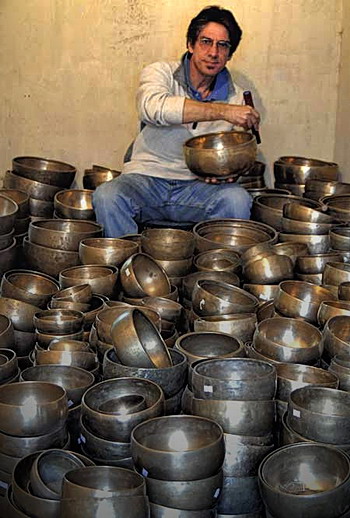
Tibetan musicologist, Indo-Tibetan art expert and meditator, Rain Gray personally tests tens of thousands of singing bowls each year in the Himalayas to select the 1/2 percent which are awarded our Master-quality® label.
Jabulani – a self help project in Mariannhill
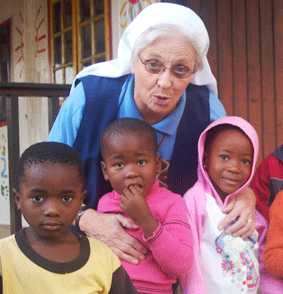
Jabulani (IsiZulu) „Be Happy“
http://www.jabulani-centre.org/
http://jabulaniafrika.blogspot.com/
The greatest good we do to others is not to give them our own wealth but to show them their own. – ( Kardinal Suenese)
The Origins of Jabulani – Jabulani opened officially on the 4th of January 1988. At that time many people came to Mariannhill Mission for help after becoming homeless in the heavy floods in 1987. However, it was impossible to reach the poorest people. Thus the Sisters of the Precious Blood decided to open a centre for those affected.
Sr. Marco Gneis agreed to establish the project together with Mrs. Audrey. Prior to founding Jabulani the two nurses had been teaching mothers coming to St. Mary’s Hospital how to grow vegetables at home in an attempt to combat malnutrition, visiting different areas within a wide radius of the hospital with a mobile clinic.
> spiritreneuringrid’s Channel <
The Jabulani School Report – In the early days of Jabulani many people had to flee their homes and seek new shelter. This caused many problems, especially for the children involved. The local schools were overcrowded so that some of these children were refused admission. The arguments used revolved around the bad influence these children from allegedly criminal areas would have on the other pupils. The outcome was that a large number of children could not go to school that particular year. So Bhekani Mzobe started to teach the children of different grades at Jabulani.
Who comes to Jabulani every day? – About 140 women and 15 men from the surrounding townships are working at Jabulani. These people cannot find work on the open job market because they lack education or qualifications or because their family situation does not allow it. At Jabulani they have the chance to earn a small salary with which they can feed their families and offer their children a better future. The day starts at 7.30 am and ends around 3.30 pm, teatime and lunchtime included.
Jabulani Projects – Many projects in Jabulani were established within a very short space of time, including the gardening, sewing, embroidery, candle-making, bakery and weaving projects. Unfortunately some of these projects had to be stopped in the course of time due to the economic situation. The sewing project was restarted again later when it was decided to sew clothes for the Jabulani people themselves. Thus school uniforms, cushion covers, children’s clothes were made in addition to products for tourists.
Jabulani and Religion – In Jabulani one finds Catholic symbols alongside Zionist symbols, demonstrating that Jabulani is open for everyone, whether Christian, Zionist or Muslim. In Jabulani the different cultures and religions exist not only alongside one another, but also together with one another. And in the little meditation room all groups can practice their faith.
Ayurveda – H.H. Swami Sivananda Maharaj
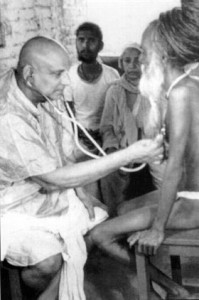
( H.H. Swami Sivananda Saraswati Maharaj )
> SIVANANDA – PRACTICE OF AYURVEDA <
Swami Sivananda Saraswati (September 8, 1887—July 14, 1963) was a Hindu spiritual teacher and a well known proponent of Sivananda Yoga and Vedanta. Sivananda was born Kuppuswami in Pattamadai, in the Tirunelveli district of Tamil Nadu. He studied medicine and served in Malaya as a physician for several years before taking up monasticism. He lived most of the later part of his life near Muni Ki Reti, Rishikesh. He is the founder of The Divine Life Society (1936), Yoga-Vedanta Forest Academy (1948) and author of over 200 books on yoga, vedanta and a variety of other subjects. He established Sivananda Ashram, the location of the headquarters of The Divine Life Society (DLS), on the bank of the Ganges at Shivanandanagar, at a distance of 3 kilometres from Rishikesh.
Sivananda Yoga, the yoga form propagated by him, are now spread in many parts of the world through Sivananda Yoga Vedanta Centres, but these centres are not affiliated with Swami Sivananda’s original ashrams which are run by the Divine Life Society. Read more: > HERE <
Sri Swami Sivanandaji Maharaj was a healer of the body in his Purvashram (before he entered the Holy Order of Sannyasa). He was a born healer, with an extraordinary inborn love to serve humanity; that is why he chose the medical profession as a career. That is why he edited and published a health Journal „Ambrosia“. That is why he went over to Malaya to serve the poor in the plantations there. And, strangely enough, that is why, he renounced the world and embraced the Holy Order of Sannyasa.
He was a healer of the body and the soul. This truth is reflected in the Ashram which he has established in Rishikesh. The huge hospital equipped with modern instruments was set up and the entire Ashram where all are welcome to get themselves healed of their heart’s sores and thoroughly refresh themselves in the divine atmosphere of the holy place.
SERVE, LOVE, GIVE, PURIFY
MEDITATE, REALISE
So Says Sri Swami Sivananda
Saraswati Maharaj
Sri Swamiji wanted that all systems of healing should flourish. He had equal love and admiration for all systems of healing. He wanted that the best of all the systems should be brought out and utilised in the service of Man. He has written a number of books on all aspects of Healing—from the Naturopathic and Allopathic points of view. This one dealing with Ayurveda is a valuable addition to the healer’s armamentarium.
Ayurveda is the Veda or knowledge of Ayus or life. It has been classified as the Fifth Veda.
Ayurveda is a distinct Veda. It is even superior to the other Vedas because it gives life which is the basis of all enjoyments, study, meditation and Yoga Sadhana.
Ayurveda is the science of life. It shows the way to remove diseases, to keep up sound health and attain longevity.
Ayurveda was in vogue in India since very early times. The Ayurvedic and Siddha systems have played a very important and vital part in the sphere of public health. Their popularity is due to their availability, cheapness and efficacy.
Here is a beautiful ideal of Charaka: „Not for self, not for the fulfilment of any earthly desire of gain, but solely for the good of suffering humanity should you treat your patients and so excel all. Those who sell the treatment of disease as merchandise gather the dust and neglect the gold.“
Charaka also says: „A physician who cannot enter into the innermost soul of the patient with the bright light of the lamp of his own knowledge cannot successfully treat any disease.“
India has ever been evolving art after art, science after science, as her contribution to the common heritage of all the nations of the world. Her greatest gift to the world is the gift of the spiritual science of Self-perfection. Next to it we should place this Science of Life, the Ayurveda, as a precious gift to be carefully developed and broadcast to all nations. It is a national duty of every Indian.
Nurse the Sick, Feed the Hungry, Clothe the naked, This is DIVINE LIFE.. …..Swami Sivananda
THE DIVINE LIFE SOCIETY
African Traditional Medicine, Ethnomedicine
> WHO – Traditional Medicine <
”Health through cultural heritage“
Traditional medicine (also known as indigenous or folk medicine) comprises medical knowledge systems that developed over generations within various societies before the era of modern medicine. Practices known as traditional medicines include herbal, Ayurveda, Siddha medicine, Unani, ancient Iranian medicine, Islamic medicine, traditional Chinese medicine, acupuncture, Muti, Ifá, and other medical knowledge and practices all over the globe. The World Health Organization (WHO) defines traditional medicine as: „the health practices, approaches, knowledge and beliefs incorporating plant, animal and mineral-based medicines, spiritual therapies, manual techniques and exercises, applied singularly or in combination to treat, diagnose and prevent illnesses or maintain well-being.“
In some Asian and African countries, up to 80% of the population relies on traditional medicine for their primary health care needs. When adopted outside of its traditional culture, traditional medicine is often called complementary and alternative medicine. Herbal medicines can be very lucrative, generating billions of dollars in sales, but adulteration or counterfeit herbs can also be a health hazard. Read More: > HERE <
HISTORY OF TRADITIONAL MEDICINE – African Traditional Medicine is a mainstay of primary health care for the majority in Africa. About 80% of the population has relied on resources within their environment to survive since God’s creation.
Plants, minerals and animals constitute the major natural resources ever used by mankind for preventative, curative and rehabilitative health in Africa. Like any other continent, these resources have been used for over ten thousand years by traditional health practitioners (THP’s), who acquired their knowledge and skills through observation, spiritual revelation, personal experience, training and direct information from their predecessors.
THE ROLE OF EMERGED SCIENTIFIC TRADITIONAL MEDICINE SYSTEM: “ ETHNOMEDICINE “ – What is Ethnomedicine Science? Ethnomedicine is a multi-disciplinary field of study that draws on approaches and methods from both the social and biological sciences, culturally based biological and environmental knowledge, cultural perception and cognition of the natural world, associated behaviours and practices, concerned with the cultural interpretations of health, disease and illness, and also addresses the health care seeking process and healing practices.It is a study of cultural concepts of health, disease and illness, and of the nature of healing systems.
Ethnomedicine has turned it’s attention to laboratory research, which has been made possible by the auspices of the World Health Organisation (WHO). In fact, the traditional medicine programme of the WHO was precisely thought of as an answer to renewed interest for population therapies and remedies, in view of possible identification and utilisation within national health services.
African Medicine – the mother of medicines:
„If we accept that Africa is the cradle of mankind and that the use of herbs is as old as mankind itself, it then stands to reason that African medicine is the oldest, most tried and tested form of medicine known to mankind. Further, to call it an alternative is wrong, since it formed the basis for other types of medicine practiced today – conventional, herbal, Chinese, etc.“ T/Dr R de Carvalho.
History and Description – Ethnomedicine is a system that applies both art and science to help the human body to restore its health and well-being. It utilises natural remedies to activate the immune system. Herbs are used for cleansing, elimination and detoxification. Some are used to stimulate the body’s self-healing capabilities to counteract physical symptoms, whilst others may be used as a tonic to help the body’s immunity.
-
Vision – To manufacture and distribute an effective range of African herbal remedies and medicinal products that not only competes, but surpass its competitors.
-
To enhance and preserve the knowledge and wisdom of African herbal medicine.
-
To be a leader in the research and development of African herbal remedies and products.
PAXHERBAL, MAGAZINE: The aim of Pax Herbal Magazine is to re-assimilate, re-understand and re-express ancient African philosophy [indigenous knowledge] in light of modern, scientific knowledge [exogenous knowledge]. African Medicine, that is, the science of life, is at the centre of African philosophy. Life, for the African, is indeed the ultimate value. By exploring the multi-faceted dynamism of healing in Africa, Pax Herbal Magazine is championing a medical revolution that is all-embracing, holistic, African and global.
The Science – After years of repudiating ancient wisdom, science is now validating the wisdom of the ancients. Discoveries in quantum physics, radiology and electromagnetic force have changed the way scientists look at the world.
Pax Herbal products are currently a high-flying brand because they are efficacious, affordable and available. Recently, though, the monks of St. Benedict Monastery, Ewu, Esan, Edo State, the custodians of Africa’s most sophisticated, scientific and full-blown herbal pharmaceutical industry and their dedicated staff have been bending over backwards to meet a snowballing demand for their products.
-
www.epasa.co.za/ – Ethnomedicine Practicioners Ass. Africa
SMILE AFRICA FOUNDATION ~ E-WASTE

www.treesforlife.org cradle to cradle design
www.computerrecyclingsociety.org
Electronic waste, e-waste, e-scrap, or Waste Electrical and Electronic Equipment (WEEE) describes loosely discarded, surplus, obsolete, broken, electrical or electronic devices. The processing of electronic waste in developing countries causes serious health and pollution problems because electronic equipment contains some very serious contaminants such as lead, cadmium, beryllium and brominated flame retardants. Even in developed countries recycling and disposal of e-waste involves significant risk to workers and communities and great care must be taken to avoid unsafe exposure in recycling operations and leaching of material such as heavy metals from landfills and incinerator ashes. Read More: > HERE <
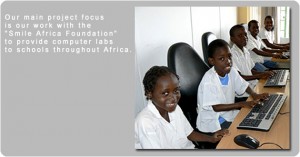
About CRSC – What is the Computer Recycling Society of Canada? – CRSC is a non-profit, community minded organization whose vision is to promote computer literacy for all people with emphasis on helping other charitable and non-profit groups. We provide affordable, refurbished computers and training programs to needful individuals and organizations locally and worldwide. Our main project focus is our work with the „Smile Africa Foundation“ to provide computer labs to schools throughout Africa. www.smileafrica.org
Who is involved? – Corporations, government and individuals all donate used computer equipment to our Society. Experienced computer technicians and educators in computer fundamentals, with the generous assistance of community volunteers, operate our facilities and run our programs.
Why is the Computer Recycling Society Necessary? – To fill a gap in computer education and to make computers available to people of all ages, across all income groups, through the auspices of other established, non-profit community organizations in your community and in developing countries.
WHERE can you make a difference? – If you have any computers or parts no longer useful to you or your company, we will refurbish and redistribute them to local and international communities through charitable organizations.
How can you Help? – We are always looking for people willing to volunteer their time and talents; repairing and teaching; picking up and delivering. All that’s required is enthusiasm and a desire to learn and help others.
SMILE AFRICA’s vision is based on three core principles: Literacy, Learning and Leadership; enabling partner communities (in Africa) to improve their human factor capacity for change, and to build a world fashioned more equitably.
2009 -2015 priorities include providing books, libraries and resources to foster quality education and help children and families refine and unfold their potential as leaders, thinkers and contributors of society.
beCAUSE™ 2015 Campaign – SMILE AFRICA’s beCAUSE™ campaign focuses on three achievable goals of the Millennium Development Goals (MDGs). If each one of us can play a small role along with leading organizations and world governments, we can combat illiteracy and poverty, and bring change to a significant portion of the human family.
Achievable Goals:
- Our MDGs Priorities by 2015:
- Provide one million books to help school children achieve literacy, and build libraries and schools in partnership with their communities.
- Improve the living conditions of vulnerable populations, e.g., via training and access to clean water and basic sanitation.
- Empower women via leadership and economic development; giving them resources to prevent poverty-related risks such as: hunger, infant illnesses and mortality. Read more…www.smileafrica.com

“ e-waste boy in africa „
-
TREE´s FOR LIFE: Computers to Empower People, gifts from the heart <
HOLI: The festival of colours in India
> Organic Colours, Cradle to Cradle Design <
> ECOBUILD UK, 4th March 2010 <
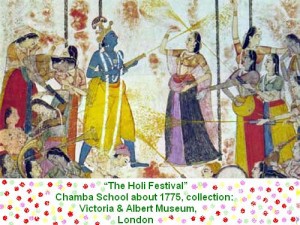
Holi, also called the Festival of Colours, is a popular Hindu spring festival observed in India, Nepal, Srilanka, and countries with large Hindu diaspora populations, such as Suriname, Guyana, South Africa, Trinidad, UK, USA, Mauritius, and Fiji. In West Bengal of India and Bangladesh it is known as Dolyatra (Doul Jatra) or Basanta-Utsav („spring festival“). The most celebrated Holi is that of the Braj region, in locations connected to the god Krishna: Mathura, Vrindavan, Nandagaon, and Barsana. These places have become tourist destinations during the festive season of Holi, which lasts here to up to sixteen days. Colours used at Holi, – a perfect alternative to synthetic colours… Read More: > HERE <
Holi or Hutasani festival identified with Dol-Yatra or Rocking of the image of K’rsna, is celebrated in Phalgun (March). It is said to be a commemoration of the killing of the demon Madhu by K’rsna. This festival is specially celebrated I Northern states, as a kind of Hindu Sutranalia or carnival and is a very popular festival. It commences about 10 days before the full moon of Phalgun (March), but is usually observed for the last three or four days, terminating with the full moon. Boys dance all over the streets ad the residents sprinkle their friends, relatives and even passersby, with red or yellow powder (gulal). The whole atmosphere is very jovial and no one objects to the color being thrown. Loud music, merriment, songs and midnight orgies are the rule. Elders, youngsters, children, women and girls, all join this festival. Groups go from house to house, offer gulal at the feet of the elders and smear red/yellow powder on the faces of the equals. Some rich elderly persons apply scent on all visitors. Towards the close of the festival, one day before the colour play, a bonfire is lighted and games representing the frolics of the young K’rsna, take place around embers. A light mood atmosphere prevails, along with practical jokes, caricature, and cartoons, as is not seen in any other festival.
Article: By- Prof. (Dr.) Chitralekha Singh
Dean (Visual & Performing Art)
Mangalayatan University, Aligarh-INDIA
Reb Zalman Legacy Project, Migdal Ohr
> What is authentic Judaism ? <
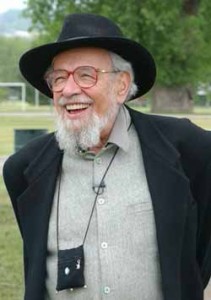
The Reb Zalman Legacy Project is a collaborative effort of the Yesod Foundation and Naropa University to preserve, develop and disseminate the teachings of Rabbi Zalman Schachter-Shalomi, better known as „Reb Zalman,“ an innovative leader in ecumenical dialogue and founder of the Jewish Renewal and Spiritual Eldering movements.
To this end, we hope to develop a unique on-line educational tool, giving users access to a virtual library of profound dimensions; a physical archival collection housed at Naropa University, providing a beautiful space for study, contemplation, and spiritual fellowship; a Contemplative Judaism M.A. program based on Reb Zalman’s teachings at Naropa University; ecumenical, spiritual direction, and eldering workshops; and new books, booklets, CDs, and DVDs, developed from the wealth of Reb Zalman’s material archive.
Important areas of intellectual and spiritual development to us are Deep Ecumenism (inter-religious dialogue), Paradigm Shift, Contemplative Practices, Ecology and Gaian Awareness, Spiritual Eldering, Psychology of Religion, Transpersonal Sociology, Jewish Mysticism, Hasidism, Jewish Renewal, Storytelling, and Sacred Music.
The Reb Zalman Legacy Project is a container that supports the evolving understanding of all of these ideas with the teachings of Reb Zalman as its core and foundation. We intend to preserve not only Reb Zalman’s body of work, but also his process of renewal, so that his teachings will not become calcified and exist with meaning primarily for our generation alone. Therefore, with an eye to the future, we are building open access-pathways to primary texts, inviting new commentary, and providing new possibilities for spiritual fellowship. „To Preserve, Develop, and Disseminate“
Reb Zalman Schachter-Shalomi: Healing the Planet, Rabbi Grossman for underprivilged children
Zalman Schachter-Shalomi, better known as „Reb Zalman,“ was born in Zholkiew, Poland, in 1924. Raised largely in Vienna, his family was forced to flee the Nazi oppression in 1938. After almost three years without roots, they finally landed in New York City in 1941, settling in Brooklyn, where young Zalman enrolled in the yeshiva of the Lubavitcher Hasidim. He was ordained by Lubavitch in 1947. He later received his Master of Arts degree in the Psychology of Religion in 1956 from Boston University and a Doctor of Hebrew Letters degree from Hebrew Union College in 1968.
He taught at the University of Manitoba, Canada, from 1956 to 1975 and was Professor of Jewish Mysticism and Psychology of Religion at Temple University until his early retirement in 1987, when he was named professor emeritus. In 1995, he accepted the World Wisdom Chair at Naropa University in Boulder, Colorado, officially retiring from that post in 2004.
Throughout his long career, Reb Zalman has been an unending resource for the world religious community. He is the father of the Jewish Renewal and Spiritual Eldering movements, an active teacher of Hasidism and Jewish Mysticism, and a participant in ecumenical dialogues throughout the world, including the widely influential dialogue with the Dalai Lama, documented in the book, The Jew in the Lotus.
One of the world’s foremost authorities on Hasidism, he is the author of the new book, A Heart Afire: Stories and Teachings of the Early Hasidic Masters (co-authored by Netanel Miles-Yepez), and on Jewish law, he has written, Integral Halachah: Transcending and Including (with Daniel Siegel). Reb Zalman currently lives in Boulder, Colorado, and continues to be active in mentoring his many students the world over.
For a complete biography and chronology of Reb Zalman’s life, please visit our „Life“ page. To see a complete list of Reb Zalman’s published works, see our „Works“ page.
Rabbi Yitzchak Dovid Grossman is a sixth generation Jerusalemite, born in 1946. A dramatic turning point in his life occurred in 1968 when he decided to move to the Lower Galilee town of Migdal Ha’Emek to provide the socio-humanitarian aid sorely needed there.
Migdal Ha’Emek had been established in 1953 as a development town designed to accommodate part of the great influx of Jewish immigrants from the North African countries. The town’s population grew in size much faster than the evolving socio-economic and educational infrastructure. The resulting shortage of jobs and lack of sufficient school facilities and teachers had a devastating effect on the inhabitants. Migdal Ha’Emek quickly became known as one of the prime centers of criminal activity in Israel.
Rabbi Grossman’s arrival on the scene was without fanfare. He had no welcoming committee and no mandate from the people or from the administration. Furthermore, he had no budget nor staff or even an office. He joined in the conversations of idle youth hanging out on the street corners and, after gaining their confidence, began organizing private classes for them. But he knew that to get to the core of the problem, he would have to tackle it at it’s roots.
Rabbi Grossman became a steady and frequent visitor at the town’s discotheques and pubs, engaging the young clientele in dialogues. Slowly but surely the tough exteriors began to peel away and there began to surface the gentle side of the members of the new generation searching for their true identity.
Migdal Ohr (Hebrew for „Tower of Light“) was established in 1972 for the express purpose of providing education and social guidance to the children from underprivileged and troubled homes ifrom across Israel. Overcrowded apartments, one-parent families, homes with drug problems, impoverished, crime-ridden families–these are the target populations from which Migdal Ohr draws its over 6,000 pupils at all levels of the educational spectrum. Its goal – to transform these students into proud and productive citizens of Israel.
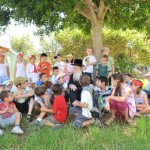
Migdal Ohr, Israel’s largest youth village, provides a nurturing home and outstanding education to over 6,500 orphaned, impoverished, underprivileged and new immigrant children. At Migdal Ohr, the children’s individual needs are met with love, warmth and tremendous sensitivity.
The Young Leadership Committee is dedicated to upholding the values and promoting the mission of Migdal Ohr. By developing creative programming, the Committee attracts young Jewish professionals, educates them about our mission, and encourages increased involvement.
The Young Leadership Committee is open to everyone interested in generating awareness for Migdal Ohr and affecting change in the lives of others. Our dynamic members come from varied backgrounds, and offer a broad range of perspectives and experiences. Together we plan and attend fundraisers and social events, meet hundreds of young adults in the New York area, and, best of all, help save children in Israel.
MIGDAL OHR EDUCATIONAL CENTER – The following is a brief description of some of the educational and social facilities provided by Migdal Ohr:
-
(a) Day Care Centers which provide tender, loving care to infants aged three months to three years old. These facilities offer the mothers of large families the opportunity to work and help their husbands support their children.
-
(b) Kindergartens, where pre-school age children get a proper start on the educational path.
-
(c) Primary and Secondary school systems, for boys and for girls, with full dormitory facilities, laboratories, computer centers, libraries, and youth centers, where emphasis is placed on individual attention to the child’s needs.
-
(d) Teachers‘ Seminary for single and married men, to develop the rabbis, educators, school administrators and rabbinical court judges required by Israeli society.
-
(e) Prisoner rehabilitation programs in Israel’s prisons. The recidivism rate among the „graduates“ of Migdal Ohr’s rehabilitation activities stands at about 10%, a sharp contrast to the 90% in the general prison population.
-
(f) Occupational Training Center offering adult education courses responsive to the requirements of government and industry for off-campus residents of northern Israel. Courses fall into three categories:
-
(I) OCCUPATIONAL DIPLOMA COURSES
-
(II) EDUCATION EXTENSION COURSES
-
(III) COMMUNITY ACTIVITIES
Vedic Guide: “ Bibel, Bhagavad-Gita & Co „
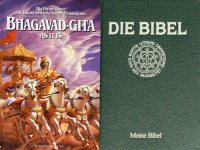
The Bible refers to one of two closely related religious texts central to Judaism and Christianity—the Hebrew or Christian sacred scriptures respectively. The Hebrew Bible, composed between the 14th and 5th centuries BCE, is the main source for the history of ancient Israel. The five books of the Torah compromise the legal code and origins of the Israelite nation. The Prophets consist of prophetic and ethical teachings, as well as the historic account of Israel. The Writings such as Psalms and Job are poetic works. Israelite historians presented a picture of the ancient nation based on information that they viewed as historically accurate. Read More: > HERE <
Vortrag und Diskussion mit Shri Sarvabhavana Prabhuji – Vorträge in den Vortragsreihen „Café-Gespräche“ und „Themen-Abende“. Shri Sarvabhavana beleuchtet in seinen Vorträgen Themen aus dem weiten Feld der spirituell-vedischen Philosophie, der Mystik und der Psychologie. Er verbindet dabei uralte vedische Weisheit mit einem sehr bodenständigen Ansatz, der sich darum bemüht, diese spirituell-philosophischen Wahrheiten mit dem praktischen Leben zu verknüpfen.
-
„Bibel, Bhagavad-Gita & Co – Die Bedeutung offenbarter Schriften“
-
„Bhagavad -Gita Abend“ „Lesen in der Bhagavad-Gita“
Seine inspirierenden, tiefgründigen Präsentationen mit seinem ungewöhnlichen klaren Blick auf die komplexen Themen überraschen und regen zum eigenen Nachdenken und zur persönlichen Vertiefung an.
Was ist AUM ? Pranava, Urmantra, Silbe, Matrix….
