
Posts by admin
Food Relief, Umbrella Project, India Divine
In 1990, when Hilda Brown lost her favorite brown umbrella, she was inspired to found THE UMBRELLA PROJECT, Inc. an all-volunteer 501(c)3 Not-For-Profit organization that uses the common language of art to empower young people.
Envisioning everyone in the world carrying colorful canopies whenever life’s storms threaten, Hilda encourages school-age children to paint in small groups on over-sized white-nylon umbrellas with non-toxic fabric markers. With these tools, healthy, ill, and challenged children share their artistic images with each other and the world.
Believing in the creative spirit as a healing power on the planet, Hilda continues to gather our youngest World Citizens under her umbrella of protection. Through The Umbrella Project, she encourages them to artistically express their hearts and in the process recover hope and peace while helping other children in need.
Bhaktivedanta International Charities Inc. is a tax exempt 501(c)(3) nonprofit charitable organization registered in the United States of America dedicated to carrying out relief activities to help the poor and needy in India.
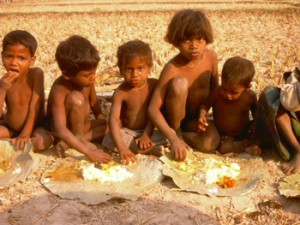
Every month the Bhaktivedanta International Charities feeds over 6,000 needy children in the drought and flood afflicted areas of Orissa, Andhra Pradesh and Tamil Nadu, which comprise some of the poorest regions of India. Below you can find some recent reports of our activities, or if you click the picture above you can be taken to our picture gallery.
Bhaktivedanta International Charities was founded for the following purposes:
- To provide humanitarian need to the poor and needy in India in the form of free food, medicines, and clothes.
- To start and run educational institutions and to provide all necessary facilities for the education of the poor irrespective of caste, community, creed or religion.
- To afford medical relief to the sick and the suffering without any restriction as to religion, caste, community, or creed by construction and or maintaining hospitals, clinics, dispensaries, maternity and childrens homes, etc.
- To construct and or maintain libraries for the educational benefit of the public.
- To grant scholarships or subsidies to poor and needy students.
CARL ORFF – Carmina Burana, Music Therapy
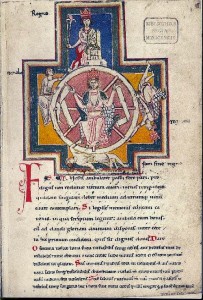
> CARMINA BURANA, Text with Translation <
Carmina Burana (pronounced /ˈkɑrmɨnə bʊˈrɑːnə/), Latin for „Songs from Beuern“ (short for: Benediktbeuern), is the name given to a manuscript of 254 poems and dramatic texts from the 11th or 12th century, although some are from the 13th century. The pieces were written almost entirely in Medieval Latin; a few in Middle High German, and some with traces of Old French or Provençal. Many are macaronic, a mixture of Latin and German or French vernacular.
They were written by students and clergy when the Latin idiom was the lingua franca across Italy and western Europe for travelling scholars, universities and theologians. Most of the poems and songs appear to be the work of Goliards, clergy (mostly students) who set up and satirized the Church. The collection preserves the works of a number of poets, including Peter of Blois, Walter of Châtillon and the anonymous one, referred to as the Archpoet.
The collection was found in 1803 in the Benedictine monastery of Benediktbeuern, Bavaria, and is now housed in the Bayerische Staatsbibliothek in Munich. Along with the Carmina Cantabrigiensia, the Carmina Burana is the most important collection of Goliard and vagabond songs. Read More: > HERE <
Carl Orff – Carmina Burana
The Orff method, also known as Orff-Schulwerk or Music for Children, is an approach to music education conceived by the German composer Carl Orff (1895-1982). It was developed in the 1920s and 1930s while Orff was music director of the Günther-Schule, a school of dance and music in Munich. The guiding principles were contained in his publication Orff-Schulwerk (Mainz 1930-5), to which revisions came later. The first of many foreign versions was Music for Children (Mainz 1956-61), an adaptation in English by Doreen Hall and Arnold Walter of the University of Toronto.
Orff’s approach, developed for children but latterly used also with adults, was based on his belief that the easiest method of teaching music is to draw out the student’s inherent affinities for rhythm and melody and allow these to develop in natural ways, leading the child by his or her intuition from primitive to more sophisticated expression through stages parallel to western music’s evolution. Orff accomplishes this by means of a carefully planned program, beginning with speech patterns, rhythmic movement, and two-note tunes, then moving logically into pentatonic melody. Adult pressure and mechanical drill are discouraged. Improvisation is encouraged.
Major and minor melody are introduced as the final stage of the program. Orff designed a special group of instruments, including glockenspiels, xylophones, metallophones, drums, and other percussion instruments to fulfill the requirements of the Schulwerk courses.
VEDIC MUSIC and Relation to Music Therapy:
Indian traditional systems of health and healing also include various musical treatment approaches. A few healing traditions are also integrated in modern music therapy practice in India. Vedic traditions dating back roughly 5000 years ago had a great intuition about the power of sound and intonation.
The Vedic chants and music which had more sound and rhythm, used as a source of healing and up liftment reflected the intuition that each intonation and inflection of voice could have beneficial or adverse effects. Music Raga Therapy a, an extinct sanskrit treatise, as its name implies dealt with curative ragas and suggested specific ragas with specific therapeutic and a prophylactic medium in clinical and educational settings.
The Vedic system of health care concerned with healthy living and not disease specific takes into account the patient’s entire personality, body, mind and the spirit and guides the participants for a healthy living along with the therapeutic measures that relate to physical, mental, social and spiritual harmony.
Nada Yoga is the core of Dhrupad, the most ancient style of Hindustani Classical Music. Originally only sung by priests in the temples as an act of worship, it induces a deep meditative state in the singer as well as the listener.
- Nada Yoga & Philosphy: > HERE <
Which are the features of Carl Orff’s and Gunild Keetman’s ideas relevant for the work in community and therapy? A child who is mentally or physically handicapped, emotionally or sensorially disabled or autistic, is never just only that. The characteristics of a person that are not expressed in these terms, however, are precisely the ones that make musical communication and thus a connection with the so-called „normal“ people possible. A historical review shows the sources from which the adaptation of the Schulwerk for the work with handicapped and disturbed children and young people was made possible and meaningful.
A brief section intends to define the fields of „Music Education“ – „Music in special needs and community“ – „Music Therapy“ in order to distinguish them and finally point out the contents they have in common. Read More: > HERE <
The author uses quotes by Carl Orff in order to document the basis for therapeutic work in his ideas and describes how pedagogues and therapists, from the early sixties until today, have developed them for and together with different groups with special needs:
- The multi-sensorial approach through speech, free and bound rhythm, movement, singing and playing instruments provides possibilities for spontaneous creative play in a social context, even if one important sensorial area is severely damaged.
- Every member of an integrative music and movement group is participating actively in a creative process.
- The instrumentarium allows participants to play together in a spontaneous way.
- Relationship through musical expression and play as an encounter between two people which is the basis for emotional development.
- Musical reception and expression is independent of intellectual capacity, age and previous musical experience.
- Meet CARL ORFF, friends, fans, groups at facebook <
Mahayogi, Yogacharya, Guru Gorakhnath
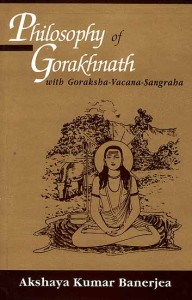
MAHAYOGI YOGACHARYA GURU GORKHNAHT JI AADESH AADESH .
BY MR . VISHAWAJEET SING JI
> HATHA YOGA AND THE MEANING OF TANTRA <
AADESH AADESH ,
MAHAYOGI ,YOGACHARYA ,GURU GORKH NATH JI
However, great Yogis such as Gorakshanath are following the system of Sadanga Yoga which has been stated by him in his book Goraksha Paddhati 1.7. This System avoids Yamaand Niyama. The justification given by those Yogis is that if you obtain mastery in meditation, your whole lifestyle gets changed in such a way, that you automatically start following the Yama and Niyamawhich are the necessary rules and individual rules of conduct respectively. These six aspects of Yoga are:
- Physical Postures
- Pranayama
- Pratyahara
- Dharana
- Dhyana
- Samadhi
2. According to the Nath Cult it is most important that the aspirant should purify his body completely. This has been stated in detail in Gheranda Samhita l.10-11-12. This is a total purification of all important and vital organs of the body such as stomach, small intestines, large intestines, nasal passage, food pipe, eyes, cars, throat, etc. After this the cult says that the aspirant is in a position to undertake all the steps of Yoga. In Patanjali’s Yoga Sutras this preparation of initial background is not mentioned.
3. The next step (in other Yoga systems) is the learning of physical postures. However, after learning all the important postures, the aspirant has to practise the most essential posture viz. Siddhasana or Vajrasana. For all the future Sadhanas this is considered to be the basic and important posture. The detailed description of this posture is given by Jnaneshvara in his sixth chapter of Jnaneshvari and also by a number of books of Nath Cult. They say that this posture is a must for all the aspirants. However, Patanjali says that you can sit in any convenient posture you like. Hence he gives the Sutra „Sthira-sukham asanam.“
4. The importance of a Guru or Master is maximum in Nath cult. Their every book or Shastra starts by remembering or bowing with great reverence and respect to the Guru Adinath or Shiva or Shankara. Jnaneshvari also starts like this by saying „Om Namoji Adya.“ This importance is not given to Guru in Patanjala Yoga Darshana.
5. The Nath cult says that the human body consists of certain most essential centres or vital points and voids (Akasha). (8) Every aspirant has to know and understand these things. They say that one who is not aware of these essential centres is not a Yogi. They are six Chakras, sixteen vital points, two Laksyas (concentration points), five voids, all situated within the human body. Such type of discussion is not found in Patanjala Yoga Darshana.
6. Nath cult says that the human body is just like a beautiful house which is having nine doors. It is formed out of five essential elements and each element is having its own deity. The nine openings are two eyes, two nostrils, two ear holes, mouth, excreta outlet, and sex organ. The deity of Earth is Brahma, of water is Vishnu, of fire is Rudra, of air is Ishvaraand of space is Sadashiva. Every aspirant has to understand these things. In Patanjala Sutras we do not find this.
7. The Nath Panth, in their various books as mentioned above, gives a detailed description of the seven chakras, their exact location in the body, their properties and functions etc. Jnaneshvara has not given the description of these chakras for the reason that he wanted to restrict his interpretation to the verses of Bhagavad-Gita. At the base of the spinal cord and at the centre of the line which connects sex organ and the excreta outlet is situated the first chakra which is known as Muladhara Chakra. Slightly above the sex centre and below the naval centre the second chakra is situated which is known as Svadhisthana Chakra. The third is situated near the naval centre and is called Manipura. The fourth one is situated near the heart centre and is known as Anahata Chakra. The fifth is situated at the throat centre and is known as Visuddha Chakra. It must be noted that all these chakras are situated in the Shushumna Nadi which passes through the spinal cord, which again passes through Vertebral Column. These are extremely subtle points and may not be structural and cannot be located by any sophisticated instrument available. These were actually ‚observed‘ and seen by the great Rishis in the stage of Samadhi. Here come the limitations of modern science. The sixth chakra is situated on the forehead and between the centre of the two eyebrows. This is known as Ajna Chakra. The seventh and the last chakra is situated in the centre of the brain in its uppermost portion. Patanjali does not mention any such thing in his Yoga Sutras.
8. According to Nath Cult there are 72.000 nerves in the body of human beings. Out of these ten Nadis are important. Out of these three are most important. They are known as Ida, Pingula and Shushumna. Ida is known as Chandra Nadi and is passing through the left side of the vertebral column. Pingula is known as Surya Nadi and is passing through the right side of the vertebral column. Shushumna Nadi is passing through the spinal cord and is known as Agni Nadi. Patanjali’s Yoga Sutras do not mention all this. He does mention a few Nadis like Kurma Nadi. But the detailed description is absent.
9. The concept of Prana has been studied in maximum details in Nath Cult. They say that in the human body there are ten different types of air or Vayus , which are known as Prana, Apana, Samana, Udana, Vyana, Naga, Kurma, Krikala, Devadatta and Dhananjaya. Each one is situated in a specific part of the body. Each one is having specific purpose and function in the body. When we take the air inside our body, it gets bifurcated into ten branches. This is just like a stream of water which starts from the Himalayan Mountains and gets bifurcated into several branches and each branch becomes a river and is given a separate name. Present medical science is not in a position to locate these ten different types of airs. However, our ancient Yogis have actually ’seen‘ these different streams of air inside our body. This type of description is not found in Patanjala Sutras.
10. When we breathe in there is a subtle sound which is known as ‚So‘ and when we breathe out there is a subtle sound which is known as ‚Ham‘. Everyone can experience this with slight practice. This sound of ‚Soham‘ is continuously going on with every breathing. In a period of one day, that is twenty-four hours, we take 21.600 breathings. That means this type of sound which is known as Mantra, is being continued in our body for that many number of times (21.600). If the aspirant observes this mentally and consciously, this becomes a great Sadhana. This Sadhana is being given very great importance in the Nath Cult. This is not found in Patanjala Yoga Sutras (PYS).
11. The most important aspect of the Yoga Sadhana of Jnaneshvara is the activation of the Kundalini Shakti. This is a Tantric Sadhana of the Nath Cult. Jnaneshvara has given a detailed account of this process in his sixth chapter. This is a practical application of the philosophy of Nath Panth. They say that the whole universe is created out of the energy of Shiva or Mahashiva or Adinatha. They call it Shakti or cosmic energy. This energy is occupying the whole universe. The smallest portion of this energy is known as Kundalini, and the energy which is present in the entire universe is known as Maha Kundalini. This energy is present in human beings in potential form (Supta Shakti). The Yogis who have experienced this energy, say that this is like a serpent and is situated at the end of the Shushumna Nadi in a coiled form, in three and a half coils, position. This also is in line with their philosophy which says „Bramhandi te Pindi“. This means that whatever exists in the universe also exists in the human being in the subtle form. Nath Cult and their great masters like Gorakshanath have devised various ways and means to activate this energy. Saint Jnaneshvara has described one method of activating this energy. This method has been stated in almost all the books of Hatha Yoga and Natha Panth and some Upanishads. The detailed description is available in the sixth chapter of Jnaneshvari.
This energy can also be activated by Mantra Yoga, Laya Yoga and Bhakti Yoga. That is why we find in Jnaneshvari all these systems of Upasana.
The ultimate stage of realisation or Moksha as per this colt is the union of Shakti with Shiva. Hence the aspirant initiated in this cult has to activate this energy and allow this energy to go through all the six chakras gradually. The place of Shiva is considered to be in the last chakra which is known as Sahasrara. In the ultimate stage, Sadhaka has to transfer this energy to this last chakra. This is supposed to be the point of union of Shakti with Shiva. One who is successful in this process, is supposed to be a great Yogi. A number of spiritual powers known as siddhis are at his disposal in that stage. A number of examples are available in the ancient Shastras about the Yogis, who were successful in obtaining this highest stage. Jnaneshvara had experienced the above union with Shiva and hence he is known as Maha Yogi. In PYS we do not find anything about Kundalini Shakti.
12. In Nath cult there is a great importance of a Gun or Master. He is given the same importance as is given to their ultimate Guru Adinath. That is why Jnaneshvara is giving maximum importance to his Guru Nivrittinath and is mentioning his name in Jnaneshvari at a number of places. Not only that, he gives the entire credit of writing this book to Nivrittinath. Their philosophy says that the aspirant can get the ultimate experience of truth or Shiva only with the continuous guidance of Guru or the Master. We find that every book of Nath Panth starts after bowing to Guru.
13. In this cult we find a mystic and esoteric act of the transfer of spiritual energy from the master to the initiated aspirant and the act is known as Shaktipata. With the tremendous powers of the master, he can activate the Kundalini energy of the disciple. This transfer, he can do by touching a specific part of his body or simply by looking at him. This transfer of energy can be done on the aspirant who is at a great distance from the master. This is a peculiar mystical act. After the transfer of energy, the aspirant experiences a number of supernatural things, a tremendous flow (of liquid) light, etc. However, those scholars who are really anxious, should go through the book Awakening of Kundalini written by Pandit Gopi Krishna, who had undergone all these experiences before about twenty-five years in Kashmir. The concept of Shaktipata is not found in PYS.
14. This cult gives a great importance to the practice of certain physical postures known as Mudras. They are useful in meditation and also in the activation of Kundalini energy and the six chakras. Hence every aspirant has to learn these Mudras. The ancient texts say that such Mudras arc twenty-five. Out of these ten are most important. With the practice of Mudras the aspirant is in a position to get rid of any and every disease and can acquire a number of supernatural powers. Because of these multiple advantages, the aspirant is taught these postures and afterhe achieves this experience, he is taught Pranayama. Mudras arc nowhere mentioned in PYS.
15. There is a difference between the Dhyana-meditation of Patanjali and Jnaneshvara. Patanjali gives the definition of Dhyana as per Sutra No. III.1 and III 2 which are as under. The aspirant has to concentrate on specific or vital part of the body or on some external point. This process is known as Dharana. When the aspirant gets success in the concentration on that particular point, for a sufficiently long time, it becomes a Dhyana. For the concentration on that particular point, the aspirant has to use his mind. However, in Kundalini Yoga, the aspirant has not to use his mind at all. He has to practise Kumbhaka, wherein the function of mind totally stops. Instead of concentrating on any particular point, the aspirant has to activate the Kundalini energy. This is a much superior way. This opinion has been confirmed by Sir John Woodroffe, in his book The Serpent Power on page No. 314 and 315 of the eleventh edition, which the learned scholars and philosophers can refer to any time.
16. Patanjali gives a broad division of Samadhi, which is termed as SamprajnataSamadhi and Asamprajnata Samadhi. However, the stage of Samadhi has been studied in details by the Nath cult and which is followedby Jnaneshvara in toto. Nath cult has categorised Samadhi in six types which are known as I ) Dhyana Yoga Samadhi, 2) Nada Yoga Samadhi, 3) Rasananda Yoga Samadhi, 4) Laya yoga Samadhi, 5) Bhakti Yoga Samadhi, and 6) Raja Yoga Samadhi. How each Samadhi can be experienced is also discussed in details. Scholars and philosophers can refer chapter seven of Gheranda Samhita which gives the entire description.
To conclude, I would like to state that both these systems of Yoga are different. The reason is obvious. Their philosophical base is altogether different. That is why the Yoga of Nath Panth accommodates Hatha Yoga, Kundalini Yoga, Mantra Yoga, and Bhakti Yoga. This Yoga Philosophy is therefore multi-dimensional. Besides the results here are very fast. This has been promised by Gorakshanath in his book. However, it is advisable that the practices of this Yoga should be undertaken under an able and experienced master.
To end the paper, I would like to quote the verse No. IV.114 from Hatha Yoga Pradipika. It says that till you are not in a position to activate the Kundalini energy, till you are not in a position to have perfect control over your pranic force, till you are not in a position to clear the path of Shushumna Nadi, all your knowledge is external, futile and full of ego. It is only an exercise of talking and nothing else. Hence he says that this is a process which has to be experienced only.
References
- Jnanesvari by Sakhare Maharaj.
- Goraksa-paddhati by Gorakshanath.
- Gheranda Samhita – Commentary by Shree Swamiji Maharaj.
- Hatha-yoga-Pradipika by Shree Swatmarama Yogi
- Patanjala Yoga (Sutra) Pradipa by Swami Omananda Tirtha.
- Patanjala Yoga Darsana by K.K. Kolhatkar
- Yoga Yajnavalkya
- Siddha-Siddhanta-Paddhati by Gorakshanath
- Shiva-Samhita – Commentary by Dr. K.R. Joshi
Dein Ayurveda Net, > svadhyaya < , Articles:
SONGS ON YOGA of the MahÄ�rÄ�ṣṭrian NÄ�th Yogis
> Shri Jnandev’s Anubhavamrut: The Immortal Experience of Being <
( One of the Mystic Poet´s of Mahasastra )
> GORAKSHANATH – Origin of Hatha Yoga <
> THE MEDEVIAL SAINTS OF INDIA <
www.proyoga.de – Meine wissenschaftliche Arbeit
Zur Zeit des indischen Mittelalters wanderten in weiten Teilen Indiens und Tibets tantrische Mystiker umher, die Nathas, Nathayogis oder Nathasiddhas genannt wurden. Sie praktizierten und lehrten Hatha- und Kundaliniyoga und hatten großen Einfluss auf das religiöse Leben der Menschen.
In meiner Doktorarbeit habe ich die Lehren und Praktiken dieser Yogis untersucht. Als Textgrundlage dient hierbei ein Werk aus dem ca. 13. Jahrhundert, das Vivekadarpana, wörtlich ‚Spiegel der unterscheidenden Betrachtung‘. In diesem recht umfangreichen Werk (21 Kapitel) wurden die Lehren aus unterschiedlichen philosophischen Schulen, Konzepte und Praktiken diverser tantrischer und yogischer Traditionen, sowie viele mythologische Vorstellungen zusammengetragen.
Die in diesem Werk behandelten Themen sind u.a. ‚das Absolute Bewusstsein‘, ‚die Einzelseele‘, ‚der feinstoffliche Körper‘, ‚die Mikro-Makrokosmos-Korrelation‘, ‚die Guru-Schüler-Beziehung‘, ‚der Siddha‘, ‚der Hatha-Yoga‘, etc. Da sich das Vivekadarpana an den Sadhaka, also den praktizierenden Yogi, richtet, ist es jedoch nicht nur ein philosophisches Werk, denn nach Auffassung der Nathayogis vermittelt Information allein noch keine Erkenntnis oder Einsicht, ganz zu schweigen von einer Transformation des Menschen zum höchsten, allumfassenden Bewußtsein, dem angestrebten Ziel der Nathayogis. Daher ist das Vivekadarpana auch ein praktisches Yogalehrbuch, in dem Ratschläge und Anweisungen zur Yogasadhana (spirituelle Praxis) ihren Platz haben.
Meine Doktorarbeit ist bei der Universitätsbibliothek Heidelberg elektronisch veröffentlicht. Mit der Adresse www.ub.uni-heidelberg.de/archiv/2113 gelangen Sie auf die Hauptseite meiner Veröffentlichung. Hier werden Sie u.a. den Titel und eine kleine Zusammenfassung meiner Arbeit in Englisch und Deutsch vorfinden. Die Doktorarbeit selbst befindet sich in den aufgeführten 32 pdf-Dateien, die Sie downloaden können.
Kashmir Shaivism and the Natha Tradition is related.
by > Matsyendra Nath < :
A number of Indian scientists and Nathas believe that in a system Krama the guru Maheshvarananda, known for his text „Mahartha-manjari“, is Gorakshanath, who is a founder of the Natha Tradition. Besides, everyone knows that Abhinava Gupta mentions Matsyendranath (who is the guru of Gorakshanath) ein Sri Tantraloka as his guru. He also mentions Shambhunath in Tantra-sara as his guru. Shambhunath is not only the main guru of Abhinava Gupta, but he is also known as a guru in the Natha Sampradaya. Kashmir Shaivism synthesized in itself a lot of tantric and shakta methods that had found their place in the Natha Tradition. Guru Gorakshanath also put an emphasis on the inner essence of these teachings, seeing in them a unity of their mystical experience.
Abhinava Gupta as like Gorakshanath, taught one method or the exact methods without method „anupaya”. All other „upayas“ is agents for different types of practitioners. Nathas have the same, all the texts say that there is no Raja Yoga without Hatha and vice versa, there is no difference between Shiva and Shakti.
According to the terms the Nathas much borrowed from Siddhanta of Kashmir Shaivism. Probably, many followers Kashmir Shaivism migrated from Kashmir, dissolved in shakta, natha and buddhist schools. As in the Kashmir Shaivism, in the tradition of Gorakshanath each following tattva contains that from which it emerged itself. Five Shakti, described in one of the major works of Natha Sampradaya (Siddha-Siddhanta Paddhati), identical to those of Shakti, which are described in the tradition of Kashmir Shaivism: Nija-sakti is Chitti-shakti, Para-shakti is Ananda-shakti, Apara-shakti is Ichchha-shakti or Sadashiva tattva, Sukshma-shakti is Jnana-shakti or Ishvara tattva, Kundalini-shakti is Kriya-shakti or Shuddha-Vidya tattva. Three „upayas“ can be correlated as follows: anava with the mantra-yoga and hatha-yoga, shakti with laya-yoga, and shambhava with raja-yoga. The difference is that instead of detailed analysis Suddha and Suddha-ashuddha tattvas the Nathas pay more attention to the theory of the body of Vishesha-purusha and Vyashti-Pinda, but on the other hand, the theory of 6 tattvas is acceptable to nathism.
The > Pratyabhijnya < very close to a doctrine of Nathas, many gurus say that nathism once dissolved and kept in itself a lot of Kashmir Shaivism, such as the principle of Nirupaya by grace (anugraha) of Guru or by shaktipat, etc.
SONGS ON YOGA: texts and teachings of the MahÄ�rÄ�ṣṭrian NÄ�th Yogis: Welcome to the Department of Indian and Tibetan Studies at the Asien-Afrika-Institut
The Asien-Afrika-Institut, situated in the heart of the city, provides students and researchers with ideal circumstances in which to study a multitude of languages and cultures. Read More: > HERE < ,
KABIR – Yoga and the Bhakti Movement
> IRCICA Islamic History, Arts, Culture Research <
> Appendix:The 99 names of Allah <
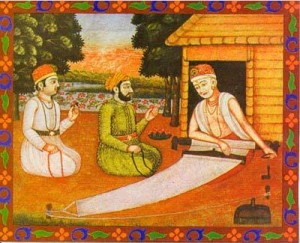
KabÄ«r (also KabÄ«ra) (Hindi: कबीर, Punjabi: ਕਬੀਰ, Urdu: کبير(1440—1518)was a mystic composer and saint of India, whose writings have greatly influenced the Bhakti movement of India. Kabir was influenced by the prevailing religious mood of his times, such as old BRHAMANIC HINDUISM , HINDU and BUDDHIST TANTRISM, the teachings of NATH YOGIS and the personal devotionalism of South India mixed with the imageless God of Islam. The influence of these various doctrines is clearly evident in Kabir’s verses. Eminent historians like R.C. Majumdar, P.N. Chopra, B.N. Puri and M.N. Das have held that Kabir is the first Indian saint to have harmonised Hinduism and Islam by preaching a universal path which both Hindus and Muslims could tread together. Read More: > HERE <
-
Asma al-Husna: > www.sufism.org <
-
The Most Beautiful Names of Allah
-
The Qur’an on the Divine Names
-
Mevlâna Jalâluddîn Rumi on the Divine Names
Shabnam Virmani is director of the Kabir Project. Started in 2003, the Kabir project brings together the experiences of a series of journeys in quest of this 15th century mystic poet in our contemporary worlds.It consists of 4 documentary films, 2 folk music videos and 10 music CDs accompanied by books of the poetry in translation.The films journey into contemporary spaces touched by his music and poetry.“The films journey into contemporary spaces touched by his music and poetry,” says Shabnam. In her films, Shabnam juxtaposes the urban and the rural, the Indian and the foreign, the classical and the folk, and the secular and the fundamentalist, in their many approaches to Kabir and the search for a universal voice. “Had-Anhad” was a joint prize winner at the recent documentary film festival, One Billion Eyes,organised by Prakriti Foundation in Chennai. Read More: >HERE <
The Kabir Project – Welcome to the home of the Kabir Project.
The Kabir project brings together the experiences of a series of ongoing journeys in quest of this 15th century North Indian mystic poet in our contemporary worlds. Started in 2003, these journeys inquire into the spiritual and socio-political resonances of Kabir’s poetry through songs, images and conversations.
We journey through a stunning diversity of social, religious and musical traditions which Kabir inhabits, exploring how his poetry intersects with ideas of cultural identity, secularism, nationalism, religion, death, impermanence, folk and oral knowledge systems. The core inspiration of the project is music, and Kabir comes alive in 4 documentary films, 10 audio CDs and poetry books through the power of song.
This is a 6-year initiative undertaken by filmmaker Shabnam Virmani as an artist-in-residency project at the Srishti School of Art, Design and Technology in Bangalore, India. The project is supported by the Ford Foundation, New Delhi.
Apart from the films, CDs and books, the true spirit of the Kabir Project lies in the taana-baana (warp & weft) of social networks and friendships built over these years between the singers, scholars, activists, artists, illustrators, students, music lovers and lay persons who have been woven together through student labs, festivals, workshops and other exchanges. Folk singers Prahlad Tipanya, Mukhtiyar Ali and others have become deep friends, giving the project its soul force. Our advisors include scholars Linda Hess and Purushottam Agrawal, poet Ashok Vajpeyi, and singer Vidya Rao.
The project is growing rapidly in many ways, with cultural groups, educational, social and community-based institutions and individuals are taking the initiative to organize festivals, workshops and interactive events that include the films, folk singers, live music concerts and discussions, reaching out to very diverse audiences.
In the next phase of the project, work has begun towards constructing a multi-media web-space to browse the music, poetry and ideas of Kabir. This web-space will be co-created with the involvement of folk singers, along with innovative social experiments to vitalize the Kabir oral traditions at the village level. We are also holding exploratory workshops with teachers and educators to brainstorm ways of bringing the ideas and values of Kabir into the classroom.
> MIRABAI- Poet, Saint & Bhakti-Tradition <
> THE SONGS OF KABIR – Sacred Text´s <
> Meet the Kabir Festival, friends at facebook <
> Meet Sufism, friends, studies at facebook <
> Meet Rumi, friends, studies at facebook <
WFP – WORLD FOOD PROGRAMME

> FOOD & AGRICULTURE ORGANIZATION <
> INT. AGRICULTURAL DEVELOPMENT <
Fighting hunger worldwide – The World Food Programme is the world’s largest humanitarian agency fighting hunger worldwide.
In emergencies, we get food to where it is needed, saving the lives of victims of war, civil conflict and natural disasters. After the cause of an emergency has passed, we use food to help communities rebuild their shattered lives.
WFP is part of the United Nations system and is voluntarily funded.
A video explaining the type of food World Food Programme distributes in an emergency like Haiti, and why…
Born in 1962, WFP pursues a vision of the world in which every man, woman and child has access at all times to the food needed for an active and healthy life. We work towards that vision with our sister UN agencies in Rome — the Food and Agriculture Organization (FAO) and the International Fund for Agricultural Development (IFAD) — as well as other government, UN and NGO partners.
In 2010 we aim to reach more than 90 million people with food assistance in 73 countries. Around 10,000 people work for the organization, most of them in remote areas, directly serving the hungry poor. Download Annual Report
To learn more, watch the video outlining our mission, read our Mission Statement or browse our Policy Resources section.
WFP’s five objectives:
1. Save lives and protect livelihoods in emergencies
2. Prepare for emergencies
3. Restore and rebuild lives after emergencies
4. Reduce chronic hunger and undernutrition everywhere
5. Strengthen the capacity of countries to reducehunger
> Meet WPF World Food Programme at facebook <
> Meet Food and Agriculture Organization of the UN (FAO) at fb <
> Meet I LOVE INDIAN FOOD, friends, fans at facebook <
> Meet Natural News, friends, studies at facebook <
NaturalNews.com is an independent news resource that covers the natural health and wellness topics that empower individuals to make positive changes in their personal health. NaturalNews offers uncensored news that allows for healthier choice.
THE EAST MEETS WEST MUSIC INC.

http://eastmeetswestmusic.com/
> Ali Akhbar College of Music, LAYA Project <
> GHARANA – Benares Music Academy <
„There is something beautiful about the stage. There is a performer and there is an audience. Nothing is in the way. The sound remains pure and unburdened by things like marketing and distribution. My hope is for this label to be more like a stage and less like the music business as I have experienced it.”
–Ravi Shankar
Ravi Shankar (Bengali: রবি শংকর; born 7 April 1920), often referred to by the title Pandit, is an Indian sitarist and composer. He has been described as the most well known contemporary Indian musician by Musik in Geschichte und Gegenwart.Shankar was born in Varanasi and spent his youth touring Europe and India with the dance group of his brother Uday Shankar. He gave up dancing in 1938 to study sitar playing under court musician Allauddin Khan. After finishing his studies in 1944, Shankar worked as a composer, creating the music for the Apu Trilogy by Satyajit Ray, and was music director of All India Radio, New Delhi, from 1949 to 1956. Read more: > HERE <
WELCOME – The Ravi Shankar Foundation proudly announces the launch of East Meets West Music. EMW Music is a listener’s passport to the sitar master’s personal archive of thousands of hours of live performance audio, film footage, interviews, and studio masters. By making personally selected source material from this collection available, Ravi Shankar hopes to bridge any divide between his recorded music and his audience. EMWMusic also provides a vibrant space for new artists, projects, and collaborations. We are thrilled to begin this journey with our long time supporters and new fans alike.
The aim of the Benares Academy is to:
- Establish a school for the teaching of Indian Classical music in the traditional Benaras Gharana style;
- Provide scholarships to children to assist them in their learning of this musical style;
- Create opportunities for students and young artists to develop their potential through study and performance;
- Provide right livelihood for qualified and dedicated teachers.
For this purpose, the Mishra family purchased land in Benares on which to build a residential music school. The construction of the building took around three years to be completed and now the Academy is a well-structured place to receive students from all over the world.
For foreign students, who are committed to studying seriously, the Academy opens its doors providing them with all facilities needed such as a proper music hall, nice rooms with or without toilet attached, spacious kitchen, mineral water filter and dining room, apart from a safe and peaceful atmosphere. Moreover, it is located five minutes walk from the Ganga River.
The mission of the Ali Akbar College of Music is to teach, perform and preserve the classical music of North India, specifically the Seni Baba Allauddin Gharana (tradition), and to offer this great musical legacy to all who wish to learn. The Ali Akbar College of Music offers education in the classical music of North India at the highest professional level. Our primary instructors are the internationally recognized sarode Maestro Ali Akbar Khan and the master of percussion Pandit Swapan Chaudhuri, from whom our students learn the necessary musical skills, knowledge and understanding to contribute significantly to musical life.
At a dargah (Islamic shrine) situated in the south-east part of India, the singers sing devotional songs in the Qawwali style, with percussion accompaniment. The lyrics are a mix of the local south Indian language, Tamil and Arabic, while the music style is that of northwestern India.
These artists are featured in the award-winning music documentary LAYA PROJECT (www.layaproject.com), and have also released a full album called NAGORE SESSIONS, available at www.earthsync.com
A tribute to the resilience of the human spirit, LAYA PROJECT is a documentary about the lives and music culture of coastal and surrounding communities inthe 2004 tsunami-affected regions. Some of these performances are rare, and documented for the first time.
Sree Debasish Dass (Pintoo) Born in a very tradtional musical familly on May day, Sree Debasish Dass has carved a special niche for himself in the world of Tabla, the king of Indian percussion instruments. He was initiated into Tabla at the tender age of five by his beloved father Late Dilip Kumar Pandit a highly acclaimed Tabla player of Farukkabad Gharana.
True to his date of birth, which symbolises sincere labour, > Debasish < (popularly known as Pintoo) put in years of relentless effort and unfailing dedication to master the art of playing Tabla. He completed his graduation from the world famous Visva-Bharati University founded by the great > Rabindra Nath Tagore < . Thereafter he plunged fully into the subtle complexities Tabla and completed his Diploma in music, Bachelor and Master degree in Tabla.
http://swara.at/ (Plattform f. Indische Musik und Tanz in Österreich)
http://www.alankara.com/ (Ver. z. Förd. d. Ind. Musik ,Kunst in Wien)
http://www.indigenouspeople.net/taino.htm (Ind. Friends, Haiti)
INTERVIEW – DHRUPAD IN MUSICTHERAPY
> DAYALBAH EDUCATIONAL INSTITUTE <
> I N T E R V I E W DHRUPAD IN MUSICTHERAPY <
> NADA YOGA IN THE CORE OF DHRUPAD <
Indian traditional systems of health and healing also include various musical treatment approaches. A few healing traditions are also integrated in modern music therapy practice in India. Vedic traditions dating back roughly 5000 years ago had a great intuition about the power of sound and intonation.
The Vedic chants and music which had more sound and rhythm, used as a source of healing and up liftment reflected the intuition that each intonation and inflection of voice could have beneficial or adverse effects. Music Raga Therapy a, an extinct sanskrit treatise, as its name implies dealt with curative ragas and suggested specific ragas with specific therapeutic and a prophylactic medium in clinical and educational settings.
The Vedic system of health care concerned with healthy living and not disease specific takes into account the patient’s entire personality, body, mind and the spirit and guides the participants for a healthy living along with the therapeutic measures that relate to physical, mental, social and spiritual harmony.
Nada Yoga is the core of Dhrupad, the most ancient style of Hindustani Classical Music. Originally only sung by priests in the temples as an act of worship, it induces a deep meditative state in the singer as well as the listener.
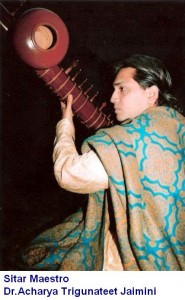
Dr. Acharya Jaimini is taking much interest in preserving the Dhrupad Heritage, He has made Dhrupad performance possible on sitar with its effective presentation in music concerts.
Dr. Acharya Trigunateet Jaimini, apart from being visiting professor in Universities and various music institutions,has given memorable performances in various music concerts. Having got occasions to play duets with well known Indian and foreign artists, the Sitar recordings of Acharya Jaimini are preserved in the archives of the preservation libraries.
Q: How possible playing Dhrupad on Sitar ?
Dr Acharya Jaimini says that, Dhrupad playing on sitar, is not easy because bringing sitar to the depth of Dhrupad – „Beenkari & Alapchari“ techniques during sitar recital is an extra ordinary thing. This in itself is an effective tranquilizer. Sitar playing being under the „Da-Dir-Daara“ strokes, clarity of technical dimensions, deeply presentation of Dhrupad and binding of the flow of „Nom-tom“ on mizrab (striker) with „Laykari“ (appropriate divisions of speed ) is a practical demonstration of the Dhrupad technique.
Acharya Trigunateet Jaimini born, nourished and still living in the vicinity of Nidhiban, the place of swamy Haridas at Vrindavan (India ) has been upholding and propagating the same rich tradition on Sitar.
Interview by – Ratnambara (writer Art & Culture)
Nada Yoga is the core of Dhrupad Music
By –
Dr.Acharya Trigunateet Jaimini
Head of Department Music Sitar
Mangalayatan University ,
Aligarh, Uttar Pradesh.
Mail: acharyajaimini@rediffmail.com
Mobile Number: +91 9897153545
Other: 0565 2444178
INDIA
NADA YOGA is the core of Dhrupad Music

> MAJOR SCHOOL´s OF DRHRUPAD <
http://dagarvani.org ( info & free videos)
Dhrupad is the oldest surviving form of Indian Classical music and traces its origin to the chanting of VEDIC HYMNS and MANTRAS. Though a highly developed classical art with a complex and elaborate grammar and aesthetics, it is also primarily a form of worship, in which offerings are made to the divine through sound or n�da. Dhrupad can be seen at different levels as a MEDITATION, a mantric RECITATION, a worship , a YOGA or TANTRA based on the knowledge of the NADIS and CHAKRAS and also purely as a performing art portraying a universe of human emotions. It is mainly a vocal tradition based on the practice of NADA YOGA, but is also performed on instruments like the Rudra Veena and the Sursring�r. For the past five centuries Dhrupad has mainly thrived under the patronage of Mughal and Rajput kings. Read More: > HERE <
Nada Yoga is the core of Dhrupad Music
By Dr.Acharya Trigunateet Jaimini
Indian traditional systems of health and healing also include various musical treatment approaches. A few healing traditions are also integrated in modern music therapy practice in India.
Vedic traditions dating back roughly 5000 years ago had a great intuition about the power of sound and intonation. The Vedic chants and music which had more sound and rhythm, used as a source of healing and up liftment reflected the intuition that each intonation and inflection of voice could have beneficial or adverse effects.
Music Raga Therapy , an extinct sanskrit treatise, as its name implies dealt with curative ragas and suggested specific ragas with specific therapeutic and a prophylactic medium in clinical and educational settings. the Vedic system of health care concerned with healthy living and not disease specific takes into account the patient’s entire personality, body, mind and the spirit and guides the participants for a healthy living along with the therapeutic measures that relate to physical, mental, social and spiritual harmony.
Nada Yoga is the core of Dhrupad, the most ancient style of Hindustani Classical Music. Originally only sung by priests in the temples as an act of worship, it induces a deep meditative state in the singer as well as the listener.
Vrindaban, the abode of Lord Krishna, situated on the bank of the Holy river yamuna is known for its devotional classical music „Dhrupad“. Bhagwat Puran states that Lalita Sakhi sang in Dhrupad style during the famous „Raas“-dance. Since then this tradition of ancient form of worship of Lord Krishna has been maintained in the temples of Vrindaban. Dhrupad is a particular north Indian style of classical music related to „Vraja“. This was enriched and elevated to godly heights by the celebrated swamy Haridas of Vrindaban, the Guru of world famous musician Tansen.
Dhrupad is the most ancient form of Hindustani classical music. There are two interpretations for the word Dhrupad. One is that it is derived from dhruva, the steadfast evening star, and pada, meaning ‘poem’. The other is that the word druva means ‘fixed’ and pada ‘poem’ which makes it into a poem set to music. Its origins have been traced back to the recitation of the sama veda, one of the four sacred vedic scriptures. The form developed through the sama gaan, the chanted transmission of holy texts.
Dhrupad is the oldest existing form of Indian classical music. The nature of Dhrupad is spiritual- its purpose is aradhana (worship). Seeking not to entertain, but to induce deep feelings of peace and contemplation in the listener.
Its origin is linked to the recitation of Sama veda, the sacred Sanskrit text. Dhrupad probably evolved from the earlier chanting of Om, the sacred syllable which is claimed to be the source of all creation. Later, the rhythmic chanting of the Vedic scriptures evolved into singing of Chhanda and Prabandha.
According to some accounts, Dhrupad was sung in temples, the singer facing the divinity. From this early chanting, Dhrupad evolved into a sophisticated, classical form of music. The language of Dhrupad changed from Sanskrit to Brijbhasha sometime between the 12th and the 16th century.
* Nada Yoga Discourse by Dr. Padma Murthy *
Dhrubad, Dhruvatara – the evening star, the star that never trembles, and Pada – poetry, merge to give name to this music, Dhrupad. Dhrupad, the name does what it should, it makes luminous the nature of that which is named.
Sometime during the first millenium A.D. the chanting evolved into the singing of chhanda and prabandha. The modern Dhrupad is said to have emerged out of the prabandha style of the 12th to 14th centuries. By the 11th century it had developed its perfect form. Dhrupad was and still is an act of worship during which the priest or musician surrenders to the Divine and invokes the rasa (mood) of the raga (musical mode). The intention is to put the listener into a state of inner peace and contemplation.
Between the 12th and 16th centuries the language of the compositions changed from Sanskrit to Brijbhasha (the language spoken in the area of Vrindavan) and about six centuries ago the music came under the patronage of the royal Moghul courts, where it was adapted for performance, thus evolving into a refined and sophisticated art form. The compositions became more secular though and were often praises of the emperors, whereas before they had been devotional and philosophical in nature.
One of the patrons of Dhrupad was the Moghul ruler Man Singh Tomar of Gwalior who also practiced the art. It reached its peak during the time of the legendary court musician of Akbar, Tansen, and Swami Haridas, who is often thought to have been the teacher of Tansen.
Nada Yoga is the core of Dhrupad Music
By –
Dr.Acharya Trigunateet Jaimini
Head of Department Music Sitar
Mangalayatan University ,
Aligarh, Uttar Pradesh.
INDIA
Painting by
Renowned Fine Artist
Prof. Chitralekha Singh
D.Litt,
DEAN
Institute of Visual & Performing Arts
Mangalayatan University ,
Aligarh, Uttar Pradesh.
INDIA
References & External Links: > DHRUPAD <
- http://dhrupadsangeetashram.com
- http://www.dhrupad.info/
- Ravi Shankar, Raga Mala, Welcome Rain Pub., 1999, p.319
- http://www.dhrupadsangeetashram.com
- http://www.dagar.org
- http://www.dagarvani.org
- http://www.dhrupadsangeetashram.com
- http://www.hindu.com/thehindu/fr/2006/02/24/stories/2006022403320600.htm
- http://www.dagarvani.org/dagar-family-tree.html
-
www.ritwiksanyal.com –Dhrupad Ritwik Sanyal
-
www.dhrupad.org –The dhrupad school of the Gundecha Brothers
-
www.dhrupad.info –Dagarvani singer Ashish Sankrityayan’s web site
-
www.dagarvani.org –The off. web site of Ustad F. Wasifuddin Dagar
- http://udaybhawalkar.org/ – Dhrupad Uday Bhawalkar
- www.dhrupad.org – The dhrupad school of the Gundecha Brothers
- www.dhrupad.info –Dagarvanisinger Ashish Sankrityayan’s web site
- www.dagarvani.org – The off. web site of Ustad F. Wasifuddin Dagar
- GHARANA, BENARES MUSIC ACADEMY, Children Project <
- ALI AKHBAR COLLEGE OF MUSIC <
- Meet Dhrupam studies, groups, friends at fb <
- Meet free VISA to India for MBA, degree programs, jobs at fb <
- Meet Maestro Jaimini at facebook <
- MeetSWARA.at,Plattform f. ind. Musik/Tanz in Österr. at fb <
Puja Net, (free) Audio Library, Yagya Group
* AUDIO LIBRARY (Lakshmi Mantras) *
> VEDA, VEDIC SCIENCES, PANCHANGAM <
> THE 12th BAVA VEDIC ASTROLOGY CONFERENCE <
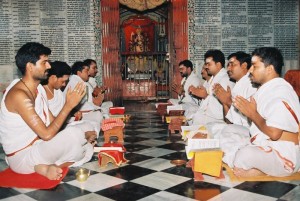
PūjÄ� (Devanagari: पूजा) (alternative transliteration Pooja, Sanskrit: reverence, honour, adoration, or worship) is a ceremony of gratitude or a religious ritual performed as an offering to various deities, distinguished persons, or special guests. It is done on a variety of occasions and settings, from daily puja done in the home, to temple ceremonies and large festivals, or to begin a new venture. Puja is modeled on the idea of giving a gift or offering to a deity or important person and receiving their blessing. The two main areas where puja is performed is in the home and at public temples. There are many variations in scale, offering, and ceremony. Puja is also performed on special occasions such as Durga Puja and Lakshmi Puja. Puja or Pooja is also a Hindu female first name. Read More: > HERE <
In Hinduism, Yajña (Sanskrit यज्ञ yajña; also anglicized as Yagna, Yagya or Yadnya) is a ritual of sacrifice (Monier-Williams gives the meanings „worship, prayer, praise; offering, oblation, sacrifice“) derived from the practice of Vedic times. It is performed to please the gods or to attain certain wishes. An essential element is the sacrificial fire – the divine Agni – into which oblations are poured, as everything that is offered into the fire is believed to reach the gods. As the name of the service, the term Yagna is linguistically (but not functionally) cognate with Zorastrian (Ahura) Yasna. Unlike Vedic Yajna, Zoroastrian Yasna has „to do with water rather than fire“ . Read More: > HERE <
The Yagya Group was formed by Ben Collins and Sri Narasimha Bhattar following a trip to India in 1998. After enjoying several weeks of traditional Hindu yagya ceremonies, we returned and found that a surprising number of people in America were interested in access to effective and affordable yagyas. So we began offering them monthly, sharing the costs amoung the sponsors and donating the proceeds to the Venkateshwara temple in Malibu, California.
As the group expanded we wanted to be able to offer a wider variety of yagyas and use more priests. So we were fortunate enough to purchase a facility in Kanchipuram, a wonderful temple town south of Madras. With that, we were able to offer a greatly expanded variety of yagya services. Seetharam was planning to move to India and so we were fortunate to be able to have him manage all the puja.net yagyas in person.
With the new facility and Seetharam’s on-site presence, we currently offer yagyas every single day of the month in Kanchipuram!
Not surprisingly, the group has expanded to include participants from around the world; US, Europe, Scandanavia, South America, Africa, Australia and New Zealand. The group continues to grow on the basis of the consistent results that the yagya performances bring.
Please address your comments, questions, or requests to me via email.
Our mission is to make yagyas available in a way that is as close to the timeless traditions of the Vedas as is possible. With that in mind, our mission standards are:
-
All yagyas will be performed in the most traditional and authentic manner possible, without regard to cost or time considerations.
-
All yagya services will be priced so that they are within financial reach of any individuals who wish to participate. The price of the yagya service should bear a direct correlation to the cost of performing the yagya.
-
Service, not profit, is the driving motive behind puja.net.
-
Our sponsorship of yagyas is intended not only to result in positive benefit for ourselves. Through our participation, we honor and preserve the Vedic traditions in India, and provide meaningful employment for highly qualified priests.
BALI Inst., Global Healing, Youth in Action
> Articles about Africa´s Trad. Med. <
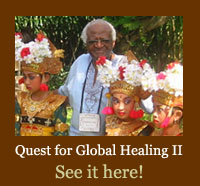
You Are Invited to Bali….., to join an extraordinary gathering of concerned global citizens, business leaders, academics and other innovative thinkers in a quest towards a more collaborative, peaceful and sustainable future for humankind and the planet. This unique gathering is designed for individuals concerned about where the world is heading, and who want to be part of the solution. QUEST FOR GLOBAL HEALING is an opportunity to step forward and define your own commitment to help change the world.
DESMOND MPILO TUTU (born 7 October 1931) is a South African cleric and activist who rose to worldwide fame during the 1980s as an opponent of apartheid. In 1984, Tutu became the second South African to be awarded the Nobel Peace Prize. Tutu was the first black South African Anglican Archbishop of Cape Town, South Africa, and primate of the Church of the Province of Southern Africa (now the Anglican Church of Southern Africa). Tutu chaired the Truth and Reconciliation Commission and is currently the chairman of The Elders. Tutu is vocal in his defence of human rights and uses his high profile to campaign for the oppressed. Tutu also campaigns to fight AIDS, tuberculosis, homophobia, poverty and racism. He received the Nobel Peace Prize in 1984, the Albert Schweitzer Prize for Humanitarianism, the Gandhi Peace Prize in 2005 and the Presidential Medal of Freedom in 2009. Tutu has also compiled several books of his speeches and sayings. Read More: > HERE <
Bali Institute for Global Renewal (BIGR) is the first world learning center that engages multicultural leadership and facilitation training, deep dialogue, indigenous wisdom, global consciousness, intergenerational activism and other action-oriented skills and training that empowers individuals, groups and organizations in their quest to make a difference in the world. BIGR includes a consortium of international organizations, corporations, NGOs, universities, thought leaders and consultants who are invested in advancing new forms of leadership training, intergenerational collaboration, nonviolent conflict resolution and social activism as part of a worldview that promotes a sustainable, humane and culturally-diverse life for all.
BIGR will be offering an array of programs created and produced by the Institute as well as education and trainings offered by its partners.
What is Global Youth in Action? Global Youth in Action (GYIA) is a series of gatherings and programs that provide multicultural, intergenerational community building, leadership training, deep dialgoue, indigenous practices and experiential field work, all focused on helping empower individuals around the world to be more engaged in their own quest to become more socially active in healing our planet.
GYIA focuses on empowering emerging leaders to gain confidence, skills, resources and support to launch their own initiatives around sustainable social and transformational action. Our goal is for individuals to establish a committed action plan through collaborative efforts, along with a follow-up support network that will allow the necessary infrastructure to continue their work.
The program design is crafted by an international coalition of thought leaders and consultants who focus on dialogic processes and authentic leadership practices for results-oriented outcomes. Programs are hosted in indigenous cultures to enhance learning and growing from a deeper perspective.
How did we get here ? The first GYIA program originated as part of the Quest for Global Healing (QGH) Conferences held in Bali in 2004 and 2006. With Nobel Peace Laureate Desmond Tutu as the honorary chairman, over 1000 participants from 40 countries have come together over the two years with the desire to step forward and define their own individual commitments to help change the world.
GYIA was specifically designed as a pre-program to QGH that offered young leaders (ages 17 to 30) an opportunity to engage in multi-cultural dialogue and collaborative learning about social activism for the new century. More than 90 youth from 16 countries brought their unique perspectives, energies, insights and deep passion to commit to a more global vision for change.
Countries represented included Peru, Thailand, Indonesia, China, France, Tunisia, South Africa, Norway, Canada, Australia, India, Laos, and the US.
Experience the Balinese Culture GYIA offers the opportunity to be immersed into the indigenous realm of Bali, to build a stronger link between the East-West perspectives on shifting world views. Highlights include Balinese performances and rituals throughout the gathering as well as spending time with local Balinese village leaders and youth.
When attending GYIA programs, participants live in homestays with Balinese families, allowing a glimpse of true community living.
Why Bali? The island and culture of Bali serves as the integral component of these programs. The foundation of this work has been based on the belief that Bali, unlike any other cultural environment in the world, will grow to be the hub for important dialogues, action-oriented multicultural/intergenerational experiences, and transformative social change.
Bali is one of the most peaceful, beautiful places on earth. It’s an ideal location for people from every part of the planet to explore new roles they can play in addressing major global issues. This rich culture has much to share with citizens of our shared planet about learning to heal, forgive and live harmoniously with one another and our beloved earth. Balinese rituals and arts all play a role in this new kind of learning. Delegates attending our sessions will encounter the unusual way Balinese ceremony and performance converge with deepening dialogue and action-orient planning. All of the BIGR programs incorporate Balinese experiences, both linear and non-linear, into the transformative curriculum.
Highlights of these conferences included:
- More than 1,300 people from 40 countries have attended
- Deep, thoughtful dialogue
- Personal dialogue with world leaders and visionaries
- Spiritual awareness beyond the religious divide
- Intergeneration, multicultural dialogue and wisdom sharing
- Personal commitments to do something when returning home
- Insights and personal growth
- Shifting of values
- Immersion of culture, spiritual connection and social activism
- Global insights
- Networking with a global community
- Post-conference gatherings
- Numerous actions including fundraising for schools, donations to families and health clinics, ongoing global networking, job openings, and more
PODS – Personalized Leadership Training:
Transformative Education, Social & Political Leadership – „World-mindedness“ is no longer a luxury, but a necessity for survival in this new century. Diverse viewpoints and perspectives are critical for this generation of constructive change on a global scale. Pioneering global facilitators in this pod will connect around their shared commitment to making a difference in education, social services and political agendas and thereby initiate the transformation of perspectives and worldviews toward a sustainable, compassionate world.
Language of the Soul: Spirituality, Healing, Medicine, and Indigenous Wisdom. – The majority of religions and cultural traditions consider disease and illness to be a fundamental part of the human condition. Spiritual factors associated with healing are increasingly being acknowledged. Illness is beginning to be deeply understood as unique language to awakening or consciousness. This pod will explore healing, medicine, spirituality and indigenous wisdom as doorways to global healing as well as a tool for activism.
Media as Activism: Media, Film, Journalism, Performance and Visual Arts – Culture is often defined by its media and art. Challenging mainstream media and building independent cultural voices are equally important components of media activism. This pod will explore how current and future art, performances and the use of media technology affect our world-view, sense and global cultural values.
Global World of Business and Nonprofits– Citizens and non-profit organizations can play an active role in shaping the future of our global economy. The emergence of a global civil society based upon partnership principles is now considered one of the real hopes to democratize the global political economy. In this pod we will work together to re-imagine global trade rules, how to inspire corporations to be accountable to people’s needs, exchange shared ideas for building strong and free labor, and how to promote fair and environmentally sustainable alternatives.
Deep Ecology, Environment and Sustainability Advocacy – The flourishing of human and nonhuman life on Earth has intrinsic value that should be shaping our environmental policies. Those who work for social change based on this recognition are motivated by love of nature as well as humanity. The Balinese emphasis on the relationship between humanity, the environment and spirituality is a model for our deep inquiry. In this pod we will explore how the needs of humanity can be balanced with environmental sustainability and survival of our shared planet.
> Meet BALI INSITUTE for Global Renewal, friends, studies at fb <
> Meet GOPIO Global Organization of People of Indian Origin at fb <
> Meet MIND and LIFE Institute, friends, studies at fb <
> Miriam Makeba, friends, fans, group at fb <
* South Africa’s Legendary Musical Sensation, Grammy Award Winner and United Nations Ambassador. On the continent, we simply call her Mama Africa.
TECHUNG – Tibetan Music, Dance, Arts

> Tibetan Institute of Performing Arts (TIPA) <
Techung is a Tibetan folk and freedom singer/songwriter living in exile in the San Francisco Bay Area. He is best known for his performances of traditional Tibetan music, dance, and opera under the name Tashi Dhondup Sharzur. He uses his childhood nickname, Techung, when performing as a solo artist. Whether performing in traditional or contemporary styles, Techung’s dual goals are to revive Tibetan music in the Tibetan community and to expose the rich performing cultural tradition of his homeland to the world community.
Techung grew up in Dharamshala, India, where his family and tens of thousands of other Tibetans resettled from their native Tibet. At the age of 9 he was enrolled in the newly formed Tibetan Dance and Drama School now known as the Tibetan Institute of Performing Arts (TIPA). In his 17 years of residency at the Institute, he studied all aspects of the Tibetan performing arts folk, court, and opera – through the oral teaching tradition used by the venerated Tibetan elders with whom he was honored to study. He toured with TIPA in its first international tour as a leading child actor in 1975-76 and for many years afterwards. After emigrating to the U.S., he co-founded the San Francisco-based Chaksampa Tibetan Dance and Opera Company in 1989. From 1995-97 Techung worked for the Milarepa Fund in San Francisco who organized the Tibetan Freedom Concerts world wide.
In addition to being looked up to as one of the key keepers of traditional Tibetan musical traditions, Techung is also respected for the original solo and collaborative music he creates by drawing on both his own heritage and his familiarity with other world music traditions. He collaborated on his first solo album, „Yarlung: Tibetan Songs of Love and Freedom“ (1997) with composer/performer Miguel Frasconi, followed by „Sky Treasure“ (2001) with Windham Hill jazz keyboardist Kit Walker. His other two solo albums were „Changhay: Traditional Tibetan drinking songs, Vol. 1“ (1999) and „Nyingtop-Courage“ (2002). His song „Losar“ was chosen as the 2003 best modern traditional Tibetan song at the first annual Tibetan Music Awards held in Dharamshala. His album Techung A Compilation of Tibetan Folk and Freedom Songs won the 2006 Best Asian Album at Just Plain Folks Music Festival www.jpfolks.com – one of America’s largest grass root music festivals.
Techung’s voice and music have been featured on the soundtracks of the IMAX film „Everest,“ the feature films: „Windhorse,“ (1998) Dreaming Lhasa, (2006) www.whitecranefilms.com),. His music is prominently featured on documentary films such as: „Blind Sight,“ (2007), www.blindsightthemovie.com, „Dalai Lama Renaissance,“ (2008) www.dalailamafilm.com, „Fire Under the Snow,“(2008) www.fireunderthesnow.com. His music has also been used in a DVD titled LIVING WISDOM WITH HIS HOLINESS THE DALAI LAMA (2008) www.soundstrue.com.
In recent years, Techung has had the honor to open for His Holiness the Dalai Lama’s public speech in Costa Rica, Japan and USA. On February 3, 2009 Techung and his band Lhasa Spirits performed at the Carnegie Hall with prominent artists such as Philip Glass, Patti Smith and others.
Song by Techung – Ser Gi Tung Pho-Sacred Offering
Beautiful people and sceneries from the „Roof of the World“
ABOUT CHAKSAMPA: Now in San Francisco, a small group of master performers have joined together to form Chaksampa, offering this unique art to a world audience in hopes of keeping it alive for another generation.
OUR GOALS…
Offering performances of Tibetan drama, music and dance, of the highest standard and the widest possible audience. Fostering the appreciation of Tibetan culture and drawing attention to its threatened survival. Continuing the traditions by providing material support, training, summer camps and encouragement to young Tibetans.
Recording and documenting performances in the Tibeatn refugee communites for preservation and study. Initiating cultural exchange programs to explore the common language of performance with artists of other traditions.
Our plan is to establish a Tibetan Performing Arts and Cultural Center as a focus for our activities in San Francisco.
- Meet Tibet Friends, Arts, Studies at facebook <
- Meet Dalai Lama Groups and Friends at facebook <
- Meet Buddhism, Studies, Friends at facebook <
H.H. SWAMI SIVANANDA – SELFLESS SERVICE
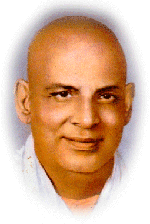
SERVE, LOVE, GIVE, PURIFY
MEDITATE, REALISE
SIVANANDA FREE BOOK DISTRIBUTION
“Serve, Love, Give, Purify, Meditate, Realize. Be Good, Do good; Be kind, Be compassionate. Always do good to others. Be selfless. Mentally remove everything and be free. This is divine life. This is the direct way to Moksha or salvation. ~Swami Sivananda
SRI ADI SANKARA, Yoga, Books, Arts, Studies
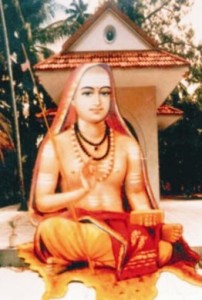
> KAMAKOTI PEETHAM (founded pers. by Sri Sankara) <
> SRI SANKARA UNIVERSITY OF SANSKRIT <
> The Biography by Swami SIVANANDA <
> BHAGAVAD-GITA, commentary of Sri Sankaracharya (1901) <
> KAMAKOTI Go Green Solar Power Project <
Adi Shankara ( DevanÄ�garÄ«: आदि शङ्कर, Ä€di Śaṅkara, pronounced [aːdi ɕaŋkərə]); (788 CE – 820 CE), also known as Śaṅkara BhagavatpÄ�dÄ�cÄ�rya and Ä€di ŚaṅkarÄ�cÄ�rya, was an Indian philosopher who consolidated the doctrine of Advaita Vedanta, a sub-school of Vedanta. His teachings are based on the unity of the soul and Brahman, in which Brahman is viewed as without attributes. He hailed from Kalady of present day Kerala. Shankara travelled across India and other parts of South Asia to propagate his philosophy through discourses and debates with other thinkers. He founded four mathas („monasteries“), which helped in the historical development, revival and spread of Advaita Vedanta. Adi Shankara is believed to be the organizer of the Dashanami monastic order and the founder of the Shanmata tradition of worship.
His works in Sanskrit, all of which are extant today, concern themselves with establishing the doctrine of Advaita (Nondualism). He also established the importance of monastic life as sanctioned in the Upanishads and Brahma Sutra, in a time when the Mimamsa school established strict ritualism and ridiculed monasticism. Shankara relied entirely on the Upanishads for reference concerning Brahman and wrote copious commentaries on the Vedic Canon (Brahma Sutra, Principal Upanishads and Bhagavadgita) in support of his thesis.
The main opponent in his work is the Mimamsa school of thought, though he also offers some arguments against the views of some other schools like Samkhya and certain schools of BUDDHISM that he was familiar with. Read More: > HERE <
Scholastische Phase des Yoga
Diese Phase beginnt mit Shankaracharya (788-820 n. Chr.), der den Vedanta systematisierte und die besten Teile von Samkhya, Yoga und Buddhismus in den Vedanta integrierte. Nach ihm kamen andere Lehrer, die das Prasthana-Trayam anders verstanden, und konkurrierende Vedanta-Schulen gründeten. Advaita-Vedanta – diese von Shankara vertretene Auslegung sieht alle wahrgenommenen Unterschiede der phänomenalen Welt als unwirklich an. Alles was existiert ist nichts anderes als Brahman; doch Brahman hat keine Teile oder Unterschiede in sich. Die wahrgenommenen Unterschiede sind wie eine Fata Morgana. Mehr Lesen/Read More: > Here <
Adi Sankaracharya’s Soundarya Lahari, Translated by P. R. Ramachander: Introduction: Soundarya Lahari meaning waves of beauty consists of two parts viz. Ananda Lahari meaning waves of happiness (first 41 stanzas) and Soundarya Lahari(the next 59 stanzas). It is believed that Lord Ganesha himself has etched the Ananda Lahari on Mount Meru(Some people believe that Sage Pushpa Dhantha did the etching).
It was read from there by Sage Gouda Pada who taught it to Adhi Sankara. Adhi Sankara himself added the rest of the 59 stanzas and completed it.
These 100 stanzas are supposed to be the foremost among Manthra literature. It is also believed that by Making suitable Yanthras ( in west also known as „mandalas…“) and reciting particular stanzas and worshipping the yantras almost anything can be obtained in the world .
- Download at VEDANTA BHERI : >HERE <
- HYMNS ON SANKARA at bhagavadgitausa: >HERE<
- A new light on Adi Sankara, : > HINDU ON NET <,
- HINDU ON NET: > Soundarya Lahari chanting in Bangalore <
- Sankara im Deutschen > Kirchen Lexikon <
There are more than 36 commentries to Soundarya Lahari written in Sanskrit itself. Of them the most famous is that written by Lakshmi Dhara alias Lalla, His commentary is used to understand the meaning of the different verses. Though there are large number of translations and commentaries of Soundraya Lahari available this is perhaps the first time an attempt is made by a mere novice to translate them in to English verse. The aim is to bring to the notice of the devotes who know English better than other languages , the majesty of the medium of worship called >Soundarya Lahari<. A transliteration in roman script is also given. May all those who read this be drenched forever by this “Wave of happiness”.
The Internet Archive San Francisco:
The Internet Archive is a 501(c)(3) non-profit that was founded to build an Internet library. Its purposes include offering permanent access for researchers, historians, scholars, people with disabilities, and the general public to historical collections that exist in digital format. Founded in 1996 and located in San Francisco, the Archive has been receiving data donations from Alexa Internet and others. In late 1999, the organization started to grow to include more well-rounded collections.
Now the Internet Archive includes texts, audio, moving images, and software as well as archived web pages in our collections, and is working to provide specialized services relating to training, education, or adaptive reading or information access needs of blind or other persons with disabilities.
Extraordinary Personalities Reflect On The Bhagavad-Gita: > HERE <
Albert Einstein, Mahatma Gandhi, Dr. Albert Schweizer, Aurobindo, Carl Jung, Prime Minister Nehru, Herman Hesse, Vivekananda, Ralph Waldo Emerson, Paramahamsa Yogananda, Rudolph Steiner, Adi Shankara, Aldous Huxley, Ramanuja, Bhaktisiddhanta Saraswati Srila Prabhupada, Baladeva Vidyabhusana, Madhvacarya, and Sri Caitanya Mahaprabhu.
Bhaja Govindam is a very popular 8th century Hindu devotional composition in Sanskrit composed by Adi Shankaracharya. This work of Adi Shankara underscores the view that devotion to God, Govinda, is a vastly important part of general spirituality. This work is generally considered a good summary of Advaita Vedanta.
It is said that Shankara was walking along a street in Varanasi one day, accompanied by his disciples. He heard an old scholar teaching his grammatical rules. Taking pity on him, he went up and advised him not to waste his time on grammar at his age but to turn his mind to God in worship and adoration. The Hymn to Govinda was composed on this occasion. Besides the refrain of the song beginning with the words „Bhaja Govindam“, Shankara is said to have sung twelve verses, hence the hymn bears the title „Dvadasamanjarika-Stotra“ (A hymn which is a bunch of twelve verse-blossoms). The fourteen disciples who were with the Master then are believed to have added one verse each. These fourteen verses are together called „Chaturdasa-manjarika-Stotra“ (A hymn which is a bunch of fourteen verse-blossoms).
The refrain „Bhaja Govindam“ which defines the composition and gives it its name invokes the almighty in the aspect of Vishnu; it is therefore very popular not only with Sri Adi Shankaracharya’s immediate followers, the Smarthas, but also with Vaishnavas and others. There is a story attached to the composition of this Hymn. Please Note: Being a lady > M.S.Subbalakshmi < omitted few verse which are not included in this application.
LORD SIVA AND HIS WORSHIP BY SRI SWAMI SIVANANDA:
ISKCON – BHAKTIVEDANTA, BHAKTI YOGA

> BHAKTI TV (free) BHAJANS,MEDIA ARCHIVE<
Bhakti (DevanÄ�garÄ«: भक्ति, Sanskrit: devotion, or portion) in practice signifies an active involvement by the devotee in divine worship. The term is often translated as “devotion”, though increasingly “participation” is being used as a more accurate rendering, since it conveys a fully engaged relationship with God. One who practices bhakti is called a bhakta, while bhakti as a spiritual path is referred to as bhakti marga, or the bhakti way. Bhakti is an important component of many branches of Hinduism, defined differently by various tradtions and schools.
The Bhagavad Gita (Sanskrit भगवद्गीता, Bhagavad GÄ«tÄ�, „Song of God“), also more simply known as Gita, is a sacred Hindu scripture,considered among the most important texts in the history of literature and philosophy. The Bhagavad Gita comprises roughly 700 verses, and is a part of the Mahabharata. The teacher of the Bhagavad Gita is Krishna, who is revered by Hindus as a manifestation of God himself, and is referred to within as Bhagavan, the Divine One.
The content of the Gita is the conversation between Krishna and Arjuna taking place on the battlefield before the start of the Kurukshetra war. Responding to Arjuna’s confusion and moral dilemma about fighting his own cousins, Krishna explains to Arjuna his duties as a warrior and prince and elaborates on different Yogic and Vedantic philosophies, with examples and analogies. This has led to the Gita often being described as a concise guide to Hindu theology and also as a practical, self-contained guide to life.
Maharishi Mahesh Yogi describes it as a lighthouse of eternal wisdom that has the ability to inspire any man or woman to supreme accomplishment and enlightenment.During the discourse, Krishna reveals His identity as the Supreme Being Himself (Svayam Bhagavan), blessing Arjuna with an awe-inspiring vision of His divine universal form.
The Bhagavad Gita is also called GÄ«topaniṣad, implying its having the status of an Upanishad, i.e. a Vedantic scripture.Since the Gita is drawn from the Mahabharata, it is classified as a > Smṛti text < . However, those branches of Hinduism that give it the status of an Upanishad also consider it a śruti or „revealed“ text. As it is taken to represent a summary of the Upanishadic teachings, it is also called „the Upanishad of the Upanishads„. Another title is mokṣaśÄ�stra, or „Scripture of Liberation“. Read More: > HERE <

Bhagavad-Gīt� As It Is is a translation and commentary of the Bhagavad Gita by A.C.Bhaktivedanta Swami Prabhupada, founder-acharya of the International Society for Krishna Consciousness (ISKCON). It is known amongst other translations of the Bhagavad Gita for its strong emphasis on the path of bhakti yoga above all others, in line with the Gaudiya Vaishnava tradition of Caitanya Mahaprabhu. The book has been widely distributed, largely through promotion by the modern Hare Krishna movement. It was first published in 1968 by Macmillan Publishers, with an unabridged edition in 1972. It is now published by The Bhaktivedanta Book Trust and is available in nearly sixty languages. Read More: > HERE <
It is believed that > Prabhupada’s < most significant contribution are his books Within the final twenty years of his life Prabhupada translated over sixty volumes of classic Vedic scriptures (such as the Bhagavad Gita and the Srimad Bhagavatam) into the English language. For their authority, depth, and clarity, his books have won praise from professors at colleges and universities like Harvard, Oxford, Cornell, Columbia, Syracuse, Oberlin, and Edinburgh, and his Bhagavad-GÄ«tÄ� As It Is was published by Macmillan Publishers, in 1968 and unabridged edition in 1972 and is now available in over sixty languages around the world and some other books by Prabhupada are available in over eighty different languages.
Bhaktivedanta Book Trust was established in 1972 to publish his works, it has also published massively researched multivolume biography, Srila Prabhupada-lilamrta, that in opinion of Larry Shinn will „certainly be one of the most complete records of the life and work of any modern religious figure“. Prabhupada reminded his devotees before his death that he would live forever in his books, and through them would remain present as a spiritual master or guru. Prabhupada had instilled in his followers an understanding of the importance of writing and publishing not only with regard to his works, but also their own initiatives. His early disciples felt Prabhupada had given them Back To Godhead for their own writings from the very start.
Bhakti Yoga – The Bhagavad Gita introduces bhakti yoga in combination with karma yoga and jnana yoga, while the Bhagavata Purana expands on bhakti yoga, offering nine specific activities for the bhakti yogi.
Bhakti in the Bhagavad Gita offered an alternative to two dominant practices of religion at the time: the isolation of the sannyasin and the practice of religious ritual. Bhakti Yoga is described by > Swami Vivekananda < as “the path of systematized devotion for the attainment of union with the Absolute”. Read More: > HERE <
