
Posts by admin
DIVYA YOGA MANDIR TRUST, HEALTHCARE
> Patanajali Yog Peeth (UK) Trust <
> Yoga for Cure, Publications <
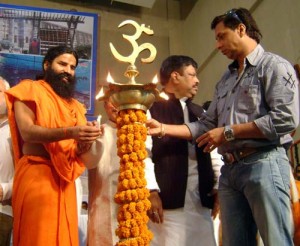
Swami Ramdev (Hindi: स्वामी रामदेव), also known as Baba Ramdev, is an Indian Hindu swami. He is particularly well-known for his efforts in popularizing Yoga as it is enunciated in Patanjali’s Yoga Sutras. He is also one of the founders of the Divya Yog Mandir Trust that aims to popularize Yoga and offer Ayurvedic treatments. His camps are attended by a large number of people. Over 85 million people follow his yoga camps via TV channels, and video. His yoga teaching sessions are for the masses and free for all. His stated principle in life is to be of help to all. Read More: > Here <
Divya Yog Mandir (Trust): Illustrious Past – A Promising Future:
The Kripalu Bagh Ashram on the blessed land next to the holy Ganges, was built in 1932 by the scholarly erudite and God realized Param Pujya Swami Kripalu Dev Ji Maharaj.
Concomitant with this noble struggle, Swami Kripalu Dev Ji along with another great spiritualist Swami Shraddhanand, who was the founder of the pure and chaste Hindus traditions of the “GURUKUL KANGRI”, organized a movement of rejuvenation of pristine Indian ancient traditions and renaissance of its glorious and hoary past where by the country, its religion and all related aspects, covered by the gathering dust of centuries neglect, were rediscovered and extolled.
Saint Shri Kripalu Dev Ji Maharaj was succeeded by his illustrious disciple Pujya Swami Shri Shankar Dev Ji Maharaj, well conversant with Vedic knowledge and an ardent advocate of noble human values. Swami ji founded the Trust in 1995 along with his group of disciples; yet another Philanthropist Pujya Swami Ram Dev Ji Maharaj who has dedicated his presence to augument the haloed traditions of the trust based on selfless service and dedicated quest for excellence in education, vedic learning and promotion of nationalism; he is joined by an energetic soul with an intense spirit of service. Acharya Shri Balkrishan Ji, also a great spiritualist & great scholar of Ayurved and an established name in Vedic philosophy Acharya Shri Muktanand ji (B.Sc. Vyakrancharya and other disciples and a few families continue to exalt the traditions and enrich the future with what the trust had enshrined and achieved in its glorious preceding years.
NATURWESEN UND ANDERSWELTREISEN
„Dana Mudra“ ist die „Geste des Gebens“, mit der in der indischen und tibetischen Kunst manche Gottheiten und Buddhas dargestellt werden.
Margot Ruis und Gerhard Kogoj haben bei längeren Aufenthalten in Indien viel Wunderbares und auch viel Erschütterndes gesehen, haben Menschen und Organisationen kennengelernt, die großartige Arbeit leisten, um den Ärmsten zu helfen. Aus dem Bedürfnis heraus, diese Arbeit mitzutragen – und zwar effizienter als es Privatpersonen möglich ist – haben sie gemeinsam mit Giorgio Nirvanananda Kriegsch und einigen engagierten Freunden den gemeinnützigen Verein „DANA MUDRA — Die Gebende Hand“ gegründet.
Wir freuen uns, Euch/Ihnen den Termin für das Naturwesenseminar 2010 mitteilen zu dürfen.
8.7. bis 11.7.2010: Naturwesen und Andersweltreisen
Ort: Biohaus Walsberg, Niederösterreich
Alle Informationen gibt es wie immer auch auf unserer Homepage: http://www.danamudra.org/calendar.php. Dort finden sich auch Hinweise auf weitere Vorträge und Veranstaltungen.
Klassischer Indischer Tanz Bharatanatyam
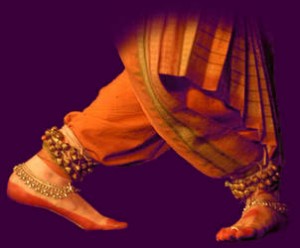
Wir laden Sie herzlich ein zur Veranstaltung:
Bhakti Devi tanzt
klassischer Indischer Tanz Bharatanatyam
Eröffnung durch Studentinnen der Indischen Tanzschule
Blaues Theater
Franz Schubert Konservatorium
Mariahilferstraße 51, 1060 Wien
Online Kartenreservierung: www.blauestheater.at
Eintritt 15,- / Ermäßigt 12,-
Kartenreservierung-Vorverkauf:
OM Shiva Esoterik Reinprechtsdorferstr. 54, 1050 Wien, Tel.: 01/9610632
Vedic Astrology: BAVA „Health and Healing“
> BAVA’s 12th Annual Conference 2010 <
‚Health and Healing‘, 22nd -26th April 2010
> FREE Vedic Astrology, Buddhism,Feng Shui, and more…. <
Jyotiṣa (Sanskrit jyotiṣa (Devanagari ज्योतिष), from jyótis- „light, heavenly body“: also anglicized Jyotish and Jyotisha) is the Hindu system of astrology (also known as Indian astrology, Hindu astrology, and of late, Vedic astrology). Read More: >HERE<
Vastu Shastra (vÄ�stu śÄ�stra, also Vastu Veda, „science of construction“, „architecture“) is a traditional Hindu system of design based on directional alignments. It is primarily applied in Hindu architecture, especially for Hindu temples, although it covers other applications, including poetry, dance, sculpture, etc. The foundation of Vastu is traditionally ascribed to the mythical sage Mamuni Mayan. While Vastu had long been essentially restricted to temple architecture, there has been a revival in India in recent decades, notably under the influence of V. Ganapati Sthapati of Chennai, Tamil Nadu (b. 1927), who has been campaigning for a restoration of the tradition in modern Indian society since the 1960s. Read More: >HERE<
Vedic astrology was developed by the ancient sages of India over 5000 years ago. Called Jyotish, the science of the light of life, it is part of the Vedic wisdom.
This includes Ayurveda, Vastu (Vedic architecture) and Yoga.
The Vedas and the vast Vedic Literature, mankind’s oldest and most sophisticated body of knowledge, detail the relationship between astronomy, astrology and human beings.
Vedic astrology is a powerful medium which can be used to understand ourselves through the study of the stars and the constellations.
It predicts and offers remedies for mundane difficulties as well as guide posts to an individual’s spiritual path.
> Meet VASTU, Friends, and Study Groups at facebook <
> Meet Jyotish, Friends, and Study Groups at facebook <
> Meet Sacred Geometry at facebook <
> Vedic, Vedic Sciences, Panchangam <
> ÖAG- Österreichische Astrologische Gesellschaft Wien <
LAMA JIGME: MONK, TEACHER, HEALER

> REFERENCE BOOK´s, FREE MATERIAL <
Buddhist schools vary significantly in the exact nature of the path of liberation, the importance and canonicity of various teachings and scriptures, and especially their respective practices. The foundations of Buddhist tradition and practice are the Three Jewels: the Buddha, the Dharma (the teachings), and the Sangha (the community). Taking „refuge in the triple gem“ has traditionally been a declaration and commitment to being on the Buddhist path and in general distinguishes a Buddhist from a non-Buddhist. Other practices may include renunciation, support of the monastic community, meditation, cultivation of mindfulness and wisdom, study of scriptures, physical exercises, devotion and ceremonies, or invocation of bodhisattvas. Read more: > HERE <
Who is Lama Jigme Gyatso?
Lama Jigme: Tibetan-buddhist: Monk, Teacher and Healer
He was trained, in the Traditions of:
- Avalokiteshvara, Chandragomin and Chandrakirti,
- Manjushri and Tsongkhapa,
- Longchen Rabjampa and Jigme Lingpa, as well as
- Chenrezig and Mingyur Namkhai Dorje
and ordained as Lama Jigme Gyatso: Rime Manipa Tantrika, which translates as “Ocean of Courage Teacher.” He is a Jewish-american born, Tibetan-buddhist:
- Monk,
- Teacher,
- Healer and
- Tantrika.
Lama Jigme was taught to be devoted to the Buddha of Compassion {Ma-ni-pa}, in a NON-sectarian manner {Ri-me}, that practices Sutra’s union of compassion and insight as well as the union of Tantra’s paths of devotion, imagination, sensuality and awareness {Tan-tri-ka}. In an age when many are content to hide behind tradition, hearsay, dogma and circular reasoning it can be refreshing to encounter this controversial and unconventional teacher who insists that a real Lama’s only true resume, credentials and letters of recommendation are:
- the vastness of his Compassion, and
- the profundity of his Insight as seen in
- the power of his Effectiveness to change lives and heal hearts.
Lama Jigme Gyatso has had the very good fortune to receive blessings, transmission and guidance from every major Buddhist lineage of the Theravada, Mahayana and Tantric traditions.
ISKCON DESIRE TREE (free) DOWNLOAD´s

> BHAGAVAD-GITA ONLINE (free) <
The International Society for Krishna Consciousness (ISKCON), also known as the Hare Krishna movement, is one of the Hindu Vaishnava religious organizations. It was founded in 1966 in New York City by A.C. Bhaktivedanta Swami Prabhupada. Its core beliefs are based on traditional Hindu scriptures such as the ŚrÄ«mad BhÄ�gavatam and the Bhagavad-gÄ«tÄ�, both of which, according to traditional Hindu view, date back more than 5,000 years. The distinctive appearance of the movement and its culture come from the Gaudiya Vaishnava tradition, which has had adherents in India since the late 1400s and Western converts since the early 1930s.
Non-sectarian in its ideals, ISKCON was formed to spread the practice of bhakti yoga (devotion to God), in which aspirant devotees (bhaktas) dedicate their thoughts and actions towards pleasing the Supreme Lord, Krishna (seen as non-different from God). ISKCON today is a worldwide confederation of more than 400 centres, including 60 farm communities, some aiming for self-sufficiency, 50 schools and 90 restaurants. In recent decades the movement’s most rapid expansions in terms of numbers of membership have been within Eastern Europe (especially since the collapse of the USSR) and India. In recent years the organisational and management structure of ISKCON is becoming less relevant to its members. Read more: > HERE <
You can eternally help people suffering endlessly in this material world by your generous donations to this website.
> Meet ISKCON Groups, Friends, Yoga, Studies at facebook <
> Meet Sri Prabhupada, Friends, Groups, Studies at facebook <
> Meet Bhagavad-Gita, Groups, Friends, Studies at facebook <
SRI PURAM – TANTRA RESEARCH CENTER
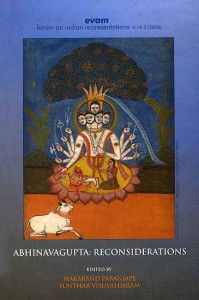
> ISHWAR ASHRAM TRUST BOOK´s <
>I.I.H.S. FREE BOOK DOWNLOADS <
(Abhinavagupta’s Commentary on the Bhagavad Gita)
Abhinavagupta (Kashmiri: अभिनवगुप्त) (approx. 950 – 1020 AD) was one of India’s greatest philosophers, mystics and aestheticians. He was also considered an important musician, poet, dramatist, exeget, theologian, and logician – a polymathic personality who exercised strong influences on Indian culture.
He was born in the Valley of Kashmir in a family of scholars and mystics and studied all the schools of philosophy and art of his time under the guidance of as many as fifteen (or more) teachers and gurus. In his long life he completed over 35 works, the largest and most famous of which is TantrÄ�loka, an encyclopedic treatise on all the philosophical and practical aspects of Trika and Kaula (known today as Kashmir Shaivism). Another one of his very important contributions was in the field of philosophy of aesthetics with his famous AbhinavabhÄ�ratÄ« commentary of NÄ�ṭyaśÄ�stra of Bharata Muni. Read more: > Here <
Tantra is that Asian body of beliefs and practices which, working from the principle that the universe we experience is nothing other than the concrete manifestation of the divine energy of the Godhead that creates and maintains that universe, seeks to ritually appropriate and channel that energy, within the human microcosm, in creative and emancipatory ways.
Shripuram Trust was established in the year 2006. We are located in a serene peaceful village, Madayikkonam near Irinjalakkuda in Thrissur District. Shri. L Girishkumar is the founder chairman of the trust. He is a well-known personality in spiritual as well as cultural circles. He is the disciple of Shri. Madhavji who was an acharya and a guiding light in the field of Tantra.
What is Tantra?
Tantra means technique-a technique for the fulfillment of desires. Man has no control over his desires. A desire is claimed as one’s own only after it comes to one’s mind. Desires are products of latent tendencies / vasanas. Through the fulfillment of the desires,‘vasanas’ are eliminated. Tantra provides the methodology whereby, through the fulfillment of one’s desires, liberation is attained. Liberation means understanding one’s own nature.From that understanding, one realizes that the world is nothing but the manifestation of the consciousness of which we are,but only a part. It is also a way of living which provides aesthetic enjoyment and knowledge. There is a shortage of proper understanding and practice of Tantra in today’s world. According to Abhinavagupta, a 10th century Tantra scholar who lived in Kashmir, Tantrasastra is the best among all sastras.(Dein Ayurveda Net:…. >„abhinavagupta“<)
The Objectives of the Trust
- The main intention of Shripuram Trust is to propagate the humanitarian aspect of Tantra in today’s world which is lacking in its understanding of this powerful Sastra.
- Our help is extended to those people who are genuinely interested in and are keen to understand and study Tantra in systematic manner.
- To preserve, we digitize manuscripts both palm-leaf and paper.
- For propagation, we study the manuscripts and try to revive the ancient rituals for the benefit of the mankind.
YOGA FOR PHYSICAL AND MENTAL FITNESS

> YOGA FOR PHYSICAL & MENTAL FITNESS <
> SRI RAMANA´s BIRTHDAY CELEBRATION <
Sri Ramana Maharshi (Tamil: ரமண மஹரிஷி) (December 30, 1879 – April 14, 1950), born Venkataraman Iyer, was an Indian sage. He was born to a Tamil-speaking Brahmin family in Tiruchuzhi, Tamil Nadu. After having attained liberation at the age of 16, he left home for Arunachala, a mountain considered sacred by Hindus, at Tiruvannamalai, and lived there for the rest of his life. Arunachala is located in Tamil Nadu, South India. Although born a Brahmin, after having attained moksha he declared himself an „Atiasrami“, a Sastraic state of unattachment to anything in life and beyond all caste restrictions.
Sri Ramana maintained that the purest form of his teachings was the powerful silence which radiated from his presence and quieted the minds of those attuned to it. He gave verbal teachings only for the benefit of those who could not understand his silence. His verbal teachings were said to flow from his direct experience of Consciousness (Atman) as the only existing reality. When asked for advice, he recommended self-enquiry as the fastest path to moksha. Though his primary teaching is associated with Non-dualism, Advaita Vedanta, and Jnana yoga, he recommended Bhakti to those he saw were fit for it, and gave his approval to a variety of paths and practices.
Bhagavan Sri Ramana Maharshi, ‚The Sage of Arunachala‘
30th Dec. 1879 to 14th April 1950
Throughout the history of mankind spiritual giants have appeared on very rare occasions to exemplify the Highest Truth. Guiding followers by their conduct in every moment of their lives; Bhagavan Sri Ramana Maharshi was such a giant. Unique in our time, He perfectly embodied the ultimate truth of Self-realisation, or complete absorption in the Supreme Itself.
Drawn from His home by the power of Arunachala at the age of sixteen, he remained at Its feet throughout the rest of His life and became known as the Sage of Arunachala.
He wrote very little, but is known to have translated and corrected a number of important works for the benefit of devotees. He preferred to communicate through the power of overwhelming Silence, a silence so deep and powerful that it stilled the minds of ardent seekers who were attracted to Him from all over the world.
Although preferring silence, He was always willing to answer the questions of sincere aspirants and never failed to guide them in the right direction.
His highest teaching of ‚Self-enquiry‘ (vichara) was understood in the infinite silence of his presence. Through this silence, countless numbers of devotees and visitors experienced the pure bliss of True Being. That same experience of perfect peace is still available to sincere souls who turn to him and practice his teachings with devotion.
This act of perfect grace can be experienced anywhere, but it is especially palpable at the foot of the holy Arunachala Hill, a hill that has attracted saints and sages for thousands of years. The Maharshi’s teaching of ‚Self-enquiry‘ (Pure Advaita) is simplicity itself, requiring no outward formalities, no outer change of life, only a simple change in ‚point of view‘ and a sustained effort on the part of the seeker. The goal is no heaven after death or a faraway ideal, but rather the removal of the ignorance that prevents us from knowing that we are eternally One with our Source, the Supreme Self, or God. It is an experience than can be had NOW! All that is required is a sincere effort, which earns us the necessary grace.
On his deathbed the Maharshi told his grieving devotees, „You say I am going away, but where can I go? I am always here. You give too much importance to the body.“ His promise of a ‚continued presence‘ is daily being experienced by numerous devotees around the world, and it is that experience of ‚continued presence‘ that has inspired many to devote themselves to the path of peace and love.
> Meet Sri Ramana Maharshi, friends, studies at fb <
DKA – CAROL SINGING CAMPAIGN
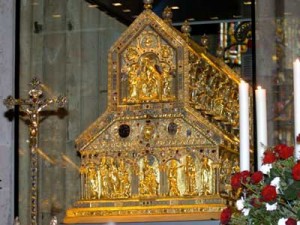
> CAROL SINGING CAMPAIGN <
> The three kings, Carol Singing <
A tradition in most of Central Europe involves writing the initials of the three kings‘ names above the main door of the home to confer blessings on the occupants for the New Year. For example, 20 + C + M + B + 08.
The initials may also represent „Christus mansionem benedicat“ (Christ bless this house). In Catholic parts of Germany and in Austria, this is done by so called Sternsinger (star singers), children, dressed up as the Magi, carrying the star. In exchange for writing the initials, they collect money for charity projects in the third world.
Project work of DKA – Development includes every aspect of human life. Development cooperation intends to overcome injustice and oppression. DKA supports projects in the following fields:
-
Education enables people to look at their own life situation, and take steps to bring about positive change.Social projects work with communities to find sustainable methods of meeting peoples‘ basic needs whilst also striving for long term peace and social improvement in the community.
-
Pastoral programmes contribute to the establishment and promotion of active churches and their commitment to human concerns.
-
Protection and promotion of human rights and of indigenous people as well as particular commitment to women issues are also important priorities of the project work.
The projects of DKA have to be planned and implemented together with the persons affected in order to achieve a long-term improvement. Moreover, the projects must target a broad spectrum of people, provide holistic support and focus on pastoral and social awareness.
For more information on project policies and project support criteria please consult the relevant websites.
Decisions on the support of projects are taken by an inter-diocesan allocation committee consisting of members of Jungschar from the nine Austrian dioceses.
Indian Institute of Scientific Heritage

Indian Institute of Scientific Heritage (IISH) was established on the Sravana Pournami day in August 1999 and registered as a charitable trust (328/99/iv) during the last quarter of 1999. Then onwards IISH has been undertaking the mission of learning and teaching the ultra ancient heritage of Bharath(India) using ultra modern scientific and technological tools.
The ultimate aim of this mission is to make every Indian proud of his heritage.
Our aim is to inform the world about the glorious scientific, rational and logical heritage of India and also inform the world to practice and adopt these message in their life to lead a happy life in the 21st century. IISH is undertaking this mission of taking the message to 100 million people before the 31st December 2010. Hundreds and thousands of mission oriented workers are taking part in this patriotic mission of spreading the message of our motherland. We learn and teach the past glory, present achievements and future aims of Indian in each and every field, taking the inspiration for the past glory of this nation.We inform the world that this heritage of India is the property of Hindus, Muslims and Christians of India and also belongs to all beloved children of this motherland. Thus IISH spreads the scientific, technological, spiritual, sociological, anthropological, managemental messages to the world, in such a way that these messages can be adopted for the modern world.
National Heritage Center (NHC) has been established at Mazhuvanchery, Near Kechery, Trissur – Guruvayoor Road, Trissur in a sprawling land area of 10 acres.
The NHC campus has a series of institutions managed by IISH, which are functioning from 2003 onwards. It has a Aryabhatta Heritage Library which is opened to one and all at any time for referring the heritage books. The library has a second section of the collection of modern scientific books. This library books are utilized by student and academic community all the seven days.
New books are added to this library available through purchase or as donation. Computer documentation of all the books has been completed and available for the reader.
NHC has a Heritage museum where ancient materials are displayed which has become a good attraction for the academic community and students. A printed display of the history of India as main points are given in the museum.
IISHTV Update:
- JeevithaMoolyangal – Dr. N.Gopalakrishnan (Malayalam)
- Purana Ithihasa Sandeshangal Nithya Jeevithathil – Dr. N.Gopalakrishnan (Malayalam)
- Mind Management in Indian Culture – Sri. L. Girish Kumar (English)
- Tantra Saastrathinte Saamakaleena Prasakthi – Sri. L. Girish Kumar (Malayalam)
- Kudubaangagalkku oru Dishabodha Sandesham – Sri. N.Somashekaran (Malayalam)
ADVERT: „DRIVE THE CHANGE“
BENEFIT´s OF MAKING PRAYER WHEEL
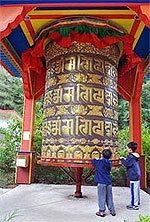
The Source of the Practice of the Mani Wheel
As the great master Nagarjuna was predicted by the Great Compassionate One: “In the naga’s country in the palace of the King of Nagas, the bodhisattva possesses one very powerful Dharma wheel. Just by seeing, hearing, touching, or remembering the Dharma wheel, you will quickly be liberated from the suffering of the lower realms. With this you will produce extensive works for sentient beings.”
The Limitless Light Buddha Amitabha said: “For the benefit of sentient beings of the degenerate age, I have explained the benefits of the mani wheel. The one who practices while turning equals the fortune of the thousand buddhas.”
The Founder Savior, the unequalled Shakya King, told the bodhisattva Dripa Namsil: “It is more beneficial to turn the Dharma wheel one time than [to be] a meditator of highest capacity who engages in one-year retreat on the essence meaning of mantra. It is more beneficial than [to be] a middle capacity meditator who does retreat for seven years or a lower capacity meditator who does a nine-year retreat.”
Manjushri said: “The four protectors and the ten direction guardians will protect you from all obstacles, from all directions and corners. The negative karma of the lower realms, the five uninterrupted actions, and the ten non-virtuous actions are purified. You will travel to all the pure lands of the buddhas, and in the Blissful Pure Land. You will be reborn on the lion’s throne in the lotus heart of the Blissful Pure Land. You will perform the actions of all the buddhas in all directions.”
Manjushri said: “This great Dharma wheel protects you from all the harm-givers, devas, spirit possessions, from the nagas down below, from Steno in the middle, and from the multitude of yakshas.”
From The Peerless Wish-Granting Jewel Tantra: “The person who turns this wheel which possesses OM MANI PADME HUM will be blessed by all the gurus, the deities will grant realizations, those gone to bliss will pay attention to him or her, and the Dharma protectors will eliminate all sobstacles.”
From The Will of the Action of the Compassionate Eye Loving One: “Each time you turn this OM MANI PADME HUM Dharma wheel equals the number (of the mantra) of the approximation retreat.”
The benefits of establishing the Dharma wheel in earth, water, fire, and wind: “When you put this great wheel OM MANI PADME HUM up in the wind, all those sentient beings who are touched by the wind and all those migrators abiding in the direction of the wind will be liberated from the sufferings of the lower realms. When you place the Dharma wheel in the fire, any sentient being who smells the smoke and all those migrators who see the light of the fire will be liberated from the sufferings of the lower realms. If you place the Dharma wheel in the ground, all those migrator beings who receive the dust and the sentient beings abiding in that ground will be liberated from the sufferings of the lower realms. If you place the Dharma wheel in water, all those sentient beings abiding and drinking the water will be liberated from the sufferings of the lower realms.”
Therefore, the fortunate capable beings turn the great Dharma wheel upright: the highest intelligent person will achieve enlightenment and work for sentient beings; the middle capable being will achieve fortunate rebirth and join the holy Dharma; and the lowest capable being will achieve good rebirth, separate from the ten non-virtuous actions.
If you place the Dharma wheel at home and turn it, the migrator beings abiding in that house will be liberated, and the home will become similar to the Potala (Pure Land of Chenrezig). At the time of death, if you place the Dharma wheel with OM MANI PADME HUM next to your head and make requests with intense devotional mind, without need of practicing powa (transference of consciousness) your consciousness will be transferred in one instant to the heart of the Compassionate One. Therefore, without qualms of a two-pointed mind in this profound supreme Dharma wheel, one should cherish it, build the Dharma wheel with perseverance, and turn it with an intense wish.
The Savior Loving One Maitreya said: “If you offer good divine robes to the profound Dharma wheel, you will receive good clothing for 500 lifetimes. Due to the merits of having offered the hook to the profound Dharma wheel, you will be able to go through all the paths of liberation. By the merits of offering the hanging weight, you will become the savior of all migrator beings. You will accumulate more merits than having recited 100,000 times 10,000,000 mantras. The titans and the harm-givers will prostrate to you. You will control human beings, wealth, and food. All your connections will become meaningful, and sentient beings touched by your shadow will be liberated from the lower realms.”
If you offer various needs – food and so forth – to this Dharma wheel with OM MANI PADME HUM, you will become the thousand wheel–turning Dharma king, enjoying whatever you wish. And at the end you will meet the Superior Compassionate Eye Looking One. For those fortunate beings who reveal this Dharma wheel possessing OM MANI PADME HUM to others, or explain or spread the teachings of this wheel, it is like spreading the teachings of the buddhas.
From The Tantra Possessing the Lotus Garland: “In short, all the accumulation of vices, defeats, downfalls, and so forth will be purified without effort. One is liberated just by seeing and hearing.”
From The Tantra of the Circle of Six Thousand: “Even for the person who turns this precious wheel, any sentient being who sees, hears, remembers, or touches him or her completes the merits, purifies defilements, and achieves enlightenment.”
From The Sutra of the Great Chu Lung: “By the merits generated by offering a golden pinnacle (to the Dharma wheel), one will receive perfect enjoyments for eons. Due to the merits of having offered services, one will possess a good heart and clear mind wisdom. The person who turns the Dharma wheel will become the son of the thousand buddhas, the guide of all migrators. Thus is explained by the Buddha. When death comes, place the Dharma wheel at your crown and you won’t need to practice powa. When you carry the Dharma wheel and meet other sentient beings, even those who have killed their father or mother will be liberated. Even the sentient beings who see the wheel on the bridge will be liberated.”
Dictated to Fabrizio Champa Palgye in Dharamsala March 1998, for Richard Gere who came for His Holiness the Dalai Lama’s Losar teachings.
> Meet Lama Yeshe Wisdom Archive at facebook <
FASTER CASH FLOW COURSES
http://flow4cash.blogspot.com/
Faster Cash Flow Courses are being organized by Ved Vigyan trust as follows. Aspirant can register for any one of them for their better cash flow.
1. 12th Course 01st Jan 2010 to 12th Jan 2010
2. 13th Course 18th Jan 2010 to 29th Jan 2010
3. 14th Course 06th Feb 2010 to 17th Feb 2010
4. 15th Course 04th Mar 2010 to 15th Mar 2010
Early Marriage
Bachelors by Laxmi Krupa (grace of Laxmi) can get Gruhlaxmi (lucky wife) soon.
Girls will become Gruhlaxmi (lucky wife) soon thru Laxmi Krupa (grace of Laxmi).
Happy Family
All Gruhlaxmi who feel devoid of Laxmi Krupa (lack of Cash Flow & Peace at Home) can join this training.
The males having family problems (Peace at Home) can also undergo this training.
Better Salary Job
For unemployed or jobs with good salary Laxmi Krupa (Grace of Cash God) is must.
More Profit in Business
Getting Loss in business (no Cash Flow) or less profits (less cash Flow) means lack of Laxmi Krupa (grace of Cash God).
Cash God Puja – (Laxmi Siddhi Training)
This will be full time residential training for 11 days initially
This is intensive Laxmi Sadhana (Deep Cash God Prayer) for 11 days for quick Laxmi Krupa (grace of Laxmi) ’11 days ‚Laxmi Siddhi Program‘ is being organized by ‚Ved Vigyan Trust‘ from 1st Jan 2010 at Hyderabad, India, under the guidance of Aatmyogi Pramodanand, whose CD’s on ‚Laxmi Kataksh‘ has been in large demand for the last two years. After training individuals will be able to increase Laxmi Krupa & solve the problem of finance & family tension. Those interested to further conduct such training in other areas or cities or countries can co-operate the Ved Vigyan Trust on part time or full time basis.
Those interested to further conduct such training in other areas or cities or countries can co-operate the Ved Vigyan Trust on part time or full time basis.
For more details contact Secretary at Mo +91 9290778701
Venue: Amrutha Arcade, Kacheguda, Hyderabad
Dates: 1st Jan 2010 to 12th Jan 2010
Training Fee: *Free
- Training Course is free, but 1100/- is being charged for 11days Boarding & Lodging charges @ Rs. 100/- per day which can be deposited in ICICI Bank a/c No. 630505029848 favouring Ved Vigyan Trust.
- Out-station candidates must reach Kacheguda, Near Kacheguda Station on all routes or get down at Secunderabad latest by 1st Jan 2010 morning 10 am and come with your back reservations for 12th Jan 2010.
- Training for foreigners will be for one month and they will be required to pay $ 400 towards Bording & Lodging charges.
- If interested please inform us in in advance. If you r unable to join you can send someone to do puja on ur behalf. We also have trained persons who can do puja on ur behalf.
Website: www.aatmyogi.com , Email: aatmyogi@gmail.com
> Meet Swami Ji , friends , studies at facebook <
> Meet World Recession Solutions (विश्व मंदी निवारण) at facebook <
Umrao Singh Memorial School (USMS)

www.ewasa.org , > e-waste <
> UMRAO SINGH MEMORIAL SCHOOL <
Our work started in the early 1980s with the planting of fruit trees in India. The emphasis was on creating awareness, training people to plant and take care of trees, and providing them with the resources needed to accomplish their tasks. Each recipient made a pledge to help at least two others in the same manner in which they had been helped.
The program grew rapidly in India and spread to Guatemala, Cambodia, Nepal, Costa Rica, Haiti, Indonesia, Brazil, Mexico, Ethiopia, Nicaragua, and El Salvador. As a result, tens of millions of fruit trees have been planted.
But far more important than the number of trees planted is the fact that tree planting inspires many people to do more to help themselves. They have started projects on bee-keeping, fuel-efficient stoves, improvement of their soils, water conservation, scientific improvement of plant breeding materials, self-help loans, improvement of medical facilities, improvement of educational facilities, and other socially responsible activities.
A large portion of funding and resources for activities in each country is generated locally. These resources are mostly provided in terms of land, labor, and in-kind contributions from various segments of the society. The international funds and resources provide key elements that are lacking locally.
We realize that our task is not to solve the problems of the world. Our challenge is to create a few demonstrable models that, if successful, may inspire others to solve their own problems. In this manner we are akin to a laboratory where an antidote to a disease may be developed. We are not a factory where the antidote is manufactured for sale.
Our focus is on developing and providing the tools of empowerment to local community leaders who can create hope among others. Empowerment in our case means:
Awareness + Networking of resources, which lead to → Action
GIFT´s FROM THE HEART: > HERE <
Our Initiatives:
- Books for Life International – spreading the joy of reading to children in developing countries worldwide.
- The Moringa Tree – encouraging the use of this miraculous tree and further research into its benefits.
- Education – empowering the poor to reach long-term goals through quality education.
- Fruit trees – helping provide a long-term and renewing source of food to the hungry of the world.
- Fuel-efficient cookstoves – saving lives with these cookstoves built with local materials by local residents.
- Trees for Life Journal – bringing beneficial plants and trees to the attention of the scientific community.
MORARI BAPU – THE RAMAYANA EPIC POEM
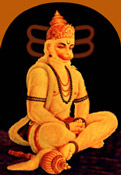
The Ramayana (DevanÄ�garÄ«: रामायण, RÄ�mÄ�yaṇa) is an ancient Sanskrit epic. It is attributed to the Hindu sage Valmiki and forms an important part of the Hindu canon (smṛti). The Ramayana is one of the two great epics of India, the other being the Mahabharata. It depicts the duties of relationships, portraying ideal characters like the ideal servant, the ideal brother, the ideal wife and the ideal king. The name Ramayana is a tatpurusha compound of RÄ�ma and ayana („going, advancing“), translating to „Rama’s Journey“. The Ramayana consists of 24,000 verses in seven books (kÄ�ṇḍas) and 500 cantos (sargas), and tells the story of Rama (an incarnation of the Hindu preserver-god Vishnu), whose wife Sita is abducted by the demon king of Lanka, Ravana.
Thematically, the epic explores the tenets of human existence and the concept of dharma. Read More: > HERE <
The various Indian religions, such as Hinduism, Buddhism, Jainism, and Sikhism, have all accorded a central focus to dharma and advocate its practice. Each of these religions emphasizes Dharma as the correct understanding of reality in its teachings. In these traditions, beings that live in accordance with Dharma proceed more quickly toward dharma yukam, moksha or nirvana (personal liberation). The antonym of dharma is adharma meaning unnatural or immoral.
In traditional Hindu society, dharma has historically denoted a variety of ideas, such as Vedic ritual, ethical conduct, caste rules, and civil and criminal law. Its most common meaning however regarded two principal ideals; namely, that social life should be structured through well-defined and well-regulated classes (varna), and that an individual’s life within a class should be organized into defined stages (ashrama, see dharmasastra).
Dharma also refers to the teachings and doctrines of the founders of Buddhism and Jainism, the Buddha and Mahavira. In Buddhist philosophy, dhamma/dharma is also the term for „phenomenon„ . Read More: > HERE <
Dharma, artha and kama areimportant in matters of worldly life. Dharma and moksa should be followed judiciously if they are to lead to Self−realisation.
Patanjli, at the end of the of life and the qualities of nature moksa. Yoga Sutras, concludes that the practice of yoga frees a yogi from the aims(gunas), so that he can reach the final destination−−kaivalya or moksha.
Health and Harmony:
To acquire knowledge−−whether mundane or spiritual−−bodily health, mental poise, clarity and maturity of intelligence are essential. Health begets happiness and inspires one to further one’s knowledge of the world and of the Self. Health means perfect harmony in our respiratory, circulatory, digestive, endocrine, nervous and genito−excretory systems, and peace of mind. Hatha yoga practices are designed to bring about such harmony.
HATHA YOGA, HATHA VIDYA from Yoga Swami Svatmarama: > HATHA YOGA PRADIPIKA < . Foreword by B K S Iyengar, Commentary by Hans Ulrich Rieker
> Meet Morari Bapu , Katha dates/Venue´s at facebook<
> Meet Ramayana, friends, studies at facebook <
