
Posts by admin
LIFE POSITIVE EXPO 2010
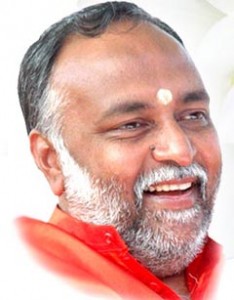
Swami Sukhabodhananda
Founder Chairman of Prasanna Trust
Life Positive is a body- mind-spirit magazine promoting a holistic understanding of the unity of life and self with an emphasis on personal growth. It was started in April 1996 by Aditya Ahluwalia, chairman of the organisation, and Parveen Chopra, founder-editor, under the aegis of Magus Media Pvt Ltd. Produced by a team of professional journalists, some of who are also active seekers, Life Positive covers the beat of spiritual wisdom, techniques, gurus, personal growth therapies, alternative medicine, holistic healers and organisations with insight, accuracy, thoroughness and discrimination.
Site Design & Development:
The site Portal services: email, search engines and discussion boards are provided by third-parties, Everyone.Net and Google.com .
For further details, write: webmaster@lifepositive.net
In June 2005, the group launched its second publication, Life Positive Hindi. Within its short span of existence, the magazine has earned a strong readership base. The group has published a number of books, including Parallel Journeys and Nine Days to Nirvana and organised prestigious music festivals. The magazine is edited today by Suma Varughese who has been with the magazine since its inception and is the former editor of Society magazine.
Life Positive is fortunate to have Mr D.R. Karthikeyan, former chief of the CBI, as President. It also has a panel of eminent names as advisors including . Mark Tully, Kiran Bedi, Devieka Bhojwani, M Madhvan Nambiar, K M S ‚Titoo‘ Ahluwalia, G Venkatesh Rao , and Parveen Chopra.
Birthdaycelebrations of Sri Ramana Maharshi
( Message No. 97 )
> RAMANA MAHARSHI HERBAL MEDICINE <
Sri Ramana Maharshi (Tamil: ரமண மஹரிஷி) (December 30, 1879 – April 14, 1950), born Venkataraman Iyer, was an Indian sage. He was born to a Tamil-speaking Brahmin family in Tiruchuzhi, Tamil Nadu. After having attained liberation at the age of 16, he left home for Arunachala, a mountain considered sacred by Hindus, at Tiruvannamalai, and lived there for the rest of his life. Arunachala is located in Tamil Nadu, South India. Although born a Brahmin, after having attained moksha he declared himself an „Atiasrami“, a Sastraic state of unattachment to anything in life and beyond all caste restrictions´.
Sri Ramana maintained that the purest form of his teachings was the powerful silence which radiated from his presence and quieted the minds of those attuned to it. He gave verbal teachings only for the benefit of those who could not understand his silence. His verbal teachings were said to flow from his direct experience of Consciousness (Atman) as the only existing reality. When asked for advice, he recommended self-enquiry as the fastest path to moksha. Though his primary teaching is associated with Non-dualism, Advaita Vedanta, and Jnana yoga, he recommended Bhakti to those he saw were fit for it, and gave his approval to a variety of paths and practices. Read More: > HERE <
Annamalaiyar Temple (Tamil: திருஅண்ணாமலையார் திருக்கோயில்) (Arunachaleswara in Sanskrit) is a noted Hindu temple dedicated to Lord Shiva, located at the bottom of the Annamalai hill in Thiruvannamalai town in Tamilnadu, India. It is the home of Annamalaiyar or Arunachaleswarar (Lord Shiva worshipped as a Shiva Lingam) and Unnamalaiyaal (Apitakuchambaal – Parvati), and is one of the largest temples in India.
The Glory of the Place
Thiruvannamalai – Annamalaiannal. The Saiva cult is a world phenomenon. Thiruvannamalai is the capital of Saivism. The South Indian deity Siva is the God of all countries. Annamalaiannal is the most sacred of the names of the manifestation of Lord Siva.
Pancha Bootha Sthalam
The earth is formed by five basic elements namely land, water, fire, air and ether. Our ancestors called them „Pancha Boothas“ and associated them with five sacred places for worshipping Lord Siva. The center of these five elements fire is identified with Thiruvannamalai.
Saints and Scholars
Thiruvannamalai has been the abode of Siddhars. Idaikkattu Siddhar, one of the eighteen Siddhars, belongs to this sacred soil.
Thiruvannamalai has the honour of providing an abode for saints such as Arunagirinathar, Vitpatchathevar, Gugai Namachivayar, Guru Namachivayar, Deivasigamani, Arunachala Desikar, Mahan Seshadri Swamigal, Bagawan Ramana Maharishi, Sri Yogi Ram Surathkumar and the like.
TOURIST INFORMATION:
> http://www.arunachaleswarar.com/
> Meet Sri Ramana Maharshi, friends, studies at fb <
> Meet Sri Ramana Seva Ashram, friends, at fb <
> Meet Advaita Vedanta, friends, studies at fb <
> Meet Shaivism , Yoga, friends , studies at fb <
> Meet Global Diversity, friends, Studies at fb <
> Meet Genetic Engeneering groups at fb <
Die Grosse Willi Resetarits Silvester Schau

Für einen ebenso entspannten wie kurzweiligen Rutsch ins neue Jahr garantiert auch heuer wieder Willi Resetarits mit seiner legendären Großen Silvester Schau. Der bei Radiohörern und -hörerinnen beliebte «Trost- & Ratgeber/Solace and Advice », ehemalige «Schmetterling» und pensionierte «Dr. Kurt Ostbahn» präsentiert ein Galaprogramm ganz nach seinen persönlichen Vorlieben und glänzt dabei als Sänger, Moderator und Entertainer.
Mit illustren Gästen – unter ihnen erstmals Fatima Spar – wird ein weites Feld zwischen Wienerlied und Mundartdichtung, Jazz und Evergreens, Pop und Weltmusik bereist, samt mitternächtlichem Walzen im ganzen Wiener Konzerthaus.
Donnerstag, 31. Dezember 2009, 22:30 Uhr
Interpreten:
Rounder Girls, Vokalensemble
StringFizz, Streichquartett
Stubnblues, Ensemble
Fatima Spar, Gesang
Schiffkowitz, Gesang Lukas Resetarits, Gesang
Ernst Molden, Gesang, Gitarre
Gerald Votava, Gesang, Inspizienz
Willi Resetarits, Gesang, Gespräch, Gute Laune
Kartenbestellung – konzerthaus.at
Stubnblues – www.williresetarits.at
StringFizz – www.stringfizz.at
Rounder Girls – www.roundergirls.at
Fatima Spar – www.freedomfries.at
Schiffkowitz – www.schiffkowitz.com
Lukas Resetarits – www.knowme.at
Ernst Molden – www.ernstmolden.at
Gerald Votava – kundendienst.orf.at
DIVERSE KALENDARIEN, EINE ÜBERSICHT

The Julian calendar, a reform of the Roman calendar, was introduced by Julius Caesar in 46 BC, and came into force in 45 BC (709 ab urbe condita). It was chosen after consultation with the astronomer Sosigenes of Alexandria and was probably designed to approximate the tropical year, known at least since Hipparchus. It has a regular year of 365 days divided into 12 months, and a leap day is added to February every four years. Hence the Julian year is on average 365.25 days long.
The Julian calendar remained in use into the 20th century in some countries as a national calendar, but it has generally been replaced by the modern Gregorian calendar. It is still used by the Berber people of North Africa, on Mount Athos, and by many national Orthodox churches. Orthodox Churches no longer using the Julian calendar typically use the Revised Julian calendar rather than the Gregorian calendar. Read More: > HERE <
The Gregorian calendar is the internationally accepted civil calendar. It was introduced by Pope Gregory XIII, after whom the calendar was named, by a decree signed on 24 February 1582, a papal bull known by its opening words Inter gravissimas. The reformed calendar was adopted later that year by a handful of countries, with other countries adopting it over the following centuries.
The Gregorian calendar reform contained two parts, a reform of the Julian calendar as used up to Pope Gregory’s time, together with a reform of the lunar cycle used by the Church along with the Julian calendar for calculating dates of Easter. The reform was a modification of a proposal made by the Calabrian doctor Aloysius Lilius (or Lilio).[4] Lilius‘ proposal included reducing the number of leap years in four centuries from 100 to 97, by making 3 out of 4 centurial years common instead of leap years: this part of the proposal had been suggested before, e.g. by Pietro Pitati. Lilio also produced an original and practical scheme for adjusting the epacts of the moon for completing the calculation of Easter dates, solving a longstanding difficulty that had faced proposers of calendar reform. Read More: > HERE <
The Hindu calendar used in ancient times has undergone many changes in the process of regionalization, and today there are several regional Indian calendars, as well as an Indian national calendar.
Most of these calendars are inherited from a system first enunciated in Vedanga Jyotisha of Lagadha, a late BCE adjunct to the Vedas, standardized in the Surya Siddhanta (3rd century CE) and subsequently reformed by astronomers such as Aryabhata (499 CE), Varahamihira (6th c. CE), and Bhaskara (12th c. CE). There are differences and regional variations abound in these computations, but the following is a general overview of Hindu lunisolar calendar.
Yoga: First one computes the angular distance along the ecliptic of each object, taking the ecliptic to start at Mesha or Aries (MeshÄ�di, as defined above): this is called the longitude of that object. The longitude of the sun and the longitude of the moon are added, and normalized to a value ranging between 0° to 360° (if greater than 360, one subtracts 360). This sum is divided into 27 parts. Each part will now equal 800′ (where ‚ is the symbol of the arcminute which means 1/60 of a degree). These parts are called the yogas. Read More: > HERE <
Solar Calender: > HERE <
Lunar Calender: > HERE <
Veda, Vedic Science´s , Panchangam: > HERE <
> Meet Understand and Learn Hindu Panchangam at facebook <
> Meet Free Vaisnava Calender at facebook <
> Meet VEDIC, mathematics, jyotish, astrology, astronomy at fb <
THE FOUR NOBLE TRUTH´s
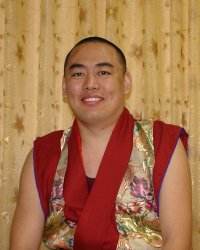
Tulku Ogyen Rinpoche (Khentrul Ogyen Rinpoche)
> OGYEN LING CHARITY NETWORK <
The Four Noble Truths (or The Four Truths of the Noble Ones) (Sanskrit: catvÄ�ri Ä�ryasatyÄ�ni; Wylie: ‚phags pa’i bden pa bzhi; Pali: cattÄ�ri ariyasaccÄ�ni) is one of the most fundamental Buddhist teachings. This Dharma Enlightenment makes ordinary person become the Buddha (Khun Weera Boontanorm, 2000). In broad terms, these truths relate to suffering (or dukkha), its nature, its origin, its cessation and the path leading to its cessation. They are among the truths Siddhartha Gautama is said to have realized during his experience of enlightenment. Read More > Here <
The four noble thruths. Who frist taught by Sakyamuni Share
One needs to understand that when the Buddha taught, he was not teaching as a great scholar who wanted to demonstrate a particular philosophical point of view or to teach for its own sake. His desire was to present the very essence of the deep and vast teachings of Buddhism, for that reason he gave teachings which suited the abilities of his disciples. All the teachings he gave, some long and some short, were a direct and appropriate response to the development of the disciples who came to listen to him. Of course, people have very different capacities and different levels of understanding. They also have very different wishes and desires to learn and understand the dharma. If the Buddha had taught only the very essence of his own understanding of those vast and far- reaching teachings, then apart from a small number of disciples who had great intelligence and diligence few people would have ever understood the Buddhist teachings. The Buddha taught whatever would enable a person develop so he or she could progress gradually towards the very deep and vast teachings. When we analyze all the Buddha’s teachings, we see that they fall into three main approaches or vehicles.
The Buddha’s teachings helped each student in a way appropriate for the level he or she was at. Because of that, one finds that on the relative level each student received some benefit from what Buddha taught. On the absolute level, one finds all of the Buddha’s teachings have the same goal. When one analyzes the Buddha’s teachings on the relative level, one finds that there are three levels. But, when one examines them from the absolute level, one sees there is only one level, or yana, because all beings are directed towards the same goal.
The Hinayana
Of the three yanas, the first is the hinayana. Hinayana literally means „lesser vehicle“ but this term should in no way be a reproach or be construed to any way diminish the importance of the teachings. In fact, the teachings of the hinayana are very important because they suit the capacities and development of a great number of students. If it weren’t for these teachings, which are particularly appropriate for those who have limited wisdom or diligence, many persons would never been able to travel the mahayana path. Without the hinayana teachings there would be no way for practitioners to progress in the dharma because they would have never entered the path. The path is similar to a staircase: the lower step is the lower step. This doesn’t mean it is not important or should be ignored because without this lower step one can never reach the top of the stairs. One can never gain access to the upper stories of a building without that lower step. It is very necessary. It should be very clear that this term „lesser“ vehicle is in no way a pejorative term. It just puts the path into a realistic context.
The fundamental teachings of the hinayana are the main subject matter of the first dharmachakra or turning of the wheel of dharma.
These teachings were given mainly in India in the town of Varanasi which is now called Benares. The main subject matter of these teachings is „The Four Noble Truths.“
The Four Noble Truths
If the Buddha had taught his disciples principally by demonstrating his miraculous abilities and various powers, it would not have been the best way to establish them on the path of liberation. The best way to bring them to that wisdom and liberation was to point out the very truth of things; to point out the way things really are. So this is what he did: He showed the truth through the four noble truths and the two truths (relative and absolute truth). By seeing the way things really are, the students learned how to eliminate their mistakes and their delusions. Eliminating ones mistakes and delusions automatically destroys the causes of ones suffering and hardships. This allows one to progressively reach the state of liberation and great wisdom. That is why the four noble truths and the two truths are the essence of the first teachings of the Buddha.
The First Noble Truth
The first noble truth is the full understanding of suffering. Of course, in an obvious way, people are aware of suffering and know when they have unpleasant sensations such as hunger, cold, or sickness and recognize these as things that one doesn’t like. But the first noble truth includes awareness of all the ramifications of suffering because it encompasses the very nature and essence of suffering. This includes knowledge of the subtle and the obvious aspects of suffering. The obvious aspect of suffering is immediate pain or difficulty in the moment. Subtle suffering is more difficult to understand because it begins with happiness. But by its very nature this happiness must change because it cannot go on forever. Because it must change into suffering, then subtle suffering is the nonpermanence of pleasure. For example, when Thrangu Rinpoche went to Bhutan with His Holiness Karmapa, he was invited to the palace of the king of Bhutan. When he arrived there, the palace was magnificent, the kings chambers were beautiful, there were many servants who showed complete respect and obedience.
But he and Karmapa found that even though there was so much external beauty, the king himself was suffering a great deal mentally and had many difficulties. The king himself said that he was quite relieved that His Holiness had come and emphasized how much the visit meant to him because of the various difficulties with which he had been troubled. This is the subtle aspect of suffering. One thinks that a particular situation will give one the most happiness one can ever imagine, but actually, within the situation, there is a tremendous amount of anguish. If one thinks of those who are really fortunate– those gods or human beings with a very rich and healthy life–it seems as though they have nothing but happiness. It is hard to understand that the very root, the very fiber of what is taking place is suffering because the situation is subject to change.
What is happiness? By its very nature it can often mean that there will be suffering later on. There is no worldly happiness that lasts for a very long time. Worldly happiness includes an element of change, of built-in suffering. For that reason the first noble truth of the awareness of suffering refers not just to immediate suffering, but also to the subtle elements of suffering. The Buddha taught the truth of suffering because everything that takes place on a worldly level is a form of suffering.
If one is suffering but is not aware of it, one will never have the motivation to eliminate this suffering and will continue to suffer. When one is aware of suffering, one is able to overcome it. With the more subtle forms of suffering, if one is happy and becomes aware that the happiness automatically includes the seed of suffering, then one will be much less inclined to become involved in the attachment to this happiness. One will then think, „Oh, this seems to be happiness, but it has built-in suffering.“ Then one will want to dissociate from it. The first truth is that one should be aware of suffering. Once one has a very clear picture of the nature of suffering, one can really begin to avoid such suffering. Of course, everyone wants to avoid suffering and to emerge from suffering, but to accomplish this one needs to be absolutely clear about its nature.
When one becomes aware that the nature of day-to-day existence is suffering, one doesn’t have to be miserable with the thought suffering will always be present. Suffering doesn’t go on forever because the Buddha entered the world, gave teachings, and demonstrated clearly what suffering is. He also taught the means by which suffering can be ended and described the state beyond suffering which is liberation. One does not have to endure suffering and can, in fact, be happy. Even though one can not immediately emerge from suffering by practicing the Buddha’s teachings, one can gradually eliminate suffering in this way, and move towards eventual liberation. This fact in itself can make one happy, even before one has actually completely emerged from suffering. Applying of the Buddha’s teachings, one can both be happy in the relative phase of ones progress and then at the end one will gain wisdom and liberation and be happy in the ultimate sense, as well.
The first noble truth makes it clear that there is suffering. Once one knows what suffering is, one must eliminate that suffering. It is not a question of eliminating the suffering itself, but of eliminating the causes of suffering. Once one removes the causes of suffering, then automatically the effect, which is suffering, is no longer present. This is why, in order to eliminate this suffering, one becomes aware of the second noble truth, the truth of universal origination.
The Second Noble Truth
The truth of universal origination is an English translation of the name Buddha himself gave to this noble truth. It means „that which is the cause or origin of absolutely everything.“ The truth of universal origination indicates that the root cause of suffering is karma and the kleshas. Karma is a Sanskrit word which means „activity“ and klesha in Sanskrit means „mental defilement“ or „mental poison.“
If one does not understand the Buddha’s teachings, one would most likely attribute all happiness and suffering to some external cause. One might think that happiness and suffering come from the environment, or from the gods, and that everything that happens originates in some source outside of ones control. If one believes this, then it is extremely hard, if not impossible, to eliminate suffering and its causes.
On the other hand, when one realizes that the experience of suffering is a product of what one has done, that is, a result of ones karma, eliminating suffering becomes possible. Once one is aware of how suffering takes place, then one can begin to remove the causes of suffering. First one must realize that what one experiences is not dependent on external forces, but on what one has done previously. This is the understanding of karma. Karma produces suffering and is driven by the defilements. The term „defilement“ refers mainly to ones negative motivation and negative thoughts, which produce negative actions.
The Third Noble Truth
The third noble truth is the cessation of suffering through which it is explained that the causes of karma and the defilements can be removed. We have control over suffering because karma and the defilements take place within us–we create them, we experience them. For that reason we don’t need to depend on anyone else to remove the cause of suffering. The truth of universal origination means that if we do unvirtuous actions, we are creating suffering. It also means if we abandon unvirtuous actions, we remove the possibility of experiencing suffering in the future. What we experience is entirely in our hands. Therefore the Buddha has said that we should give up the causes of karma and the defilements. Virtuous actions result in the external state of happiness and unvirtuous actions result in suffering. This idea is not particularly easy to grasp because one cannot see the whole process take place from beginning to end.
There are three kinds of actions: mental, verbal, and physical. These are subdivided into virtuous and unvirtuous physical actions, virtuous and unvirtuous verbal actions, and virtuous and unvirtuous mental actions. If one abandons these three types of unvirtuous actions, then ones actions become automatically virtuous.
There are three unvirtuous physical actions: the harming of life, sexual misconduct, and stealing. The results of these three unvirtuous actions can be observed immediately. For example, when there is a virtuous relationship between a man and woman who care about each other, protect each other, and have a great deal of love and affection for each other. They will be happy because they look after each other. Their wealth will usually increase and if they have children, their love and care will bring mutual love in the family. In the ordinary sense, happiness develops out of this deep commitment and bond they have promised to keep. Whereas, when there is an absence of commitment, there is also little care or love and sexual misconduct arises. This is not the ground out of which love arises, or upon which a nice home can be built in which children can develop happiness. One can readily see that from the lack of commitment to sexual fidelity, many kinds of difficulties will arise.
One can also see the immediate consequences of other unvirtuous physical actions. One can see that those who steal have difficulties and suffer; those who don’t steal experience happiness and have a good state of mind. Likewise, those who kill create many problems and unhappiness for themselves while those who support life are happy.
The same applies to ones speech, although it is not so obvious. But on closer examination, one can also see how happiness develops out of virtuous speech and unhappiness from unvirtuous kinds of speech. At first lying may seem to be useful because one might think that one can deceive others through lies and gain some advantage. But Sakya Pandita said that this is not true. If one lies to ones enemies or persons one doesn’t get along with, very well, because they are ones enemies they are not going to take notice of what one is saying anyway. It will be quite hard to deceive them. If they are ones friends, one might be able to deceive them at first by telling a lie. But after the first time, they wont trust you any more and may think that you have been a hypocrite. Lying doesn’t really work. Then if one looks at the opposite, a person who takes pains to speak the truth will develop a reputation of being a truthful person who can be relied on and out of this trust, many good things will emerge.
Once we have considered the example of the consequences of lying, we can think of similar consequences relating to other kinds of damaging speech: slander, and coarse, aggressive, and useless speech. Except for the immediate and the short-termed consequences virtuous speech produces happiness and unvirtuous speech produces suffering.
When we say useless speech, we mean speech that is really useless, not just conversational. So, if we have a good mind and want someone to relax and be happy, even though the words may not be of great meaning, then its useful speech based on the idea of benefit and goodness. When we say „useless speech,“ we mean chatter for no reason at all. Worse than that is „chatter rooted in the defilements“ when one is saying bad things about other people because of dislike or is jealous of them or one sets people against each other. One just gossips about the character of people. That is really useless speech. Besides being useless, this very often causes trouble because it sets people against each other and causes bad feelings.
The same applies with „harmful speech.“ If there is really a loving and beneficial reason for talking, for example, scolding a child when the child is doing something dangerous or scolding a child for not studying in school, that is not harmful speech because it is devoid of the defilements, being a skillful way of helping someone. If there is that really genuine, beneficial attitude and love behind what one says, it is not harmful speech. But if speech were related to the defilements such as aggression or jealousy, then it is harmful speech and is something to give up.
We can go on to examine the various states of mind and see that a virtuous mind produces happiness and unvirtuous states of mind create unhappiness. For instance, strong aggression will cause us to lose our friends. Because of our aggressiveness, our enemies will become even worse enemies and the situation will become inflamed. If we are aggressive and hurt others and they have friends, then eventually friends will also become enemies.
On the other hand, if we wish to benefit others, goodness will come out of it through the power of caring for our loved ones and then through wishing to help them develop goodness. Through this they will become close and helpful friends. Through the power of our love and care, our enemies and the people one doesn’t get along with will improve their behavior and maybe those enemies will eventually become friends. If we have companions and wish to benefit others, we can end up with very good friends and all the benefits which that brings. In this way we can see how cause and effect operate, how a virtuous mind brings about happiness and how a non-virtuous mind brings about suffering and problems.
There are two main aspects of karma: one related to experience and one related to conditioning. The experience of karma has already been discussed in relation. Through unvirtuous physical actions one will experience problems and unhappiness. Likewise, through unvirtuous speech, such as lying, one experiences unhappiness and sorrow. Through an unvirtuous state of mind, one experiences unhappiness. This was demonstrated by the example of an aggressive attitude. All of this is related to the understanding that any unvirtuous activity produces unpleasantness or unhappiness.
The second aspect of karma relates to conditioning. By acting unvirtuously with ones body, speech, or mind one habituates oneself to a certain style of behavior. Unvirtuous physical or verbal behaviors add to the habit of doing things. For example, each time we kill, we are conditioned to kill again. If we lie, that increases the habit of lying. An aggressive mind conditions our state of mind so we become more aggressive. In later lives, then, that conditioning will emerge so that we will be reborn with a great tendency to kill, to lie, to engage in sexual misconduct, and so on. These are two aspects to karma. One is the direct consequence of an act and the other is the conditioning that creates a tendency to engage in behavior of that kind. Through these two aspects karma produces all happiness and suffering in life.
Even though we may recognize that unvirtuous karma gives rise to suffering and virtuous karma gives rise to happiness, it is hard for us to give up unvirtuous actions and practice virtuous actions because the defilements exercise a powerful influence on us. We realize that suffering is caused by unvirtuous karma but we cannot give up the karma itself. We need to give up the defilements because they are the root of unvirtuous actions. To give up the defilements means to give up non-virtuous actions of body (such as killing, stealing, and sexual misconduct), the unvirtuous actions of speech (such as lying, slander and harmful and useless speech), and the unvirtuous aspects of mind (such as aggressive, covetous, or ignorant mind). Just wanting to give up the defilements does not remove them. However, the Buddha in his great kindness and wisdom has given us a very skillful way to eliminate the very root of all the defilements through the examination of the belief in the existence of ego or self.
We cannot just understand this belief in a self easily because it is very deep-rooted. First of all, we have to search for this self that we believe in and through this search we can discover that the self does not exist. Then we will be able to gradually to eliminate the belief in a self. When this is done, the defilements are also eliminated because with the elimination of a belief in self unvirtuous karma is also eliminated.
This belief in a self is a mistaken perception, its an illusion. For example, if one has a flower and were to interrogate one hundred people about it, they would all come to the same conclusion that it is indeed a flower. So one could be pretty sure that it is a flower. But, if one asked a person „Is this me?,“ he would say, „No, its you.“ A second person would say, „Its you.“ One would end up with one hundred persons who say this is „you“ and only oneself would consider it as „me.“ So statistically ones self is on very wobbly ground.
We also tend to think of „me“ as one thing, as a unity. When we examine what we think of as ourselves, we find it is made up of many different components: the various parts of the body, the different organs, and the different elements. There are so many of them, yet we have this feeling of a one thing which is „me.“ When we examine any of those components and try to find something that is the essence of self, the self cannot be found in any of these bits and pieces. By contemplating this and working through it very thoroughly, we begin to see how this „I“ is really an incorrect perception.
Once we have eliminated this wrong way of thinking, the idea of an „I“ becomes easy to get rid of. So, all of the desire rooted in thinking, „I must be made happy“ can be eliminated as well as all the aversion rooted in the idea of „this difficulty must be eliminated.“ Through the elimination of the idea of „I“ we can annihilate the defilements. Once the defilements are gone, then unvirtuous karma, which is rooted in the defilements, can go. Once the unvirtuous karma is gone, suffering will no longer take place. This is why Buddha says that the root of suffering needs to be abandoned.
The first two noble truths may be summed up with two statements: One should be aware of and know what suffering is. One should give up the universal origination of suffering.
To summarize, once one recognizes what suffering really is, then one begins by removing its causes. One stops doing unvirtuous actions which create suffering. To stop these unvirtuous activities, one digs out their root which is the defilements and the various unhealthy attitudes. To eradicate the defilements one needs to remove their heart, which is this belief in a self. If one does that, then one will eventually come to realize the wisdom of non-self. Through understanding the absence of a self, one no longer creates the defilements and bad actions and brings an end to that whole process. This is highly possible to reach; therefore there is the third noble truth of cessation.
The very essence and nature of cessation is peace. Sometimes people think of Buddhahood in terms of brilliant insights or something very fantastic. In fact, the peace one obtains from the cessation of everything unhealthy is the deepest happiness, bliss, and well-being. Its very nature is lasting in contrast to worldly happiness which is exciting for a time, but then changes. In contrast, this ultimate liberation and omniscience is a definitive release from the defilements which are the cause of suffering. Their cessation is the most deeply moving peace.
Within that peace all the powers of liberation and wisdom are developed. It is a very definitive release from both suffering and its result and four main qualities of this truth of cessation. First, it is the cessation of suffering. Second, it is peace. Third, it is the deepest liberation and wisdom. Fourth, it is a very definitive release. Cessation is a product of practicing the path shown to us by the Most Perfect One, the Lord Buddha. The actual nature of that path is the topic of the fourth noble truth, which is called the truth of the path because it describes the path that leads to liberation.
The Fourth Noble Truth
The truth of the path is called „the truth of the path“ because a path leads one to the ultimate goal.
One does this step by step, stage by stage, progressively completing ones journey. The main stages of Buddhism are called „the five paths“ because by progressively traversing them one eventually reaches ones destination which is cessation.
This path of the Buddha can be analyzed through its five main stages which are called the five paths (Skt. marga). The names of the five paths are the stage of accumulation, the stage of junction, the stage of insight, the stage of cultivation, and the final stage of nonstudy. Properly speaking, the first four of these are the path with the fifth one being the effect.
The first path is called the „path of accumulation“ because gathering or accumulating a great wealth of many things. This is the stage in which one tries to gather all the positive factors which enable one to progress. One tries to cultivate diligence, the good qualities, and the wisdom which penetrates more deeply into the meaning of things. One commits oneself to accumulate all the various positive aspects of practice. One gathers the positive elements into ones being while at the same time working on many different ways to remove all the unwanted elements from ones life. One also applies various techniques to eliminate the various blockages and obstacles which are holding one back. This is called the stage of accumulation because one engages in this manifold activity and gathers all of these new things into ones life.
In ordinary life we are caught up in the level of worldliness. Even though we don’t want to be, we are still operating on a level of conditioned existence (Skt. samsara) because we are still under the influence of the defilements. They have a very strong habitual grip on our existence. We need to get rid of these defilements in order to find our way out of samsara.
Of course, we want to find this happiness and peace and we know it is possible. But even with the strongest will in the world, we cannot do it overnight. It is like trying to dye a large cloth in that one needs to bring many different elements together to change the color.
So, first of all, in order to gain the good qualities, we need to work on creating all the different conditions which will make those qualities emerge. To develop the various insights of meditation and real wisdom, we need to develop great faith and confidence in the validity and usefulness of that wisdom. Once we are convinced of its value, we need to change our habits so that we have the diligence to do all the things necessary to make insight and wisdom emerge. Therefore, there are many factors and conditions we must generate within our life that will bring about our happiness.
To remove all the unwholesome factors binding us in samsara, we must uproot belief in a self, eliminate the various defilements which are hindering us, and bring together the many different conditions that make this transformation and purification possible. We talk about accumulation because we are assembling all the different conditions that make this transformation possible. We won’t be able to progress in a significant manner until we have gathered all these causes and conditions in a proper and completely perfect way within ourselves. For that reason the purpose of this stage of accumulation is to complete all the necessary conditions by gathering them into our existence.
Eventually, because of the complete gathering of favorable conditions, we will reach the third path which is the „path of insight.“ This is the stage during which insight into the way things actually are is developed which is beyond the veil of delusion. Linking the path of accumulation and the path of insight is the second path of junction. Here our inner realization, the very way we can perceive things, begins to link up with the truth of the actual nature of phenomena because we are gathering all the favorable circumstances that will eventually lead us to the actual insight itself.
When we attain insight into the way things really are and this insight develops beyond the level of delusion and mistaken views, we realize that there is no self. Once there is no longer a belief in self, there are no longer any root defilements of attachment, aggression, or mental darkness associated with the idea of self. Once there are no longer any defilements, one does nothing unvirtuous and has no more suffering.
Now, it is true that once we have that insight, all suffering is immediately removed, but in another way, that is not true. This is because the delusion of a self is a habit which has been built up for such a long time and is very, very hard to remove. For example, when we believe in the self and we hit our finger with a hammer, it hurts. Even when we have realized that an unchanging self is just a delusion fabricated by our minds, still when we hit our finger with a hammer it hurts. We still have the feeling, „I am suffering“ because there is an enduring built-up association of „I“ with the flesh of our body. Removal of that long established conditioning of self is carried out through a long process of accustomization to the truth of non-self. This is the fourth stage of the cultivation of insight.
The fourth stage is called the path of cultivation (gom ki lam in Tibetan). The word gom is usually translated as „meditation“ but actually means „to get used to something“ or „to accustom oneself.“
This is why it is translated here as „the path of cultivation,“ while other texts translate it as „the path of meditation.“ But this stage is the idea of getting used to the insight into the nature of things. Through becoming more and more familiar with the truth of things, we can remove the very fine traces of defilements and subconscious conditioning that still exist. Through gradual working on these the goal of Buddhahood will be attained.
Through the cultivation of insight we eventually reach the goal of the fifth path which is called „the path of no more study.“ Through cultivation we remove even the most subtle causes of suffering. Once this is completed we have reached the highest state and there are no more new paths to go along making this „the path of no more study“ or „the path of no more practice.“
There are two Tibetan words which are pronounced „gom“ but spelled differently. There is sgom which means „meditation“ and khom which means „to habituate.“
In the Buddhist view the ordinary reality that we see is actually a delusion. Only with great spiritual attainment can we then see through this delusion and see „things as they really are“ (Tib. nga lu).
*********************************
News: H. E. Khentrul Ogyen Rinpoche (Tulku Ogyen Nyima) was born in 1976. He was given his incarnate Lama’s name by H. E. Matul Rinpoche when He was 9 years old, after which He entered Minyak Monastery. Afterwards He went to Serta Larung five knowledge Buddist University.
He also joined Palyul Ngagyur Nyingma Institute in the academic year 1997. Over the course of nine years, He studied Madhyamika (Middle Way), Abhidharma (Buddhist Metaphysics), Pramana (Buddhist Logic), Prajnaparamita (Transcendental Wisdom), Vinaya (Monastic Discipline), Outer and Inner Tantra – thereby covering all aspects of the Buddhist teachings. He also learned Tibetan Grammar, Poetry, Tibetan History and Religious History.
After completing the first four year course, He received the traditional degree of Thadral Mrawai Wangchuk (Higher Secondary Degree in Buddhist Philosophy); finishing six years, He was awarded the traditional degree of Pharchin Rabjam (Bachelor of Buddhist Philosophy to a B.A.). In 2005, He was appointed as a Kyorpön (Junior Teacher) at the institute.
In 2006, He completed his ninth year course and so formally became a Lopon.
In 2008, His Holiness Penor Rinpoche awarded Him the traditional Lopon’s degree of Ngesang Lekshed Zodchang (Master of Buddhist Philosophy) Treasure Holder of Definitive Secret Mantra Teachings. As well the traditional Khenpo’s degree – Dogyud Tenpai Nangje Chenmo (Doctorate in Buddhist Philosophy) The Great Illuminator of Sutra and Tantra Teachings, the Professor’s degree. He was a hard working student with a good character; and during academic examinations, He was a rank holder amongst his classmates.
H E Khentrul Ogyen Rinpoche is teaching Sutra and Tantra here in Taiwan now.
He teaches the thirty Seven Practices of a Bodhisattva this evening in 9th january 2009
H. E. Khentrul Ogyen Rinpoche is teaching Vajrasatva’s Matrix of Illusory Display, the Root Tantra which is the Core of The Secret‘ Impowerment and describe. descussion with chinese 10th january 2009
H. E. Khentrul Ogyen Rinpoche, Khenpos, Lamas and all monks doing Puja Vajrakilaya at Palyul Dharma Center of Taiwan in 23 to 25 janu 2009.
H. E. Khentrul Ogyen Rinpoche teaching Dzokchen at the Palyul Dharma Center in Taiwan just now.
AYURVEDA CONCEPT OF RASAYAN THERAPY
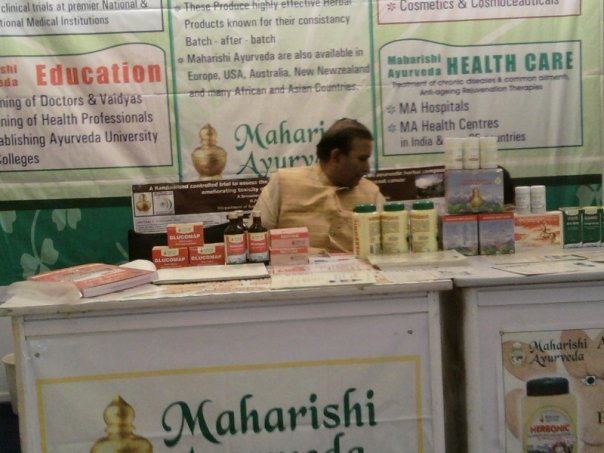
( ayurveda4uall’s Photos – ALL India confrence Delhi 7-8 Oct )
Rasayan, a Sanskrit word (with literal meaning: Path (ayana) of the Juice (rasa), or Elixir vitae), is used to describe chemistry and alchemy, and chemistry is generally called Rasayan Shastra in Sanskrit,Nepali, Marathi, Hindi, Kannada and several other languages. Ancient rasayan texts center around the use of prepared forms of mercury (see samskaras), as do occidental alchemical texts. However, there is also ample mention of the preparation of medical tinctures in the ancient science of rasayan; rasayan is in fact a part of Ayurveda. Read more: > HERE <
Concept of Rasayana Therapy
Rasayana Tantra is one of the eight major divisions of Astang Ayurveda. In Ayurveda, one of the major methods of presentation of positive health has been described i.e. Rasayana.
Sushruta has defined a healthy man as one who has:-
• Equilibrium of the Doshas Sama dosha.
• Normal functioning of Agni Sama Agni
• Normal condition of 7 Dhatus Sam Dhatu
• Normal Excretion of waste products Sam Malkriya.
Beside this Atma (Soul), the Indriyas or sense organs and Mana or mind should be happy and cheerful Prasanatamendriya Mana (Su.Su.15/15). The current modern definition of health is also same “Health is a state of complete physical, mental and social well being and not merely absence of disease. (W.H.O.)
Healthy state of mind and body can be achieved by Rasayana Therapy or Rejuvenation Therapy
Rasayana Stands as an answer to solve the problem of healthful longevity including mental development and resistance against disease. That is why; Rasayanatherapy has been included as one of the eight major divisions of Ashtang Ayurveda. Rasayana Chikitsa or rejuvenation therapy helps to promote and preserve health and longevity in the healthy, and to Cure disease in sick. We all want to look forever young and increase our life span by staying healthy, Rasayans or vitalizers, as they are called, do exactly the same. They replenish the vital fluids of our body, thus keeping us away from diseases. Rasayana refers to the nutrition and its transportation in the body. Such a state of improved nutrition is claimed to lead to a series of secondary attributes like longevity, immunity against diseases, mental competence and delaying of aging.
Rasayana is actually that which increases the essence of each Dhatu, starting from Rasa. Taking Rasayana is helpful to increase the immunity of person to keep him away from diseases. The person become healthy and strong .Literally the term Rasayana refers to the means of obtaining the optimum nourishment to the Dhatu.
Meaning of Rasayana
The word Rasayana is composed of two words Ras + Ayan. The means by which one gets the excellence of Rasa (The nourishing fluid which is produced immediately after digestion) is known as Rasayana. Apart from the excellence of Rasa, the individual is endowed with Psychic excellence like sharp memory, by virtue of rejuvenation therapy. The term Rasayana connotes a specific meaning. Drugs, diet and regimens which promote longevity by delaying aging and preventing diseases are called Rasayana. The term Rasa has different connotation. In the present context, it means the body fluid which is responsible for nourishment of entire physique. Impairment of circulation of this body fluid results in diseases and decay. This body fluid of good quality should not only be present in adequate quantity, but also it should be able to permeate (circulate) throughout the various cells of the body to provide the type of nourishment they need.
Rasayana is a specialized type of treatment influencing the fundamental aspect of body viz. Dhatus, Agni and Srotansi and ojus etc. Rasayana Chikitsa boosts theojus and immune system. The adjective Ojaswiis used to describe those people who keep good health in all seasons and all stages of life. It is like obtaining a high rank in a physical or mental fitness. Ojus gives a bright look, sharp memory, high performance and every expected pleasure.
Historic Consideration of Rasayana
Rasayana therapy is as old as the Vedas because many references on Rasayana therapy are available in the Atharva Veda (atharvaveda 8/7/4). Extensive descriptions of divine Rasayana agents like Soma are available in classics. References about Achara Rasayna and Sadvrita are also available in the vedic texts similar to Charakadescription (Rig-Veda 5/1/7 and Atharvaveda 16/2/2)
Besides extensive references is available regarding the superiority of certain other common Rasayana drugs like Pippali, Jivanti and Punarnava etc. Similarly a concept of Ajasrika Rasayana also appears in vedic literature.
Vedas have seriously considered the problems of aging and its delaying. It has been the cherished wish of human race to achieve long life and to live at least 100 years in perfect health. “Jivema Sharadah Shatam” (Rigveda 10/39/8).
Probably all these ideas at a later stage necessitated the development of a full-fledged clinical discipline like Rasayana therapy to deal with the problem of aging, its delaying.
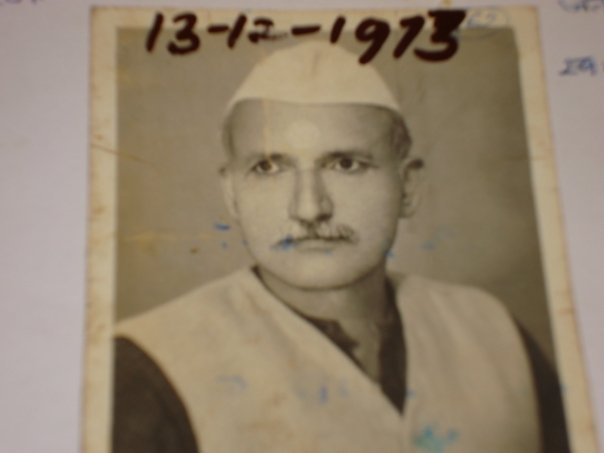
…my beloved grandfather who was also great vaidya . ( Ayurvedic doctor ) had open ayurveda college in 1970´s then then he moved to noida near to delhi on speical invitation of his holiness maharishi ji and worked 20yrs in maharishi Ayurveda.
vaidya adwait tripathi
Arogya sadnam
H-129, Sector-41
Noida-201302
On call special appointment can fix for patient for Free Pulse diagnose ..
> MEET AYURVEDA4UALL… AT FACEBOOK. <
> Dein Ayurveda Net: ….. > Ayurveda, Ursprung, Geschichte <
> Dein Ayurveda Net: ….. > Jahreszeiten im Rythmus, Bioenergien <
> Meet Herbals and Naturals and friends at facebook <
> Meet all Ayurveda Groups, Friends, Studies at facebook <
> Meet Lord Dhanvantri at facebook <
GLORY´s and THANK´s. READ FULL ARTICLE:
AIVS – UPCOMING EVENTS 2010

> AIVS American Vedic Studies <
> BAVA British Association of Vedic Studies <
Upcoming Programs – 2010
1.) Feb. 13-15: Sivananda Ashram, Nassau, Bahamas – Yoga, Ayurveda and Tantra: How to Bring the Deity into Your Sadhana
2.) Feb. 16-19: Journey Into Healing, Phoenix, Arizona, with Deepak Chopra and David Simon – Ayurvedic Psychology for Journey into Healing
3.) April 15-18: NAMA (National Ayurvedic Medical Association) conference: Ayurveda Complimentary Global Medicine (Tantra and Ayurveda, Vamadeva and Shambhavi are both featured speakers)
4.) April 22-26: British Association of Vedic Astrology (BAVA) – Ayurvedic Astrology, the Vedic astrology of Healing, for BAVA yearly national conference
> Dein Ayurveda Net …..”Ayurveda” <
> Dein Ayurveda Net …..”Jyotish” <
> Meet Ayurveda Friends, Groups, Studies at facebook <
> Meet Lord Dhanwantri, friends, studies at facebook <
> Meet Swami SIVANANDA friends, yoga, studies, at facebook <
> Meet Yogini Dharma, AIVS friends, studies at facebook <
> Meet Yogi Baba Prem, AIVS, studies atf facebook <
> Meet VASTU, Friends, and Study Groups at facebook <
> Meet Jyotish, Friends, and Study Groups at facebook <
> Meet saundalryalahari:Wave of Beauty, Bliss, Studies, friends at fb <
> Meet Jaya Kula and the three ways of Practicing tantra at fb <
TURMERIC – THE AYURVEDIC SPICE OF LIFE
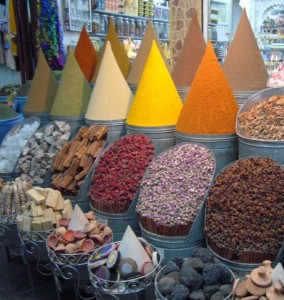
> WIENER NASCHMARKT, the stomach of vienna <
> TRADITIONAL ISLAMIC MEDICINE <
The earliest evidence of the use of spice by humans was around 50,000 B.C. The spice trade developed throughout the Middle East in around 2000 BC with cinnamon and pepper. The Egyptians used herbs for embalming and their need for exotic herbs helped stimulate world trade. In fact, the word spice comes from the same root as species, meaning kinds of goods. By 1000 BC China and India had a medical system based upon herbs. Early uses were connected with magic, medicine, religion, tradition, and preservation. A recent archaeological discovery suggests that the clove, indigenous to the Indonesian island of Ternate in the Maluku Islands, could have been introduced to the Middle East very early on. Digs found a clove burnt onto the floor of a burned down kitchen in the Mesopotamian site of Terqa, in what is now modern-day Syria, dated to 1700 BC. In the story of Genesis, Joseph was sold into slavery by his brothers to spice merchants. In the biblical poem Song of Solomon, the male speaker compares his beloved to many forms of spices. Generally, Egyptian, Chinese, Indian, and Mesopotamian sources do not refer to known spices. Read more: > HERE <
Turmeric: The Ayurvedic Spice of Life
Great Healers, in one form or another they are sought out by all of us. Somewhere inside we all seek balanced happy lives and so we seek that which will grant us health and joy. This article is about Turmeric, one of the planet’s great healers. This healer is not obscured in some esoterica and not distanced by a cosmic price tag. As usual with great healers, it is very close to you and readily accessible, in fact, it is probably in your house right now, though it may be hard to believe that such a common item is one of the world’s best all around herbs.
Ayurveda is as full of commonsense as it is humming of the mystical and so, especially since it is an oral tradition, it is with the common people of India, like the spice sellers and the village mothers, that many traditions of herbal knowledge are learned and passed from elder to child for countless generations. In this way
the ability of Turmeric is proven and its legacy grows. I have learned so much about ‘common’ herbs from ‘common’ people that I could never have learned elsewhere, a fact predicted by Paracelcus who in 1493 wrote:
“The physician does not learn everything he must know and master from a high college alone. From time to time he must consult old women, gypsies, magicians, wayfarers and all manner of peasant folk and random people and learn from them, for these people have more knowledge about such things than all the high colleges.”
A World of Turmeric
“I have found a plant that has all the qualities of Saffron, but it is a root.”- (Marco Polo on Turmeric, 1280 AD)
As far as documented evidence, it is used daily in India for at least 6000 years as a medicine, beauty aid, cooking spice, and a dye, though I am sure its use goes back at least 30,000 years. Ostensibly it was used to worship the Sun during the Solar period of India, a time when Lord Rama Chandra walked the Earth. Especially in South India, you can see people wearing a dried Turmeric rhizome bead the size of a large grape around their neck or arm. This is an ancient talisman tradition used to ward off evil and grant to the wearer healing and protection.
Buddhist monks have used Turmeric as a dye for their robes for at least 2000 years. It was listed in an Assyrian herbal circa 600 BC and was mentioned by Dioscorides in the herbal that was thee Western herbal from the 1st to the 17th century.
As mentioned above, Europe rediscovered it 700 years ago via Marco Polo and it is used in traditional Brazilian medicine as a potent anti-venom to neutralize the bleeding and lethal poison of Pit Vipers.
For at least 1000 years Chinese Medicine has used Turmeric especially for the Spleen, Stomach, and Liver Meridians. They use it to stimulate and purify, and as an anti-biotic, anti-viral, and an analgesic. As such it is used to stimulate and strengthen the blood and decrease blood pressure, to clear abdominal pain and stagnation in men, women and children, and to remove stagnant Chi, the pain due to stagnant Chi, and excessive wind element. They consider it one of the better herbs for women because it stimulates the uterus and clears menstrual stagnation, dysmenorrhea and amenorrhea due to congested blood arising from a lack of heat or simply a deficiency.
Personally, with the way that Turmeric can move the Chi, I use large therapeutic doses of Turmeric with Yin asanas as an herbal equivalent of an acupuncture session.
Unani is the name of the ancient Persian system of medicine that has connected Ayurveda with the Greek Medicine for thousands of years. In visiting Unani Hakims from the Nile to the Narmada I have appreciated the way they keep their herbs cleaner than other herbalists. In Unani Turmeric is considered to be the safest herb of choice for all blood disorders since it purifies, stimulates, and builds blood. You have heard of the phrase „Hot to the 3rd degree.“
When the ancient Polynesians made their fantastic voyages in canoes across the Pacific Ocean to Hawaii they took with them the roots, cuttings, and seeds of about 25 of their most valuable plants. Known as Olena, meaning yellow, Turmeric was one of these plants. Their tradition is carried on today by the Kahuna of Hawaii, the ‘Knowers of the Leaf’ or rhizomes as the case may be. As in other cultures, they use Olena as food, medicine, dye, and for ceremonial purification. The juice is used in earaches or to purify the sinuses via the nose. The root is also eaten to treat most pulmonary problems such as bronchitis or asthma. The Indian practice of applying the root paste to the face to cure any blemishes is popular in this tradition as well. For ceremonial purification prayers are chanted as the mixture of fresh Olena juice and sea water is sprinkled on people, places and objects to remove negativity and restore harmony. Read full article: > HERE <
HILDEGARD OF BINGEN´s SPICE´s
The Galangal plant (Galanga, Blue Ginger) is a rhizome with culinary and medicinal uses (Lao: „Kha“, Thai: ข่า „Kha“, Malay: lengkuas (Alpinia galangal), Traditional Mandarin: 南薑, Simplified Mandarin: 南姜, T:高良薑/S:高良姜, Cantonese: lam keong, 藍薑, Vietnamese: Riềng). It is used in various oriental cuisines (for example in Thai cuisine Tom Yum soups and Dtom Kha Gai, Vietnamese Huenian cuisine (Tre) and throughout Indonesian cuisine, for example, in Soto). Though it is related to and resembles ginger, there is little similarity in taste. Read More: > HERE <
Galangal – was highly recommended by Hildegard of Bingen. She said that it was given by God to provide protection against illness. “The spice of life,” as she called galangal, appears in many Hildegard formulas.
Hildegard regarded galangal mainly as a potent aid to digestion and quick reliever of pain, such as the pain associated with angina pectoris, heart attacks, and gall bladder symptoms. The heart symptoms are secondary to the gastric distress, which, if relieved, eases cardiac pressure. Hildegard wrote:
“ Whoever has heart pain and is weak in the heart should instantly eat enough galangal, and he or she will be well again. [Physica] „
Oil Of Galangal
Galangal appears to have been used in China during antiquity. It is mentioned in the Ayur-Vedas of Susrutas,10) also by Plutarch.11) The Arabian physicians used it for medicinal purposes and thus, no doubt, assisted in its introduction into western Europe. Thus Rhazes, Avicenna, Alkindi1) and other physicians who lived during the 9. and 10. centuries, mention galangal in their writings as an esteemed remedy. Its importation is reported in the 9. century by the Arabian geographer Ibn Kurdadbah,’2) and in the beginning of the 12. century by the Sicilian geographer Edrisi,3) In the Delia decima etc., a commercial treatise of the first half of the 14. century by the Florentine merchant Pegolotti, galangal is described as occuring in two varieties, viz., the light and the heavy.4) Marco Polo reports on the cultivation of the plant in China and Java.5) In 1563 Garcia da Orta, a physician in Goa, describes two varieties of galangal, a smaller variety coming from China, and a larger one from Java.6) The first good illustration was published by Rumpf in 1754.7)
> CHRISTSTOLLEN: > RECIPE <
> Meet Ayurveda Friends, Groups, Studies at facebook <
> Meet Traditional Chinese Medicine, friends at fb <
> Meet Traditional Islamic Medicine, Friends, Studies at fb <
> Meet The Book of Tibetan Medicine at fb <
> Meet Hildegard of Bingen, Friends, Studies, at fb <
> Meet GOPIO Global Organ.of People of Indian Origin,Friends,at fb<
> Meet CODEX ALIMENTARIUS friends and group at fb <
The Codex Alimentarius (Latin for „food code“ or „food book“) is a collection of internationally recognized standards, codes of practice, guidelines and other recommendations relating to foods, food production and food safety. Its name derives from the Codex Alimentarius Austriacus.Its texts are developed and maintained by the Codex Alimentarius Commission, a body that was established in 1963 by the Food and Agriculture Organization of the United Nations (FAO) and the World Health Organization (WHO). The Commission’s main aims are stated as being to protect the health of consumers and ensure fair practices in the international food trade. The Codex Alimentarius is recognized by the World Trade Organization as an international reference point for the resolution of disputes concerning food safety and consumer protection. Full Text > HERE <
DER BAUORDEN – Helfende Hände in Moldawien
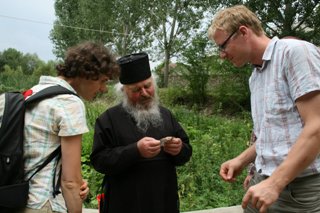
Der Internationale Bauorden (IBO) ist eine in vielen europäischen Ländern verbreitete gemeinnützige Organisation, die europaweit Baulager für junge Erwachsene organisiert, in denen Gemeinschaftseinrichtungen oder Wohnhäuser für Bedürftige errichtet oder renoviert werden. Auch historische Bauwerke werden in solchen Einsätzen restauriert. Der Bauorden wurde 1953 vom niederländischen Ordensgeistlichen Werenfried van Straaten gegründet, um Studenten zu motivieren, in Deutschland Flüchtlingen und Vertriebenen beim Bau von Eigenheimen zu helfen. Der Bauorden finanziert sich durch Spenden und öffentliche Zuschüsse. Die deutsche Sektion hat ihren Sitz in Ludwigshafen. In den Baulagern wird in internationalen Gruppen von sechs bis zwölf Teilnehmern in der Regel drei Wochen lang gearbeitet. Unterkunft und Verpflegung sind für die Freiwilligen frei, für die Fahrt wird ein Zuschuss zu den Reisekosten gezahlt. Der Bauorden bereitet die Projekte vor und kümmert sich um Werkzeuge und Baumaterial. Für Architekturstudenten kann die Teilnahme an einem Baulager des IBO als Baustellenpraktikum anerkannt werden. Der Internationale Bauorden verleiht seit 2005 alle zwei Jahre den Joseph Schmitt-Preis für eine Examensarbeit in den Bereichen Internationale Jugendarbeit, Internationale Freiwilligendienste, Jugendreisen sowie Jugend und Europa. Der Preis ist mit 1000 Euro dotiert. Read More: > HERE < / Int. IBO: www.bauorden.de
Was ist der Bauorden? – Seit 1953 treffen sich Jahr für Jahr hunderte junge Menschen, um in der ganzen Welt – vor allem aber in Europa – bei karitativen und sozialen Bauprojekten unentgeltlich mitzuhelfen.
Jeder Freiwillige, der körperlich in der Lage ist, Bauhilfsarbeiten durchzuführen und bereit ist , fremden Menschen zu helfen, ist uns willkommen.
Moldawien zählt zu den ärmsten Ländern Europas. Das Alters- und Pflegeheim „Casa Max“ in Capresti beherbergt 40 alte Menschen, die zwischen 63 und 83 Jahre alt sind. Das Haus ist ohne menschenwürdige sanitäre Anlagen und Fließwasser; bei der Fertigstellung des Heimes aber auch bei der Renovierung eines Hauses einer kinderreichen und armen Familie halfen die Freiwilligen mit.
YOGA & DANCE – Hasta Mudra Project
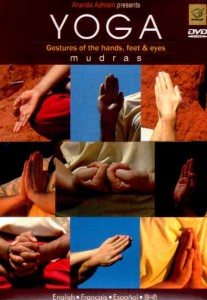
> LIFE POSITIVE – Gracefull Gestures <
> GESTURE´s IN WESTERN CHRISTIANITY <
A mudrÄ� [muːˈdrɑː] (help·info) (Sanskrit: मुद्रा, lit. „seal“) is a symbolic or ritual gesture in Hinduism and Buddhism. While some mudrÄ�s involve the entire body, most are performed with the hands and fingers. A mudrÄ� is a spiritual gesture and an energetic seal of authenticity employed in the iconography and spiritual practice of Indian religions and traditions of Dharma and Taoism. Read more: > HERE <
The Hasta Mudra Project
A Collaboration of Tanjore Performing Arts and Chocolate Media.
The presentation of research and documentation included on this website is only the beginning of a larger project that will unveil connections between the use of hasta mudras in various traditional healing and performing arts and linking them to modern day usage today. The ultimate goal is to develop a documentary film that is visually pleasing and yet offers depth of research and content into the subject matter. Achieving this requires travel to India and other destinations where video footage will be shot on location at various temples and sites, interviews of scholars and practitioners around the world, as well as a variety of technical equipment and expertise.
The content within this website is derived of excerpts from an ongoing research project on hasta mudra as they are utilized in Bharata Natyam classical dance of India. The literal translation of the Sanskrit hasta mudra is hand (hasta) symbol (mudra), though hasta mudra can be interpreted in English as hand gestures or sign language. The broader scope of this project encompasses the ancient art of hand symbols as found in all the arts, including fine arts, performing arts, ritual arts, and healing arts.
Drawing connections within movement and myth, life and art, this project aims to provide insight into the world of hand symbolism through examining written and visual examples. We start with a brief historical overview and then proceed to analyze the usage of hasta mudras in dance. Technical nuances in their significance are examined as well as important artistic and stylistic qualities. This study’s analysis is offered from the point of view of an experienced practitioner of the art and is supported by several ancient texts, lending it both a personal as well as scholarly perspective.
Please consider being a part of this valuable project by contributing your expertise or funds. The project is in need of seed money to take it off the ground and into the next phase of production. If you have suggestions or would consider including this project into your funding or research plans, please contact us.
Anu Naimpally or Russ Smith
> Meet Hinduism Friends, Groups, Studies at fb <
> Meet Buddhism Friens, Groups, Studies at fb <
> Meet Taoism Friends,Groups, Studies at fb <
> Meet Bible Friends and Studies at fb <
> Meet orthodox Church Friends, and Studies at fb <
THE SHAMBALA TRADITION, ARTS, POETRY
> SHAMBALA IN BUDDHISM, HINDUISM <
> TAI CHI VEREIN SHAMBALA, WIEN <
About The Sakyong, Jamgön Mipham Rinpoche
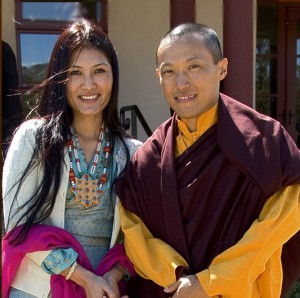
The Sakyong, Jamgön Mipham Rinpoche, is one of Tibet’s highest and most respected incarnate lamas. The Sakyong—literally, “earth protector”—is king of Shambhala. The first king of Shambhala, Dawa Sangpo, was empowered directly by the Buddha.
The Shambhala tradition emphasizes confidence in the enlightened nature of all beings—windhorse—and teaches courageous rulership based on wisdom and compassion. It holds that these qualities are ultimately more stable than aggression and greed. It shows how to use worldly life as a means to ripen this spiritual potential. It practices turning the mind toward others as a discipline that creates lungta, windhorse, the ability to attain success that occurs from acting virtuously. Sakyong Mipham Rinpoche leads a global community of over 150 meditation centers rooted in these principles.
Sakyong Mipham Rinpoche is unique in that he bridges two worlds. The eldest son of the Vidyadhara Chögyam Trungpa Rinpoche, who was instrumental in bringing Buddhism to the West, he is the incarnation of Mipham the Great, who is revered in Tibet as an emanation of Manjushri, the buddha of wisdom. He descends from the Tibetan warrior-king Gesar of Ling. He also holds the Kagyü and Nyingma lineages of Tibetan Buddhism.
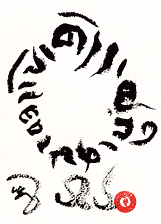
*Calligraphy by Sakyong Mipham Rinpoche. As well as being a meditation master, Sakyong Mipham is a poet and an artist.
Sakyong Mipham Rinpoche is unique in that he bridges two worlds. The eldest son of the Vidyadhara Chögyam Trungpa Rinpoche, who was instrumental in bringing Buddhism to the West, he is the incarnation of Mipham the Great, who is revered in Tibet as an emanation of Manjushri, the buddha of wisdom. He descends from the Tibetan warrior-king Gesar of Ling. He also holds the Kagyü and Nyingma lineages of Tibetan Buddhism.
He is the head of the Shambhala Buddhist lineage and is spiritual director of Shambhala, a borderless kingdom of meditation practitioners committed to realizing enlightenment and social harmony through daily life. He is the lineage holder of Naropa University, which is dedicated to advancing contemplative education.
Sakyong Mipham Rinpoche was born in 1962 in Bodhagaya, India, to Lady Könchok Palden. He spent his early years receiving a Buddhist education, later joining his father in the West, where he continued his study of Buddhist philosophy and ritual. He has studied with the great masters His Holiness Dilgo Khyentse Rinpoche—teacher of the HH Dalai Lama and the king of Bhutan—and HH Penor Rinpoche. He is married to Princess Tseyang Palmo, daughter of His Eminence Namkha Drimed Rabjam Rinpoche, head of the Ripa lineage.
The Sakyong has written two books, the national bestseller Turning the Mind into An Ally, and the prize—winning Ruling Your World. He is a poet and an artist. He has run marathons to raise money for Tibet through the Konchok Foundation.
In September 2006 he offered the first Living Peace Award to HH the Dalai Lama at the Great Stupa of Dharmakaya in Colorado. He travels extensively, teaching throughout the world.
> Meet Sakyong Mipham Rinpoche, friends, studies at facebook <
> Meet Buddhism, friends, studies, Medicine at facebook <
> Meet Bhutan, friends, studies at facebook <
> Meet Tai Chi friends, groups, studies at facebook <
> Meet Qi Gong friends, groups, studies at facebook <
> Meet Calligraphy, arts, friends, groups at facebook <
ANI CHOYING DROLMA – Tibetan Songs

Her actual name is Ani (which means nun or sister) Choying Drolma. Ani Choying Drolma is an exceptional singer, admired by fans all over the world. People are moved to tears by the plaintive purity of her voice, and the haunting melodies of her ancient songs and hymns, passed from master to pupil for many centuries.
Ani Choying has always believed that nuns have a great desire and potential to make the world a better place, if only given equal opportunities. In 2000 she opened the Arya Tara School. The school aims to equip nuns to help and to serve their communities in a professional and humanitarian capacity. With a fully developed and realized potential, she believes that her nuns will be able to not only help themselves, but also to help others.
In brief, Arya Tara School aims to help young nuns bring their compassion into fruition, actively, effectively, skillfully and meaningfully. Traditionally, says Ani Choying, women’s education is neglected in Asia. “most of the girls at my nunnery are from rural areas either in Tibet, India or Nepal, patriarchal cultures where women are expected just to cook, clean and bear children. Even in the nunnery, they are taught to read classical Tibetan in order to do the religious practice, but many cannot write their own names.”
Her school would educate them in Literacy, Maths, Science, Medical and Nursing skills, and Buddhist philosophy.
TIBETAN MEDICINE – Tibetan massage

> TRADITIONAL TIBETAN MEDICINE <
Tibetan medicine is a centuries-old traditional medical system that employs a complex approach to diagnosis, incorporating techniques such as pulse analysis and urinalysis, and utilizes behavior and dietary modification, medicines composed of natural materials (e.g., herbs and minerals) and physical therapies (e.g. Tibetan acupuncture, moxabustion, etc.) to treat illness.
The Tibetan medical system is based upon a synthesis of the Indian (Ayurveda), Persian (Unani), Greek, indigenous Tibetan, and Chinese medical systems, and it continues to be practiced in Tibet, India, Nepal, Bhutan, Ladakh, Siberia, China and Mongolia, as well as more recently in parts of Europe and North America. It embraces the traditional Buddhist belief that all illness ultimately results from the „three poisons“ of the mind: ignorance, attachment and aversion. Read more: > HERE <
What is Tibetan Medicine
Tibetan Medicine (TM), one of the world’s oldest healing traditions, has been practiced for more than four thousand years in Tibet and the Himalayan region. TM, called „Sowa Rigpa“ in Tibetan, means the knowledge and science of healing. „Sowa“ means to heal the imbalanced and „Rigpa“ means the knowledge or science of a particular subject. Along with five treatises of Buddhist Doctrine such as technology, medicine (Sowa Rigpa), studying of sounds, logic, and philosophy, Sowa Rigpa is regarded as one of the most important sciences in Tibet.
The Fundamental Principle Of Tibetan Medicine
The fundamental principle of Tibetan medicine is that the body, the disease, and treatment, all share common principles and are comprised of the five elements, earth, fire, water, air, and space. This approach recognizes that every thing in the universe – plants, animals, and human beings including all our body tissues, internal organs, skin, skeletal system and even emotions, are composed of these five elements. Each one of them plays a major role, both individually and in combination as aspects of all matter. The five elements maintain reciprocal relationships. When they stay in balance, it results in a healthy body, speech, and mind. However, if any one of these elements becomes out of balance, either excess, deficient, or disturbed, not only does the affected element manifest disharmony, but also it will cause the rest of the elements to lose their balance and manifest particular syndromes or symptoms. Since each individual disease is caused by disharmony or disturbances in one of the five elements, the treatment principle is to balance the elements through diet according to an individual’s constitution and behavior, utilize herbs, and other accessory therapies such as blood letting, Mey-Tzar (Tibetan moxa ), external therapy (heat or cold), natural or medicinal bath, enema, and Ku Nye ( Tibetan Massage ).
About the Shang Shung Institute
The Shang Shung Institute (SSI) is an international organization that seeks to broaden the world’s understanding of traditional Tibetan culture. At this moment in history the preservation of this rich and beautiful culture is of utmost importance as it is in real danger of being lost. As such, the SSI promotes programs and initiatives that support the continuation and survival of this rich cultural heritage.
The SSI was founded in Italy in 1989 by Chögyal Namkhai Norbu, a renowned scholar of Tibetan culture, as well as one of the foremost living Dzogchen Masters. Other branches of the SSI have since been established in North America, Austria, Russia, and Argentina.
The SSI develops and maintains projects in various countries including: the translation, publication, and archiving of Tibetan texts; the organization and presentation of international cultural and educational events to share and preserve Tibetan heritage; and formal courses of study that train students in ancient Tibetan arts and sciences, including art, language, and traditional Tibetan medicine.
The Institute is active in four main areas of interest:
- Archives and multimedia
- Culture and events
- Traditional Tibetan medicine
- Tibetan language study and research
> Meet the Book of Tibetan Medicine in facebook <
SPIRITUAL DANCE: „UNIVERSAL SYMBOL“

> VOTIVKIRCHE GUESTCONCERT´s <
> INTERKULTURELLES ZENTRUM WIEN <
Tatjana Sehic bei Ditiramb der interkulturelle Verein und Wiener Votivkirche laden ein zum:
„Vienna meets …“ eine kultur–diplomatische Begegnung zum Austausch von zeitgenössischen spirituellen Tanzformen mit Focus auf Licht als universelles Symbol – in seiner Deutung und Bedeutung „ LUCE “.
Zeitgenössische Tänzerinnen und MusikerInnen aus Indien, Kroatien, Ägypten, Israel und Wien zeigen wie sie heute in ihren künstlerischen Werken die spirituelle Dimension entdecken, darstellen und deuten. Die Ländervertretungen sowie die VertreterInnen der Religionsgemeinschaften sind zu diesem Event eingeladen, mit KünstlerInnen und untereinander beim Buffett, im Museum der Wiener Votivkirche über Besonderheiten, Verbindungen und Bedeutungen des Sakralen Tanzes ins Gespräch zu kommen.
17.Dezember 2009 um 19.00 Uhr
Rooseveltpl. 8 Wien 1090
> Dein Ayurveda Net….. > Bharatanatyam <
> Meet Bharatanatyam Group at facebook <
DIE AUTOBIOGRAPHIE EINES YOGI´s
> PARAMAHANSA AND KRIYA YOGA <
> UNESCO, PURANAS, KRIYA YOGA <
> GUIDANCE ON THE ECONOMIC CRISES <
> PARAMAHANSA´s VIEW ON THE 4 GOSPEL´s <
> INTERNATIONAL HEADQUATER BUILDING <
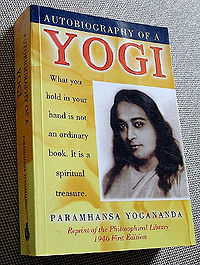
Paramahansa Yogananda (Bengali,Pôromohôngsho Joganondo, Sanskrit: परमहंस योगानंद Paramahaṃsa YogÄ�naṃda; January 5, 1893–March 7, 1952), born Mukunda Lal Ghosh (Bengali:, Mukundo Lal Ghosh), was an Indian yogi and guru who introduced many westerners to the teachings of meditation and Kriya Yoga through his book, Autobiography of a Yogi. Read More: > HERE <
In 1946, Paramahansa Yogananda (January 5, 1893–March 7, 1952), published his life story, Autobiography of a Yogi, which introduced many westerners to meditation and yoga. It has since been translated into 25 languages, and the various editions published since its inception have sold over a million copies worldwide. The book describes Yogananda’s search for a guru, and his encounters with leading spiritual figures such as Therese Neumann, the Hindu saint Sri Anandamoyi Ma, Mohandas Gandhi, Rabindranath Tagore, Nobel Prize-winning physicist Sir C. V. Raman, and noted American plant scientist Luther Burbank, to whom it is dedicated. Read more: > HERE <
Paramahansa Yogananda – Wissenschaftliche Heilmeditationen:
Schon lange bevor Heilmeditationen in solch unterschiedlichen Bereichen wie Krankenhäusern und in der Rehabilitation, im Sport und in den Büros der Manager breite Anwendung fanden, hatte der berühmte Mystiker Paramahansa Yogananda durch sein umfassendes Verständnis die tiefgeistigen Grundlagen gelehrt, welche diese althergebrachte wissenschaftliche Methode so außerordentlich wirksam machen.
In diesem Buch enthüllt er die verborgenen Gesetze, die man sich zunutze machen kann, um seine Gedankenkraft konzentriert einzusetzen – nicht nur um den Körper zu heilen, sondern auch um Hindernisse zu überwinden und sein Leben erfolgreich zu gestalten. Dieser Band enthält neben ausführlichen Anleitungen Heilmeditationen verschiedener Art: zur Heilung des Körpers, zur Entwicklung von Selbstvertrauen, zur Erweckung von Weisheit, zur Überwindung schlechter Gewohnheiten – und zu vielen anderen Zwecken.
-
143 Seiten, Paperback:
-
www.yoga-aktuell.de : > DIE WISSENSCHAFTLICHEN HEILMETHODEN <
> Meet Paramahansa Yogananda friends, groups, studies at fb <
