
Posts by admin
BLUE HEART CAMPAIGN
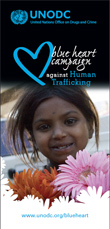
UNODC , efforts to implement the Protocol to Prevent, Suppress and Punish Trafficking in Persons (Trafficking in Persons Protocol). as guardian of the United Nations Convention against Transnational Organized Crime (UNTOC) and the Protocols there to, assists States in their
UNODC has launched a campaign against human trafficking. Called the Blue Heart Campaign, this initiative aims at raising awareness of the problem and inspire those with decision-making power to effect change.
Learn more today and help us work to stop human trafficking in the future.
What is the Blue Heart Campaign ?
-
An awareness raising initiative to fight human trafficking and its impact on society.
-
The Blue Heart Campaign seeks to encourage involvement and inspire action to help stop this crime.
-
The campaign also allows people to show solidarity with the victims of human trafficking by wearing the Blue Heart.
TRADITIONELLE MEDIZIN IN EUROPA
> TRADITIONAL GREEK MEDICINE <
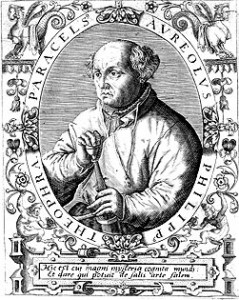
Paracelsus (born Phillip von Hohenheim, 11 November or 17 December 1493 in Einsiedeln, Switzerland – 24 September 1541 in Salzburg, Austria) was a Renaissance physician, botanist, alchemist, astrologer, and general occultist. Born Phillip von Hohenheim, he later took up the name Theophrastus Philippus Aureolus Bombastus von Hohenheim, and still later took the title Paracelsus, meaning „equal to or greater than Celsus“, a Roman encyclopedist, Aulus Cornelius Celsus from the first century known for his tract on medicine.He is also credited for giving zinc its name, calling it zincum and is regarded as the first systematic botanist
GERMAN PHYSICIAN, ALCHEMIST, AND SCIENTIST
1493–1541
Paracelsus was born Theophrastus Bombastus von Hohenheim.
He was a contemporary of Martin Luther and > Nicolaus Copernicus <. He adopted his pseudonym based on his assertion that he was a better physician than Celsus, the first century C.E. Roman author on medicine acclaimed in Renaissance Europe (he was „Para-Celsus,“ or beyond Celsus).
His self-promotion as „The Most Highly Experienced and Illustrious Physician … “ has given us the word „bombastic,“ derived from his birth name.
Paracelsus gained his early medical knowledge from his father, who was a physician. He followed this education with formal medical training at the University of Ferrara in Italy. Finding his formal training disappointing, Paracelsus embarked on a life of travel and study combined with medical practice. According to Paracelsus, he collected medical knowledge anywhere he could find it without regard to academic authority.
He acknowledged his consultations with peasants, barbers, chemists, old women, quacks, and magicians. Paracelsus developed his notions of disease and treatment away from any established medical faculty and promoted the idea that academic medical training had reached a state deeply in need of reform.
Paracelsus believed in the four „Aristotelian“ elements of earth, air, fire, and water. His medical theory was based on the notion that earth is the fundamental element of existence for humans and other living things. Paracelsus believed that earth generated all living things under the rule of three „principles“: salt, sulfur, and mercury. He therefore believed these substances to be very potent as chemical reactants, as poisons, and as medical treatments. Read More about Aristoteles: >HERE <
THE AGAMIC TRADITION AND THE ARTS – (tantrah.)
Mahabhutas in Sangita-Sastra
With Special Reference to Yoga and Ayurveda
Prem Lata Sharma
The five elements have been said here to be the manifestation of Siva, the Supreme Being.
An enquiry into the role of Mahabhutas in Music is essentially a quest for the relationship between the ‚outer‘, ‚inner‘, and what is beyond the two. Roughly, the human organism is the ‚inner‘, whatever is outside the body is the ‚outer‘ and both are closely interrelated.
That which permeates both of them and is yet intangible is beyond them. In understanding the ‚inner‘, both Yoga, and, Ayurveda have made a deep study of the psycho-physical centres in the human body as well as the physiological structure of the body in terms of the Mahabhutas.
The unity of the ‚inner‘ and the ‚outer‘ has been established by expounding that the sense-organs, their objects and their functions are all manifestations of the Mah¡bh£tas. The following passage from Sa´g¢ta-Ratn¡kara makes this very clear.
The Sangita-Ratnakara (1.2.56c-71b) describes the structure and functions of the human body in terms of the five Mahabhutas as follows: >>> H E R E <<<
RAJA DEEKSHITHAR: ( http://rajadeekshithar.com/ )
…“ Education: Proposed PhD on the Panca Mahabhuta or Primordial Elements in Indian Traditions under Professor Dr.Ria Kloppenborg of the Department for Religious Studies, Faculty of Theology of the University of Utrecht in The Netherlands. This PhD could not be completed because of the untimely passing away of Professor Kloppenborg (2002-2004)…“
“ The mahabhutas in cidambaram and ancient temples „
GROSS ELEMENTS IN YOGA, AYURVEDA, HINDUISM, BUDDHISM:
MahÄ�bhūta is Sanskrit and PÄ�li for „great element.“ In Hinduism, the five „great“ or „gross“ elements are ether, air, fire, water and earth. In Buddhism, the „four great elements“ (Pali: cattÄ�ro mahÄ�bhūtÄ�ni) are earth, water, fire and air.
In Hinduism’s sacred literature, the „great“ or „gross“ elements (mahÄ�bhūta) are fivefold: space (or „ether“), air, fire, water and earth.
For instance, the TaittirÄ«ya Upaniṣad describes the five „sheaths“ of a person (Sanskrit: puruṣa), starting with the grossest level of the five evolving great elements:
From this very self (Ä�tman) did space come into being; from space, air; from air, fire; from fire, the waters, from the waters, the earth; from the earth, plants; from plants, food; and from food, man…. Different from and lying within this man formed from the essence of food is the self (Ä�tman) consisting of lifebreath…. Different from and lying within this self consisting of breath is the self (Ä�tman) consisting of mind…. Different from and lying within this self consisting of mind is the self (Ä�tman) consisting of perception…. Different from and lying within this self consisting of perception is the self (Ä�tman) consisting of bliss….
In Buddhism, the four Great Elements (Pali: cattÄ�ro mahÄ�bhūtÄ�ni) are earth, water, fire and air. MahÄ�bhūta is generally synonymous with catudhÄ�tu, which is PÄ�li for the „Four Elements.“ In early Buddhism, the Four Elements are a basis for understanding and for liberating oneself from suffering. They are categories used to relate to the sensible physical world, and are conceived of not as substances, but as sensorial qualities.
In the Pali canon, the most basic elements are usually identified as four in number but, on occasion, a fifth and, to an even lesser extent, a sixth element may be also be identified.
Read Full Text: > HERE <
> Verzeichnis Naturheilkunde, Verbände, Organisationen <
> Meet All Herbal Studies, Groups, Friends, Fans at Facebook <
> Meet Paracelsus at facebook <
> Meet Aristoteles at facebook <
MEDITATION – A BELL FOR A NEIGHBOUR

The idea:
Until 3rd of April 2011 every person on earth should have a bell made of clay from one’s neighbour.
Thursday, 3rd of April 2008 marked the birth of our project in Vienna (Austria / Europe) – the day when the first self-made bell was chimed for a neighbor in the spirit of peace for humankind.
Final event in April 2011:
On Sunday, the 3rd of April 2011 12:00 a.m. local time (time zone: CEST*), Vienna, the capital of music and sound, will be the starting point of the collective thoughts of peace circling the world in a joint effort for 24 hours including all people (babies and young people, adults, parents and grandparents, women and men, single and in a partnership, simply put: everyone) in all countries and parts of the world.
At this very special moment at noon local time on that day every person will think of peace and humankind collectively some minutes in silence. We will so get close and feel the enormous power through our joint support which will flow out of this great and deep event.
After having circled the whole world this peace mission will be completed in Vienna on Monday, the 4th of April 2011 12:00 a.m. (noon) local time (time zone: central European summer time).
A bell for a neighbour who doesn´t have one: DOWNLOAD INFO FOLDER:> * HERE * <
ÜBER MEDITATION ALLGEMEIN:
Meditation (lateinisch meditatio = „Ausrichtung zur Mitte“ von lateinisch medius: „mittlerer“, n. medium: „die Mitte“; auch in der Bedeutung „das Nachdenken über“) ist eine in vielen Religionen und Kulturen geübte spirituelle Praxis. Durch Achtsamkeits– oder Konzentrationsübungen soll sich der Geist beruhigen und sammeln. In östlichen Kulturen gilt sie als eine grundlegende und zentrale bewusstseinserweiternde Übung.
Die angestrebten Bewusstseinszustände werden, je nach Tradition, unterschiedlich und oft mit Begriffen wie Stille, Leere, Panorama-Bewusstsein, Eins-Sein, im Hier und Jetzt sein oder frei von Gedanken sein beschrieben.
> Meet all Meditation Friends, Groups, Studies at facebook <
QI GONG WOCHE IM KLOSTER
Zur Ruhe finden und die
Selbstheilungskräfte stärken
Qigong (or ch’i kung) is an internal Chinese meditative practice which often uses slow graceful movements and controlled breathing techniques to promote the circulation of qi within the human body, and enhance a practitioner’s overall health. There are also many forms of Qigong that are done with little or no movement at all, in standing, sitting and supine positions; likewise, not all forms of Qigong use breath control techniques. Although not a martial art, qigong is often confused with the Chinese martial art of tai chi. This misunderstanding can be attributed to the fact that most Chinese martial arts practitioners will usually also practice some form of qigong and to the uninitiated, these arts may seem to be alike. There are more than 10,000 styles of qigong and 200 million people practicing these methods. There are three main reasons why people do qigong: 1) To gain strength, improve health or reverse a disease 2) To gain skill working with qi, so as to become a healer 3) To become more connected with the „Tao, God, True Source, Great Spirit“, for a more meaningful connection with nature and the universe. Read More > here <
„Qigong – Ancient Chinese Healing for the 21st Century“
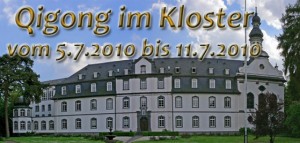
QI GONG IM KLOSTER ST.CLEMENS: Kloster St. Clemens der Franziskanerinnen von Nonnenwerth / Franziskanerinnen von der Buße und der christlichen Liebe. Read More the Franciscan´s > here <
Sie lernen, wie Sie Schritt für Schritt mit Qigong, Atemübungen, Meditationen und Tiefenent-spannung achtsamer werden, sich entspannenund so Stress, SchmerzenundErkrankungen abbauen.
Warum eine Auszeit im Kloster nehmen? Viele Menschen fühlen sich in ihrem Alltag niedergeschmettert, von zu viel Arbeit, von Sorgen, Konflikten, von Krisen und Ängsten, von Schlaflosigkeit, von Schmerzen und von Krankheiten. Oft beginnt das Leiden ganz harmlos mit schlechtem Schlaf, mit Schweißausbrüchen, Kreislaufbeschwerden oder Verdauungs- problemen. Aber auch Angstzustände, stellen sich ein, oder ein Gefühl von Unzufriedenheit kommt auf und auch Müdigkeit und Langeweile, Überdruss und Lustlosigkeit. All das sind typische Symptomeeines rastlosen Lebens.
Was bleibt zu tun ? Sie können für eine Woche aussteigen und in der Abgeschiedenheit und Ruhe eines Klosters durch Qigong, Meditation und Tiefenentspannung eine neue Orientierung finden. Unter Anleitung eines erfahrenen Qigong Lehrers lernen Sie, wie viel Sie selbst zu Ihrem Wohlbefinden und Ihrer Gesundheit beitragen können. Qigong stammt aus China und ist eine Jahrtausend alte Methode zur Stärkung der Selbstheilungs kräfte. Die langsam fließenden, meditativen Bewegungen lösen Blockaden und harmonisieren die Energien von Yin und Yang. In den letzten fünf Jahrzehnten wurde Qigong klinisch erprobt und erfreut sich wegen seiner erstaunlichen gesundheitlichen Resultate weltweit einer stetig wachsenden Beliebtheit, insbesondere bei Menschen, die schon lange nach Gesundheit und innerem Frieden suchen.
> Meet QI GONG Friends, Groups, Studies at facebook <
> Meet QI GONG the Power of SELF HEALING at facebook <
Ali Akhbar College of Music, LAYA Project


>> A.A.C.M. Ali Akbhar College of Music <<
The mission of the Ali Akbar College of Music is to teach, perform and preserve the classical music of North India, specifically the Seni Baba Allauddin Gharana (tradition), and to offer this great musical legacy to all who wish to learn.
The Ali Akbar College of Music offers education in the classical music of North India at the highest professional level. Our primary instructors are the internationally recognized sarode Maestro Ali Akbar Khan and the master of percussion Pandit Swapan Chaudhuri, from whom our students learn the necessary musical skills, knowledge and understanding to contribute significantly to musical life. Our international student body ranges from beginner to accomplished professional. Facilities include several practice rooms, classrooms and a concert hall.
Students learn to play the classical music of North India on the instrument of their choice, Indian or non-Indian. All are encouraged to learn vocal music. Cross training in raga (melody) and tala (percussion) are encouraged, though typically the student will specialize in either raga or tala.
Residential facilities are not available at the College at this time, but housing is available in the area. Please contact the College office for information on finding comfortable, music friendly lodging near the College.
The school is located about 10 miles north of San Francisco in beautiful San Rafael and is easily accessible by car or public transportation. For detailed map and directions click here.
THE LAYA PROJECT:
A tribute to the resilience of the human spirit, LAYA PROJECT is a documentary about the lives and music culture of coastal and surrounding communities inthe 2004 tsunami-affected regions. Some of these performances are rare, and documented for the first time.
> Meet Ustad Ali Akbhar Khan, Friends, Fans at facebook <
STOP GLOBAL WARMING – ENERGY SAVING

> ENERGIE SPAREN MIT UMWELTBERATUNG WIEN <
Global warming is the increase in the average temperature of the Earth’s near-surface air and oceans since the mid-20th century and its projected continuation. Global surface temperature increased 0.74 ± 0.18 °C (1.33 ± 0.32 °F) between the start and the end of the 20th century. [A] The Intergovernmental Panel on Climate Change (IPCC) concludes that most of the observed temperature increase since the middle of the 20th century was caused by increasing concentrations of greenhouse gases resulting from human activity such as fossil fuel burning and deforestation. The IPCC also concludes that variations in natural phenomena such as solar radiation and volcanoes produced most of the warming from pre-industrial times to 1950 and had a small cooling effect afterward.These basic conclusions have been endorsed by more than 40 scientific societies and academies of science, [B] including all of the national academies of science of the major industrialized countries.
READ MORE: > HERE <
LEHRGANG KOMMUNALER KLIMASCHUTZEXPERTE:

Lehrgang „kommunale/r Klimaschutzexperte/in“
„Klimaschutz geht jeden an“
WIRTSCHAFTSBOOM DURCH KLIMASCHUTZ
Derzeit werden in den Medien Themen wie Treibhauseffekt und Klimaveränderung von der Finanzkrise verdrängt. Doch gerade Klima- und Umweltschutz könnten ein neues Wirtschaftswunder auslösen.
Die Auswirkungen der Klimaerwärmung werden das Leben auf der Erde schrittweise verändern. Wie schwer unsere Gesellschaft dadurch beeinträchtigt wird, hängt von den Gegenmaßnahmen ab, die wir uns leisten möchten. Wissenschaftliche Berechnungen gehen davon aus, dass ein zögerliches Handeln heute, in naher Zukunft viele Kosten verursachen wird, die die Staatsverschuldung zusätzlich steigen lassen.
Read More > here <
Further interesting Links:
> Meet Global Warming at facebook <
VISVA-BHARATI UNIVERSITY, TRUST
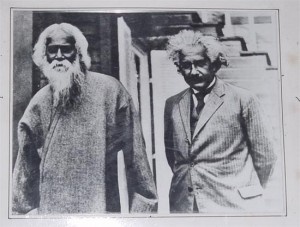
RABINDRANATH TAGORE – YOGAH,SCIENCE POETRY
INT. CONFERENCE ON GLOBAL CLIMATE CHANGE
Visva Bharati University, Santiniketan (বিশ্বভারতী বিশ্ববিদ্যালয়) is a Central University for research and teaching in India, located in the twin town of Santiniketan and Sriniketan Indian state of West Bengal. It was founded by Rabindranath Tagore who called it Visva Bharati, which means the communion of the world with India. In its initial years Tagore expressed his dissatisfaction with the word ‚university‘, since university translates to Vishva-Vidyalaya, which is smaller in scope than Visva Bharati. Until independence it was a college. Soon after independence, in 1951 the institution was given the status of a university, and was renamed Visva Bharati University.
The origins of the university date back to 1863 when Maharshi Debendranath Tagore, himself the zamindar of Silaidaha in East Bengal, bought a tract of land from the zamindar of Raipur, which was a neighbouring village not too far from present day Santiniketan and set up an ashram at the spot that has now come to be called chatim tala at the heart of the town. The ashram was initially called Brahmacharya Ashram, which was later renamed Brahmacharya Vidyalaya. It was established with a view to encourage people from all walks of life to come to the spot and meditate. In 1901 his youngest son Rabindranath Tagore established a co-educational school inside the premises of the ashram. Read More > here <
VISHWABHARATI TRUST:
Project Description
The > Vishwabharati Trust < is located at Anavatti, a rural area belonging to Karnataka,India. The place is about 500 kms from Bangalore, well connected by road, amidst beautiful Malnad greenary.
The Vishwabharati Trust was started on 6 th October, 1997 to provide education to poor and physically handicapped children. The trust is presently running a school and 140 deserving children are now studying.
The main objectives of the Vishwabharati Trust are as follows:
1. To make the children self dependent.
2. To make the children aware of our rich culture and heritage.
3. To develop fine and strong character.
4. To develop the children in sports and extra curricular activities
Organization Description
Objectives:
To establish and maintain educational institutions from pre-primary to post graduation level, including professional, technical, vocational and training institutes of any kind and moral training for the benefit of the public in rural community particularly.
> Meet Rabindranath Tagore Fans at facebook <
> Meet handwritten Letter In Sweet Memory of Tagore at facebook <
> Meet STOP GLOBAL WARMING GROUPS AND STUDIES at facebook <
> Meet Vishva-Bharati Public School at facebook <
THE MOST TRUSTED NAME IN AYURVEDA
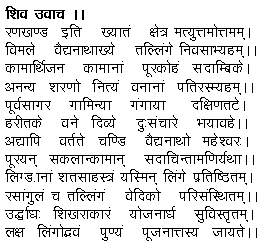
Baidyanath Mahatmya (mentioned in several Puranas)
Fusion of ancient knowledge
with modern scientific revelation.
> Ram Dayal Joshi Memorial Ayurvedic Research Institute <
Baidyanath is one of the oldest and most popular pharmaceutical firm specialising in Ayurvedic medicines.It has been manufacturing many highly popular items like Chyawanprash and Dashmularishta for several years. Shree Baidyanath Ayurved Bhawan (p) Limited was founded in 1917 by Late Pt. Ram Dayal Joshi. Its registered office is in Kolkata. To encourage and boost research in Ayurveda, Baidyanath established Pt. Ram Dayal Joshi Memorial Ayurvedic Research Institute at Patna in 1971. Baidyanath Group awards two hundred thousand rupees every year for the best research paper or book on Ayurveda. Read More: > here<
Ayurveda is a 5000 year old Science of health care and herbal treatment. Ayurveda, is highly effective in common and complicated ailments, assures long term relief and has no side effects. Ayurveda is now backed by modern scientific research and technologies and provides its gentle healing touch to millions around the world.
One of India’s most respected Companies, Shree Baidyanath Ayurved Bhawan (p) Ltd. (Kolkata), popularly known as Baidyanath, is the acknowledged leader of Ayurvedic know-how. Established in 1917, the Company has played a pioneering role in re-establishing ancient knowledge with modern research and manufacturing techniques.
Shree Baidyanath Ayurved Bhawan (p) Ltd. was founded in 1917 by Late Pt. Ram Dayal Joshi. Its registered office is in Kolkatta. To encourage and boost research in Ayurveda, Baidyanath established Pt. Ram Dayal Joshi Memorial Ayurvedic Research Institute at Patna in 1971. Baidyanath awards two lakh of rupees every year for the best research paper or book on Ayurveda.
> Meet Ayurveda, Groups, Studies, Friends, Fans at facebook <
ARNIE LADE – SELBSTHEILUNG MIT QI
> GREEN SPIRIT HEALTH AN MOVEMENT <
In traditional Chinese culture, qi (氣 / 气; Pinyin qì, Wade-Giles ch’i, pronounced [tɕʰi˥˩] in Standard Mandarin; Jyutping hei; Korean gi; Japanese ki; Vietnamese khí, pronounced [xǐ]) is an active principle forming part of any living thing. It is frequently translated as „energy flow,“ and is often compared to Western notions of energeia or élan vital (vitalism) as well as the yogic notion of prana. The literal translation is „air,“ „breath,“ or „gas“ (compare the original meaning of Latin spiritus „breathing“; or the Common Greek πνεῦμα, meaning „air,“ „breath,“ or „spirit“; and the Sanskrit term prana, „breath“). Read more: > QI <
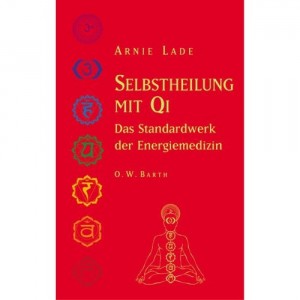
Selbstheilung mit Qi. Das Standardwerk der Energiemedizin
Das umfassende Standardwerk zur Energiemedizin: Alle körperlichen und geistigen Phänomene lassen sich als Erscheinungsformen von Qi, von „Lebensenergie“, begreifen: Sinneswahrnehmungen, Emotionen, Sexualität, Gesundheit und Krankheit. Wenn ausreichend Qi durch unseren Körper fließt, dann befinden wir uns physisch und psychisch „im Gleichgewicht“, wird diese Energie blockiert oder geschwächt, geraten wir „aus der Balance“ – und werden krank. Arnie Lade verbindet das überlieferte Wissen der östlichen Heilsysteme auf innovative Weise mit modernen medizinischen Erkenntnissen und zeigt praktikable Wege zur Erhaltung und Stärkung der Gesundheit.
Über den Autor
Arnie Lade (geb. 1953 in Rengsdorf) hat in Beijing und Chengdu an den dortigen Instituten für Traditionelle Chinesische Medizin studiert. Er ist ein international renommierter Akupunkturspezialist und Energietherapeut und Autor mehrerer Bücher.
> Meet Traditional Chinese Medicine at facebook <
> Meet Admirers of Dr. Robert E. Svoboda at facebook <
INDOGENOUS AUSTRALIAN MEDICINE
>TRADITIONAL ABORIGINAL MEDICINE <
> HANDBOOK OF MEDICAL PLANTS <
> DEUTSCHES ÄRZTEBLATT: „Health Service“<
Indigenous Australians are the original inhabitants of the Australian continent and nearby islands, and these peoples‘ descendants.Indigenous Australians are distinguished as either Aboriginal people or Torres Strait Islanders, who currently together make up about 2.6% of Australia’s population.
The Torres Strait Islanders are indigenous to the Torres Strait Islands which are at the northern-most tip of Queensland near Papua New Guinea. The term „Aboriginal“ has traditionally been applied to indigenous inhabitants of mainland Australia, Tasmania, and some of the other adjacent islands. The use of the term is becoming less common, with names preferred by the various groups becoming more common.
Aboriginal people traditionally were much healthier than they are today. Living in the open in a land largely free from disease, they benefited from a better diet, more exercise, less stress, a more supportive society and a more harmonious world view.
Nonetheless, Aboriginal peoples often had need of bush medicines. Sleeping at night by fires meant they sometimes suffered from burns. Strong sunshine and certain foods caused headaches, and eye infections were common. Feasting on sour fruits or rancid meat caused digestive upsets, and although tooth decay was not a problem, coarse gritty food sometimes wore teeth down to the nerves. Aborigines were also occasionally stung by jellyfish or bitten by snakes and spiders. In the bush there was always a chance of injury, and fighting usually ended in severe bruises and gashes.
To deal with such ailments, Aboriginal people used a range of remedies – wild herbs, animal products, steam baths, clay pits, charcoal and mud, massages, string amulets and secret chants and ceremonies.
- SSHRC Aboriginal Research <
- Center for Aboriginal Studies <
- University Adelaide, Aboriginal Sites, Studies <
- Oliver Möhwald Didgeridoo Workshops <
- Aboriginal Children „LOST GENERATION“ <
- Social Sciences and Humanities Research Council <
> Meet Aboriginal Friends and Groups at facebook <
TSAMPA, HIMALAYAN CHILDREN, CEREALS
EATING TSAMPA
*Green barley is recognized by science as being the most nutritious of all plant foods, containing a broad spectrum of essential vitamins, minerals and amino acids in high concentrations. In its natural state it also contains important enzymes such as the antioxidant ’superoxide dismutase‘. With this pure food, nature has given us the perfect combination of nutrients. Since I was introduced to green barley I have experienced a whole new level of energy! , (Anm.: Barley is wellknown in Ayurveda aswell…)
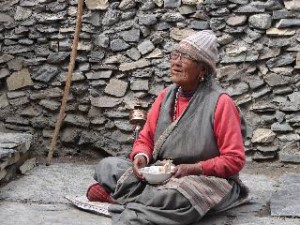
Tsampa (Tibetan: རྩམ་པ་; Wylie: rtsam pa) is a Tibetan staple foodstuff, particularly prominent in the central part of the country. It is roasted flour, usually barley flour (Tibetan: ནས་རྩམ་; Wylie: nas rtsam) and sometimes also wheat flour (Tibetan: གྲོ་རྩམ་; Wylie: gro rtsam) or rice flour (Tibetan: འབྲས་རྩམ་; Wylie: bras rtsam). It is usually mixed with the salty Tibetan butter tea (Tibetan: བོད་ཇ་; Wylie: bod cha).
Tsampa is the staple food of Tibetans and often called as the National food of Tibet. It is the end result of organic roasted barley ground into fine and coarse flour. > Tsampa < is a very simple and easy to prepare food widely known as convenience food used at home and also by the travelers in Tibet. It is easy to carry and easy to prepare. Travelers in Tibet always have a pouch of Tsampa tugged to their luggage for an easy and readily available meal.Tsampa mixed with yak butter, dried powdered cheese and tea makes for a refreshing and energetic food. Sportsmen in Tibet consider Tsampa as an energy booster minus the harmful chemicals. Ground roasted barley is easily digestible and is readily absorbable by the body.
Apart form that Tibetans traditionally use Tsampa for various religious rituals and offering purposes.We offer two different kinds of Tsampa for your eating pleasure. Regular Tsampa and Amdo Tsampa. Regular Tsampa is very fine and smooth when made into a cereal. Amdo Tsampa, which is a little coarser, is our specialty item. It has a hearty nutty flavor. Both Tsampa types are heart healthy and energy rich food choices, pure and tasty. We are just a click or a phone call away if you wish to enjoy this wholesome yet healthy Tibetan food.
http://www.abtei-st-hildegard.de
Meet TIBETAN TSAMPA Group and Friends at fb
ÖAG – ASTROLOGISCHE GESELLSCHAFT WIEN
> O.E.A.G. ASTROLOGISCHE GES. <
> J Y O T I S H <
> ASTROLOGIE IN ANCIENT ROME <
GESELLSCHAFT
Die ÖAG ist nach Vereinsstatuten definiert und verfolgt ausschließlich gemeinnützige Zwecke. Der Vereinszweck wird durch wissenschaftliche Forschung, Unterricht und Bildung sowie Information der Öffentlichkeit verwirklicht.
DIE GESCHICHTE DER ÖAG:
1908. Am 24. September 1908 um 20:10 Uhr Ortszeit (19:04:32 GMT) wird in Wien XIX die „Astrologische Gesellschaft“ gegründet. Der Zeitpunkt ist bewusst gewählt. Die Konstellationen des Gründungshoroskopes dennoch schwierig. Ein Planet noch gar nicht entdeckt. Wenig deutet daraufhin, dass hier geboren wird, was einst die älteste astrologische Vereinigung der Welt werden soll. (zum Gründungshoroskop)
Der Zweck des Vereins ist, „das wissenschaftliche Studium der Astrologie in Österreich zu fördern und den Nutzen der astrologischen Wissenschaft der Gesamtheit zu erweisen. Hiebei soll jede mißbräuchliche Anwendung astrologischer Kenntnisse, insbesondere deren gewerbsmäßige Ausbeutung, vermieden und bekämpft werden.“
Gründungsvater ist der Wiener Schauspieler Karl Brandler-Pracht, der 1905 unter dem Titel „Mathematisch instruktives Lehrbuch der Astrologie“ das erste (!) astrologische Lehrbuch in deutscher Sprache veröffentlicht – und damit den Grundstock für die ÖAG-Bibliothek legt. Zuvor hat es lediglich Lehrbücher auf Latein und mehr oder minder unverständliche Übersetzungen antiker Texte gegeben.
Erster Präsident der Gesellschaft wird jedoch nicht Brandler-Pracht, sondern dem kaiserlichen Wien geziemend ein Adeliger, Hofrat Alexander von Sauer-Csáky. Vizepräsidentin wird Baronin Helene Hamar.
Am 24. Oktober 1908 findet um 20 Uhr der erste öffentliche Vortrag statt. Im „Vortragssaale des Wissenschaftlichen Klubs“im Wiener Ingenieur- und Architektenverein in der Eschenbachgasse 9, Wien I. Der Titel lautet: „Die versunkene Atlantis im Lichte der modernen Wissenschaft“. Vortragender ist Julius Nestler, Professor aus Prag. Am darauffolgenden Tag referiert er am selben Ort um 19 Uhr „Zur Geschichte der Astrologe“.
Übrigens wurde die Gründung des Vereins bereits am 20. August 1908 polizeilich genehmigt.
> Meet Vedic Jyotish, Jyotish, Friends and Studies at facebook <
Traditionelle Abendländische Medizin
> NATURA NATURANS – ARBEITSGEMEINSCHAFT <
für tradtionelle abendländische Medizin
Das ist kein Arzt, der das Unsichtbare nicht weiß, das keinen Namen trägt, keine Materie hat und doch seine Wirkung. Nicht der Corpus ist die Arznei, das wahre Arkanum ist unsichtbar.“ – Paracelsus, 1493 bis 1541.
Natura naturans is a Latin term coined during the Middle Ages, mainly used by Baruch Spinoza meaning „Nature naturing“, or more loosely, „nature doing what nature does“.
The Latin, naturans, is the present participle of natura, indicated by the suffix „-ans“ which is akin to the English suffix „-ing.“ naturata, is the past participle.
The term describes an active, alive, and changing God that at the same time does not lose its reality. Samuel Taylor Coleridge defined it as „Nature in the active sense“ as opposed to natura naturata. To Spinoza, Nature and God were the same, as humans were living modifications to both. (See:Spinoza’s God and Nature). In contrast, Spinoza uses the term natura naturata (nature natured) to indicate a passive God in which things have already been created, and modifications are secondary to the unchangeable identity of things.
Die Arbeitsgemeinschaft für Traditionelle Abendländische Medizin, Natura Naturans, wurde 1993 von Max Amann, Margret Madejsky und Olaf Rippe gegründet. Die Arbeitsgemeinschaft ist konfessionell ungebunden und fühlt sich dem Gedankengut einer Heilkunst nach Paracelsus verpflichtet. Das besondere Anliegen ist das Erforschen und Bewahren alten Wissens sowie die Integration des überlieferten Erfahrungsschatzes in die heutige Heilkunde.
Der lange Erkenntnisweg der Menschheit hat im Abendland zum zeitgenössischen materialistischen Weltbild geführt. Die wissenschaftlichen Systeme dieses Weltbildes gewinnen ihre Kenntnisse aus der Analyse des Stofflichen. Ihre Ursprünge liegen in den jahrtausendealten Lehren der Eingeweihten.
Anders als heutige Naturforscher haben die Eingeweihten immer das Geistartige in allem berücksichtigt. Ihre Erkenntnisse beruhen auf den Lehrsätzen des Hermes Trismegistos. Ihr Bestreben ist es, das Geistartige in der Materie zu erkennen, es freizusetzen und somit nutzbar zu machen. Dieses Wissen läßt nicht nur das Wesen der Natur erkennen, sondern auch die Ursachen von Krankheiten, die Natur der Heilmittel und geeignete Wege zu einer Heilung. Somit hat der Einzelne auch die Möglichkeit zur Gestaltung seines Lebens im Einklang mit der Natur.
Weil sich die Wissenschaften aber von ihren Ursprüngen trennten – Chemie von Alchimie, Physik von Metaphysik, Astronomie von Astrologie, Psychologie von Magie – sind sie für die Menschheit in ihrer einseitigen Betrachtungsweise zu einer ernstzunehmenden Bedrohung geworden.
Es ist daher notwendig, diese einmal geschaffene Trennung wieder aufzuheben.
Indem moderne Kenntnisse mit dem Wissen der Eingeweihten in Einklang gebracht werden, lassen sich neue wesentliche Erkenntnisse für eine menschengerechte und vom Dogma befreite Heilkunde finden.
Dies zu vermitteln und die Sinne für das Wesentliche zu schärfen, ist das Anliegen der Arbeitsgemeinschaft Natura Naturans.
BOCK AUF KULTUR
Ute Bock – Austria
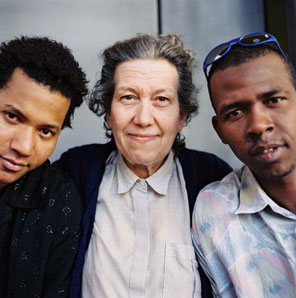
Ute Bock worked professionally for many years as a social worker and educator/teacher, before she became director of the Zohmanngasse Home in Vienna in 1976.. In the early 1990s, she started to take care of teenage immigrants. She also took in underage refugees from countries at war, who came to Austria on their own looking for asylum. Ute Bock was the last hope for many teenage immigrants for whom nobody else cared. Her small project has grown into a community of 50 apartments where over 200 people find a home. She has also provided a legal address and legal aid for more than 1000 immigrants so that they can pursue their asylum procedures.
She was born in Linz, Austria in 1942.
In the early 1990s, Ute Bock started to take care of teenage immigrants, who were sent to her by the youth welfare office. At first, they were mostly children of immigrant workers. But soon enough she also took in underage immigrants from countries at war, who came to Austria on their own looking for asylum. Zohmanngasse and Ute Bock were the last hope for many teenage immigrants for whom nobody else cared.
Any time a social or immigrant worker was at a loss, the teenagers were sent to Ute. At Zohmanngasse no youth was turned down, no matter where he or she came from. And when she ran out of space, Ute Bock organized and financed flat-sharing apartments for communal living.
During a police raid in September 1999 at her home, 30 youngsters and young adults from Africa were arrested on grounds of suspected drug dealing. Ute Bock was accused of dealing with drugs and supporting gangs. She was briefly suspended from her job. While the indictment and suspension were lifted, Ute Bock was not allowed to shelter African immigrants at her home any longer.
Ute Bock has won numerous awards for her social commitment. She was given the United Nations Refugee Agency (UNHCR) Refugee Award in 2000, the Bruno Kreisky Award for Human Rights in 2002, the Dr. Karl Renner Award in 2003, the Humanity Award by the Red Cross and the Spin the Globe Award from Siemens Austria in 2004.
Ute Bock retired in August 2000 and since then she has been working full time taking care of African immigrants, who like to call her ‘Mama Africa’. Her original small project has grown into a community of 50 apartments, where over 200 people find a home. Apart from this, she has provided a legal address and legal aid for more than a thousand immigrants, so that they can pursue their asylum procedures.
Ute Bock has been financing her project with her own pension, her savings, financial awards and donations.
> VEREIN KETANI < > VEREIN ROMA <
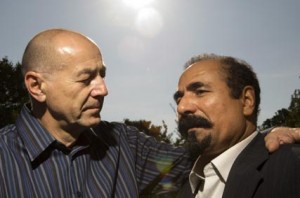
WILLI RESETARITS, Founder of Integrationshaus
Wilhelm Resetarits (born 21 December 1948 in Stinatz, Austria), better known as > Willi Resetarits < and Dr. Kurt Ostbahn, is an Austrian singer, comedian and human rights activist.
Resetarits was born in the Austrian state Burgenland, but his family moved to Vienna when he was three. He studied sports and English studies intending to become a teacher, but his successful career as a musician intervened.
Resetarits is a human rights activist and one of the founders of the humanitarian organisations Asyl in Not and SOS Mitmensch. He is also one of the founders and chairman of the Integration House Vienna.
He has made frequent appearances on Austrian TV and in film productions.
Lukas Resetarits (cabaret artist and actor on TV) and Peter Resetarits (TV host at ORF) are his brothers. Karin Resetarits, a present member of the European Parliament, is his divorced sister-in-law.
> Meet Ute Bock, Bock auf Kultur, Friends at facebook <
> Meet Gitans, Gitanos, Gipsys, Zingari, Roma, Sintis …Friends at fb <
ARGAN TREE – Argan Oil

> UNESCO BIOSPHERE RESERVE INFORMATION <
The Argan (Argania spinosa, syn. A. sideroxylon Roem. & Schult.) is a species of tree endemic to the calcareous semi-desert Sous valley of southwestern Morocco and to the Algerian region of Tindouf in the western Mediterranean region. It is the sole species in the genus Argania.
Argan grows to 8-10 metres high, and live to 150-200 years old. They are thorny, with gnarled trunks. The leaves are small, 2-4 cm long, oval with a rounded apex. The flowers are small, with five pale yellow-green petals; flowering is in April. The fruit is 2-4 cm long and 1.5-3 cm broad, with a thick, bitter peel surrounding a sweet-smelling but unpleasantly flavoured layer of pulpy pericarp. This surrounds the very hard nut, which contains one (occasionally two or three) small, oil-rich seeds. The fruit takes over a year to mature, ripening in June to July of the following year.
The arganeraie forests now cover some 8,280 km² and are designated as a UNESCO Biosphere reserve. Their area has shrunk by about 50% over the last 100 years, owing to charcoal-making, grazing, and increasingly intensive cultivation. The best hope for the conservation of the trees may lie in the recent development of a thriving export market for argan oil as a high-value product.
THE ARGAN tree (argania spinosa) is perfect for a harsh environment, surviving heat, drought and poor soil.
It is little known outside Morocco, and many Moroccans themselves have never heard of it because it grows only in the south-west of the country – roughly between Essaouira and Agadir, in an area covering 700,000-800,000 hectares. But within the area where the argan grows there are about 21 million trees which play a vital role in the food chain and the environment, though their numbers are declining.
The tree, which is thorny and can reach heights of 8-10 metres, probably originated in Argana, a village north-east of Agadir (off Route 40). It lives longer than the olive and requires no cultivation.
The trunk of the argan is often twisted and gnarled, allowing goats to clamber along its branches and feed on the leaves and fruit.
The fruit has a green, fleshy exterior like an olive, but larger and rounder. Inside, there is a nut with an extremely hard shell, which in turn contains one, two or three almond-shaped kernels.
When goats eat the fruit, the fleshy part is digested but the nut remains. Later, the nuts are collected by farmers to produce oil.
The production of argan oil, which is still mostly done by traditional methods, is a lengthy process. Each nut has to be cracked open to remove the kernels, and it is said that producing one litre of oil takes 20 hours‘ work.
Argan oil is slightly darker than olive oil, with a reddish tinge. It can be used for cooking and is claimed to have various medicinal properties, such as lowering cholesterol levels, stimulating circulation and strengthening the body’s natural defences. Internationally, there is some interest in its possible cosmetic uses.
The residue from the kernels after oil extraction is a thick chocolate-coloured paste called „amlou“ which is sweetened and served as a dip for bread at breakfast time in Berber households. It flavour is similar to that of peanut butter.
The wood and nut-shells of the argan tree are burned for cooking; the wood is also used decoratively in some of the inlaid boxes which are made in Essaouira. The roots of the argan tree grow deep in search of water, helping to bind the soil and prevent erosion.
Households that make their own argan oil tend to use if for general cooking. Because it is expensive to buy, others may use it more sparingly – flavouring salads, for example. A few drops stirred into couscous just before serving give it a rich, nutty aroma.
Argan production is still basically a cottage industry, managed largely by women. But many people believe that if the oil became better known it could provide more employment in the region as well as enhancing the environment.
Bottles of what pass for argan oil are sold along the roadsides between Essouira and Agadir, but is difficult to tell if they are genuine. Because the oil commands a high price, sellers are often tempted to dilute it with cheaper oils. Some bottles simply contain olive oil, coloured with paprika or other substances.
THE BERBER PEOPLE
Berbers are the indigenous peoples of North Africa west of the Nile Valley. They are discontinuously distributed from the Atlantic to the Siwa oasis, in Egypt, and from the Mediterranean to the Niger River. Historically they spoke various Berber languages, which together form a branch of the Afro-Asiatic language family. Today many of them speak Arabic and also French in the Maghreb , due to the French colonization of the Maghreb. Today most Berber-speaking people live in Algeria and Morocco, becoming generally scarcer eastward through the rest of the Maghreb and beyond. The largest number of Berbers is found in Morocco, accounting for about 85% of its population. Read more: >here<
> Meet ARGAN Friends, Groups and Oil at facebook <
> Meet Berber Groups, Arts and Friends at facebook <
> Meet Indegenous Groups, Friends, Medicine at facebook <
> Meet Biosphere, Groups, Arts, Friends….Interests…at facebook <
