SRI VIDYA, Vidyas in Hinduism & Yoga Upanishads
108 Upanishads | Vedanta Spiritual Library
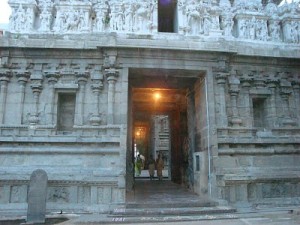
Mess.166: A Holy Trip to Arunachaleshwara
http://taonews123.blogspot.com
ŚrÄ« VidyÄ� (also spelled „Shri Vidya“) is the name of a Hindu religious system devoted to the goddess LalitÄ� TripurasundarÄ« or simply TripurasundarÄ« (‚Beautiful Goddess of the Three Cities‘). According to British scholar Gavin Flood she is a tantric form of the goddess ŚrÄ« (also called LakṣmÄ«), consort of Vishnu. However, the late orthodox leader of the largest Samaya school of ŚrÄ« VidyÄ�, Sri Chandrasekharendra Saraswati Swamigal, says that the ŚrÄ« in ŚrÄ« VidyÄ� is a title of respect meaning The VidyÄ� and has no connotation to LakṣmÄ«. And Indian scholar V.R. Ramachandra Dikshitar states she is a form of Durga or Paravati, consort of Shiva , as well as several names from the LalitÄ� SahasranÄ�ma which call her the beloved of Shiva. The Sanskrit word vidyÄ� means „knowledge“ or „lore.“ A thousand names for this form of DevÄ« are recited in the LalitÄ� SahasranÄ�ma, which includes ŚrÄ« VidyÄ� concepts. Read More: > HERE <
The Sri Yantra (shown here in the three-dimensional projection known as Sri Meru Chakra or Maha Meru used mainly in rituals of the Srividya Shakta sects) is central to most Tantric forms of Shaktism.
Meru Chakras are frequently a central focus and ritual object for this worship of the Goddess. They are a more potent form of the Sri Yantra, since they are three-dimensional. Meru Chakras can be found in rock crystal and in metal, often a traditional panchaloha formula of silver, antimony, copper, zinc, and pewter, which enhances the flow and generation of Sri’s beneficial energies, covered in gold.
In the theology of the ŚrÄ« VidyÄ� the goddess is supreme, transcending the cosmos which is a manifestation of her. The school has an extensive literature of its own. The details of the beliefs vary in different texts, but the general principles are similar to those found in Kashmir Shaivism.
The goddess is worshipped in the form of a mystical diagram (Sanskrit: yantra) of nine intersecting triangles, called the śrÄ«cakra („Chakra of ŚrÄ«“) that is the central icon of the tradition.
SRI CHAKRA by S. SHANKARANARAYANAN – SRI CHAKRA, the king of chakras is a master plan of manifestation drawn by the divine Draughtsman on the board of the infinite, a transcript of the Transcendent, a symbol-image of the supernal verities. The spiritual and occult tradition of the worship of the Mother Goddess and the Sadhana of Srividhya are explained in sixteen chapters in terms of modern thought and understanding. Based on authentic and authoritative Tantric texts the exposition in English is inspiring and original, almost a classic in the field of esoteric literature.
About the Author: Though his academic attainments are in Mathematics and his professional interests lie in a specialised field of industrial management, Sri S. Shankaranarayan has retained his first love for Sanskrit. In his childhood he was introduced to the ancient Sanskrit lore by his grandfather, Sri S. Narayana Iyer, who was himself a deep initiate in Sri Vidya, Later he came under the dynamic influence of Sri Kapali Sastriar. Shankaranarayanan cherishes a special regard for this tradition of the worship of the Divine Mother and his treatises on Devi Mahatmyam-both in Tamil and English have acquired an authenticity of their own. The present work on Sri Cakra, revealing as it does the depth of his scholarship, practical insight and occult knowledge, promises to be a classic on the subject. Endowed with luminous intellect, well-versed in the modes of esoteric worship and awake with an active spiritual aspiration, Shankaranarayanan is marked out to play a singular role in the resuscitation of the spiritual and occult tradition of India in terms of modern thought and understanding. -M. P. PANDIT
Buy the Book here: > www.exoticindiaart.com
- http://www.sriyantraresearch.com
- Ramana Maharshi – Sri Chakra Puja, every Friday <
- Meet International Vedanta Society, studies, friends at fb <
- Meet Kashmir Shaivism, friends and studies, at fb <
- Meet Shaktism „Doctrine of the Goddess“ at fb <
- Meet Hinduism, friends, fans, studies at fb <
- Meet Jivan Mukta, friends, studies at fb < (> Jivan Mukta <)
- Meet Prem Nirmal Holistic Counseling, studies, friends at fb <
- http://en.wikipedia.org/wiki/Flower_of_Life
THE BOOK OF TIBETAN MEDICINE
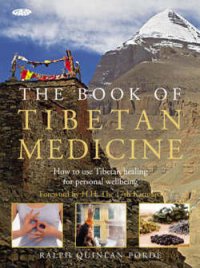
Tibetan medicine is a centuries-old traditional medical system that employs a complex approach to diagnosis, incorporating techniques such as pulse analysis and urinalysis, and utilizes behavior and dietary modification, medicines composed of natural materials (e.g., herbs and minerals) and physical therapies (e.g. Tibetan acupuncture, moxabustion, etc.) to treat illness. The Tibetan medical system is based upon a synthesis of the Indian (Ayurveda), Persian (Unani), Greek, indigenous Tibetan, and Chinese medical systems, and it continues to be practiced in Tibet, India, Nepal, Bhutan, Ladakh, Siberia, China and Mongolia, as well as more recently in parts of Europe and North America. It embraces the traditional Buddhist belief that all illness ultimately results from the „three poisons“ of the mind: ignorance, attachment and aversion. Read more: > Here <
The first illustrated guide to this holistic healing system, The Book of Tibetan Medicine, explains how the ancient Tibetan medical wisdom can be used to achieve spiritual well being in the modern world. Forward by His Holiness The 17th Karmapa.
Tibetan Medicine is an ancient medical system that has been successfully practiced for over 1,000 years and saved by His Holiness The Dalai Lama. A holistic approach combining dietary and behavioral changes, herbal cures, massage and meditation, this unique approach to healing utilizes the ancient wisdom of Tibetan masters. As well as the science of Tantric Buddhism.
http://thebookoftibetanmedicine.blogspot.com/ www.dharma-haven.org/tibetan/medicine-books.htm
The Book of Tibetan Medicine is now available in 11 languages worldwide. The forward has been written by His Holiness The 17th Karmapa. The book has been given excellent reviews by Shambhala Magazine, Mandala Magazine and Yoga Abode to name a few. The author is Ralph Quinlan Forde – Holistic Medicine Consultant – who is the founder of The Medicine Buddha Foundation.
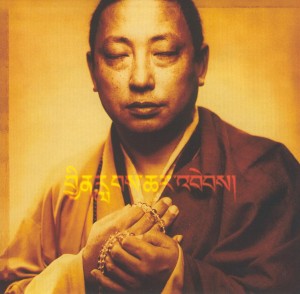
Songs Of Awakening / Roads Of Blessings
http://www.myspace.com/lamagyurme
Lama Gyurme (born in 1948), or Lama Gyourmé, is a Buddhist Bhutanese monk and musician. He has lived in France since 1974, and he is the director of the Kagyu-Dzong center in Paris and, since 1982, the Vajradhara-Ling center in Normandy. Read More: > HERE <
Born in Bhutan in 1948, he was entrusted by his family at the age of four to the monastery of Djang Tchub Tcheu Ling in Bhutan where his interest in sacred music appeared quickly. At the age of nine, he became a permanent resident of the monastery where he received Buddhist teachings, completed by an initiation to traditional arts, including music.
At the age of 20, he followed his first spiritual retreat of three years, three months and three days, necessary to the formation of Lama, at the monastery of Sonada in India of which the director is Kalu Rinpoche. During this retreat, he was given the title of „Oumze“ — master of music — by Kalu Rinpoche. After a stay at the monastery of Rumtek in Sikkim, he fulfilled his religious education in Bhutan before obtaining his diploma of teacher of the Kagyupa tradition that was given to him by the 16th Karmapa.
Lama Gyurme – For the Light
In 1995 and in 1998, Gyurme went on a pilgrimage to Tibet and visited the 17th Karmapa Orgyen Trinley Dorje in the Monastery of Tsurphu. He presented him his project of construction of the Temple for Peace.
Gyurme also participated in the music of the 1999 film Himalaya‘.
Light of Compassion: Evening for a Noble Cause
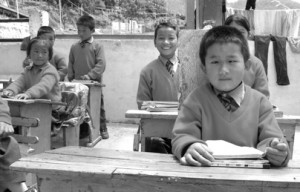
www.littlelama.org Little Lama at fb
http://architecturefortibet.org
Light of Compassion: A Spectacular Evening for a Noble Cause – Come join our Circle of Friends at the Rubin Museum of Art, a treasure of architecture in Manhattan’s Chelsea neighborhood, to celebrate the accomplishments of the Manjushree Orphanage and Free School in Tawang, India — and to help fund a planned Academic Center. An optimal learning environment will foster academic success and enable these disadvantaged children to flourish.
WHEN: Tuesday, May 25, 6pm to 9pm
WHERE: Rubin Museum of Art (150 West 17th Street, between 6th and 7th Avenues)
New York, NY
Time: Tuesday, May 25, 2010, 6:00pm – 8:00pm
WHAT: A Gala Reception with open bar. Vikas Khanna’s famously tasty hors d’oeuvres. A Silent Auction (starting at 6pm sharp) with unique offerings from the travel, culinary and fashion industries. A special musical performance by Tibetan singer Yungchen Lhamo. > Listen to Yungchen´s Music <
Exclusive guided tours of the Rubin Museum galleries. And a presentation of the impressive building project designed for the children of Manjushree Orphanage. An all around incredible experience in the service of a noble cause.
To date, Robert Thurman, noted Buddhist scholar; Lobsang Nyandak, representative to His Holiness the Dalai Lama; and Dr. Tatsumura Hillyer of Tibet House are scheduled to speak.
CHANT – MUSIC FOR PARADISE
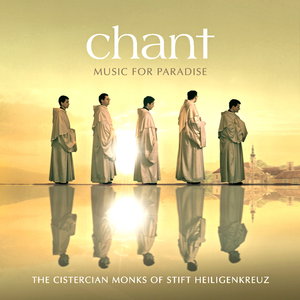
http://sthk.dabis.cc/ (Online Library)
For USA see:
For Europe, Asia, Australia & South America see:
Heiligenkreuz Abbey (Stift Heiligenkreuz, Closter Heiligen Creyz or Santa Crux) is a Cistercian monastery in the village of Heiligenkreuz in the southern part of the Vienna woods, eight miles north-west of Baden in Lower Austria. It has existed without interruption since its foundation in 1133 and is thus the second oldest continuously occupied Cistercian monastery in the world. The monastery was founded in 1133 by Margrave Leopold III of Austria, also known as Saint Leopold, at the request of his son Otto, abbot of the Cistercian monastery of Morimond in Burgundy and afterwards Bishop of Freising. Its first twelve monks together with their abbot, Gottschalk, came from Morimond at the request of Leopold III. The date of consecration was 11 September 1133. They started by clearing the wood and tilling the land. They introduced the Christian faith into the region. They called their abbey Heiligenkreuz (Holy Cross) as a sign of their devotion to redemption by the Cross. On 31 May 1188 Leopold V of Austria presented the abbey with a relic of the True Cross, which is still to be seen and since 1983 is exhibited in the chapel of the Holy Cross. This relic was a present from Baldwin IV of Jerusalem, King of Jerusalem to duke Leopold V in 1182. Read More: > HERE <
Gregorian chant is the central tradition of Western plainchant, a form of monophonic liturgical music within Western Christianity that accompanied the celebration of Mass and other ritual services. It is named after Pope Gregory I, Bishop of Rome from 590 to 604, who is traditionally credited for having ordered the simplification and cataloging of music assigned to specific celebrations in the church calendar. The resulting body of music is the first to be notated in a system ancestral to modern musical notation. In general, the chants were learned by the viva voce method, that is, by following the given example orally, which took many years of experience in the Schola Cantorum. Read More: > HERE <
CHANT – MUSIC FOR PARADISE – You can find a lot of information about us and the making of the album „Chant – Music for Paradise“ —> here. There is even more information about the album –> here (but this is in German).
If you are looking for pictures of our prayer and work on the album, just click —> here.
You will find even more pictures of our beautiful abbey and also of our monastic life in the service of God —> here. Just open each picture and click on the symbol in the right edge above to download. The download is free.
The sensational YouTube video by Brother Martin.You just have to see it! God bless you.
If you are a journalist and wish to interview some monk from Stift Heiligenkreuz about the album please do not call the monastery direct, but:
For international media (outside Austria): Ed SCOTT (Director Of International Promotions – UM Group International) Tel +44 207 471-5646, Fax +44 207 471-5683 mobile +44 7785 950 792, E-Mail: Ed.Scott(at)umusic.com
For Austrian media: Anna TSCHIRKO (Promotion Manager – Universal Music Austria), A-1010 Wien, Schwarzenbergplatz 2, Tel +43 1 81121-211, Fax: +43-1-81121-232;, Mobile: 0664-8294558 , E-Mail: anna.tschirko(at)umusic.com
TOP TWEETS

http://twitter.com/DeinAyurvedaNet/favorites
IYENGAR YOGA & SAVE GANGA MOVEMENT
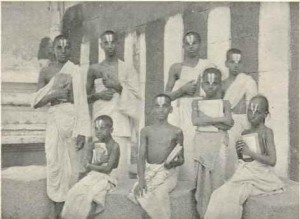
Iyengar Vedic Students 1909
The World’s First Sage Patanjali temple
„Health is firmness in body, stability in mind, and clarity in thinking. If a mirror is clean, it reflects objects clearly….health is the mirror of man.“ – B.K.S. Iyengar
Bellur Krishnamachar Sundararaja Iyengar (Kannada: ಬೆಳ್ಳೂರ್ ಕೃಷ್ಣಮಾಚಾರ್ ಸುಂದರರಾಜ ಐಯಂಗಾರ್, Tamil: பெல்லூர் கிருஷ்ணமாச்சார் சௌந்தரராஜா ஐயங்கார்), (generally known as Yogacharya B. K. S. Iyengar) (Born December 14, 1918 in Bellur, Kolar District, Karnataka, India) is the founder of Iyengar Yoga. He is considered one of the foremost yoga teachers in the world and has been practicing and teaching yoga for more than 75 years. He has written many books on yogic practice and philosophy, and is best known for his books Light on Yoga, Light on Pranayama, and Light on the Yoga Sutras of Patanjali. He has also written several definitive yoga texts. Iyengar yoga centers are located throughout the world, and it is believed that millions of students practice Iyengar Yoga.
He was awarded the Padma Shri in 1991, and the Padma Bhushan in 2002. In 2004, Iyengar was named one of the 100 most influential people in the world by Time Magazine. Read More: > HERE <
The Patanjala Yoga Kendra was established in 1993 on the banks of the Holy River Ganges in Rishikesh, the world capital of Yoga. The method of Yoga that is taught is Iyengar Yoga, as developed and taught by Shri Guruji, B.K.S. Iyengar, the world-famous Yoga Teacher. Guruji’s method is firmly based in the ancient Indian tradition of Yoga as defined in the Yoga Sutras of Patanjali. Usha Devi is the resident Yoga Instructor.
Iyengar Yoga teaches strength and stamina, flexibility and balance, concentration and meditation. Iyengar Yoga begins with physical awareness, but goes beyond to embrace emotional and spiritual growth. As students learn to extend consciousness to each part of their bodies, they experience a concentrated focus on the moment. In time, this concentrated focus (Pratyahara) becomes an integral part not just of a yoga practice, but of daily life.
Welcome to Save Ganga Movement – A Gandhian Non-violent Movement to Save the Ganga, symbolizing all rivers and water bodies and the Giriraj Himalayas, symbolizing all mountains, forests and wildlife. Gandhi symbolizes a culture of Truth and non-violence, i.e. a culture of pursuit of ethical perfection as the ultimate goal of life and pursuit of selfless ethical life of universal love as it’s means. The Surest and Perhaps the Only Solution to Our Impending Catastrophic Global Ecological Crises: Go Through Gandhi the Apostle of Truth and Non-violence of our Age.
- IYENGAR – BELLUR SCHOOL TRUST (BKSSNT)<
- Monasteries Environmental Himalayaprotection <
- SAVE MOTHER EARTH, SAVE GANGA & YAMUNA <
- Meet Iyengar Yoga, studies, friends, fans at fb <
- Meet Save Ganga Movement, friends at fb <
- Meet Save the Ganga (Ganges) River, friends at fb <
- Meet Save Yamuna to save Vrindavan! at fb <
- Meet M.K. Gandhi Institute for Nonviolence, studies, friends at fb <
AVICENNA, UNANI MEDICINE & MATERIA MEDICA
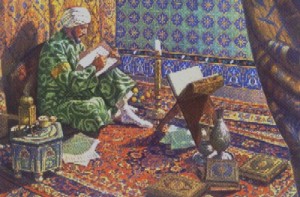
Systematische Übersicht der Materia medica homeopathica
Stiftsbibliothek Admont/Monastery Library
( Herbal garden, handwritten Materia Medica, Monastery Guide etc.)
Abū ‘AlÄ« al-Ḥusayn ibn ‘Abd AllÄ�h ibn SÄ«nÄ�‘, known as Abū AlÄ« SÄ«nÄ�(Persian: ابوعلی سینا) or, more commonly, Ibn SÄ«nÄ�(Arabic: ابن سینا), but most commonly known in English by his Latinized name Avicenna (Greek: Aβιτζιανός, Avitzianós), (c. 980 – 1037) was a polymath of Persian origin and the foremost physician and philosopher of his time. He was also an astronomer, chemist, geologist, Hafiz, Islamic psychologist, Islamic scholar, Islamic theologian, logician, paleontologist, mathematician, Maktab teacher, physicist, poet, and scientist.
Ibn Sīn� studied medicine under a physician named Koushyar. He wrote almost 450 treatises on a wide range of subjects, of which around 240 have survived. In particular, 150 of his surviving treatises concentrate on philosophy and 40 of them concentrate on medicine.His most famous works are The Book of Healing, a vast philosophical and scientific encyclopaedia, and The Canon of Medicine, which was a standard medical text at many medieval universities. Read More: > HERE <
Materia medica is a Latin medical term for the body of collected knowledge about the therapeutic properties of any substance used for healing (i.e., medicines). In Latin, the term literally means „medical material/substance“. The term was used from the period of the Roman Empire until the twentieth century, but has now been generally replaced in medical education contexts by the term pharmacology. Read More: > HERE <
Ibnsina Academy of Medieval Medicine and Sciences – Abu Ali Ibn Sina is a well-known personality among the physicians of Unani medicine and scientists of physical sciences since medieval times. To commemorate and to institutionalize an academy named after him, Ibn Sina Academy of Medieval Medicine & Sciences, was founded on March 1, 2000. The Academy has been registered under Indian Trusts Act, 1882 on August 14, 2000. Mr. M. Hamid Ansari, Vice-chancellor of Aligarh Muslim University, Aligarh formally inaugurated it, on April 20, 2001. Department of AYUSH, Ministry of Health & Family Welfare, Govt. of India gave accreditation to the academy in 2004. The Academy is now a non-governmental, non-political and non-profit organization with multiple aims and objectives.
Abu Ali al-Hussain Ibn Abdallah Ibn Sina was born in 980 A.D. at Afshaneh near Bukhara. The young Bu Ali received his early education in Bukhara, and by the age of ten had become well versed in the study of the Qur’an and various sciences. He started studying philosophy by reading various Greek, Muslim and other books on this subject and learnt logic and some other subjects from Abu Abdallah Natili, a famous philosopher of the time. While still young, he attained such a degree of expertise in medicine that his renown spread far and wide. At the age of 17, he was fortunate in curing Nooh Ibn Mansoor, the King of Bukhhara, of an illness in which all the well-known physicians had given up hope. On his recovery, the King wished to reward him, but the young physician only desired permission to use his uniquely stocked library.
He was the most famous physician, philosopher, encyclopaedist, mathematician and astronomer of his time. His major contribution to medical science was his famous book al-Qanun, known as the „Canon“ in the West. The Qanun fi al-Tibb is an immense encyclopaedia of medicine extending over a million words. It surveyed the entire medical knowledge available from ancient and Muslim sources. Due to its systematic approach, „formal perfection as well as its intrinsic value, the Qanun superseded Razi’s Hawi, Ali Ibn Abbas’s Maliki, and even the works of Galen, and remained supreme for six centuries“. In addition to bringing together the then available knowledge, the book is rich with the author’s original eontribution. His important original contribution includes such advances as recognition of the contagious nature of phthisis and tuberculosis; distribution of diseases by water and soil, and interaction between psychology and health.
In addition to describing pharmacological methods, the book described 760 drugs and became the most authentic materia medica of the era. He was also the first to describe meningitis and made rich contributions to anatomy, gynaecology and child health.
Avicenna wrote 99 books, almost all in Arabic, the language of religious and scientific expression in the entire Muslim world at that time. However, two of his works, the `Daneshnameh-e-Alai‘ (Encylopedia of philosophical sciences) and a small treatise on the pulse, were written in Farsi, his native language. He wrote about natural philosophy and astronomy, theology and metaphysics, medicine, psychology, music, mathematics and physical sciences and he is also the reported author of Persian quatrains and short poems:
„Up from Earth’s Centre through the Seventh Gate I rose, and on the Throne of Saturn sate, And many a knot unravelled by the Road, But not the Master-knot of Human Fate.“
His philosophical encyclopaedia Kitab al-Shifa was a monumental work, embodying a vast field of knowledge from philosophy to science. He classified the entire field as follows: theoretical knowledge: physics, mathematics and metaphysics; and practical knowledge: ethics, economics and politics. His philosophy synthesises Aristotelian tradition, Neoplatonic influences and Muslim theology.
Ibn Sina also contributed to mathematics, physics, music and other fields. He explained the „casting out of nines“ and its application to the verification of squares and cubes. He made several astronomical observations, and devised a contrivance similar to the vernier, to increase the precision of instrumental readings. In physics, his contribution comprised the study of different forms of energy, heat, light and mechanical, and such concepts as force, vacuum and infinity. He made the important observation that if the perception of light is due to the emission of some sort of particles by the luminous source, the speed of light must be finite. He propounded an interconnection between time and motion, and also made investigations on specific gravity and used an air thermometer.
In the field of music, his contribution was an improvement over Farabi’s work and was far ahead of knowledge prevailing else- where on the subject. Doubling with the fourth and fifth was a ‚great‘ step towards the harmonic system and doubling with the third seems to have also been allowed. Ibn Sina observed that in the series of consonances represented by (n + 1)/n, the ear is unable to distinguish them when n = 45. In the field of chemistry, he did not believe in the possibility of chemical transmutation because, in his opinion, the metals differed in a fundamental sense. These views were radically opposed to those prevailing at the time. His treatise on minerals was one of the „main“ sources of geology of the Christian encyclopaedists of the thirteenth century. Besides Shifa his well-known treatises in philosophy are al-Najat and Isharat.
- Articles on Materica Medica:
- ISLAMIC PLANT MEDICINE AND HISTORY <
- UNANI MEDICINE <
- Jews, Christs & Muslims ~ Intercultural Dialog <
- Indian medicines – ayurveda, siddha and unani <
- Āyurvedische Materia medica, Nighantu <
- Western Herbs from the TCM Perspective <
- Meet AVICENNA, studies, friends, fans at fb <
- Meet Islamic Medicine „The Cure for Every Disease“, studies, friends at fb <
- Meet KARKHANA ZINDA TILISMATH, Unani Medicine, friends, studies at fb <
- Council for a Parliament of the World’s Religions (CPWR) <
Sephardim – The History of a Jewish Community
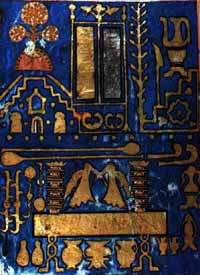
Neveh Shalom – Dwelling Place of Peace – was one of the first synagogues built in Spanish Town, Jamaica during the 17th century. The Neveh Shalom Institute is chartered to promote projects to preserve the history, culture, and artifacts of the Jewish existence in, and contribution to Jamaica, from the 17th century. > „Holy Congregation Dwelling Place of Peace“ <
The Jüdisches Museum Wien, or the Jewish Museum Vienna, is a museum of Jewish history, life and religion in Austria. The present museum was founded in 1988 in the Palais Eskeles in the Dorotheergasse, Vienna, and has distinguished itself by a very active programme of exhibitions. Read More: > HERE <
Sephardi Jews (Hebrew: סÖ°פÖ¸רÖ·דÖ´Ö¼י, Modern Sefaraddi Tiberian Səp̄Ä�raddî, plural: Hebrew: סÖ°פÖ¸רÖ·דÖ´Ö¼ים, Modern Sefaraddim Tiberian Səp̄Ä�raddîm; Spanish Sefardíes; Portuguese Sefarditas, Greek Σεφάρδοι Sefardoi, Bulgarian сефаради sefaradi, Turkish Sefarad, Judaeo-Spanish Sefardies, Arabic: سفارديون) are Jews who define themselves in terms of the Jewish customs and traditions which originated in the Iberian Peninsula before the expulsion of Jews from that area in the late fifteenth century (after Islam left it), and usually defined in contrast to Ashkenazi and Mizrahi Jews. The Sephardim have distinguished themselves as physicians and statesmen, and have won the favor of rulers and princes, in both the Christian and the Islamic world. That the Sephardim were selected for prominent positions in every country in which they settled was only in part due to the fact that Spanish had become a world-language through the expansion of Spain into the world spanning Spanish Empire—the cosmopolitan cultural background after long associations with Islamic scholars of the Sephardic families also made them extremely well educated for the times, even well into the European Enlightenment. Read More: > HERE <
The year 1492 was a fateful one for Spain. It was the year in which the Reconquista finally ended eight hundred years of Arab Muslim rule, the Jews were expelled from the country, and Christopher Columbus set off on a journey that was to lead to the discovery of the New World.
The exhibition „The Turks in Vienna“ looks at the impact of one of these significant historical events that marked the end of the Middle Ages in Europe, namely the expulsion from Spain of the Jews, who found refuge in North Africa, some Italian cities and, above all, in the Ottoman Empire. They fled initially to Portugal before leaving the Iberian Peninsula for Holland and northern Germany. Following the Ottoman conquests, Jews of Spanish descent-called „Sephardim“-were able to form culturally and economically significant communities in the Balkans. There were contacts between the Jews in Vienna and the Sephardim, or Turkish Jews, even during the era of the ghetto in Unterer Werd, but it was not until the peace treaties between the Habsburgs and the Ottoman Empire in the first half of the eighteenth century that Turkish Jews were able to move freely in the Habsburg Empire.
After the establishment of the Turkish Jewish community in Vienna, an imperial patent gave it permission to hold religious services. The community had its prayer house from the outset in the 2nd district. In 1887, the impressive Moorish-style Sephardic-Turkish temple was inaugurated in Zirkusgasse, with portraits of the Habsburg and Ottoman regents in the foyer as indication of the community’s loyalty to both rulers and countries. In November 1938, this jewel of Jewish sacral architecture was destroyed along with practically all other synagogues and Jewish prayer houses in Vienna, and most of the community was subsequently deported and exterminated.
The Sephardic Jews in Vienna were in many ways communicators between East and West, Orient and Occident, Asia and Europe, a role that was performed in the first place as merchants and dealers importing wool and cotton, silk and tobacco, sugar and spices to the West. Their function as active exponents of the Austrian post office in Constantinople and the Levant, Austrian Lloyd, and the Orient Express is also highlighted in the exhibition „The Turks in Vienna.“
The Sephardic Turks played this communicating role at the cultural level as well. They set up the first printing works in Constantinople and the Sephardic press in Vienna. There rabbinical tradition also received significant stimulus from the Sephardic Jews. The treasures of medieval Spanish-Turkish poetry were passed on and translated, and the Sephardim were also responsible for developing Jewish mysticism. Moreover, they were the first to make Arab philosophy and medicine available to the Western world. Sephardic scholars became famous as scientists and rabbis, as translators, philosophers, and Hebrew studies specialists. Sephardic publishers distributed their writings throughout the Ladino-speaking world and produced writers of the caliber of Elias Canetti, to mention but one example. Info: www.jmw.at
All of these facets of the Sephardic Diaspora and its contribution to the cultural history of the Eastern and Western world can be seen in the exhibition „The Turks in Vienna“ from May 12 to October 31, 2010, at the Jewish Museum Vienna.
The > Türkischer Tempel < (English: Turkish Temple) was a synagogue in Vienna. It was built specifically for a community of Sephardi Jews, who originally came from Turkey. The synagogue was built in a Turkish, almost Islamic style, with a dome. The building was destroyed during the Reichskristallnacht in 1938.
Sephardic music has its roots in the musical traditions of the Jewish communities in medieval Spain. Since then, it has picked up influences from Morocco, Argentina, Turkey, Greece, and the other places that Spanish Jews settled after their expulsion from Spain in 1492. There are three types of Sephardic songs — topical and entertainment songs, romance songs and spiritual or ceremonial songs. Lyrics can be in several languages, including Hebrew for religious songs, and Ladino.
- Sephardic Music: www.desiretoshare.com/music/
- http://en.wikipedia.org/wiki/Sephardic_music
- Sephardic Literature: The Real Hidden Legacy <
- Reb Zalman Legacy Project & Migdal Ohr <
- Meet Sephardic Anuism, friends and studies at fb <
- Meet Ladino/Sephardic Songs and Culture, friends, fans at fb <
- Meet Sephardic Music Festival, friends, fans at fb <
- Meet Council for a Parliament of the World’s Religions (CPWR) at fb <
KHALIL GIBRAN´s PROPHET & THE MARONITES
KHALIL GIBRAN – Works, Arts & Museum
Maronite Center for Documentation & Research
http://www.tlig.org/en/interreligious/
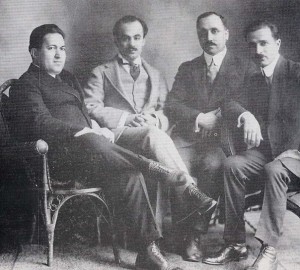
* A 1920 photograph of four prominent members of The Pen League (from left to right): Nasib ‘Arida, Kahlil Gibran, ‘Abd al-Masih Haddad, and Mikhail Naimy.
Khalil Gibran (born Gubran Khalil Gubran bin MikhÄ�’Ä«l bin Sa’ad; Arabic جبران خليل جبران بن ميکائيل بن سعد, January 6, 1883 – April 10, 1931) also known as Kahlil Gibran, was a Lebanese American artist, poet, and writer. Born in the town of Bsharri in modern-day Lebanon (then part of the Ottoman Mount Lebanon mutasarrifate), as a young man he emigrated with his family to the United States where he studied art and began his literary career. He is chiefly known for his 1923 book The Prophet, a series of philosophical essays written in English prose. An early example of Inspirational fiction, the book sold well despite a cool critical reception, and became extremely popular in the 1960s counterculture.Gibran is considered to be the third most widely read poet in history, behind Shakespeare and Lao-Tzu. Gibran was born in the Christian Maronite town of Bsharri (in modern day northern Lebanon) to the daughter of a Maronite priest. Read More: > HERE <
The Maronite Church (Arabic: الموارنة, Turkish: Maruni, Syriac: ܡܪܘܢÜ�Ü�, Latin: Ecclesia Maronitarum) is an Eastern Catholic Church in full communion with the Holy See. It traces its heritage back to the community founded by Maron, an early 5th-century Syriac monk venerated as a saint. The first Maronite Patriarch, John Maron, was elected in the late 7th century. Before the conquest by Arabian Muslims reached Lebanon, the Lebanese people including those who would become Muslim and the majority who would remain Christian, spoke a dialect of Aramaic.Syriac (Christian Aramaic) still remains the liturgical language of the Maronite Church.The members of the Maronite Church are a part of the Syriac people. Read More: > HERE <
Kahlil Gibran – The Prophet – Much of Gibran’s writings deal with Christianity, especially on the topic of spiritual love. His poetry is notable for its use of formal language, as well as insights on topics of life using spiritual terms. Gibran’s best-known work is The Prophet, a book composed of twenty-six poetic essays. The book became especially popular during the 1960s with the American counterculture and New Age movements. Since it was first published in 1923, The Prophet has never been out of print. Having been translated into more than forty languages, it was one of the bestselling books of the twentieth century in the United States.
Khalil Gibran – A Retrospective
The Prophet is a book of prose poetry that made its Lebanese-American author famous. Commonly found in gift shops and frequently quoted at weddings or any occasion where uplifting ’spiritual‘ thoughts are required, the work has never been a favorite of intellectuals – to some readers it may seem a bit twee or pompous – yet its author was a genuine artist and scholar (see bio, below right) whose wisdom was hard-earned.
The Prophet provides timeless spiritual wisdom on a range of subjects, including giving, eating and drinking, clothes, buying and selling, crime and punishment, laws, teaching, time, pleasure, religion, death, beauty and friendship. Corresponding to each chapter are evocative drawings by Gibran himself.
Final word – Taken as a whole, Gibran’s book is a metaphor for the mystery of life: we come into the world and go back to where we came from. As the prophet readies himself to board his ship, it is clear that his words refer not to his journey across the seas but to the world he came from before he was born. His life now seems to him like a short dream.
The book suggests that we should be glad of the experience of coming into the world, even if it seems full of pain, because after death we will see that life had a pattern and a purpose, and that what seems to us now as ‚good‘ and ‚bad‘ will be appreciated without judgment as good for our souls. > Full Article & Order <
The prophet also teaches that the separation we feel from other people and all forms of life while on earth is not real. We are merely expressions of a greater unity now forgotten. As he looks forward to his journey, Almustafa likens himself to „a boundless drop in a boundless ocean.“ To feel yourself to be a temporary manifestation of an infinite source is greatly comforting, and perhaps accounts for the feeling of peace and liberation many experience in reading The Prophet.
Tagore, Rilke, Gibran: A Comparative Study – In Tagore, Rilke, Gibran Dr Rosy Singh deals with the recurrent metaphysical theme of love, harmony and peace in an age when social realism and western materialism had all but swept away any literary interest in mysticism. These three poets of East and West reflect on the destiny of Man in correspondence with the Divine Nature in all its sublimity and serenity.
After her doctorate on the Existential Situations in Franz Kafka from Jawaharlal Nehru University DR. ROSY SINGH teaches German at Delhi University. Her recent publication is Rilke, Kafka, Manto -the Semiotics of Love, Life and Death.
Foreword: Tagore, Rilke, Gibran-a Comparative Study by Dr. Rosy Singh of Delhi University is an Associate of the UGC Inter-University Centre at the Indian Institute of Advanced Study. She deals with three very significant metaphysical poets of east and west at the turn of the century when Nietzsche’s proclamation of the Death of God and Marxist social realism had all but swept away academic interest in mysticism. The lyrics of these poets kept the melody of love, harmony and peace tuned to the imagination of humanity. I am happy to present this incisive study as Occasional Paper of Inter-University Centre to the students of comparative literature and philosophy.
- DER BAUORDEN <
- Isralestinian Ghandis – Meditation for Peace <
- Ecumenical Patriarch Bartholomew I of Constantinople.“The Green Pope“ <
- Kahlil Gibran Man and Poet, A New Biography <
- Tagore, Rilke, Gibran: A Comparative Study by Rosy Singh <
- Jawaharlal Nehru University, NEW: Conferences 2010 <
- Meet Khalil Gibran, friends, fans at fb <
- Khalil Ghibran´s The Prophet , friends, fans at fb <
- Meet Maronite Church, studies, friends at fb <
- Meet the Maronites of Australia, studies, friends at fb <
- Meet M.K. Gandhi Institute for Nonviolence, friends, fans at fb <
Jews, Christs & Muslims ~ Intercultural Dialog
www.onb.ac.at/Veranstaltungen
www.nli.ie / James Joyce
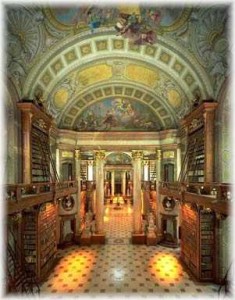
The Austrian National Library (German: Österreichische Nationalbibliothek, abbreviated „ÖNB“ and formerly Hofbibliothek ), is , with 7.4 million items in its collections, the largest library in Austria. The collections consist of: papyri (one or the greatest papyri collections, manuscripts, ancient and rare books, maps, globes, music, portraits, graphics, photographs, autographs and posters as well as works in and on Esperanto and other artificial languages are stored in the various collections and are available for scientific research. Read More: > HERE <
Pedanius Dioscorides (Greek: Πεδάνιος Διοσκορίδης; ca. 40-90 AD), a native of Anazarbus, Cilicia, Asia Minor, was, according to a recent manual of toxicology, „… an ancient Greek physician, pharmacologist and botanist who practised in ancient Rome at the time of Nero. He was a surgeon with the army of the emperor, so he had the opportunity to travel extensively seeking medicinal substances from all over the Roman and Greek world.“ Read More: > HERE <
The Vienna Dioscurides or Vienna Dioscorides is an early 6th-century illuminated manuscript of De MATERIA MEDICA by Dioscorides in Greek. It is an important and rare example of a late antique scientific text. The 491 vellum folios measure 37 by 30 cm and contain more than 400 pictures of animals and plants, most done in a naturalistic style.Read More: > HERE <
Das Thema der Begegnung verschiedener Kulturen hat seit den ersten Kontakten bis heute nichts an Aktualität verloren. Die immer wieder aufbrechenden Konflikte zwischen den unterschiedlichen Ethnien, Religionen und Weltanschauungen lassen leicht vergessen, welch große Bedeutung der interkulturelle Dialog für die Entwicklung der Zivilisationen hatte. Er wird getragen von Kräften, die das Streben nach sachlicher Erkenntnis und den Respekt vor den Errungenschaften der jeweils Anderen verbinden. Religiös motivierte Fragestellungen gaben vielfach den Anstoß für die wissenschaftliche Auseinandersetzung.
Die Ausstellung im Prunksaal behandelt Bereiche, die besonders von diesem Austausch profitiert haben und stellt die seit der Antike viel diskutierten Themen Medizin, Astronomie und Astrologie in den Vordergrund. Mittelalterliche Handschriften und Drucke führen durch die beeindruckende Welt der Wissensgeschichte.
Juden, Christen und Muslime. Interkultureller Dialog in alten Schriften
7. Mai – 7. November 2010
Österreichische Nationalbibliothek
Josefsplatz 1, 1015 Wien, Austria
Die großen Schriftkulturen – Zur Einführung in den komplexen Themenbereich werden die großen Schriftkulturen, die griechische, arabische, hebräische und lateinische vorgestellt.
Orte der Begegnung – Zentren des Dialoges – Die für alle Seiten fruchtbaren Begegnungen fanden primär an den Schnitt- und Berührungspunkten innerhalb des mediterranen Raumes statt, etwa in Spanien und Süditalien. Dabei fungierten weltliche Einrichtungen wie die Kalifen- und Fürstenhöfe, Schulen und Universitäten ebenso als Schmelztiegel der Kulturen wie die kirchlichen Institutionen.
Zimelien der Medizin, Astronomie und Astrologie – Die Ausstellung bietet aber auch die Möglichkeit lange nicht der Öffentlichkeit präsentierte Kostbarkeiten zu bestaunen. Darunter befinden sich einzigartige Werke des > UNESCO-Weltdokumentenerbes < , wie einige Glanzlichter aus der Renaissance-Bibliothek des Matthias Corvinus (König von 1458–1490) und für kurze Zeit auch der Wiener Dioskurides, als eine der ältesten und kostbarsten Handschriften der Sammlungen dieses Hauses.
- www.greekmedicine.net , Greek Medicine: www.nlm.nih.gov
- Zentrum Theologie Interkulturell & Studium der Religionen <
- UNANI Medicine < , SIDDHA MEDICINE < , Roots European Medicine <
- Meet Islamic Medicine „The Cure for Every Disease“, studies, friends at fb <
- Meet International Society of Hildegard von Bingen Studies at fb <
- Meet Lord Dhanvantari, Originator of Ayurvedah at fb <
- Meet International Year of Biodiversity 2010, friends, fans at fb <
- Meet DECLARE 2010 THE YEAR OF PEACE, friends, fans at fb <
- Meet Council for a Parliament of the World’s Religions (CPWR), friends at fb <
KALA AZAR – Save One Life with One Dollar
Doctors without Borders/kala azar
Nonprofits Work to Treat Rare Diseases too, – in Third World
KNOWLEDGE, ATTITUDE, AND PRACTICES ~ BHU
“ India is not a country of the Hindus only. It is a country of the Muslims, the Christians and the Parsees too. The country can gain strength and develop itself only when the people of the different communities in India live in mutual goodwill and harmony .It is my earnest hope and prayer that this centre of life and light which is coming into existence, will produce students who will not only be intellectually equal to the best of their fellow students in other parts of the world, but will also live a noble life, love their country and be loyal to the Supreme ruler. ~ Pandit Madan Mohan Malaviya“ ( > Information Maha Mana Pandit Folder < ) .
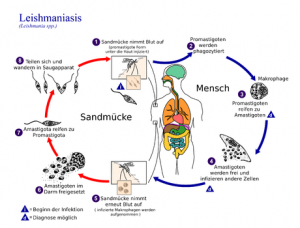
Leishmaniasis is a disease caused by protozoan parasites that belong to the genus Leishmania and is transmitted by the bite of certain species of sand fly (subfamily Phlebotominae). Although the majority of the literature mentions only one genus transmitting Leishmania to humans (Lutzomyia) in the Americas, a 2003 study by Galati suggested a new classification for the New World sand flies, elevating several subgenera to the genus level. Elsewhere in the world, the genus Phlebotomus is considered the vector of leishmaniasis. Read More: > HERE <
Visceral leishmaniasis (VL), also known as kala-azar, black fever, and Dumdum fever, is the most severe form of leishmaniasis. Leishmaniasis is a disease caused by protozoan parasites of the Leishmania genus. It is the second-largest parasitic killer in the world (after malaria), responsible for an estimated 500,000 cases each year worldwide. Read More: > HERE <
Largely unknown in the developed world, leishmaniasis is a tropical, parasitic disease caused by one of over 20 varieties of Leishmania and transmitted by bites from certain types of sandflies. The most severe form, visceral leishmaniasis, is also known as kala azar, Hindi for black fever. Over 90 per cent of cases occur in Bangladesh, Brazil, India, Nepal and Sudan. Without treatment, this form of leishmaniasis is fatal in almost 100 per cent of cases.
Kala azar attacks the immune system, causing fever, weight loss, anaemia and an enlarged spleen. There are considerable problems with existing diagnostic tests, which are either invasive or potentially dangerous and require lab facilities and specialists not readily available in resource-poor settings. Treatment requires painful, daily injections of drugs for 30 days.
The drug most widely used to treat kala azar, sodium stibogluconate (SSG) was developed in the 1930s, is relatively expensive and causes a toxic reaction in some patients.
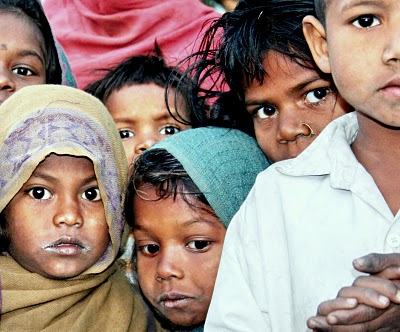
> Blanket Distribution, Food Relief Camp <, www.foodrelief.org
KALA AZAR & AIDS MULTIPLY….. Co-infection of leishmaniasis and HIV is emerging as a growing threat, as both diseases attack and weaken the immune system. Infection with one of these diseases makes a person less resistant to the other and treatment becomes less effective. MSF through its Access to Essential Medicines campaign is urging for more research into suitable diagnostic techniques and affordable drugs to treat this neglected disease. Leishmaniasis (kala azar): > International Activity Report, 2007 <
Bericht zu meiner Perureise, Freundeskreises Peru Amazonico e.V. war dessen Gründungsmitglied Eugen Bruder (ehemaliger DED-Entwicklungshelfer in Peru) im Februar in Peru und besuchte die Projekte. Näheres auch im Internet unter www.peru-amazonico.de
Glucantime/Leishmaniose – Seit etwa 10 Jahren liefern wir das Medikament Glucantime gegen die tropische Krankheit Leishmaniose nach Peru. Damals waren wir von einer befreundeten Peruanerin aus Huanuco (östliches Andengebiet, Richtung Urwald) gebeten worden, dieses Medikament zu besorgen, da es in Peru knapp und teuer sei. Leishmaniose, in Afrika und Asien in seiner viszeralen (= innerkörperlichen) Form als „Kala Azar“ (= schwarzer Tod) bekannt, tritt in Mittel- und Südamerika als Erkrankung der Haut und Schleimhäute auf (kutane und mukokutane Form). Gefährlich ist vor allem die mukokutane Form, da dort die Schleimhäute von Nase, Mund und Rachen befallen werden und grässliche Verstümmelungen zur Folge haben können, weshalb die krankheit auch weiße Lepra ( „the white leprosis“ ) genannt wird.
Kala Azar: „A Disease of the Poorest of the Poor“
Drugs against Kala Azar costs in developed countries only 1 dollar, in third lands 10 dollars ( people their earn this in one month or year or none) , so found the Peru Rainforest Friends a efficient and cheap legal Drug Air Port Delievery Help to keep the friends in Peru healthy: – Wir haben eine sehr günstige und effektive Form des Medikamententransports nach Peru gefunden: Reisende, die nach ein paar Kilo „Luft“ im Gepäck haben, nehmen es freundlicherweise mit nach Peru. Ich hatte über 20 kg Glucantime dabei. Die 1.900 Ampullen gingen ohne Probleme durch den Zoll (ich hatte „grün“ an der Ampel). In Cusco wartete man dringend auf das Glucantime.
Ich hatte 1.400 Ampullen mitgenommen (die restlichen 500 Ampullen gingen nach Huanuco). Gerade als ich das Glucantime im Hospital Antonio Lorena übergeben hatte, kam ein 24-jähriger Mann mit einer offenen Wunde an jedem Arm. Bei ihm war gerade Leishmaniose diagnostiziert worden. Er kam aus dem Distrikt Acomayo und war ein paar Monate als Holzfäller (Wood Logger) im Urwaldgebiet Puerto Maldonado, wo er durch einen Mückenstich infiziert worden war. Zu Hause hat er einen kleinen Bauernhof, aber da das Geld nicht reicht, macht er diesen Holzfällerjob. Während früher die meisten Leishmaniosekranken sich als Goldwäscher infiziert hatten, sind es jetzt zunehmend Holzfäller (Wood Logger) . Die meisten können sich das Medikament nicht leisten. Eine Ampulle kostet in der Apotheke etwa 10 Dollar (während wir es hier für 1 Dollar kaufen – hier sieht man die menschenverachtende Preispolitik der Pharmamultis). Quelle: www.peru-amazonico.de
- www.thlib.org , www.visva-bharati.ac.in , www.aeinstein.org
- The International Centre of BHU <
- www.rainforestinfo.org.au
- DR. RUTH PFAU, MALC, DAHW <
- THE TIBETAN AND HIMALAYAN LIBRARY <
- ESTC 2010 Lead. Sustain. Engage. ECOTOURISM CONFERENCE 2010 <
- Bangladesh Top Prize 3rd Annual Photoshare Contest <
- Meet Doctors without Borders http://www.msf.org, studies, friends at fb <
- Meet The International Ecotourism Society (TIES), friends, fans at fb <
- Meet National Geographic, friends, fans at fb <
- Meet Global Concern, http://www.glcoin.org, studies, friends at fb <
- Meet Peace, Justice and Environment Project, http://www.pjep.org <
- Meet Coast to Coast, http://www.coasttocoastam.com/ friends fans & at fb <
- Meet Human Rights Watch, friends, fans at fb <
- Meet M.K. Gandhi Institute for Nonviolence, studies, friends at fb <
- Meet International Society of Hildegard von Bingen Studies at fb <
- Meet 100 Million Voices for a Real Climate Deal in Mexico 2010 at fb <
Sustainable Communities through Education

Kham (Tibetan: ཁམས; Wylie transliteration: Khams; Simplified Chinese: 康巴; Pinyin: KÄ�ngbÄ�), is a region presently divided between the Chinese provinces of the Tibetan Autonomous Region, and Sichuan where Khampas, a subgroup within the Tibetan ethnicity, live. It is also one of the three traditional provinces claimed by the Tibetan government-in-exile. Read More: > HERE <
Education and capacity-building form the core of the Machik mission. Learn how a ground-breaking school is helping revitalize a community in a rural Tibetan township.
Located deep in the heartland of Kham, Chungba was, until a few short years ago, a typical rural Tibetan community. With no electricity, running water, telephone, internal roads and virtually no literacy, this mountain community was unequipped to manage the rapid changes arriving at its door. Today, an investment in a primary school has stimulated a broad-based effort to revitalize the community while setting a new standard for rural Tibetan education across the prefecture.
We are deeply saddened by the recent earthquakes in Tibet. In the first four days after the earthquake we raised and sent $38,000 for relief aid. We hope you will let your family, friends and colleagues know that the Tibetan people of Jyekundo need our continued help.
Thank you and we look forward to staying in touch.
The Chungba School Story – Since it first opened its doors in 2002, the Ruth Walter Chungba Primary School has challenged regional stereotypes about the potential of rural Tibetan children. In its first year of operation, the students of Chungba achieved the highest results on county-wide standardized exams, despite being the first generation in Chungba ever to have access to formal education. Surprised by the results, county officials ran a second round of standardized exams for the Chungba school. And the tests results were even higher.
Today, with a residential community of 340 students and staff, the Chungba Primary School has become a model for rural education throughout the eighteen counties of the Ganzi Tibetan Autonomous Prefecture – a region of nearly a million Tibetans. New resources and creative programming have played a role in the success of the CPS projects that include an annual Chungba Summer Learning Program, a traditional Tibetan dance program, a library, an organic greenhouse and other green technologies to promote conservation and environmental consciousness. Watch an introductory video clip of the CPS. The Chungba Summer Learning Program in particular has offered the Chungba kids an array of resources to expand their knowledge of their world and to learn about new forms of knowledge production. These include learning about both traditional knowledge, such as Tibetan storytelling, as well as the use of new digital media.
These images of the Chungba Primary School from 2004-5 were edited by Tsering Perlo , documentarian and founder of Rabsal, an association of young Tibetans dedicated to the revitalization of Tibetan culture. // Pilgrimage Through Kham: A Medical Mission in Tibet
Born in a Tibetan refugee camp in India, raised in Canada, holding a Ph.D. from the University of London’s School of Oriental and African Studies (SOAS), Losang Rabgey has found her life’s work in remote Tibetan villages of farmers, seminomads, and nomads.
An anthropologist specializing in contemporary Tibetan culture and gender relations, Rabgey explains, „I believe that whatever kind of theoretical, research-based work you do, it must be grounded in local knowledge. It’s critical to have a hands-on understanding of what life looks like and feels like to the people you work with.“
- http://johnullman.multiply.com
- www.awamfoundation.org
- Khenchen Lama, AWAM Foundation, Khampas <
- Meet Lobsang Rabgey, friends, studies, fans at fb <
- Meet Survival International, friends, fans at fb <
- Meet Indigenous Peoples Issues and Resources, friends, fans at fb <
- Meet UN International Year of Biodiversity 2010, friends, fans at fb <
- Meet National Geographic, friends, fans at fb <
- Meet 100 Million Voices for a Real Climate Deal in Mexico 2010 at fb <
CELEBRATION OF TAGORE´s 150th BIRTHDAY
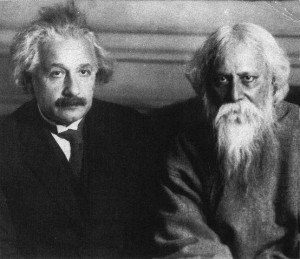
TAGORE, Crisis in Civilization , There are Real Alternatives. A.E. Inst.
Rabindranath Tagore’s Birthday
Rabindranath Tagore (7 May 1861 – 7 August 1941), sobriquet Gurudev, was a Bengali polymath. As a poet, novelist, musician, and playwright, he reshaped Bengali literature and music in the late 19th and early 20th centuries. As author of Gitanjali and its „profoundly sensitive, fresh and beautiful verse“, in 1913 being the first non-European to win the Nobel Prize in Literature, Tagore was perhaps the most important literary figure of Bengali literature. He was a mesmerising representative of the Indian culture whose influence and popularity internationally perhaps could only be compared to that of Gandhi, whom Tagore named ‚Mahatma‘ out of his deep admiration for him. A Pirali Brahmin from Kolkata, Tagore was already writing poems at age eight.At age sixteen, he published his first substantial poetry under the pseudonym Bhanushingho („Sun Lion“) and wrote his first short stories and dramas in 1877. Tagore denounced the British Raj and supported independence. His efforts endure in his vast canon and in the institution he founded, Visva-Bharati University. Read More: > HERE <
Albert Eintstein Institute, About Our Name – Albert Einstein was deeply concerned about war, oppression, dictatorship, genocide, and nuclear weapons. He was willing to explore new approaches to confronting these problems of political violence, although he was not always happy with the choices available to him. At various times he was a war resister, a supporter of the war against the Nazi system, and an advocate of world government. In his later life, he became enormously impressed with the potential of nonviolent struggle. In 1950, he remarked on a United Nations radio broadcast that, „On the whole, I believe that Gandhi held the most enlightened views of all the political men in our time….“
Today, the Albert Einstein Institution continues work on that aspect of Einstein’s thought, examining the potential of nonviolent struggle to resolve the continuing problems of political violence.
Applications of Nonviolent Action (AHIMSA) – Nonviolent struggle can be used in a variety of circumstances for a variety of objectives. These include:
Dismantling dictatorships, Blocking coups d’état, Defending against foreign invasions and occupations, Providing alternatives to violence in extreme ethnic conflicts, Challenging unjust social and economic systems, Developing, preserving and extending democratic practices, human rights, civil liberties , and freedom of religion, Resisting genocide
More information can be found about each of these applications in the > publications section < of our web. site.
K. J. Yesudas (Carnatic Music) www.hrw.org
Yama, niyama, asana, pranayama, pratyahra, dharana, dhyana and samadhi are the eight limbs of yoga . Ahimsa, satya, asteya, bramacharya and aparigraha are the five yamas – The yoga sutras of Patanjali, 2.30-31
In the classical yoga system described by Patanjali more than two thousand years ago, the first stage (or limb, as they are generally called) of yoga is Yama (ethical disciplines) and of these, Ahimsa is the first. (The ethical Do´s and Don´ts or commandments for a propper way of life.)
In short, according to Patanjali, ahimasa, non-violence or, as Desikashar defines it, “Consideration for all living creatures, especially those who are innocent, in difficulty or worse off than we are” should be the very beginning of any yoga practice.
Sadhana : the realisation of life by Rabindranath Tagore Rabindranath Tagore (1861-1941) was a Bengali poet, philosopher, artist, playwright, composer and novelist. India’s first Nobel laureate, Tagore won the 1913 Nobel Prize for Literature. He composed the text of both India’s and Bangladesh’s respective national anthems. Tagore travelled widely and was friends with many notable 20th century figures such as William Butler Yeats, H.G. Wells, Ezra Pound, and Albert Einstein. While he supported Indian Independence, he often had tactical disagreements with Gandhi (at one point talking him out of a fast to the death). His body of literature is deeply sympathetic for the poor and upholds universal humanistic values. His poetry drew from traditional Vaisnava folk lyrics and was often deeply mystical.
Sadhana is a collection of essays, most of which he gave before the Harvard University, describing Indian beliefs, philosophy and culture from different viewpoints, often making comparison with Western thought and culture. (Summary by Peter Yearsley/Wikipedia)
CONTENTS: I. THE RELATION OF THE INDIVIDUAL TO THE UNIVERSE, II. SOUL CONSCIOUSNESS,III. THE PROBLEM OF EVIL, IV. THE PROBLEM OF SELF, V. REALISATION IN LOVE, VI. REALISATION IN ACTION, VII. THE REALISATION OF BEAUTY, VIII. THE REALISATION OF THE INFINITE
FULL TEXT AT PROJEKT Gutenberg < TAGORE AT SACRED TEXT´s < ( Gitanjali [1913], Saddhana, The Realisation of Life [1916] The Crescent Moon [1913], Fruit-Gathering [1916], Stray Birds [1916], The Home and the World [1915], Thought Relics [1921] Songs of Kabîr[1915])
Project Gutenberg, abbreviated as PG, is a volunteer effort to digitize and archive cultural works, to „encourage the creation and distribution of eBooks.“ Founded in 1971 by Michael S. Hart, it is the oldest digital library. www.gutenbergnews.org & www.gutenberg.org
- Tagore, Gandhi and India today <
- VISVA-BHARATI , RABINDRANATH TAGORE – YOGAH ,SCIENCE, POETRY <
- Vedanta, Quantum Physics & Erwin Schrödinger <
- AHIMSA IN YOGA, MUSIC AND SPIRITUALITY <
- The Universal Declaration of Human Rights < , United Nations: Human Rights <
- Meet Human Rights Watch, friends at fb <
- Meet Project Gutenberg, Online Library , studies, friends at fb <
- M.K. Gandhi Institute for Nonviolence, studies, friends at fb <
- Meet The Nobel Women’s Initiative, studies, friends at fb <
- Meet Council for a Parliament of the World’s Religions (CPWR), friends, fans at fb <
Mother´s Day- Flowers for Human Rights
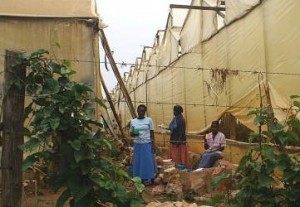
Green Shopping Guide Österreich: http://bewusstkaufen.at
NATIONAL GEOGRAPHIC – GREEN GUIDE
Lotus Flower – Symbol of Purity and Great Beauty!
The modern Mother’s Day is celebrated on various days in many parts of the world, most commonly in May, though also in March, as a day to honor mothers and motherhood. In the United States it was nationally recognized as a holiday in 1914 after a campaign by Anna Jarvis. In some countries, it follows the old traditions of Mothering Sunday. Read More: > HERE <
Mother’s Day (U.S.) is an annual holiday that recognizes mothers, motherhood and maternal bonds in general, as well the positive contributions that they make to society. In the United States, it is celebrated on the second Sunday in May. Read More: > HERE <
Flowers around the globe – Are you aware that the cut flower you buy in the supermarket or at your florist might have travelled thousands of kilometres to please you at home or in the office? Indeed, an increasing share of flowers which are sold in Europe is grown in countries close to the equator.
Do you wonder why? Around the equator conditions for growing flowers are more favourable than in Europe. Those countries don’t have cold winters, they constantly have 12 hours daylight and they have fertile soil. Labour is cheap and, labour and environmental laws are not as strict as in Europe, or at least, they are not enforced.
Are you concerned about the latter? We, too, are. That’s why we have started a campaign to raise awareness on labour rights, workers‘ health, and environmental protection in the flower industry. Join us and be part of the change.
The campaign „Fair Flowers for Human Rights“ – Non-governmental organisations from Austria, Belgium, Germany, and Czech Republic have jointly started a campaign to raise awareness on human rights violations and environmental pollution by the global flower industry. The campaign is supported by the Zimbabwean Non-Governmental Organisation Kunzwana and the Uganda Workers‘ Education Association.
The campaign targets consumers, flower traders and local authorities and it aims at changing their consumption and purchasing patterns towards ensuring that flowers are produced in socially and environmentally sound conditions.
As means to reach our targets we will produce information material, organise exhibitions and speakers‘ tours of flower workers, produce a movie, conduct workshops and lobby politicians. We will be present at various public events. You can read more on the specific actions in each country if you click on the logos of the campaign partners below. http://www.flowers-for-human-dignity.org/09/index.php/the-campaign.html
Fair trade roses for Mother´s Day & Human Rights
Da die heimische Schnittblumenproduktion die Nachfrage am österreichischen Markt nicht befriedigen kann, werden fast zwei Drittel der in Österreich verkauften Blumen aus Ländern des Südens importiert. Jährlich sind das zum Beispiel gut 80 Millionen Rosen. Auf den Blumenfarmen in Kenia, Uganda, Simbabwe, Ecuador und Kolumbien arbeiten zum Großteil Frauen, vielfach unter katastrophalen Arbeitsbedingungen.
Besonders vor dem Muttertag und den Valentinstag leisten sie Überstunden bis spät in die Nacht, oft werden diese nicht oder nicht vollständig bezahlt. Die Frauen berichten von gesundheitlichen Schäden aufgrund der Arbeit mit hoch giftigen Pestiziden und mangelndem Arbeitsschutz, auf manchen Farmen auch von sexueller Belästigung.
„Für die Frauen bedeutet die Arbeit auf den Blumenfarmen ein wichtiges Einkommen. Besonders in Lateinamerika arbeiten viele allein erziehende Mütter auf den Farmen. Sie benötigen dringend einen angemessenen Lohn, um sich und ihre Kinder adäquat ernähren zu können.“, berichtet Sophie Veßel, Koordinatorin der Kampagne „ Fair Flowers – mit Blumen für Menschenrechte “ bei der Menschenrechtsorganisation FIAN Österreich.
FIAN setzt sich seit vielen Jahren für die Rechte der ArbeiterInnen auf Schnittblumenfarmen weltweit ein. In Betrieben, die mit dem Gütesiegel Flower Label Program (FLP) zertifiziert wurden, werden Arbeits- und Menschenrechte eingehalten. Die Arbeitszeiten sind in langfristigen Verträgen geregelt, Überstunden werden angemessen bezahlt. Entsprechende Kleidung schützt die ArbeiterInnen vor den Chemikalien. Hoch giftige Pestizide dürfen überhaupt nicht eingesetzt werden. Für Frauen ist insbesondere wichtig, dass ihnen bezahlter Mutterschutzurlaub gewährt wird, sie während der Schwangerschaft geschont werden und sexuelle Belästigung nicht geduldet wird.
Daher empfehlen FIAN und die Volkshilfe Österreich, beim Blumenkauf zu Blumen der Gütesiegel Flower Label Program (FLP) und FAIRTRADE zu greifen. „Blumen, die unter fairen Arbeitsbedingungen produziert wurden, sind ein besonders sinnvolles Geschenk. Denn sie unterstützen den Kampf gegen Ausbeutung von ArbeiterInnen.“, meint Josef Weidenholzer, Präsident der Volkshilfe Österreich. „Mit dem Kauf solcher Blumen können Sie doppelte Freude schenken. Der eigenen Mutter und der Blumenarbeiterin.“ Dass die Blumen nicht mit hoch giftigen Pestizid en belastet sind, trägt sicher zusätzlich zur Freude der Beschenkten bei!
FLP-Blumen verschiedener Sorten finden Sie im ausgewählten österreichischen Fachhandel, FAIRTRADE-Rosen in Supermärkten und im Fachhandel.
- AFRICAN TRADITIONAL MEDICINE <
- Weitere Informationen:
- www.fian.at (FLP-HändlerInnenliste)
- www.volkshilfe.at
- www.flowers-for-human-dignity.org
- www.fairflowers.at (FLP-HändlerInnenliste)
- The New 2008 Constitution of Ecuador <
- Meet Human Rights Campain, friends at fb <
- Meet FAIR TRADE certificied, friends at fb <
- Meet Human Rights Watch, friends at fb <
- Meet National Geographic, Green Guide, friends, fans at fb <
