
Posts by admin
Kundalini Yoga Workshop & Swami Dhirendra
www.hinduism.co.za/Brahmacharya
http://www.sanandayoga.com/workshop
http://archives.digitaltoday.in
Brahmacharya – Sri Swami Sivananda
Brahmacharya (pronounced [brʌmatʃərɪə], Devanagari: ब्रह्मचर्य) whose literal meaning is under the tutelage of Brahman refers to a period of spiritual education in the traditional scheme of life in Hinduism that takes place during the teenage years. This period of time in which the student becomes inculcated in the mystical doctrine contained within the Upanishads is characterised above all else by the practice of strict celibacy. As such, in non-Hindu traditions (see nastika) Brahmacharya denotes a mode of life devoted to spiritual endeavour in which sexual continence is the guiding factor. A Brahmachari therefore is a male (and brahmacharini a female) who observes sexual abstinence unless intentionally procreating. These characteristics correspond to Western notions of the religious life as practised in monastic settings. Read More: > HERE <
Just like his life and his death the origin of Swami Dhirendra Brahmachari is shrouded in mystery. Some sources say that he was born in a respected Brahmana family of Chandpura, a small village in Bihar in Northern India. Others say that he came from a village in Kashmir. There are no records of the day of his birth, and during his lifetime the public was speculating about his real age. He never talked much about his past, but when he remebered his early childhood he used to say that he was a wild and naughty boy with a great sense for adventure, which often put him in difficult and dangerous situations. When he was twelve years old he started to read the Bhagavad Gita and he was deeply impressed when Krishna says to Arjuna: “The Yogin is verily superior to the Tapasvins (those observing austerities), Jnanins (the knowledge-ables) and Karmakandins (those who perform the ceremonial rites). Therefore you should try to become a Yogin!” So he decided to become a Yogi. From this moment he pursued this arduous path with great devotion and deep interest, and he left his family to search for a true Guru. During these years of wandering he met many masters and holy men, but in spite of his ardent efforts it seemed impossible to find the one personal Guru. Many so-called masters turned out to be charlatans or they were demanding a certain hairstyle or dress from him, changes which the stubborn young man wouldn`t accept.
After years of restless search he ended up in great poverty, and he seemed to be stranded. He said about this dark period of desperation: “I had completely lost the idea of a Guru, my mind was absolutely empty. But only when life becomes dark and black like a slate, you can start to write something new. Only where there is absolute emptiness you can fill in something new. Only when his own ideas are wiped out, man is ready to perceive and accept the Absolute. It is a balance between complete devotion and the openness for the Divine or even for what you can call its opposite.” While this struggle between light and darkness was in full swing, he finally met his Guru Maharshi Kartikeya, whose Ashram stood at Gopal-Khera, about twelve miles from Lucknow. There his Guru initiated him into the untold secrets of Yoga. He practiced Pranayama in an underground cave and reached a state of perfect mental equilibrum, which made him enter the realms of higher Yoga. Now he was a Swami, a Siddha and Yoga-Master, and he was directed by Maharshiji to propagate the Yogic Kriyas.
It was in the Bengal capital Calcutta that his first work “Yogic Sukshma Vyayama” was published in Hindi in 1956. Thereafter he came to Delhi and people of all walks of life and from all over the world were attracted to him to learn the yogic practices that he demonstrated.
He taught the first Prime Minister of India, Jawaharlal Nehru, and was the yogic mentor to his daughter Indira Gandhi and her family. 1970 he published his second book “Yogasana Vijnana”, doubtless the best work ever about the correct practice of Yoga-Postures. Because of his extraordinary powers and his charismatic personality he became the counsellor and trustee of the then Prime Minister Indira Gandhi and therefore a political issue. He was running big Ashrams in Delhi, Jammu, Katra and Mantalai (J & K), and thousands of people from all over the world were eager to learn from him.
In the year 1981 he was asked by some journalists if he would leave his body as old as his own Guru Maharshi Kartikeya, who entered Maha-Samadhi 1953 in the age of 336 years, while he was meditating with his favourite Chelas. He answered: “I would gladly do that, if I shouldn`t die in a plane-crash.”
H2Oil: Oil & Tar Sands The Documentary

www.indigenouspeoplesissues.com
Oil sands, also known as tar sands, or extra heavy oil, are a type of bitumen deposit. The sands are naturally occurring mixtures of sand or clay, water and an extremely dense and viscous form of petroleum called bitumen. They are found in large amounts in many countries throughout the world, but are found in extremely large quantities in Canada and Venezuela. Oil sands reserves have only recently been considered to be part of the world’s oil reserves, as higher oil prices and new technology enable them to be profitably extracted and upgraded to usable products. Oil sands are often referred to as unconventional oil or crude bitumen, in order to distinguish the bitumen extracted from oil sands from the free-flowing hydrocarbon mixtures known as crude oil traditionally produced from oil wells. Read More: > HERE <
What Are Tar Sands? – Tar sands (also referred to as oil sands) are a combination of clay, sand, water, and bitumen, a heavy black viscous oil. Tar sands can be mined and processed to extract the oil-rich bitumen, which is then refined into oil. The bitumen in tar sands cannot be pumped from the ground in its natural state; instead tar sand deposits are mined, usually using strip mining or open pit techniques, or the oil is extracted by underground heating with additional upgrading. See the Photos page for additional photos of tar sand and tar sand mining. FULL ARTICLE: > TAR SANDS BASICS < (Basic information on tar sands technology, resources, and issues of concern.)
Greenhouse gas emissions from tar sands production are three times those of conventional oil and gas production [currently tar sands production emits 27 megatonnes per annum and is expected to rise to 108-126 megatonnes by 2015]. Thus, the tar sands are now poised to become Canada’s largest single emitter of greenhouse gas, compounding this country’s contribution to global warming. Additionally, tar sands production is expected to multiply as much as four to five times by the year 2015 to meet growing demands in the U.S. As a consequence, conservative estimates show that greenhouse gas emissions from the tar sands could well leap from 27 to 126 million tonnes by 2015.
Read more — http://www.tarsandswatch.org/global-warming
- The Real Avatar: Story of a Sacred Mountain <
- WE ARE ONE – A Celebration of Tribal People <
- Meet H2Oil: The Documentary, friends, fans at fb <
- Meet Survival International, friends, fans at fb <
- Indigenous Peoples Issues and Resources, friends, fans at fb <
- Meet Tom BK Goldtooth, friends, fans at fb <
- 100 Million Voices for a Real Climate Deal in Mexico 2010 <
KALARIPPAYAT TRAD. (kalari) MARTIAL ART
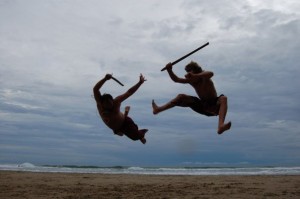
KALARIPPAYAR – KALARI TRADITION
* The elder generations still believe that the Kalari Guru is the sage Parasurama himself, who after creating the land of Kerala, taught Kalarippayatt to 21 disciples in order to protect and maintain peace. Lord SIVA is considered to be the father of Kalarippayatt. Parasurama has propagated in Northern style and Sage Agasthya in Southern style.
Kalarippayat is one of the oldest living traditions of Martial training, Physical culture and self defence method in the World. The Kalarippayat is derived from two words in Malayalam, Kalari and Payatt. Kalari means the place, where any particular art form is taught. Payatt literally means practice or exercise. In the present context it means in the traditional style of combat. It is the Martial Art form of Kerala, the Southern most state of INDIA.
Kshatriya (Hindi: क्षत्रिय, kṣatriya from Sanskrit: क्षत्र, kṣatra) or Kashtriya meaning warrior is one of the four varnas (social orders) in Hinduism. शर्म ब्राहमणस्य वर्म क्षत्रियस्य गुप्तेती वैश्यस्य Prasar grhaysutras). It traditionally constituted the military and ruling elite of the Vedic-Hindu social system outlined by the Vedas and the Laws of Manu. Read More: > HERE <
ENS Kalari Centre was established in 1954 at Nettoor, Ernakulam Dist., Kerala, South India by E.N. SREEPATHY EMBRNTHIRI GURUKKAL. This Kalari gives training in both Northern and the Southern systems of Kalarippayat. This may perhaps be only Kalari of this type in Kerala blending both systems. Here, training is given in a Kalari constructed accordingto the time honored principles of the Kalari traditions and according to accepted methods of worshipping the Kalari Gods and Guru, and performing the necessary rituals.
This institute, affiliated to the Kerala Kalarippayat Association [Govt. of Kerala], is the only one of its kind to authorize by Enakulam District Tourism Promotion Council. ENS Kalari collects and systematically arranges [for the benefit of students both Indian & Foreign] printed book, videocassettes etc. More and more foreigners visit ENS Kalari for studying and for seeing Kalarippayat. Lately South Africa for demonstrating and teaching Kalarippayat sponsored two of the scholars of ENS Kalari. Every day there is a demonstration from 7 pm to 8pm. The special visit to Kalariis allowed between 3pm to 7pm every Sunday evening. Those who are interested in watching Kalarippayat can make use of this opportunity.
This Kalari started new certificate courses ranging from ONE WEEK to ONE YEAR and Various SPECIAL COURSES also.
Ayurvedic Treatments: We have every facility to conduct various traditional ayurvedic treatments.The main treatment is UZHICHIL [massage]. Massage has been in vogue all over the world since time immemorial. Massage is being used of curing diseases in Kerala. But this science and art has not developed enough in this present age. Even today there are experts who massage the nerves and veins of patients for curing diseases and people do regard them highly. In olden time warriors used to get initiates into the Martial Arts after massage, which used to continue through out life. In kerala even now, before practicing Kalarippayat it is customary to massage the whole body and make it ready. Massage helps to attain a compact physique and to easily and to easily bend or turn any part of the body. Once you become a warrior, massage is necessary to shed physical fatigue. Exercises and massage are essential to build a healthy body.
In Kalari, massage is done by the GURUKKAL. UZHICHIL is a system of full-body massage to improve muscle tone, flexibility, stimulate the circulation of blood and to give long life. Kalari massage can also provide benefitsin relation to headaches, depression, sexual functioning, and back pain. It is intended to cure Kalari – related orthopaedic injuries and spasmodic diseases. For the students of Kalarippayat who with to take up the position of GURU, they should become well versed in the ART of treatment. Massage has one more important benefit, which concerns the flow of lymph in the body. Lymph is a vital fluid, which purifies the blood, thereby enhancing the health and beauty of the body. As massage givens an equal effect, it helps those who cannot do or are not able to do exercises.
kalari oil massage – Ancient time warriors used to get initiates into the Martial Arts after massage, which used to continue through out life. In Kerala even now, it is customary to massage the whole body and make it ready to practice Kalarippayat. Massage helps to attain a compact physique easily and to bend or turn any part of the body. Once you become a warrior, massage is necessary to shed physical fatigue. Exercises and massage are essential to build a healthy body.
This is the unforgettable experience to the visitors. Two type of massage is using in kalari Massage – using Hand and Massage – using foot. All over the Kerala is sinking with Ayurvedic massage.
But this is the unforgettable experience for visitor, he/she can choose the massage they like- foot massage or hand massage. After the massage the kalari disciples are practicing kalari. Same way after the Kalari massage the person will become fully energetic. So we can understand how much energy and stamina will attain after the kalari massage. Commonly ‘Mahanarayan Thilam’ [Herbal oil] is using for massage and Steam Bath and Herbal Bath are also available. The duration of the Massage is 45mts to 1hour.
ENS Kalari conducting Uzhichil [massage] treatment courses varying from 5-7days, 14days, and 21days. It is available through prior booking. Full-body massage help to improve muscle tone, flexibility, stimulates the circulation of blood and give long life. Kalari massage is using to treat headaches, depression, sexual functioning, back pain etc.
- Meet Vedic Center, KALARI, friends, studies at facebook <
- Meet Kalari Payat, friends, studies at facebook <
- Meet Aashan Sajangurukkal, friends at facebook <
- Meet VEDIC , Friends, and Study Groups at facebook <
- Meet Upanishad, friends, groups, studies at facebook <
- Meet all Ayurveda Groups, Friends, Studies at facebook <
- The Drukpa Lineage , friends, fans at fb < www.drukpa.org
- Meet Lord Dhanvantri at facebook <
Samarkand to New York: The Book of Jewish Food
Syrian Jews (Arabic: يهود سوريون) are Jews who inhabit the region of the modern state of Syria, and their descendants born outside Syria. Syrian Jews derive their origin from two groups: from the Jews who inhabited the region of today’s Syria from ancient times (known as Musta’arabi Jews, and sometimes classified as Mizrahi Jews, a generic term for the Jews with an extended history in the Middle East or North Africa); and from the Sephardi Jews (referring to Jews with an extended history in the Iberian Peninsula, i.e. Spain and Portugal) who fled to Syria after the expulsion of the Jews from Spain (1492 CE).
There were large communities in Aleppo and Damascus for centuries, and a smaller community in Qamishli on the Turkish border near Nusaybin. In the first half of the 20th century a large percentage of Syrian Jews emigrated to the U.S., Central and South America and Israel. Most of the remaining Jews left in the 28 years following 1973, due in part to the efforts of Judith Feld Carr, who claims to have helped some 3,228 Jews emigrate; emigration was officially allowed in 1992. Today there are about 25 Jews in Syria, all of them living in Damascus. The largest Syrian Jewish community is located in Brooklyn, New York and is estimated at 75,000 strong. There are smaller communities elsewhere in the United States and in Latin America. Read More: > HERE <
Jewish Cuisine is the collection of cooking traditions of the Jewish people. It is a diverse cuisine that has evolved over many centuries, shaped by Jewish dietary laws (kashrut) and Jewish Festival and Sabbath traditions. Jewish cooking has also been influenced by the economics, agriculture, and culinary traditions of the many countries where Jewish communities have existed since Late Antiquity. Kashrut and holiday traditions provide unifying elements in the cuisine, while geographic dispersion has led to a diversity of styles. Read More: > HERE <
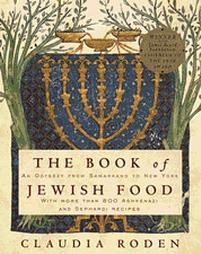
Claudia Roden, author of The Book of Jewish Food, has done more than simply compile a cookbook of Jewish recipes–she has produced a history of the Jewish diaspora, told through its cuisine. The book’s 800 recipes reflect many cultures and regions of the world, from the Jewish quarter of Cairo where Roden spent her childhood to the kitchens of Europe, Asia, and the Americas. Both Ashkenazi and Sepharidic cooking are well represented here: hallah bread, bagels, blintzes, and kugels give way to tabbouleh, falafel, and succulent lamb with prunes, which are, in turn, succeeded by such fare as Ftut (Yemeni wedding soup) and Kahk (savory bracelets).
The Book of Jewish Food: An Odyssey from Samarkand to New York: Interwoven throughout the text are Roden’s charming asides–the history of certain foods, definitions (Kaimak, for instance, is the cream that rises to the top when buffalo milk is simmered), and ways of preparing everything from an eggplant to a quince. In addition, Roden tells you everything you’ve ever wanted to know about Jewish dietary laws, what the ancient Hebrews ate, and the various holidays and festivals on the Jewish calendar. Detailed sections on Jewish history are beautifully illustrated with archival photographs of families, towns, and, of course, food. The Book of Jewish Food is one that any serious cook–Jewish and non-Jewish alike–would gladly have (and use often) in the kitchen. Buy this Book: > HERE <
From Publishers Weekly – As the biblical echo of the title indicates, this collection is as instructive and comprehensive as a textbook. Roden (Mediterranean Cookery, etc.) divides the territory in two parts: „The Ashkenazi World“ and „The Sephardi World.“ She chronicles the lives of Jews all over the world in short segments on unusual Jewish communities past and present, such as those of Salonika, Greece, and China. These sections, and the many other notes on subjects ranging from the New York Deli to salt herring are gems. Recipes are numerous and diverse: Yellow Split Pea Soup with Frankfurters, Pumpkin Tzimmes, Small Red Kidney Beans with Sour Plum Sauce, Cold Stuffed Vine Leaves, and Fish Balls in Tomato Sauce. Some highlights include the chapter on Sephardic breads (Algerian Anise Bread, North African Sweet Breads with Nuts and Raisins) and the one on Ashkenazic desserts (Mandelbrot, Hanukah Jam Doughnuts). All of this can be a little overwhelming at times (and, as Roden acknowledges in the introduction, many Jewish foods simply reflected the cuisines of the places where Jews were living rather than their own specific culture). Yet with few omissions (e.g., the instructions for making pasta specify rolling out the dough „as thin as possible“ but don’t explain how), Roden proves a practiced, reliable guide.
Copyright 1996 Reed Business Information, Inc.
- DIE VEDISCHE KOCHKUNST <
- Ayurvedische Ernährung < Jahreszeiten in Rythmen der Bioenergien <
- Meet Krishna Food, friends, fans at fb <
- DRBA Realm Buddhist Ass. – Food for Thought <
- Meet East Meets West Music, friends, fans at fb <
- Meet International Society of Hildegard von Bingen Studies at fb <
- Meet Council for a Parliament of the World’s Religions (CPWR)at fb <
TAOISM – Taoist Tai Chi Society™
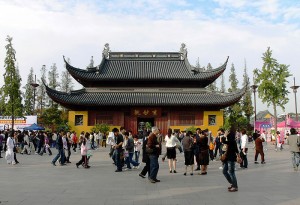
Taoism (or Daoism) refers to a variety of related philosophical and religious traditions that have influenced Eastern Asia for more than two millennia, and have had a notable influence on the western world particularly since the 19th century. The word 道, Tao (or Dao, depending on the romanization scheme), literally translates as, „path“ or „way“ (of life), although in Chinese folk religion and philosophy it carries more abstract meanings. Taoist propriety and ethics emphasize the Three Jewels of the Tao: compassion, moderation, and humility, while Taoist thought generally focuses on nature, the relationship between humanity and the cosmos (天人相应), health and longevity, and wu wei (action through inaction), which is thought to produce harmony with the Universe. Read More: > HERE <
Tao (pronounced „Dow“) can be roughly translated into English as path, or the way. It is basically indefinable. It has to be experienced. It „refers to a power which envelops, surrounds and flows through all things, living and non-living. The Tao regulates natural processes and nourishes balance in the Universe. It embodies the harmony of opposites (i.e. there would be no love without hate, no light without dark, no male without female.)“
The founder of Taoism is believed by many religious historians to be Lao-Tse (604-531 BCE), whose life overlapped that of Confucius (551-479 BCE). (Alternative spellings: Lao Tze, Lao Tsu, Lao Tzu, Laozi, Laotze, etc.). However other historians suggest that he is a synthesis of a number of historical figures. Others suggest that he was a mythical figure. Still others suggest that he lived in the 4th century BCE.
He was searching for a way that would avoid the constant feudal warfare and other conflicts that disrupted society during his lifetime. The result was his book: Tao-te-Ching (a.k.a. Daodejing). Others believe that he is a mythical character.
A Taoist priest (Sai Kong) chanting the scripture in Hokkien for the Nine Emperor Gods Festival in Tao Bo Keong, Penang.
Taoism started as a combination of psychology and philosophy but evolved into a religious faith in 440 CE when it was adopted as a state religion. At that time Lao-Tse became popularly venerated as a deity. Taoism, along with Buddhism and Confucianism, became one of the three great religions of China. With the end of the Ch’ing Dynasty in 1911, state support for Taoism ended. Much of the Taoist heritage was destroyed during the next period of warlordism. After the Communist victory in 1949, religious freedom was severely restricted. „The new government put monks to manual labor, confiscated temples, and plundered treasures. Several million monks were reduced to fewer than 50,000“ by 1960. 3 During the cultural revolution in China from 1966 to 1976, much of the remaining Taoist heritage was destroyed. Some religious tolerance has been restored under Deng Xiao-ping from 1982 to the present time.
Taoism currently has about 20 million followers, and is primarily centered in Taiwan. About 30,000 Taoists live in North America; 1,720 in Canada (1991 census).
Taoism has had a significant impact on North American culture in areas of „acupuncture, herbalism, holistic medicine, meditation and martial arts…
The Yin Yang symbol: This is a well known Taoist symbol. „It represents the balance of opposites in the universe. When they are equally present, all is calm. When one is outweighed by the other, there is confusion and disarray.“ One source explains that it was derived from astronomical observations which recorded the shadow of the sun throughout a full year. The two swirling shapes inside the symbol give the impression of change — the only constant factor in the universe. One tradition states that Yin (the dark side) represents the breath that formed the earth. Yang (the light side) symbolizes the breath that formed the heavens.
One source states: „The most traditional view is that ‚yin‘ represents aspects of the feminine: being soft, cool, calm, introspective, and healing… and „yang“ the masculine: being hard, hot, energetic, moving, and sometimes aggressive. Another view has the ‚yin‘ representing night and ‚yang‘ day.
Another source offers a different definition: A common misconception in the west is that „…yin is soft and passive and yang is hard and energetic. Really it is yang that is soft and yin that is hard, this is because yang is energetic and yin is passive. Yin is like a rock and yang is like water or air, rock is heavy and hard and air is soft and energetic.“
Allan Watts, describes the yin and yang as negative and positive energy poles: „The ideograms indicate the sunny and shady sides of a hill….They are associated with the masculine and the feminine, the firm and the yielding, the strong and the weak, the light and the dark, the rising and the falling, heaven and earth, and they are even recognized in such everyday matters as cooking as the spicy and the bland.“
However, since nothing in nature is purely black or purely white, the symbol includes a small black spot in the white swirl, and a corresponding white spot in the black swirl.
Ultimately, the ‚yin‘ and ‚yang‘ can symbolize any two polarized forces in nature. Taosts believe that humans often intervene in nature and upset the balance of Yin and Yang. Full Article: http://www.religioustolerance.org
- www.wudanggongfu.com
- Dein Ayurveda Net:…. Articles on TCM <
- WU XING, 5 Elements, Roots of Chinese Medicine <
- Meet Wudang Conception, studies, friends at fb <
- Meet International Taoist Tai Chi Society, friends and studies at fb <
- Meet Traditional Chinese Medicine, studies, friends and fans at fb <
- Meet Lao Tzu, studies, friends, fans at fb <
- Council for a Parliament of the World’s Religions (CPWR) <
SRI VIDYA, Vidyas in Hinduism & Yoga Upanishads
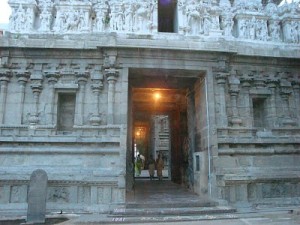
108 Upanishads | Vedanta Spiritual Library
Mess.166: A Holy Trip to Arunachaleshwara
http://taonews123.blogspot.com
ŚrÄ« VidyÄ� (also spelled „Shri Vidya“) is the name of a Hindu religious system devoted to the goddess LalitÄ� TripurasundarÄ« or simply TripurasundarÄ« (‚Beautiful Goddess of the Three Cities‘). According to British scholar Gavin Flood she is a tantric form of the goddess ŚrÄ« (also called LakṣmÄ«), consort of Vishnu. However, the late orthodox leader of the largest Samaya school of ŚrÄ« VidyÄ�, Sri Chandrasekharendra Saraswati Swamigal, says that the ŚrÄ« in ŚrÄ« VidyÄ� is a title of respect meaning The VidyÄ� and has no connotation to LakṣmÄ«. And Indian scholar V.R. Ramachandra Dikshitar states she is a form of Durga or Paravati, consort of Shiva , as well as several names from the LalitÄ� SahasranÄ�ma which call her the beloved of Shiva. The Sanskrit word vidyÄ� means „knowledge“ or „lore.“ A thousand names for this form of DevÄ« are recited in the LalitÄ� SahasranÄ�ma, which includes ŚrÄ« VidyÄ� concepts. Read More: > HERE <
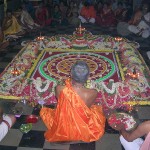
The Sri Yantra (shown here in the three-dimensional projection known as Sri Meru Chakra or Maha Meru used mainly in rituals of the Srividya Shakta sects) is central to most Tantric forms of Shaktism.
Meru Chakras are frequently a central focus and ritual object for this worship of the Goddess. They are a more potent form of the Sri Yantra, since they are three-dimensional. Meru Chakras can be found in rock crystal and in metal, often a traditional panchaloha formula of silver, antimony, copper, zinc, and pewter, which enhances the flow and generation of Sri’s beneficial energies, covered in gold.
In the theology of the ŚrÄ« VidyÄ� the goddess is supreme, transcending the cosmos which is a manifestation of her. The school has an extensive literature of its own. The details of the beliefs vary in different texts, but the general principles are similar to those found in Kashmir Shaivism.
The goddess is worshipped in the form of a mystical diagram (Sanskrit: yantra) of nine intersecting triangles, called the śrÄ«cakra („Chakra of ŚrÄ«“) that is the central icon of the tradition.
SRI CHAKRA by S. SHANKARANARAYANAN – SRI CHAKRA, the king of chakras is a master plan of manifestation drawn by the divine Draughtsman on the board of the infinite, a transcript of the Transcendent, a symbol-image of the supernal verities. The spiritual and occult tradition of the worship of the Mother Goddess and the Sadhana of Srividhya are explained in sixteen chapters in terms of modern thought and understanding. Based on authentic and authoritative Tantric texts the exposition in English is inspiring and original, almost a classic in the field of esoteric literature.
About the Author: Though his academic attainments are in Mathematics and his professional interests lie in a specialised field of industrial management, Sri S. Shankaranarayan has retained his first love for Sanskrit. In his childhood he was introduced to the ancient Sanskrit lore by his grandfather, Sri S. Narayana Iyer, who was himself a deep initiate in Sri Vidya, Later he came under the dynamic influence of Sri Kapali Sastriar. Shankaranarayanan cherishes a special regard for this tradition of the worship of the Divine Mother and his treatises on Devi Mahatmyam-both in Tamil and English have acquired an authenticity of their own. The present work on Sri Cakra, revealing as it does the depth of his scholarship, practical insight and occult knowledge, promises to be a classic on the subject. Endowed with luminous intellect, well-versed in the modes of esoteric worship and awake with an active spiritual aspiration, Shankaranarayanan is marked out to play a singular role in the resuscitation of the spiritual and occult tradition of India in terms of modern thought and understanding. -M. P. PANDIT
Buy the Book here: > www.exoticindiaart.com
- http://www.sriyantraresearch.com
- Ramana Maharshi – Sri Chakra Puja, every Friday <
- Meet International Vedanta Society, studies, friends at fb <
- Meet Kashmir Shaivism, friends and studies, at fb <
- Meet Shaktism „Doctrine of the Goddess“ at fb <
- Meet Hinduism, friends, fans, studies at fb <
- Meet Jivan Mukta, friends, studies at fb < (> Jivan Mukta <)
- Meet Prem Nirmal Holistic Counseling, studies, friends at fb <
- http://en.wikipedia.org/wiki/Flower_of_Life
THE BOOK OF TIBETAN MEDICINE
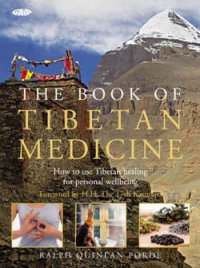
Tibetan medicine is a centuries-old traditional medical system that employs a complex approach to diagnosis, incorporating techniques such as pulse analysis and urinalysis, and utilizes behavior and dietary modification, medicines composed of natural materials (e.g., herbs and minerals) and physical therapies (e.g. Tibetan acupuncture, moxabustion, etc.) to treat illness. The Tibetan medical system is based upon a synthesis of the Indian (Ayurveda), Persian (Unani), Greek, indigenous Tibetan, and Chinese medical systems, and it continues to be practiced in Tibet, India, Nepal, Bhutan, Ladakh, Siberia, China and Mongolia, as well as more recently in parts of Europe and North America. It embraces the traditional Buddhist belief that all illness ultimately results from the „three poisons“ of the mind: ignorance, attachment and aversion. Read more: > Here <
The first illustrated guide to this holistic healing system, The Book of Tibetan Medicine, explains how the ancient Tibetan medical wisdom can be used to achieve spiritual well being in the modern world. Forward by His Holiness The 17th Karmapa.
Tibetan Medicine is an ancient medical system that has been successfully practiced for over 1,000 years and saved by His Holiness The Dalai Lama. A holistic approach combining dietary and behavioral changes, herbal cures, massage and meditation, this unique approach to healing utilizes the ancient wisdom of Tibetan masters. As well as the science of Tantric Buddhism.
http://thebookoftibetanmedicine.blogspot.com/ www.dharma-haven.org/tibetan/medicine-books.htm
The Book of Tibetan Medicine is now available in 11 languages worldwide. The forward has been written by His Holiness The 17th Karmapa. The book has been given excellent reviews by Shambhala Magazine, Mandala Magazine and Yoga Abode to name a few. The author is Ralph Quinlan Forde – Holistic Medicine Consultant – who is the founder of The Medicine Buddha Foundation.
Songs Of Awakening / Roads Of Blessings
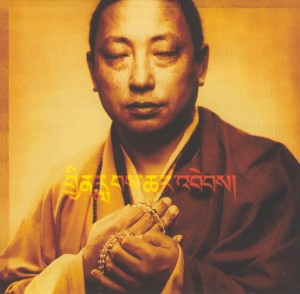
http://www.myspace.com/lamagyurme
Lama Gyurme (born in 1948), or Lama Gyourmé, is a Buddhist Bhutanese monk and musician. He has lived in France since 1974, and he is the director of the Kagyu-Dzong center in Paris and, since 1982, the Vajradhara-Ling center in Normandy. Read More: > HERE <
Born in Bhutan in 1948, he was entrusted by his family at the age of four to the monastery of Djang Tchub Tcheu Ling in Bhutan where his interest in sacred music appeared quickly. At the age of nine, he became a permanent resident of the monastery where he received Buddhist teachings, completed by an initiation to traditional arts, including music.
At the age of 20, he followed his first spiritual retreat of three years, three months and three days, necessary to the formation of Lama, at the monastery of Sonada in India of which the director is Kalu Rinpoche. During this retreat, he was given the title of „Oumze“ — master of music — by Kalu Rinpoche. After a stay at the monastery of Rumtek in Sikkim, he fulfilled his religious education in Bhutan before obtaining his diploma of teacher of the Kagyupa tradition that was given to him by the 16th Karmapa.
Lama Gyurme – For the Light
In 1995 and in 1998, Gyurme went on a pilgrimage to Tibet and visited the 17th Karmapa Orgyen Trinley Dorje in the Monastery of Tsurphu. He presented him his project of construction of the Temple for Peace.
Gyurme also participated in the music of the 1999 film Himalaya‘.
Light of Compassion: Evening for a Noble Cause
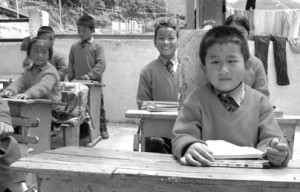
www.littlelama.org Little Lama at fb
http://architecturefortibet.org
Light of Compassion: A Spectacular Evening for a Noble Cause – Come join our Circle of Friends at the Rubin Museum of Art, a treasure of architecture in Manhattan’s Chelsea neighborhood, to celebrate the accomplishments of the Manjushree Orphanage and Free School in Tawang, India — and to help fund a planned Academic Center. An optimal learning environment will foster academic success and enable these disadvantaged children to flourish.
WHEN: Tuesday, May 25, 6pm to 9pm
WHERE: Rubin Museum of Art (150 West 17th Street, between 6th and 7th Avenues)
New York, NY
Time: Tuesday, May 25, 2010, 6:00pm – 8:00pm
WHAT: A Gala Reception with open bar. Vikas Khanna’s famously tasty hors d’oeuvres. A Silent Auction (starting at 6pm sharp) with unique offerings from the travel, culinary and fashion industries. A special musical performance by Tibetan singer Yungchen Lhamo. > Listen to Yungchen´s Music <
Exclusive guided tours of the Rubin Museum galleries. And a presentation of the impressive building project designed for the children of Manjushree Orphanage. An all around incredible experience in the service of a noble cause.
To date, Robert Thurman, noted Buddhist scholar; Lobsang Nyandak, representative to His Holiness the Dalai Lama; and Dr. Tatsumura Hillyer of Tibet House are scheduled to speak.
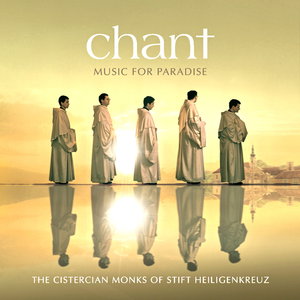
CHANT – MUSIC FOR PARADISE
http://sthk.dabis.cc/ (Online Library)
For USA see:
For Europe, Asia, Australia & South America see:
Heiligenkreuz Abbey (Stift Heiligenkreuz, Closter Heiligen Creyz or Santa Crux) is a Cistercian monastery in the village of Heiligenkreuz in the southern part of the Vienna woods, eight miles north-west of Baden in Lower Austria. It has existed without interruption since its foundation in 1133 and is thus the second oldest continuously occupied Cistercian monastery in the world. The monastery was founded in 1133 by Margrave Leopold III of Austria, also known as Saint Leopold, at the request of his son Otto, abbot of the Cistercian monastery of Morimond in Burgundy and afterwards Bishop of Freising. Its first twelve monks together with their abbot, Gottschalk, came from Morimond at the request of Leopold III. The date of consecration was 11 September 1133. They started by clearing the wood and tilling the land. They introduced the Christian faith into the region. They called their abbey Heiligenkreuz (Holy Cross) as a sign of their devotion to redemption by the Cross. On 31 May 1188 Leopold V of Austria presented the abbey with a relic of the True Cross, which is still to be seen and since 1983 is exhibited in the chapel of the Holy Cross. This relic was a present from Baldwin IV of Jerusalem, King of Jerusalem to duke Leopold V in 1182. Read More: > HERE <
Gregorian chant is the central tradition of Western plainchant, a form of monophonic liturgical music within Western Christianity that accompanied the celebration of Mass and other ritual services. It is named after Pope Gregory I, Bishop of Rome from 590 to 604, who is traditionally credited for having ordered the simplification and cataloging of music assigned to specific celebrations in the church calendar. The resulting body of music is the first to be notated in a system ancestral to modern musical notation. In general, the chants were learned by the viva voce method, that is, by following the given example orally, which took many years of experience in the Schola Cantorum. Read More: > HERE <
CHANT – MUSIC FOR PARADISE – You can find a lot of information about us and the making of the album „Chant – Music for Paradise“ —> here. There is even more information about the album –> here (but this is in German).
If you are looking for pictures of our prayer and work on the album, just click —> here.
You will find even more pictures of our beautiful abbey and also of our monastic life in the service of God —> here. Just open each picture and click on the symbol in the right edge above to download. The download is free.
The sensational YouTube video by Brother Martin.You just have to see it! God bless you.
If you are a journalist and wish to interview some monk from Stift Heiligenkreuz about the album please do not call the monastery direct, but:
For international media (outside Austria): Ed SCOTT (Director Of International Promotions – UM Group International) Tel +44 207 471-5646, Fax +44 207 471-5683 mobile +44 7785 950 792, E-Mail: Ed.Scott(at)umusic.com
For Austrian media: Anna TSCHIRKO (Promotion Manager – Universal Music Austria), A-1010 Wien, Schwarzenbergplatz 2, Tel +43 1 81121-211, Fax: +43-1-81121-232;, Mobile: 0664-8294558 , E-Mail: anna.tschirko(at)umusic.com
TOP TWEETS

http://twitter.com/DeinAyurvedaNet/favorites
IYENGAR YOGA & SAVE GANGA MOVEMENT
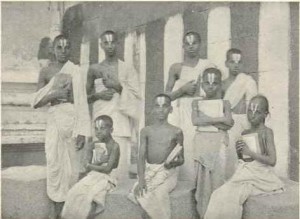
Iyengar Vedic Students 1909
The World’s First Sage Patanjali temple
„Health is firmness in body, stability in mind, and clarity in thinking. If a mirror is clean, it reflects objects clearly….health is the mirror of man.“ – B.K.S. Iyengar
Bellur Krishnamachar Sundararaja Iyengar (Kannada: ಬೆಳ್ಳೂರ್ ಕೃಷ್ಣಮಾಚಾರ್ ಸುಂದರರಾಜ ಐಯಂಗಾರ್, Tamil: பெல்லூர் கிருஷ்ணமாச்சார் சௌந்தரராஜா ஐயங்கார்), (generally known as Yogacharya B. K. S. Iyengar) (Born December 14, 1918 in Bellur, Kolar District, Karnataka, India) is the founder of Iyengar Yoga. He is considered one of the foremost yoga teachers in the world and has been practicing and teaching yoga for more than 75 years. He has written many books on yogic practice and philosophy, and is best known for his books Light on Yoga, Light on Pranayama, and Light on the Yoga Sutras of Patanjali. He has also written several definitive yoga texts. Iyengar yoga centers are located throughout the world, and it is believed that millions of students practice Iyengar Yoga.
He was awarded the Padma Shri in 1991, and the Padma Bhushan in 2002. In 2004, Iyengar was named one of the 100 most influential people in the world by Time Magazine. Read More: > HERE <
The Patanjala Yoga Kendra was established in 1993 on the banks of the Holy River Ganges in Rishikesh, the world capital of Yoga. The method of Yoga that is taught is Iyengar Yoga, as developed and taught by Shri Guruji, B.K.S. Iyengar, the world-famous Yoga Teacher. Guruji’s method is firmly based in the ancient Indian tradition of Yoga as defined in the Yoga Sutras of Patanjali. Usha Devi is the resident Yoga Instructor.
Iyengar Yoga teaches strength and stamina, flexibility and balance, concentration and meditation. Iyengar Yoga begins with physical awareness, but goes beyond to embrace emotional and spiritual growth. As students learn to extend consciousness to each part of their bodies, they experience a concentrated focus on the moment. In time, this concentrated focus (Pratyahara) becomes an integral part not just of a yoga practice, but of daily life.
Welcome to Save Ganga Movement – A Gandhian Non-violent Movement to Save the Ganga, symbolizing all rivers and water bodies and the Giriraj Himalayas, symbolizing all mountains, forests and wildlife. Gandhi symbolizes a culture of Truth and non-violence, i.e. a culture of pursuit of ethical perfection as the ultimate goal of life and pursuit of selfless ethical life of universal love as it’s means. The Surest and Perhaps the Only Solution to Our Impending Catastrophic Global Ecological Crises: Go Through Gandhi the Apostle of Truth and Non-violence of our Age.
- IYENGAR – BELLUR SCHOOL TRUST (BKSSNT)<
- Monasteries Environmental Himalayaprotection <
- SAVE MOTHER EARTH, SAVE GANGA & YAMUNA <
- Meet Iyengar Yoga, studies, friends, fans at fb <
- Meet Save Ganga Movement, friends at fb <
- Meet Save the Ganga (Ganges) River, friends at fb <
- Meet Save Yamuna to save Vrindavan! at fb <
- Meet M.K. Gandhi Institute for Nonviolence, studies, friends at fb <
AVICENNA, UNANI MEDICINE & MATERIA MEDICA
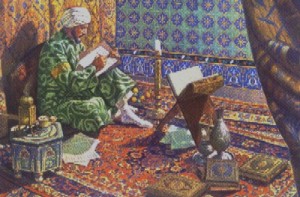
Systematische Übersicht der Materia medica homeopathica
Stiftsbibliothek Admont/Monastery Library
( Herbal garden, handwritten Materia Medica, Monastery Guide etc.)
Abū ‘AlÄ« al-Ḥusayn ibn ‘Abd AllÄ�h ibn SÄ«nÄ�‘, known as Abū AlÄ« SÄ«nÄ�(Persian: ابوعلی سینا) or, more commonly, Ibn SÄ«nÄ�(Arabic: ابن سینا), but most commonly known in English by his Latinized name Avicenna (Greek: Aβιτζιανός, Avitzianós), (c. 980 – 1037) was a polymath of Persian origin and the foremost physician and philosopher of his time. He was also an astronomer, chemist, geologist, Hafiz, Islamic psychologist, Islamic scholar, Islamic theologian, logician, paleontologist, mathematician, Maktab teacher, physicist, poet, and scientist.
Ibn Sīn� studied medicine under a physician named Koushyar. He wrote almost 450 treatises on a wide range of subjects, of which around 240 have survived. In particular, 150 of his surviving treatises concentrate on philosophy and 40 of them concentrate on medicine.His most famous works are The Book of Healing, a vast philosophical and scientific encyclopaedia, and The Canon of Medicine, which was a standard medical text at many medieval universities. Read More: > HERE <
Materia medica is a Latin medical term for the body of collected knowledge about the therapeutic properties of any substance used for healing (i.e., medicines). In Latin, the term literally means „medical material/substance“. The term was used from the period of the Roman Empire until the twentieth century, but has now been generally replaced in medical education contexts by the term pharmacology. Read More: > HERE <
Ibnsina Academy of Medieval Medicine and Sciences – Abu Ali Ibn Sina is a well-known personality among the physicians of Unani medicine and scientists of physical sciences since medieval times. To commemorate and to institutionalize an academy named after him, Ibn Sina Academy of Medieval Medicine & Sciences, was founded on March 1, 2000. The Academy has been registered under Indian Trusts Act, 1882 on August 14, 2000. Mr. M. Hamid Ansari, Vice-chancellor of Aligarh Muslim University, Aligarh formally inaugurated it, on April 20, 2001. Department of AYUSH, Ministry of Health & Family Welfare, Govt. of India gave accreditation to the academy in 2004. The Academy is now a non-governmental, non-political and non-profit organization with multiple aims and objectives.
Abu Ali al-Hussain Ibn Abdallah Ibn Sina was born in 980 A.D. at Afshaneh near Bukhara. The young Bu Ali received his early education in Bukhara, and by the age of ten had become well versed in the study of the Qur’an and various sciences. He started studying philosophy by reading various Greek, Muslim and other books on this subject and learnt logic and some other subjects from Abu Abdallah Natili, a famous philosopher of the time. While still young, he attained such a degree of expertise in medicine that his renown spread far and wide. At the age of 17, he was fortunate in curing Nooh Ibn Mansoor, the King of Bukhhara, of an illness in which all the well-known physicians had given up hope. On his recovery, the King wished to reward him, but the young physician only desired permission to use his uniquely stocked library.
He was the most famous physician, philosopher, encyclopaedist, mathematician and astronomer of his time. His major contribution to medical science was his famous book al-Qanun, known as the „Canon“ in the West. The Qanun fi al-Tibb is an immense encyclopaedia of medicine extending over a million words. It surveyed the entire medical knowledge available from ancient and Muslim sources. Due to its systematic approach, „formal perfection as well as its intrinsic value, the Qanun superseded Razi’s Hawi, Ali Ibn Abbas’s Maliki, and even the works of Galen, and remained supreme for six centuries“. In addition to bringing together the then available knowledge, the book is rich with the author’s original eontribution. His important original contribution includes such advances as recognition of the contagious nature of phthisis and tuberculosis; distribution of diseases by water and soil, and interaction between psychology and health.
In addition to describing pharmacological methods, the book described 760 drugs and became the most authentic materia medica of the era. He was also the first to describe meningitis and made rich contributions to anatomy, gynaecology and child health.
Avicenna wrote 99 books, almost all in Arabic, the language of religious and scientific expression in the entire Muslim world at that time. However, two of his works, the `Daneshnameh-e-Alai‘ (Encylopedia of philosophical sciences) and a small treatise on the pulse, were written in Farsi, his native language. He wrote about natural philosophy and astronomy, theology and metaphysics, medicine, psychology, music, mathematics and physical sciences and he is also the reported author of Persian quatrains and short poems:
„Up from Earth’s Centre through the Seventh Gate I rose, and on the Throne of Saturn sate, And many a knot unravelled by the Road, But not the Master-knot of Human Fate.“
His philosophical encyclopaedia Kitab al-Shifa was a monumental work, embodying a vast field of knowledge from philosophy to science. He classified the entire field as follows: theoretical knowledge: physics, mathematics and metaphysics; and practical knowledge: ethics, economics and politics. His philosophy synthesises Aristotelian tradition, Neoplatonic influences and Muslim theology.
Ibn Sina also contributed to mathematics, physics, music and other fields. He explained the „casting out of nines“ and its application to the verification of squares and cubes. He made several astronomical observations, and devised a contrivance similar to the vernier, to increase the precision of instrumental readings. In physics, his contribution comprised the study of different forms of energy, heat, light and mechanical, and such concepts as force, vacuum and infinity. He made the important observation that if the perception of light is due to the emission of some sort of particles by the luminous source, the speed of light must be finite. He propounded an interconnection between time and motion, and also made investigations on specific gravity and used an air thermometer.
In the field of music, his contribution was an improvement over Farabi’s work and was far ahead of knowledge prevailing else- where on the subject. Doubling with the fourth and fifth was a ‚great‘ step towards the harmonic system and doubling with the third seems to have also been allowed. Ibn Sina observed that in the series of consonances represented by (n + 1)/n, the ear is unable to distinguish them when n = 45. In the field of chemistry, he did not believe in the possibility of chemical transmutation because, in his opinion, the metals differed in a fundamental sense. These views were radically opposed to those prevailing at the time. His treatise on minerals was one of the „main“ sources of geology of the Christian encyclopaedists of the thirteenth century. Besides Shifa his well-known treatises in philosophy are al-Najat and Isharat.
- Articles on Materica Medica:
- ISLAMIC PLANT MEDICINE AND HISTORY <
- UNANI MEDICINE <
- Jews, Christs & Muslims ~ Intercultural Dialog <
- Indian medicines – ayurveda, siddha and unani <
- Āyurvedische Materia medica, Nighantu <
- Western Herbs from the TCM Perspective <
- Meet AVICENNA, studies, friends, fans at fb <
- Meet Islamic Medicine „The Cure for Every Disease“, studies, friends at fb <
- Meet KARKHANA ZINDA TILISMATH, Unani Medicine, friends, studies at fb <
- Council for a Parliament of the World’s Religions (CPWR) <
Sephardim – The History of a Jewish Community
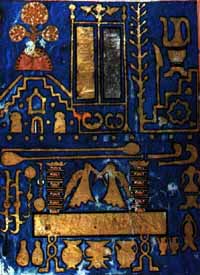
Neveh Shalom – Dwelling Place of Peace – was one of the first synagogues built in Spanish Town, Jamaica during the 17th century. The Neveh Shalom Institute is chartered to promote projects to preserve the history, culture, and artifacts of the Jewish existence in, and contribution to Jamaica, from the 17th century. > „Holy Congregation Dwelling Place of Peace“ <
The Jüdisches Museum Wien, or the Jewish Museum Vienna, is a museum of Jewish history, life and religion in Austria. The present museum was founded in 1988 in the Palais Eskeles in the Dorotheergasse, Vienna, and has distinguished itself by a very active programme of exhibitions. Read More: > HERE <
Sephardi Jews (Hebrew: סÖ°פÖ¸רÖ·דÖ´Ö¼י, Modern Sefaraddi Tiberian Səp̄Ä�raddî, plural: Hebrew: סÖ°פÖ¸רÖ·דÖ´Ö¼ים, Modern Sefaraddim Tiberian Səp̄Ä�raddîm; Spanish Sefardíes; Portuguese Sefarditas, Greek Σεφάρδοι Sefardoi, Bulgarian сефаради sefaradi, Turkish Sefarad, Judaeo-Spanish Sefardies, Arabic: سفارديون) are Jews who define themselves in terms of the Jewish customs and traditions which originated in the Iberian Peninsula before the expulsion of Jews from that area in the late fifteenth century (after Islam left it), and usually defined in contrast to Ashkenazi and Mizrahi Jews. The Sephardim have distinguished themselves as physicians and statesmen, and have won the favor of rulers and princes, in both the Christian and the Islamic world. That the Sephardim were selected for prominent positions in every country in which they settled was only in part due to the fact that Spanish had become a world-language through the expansion of Spain into the world spanning Spanish Empire—the cosmopolitan cultural background after long associations with Islamic scholars of the Sephardic families also made them extremely well educated for the times, even well into the European Enlightenment. Read More: > HERE <
The year 1492 was a fateful one for Spain. It was the year in which the Reconquista finally ended eight hundred years of Arab Muslim rule, the Jews were expelled from the country, and Christopher Columbus set off on a journey that was to lead to the discovery of the New World.
The exhibition „The Turks in Vienna“ looks at the impact of one of these significant historical events that marked the end of the Middle Ages in Europe, namely the expulsion from Spain of the Jews, who found refuge in North Africa, some Italian cities and, above all, in the Ottoman Empire. They fled initially to Portugal before leaving the Iberian Peninsula for Holland and northern Germany. Following the Ottoman conquests, Jews of Spanish descent-called „Sephardim“-were able to form culturally and economically significant communities in the Balkans. There were contacts between the Jews in Vienna and the Sephardim, or Turkish Jews, even during the era of the ghetto in Unterer Werd, but it was not until the peace treaties between the Habsburgs and the Ottoman Empire in the first half of the eighteenth century that Turkish Jews were able to move freely in the Habsburg Empire.
After the establishment of the Turkish Jewish community in Vienna, an imperial patent gave it permission to hold religious services. The community had its prayer house from the outset in the 2nd district. In 1887, the impressive Moorish-style Sephardic-Turkish temple was inaugurated in Zirkusgasse, with portraits of the Habsburg and Ottoman regents in the foyer as indication of the community’s loyalty to both rulers and countries. In November 1938, this jewel of Jewish sacral architecture was destroyed along with practically all other synagogues and Jewish prayer houses in Vienna, and most of the community was subsequently deported and exterminated.
The Sephardic Jews in Vienna were in many ways communicators between East and West, Orient and Occident, Asia and Europe, a role that was performed in the first place as merchants and dealers importing wool and cotton, silk and tobacco, sugar and spices to the West. Their function as active exponents of the Austrian post office in Constantinople and the Levant, Austrian Lloyd, and the Orient Express is also highlighted in the exhibition „The Turks in Vienna.“
The Sephardic Turks played this communicating role at the cultural level as well. They set up the first printing works in Constantinople and the Sephardic press in Vienna. There rabbinical tradition also received significant stimulus from the Sephardic Jews. The treasures of medieval Spanish-Turkish poetry were passed on and translated, and the Sephardim were also responsible for developing Jewish mysticism. Moreover, they were the first to make Arab philosophy and medicine available to the Western world. Sephardic scholars became famous as scientists and rabbis, as translators, philosophers, and Hebrew studies specialists. Sephardic publishers distributed their writings throughout the Ladino-speaking world and produced writers of the caliber of Elias Canetti, to mention but one example. Info: www.jmw.at
All of these facets of the Sephardic Diaspora and its contribution to the cultural history of the Eastern and Western world can be seen in the exhibition „The Turks in Vienna“ from May 12 to October 31, 2010, at the Jewish Museum Vienna.
The > Türkischer Tempel < (English: Turkish Temple) was a synagogue in Vienna. It was built specifically for a community of Sephardi Jews, who originally came from Turkey. The synagogue was built in a Turkish, almost Islamic style, with a dome. The building was destroyed during the Reichskristallnacht in 1938.
Sephardic music has its roots in the musical traditions of the Jewish communities in medieval Spain. Since then, it has picked up influences from Morocco, Argentina, Turkey, Greece, and the other places that Spanish Jews settled after their expulsion from Spain in 1492. There are three types of Sephardic songs — topical and entertainment songs, romance songs and spiritual or ceremonial songs. Lyrics can be in several languages, including Hebrew for religious songs, and Ladino.
- Sephardic Music: www.desiretoshare.com/music/
- http://en.wikipedia.org/wiki/Sephardic_music
- Sephardic Literature: The Real Hidden Legacy <
- Reb Zalman Legacy Project & Migdal Ohr <
- Meet Sephardic Anuism, friends and studies at fb <
- Meet Ladino/Sephardic Songs and Culture, friends, fans at fb <
- Meet Sephardic Music Festival, friends, fans at fb <
- Meet Council for a Parliament of the World’s Religions (CPWR) at fb <
KHALIL GIBRAN´s PROPHET & THE MARONITES
KHALIL GIBRAN – Works, Arts & Museum
Maronite Center for Documentation & Research
http://www.tlig.org/en/interreligious/
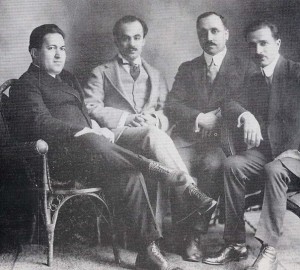
* A 1920 photograph of four prominent members of The Pen League (from left to right): Nasib ‘Arida, Kahlil Gibran, ‘Abd al-Masih Haddad, and Mikhail Naimy.
Khalil Gibran (born Gubran Khalil Gubran bin MikhÄ�’Ä«l bin Sa’ad; Arabic جبران خليل جبران بن ميکائيل بن سعد, January 6, 1883 – April 10, 1931) also known as Kahlil Gibran, was a Lebanese American artist, poet, and writer. Born in the town of Bsharri in modern-day Lebanon (then part of the Ottoman Mount Lebanon mutasarrifate), as a young man he emigrated with his family to the United States where he studied art and began his literary career. He is chiefly known for his 1923 book The Prophet, a series of philosophical essays written in English prose. An early example of Inspirational fiction, the book sold well despite a cool critical reception, and became extremely popular in the 1960s counterculture.Gibran is considered to be the third most widely read poet in history, behind Shakespeare and Lao-Tzu. Gibran was born in the Christian Maronite town of Bsharri (in modern day northern Lebanon) to the daughter of a Maronite priest. Read More: > HERE <
The Maronite Church (Arabic: الموارنة, Turkish: Maruni, Syriac: ܡܪܘܢÜ�Ü�, Latin: Ecclesia Maronitarum) is an Eastern Catholic Church in full communion with the Holy See. It traces its heritage back to the community founded by Maron, an early 5th-century Syriac monk venerated as a saint. The first Maronite Patriarch, John Maron, was elected in the late 7th century. Before the conquest by Arabian Muslims reached Lebanon, the Lebanese people including those who would become Muslim and the majority who would remain Christian, spoke a dialect of Aramaic.Syriac (Christian Aramaic) still remains the liturgical language of the Maronite Church.The members of the Maronite Church are a part of the Syriac people. Read More: > HERE <
Kahlil Gibran – The Prophet – Much of Gibran’s writings deal with Christianity, especially on the topic of spiritual love. His poetry is notable for its use of formal language, as well as insights on topics of life using spiritual terms. Gibran’s best-known work is The Prophet, a book composed of twenty-six poetic essays. The book became especially popular during the 1960s with the American counterculture and New Age movements. Since it was first published in 1923, The Prophet has never been out of print. Having been translated into more than forty languages, it was one of the bestselling books of the twentieth century in the United States.
Khalil Gibran – A Retrospective
The Prophet is a book of prose poetry that made its Lebanese-American author famous. Commonly found in gift shops and frequently quoted at weddings or any occasion where uplifting ’spiritual‘ thoughts are required, the work has never been a favorite of intellectuals – to some readers it may seem a bit twee or pompous – yet its author was a genuine artist and scholar (see bio, below right) whose wisdom was hard-earned.
The Prophet provides timeless spiritual wisdom on a range of subjects, including giving, eating and drinking, clothes, buying and selling, crime and punishment, laws, teaching, time, pleasure, religion, death, beauty and friendship. Corresponding to each chapter are evocative drawings by Gibran himself.
Final word – Taken as a whole, Gibran’s book is a metaphor for the mystery of life: we come into the world and go back to where we came from. As the prophet readies himself to board his ship, it is clear that his words refer not to his journey across the seas but to the world he came from before he was born. His life now seems to him like a short dream.
The book suggests that we should be glad of the experience of coming into the world, even if it seems full of pain, because after death we will see that life had a pattern and a purpose, and that what seems to us now as ‚good‘ and ‚bad‘ will be appreciated without judgment as good for our souls. > Full Article & Order <
The prophet also teaches that the separation we feel from other people and all forms of life while on earth is not real. We are merely expressions of a greater unity now forgotten. As he looks forward to his journey, Almustafa likens himself to „a boundless drop in a boundless ocean.“ To feel yourself to be a temporary manifestation of an infinite source is greatly comforting, and perhaps accounts for the feeling of peace and liberation many experience in reading The Prophet.
Tagore, Rilke, Gibran: A Comparative Study – In Tagore, Rilke, Gibran Dr Rosy Singh deals with the recurrent metaphysical theme of love, harmony and peace in an age when social realism and western materialism had all but swept away any literary interest in mysticism. These three poets of East and West reflect on the destiny of Man in correspondence with the Divine Nature in all its sublimity and serenity.
After her doctorate on the Existential Situations in Franz Kafka from Jawaharlal Nehru University DR. ROSY SINGH teaches German at Delhi University. Her recent publication is Rilke, Kafka, Manto -the Semiotics of Love, Life and Death.
Foreword: Tagore, Rilke, Gibran-a Comparative Study by Dr. Rosy Singh of Delhi University is an Associate of the UGC Inter-University Centre at the Indian Institute of Advanced Study. She deals with three very significant metaphysical poets of east and west at the turn of the century when Nietzsche’s proclamation of the Death of God and Marxist social realism had all but swept away academic interest in mysticism. The lyrics of these poets kept the melody of love, harmony and peace tuned to the imagination of humanity. I am happy to present this incisive study as Occasional Paper of Inter-University Centre to the students of comparative literature and philosophy.
- DER BAUORDEN <
- Isralestinian Ghandis – Meditation for Peace <
- Ecumenical Patriarch Bartholomew I of Constantinople.“The Green Pope“ <
- Kahlil Gibran Man and Poet, A New Biography <
- Tagore, Rilke, Gibran: A Comparative Study by Rosy Singh <
- Jawaharlal Nehru University, NEW: Conferences 2010 <
- Meet Khalil Gibran, friends, fans at fb <
- Khalil Ghibran´s The Prophet , friends, fans at fb <
- Meet Maronite Church, studies, friends at fb <
- Meet the Maronites of Australia, studies, friends at fb <
- Meet M.K. Gandhi Institute for Nonviolence, friends, fans at fb <
