
Posts by admin
„The Message from Water“ Emoto Peace Project
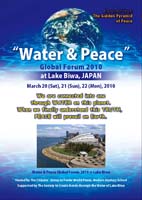
www.internationalwaterforlifefoundation.org
Masaru Emoto (江本勝, Emoto Masaru, born July 22, 1943) is a Japanese author and scientist known for his claim that if human speech or thoughts are directed at water droplets before they are frozen, images of the resulting water crystals will be beautiful or ugly depending upon whether the words or thoughts were positive or negative. Emoto claims this can be achieved through prayer, music or by attaching written words to a container of water. Read More: > HERE <
Lake Biwa (琵琶湖, Biwa-ko?), formerly known as Ōmi (淡海?) Lake, is the largest freshwater lake in Japan, located in Shiga Prefecture (west-central Honshū), northeast of the former capital city of Kyoto. Because of its proximity to the ancient capital, references to Lake Biwa appear frequently in Japanese literature, particularly in poetry and in historical accounts of battles. Read More: > HERE <
Masaru Emoto was born in Yokohama in July 1943. He is a graduate of the Yokohama Municipal University’s department of humanities and sciences with a focus on International Relations. In 1986 he established the IHM Corporation in Tokyo. In October of 1992 he received certification from the Open International University as a Doctor of Alternative Medicine. Subsequently he was introduced to the concept of micro cluster water in the US and Magnetic Resonance Analysis technology. The quest thus began to discover the mystery of water.
He undertook extensive research of water around the planet not so much as a scientific researcher but more from the perspective of an original thinker. At length he realized that it was in the frozen crystal form that water showed us its true nature through. He has gained worldwide acclaim through his groundbreaking research and discovery that water is deeply connected to our individual and collective consciousness
He is the author of the best-selling books Messages from Water, The Hidden Messages in Water, and The True Power of Water. He is a long-time advocate for peace in relation to water. He is currently the head of the I.H.M.General Research Institute and President Emeritus of the International Water for Life Foundation, a Not for Profit Organization.
The research of Dr. Masaru Emoto captures frozen water crystals in photographs that present a glimpse into the mysterious response of water to thoughts, words and pictures. As part of the United Nation’s International Decade for Action: Water for Life, Dr. Emoto wishes to share his discoveries about the responsive nature of water with children around the world. Beginning in 2006, „The Message of Water“ children’s book , will be provided to all the children in the world at no cost within the decade. This effort is called the “Emoto Peace Project.”
Dr. Emoto and many of his readers believe that water holds the potential to create peace on earth. Dr. Emoto and many of his readers believe by holding the intention of peace towards water ― by thinking, speaking and acting with the intention of peace toward water ― water can and will bring peace to our bodies and to the world.
The Emoto Peace Project presents „The Message from Water“ children’s book in hopes that this book will play a leading roll in bring peace to the world.
One man cannot change the world but one man can deliver the message to change the world. We believe it is „The Message from Water“. We thank you very much for your support to Emoto Peace Project.
What is Emoto Peace Project? – With the picture book for children “The Message from Water”, we would like to share a clue to realize world peace that we learned through the research on water in an enjoyable way. We are giving this book to the children around the world for free and hope that they find the importance of water and the true nature of us human beings. This effort is called “Emoto Peace Project”.
The target is children, because we suppose it is rather difficult to change the mind of adults whose opinion is already fixed, and the future is up to the open-minded children. What we adults can do now is to give them a chance to learn about the water or the true nature of us human being. We hope this book will be translated into many languages and be of help to realize the goal.
By the way, > NADA means sound/ NADA YOGAH < , river and flow, and BRAHMA means origin and essence in Sanskrit language. My name is EMOTO: E means river, and MOTO means origin in Japanese language. So, EMOTO is NADA BRAHMAN, which means “the origin of a river” and “the essence is sound/vibration”. The name “Emoto Peace Project” implies our hope that each child who has learned the importance of water and the true nature of us human beings will be a drop and soon turn into a big river for peace.
We would like you to help our project move forward.
Thank you very much.
Masaru Emoto
- NADA YOGA AND PHILOSPHY <
- Meet Masaru Emoto, studies, friends, fans at fb <
- Climate Change – Inuit, Indogenous People on frontline <
- Meet Survival International, friends at fb <
- Meet 100 Million Voices for a Real Climate Deal in Mexico 2010 at fb <
Celebrate the World Day for Water 2010

> HOME a film by Yann Arthus-Bertrand <
> UMWELTBERATUNG Wien – Trinkwasser sparen <
In 1993 the United Nations General Assembly declared March 22 as World Day for Water (also known as World Water Day). This day was first formally proposed in Agenda 21 of the 1992 United Nations Conference on Environment and Development (UNCED) in Rio de Janeiro, Brazil. Observance began in 1993 and has grown significantly ever since.Read More: > HERE <
World Water Day is an international day of observance and action to draw attention to the plight of the more than 1 billion people world wide that lack access to clean, safe drinking water. Celebrated since 1993, World Water Day was designated in 1992 when the United Nations (UN) General Assembly passed a resolution. With each passing year, the observance has grown larger and stronger.
In many ways though, World Water Day is still a relatively unknown event. Even with the support of the UN and efforts by leading non-governmental organizations (NGOs) and committed individuals, World Water Day is today at a similar stage as Earth Day was in the early 1970’s – important but relatively unknown.
Beginning in 2005 this began to change. Ethos Water and leading NGOs began an effort to bring even greater attention to the world water crisis on World Water Day. Then in 2006 with the strong backing of the Starbucks Coffee Company and other leading corporate and non-profit allies, we began a major effort to establish March 22 as a day where everyone, regardless of their involvement in water issues, pauses to reflect on the impact of the world water crisis and takes small but meaningful ACTION to make a difference.
In 2009, the theme for World Water Day is „Shared Water – Shared Opportunities“. This year on World Water Day, we will call attention to the waters that cross borders and link us together. Special focus will be placed on transboundary waters. Nurturing the opportunities for cooperation in transboundary water management can help build mutual respect, understanding and trust among countries and promote peace, security and sustainable economic growth. The United Nations Educational, Scientific and Cultural Organization (UNESCO) leads the activities of the World Water Day 2009 with the support of United Nations Economic Commission for Europe (UNECE) and the Food and Agriculture Organization of the United Nations (FAO).
You can help. Sign up to participate in a live event, and / or the Virtual Walk for Water – a strong, symbolic act to demonstrate your support for Action on the world water crisis. We hope you’ll help spread the word and take a moment to lend your voice to this important issue. Join us. Get involved today.
Save Ganga, Yamuna, Mother Earth <
YANTRA – VEDIC SACRED GEOMETRY <
Meet World Water Day, friends, fans at fb <
Meet Say NO to bottled Water, friends, studies at fb <
Meet Plastic Planet, Werner Boote, friends, studies at fb <
Celebrate World Water Day, March 22nd <
Global Kirtan for the Yamuna River <
Meet Save Yamuna to save Vrindavan at fb <
Meet Save Ganga Movement, friends, fans at fb <
G.K. GOSH – WATER OF INDIA: BOOK ONLINE: > HERE <
Meet Gopikanta Ghosh, friends, fans at facebook < I AM A GRADUATE IN CHEMICAL ENGINEERING. SERVED HINDUSTAN LEVER LTD., INDO – BURMA PETROLEUM CO. LTD., ETC., AND FINALLY KHADI & VILLAGE INDUSTRIES COMMISSION RETIRED AS JOINT CEO. AUTHORED MORE THAN 50 BOOKS OUT OF WHICH 48 ARE PUBLISHED.
Vedanta, Quantum Physics & Erwin Schrödinger

> Nobel Price: Erwin Schrödinger <
> Hinduism & Quantum Physics <
> E. Schrödinger: Are their Quantum Jumps ? <
The basic oneness of the universe is not only the central characteristic of the mystical experience, but is also one of the most important revelations of modern physics.“The most important discovery in the history of science“ -Prof.Henry Stapp, Quantum physicist.
Quantum mechanics (QM) is a set of scientific principles describing the known behavior of energy and matter that predominate at the atomic and subatomic scales. QM gets its name from the notion of a quantum, and that quantum value is the Planck constant. The wave–particle duality of energy and matter at the atomic scale provides a unified view of the behavior of particles such as photons and electrons. The notion of the photon as a quantum of light energy is commonly understood as a particle of light that has an energy value governed by the Planck constant. However, what is quantized is the angular momentum an electron can have as it is bound in an atomic orbital. When not bound to an atom, an electron’s energy is no longer quantized, but it displays, like any other massive particle, a Compton wavelength. While a photon does not have mass, it does have linear momentum. The full significance of the Planck constant is expressed in physics through the abstract mathematical notion of action. Read More: > HERE <
Erwin Rudolf Josef Alexander Schrödinger (German pronunciation: [ˈɛrviːn ˈʃrøːdɪŋɐ]; 12 August 1887, Erdberg – 4 January 1961, Vienna) was an Austrian theoretical physicist who achieved fame for his contributions to quantum mechanics, especially the Schrödinger equation, for which he received the Nobel Prize in 1933. In 1935, after extensive correspondence with personal friend Albert Einstein, he proposed the Schrödinger’s cat thought experiment. Read more: > HERE <
The Rishi’s vision – The > Rishi’s < vision of a world in which man participates in a seamless existence, indivisibly united with the universe around him, resonates through a discovery called > „BELL’S THEOREM“ < . This discovery, first proposed in 1964 by the physicist John S. Bell was first confirmed by experiment in 1972 by Professor John Clauser at Berkley. It is an almost unbelievable result – unbelievable because the logical mind has great difficulty in comprehending how it can be true. Its impact on the physics community has been enormous. Professor Henry Stapp, a physicist at Berkley and an authority on the implications of Bell’s Theorem, has called it. The most important discovery in the history of science.
Erwin Schrödinger is one of the greatest physicists of 20th century was also an enigmatic figure. He was a brilliant scientist, philosopher, poet and a humanist who lead a complex personal life. He was deeply philosophical in his thoughts than any other scientist of his time, but he apparently did not make far-reaching philosophical conclusions from his work in quantum physics. He was held back because he knew there was a lack of clarity. His search for the truth never reached conclusion as his one time lover Hansi Bauer noted.
Erwin’s interest in Vedanta (one of the six schools of Hindu philosophy) and Upanishads started at a young age when he was accustomed to cold and hungry times in war-torn Vienna, but his belief in Vedanta remained the same until his death in 1961: He was a life long believer. Schrödinger was deeply influenced by the thoughts of Schopenhauer, and thus developed strong interest in Buddhist philosophy and Vedanta. He studied the works of Schopenhauer, Henry Warren, Max Welleser, Richard Garbe, Paul Deussen, Max Muller, and Rhys Davids to understand Hindu and Buddhist philosophies.
According to „Vedanta“; there exists only one universal being called the Brahman, which comprises all of reality in an undivided unity. This being absolutely homogeneous in nature: It is pure thought, which is not an attribute but the substance devoid of any qualities. The Brahman is associated with a power or a principle of illusion called Maya. As a magician creates illusion during his act, Brahman through Maya creates the appearances of the material world. Maya is the cause of the material world, and an indivisible Brahman is present in all forms of existence. The soul in reality is an infinite Brahman enmeshed in the unreal world of Maya. The unenlightened soul is incapable of looking beyond this illusion, but an enlightened soul knows the difference between its true self and the external illusory world thus paving the way for identifying itself with Brahman. This unity and continuity concept of All in One expounded in Vedanta is consistent with quantum physics where the universe is superimposed with inseparable waves of probability amplitudes. The Heisenberg uncertainty phenomenon and quantum Zeno effect is an allegory to the illusions of Maya or a prelude to the indivisible, All in One, Supreme Brahman.
In his lectures on relationship of spirit and science, Schrödinger believed that spirit is subjective and can not be subjected to objective examination. He quoted Sañkarâcârya’s commentary, Subject and Object; I and not-I are opposed to each other like light and darkness.
Where Science and Buddhism Meet PART 1, Amit Goswami, Quantum Physics & Consciousness, QUANTUM MECHANICS and THE BIBLE, The Consciousness of the Universe > What the Bleep !? Quantum Physic meets Kabbalah <
Hindu philosophers believed that ego consists of thought in its relation to God, Schrödinger wished to identify ego consisted of thought and the spirit. In a letter to Einstein, he once wrote that he doesn’t believe much in God the father, and Jesus Christ His son, and he lashed out Christian churches accusing them of gross superstition in their belief of individual souls. He continued to believe in the concept one universal being, the Brahman, which comprises all of reality in an undivided unity. Quantum physics has tremendous philosophical implications, which revolutionized modern thought in science and philosophy because it did not agree with the philosophy of materialism expounded by Newton.
Interpretation of quantum world suggested that strict determinism and predictability is not an accurate description of reality, and consciousness is an integral part of the laws of quantum physics. Quantum physical experiments conducted by Alain Aspect (to address Einstein’s EPR experimental results) showed that measurements on correlated pairs follow the quantum mechanical predictions. This result has been found even when the particles are separated by a distance such that even an influence propagated at the speed of light does not affect the result. Thus clearly denying the local realism concept of proposed by Einstein. This simply justifies the principle concept of Vedanta; that is, the reality behind the appearances of physics as an unbreakable whole. If the physical world is real, it is holistic and not merely the sum of separate parts. The wholeness created by the wave particle duality and the indivisible nature of quantum world is in agreement with Vedanta philosophy of unity or Oneness of the Brahman.
Read Full Article at Rama Rao’s Amazon Blog: > HERE < Born and raised in India, and studied and worked in US. My career began as a biochemist and I have published over 60 original research papers in peer reviewed journals in chemistry and biological sciences. I have also published over seven chapters in edited books concerning electron spin resonance spectroscopy and free radical biochemistry. Over several years I developed strong interest in cosmology and astrophysics. I am firmly convinced that nature’s work in terms of its creation of the universe and life may be understood better from quantum cosmology, particle physics, philosophy of physics and universality of consciousness.
- ARTICLES: VEDANTA <
- Ganden Monastery one of the ‚great three‘ university monasteries of Tibet <
- Vishwa Bharati University in India <
- SCHRÖDINGERS BOOKS: Life and Thought
- What Is Life?: with „Mind and Matter“ and „Autobiographical Sketches“
- Mind and Matter.
- In Search of Schrödinger’s Cat: Quantum Physics and Reality
- My View of the World
- Space-Time Structure (Cambridge Science Classics)
- ‚Nature and the Greeks‘ and ‚Science and Humanism‘ (Canto original series)
- The Interpretation of Quantum Mechanics: Dublin Seminars(1949-1955) and Other Unpublished Essays
- Buy Here: http://www.amazon.com/gp/blog/post/PLNK33XJI5G66IAW7
KARNAMRITA DASI: Prayers by Women

www.lastfm.de/music/Karnamrita
The > BhÄ�gavata PurÄ�ṇa < (DevanÄ�garÄ«: भागवतपुराण) (also known as ŚrÄ«mad BhÄ�gavatam, or BhÄ�gavata) is one of the „Maha“ Puranic texts of Hindu literature, with its primary focus on bhakti (devotion) to the incarnations of Vishnu, particularly Krishna. The Sanskrit text comprises twelve skandas (cantos or books) and 13,216 verses by one count. The BhÄ�gavata includes many stories well known in Hindu tradition, including the various avatars of Vishnu and the life of Krishna. It was the first Purana to be translated into a European language, with three French translations between 1840 and 1857.
Assigning a date for any Purana is problematical, since they are often developed by generations of storytellers. The Bh�gavata itself, along with Hindu tradition, gives ancient origins for the story, with authorship credited to Veda Vyasa. Read More: > HERE <
Karnamrita dasi is an immensely talented and moving singer who has delighted audiences around the world. She grew up in Ashram community in United States, and has sung bhajans and kirtans since childhood. She continued with musical training in Indian classical vocal in Vrindavan, India, and today she is the first female Western performer to be classically trained in India in this sacred art. Acclaimed as one of the most beautiful voices in the Vaishnava tradition, Karnamrita performs all over the world. In 2004 her album “DASI: Prayers by Women” was released.
This album is an offering to women everywhere, evoking a peaceful, yet powerful essence of femininity and devotion. Their voices, their wisdom, and poetry are felt in these songs: composed in both dance and meditative styles. Compiled as a dedication to women of spiritual voices, this is a compilation of women’s songs from India, sung in Hindi and Sanskrit. The songs reflect the styles of chants, Bhajans and Kirtan. The artist has composed the music and arrangements in dedication to her late mother, Kunti Devi.
„In 1998, as my mother was passing away, she requested me to take my singing seriously and record. Although I had studied Sanskrit and sung bhajans for 28 years, I was apprehensive without proper training.That same year, I took her ashes to India, and searched for a teacher to begin studying the classical Dhrupad style.
My two teachers, Pandit Vidur Malik and Tarun Krsna Das guided me through four years of wondrous meditation and training. As a child in school, my teacher Kutila taught us to chant the women’s prayers from the scriptures. Remembering this, I took the opportunity to search out more women in our Sampradaya ( spiritual lineage) and compose music to their words.
Here then, is my offering to these glorious women. Women who sing, pray and share their life with realizations. For all of us, there is a voice that we can relate to, whether it be Draupadi’s song of letting go or simply the Arati celebration to the river Yamuna. Please sing along and let these women touch your heart.“
„mumucur munayo devah sumanamsi mudanvitah mandam mandam jaladhara jagarjur anusagaram nisithe tama-udbhute jayamane janardane devakyam deva-rupinyam vishnuh sarva-guha-sayah avirasid yatha pracyam disindur iva pushkalah“
„The demigods and great saintly persons showered flowers in a joyous mood, and clouds gathered in the sky and very mildly thundered, making sounds like those of the ocean’s waves. Then the Supreme Personality of Godhead, Vishnu, who is situated in the core of everyone’s heart, appeared from the heart of Devaki in the dense darkness of night, like the full moon rising on the eastern horizon, because Devaki was of the same category as Sri Krishna.“ – Srimad Bhagavatam, Canto 10, Chapter 3 „The Birth of Lord Krishna“, Verses 7-8
Product Description – This album is an offering to women everywhere. Their voices, their wisdom, and peace is evoked in a powerful way. Done as a decication to women of spiritual voices, this is a compelation of women’s songs from India. Composed in Hindi and Sanskrit, the album follow the styles of chants, bhajans and kirtan. The songs evoke a peaceful, yet powerful essence of femininity and devotion. The artists has composed the music and arrangements in dedication to her late mother: Kunti Devi.
- SRIMAD BHAGAVATAM ARTICLES <
- Interview: Dhrupad in Musictherapy <
- Meet Karnamrita Dasi, friends, fans at fb <
- Meet Global Peace Initiative of Women, friends at fb <
- Meet Nobel Women´s Inititative, friends at fb <
Monasteries Environmental Himalayaprotection
> MYSTIC TRAILS – Clean up Project <
KHORYUG is a network of Buddhist monasteries and centers in the Himalayas working together on environmental protection of the Himalayan region with the aim of practically applying the values of compassion and interdependence towards the Earth and all living beings that dwell here. As Buddhist practitioners, we believe that our actions must flow from our aspiration to benefit all sentient beings and safeguard our mother Earth and that this positive change in our societies must begin with ourselves first.
KHORYUG aims to develop a partnership with community based organizations and NGOs wherever there is a member monastery or center so that together with our communities, we can help and protect all life on Earth now and for the future. Subscribe to get updates on the progress of KHORYUG, and to learn more about how you can help.
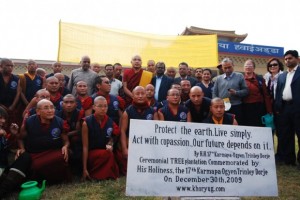
KHORYUG IN ACTION! – On the afternoon of Christmas Day, over 150 members of Khoryug met at the front of the gates of Tergar Monastery to clean up the surrounding area, including the roads, ditches, wetlands and lake nearby. Participating in the clean up were monks and nuns of all the Khoryug monasteries as well as visitors from far away who are in Bodh Gaya for the 27th Kagyu Monlam.
The activity was used as an opportunity by Khoryug coordinators to explain the important of minimizing one’s own footprint due to the immense long term impact of non-organic waste such as plastics.
SOLAR PROJECT – This is to bring to your kind notice that Environment Conservation Committee, Rumtek Monastery is going to convey Tashi Delek to all the Dharma Centre and all the Monasteries on the auspicious occasions of Tibetan New Year (Losar) which is on coming 14th. Here, our Environment Committee has already started the home made solar water heating system project to save the energy and reduce the utilization of electricity power and other energies. It has been completed two solar water heating system out of five. Under guidance of one Dharma friend, helping from Sangha Jinpa Gyatso and Environment staff Mr Yeshi, helper Laxman. Our people are expertise in making the solar water heating system by themselves. Currently, our Sanghas are using the hot water for bathing and washing. And also it wills soon utilizing in our main kitchen for cooking, making tea and washing dishes or utensils.
Khenchen Lama, AWAM Foundation, Khampas
> Heart of Enlightment Institute <
www.upaya.org Zen Center Santa Fe, NM
http://khenchenlama.blogspot.com/
AWAM is a Sanskrit word for compassion coupled with wisdom. AWAM Foundation is a non-profit organization incorporated in the state of Arizona, established to provide support to an orphanage and elder center initiated by Khenchen Lama Rinpoche in eastern Tibet. The activities of the AWAM Foundation are guided by compassion and wisdom and aim to manifest and propagate these deepest values. The foundation aims to engage in fundraising projects that would provide basic needs, housing, medical care and education for the orphans and elders. Importantly, AWAM Foundation focuses on long-term projects directed towards future self-sufficiency of the orphanage and elder center. In our activities, we respect, encourage, and support the traditional Tibetan values. The foundation is governed by three volunteer board members following the guidance of Khenchen Lama Rinpoche. Please consider supporting the worthy activities of AWAM Foundation.
Kham (Tibetan: ཁམས; Wylie transliteration: Khams; Simplified Chinese: 康巴; Pinyin: KÄ�ngbÄ�), is a region presently divided between the Chinese provinces of the Tibetan Autonomous Region, and Sichuan where Khampas, a subgroup within the Tibetan ethnicity, live. Read More: > HERE <
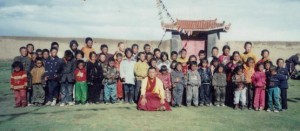
In 1999, Khenchen Lama Rinpoche established an orphanage and a shelter for older people near Jewo monastery in Tibetan province Kham. At that point there were 30 children and 10 older people who did not have any family or government support to provide for them. Moved by their suffering, Khenchen Rinpoche decided to launch a project that would provide the basic needs of food and shelter for the orphans and elders and help them cultivate wisdom and compassion that would guide them to a better future. Arrangements were made for the children to receive basic general education, training in Tibetan and Chinese languages, as well as meditation. In addition, elders interested in meditation received practice instructions from Rinpoche and were supported in their desire to engage in deep meditation practice. Over the last nine years the orphanage and shelter for older people grew in size. Currently, there are 150 children, seven to eighteen years old, and 30 older people between sixty and eighty years of age. While the progress of children and elders in their study and meditation practice is encouraging, there is increasing need to provide for them. In response to Khenchen Rinpoche’s request and under his spiritual guidance, Rinpoche’s students in Arizona established the AWAM Foundation.
HEALTH CLINIC: Because of the secluded location of the orphanage and the elder center, access to medical care is very difficult. The closest hospital that can provide appropriate care is one-day drive from the orphanage. There is a great need for a small hospital, since swift access to medical care is a necessity for small children in the orphanage as well as the elderly. The health clinic would also serve lay Tibetans who inhabit the surrounding areas in proximity of the orphanage. The clinic is planned to include both treatments in traditional Tibetan medicine and Western medicine.
www.upaya.org Pilgrimage Through Kham: A Medical Mission in Tibet
DHARMA TARA YAK FARM – In an effort to make the orphanage and elder center more sustainable, Rinpoche and his students developed a project aimed at providing long-term food contribution to the orphanage through an orphanage-owned yak farm. The Dharma Tara Yak Farm is managed free of charge by a local businessman in Tibet and is providing the orphans and elders with dairy products – the main part of diet in Tibet. Yaks purchased for the orphanage and elder center will never be killed for meat. Between 50-70 yaks are needed to provide for the 180 orphans and elders. Any excess dairy products will be in the future sold for purchase of other food articles for the orphanage. Khenchen Rinpoche is very hopeful about this project because it will provide for the orphans and elders as well as help sustain the traditional way of care for yaks. With recent changes in Tibet, increasing numbers of yaks are being raised for meat and slaughtered in a cruel way.
To launch the project, one of Khenchen Rinpoche’s students donated funds for the first 15 yaks in May 2008. Funds for additional 5 yaks were donated by Rinpoche’s Chinese students. Most recently, Rinpoche’s students from the Dharmakirti College in the USA made a donation for purchase of additional 5 yaks. The herd has currently 32 yaks because 7 baby yaks have been born since May 2008 and this number will grow every year (see picture below). We are very grateful to those who contributed to this project so far! Thanks to your support the start of the project has been a great success!
EDUCATION – When Khenchen Lama Rinpoche started the orphanage, one of the main priorities was to make sure that orphans receive the best education available in the area. To this aim, arrangements were made to cover the basic educational needs for the orphanage. Currently, there are four teachers: 2 monks from a near monastery and 2 local teachers. The curriculum focuses on reading and writing in Tibetan language, Tibetan history and culture, basic algebra, and Chinese language.
Yoga & Buddhism: Similarities & Differences
> TYS – Hindu, Buddhist, Jaina Yoga <
Yoga (Sanskrit, PÄ�li: योग yóga) refers to traditional physical and mental disciplines originating in India. The word is associated with meditative practices in Hinduism, Buddhism and Jainism. In Hinduism, it also refers to one of the six orthodox (Ä�stika) schools of Hindu philosophy, and to the goal toward which that school directs its practices. In Jainism it refers to the sum total of all activities—mental, verbal and physical.
Major branches of yoga in Hindu philosophy include Raja Yoga, Karma Yoga, Jnana Yoga, Bhakti Yoga, and Hatha Yoga.Raja Yoga, compiled in the Yoga Sutras of Patanjali, and known simply as yoga in the context of Hindu philosophy, is part of the Samkhya tradition. Many other Hindu texts discuss aspects of yoga, including Upanishads, the Bhagavad Gita, the Hatha Yoga Pradipika, the Shiva Samhita and various Tantras. Read More: > HERE <
Yoga and Buddhism: Similarities and Differences
Written by Dr. David Frawley
Yoga and Buddhism are sister traditions which evolved in the same spiritual culture of ancient India. They use many of the same terms and follow many of the same principles and practices. For this reason it is not surprising that many of us born in the West, particularly after an initial exposure, are apt to regard Yoga and Buddhist teachings as almost identical.
We may want to combine their teachings or practices accordingly, as if there were no real differences between them. The differences that have existed between the two systems historically, which have kept them apart as separate traditions, are less obvious to us in the West than are their commonalities. Or those who study one of these traditions may be inclined to see the other as a borrowing from it. Those who study Buddhism may find so much similarity in Yoga that they suspect a strong Buddhist influence on Yoga. Those who study Yoga may find so much similarity in Buddhism that they see a strong yogic influence on Buddhism.
However, the tendency to find commonality between these two great spiritual traditions is not limited to the West. Swami Vivekananda, the first great figure to bring Yoga to the West, examined the Buddhist Mahayana scriptures (Sutras) and found their key teachings and those of Vedanta that he followed to be ultimately in harmony. In recent years with the influx of Tibetan refugees into India, including the Dalai Lama, there has been a new dialogue between the two traditions that is bringing about greater respect between them. Tibetan Buddhists often appear at Hindu religious gatherings and partake in all manner of discussions.
Nor is the attempt to connect the two traditions limited to modern times. Various synthetic Hindu-Buddhist teachings have existed through history. Buddha himself was born a Hindu and some scholars have argued that Buddhism as a religion apart from Hinduism did not arise until long after the Buddha had passed away. A Shiva-Buddha teaching existed in Indonesia in medieval times, and for many Tantric Yogis it is difficult to tell whether they were Hindus or Buddhists. Buddha became accepted as an avatar of Vishnu for the Hindus during the medieval period, and most Hindus still consider that we live in the age of the Buddha-avatar. Most Hindus accept Buddha as a great teacher, even if they do not accept all Buddhist teachings. Full Article: > HERE <
- Meet Buddhism studies, groups, friends, at fb <
- Meet Hinduism studies, groups, friends, at fb <
- Meet Jainism studies, friends, fans, at fb <
- Meet Dr. David Frawley, AIVS, studies, friends, at fb <
- Meet Traditional Yoga Studies, friends at fb <
Samsara Films, Kumbh Mela, Prims of light

Samsara (Sanskrit: संसार) is the cycle of birth, death and rebirth (i.e. reincarnation) within Buddhism, Bön, Hinduism, Jainism, Sikhism, Vaishnavism and other Indian religions. Colloquially, „Samsara“ can also refer to a general state of overt or subtle sufferings that occur in day to day life.The concept of samsara (along with karma, reincarnation, and moksha) was likely first developed in India by non-Aryan people outside of the caste system. The spiritual ideas of these people greatly influenced later Indian religious thought. Buddhism and Jainism are continuations of this tradition, and the early Upanishadic movement was influenced by it. Reincarnation was adopted from this religious culture by Brahmin orthodoxy, and Brahmins first wrote down scriptures containing these ideas in the early Upanishads. The Sanskrit word „Samsara“ is the root for the Malay word „sengsara“, which means suffering. Read More: > HERE <
Every year, approximately two million people go to India on spiritual quests.
What are they searching for?
In the East, they are called Seekers. In the West, they are labelled „Spiritual Junkies“. Aged anywhere between 16 and 80, they roam in search of personal and spiritual understanding, often without the support of their loved ones or community.
‚Prisms of Light‘ explores this growing phenomenon by focusing on people who are travelling through India on spiritual quests. Interwoven between them are a plethora of spiritual traditions, colourful characters, and chance encounters.
In 2009, Director Yolanda Barker and crew funded a research trip to India, where they shot the promo above. Over the last few months, we have been raising funds to go into production. But we need to get back to India in April for a major spiritual gathering. Time is running out.
„Peace of Mind from a Buddhist Perspective. Samsara“
http://prismsoflightdocumentary.blogspot.com/
Samsara Films has formed a collaboration with Seattle based Typecast Films to make South Asian documentaries, shorts and narrative features available in the North American market. Typecast Films is an emerging film distribution company formed in 2005 by John Sinno, the CEO of Arab Film Distribution (AFD), in order to represent a wider range of cinematic works from around the world. Since its inception, Typecast Films has successfully launched a number of theatrical and DVD releases, including „Iraq In Fragments,“ which won three top prizes at Sundance and was nominated for the 2006 Best Documentary Academy Award.
Samsara Films’ extensive experience in South Asia makes us a key collaborator for projects in India. Our contacts and resources will deliver the highest quality value in production services.
- KUMBH MELA: Songs of the River (60 Min)
- Largest gathering of humanity on Earth!
- www.kumbhmelafilm.com
The Kumbh Mela is a great roving Hindu spiritual festival that has moved around India for more than four thousand years, erecting temporary cities along the Ganges River. The January 2001 Kumbh Mela was the largest gathering of humanity in recorded history. East joined West, ancient met future at the advent of the 21st Century. Millions of people came from all over the globe to pray for peace and rebirth for themselves and for the world. Appearing: HH Dalai Lama, Dr. Andrew Weil, Yogmata Keiko Aikawa, Pilot Baba, Kaali Baba.
REVIEWS – “It is a fascinating look at our humanity and at how our spirituality manifests in the world.” – Stephen Simon Producer, WHAT DREAMS MAY COME and Co-Founder of Spiritual Cinema Circle
“Songs of the River displaces a Westerner from everyday certitudes and opens him or her to the power of the Kumbha Mela experience and the consciousness people like [Yogmata] Keiko Aikawa seek. All in all, a compelling cinematic experience.“ —
Harold Crooks, whose documentary film credits include the award-winning The World Is Watching, The Champagne Safari and The Corporation.
- ABE OSHEROFF
- “One Foot in the Grave the other Still Dancing” (72 Min)
Most people knew Abe Osheroff as an activist — from the frontlines of the Spanish Civil War to the picket lines of the U.S. labor movement, from the struggles for civil rights in Mississippi to the work for human rights in Nicaragua. For most of his 92 years, Osheroff threw himself into the fray with rare energy and enthusiasm. In this riveting documentary, Osheroff reflects on the meaning of that activism and the ideas that animated his actions. A truly organic intellectual, he shares the wisdom built up over a lifetime of commitment to the „radical humanism“ that defined his politics and philosophy.
- VARANASI SACRED FIRE (50 min)
- www.kmp2001.com
A cinematic meditation on a remarkable city, where both life and death are encountered daily on the great Ganges River. This is a rare account of cremation rituals at Manikarnika Ghat, India’s holiest funeral ground.
Researches in Indian and Buddhist Philosphy
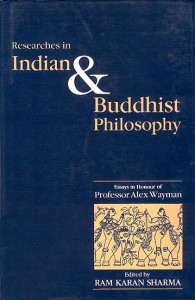
> Chap16: Comp. Siddis in Bhagavata Purana & Patanjali Yoga Sutras <
> BOOK: SIDDHIS IN THE BHAGAVAD PURANA <
Siddhi (Devnagari सिद्धि) is a Sanskrit noun that can be translated as „perfection“, „accomplishment“, „attainment“, or „success“. The term is first attested in the Mahabharata. In the Pancatantra, a siddhi may be any unusual skill or faculty or capability. As a legal term in the Manusmriti, it refers to the settlement of a debt.
In the Samkhya Karika and Tattva Samasa, and hence in Tantric Buddhism, it specifically refers to the acquisition of supernatural powers by magical means or the supposed faculty so acquired. These powers include items such as clairvoyance, levitation, to be present at various different places simultaneously, to become as small as an atom, to materialize objects, to have access to memories from past lives, etc. The term is also used in this sense in the Sarvadarsana-samgraha of Madhvacharya. Read More: > HERE <
Researches in Indian and Buddhist philosophy:
Essays in honour of Professor Alex Wayman, RÄ�ma Karaṇa ŚarmÄ�
The present volume, comprising ninteen articles by renowned scholars, is divided into three sections, namely, Buddhist Jaina and Hindu Philsosphical Researches. The articles in Hindu section take a comperative base. K.K.Raj compares the Buddhist and Mimamsa views on Laksana. K. Bhattacharya speaks of grammarians and philososphers regarding post-Panini grammarians on a certain anusasana. R.C.Dwivedi compares kashmir Saivism with Sankara`s Vedanta and T.S.Rukmani compares Siddhis as found in the Bhagavata Purana and in Patanjali`s Yogasutras. R.V. Joshi compares the Advaita and the Vaisnava views of the matter.
The present volume, comprising nineteen articles by renowned scholars, is divided into three sections, namely, Buddhist, Jaina and Hindu Philosophical Researches.
Under the Buddhist section Bareau, using the Vinaya in Chinese, defends Wayman’s position that Asanga belonged to Mahisasaka sect. Nakamura points out differing view about the seven Vajjian Republic principles. Michael Hahn and Samtani concern with Buddhist poet Candragomin and the term raga resectively. Shinjo Kawasaki expounds the views of Bhavya about the differing karma of non-sentient and sentient beings. Hirakawa’s article deals with the relation with dhatu. Collett Cox shows that the present 12-membered formula is taken for granted by early Chinese Abhidharma texts.
In Jaina section, Jaini deals with the theory that an omniscient being can subsist on a subtle kind of food. Dhaky’s main object t ascertain early parts of Dasavaikalikasutra, also goes into the matter of food.
The articles in Hindu section take a comparative base, K.K. Raja compares the Buddhist and Mimamsa views on Laksana. K. Bhattacharya speaks of grammarians and philosophers regarding post-Panini grammarians on a certain anusasana. R.C. Dwivedi compares Kashmir Saivism with Sankara’s Vedanta and T.S. Rukmani compares siddhis as found in the Bhagavata Purana and in Patanjali’s Yogasutras. R.V. Joshi compares the Advaita and the Vaisnava views of the matter.
The work breaks new grounds and is a solid contribution in the field of Indian Philosophy.
About the Author – Prof. R.K. Sharma as a Fulbright Scholar, worked with Prof. M.B. Emeneau at University of California. He has all along been contributing to promotion of Sanskrit Studies in India and abroad as Founder Director, Rashtriya Sanskrit Sansthan, Joint Educational Adviser, Govt. of India, Vice-Chancellor of the two Sanskrit Universities at Darbhanga and Varanasi, Visiting Professor at Columbia University of New York City, University of Bihar and Chicago, Organizing Secretary of two world Sanskrit Conferences, etc. He is a recipient of Presidential Award of Honour in Sanskrit and a Fellow of the Royal Asiatic Society.
Yogis in Tibet
Instructions On Siddhis
1. By the process of Hatha Yoga, the Yogi attains perfect physical body—Rupalavanya Bala Vajrasam-hanana Kaya Sampat. “The perfection of the body consists in beauty, grace, strength and adamantine hardness.” The power to bear extreme cold and heat (Titiksha), the power to live without water and food and other powers come under the category of Kaya Sampat (perfection of body).
2. Since the body of the Hatha Yogi is perfect and firm, his mind also is firm and one-pointed. By the practices of Dharana and Dhyana, he reaches the highest rung in the Yogic ladder and attains Immortality through Yogic Samadhi. The Yogi who has reached the highest stage, will have the 8 major and all the minor Siddhis.
3. Attainment of powers depends upon the amount of concentration at different Chakras and Tattvas and awakening of Kundalini. The practice of Mudras, Bandhas, Asanas and Pranayamas will also help a lot in acquiring Siddhis.
4. The Siddhis that are obtained by the practice of Mudras can be obtained by the practice of Bandhas, Asanas, Pranayamas and also by the concentration on different Chakras. That depends upon the temperament and capacity of the aspirants. One can obtain the desired goal by one exercise and others by different methods. Therefore if one is not able to get success by a particular exercise, he will have to have recourse to other exercises.
5. Many of the 8 major Siddhis are not possible at all at the present age (Kali Yuga), when the body and mind of the vast majority are not fit enough. Even today there are several Siddhas who have the power to perform some of the Siddhis. When people approach them to do this and that, they hide themselves or generally say:—“I do not know.” They are not much particular about these Siddhis. Their aim is to ignore these as unreal and aspire to reach the highest. They are the only real Yogins. Many are able to use some powers and they do not know how they are able to do them.
6. One can read the thoughts of others. A man in London hears the spiritual message of sages in India. You have seen several persons removing the poison of cobras by chanting some Mantras or by mere touch. By giving some sort of leaves, incurable diseases are cured. There are men who will very accurately tell your past, present and future. Some are able to see astral entities. Stopping the functions of the heart and changing the mind of others and other powers are due to Yogic practices.
7. Nowadays you cannot find a man who has developed all the powers. When one gets certain powers, he stops there by the influence of Maya and false Tushti (satisfaction) and uses the powers for his livelihood or for fame. Therefore he is not able to proceed further and attain perfection. It is not the mistake of the Yogic Kriyas. You should not lose faith. Faith, attention, sincerity and earnestness will lead you to success.
“ Of one thing we can be certain. The real Siddha who does not want or care for Siddhis, but who manifests Siddhis for unselfish reasons and as a result of communion with the Lord or the Brahman, is an entirely different person from the little man who has psychic powers to do things which are extraordinary or who has control of spirits. The power over spirits (good or bad) is entirely different from spiritual power. And no real Siddha goes about calling himself a Bhagavan or parading his powers. It cannot be said that the Siddha does not know that he performs miracles but they are not miracles to him—they are just ordinary things for him because he lives in the plane beyond the reach of the common man. I have to conclude that Swami Sivananda is one such. But he does not reveal himself as such to all and sundry.“ – Sri Swami Sivananda
- Also read from Kundalini Yoga- SRI SWAMI SIVANANDA
- KUNDALINI
- INTRODUCTION
- YOGA SADHANA
- PRANAYAMA
- PRAYER TO MOTHER KUNDALINI
- EXPERIENCES ON AWAKENING OF KUNDALINI
- GRADATIONAL ASCENT OF MIND
- PRANAYAMA FOR AWAKENING KUNDALINI
- ASANAS
- MUDRAS AND BANDHAS
- EIGHT MAJOR SIDDHIS
- DHARANA
- YOGA-KUNDALINI UPANISHAD
- Tibetan schools of Yoga:
- Anuyoga
- Mahayoga
- Six Yogas of Naropa
- Trul khor (Yantra Yoga)
Siddha, part of the 3 trad. Indian Medicines

> CITTAR TRADITON < > ANCESTORS ARANKAL <
> LIFE POSITIVE SIDDHA MEDICINE <
> NATIONAL INSITUTE OF SIDDHA <
The Siddha medicine is a form of south Indian Tamil traditional medicine and part of the trio Indian medicines – ayurveda, siddha and unani.
This is nearly 10,000 years old medical system followed by the Tamil People.This system of medicine was popular in ancient India,due to the antiquity of this medical system,the siddha system of medicine is believed to be the oldest medical system in the known universe. The system is believed to be developed by the 18 siddhas in the south called siddhar. They are the ancient supernatural spiritual saints of India and the Siddha system is believed to be handed over to the Siddhar by the Hindu God – Lord Shiva and Goddess Parvathi. So are the siddhars, the followers of Lord Shiva (saivam). Siddhar’s total nos are eighteen in themagathiyar is the first siddhar.
According to the scriptures,[which?] there were 18 principal siddhars. Of these 18, agasthiyar is believed to be the father of siddha medicine. Siddhars were of the concept that a healthy soul can only be developed through a healthy body. So they developed methods and medication that are believed to strengthen their physical body and thereby their souls. Men and women who dedicated their lives into developing the system were called Siddhars. They practiced intense yogic practices, including years of fasting and meditation. Read More: > HERE <
Siddha Medicine is the one of the Ancient System of Medicine which has been practiced in Tamil Nadu, India.
CITTAR TRADITION – As a common nom, siddha means “realized, perfected one”, a term generally applied to a practitioner (sadhaka, sadhu) who has through his practice (sadhana) realized his dual goal of superhuman powers (siddhis, “realizations” “perfection”) and bodily immortality (jivanmukhi). As a proper noun, siddha becomes a broad sectarian appellation, applying to devotees of Siva in the Deccan (Mahesvara Siddha), alchemists in Tamil Nadu (Sittars), a group of early tantrikas from Bengal (Mahasiddhas, siddhacarya), the alchemists of medieval India (Rasa Siddhas), and, most especially, a main north Indian group known as the Nath Siddhas (White 2004).
ABOUT SIDDHA SYSTEM OF MEDICINES – In the ancient period Indian saints handled the plants and herbs for long life with better health and lived more than thousand years of age. The sages were called Rishis in the North and Siddhars in the South and their systems were known as Ayurveda and Siddha.
According to Siddha predictions, it is known to the world that Lord Siva taught the Siddha principles and philosophies to Matha, Sri Parasakthi. After that the Siddha principles were presented to the followers of Lord Siva and Sakthi, to Siddhars, starting with Siddhar – Nantheesar, then to Siddhar Thirumoolar, Agathiyar and other disciples along with the 18 Siddhars and so on. When we go through the Tamil Literature, we can see several Siddhars like Agathiyar, Tholkappiyar etc. All the Siddhars adopted the principles of Saiva Siddhantham. It is an excellent philosophical theory to human beings with holy life. In all Siddhars, Agathiyar was considered the prominent leader with his later guru Lord Subramaniyar.
From the old Siddha literature we can understand that Siddhar – Agathiyar was first taught by Lord Siva, Sakthi and later by Lord Subramaniyar. Along with him we have Siddhars like Sattanathar, Korakkar, Kaalangi, Pulasthiyar, Theraiyar, Pulippani, Bogar, Konganavar, Machamuni and so on.
All the Siddhars taught their principles along with their well experienced medicines to their disciples under Gurugulavasa . They brought the secrets in the palm leaves manuscripts with several code words for their understandings. In later stages, those code words were not clear and were not known to the next generations except the followers of hereditary and traditional people of Siddha medicines. Most of their predictions are classified with several formulations which could be followed and adopted according to the land, climate, age, severity of the disease food and circumstances.
In general, single and even compound medicines are advised for the patients by knowing the pulse diagnosis methods, the variations of Naadi in their hands by means of Vali, Azhal, Aiyyan, or in other words called Vaatham, pitham and kapam, respectively. These three vital forces of cosmic elements are named under Three Thosham, or Mukkuttram and this is activated by the functions of Punchaboothas. The five major concept of Punchaboothas, are named as Nilam, Neer, Neruppu, Kattru and Veli, which are respectively in hands known as Prithivi, Appu, Theyu, Vayu, and Akash. According to this theory, all the substances in the universe are created under the actions or reactions of the Punchaboothas‘ functions only. Even for disease also, disease occurs in the living objects (body) by means of less quantity of the ratio of the Punchaboothas only. If the ratio differs from one to another any disease may attack the body (human beings, animals, birds, flies etc.) by the way of the deficiency of certain vitamins and minerals. Now a days several or some medicines affect the body and stimulate the curiosity of the disease to create another disease, this is also caused by the differentiation in the ratio of the Punchaboothas functions. Siddhars in olden days followed and adopted the principles for preparing all medicines like herbal, minerals and metals. They cautioned the administration of certain Basmas, and Sinduras, which are well oxidised stages of metals and minerals, and advised for intaking periods, diet restrictions, according to the age, climate and land etc.
Siddhars classified the diseases in different topics and accounted the total diseases for human body as 4448 diseases. They mentioned about the curable and incurable diseases along with the symptoms of the body and predicted the concerned, proper medicines also.
Siddhars‘ thoughts are derived to the medicines for curing toughest and chronic diseases like, cancer, brain tumours, blood cancer, cordiac diseases, Rheumatoid Arthritis, oesteo Arthritis etc. All the Siddha preparations are doing wonders from patient to patient with better ailments.
Now a days the trained traditional Siddha practitioners are doing well, even with the old highest proficiency processes which were kept by their ancestors and some people make challenges with other systems for healing and curing AIDS like diseases. Generally with this system several processes are there to improve the Haemoglobin as well as the immunisation of the AIDS patients without any side effects. More and more herbal preparations are predicted from one Siddhar to another with different kinds of Herbals. Very simple Herbal processes are advised by the Siddhars for the diseases like migraine, Sinusitis, Hypertension, Diabetes Mellitus, Gynaecological disturbances, Leucoderma and psoriasis, Asthmatic attacks, piles and pistula, Rheumatisms, Dental problems etc. Siddha system of science is the most effective, valuable system for the human beings in all occasions without any side effects. Everybody can follow Siddha system of medicine even for the whole family and even for the entire earth in all circumstances. Siddha System of Science is an everlasting principle to the world.
Siddha System presents the slogan, „Food is being medicine and medicine is being food“ to people.
Research on siddha medicine: http://www.siddha-medicine.org/ The present research on siddha medicine began in October 2005. It belongs to the international programme ‚Societies and Medicines in South Asia. Exploring the social construction of healing‘ instituted by the Department of Social Sciences of the French Institute of Pondicherry (see axis 4 of this programme)
SAVE GANGA, Water from Himalayan Glaciers, Biodiversity, Herbs <
UNCED Internationa Water Day < 20 – 22. March 2010
UN International Year of Biodiversity, friends studies at fb <
www.ifpindia.org/pdfs/soc_et_med_a bstracts.pdf

Trad. Medicine Herbs in Tribal Communitys
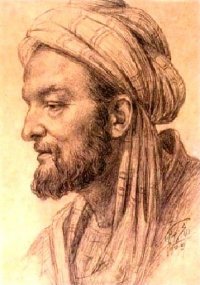
www.ibnsinaacademy.org (Medevial Studies)
> INSTITUTE HIMALAYAN BIORESSOURCES, BIODIVERSITY <
> MINISTERY OF TRIBAL AFFAIRS <
> INT. CONFERENCE IN UNANI MEDICINE <
22-24th April, 2010
> AYUSH DEPARTMENT < of Ayurveda,
Yoga/ Naturopathy/ Unani/ Siddha and Homoeopathy
Unani or Yunani (pronounced /juːˈnɑːni/; YūnÄ�nÄ« in Arabic, Bengali, Hindi, Persian, Pashtu and Urdu) means „Greek“, and has its origins in the Greek word Ἰωνία (Iōnía) or Ἰωνίη (Iōníe), a placename given to a Greek populated coastal region of Anatolia. Unani, part of the trio Indian medicines – ayurveda, siddha and unani.
It is used to refer to Graeco-Arabic or Unani medicine, also called „Unani-tibb“, which is based on the teachings of Hippocrates, Galen, and Avicenna, and the concepts of the four humours: Phlegm (Balgham), Blood (Dam), Yellow bile (ṢafrÄ�‘) and Black bile (SaudÄ�‘).
Unani medicine – Though the threads which comprise Unani healing can be traced all the way back to Claudius Galenus of Pergamum, who lived in the second century of the Christian Era, the basic knowledge of Unani medicine as a healing system was developed by Hakim Ibn Sina (known as Avicenna in the west) in his medical encyclopedia The Canon of Medicine. The time of origin is thus dated at circa 1025 AD, when Avicenna wrote The Canon of Medicine in Persia. While he was primarily influenced by Greek and Islamic medicine, he was also influenced by the Indian medical teachings of Sushruta and Charaka. Read More: > HERE <
IHBT is constantly striving to generate new knowledge to fulfill its mission of sustainable management of Bioresources in the himalayan region by adopting a multidisciplinary approach in R & D activities. The Institute has five Divisions engaged in research of high scientific impact.
The importance of medicinal plants in traditional healthcare practices, providing clues to new areas of research and in biodiversity conservation is now well recognized. However, information on the uses for plants for medicine is lacking from many interior areas of Himalaya. Keeping this in view the present study was initiated in a tribal dominated hinterland of western Himalaya.
The study aimed to look into the diversity of plant resources that are used by local people for curing various ailments. Questionnaire surveys, participatory observations and field visits were planned to illicit information on the uses of various plants. It was found that 35 plant species are commonly used by local people for curing various diseases. In most of the cases (45%) under ground part of the plant was used. New medicinal uses of Ranunculus hirtellus and Anemone rupicola are reported from this area. Similarly, preparation of „sik“ a traditional recipe served as a nutritious diet to pregnant women is also not documented elsewhere. Implication of developmental activities and changing socio-economic conditions on the traditional knowledge are also discussed.
Background – Out of the total 4, 22, 000 flowering plants reported from the world, more then 50,000 are used for medicinal purposes . In India, more than 43% of the total flowering plants are reported to be of medicinal importance . Utilization of plants for medicinal purposes in India has been documented long back in ancient literature. However, organized studies in this direction were initiated in 1956 and off late such studies are gaining recognition and popularity due to loss of traditional knowledge and declining plant population. Right from its beginning, the documentation of traditional knowledge especially on the medicinal uses of plants, has provided many important drugs of modern day.
Even today this area holds much more hidden treasure as almost 80% of the human population in developing countries is dependant on plant resources for healthcare .
In the interior areas of western Himalaya plants become the only source of medicine and well being. However, information on the uses of plants as traditional medicines has not been documented from various interior areas of western Himalaya such as Chhota Bhangal. Due to its remoteness and lack of modern health facilities dependence on plants for medicine is very high. Ironically, information on the uses of plants for medicine from this area is completely lacking. At the same time, the area is undergoing rapid transformations due to its recognition as an ideal paragliding site and is therefore becoming more market oriented. This can be seen in the changed cropping patterns of the local people. The role of market economy in depletion of traditional knowledge has been well documented in many parts of Himalaya . Thus many important leads to drug discovery may be lost in absence of proper documentation.
Keeping this in view, the present study was initiated, with an aim to identify knowledgeable resource persons and document their knowledge of on the utilization of medicinal plants in Chhota Bhangal area of western Himalaya.
Land and people – Chhota Bhangal represents one of the most interior areas of western Himalaya and is located in the hill state of Himachal Pradesh (HP). More than 3500 flowering plants have been reported from HP, of which almost 500 plants are believed to be of medicinal importance . Located between 32° N lat to 32° 7.77′ N and 76° 45′ E long to 76° 53.83′ Chhota Bhangal is a pristine area with good vegetation . The area is rich in forests that comprises mainly of moist Himalayan temperate forests with one or the other species of oak (Quercus spp.) in dominance. In some areas, dry Himalayan temperate forests dominate the vegetation. They mainly consist of Cedrus deodara intermingled with other tree species such as Abies pindrow and Picea smithiana. Rhododendron campanulatum and Betula utilis form the tree line in the area. The dominating under canopy flora includes Berberis lycium, Prinsepia utilis, Viburnum nervosum and a diversity of herbs and grasses. These forests form the catchment area of the Uhl river that flows through the region and forms the life support system of the Bhangalis. Bhangalis represent a tribal community of the Himalaya that are very God fearing and follow Hinduism. Though they can easily understand and speak Hindi (which is the national language of India), amongst themselves they communicate in pahari dialect. They are mainly agropastoralists and rear sheep and goats. During summer season (June to September) they migrate to their temporary settlements at higher regions (>3500 m) and during winters they return to their lower altitude settlements at 1800 m. In addition to livestock rearing, agriculture is the main occupation of Bhangalis. Wheat forms the main agricultural crop. However, under the influence of market, recently the cultivation of potato and French beans has increased in the area at the cost of indigenous crops.
Bhangalis are a repository of traditional knowledge especially on the utilization of plants for medicinal purposes. This can be easily understood from the following local sayings which are very popular in the area. „Bana, basuti te bare jethi houan thethi manu kian more“ meaning a man cannot die of disease in an area where Vitex negundo (bana), Adhatoda vasica (basuti) and Acorus calamus (bare) are found, provided that he knows how to use them. Similarly another verse that is common in the area is „Harad, bahera amla bich payi giloye, jithonye char chijan utho admi kyon moye“. It means that a person will not succumb to disease in an area where Terminalia chebula (harad), T. bellerica (bahera), Emblica officinalis (amla) and Tinospora cordifolia (giloye) plants are available. Recently the area has come up on the world tourism map because of its recognition as an ideal paragliding site. In addition to paragliding thousands of tourists visit the area for its scenic beauty and high peaks & passes.
Results – The study reveals that in absence of modern health facility people in the area depend on plants for medicinal purposes. Based on the initial reconnaissance survey and group discussions where emphasis was on identification of knowledgeable resource persons it was found that, information on the medicinal uses of plants now seems to be confined to elder people (above 40 years of age) only. Younger generation is ignorant about the vast medicinal resources available in their surroundings and is more inclined towards market resources. All the resource persons identified were in the age group of 40–55 years and all of them were familiar with the medicinal plants growing in their vicinity. It was also found that men knew comparatively more then females. Their could be many reasons for this, females have more household working pressure in western Himalaya and so they had limited time and secondly they could have been little hesitant while talking to us as we were an all male team. In all, the people use 35 different plants for curing various ailments, out of which 25 were herbs, 5 trees, 4 shrubs and one climber. In most of the cases (45%), underground parts were used for curing ailment followed by leaves and aerial parts. Stem and flowers were the least used plant parts. The information on scientific name, local name of the plant, plant part used to cure and method of dosage has been provided in Table 1. The specimen number of the plant that has been deposited in the herbarium (PLP) of IHBT has also been provided. The plants are arranged in alphabetic order.
Locally used medicinal plants – These plants were used for curing a total of 21 diseases ranging from simple stomach-ache to highly complicated male and female disorders. Even jaundice and kidney stones were treated by them. Maximum number of plants were used for curing female disorders and fever followed by joint pain, gastric problems and nasal bleeding. It was also found that a single plant may be used for curing many ailments such as, Artemisia sieversiana that is used both as an abortifacient and also for joints pains. Similarly Parthenocissus semicordata is used against leucorrhoea and piles. Though, majority of the plants are available in the vicinity of village forests, however, for some, that are found in the alpine regions, people have to cover long distances on foot sometimes more than 20 km. Aconitum heterophyllum that occurs above 3500 m in the alpine regions of Chhota Bhangal is used for curing stomach ache and fever and is one of the highly traded species. Its tuber are sold at a rate of Rs. 1500/kg in the area. Another important plant of the alpine region is Picrorhiza kurrooa. It is used by Bhangalis for curing joint pains and fever and the dried rhizomes of the plant are sold at a rate of Rs. 60/kg. Rheum australe also occurs in the alpine zone, the roots of which are used by Bhangalis for curing joint pains and swellings. The plant is traded from the area and the dried roots fetch a price of Rs 55/kg. Few plant species, such as Berberis asiatica, B. lycium, Prinsepia utilis and Rubus niveus are very common in the village surroundings. Berberis asiatica is used for curing jaundice while B. lycium is used against eye disorders. The root of both these plants also yields a yellow dye while the fruits are eaten. Prinsepia utilis also occurs in the open areas around villages and its roots are used for wound healing and as an antidote to poison. The roots of Rubus niveus are used for curing excessive bleeding during menses. All these four species are presently not traded from the area. A very common plant that occurs on rocks and boulders in Chhota Bhangal is Bergenia ciliata. It has very long and stout roots which are used for curing kidney stones. Cirsium wallichii and Rumex nepalensis are common around the temporary settlements of Bhangalis and are used by them. C. wallichii is used for curing gastric troubles while R. nepalensis is used as anti allergic. Ranunculs hirtellus that occurs in moist areas along water channels is used for curing swelling in testes. Anemone rupicola is also found in moist areas and is use against ear problems. In addition, five commonly occurring tree species namely, Aesculus indica, Grewia optiva, Pinus roxburghii, Prunus cerasoides and Rhododendron arboreum, are also used by the Bhangalis for curing various ailments. The fruits of A. indica are used in preparation of a nutritious recipe called „sik“. For this, after removing the seed coat, the fruit is washed and kept for drying. It is then powdered and roasted with ghee (clarified butter) till it becomes brown. Later sugar and water are added to it. It can be stored for 2 to 3 days. It is a pre- and post- pregnancy food for ladies. It is also used for curing excessive bleeding and pain during menses. The beautiful red flowers of R. arboreum in addition to being eaten raw as salad are used for curing nasal bleeding. Young leaves of the plant are considered to be poisonous. G. optiva and P. cerasiodes are used for curing joint pains. Oil is also extracted from the fruits of P. cerasiodes. Pinus roxburghii is used as diuretic.
Number of plants used for treating various diseases. – It was also found that people are hesitant to disclose their knowledge. It is this knowledge that provides them recognition in the society and hence they do not want to share it. In most of the cases, it was found that this knowledge has been orally transferred from one generation to other and at each level a bit of it has been lost. The people themselves say that, compared to them their forefathers knew much more. It was also found that the local people are concerned about the degradation of medicinal plants in wild. Due to recent shift towards herbal medicines the pressures on the resources have increased and the market is fast expanding. It is to be noted that nearly 130 medicinal plants are in heavy demand from Himachal Pradesh and as already mentioned many important plants are traded from Chhota Bhangal.
Discussion – Many of the plants that are used by the local people in Chhota Bhangal find mention in ancient medicinal literature and are also used in different medicines systems such as, the Ayurveda and Unani.
Aconitum heterophyllum that is used by the Bhangalis for curing stomach ache finds mention in Ayurveda for curing stomach ache and fever. It is one of the main ingredients of „Ativishadi churna“, „Chandraprabha vati“ and „Amritarishta“ ayurvedic medicines. In Unani system of medicine it is an important ingredient of „Sufuf habib“ which is used for curing piles and also of „Ma’jun jograj guggal“ that is used against arthiritis . Similarly Picrorhiza kurrooa which Bhangalis use for joint pains is used for curing fever, jaundice, asthma, and leucoderma in Ayurveda. In Unani it is used for curing leucoderma and piles . It forms an important ingredient of medicine „Arogyawardhini“ which is used for treating hepatobiliary disorders and of „Hepax“ which is useful in pregnancy anaemia . The overexploitation of A. heterophyllum and P. kurrooa for trade has lead to a drastic decline in their population and now both are endangered. Rheum australe is another important plant especially in the Unani medicine system where it is an important constituent of „Itrifal Mulayyin“ used for curing constipation; „Hab Shabyar“ used for curing headache, „Haba Shafa“ used against cough and cold and „Roughan aqrab“ used for piles . The plant also finds mention for curing diarrohea amongst livestock . Due to high extraction pressure and declining population, the plant has been designated as vulnerable . Berberis asiatica and B. lycium are used in Ayurveda and Unani for treating eye disorders incidentally the Bhangalis also use them for eye disorders. Similarly, Bergenia ciliata that is used by Bhangalis for curing kidney stones is used for curing urinary disorders, splenic enlargement, ulcers and dysentery in ayurveda. In Unani it is used against hydrophobia, splenic enlargement, mennorrhgia and liver disorders . It is one of the main ingredients of „Cystose“ drug that is used for cleaning urinary tract infections . During the surveys, it was observed that a large number of plants are used for curing female disorders compared to males. This can be attributed to the fact that unlike men, women are shyer and therefore find treatment in the community itself. The work load on them is also comparatively higher and hence they hardly find time to visit market places for treatment.
Unani medicine, like Western medicine (which also arose from the Greek background) owes its origination to Hippocrates (460-377 B.C.) and his numerous followers. Other Greek medical masters, such as Dioscorides and Galen, who we recognize as the forerunners of Western herbal medicine, are also considered founders of Unani medicine.
The adoption of Greek medicine into the Islamic culture was depicted by Husain F. Nagamia MD, Chairman International Institute of Islamic Medicine, and former President of the Islamic Medical Association, as arising in the ancient city of Jundishapur (near Baghdad). The timing of events is described in relation to rule of caliphs, the civil and religious leaders of Muslim states, who are considered to be successors of Mohammed.
In Pakistan, India, Bangladesh and other countries, there are hundreds of Unani Medical Colleges where Unani System of medicine is taught, in five and half year courses and the graduates are awarded BUMS (Bachelor of Unani Medicine and Surgery) or other degrees. There are about 10 Unani medical Colleges where a Postgraduate degree is being awarded to BUMS Doctors. all these colleges are affiliated to reputed universities and recognized by the Governments.
It is interesting to note that use of Ranunculus hirtellus, Rubus niveus and Anemone rupicola for the described medicinal purposes seems to be restricted to this area, as use of these plants for the said diseases could not be found in the literature perused for the western Himalaya . Similarly, preparation of „sik“ has not been documented in the literature for the western Himalaya.
Conclusion – It can be concluded from the study that Bhangalis inherit a rich traditional knowledge and documentation of this knowledge has provided novel information from the area. They still depend on the plants for medicinal purposes and are very much concerned about their degradation in wild as they now have to travel even more far to collect these plants. The incoming of roads and coming up of the area as an important tourist destination has allured the younger generation towards market economy, this certainly will have larger implications. Thus, the present documentation of traditional knowledge from an area where novel information has been generated will not only provide recognition to this knowledge but will also help in its conservation vis-à-vis providing pharmacological leads for the betterment of human society.
Acknowledgements – We thank the Director IHBT for facilities and encouragements. We are thankful to Dr. R.D. Singh for critical review and suggestions on the manuscript. Er. Amit Kumar and Dr. S. Rajkumar are thanked for fruitful discussions. We would also like to thank the various informants who shared their knowledge with us. The National Bioresource Development Board, Govt. of India is acknowledged for the financial support. FULL ARTICLE : > HERE <
- Herbal Medicine for Market Potential in India <
- Medical Tourism Unani <
- UNANI MEDICINE – with Reference to Pakistan and India <
- http://sufihealingcentre.com/ayurvedic_unanu.html
- Meet Bio Med Central, friends and Studies aft facebook <
- MEET IBN SINA, AVICENNA, friends and studies at fb <
- Meet Siddha, Vaidhya Medicine, friends and studies at fb <
- Meet Tradtional Islamic Medicine , friends, studies at fb <
UNESCO – The Tradition of Vedic Chanting
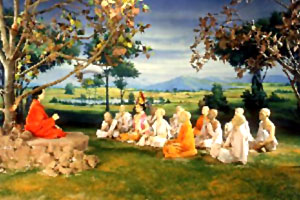
Shiksha is one of the six Vedangas
> UNESCO PUBLISHING, PURANAS & YOGA <
A shakha (Sanskrit śÄ�khÄ�, „branch“ or „limb“), is a Hindu theological school that specializes in learning certain Vedic texts, or else the traditional texts followed by such a school. An individual follower of a particular school or recension is called a śÄ�khin.- the term is also used in Hindu philosophy to refer to an adherent of a particular orthodox system.
A related term caraṇa, („conduct of life“ or „behavior“) is also used to refer to such a Vedic school : „although the words caraṇa and śÄ�khÄ� are sometimes used synonymously, yet caraṇa properly applies to the sect or collection of persons united in one school, and śÄ�khÄ� to the traditional text followed, as in the phrase śÄ�khÄ�m adhite, („he recites a particular version of the Veda“)“. The schools have different points of view, described as „difference of (Vedic) school“ (śÄ�khÄ�bhedaḥ). Each school would learn a specific Vedic Saṃhita (one of the „four Vedas“ properly so-called), as well as its associated Brahmana, Aranyakas, Shrautasutras, Grhyasutras and Upanishads. Read More: > HERE <
The Vedas comprise a vast corpus of Sanskrit poetry, philosophical dialogue, myth, and ritual incantations developed and composed by Aryans over 3,500 years ago. Regarded by Hindus as the primary source of knowledge and the sacred foundation of their religion, the Vedas embody one of the worlds oldest surviving cultural traditions.
The Vedic heritage embraces a multitude of texts and interpretations collected in four Vedas, commonly referred to as books of knowledge even though they have been transmitted orally. The Rig Veda is an anthology of sacred hymns; the Sama Veda features musical arrangements of hymns from the Rig Veda and other sources; the Yajur Veda abounds in prayers and sacrificial formulae used by priests; and the Atharna Veda includes incantations and spells. The Vedas also offer insight into the history of Hinduism and the early development of several artistic, scientific and philosophical concepts, such as the concept of zero.
Expressed in the Vedic language, which is derived from classical Sanskrit, the verses of the Vedas were traditionally chanted during sacred rituals and recited daily in Vedic communities. The value of this tradition lies not only in the rich content of its oral literature but also in the ingenious techniques employed by the Brahmin priests in preserving the texts intact over thousands of years. To ensure that the sound of each word remains unaltered, practitioners are taught from childhood complex recitation techniques that are based on tonal accents, a unique manner of pronouncing each letter and specific speech combinations.
Although the Vedas continue to play an important role in contemporary Indian life, only thirteen of the over one thousand Vedic recitation branches have survived. Moreover, four noted schools in Maharashtra (central India), Kerala and Karnataka (southern India) and Orissa (eastern India) are considered under imminent threat.
The Vedic literature that has come down to our times is attached to various traditional schools of recitation and ritual called the ‘shakhas’. All the four Vedas have more than one shakha extant. In the past, the number of shakhas studied was many times more.
According to the Mahabhasya of Patanjali, there were 21 shakhas of Rigveda, 9 of Atharvaveda, 101 of Yajurveda (86 of Krishna Yajurveda and 15 of Shukla Yajurveda, according to later authorities) and a 1000 varieties of chanting of Samaveda. Maybe, the number 1000 for the Samaveda merely refers to ‘numerous’. Nevertheless, although only 20 or so Shakhas of the Vedas are extant now, we do possess names of most of the lost Shakhas of the Rigveda, Yajurveda and Atharvaveda. Fragments of many of the lost shakhas are also available as quotations in ancient works. For the Samaveda, we do not have more than 40 names extant.
Two different Vedic shakhas might share one or more texts amongst themselves. Conversely, the distinction between two shakhas of the same Veda might result from the use of a different Samhita text, and/or a different Brahmana text, and/or different Kalpasutra text and so on. For e.g., the Baudhayana and the Apastamba shakhas use the same Taittiriya Brahmana, Taittiriya Samhita and Taittiriya Aranyaka but follow different Kalpasutras. On the other hand, the Shankhayana and the Kaushitaka shakhas use the same Samhita and Shrauta Sutra but their brahmanas have slightly different readings and their Grhyasutras are quite different.
A group or a community of people who study a particular shakha in its entirety (Samhita + Brahmana + Aranyaka + Kalpasutra + any additional texts) and perform its ritual constitute a ‘charana’. For instance, Brahmins who study the Taittiriya Samhita/Brahmana/Aranyaka together with the Kalpasutra of Apastamba say – “I follow the Apastamba charana’.
In certain cases, we have instances of ‘mixed shakhas’. For instance, the followers of Shakala shakha have adopted the Kalpasutra of Ashvalayana. The Ashvalayana shakha, which had the now well-known Ashvalayana Sutra, has in turn lost oral traditions of its Samhita. Likewise, the Kaushitakins of Kerala often use the Samhita of Shakalas.
The various shakhas of the Vedas were, at one time, spread throughout South Asia. Their geographical location has not been constant down the ages, as communities of Brahmins professing a particular shakha migrated from one part of India to the other, or adopted another shakha when it became impossible for them to sustain the tradition of their own shakhas.
It is quite certain however, that the tradition of recitation of the Vedic texts originated in north India, and this region was the area where almost all the shakhas originally arose. From various sources, we can determine the following geographical distribution of Vedic Shakhas at various intervals of times, and their present state of survival:
TRAD. MEDICINE AND PRIMARY HEALTH CARE
> RAINFOREST INFO CENTER PROJECTS <
The Katkari are amongst the poorest people in India. A disenfranchised Adavasi or tribal group, legislated more than a hundred years ago by the British as a „criminal tribe“, they are largely landless and are enslaved in brickworks as bonded labour. Despite this, their spirit is strong. This 21 minute documentary examines their plight, looks at one group trying to help them (Academy of Development Science) and appeals to the international community to help change their lot. It features unique performances by several Katkari musician.
An appeal to save the Katkaris : A Primitive Forest Tribe from Maharashtra, India – The Katkari tribal group is teetering on the brink of extinction. The Katkari community, a primitive forest tribe based mostly in Raigad and Thane Districts of Maharashtra, lives in abject poverty. Even in 2003 they continue to work as bonded labour for their „sheth“ (master). Their exploitation by non-tribals is total and absolute. They have been converted into a cheap and bonded labour force by their fellow human beings.
The police department harasses them at will and treats them like a „criminal tribe“. While the Indian Government would deny the presence of slavery, the Katkaris are slaves and much more. All development programmes, Government or Non-Government, bypass the Katkaris. >>> VIDEO: AN APPEAL FOR KATKARI < (Criminal Tribes Act of 1871…)
The life expectancy of Katkaris has reduced in recent years and the Katkaris, as a tribe, may be on their way out, unless urgent efforts are made to reverse the trend. While animals, plants, insects and even microbes attract a lot of attention (and resources) for conservation and rehabilitation, nobody seems to be bothered about the unique and unusual Katkaris.
An attempt is made here (it is unfortunate that this had to take on a „project“ form) to issue an appeal to the international community to save the Katkari tribe from extinction.
Academy of Development Science (ADS), in collaboration with NGOs and individuals in Raigad and Thane District, is striving to address basic survival issues facing the community. The process will hopefully emancipate Katkaris from slavery and bring about improvements in their socio-economic status.
Arunachala is a sacred mountain near Tiruvanamalai in southern India. Seen as a manifestation of the god Shiva, it is a site of great annual pilgrimage. Over the last 20 years, it has also been the site of much tree-planting. This 12 minute documentary tells the story of the formation of the Annamalai Reforestation Society (ARS) and examines the juncture between spirituality and practical environmentalism.
TRADITIONAL MEDICINE AND PRIMARY HEALTH CARE – Local health traditions (also termed traditional medicine or folk medicine) were once common in the tribal region.
Every village had atleast one sueen (traditional birth attendant) and more than one vaidu (folk practitioner).
There was also a large body of knowledge of simple home remedies. These Local Health Traditions (LHTs) were community-supported, autonomous, oral in nature, self-reliant and based on the use of local resources, mainly plants. For instance, there are reports of over 300 medicinal plant species being used by tribals in Raigad District for their primary health care needs.
Promotion of Allopathic medicine and utter neglect of traditional medicine by the Government and mainstream medical institutions has literally wiped out local health traditions prevalent in tribal regions. Academy’s efforts are aimed at revitalising local health traditions without disturbing their autonomy. Regular training programmes are conducted for vaidus, housewives and tribal youth interested in learning about herbal medicine. Village level aushadhikaran (medicine preparation) camps are organised to train women in simple processing techniques for the treatment of common ailments. ADS also organises training programmes on herbal medicine for NGOs, Community Groups, Schools, etc.
A dispensary and pharmacy have been set up on ADS campus for treatment of patients from nearby villages. The dispensary is managed by tribal vaidus. The pharmacy is engaged in processing of herbal medicines.
A medicinal plants garden and nursery has been established on 20 acres of land in view of the unavailability of medicinal plants to people for health care needs. ADS has hence undertaken work on conservation and sustainable utilisation of medicinal plants. More than 450 medicinal plant species are growing in the garden. An ethno-medicinal herbarium, raw drug and seed museum have been established. Saplings of over 100 different medicinal plant species are raised and distributed every year.
A number of visitors, mainly school/college students, medical students, Ayurvedic doctors, botanists, etc. visit the herbal garden throughout the year to learn about medicinal plants.
ADS is engaged in building capacities of NGOs from other regions through training programmes on traditional medicine. A number of such NGOs are now involved in meaningful work on traditional medicine and primary health care. The concept is thus gradually spreading to other areas.
Over the past year ADS has been concentrating on the health problems of women and children using traditional medicine. A team of women health workers has been working in 20 villages for the treatment of gynaecological problems. The results are encouraging. This line of work needs to be developed further so that, women and children, who are a marginalised section within the tribal community, have access to better health care and nutrition. This is extremely important in the present context where a large number of malnutrition and starvation related deaths of small children are being reported from different tribal regions of Maharashtra.
ADS work on traditional medicine is acknowledged as a pioneering effort in the field of community health.
ACADEMY OF DEVELOPMENT SCIENCE
KASHELE POST, KARJAT TALUKA, RAIGAD DISTRICT
MAHARASHTRA 410 201
INDIA
email: ads@pn3.vsnl.net.in
St. Patrick Hospital – St. Bingen Festival
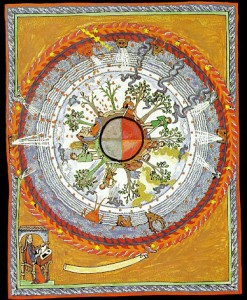
> HILDEGARD VON BINGEN FESTIVAL <
March 11-14, 2010
Missoula, Montana
> St. Patrick’s Hospital: Women’s Care Center <
* held in conjunction with 10th Annual Celebrating Women Series, Center for Attitudinal Healing and the Arts: Montana Cappella of Voices & Instruments, University of Montana: Women and Gender Studies & Music Departments. …..Teach only love, for that is what you are. ACIM
Blessed Hildegard of Bingen (German: Hildegard von Bingen; Latin: Hildegardis Bingensis; 1098 – 17 September 1179), also known as Saint Hildegard, and Sybil of the Rhine, was a Christian mystic, German Benedictine abbess, author, counselor, linguist, naturalist, scientist, philosopher, physician, herbalist, poet, channeller, visionary, composer, and polymath. Elected a magistra by her fellow nuns in 1136, she founded the monasteries of Rupertsberg in 1150 and Eibingen in 1165.
She was a composer with an extant biography from her own time. One of her works, the Ordo Virtutum, is an early example of liturgical drama.
She wrote theological, botanical and medicinal texts, as well as letters, liturgical songs, poems, and the first surviving morality play, while supervising brilliant miniature Illuminations. Read more: > HERE <
About the ISHBS – Founded in 1983 by Professor Bruce Hozeski of Ball State University, The Interntational Society of Hldegard von Bingen Studies is comprised of scholars and enthusiasts interested in the promotion of the 12th century magistra.
1st antiphone with psalm 109/110 from the vesper „o vis aeternitatis“ at Abbey St. Hildegard. Schola of the Benedictines Abbey St. Hildegard, Eibingen. Directed by Johannes Berchmanns Göschl and Sr. Christiane Rath OSB. Recorded 1997 http://www.abtei-st-hildegard.de/
The purpose of the society is to promote study, criticism, research, and exchange of ideas related to all aspects of Hildegard von Bingen’s work. Methods of achieving this purpose include but are not limited to, faculty exchanges, inter-institutional cooperation, annual meetings, participation in conferences, the publication of a newsletter, and the endorsement of other publications relating to Hildegard von Bingen studies. .
Qualelibet, is the bi-annual newsletter which features articles touching on all aspects of Hildegard’s life & reception – from in depth scholarly source studies to modern day reception history and concert reviews.
As the ISHBS is an inclusive organization intended to promote dialogue among scholars and enthusiasts, Qualelibet welcomes studies from all perspectives and methodolgies as we explore the life and works of Hildegard and related subjects.
Herbal Priests – Roots of Medicine Europe
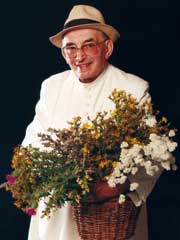
> INSTITUTE FOR INTERNATIONAL MEDICINE <
> KRÄUTERLEXIKON, HEILPFLANZEN <
by Subhuti Dharmananda
Hermann-Josef Weidinger (* als Heinrich Anton Weidinger 16. Jänner 1918 in Riegersburg; † 21. März 2004 in Waidhofen an der Thaya) war Prämonstratenser-Chorherr, Missionar und in Österreich als „Kräuterpfarrer Weidinger“ bekannt.
Die Bürgerschule besuchte er jenseits der Grenze in Frain (Vranov) an der Thaya im damals deutschsprachigen Teil Südmährens. Mit 18 Jahren fasste Weidinger, der sich bereits als Bub gerne im Kräutergarten seines Onkels aufgehalten hatte, den Entschluss, Missionar zu werden. Nach der Matura an der Aufbauschule in Horn entschloss er sich zum Dienst in der Mission und trat in den Orden der Salesianer Don Boscos ein. Nach kurzer Vorbereitung und Sprachschulung in Unterwaltersdorf und in Italien kam er 1938 in die Republik China, wo er Philosophie und Theologie studierte und das Buchdruckerhandwerk erlernte.
Im damals noch portugiesischen Macao gründete er einen Verlag. Als Übersetzer bekannter Werke ins Chinesische machte er sich einen Namen. Nach medizinischen Kursen lernte Weidinger als Assistent eines Militärarztes die chinesische Naturheilkunde kennen. Read More: > HERE <
Kräuter-Pfarrer Künzle – Mit seinen pflanzlichen Natur-Arzneien konnte Kräuter-Pfarrer Künzle viele Kranke heilen – oft auch dann noch, wenn die Schulmedizin bereits am Ende ihres Lateins angelangt war. Kein Wunder also, dass ihn nicht nur Menschen aus seiner Heimat aufsuchten, sondern auch Adelige aus aller Herren Länder, wie der König von Serbien, der Maharadscha von Idore aus Indien und viele andere mehr.
Als Kräuter-Pfarrer Künzle auch Zustimmung von Kaiser Franz-Josef erhielt, fand er sogar Anerkennung bei jenem Ärztekollegium, das seine Arbeit verbieten wollte. Mit seinem enormen medizinischen Wissen und seiner herausragenden Intelligenz (8 Sprachen) konnte er schliesslich alle davon überzeugen, dass viele Gesundheitsprobleme mit seinen pflanzlichen Präparaten erfolgreich behandelt werden können. Er gilt somit als der Wegbereiter der modernen Phyto-Therapie (Pflanzenheilkunde) und war ein Vorreiter der Ganzheitsmedizin. …und heute sind seine phyto-therapeutischen (pflanzlichen) Produkte aktueller denn je. Mehr lesen: www.kp-kuenzle.ch
Swiss Priest Johann Künzle: > Major European Herbs < by Subhuti Dharmananda, Ph.D
Kräuterpfarrer Hermann-Josef Weidinger wurde 1918 in Riegersburg geboren, mit 18 Jahren entschloss er sich, Missionar zu werden. Er trat in das Missionshaus Unterwaltersdorf ein, maturierte 1938 und fuhr noch im selben Jahr nach China. Anfangs arbeitete er im Pressebereich. Nach medizinischen Kursen lernte Weidinger als Assistent eines Militärarztes die chinesische Naturheilkunde kennen. Eine Malaria-Erkrankung beendete jedoch abrupt die Tätigkeit im Reich der Mitte. Weidinger trat in das Prämonstratenserstift Geras ein und wurde Pfarrer in Harth. Nach dem Tod des damaligen Kräuterpfarrers Rauscher im Jahr 1979 übernahm Weidinger die Leitung des in Karlstein ansässigen Vereins der Freunde der Heilkräuter.
Heilkraft der Pflanzen seit Jahrhunderten bekannt – Schon Hildegard von Bingen beschäftigte sich mit der Heilkraft der Pflanzen. Die Heilkraft der Pflanzen war im Volk bekannt, in den Klöstern aber wurden sie sowohl intensiviert, als auch kultiviert.
Hermann-Josef Weidinger, better known as Herbal Priest Weidinger, who died on Sunday, March 21, 2004, at the age of 86. He had studied European herbalism in his youth and traveled to China as a missionary in 1938, where he learned also of their herbal system; he returned from China in 1953. He continued his work as an herbalist and proponent of healthy lifestyle, writing some 40 books on natural health care. Until recently, he and 37 assistants prepared and prescribed herbal remedies in Karlstein, Austria, at the Paracelsus House Nature Cure Center.
Tracing the history of European herbology – In all cultures, the origins of herbal medicine are lost in the mists of time. There is little doubt that humans used herbs for healing well before anything could be written about them. At some point in an advancing culture, written documents become the repository for knowledge that had been passed on from one generation to the next. Among the earliest such documents are those describing the religious beliefs of the people and those describing the medical practices.
Many authorities recognize Hippocrates (460-375 B.C.) as the „father of medicine“ for the European tradition. He had little interest in the use of herbs. The primary focus of the Hippocratic School of Medicine was diet and nutrition and a reliance on calm, moderate living. These are the same foundations that herbalists such as Künzle put forth as the basis for healing .
A summation of the Hippocratic approach was presented by Erwin Ackerknecht, in his 1968 book (revised from the 1955 edition) A Short History of Medicine, as relayed below. Naturopathic physicians today will recognize the opening description as the one adopted in the definition of their profession. Reference is then made to the conditions of apepsis and pepsis, referring, basically, to inability to properly digest (apepsis) or ability to properly digest (pepsis), which is likened to cooking of the food in the stomach, relying on an innate heat.
To students of Asian medicine, this is a near perfect echo of teachings from India and China about the source of disease and the resolution of disease via invigorating this digestive fire and promoting the healthy function of the digestive system.
The great philosopher Aristotle (384-322 B.C.) was the son of a medical man and a medical man himself, but his main influence on the development of European medicine was through his student, Theophrastus (380-287 B.C.), called the „father of botany.“ He was the first known author in Europe (and the rest of the world) of a classification system for plants with accompanying comments about their medicinal properties. He described about 450 different medicinal plants. However, this text has not come down through history, and is only noted in later commentaries.
The first document of herbal medicine to attain the status of a medical classic in the European tradition was by Dioscorides (40-90 A.D.). Known as Materia Medica, a fifth century reproduction still exists, complete with botanical illustrations that were apparently added to the original text (carefully preserved in Vienna). > HISTORIC ISLAMIC PLANT MEDICINE <
Dioscorides was a surgeon accompanying the armies of Nero. He traveled far, collected much information, and gained considerable medical experience as he went. His work was later adopted by Muslim physicians, leading to the development of Unani medicine (Greek medicine as retained in the Islamic tradition).
Contributions of Herbalist Priests in Central Europe – Father Sebastian Kneipp (1821-1897) of Bavaria, is recognized as one of the leading contributors to the modern field of natural healing. He advocated exposure to nature: sunlight, baths, fresh air, and dips in cold water, eating natural foods (rather than processed foods), and having a positive mental attitude, as a means of recovering health, and this is an origin of the „spa“ movement in central Europe that remains vibrant today. He became convinced of the efficacy of this approach when, at the age of about 21, he suffered from tuberculosis and cured himself by these methods-particularly the „water therapy“-which he was said to have found described in the Vatican archives, though it may have been from another church library. After becoming a priest, he began making recommendations for sick parishioners.
Kneipp had a strong influence on the development of naturopathy and herbal therapeutics in America. In 1892, one of those who sought out Father Kneipp’s help was Benedict Lust, a German who had immigrated to America, but then returned home after contracting tuberculosis. He was cured using Kneipp’s method of water therapy (along with healthy diet and herbs) and became convinced of its general usefulness. He returned to America to promote „Kneippism,“ starting schools, societies, magazines, health food stores, and sanitariums. Lust utilized the name naturopathy to describe the basic approach, and founded the American Naturopathic Association and the American School of Naturopathy.
Künzle had learned from Kneipp as well as from other priest-herbalists (such as Father Ludwig, mentioned in his autobiography) and his work stimulated considerable interest in herbalism in Europe during the first half of the 20th century.
In turn, Kneipp and Künzle both influenced the Austrian Hermann-Josef Weidinger (1918-2004). He had studied European herbalism in his youth and traveled to China as a missionary, where he lived from 1938 to 1953, and learned of their herbal system from a Buddhist monk and also while working with an army doctor.
He returned from China due to illness and continued his work as an herbalist, writing numerous books on natural health care. Until recently, he and 37 assistants prepared and prescribed herbal remedies in Karlstein, Austria, at the Paracelsus House Nature Cure Center.
FULL ARTICLE: > Tracing the history of European herbology <
Kräuterpfarrer Weidinger in China
- ARGE-TCM.AT < Fortbildungsdiplom renomierte Links und mehr…
- www.cmjournal.org The official journal of the International Society for Chinese Medicine
- www.kp-kuenzle.ch/links.html – Info about European Medicines Agency
- Bauerngarten < , trad. organic farming
- www.international.natur-im-garten.at
- KRÄUTER ANNO 1625 <
- ARCHE NOAH, Traditional Food, Organic Seeds <
- http://en.wikipedia.org/wiki/Sebastian_Kneipp
- Articles about > Hildegard of Bingen <
- Articles about > TCM <
- Article > Traditionelle abendländische Medizin <
- International Society of Hildegard von Bingen Studies <
- Meet Islamic Medicine the cure for every desease at fb <
NaturalNews.com is an independent news resource that covers the natural health and wellness topics that empower individuals to make positive changes in their personal health. NaturalNews offers uncensored news that allows for healthier choice.
