SPIRITUAL JOURNEYS, NEWS
Dalai Lama stattet Österreich im Mai bisher längsten Besuch ab
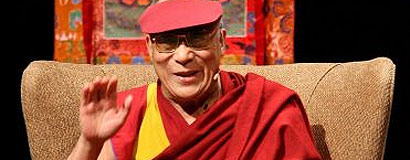
Dalai Lama stattet Österreich im Mai bisher längsten Besuch ab. Der Dalai Lama wird im Mai zehn Tage in Österreich weilen und dem Land damit seinen bisher längsten Besuch abstatten. Das Oberhaupt der Tibeter reist nach Kärnten, Salzburg und Wien. Am Donnerstag wurde das Besuchsprogramm präsentiert.
Zum vierten Mal seit 1992 besucht das Oberhaupt der Tibeter Österreich, von 17. bis 26. Mai wird der Dalai Lama bleiben. Der Direktor des Tibetzentrums in Hüttenberg (Kärnten), Lama Geshe Tenzin Dhargye, präsentierte am Donnerstag in Wien gemeinsam mit dem Kärntner Landeshauptmann Gerhard Dörfler (FPK) das Besuchsprogramm.
Kärnten: „Die Kunst des Glücklichseins“
Den Auftakt des Dalai Lama-Besuchs stellt ein Treffen mit den Schülern des Tibetzentrums in Hüttenberg, dar. An den darauffolgenden zwei Tagen stehen dann in der Klagenfurter Messehalle „buddhistische Unterweisungen“ auf dem Programm. Am 20. Mai wird am selben Ort ein Vortrag unter dem Titel „Die Kunst des Glücklichseins“ stattfinden. Ein Thema, das dem Dalai Lama laut Geshe Dhargye besonders am Herzen liegt: „Seine Heiligkeit glaubt, dass es notwendig ist, eine Spiritualität zu schaffen, die von allen Menschen – egal ob gläubig oder nicht – angenommen werden kann. Aus dieser können dann jene menschlichen Werte entstehen, die eine Schlüsselrolle auf dem Weg zum Glücklichsein einnehmen.“
Salzburg: Internationale Flüchtlingsproblematik im Mittelpunkt
Anschließend geht die Reise weiter nach Salzburg, wo beim Besuch in der Salzburgarena das Thema „Weltfrieden und universelle Verantwortung“ im Mittelpunkt steht. Vor allem die internationale Flüchtlingsproblematik soll dabei behandelt werden, sagte Ernst Löscher, Direktor der Flüchtlingshilfeorganisation „Alpine Peace Crossing“ (APC), der die Vorträge in Salzburg mit organisierte. Denn: „Der Dalai Lama ist wahrscheinlich der prominenteste Flüchtling, den es gibt.“ Am Nachmittag wird der Dalai Lama mit dem Salzburger Erzbischof Alois Kothgasser, der evangelischen Superintendentin Luise Müller, dem Präsidenten der islamischen Glaubensgemeinschaft Fuat Sanac und dem Wiener Gemeinderabbiner Schlomo Hofmeister zusammentreffen und mit ihnen über die Möglichkeit religiöser Harmonie in Zeiten der Globalisierung diskutieren.
Wien: Berührungspunkte zwischen Wissenschaft und Buddhismus
In der Wiener Stadthalle hält das tibetische Oberhaupt dann am 25. Mai einen Vortrag unter dem Titel „Jenseits von Religion – Ethik und menschliche Werte in der heutigen Gesellschaft“. Den Abschluss wird am 26. Mai das wissenschaftlich-religiöse Symposium „Geist und Materie – neue Modelle der Realität“ an der Universität Wien bilden. Gemeinsam mit den Quantenphysiker Anton Zeilinger, einem langjährigen Freund des buddhistischen Oberhauptes, und weiteren führenden Wissenschaftlern aus Physik, Neurowissenschaft und Philosophie wird der Dalai Lama über Berührungspunkte zwischen Wissenschaft und Buddhismus diskutieren.
Previous articles #dalai lama #tibet #humanrights
http://religion.orf.at/projekt03/news/1204/ne120426_dalailama.html
(APA)

Themenabende im Monat Mai / Juni mit Shri Sarvabhavana
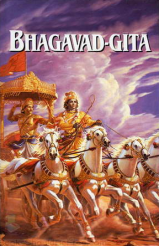
Wir laden herzlich ein zu den Vorträgen und Veranstaltungen mit Shri Sarvabhavana im Monat Mai/ Juni VORTRÄGE in BERLIN / DRESDEN & PIRNA
The Bhagavad Gita (pronounced: [ˈbʱəɡəʋəd̪ ɡiːˈt̪aː] ( listen)), also referred to as Gita, is a 700-verse Hindu scripture that is part of the ancient Sanskrit epic Mahabharata. Due to its presence in the epic, it is classified as a Smṛiti text. However, those branches of Hinduism that give it the status of an Upanishad also consider it a Śruti or „revealed text“.[1][2] As it is taken to represent a summary of the Upanishadic teachings, it is also called „the Upanishad of the Upanishads.“[3] HERE
Free Will…now in english! http://www.vedic-guide.de/en/texte/freier-wille
http://www.facebook.com/shrisarvabhavana


Public Talk in Ottawa, Canada on April 28: His Holiness will give a public talk on Ethics for a Whole World organized by the Canada Tibet Committee at the Civic Center. Contact Website: www.tibet.ca/2012
Buy the Book
Beyond Religion: Ethics for a Whole World by His Holiness the Dalai Lama
Ten years ago, in his book Ethics for a New Millennium, His Holiness the Dalai Lama first proposed an approach to ethics based on universal rather than religious principles. Now, in Beyond Religion, the Dalai Lama, at his most compassionate and outspoken, elaborates and deepens his vision for a nonreligious way that transcends mere religion.
I Won’t Fall Down: A Video Tribute
A video tribute to the courage and compassion of the Tibetan people, their struggle against Chinese oppression and the trials of their life as a people in exile from their beloved homeland. Montreal band Sunrise and Good People, visited the little town of McLeod Ganj in India, home to many Tibetan refugees. Moved by the stories they heard, they created this musical tribute.
The Tibetan Resettlement Project

Arunachal Pradesh /ˌɑrəˌnɑːtʃəl prəˈdɛʃ/ is a state of India. Located in northeast India, Arunachal Pradesh borders the states of Assam and Nagaland to the south, and shares international borders with Bhutan in the west, Burma in the east and the People’s Republic of China in the north.
Arunachal Pradesh means „land of the dawn-lit mountains“[4]. It is also known as „land of the rising sun“[5] („pradesh“ means „state“, „territory“ or „region“) in reference to its position as the easternmost state of India. Like other parts of Northeast India, a majority of the people native to the state are of Tibeto-Burman origin.A large and increasing number of migrants have reached Arunachal Pradesh from many other parts of India, although no reliable population count of the migrant population has been conducted, and percentage estimates of total population accordingly vary widely. Part of the famous Ledo Burma Road, which was a lifeline to China during World War II, passes through the eastern part of the state.
The northern border of Arunachal Pradesh follows the McMahon Line, a border delineated in the Simla Accord that was signed by the United Kingdom and Tibet in 1914 but not by China. Both the Republic of China (ROC) and the People’s Republic of China (PRC) claim the northern portion of Arunachal Pradesh as part of the former provinces of Tibet Area and Xikang (for the ROC), respectively the Tibet Autonomous Region (for the PRC). The PRC often refers to the claimed areas as South Tibet. Itanagar is the capital of the state. http://en.wikipedia.org/wiki/Arunachal_Pradesh
The Government of Canada is helping up to 1,000 Tibetans immigrate to Canada. Even with India’s incredible generosity, without this humanitarian initiative many of these Tibetans – currently sheltering in the Indian state of Arunachal Pradesh – may never be able to pursue what so many in Canada take for granted: the very best for themselves and their children. Learn about the Tibetan Resettlement Project and the struggles of a people in exile.
The Government of Canada is facilitating the immigration of up to 1,000 Tibetans living in the state of Arunachal Pradesh in India, at the request of the Canada Tibet Committee and Canada’s Tibetan community. Up to 1,000 displaced Tibetans, including principal applicants and their eligible family members, will be accepted over a five-year period.
As part of this program, the Canada Tibet Committee has incorporated Project Tibet Society (PTS) to oversee the program. With CTC branches, local Tibetan Cultural Associations and Tibet supporters across Canada, PTS is now in the process of establishing local committees to oversee the five-year program.
Arunachal Pradesh
Arunachal Pradesh is situated in North-Eastern India. With a total area of 83,743 sq. kms, it has a long international border with Tibet (currently occupied by the People’s Republic of China) to the north and north-east (1,080 km), Myanmar to the east (440 km) and Bhutan to the west (160 km).
The majority of Arunachal Pradesh is claimed by the People’s Republic of China and to this day faces threats from insurgent groups.
Conditions of Tibetans in Arunachal Pradesh today
In Tibetan settlements across Arunachal Pradesh there’s already a young child who – with the right opportunities – may be a future doctor, a classical pianist, a scholar or the leader of a new environmental organization.
Yet, even with India’s incredible generosity, the reality for thousands of Tibetans who live in Arunachal Pradesh is that they may never have the chance to realize their potential and to experience what so many in Canada take for granted: the very best for themselves and their children.
Just the inaccessibility of the settlements alone means that providing for the education of children close to home is impossible. Aid supports hundreds of children in their education, but they must attend boarding schools many days journey from their families, with visits home every 3 to 5 years at most. The cost of education is family separation.
Public policy
The Minister established the following temporary public policy under section 25.2 of the Immigration and Refugee Protection Act (IRPA):
Up to 1,000 displaced Tibetans, including principal applicants and their eligible family members, may be accepted under this public policy. Principal applicants and their eligible family members, whether they accompany the principal applicant or not, will be counted towards this total.
As of March 17, 2011, applications for permanent residence made under the IRPA by persons who are displaced Tibetans living in the state of Arunachal Pradesh in India who have been matched with an approved sponsor in Canada shall be assessed along with their family members by delegated officers to determine whether permanent residence status in Canada could be granted to them on the basis of the criteria that are set out below.
To read more: www.cic.gc.ca/english/department/laws-policy/tibet.asp
Criteria
To qualify for this program a displaced Tibetan must be living in the state of Arunachal Pradesh in India who:
- can demonstrate their identity as a displaced Tibetan;
- has resided in Arunachal Pradesh prior to, and continues to reside in Arunachal Pradesh since December 18, 2010;
- has been matched with an approved sponsor in Canada through the Project Tibet Society, the umbrella organization working with Citizenship and Immigration Canada (CIC) on the implementation of this program;
- are not inadmissible on grounds of security, criminality, war crimes and crimes against humanity, organized crime, health and misrepresentation; and
- can demonstrate their ability to successfully establish in Canada.
Groups of Five
A Group of Five is any group of five – or more – Canadians (18 years or older) who live in the community where the Tibetan family will settle. Members will ensure that the necessary support will be provided for the 12 months of the sponsorship. The group will need to show that they have the resources, expertise and commitment to fulfil the sponsorship.
Sponsors are responsible for providing care, lodging, settlement assistance and support for the duration of the sponsorship period. Normally, this is 12 months starting from the day of arrival in Canada or until the family has become self-sufficient, whichever comes first.
Sponsors will be responsible for helping access language training, look for a job, and extend ongoing friendships. They will provide encouragement and help to adjust to life in Canada; teaching the rights and responsibilities of permanent residence in Canada.
With the Refugee Sponsorship Training Program (a Toronto-based organization), Project Tibet Society will ensure that the required training is provided to support this exciting initiative. In addition to this training, Project Tibet Society will help guide Groups of Five through all the necessary steps required and be their to counsel groups during the 12 month period.
Group of Five applications are available here:
- http://www.cic.gc.ca/english/information/applications/tibetan.asp
- http://www.cic.gc.ca/francais/information/demandes/tibetain.asp
Settlement organizations who would like to sponsor Tibetans under the program:
What to do next?
We can help the families of Arunachal Pradesh achieve their dream by extending a hand as they start new lives in Canada.
This program is their chance to realize these dreams for themselves and us.
Now we need your help.
To learn how you can help or to donate contact Project Tibet Society at:
P.O. Box 217, Place du Parc 2 Station, Montreal QC, H2X 4A4
Tel: 514.487.0665 | Email: ctcoffice@tibet.ca
Web: tibet.ca/projecttibetsociety
http://www.cic.gc.ca/english/information/applications/tibetan2.asp
Previous articles #dalai lama #tibet #humanrights

„Hands of Care and Hope“ can make their way out of the slums and take responsibility for their own own lives

http://www.bruckmeier.info/html/aktuell_t.html
AUSSTIEGS-SZENARIO: NEW HOPE THEATER
Spielend aus der Armut
A slum, as defined by the United Nations agency UN-HABITAT, is a run-down area of a city characterized by substandard housing and squalor and lacking in tenure security. According to the United Nations, the percentage of urban dwellers living in slums decreased from 47 percent to 37 percent in the developing world between 1990 and 2005.[1] However, due to rising population, and the rise especially in urban populations, the number of slum dwellers is rising. One billion people worldwide live in slums[2] and the figure will likely grow to 2 billion by 2030.[3]
The term has traditionally referred to housing areas that were once relatively affluent but which deteriorated as the original dwellers moved on to newer and better parts of the city, but has come to include the vast informal settlements found in cities in the developing world.[4]
Der Österreichische Regisseur Stephan Bruckmeier arbeitet seit drei Jahren in Kenias Hauptstadt Nairobi mit Jugendlichen in den Slums. Das Ergebnis seiner „kulturellen Entwicklungshilfe“ zeigt er erstmals auf einer Österreich-Tournee. http://en.wikipedia.org/wiki/Slum
The Dream Of Getting A Job (c) Heike Schiller
Afrika – das bedeutet für die meisten entweder Abenteuer-Safari-Urlaub, tropischer Sandstrand oder schlechte Nachrichten aus dem Fernsehen. Eine bunte Theaterrevue, die Afrika einmal anders präsentieren soll – der Titel: „The dream of getting a job“ – „Der Traum, einen Job zu bekommen“. Der Regisseur hat das Stück gemeinsam mit den Burschen und Mädchen der Gruppe geschrieben, es erzählt von den Problemen, die junge Menschen in Kenia haben, wenn sie heiraten und selbstständig werden wollen – besonders dann, wenn sie aus sehr armen Verhältnissen kommen.
Das Ensemble (c) Heike Schiller
Das „Hope Theatre“ – wie sich die Gruppe nennt – ist eines von mehreren Projekten in den Slums von Nairobi, die versuchen, eine Zivilgesellschaft der Slumbewohner aufzubauen und so die Lebensbedingungen aus sich heraus zu verbessern. Bruckmeier arbeitet dabei unter anderem eng mit der Organisation „Hands of Care and Hope“ zusammen. Diese wiederum wird von der Caritas Kärnten unterstützt und der Südtiroler Ordensschwester Lydia Pardeller geleitet. Mehr als 1000 Kinder aus den Slums bekommen dort Schulunterricht – und eine warme Mahlzeit am Tag.
Der kultur.montag von den Proben in Nairobi über ein Afrika jenseits aller Klischee-Vorstellungen.
http://tv.orf.at/groups/kultur/pool/new_hope TV-Beitrag: Gerhard Roßka
Termine:
25. – 26. April 2012:
Carinthische Musikakademie(CMA), Ossiach
28. April 2012:
Kaisersaal in St. Johann i.T.
1. – 5. Mai 2012:
Theater an der Gumpendorferstraße(TAG), Wien
7. – 8. Mai 2012:
Orpheum Graz
Weiterführendes zum Thema:
INFO: „Hands of Care and Hope“
Projekt Nairobi-Kariobangi, Kenya

Aktuelles März 2012 http://www.hopeforfuture.at/a_maerz2012.htm Dandora Dumping Site – Eine Müllhalde inmitten der Stadt und einer der giftigsten Orte der Welt. The Worlds Most Polluted Places: http://www.blacksmithinstitute.org/wwpp2007/finalReport2007.pdf
Toxic waste is waste material that can cause death, injury or birth defects to living creatures [1]. It spreads quite easily and can contaminate lakes and rivers and atmosphere. The term is often used interchangeably with “hazardous waste”, or discarded material that can pose a long-term risk to health or environment.
Hazardous wastes are poisonous byproducts of manufacturing, farming, city septic systems, construction, automotive garages, laboratories, hospitals, and other industries. The waste may be liquid, solid, or sludge and contain chemicals, heavy metals, radiation, dangerous pathogens, or other toxins. Even households generate hazardous waste from items such as batteries, used computer equipment, and leftover paints or pesticides..[2] http://en.wikipedia.org/wiki/Toxic_waste
Peter Quendler (Caritasverband Kärnten) und Otto Hirsch beabsichtigen, auf ein schon bestehendes gefördertes Projekt in Nairobi aufzubauen und die Franziskanerschwester Lydia Pardeller in ihrem Kampf gegen Hunger und Not zu unterstützen.
In einem der größten Slums von Nairobi, Kariobangi, hat Peter Quendler in der Missions-schwester Lydia Pardeller eine Partnerin gefunden, die sich unermüdlich um ca. 1000 eltern- und chancenlose Kinder sorgt, damit sie kostenfrei und mit täglicher Verpflegung die Schule besuchen und abschließen können. Wenn die Kinder zur Schule gehen, können und müssen sie nicht nach Essbarem auf dem Müll suchen und betteln. Schwester Lydia hat es sich zum Ziel gesetzt, Straßen- und Waisenkinder heranzubilden, damit sie fähig sind, ein menschenwürdiges Leben zu führen und in die Gemeinschaft integriert werden können. Eine Schul- bzw. Berufsausbildung sind die Voraussetzungen für den Ausstieg aus dem Elend.
„Hands of Care and Hope“ (HCH) ist eine Organisation, die im Jahre 2006 von Schwester Lydia Pardeller gegründet wurde. Mit bewundernswerter Kraft erfüllt sie mit diesem Projekt eine außergewöhnliche Mission:
• Aufbau von 4 Grundschulen für Straßen- und Waisenkinder
• 1000 Kinder und Jugendliche werden unterrichtet, täglich mit einer warmen Mahlzeit versorgt und durch eine Sozialarbeiterin betreut
• Aufbau von Wohn- und Wasserprojekten
• Gründung eines Jugendzentrums – Einrichtung und Organisation einer Berufsausbildung – Zukunftschance für derzeit 37 Jugendliche
• Betrieb einer Armenküche – Ausspeisung für alte Menschen und Unterstützung Kranker und Alleingelassener in den Slums
• Eröffnung eines Selbsthilfezentrums für an AIDS erkrankte Frauen
Um nun eine wirtschaftliche Grundlage zur Weiterführung der Projekte und die Finanzierung der Ausbildung dieser Kinder zu sichern, wird als erstes der Aufbau einer Bäckerei im Oktober 2011 begonnen, ab Jänner 2012 soll die duale Bäckerausbildung starten.
Die Fa. Backaldrin wird dankenswerterweise die Einrichtung der Bäckerei unterstützen. Geplant sind zwei Backstuben, eine für die Ausbildung, die zweite für die Verkaufs-produktion. Es werden vorerst etwa 10 Kinder eine Lehre beginnen, für die zwei Ausbildner zuständig sind. Diese beiden Ausbildner werden von österreichischen Bäckern trainiert.
In weiterer Folge sind die Lehrberufe Bauarbeiter, Kunststofftechniker sowie Haus- und Solartechniker geplant. Damit werden rasch und nachhaltig Arbeitsplätze für diese Jugendlichen aus Schwester Lydias Obhut geschaffen.
Parallel zum Aufbau der Lehrberufe wird mit der Aufstockung der bestehenden St. Clare´s Primary School begonnen, um dort eine Secondary School einrichten zu können. Dadurch wird den Schülern die Möglichkeit geboten, nach Abschluss dieser Secondary School eine Universität zu besuchen.
Das Ziel dieses Projektes ist es, möglichst vielen Kindern durch eine gute Ausbildung „the way out of the slums“ zu ermöglichen, damit sie Zukunftsperspektiven haben, sich am Arbeitsmarkt integrieren können und Verantwortung für ihr eigenes Leben übernehmen.
http://allafrica.com/kenya
http://www.hrw.org/africa/kenya
http://tv.orf.at/groups/kultur/pool/new_hope
http://globalvoicesonline.org/-/world/sub-saharan-africa/kenya
http://www.ohchr.org/EN/Issues/Development/Pages/DevelopmentIndex.aspx
http://www.ohchr.org/EN/Issues/Environment/ToxicWastes/Pages/SRToxicWastesIndex.aspx
http://www.ohchr.org/EN/NewsEvents/Pages/IntlYearPeopleAfricanDescent.aspx
http://en.wikipedia.org/wiki/Right_to_housing The right to housing is the economic, social and cultural right to adequate housing and shelter. It is recognised in the Universal Declaration of Human Rights and International Covenant on Economic, Social and Cultural Rights.
#video http://www.amnesty.org/en/economic-social-and-cultural-rights
http://www.facebook.com/ICESR Center for Economic and Social Rights
http://www.facebook.com/SocialWatch
Previous related #articles #videos:
Jabulani – a self help project in Mariannhill
San Damiano Foundation & Village to Village
MALC, Ruth Pfau – Flood Relief Pakistan
Message to Mr. Kofi Annan by لجان التنسيق المحلية في سوريا on Tuesday, 24 April

Message to Mr. Kofi Annan
by لجان التنسيق المحلية في سوريا on Tuesday, 24 April 2012 at 20:25
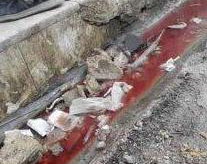
To Mr. Kofi Annan, UN Envoy to Damascus: This is a distress call from the women and children of the city of Douma. The visit of the United Nations monitors, under your direction, has killed us today. We request that you immediately intervene to stop the bombing and killings carried out by the regime’s army, which is punishing the entire city because we received your delegation of observers with hospitality and professionalism. We have given the observers the documents necessary to prove that the regime is in ciminal violation of the cease-fire. What is happening now is that we have a tragic situation and sustained shelling, which has signficantly increased since the morning hours, and which increased in intensity and force as of 4:00 pm, with an average of four shells per minute. Dozens of wounded and martyrs have been reported during the past 3 hours. A large number of them are still under rubble and most homes in the city have been subjected to shelling and destruction. More than 30 tanks are now shelling the city. Residents are demanding immediate intervention to protect them, since the Free Syrian Army is under fire and unable to militarily repel this full-scale military assault. We urge you to immediately send in a group of monitors who can offer some sort of protection from the heavy military assault.
The Arab League, US, EU states, GCC states, and other countries have condemned the use of violence against the protesters. China and Russia have avoided condemning the government or applying sanctions > (UN Security Council Permanent Members), saying that such methods could escalate into foreign intervention. However, military intervention has been ruled out by most countries.[60][61] The Arab League suspended Syria’s membership over the government’s response to the crisis,[62] but sent an observer mission in December 2011, as part of its proposal for peaceful resolution of the crisis. The latest attempts to resolve the crisis has been made through the appointment of Kofi Annan, as a special envoy to resolve the Syrian crisis in the Middle East. http://en.wikipedia.org/wiki/Syrian_uprising
Crimes against humanity, as defined by the Rome Statute of the International Criminal Court Explanatory Memorandum, „are particularly odious offenses in that they constitute a serious attack on human dignity or grave humiliation or a degradation of one or more human beings. They are not isolated or sporadic events, but are part either of a government policy (although the perpetrators need not identify themselves with this policy) or of a wide practice of atrocities tolerated or condoned by a government or a de facto authority. Murder; extermination; torture; rape; political, racial, or religious persecution and other inhumane acts reach the threshold of crimes against humanity only if they are part of a widespread or systematic practice. Isolated inhumane acts of this nature may constitute grave infringements of human rights, or depending on the circumstances, war crimes, but may fall short of falling into the category of crimes under discussion.“[1] http://en.wikipedia.org/wiki/Crimes_against_humanity
#Syria #humanrights #hama Koufi Annan,What’s the fault of these kids in Hama-Syria 23rd April,2012.mp4
FRENCH:24-04-2012, des scènes horribles du massacre du régime syrien à Douma
World Organization for the Defense of Human Rights المنظمة العالمية للدفاع عن حقوق الإنسان
13 February 2012 – UN High Commissioner for Human Rights Navi Pillay called on the international community to act now and protect the Syrian population. Addressing the UN General Assembly, Pillay said the Commission of Inquiry on Syria and herself have concluded that crimes against humanity are likely to have been committed in Syria. She called upon all member states to ensure that these crimes do not go unpunished.
United Nations Human Rights 13 February 2012 – Pillay: “Act now” to protect Syrian people “Each and every member of the international community must act now to urgently protect the Syrian population,” UN human rights chief Pillay said today in an address to the UN General Assembly.
She cited the onslaught on Homs, and reports suggesting widespread and systematic attacks on civilians amounting to crimes against humanity, as well as the rising risk of a humanitarian crisis in her address.
“I am outraged by these serious violations,” she told the assembled State representatives. “I am very distressed that the continued ruthless repression and deliberate stirring of sectarian tensions might soon plunge Syria into civil war. The longer the international community fails to take action, the more the civilian population will suffer from countless atrocities committed against them.”
Read the full address: http://bit.ly/yIB7g8
__________

Caption: An undated handout photograph made available by the Local Coordination Committees in Syria on 12 February 2012 shows smoke rising from a building reportedly following shelling by the Syrian army in the Bab Amr neighbourhood of Homs, Syria.
Credit: EPA
#VIDEO BBC - Syria violence: UN's Pillay speaks out on Assad culpability - UN Human Rights Commissioner Navi Pillay: "President Assad could simply issue an order to stop the killings"
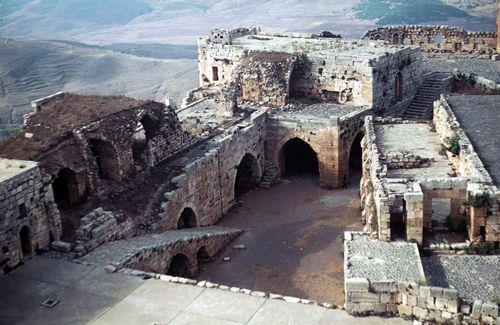
United Nations Educational, Scientific and Cultural Organization (UNESCO)
Learn more about Syria’s World Heritage Sites: http://whc.unesco.org/en/
Syrian Arab Republic: http://en.wikipedia.org/wiki/Syria
http://www.facebook.com/unitednationshumanrights
Syria: UN advisers warn that crimes against humanity may have been committed
UN Educational, Scientific and Cultural Organization (UNESCO)- Protect Syria’s Heritage!
http://www.facebook.com/Syrian.Truth
http://www.facebook.com/DCHRS Damascus Center for Human Right Studies (DCHRS)
http://twitter.com/DchrsOrg , http://www.dchrs.org/english/news.php
http://www.facebook.com/World.Organization4Human.Rights.Defence
http://www.facebook.com/CoalitionfortheInternationalCriminalCourt
http://www.un.org/en/documents/udhr/index.shtml
http://www.amnestyusa.org/our-work/issues/children-s-rights/convention-on-the-rights-of-the-child
Don’t miss the Birthday Tribute!
Dear Students & Friends,
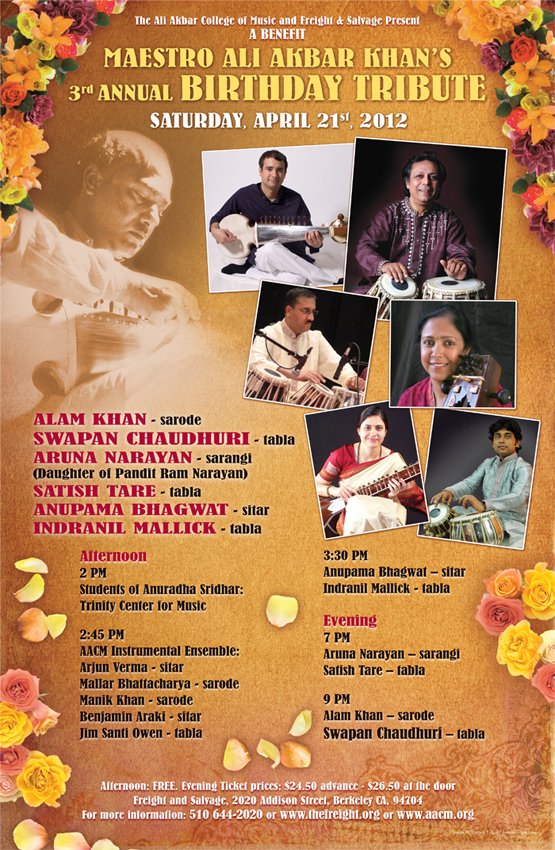
It’s a big weekend for us: Khansahib’s 3rd Annual Birthday Tribute is this Saturday at the Freight & Salvage in Berkeley! It’s going to be a fun, memorable day of performances–you definitely won’t want to miss it. The afternoon is completely free, so bring your friends and come and enjoy! You can purchase tickets to the evening performances online in advance at www.thefreight.org, (see the poster below for more information); there are plenty of seats available. We’re so excited to share this day with all of you, and look forward to seeing you there!
Also, our Spring Session of classes begins on Monday! You still have plenty of time to sign up, so please visit our website to learn all about what we have to offer, or call us at (415) 454-6372 with any questions you might have. Let’s celebrate spring with friendly faces and beautiful music!
http://campaign.r20.constantcontact.com

Hunger.Macht.Profite. 5 Filmtage zum Recht auf Nahrung

UN Human Rights @UNrightswire #RightsRio: Human rights in #Rioplus20 make #FutureWeWant truly sustainable! Check what others say @Storify: http://sfy.co/p5b United Nations Human Rights “Simply put, participatory, accountable, non-discriminatory and empowering development is more effective, more just and ultimately more sustainable.” - UN human rights chief Navi Pillay on negotiations towards an outcome of the Rio+20 conference. Tell us what you think #RightsRio
Only seven weeks to go before the Rio+20 conference decides our future. Yet the current draft outcome fails to take sufficient account of human rights. http://www.un.org/en/sustainablefuture/index.shtml
Hunger.Macht.Profite. 5 |
http://www.viacampesina.at/cms/index.php
http://www.hungermachtprofite.at
Filmtage zum Recht auf Nahrung
Nachdem die Filmtage Hunger.Macht.Profite. im Jahr 2011 zugunsten von „Nyeleni Europe – Europäisches Forum für Ernährungssouveränität“ pausiert haben, finden im April 2012 zum fünften Mal die Filmtage zum Recht auf Nahrung – Hunger.Macht.Profite.5 statt. Geplant ist, mit kommentierten Filmvorführungen in Oberösterreich, Wien und erstmals in Vorarlberg Station zu machen. Hunger.Macht.Profite.5 zeigt Dokumentarfilme zu den strukturellen Ursachen von Hunger in Zeiten der multiplen Krise. Globale Agrarproduktion, Welternährung, der Zugang zu produktiven Ressourcen und das Recht auf Nahrung werden in verschiedenen Kontexten aufgegriffen. Ein zentraler Bestandteil der Filmtage sind die Filmgespräche, in denen die KinobesucherInnen zu einer vertiefenden Diskussion der Filminhalte eingeladen werden.
Filmtage zum Recht auf Nahrung weil…
… weltweit mehr als 1.000.000.000 (1 Milliarde von 6,9) Menschen hungert. Eine milliardenfache Verletzung des in der Allgemeinen Erklärung der Menschenrechte verbrieften Rechts jedes Menschen sich zu ernähren.
Hunger ist ländlich…
80% der hungernden Menschen leben am Land, also wo Nahrungsmittel produziert werden. 50% sind KleinbäuerInnen, 20% Landlose, 10% FischerInnen, HirtInnen oder JägerInnen. Dabei ist der Druck auf die Ressource „Land“ so stark wie noch nie zuvor: Zwischen 2006-2009 sind zwischen 22 bis 50 Millionen Hektar Ackerland in Afrika, Asien und Lateinamerika an ausländische Investoren verpachtet oder verkauft worden.
Hunger ist weiblich…
Im globalen Süden werden 80% der Grundnahrungsmittel von Frauen produziert, aber nur 10% der Anbauflächen gehören Frauen. Zwei Drittel der von Hunger Betroffenen sind weiblich.
Hunger wird gemacht…
10% des Hungers wird durch Katastrophen ausgelöst, aber bei 90% des weltweiten Hungers handelt es sich um chronischen Hunger, verursacht durch ungerechte Handelsbeziehungen, Spekulation mit Grundnahrungsmitteln und falsche Agrarpolitik wie Exportdumping.
Hunger ist ein Geschäft…
Gab es Ende der 1970er Jahre weltweit ca. 7000 Saatgutfirmen, so kontrollieren heute zehn Konzerne (u.a. Monsanto, Syngenta, Dupont, Dow und BASF) 67% des Saatgutmarktes. Eben diese Konzerne beherrschen auch 80% des Pestizidmarktes. Damit liegt bald die gesamte Nahrungsmittelkette von der Viehzucht und Veterinärmedizin bis zur Produktion in ihrer Hand.
FIAN Österreich, AgrarAttac, ÖBV-Via Campesina Austria und normale.at initiieren diese Reihe mit dem Ziel, strukturelle Ursachen von Hunger sichtbar zu machen. Weltweit hungert mehr als eine Milliarde Menschen. Das bedeutet eine milliardenfache Verletzung des bereits in der Allgemeinen Erklärung der Menschenrechte verbrieften Rechts jedes Menschen sich zu ernähren.
Film-Trailer und Ausschnitte aus den Hunger.Macht.Profite.-Programmen seit 2006. Ein Dokumentarfilm von Nils Aguilar über den Wandel zur Agrarökologie und zu mehr lokaler Nahrungssicherheit. www.voicesoftransition.org Wie können wir unsere Felder und Städte auf die doppelte Herausforderung von Klimawandel und Erdölknappheit vorbereiten?
Lust, am Film teilzuhaben oder uns durch einen -Vorverkauf finanziell zu unterstützen? Jede kleinste Beitrag wäre uns eine grosse Hilfe, um die hohen Kosten einer Postproduktion auf hohem Niveau zu finanzieren…
Spielorte und Termine:
10. und 11. April 2012 Spielboden Dornbirn
12. April 2012 TAS Kino Feldkirch
13. und 15. April 2012 Lichtspiele Ebensee
16. und 17. April 2012 Moviemento Linz
18. April Local Bühne Kino Freistadt
23., 24., 25. April 2012 Rechbauerkino Graz
26. bis 29. April 2012 Topkino Wien
„Widerstand ist fruchtbar.“
Infos auch unter www.HungerMachtProfite.at
http://www.facebook.com/Hunger.Macht.Profite
http://www.ohchr.org/EN/Issues/Food/Pages/FoodIndex.aspx
Filmbeschreibungen:
werden in Kürze veröffentlicht
Diskussionen mit ExpertInnen jeweils im Anschluss an das Filmprogramm.
_______________________________________________________________________
Infos zu den VeranstalterInnen
- FIAN (FoodFirst Informations- und AktionsNetzwerk) ist die internationale Menschenrechtsorganisation für das Recht sich zu ernähren. FIAN hat Beraterstatus bei der UNO und wird weltweit für Fälle aktiv, in denen das Recht auf Nahrung verletzt wird.
- normale.at veranstaltet in Österreich seit 2003 gesellschafts- und wirtschaftspolitische Dokumentarfilmfestivals und trägt umfassende Erfahrung zur Planung und Durchführung bei.
- ÖBV – Via Campesina Austria ist eine Basisorganisation von Bauern und Bäuerinnen in Österreich. Die ÖBV bietet basisorientierte Bildungsarbeit und politisches Lobbying für eine gerechte Agrarpolitik im Sinne der Ernährungssouveränität.
- AgrarAttac ist eine Inhaltsgruppe von Attac Österreich und betreibt Bildungs- und Vernetzungsarbeit zu Themen der globalen Landwirtschaft. Die vielen ehrenamtlich engagierten Menschen dieser Gruppe wollen Alternativen zur bestehenden neoliberalen Globalisierung vorantreiben.

Stop Land Grabbing – Land to the tillers! – Global day of peasant struggle (EN, ES, FR)

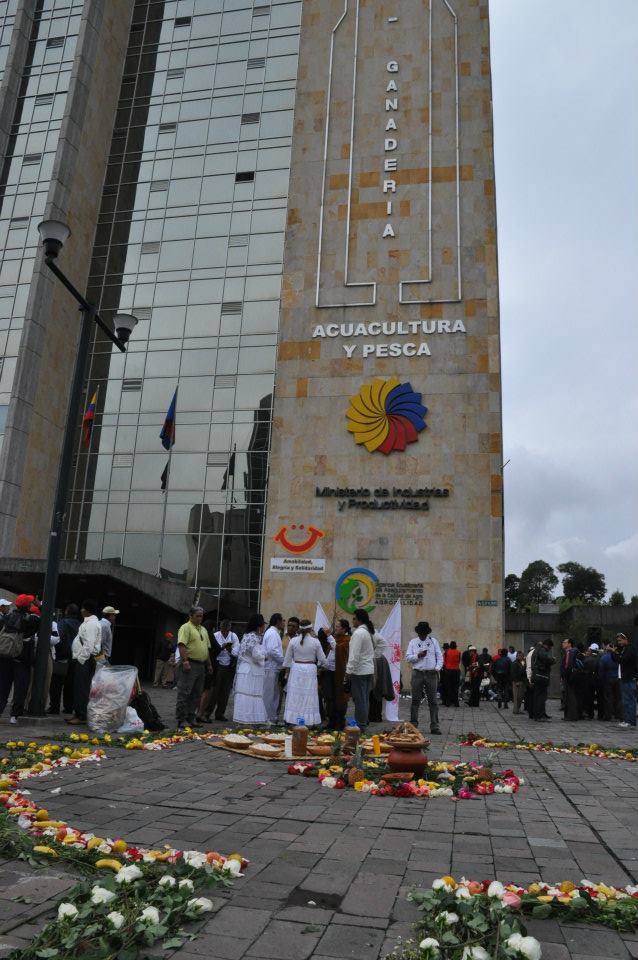
Food security hostage to trade in WTO negotiations: UN right to food expert www.srfood.org
http://viacampesina.org
http://farmlandgrab.org http://www.grain.org
http://www.oaklandinstitute.org
List of Activities for 17th April, 2012 around the world: http://bit.ly/HGwIL8
(Jakarta, 2 March 2012) April 17 is the International Day of Peasant Struggle, commemorating the massacre of 19 peasants struggling for land and justice in Brazil in 1996. Every year on that day actions take place around the world in defence of peasants and small-scale farmers struggling for their rights.
In recent years, we have suffered from the implementation of new policies and of a new development model based on land expansion and land expropriation, commonly known as land grabbing. Land grabbing is a global phenomenon led by local, national and transnational elites and investors, with the participation of governments and local authorities, in order to control the world’s most precious resources.
Land grabbing has resulted in the concentration of the ownership of land and natural resources in the hands of large-scale investors, plantation owners, logging, hydro-power and mining companies, tourism and real estates developers, port and infrastructures authorities, and so forth. This has led to the eviction and displacement of the local populations – usually farmers -, the violation of human rights and women rights, increased poverty, social fracture and environmental pollution. Land grabbing goes beyond traditional North-South imperialist structures: the involved transnational corporations are based in the United States, Europe, Chile, Mexico, Brazil, Russia, India, China, South Africa, Thailand, Malaysia, Indonesia and South Korea, among others.
Financial institutions such as private banks, pension and other investment funds have become powerful actors in land grabbing, while wars continue to be waged to seize control of natural wealth. The World Bank and regional development banks are facilitating land and water grabs by promoting corporate-friendly policies and laws, providing capital and guarantees for corporate investors, and fostering an extractive, destructive economic development model. Meanwhile the World Bank and some other institutions have proposed seven principles of Responsible Agricultural Investment (RAI) that are supposed to prevent abuses but in fact legitimize farmland grabbing by corporate and state investors. La Via Campesina and key allies have protested against this initiative for the past two years.
Land grabbing is a global phenomenon based on the corporate domination of agriculture through control over land, water, seeds and other resources. It is justified by many governments and policy think tanks through claims that agribusiness will modernize backward agricultural practices and guarantee food security for all. However widespread those claims may be, they have been shown to be entirely false in the real world.
The key players behind land grabbing prioritize profit over people’s well-being: they produce agrofuels if this is more profitable than food production, and they export their food production if this is more lucrative than selling it at home. In this race to profit, the corporate sector is increasing its control over food production systems, monopolizing resources, and dominating decision making processes. Business lobbies have strong political influence that often overrides democratic institutions; in addition, they act with the complicity of local and national elites (traders, politicians and community leaders) who fail to protect their own people from predation.
Land grabbing has been dispossessing peasants, small-scale farmers and indigenous peoples, especially women and the youth, from their sources of livelihoods. It is also ruining the environment. Indigenous peoples and ethnic minorities are being expelled from their territories by armed forces, increasing their vulnerability and in some cases even leading to slavery. Market-based, false solutions to climate change such as the fashionable concept of „Green Economy“ are forever finding new ways to alienate local communities from their lands and natural resources.
Therefore La Via Campesina calls on all of its members and allies, fisher-folk movements, agricultural workers organizations, students and environmental groups, women organizations and social justice movements to organize actions around the world on April 17 in order to display massive popular resistance to land grabbing and highlight the struggle against corporate control over land and natural resources.
Let’s unite and fight:
- To stop land grabbing and reclaim grabbed land – the land should be in the hands of tillers.
- To implement genuine agrarian reform in order to bring about social justice in rural areas.
- To end the control over billions of people’s lives exercised by a few investors and transnational companies.
- To oppose the principles of “responsible agricultural investment” (RAI) proposed by the World Bank as it can never be “responsible” for investors and corporations to grab farmers‘ land.
- To strengthen the agriculture production model based on family farming and food sovereignty.
On April 17, groups and people are invited to organize a direct action, a film screening, a farmers market, a land occupation, a debate, a protest, an art exhibition, or any other event highlighting the same goal.
- Inform us about your plans by sending an email to viacampesina@viacampesina.org
- Subscribe to our special mailing list by sending a blank email to via.17april-subscribe@viacampesina.net
- Send us reports, pictures and videos of your action!
- We will publish the map of actions around the world on www.viacampesina.org
- Join our facebook event

Poster Action: 17 April: International Day of Peasant Struggle
Denounce land grabbing!
Wherever you are, fill in this poster with the name of your local land grabbers and send us a picture of what you are doing to protest with this poster.
E-mail: viacampesina@viacampesina.org
http://www.nyeleni.org/DOWNLOADS/newsletters/Nyeleni_Newsletter_Num_9_FR.pdf
http://media.oaklandinstitute.org/publications
http://media.oaklandinstitute.org/content/tackling-global-food-crisis-mission-unaccomplished
http://www.facebook.com/Cloc Via Campesina
http://www.facebook.com/oak.institute
http://www.facebook.com/soilassociation
http://www.facebook.com/organicconsumers
http://www.facebook.com/FoodandWaterWatch
https://twitter.com/#!/FarmPolicy
http://www.facebook.com/The Institute for Agriculture and Trade Policy
High level policy dialogue between the Alliance for a Green Revolution in Africa (AGRA)

http://allafrica.com
http://www.agra-alliance.org
http://kofiannanfoundation.org
This photo story highlights key moments in a policy dialogue that involved small scale farmers and representatives of the Alliance for a Green Revolution in Africa (AGRA). Over one hundred people participated in this unprecedented event:
DOWNLOAD PDF http://pubs.iied.org/pdfs/G03349.pdf
IIED, APPG on Agroecology, CNOP, Kene conseils, Centre Djoliba, IRPAD
IIED code: G03349
Published: Apr 2012 – IIED
Areas: Ghana, Mali, Burkina Faso, Senegal, Benin
Topics: Agriculture & Food, Participation
Details: Project info
Language: English
This photo story highlights key moments in a policy dialogue on agricultural research for development that involved small scale farmers and representatives of the Alliance for a Green Revolution in Africa (AGRA). Over one hundred people participated in the policy dialogue. This unprecedented event was chaired by the UN Special Rapporteur on the Right to Food and took place on 1st to 3rd February 2012 in Accra (Ghana).
AUTHENTIC SUFI WAY – International Qadiriya Foundation *~ a sholar from the Quadiri Sufi Order *

http://www.qadiriyya.com
Sayyid Muhammad Efendi of Istanbul
————————————-
(photo: Sayyid Muhammad Efendi with his sufis)
A great sufi story from the time of prophet David! – By Sheikh Sayyid Muhammad Efendi
————————————-
The story of a lazy person and a butcher
A lazy person was praying without getting fed up and without giving up saying „O my Lord! I want sustenance from you without difficulty and suffering. As it is observable that, the creatures with feet search for food, but, you bring the food to the ones without feet.“ Allah almighty has accepted the prayer of this person due to his continuous persistence. One day while this person was praying, an ox has come to his garden. The man has thought „Allah almighty has accepted my prayer“ and cut the ox and run to bring the butcher to skin it. The real owner of the ox was the butcher, when he had seen the ox he had lost was cut by this person of poverty, he had got hold of his collar saying „why have you cut my ox“. Despite that poor person saying „Allah has accepted my prayer and sent this ox to me“, the butcher had pulled and brought the poor person to prophet David (Dawood) AS saying „if posessions were obtained thorugh prayers, all the beggers would have been people of posessions“.
The general public had gathered to listen to the the arguments between this poor person and the butcher. Prophet David AS after listening to the butcher and the poor person had asked: „O poor person! do you have an evidence that can be accepted by the religious commandments? Is this ox a donation to you, or have you inherited it? If you don’t have an evidence acceptable by the religious law, pay your debt to this man.“ The poor person had pleaded with Allah almighty upon the jurisdiction of prophet David AS, he had shed tears and prayed saying „O my Lord! give a light to the heart of David!“. Upon this, David AS had said to the butcher who is the claimant: „Give me respite for today so that I go into seclusion, pray and I give jurisdiction on your case tomorrow.“ and sent them home.
Prophet David has been into seclusion that night and he had learned the inner secret of the matter. The public had gathered together in the morning. The butcher comes there ans says haevy words to the poor person. When prophet David comes out he says to the butcher: „O butcher! abonden this claim of yours and donate the ox to this Muslim, and get away from here, as God almighty had covered your secret. Be thankful to Him for this reason.“ The butcher disagrees with the words of the prophet and said harsh words: „O David! your justice is spread over the West and the East. What kind of jurisdiction is this while you justice is filling the earth and the haevens, you have been cruel to me.“ The public also sides with the butcher and start criticizing the prophet. Allah almighty had been hurt by the ciriticizing words of the butcher to His prophet and He reveals the inner reality of the event to the public.
Thus, prophet David says his jurisdiction to the public as: „Go to this place, you will see a tree there. This man has killed his owner and buried under that tree. He had also left the knife he had used for killing next to him. This man was a slave of that person. He came together with a female slave of his owner and killed him. He then had claimed his posessions and goods. This poor person is the son of that man. Despite Allah almighty covering it, this ungrateful man has opened that cover veil himself, and show his sin himself. There will be retrubution for the butcher. His wife and children are the slaves of this poor person. And all the posessions and the goods of him belong to thid poor person, as the posessions of a slave belong to the owner.“

Abd al-Qadir al-Gilani (Persian: عبد القادر گیلانی,Urdu: عبد القادر آملی گیلانی AbdolqÄ�der GilÄ�ni) (also spelled Abdulqadir Gaylani, Abdelkader, Abdul Qadir, Abdul Khadir – Jilani, Jeelani, Gailani, Gillani, Gilani, Al Gilani, Keilany) (470–561 AH) (1077–1166 CE) was a Persian Islamic preacher who is highly esteemed by Sunni scholars. Among followers in Pakistan and India, he is also known as Ghaus-e-Azam. He was born on a Wednesday the 1st of ramadan in 470 AH, 1077 CE south of the Caspian Sea in what is now the Mazandaran Province of Iran.
http://www.poetseers.org/spiritual_and_devotional_poets/sufi
http://en.wikipedia.org/wiki/Jilani
http://www.urdupoetry.com/index.html
http://en.wikipedia.org/wiki/Urdu_poetry
http://www.facebook.com/Kadiriyye
http://www.facebook.com/Authentic-Sufi-Way
SUFISM – Mowlânâ Jalâl-od-Dîn Rûmî UNESCO World Heritage Shams-i Tabrizi & the freedom of religion or belief.
Mowlânâ Jalâl-od-Dîn Rûmî et l’ordre mevlevi des derviches tourneurs
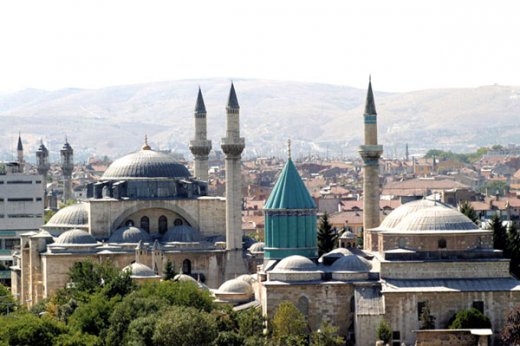
- Mausolée de Rûmî à Konya, vue d’ensemble
His epitaph reads: "Do not seek our tombs on this earth - our tombs are in the hearts of the enlightened."
http://mevlana.net/unesco_address.html
http://www.sacred-destinations.com/turkey/konya-mevlana-museum.htm
Rûmî est né à Balkh dans le grand Khorâssân iranien (l’antique Bactres de l’Empire achéménide, aujourd’hui en Afghanistan) en 1207 (604 de l’Hégire), mais il dut quitter sa ville natale avec sa famille à l’âge de 14 ans. Les raisons de ce départ, variant d’un hagiographe à l’autre, sont attribuées soit à la contestation des habitants de la ville à propos du titre de Sultan des savants donné à son père, le grand érudit Bahâ-ud-Dîn-Walad, théologien et prédicateur éminent, soit à un différend entre celui-ci et le philosophe attitré du roi, ou encore à la fuite devant le danger que représentait alors l’avancée des hordes mongoles parcourant la steppe, ou peut-être une accumulation de tous ces événements. De fait, la ville de Balkh fut détruite par Gengis Khan peu après que Rûmî l’eût quittée.
Après être passés par Neyshâbour (où Rûmî rencontre le grand poète mystique Attâr), La Mecque, Bagdad, ils s’installèrent à Konya, dans l’Empire ottoman, à l’invitation du sultan Key Ghobâd, comme de nombreux Persans fuyant les hordes mongoles. Son père meurt dans cette ville, alors que Rûmî n’a que 24 ans. Un an plus tard, il suit l’enseignement de Termazi, grand théoricien de Konya qui l’envoie étudier à Alep et à Damas afin d’y parfaire ses connaissances philosophiques et théologiques. C’est à Damas qu’il rencontrera pour la première fois le derviche Shams Tabrizi, qui transformera sa vie en faisant de lui un mystique extatique.
Le collège où Rûmî, docteur en théologie, enseigne jurisprudence et loi islamiques, est fréquenté par de nombreux disciples. A 36 ans, on commence à l’appeler Mowlânâ, notre maître. Son érudition attire à Konya les plus illustres savants du monde dit civilisé.
On rapporte que c’est au cours de sa retraite de quarante jours en compagnie de Shams Tabrizi à Konya qu’il se met à tournoyer à la manière des derviches tourneurs et apprend à jouer du luth. « Plusieurs voies mènent à Dieu, j’ai choisi celle de la musique et de la danse », écrira-t-il. C’est en tout cas après cet épisode décisif de sa vie qu’il fonda la tarîqa mawlawiya ou confrérie mevlevi.

- Cérémonie à la loge mevlevi de Bursa http://www.allaboutturkey.com/konya.htm
Photo : Eric Nosjean
L’ordre mevlevi des derviches tourneurs de Turquie
Comme Rûmî l’avait souhaité, Hessâmeddin Tchalabi, son disciple dès l’adolescence, devient son successeur spirituel lorsqu’il décède en 1273. C’est Hessâmeddin qui écrira et mettra en forme le Masnavi, la grande œuvre de Rûmî, tandis que celui-ci lui en récitait les poèmes. Guidant la communauté fondée par son maître, Hessâmeddin fit en sorte qu’elle continue à respecter les idées et les principes du défunt. Quand Hessâmeddin meurt à son tour en 1284, Soltân Walad, fils aîné de Rûmî, devient le sheykh des Mevlevi : il organise ses disciples en un ordre soufi véritable avant que son propre fils, Aref Tchalabi, ne lui succède en 1312. Une chaîne de successions directes rattache le maître actuel de la Mawlawîya à ses prédécesseurs.
Après la mort de Rûmî, l’ordre des mevlevis connaît une ascension notable sous la protection des sultans seldjoukides et ottomans, se déployant jusque dans le monde arabe et les Balkans. Il cultive la poésie persane (Rûmî s’exprimait et écrivait en persan), la musique, la calligraphie, et codifie ses cérémonies, dont la danse, dans ses tekke – ou monastères derviches – des principales villes de l’empire.
La progression spirituelle du soufi mevlevi s’inscrit dans le cadre d’une retraite de mille et un jours consistant en périodes de silence, d’isolement en cellule, d’étude et de corvées domestiques. Ce temps de formation s’accomplit en grande partie dans la cuisine du monastère, lieu hautement initiatique, où le novice est lentement mené à maturité spirituelle. Il s’initie à la musique et à la danse, à la lecture du Masnavi, au zikhr (invocation répétitive des noms divins) et à la méditation. Cette initiation est clôturée par une cérémonie d’investiture qui fait du novice un sheikh. On lui remet alors deux attributs symboliques, le manteau (le souf) et la coiffe rituels. Il peut ensuite choisir entre une vie de célibataire au monastère ou une vie de famille à l’extérieur, tout en restant lié à sa communauté, cas d’exception dans l’histoire du soufisme. … Read More http://www.teheran.ir/Mowlânâ Jalâl-od-Dîn Rûmî
Shams-i-TabrÄ«zÄ« or Shams al-Din Mohammad (born 1185, died ca.1248) was a Persian Muslim, who is credited as the spiritual instructor of Mewlana Jalal ad-Din Muhammad Balkhi, also known as Rumi and is referenced with great reverence in Rumi’s poetic collection, in particular Diwan-i Shams-i Tabrizi (The Works of Shams of Tabriz).
Tradition holds that Shams taught Rumi in seclusion in Konya for a period of forty days, before fleeing for Damascus. The tomb of Shams-i Tabrizi was recently nominated to be a UNESCO World Heritage Site.
Sufism or taṣawwuf (Arabic: تصوّف) is defined by its adherents as the inner, mystical dimension of Islam. A practitioner of this tradition is generally known as a ṣūfÄ« (صُوفِيّ). Another name for a Sufi is Dervish.
Classical Sufi scholars have defined Sufism as „a science whose objective is the reparation of the heart and turning it away from all else but God“. Alternatively, in the words of the Darqawi Sufi teacher Ahmad ibn Ajiba, „a science through which one can know how to travel into the presence of the Divine, purify one’s inner self from filth, and beautify it with a variety of praiseworthy traits“. http://en.wikipedia.org/wiki/Sufism
About http://iranculture.ca/dev/
The development of the role of cultural relations and the growth of attention devoted to its aspects is closely connected with modern development of civilization and with the development of international relations along with the continuous increase in their intensity.
Culture is inseparably connected with not only international cultural relations, but also to create the necessary conditions for the harmonic development of human society. In other word Culture is reflected in all human activities and in their results.
Cultural relations have great significance for international relations from the viewpoint of how well cross-cultural communication functions. According to expert analyses inefficacy of international negotiations is from up to 70% caused by mutual misunderstanding of members of different cultural systems. In the first place the recognition of one’s own culture and at the same time also obtaining knowledge about different cultures and their environment belong to the main pillars of proper communication.
Regarding to the above mentioned points, Iran Embassies in abroad try for expansion of cultural ties with the countries in all around the world and believe that based on key role of culture in International Relations, cooperation in this field could help promote bilateral and multilateral economic, political and social activities as well.
The Cultural Centre of Iran in Canada also believes that there is need for promoting Tehran-Ottawa cultural exchanges and do its best for achieving cultural goals of the two countries in different fields including cinema, arts, language teaching ,exchange of views and etc .
Iran’s great potential in the field of tourism is also essential in this regard. Iran is open to tourists from all over the world and over 1,500,000 tourists visit various cultural and historical sites in this country each year. Diverse climatic conditions as well as deep-rooted civilization have transformed Iran into a tourist hub. So it has the potential to create suitable grounds to further expansion of the tourism industry cooperation with Denmark. Activating such fields also could be the best opportunity for the exchange of views among intellectuals and scholars of the two countries.
The cultural Centre of Iran in Canada has the responsibility of coordinating Cultural activities in Canada; expansion of the cultural, scientific, educational religious, and artistic relations between two countries; introducing the Islamic and Iranian culture and civilization to the Canadian people; promoting and consolidating relations among Universities scientific and cultural institutions of the two countries.
Last but not least, as we constantly strive to improve out cultural operations, we would like to ask you to contact us and provide us with your questions or concerns on all aspects of our work.
http://www.iranhumanrights.org/
http://en.wikipedia.org/wiki/Shams_Tabrizi
http://en.wikipedia.org/wiki/Rumi
http://en.wikipedia.org/wiki/Diwan-e_Shams-e_Tabrizi
http://en.wikipedia.org/wiki/Dhikr
http://en.wikipedia.org/wiki/Qadiriyya
http://www.amnesty.org/en/economic-social-and-cultural-rights
UNPO Co-Hosts „Minority Rights In Iran“ Event At United Nations
http://www.ohchr.org/EN/Issues/FreedomReligion/Pages/FreedomReligionIndex.aspx
http://portal.unesco.org/800th Anniversary of the Birth of Mawlana Jalal-ud-Din Balkhi-Rumi
http://www.facebook.com/Hz. Mevlâna
http://www.facebook.com/MevlanaveSemsHz
http://www.facebook.com/LeCentreCulturelDIranAOttawa
http://www.facebook.com/Cultural-Centre-of-the-Islamic-Republic-of-Iran-Ottawa
#sufism Persecution
http://www.transparency-for-iran.org
http://www.hrw.org/middle-eastn-africa/iran
Iran: UN human rights body concerned over executions and minority rights
http://www.hrw.org/europecentral-asia/turkey
http://www.hrw.org/europecentral-asia/azerbaijan
Inspirations for Rio +20 Summit on #sustainable #development in #brazil: #private set of pictures #anatolia #turkey #tourism #***** hotel #spa tour autumn 2011:
http://www.flickr.com/photos/rumisuficelaleddinimevlana/
5ème EDITION DU FESTIVAL DE FES DE LA CULTURE SOUFIE Sous le thème « Figures féminines du Soufisme »
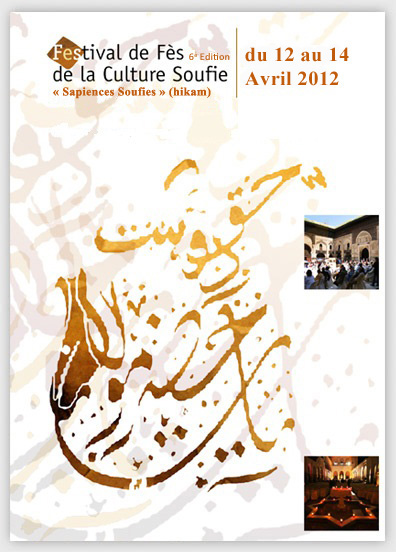
http://www.festivalculturesoufie.com
As we have more and more spontaneous demands in the national and international fields, to take part into the program of the festival, it becomes obvious that this event is bound to become a real platform of artists’ encounters who will let the world discover the cultural diversity of Sufism and the richness of the Islamic Culture. Indeed, Morocco which has always been a land instilled by Sufi spirit, will reinforce its role in the dialogue between different cultures and will be able to show to the rest of the world, a tolerant Islam, opened to other cultures and religions. Its role of mediation in its history, and even more recently, will help this country to become a real bridge between Orient and Occident.
Aims of the Festival
- To allow Morroccan people to discover or re-discover how the Sufi brotherhoods have mainly succeeded in preserving a message of universal spirituality that irrigated the whole of the Muslim culture and nourished its artistic, literary, and even social and economic forms of expression especially in Morocco.
- To allow people from other cultures to discover another face of Islam thanks to the message of opening and peace inherent to Sufism, far from the image generally spread by the media. To show how Sufism, as a school of spiritual and civic education, can be a mean of human development and a peace mediator.

- Through this event, to reinforce the position of Morocco as a link between Orient and Occident in the intercultural dialogue.
- To show the richness and the creativity of the spiritual, academic, artistic and social dimensions inspired by Sufism. To let people know contemporary artists and thinkers, national and international, and with them, to find new ways of social, cultural and artistic expressions that can strengthen the intercultural dialogue and help to the development of the society.
- To question the role of spirituality nowadays, the connection between spirituality and business, environmentalism and social actions. How the spirituality may, under the present frames of the social and entrepreneurial activity, become a particularly prolific contributor to the human development, in its social, cultural and spiritual contexts.
History of Sufism
Sufism is a mystic and ascetic movement which originated in the Golden Age of Islam, from about the 9th to 10th centuries.
The emergence of Sufism is a consequence of the wide geographical spread of Islam after the Rashidun conquests, and the resulting absorption of a wide range of mystic traditions from outside Arabia, especially Greater Persia. Sufism became a more formalized movement by the 12th century, and was a very successful movement throughout the Muslim world during the 13th to 16th centuries. There also were numerous Sufi orders active in the modern period, especially in non-Arab parts of the Muslim world.
1 Early history
2 13th to 16th centuries
2.1 Spread to India
2.2 Muslim Spain
3 Modern history
http://whc.unesco.org/en/statesparties/ma
http://www.hrw.org/middle-eastn-africa/morocco/western-sahara
http://www.ohchr.org/EN/Issues/FreedomReligion/Pages/FreedomReligionIndex.aspx
DON’T MISS THE LAST CONCERT OR KHANSAHIB’S ANNUAL BIRTHDAY TRIBUTE!!
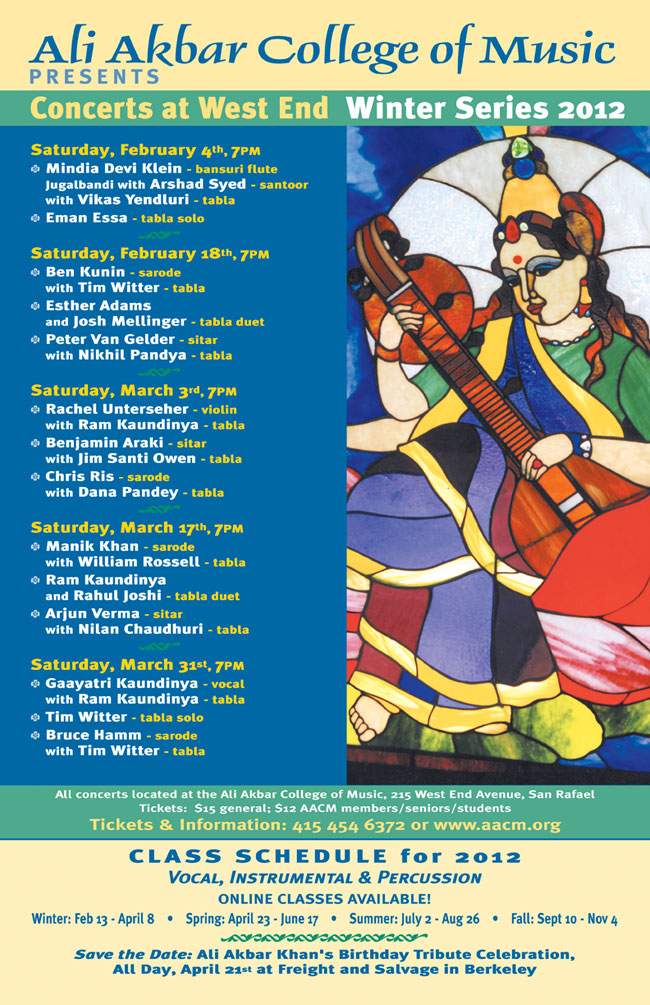
Dear Students and Friends,
We’ve reached the end of the Winter Series! The final concert will begin at 7 p.m. on Saturday, March 31st, and will feature a vocal performance by Gaayatri Kaundinya with Ram Kaundinya on tabla, followed by Tim Witter in a tabla solo, and will conclude with Bruce Hamm on sarode with Tim Witter accompanying on tabla.
We appreciate all the wonderful support we’ve recieved throughout the Series, and look forward to seeing you all at this final performance!
For more information, click here!
It is an incredibly special time of year for us, as we are preparing our annual tribute to celebrate Khansahib’s birthday. This event is such an honor to organize, and we are very excited to be able to hold it once again at the new Freight & Salvage location.
We are delighted to present this year’s lineup of talented artists to the public, and are hoping to surpass the wonderful turnout we had last year.
The day’s events will begin with a series of free performances. The first will be a group of young, extremely talented vocal students of Anuradha Sridhar, from her Trinity Center for Music.
Following this will be the AACM Instrumental Ensemble, who gave a memorable performance at last year’s Tribute. With Arjun Verma and Ben Araki on sitar, Mallar Bhattacharya and Manik Khan on sarode, and Jim Santi Owen on tabla, the Ensemble has a tremendous, lively sound.
The final performance for the afternoon portion of the day will be with the versatile and accomplished sitarist, Anupama Bhagwat, accompanied by Indranil Mallick on tabla.
In the evening, we will have the pleasure of showcasing Aruna Narayan, one of Indian classical music’s only performing female sarangi players, and daughter of the great Ram Narayan. Satish Tare will be accompanying her on tabla.
The evening will close with Khansahib’s son, Alam Khan, performing a solo on sarode with our Director of Percussion, and world renowned tabla master, Swapan Chaudhuri.
We are so grateful and happy to have all of these amazing artists come together in commemorating Khansahib’s life, and we look forward to having you join us in our celebration!
___________________________________________________________
Become a member of the AACM http://www.aacm.org today! Thank you to our current members for your continued support.
The Human Right to Water – World Water Day 2012
http://www.internationalrivers.org
http://www.unwater.org/worldwaterday
http://www.sankatmochanfoundationonline.org/save_ganga.html
News(23.03.2012): NEW DELHI: Environmentalist GD Agarwal, 80, who is on a fast-unto-death since January 15 to save the Ganga river, on Friday agreed to end his fast after the government agreed to his demands, his supporters said. „He will …See more
On the occasion of World Water Day 2012 the Sankat Mochan Foundation (SMF), an organisation working for the cause of Ganga for about three decades, is going to launch a new online campaign -STOP the Sewage: Clean Ganga NOW.
World Water Day has been observed on 22 March since 1993 when the United Nations General Assembly declared 22 March as World Day for Water.[1]
This day was first formally proposed in Agenda 21 of the 1992 United Nations Conference on Environment and Development (UNCED) in Rio de Janeiro, Brazil. Observance began in 1993 and has grown significantly ever since; for the general public to show support, it is encouraged for the public to not use their taps throughout the whole day, the day has become a popular Facebook trend.
The Ganges , is a trans-boundary river of India and Bangladesh. The 2,525 km (1,569 mi) river rises in the western Himalayas in the Indian state of Uttarakhand, and flows south and east through the Gangetic Plain of North India into Bangladesh, where it empties into the Bay of Bengal. By discharge it ranks among the world’s top 20 rivers.
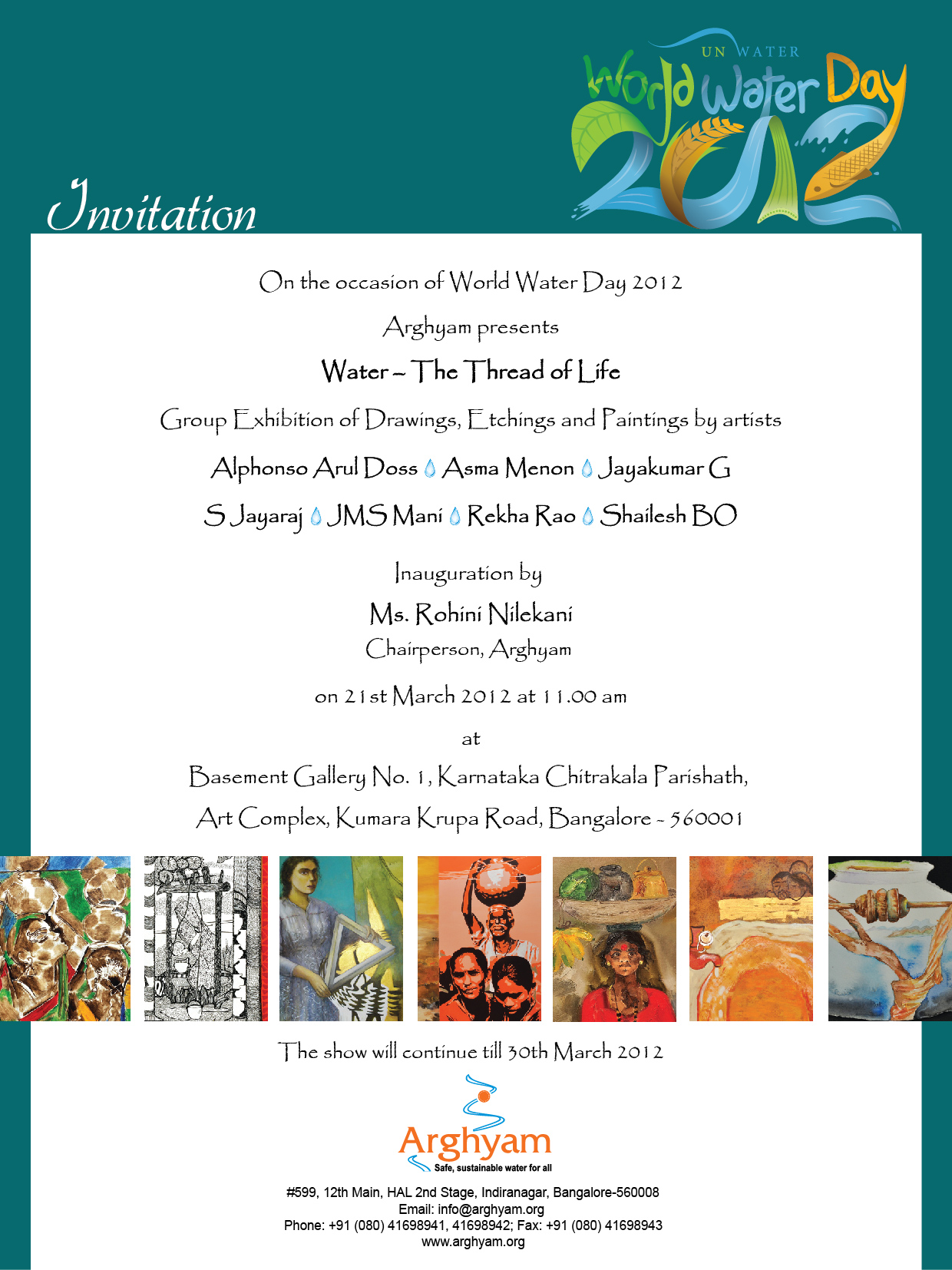
Water – The Thread of Life, a group exhibition of Contemporary Artists, Arghyam, March 21-30, 2012, Karnataka Chitrakala Parishath, Bangalore http://www.indiawaterportal.org/event/24761
Welcome to MC Mehta Environmental Foundation
Current Projects The Plight of the Ganga
M. C. Mehta, “In the Public Interest”
We believe that if, all of us unite and take proper care in protection and conservation of the limited natural resources, we can give our children a better tomorrow. It is possible only through community participation and awareness.
MCMEF has been actively involved in creating awareness among NGO’s,Lawyers,Scientists,Senior Officials, Academicians,Students & Youth through training and capacity building programmes, seminars,workshops,declamation contests and other grass roots level activities.
This ancient and magnificent river is now under serious threat due to the construction of hydroelectric dams along the upper reaches of the Ganga. This will devastate local ecology, wildlife and communities by tunneling in river-flow, effectively drying up the Ganga in these areas.
Further downstream, the Ganga is already suffering from the effects of extensive deforestation, and continues to be used as a dumping ground for untreated industrial and domestic waste. Religious tourism has also led to the proliferation of polythene waste in her waters.
As a result of climate change, the Gangotri glacier is rapidly receding. This will have profound implications on India’s water and food security.
# video Anna Hazare on G D Agrwal’s condition Anna ji speaking on G.D. Agrwal’s condition. He will also be going to meet G.D.Agrwal later today. || अन्ना जी, जी.डी. अग्रवाल के स्वास्थ्य के बारे में बात करते हुए| वो आज शाम को उनसे मिलने भी जायेंगे|
http://www.savegangamovement.org
http://www.indiawaterportal.org
http://www.indiaenvironmentportal.org.in
http://chimalaya.org/2012/03/20/anxious-wait-for-scientists-on-rio20-talks
http://www.scidev.net/en/science-and-innovation-policy/science-at-rio-20
http://chimalaya.org/2011/06/23/bringing-back-himalayan-watermills-to-life
Previous related #article #videos Hindol Deb – Swar Ganga Music Foundation
http://en.wikipedia.org/wiki/Right_to_water as a human right under international law.
http://www.ohchr.org/EN/Issues/Development/Pages/DevelopmentIndex.aspx
http://en.wikipedia.org/wiki/Environmental_law
http://en.wikipedia.org/wiki/Environmental_impact_assessment
chinadialogue http://www.chinadialogue.net
The current surge in land acquisitions http://farmlandgrab.org by foreign countries and private companies could lead to regional tensions over water rights, warns a new report by the Stockholm International Water Institute published last week. 主页 home > 每日星球 the daily planet Global land deals suck rivers dry Beth Walker
Another water battle looming Pakistan is gearing up for a new fight with India, reports Athar Parvaiz from Ladakh. At the centre of the latest row is a dam funded by international efforts to tackle global warming. http://www.chinadialogue.net/4825-Another-water-battle-looming
Fighting India’s mega-dams Popular protests against the construction of a vast network of dams in the Brahmaputra valley have gathered impressive momentum. Tanmoy Sharma reports from Assam. http://www.chinadialogue.net/ 4799-Fighting-India-s-mega-dams
River Interlinking India Most environmentalists around India heaved a sigh of relief on Friday when Pranab Mukherjee, the country’s Finance Minister, did not say a word about the plan to interlink India’s rivers, nor allocate any money for that purpose.
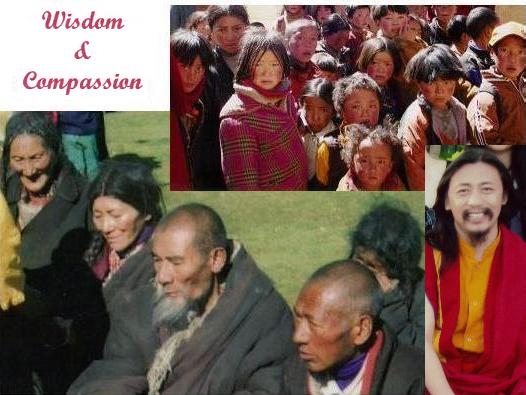
Freedom of Religion & Belief – China: Tibetan Monasteries Placed Under Direct Rule
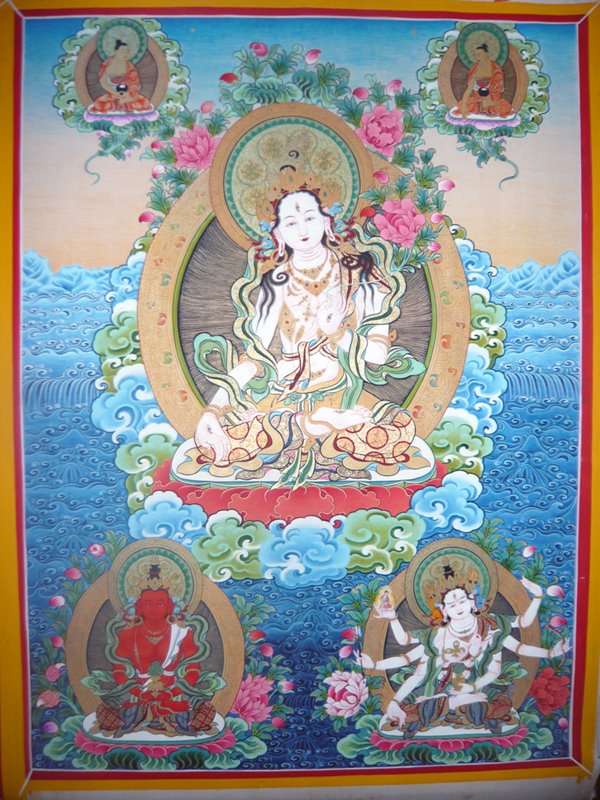
Tibetan Yoga Center – Yoga Retreats
Contact: tibetanyogainfo@gmail.com
www.bhutanzopa.com.bt/AdventureTravel
The practice of Yoga is intimately connected to the religious beliefs and practices of both Buddhism and Hinduism. However there are distinct variations in the usage of yoga terminology in the two religions. In Hinduism, the term „Yoga“ commonly refers to the eight limbs of yoga as defined in the Yoga Sutras of Patanjali, written some time after 100 BCE, and means „yoke“, with the idea that one’s individual atman, or soul, would yoke or bind with the monistic entity which underlies everything (brahman). In the Vajrayana Buddhism of Tibet, however, the term „Yoga“ is simply used to refer to any type of spiritual practice; from the various types of tantra (like Kriyayoga or Charyayoga) to ‚Deity yoga‘ and ‚guru yoga‘. In the early translation phase of the Sutrayana and Tantrayana from India, China and other regions to Tibet, along with the practice lineages of sadhana, codified in the Nyingmapa canon, the most subtle ‚conveyance‘ (Sanskrit: yana) is Adi Yoga (Sanskrit). A contemporary scholar with a focus on Tibetan Buddhism, Robert Thurman writes that Patanjali was influenced by the success of the Buddhist monastic system to formulate his own matrix for the version of thought he considered orthodox. Read More: HERE
Early Buddhism incorporated meditative absorption states. The most ancient sustained expression of yogic ideas is found in the early sermons of the Buddha. One key innovative teaching of the Buddha was that meditative absorption must be combined with liberating cognition. The difference between the Buddha’s teaching and the yoga presented in early Brahminic texts is striking. Meditative states alone are not an end, for according to the Buddha, even the highest meditative state is not liberating. Instead of attaining a complete cessation of thought, some sort of mental activity must take place: a liberating cognition, based on the practice of mindful awareness. The Buddha also departed from earlier yogic thought in discarding the early Brahminic notion of liberation at death. Liberation for the Brahminic yogin was thought to be the realization at death of a nondual meditative state anticipated in life. In fact, old Brahminic metaphors for the liberation at death of the yogic adept were given a new meaning by the Buddha; their point of reference became the sage who is liberated in life. Read More: HERE
Dream Yoga or Milam (T:rmi-lam or nyilam; S:svapnadarśana)— the Yoga of the Dream State are a suite of advanced tantric sadhana of the entwined Mantrayana lineages of Dzogchen (Nyingmapa, Ngagpa, Mahasiddha, Kagyu and Bönpo). Dream Yoga are tantric processes and techniques within the trance Bardos of Dream and Sleep (Tibetan: mi-lam bardo) and are advanced practices of Yoga Nidra. Aspects of Dream Yoga sadhana are subsumed within the practice suite of the Six Yogas of Naropa. Read More: > HERE <
Tibetan yoga center was established to provide a program of study and practice in the Tibetan Buddhist (Vajrayana) tradition that would integrate the essence of these teachings and present them in a suitable way for practitioners in the West. The program combines the core practices relying on visualizations, yoga of channels, winds and drops, and insight into the nature of the mind (rigpa) for efficient progress on the path. The core teachings of Tibetan Yoga Center are ‚The yogas of the six bardos‘ of the Nyingma lineage of Tibetan Buddhism, summarized in the curriculum as seven courses (see the program section). The founder and master teacher of the center, Khenchen Lama Rinpoche, was at numerous occasions encouraged by his teachers to focus on helping Western students, particularly through these practices. To help bring these teachings closer to the background of Western practitioners, the program of the Tibetan Yoga Center also integrates elements of Western neuroscientific research on changes in behavior, mind and brain as a result of meditation. Building on the tradition of enlightened householder yogis in Tibet, the program of the center was developed for yogis of the current era – serious practitioners leading busy lives with work and family commitments who want to bring their spiritual practice to swift fruition to fully benefit sentient beings.
Tibetan Yoga Center operates on principles of a social business, offering teachings mostly by suggested donation and for minimal possible fees to cover expenses. The aim of the Tibetan yoga of mind is to develop universal loving kindness and compassion coupled with the ultimate wisdom of the nature of phenomena, the ultimate truth. At the basic level of achievement, one wishes happiness for oneself as well as other people.
At the medium level of achievement one realizes that the source of ultimate happiness is the understanding of the true nature of phenomena. One realizes that the most profound way to benefit sentient beings is to achieve enlightenment and works very hard towards this goal. On this path, one completely purifies his/her mental afflictions – anger, attachment, ignorance, jealousy and pride. The highest level of achievement in the Tibetan yoga of mind is the experiential understanding of our own Buddha nature – the deepest level of the mind. When one continuously sustains this realization in his/her mind stream, s/he becomes the embodiment of the union of primordial wisdom and compassion, and benefits sentient beings in limitless ways. This achievement is the essence of the Tibetan yoga and the deepest meaning of the term ’naljor‘.
TYPES OF YOGA IN TIBETAN BUDDHISM – There are six yanas (modes of spiritual practice) in Vajrayana: 1. Kriyayana, 2. Upayana, 3. Yogayana, 4. Mahayoga, 5. Anuyoga, and 6. Atiyoga. In Nyingma lineage, the main focus of practice is on Mahayoga, Anuyoga and Atiyoga.
Teaching and Practice Downloads: This section contains general teachings given by teachers of the Tibetan Yoga Center at various occasions as well as specific teachings that are part of the curriculum of the center. These teachings are available for free, but proper reference to the teachings if used as part of other materials should be included.
Previous some related #articles #videos:
Mountain Minorities and Indigenous Peoples
Yoga of Himalayas – Nuns & Communities
The Ninth Mandaean Camp Niagara Falls
UNESCO – The Tradition of Vedic Chanting
UN – Nagoya biopiracy agreement ‚is unexpected success‘
Saving the Bedouin Heritage and Biodiversity
A Call for Renewable Energy in Brazil – Belo Monte
Indigenous Australien Medicine – Bush Medicine
Build Hope – Sivananda Sevashram
ARGAN TREE – Argan Oil Morocco
Jain Tradition – Mahavir Jayanti India
Monasteries Environmental Himalayaprotection
Monks lead march to save Himalayas
Interfaith Center: Gala Dinner with Yusuf Islam
Gilgit (UNESCO Gilgit Manuscripts) Baltistan – National Conference Sufism
Bahá’í – Religion für eine neue Zeit
Introduction – Swami Vivekananda – Jnana Yoga
The Hindu approach to spiritual evolution leading to liberation or moksha or Self-realization is one of the four major paths or yogas:
-
the path of knowledge or Jnana yoga,
-
the path of mind control or Raja Yoga ,
-
the path of devotion of Bhakti yoga and
-
the path of action/work or Karma yoga.
#video Swami Vivekananda 1893 Speech at Parliament of Religions Part 1 of 4
Swami Vivekananda was the chief disciple of the 19th century saint Ramakrishna Paramahansa and the founder of the Ramakrishna Math and the Ramakrishna Mission. He is considered a key figure in the introduction of Indian philosophies of Vedanta and Yoga to the „Western“ world, mainly in America and Europe and is also credited with raising interfaith awareness, bringing Hinduism to the status of a major world religion during the end of the 19th century CE. Vivekananda is considered to be a major force in the revival of Hinduism in modern India.
He is perhaps best known for his inspiring speech which began: „Sisters and Brothers of America,“ through which he introduced Hinduism at the Parliament of the World’s Religions in Chicago in 1893.
The Council for a Parliament of the World’s Religions works to cultivate harmony among the world’s religious and spiritual communities to achieve a just, peaceful and sustainable world.
The first Parliament of Religions was held at the 1893 Chicago Columbian Exposition, and was the first formal meeting of the religious East and West. In 1988 the Council for a Parliament of the World’s Religions (CPWR) was founded to organize a centennial celebration of the original Parliament. Since 1993, three Parliaments have been held in Chicago, Cape Town, Barcelona and in 2009 the most recent Parliament was held in Melbourne, Australia.
Dr. Joachim Reinelt: Zur Zeit des indischen Mittelalters wanderten in weiten Teilen Indiens und Tibets tantrische Mystiker umher, die Nathas, Nathayogis oder Nathasiddhas genannt wurden. Sie praktizierten und lehrten Hatha- und Kundaliniyoga und hatten großen Einfluss auf das religiöse Leben der Menschen.
Gorakshanatha Saivism: Gorakhnath or Gorakshanatha Saivism is also known as Siddha Siddhanta and Nath tradition. It was founded by Gorakshanatha (Gorakhnath) who lived about 10th century AD. He is believed to be 3rd, 4th or 5th in a line of 12 prominent teachers of this tradition, which has followers in both Buddhism and Hinduism.
He was said to be a disciple of Matsyendranatha who was from in Nepal. Followers of this sect believe that knowledge of this tradition was received by Matsyendranath directly from Siva himself. Gorakshanatha is credited with such works as Siddha Siddhanta Paddhathi and Viveka Martanda. He composed them in Hindi. He also created 12 monastic orders across Northern India in an effort to preserve the Adinatha tradition. Other important works of this tradition are Hathayoga Pradipika, Gheranda Samhita, Siva Samhita and Jnanamrita.
History of the Nathas – The history of ancient Indian sadhu texts reveals a succession of several main groups. There were the Sadhs, Yatis, Siddhas, Nathas, Pashupatis, Sant-Mats, Dasnamis and Nagas. Apart from these, many small sadhu sects have existed and played their part in the great stream of Indian life. In early history, it would appear that some sects were interwoven with others, and some merged or developed into other sects. Some thus became extinct, and others are still with us.
Full Article: http://www.saivism.net
http://www.facebook.com/parliamentofreligions
http://en.wikipedia.org/wiki/Swami_Vivekananda
Bhutan http://en.wikipedia.org/wiki/Gross_national_happiness
UN – The Challenge of Human Rights and Cultural Diversity
UNESCO – Intangible Cultural Heritage
UN – Nagoya biopiracy agreement ‚is unexpected success‘
http://www.twnside.org.sg/title2/books/The.Road.to.an.Anti-Biopiracy.Agreement.htm
Amnesty International – What are economic, social and cultural rights?
*************************************
China: Tibetan Monasteries Placed Under Direct Rule
(New York) – The Chinese government has ended a key policy of allowing Tibetan monasteries to be run by monks who comply with government regulations and have instead introduced a system that will place almost every monastery in Tibet under the direct rule of government officials who will be permanently stationed in each religious institution, Human Rights Watch said today.
The new system now requires an unelected „Management Committee“ – also referred to as zhusi danwei/gongzuozu („monastic government work-unit“)- to be established in every monastery, with up to 30 lay officials stationed in each monastery, depending on the size of the institution, according to a February 15, 2012 article in the government-run Global Times. The new „Management Committees“ will run the monasteries and will have authority over the previous „Democratic Management Committees,“ which will now be responsible for rituals and other matters.
The freedom to leave or discontinue membership in a religion or religious group —in religious terms called „apostasy“ —is also a fundamental part of religious freedom, covered by *Article 18 of the Universal Declaration of Human Rights.[2]
Freedom of religion is a principle that supports the freedom of an individual or community, in public or private, to manifest religion or belief in teaching, practice, worship, and observance; the concept is generally recognized also to include the freedom to change religion or not to follow any religion.[1]
#video Meeting with Special Rapporteur on Freedom of Religion or Belief, Heiner Bielefeldt As always saying something on the topic of freedom of religion or belief, to say it again, the most shocking experience when dealing with case of violations of freedom of religion is the extreme manifestation and degree of hatred “ http://www.youtube.com/watch?v=81qyyKzntJw
http://www.hreoc.gov.au/human_rights/religion/index.html
http://en.wikipedia.org/wiki/Freedom_of_religion
http://www.ohchr.org/EN/Issues/FreedomReligion/Pages/FreedomReligionIndex.aspx
February 29, 2012
Australian Broadcasting Corporation – Exiled PM wants ‚fact finding‘ mission in Tibet
March 3, 2012
UN Human Rights Chief asked when she would visit Tibet
Mar 6, 2012
UN calls on China to stop forced settlement of Tibetan Nomads
8 March 2012
“Unfinished progress” – UN expert examines food systems in emerging countries reports* on China, Mexico and South Africa to the Human Rights Council. In China, local-level authorities often have allowed land-grabbing at the expense of poor rural households. And between 50 and 80 per cent of the 2.25 million nomads on the Tibetan plateau may be relocated into settlements close to rural cities, overhauling the food and farming practices of this vulnerable community as part of a programme to abandon nomadic life and modernize agriculture. ( Latest Water UN Report – World Consumption of modern agriculture on fresh water by 70% )
chinadialogue Tibetan herders are struggling to adjust to sedentary life on the edge of the city of Golmud. Xia Liwei visited one family and listened to their story. http://www.chinadialogue.net/–Who-are-these-people-now
chinadialogue As China seeks to protect a delicate corner of Qinghai, 50,000 herders have been moved off the grasslands. Ill-prepared for urban life, they face a bleak future, write Guan Guixia and Suonan Wangjie. http://www.chinadialogue.net/–Hard-times-for-eco-migrants
TIBETAN NOMADS Tibetan herder with a yak Nomadic herders are known as drokpa. They make up about 25 percent of Tibetans in Tibet. In some Tibetan counties they make up 90 percent of the population. http://factsanddetails.com/china.tibetan nomads
