Aktion “Tibetkinder” / Tibet Heute
Tibet heute / http://de.wikipedia.org/wiki/Autonomes_Gebiet_Tibet
http://www.xavier.de/microsite/
Tibet umfasste eine Fläche von 2.470.000 km² und war damit siebenmal so groß wie Deutschland. Das ursprüngliche Gebiet Tibets wurde von China in sechs verschiedene politische und administrative Einheiten zerlegt, die untereinander keine direkten politischen und kulturellen Kontakte pflegen dürfen.
Seit 1965 bilden Zentraltibet (Ü-Tsang), West-Tibet (Ngari) und ein Teil Osttibets (Kham) die sogenannte “Autonome Region Tibet”, mit einer Fläche von 1.200.000 km2. Von den früher einmal ca. 6 Millionen tibetischen Einwohnern, blieben für die “Autonome Region Tibet” nur ca. 2,1 Millionen übrig, die einer immer größer werdenden Zahl chinesischer Einwanderer gegenüberstehen. Die Ausgliederung der Provinzen Amdo und Kham, die über die Hälfte der Gesamtgröße Tibets ausmachten, trägt in großem Maße zum Auseinanderfallen der tibetischen Nation und zum Sinisierungsprozess der verschiedenen tibetischen Volksgruppen bei, die in allen Bereichen um ihre Existenz kämpfen müssen.
Seit 1950 starben mehr als 1,2 Millionen Tibeter durch Hunger, Verfolgung, Folter, Hinrichtung und Selbstmord aus Verzweiflung.
Wegen öffentlicher Demonstrationen, bei denen besonders Nonnen und Mönche eine aktive Rolle spielen, und persönlicher Meinungsäußerungen, sind Verhaftungen an der Tagesordnung.
In den Gefängnissen wird mit Elektroschocks, Fast-Ertränken, Aufhängen an Armen und Beinen, fortgesetztem Prügeln und Vergewaltigen von Nonnen mit elektrischen Viehstöcken systematisch gefoltert.
Zwangsabtreibungen bis zur Niederkunft und Sterilisationen an tibetischen Frauen sind üblich.
Durch den von China geförderten Zuzug von Han-Chinesen sind die Tibeter mittlerweile eine Minderheit im eigenen Land, was die fortschreitende Zerstörung der tibetischen Kultur noch mehr beschleunigt. In den alten Grenzen Tibets leben heute neben 6 Mio. Tibetern etwa 8 Mio. Chinesen, die durch wirtschaftliche Verdrängung bei den Tibetern Arbeitslosigkeit verursachen.
Vor und während der Kulturrevolution wurden über 99% der tibetischen Klöster mit ihren Bildungseinrichtungen von den Chinesen systematisch zerstört. Davon wird heute ein kleiner, für Touristen interessanter Teil wieder aufgebaut, ohne aber einen normalen Klosterbetrieb zuzulassen. Klöster und tibetische Pilger werden zu Touristenattraktionen degradiert. Trotz offizieller Religionsfreiheit wird das Lehren der Religion fast völlig unmöglich gemacht.
Die Bodenschätze Tibets (z.B. Uran und Gold) und die ehemaligen riesigen Waldbestände werden rücksichtslos geplündert. Die Abholzung von mittlerweile ca. 60% des Waldes hat schon zu erheblichen Überschwemmungskatastrophen in Bangladesh, Indien und auch im Kernland Chinas geführt. Die Veränderungen des Weltklimas sind unabsehbar.
Im Rücken des Himalaya wurde eine gigantische Militärstruktur geschaffen, deren Atomraketen weite Teile Asiens bedrohen. In der Kuku-Nor-Region testen die chinesischen Machthaber ihre Atomwaffen ohne ausreichenden Schutz für die Bevölkerung. Und für viele Länder der Welt bietet China die Endlagerung ihres Atommülls in Tibet an.
Danke, dass SIE sich für die
Aktion “Tibetkinder” interessieren!
„Wir müssen was bewegen, sonst bewegt sich nichts.
Es geht nicht nur um mein Leben, sondern ob es auch für andere ein Leben ist!“
(Dirk Kessler)
http://www.tibetkinder.de/index.php?cat=KAT03
http://www.internationalrivers.org/china
Tibet : Kirti monastery is still under siege
01.07.2011 China Intensifies Restrictions in Tibet – Pictures, Protests Reveal Tense Situation and Heavy Restrictions in Karze
“There were thousands of police and army, in riot gear, in armored trucks patrolling the streets, and on foot in formation patrolling the streets. As well as many standing on street corners, and many more in plain clothes,” the foreigner said.
Tibet News / Information on Human Right and Freedom Repression in Tibet
E: TibetNews@thinktibet.info
www.tibetnews.tibetlist.com
NEWS UPDATE: Article – Relay Hunger Strike to Kirti Gompa 28.04.11
Tibet : Kirti monastery is still under siege – 25.06.11 Dossier Tibet
02.07.2011 Tibetan writer jailed for 4 years in China: group | Reuters http://t.co/kos5XNh
Peaceful Protests Continue in Tibet, Chinese Police Raid Monasteries and Nunneries
Thursday, 22 June 2011 – MORE >>
Food crises: five priorities for the G20
http://www.g20transparency.com/petition.html
STWR_ stwr.org (STWR) http://www.stwr.org/ Great backgrounder for this week’s G20 meeting RT @GdnDevelopment What’s pushing up food prices? | Mark Tran gu.com/p/3v2nb/tf
Oxfam Oxfam International http://www.oxfam.org #Agriculture is on the #G20 agenda – and about time too! http://blogs.oxfam.org/fr/
Hunger is not a natural disaster – it’s a political problem. And G20 leaders can and must act to end this scandal.
In the fight to address global food crises, will the French presidency at the G20 summit succeed where others have failed? On the eve of the G20 agriculture summit on 22-23 June, we urgently need to adopt an ambitious action plan. G20 leaders have a decisive role to play in Paris: they must tackle the problems in the food system.
It will take courage from G20 leaders to put the global food system back on track. They will have to break the „myth“ of hunger as being reducible to a technical issue or to a failure of food systems to produce sufficient volumes. The French presidency appears determined to act decisively on the issue of speculation on the agricultural commodities market. But beyond that, the G20 members remain deeply divided over agricultural policy for the 21st century. The outcome of this debate will have real consequences for all humanity.
Five priorities may give this G20 summit a vital role in improving long-term global food security. As the UN special rapporteur on the right to food, I call upon G20 leaders to endorse the following priorities, and act upon them:
Food crises: five priorities for the G20 | Olivier De Schutter http://t.co/jNdEDvd via @guardian
Report: Eco-Farming Can Feed the World
Post-2011-03-21-DeSchutterNEW: Check out this short video featuring a CBC interview with Olivier de Schutter (UN Special Rapporteur on the Right to Food) discussing the merits of eco-agriculture.
This report – Agro-ecology and the Right to Food – calls for a fundamental shift towards agro-ecology as a way for countries to feed themselves while addressing climate and poverty challenges.

Special Rapporteur on the right to food
http://www2.ohchr.org/english/issues/food/index.htm
United Nations Millennium Campaign
http://www.facebook.com/mcampaign
http://www.sourcewatch.org/Financial Crisis
http://www.sourcewatch.org/Real Economy Project
Press Conference on Landgrabbing Argentina

Sign the Dakar appeal against land grabbing!!
The right to food, and its variations, is a human right derived from the International Covenant on Economic, Social and Cultural Rights (ICESCR). The UN Special Rapporteur on the right to food www.srfood.org , www.righttofood.org in 2002 defined it as follows: HERE
THE OAKLAND INSTITUTE BREAKING NEWS – Investor land deals exploiting Africa, report alleges | Energy & Oil | Reuters Refugees displaced by investors. $2 per hectare land deals cited. Biofuel production at expense of food.
http://af.reuters.com/article/energyOilNews
This coverage highlights how a US investor, AgriSol, has crafted a deal with the Tanzanian government that will displace 160,000 Burundian refugees who have been farming the land since 1972. The refugees have been working to gain Tanzanian citizenship, and are now being coerced into leaving the land in question if they want citizenship, according to our report.
These large scale investments in land in Africa are resulting in food insecurity, the displacement of small farmers, conflict, environmental devastation, water loss, and the further impoverishment and political instability of African nations. Please read this investigative series of reports and post widely.
https://www.facebook.com/oak.institute http://allafrica.com/tanzania
http://media.oaklandinstitute.org/special-investigation-understanding-land-investment-deals-africa
PRESS CONFERENCE ON LANDGRABBING IN PATAGONIA, ARGENTINA
The Permanent Forum for Life Dignity / Food Sovereignty Group, and the Grupo de Reflexión Rural (www.grr.org.ar), along with unions, student and teachers associations and many social organizations and political forces, convoke national and international journalists, social organizations, friends, colleagues and the general public to a Press Conference to be held on Friday June 10th, at 10:00 am at the Microcinema of the Atlantic Regional University Center of the National University of the Comahue Region of Patagonia, located in Ayacucho and Monsignor Esandi Boulevard, Viedma, Rio Negro Province, Argentina.
We want to expose and make known the actions we carry out against the traitorous agreement signed by the Governor of the Province of Rio Negro, Miguel Angel Saiz with the Chinese Heilongjiang Beidahuang State Farms and Business Trade Group CO., LTD . According to published information, this “agreement” threatens to hand over 320.000 hectares of arable land of Patagonia to this corporation for indiscriminate exploitation, including public infrastructure, irrigation systems, huge direct and indirect subsidies and fiscal favors, violating our National Food Sovereignty with multiple social, environmental, economic and cultural consequences.
Contact: Soberania Alimentaria nisojanichina@yahoo.com.ar
FINAL CALL FOR ORGANISATIONS TO SIGN THE DAKAR APPEAL AGAINST LAND GRABBING!!
During the > World Social Forum in Dakar, Senegal, in February 2011, social movements and organisations released a collective appeal against land grabbing. Over 150 organisations have already signed. If your organisation would also like to support this appeal, please do so before 15 June 2011.
The Dakar Appeal, together with the names of organisations endorsing it, will be presented during the mobilizations against the G20 Agriculture Ministers‘ meeting in Paris on 22-23 June.
Read and sign the petition here: http://www.petitiononline.com/dakar/petition.html
FINAL CALL FOR ORGANISATIONS TO SIGN THE DAKAR APPEAL AGAINST LAND GRABBING!!
Organisational signatures so far: http://www.grain.org/
The Economics of Happiness
www.theeconomicsofhappiness.org
www.otherworldsarepossible.org
Fair trade is an organized social movement and market-based approach that aims to help producers in developing countries make better trading conditions and promote sustainability. The movement advocates the payment of a higher price to producers as well as higher social and environmental standards. More
‚Going local‘ is a powerful strategy to help repair our fractured world – our ecosystems, our societies and our selves. Far from the old institutions of power, people are starting to forge a very different future…
Economic globalization has led to a massive expansion in the scale and power of big business and banking. It has also worsened nearly every problem we face: fundamentalism and ethnic conflict; climate chaos and species extinction; financial instability and unemployment. There are personal costs too. For the majority of people on the planet, life is becoming increasingly stressful. We have less time for friends and family and we face mounting pressures at work.
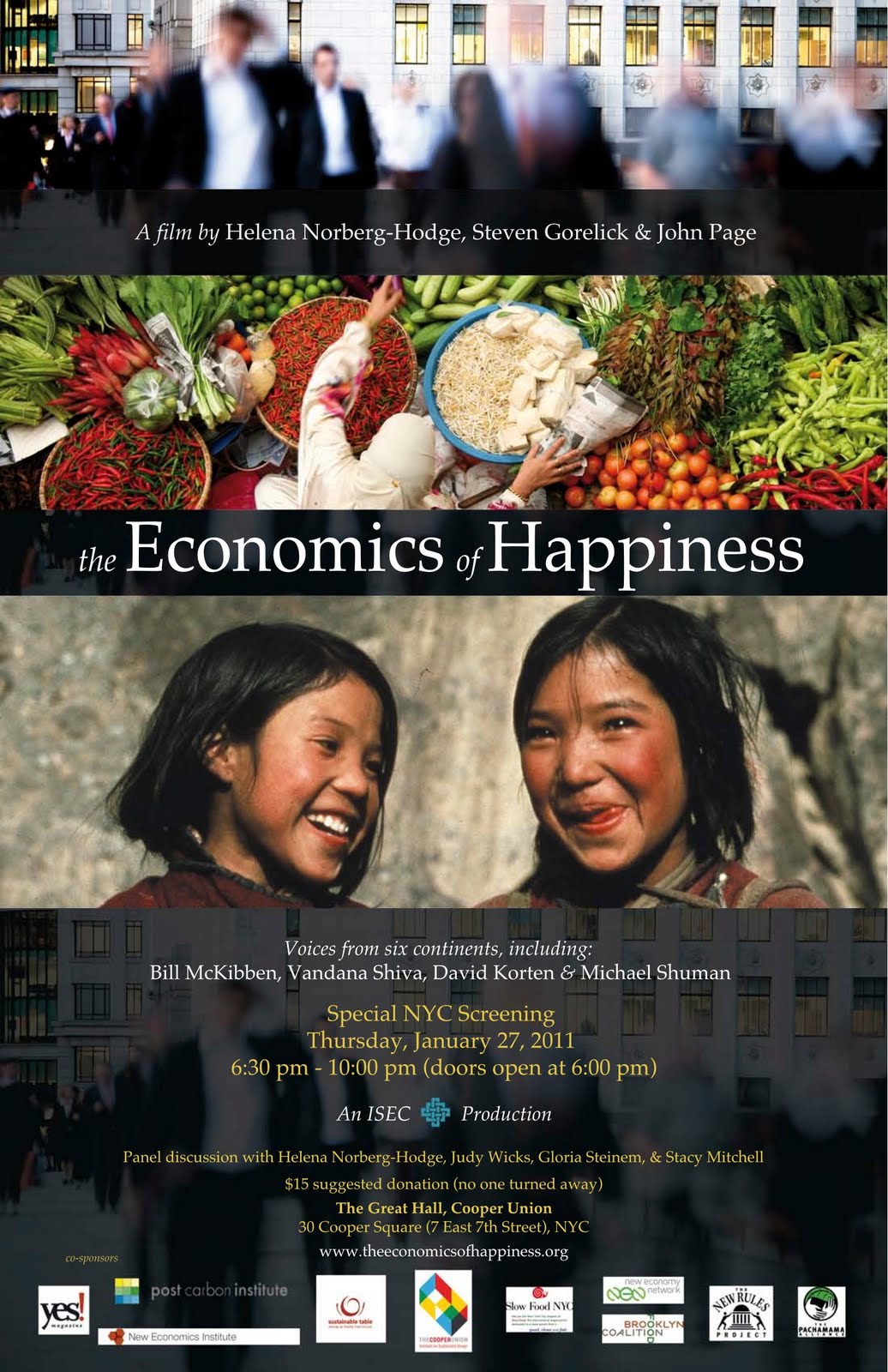
The Economics of Happiness describes a world moving simultaneously in two opposing directions. On the one hand, an unholy alliance of governments and big business continues to promote globalization and the consolidation of corporate power. At the same time, people all over the world are resisting those policies, demanding a re-regulation of trade and finance—and, far from the old institutions of power, they’re starting to forge a very different future. Communities are coming together to re-build more human scale, ecological economies based on a new paradigm – an economics of localization.
www.energyblueprint.info The report: ‘Energy [R]evolution: A Sustainable World Energy Outlook’, provides a detailed practical blueprint for cutting carbon emissions while achieving economic growth by replacing fossil fuels with renewable energy and energy efficiency. This phase-out of fossil fuels offers substantial benefits such as energy security, independence from world market fuel prices as well as the creation of millions of new green jobs.
The film shows how globalization breeds cultural self-rejection, competition and divisiveness; how it structurally promotes the growth of slums and urban sprawl; how it is decimating democracy.
We learn about the obscene waste that results from trade for the sake of trade: apples sent from the UK to South Africa to be washed and waxed, then shipped back to British supermarkets; tuna caught off the coast of America, flown to Japan to be processed, then flown back to the US. We hear about the suicides of Indian farmers; about the demise of land-based cultures in every corner of the world.
The second half of The Economics of Happiness provides not only inspiration, but practical solutions. Arguing that economic localization is a strategic solution multiplier that can solve our most serious problems, the film spells out the policy changes needed to enable local businesses to survive and prosper. We are introduced to community initiatives that are moving the localization agenda forward, including urban gardens in Detroit, Michigan and the Transition Town movement in Totnes, UK. We see the benefits of an expanding local food movement that is restoring biological diversity, communities and local economies worldwide. And we are introduced to Via Campesina, the largest social movement in the world, with more than 400 million members.
We hear from a chorus of voices from six continents, including Vandana Shiva, Bill McKibben, David Korten, Samdhong Rinpoche, Helena Norberg-Hodge, Michael Shuman, Zac Goldsmith and Keibo Oiwa. They tell us that climate change and peak oil give us little choice: we need to localize, to bring the economy home. The good news is that as we move in this direction we will begin not only to heal the earth but also to restore our own sense of well-being. The Economics of Happiness challenges us to restore our faith in humanity, challenges us to believe that it is possible to build a better world.
Casino of Hunger: How Wall Street Speculators Fueled the Global Food Crisis
The global food crisis is an overlooked symptom of the broader global economic crisis. The food crisis shares many characteristics of the financial meltdown ‚ it was exacerbated by the deregulation of the commodity markets (including agriculture) that encouraged a tidal wave of Wall Street speculation‚ leading to further increases in already rising food and energy prices.
Over the past two decades, the safeguards that prevented excessive speculation from distorting the futures markets were eroded or eliminated.
http://www.foodandwaterwatch.org/reports/casino-of-hunger
www.oaklandinstitute.org/trade watch
www.ifg.org Int. Forum on Globalization
http://donttradeourlivesaway.wordpress.com
www.attac.org International Movement
Meet Economy of Happiness at fb
Meet Gross National Happiness American Project at fb
MeetUnited for a Fair Economy at fb
Eradicating Ecocide – Rights for the Planet
www.world-economy-and-development.org
www.environmentallawresource.com
www.stwr.org/climate-change-environment
The neologism ecocide can be used to refer to any large-scale destruction of the natural environment or over-consumption of critical non-renewable resources. An early reference in 1969 described it as „Ecocide – the murder of the environment – is everybody’s business.“ Ecocide is also a term for a substance that kills enough species in an ecosystem to disrupt its structure and function. Another example would be a high concentration of pesticide due to a spillage. U.S. environmental theorist and activist Patrick Hossay argues that the human species is committing ecocide, via industrial civilization’s effects on the global environment. Much of the modern environmental movement stems from this belief as a precept.
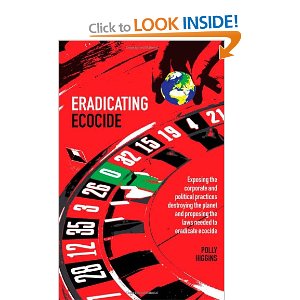
In April 2010 UK Lawyer Polly Higgins proposed to the United Nations that ecocide be recognised as an international Crime Against Peace alongside Genocide, Crimes of Humanity, War Crimes and Crimes of Aggression, triable at the International Criminal Court. More
Polly Higgins is an international environmental lawyer. She believes that change can happen very quickly. She understands how law can act as a catalyst for global change.
Did you know that every government can implement laws overnight? George Bush used emergency laws to shore up Wall Street at the 11th hour and the UK have used them to pass laws on terrorism. It all depends on whether there is a national emergency. Well, now we have an international emergency. So we can do the same worldwide, and put in place an international law of Ecocide. In truth, it’s not that difficult. All that is required is for every nation to agree to vote on it, and then put it to the vote. It’s that simple. Really.
Proposed definition: Ecocide is the extensive destruction, damage to or loss of ecosystem(s) of a given territory, whether by human agency or by other causes, to such an extent that peaceful enjoyment by the inhabitants of that territory has been severely diminished.
In April 2010 a second international legislative proposal was submitted to the United Nations: for the crime of Ecocide to be implemented as a 5th Crime Against Peace under the Rome Statute.
The proposal of Ecocide as a crime of strict liability would impose a prohibition of environmental damage or destruction over a certain size, duration and severity to apply during peace time. To read more about the proposal, see thisisecocide.com
http://www2.ohchr.org/english/issues/environment
„ERADICATING ECOCIDE“ by Polly Higgins: www.amazon.co.uk/Eradicating-Ecocide-Polly-Higgins
The Millennium Development Goals (MDGs) are eight international development goals that all 192 United Nations member states and at least 23 international organizations have agreed to achieve by the year 2015. They include eradicating extreme poverty, reducing child mortality rates, fighting disease epidemics such as AIDS, and developing a global partnership for development. More
Goal 7: Ensure environmental sustainability
Target 7A: Integrate the principles of sustainable development into country policies and programs; reverse loss of environmental resources
Target 7B: Reduce biodiversity loss, achieving, by 2010, a significant reduction in the rate of loss
The Convention on Biological Diversity (CBD), known informally as the Biodiversity Convention, is an international legally binding treaty. The Convention has three main goals:
1. conservation of biological diversity (or biodiversity);
2. sustainable use of its components; and
3. fair and equitable sharing of benefits arising from genetic resources
In other words, its objective is to develop national strategies for the conservation and sustainable use of biological diversity. It is often seen as the key document regarding sustainable development.
The Convention was opened for signature at the Earth Summit in Rio de Janeiro on 5 June 1992 and entered into force on 29 December 1993.
2010 was the International Year of Biodiversity. The Secretariat of the Convention on Biological Diversity is the focal point for the International Year of Biodiversity. At the 2010 10th Conference of Parties (COP) to the Convention on Biological Diversity in October in Nagoya, Japan, the Nagoya Protocol was adopted.
On 22 December 2010, the UN declared the period from 2011 to 2020 as the UN-Decade on Biodiversity. They, hence, followed a recommendation of the CBD signatories during COP10 at Nagoya in October 2010. More
- http://en.wikipedia.org/Equator_Principles
- www.globalwitness.org www.biodiversityhotspots.org
- www.worldviewofglobalwarming.org
- www.endpoverty2015.org UN Millenium Campaign
- http://farmlandgrab.orgwww.biofuelwatch.org.uk
- Meet Ecocide is a Crime, studies at fb
- Meet United Nations Millennium Campaign, friends, fans
(mehr …)
Indigenous Food Festival Chiang Mai, Thailand
SAVING BIODIVERSITY & RIGHT TO FOOD: www.srfood.org www.cbd.int/cop10
NEW Campaign against seeds privatization www.foodsov.org/html/takeaction.htm
IKAP THAILAND NETWORK www.ikap-mmsea.org: Indigenous Food Festival Chiang Mai, Thailand
Documents developed by this network are: National Laws on Indigenous Knowledge and Biodiversity and Rotational Farming.
Climate Change, Food Sovereignty & Security
www.oneclimate.net Food security refers to the availability of food and one’s access to it. A household is considered food-secure when its occupants do not live in hunger or fear of starvation. According to the World Resources Institute, global per capita food production has been increasing substantially for the past several decades. In 2006, MSNBC reported that globally, the number of people who are overweight has surpassed the number who are undernourished – the world had more than one billion people who were overweight, and an estimated 800 million who were undernourished. According to a 2004 article from the BBC, China, the world’s most populous country, is suffering from an obesity epidemic. In India, the second-most populous country in the world, 30 million people have been added to the ranks of the hungry since the mid-1990s and 46% of children are underweight.
www.1billionhungry.org Worldwide around 852 million people are chronically hungry due to extreme poverty, while up to 2 billion people lack food security intermittently due to varying degrees of poverty (source: FAO, 2003). Six million children die of hunger every year – 17,000 every day. As of late 2007, export restrictions and panic buying, US Dollar Depreciation,increased farming for use in biofuelsworld oil prices at more than $100 a barrel, global population growth,climate change,loss of agricultural land to residential and industrial development,and growing consumer demand in China and Indiaare claimed to have pushed up the price of grain. However, Nonetheless, food riots have recently taken place in many countries across the world. Read More: > HERE <
As the Nobel Prize-winning economist Amartya Sen has observed that „there is no such thing as an apolitical food problem.“ While drought and other naturally occurring events may trigger famine conditions, it is government action or inaction that determines its severity, and often even whether or not a famine will occur. The 20th century is full of examples of governments undermining the food security of their own nations–sometimes intentionally.
There are many economic approaches advocated to improve food security in developing countries. Three typical approaches are listed below, click here . The first is typical of what is advocated by most governments and international agencies. The other two are more common to non-governmental organizations (NGO’s).
The third approach is known as food sovereignty; though it overlaps with food justice on several points, the two are not identical. It views the business practices of multinational corporations as a form of neocolonialism click here.
It contends that multinational corporations have the financial resources available to buy up the agricultural resources of impoverished nations, particularly in the tropics. They also have the political clout to convert these resources to the exclusive production of cash crops click here ,for sale to industrialized nations outside of the tropics, and in the process to squeeze the poor off of the more productive lands. Under this view subsistence farmers are left to cultivate only lands that are so marginal in terms of productivity as to be of no interest to the multinational corporations. Likewise, food sovereignty holds it to be true that communities should be able to define their own means of production and that food is a basic human right.
With several multinational corporations now pushing agricultural technologies on developing countries, technologies that include improved seeds, chemical fertilizers, and pesticides, crop production has become an increasingly analyzed and debated issue. Many communities calling for food sovereignty are protesting the imposition of Western technologies on to their indigenous systems and agency.
Those who hold a „food sovereignty“ position advocate banning the production of most cash crops in developing nations, thereby leaving the local farmers to concentrate on subsistence agriculture. In addition, they oppose allowing low-cost subsidized food from industrialized nations into developing countries, what is referred to as „import dumping“. Import dumping also happens by way of food aid distribution through programs like the USA’s „Food for Peace“ initiative.
www.fao.org , www.vandanashiva.org Vandana Shiva (Hindi: वन्दना शिवा; b. November 5, 1952, Dehra Dun, Uttarakhand, India), is a philosopher, environmental activist, eco feminist and author of several books. Shiva, currently based in Delhi, is author of over 300 papers in leading scientific and technical journals. She received her Ph.D. in philosophy from the University of Western Ontario, Canada, in 1978 with the doctoral dissertation:“Hidden variables and locality in quantum theory. Read More: > HERE < , Food Commodities Speculation and Food Price Crises http://www.srfood.org
Food Security Guide – Over one billion people experience the hardship that hunger imposes, a figure which continues to rise even amidst the riches of the 21st century. Engulfed within a vortex of population growth, economic instability and climate change, food security has become an urgent challenge for national and global governance. However, the feeble outcome of the 2009 World Summit on Food Security suggests that the richer countries are not yet ready to reorganise their dysfunctional priorities. http://uk.oneworld.net/guides/food
WASHINGTON (MarketWatch) — Those of us who believe that the economy should serve us instead of the other way around are conflicted. We know that the only way to end unemployment at home and poverty around the world is to make the economy grow faster. But we also know that nothing can grow forever, that the faster the global economy grows, the sooner we’ll run out of essential resources, including fossil fuels, water, arable land, healthy ecosystems and moderate climate. Economists and politicians can’t admit it, but the laws of physics apply, no matter what the latest polls tell us. The Earth has finite resources that will someday limit our economic growth.
The Earth cannot forever support 7 billion people consuming as much as Americans consume. And yet we’ve staked our future — individually, nationally, and maybe even as a species — on that impossible dream.
SOLUTIONS – Prosperity Without Growth, Professor Tim Jackson: Growth has delivered its benefits, at best, unequally. A fifth of the world’s population earns just 2% of global income. Inequality is higher in the OECD nations than it was 20 years ago. And while the rich got richer, middle-class incomes in Western countries were stagnant in real terms long before the recession. Far from raising the living standard for those who most needed it, growth let much of the world’s population down. Wealth trickled up to the lucky few.
Accordingly, this report sets out a critical examination of the relationship between prosperity and growth. It acknowledges at the outset that poorer nations stand in urgent need of economic development. But it also questions whether ever-rising incomes for the already-rich are an appropriate goal for policy in a world constrained by ecological limits. Its aim is not just to analyse the dynamics of an emerging ecological crisis that is likely to dwarf the existing economic crisis. But also to put forward coherent policy proposals that will facilitate the transition to a sustainable economy. In short, this report challenges the assumption of continued economic expansion in rich countries and asks: is it possible to achieve prosperity without growth?
In short, a ‘green stimulus’ is an eminently sensible response to the economic crisis. It offers jobs and economic recovery in the short term, energy security and technological innovation in the medium term, and a sustainable future for our children in the long term. Nonetheless, the default assumption of even the ‘greenest’ Keynesian stimulus is to return the economy to a condition of continuing consumption growth. Since this condition is unsustainable, it is difficult to escape the conclusion that in the longer term something more is needed. A different kind of macro-economic structure is essential for an ecologically-constrained world.
The above is an excerpt www.ecobuddhism.org : The full report can be downloaded here .
Available in PDF: New briefing: Food safety for whom? Corporate wealth versus people’s health by GRAIN, May 2011, further informations: www.corpwatch.org
A new briefing by GRAIN examines how „food safety“ is being used as a tool to increase corporate control over food and agriculture, and discusses what people can do and are doing about it. Below is a snapshot of what’s inside. The full briefing is available here.
View some additional photos here.
Relay Hunger Strike to Kirti Gompa
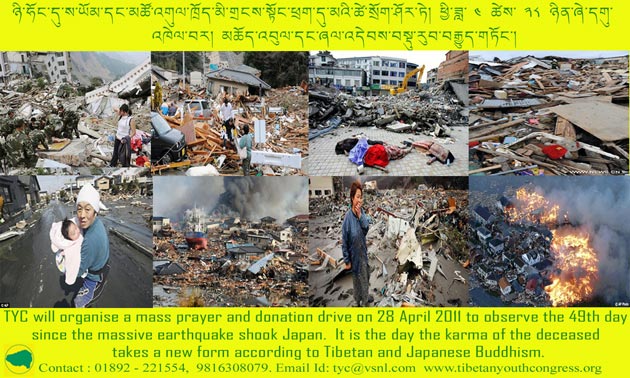
Kirti Gompa (Tibetan: ཀིརྟི་དགོན་པ།), (sometimes referred to as Ge’erdengsi or Gerdeng Monastery), properly known as Kirti Kalari Gon Tashi Lhundrub, is a Gelugpa monastery on the northwestern edge of Ngawa City, the main city in Ngawa County, within the Ngawa Tibetan and Qiang Autonomous Prefecture in northwestern Sichuan, China. It is located on the Tibetan plateau at an elevation of 3,200 metres (10,499 ft.) Read More: > HERE <
The Fukushima I nuclear accidents (福島第一原子力発電所事故, Fukushima Dai-ichi are a series of ongoing equipment failures and releases of radioactive materials at the Fukushima I Nuclear Power Plant, following the 9.0 magnitude Tōhoku earthquake and tsunami on 11 March 2011.The plant comprises six separate boiling water reactors maintained by the Tokyo Electric Power Company (TEPCO). This accident is the largest of the 2011 Japanese nuclear accidents arising from the Tōhoku earthquake and tsunami, and experts consider it to be the second largest nuclear accident after the Chernobyl disaster, but more complex as all reactors are involved. Read more: > HERE <
TYC will organise a mass prayer and donation drive on 28th April 2011 to observe the 49th day since the massive earthquake shook Japan.
Relay Hunger Strike to demand immediate withdrawal of Chinese troops from Kirti Monastery in Tibet – TYC launched today indefinite Relay Hunger Strike near Main Temple (Tsuklagkhang) to protest against the critical situation in and around Kirti Monastery in Ngaba, Tibet. 15 monks from Institute of Buddhist Dialectics today participated in the first batch of hunger strike. We are also collecting signatures at the site on the petition demanding immediate withdrawal of Chinese troops. All Regional chapters of TYC has also been instructed to launch relay hunger strike. Please see the statement on this campaign.
www.studentsforafreetibet.org against Chinas „Re – Education Programme“ and for Human Rights 4 All
- www.tibetoralhistory.org
- Save Mountain Minorities, Tibetan Nomads, Indigenous People <
- www.uranium-network.org www.minesandcommunities.org
- http://stopminingtibet.com www.meltdownintibet.com
- Nuclear Safety: http://www.barentsobserver.com/index.php?cat=156838
- IPPNW Int. Physicans to prevent Nuclear War at fb <
- Meet International friends of Tibetan Youth Congress at fb <
- Meet Students for a free Tibet at fb <
- http://www.amnesty.org/en/economic-social-and-cultural-rights <
- Meet Human Rights Watch International at fb <
Saving the Bedouin Heritage and Biodiversity

Libyan Bedouin Camp, Dubai Heritage Village
http://portal.unesco.org/intangible
The Bedouin are a part of the predominantly desert-dwelling Arab ethnic group. Specifically the term refers only to the „camel-raising“ tribes, but due to economic changes many are now settled or raising sheep. Also due to linguistic and cultural changes the term is now often applied in many ways either to Arabs in general or to desert dwellers or nomads.
Bedouins are traditionally divided into tribes or clans, known in Arabic as ʿašÄ�ʾir (عَشَائِر). A widely quoted Bedouin saying is „I against my brother, my brothers and me against my cousins, then my cousins and I against strangers„. This saying signifies a hierarchy of loyalties based on closeness of kinship that runs from the nuclear family through the lineage, the tribe, and even, in principle at least, to an entire ethnic or linguistic group (which is perceived to have a kinship basis). Read more: > HERE <
The Negev Bedouin (Arabic: بدو النقب, Badū an-Naqab) are traditionally pastoral semi-nomadic Arab tribes indigenous to the Negev region in Israel, who hold close ties to the Bedouin of the Sinai Peninsula. The forced alteration of their traditional lifestyle has led to sedentarization. Estimated to number some 160,000,they comprise 12% of the Arab citizenry of Israel.Of Israel’s total population, 12% live in the Negev,and Negev Bedouin constitute approximately 25% percent of the total population therein. Read More: > HERE <
The Bedouin heritage Project was founded to help safeguard the unique cultural heritage of Bedouin communities around the globe. Founded on the principles of the UNESCO Intangible Cultural Heritage.
The Non Profit Association will foster projects to help safeguard the intangible cultural heritage of Bedouin communities throughout the Middle East following the basic principles:
- The collection and intergenerational transmission of oral heritage; and
- The transmission and adaptation of knowledge and know-how.
The Wadi Rum project in Jordan is promoted by the Bedouin Heritage Project. The principal goal of the project is to safeguard the main features of the lifestyle and oral history of the Bedu that have developed in Wadi Rum region over the course of millennia and that are being lost due to inevitable societal changes.
The BHP’s Wadi Rum project goal is to participate, record, represent and ultimately safeguard the many facets of the Bedouin lifestyle, social system, traditions, medicine and oral history. This two year project will incorporate the best practices of cultural and media anthropology including video, photography, audio, figurative art, journalism, academic research, sensory memory and genealogy.
While the initial project is local in nature, the best practices established should serve as a model for future projects throughout Jordan and the middle east. In order to achieve the project’s goals and deliver a living memory to the Bedu themselves, new methodologies for authenticate representation of intangible heritage and oral traditions will be required and, ideally, will be transfered to similar projects around the world.
“If we begin to see each other as we are…brothers, all striving for the same things and with the same problems…then maybe we can begin to put an end to this madness. We are fathers, mothers, sisters, brothers, bosses, employees, emigrants, lovers and, most of all, children.
As long as we highlight differences in our cultures, traditions and lives, then a true dialogue can never begin. However, once we show respect for the traditions, history and lifestyle of other peoples, then we can truly begin to talk about the numerous problems we all face.”
Sabah and Salem Ali lafi explain the harvesting and application of common desert plant medicines. The Bedouin heritage Project offers a unique insight into the medicinal plants the bedouin of Wadi Rum, Jordan, have used for centuries. Sabbah ali Lafi and his brother Salem share their traditions in words and images.
NISPED-AJEEC is dedicated to offering educational programs for children of all ages that meet the needs and traditions of the Arab-Bedouin community. Our staff and volunteers work together with community educators, parents and residents in the planning and running of these programs. NISPED-AJEEC’s initiatives include early childhood day-care centers – Bet El-Umm Wal-Tifil (The House of the Mother and the Child) – educational activity centers in unrecognized villages for children of all ages and special summer camps and activities.
This innovative pilot project, initiated in April 2006, provides an enriching, stimulating, accessible and safe after-school environment for children ages 4 to 8 in two unrecognized Arab Bedouin villages, Hashem Zane and Qassar el Sar, where no such services existed.
The playgrounds are located in a readily accessible public space in the village, selected for this purpose by the communities. Each playground consists of a large fenced-in play area and a small playing field. The play areas are equipped with safe playground equipment – swings, see-saws, slides, jungle gyms, sandbox, utilizing recycled materials such as tires, cable spools, and more. Adjacent to the playgrounds are tents that provide sheltered area for indoor play and enrichment activities.
The playgrounds are open daily after school hours, on weekends and during school breaks. Responsibility for operation of the program and care and maintenance of playgrounds are in the hands of a staff of specially trained men and women employed on a part-time basis, assisted by high school students from the community who are trained as junior counselors. During the academic year (November-June) AJEEC’s Bedouin Volunteer Center deploys student volunteers to provide educational enrichment, tutoring and help with homework for children in need of assistance and coaching, while parents and other members of the community will be encouraged to volunteer their services to help in running the program.
The playgrounds and educational activity centers are designed and equipped to provide a wide range of activities suitable for both girls and boys of different ages and interests, both outdoor and indoor, within an area sufficiently large to provide ample room for free and easy movement.
March 10, 2011: Because I Am Tibetan

www.studentsforafreetibet.org/March 10
The environment in the People’s Republic of China has traditionally been neglected as the country concentrates on its rise as an economic power. Despite a recent interest in environmental reform, pollution has made cancer the leading cause of death in 30 cities and 78 counties, the Ministry of Health says. Only 1 percent of the country’s 560 million city inhabitants (2007) breathe air deemed safe by the European Union. Chinese industry scores very poorly in energy efficiency. READ MORE > HERE <
Human rights in the People’s Republic of China are a matter of dispute between the Chinese government and other countries and NGOs. Organizations such as the U.S. State Department, Amnesty International, and Human Rights Watch have accused the Chinese government of restricting the freedoms of speech, movement, and religion of its citizens. The Chinese government argues for a wider definition of human rights, to include economic and social as well as political rights, all in relation to national culture and the level of development of the country. In this regard, China says, human rights are being improved in China. Read More: > HERE <
Statement of His Holiness the Dalai Lama on the 52nd Anniversary of the Tibetan National Uprising Day 10 March 2011 – Today marks the 52nd anniversary of the Tibetan people’s peaceful uprising of 1959 against Communist China’s repression in the Tibetan capital Lhasa, and the third anniversary of the non-violent demonstrations that took place across Tibet in 2008. On this occasion, I would like to pay tribute to and pray for those brave men and women who sacrificed their lives for the just cause of Tibet. I express my solidarity with those who continue to suffer repression and pray for the well-being of all sentient beings.
For more than sixty years, Tibetans, despite being deprived of freedom and living in fear and insecurity, have been able to maintain their unique Tibetan identity and cultural values. More consequentially, successive new generations, who have no experience of free Tibet, have courageously taken responsibility in advancing the cause of Tibet. This is admirable, for they exemplify the strength of Tibetan resilience.
This Earth belongs to humanity and the People’s Republic of China (PRC) belongs to its 1.3 billion citizens, who have the right to know the truth about the state of affairs in their country and the world at large. If citizens are fully informed, they have the ability to distinguish right from wrong. Censorship and the restriction of information violate basic human decency. For instance, China’s leaders consider the communist ideology and its policies to be correct. If this were so, these policies should be made public with confidence and open to scrutiny. Read More: > HERE <
Video & Audio | The Office of His Holiness The Dalai Lama http://t.co/60LoupD Statement of His Holiness the Dalai Lama on the 52nd anniversary of the Tibetan national uprising day on March 10th, 2011
6th School Students Workshop on Tibetan Democracy in Exile and Situation of Tibet – The Tibetan Parliamentary and Policy Research Centre based in New Delhi, funded by the National Endowment for Democracy (NED) and International Campaign for Tibet (ICT) successfully concluded a 8 day long 6th An objective and practical program for school students titled: Introducing the Tibetan Democracy in Exile and Situation of Tibet at Staff Mess, Gangkyi in Dharamsala from December 24 – 31, 2009. The workshop was attended by 90 students and 14 teachers from 19 different schools and institution.
The main objective of this workshop was to introduce students about the Tibetan democracy in exile and situation of Tibet. To make the students understand thoroughly the structure and functions of Tibetan exile government based in Dharamsala. It also aimed at helping the Tibetan students to have a better knowledge about the achievements, failure and the future prospects of the three pillar of democracy in the exile Tibetan governance and making them more responsible Tibetans. To make the students understand about the current political situation and present human rights situation inside Tibet. To impart the importance of maintaining the religious and moral ethos to preserve the Tibetan identity. Read More: > HERE <
- www.ecobuddhism.org
- http://stopminingtibet.com/
- www.hrw.org/asia/china
- www.tibetnetwork.org/amnesty50th
- http://www.meltdownintibet.com/questions.htm
- Meet Students for a free tibet Canada, friends fans at fb <
- Meet Students for a free tibet, friends, fans at fb <
- Meet International Rivers, friends, fans at fb <
- Meet Human Rights Watch, friends, fans at fb <
- Meet The International Ecotourism Society (TIES), fans at fb <
- http://www.circleofblue.org/waternews/himalayas/
- http://www.chinadialogue.net/UserFiles/File/third_pole_full_report.pdf
As the Himalayan glaciers disappear, ten major Asian river systems–the Amu Darya, Indus, Ganges, Brahmaputra, Irrawaddy, Salween, Mekong, Yangtse, Yellow, and Tarim–are threatened. Twenty percent of the world’s population faces a future of catastrophe, according to a report released by University College, Chinadialogue, and King’s College of London in May 2010.
Bahá’í – Religion für eine neue Zeit
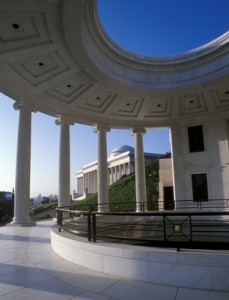
The Bahá’í Faith is a monotheistic religion founded by Bahá’u’lláh (see also Aposteles of Bahá’u’lláh) nineteenth-century Persia, emphasizing the spiritual unity of all humankind. There are an estimated five to six million Bahá’ís around the world in more than 200 countries and territories. In the Bahá’í Faith, religious history is seen to have unfolded through a series of divine messengers, each of whom established a religion that was suited to the needs of the time and the capacity of the people. These messengers have included Abraham, the Buddha, Jesus, Muhammad and others, and most recently the Báb ( ~ John the Baptist/Mandeism) and Bahá’u’lláh. In Bahá’í belief, each consecutive messenger prophesied of messengers to follow, and Bahá’u’lláh’s life and teachings fulfilled the end-time promises of previous scriptures. Humanity is understood to be in a process of collective evolution, and the need of the present time is for the gradual establishment of peace, justice and unity on a global scale. Read More: > HERE <
The persecution of Bahá’ís is the religious persecution of Bahá’ís in various countries, especially in Iran,where the Bahá’í Faith originated and the location of one of the largest Bahá’í populations in the world. The origins of persecution stem from a variety of Bahá’í teachings that challenge traditional Islamic belief, including the finality of Muhammad’s prophethood, and places Bahá’ís outside the Islamic faith. Thus Bahá’ís are seen as apostates from Islam, and, according to some, must choose between repentance and death.
Bahá’ís as well as the United Nations, Amnesty International, the European Union, the United States and peer-reviewed academic literature have stated that the members of the Bahá’í community in Iran have been subjected to unwarranted arrests, false imprisonment, beatings, torture, unjustified executions, confiscation and destruction of property owned by individuals and the Bahá’í community, denial of employment, denial of government benefits, denial of civil rights and liberties, and denial of access to higher education. Read More: > HERE <
Iran (i /ɪˈrɑːn/ or /ɪˈræn/; Persian: ایران;), officially the Islamic Republic of Iran is a country in Central Eurasia and Western Asia. It is a country of particular geostrategic significance owing to its location in the Middle East and central Eurasia. Iran is a regional power,and holds an important position in international energy security and world economy as a result of its large reserves of petroleum and natural gas. Iran is a founding member of the UN, NAM, OIC and OPEC. Read More: >HERE<
Belief and practice –Bahá’í teachings focus on unity – the oneness of God, the oneness of religion, and the oneness of the human race. A central belief is progressive revelation – that God progressively reveals His teachings for humanity through a series of divine educators that become the founders of the world’s great religions. Among these religions are the Bahá’í Faith, Buddhism, Christianity, Hinduism, Islam, Judaism, and Zoroastrianism.
The founder of the Bahá’í Faith was Bahá’u’lláh, who wrote the equivalent of a hundred volumes and laid down principles for a new pattern of human society. Some of these principles are: the independent investigation of truth by each person, the elimination of extremes of wealth and poverty, a spiritual solution to economic problems, the unity of all peoples and the elimination of prejudice, the equality of women and men, the harmony of science and religion, universal education, the establishment of a universal auxiliary language. All Information click here
International artists and religious leaders come together to call for human rights and religious freedom in Iran. Belief Behind Bars (Part 1 of 19)
TV-TIPP: Bahai – Religion für eine neue Zeit (ORF/3sat) – Israel ist das Heilige Land der drei großen Offenbarungsreligionen: des Judentum, des Christentum und des Islam. Doch Israel ist auch das Heilige Land einer vierten – noch nicht so bekannten – Weltreligion: der Baha’i.Wieso entscheiden sich Österreicher, wie die Familie Penz aus Hall in Tirol dazu, sich dieser neuen Religion anzuschließen? Der 45-jährige Andreas Penz bringt es auf den Punkt: „Weil ich zum ersten Mal von einer Einheit der Menschheit und der Einheit der Religionen gehört habe – das war für mich wie ein Blitzlicht.“
Für die Dokumentation „Baha’i – Religion für eine neue Zeit“ besuchte Regisseurin Pia Patricia Schweizer Familie Penz in Tirol und erkundete gemeinsam mit der 22-jährigen Tochter Marina die „Magie“ der heiligen Stätten der Baha’i in Israel. In Haifa befindet sich das geistige und administrative Zentrum dieser jüngsten Weltreligion. Sie glauben an den einen Gott, haben ihre eigenen Heiligen Schriften und einen Religionsstifter mit dem Namen Baha’u’llah. Weltweit bekennen sich etwa sechs Millionen Menschen zu diesem Glauben. Die 22-jährige Tochter der Familie Penz, Marina, ist Baha’i und hat sich entschieden, ein „Freiwilliges Soziales Jahr“ in Haifa zu machen.
Die „Hängenden“ oder die „Persischen Gärten“ der Baha’i sind eine perfekte Komposition aus Architektur und Natur. Die neunzehn Terrassen auf dem Berg Karmel wurden gemeinsam mit dem Mausoleum des Bab 2008 von der UNESCO zum Weltkulturerbe erklärt. Seit der Eröffnung der Terrassen im Jahr 2001 wurden sie von zwei Millionen Menschen besucht; an manchen Tagen kommen bis zu 3000 Besucher. Die 1953 erbaute goldene Kuppel des Mausoleums, die von den Baha’i „Königin des Karmel“ genannt wird, ist das Wahrzeichen der Stadt Haifa.
Größte religiöse Minderheit im Iran – Bis heute werden Baha’i im Land ihrer Entstehung, im Iran, verfolgt. Sie sind die größte religiöse Minderheit, genießen aber keinerlei Schutz wie Juden oder Christen. Die Vereinten Nationen und die Europäische Union äußerten sich wiederholt besorgt über die Unterdrückung der Baha’í. So wird der Iran in einer UNO-Resolution vom 21. Dezember 2010 erneut wegen schwerer Menschenrechtsverletzungen und der Diskriminierung von Bahá’í scharf verurteilt.
Marinas Eltern in Tirol sind vor neun Jahren Baha’i geworden. Sie lieben die Berge ihrer Heimat, sind Mitglieder des örtlichen Radlerclubs und spielen Theater. Das Einzige, was sie von ihrem überwiegend katholischen Umfeld unterscheidet, ist ihre Religion. „Es war für mich immer klar, dass es eine höhere Macht gibt, dass es einen Gott gibt, und als ich dann die Baha’i-Religion kennengelernt habe, haben sich für mich sehr viele Fragen beantwortet. Es hat mein Leben von der inneren Einstellung wesentlich geändert, alles ist viel größer geworden – und man hat auf einmal vom eigenen Leben über die Landesgrenzen hinaus geschaut.“, sagt Andreas Penz rückblickend. Eine Konsequenz des Baha’i-Glaubens ist ein entschiedenes soziales Engagement.
Haleh Arbab, Vertreterin der Internationalen Baha’i-Gemeinde in Haifa: „Bei unserer Religion geht es hauptsächlich um die geistige Wandlung des Einzelnen und auch um die gesellschaftliche Neugestaltung – es ist eine Religion, für die beides wichtig ist….Wir als Baha’i entwickeln uns zu geistigen Menschen, indem wir die Heiligen Schriften lesen, meditieren, an uns selbst arbeiten, aber auch, indem wir für die Gesellschaft tätig sind – und das vor allem durch den Dienst an Anderen.“ In über 900 großangelegten, nachhaltigen sozialen und wirtschaftlichen Entwicklungsprojekten in aller Welt, darunter auch 500 Schulen, soll das umgesetzt werden.
Es gibt nicht nur die „eine Wahrheit“ – Die Baha’i sind davon überzeugt, in ihrer Religion den Kern und die Sehnsucht aller Religionen vereint zu haben. Sie verstehen sich als Fortsetzung der bereits vorhandenen Religionen. Vielleicht auch als deren Erfüllung. Und sie glauben, dass die göttliche Offenbarung weitergehen wird. Die „eine Wahrheit“ gibt es für sie nicht. Die Aufgabe des Menschen ist es, weiter zu lernen und sich verantwortlich für die Zukunft der Menschheit einzusetzen. Und so arbeiten sie alle für Baha’u’llahs Versprechen: „Die Erde ist nur ein Land, und alle Menschen sind seine Bürger.“ > Sendedaten: Montag, 31. Jänner 2011 um 22.25 Uhr Wiederholungen (3sat)
„Rechte der Baha’i im Iran schützen“ Außenminister Dr.Spindelegger appelliert an den Iran
A Voice from Prison – Farsi Poem
- Meet MDGs We Can End Poverty, friends, fans at fb
- Meet FAIR TRADE, friends, fans at fb < & www.ethicalconsumer.org
- Meet World Ressource Institute, studies, friends, fans at fb
- Meet UN Educational, Scientific & Cultural Organization (UNESCO) at fb
- Meet Alternative Energy News, studies , friends fans at fb
- Meet The Oil Drum, studies, friends, fans at fb
- Meet Council for a Parliament of the World’s Religions (CPWR) at fb
- Peace, Paix, 和平, Salam, Shalom, Pace, Mir, Friede, Paz, Shanti, Heiwa …
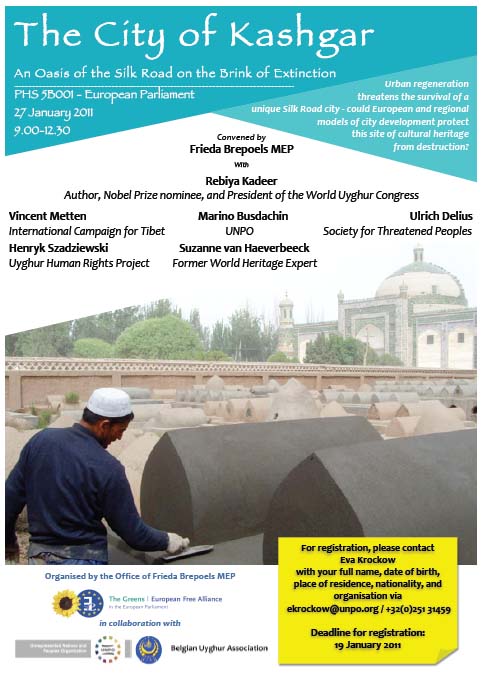
CONFERENCE: The City of Kashgar
www.rferl.org Radio Free Europe
The Silk Road (or Silk Routes) is an extensive interconnected network of trade routes across the Asian continent connecting East, South, and Western Asia with the Mediterranean world, as well as North and Northeast Africa and Europe. In recent years, both the maritime and overland Silk Routes are again being used, often closely following the ancient routes.Read More: > HERE <
The Uyghur (Uyghur: ئۇيغۇر, ULY: Uyghur; simplified Chinese: 维吾尔; traditional Chinese: 維吾爾) are a Turkic ethnic group living in Eastern and Central Asia. Today, Uyghurs live primarily in the Xinjiang Uyghur Autonomous Region in the People’s Republic of China. An estimated 80% of Xinjiang’s Uyghurs live in the southwestern portion of the region, the Tarim Basin. The largest community of Uyghurs outside Xinjiang in China is in Taoyuan County, in south-central Hunan province.Outside of China, large diasporic communities of Uyghurs exist in the Central Asian countries of Kazakhstan, Kyrgyzstan, and UzbekistanSmaller communities are found in major cities in Afghanistan, Pakistan, and Turkey. Read More: > HERE <
The City of Kashgar: An Oasis of the Silk Road on the Brink of Extinction – Two years into Beijing’s ‘Kashgar Dangerous House Reform’, and the Old City of Kashgar in East Turkestan, or China’s Xinjiang Uyghur Autonomous Region (XUAR), faces near total destruction.
There is a pressing need to assess the damage incurred, implications for the region’s Uyghur population, and to identify ways in which damage can be mitigated.
To address this urgent need, Ms Frieda Brepoels MEP will convene a conference, ‘Kashgar: An Oasis of the Silk Road on the Brink of Extinction’ at the European Parliament in Brussels from 9.00–12.30 on 27 January 2011 in collaboration with the Unrepresented Nations and Peoples Organization (UNPO) and the Belgian Uyghur Association. For more information on the event please refer to http://www.unpo.org/article/12104
After opening remarks by Rebiya Kadeer, Nobel Peace Prize nominee and President of the World Uyghur Congress, international experts including Henryk Szadziewski, Manager of the Uyghur Human Rights Project, Washington, and Ulrich Delius, German Society for Threatened Peoples, will provide a rare glimpse into one of the defining cultures of Central Asia and an internationally significant Silk Road city that has witnessed Tamerlane, Genghis Khan and Marco Polo but is excluded from applications for UNESCO World Heritage status due to political reasons.
In the keynote address for the Oslo Freedom Forum 2010, Uyghur leader Rebiya Kadeer reveals the plight of her people under the repressive Chinese government. Like the Tibetans, the Uyghurs are living in an open prison, forced to abandon their culture, subjected to torture, imprisonment, and execution for speaking out.
Drawing on the historical lessons taught by the international case studies of Lhasa and Bruges, Vincent Metten, EU Policy Director of the International Campaign for Tibet, and Suzanne van Haeverbeek, former Flemish world heritage expert, will discuss how international intervention may prevent Kashgar’s further destruction and avoid the total and irreversible loss of a unique site of cultural and architectural heritage.
www.wsk.at Vienna Boy´s Choir www.uyghurensemble.co.uk
BELUR MATH – REGENERATE RURAL INDIA
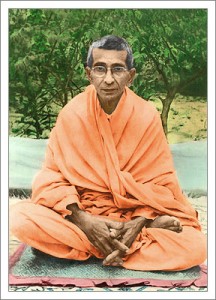
www.ramakrishna.org N.Y.
Advaita Vedanta (Advaita VedÄ�nta; Sanskrit अद्वैत वेदान्त ) is considered as the most influential sub-school of the VedÄ�nta (literally, end or the goal of the Vedas, Sanskrit) school of Hindu philosophy. Other sub-schools of VedÄ�nta are Dvaita and ViśishṭÄ�dvaita. Advaita (literally, non-duality) is a monistic system of thought. „Advaita“ refers to the identity of the Self (Atman) and the Whole (Brahman).
The key source texts for all schools of VedÄ�nta are the Prasthanatrayi—the canonical texts consisting of the Upanishads, the Bhagavad Gita and the Brahma Sutras. The first person to explicitly consolidate the principles of Advaita Vedanta was Adi Shankara, while the first historical proponent was Gaudapada, the guru of Shankara’s guru Govinda Bhagavatpada. Read More: > Here <
Belūr Maṭh is the headquarters of the Ramakrishna Math and Mission, founded by Swami Vivekananda, a chief disciple of Ramakrishna Paramahamsa. It is located on the west bank of Hooghly River, Belur, West Bengal, India and is one of the significant institutions in Calcutta. The temple is notable for its architecture that fuses Hindu, Christian and Islamic motifs as a symbol of unity of all religions. Read More: > HERE <
The essence of Vedanta is that there is but one Being and that every soul is that Being in full, not a part of that Being. All the sun is reflected in each dew-drop. Appearing in time, space and causality, this Being is man, as we know him, but behind all appearance is the one Reality. Unselfishness is the denial of the lower or apparent self. We have to free ourselves from this miserable dream that we are these bodies. We must know the truth, „I am He“. We are not drops to fall into the ocean and be lost; each one is the whole, infinite ocean, and will know it when released from the fetters of illusion. Infinity cannot be divided, the „One without a second“ can have no second, all is that One. The Vedanta says that the Soul is in its nature Existence absolute, Knowledge absolute, Bliss absolute.
The ideology of Ramakrishna Math and Mission consists of the eternal principles of Vedanta as lived and experienced by Sri Ramakrishna and expounded by Swami Vivekananda. This ideology has three characteristics: it is modern in the sense that the ancient principles of Vedanta have been expressed in the modern idiom; it is universal, that is, it is meant for the whole humanity; it is practical in the sense that its principles can be applied in day-to-day life to solve the problems of life. The basic principles of this ideology are given here: http://belurmath.org/Ideology.htm
http://belurmath.org/what_new.htm Releasing shortly… A Documentary on BELUR MATH The heart of Ramakrishna Movement . Bhakti Yoga does not say ‚give up‘; it only says ‚Love; love the Highest‘; and everything low naturally falls off from him, the object of whose love is this Highest. — Swami Vivekananda / 12th January is celebrated as National Youth Day but do we know the relevance of this day? What is one supposed to do on this day, how does one celebrate? Is it a holiday?
AN APPEAL – Situated in one of the most picturesque spots of the Himalayas at a height of about 7000 ft., Advaita Ashrama, Mayavati, was started by Swami Vivekananda in 1899. It is a branch of Ramakrishna Math, Belur. The special object of the Ashrama, as its name implies, is to study, practise, and preach Advaita or the eternal truth of the Oneness of all existence. This centre has been entrusted with the publication and propagation of Ramakrishna-Vivekananda and Vedanta literature. It is also publishing Prabuddha Bharata, the oldest English monthly magazine in India, since the last 115 years.
Apart from being a monastery, this Ashrama runs a hospital called the Mayavati Charitable Hospital. It came into being in response to the pressing needs of the neighbouring villages, where live some of the poorest people of the country. Patients come here from distant places across hills and dales, sometimes trudging a distance of nearly 50 km. Their helplessness in sickness would touch any heart if only it were known. We run a 25 bed indoor hospital and an outdoor patients department in this out-of-the way place since 1903. All treatment is done free of charges. Moreover, Surgical Camps, Dental Camps, Urological Camps, Eye Camps etc. are held throughout the year to provide special care to the poor villagers of Kumaon region. We bring qualified doctors from different cities to conduct such medical camps.
In order to accommodate these doctors we are building a Doctors‘ Quarters cum guest house. The new doctors’ quarters will have 8 rooms with attached baths for the doctors on the first floor and 6 rooms for guests and a meditation hall on the second floor. We request you to contribute liberally for this cause
The expected cost of construction, as submitted by the architects, will be Rs. 60 lakhs. Transportation cost is very high here because the materials have to be procured from 150 to 450 km away. The uplift of the backward and downtrodden has always been one of the key objectives of Ramakrishna Math & Ramakrishna Mission, of which this Ashrama is a branch. It is needless to mention here that if this institution has attained to its present stature, it is because of love, sympathy, and benevolence of charitably inclined people like you. The donation has to be made in favour of Advaita Ashrama and can be sent to the address given below.
May the Lord help us work in a true spirit of worship.
Activities of Ramakrishna Math and Ramakrishna Mission
From April 2006 to March 2007
- TYPES OF SERVICE
- Medical Service
- Educational Service
- Work in Rural and Tribal Areas
- Relief and Rehabilitation Work
- Women Welfare Programmes
- Youth Welfare Programmes
- Mass Contact
- Spiritual and Cultural Work
- Celebrations
- http://belurmath.org/activities.htm#Tribal
- Prabuddha Bharata Journal started by Vivekananda 1896
Africa – Green Agriculture & Climate Change
http://kofiannanfoundation.org
Sustainable agriculture is the practice of farming using principles of ecology, the study of relationships between organisms and their environment. It has been defined as „an integrated system of plant and animal production practices having a site-specific application that will, over the long term:Satisfy human food and fiber needs Make the most efficient use of non-renewable resources and on-farm resources and integrate, where appropriate, natural biological cycles and controls Sustain the economic viability of farm operations Enhance the quality of life for farmers and society as a whole. Read More: > Here <
Fair trade is an organized social movement and market-based approach that aims to help producers in developing countries make better trading conditions and promote sustainability. The movement advocates the payment of a higher price to producers as well as social and environmental standards. It focuses in particular on exports from developing countries to developed countries, most notably handicrafts, coffee, cocoa, sugar, tea, bananas, honey, cotton, wine, fresh fruit, chocolate, flowers and gold. Read More: > HERE <
AGRA ALLIANCE works to achieve a food secure and prosperous Africa through the promotion of rapid, sustainable agricultural growth based on smallholder farmers. Smallholders–the majority women–produce most of Africa’s food, and do so with minimal resources and little government support. AGRA aims to ensure that smallholders have what they need to succeed: good seeds and healthy soils; access to markets, information, financing, storage and transport; and policies that provide them with comprehensive support. Through developing Africa’s high-potential breadbasket areas, while also boosting farm productivity across more challenging environments, AGRA works to transform smallholder agriculture into a highly productive, efficient, sustainable and competitive system, and do so while protecting the environment.
AFRICA LOSES ROUGHLY $4 Billion in soil nutrients each year, costing farmers in lost productivity and eroding the continent’s ability to feed itself. But simple solutions can reverse the trend. AGRA’s programs in soil health are working to restore 6.3 million hectares of degraded farmland over 10 years. Whether it’s setting Africa’s first digital soil map to monitor the problem and inform decision making or promoting the use of lime to counteract western Kenya’s acidic soils or increasing the use of fertilizer microdosing by farmers in the Sahel, AGRA is focused on stemming the crisis and transforming Africa’s soils form a curse into blessing for smallholder farmers.
www.globalhealthfreedom.org www.foodfreedomejournal.org
Father Godfrey Nzamujo is the founder and director of the Songhai Centre, a pioneering farm, training and research centre in Porto Novo, Benin. Begun in 1985 on a single hectare of land, the Songhai project has expanded to six sites in Benin and one in Nigeria. With the motto ‚Commitment to Excellence‘, Songhai symbolises Nzamujo’s belief that Africa’s ecological characteristics are advantages rather than impediments. Father Nzamujo was awarded the Hunger Project’s Africa Prize for Leadership in 1993, and is the author of Songhaï: When Africa lifts up its head. Stirring revolution in African Rice: www.new-ag.info
Songhaï aspires to develop alternatives allowing Africans to stand on their feet through agricultural entrepreneurship, in an integrated development framework enhancing agriculture, industry and services. This development is centred, above all, on human development, the realization of local resources and the appropriation of foreign techniques and technologies.
VISION To establish an entrepreneurial platform of integrated development, an enabling environment to find social, economic, technical, organizational solutions that will take Africans out of poverty, pulling them towards autonomy and sustainable socioeconomic development.
VOCATION To draw Africa into a development mentality which consists in developing new strengths in spite of socioeconomic, cultural and environmental constraints.

